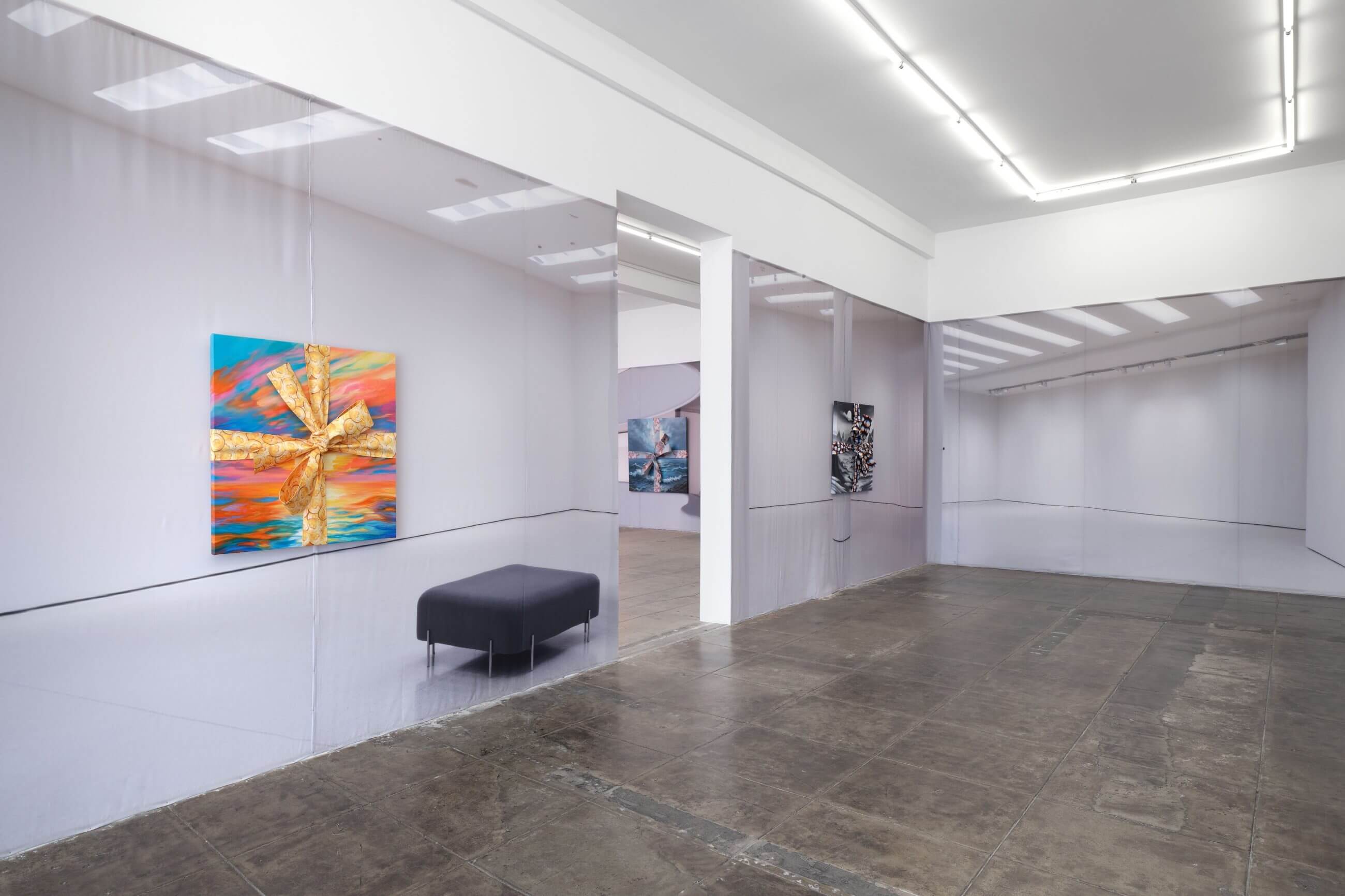
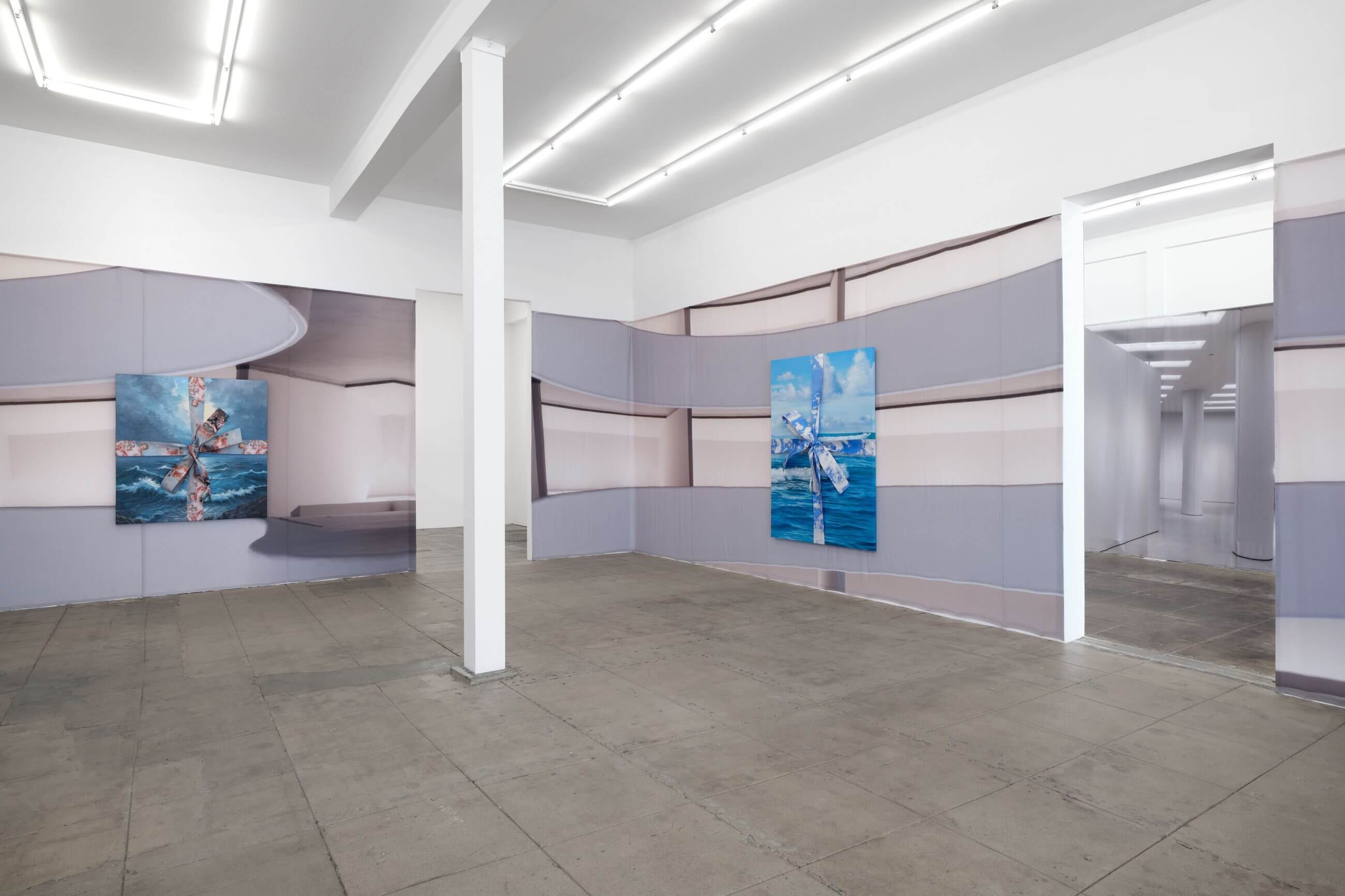
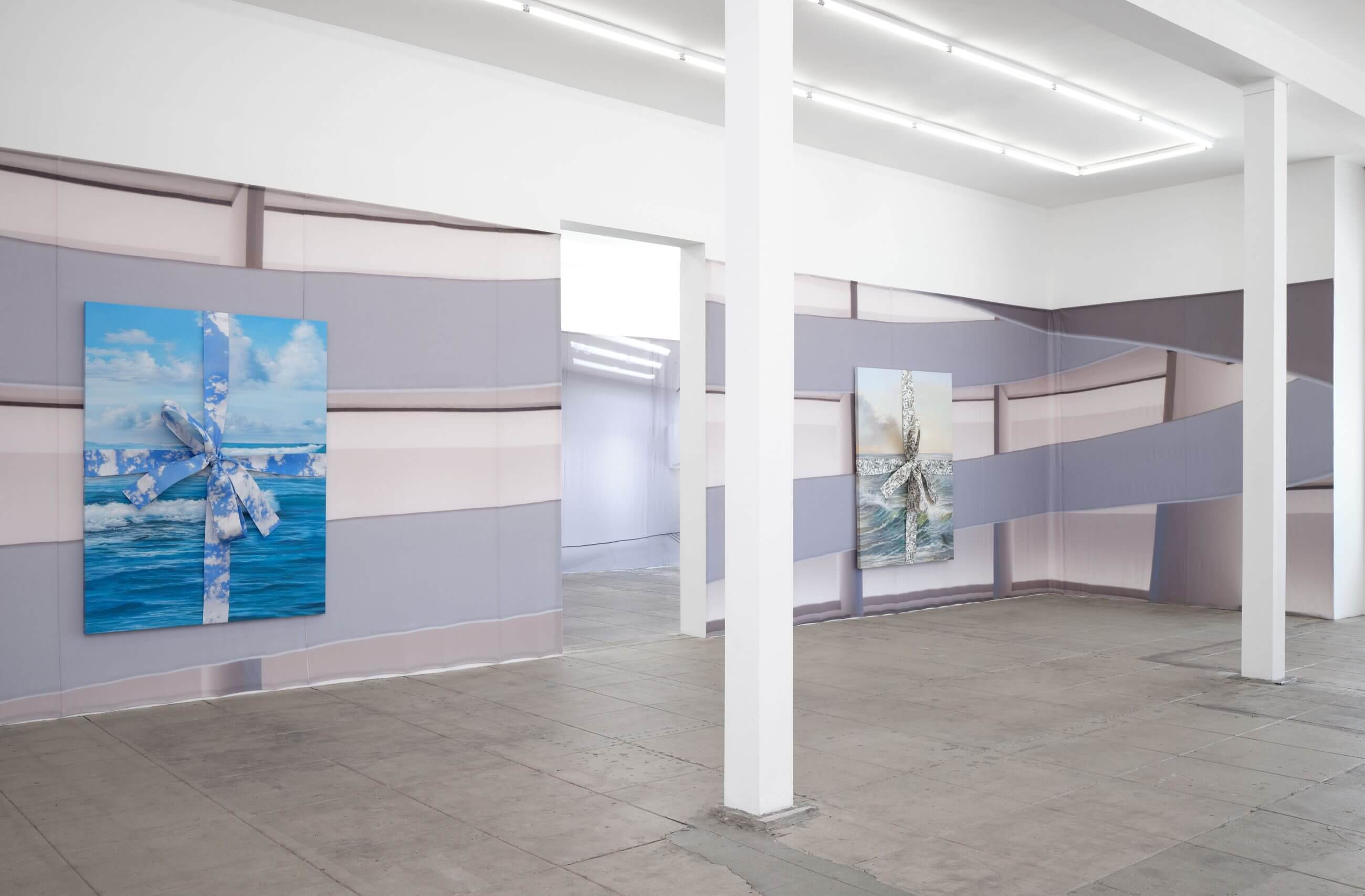
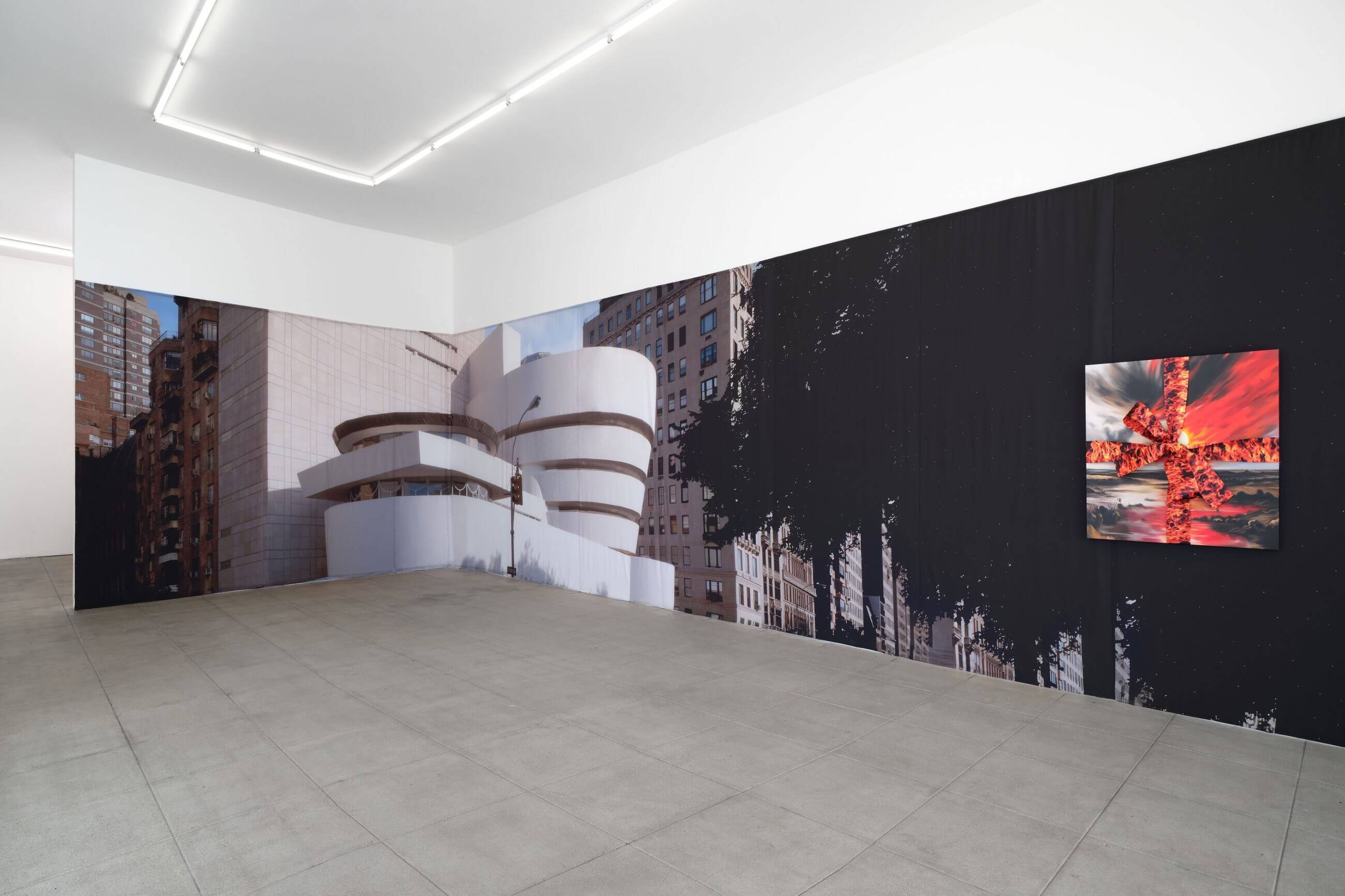
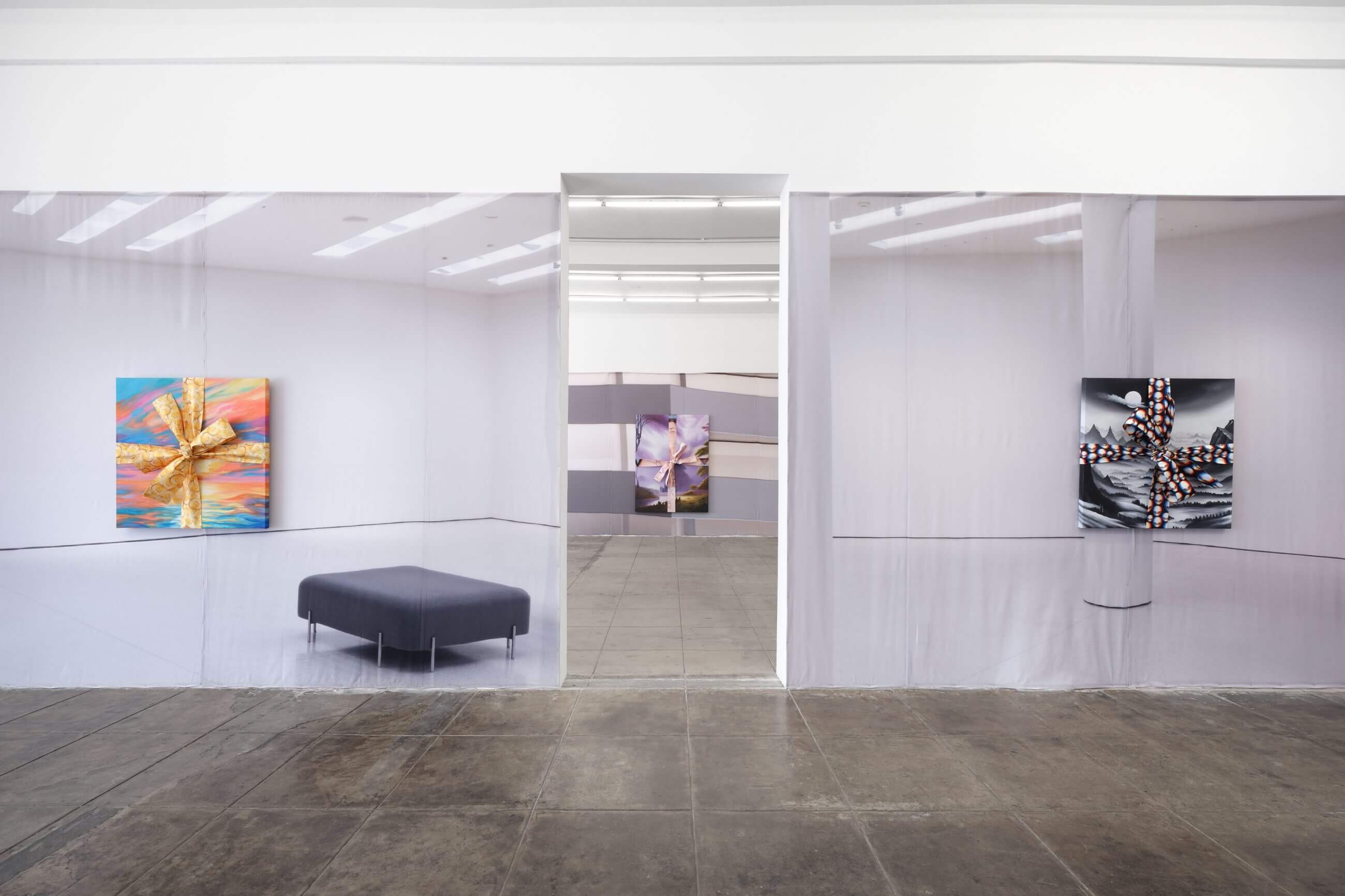
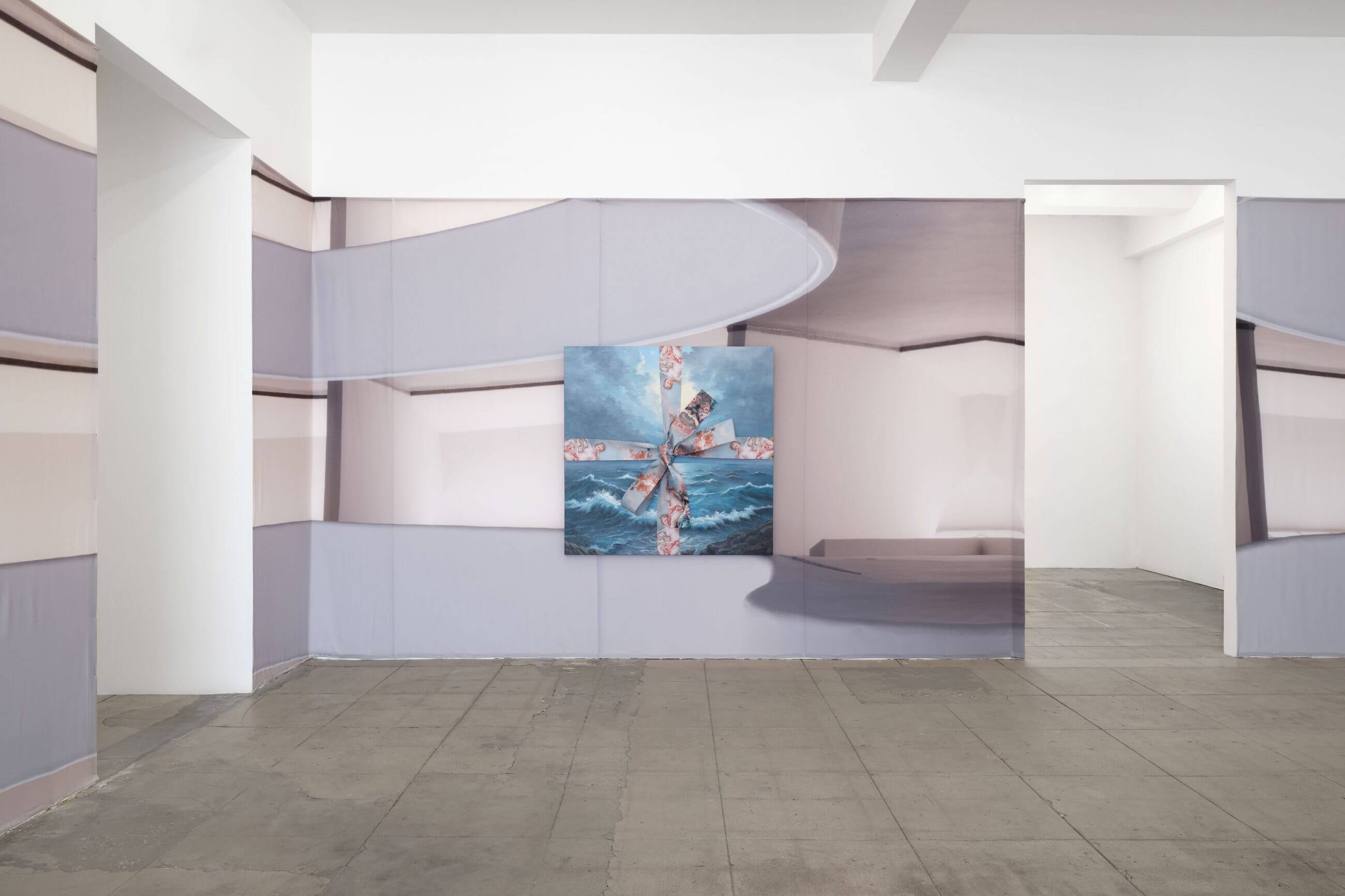
Some artists build worlds; others wrap them up. Walking into Guggenheim, Eliza Douglas’s latest solo exhibition, the question arises instantly: what exactly are we looking at? A simulacrum? A caricature? Or a sealed gift, waiting to be opened? And above all, what kind of gift? The monumental stage-like fabrics draped along the walls, printed images of the Guggenheim’s iconic spiral, don’t invite you to walk their curve but to interrogate it. Are these curtains, or backstage flats? Inside, outside, above, below: spatial logic dissolves. And the paintings themselves, tied up in three-dimensional bows, seem to guard a secret that refuses to unfold.
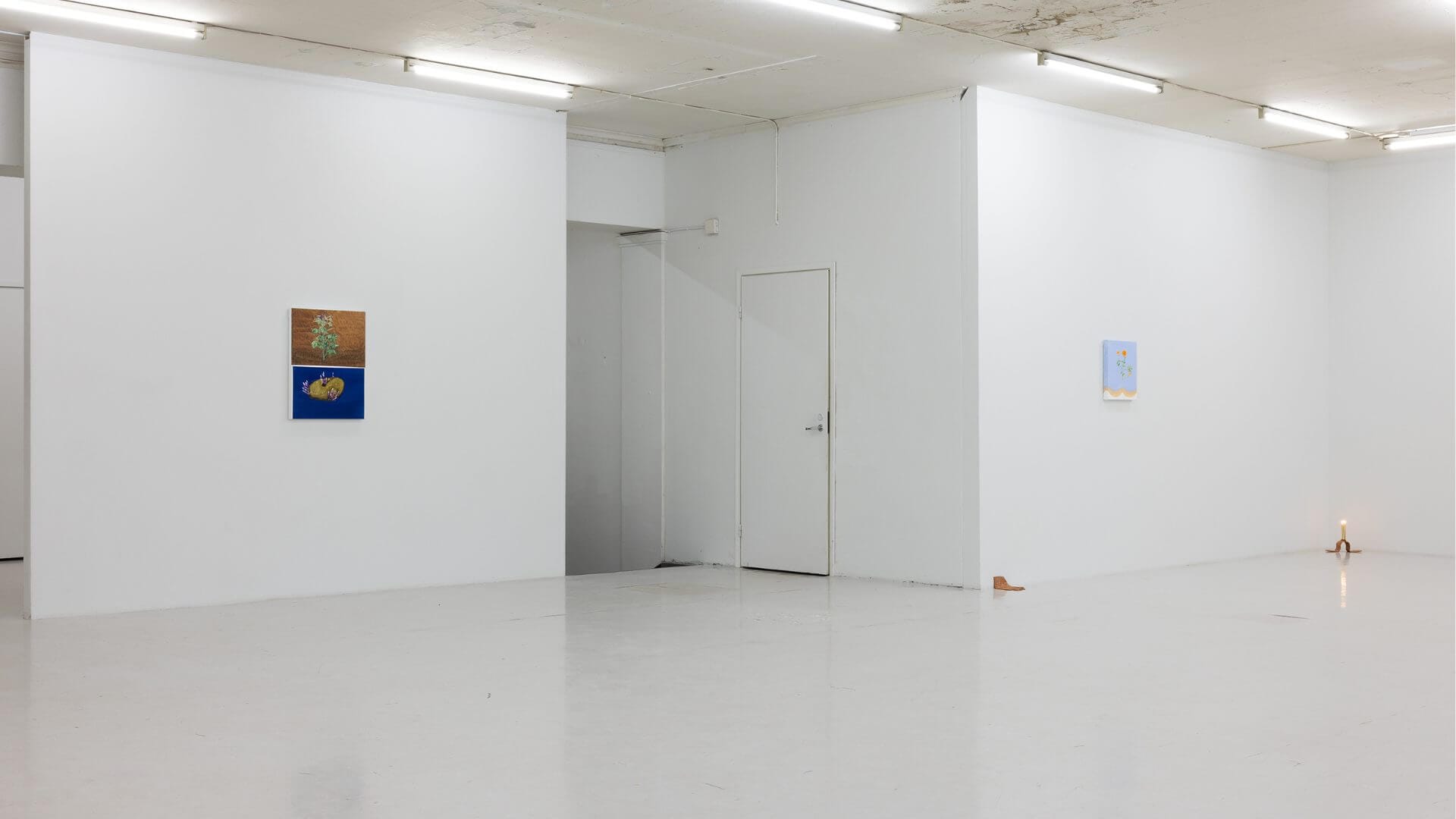
At Overduin & Co., visitors step into a disorienting silence, broken only by the occasional rustle of textiles slicing through the gallery’s air. Controlled, cold lighting sharpens the synthetic sheen of the ribbons that encase each canvas. You’re not moving among artworks anymore, you’re inside a staged scene: a fictional museum, mimicking the Guggenheim’s monumentality but reversing its role. Along the sweeping curve of the fabric walls, the paintings emerge like apparitions: hung yet immobilized, captured by their own ornate bindings.
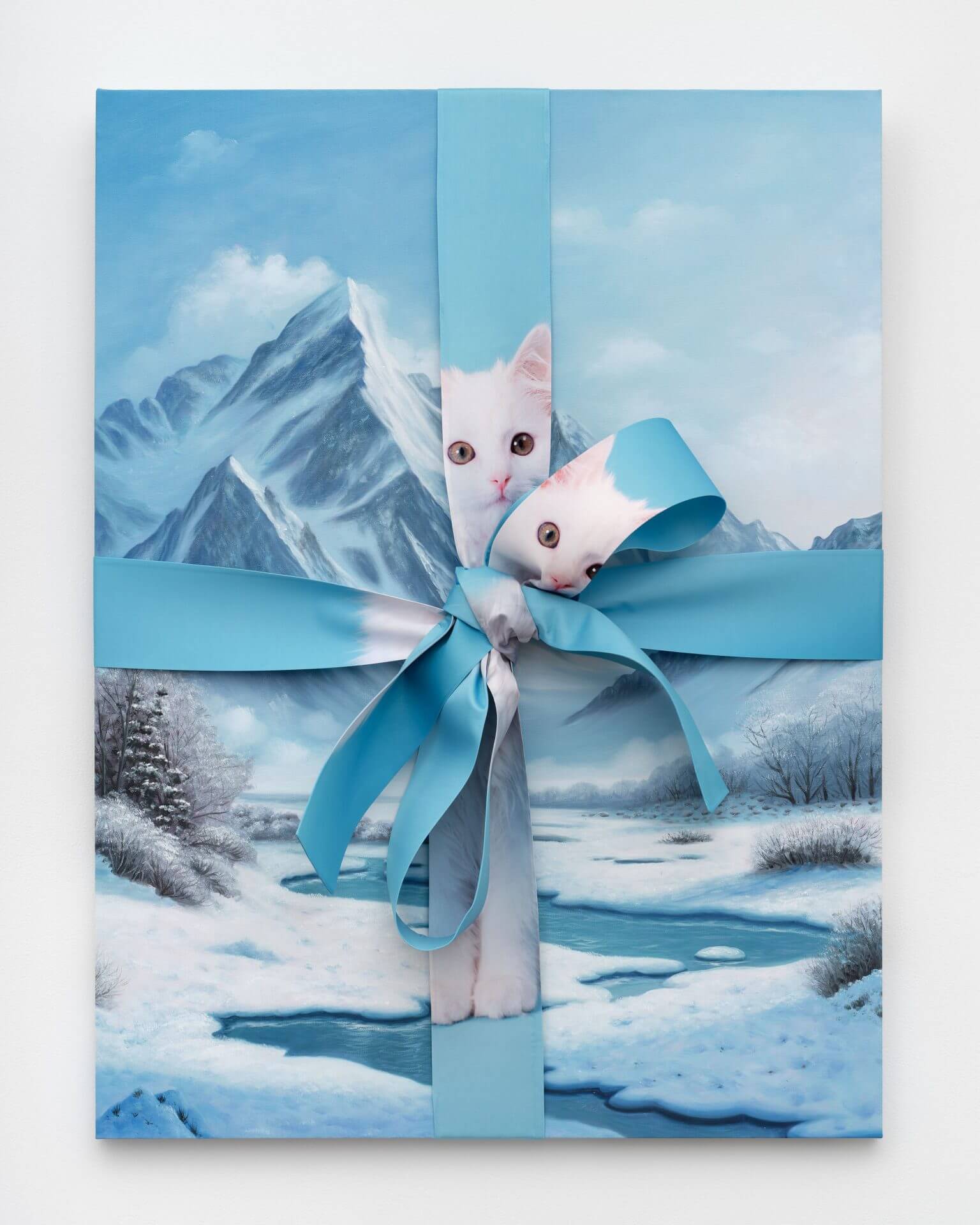
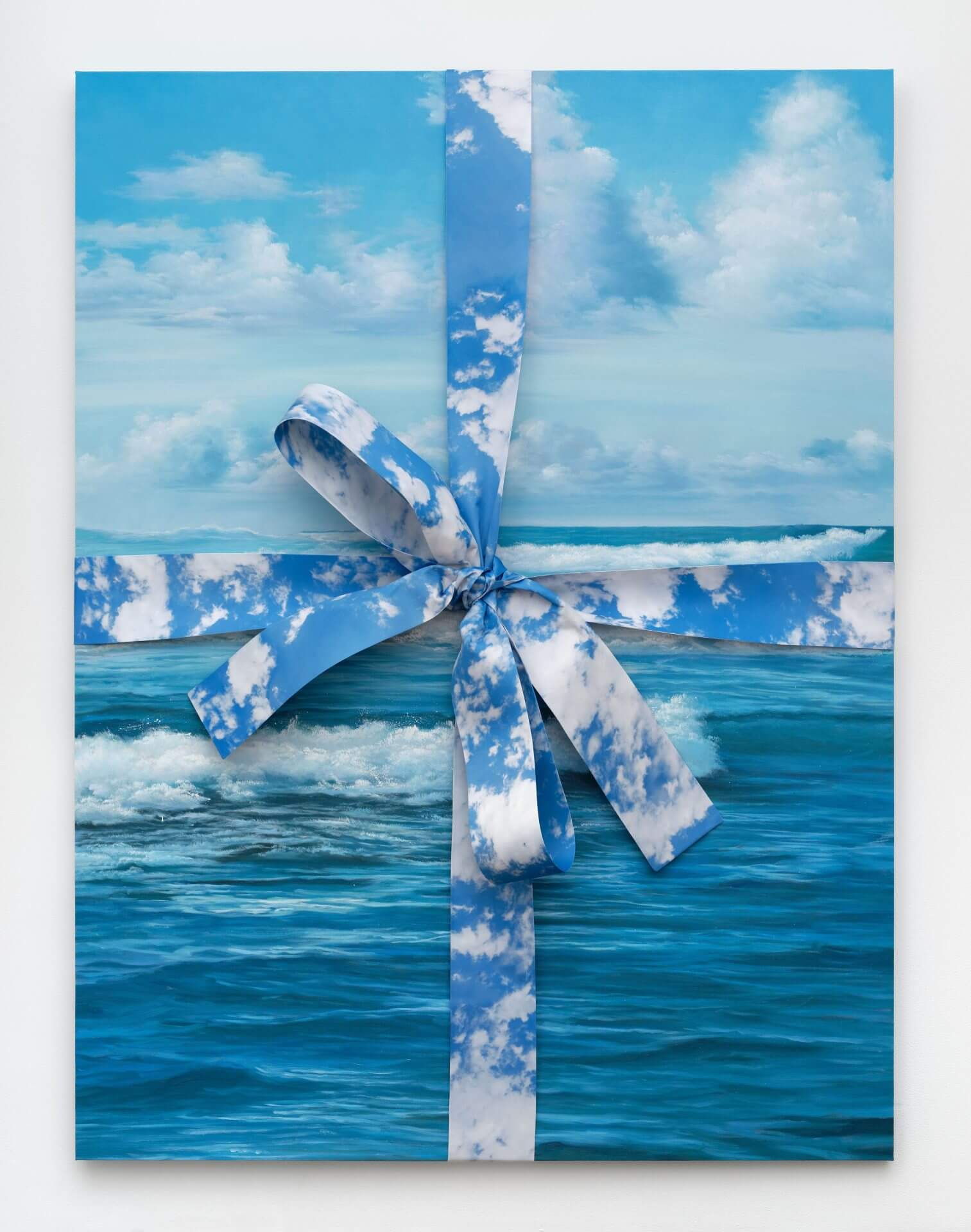
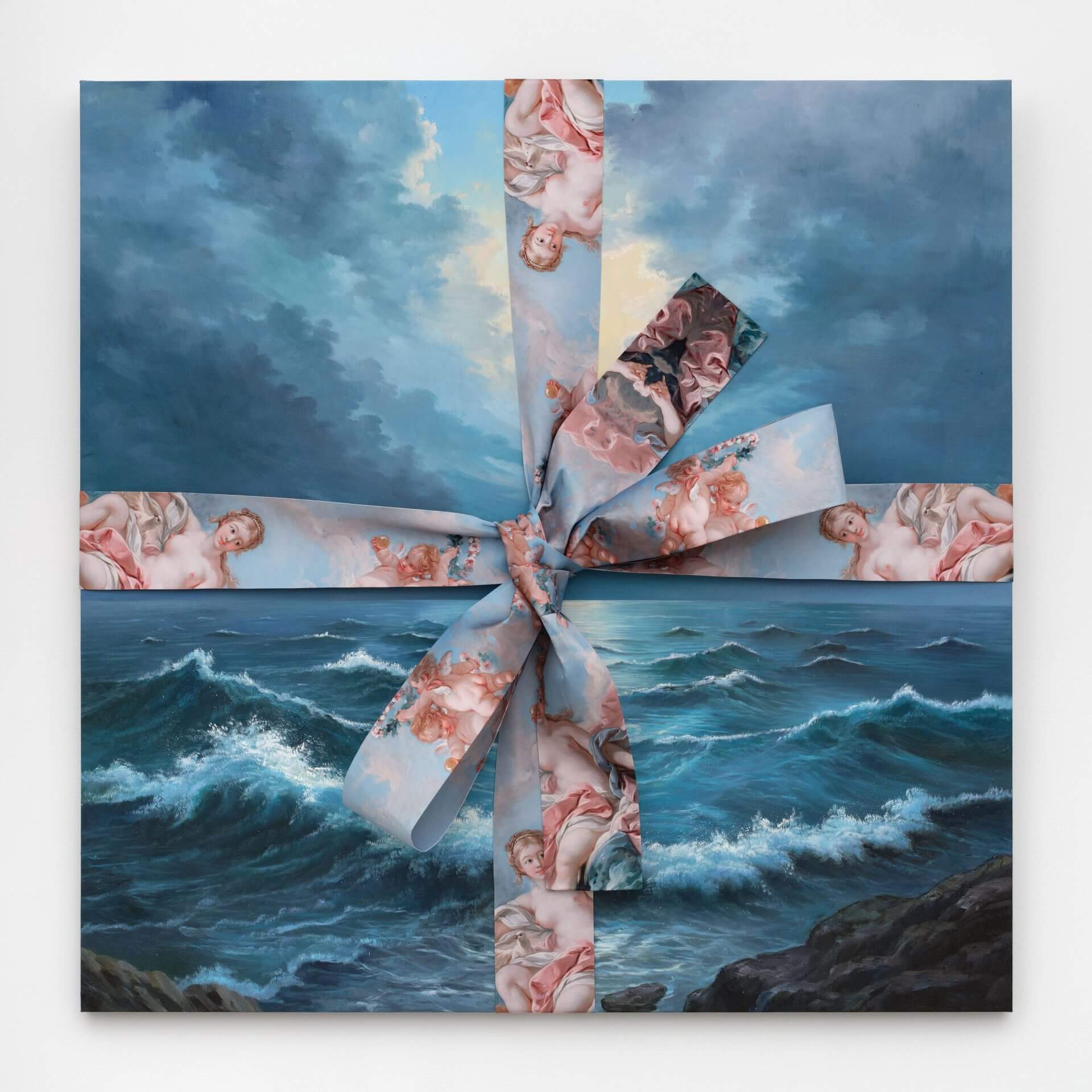
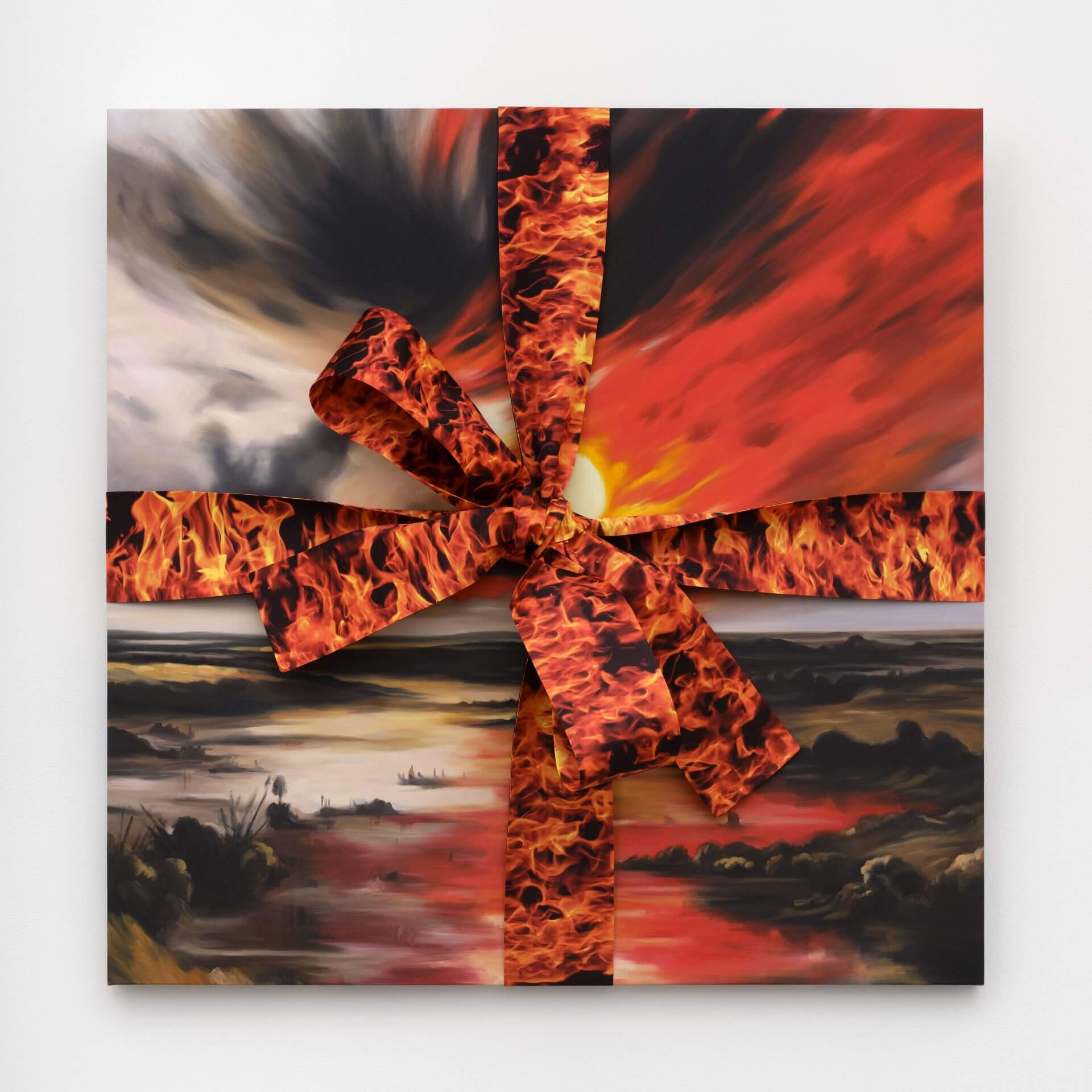
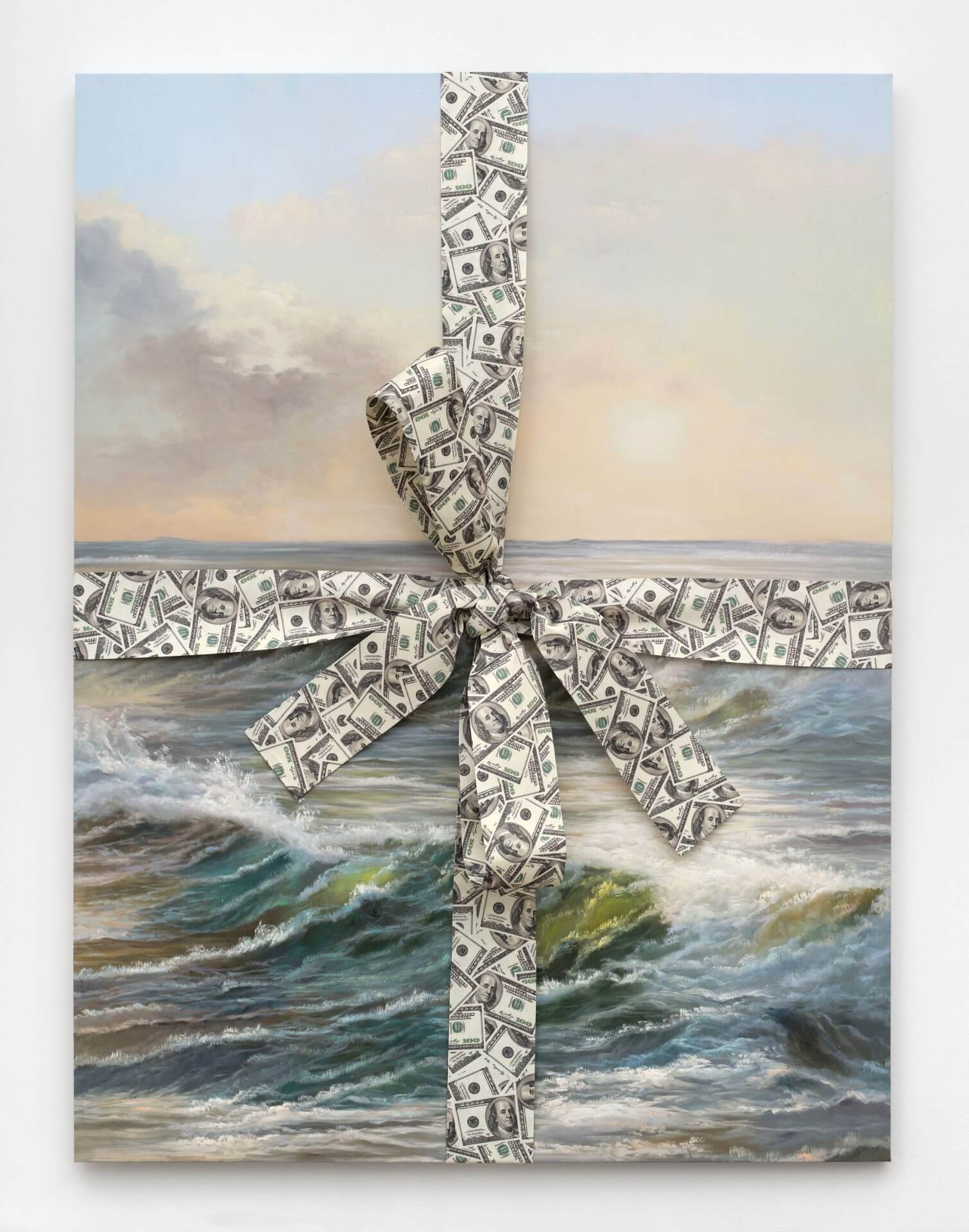
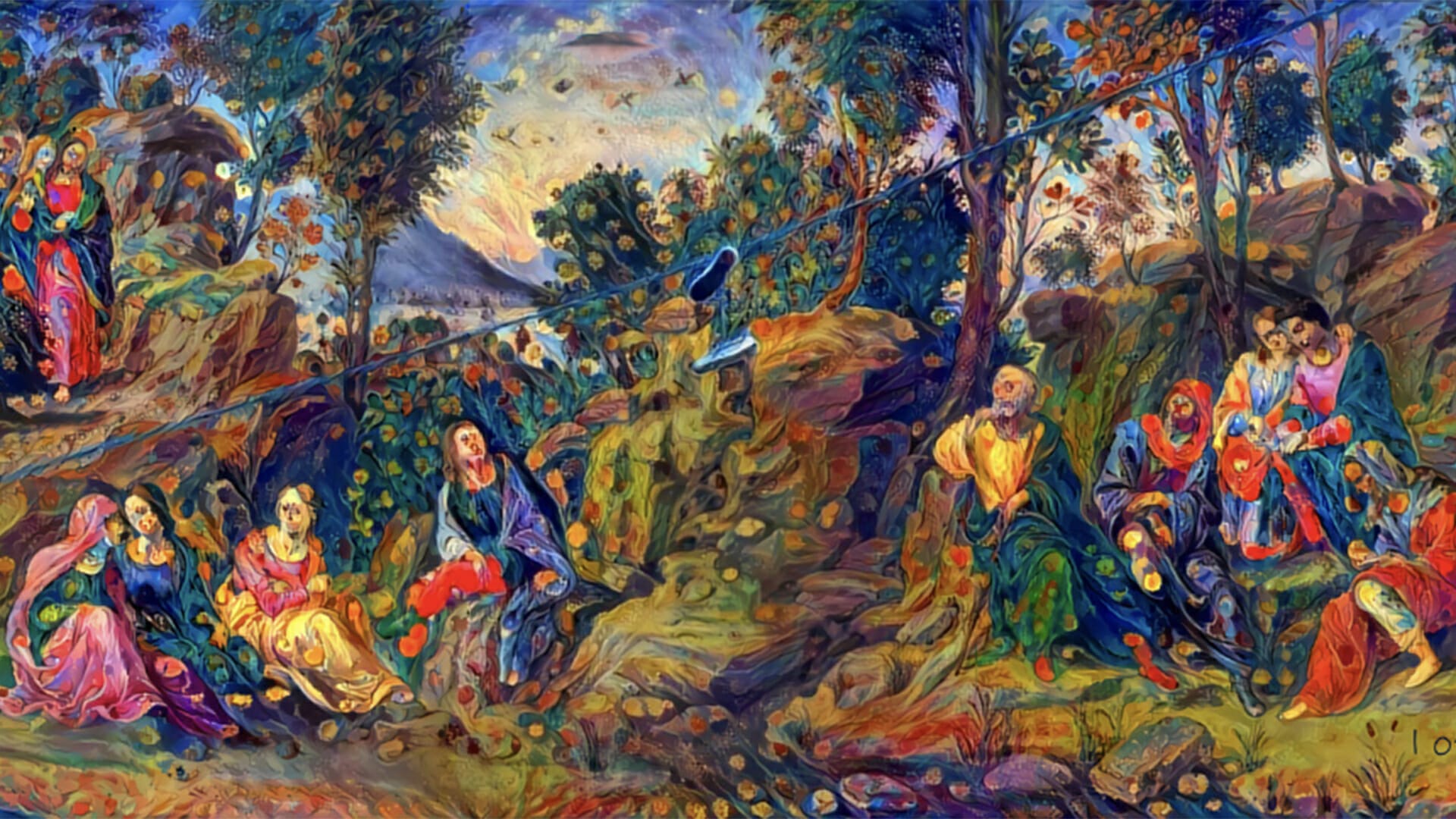
Douglas’s works, digitally constructed landscapes rendered in oil, flicker between the recognizable and the invented. The source images, scraped from the internet, are reworked until they become ambiguous, unreadable surfaces. But it’s the act of “decoration” that delivers the real disruption. The sculptural bows aren’t embellishments; they’re interventions, physical and conceptual barricades. They literally bind the painting. And in doing so, they declare its objecthood: the canvas becomes a hybrid, neither image nor sculpture, but a fragment of a larger installation.
Douglas’s visual language thrives on ambiguity. The oil paint, a medium laden with tradition, clashes with the cold flatness of the source images, while the ribbons, made of synthetic, glossy, plastic-like materials, push the entire ensemble toward fetish aesthetics. Each “bow painting” is a paradox: it both celebrates and negates the pictorial surface, wrapping it tightly. These works don’t seek to be viewed; they insist on being experienced as obstacles.
Throughout Douglas’s career, woven with fashion-world references and ironic appropriations, from her faux “Whitney Biennial” to the fake “Gagosian” booth, one finds a constant push-pull between authorship and disguise. But here, she arrives at a more unsettling synthesis. No longer the mimic, she becomes the self-staging artist, locking and containing herself within her own gestures. The works, packaged like luxury commodities, speak of painting not as expression, but as object of consumption. And the museum she invokes, the Guggenheim, is reduced to its essence as symbol: an enveloping architecture, flattened into backdrop.
Eliza Douglas
“Guggenheim”
June 28 – August 2, 2025