Anzhelika Palyvoda, Céline Struger, Sofiia Yesakova, Doubled presence in a disembodied space at TROST, Graz

“Doubled presence in a disembodied space” by Anzhelika Palyvoda, Céline Struger, and Sofiia Yesakova, curated by Markus Sworcik and René Stiegler, at TROST, Graz, 11/12/2025 — 23/01/2026.


How do you inhabit a body that is no longer there? And what truly remains when matter becomes a relic, when the image stops representing and starts leaking absence?Entering TROST in Graz feels like stepping into the gap between presence and ghost, a charged emptiness, ready to vibrate. The title “Doubled Presence in a Disembodied Space” sounds like a paradox, a strange formula that suggests being and disappearing at once. Deleuze’s ideas drift through the room like a quiet rhythm: repetition, difference, echo. But here, philosophy becomes physical, or what’s left of it, through the shared work of Céline Struger, Anzhelika Palyvoda, and Sofiia Yesakova. Three artists, like overlapping voices, appearing and vanishing in the same space.

The setup is quiet, but not calm. Flickering lights reflect on rough surfaces, casting shadows that seem more solid than the works themselves. The mood is part shrine, part laboratory. Every piece, a fragment, a bone, a reflection, feels placed not to show itself but to hint at something missing. This isn’t a show to walk through quickly, it asks to be studied, watched slowly, almost listened to. The works aren’t arranged to tell a story but to infect the space. The viewer becomes a quiet witness, drawn into something already underway. The artworks don’t speak to each other directly, they reflect, distort, and sometimes cancel one another out.

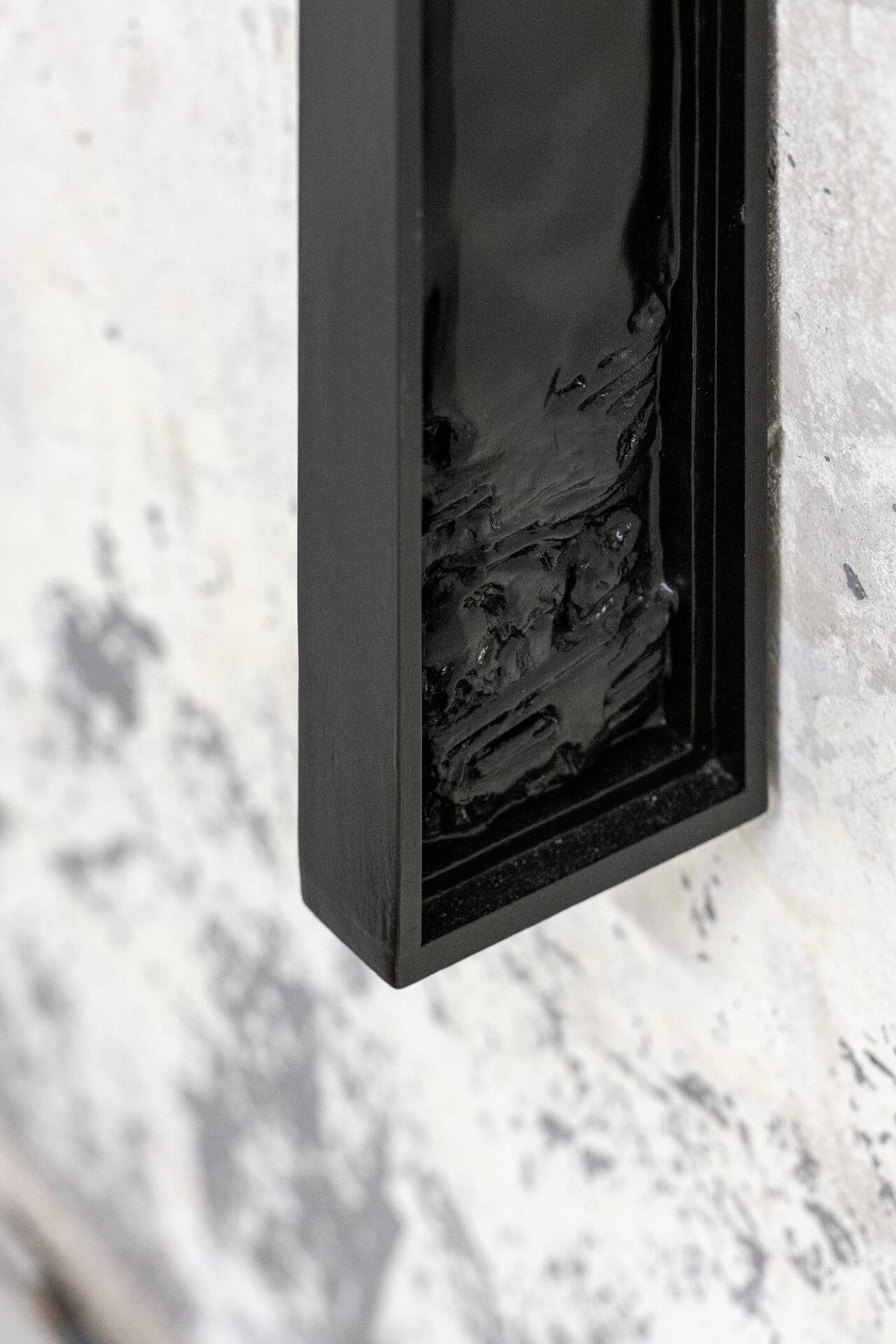
Technically, everything is pared down. The shapes are strict, as if holding in something emotional. The lines are fine and delicate, the materials, bone-like, see-through, fibrous, act more like skin than structure. Nothing is solid, nothing truly empty. The artists push their materials to reveal what lies beyond them. Plaster, wax, metal, fabric, they don’t build forms, they expose tension. Each piece is a symptom, a remnant, a clue. Together, they feel like a sacred inventory, less like artworks and more like secular relics. Struger, Palyvoda, and Yesakova work like modern icon-makers, not drawing holy figures but dissecting memory. Every gesture feels like it comes after the fact, every image is a leftover, a trace.

The show, on view until January 23, deserves a slow, uneasy visit. Some presences can only be felt when we stop looking for the body.

-FW

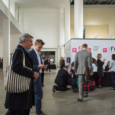
Exhibition view: Doubled presence in a disembodied space, Anzhelika Palyvoda, Céline Struger, Sofiia Yesakova, curated by Markus Sworcik and René Stiegler, TROST, Graz. ©Tom_Biela
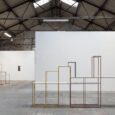
Exhibition view: Doubled presence in a disembodied space, Anzhelika Palyvoda, Céline Struger, Sofiia Yesakova, curated by Markus Sworcik and René Stiegler, TROST, Graz.©Tom_Biela
Exhibition view: Doubled presence in a disembodied space, Anzhelika Palyvoda, Céline Struger, Sofiia Yesakova, curated by Markus Sworcik and René Stiegler, TROST, Graz. ©Tom_Biela
Exhibition view: Doubled presence in a disembodied space, Anzhelika Palyvoda, Céline Struger, Sofiia Yesakova, curated by Markus Sworcik and René Stiegler, TROST, Graz.©Tom_Biela

Founded in 2021, Fakewhale advocates the digital art market's evolution. Viewing NFT technology as a container for art, and leveraging the expansive scope of digital culture, Fakewhale strives to shape a new ecosystem in which art and technology become the starting point, rather than the final destination.

Fakewhale Log is the media layer of Fakewhale. It explores how new technologies are reshaping artistic practices and cultural narratives, combining curated insights, critical reviews, and direct dialogue with leading voices.