
Is taste still our own sensation, or in recent years has visual taste increasingly emerged as the outcome of an anticipatory process? Recommendation systems, behavioral analytics, trend forecasting, and automated mood boards often function as devices of aesthetic prediction, indicating what will be desirable before it is even articulated as desire. From social media to blogs, websites, videos, and podcasts, taste takes shape as a calculated probability rather than as the direct result of experience.
It is as if platforms operate as architects of expectation. Every suggested image, every promoted style, every reiterated visual association contributes to constructing a horizon of meaning in which what appears valid, recognizable, and effective is already stabilized. Artistic production thus orients itself within a simulated future that precedes and conditions the present.
The aesthetics of prediction introduces a profound transformation in the relationship between artwork and context. Artists confront models of anticipated reception that define, in advance, the parameters of visibility and compatibility. An inverse feedback dynamic emerges: creative production aligns itself with what the system signals as performant, legible, and circulable.
Historically, taste has formed through ruptures and dissonances, along trajectories marked by errors and initial misunderstandings. Today, it tends to consolidate through processes of preventive normalization. Deviations are rapidly absorbed into recognizable patterns, turning the new into a controlled variation. Prediction operates as a device for domesticating the possible.
This condition reconfigures the creative act. Creation increasingly positions itself as a response to an already mapped field, in which the boundaries of possibility are delineated in advance. What is at stake becomes the margin of surprise: when taste is pre-calculated, art functions as a confirmation of probabilities rather than as an opening of possibilities.

Post-Data Creativity
The aesthetics of prediction rests on a precise technical premise: the analysis of the past as the basis for anticipating the future. Recommendation systems and generative models learn from archives of images, styles, behaviors, and preferences that already exist. Within this framework, the new does not emerge as rupture, but as interpolation. It is a statistical variation on what has already occurred.
This logic therefore produces a form of post-data creativity. Not a creativity that ignores history, clearly, but rather one that remains deeply constrained by it. When the imaginary is constructed from pre-AI datasets, collected before the acceleration of generative systems, the risk is not only repetition, but, over time, saturation. The more efficient the system becomes, the more it tends to explore already dense regions of aesthetic space, avoiding opaque zones that are poorly documented, difficult to classify, or resistant to codification.
The consequence is a compression of the possible. Forms that perform well are reiterated, refined, optimized; those that find no immediate correspondence in the data are discarded or rendered invisible. The aesthetic future is not imagined, but extracted. In this process, evolution gives way to recombination.
The central issue concerns the hierarchical position assigned to data. When past data becomes the dominant criterion of legitimacy, art directs its movement toward confirmation rather than exploration. Creativity then concentrates on perfecting what has already achieved recognition, while attention to what has yet to emerge narrows. The new is accepted only insofar as it appears statistically plausible.
Within this framework, post-data creativity is characterized by controlled productivity. Optimization replaces risk, and the reduction of error coincides with a contraction of radical deviation. Historically, however, art has advanced precisely in data-poor zones: spaces of uncertainty, misunderstanding, and failure that made the emergence of unexpected forms possible.
When the past asserts itself as the primary horizon of the future, innovation continues to operate, but it does so within coordinates that are already mapped. Change persists, while its depth progressively thins.
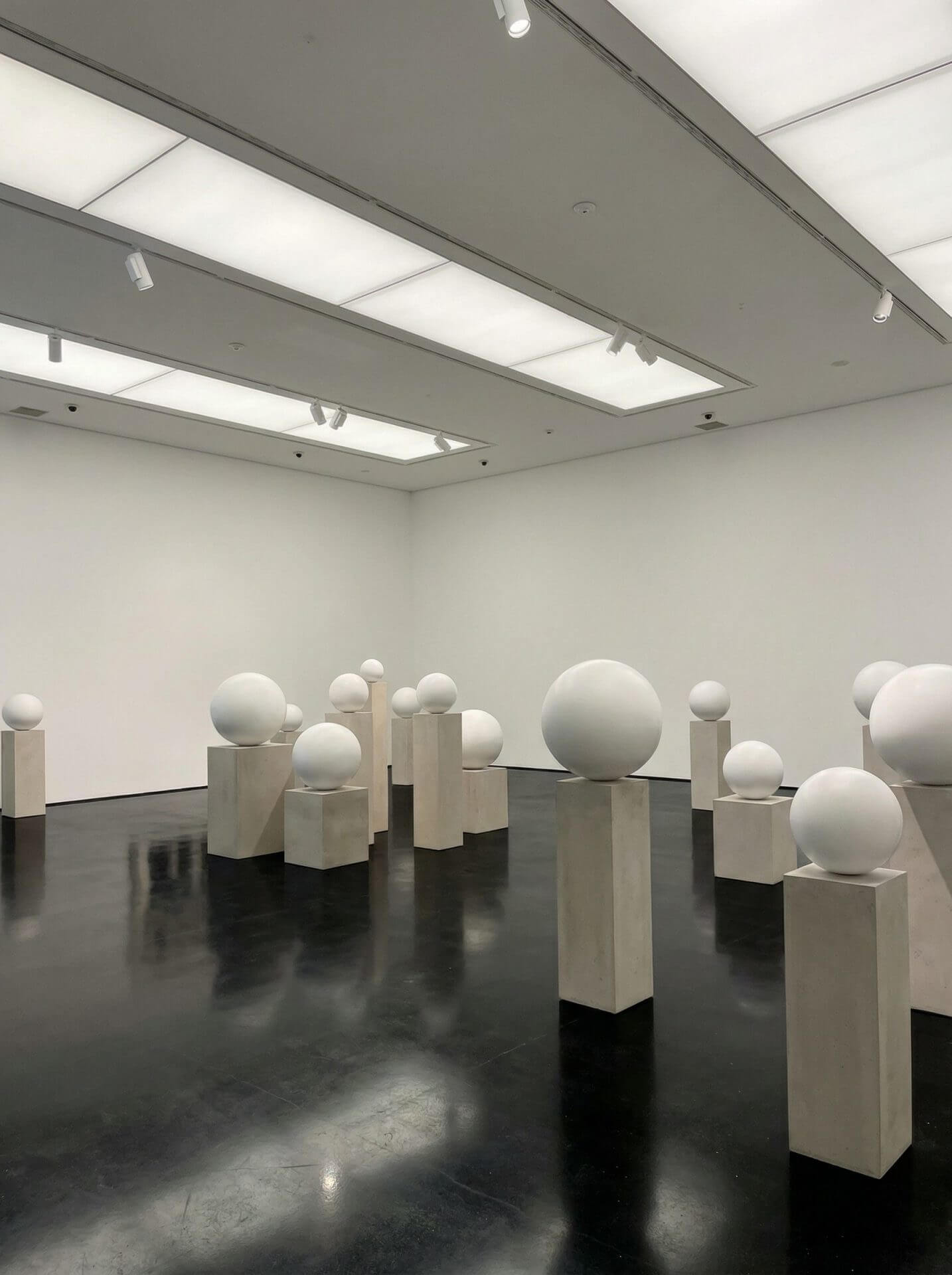
Stylistic Convergence and Creativity as Optimization
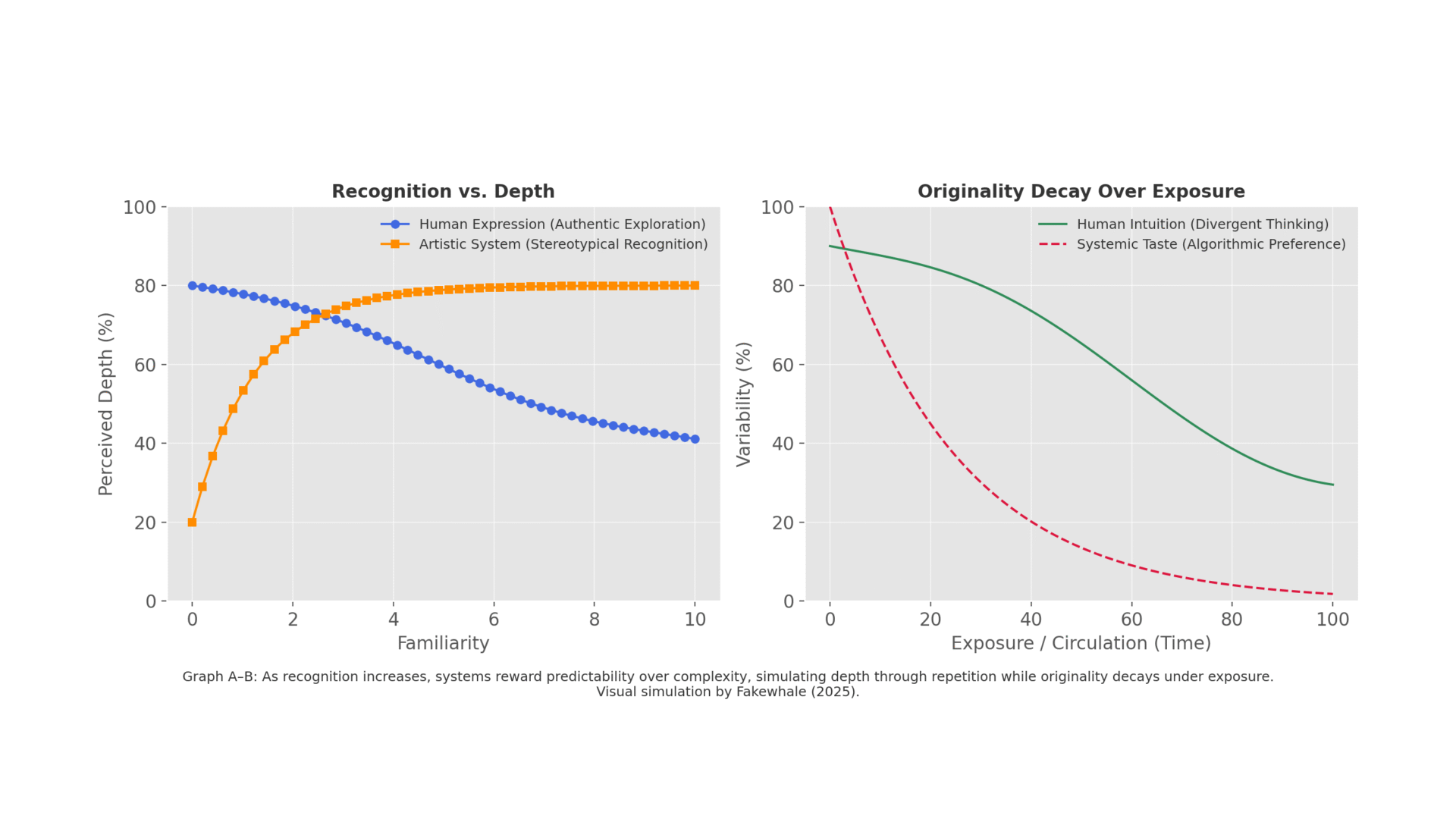
One thing is clear: when taste is anticipated and creativity is grounded in pre-existing data, the most evident systemic effect is stylistic convergence. Languages that once developed along divergent paths begin to draw closer, to share similar formal solutions, to move within an increasingly restricted aesthetic perimeter. Difference does not disappear, but it is attenuated.
This phenomenon is not the result of a conscious choice, but of an environment that rewards compatibility. Platforms tend to make visible what performs best according to metrics of engagement, recognizability, and retention. Artists, consciously or not, find themselves producing within these parameters. Creativity becomes a form of optimization: the aim is no longer what needs to be said, but what can circulate without friction.
In this context, style assumes a strategic function. It is no longer only expression, but interface. It must be legible, immediately classifiable, aligned with an already sedimented imaginary. Experimentation is tolerated only insofar as it does not compromise rapid comprehension. The work must be new, but not too much; different, but recognizable; surprising, yet coherent with what the system expects.
Stylistic convergence produces a surface-level homogeneity. Formally correct works, technically refined, aesthetically compatible, delineate a field of high average quality. What is reduced in this process is friction: the work’s capacity to resist, to remain opaque, to generate misalignment. Art as optimization proves effective, but tends to open fewer unexpected spaces.
When creativity is evaluated in terms of performance, error becomes a variable to be contained. Yet throughout the history of art, it has been precisely excess, dysfunction, and inadequacy that have triggered the most profound transformations. Error has operated as a generative force, capable of shifting the boundaries of the possible.
Stylistic convergence thus signals a structural tension. On one side, a system oriented toward predictability and compatibility; on the other, a practice that finds its fullest existence in deviation. It is within this zone of friction that the possibility remains for art to continue producing meaningful ruptures, rather than merely refining what is already recognized.
Error as an Evolutionary Driver
If the aesthetics of prediction pushes toward convergence, error remains the point at which something can still deviate. The history of art is not a sequence of progressive improvements, but a series of productive accidents: out-of-focus gestures, premature forms, works that arrived too early or were understood too late. Error does not appear at the margins of the creative process; it constitutes its internal dynamic.
Today, however, its status has changed. In environments governed by recommendations, metrics, and immediate feedback, error is read as malfunction. What does not perform slips out of frame; what does not adapt loses visibility. The issue is not exclusion in itself, but the speed at which it occurs. Error is no longer granted the time to remain error, to generate friction, to become thinkable. Yet it is precisely the time of incomprehension that allows a work to settle, to create zones of meaning that are not immediately resolvable.
Error introduces noise where the system demands cleanliness; ambiguity where clarity is required; slowness where reactivity is expected; incoherence where brand continuity is demanded. These elements do not improve the experience, they complicate it. But it is within this complication that art has often found its capacity to shift paradigms, rather than to confirm them.
From an evolutionary standpoint, error does not indicate a correct direction. It opens bifurcations. It multiplies possibilities without guaranteeing outcomes. This is exactly what a predictive system tends to reduce, because bifurcations increase uncertainty and make the future less calculable. The resulting aesthetic is stable, efficient, and legible. It functions as long as the context remains unchanged. It becomes fragile when the context truly shifts.
To reclaim error as an evolutionary driver does not mean rejecting technology or idealizing chaos. It means releasing art from the obligation to always perform. Error is not meant to prove anything. It serves to interrupt an already traced trajectory. It is within this interruption, uncomfortable, unproductive, difficult to measure, that art can still produce difference, rather than merely optimize what has already been predicted.
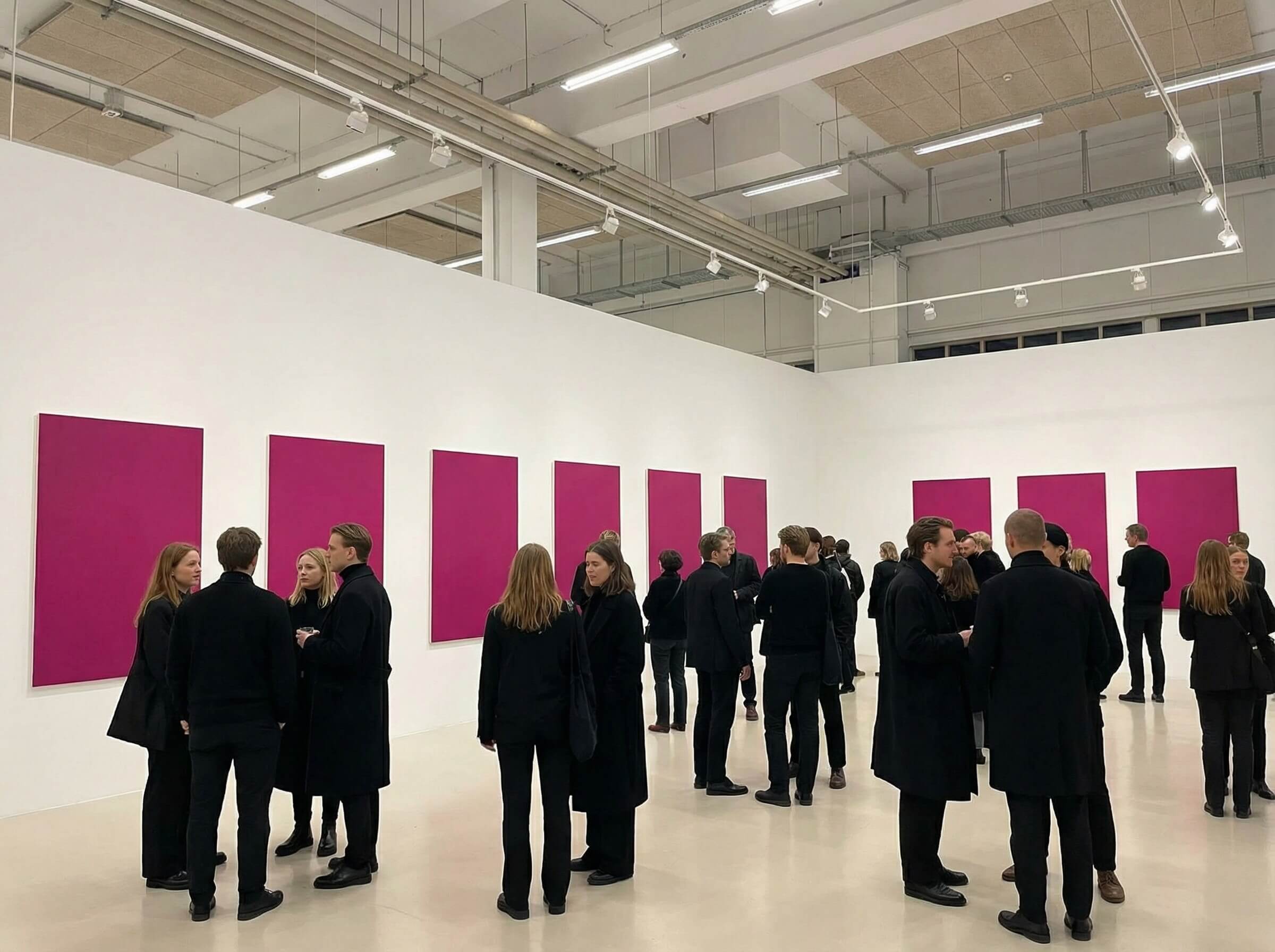
Is Anti-AI Art Possible?
Yes, but only if we first clarify what “anti-AI” actually means. It is not a matter of opposing machines, nor of imagining a return to a pre-technological purity that never truly existed. Today, AI is an environment: it structures conditions of visibility, shapes expectations, and anticipates what will be considered valid. For this reason, the issue is not the technology itself, but the logic that runs through it, the logic of prediction. To speak of anti-AI art, then, is to speak of an art that does not fully cooperate with predictability.
The critical point is that AI does not eliminate creativity; it renders it traceable. It channels creativity into compatible, legible, performant forms. This is where something tightens, because historically art has produced its most significant shifts precisely where compatibility was not guaranteed, where a work arrived out of time, out of register, out of scale. Today, by contrast, most creative practices unfold in dialogue with an already simulated future, reacting to what the system has flagged as acceptable before it is recognized as necessary.
Anti-AI art does not emerge from rejecting tools, but from a series of choices that introduce friction into the predictive process. Ambiguities that do not resolve immediately; temporalities that do not optimize attention; forms that resist easy summarization; works that do not instantly clarify what they are meant to be. This is not an aesthetic position, but an operational one: making classification difficult, slowing translation into patterns, increasing the cost of normalization.
Of course, no work is truly outside the system. Even dysfunction can be absorbed, stylized, turned into a recognizable language. The difference lies not in the illusion of definitive escape, but in time. An anti-predictive art does not withdraw forever; it introduces delays, frictions, and zones of opacity that prevent immediate assimilation. In this temporal slippage, a space of indeterminacy reopens, small, but real.
Such a posture guarantees neither consensus nor quality. It also produces uncomfortable, difficult, sometimes repellent works. Indeed, it entails accepting failure as a concrete possibility. But this is precisely where the argument becomes serious: because an error that is not immediately corrected, a work that does not perform, a gesture that does not instantly find its audience destabilizes the very logic of the predictive system. It proves nothing; it interrupts.
Perhaps, then, the right question is not whether an art against AI exists, but whether it is still possible to produce works that do not perfectly coincide with the conditions of their circulation. In an ecosystem that rewards immediate legibility and instant recommendability, the most radical act becomes conscious inadequacy, not as a pose, but as a practice. An art that does not seek to beat the algorithm, but to render it, for a moment, inefficient. It is in that moment that something can still deviate, and therefore happen.