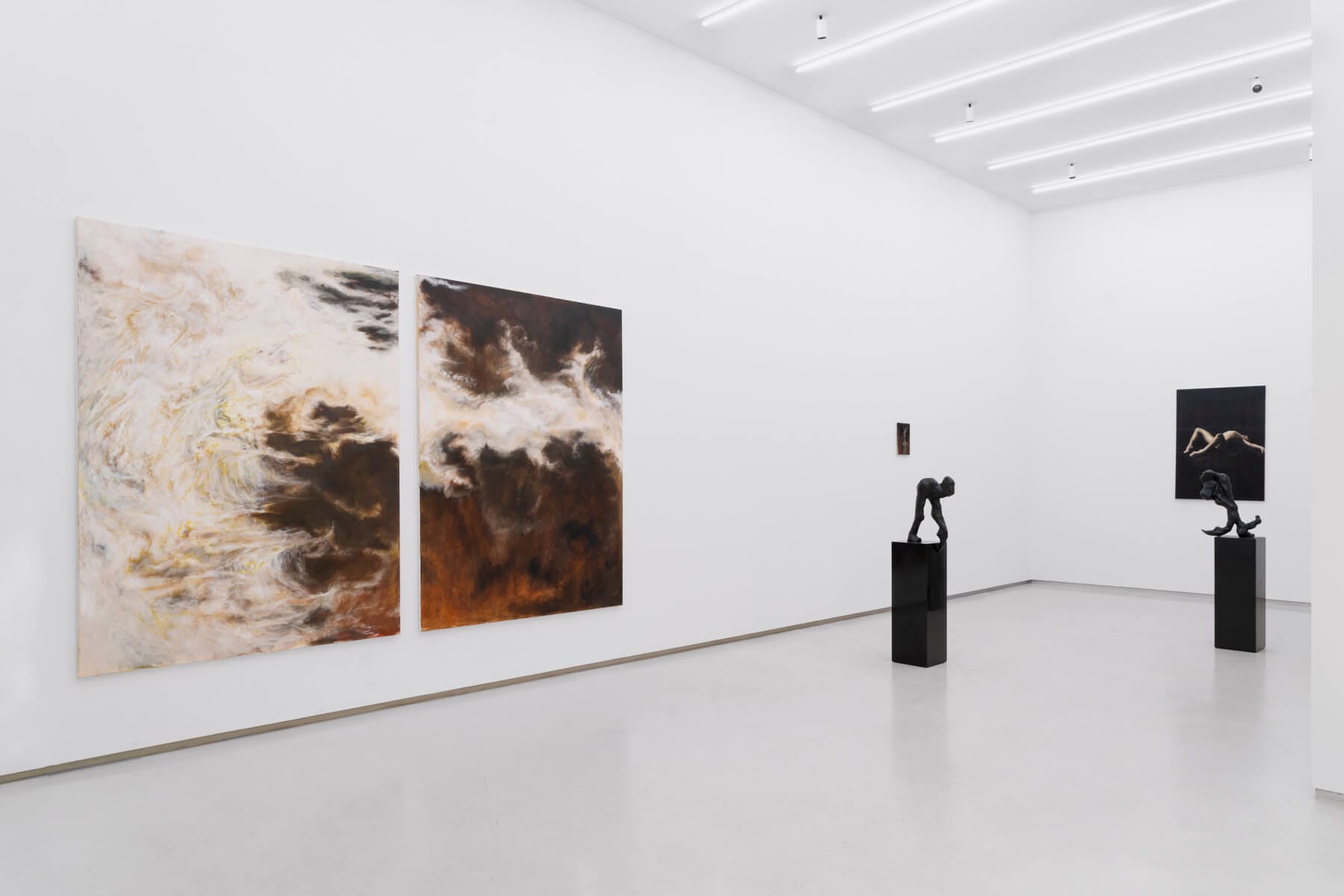
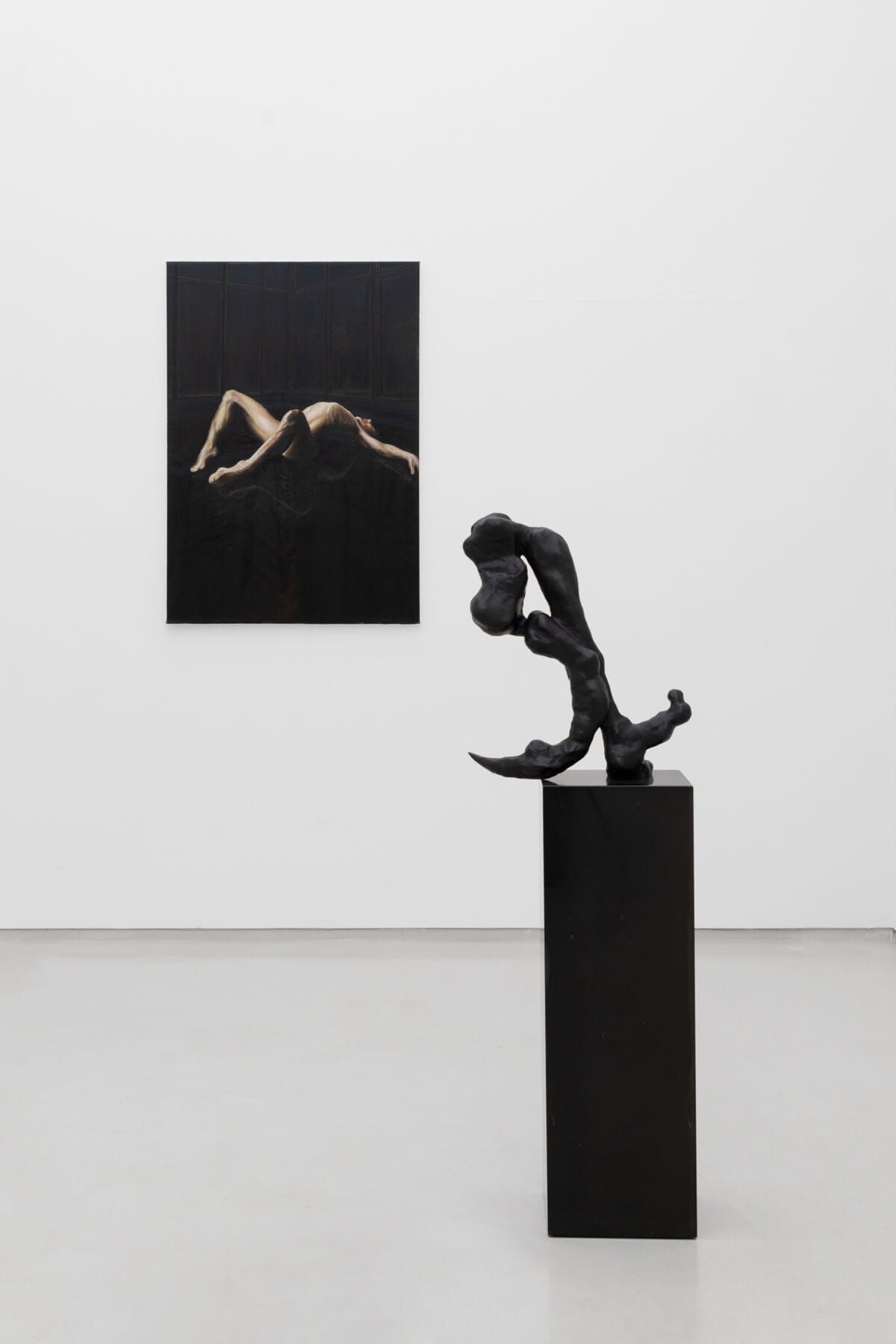
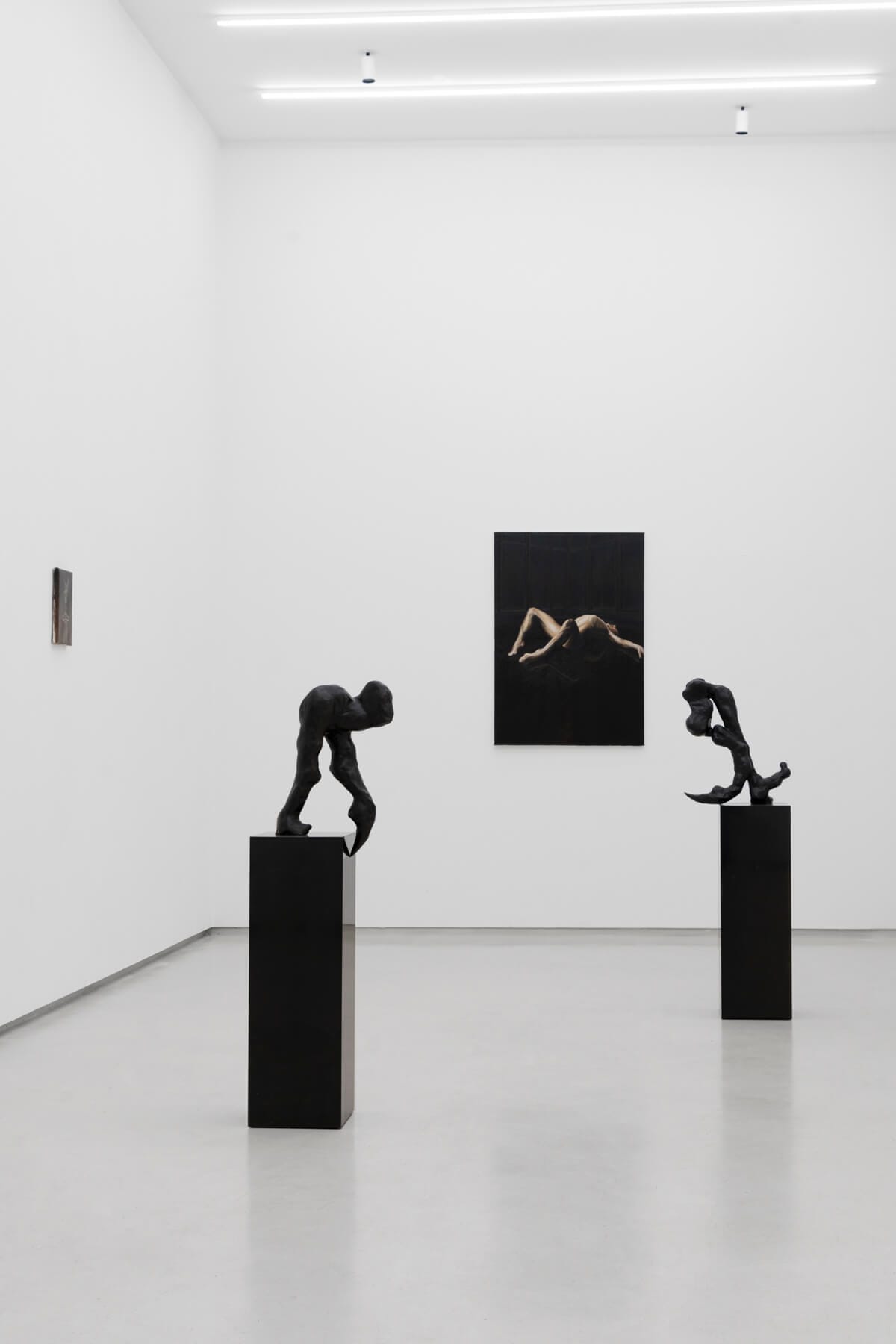
Christa Joo Hyun D’Angelo, Mads Hyldgaard Nielsen, Sally von Rosen, Pain of Pleasure at Tempesta gallery, Milan.
Pleasure is never innocent. It arrives charged, volatile, already shadowed by its inversion. One feels this immediately, even before stepping into Pain of Pleasure, not a contradiction, but a collision of states. In this exhibition, curated by Domenico de Chirico at Tempesta Gallery, pleasure does not soothe, it disturbs. It stretches across the skin like a question unanswered, like a wound that pulses instead of healing. And perhaps this is its truth, pleasure as a form of crisis, a fragile and flickering encounter between desire and loss.
This show does not stage comfort or catharsis. It invites us instead into a terrain where ecstasy and exposure are inseparable, where the beautiful turns violent and the violent, intimate. Christa Joo Hyun D’Angelo, Mads Hyldgaard Nielsen, and Sally von Rosen operate on different registers, video, painting, sculpture, yet their works orbit the same gravitational pull, that of desire as both transgression and knowledge. Their poetics are lucid, layered, and at times brutally tender. They do not represent pain and pleasure, they embody them as simultaneous states.
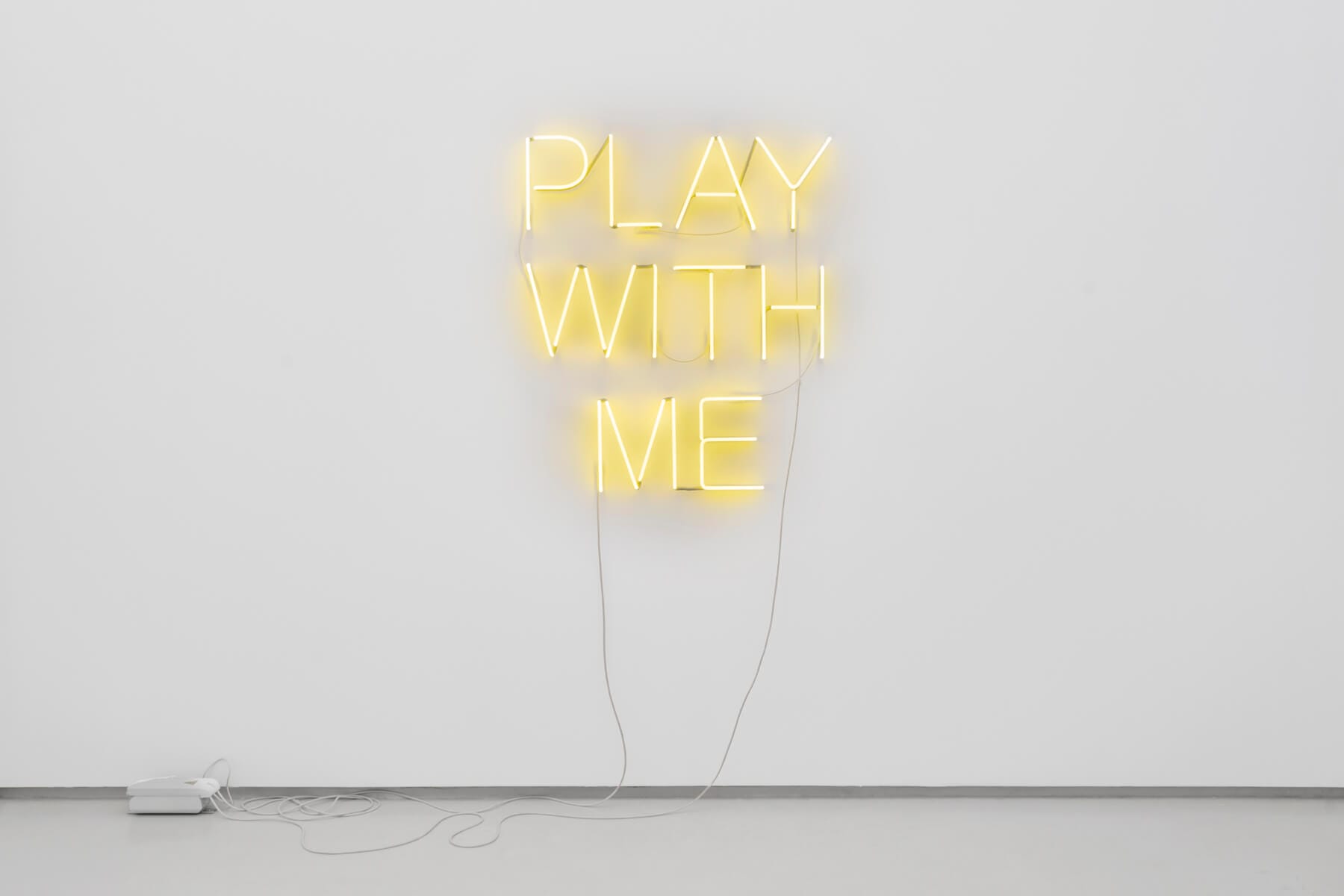
Christa Joo Hyun D’Angelo’s The Death Drive – A Love Story unspools like a psychic map of trauma, cinema, pop culture, personal testimony, and psychoanalytic reference collide in a video that is less narrative than excavation. Shot in stark contrasts, black-and-white melting into saturated color, it exposes how love can be both cradle and weapon. Inspired by figures like Rosetta, Asia Argento’s The Heart Is Deceitful Above All Things, and the Menendez brothers, the work conjures a terrain where family, abuse, and power flow into one another. The repetition of violence is not merely recounted, but performed in the rhythm of the montage. Neon works like PLAY WITH ME sharpen this seduction, turning a familiar pop phrase into a mantra of power play, where language itself becomes complicit. Here, D’Angelo offers not commentary but choreography, a grammar of wounds that bloom from within intimacy.
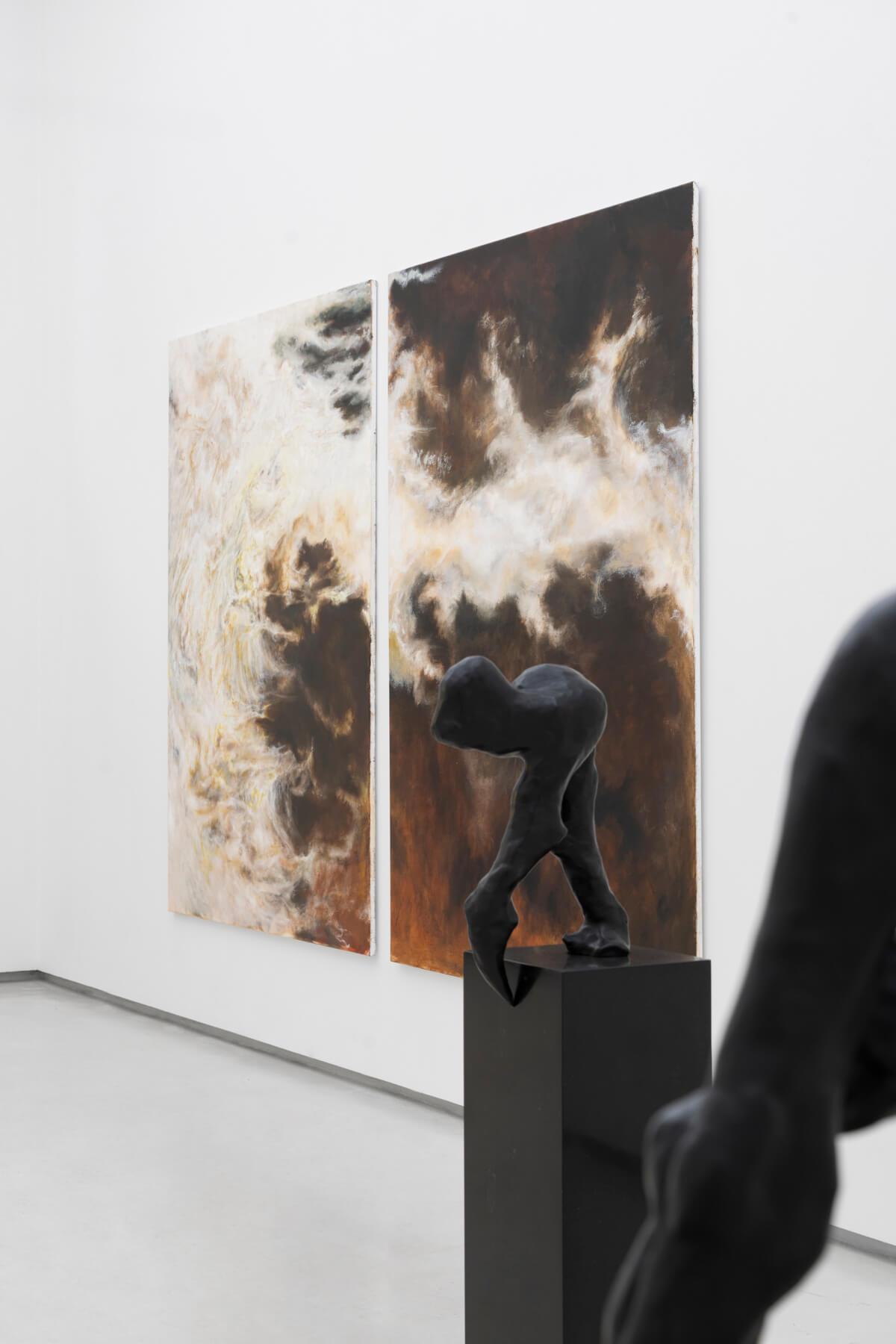
Mads Hyldgaard Nielsen, by contrast, works in oil but speaks through fire. His paintings recall the baroque, the sublime, the spectral body, yet they never settle into representation. They move like music. VI MVMNT Finale is one such composition, a luminous, contorted figure emerging from a dense atmosphere of smoke and magma, where gold leaf flickers like heat. Nielsen doesn’t depict sensation, he makes it happen. The body is not stable, but vibrational, caught between release and restraint, between desire and dissolution. If D’Angelo gives us the psychic wound, Nielsen paints the moment it ignites.
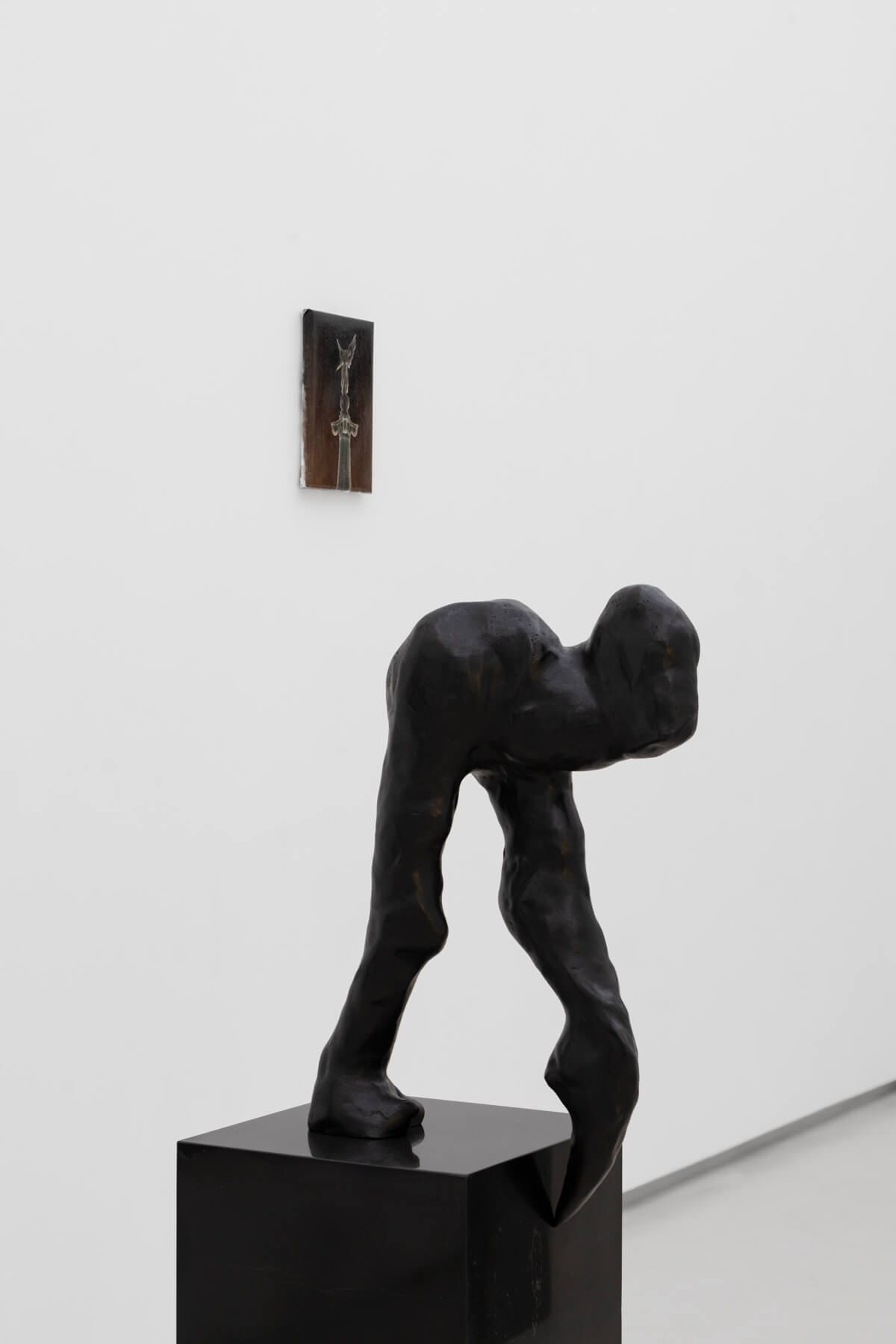
And then there are Sally von Rosen’s Tristo and Rosemary, fleshy, hybrid sculptures that resist category. These are not bodies as we know them, but organisms in the act of becoming. Fragmented, visceral, erotic, they evoke both the raw surrealism of Hans Bellmer and the posthuman materialism of Jane Bennett, matter that vibrates, suffers, transforms. Von Rosen returns the body to its most radical state, not as form, but as field. Feminist legacies ripple through her practice, yet what emerges is not reference, but force, the body as site of exposure and metamorphosis. It bleeds, glows, pulses, reclaims its vulnerability as a form of power.
Together, these works form not a thesis, but a temperature. Pain of Pleasure is an atmosphere, a sensory field where language falters and only sensation remains. It is not a spectacle of extremes, but a meditation on their entanglement. Desire is not explained, it is lived, through rupture, through saturation, through the unbearable beauty of contact. This is an exhibition that refuses to separate mind from body, pleasure from knowledge, aesthetics from survival. What links these artists is not medium or method, but a shared urgency, to touch what resists language, to expose what lives beneath it.
In an age of emotional anesthesia, when pleasure is flattened into performance and pain becomes content, Pain of Pleasure insists on another possibility. It returns us to a different kind of sensitivity, one that burns, disturbs, transforms. No resolution is offered, no closure. Only a threshold. The place where the skin trembles and meaning dissolves. Where art does what it must, exist, fiercely, vulnerably, and completely alive.