Martins Kohout, Leaving the house with an open fire, but briefly at MeetFactory, Prague
Leaving the house with an open fire, but briefly by Martins Kohout, curated by Ján Gajdušek, at MeetFactory, Prague, 30/10/2025–11/01/2026.
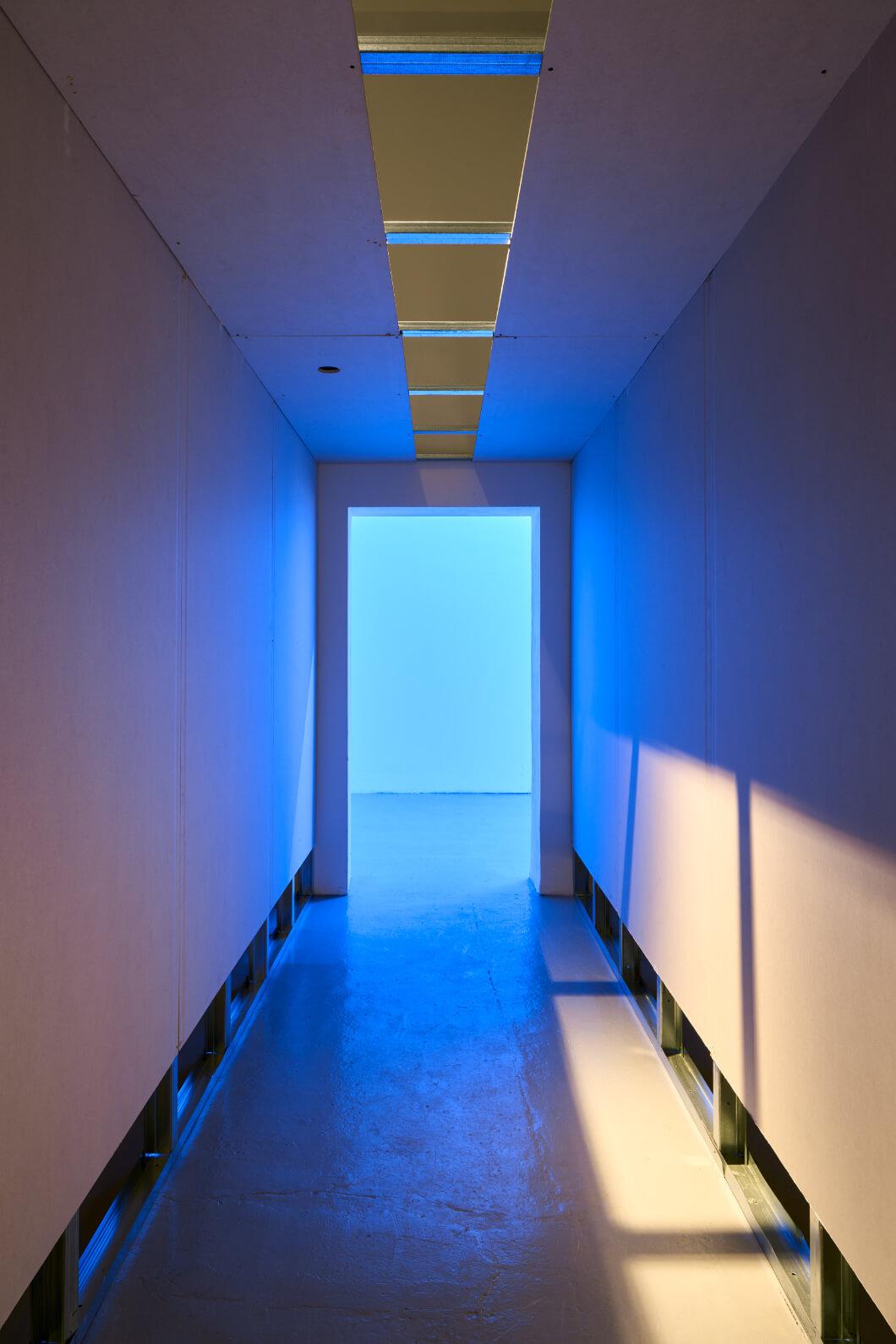
There’s something deeply restless about leaving the house with a fire still burning inside, we’ve all felt the hesitation, that flicker of doubt at the door. It’s not carelessness, but a suspended intention, a thread stretched taut between two charged thoughts. Martins Kohout builds their exhibition around this unstable image, poised between alertness and trust, between a need for openness and care for what’s left behind. Visiting MeetFactory in this case means entering a field of forces, not just a gallery. You’re immediately asked to choose, to open a door with a peephole that blocks your view, or stay outside, a simple act that already disrupts the illusion of neutral looking. You step into a space that doesn’t want visitors, but witnesses, to a series of delays, glitches, attempts at connection, and above all, to the “gaps” Kohout names as true architectures of time.
The show unfolds like an exposed nervous system, austere corridors, cold lights, fragmented sounds, and images that never quite reveal themselves. A voice loops, polyphonically, “a friend of a friend of a friend of a friend…” as we drift through a blind space, part listening chamber, part echo chamber. Everything is designed to stretch that moment just after something has ended, or perhaps never began. The atmosphere is that of an unresolved aftermath. And it’s in this perceptual haze that the core of the exhibition lies, the experience of a hyperconnected world that still leaves us solitary, overexposed, fatigued, floating.
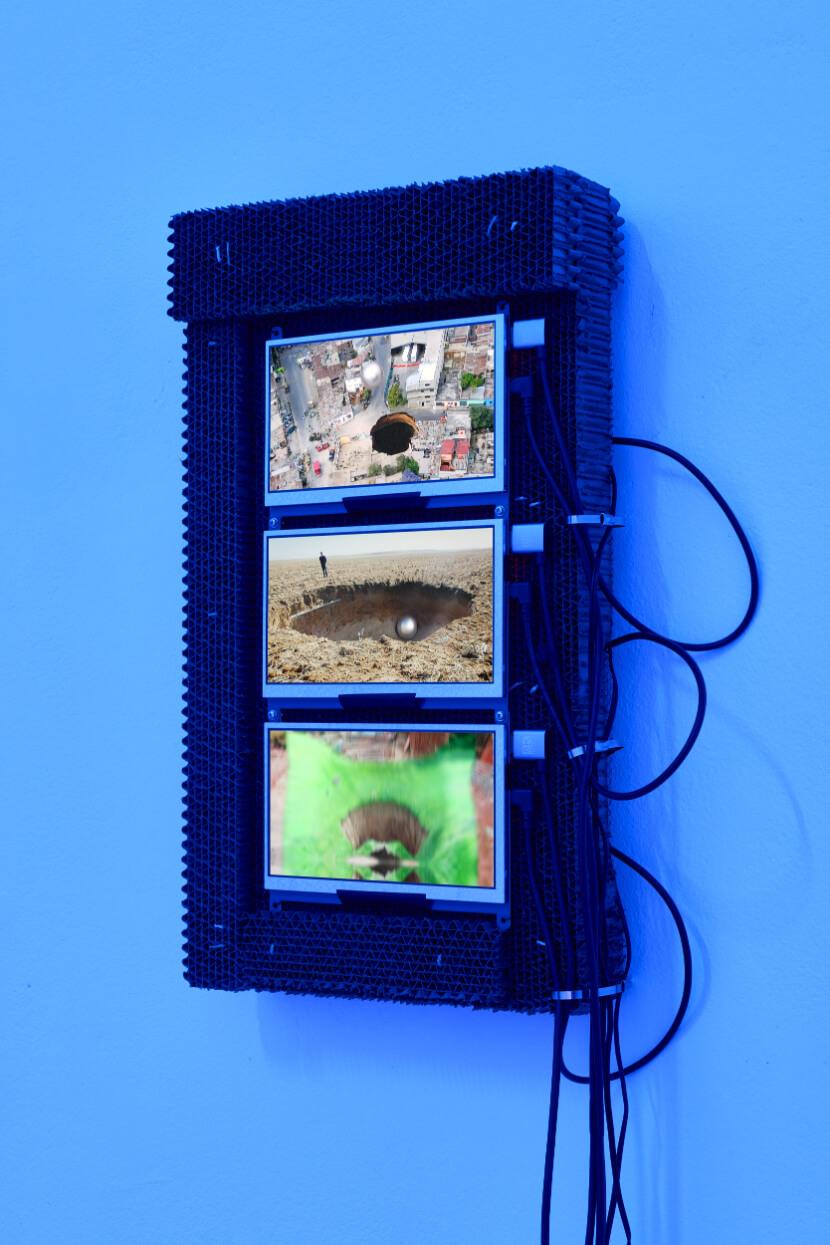
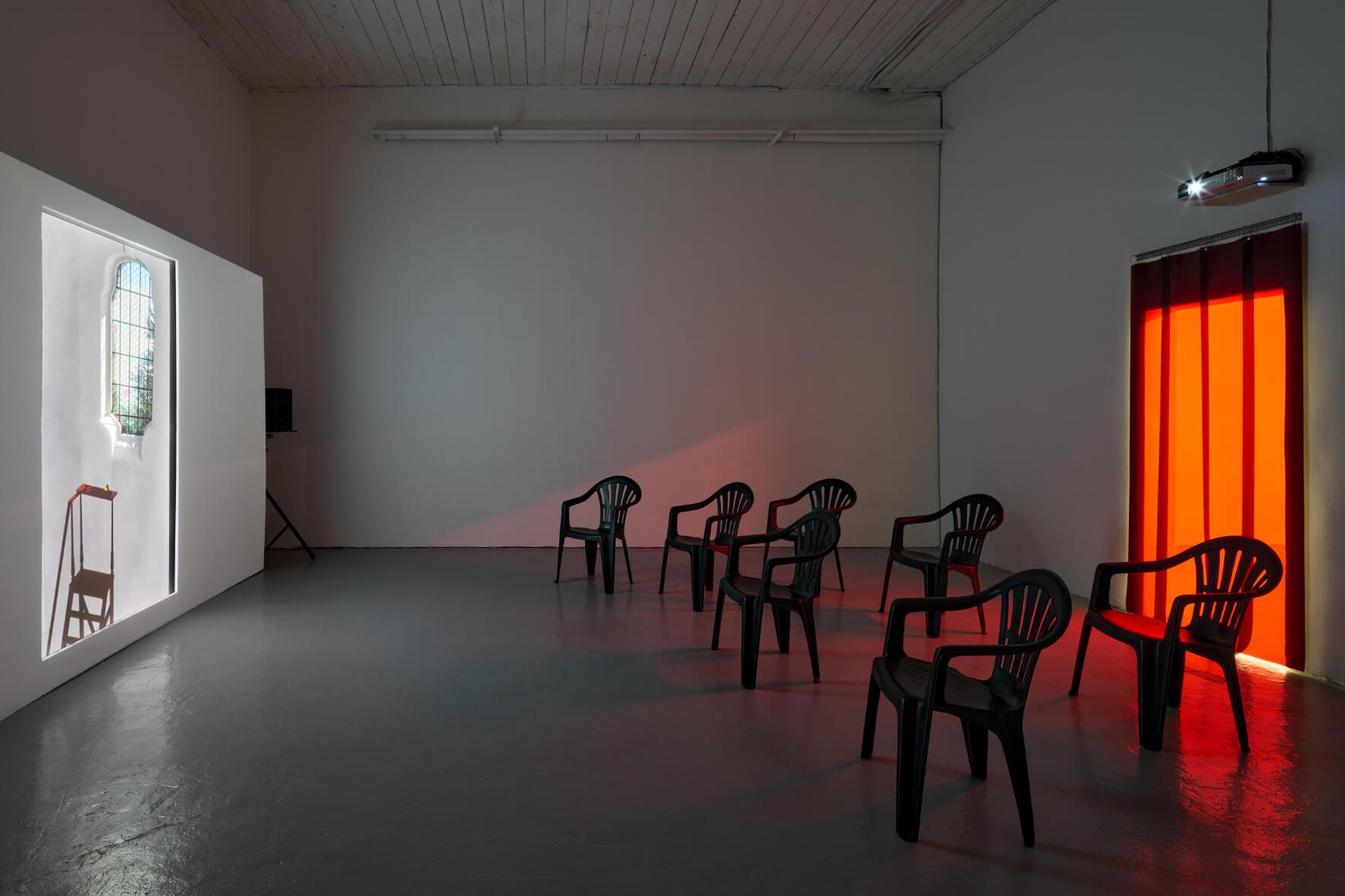
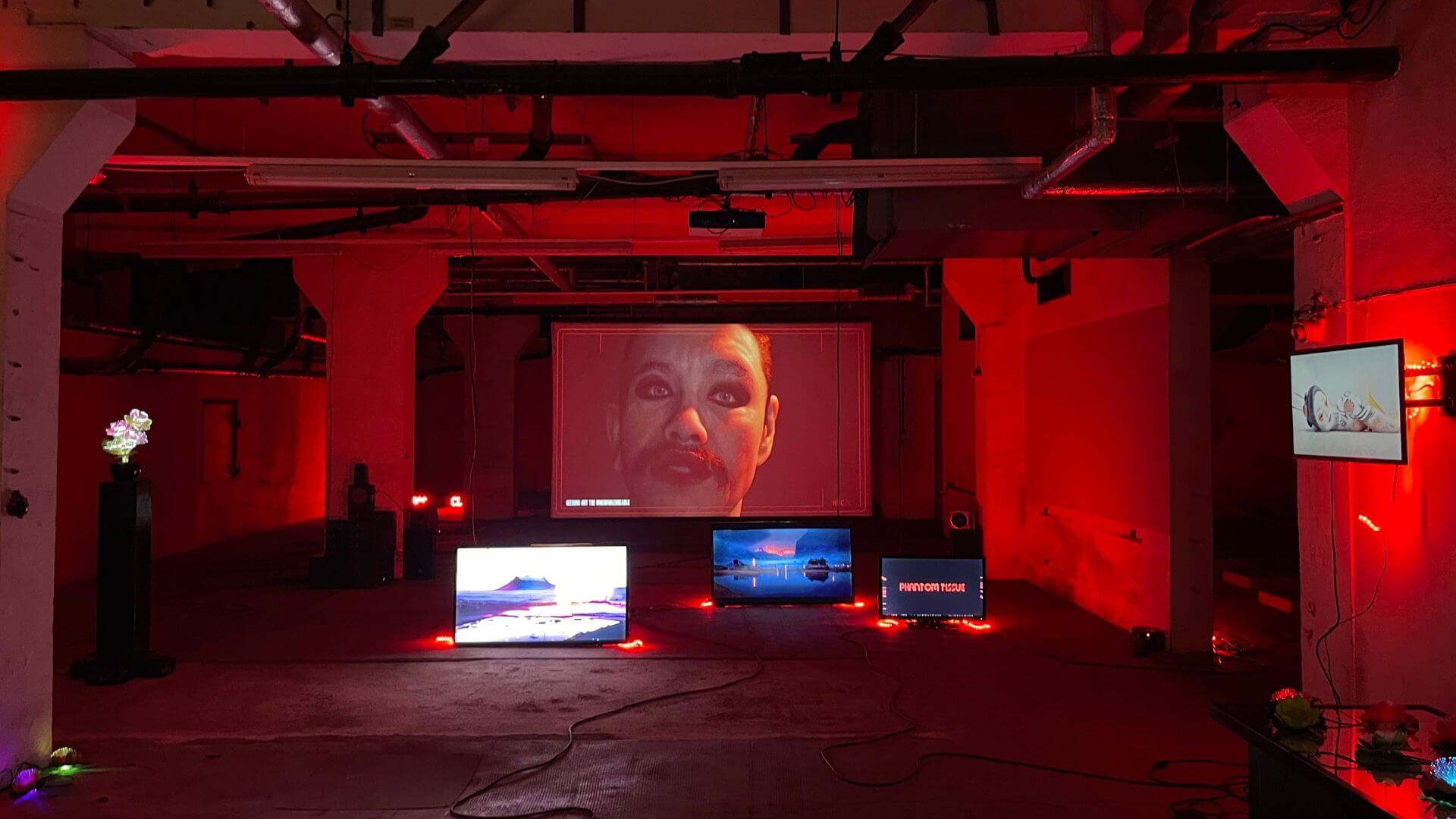
Each work opens like a window, and each window doubles as an interface. The videos, Driving Fast Nowhere. Down. Down. Down. and A guided tour through Glare…, don’t just project images, they question the act of seeing itself. The first is a visual vortex of crashes and collapses pulled from the media stream, the second a kind of guided tour that slips into monologue, into the failure of language, the voice tries to orient us, only to fragment meaning further. The viewer is led into a perceptual loop where memory and description never quite align.
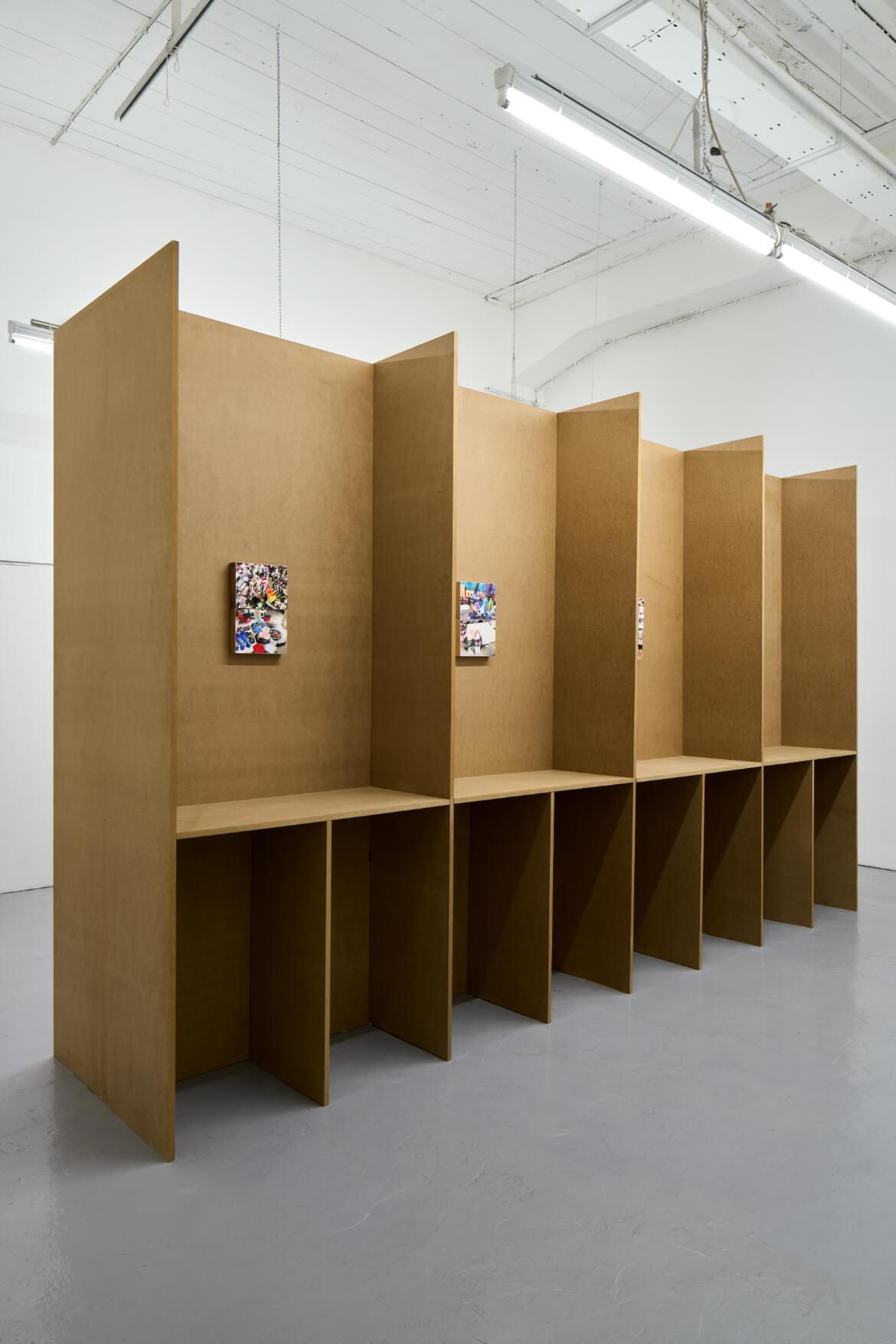
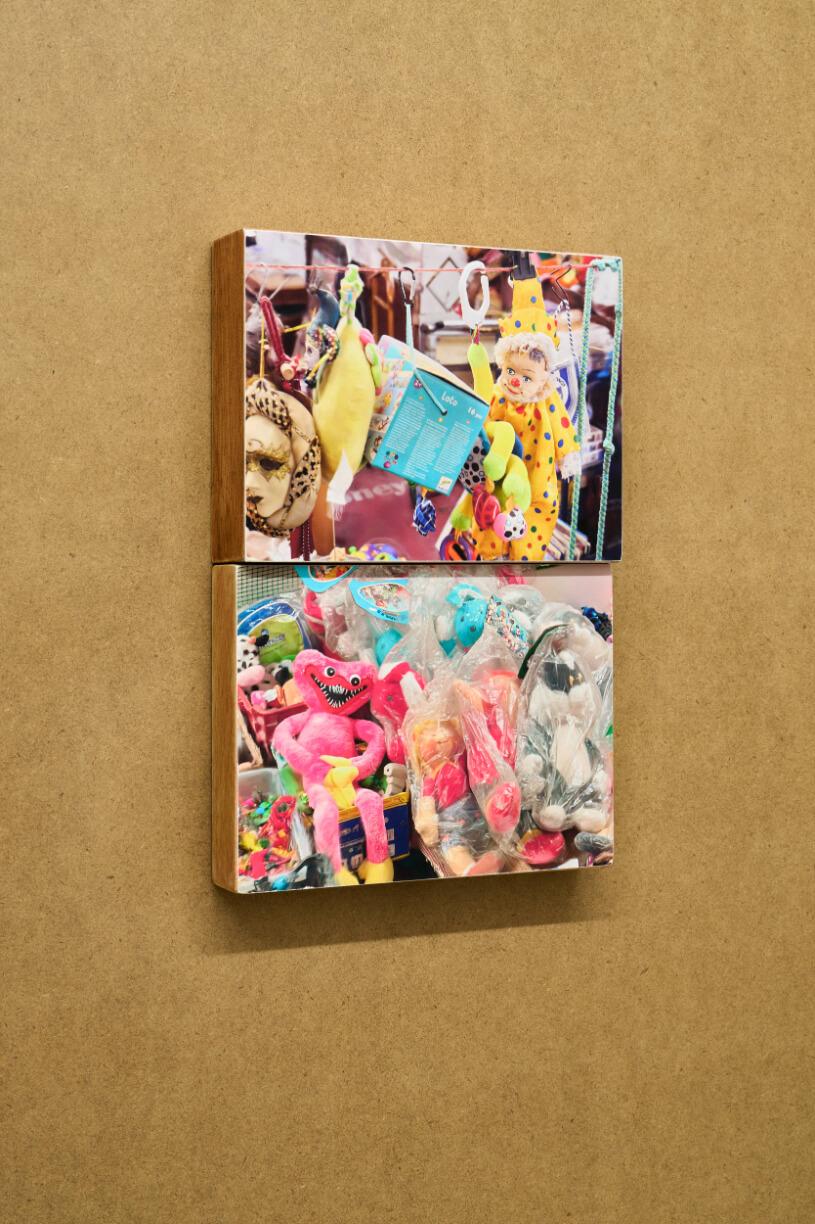
Alongside the videos, the photographic series Stye rests on raw wooden boxes, like contemporary reliquaries. These are 3D-scanned images from an Athens flea market, mostly toys arranged like figurines frozen in wait, looking out melancholically as if hoping to meet our gaze. Suspended between reality and representation, they inhabit an eternal “almost”, almost alive, almost salvageable.
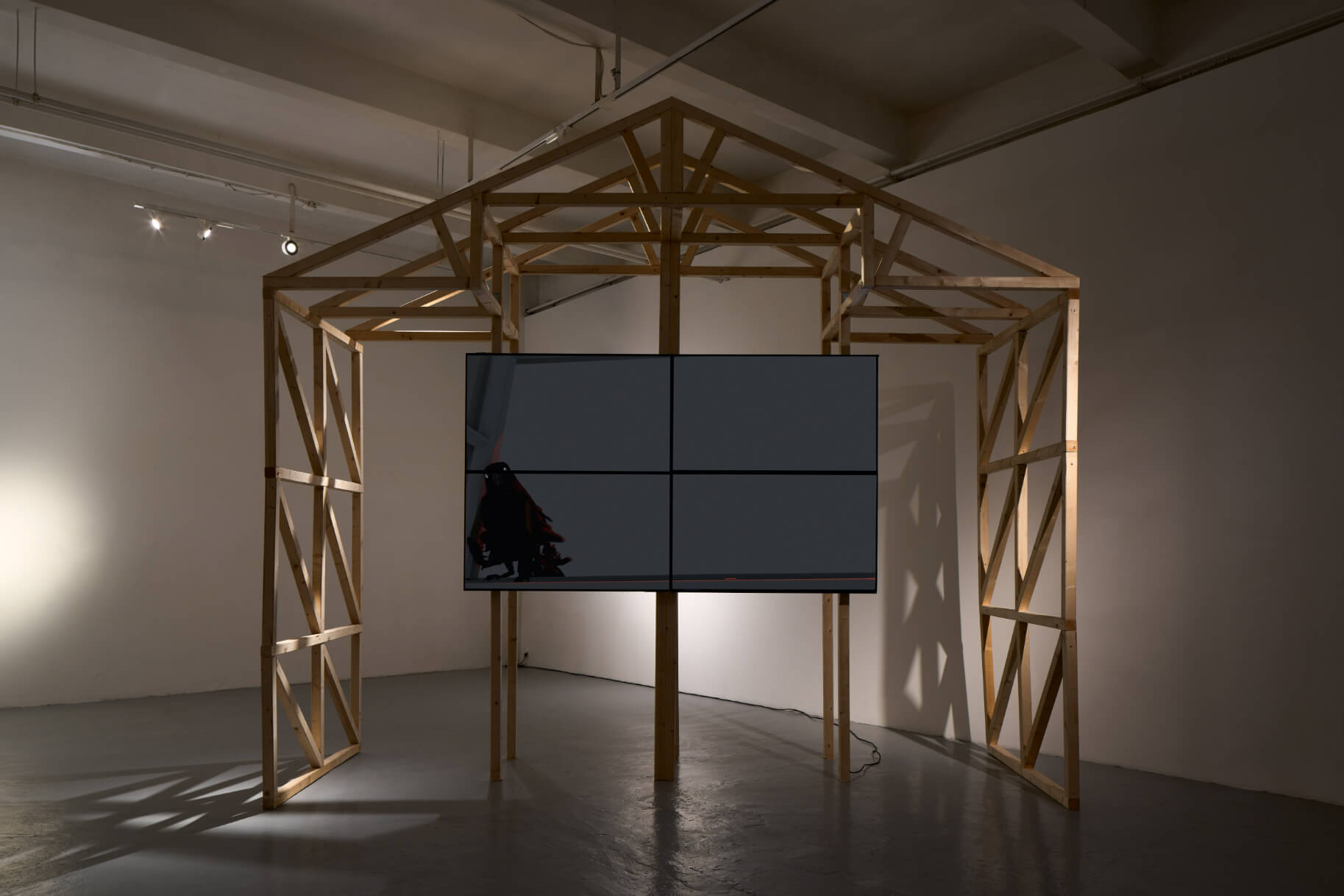
Then there’s Grumpers (Late to The Joke), the final video, a single robotic crow watches us through a window, or perhaps we are the ones observing it. This artificial replica of a bird barely moves, emits sounds, flickers in and out through sharp edits. It’s not quite a film, more a visual situation that has no beginning or end, but insists we linger again in that interval, that threshold between the visible and the unseen, which Kohout turns into method.
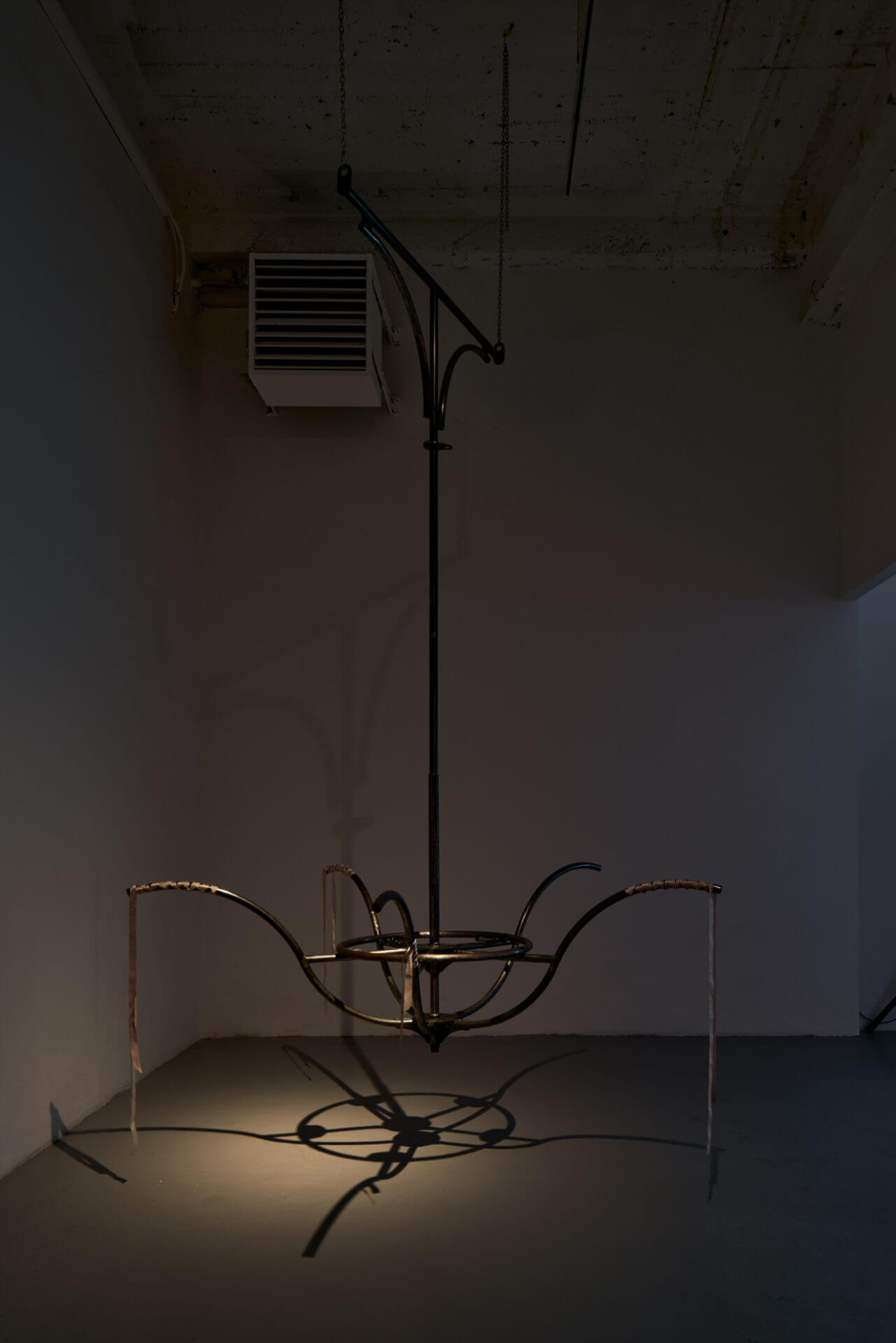
The entire exhibition is built with the precision of a broken rhythm. The raw wood of the boxes, the suspended metal structure, a relic of a past performance, the glacial light, the looping words, each element works to hold time in check, to slow it down, to make its emptiness tangible. There’s no story to follow, only signals, traces, fractures across the surface of the present.
You leave with the sense that something is still burning. A fire, yes, left on but not abandoned. Kohout seems to say that responsibility isn’t about sealing everything off before departure, but recognizing that absence, too, is an active gesture. That every connection, every open window to the world, implies a return, an attentiveness, a risk. And that in the fragmented time we inhabit, perhaps the role of art isn’t to explain or to soothe, but to offer a space where the threshold itself can be lived in. Even just for a moment. Even just to feel how much we still have left to sense.
fakewhale
Founded in 2021, Fakewhale advocates the digital art market's evolution. Viewing NFT technology as a container for art, and leveraging the expansive scope of digital culture, Fakewhale strives to shape a new ecosystem in which art and technology become the starting point, rather than the final destination.
You may also like
Jasper Rouwen, friends are forever at Spudworks, Lymington
“friends are forever” by Jasper Rouwen, curated by Nanna Egelund, at Spudworks, Lymingto
Blurring Boundaries: Yiming on Machines, Organisms, and the Future of Hybrid Art
Yiming’s work consistently navigates the blurred boundaries between the organic and the synthetic,
Skygolpe in Conversation with Fakewhale
Taking place at Foundry, Dubai, from November 15th to January 7th, 2024, Skygolpe’s ‘Third D