The Flickering Light: Marcello Maloberti – METRONOTTE

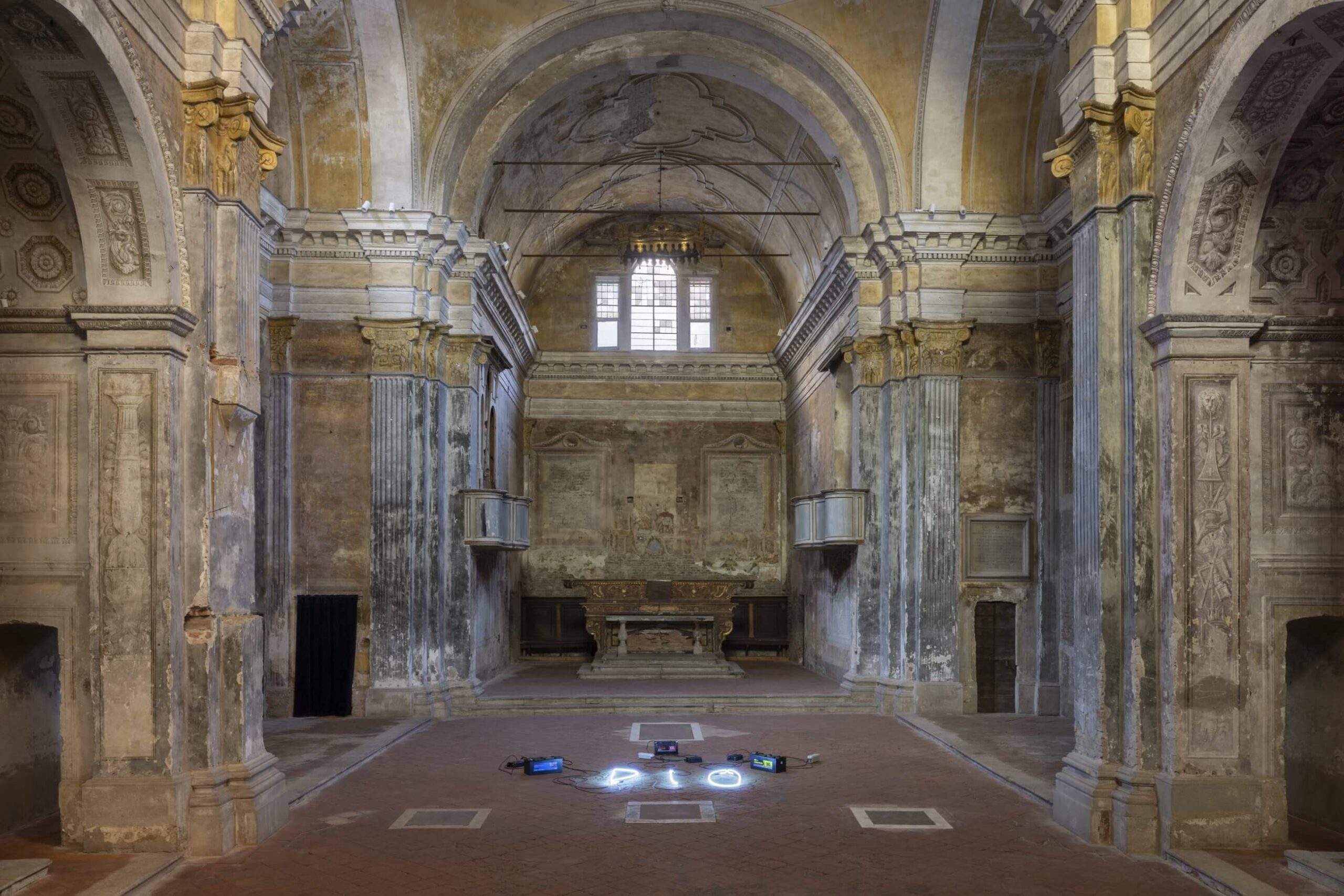
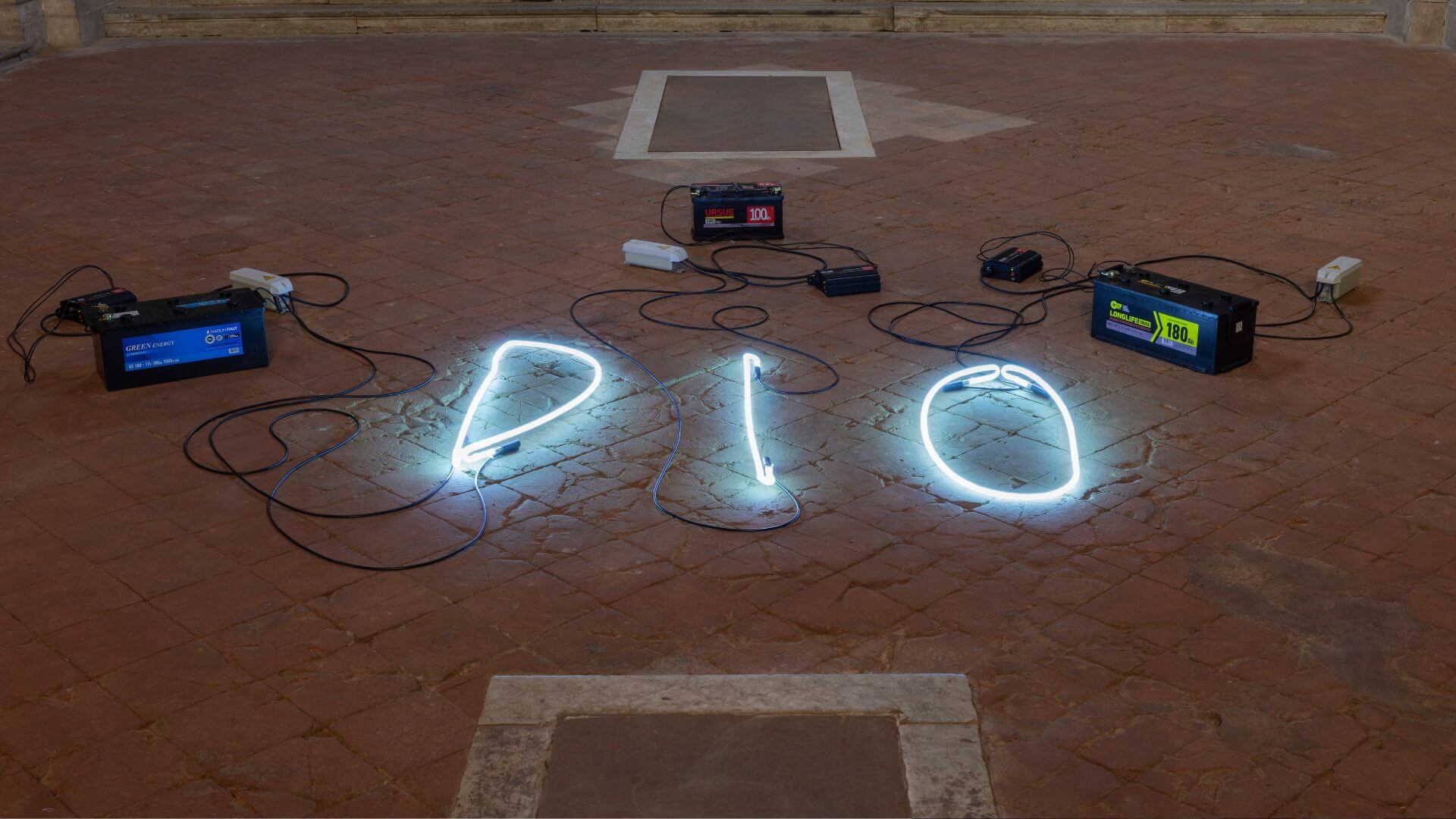
What remains of God when the word goes dark? We asked ourselves this as we stepped into San Carlo Church, welcomed by the cool breath of stone and the faint scent of worn plaster, like walking into an ancient memory. We must admit: the walls, chipped and solemn, seemed to be holding their breath. Then, at the center of the nave, something like a fragile apparition. “DIO” (God), traced in childlike handwriting, drawn in neon light, an idea so simple yet too immense to speak aloud. A word that lay on the ground as if it had fallen from above. We looked at each other: it was immediately clear this light wasn’t made to last. Powered by truck batteries, DIO a batteria, as Maloberti calls it, is an epiphany bound to extinguish. A precarious, vulnerable presence, silently asking us to keep watch.

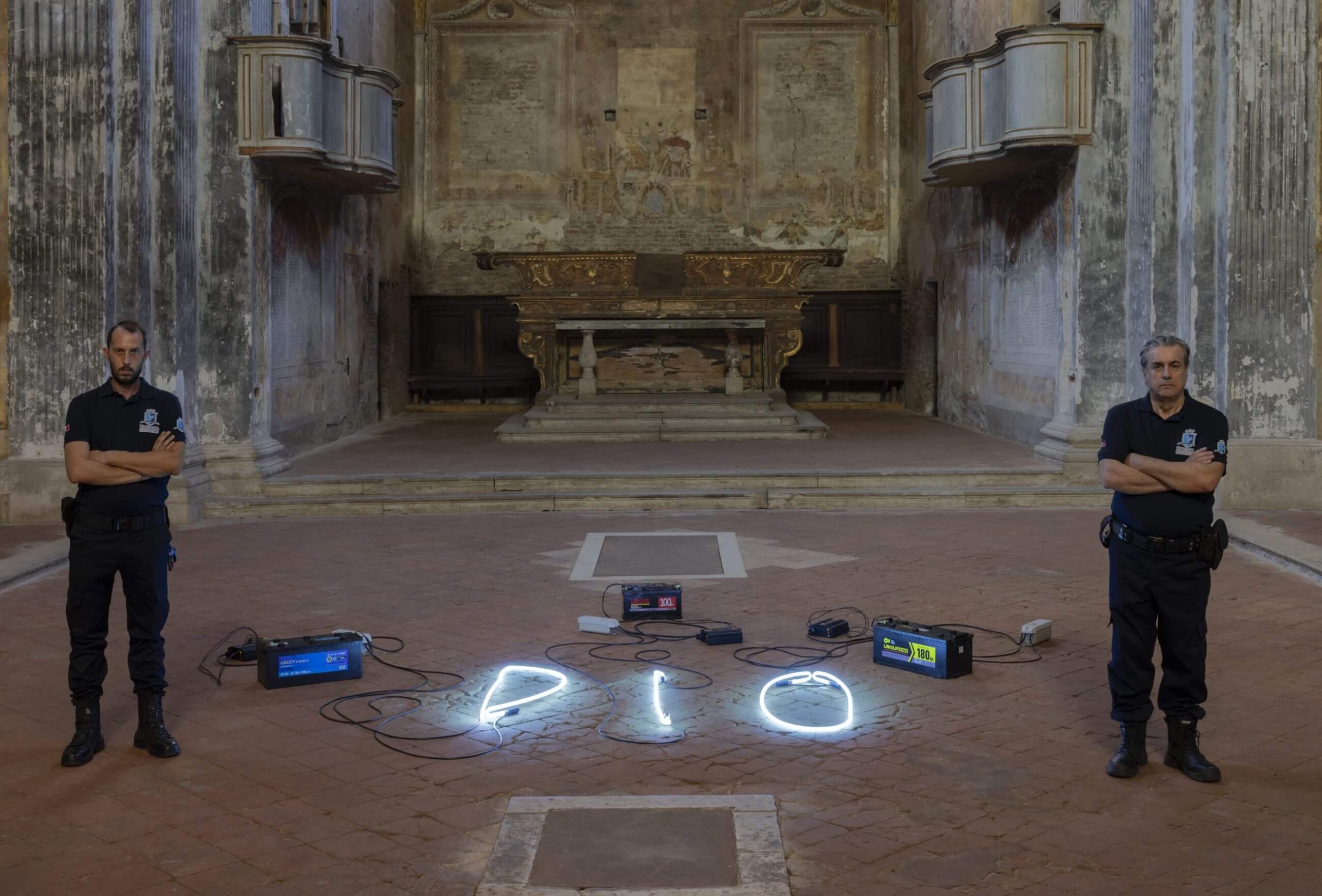
The church itself, stripped of any liturgical function, seemed as though it had been waiting for this light. No music, no sound except the low hum of transformers and the quiet breath of two night guards, standing still at the entrance. They weren’t protecting an object: they were guarding a possibility. The exhibition space had become a secular altar, where the few visitors walked slowly around the glowing word, as if following an unspoken ritual. There were no instructions, no path to follow: the word itself drew its own fragile, luminous map.

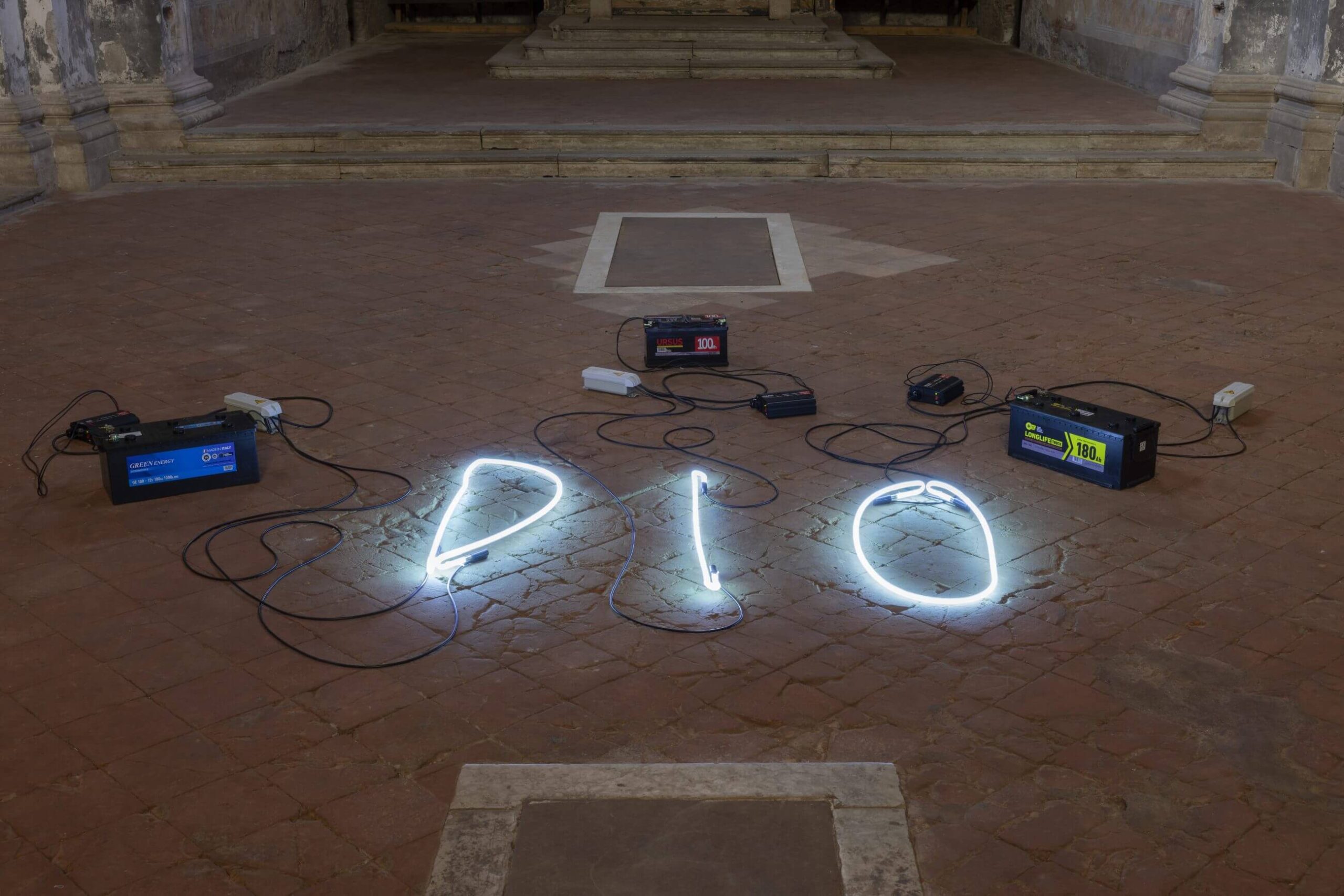
Maloberti shapes his DIO with simple gestures and humble materials. Neon tubes, rarefied gas, electric wires, transformed into a handwriting of light. The letters, awkward and human, reveal their childlike nature: hesitant curves, broken verticals, imperfections amplified in the fragile glass. Around them, industrial batteries rest on the ancient floor, interrupting the sacredness with the brute weight of reality. Heavy, numbered, opaque boxes. And yet, it’s these that keep the light alive. Chemical energy, tangible, finite, becomes temporary nourishment for the divine. This is where Maloberti’s work unfolds: the sacred not as something eternal, but as something that demands maintenance, care, vigilance.

When we finally stepped outside, the neon seemed already to dim, or perhaps it was just our eyes refusing to let go of the image. In the silence of the church behind us, we wondered how long before the word would vanish completely. Because perhaps, in that sudden absence of the fragile word, the work will finally be complete. To whoever reads this: go. Before that light is lost too.

Marcello Maloberti, DIO A BATTERIA, 2025, performative installation from 6:00 PM to 9:00 AM the following morning, neon, three truck batteries, two night watchmen, courtesy of the artist, San Carlo Cremona, and Galleria Raffaella Cortese, Milan – Albisola, photographs by Andrea Rossetti

Founded in 2021, Fakewhale advocates the digital art market's evolution. Viewing NFT technology as a container for art, and leveraging the expansive scope of digital culture, Fakewhale strives to shape a new ecosystem in which art and technology become the starting point, rather than the final destination.

Fakewhale Log is the media layer of Fakewhale. It explores how new technologies are reshaping artistic practices and cultural narratives, combining curated insights, critical reviews, and direct dialogue with leading voices.