HSUBAND at Plicnik: Coupling Systems and Industrial Poetics

“Every factory seems to promise a form of coherence. HSUBAND stages that promise as a condition under inspection: parts, protocols, bodies, words. The space appears frictionless, an environment where coupling is always theoretically achievable, yet the terms of that coupling remain unsettled.

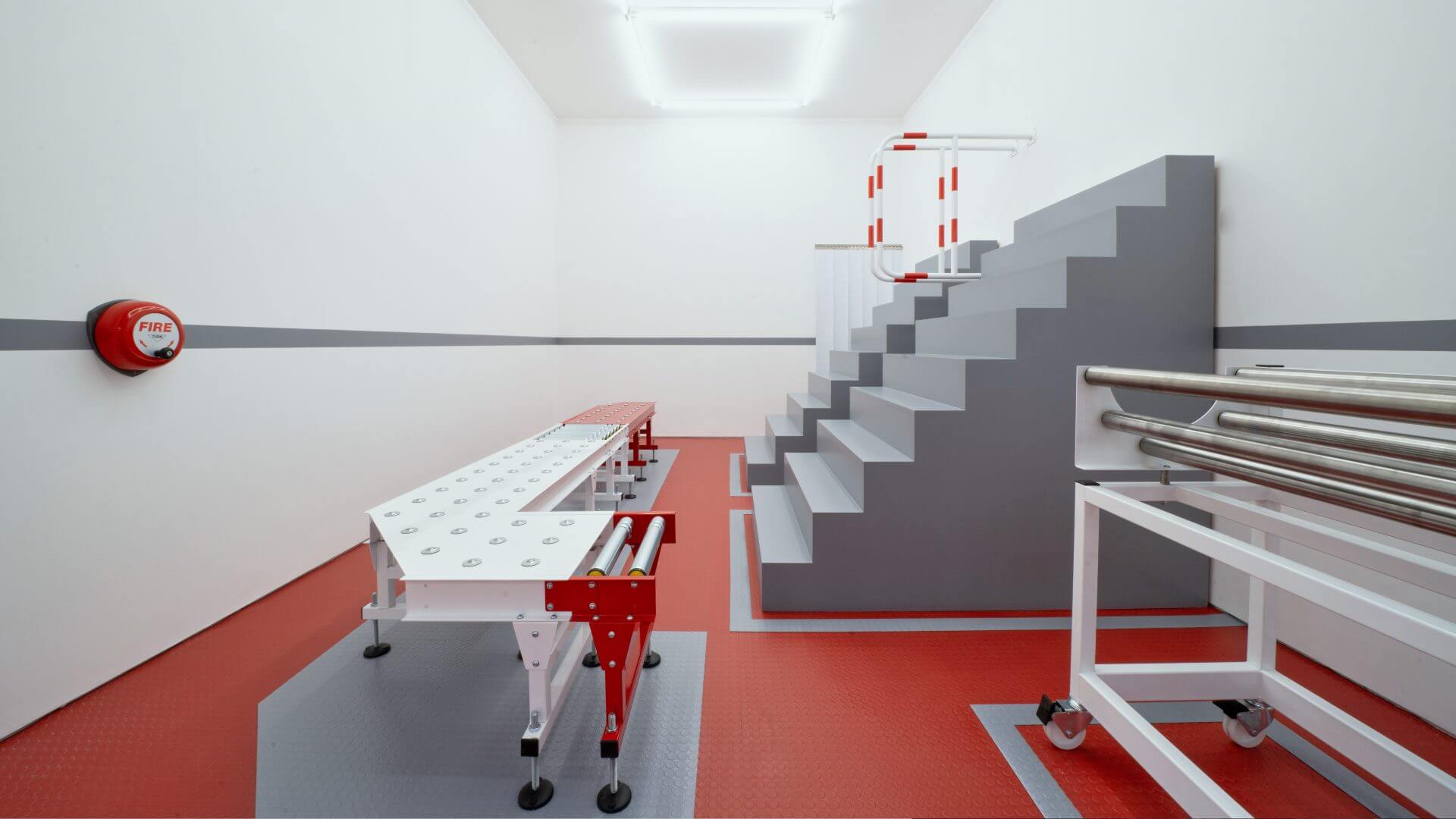
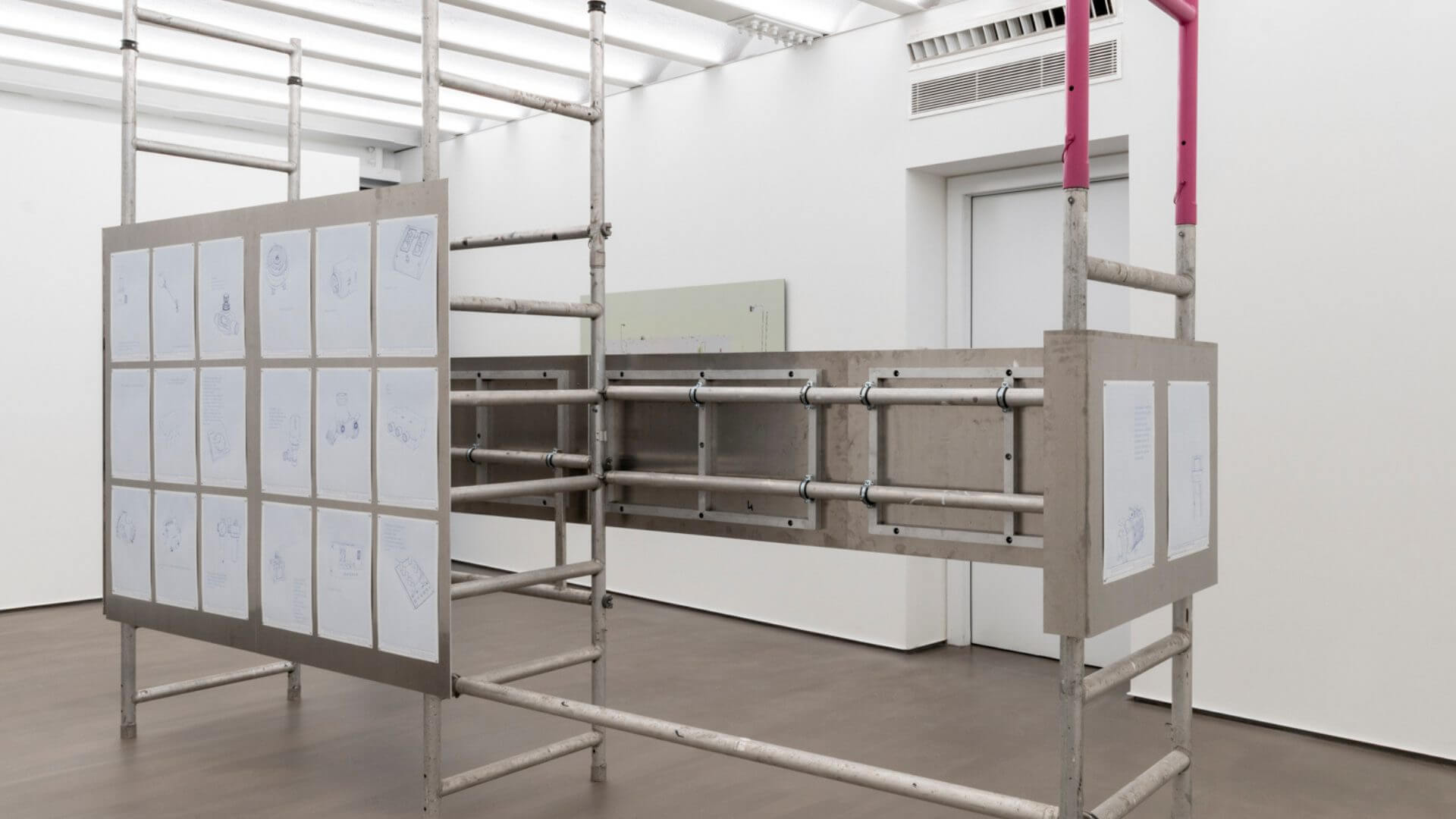
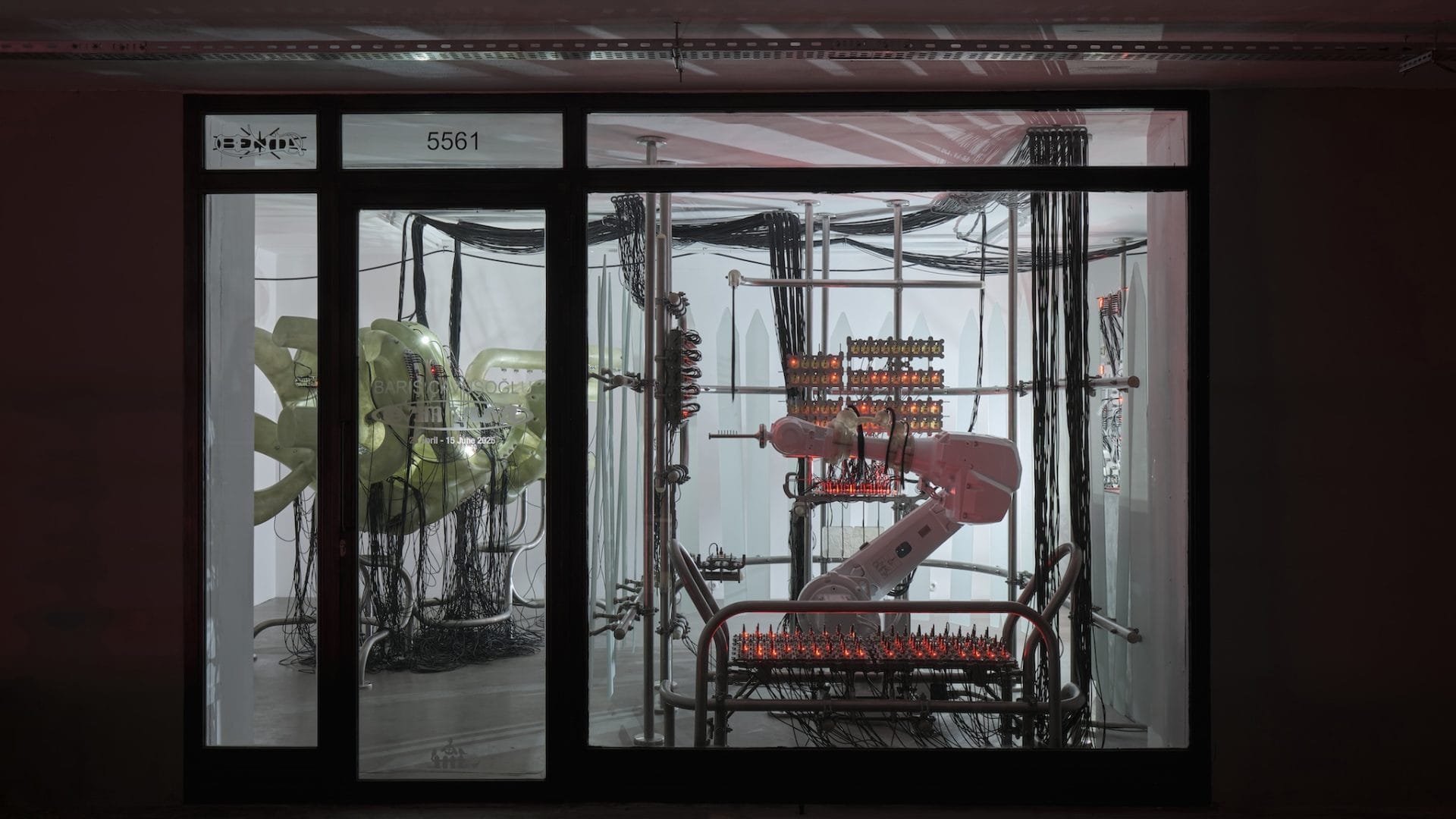
The installation presents a choreography of infrastructural elements: red rubber flooring absorbing and reflecting a muted clinical light; modular rollers, platforms, stairs that ascend without destination; gridded ceiling arrays that flatten warmth into a uniformly operational brightness. Nothing here performs in the conventional sense; the “machines” hold a posture of readiness, suspended between instruction and action.

Language, channelled through the exhibition text authored by Melle Nieling, acts as a parallel material system. Rather than narrative captions, the text samples and recombines tones of technical manuals, HR policies, and engineering checklists, allowing bureaucratic syntax to fray into a lightly disorienting poetry. This textual stratum does not masquerade as the artist’s voice; it operates adjacent to Malaimare’s sculptural and spatial grammar, extending the work’s interrogation of procedural identity. Terms of fitting, coupling, and standardisation surface as clauses, imperatives, near–questions. They outline a world where deviation is processed, reabsorbed, or melted down, where a “fit” is less a harmony than a closure.

The continuous audio loop (softly invasive rather than loud) punctures any notion of literal silence. It supplies a rhythmic, almost respiratory backdrop, mechanical murmurs and verbal fragments (I leave precise credits pending confirmation) that magnetise attention to the latent kinetics of otherwise static apparatus. What initially reads as “silence” reveals itself as disciplined acoustic bandwidth: nothing is quiet; everything is domesticated to a uniform operational register.

In HSUBAND, fitting is simultaneously promise and pressure. Components are imagined as infinitely re-combinable, yet belonging is perpetually deferred: the environment can accept any form, provided it is re-machined to tolerance. The viewer’s body is tacitly drafted into this logic, measured by eye, path, hesitation. Surfaces neither invite nor repel; they absorb your presence as another provisional part.

If the exhibition text toys with “universal fitting,” it does so to expose the labour, semantic, bodily, affective, required to convert difference into compatibility. Malaimare’s constructed milieu holds still long enough for that conversion process to become legible: the clean seam; the ambiguous joint; the stair to nowhere that nonetheless implies vertical logistics.

Pausing near a red-striped railing, one senses not surveillance exactly, but a procedural attentiveness: an environment perpetually asking whether you can be slotted, indexed, retained. The unease is subtle and cumulative. HSUBAND does not dramatise alienation; it calibrates it.

You exit carrying the after, image of systems more than objects, an awareness of how easily a promise of inclusion shades into an obligation to conform. The question lingers: when everything can be made to fit, what, if anything, is allowed to remain un-machined?”

 
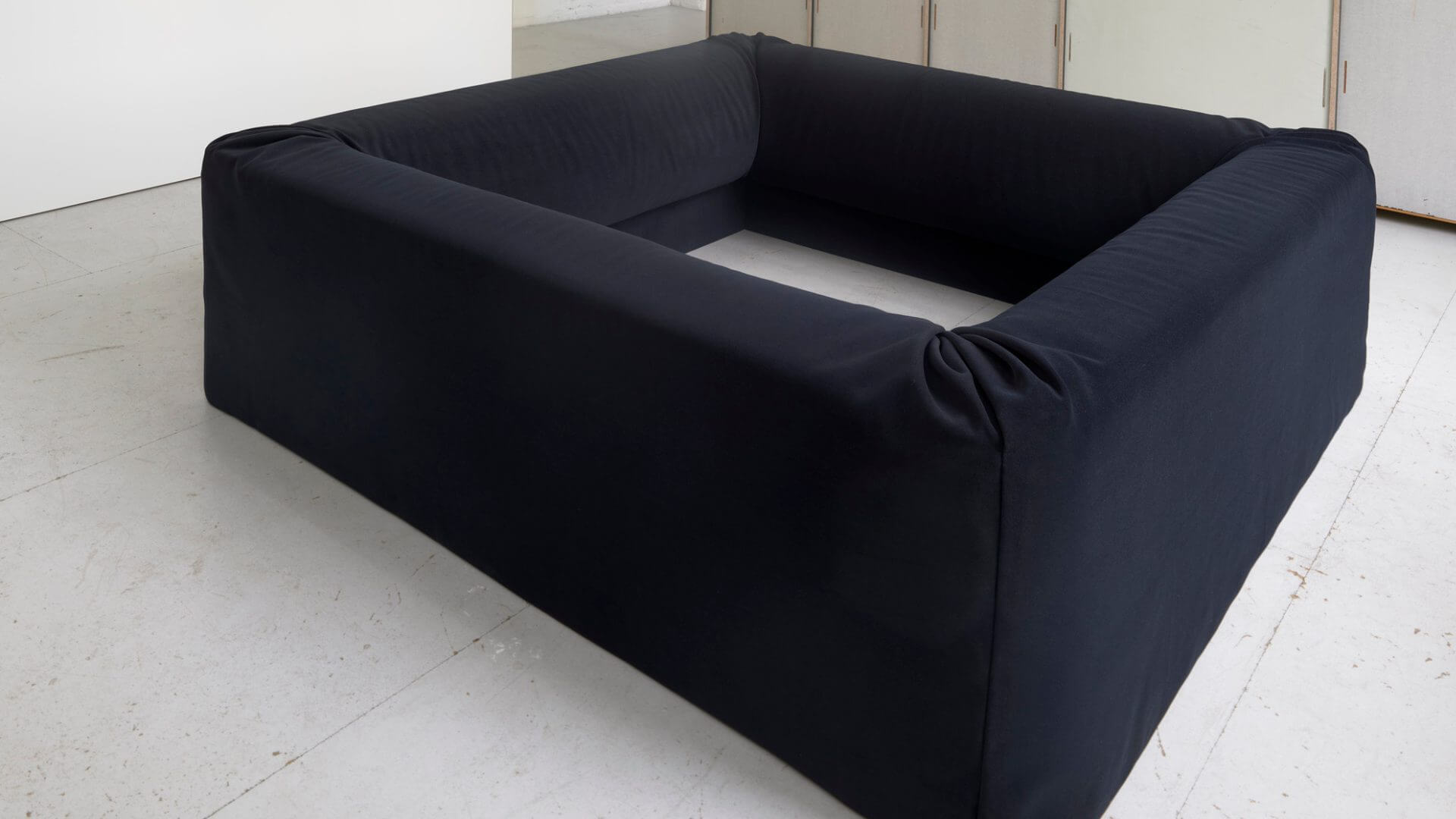
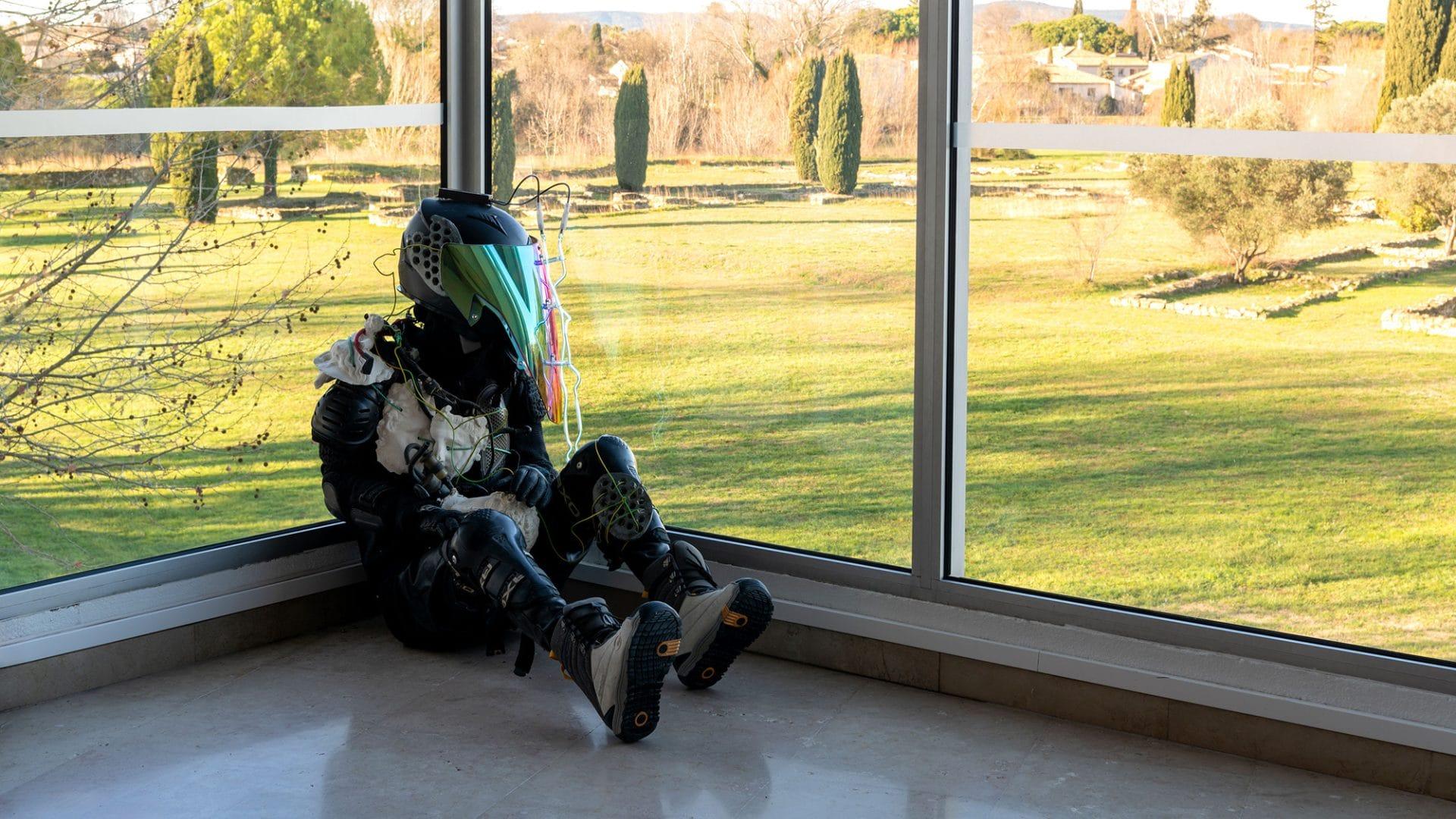
install shot. Works by Catinca Malaimare Scenography in collaboration with Amélie Mckee and Melle Nieling

Founded in 2021, Fakewhale advocates the digital art market's evolution. Viewing NFT technology as a container for art, and leveraging the expansive scope of digital culture, Fakewhale strives to shape a new ecosystem in which art and technology become the starting point, rather than the final destination.

Fakewhale Log is the media layer of Fakewhale. It explores how new technologies are reshaping artistic practices and cultural narratives, combining curated insights, critical reviews, and direct dialogue with leading voices.