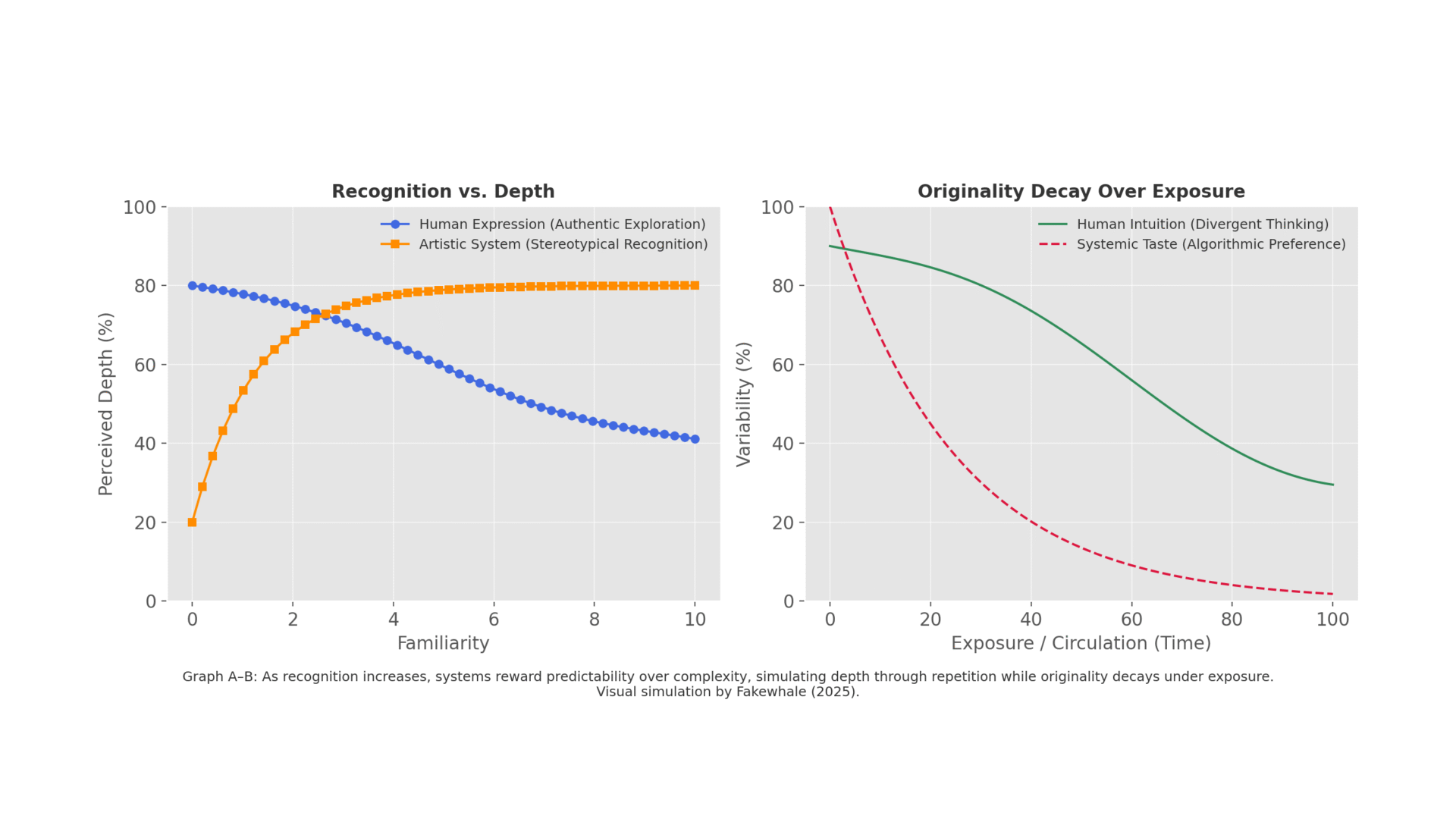

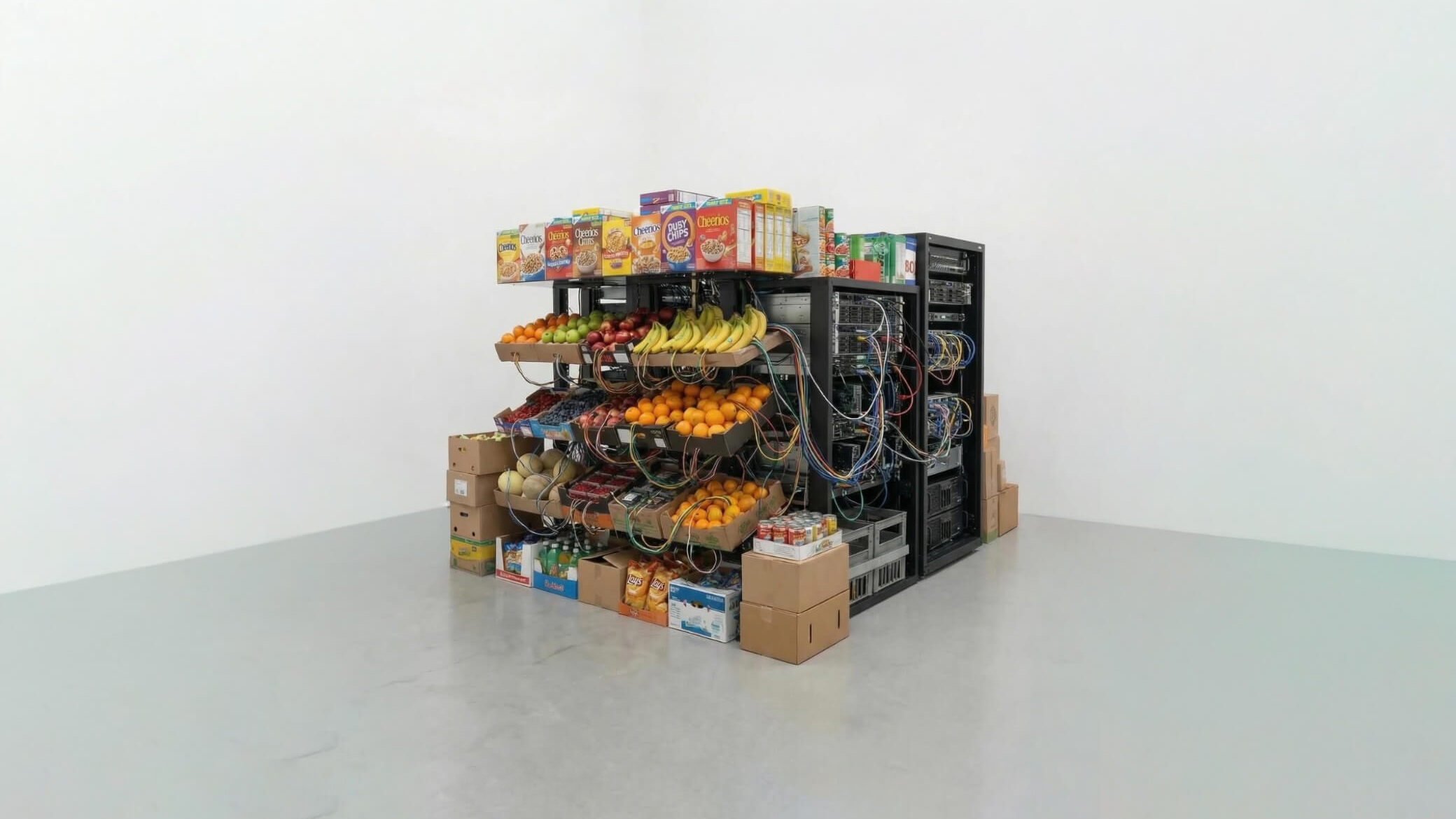
In recent years, artificial intelligence has taken a central place in artistic and cultural debate, not so much for what it produces, but for what it represents. It has been read as a threshold, a rupture, a promise, or a threat. In this initial phase, AI functioned primarily as a symbolic device, a condenser of narratives reflecting collective anxieties, technological expectations, and unresolved tensions surrounding the role of the human in creative processes.
Today, however, this symbolic centrality is gradually eroding. Artificial intelligence is no longer an exception to be foregrounded, but a pervasive presence integrated into the flows of cultural production. In the contemporary art world, AI is ceasing to be a topic and becoming an operational condition, an environmental element that structures practices, temporalities, and modes of work without necessarily announcing itself.
This shift marks a crucial transition, from AI as an ideological event to AI as an everyday medium. This does not imply a neutralization of its impact, but rather its normalization. When technology loses its spectacular character, it becomes possible to observe its cultural, political, and symbolic effects with greater clarity.
This article examines this transition by questioning how artificial intelligence is reshaping the role of the artist, authorship, and institutions, ultimately challenging the very need to assign explicit meaning to the use of technology. The question is no longer what AI means for art, but what kind of art becomes possible in a world where AI is already part of the environment.
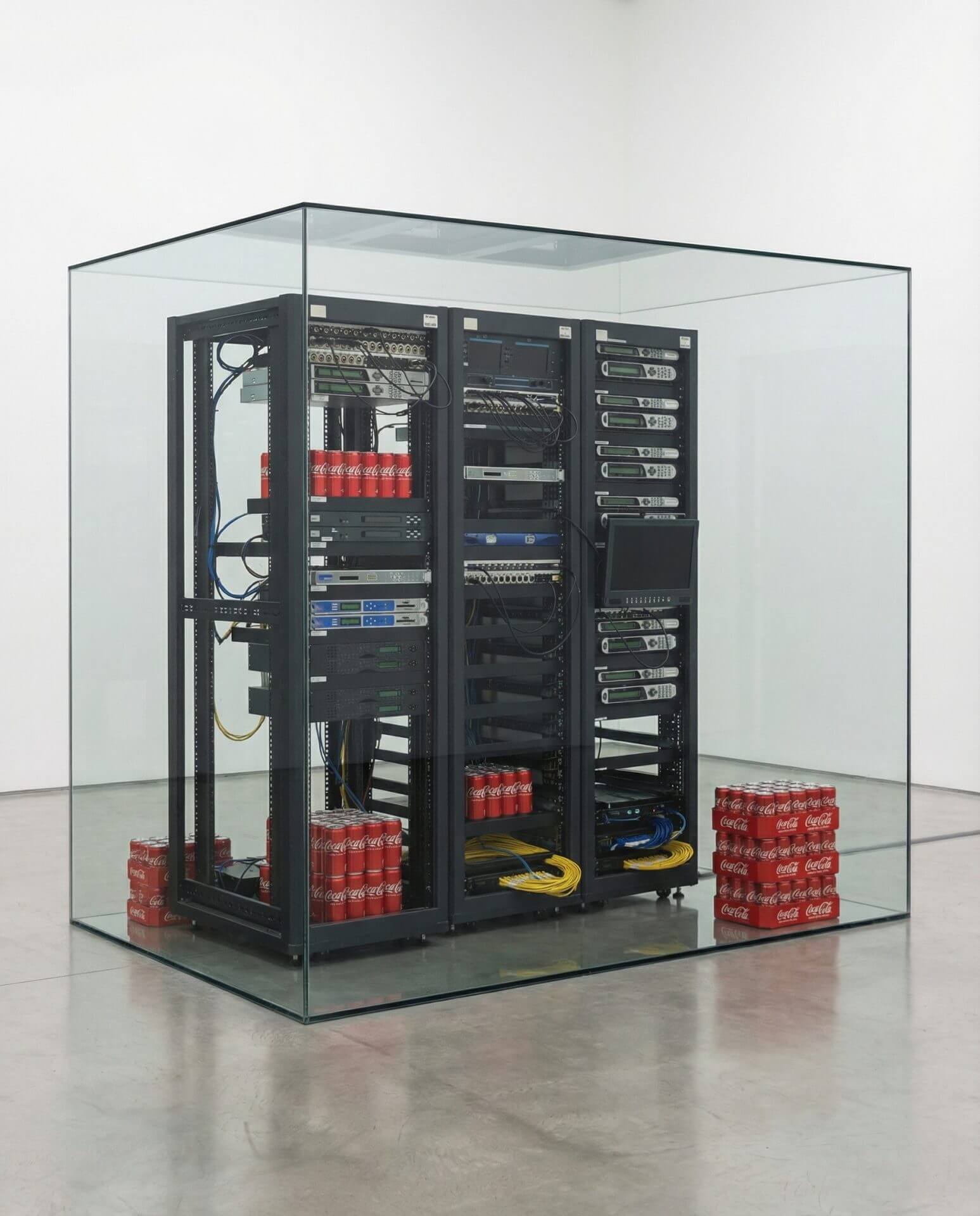
The symbolic role of technology in transitional phases
It is well known that every emerging technology goes through a phase in which its symbolic value far outweighs its actual use. Before becoming infrastructure, technology functions as a kind of language. It produces narratives, polarizes positions, and generates imaginaries. In these moments of transition, what matters is not so much what the technology does, but what it promises or threatens to do.
In the field of art, for example, this symbolic dimension takes on particular intensity. Technological innovation is often loaded with meanings that go beyond artistic practice itself, becoming a metaphor for a broader cultural shift. Artificial intelligence, as it entered artistic discourse, embodied this function in an exemplary way. It was presented as the definitive breaking point with the modern idea of creativity, as if the question of automation had suddenly emerged, erasing centuries of technical mediation in artistic production.
In this phase, AI was treated as an ideological event. On the one hand, it fueled enthusiastic narratives tied to the idea of an expanded, collaborative, potentially infinite creativity. On the other, it reactivated deep-seated fears, the loss of the author, the obsolescence of the artist, the delegation of the creative gesture to non-human systems. Both positions, though opposed, share the same symbolic structure. They attribute to AI a totalizing power, capable of redefining the field of art on its own.
This kind of reading, however, tends to oversimplify. It turns technology into an autonomous subject and obscures the material, economic, and cultural conditions in which it operates. AI thus becomes a sign rather than a tool, an object of debate rather than a situated practice. As often happens in moments of transition, discourse precedes experience.
Understanding the symbolic role of artificial intelligence means recognizing this phase as transitional. Not because the symbolic dimension is irrelevant, but because it is destined to be exhausted once the technology is no longer perceived as an absolute novelty. When AI enters everyday processes, it loses its function as a cultural shock and becomes part of a historical continuum made up of tools, interfaces, and systems. It is in this passage that artistic debate is called to shift, from the myth of technology to its real integration into contemporary practices.
AI as an environmental condition rather than a theme
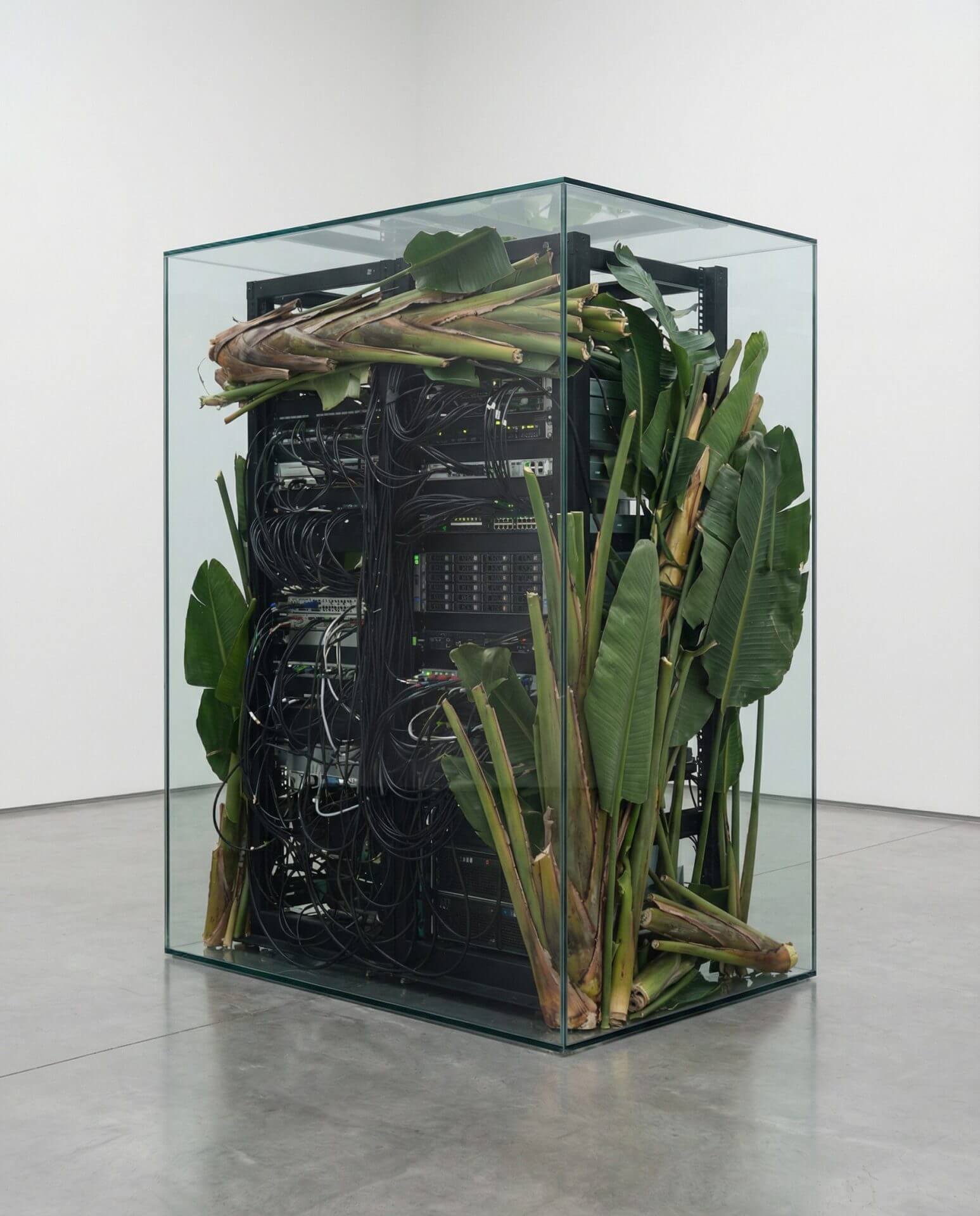
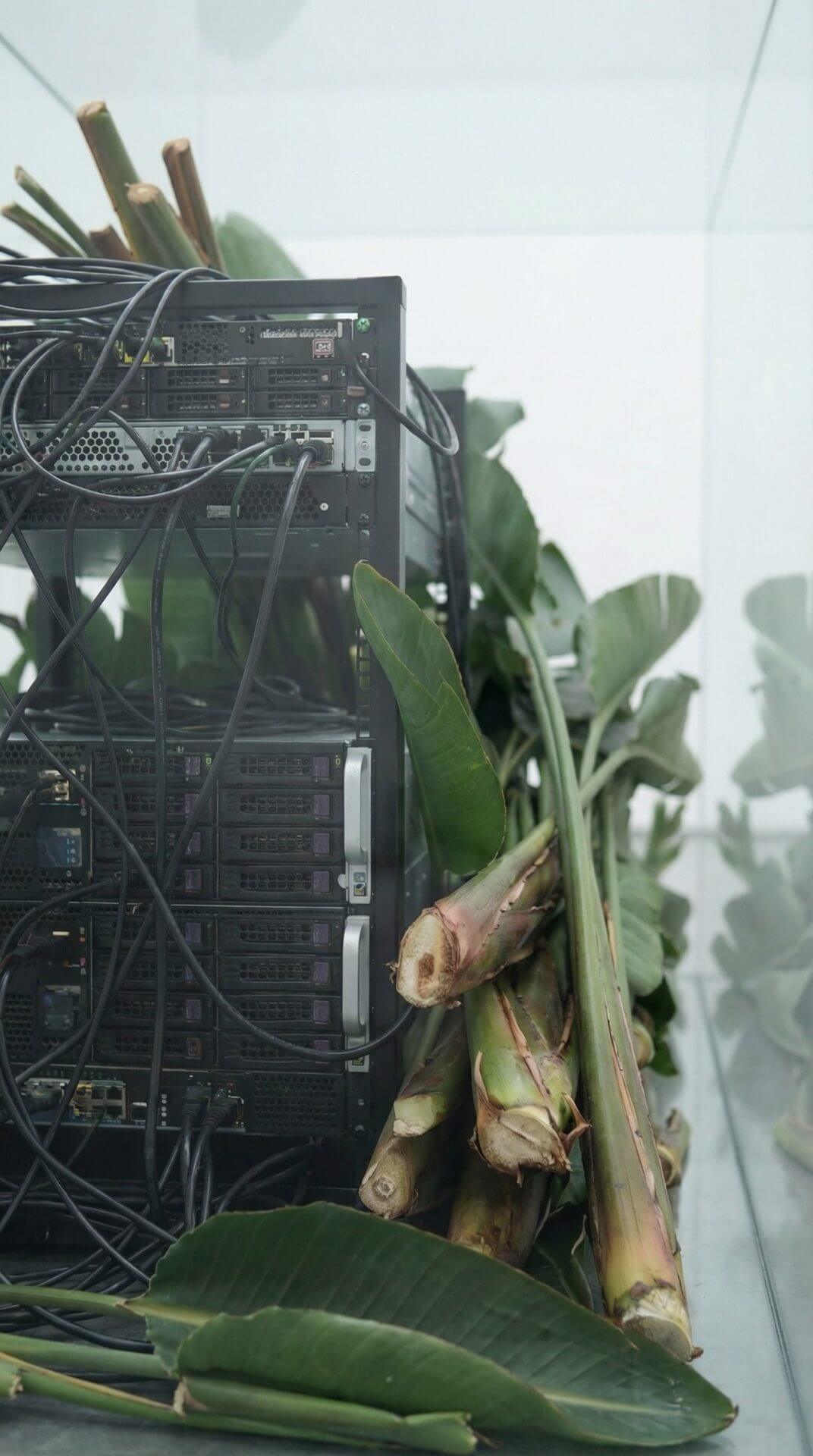
When a technology is no longer perceived as an exception, it begins to operate as an environment. It no longer needs to be constantly named, because it is already embedded in the processes that make cultural production possible. At this stage, artificial intelligence no longer occupies the center of discourse, but instead constitutes its underlying condition.
In the context of contemporary art, this shift is evident in the way AI is gradually removed from the logic of thematization. In its initial phase, the use of artificial intelligence had to be declared, displayed, or justified. Today, it tends to dissolve into practice. AI is no longer necessarily what the artwork is about, but what the artwork is made through. It becomes an operational layer, a condition of possibility, rather than an explicit content.
This transformation implies a displacement of symbolic value. Attention is no longer focused on the exceptional nature of the technology, but on the effects it produces in a diffuse and often unspectacular way. AI acts on production timelines, research methods, selection criteria, and economies of attention. Its impact is not always visible in the final work, but is inscribed in the processes that generate it.
Thinking of AI as an environment also means acknowledging a loss of control and centrality of the subject. Like any infrastructure, it operates in a partial, fragmented, and often opaque manner. It does not present itself as a single coherent system, but as a constellation of tools, interfaces, and automatisms that influence decisions without fully determining them. The artist no longer engages with a clearly bounded medium, but with a field of forces.
In this scenario, art does not respond to artificial intelligence with declarative positions, but with practices that take its presence as a starting point. The shift from AI as a theme to AI as an environmental condition marks a normalization that does not amount to neutralization. On the contrary, it enables a more critical reading, one less tied to the urgency of novelty and more attentive to the deeper transformations that redefine how art is produced, conceived, and distributed.
The transformation of authorship, from mastery to system navigation
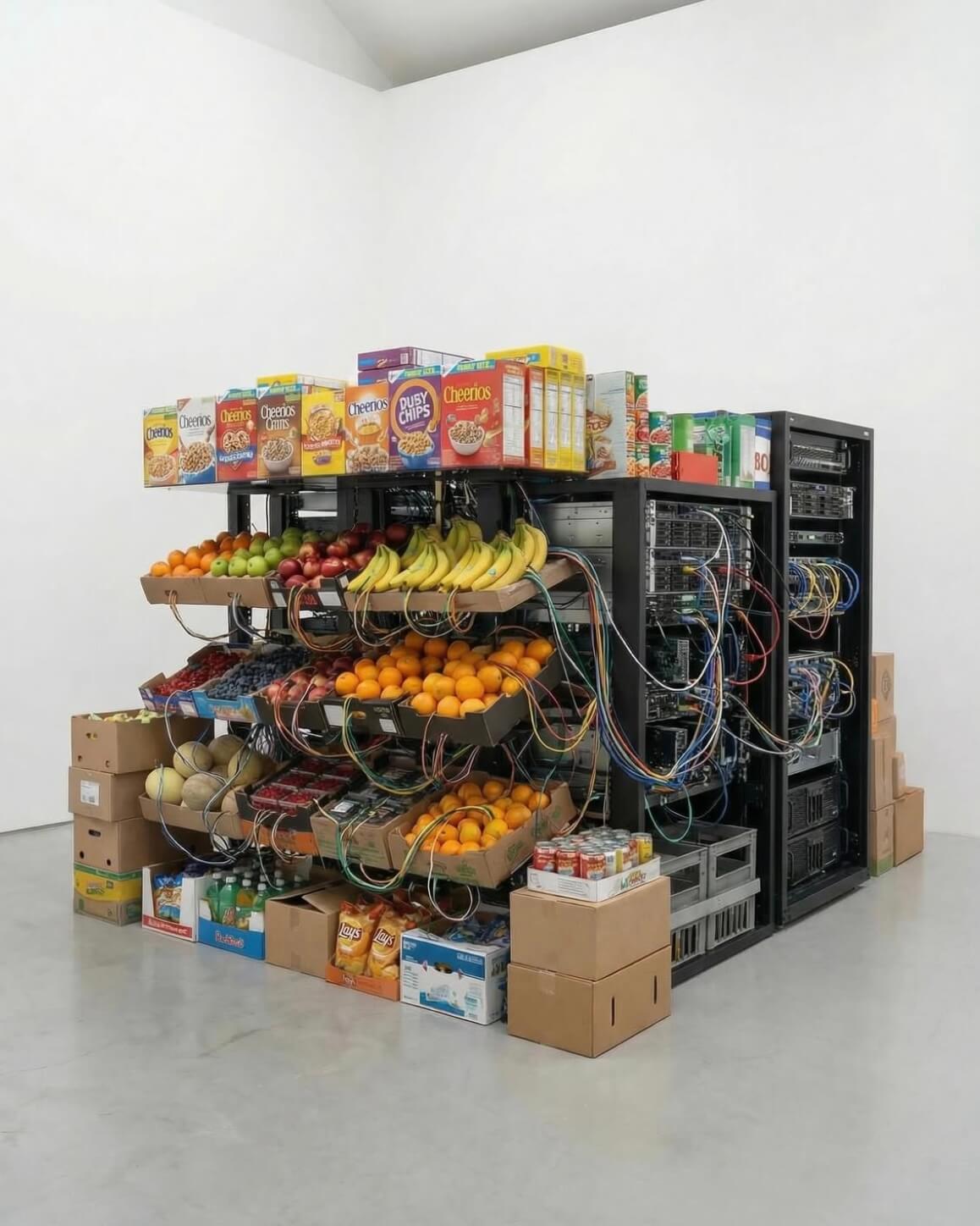
The integration of artificial intelligence as an environmental condition produces a significant fracture in the concept of authorship. This is not a simple loss of control or a delegation of the creative gesture, but a deeper reconfiguration of the artist’s role within complex systems. The modern idea of authorship, grounded in mastery of the medium and direct intentionality, comes into tension with practices that unfold through partially automated and not fully transparent processes.
In this context, mastery gives way to navigation. The artist is no longer the one who fully dominates the tools, but the one who is able to move across systems, understand their limits, exploit their ambiguities, and accept their unpredictability. The creative act shifts from the production of forms to the management of conditions, settings, choices, exclusions, interruptions. Authorship is exercised through selection and relation, rather than through direct execution.
This transformation challenges a heroic vision of the artist, without necessarily emptying practice of responsibility or intention. On the contrary, it demands a new form of critical awareness. Operating within systems that learn, classify, and reproduce cultural patterns means confronting structures of power, biases, and automatisms that are not neutral. The author does not disappear, but assumes a less visible and more distributed role.
In this scenario, originality no longer resides exclusively in creation ex novo, but in the ability to construct meaningful paths through already mediated materials. The artist acts as a node within a network of processes, in which intentionality is negotiated rather than imposed. The use of artificial intelligence does not cancel authorship, but shifts it onto a different plane, where the primary competence is not absolute control, but the capacity to critically orient oneself within a constantly evolving technological ecosystem.
The generational divide and the role of institutions and curatorship
The normalization of artificial intelligence as an environmental condition does not occur uniformly. On the contrary, it produces a clear divide between those who experienced the emergence of AI as a rupture and those who encounter it already as infrastructure. This gap is not only generational, but also concerns how change is interpreted and metabolized within the art system.
For part of the artistic and institutional world, artificial intelligence still represents an object of theoretical inquiry, something that calls for an explicit position. For younger generations, by contrast, AI is often an implicit element of the operational landscape, not a novelty to be thematized, but one tool among others, already integrated into practices of research, production, and distribution. This difference in perspective generates misunderstandings, but also opens up new possibilities for redefining roles.
In this context, institutions and curators assume a key function. They are not called upon to certify the legitimacy of using AI, nor to construct celebratory or alarmist narratives. Their role shifts toward building critical frameworks capable of reading artistic practices beyond the technological label. Curatorship becomes a space of translation, where attention focuses on the cultural, economic, and political conditions that run through the works, rather than on the tools employed.
The risk, in the absence of such mediation, is a premature musealization of technology, which freezes AI in a symbolic phase that has already been surpassed. By contrast, recognizing artificial intelligence as an environment means questioning how it redefines criteria of selection, visibility, and value within the art system. Institutions, in this sense, are not mere observers, but active agents in the transformation of discourse, responsible for guiding the passage from exception to normality without losing critical capacity.
The future of art beyond the question of meaning
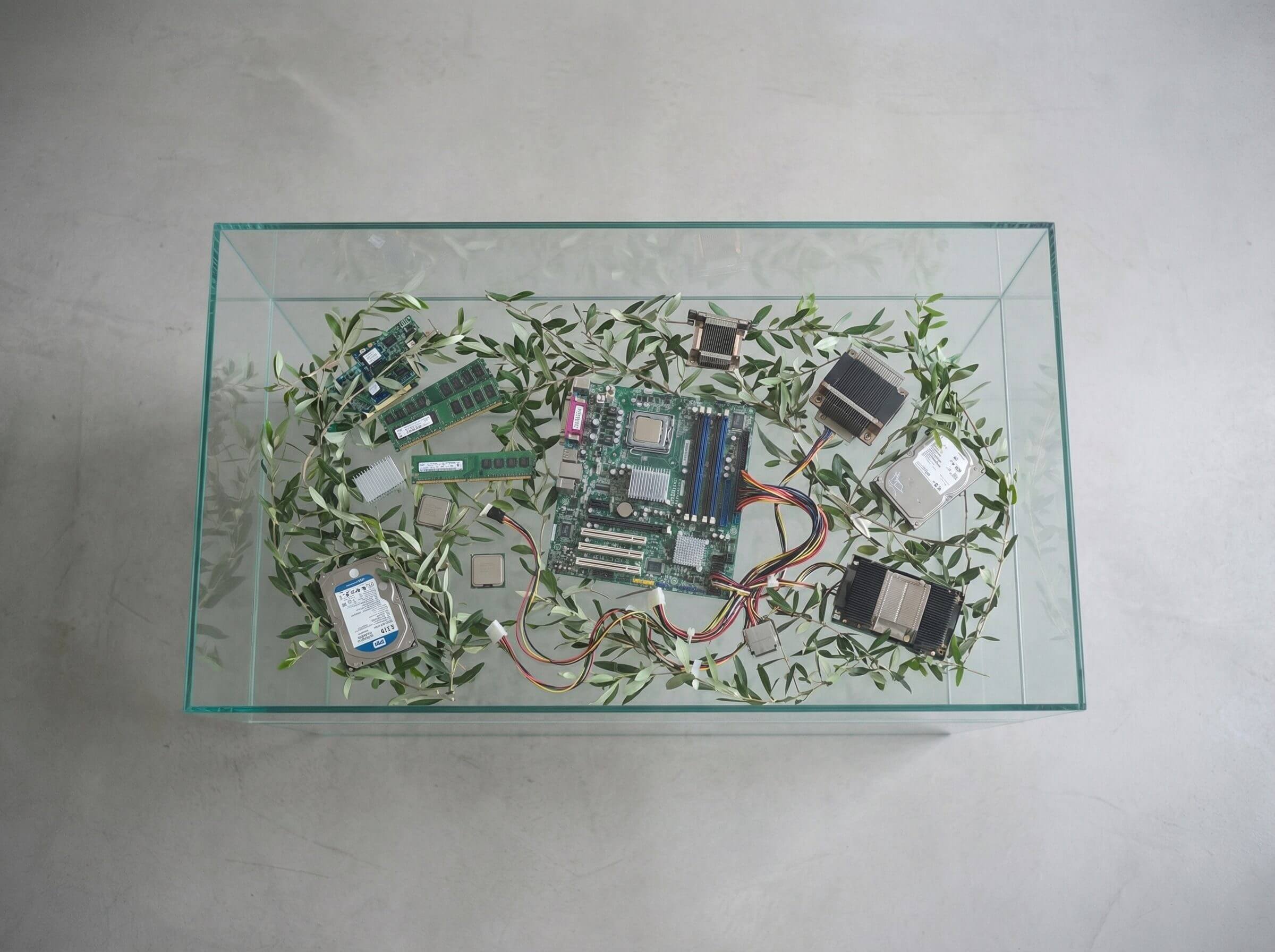
When a technology is no longer perceived as a theoretical problem, the kinds of questions art is called to ask also change. In the case of artificial intelligence, the debate seems to be gradually moving away from the need to assign it a symbolic meaning or an identity function. The issue is no longer what it means to use AI, but what forms of practice, relation, and imagination emerge in a context in which AI is already given.
This shift marks an important passage for contemporary art. Moving beyond the question of meaning does not imply a renunciation of critique, but rather its repositioning. Attention is directed less toward interpreting the technology and more toward the conditions it helps produce, new regimes of visibility, new temporalities of creative labor, and new modes of circulation and accumulation of cultural value.
In this scenario, art is not called upon to explain or represent artificial intelligence, but to operate within its consequences. The artistic gesture becomes a situated act, taking shape in an environment already mediated by algorithmic systems, without the need to always render them explicit. Critique manifests through choices, omissions, and frictions that emerge in relation to these systems, rather than through programmatic statements.
The future of art, then, does not seem to depend on the ability to take a position on AI as an object, but on the possibility of working beyond it as a theme. When technology loses its symbolic centrality, space opens up for practices that no longer need to legitimize themselves through a discourse on innovation. In this space, art can return to questioning what exceeds technology itself, the forms of experience, subjectivity, and meaning that continue to emerge even when the question of meaning is no longer central.