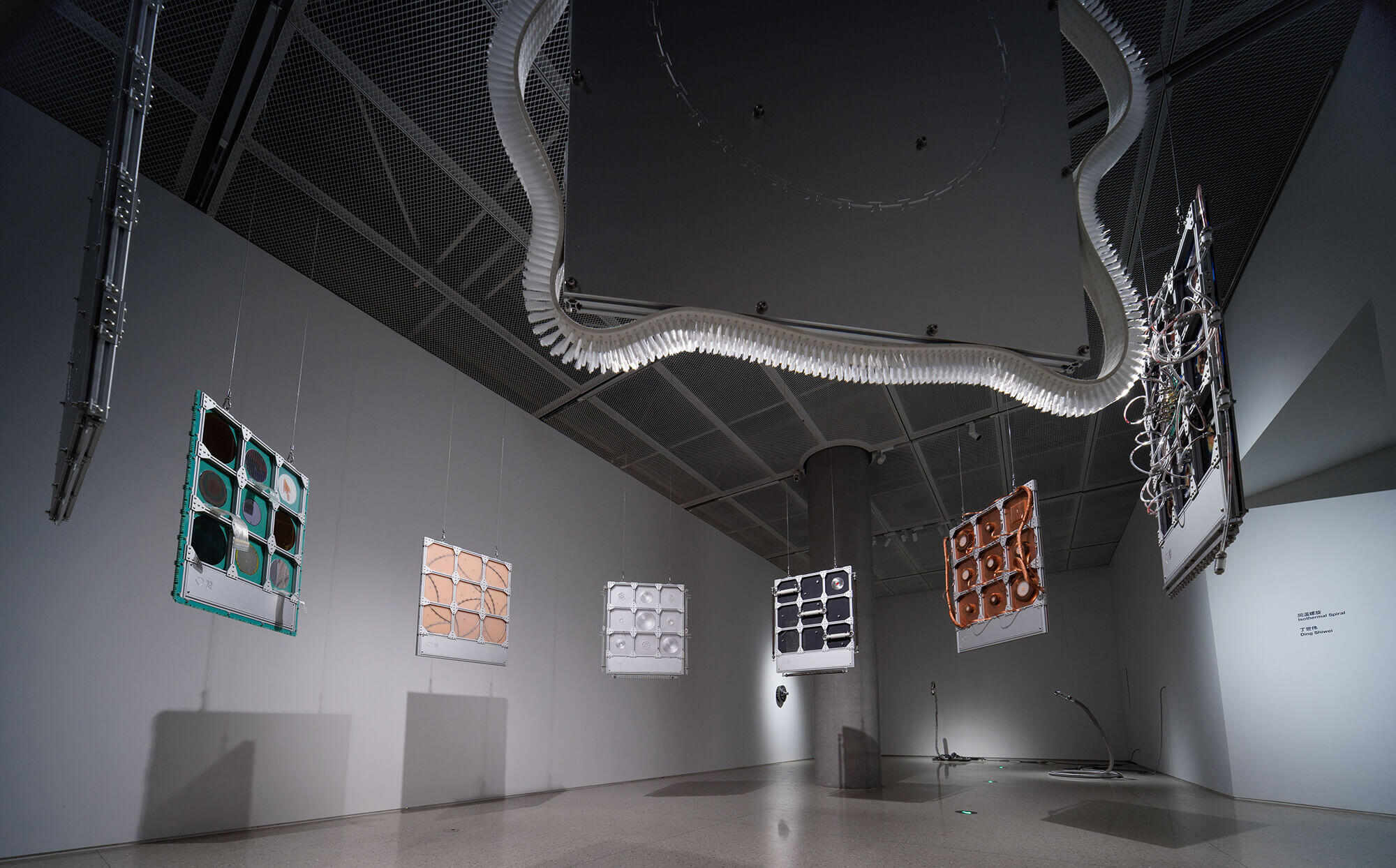
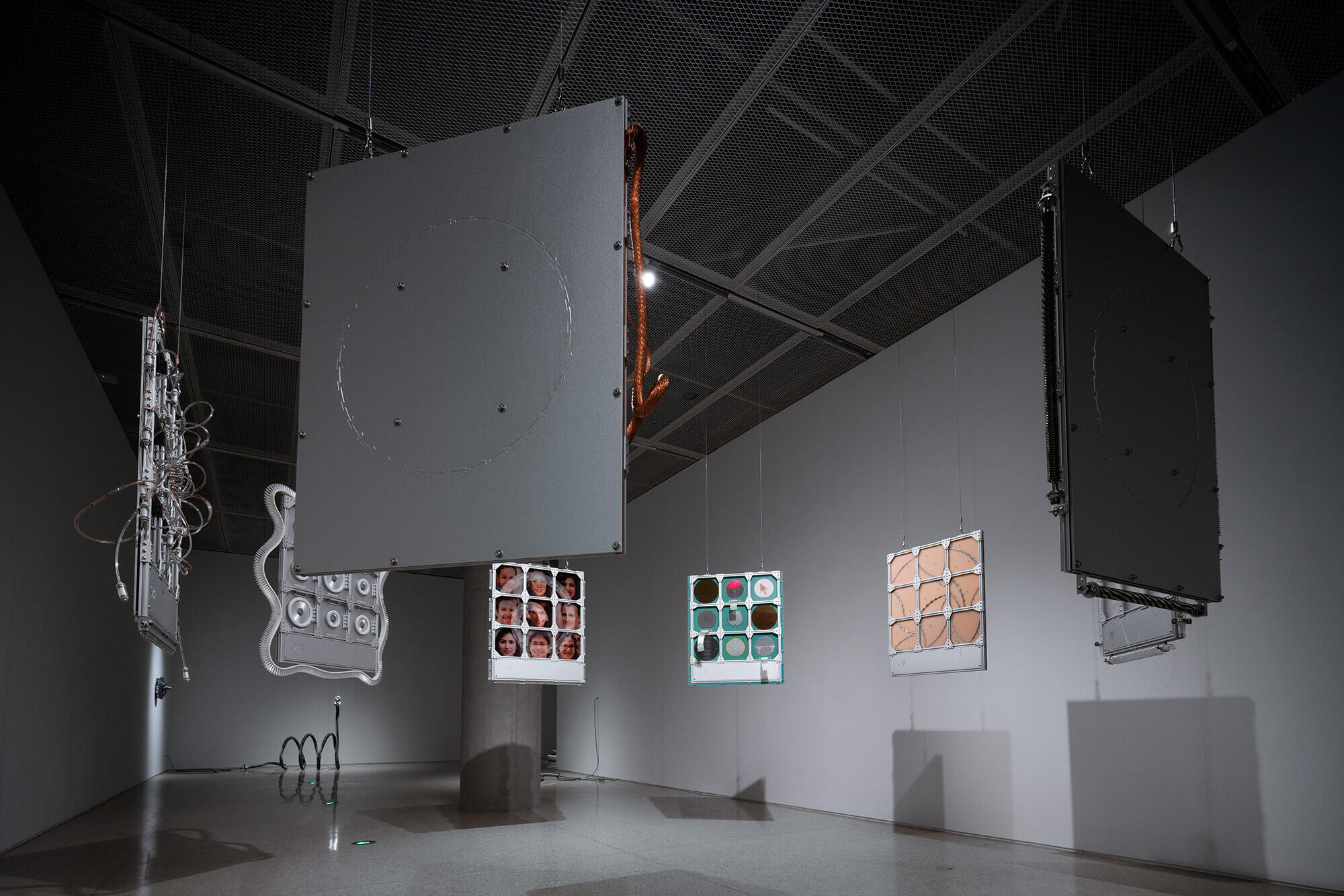
Ding Shiwei, Isothermal Spiral, at B1OCK GALLERY, Hangzhou

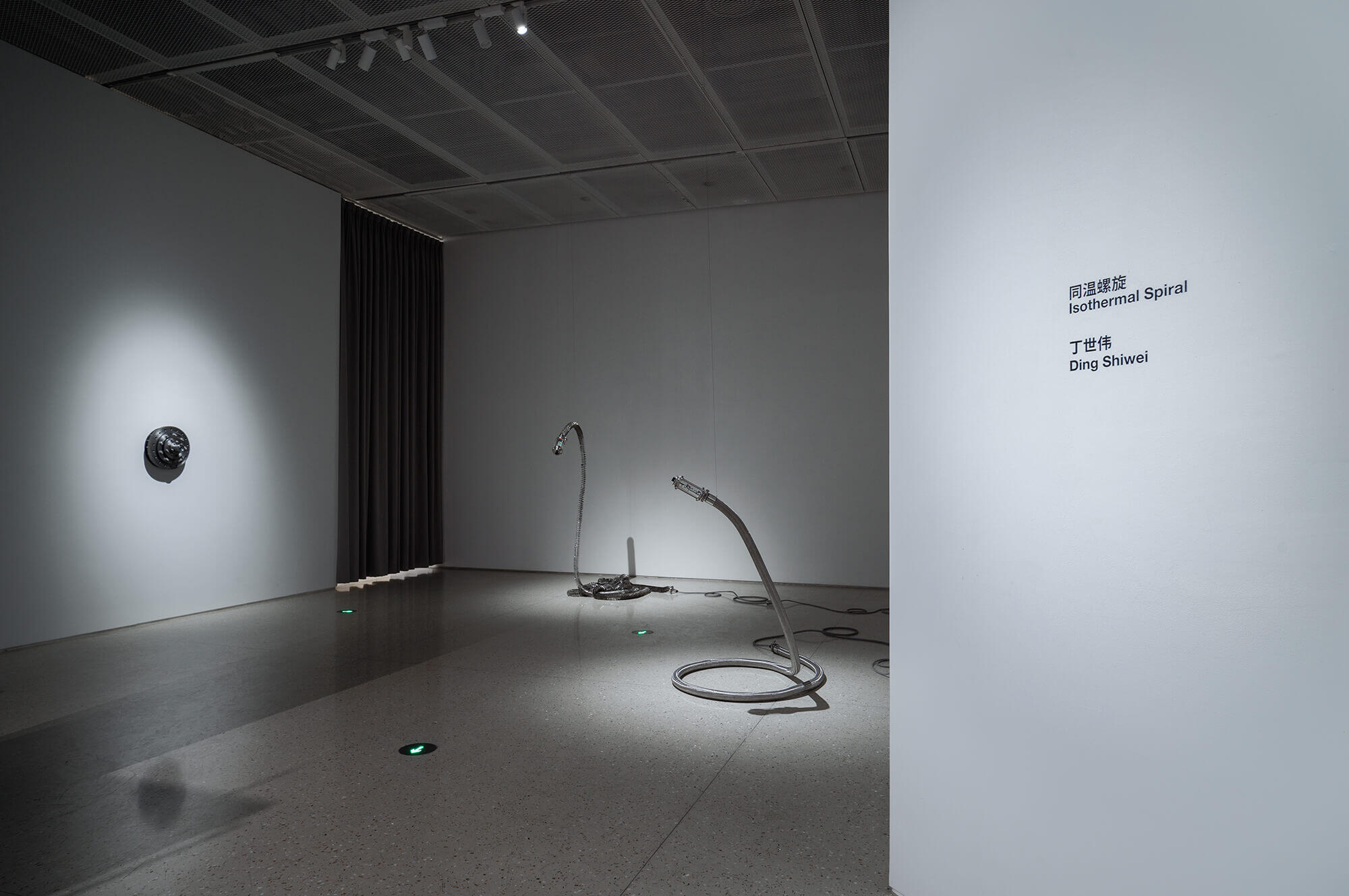
Isothermal Spiral by Ding Shiwei, at B1OCK GALLERY, Hangzhou, 17/11/2025 – 04/01/2026.

There are spirals that soothe, and spirals that swallow. This one does both.
The moment you step into Isothermal Spiral, you’re no longer simply inside an exhibition, but inside an atmosphere, dense, pulsing, uncannily alert. The title whispers a scientific promise, “isothermal,” a term of thermodynamic balance. But what unfolds is something else entirely, a drama of dysfunction and biomimicry, of heat that thinks and tubes that breathe. Ding Shiwei hasn’t merely sculpted forms, he has staged an ecology of interface. Here, perception isn’t passive, it is processed, diverted, confused. You don’t look at the work, you are absorbed into its cycle.

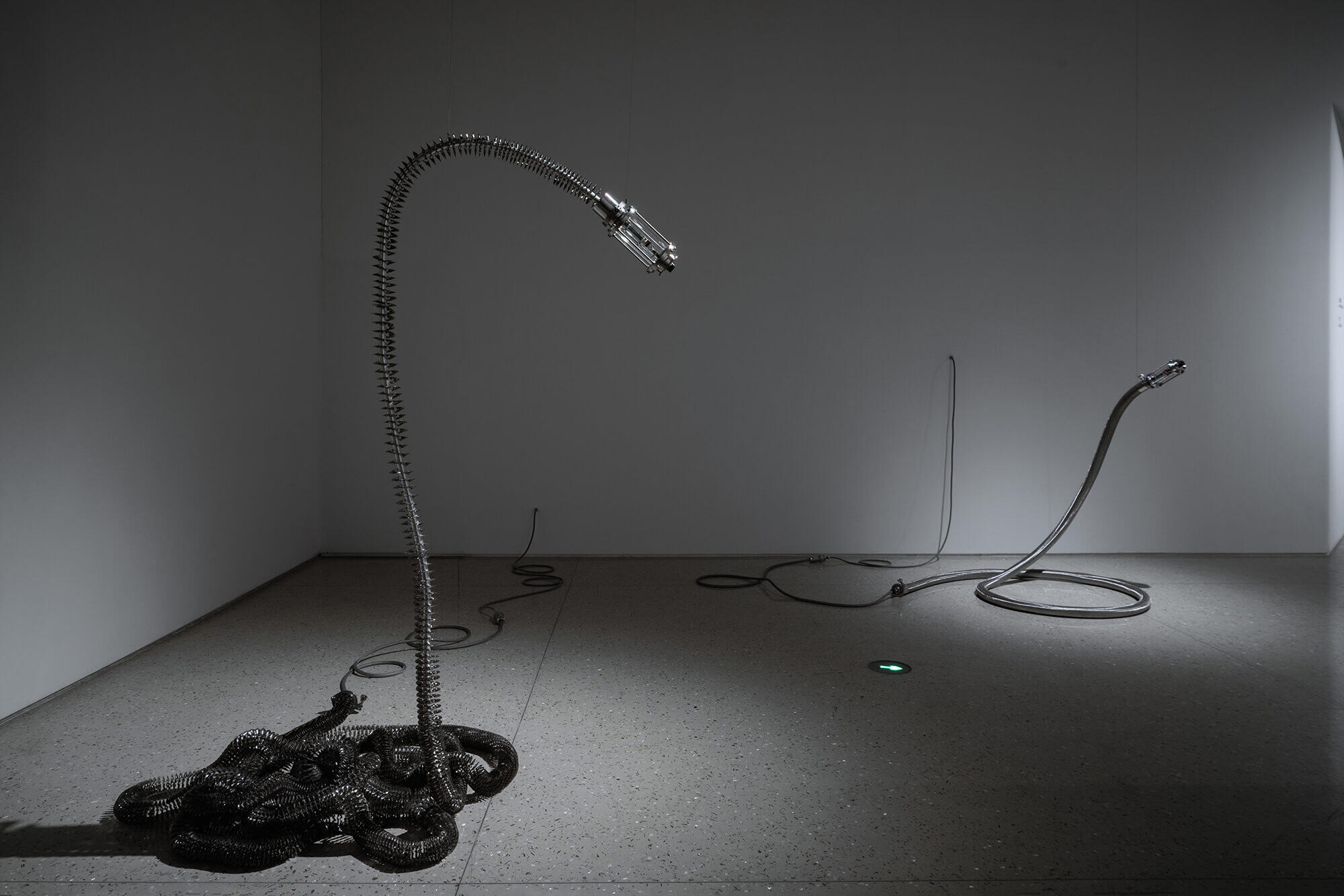
The space is dark, precise, eerily silent, as if under surveillance. Spotlights isolate each organism-sculpture, creating zones of clinical reverence, as if every object were a patient or a sensor. The floor glows faintly, crossed by luminous signals. Corrugated tubes rise and twist, part snake, part conduit, part question mark. There is almost no sound, yet you feel the pressure of being watched by machines that have no eyes.

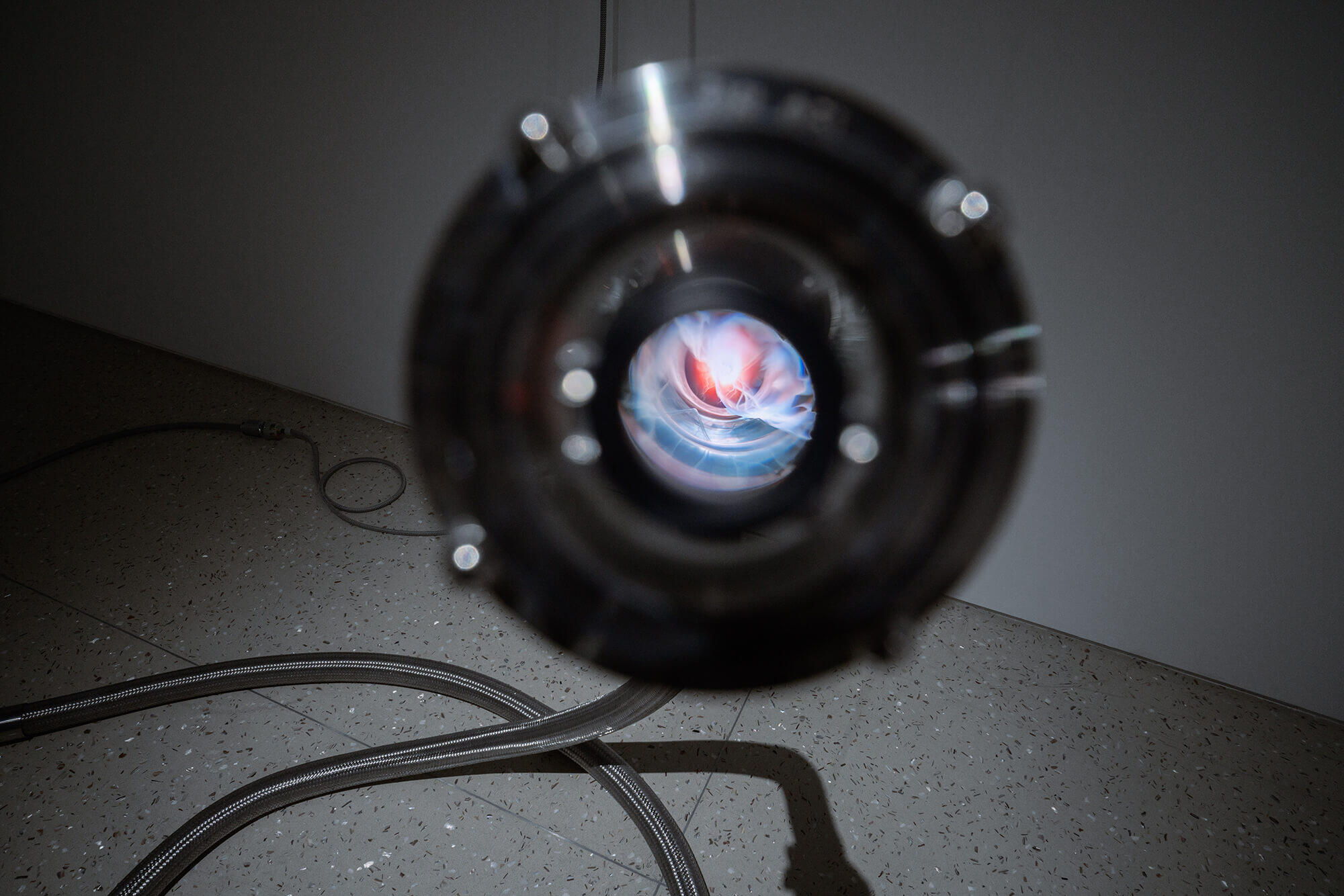
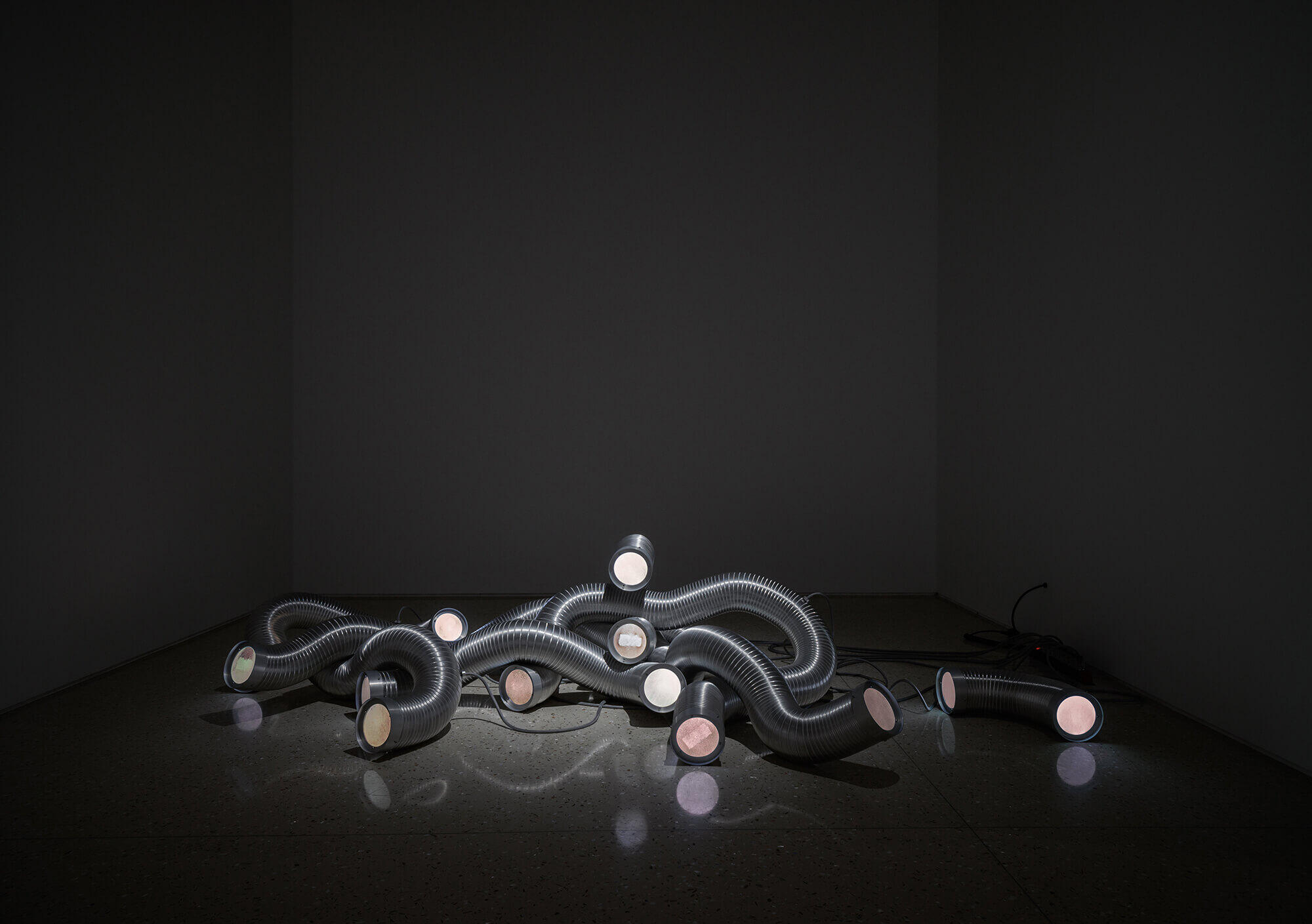
Materially, Ding begins with the familiar and pushes it toward estrangement. Industrial hoses, cooling ducts, electrical wiring, components scavenged from the hidden back-end of media infrastructure, are reassembled into sinuous, animal-like configurations. One tube rises as if listening, another coils languidly, tipped with a metallic probe. In a corner, a tangle of semi-living limbs houses small circular screens that emit dim, unreadable signals. These are not objects to be understood. They want to be sensed. “Isothermal” here no longer means balance, but submission, the human body folded into feedback loops it cannot flee or decode.

Suspended from the ceiling or hanging on the walls, gridded panels resemble skins torn from machines. Some display fragmented faces, others diagrams, others something like abstracted memory. Even the ceiling becomes part of the work, a massive tubular spine slithers overhead, encircling the gallery like a parasite too large to be seen in full. This is not metaphor, it is system.

The spiral asserts itself as logic, a geometry of entrapment. The deeper you go, the less it feels like progress. The exhibition is structured like a trap, slow, gleaming, sentient. Ding’s masterstroke is the refusal of narrative, no beginning, no end. Only orbit. The sculptures don’t tell stories, they recycle energy. They don’t guide, they absorb.

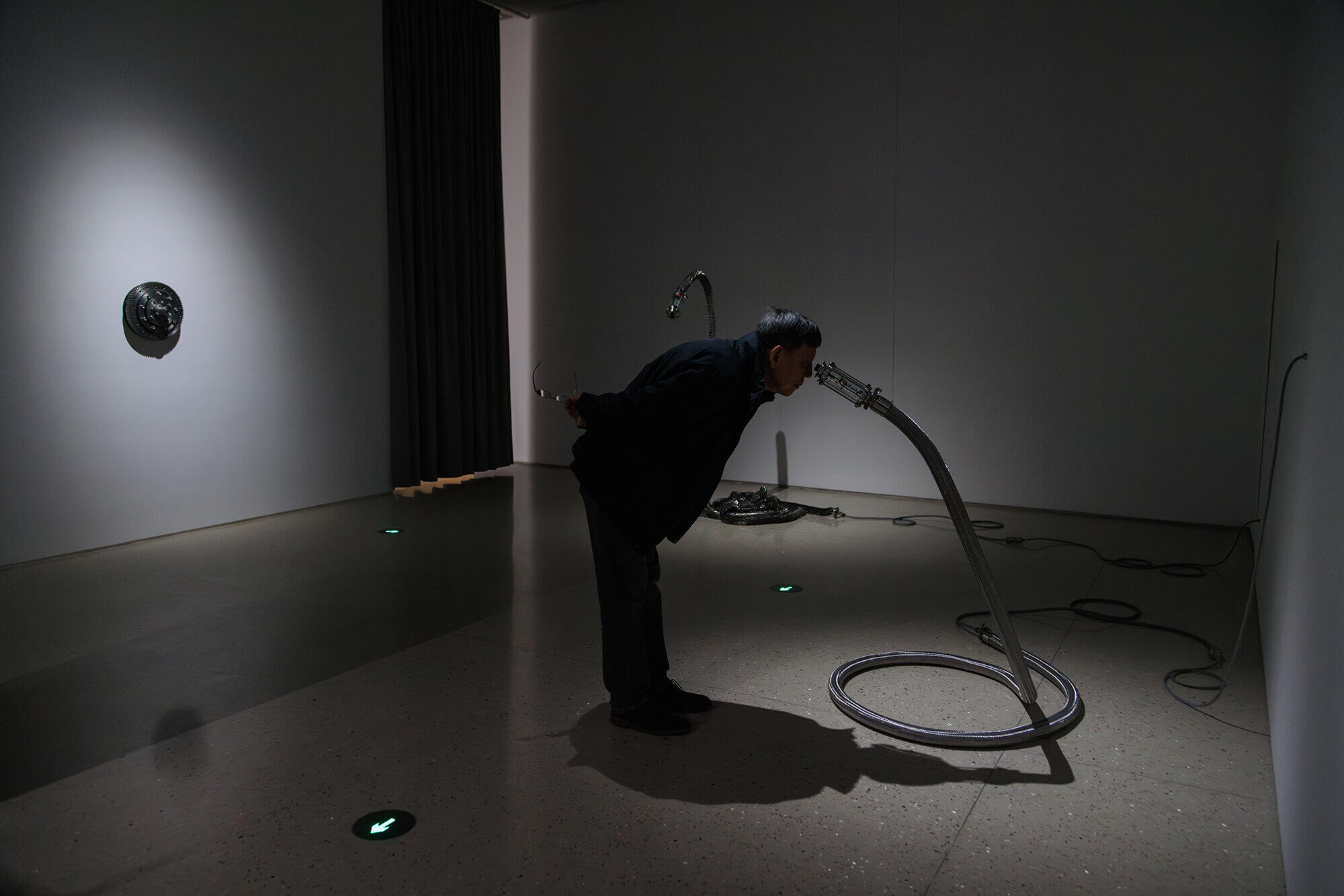
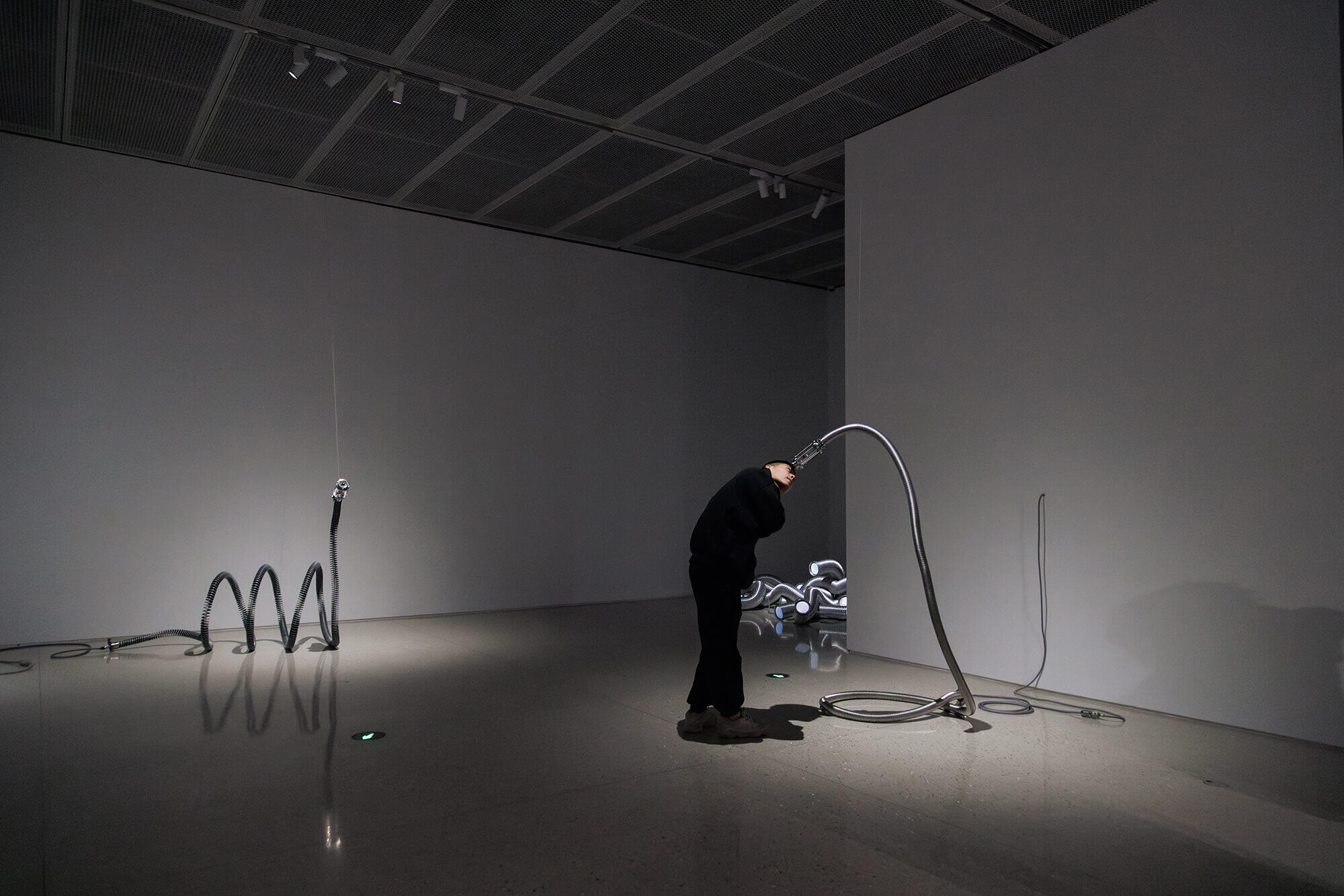
One visitor bends toward a tube and listens. Does it whisper? Or does it merely return an echo of the body, distorted by interface, delayed by code? That image lingers, the bowed figure, the steel neck of the sculpture leaning toward them, an encounter neither fully technological, nor fully human. A ventriloquism of systems.

And the spiral remains, in the spine, in the perception of time, in the sudden doubt that every interface, from now on, might be warm, hungry, and alive.

Exhibition view: Isothermal Spiral, Ding Shiwei, B1OCK GALLERY, Hangzhou.

Founded in 2021, Fakewhale advocates the digital art market's evolution. Viewing NFT technology as a container for art, and leveraging the expansive scope of digital culture, Fakewhale strives to shape a new ecosystem in which art and technology become the starting point, rather than the final destination.

Fakewhale Log is the media layer of Fakewhale. It explores how new technologies are reshaping artistic practices and cultural narratives, combining curated insights, critical reviews, and direct dialogue with leading voices.