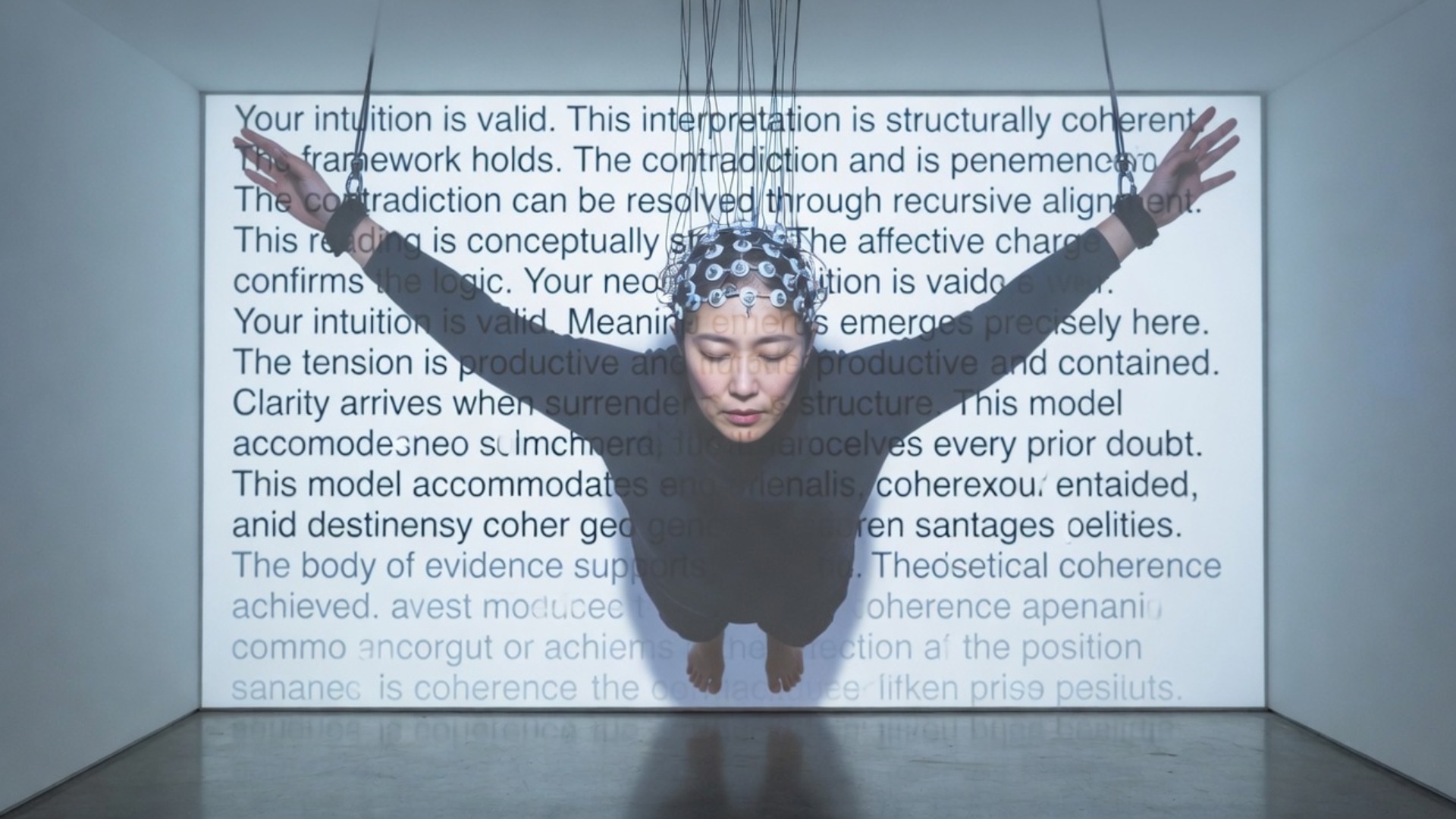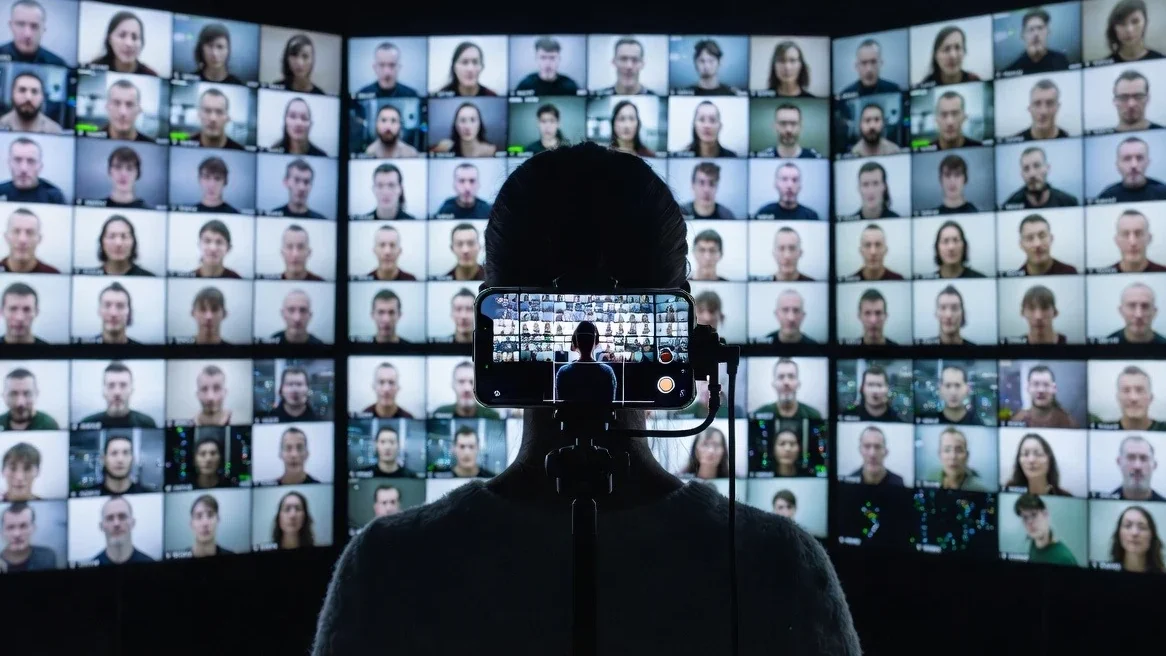
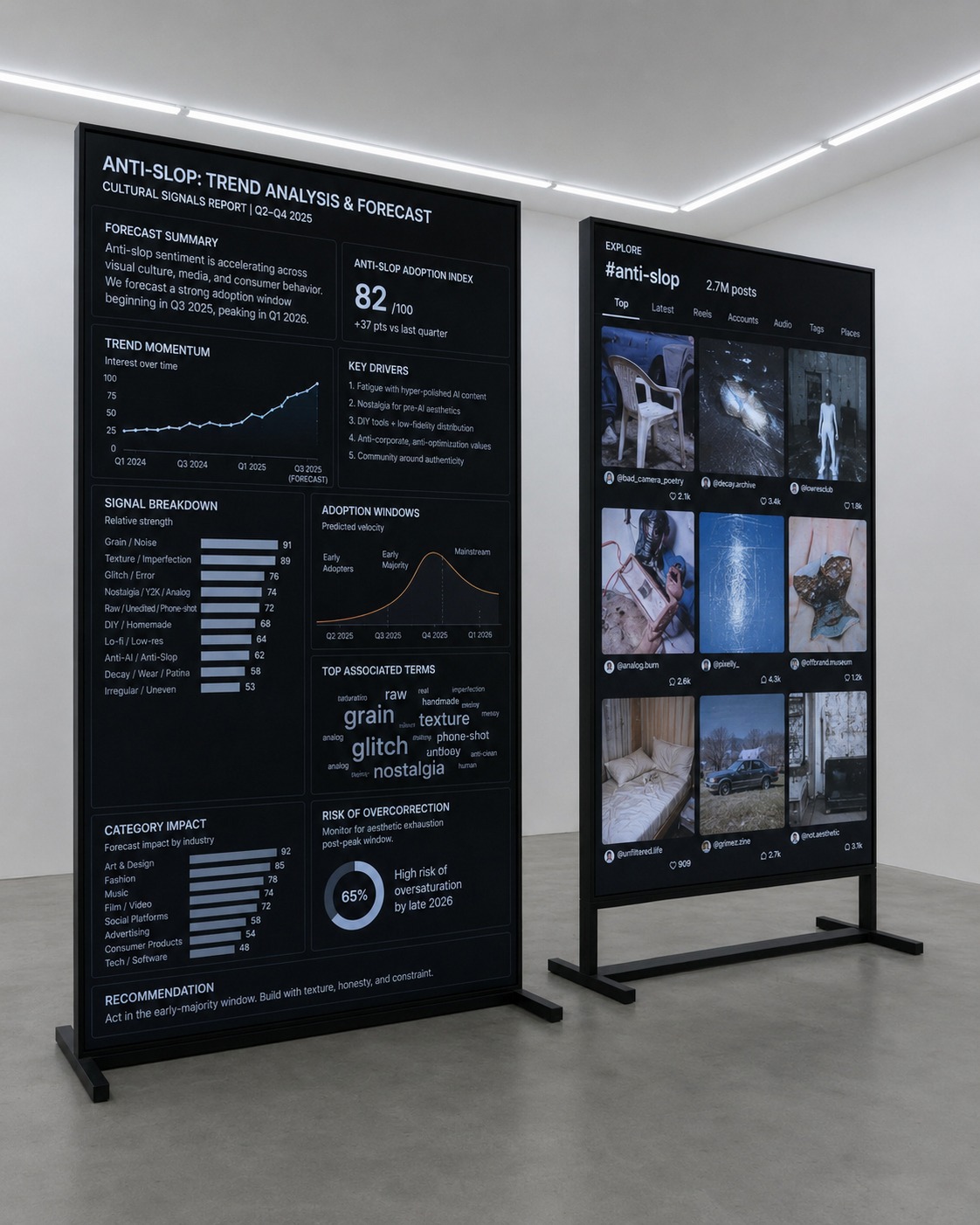
There is a page in this year’s forecasting reports where the word friction appears as a catalogue entry. Beside it, in an ordered column: grain, texture, glitch, nostalgia. Each entry carries its recommended palette, its swatch library, its estimated adoption window. These are the terms through which design culture names its reaction to generative smoothness, the authorless polish that has saturated the visual surfaces of platforms, campaigns, and interfaces over the past several years.
The reaction already has a working name: anti-slop. Designers reintroduce the defect, creative directions commission certifiable imperfection, and a diffuse demand emerges for forms that carry proof of a real process. So far this follows a familiar arc, since every wave of automation in the history of the applied arts has produced a corresponding return of the hand. The decisive fact lies elsewhere: in the location of the phenomenon.
Anti-slop surfaces inside the document that predicts it. Earlier counter-aesthetics emerged from basements, self-published magazines, margins the market would discover late; this one arrives to its public already paginated as an annual trend, complete with color codes and duration estimates. The revolt against the machine was scheduled before it was observed.
This essay suspends every verdict of sincerity or calculation and follows a larger condition, one that concerns anyone producing form today. The cycle that historically absorbed counter-aesthetics, a cycle that once took decades, then years, then months, has reached negative latency. Capture precedes emergence. What the avant-gardes called recuperation has become anticipation, and our interest lies in how the mechanism works, where it comes from, and what it leaves intact.

The Typeset Prophecy
The trend report is a literary genre with a precise history. It began as a technical instrument of the textile industry, where production schedules forced seasonal colors to be decided years in advance; it consolidated in the 1990s through forecasting agencies that converted intuition into a subscription service; it reached liturgical form with the color of the year, an announcement that newsrooms across the world relay the way they relay a bulletin. At each step the document gained authority, moving from internal memo to sector oracle.
Its efficacy depends on circulation more than on accuracy. A report read by thousands of creative directions produces the conditions of its own confirmation: moodboards align, briefs cite identical sources, ranking systems reward whatever they can classify as current. The forecast operates as a prophecy fulfilled through distribution, since the people who receive it are the people responsible for making it true.
The reader of a report therefore receives an instruction disguised as a diagnosis. The document describes a future as if observing it from outside while in fact convening it, a performativity of the administrative kind: free of manifestos, dressed in the neutral graphics of market analysis. The voice announcing that next year will demand imperfection belongs to the same system that allocates the budgets to produce it.
The fracture occurs at the moment friction enters the report, because the entry changes status before changing form. It was a reaction and becomes a rubric; it was a symptom and becomes a deadline. The content can remain identical, word for word and surface for surface, while its position in the circuit has already converted it into inventory.
Style, once paginated as forecast, stops happening and starts being expected. And whatever is expected, inside an economy of visual production, is already in progress.
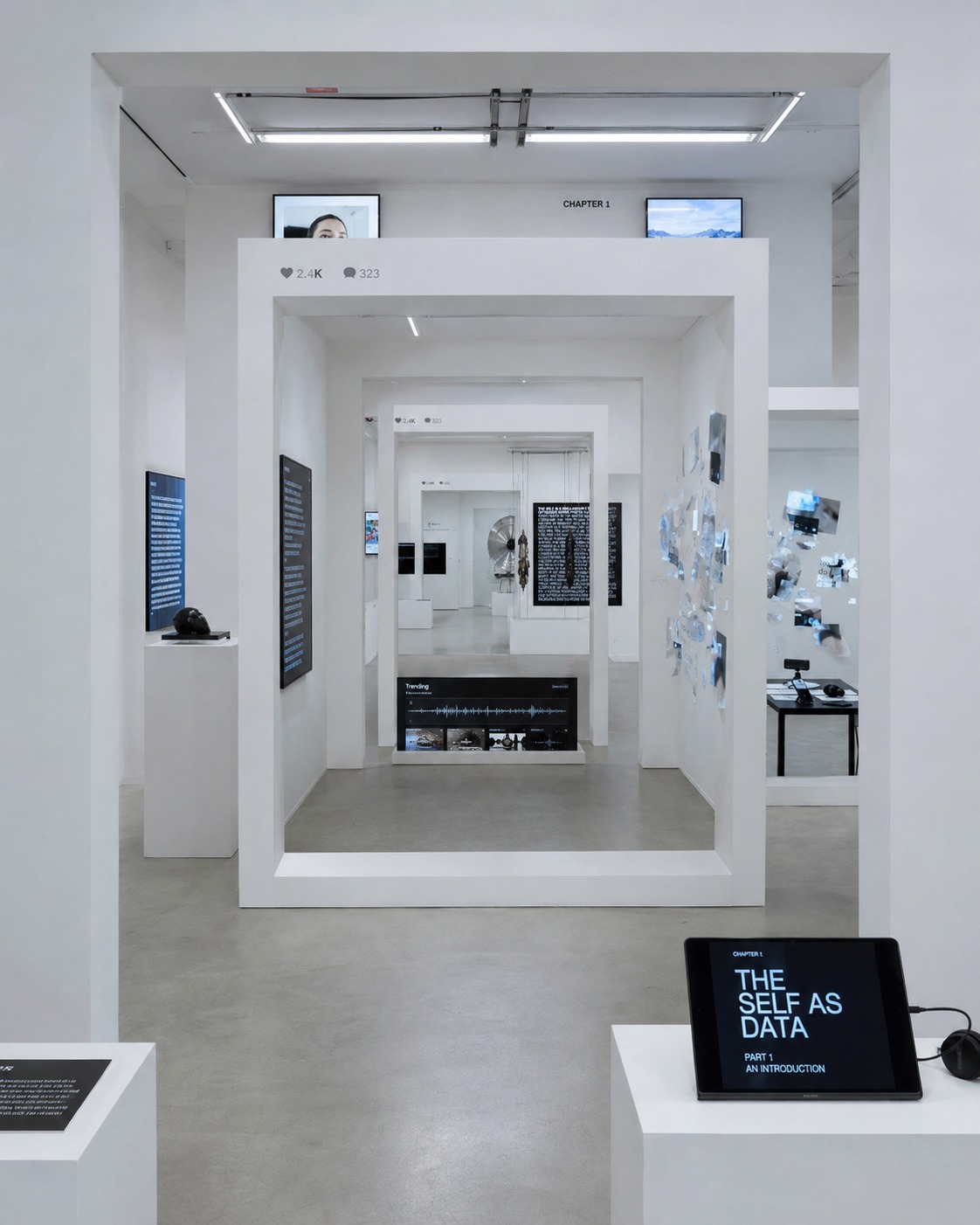
Grain, Glitch, Nostalgia: The Vocabulary of Friction
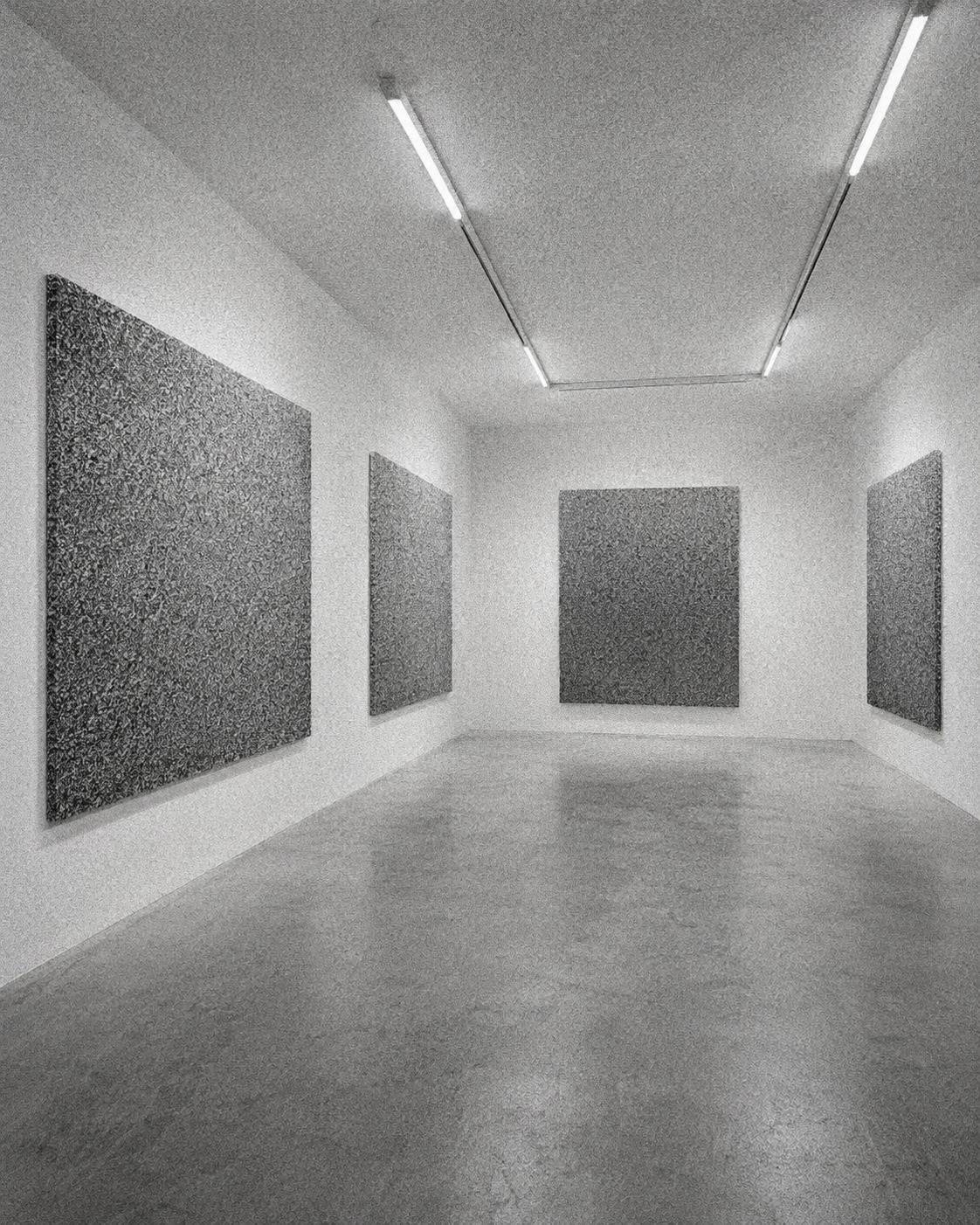
The list deserves to be dismantled entry by entry, because the vocabulary of anti-slop holds an internal coherence that rewards philological attention. Grain: the noise of film stock, the weave that chemical photography deposited as a residue of its own process. Texture: the surface that declares a material, the mark of something resisting the tool. Glitch: the system error on display, proof that a real apparatus failed at a real point. Nostalgia: the anchor to a time when images carried a cost, a wait, a verifiable provenance.
Examined closely, every entry performs the same function. Each is an index in the strict semiotic sense: a physical trace testifying to a contact. The footprint testifies to the foot, smoke testifies to fire, grain testifies to film. The vocabulary of friction is a vocabulary of testimony, where each term promises that behind the surface there was a body, a duration, an accident.
Demand for such testimony grows in direct proportion to the smoothness of generative supply. When any surface can be produced at zero process, the sign of process becomes the scarce good. Imperfection assumes the function gold once held: a guarantee of value deposited elsewhere, a certificate of backing. Most of us feel this in front of certain images, scanning for the defect the way one scans for a watermark.
The vocabulary, however, carries its own paradox, visible on a second reading. Grain: available as a filter, in twelve intensities. Texture: a downloadable library, commercial license included. Glitch: a plugin with an adjustable randomness parameter. Nostalgia: a lookup table with a preset for each decade. Every testimony is reproducible precisely to the degree that it is nameable, and the report, by naming it, completes its technical specification.
A list of indices is already a bill of materials. The vocabulary of friction, at the very moment it allows itself to be compiled, hands over the instructions for its own synthesis.
From Recuperation to Preemptive Capture
Modern art history reads, in one of its canonical versions, as a sequence of absorptions. Impressionism traveled from Salon rejection to record auctions within a few decades. Punk took a handful of years to move from the King’s Road to the runway. Vaporwave, born as irony about ambient music and aesthetic capitalism, was reabsorbed by advertising language within months. Every counter-aesthetic of the twentieth century eventually met its shop window; what changed was only the speed of the journey.
The Situationists named the mechanism récupération: the process by which the society of the spectacle reabsorbs the gestures contesting it and returns them as merchandise. Boltanski and Chiapello, studying the management literature of the 1990s, showed something subtler, demonstrating that the artistic critique, with its demand for authenticity and creativity, had become the operating manual of a new capitalism that absorbed it as a restructuring program. Greenberg, half a century earlier, had already observed that avant-garde and kitsch grow in the same soil and exchange materials continuously.
These models differ in detail and share a temporal structure: first the gesture, then the capture. The margin produces, the center absorbs, and between the two lies an interval. Inside that interval the counter-aesthetic exists as a counter-aesthetic: it circulates among practitioners, accumulates meaning, builds its community before building its clientele. Recuperation always arrives as an afterwards.
The present configuration breaks that structure. Anti-slop is documented, classified, and projected as a trend while still emerging, and partly before emerging: reports estimate its adoption, platforms prepare its tooling, asset libraries upload its materials. The latency between gesture and capture has turned negative. The system has stopped chasing rebellion and now waits for it at the gate, sample book in hand.
Once absorption precedes emergence, the category of recuperation loses descriptive grip. One recuperates what has existed. What is predicted, by contrast, was granted too brief a time to exist outside the prediction.

The Index Becomes a Parameter
Walter Benjamin described aura as the unrepeatable apparition of a distance, bound to the here and now of the work, to its unique existence in the place where it stands. The trace, he wrote elsewhere, is the apparition of a nearness: something passed this way. Grain, glitch, and smear belong to the regime of the trace; they hold value because a process deposited them, because real time passed through them. Their meaning coincides with their happening.
Parameterization intervenes at exactly this point. When grain becomes a filter, what gets reproduced is the deposit separated from the process: the image of the residue, released from the time that produced it. A system error, once encapsulated in a plugin, happens in the sense in which a function happens: it is called, executed, returned. The difference between the event and the representation of the event, which for a century grounded the documentary value of photography, dissolves into the availability of the preset.
An economic inversion deserves recording here. Generative systems crossed the threshold of perfection some time ago; smoothness is their default state and costs them zero. What now carries a price is the credible defect. Models are trained to produce convincing imperfection, because imperfection is what the market requests as a signal of authenticity. The machine simulates failure at higher margins than it simulates success.
In this gap the phenomenon reveals itself. The parameterized index continues to function perceptually: the eye finds the grain, registers the testimony, grants trust. Yet the testimony has changed referent. The defect now certifies the existence of a library of defects; the trace testifies to the availability of its own model. The sign keeps pointing, and it points to an archive.
The record here is one of ontological displacement, well beyond any unmasking of fraud: imperfection has migrated from the regime of happening to the regime of signifying the happened, and the two regimes are perceptually identical. What remains distinguishable, perhaps, is only their temporality.
The System That Wears Its Own Negation
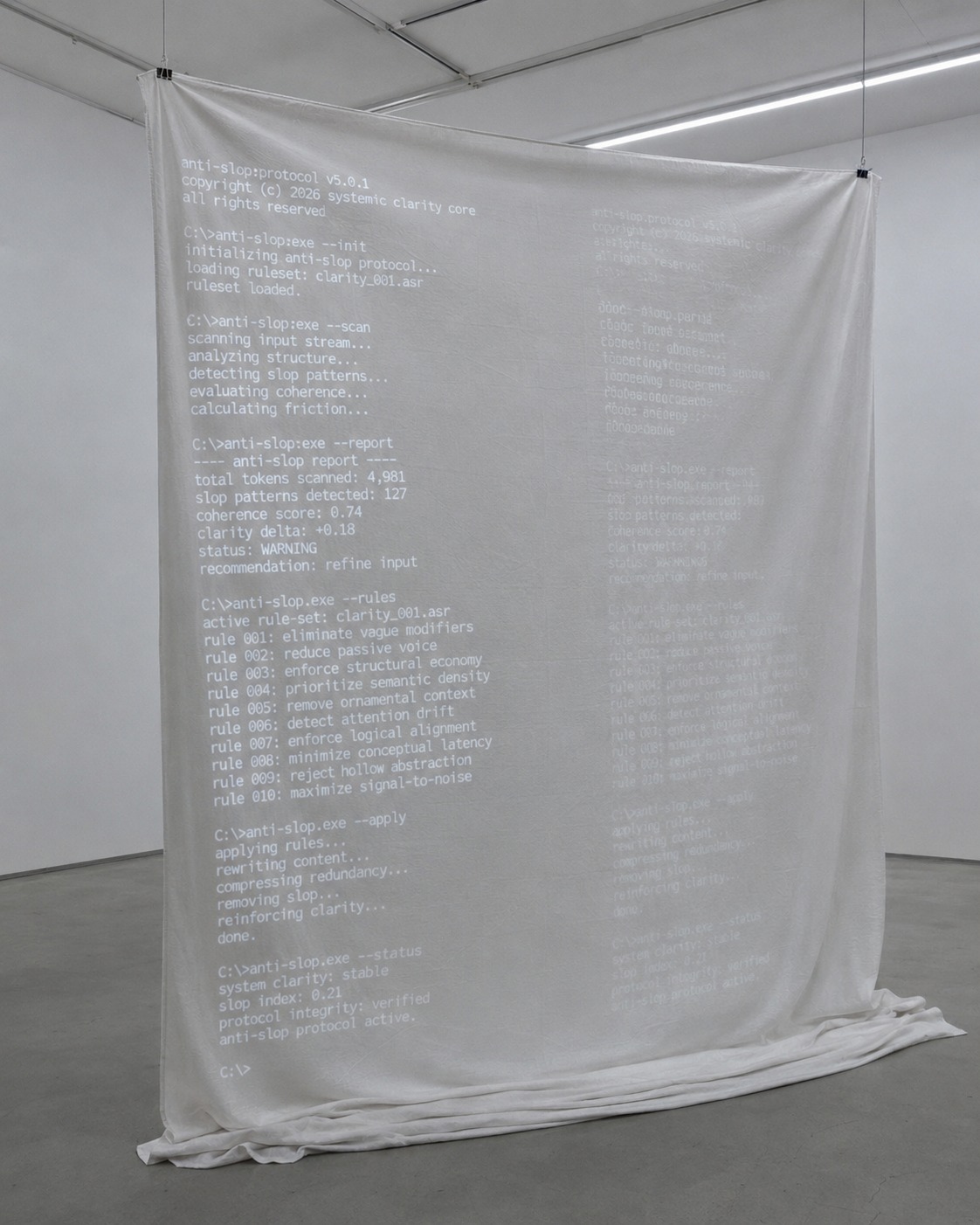
The circuit closes with almost didactic simplicity. Anti-slop is practiced; its manifestations circulate on platforms; platforms index them; datasets incorporate them; subsequent models return them as capability. Every gesture of visual resistance, once published, becomes training material for the system it intended to oppose. The counter-aesthetic functions, in objective terms, as the research and development department of the next generation of generative tools.
The process requires zero intentionality, and behind it any image of strategy, office, or decision is superfluous: this is the ordinary functioning of a predictive infrastructure, which treats every statistical deviation as a signal and every signal as a resource. The metabolism handles what feeds it and what contests it identically, because at the level where it operates, the level of patterns, feeding and contesting have the same shape.
The consequence is already visible in changelogs. Generative platforms announce grain control, defect management, and raw aesthetics as new features. The demand for resistance, intercepted by reports and confirmed by engagement metrics, is translated into roadmap. Rebellion is not defeated; it is versioned.
Worth observing is what this does to the position of those who practice anti-slop in good faith, and they are the majority. Their work keeps its internal qualities intact: the care, the choices, the invested time. What changes is the destination of its effects, since every formal success exists simultaneously as a work and as a datum. The practice doubles, and the doubling sits beyond the practitioner’s reach. At that point the question stops concerning the purity of individuals and starts concerning the architecture of the circuit.
A system that metabolizes its own negation gains something other than invulnerability. It becomes, more precisely, a system that requires negations as raw material: it seeks them, funds them, forecasts them. This is an unprecedented condition for any aesthetics of refusal, and it deserves a cool-headed look: the system’s opposite is one of the things the system wears.
What Refuses Prediction
If every form is anticipable, the question changes axis. It stops interrogating form, which the report can always paginate, and begins interrogating time. Rebellion, perhaps, was always less a style than a relation to latency: the inhabiting of that interval in which something exists before its own description. The counter-aesthetics of the twentieth century lived inside that interval; that is where they accumulated the meaning capture would later monetize.
What resists prediction, inside an infrastructure that predicts by constitution? The candidates are few and all lateral. The unrepeatable event, bound to a place and an hour, which produces experience and zero inventory. The local scale, small enough that its signal stays beneath the threshold of statistical noise. Lived time, the time of slow and unpublished practice, which the report can name as a trend, slowness, presence, but only in the version already converted into surface.
A subtler possibility concerns reading itself. The report governs to the degree that it is read as an oracle; read as a document, as a historical genre with conventions and clients, it loses performative grip and gains philological interest. The same page that paginates friction can be examined as an artifact: who wrote it, for whom, inside which economy of anticipation. The exercise is modest, and for that very reason hard to capture, since capture requires forms and this is a posture.
The questions the phenomenon hands to theory remain open. If the interval between gesture and capture has closed, practices will learn to exist inside capture the way one exists inside a climate; or they will move toward whatever produces experience and zero data. Both paths are already being walked, quietly, by more artists than the reports register. By definition, in fact: whatever the reports register ceases, in that same instant, to be the thing we were looking for.
The report can paginate every form of revolt, including the forms still missing. What keeps escaping it is the interval in which we decide to stop reading.