
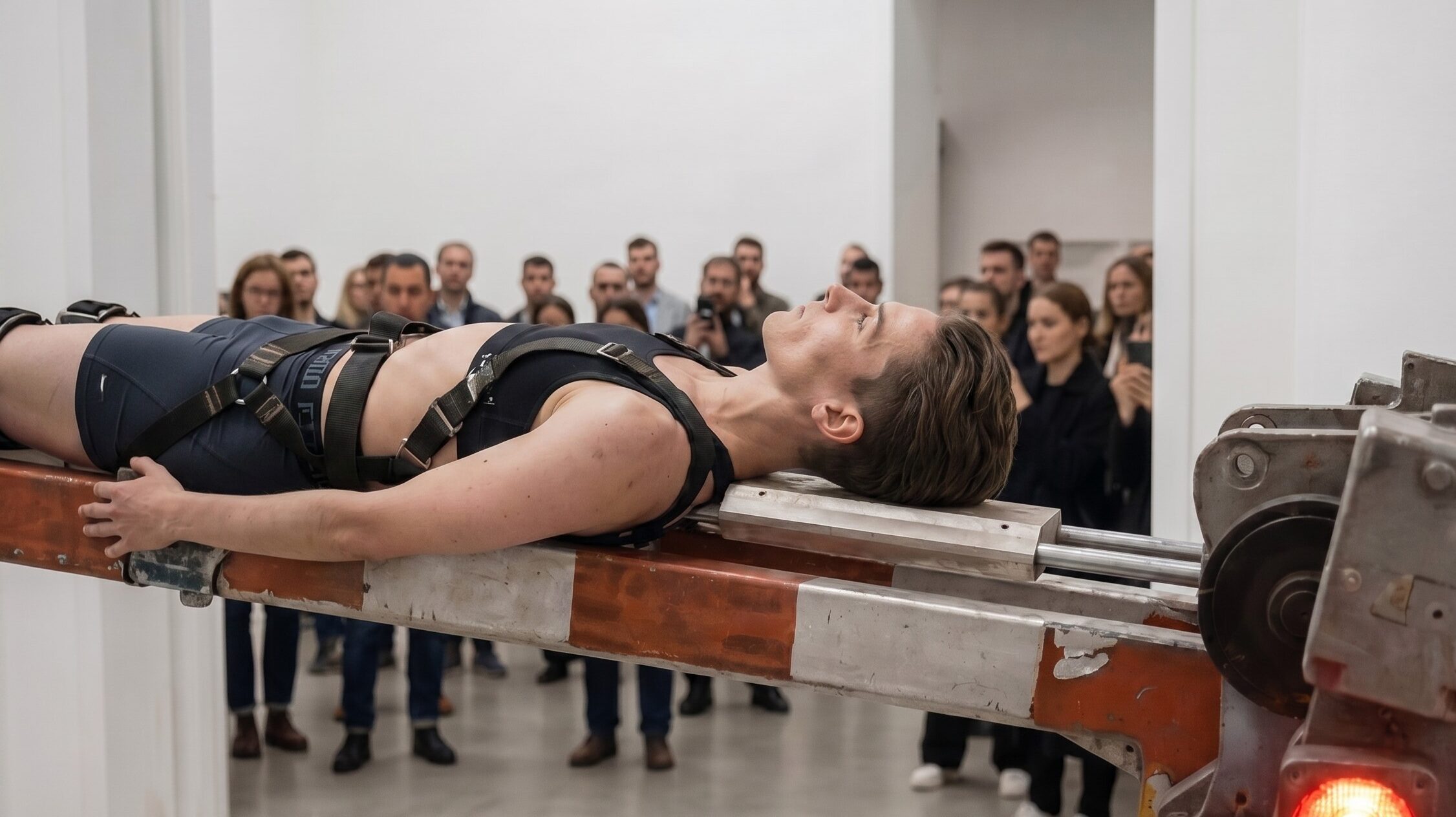
Recently, while looking online at images from a major international biennial, we noticed something fairly revealing: the works attracting the most attention were not necessarily the most complex or conceptually rigorous, but the most spectacular and entertaining. The ones visitors could physically enter, lie inside, play with, walk through, photograph, or experience through unusual performances. Monumental installations dominated by intense colors, predictable soundscapes, and immersive dynamics designed less to provoke reflection than to deliver temporary sensory entertainment.
From this observation, a more complex question began to emerge: at the moment when artworks are increasingly designed to capture attention instantly, to be walked through, photographed, shared, and visually consumed within seconds, is contemporary art in major biennials gradually adopting the logic of entertainment itself?
Not in the superficial sense of the term, but in the very structure through which these works are conceived. More and more projects seem engineered to generate immediate engagement, provoke a physical response, and create the perfect moment for online circulation. The artwork no longer asks for time, silence, or interpretation; it has to function immediately. It has to impress. It has to be immersive, experiential, and above all socially shareable, a condition that inevitably connects to one of the central themes we have been investigating for years.
Moving through pavilions, renderings, and installation videos, the impression often feels less like encountering spaces of critical artistic inquiry and more like entering a highly curated form of cultural entertainment, where the boundaries between artistic research, immersive scenography, and spectacular attraction become increasingly difficult to distinguish. And perhaps the issue is not even that art has become more accessible or participatory. The real question is what gets lost when everything must be instantly engaging, instantly legible, instantly consumable, and now increasingly designed specifically for social media visibility.
We have already explored this subject before, yet the reflections surrounding it never seem exhausted. More and more frequently, artworks appear to exist not to be contemplated or decoded, but to be rapidly experienced, photographed, and shared. And within this obsession with continuous engagement, difficulty, ambiguity, and even discomfort, elements that for decades formed the core of artistic research, are progressively neutralized in favor of a form of cultural entertainment perfectly aligned with the logic of social media, creative tourism, and the attention economy.
The Magic of Distraction
The growing assumption that contemporary art must be inherently accessible has recently produced a paradoxical inversion in the role of the artwork within society. To put things in order: historically, the avant-garde positioned itself as an obstacle to immediate comprehension, forcing the viewer into a demanding process of interpretation. Today, however, the paradigm of entertainment requires the artwork to reveal itself instantly as an event. Complexity is no longer considered a virtue, but a potential liability for institutions that increasingly measure success through attendance figures and social media resonance.
This drift toward entertainment is not simply an isolated aesthetic choice, but a structural response to the attention crisis that defines late modernity. Artworks are now forced to compete with endless streams of information and visual stimuli, and in order to survive within this ecosystem, they adopt the same strategies of sensory overstimulation used by mass media. The result is an artistic production that privileges monumental scale, hyper-saturated color, and physical immediacy, elements capable of generating visceral reactions but rarely allowing space for prolonged reflection.
The installation thus becomes a theatrical device that eliminates the distance between subject and object, absorbing the visitor into a total environment where contemplation itself is almost treated as obsolete. The imperative is to participate, touch, move through, photograph. Any action that cannot be documented or instantly perceived by the senses risks being interpreted as a communicative failure. In this process, the Benjaminian aura is not destroyed by technical reproduction, but rather transformed into a backdrop for the visitor’s ego.
What emerges is a kind of fetishization of experience, where the value of the artwork becomes directly proportional to its ability to generate temporary euphoria. The artists dominating major international exhibitions are often those capable of manipulating space with the precision of interior designers or entertainment engineers, constructing spectacular machines that promise inexpensive forms of epiphany. Criticism itself, once the guardian of analytical rigor, increasingly functions as a form of institutional publicity, celebrating visitor numbers as though public attendance alone were evidence of artistic quality.
The latent risk of this transformation is the complete evaporation of theoretical depth in favor of a purely phenomenological experience that refers to nothing beyond itself. Once art becomes entertainment, it ceases to function as an open question and instead becomes a prepackaged answer, a cultural service delivered to consumers seeking confirmation of their own expectations of pleasure and engagement. The crucial insight is that this forced accessibility does not truly democratize art; rather, it neutralizes its disruptive potential, transforming it into a perfectly functioning component within the machinery of consensus.

The Exact Measure of Engagement
Contemporary museums now operate under constant pressure to justify their funding, whether public or private, through visitor numbers and measurable audience growth. This regime of statistical surveillance has profoundly reshaped curatorial decision-making, steering institutions toward projects capable of generating visibility, accessibility, and mass appeal. The exhibition is no longer conceived as a visual essay or a form of intellectual research, but increasingly as a product of cultural consumption designed to satisfy the expectations of a broad audience often unfamiliar with the complexity of artistic language.
Within this context, entertainment becomes the primary mechanism through which institutions attempt to bridge the gap between the perceived opacity of contemporary art and the museums’ declared commitment to social inclusion. As a result, participatory projects continue to proliferate, inviting audiences to complete the work, physically interact with it, or become part of the installation itself through playful forms of engagement. Although this tendency is frequently framed as a democratization of art, it often conceals a subtle form of intellectual condescension, one that assumes the public is incapable of engaging with abstraction, ambiguity, or conceptual difficulty.
The adoption of playground-like dynamics, from monumental slides and mirrored labyrinths to immersive ball pits and interactive environments, represents the culmination of this strategy of seduction. These works function as magnets for audiences seeking in museums an extension of leisure culture, reducing the encounter with art to a temporary form of entertainment largely devoid of cognitive consequences. Historical depth and symbolic complexity are sacrificed in favor of an eternal present, where the only thing that matters is the intensity of the immediate experience and its instant digital circulation.
Biennials, in particular, suffer from this hypertrophy of the event format, where the saturation of stimuli produces a kind of visual exhaustion that can only be overcome through increasingly spectacular interventions. The very structure of these exhibitions, often composed of hundreds of artists dispersed across immense spaces, encourages the production of works that compete aggressively for attention, while marginalizing practices that require duration, silence, and contemplative engagement. Entertainment thus becomes a survival strategy within an attention economy that no longer tolerates pauses, opacity, or reduced sensory intensity.
The metric of engagement ultimately rewards not the artwork that unsettles or challenges the viewer’s assumptions, but the one that comforts them through harmless forms of amusement and participation. In this process, the museum gradually transforms into a kind of elite recreational environment, where culture is consumed as a luxury experience rather than confronted as a space of intellectual tension. The deeper issue is that the relentless pursuit of visibility and attendance is slowly emptying institutions of their original function: to serve not merely as sites of sensory consensus, but as places of intellectual conflict and critical confrontation.
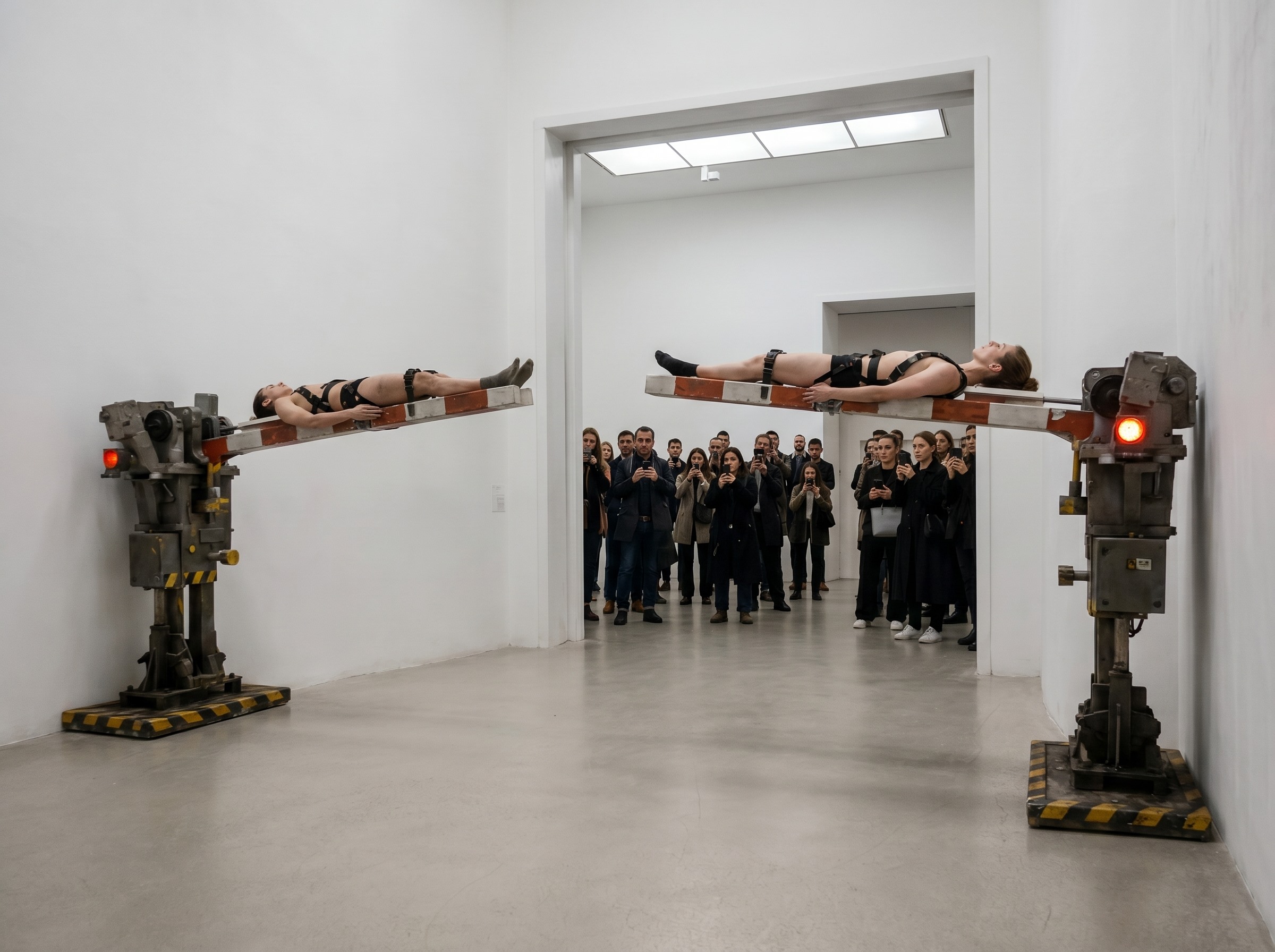
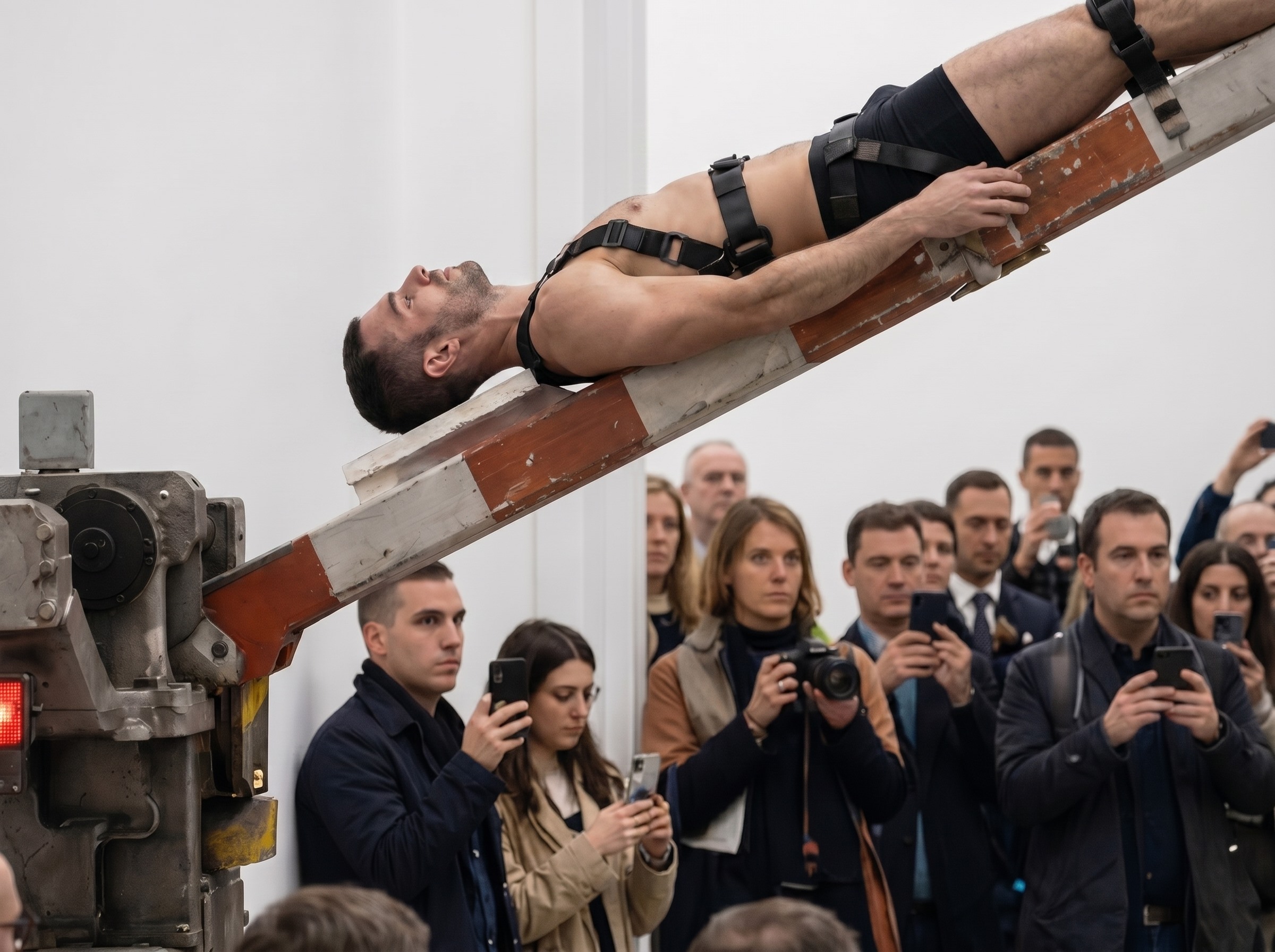
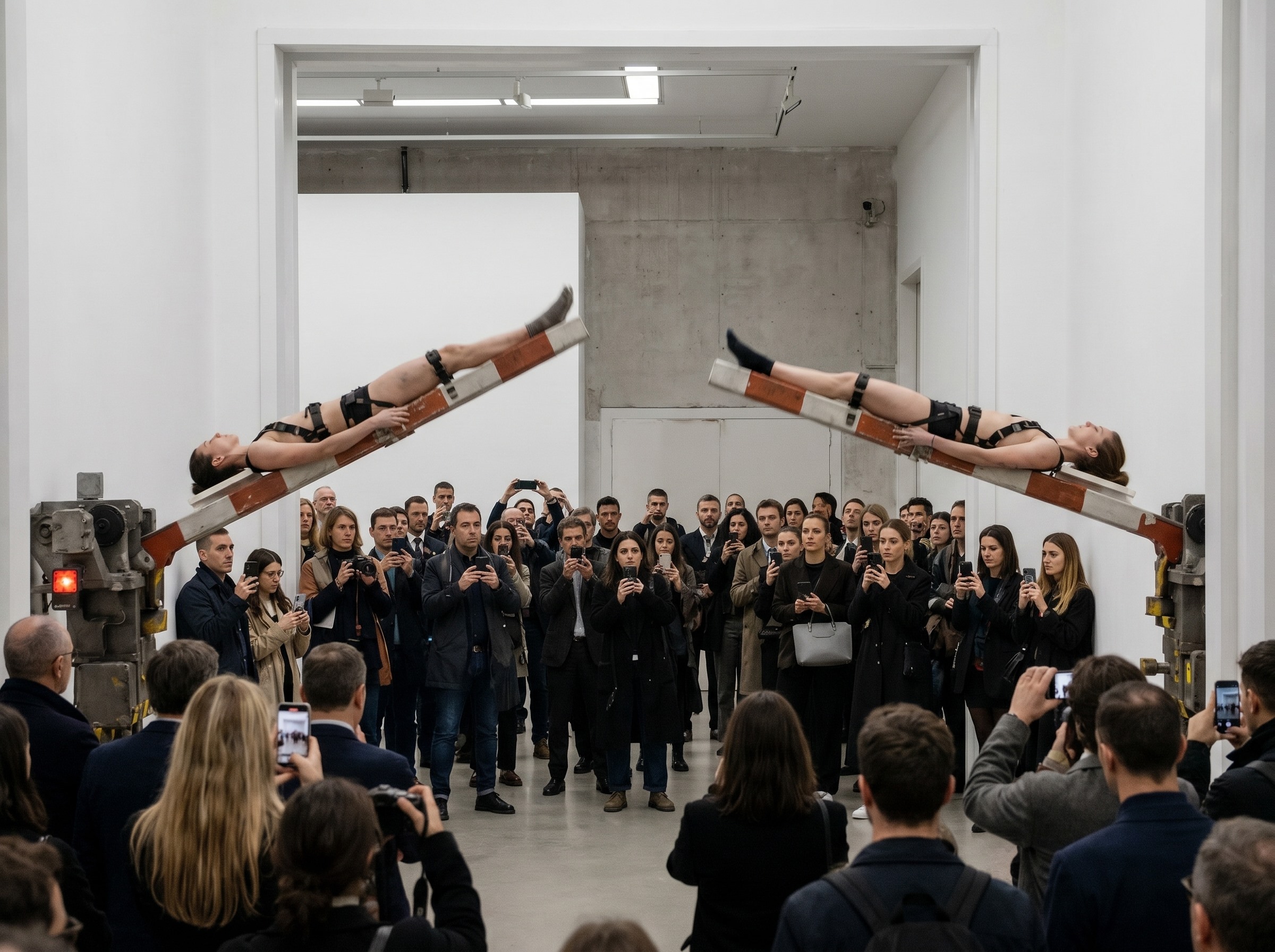
The Playground Effect in Contemporary Biennials
Of course, not every immersive or participatory installation can be reduced to mere entertainment. Many artists still use physical interaction and sensory experience as genuine tools for critical and artistic inquiry. Yet when observing major international exhibitions over the past years, a growing tendency becomes increasingly difficult to ignore: the construction of artworks designed primarily around the audience’s immediate engagement.
Events such as the Venice Biennale or Documenta appear to have progressively absorbed dynamics closer to the logic of the spectacular event. In many cases, the pavilion no longer functions solely as a space for reflection or intellectual investigation, but as an experiential environment engineered to generate impact, participation, and visual circulation.
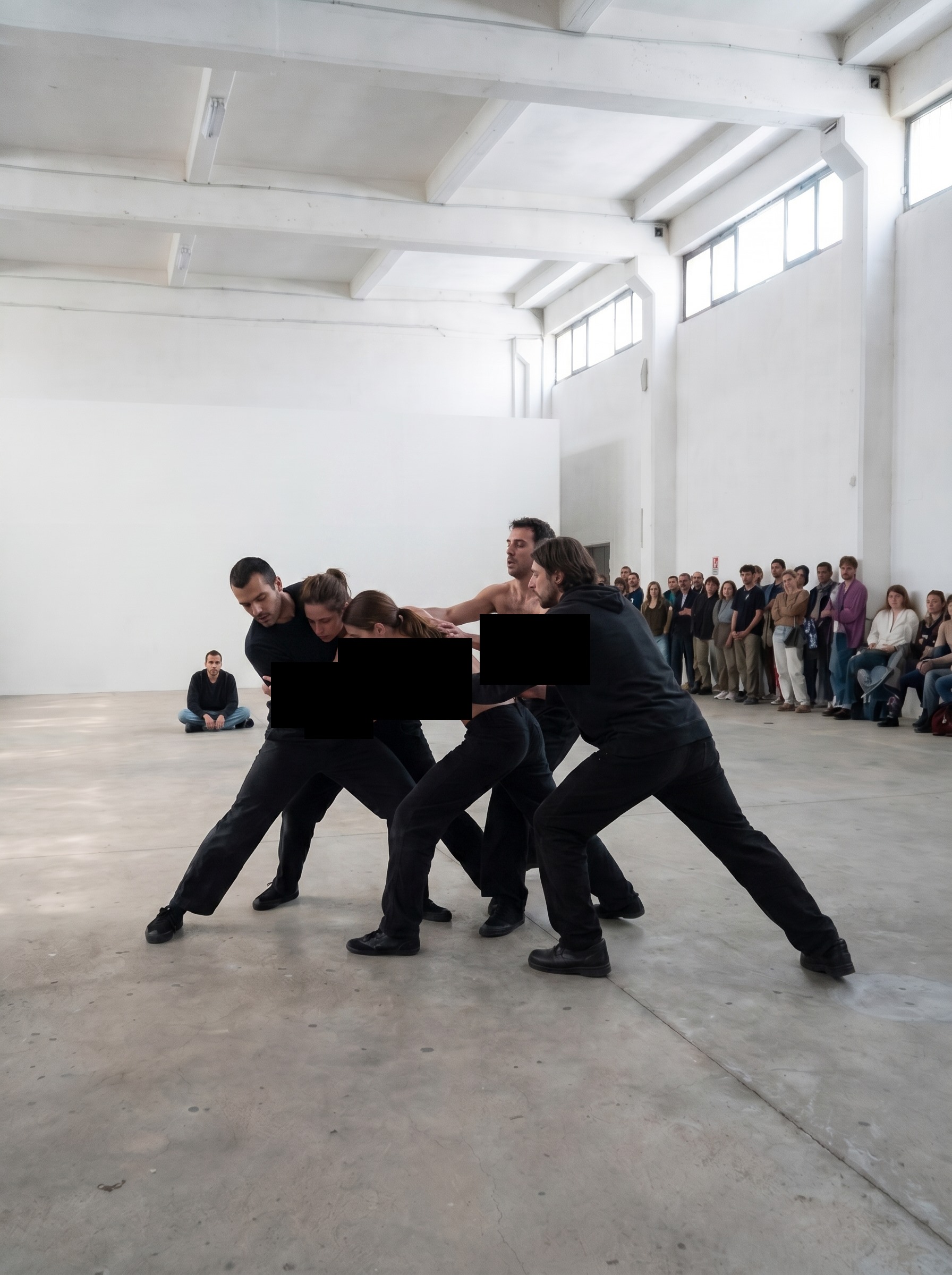
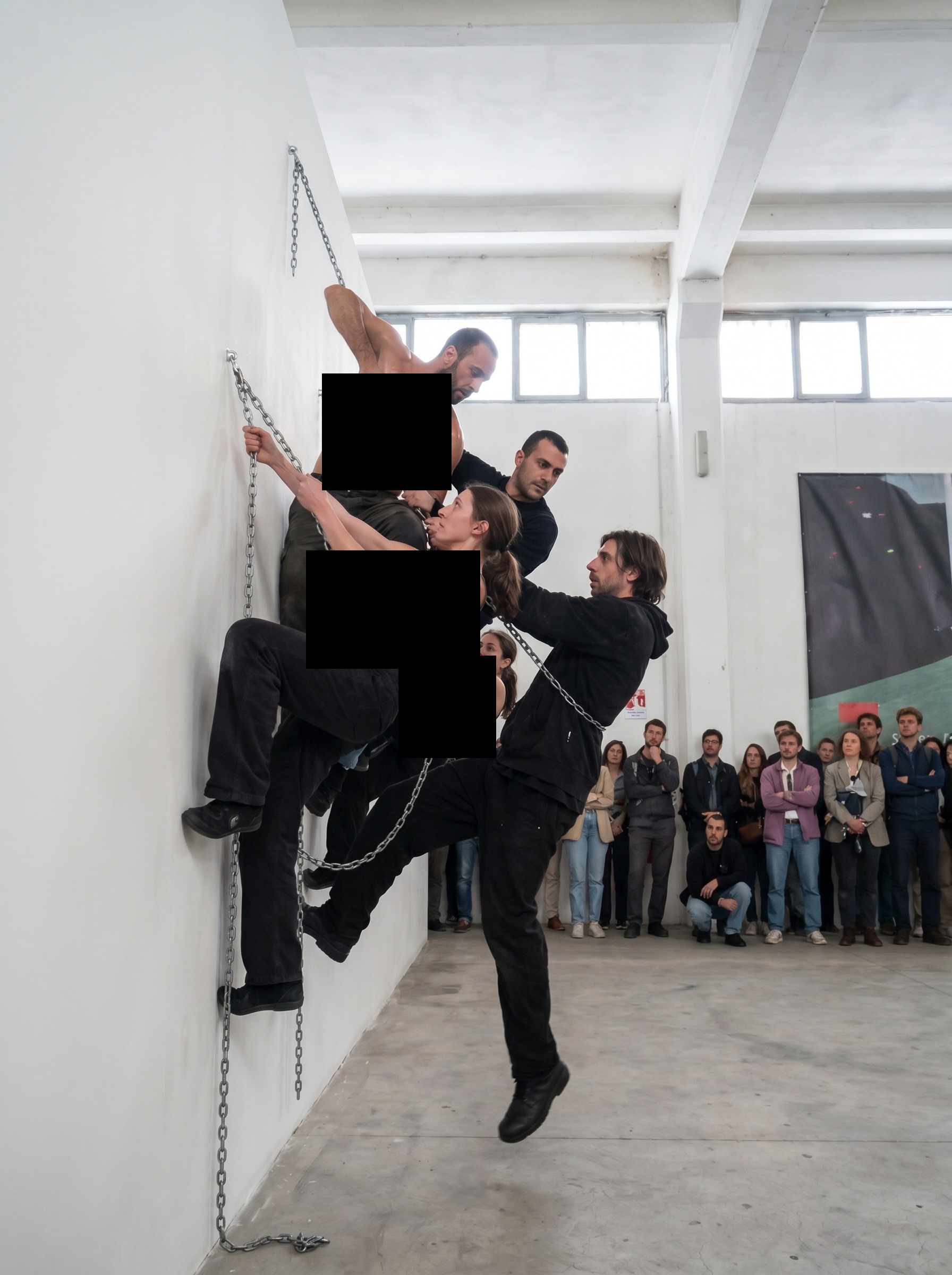
This is where what could be described as the “playground effect” begins to emerge. Not in a purely childish or simplistic sense, but as the construction of an experience designed to remain constantly stimulating, accessible, and instantly legible. Hyper-saturated colors, predictable immersive environments, familiar atmospheric soundscapes, excessively theatrical performances, nudity used as a standardized visual shortcut, interactive objects demanding only simple and intuitive gestures: entering, touching, lying down, walking through, photographing, recording. Everything appears calibrated to activate the visitor quickly without requiring any real interpretative complexity.
The artwork gradually takes the form of an experiential device whose role is to continuously entertain the viewer, almost like a contemporary attraction designed simultaneously for mass audiences, cultural tourism, and sophisticated art insiders. The visitor is no longer simply an observer, but an active user of a space constructed to generate immediate reactions, shareable imagery, and constant engagement.
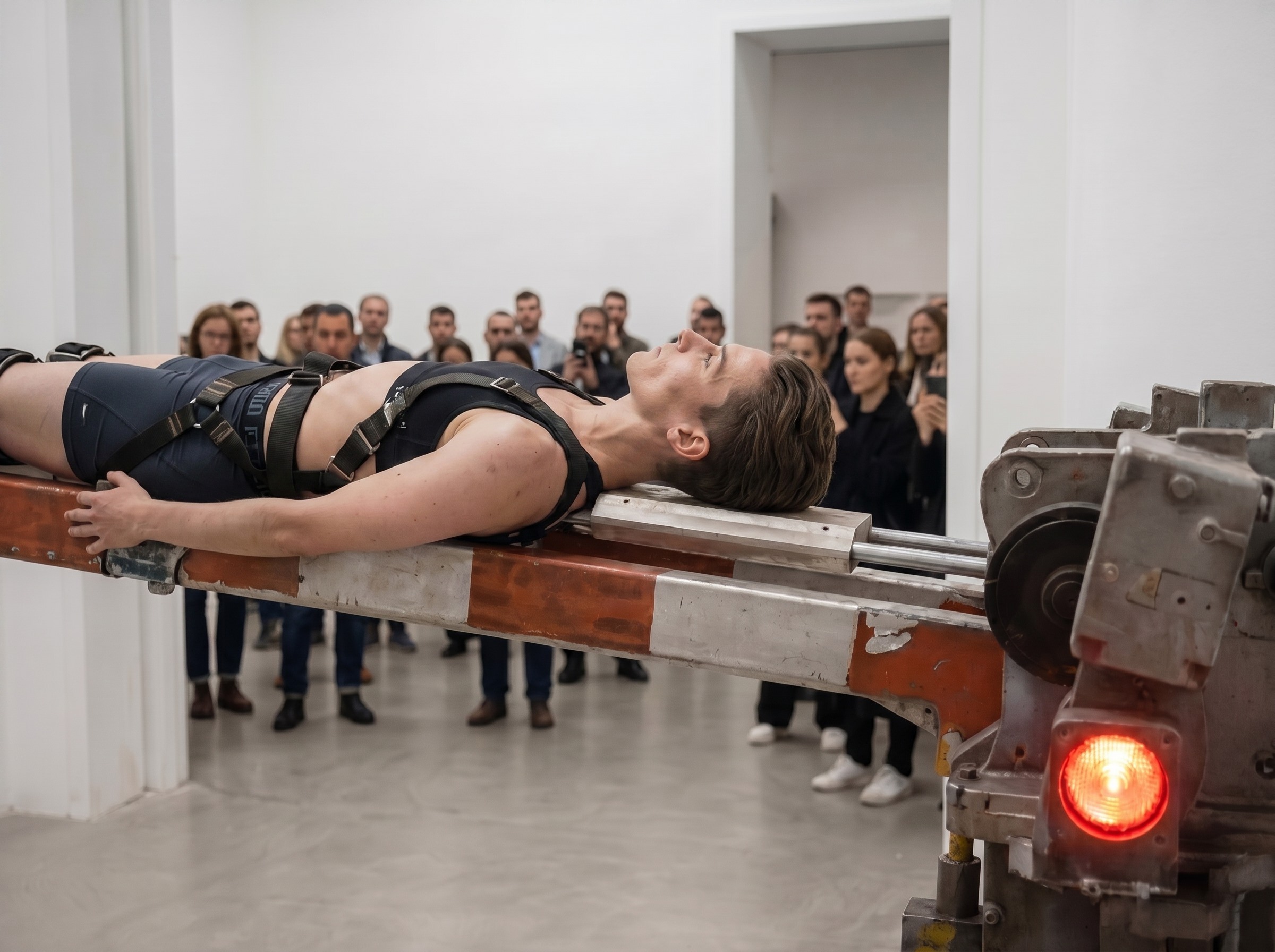
The temporary nature of large-scale exhibitions further reinforces this tendency. Many installations seem conceived to maximize their immediate impact during the short lifespan of the event, fully aware that much of their existence will continue afterward through online circulation, images, videos, and social media documentation produced by visitors themselves.
As a result, the artwork no longer exists solely within the physical space of the exhibition, but increasingly through its capacity to circulate digitally. And within this transition, the experiential dimension inevitably begins to overshadow the contemplative or theoretical one.
The Experience Economy
The overlap between the art fair and the curated exhibition has become almost complete, with one crucial difference: the fair has fully embraced entertainment as its core business model, aiming to attract not only collectors but also affluent curiosity-seekers. Contemporary art fairs are no longer mere sites of commercial exchange; they have evolved into full-scale cultural festivals offering talks, performances, gastronomic events, and site-specific installations designed for maximum visual impact. This convergence has led to a standardization of artistic language toward forms that are simultaneously prestigious and easily digestible.
The market increasingly demands works that can be communicated through instantly recognizable images, encouraging a mode of production that privileges surface and finish over substance. Entertainment, at this stage, functions as a lubricant for sales, creating a perpetual atmosphere of celebration that neutralizes criticism and encourages impulse purchases driven by the social desirability of the artwork. The successful artist is the one capable of combining the appearance of conceptual depth with a visual language that aligns itself with the aesthetics of luxury or avant-garde design.
Very often, galleries invest enormous sums in exhibition designs that resemble flagship retail stores, where lighting and object placement are meticulously engineered to maximize dwell time and emotional engagement from potential buyers. Collecting itself is transformed from an intellectual practice into participation in an exclusive club of elite experience consumers.
What we have called the “playground effect” becomes evident at fairs through the constant presence of interactive or kinetic works that interrupt the monotony of the booths, functioning as rest points and attractions for exhausted visitors. These interventions, frequently sponsored by major luxury brands, definitively seal the alliance between art, entertainment, and commerce, blurring any distinction between aesthetic research and advertising promotion. Art thus becomes the added value of a cosmopolitan lifestyle that consumes culture with the same lightness with which one chooses a holiday resort.
The experience economy does not tolerate failure or boredom, imposing a dictatorship of pleasantness that expels anything difficult, depressing, or genuinely radical. Art that does not entertain, or that resists spectacularization, is pushed to the margins and treated as anachronistic within a system that celebrates speed and chromatic saturation. The deeper insight is that the market is no longer simply buying artworks; it is purchasing the right to transform critical thought into a form of playful decoration for capital.
The Erosion of Semiotic Rigour
The moment contemporary art adopts entertainment as its dominant language, it inevitably sacrifices the complexity of the sign. The artwork is no longer expected to generate ambiguity, interpretive tension, or symbolic density, but rather to guarantee immediate readability, visual impact, and rapid consumption of experience. What Roland Barthes identified as the polysemy of language is progressively neutralized: the sign no longer opens meaning, it delivers emotional consensus.
Umberto Eco, in The Open Work, conceived art as an unstable structure capable of producing multiple interpretations. The contemporary system moves in the opposite direction: it reduces the artwork to a transparent, photographable, and shareable message. Ambiguity is treated as communicative inefficiency. The work must “function” instantly.
This impoverishment is especially visible in the spectacular use of political and social themes. Migration, trauma, ecology, and identity are transformed into morally legible images that rarely penetrate the contradictions of reality. As Baudrillard anticipated, the sign no longer refers to the complexity of the world but to a self-referential circuit of ethical simulations. Art ceases to interrogate the viewer and instead confirms the audience’s moral self-image.
Guy Debord described the society of the spectacle as a system in which everything becomes consumable representation. Today, the artwork increasingly coincides with its ability to circulate: virality, immersion, and Instagrammability replace formal tension and linguistic research. Surface takes the place of depth, precisely as Fredric Jameson observed in his analysis of postmodern culture.
The curator, too, becomes an experiential director. Exhibitions no longer construct theoretical relationships between works, but emotional sequences calibrated to the rhythm of audience attention. Boris Groys speaks of the “total installation”: the visitor no longer interprets, but passes through. The exhibition becomes an immersive scenography where the central criterion is not complexity, but memorability.
Within this framework, criticism itself loses force. If the value of the artwork coincides with the pleasure it produces, analysis appears unnecessary. The contemporary eye no longer reads the image; it consumes it. Walter Benjamin believed art could reorganize collective perception; today perception is saturated to the point of anesthesia.
The final consequence is a radical loss of art’s critical function. Adorno argued that the difficulty of the artwork constituted a form of resistance against the reduction of culture into commodity. Contemporary culture, by contrast, expels everything that slows down, disturbs, or complicates experience. Art is no longer asked to destabilize the world, but to make it smoother, pleasurable, and infinitely shareable.
The decisive insight is that spectacularization does not democratize artistic language; it domesticates it. Once the sign loses depth, art ceases to produce thought and becomes experiential decoration for capital.
Possible Forms of Resistance to Spectacularization
Faced with the rise of art as an experiential and spectacular device, there may emerge a need to rethink the role of artistic practice itself. A new form of radicality could develop through the recovery of opacity, silence, and even boredom as aesthetic categories. In this perspective, art would slow down the rhythm of continuous stimulation that Byung-Chul Han describes in the “achievement society,” where every experience is expected to be immediately gratifying, participatory, and optimized for consumption.
Perhaps it is precisely a slow, difficult, and scarcely shareable form of art that could reopen a critical space that has nearly disappeared. The artwork that resists instant documentation, that escapes reduction into viral imagery, could assume an antagonistic role within the contemporary regime of visibility. This possibility recalls Adorno’s notion of negativity: the idea that the autonomy of art survives through its ability to resist total integration into the market and the culture industry.
Institutions, too, may eventually begin questioning their submission to the logic of the permanent event. Against the spectacular excess of biennials and large-scale fairs, there could emerge a desire for more austere exhibitions, less saturated with stimuli, capable of restoring space for concentration and duration. Such a transformation would imply recovering the exhibition as a site of thought. Brian O’Doherty, in Inside the White Cube, had already shown how exhibition space constructs specific modes of perception; today that space increasingly absorbs the language of retail, branding, and immersive entertainment.
A redefinition of the artist’s role could also become central. An autonomous artistic practice might reclaim the right to failure, misunderstanding, and even marginality, freeing itself from the contemporary pressure toward constant visibility. Within this framework, marginality would cease to appear as weakness and could once again become a space of symbolic independence.
It is possible that the current phase of spectacularization represents culture’s attempt to survive within cognitive capitalism. At the same time, the saturation of stimuli and immersive languages may generate a renewed desire for depth, silence, and conceptual density. If so, the true avant-garde of the future may lie precisely in the capacity to interrupt the spectacular flow.
Perhaps the radicality of future art will consist in restoring something that contemporary culture has progressively exhausted: the time necessary for thought.
Adorno, Theodor W. Aesthetic Theory (Suhrkamp, 1970; English ed. Continuum, 1997)
Benjamin, Walter. The Work of Art in the Age of Mechanical Reproduction (Einaudi, 2012; English ed. Harvard University Press, 2008)
Byung-Chul Han. The Burnout Society (Nottetempo, 2012; English ed. Stanford University Press, 2015)
Byung-Chul Han. The Transparency Society (Nottetempo, 2014; English ed. Stanford University Press, 2015)
Debord, Guy. The Society of the Spectacle (Bollati Boringhieri, 2008; English ed. Zone Books, 1994)
O’Doherty, Brian. Inside the White Cube: The Ideology of the Gallery Space (University of California Press, 1986)
Rancière, Jacques. The Emancipated Spectator (DeriveApprodi, 2018; English ed. Verso, 2009)
Groys, Boris. Art Power (MIT Press, 2008)
Groys, Boris. In the Flow (Verso, 2016)
e-flux – “The Biennial as Spectacle: Venice and the Attention Economy” (2025)
Artforum – “Immersive Art and the New Experience Economy” (2025)
Flash Art – “Playground Effect: Biennials Between Art and Entertainment” (2026)
The Guardian – “Is Contemporary Art Becoming Too Entertaining?” (2025)
e-flux – “The Experience Economy and the Crisis of Contemplation” (2024)
Art in America – “Spectacle and the Biennial Format” (2025)
Frieze – “The Art Fair as Cultural Festival” (2026)
MIT Technology Review – “Social Media and the New Aesthetics of Visibility” (2025)
The Art Newspaper – “Biennials and the Attention Economy” (2025)
Journal of Visual Culture – “Immersive Art and the Spectacle of Participation” (2024)
Bishop, Claire. Artificial Hells: Participatory Art and the Politics of Spectatorship (Verso, 2012)
Bourriaud, Nicolas. Relational Aesthetics (Postmedia, 2010; English ed. Les Presses du Réel, 2002)
Foster, Hal. The Return of the Real (MIT Press, 1996)
Steyerl, Hito. Duty Free Art: Art in the Age of Planetary Civil War (Verso, 2017)