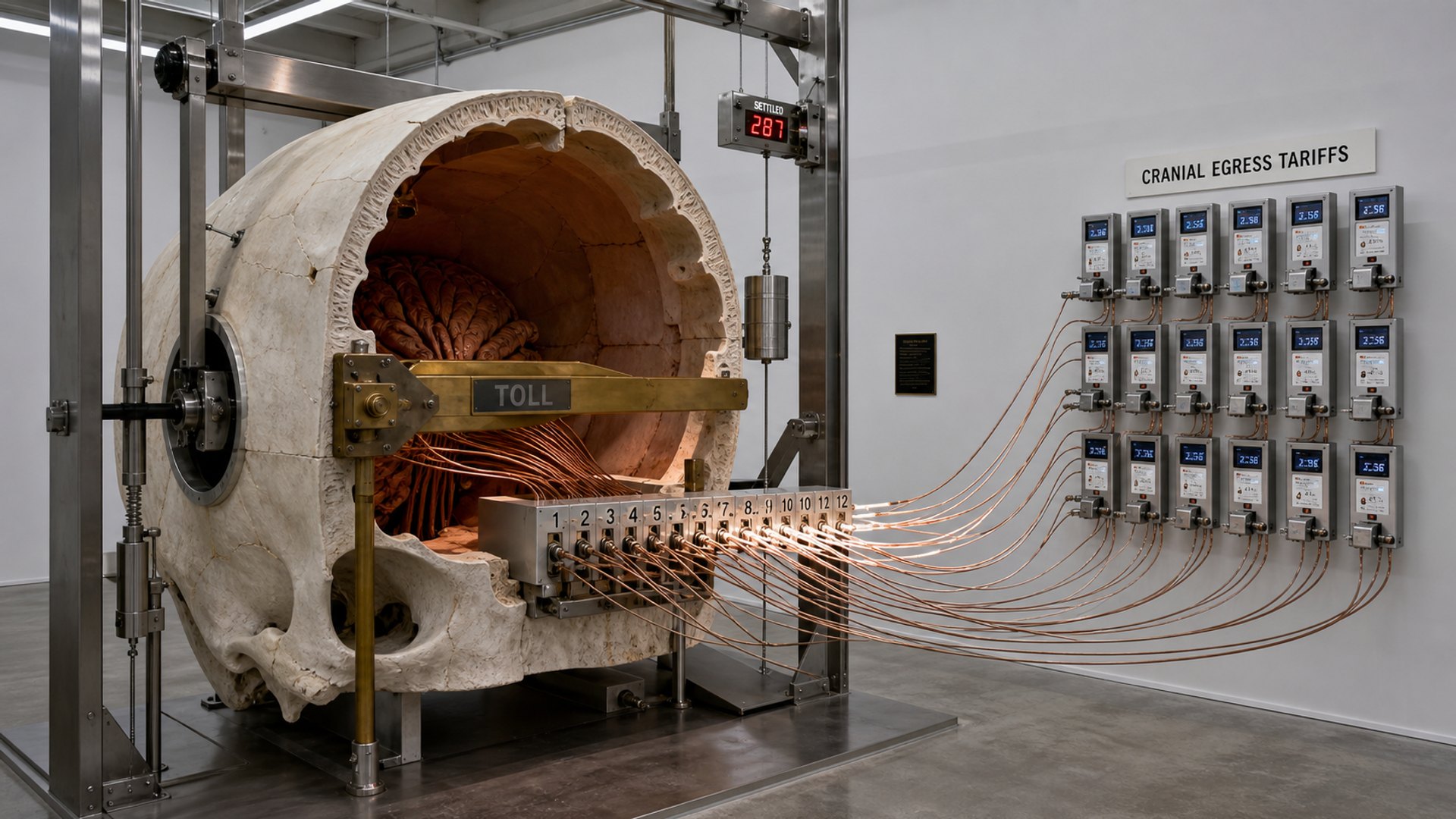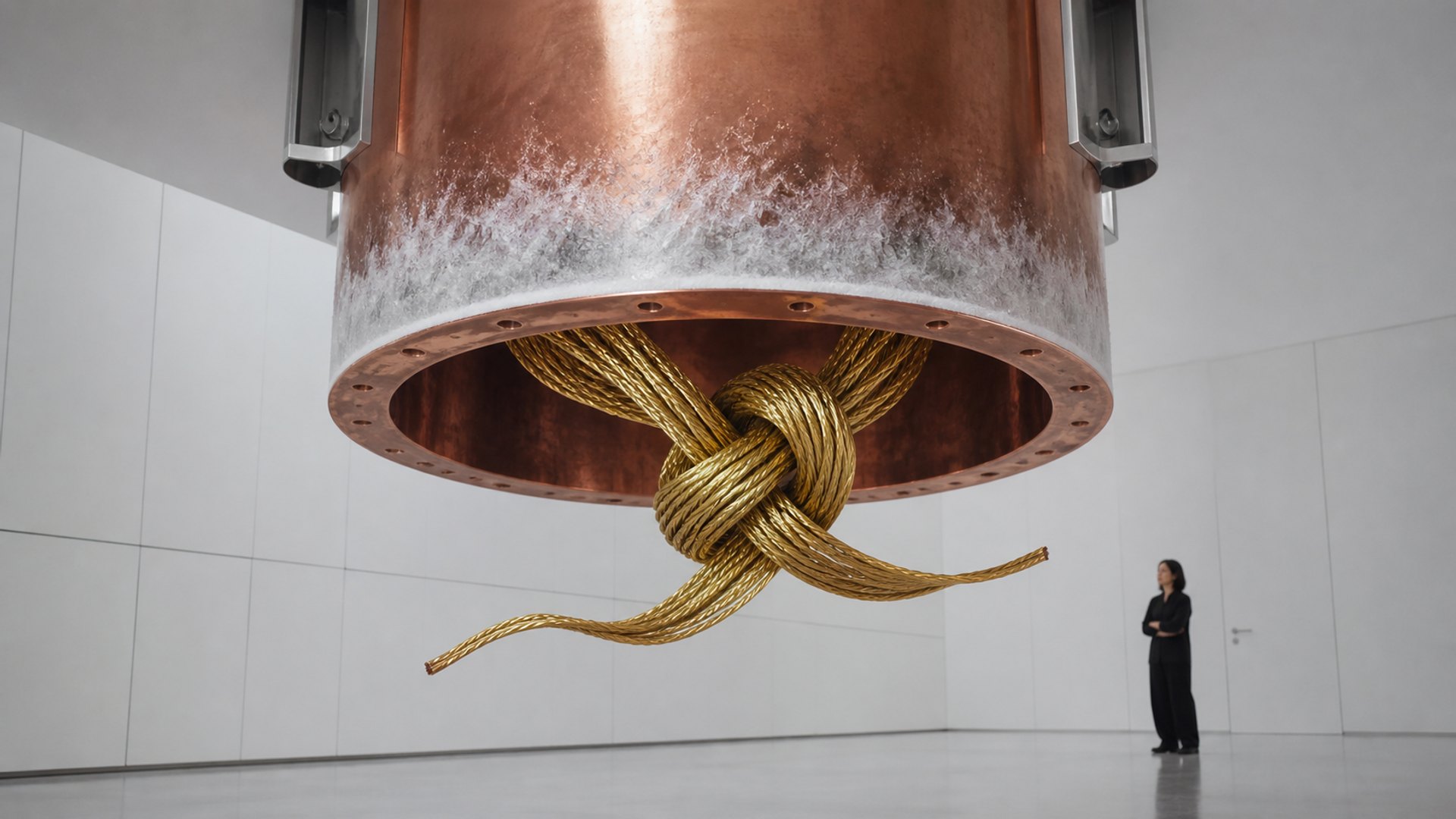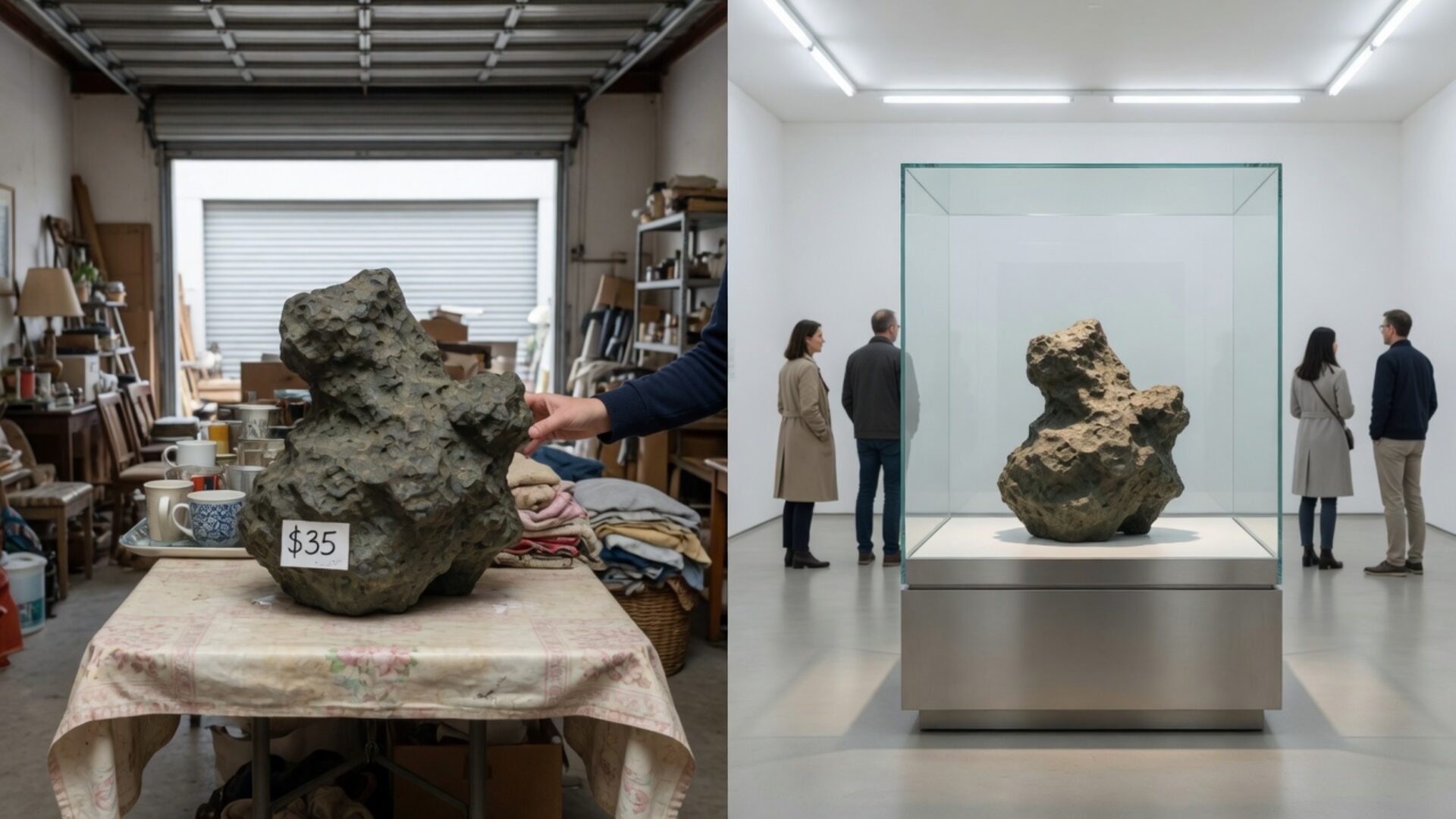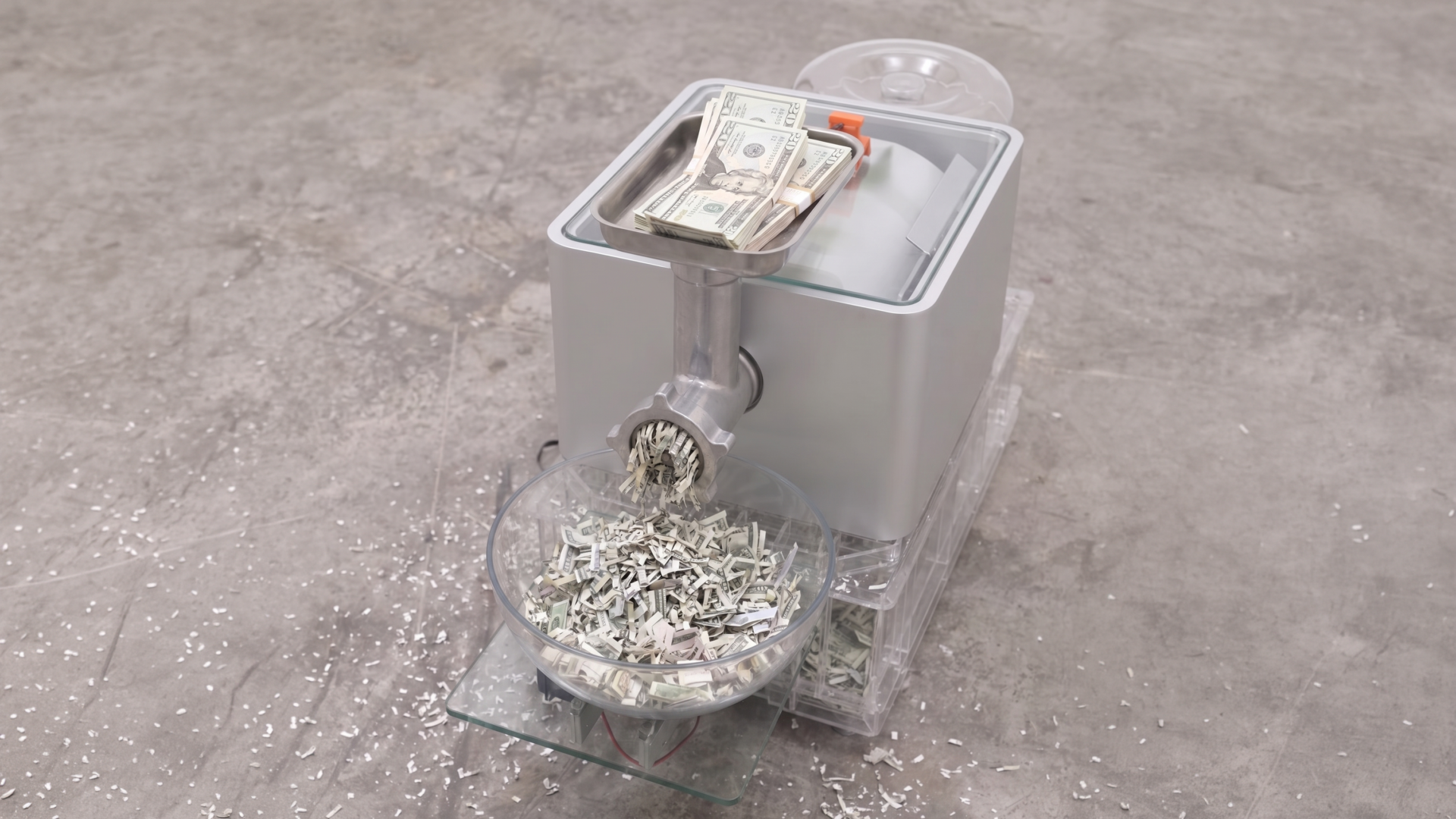
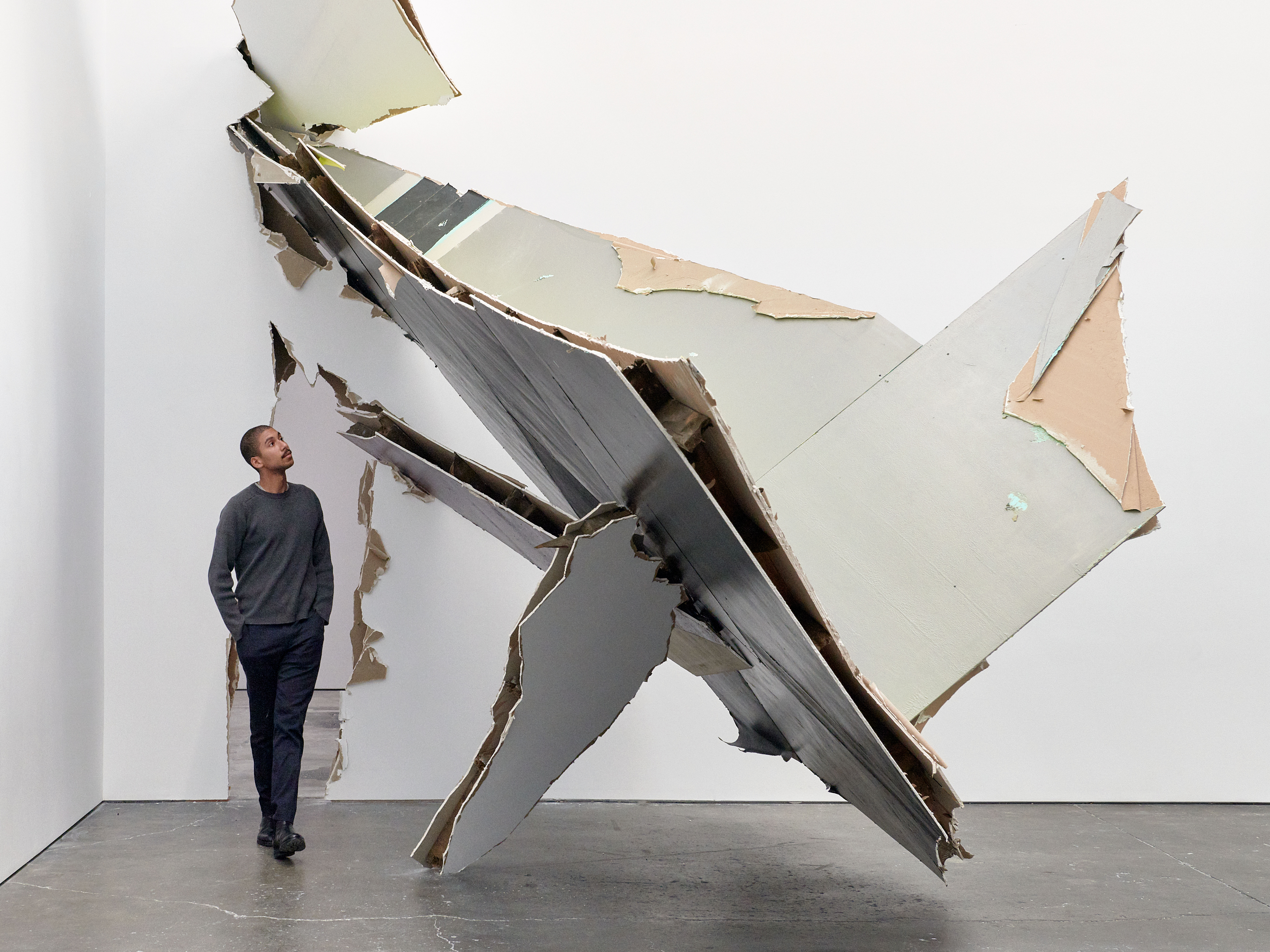
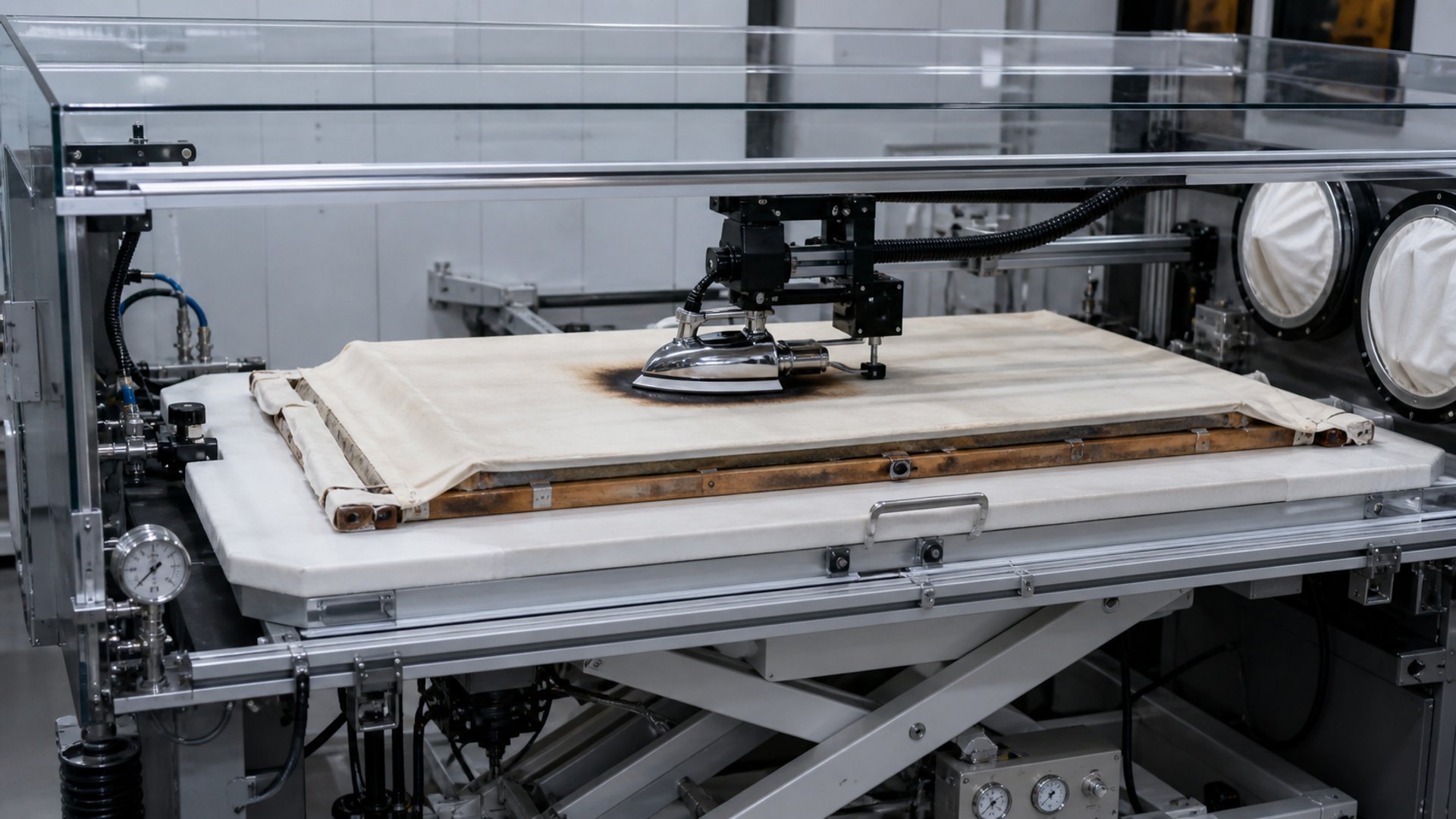
A Rembrandt lies face down across an ironing board. Linen covers linen, the hot plate advances, and the arm applies domestic pressure to a surface whose custody ordinarily requires gloves, climate control, and institutional permission. The scene condenses a jurisdictional conflict. Painting enters use, use enters provenance, and an appliance redirects the protocols through which an image receives artistic status.
The reciprocal readymade operates as a conversion device. The familiar readymade raises a commodity through nomination, placement, and attention; its reciprocal form directs consecrated matter toward ordinary function. This downward passage reveals the mobility of rank. Artistic status persists through coordinated acts of framing, cataloging, circulation, ownership, and recognition, each act stabilizing the object inside a distribution system that presents its own decisions as inherent value.
The ironing board also anticipates the platform condition of the image. Ranking systems continuously elevate and demote cultural material through visibility, repetition, and metadata, while latent space renders every image available for recombination. A Rembrandt circulates as masterpiece, file, training sample, meme, auction asset, and decorative background. Each appearance carries a different protocol of use, yet institutional and economic systems keep returning these versions to a privileged source.
Reciprocity therefore concerns authority over passage. The decisive question gathers around the hand entitled to move an object between art and equipment, image and surface, patrimony and material. Reversibility appears formally simple and politically dense. A change of use activates ownership, conservation, insurance, law, and public expectation; the gesture that restores thinghood also exposes the apparatus that had suspended it.
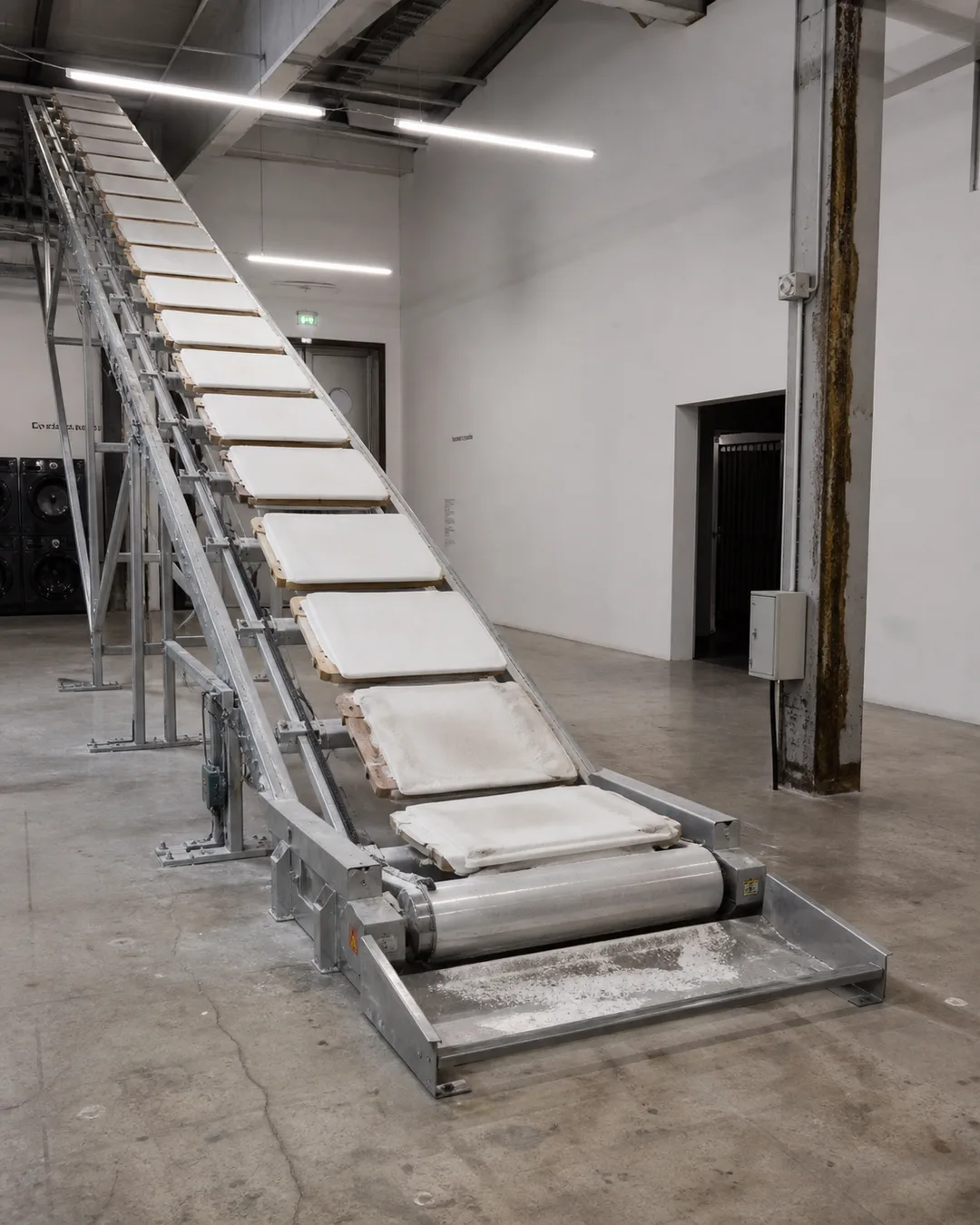
Reciprocity Points Downward
The instruction “use a Rembrandt as an ironing board” functions as a protocol. It specifies an object of established rank, assigns a practical operation, and produces meaning through execution. The gesture requires no studio transformation in advance; its force arrives through a transfer between classifications. Nomination had once carried the manufactured article upward into art. Reciprocal nomination sends the masterpiece downward into labor.
This reversal clarifies the readymade as an allocative technology. Selection directs attention, exhibition supplies a frame, and discourse consolidates the selection into history. The object acquires artistic status through a chain of custody linking artist, institution, audience, and archive. Reciprocity runs the same chain in reverse, activating functional value inside an object whose cultural rank had placed practical use under suspension.
The descent retains the pressure of the summit. A random panel used for ironing produces a household action; a Rembrandt used for ironing produces a categorical event. The operation draws its charge from the painting’s prior consecration, which remains active as cultural memory, market value, and expected care. Reversal therefore carries a residue. The masterpiece becomes equipment while its rank supplies the intensity of that becoming.
Repeatability gives the instruction its conceptual precision. Any owner, curator, technician, or unauthorized handler could reproduce the action in physical terms, yet each position generates a different event because authority enters the protocol. A museum-sanctioned enactment becomes programming, an artist’s intervention becomes authorship, a collector’s gesture becomes scandal, and a conservator’s contact becomes treatment. The same movement crosses distinct fields of permission.
Reciprocity points downward while power decides the slope. Artistic status emerges as a reversible assignment whose practical reversal remains unevenly distributed. The act can travel; the right to perform it stays ranked.
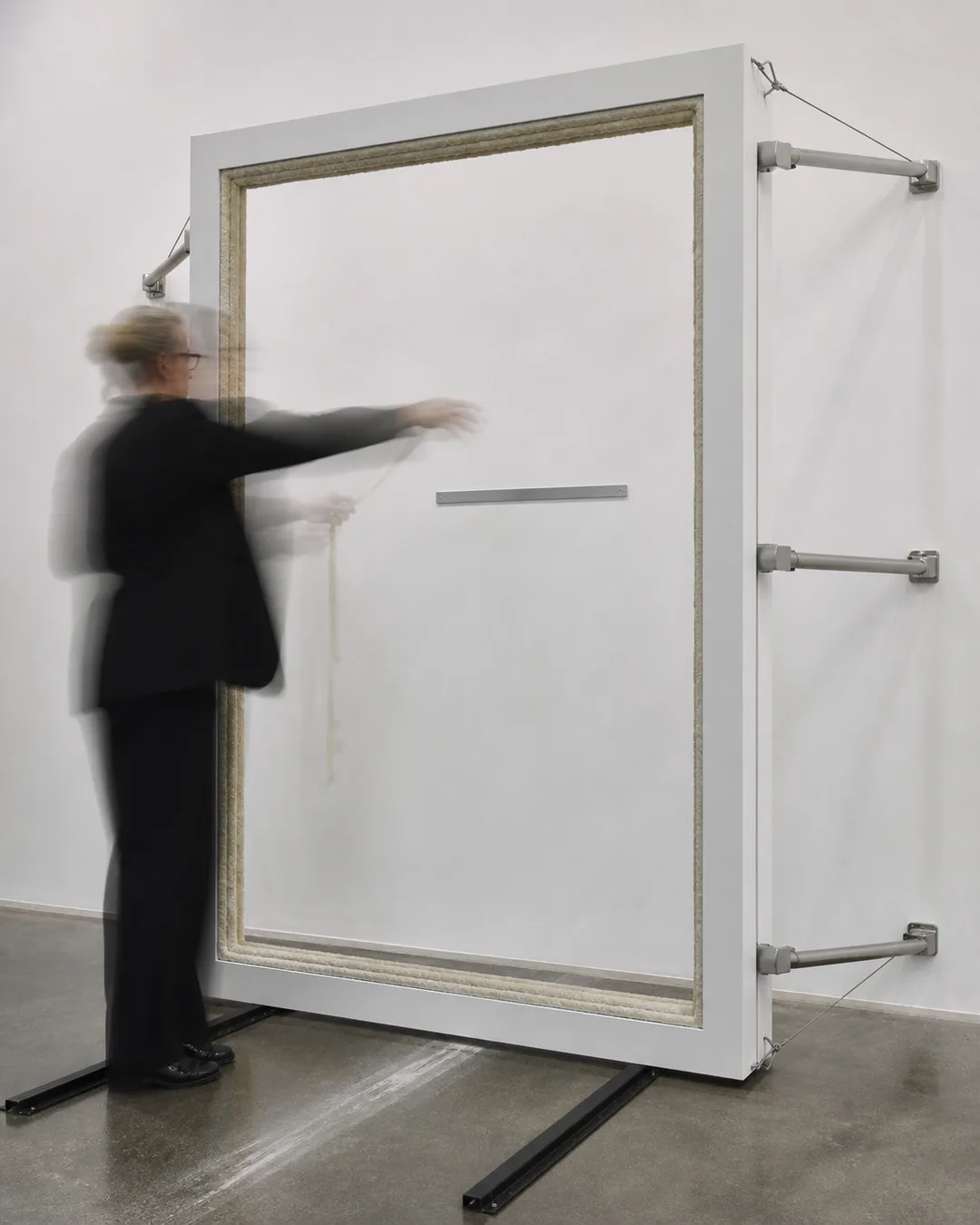
Rank Enters Through the Frame
Reciprocity acquires force through the frame’s prior work. Gilded wood separates painted surface from wall, establishes a threshold for attention, and converts bounded visibility into cultural priority. The frame acts as a ranking interface. It directs the eye, regulates distance, and signals that the enclosed image carries a density of value exceeding its surroundings.
The label extends this allocation through metadata. Name, title, date, medium, lender, accession number, and provenance align the painting with an institutional knowledge graph. These entries discipline perception before visual judgment begins. Rembrandt arrives as an attribution, a chronology, and a place in the collection; the image enters attention through a structured field whose categories govern legitimacy.
The catalog deepens that field by coordinating scholarship with custody. Reproduction, bibliography, technical examination, and ownership history produce an archival body around the physical support. Each record strengthens provenance and narrows the range of acceptable identities. Attribution changes can raise or collapse price, alter display, and redirect conservation resources, demonstrating how rank travels through documents that appear adjacent to the work.
Museum protocol then converts metadata into choreography. Barriers calibrate proximity, lighting concentrates vision, guards monitor behavior, and climate systems secure material continuity. The visitor’s body enters a prearranged economy of attention in which silence, duration, and controlled movement affirm the object’s status. Display allocates conduct as much as visibility; the painting organizes a social space around its protected surface.
The reciprocal readymade interrupts this choreography by replacing the frame with an ironing board. The board also supports, bounds, and presents, yet its protocol directs pressure toward utility. Rank enters through the frame, then discovers that every frame is already a machine for use.
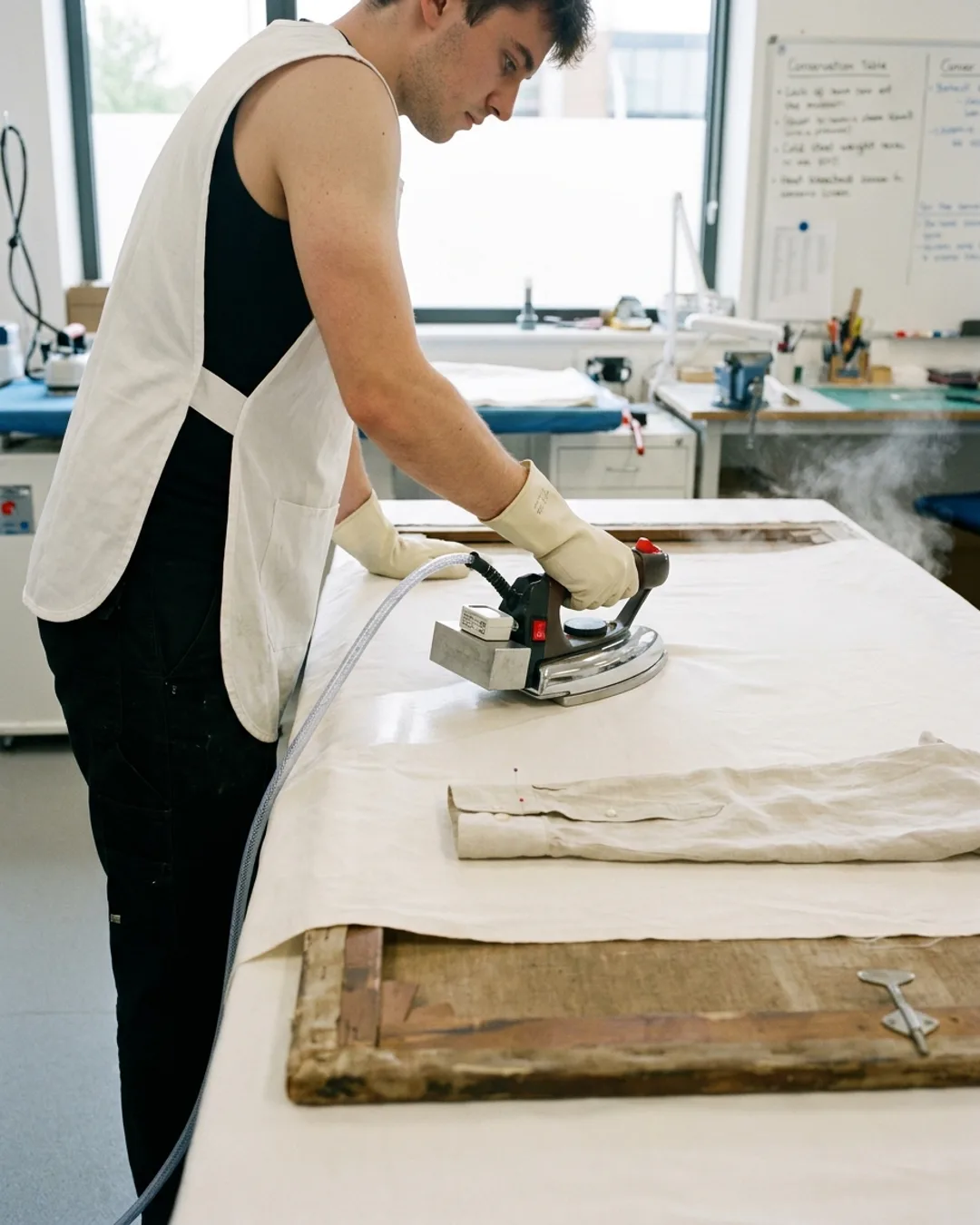
Linen Across Rembrandt
The board receives the painting through contact. A padded plane supports the canvas, an iron transmits heat, and the user’s arm converts weight into repeated strokes. This mechanism brings the body into a relation usually delegated to conservators and installation crews. Handling becomes visible as handling, and the protected image becomes a surface within a domestic sequence of pressure, movement, and fabric care.
Linen creates the material hinge. Canvas and garment share fibers, folds, absorbency, and susceptibility to heat, yet cultural protocol assigns them radically different forms of custody. One carries an image through centuries; the other carries a body through the day. The ironing operation places these material histories together, allowing the practical treatment of one linen to pass across the consecrated face of another.
The painting’s image enters the operation through obstruction. Pigment becomes resistance beneath cloth, impasto changes the iron’s path, and the stretcher imposes edges on the usable plane. Representation acquires tactile consequence. A face, sleeve, shadow, or ground becomes part of the board’s uneven architecture, translating pictorial depth into friction and risk.
Use also produces a new provenance event. Heat bloom, compression, abrasion, and transfer can enter conservation reports as material evidence; photographs of the action can circulate through editorial feeds, exhibition screens, and auction dossiers. The gesture generates an image of its own, one optimized for rapid recognition because the collision between masterpiece and appliance reads instantly. Distribution turns deconsecration into spectacle, then returns the spectacle to the cultural value of the painting.
The ironing board restores practical agency to the object while recruiting its prestige as symbolic fuel. Linen crosses linen, and ordinary labor acquires the voltage of sacrilege. Pressure flattens the cloth; rank survives in the crease.
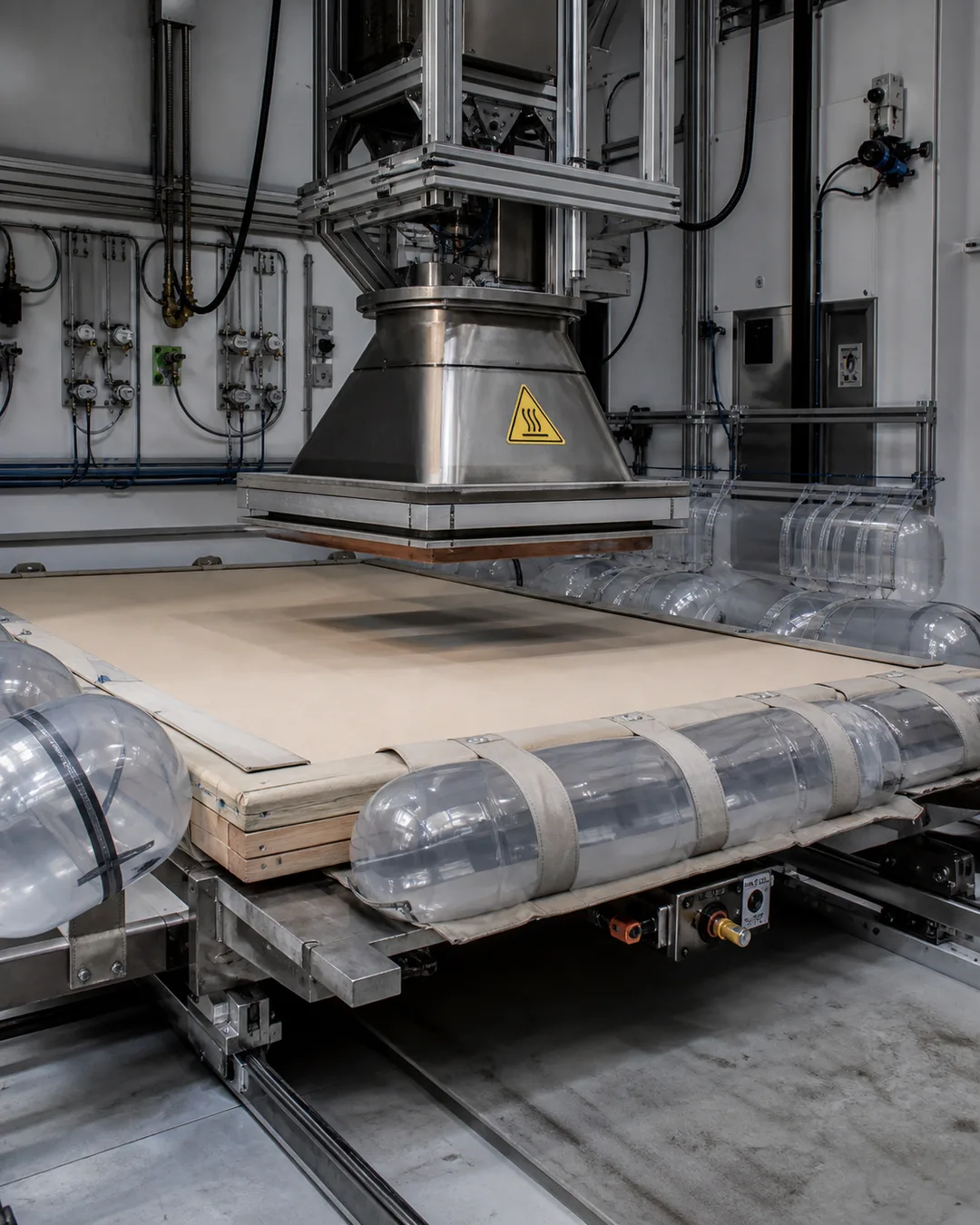
Price Defends Consecration
Valuation converts the painting’s rank into a defense system. Auction records, expert attribution, condition reports, and comparative sales produce a price that circulates beyond the object as financial information. This price establishes thresholds for transport, security, storage, and exposure. The higher the valuation rises, the denser the custody protocol becomes.
Insurance formalizes this density. Premiums calculate risk, exclusions regulate handling, and indemnity agreements distribute liability across owners, lenders, carriers, and institutions. An iron touching a Rembrandt activates an economic chain extending far beyond the immediate surface. Heat becomes a quantifiable threat to collateral, and gesture becomes an event with contractual consequences.
Ownership embeds the painting inside a portfolio of assets and reputational claims. The collector holds material title alongside access to prestige, tax strategy, lending relationships, and cultural visibility. Permanence serves each layer. Stable attribution protects value, controlled display reinforces distinction, and institutional loans convert private possession into public legitimacy while preserving the owner’s position in the provenance record.
The market also absorbs transgression. Documentation of an ironing action could acquire autonomous value as photograph, certificate, performance trace, or legal artifact. Damage could intensify singularity, while scandal could expand attention and historical relevance. Market logic readily prices the attack on price, transforming reciprocal use into a new scarcity narrative whose distribution enhances the object’s aura.
Price therefore guards consecration and profits from its breach. The masterpiece enters ordinary use for an instant, then returns carrying an enlarged story. Value survives by making reversal expensive.
Revocation Changes Hands
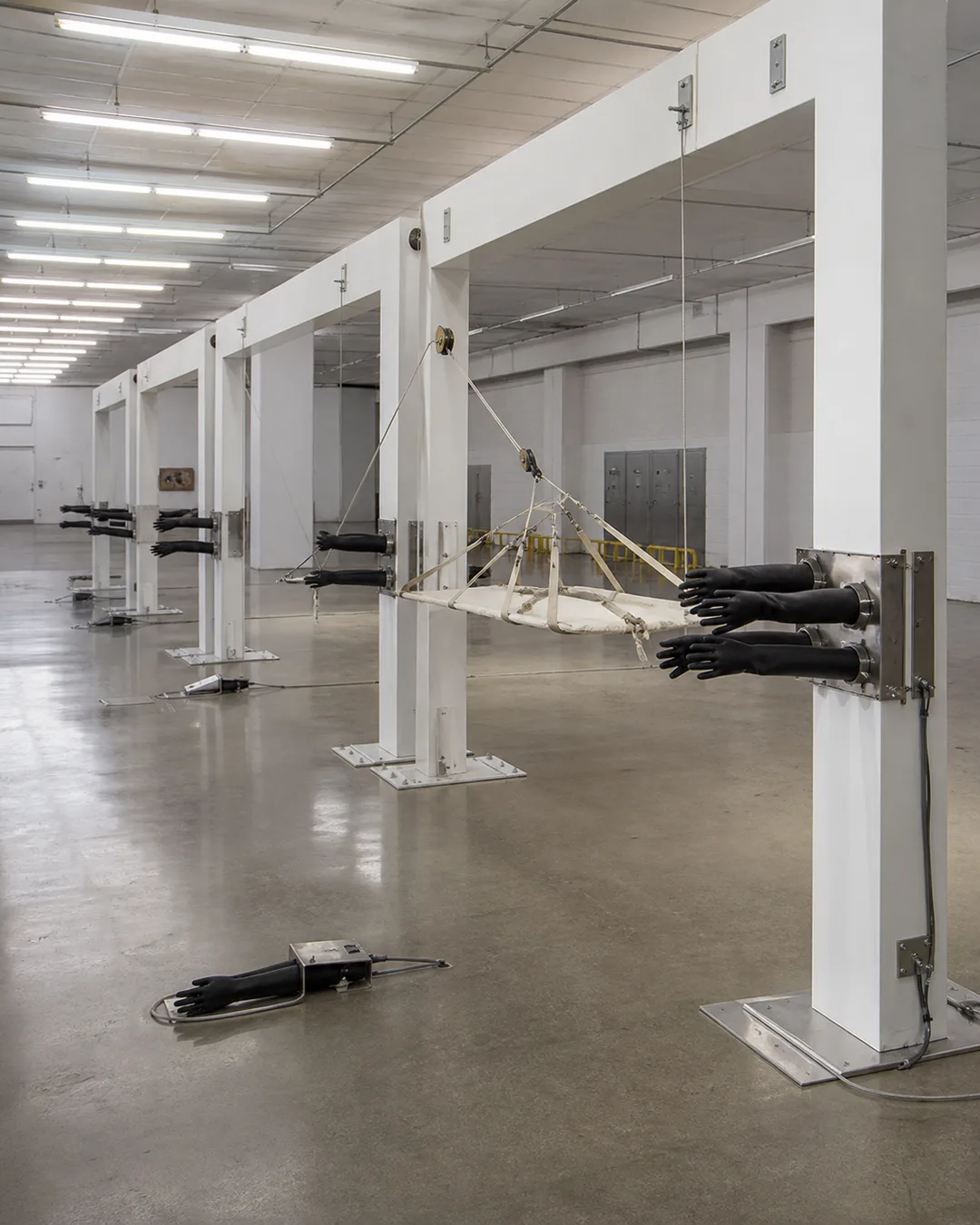
Access begins with a key, a condition form, and a named custodian. Storage rooms, loading bays, conservation studios, and galleries divide authority through credentials and scheduled procedures. Each threshold assigns a body the capacity to touch, move, expose, or alter the work. Revocation enters this system as a handling permission with exceptional scope.
Legal ownership supplies one layer of authority, while heritage law, moral rights, loan agreements, and institutional policy distribute competing claims. A collector may possess the canvas, a state may regulate its export, an artist’s estate may defend attribution, and a museum may impose conditions through custody. The object occupies several jurisdictions at once, each translating artistic status into enforceable control.
Curatorial sanction changes the meaning of identical actions. Placement on an ironing board can become an artwork, a conservation violation, a pedagogical demonstration, or evidence in a claim. Institutional speech assigns the category, and category governs the afterlife. The authorized gesture enters the archive as interpretation; the unauthorized gesture enters the archive as damage, crime, or scandal. Protocol converts force into legitimacy.
Digital circulation broadens this contest. High-resolution files detach the image from physical custody, feeds rank its reproductions, and training systems absorb its visual grammar into latent space. Users can stretch, crop, animate, and synthesize Rembrandt at planetary scale, while the material painting remains protected by increasingly concentrated control. Reproducibility expands practical access to the image and sharpens authority over the object.
The reciprocal readymade reveals revocation as a sovereign privilege. Thinghood remains available through use, yet use acquires consequence through the identity of the hand. Art can return to the world of equipment; power signs the return.