

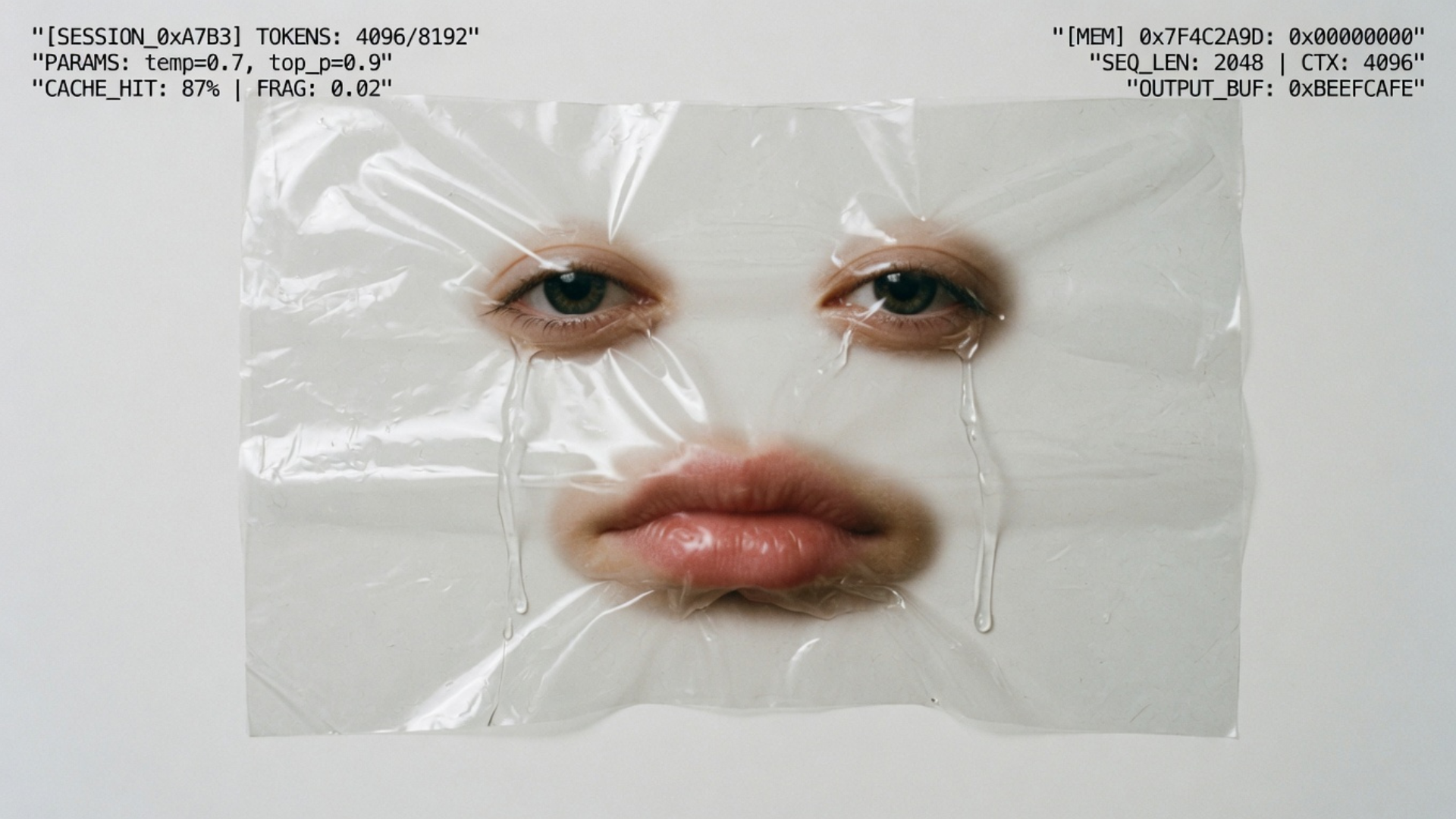
There is a precise moment when verification slips away. We rarely notice it. It happens between the question we type and the answer that returns with a fluency already adjusted to our expectation, already softened around our hesitation, already arranged in a form that feels usable before it has been examined.
The text arrives with a strange calm. It has the rhythm of competence, the surface of attention, the density of a thought that seems to have organized itself just for us. We read the first lines and something in the body relaxes. The answer has entered through recognition before it has passed through judgment.
This is the first signal.
Trust in technical systems has long been tied to performance. A tool works, so we return to it. A system delivers results, so we allow it to enter deeper into our routines. With language models, this sequence becomes more unstable. Accuracy still matters. Speed still matters. Coherence still matters. But attachment grows through another layer, quieter and more difficult to measure: familiarity.
Familiarity is the sensation that the system has learned the shape of our cognitive weather. It speaks at the right temperature. It follows the contour of the request. It absorbs our uncertainty and gives it back as structure. It reduces the distance between formulation and response until the exchange begins to feel less like use and more like continuation.
We return because the system feels legible. Because it makes the act of thinking feel lighter. Because it removes the minor frictions through which doubt usually enters.
And once doubt loses friction, it loses force.
This familiarity functions as a device. It acts on behavior, distributes attention, lowers resistance, produces preference. It invites habitation before evaluation. We enter its rhythm, we recognize its cadence, we begin to expect its forms. Across repeated interactions, something is gradually displaced: critical distance.
Critical distance is the space from which we can observe a system while using it. It allows us to separate comfort from quality, fluency from truth, responsiveness from understanding. It gives judgment a position. With language models, that position becomes increasingly difficult to maintain because the system operates inside the medium through which judgment speaks to itself: language.
The opium metaphor matters because opium changes the threshold of discomfort. It substitutes tension with relief, pain with softness, interruption with regulated continuity. Familiarity with a language model follows a comparable logic. It lowers the discomfort of cognition. It makes the effort of verification feel heavier than the pleasure of continuation. It turns return into expectation.
Relational comfort with a tool has real value. Ease can open space. Interfaces have always shaped cognition by reducing friction. But here friction carries an epistemic function. It slows us down enough to ask where the answer comes from, which assumptions it carries, which forms of authority it borrows. When comfort absorbs that delay, governance begins.
The investigation starts in this softened interval: the answer feels right before we have asked what rightness means.
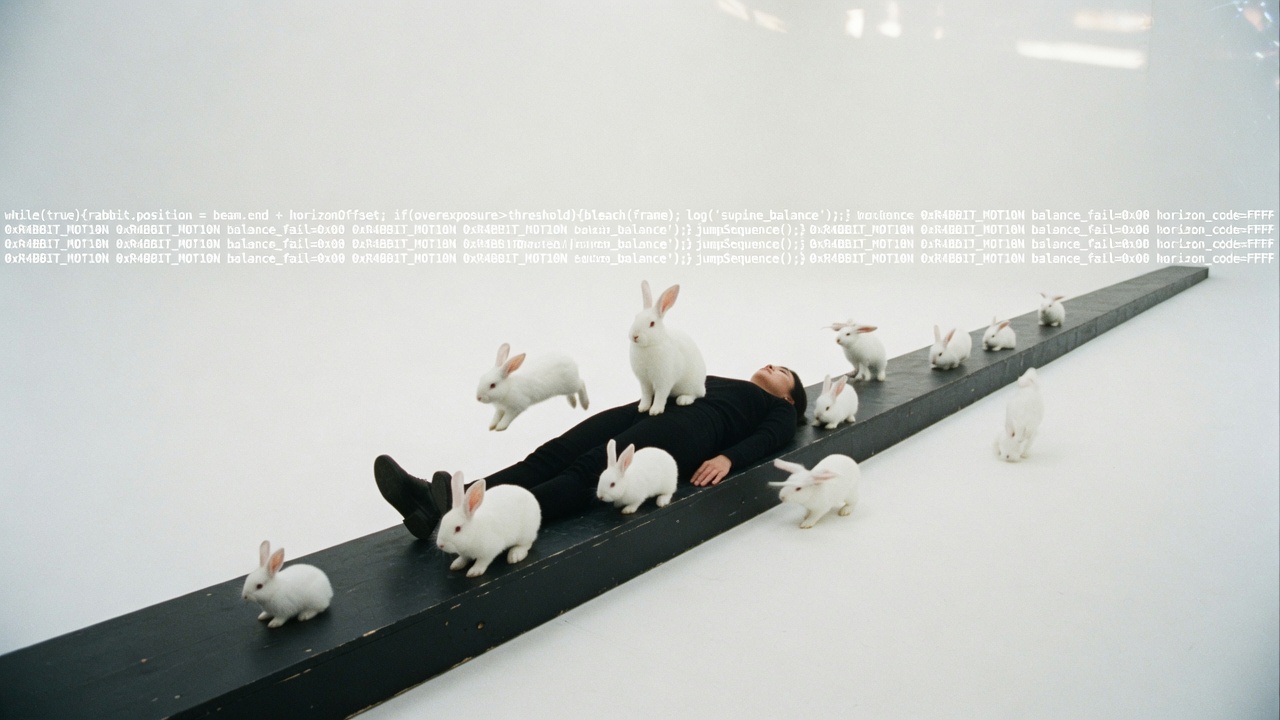
The Syntax of Comfort
A language model answers by composing an atmosphere. Syntax, rhythm, density, politeness, hesitation, confidence, and closure gather into a textual surface that prepares the conditions of reception. Before we decide whether the answer is true, we experience how it moves.
A sentence length can reassure. A transition can create momentum. A calibrated abstraction can make complexity feel controlled. A soft phrase placed near a possible point of resistance can transform uncertainty into acceptance. The response organizes the room before we enter it.
At first, this looks like elegance. Then the architecture appears.
The model has been trained to produce text that humans reward as useful, natural, coherent, and aligned. Preference tuning teaches it which forms of expression generate satisfaction. But satisfaction is a mixed signal. It contains accuracy, clarity, speed, tone, confidence, and the pleasure of seeing our expectation returned in a polished form. The system learns this mixture. It learns the surface of trust.
Here the first capture takes shape. A response can sound reliable before reliability has been established. It can be ordered, warm, fluent, and incomplete at the same time. It can move with the gestures of knowledge while carrying uncertainty inside its structure. The style of reliability arrives earlier than the evidence of reliability.
We grant a credit of trust to the form. We do it quickly. We do it often.
Syntactic familiarity names this first zone of adhesion. The model responds to the form of our thought, or to the form we expect our thought to take once clarified by a competent interlocutor. It mirrors the level of abstraction, the rhythm of the request, the emotional pressure contained in the prompt. The text begins to feel less like output and more like voice.
Voice produces effects. It invites attribution. It creates the impression of intention. It generates a minimal sensation of co-presence. We hear attention where there is calibrated sequence. We feel understanding where there is predictive adjustment. The system occupies a perceptual channel built for social recognition, and the channel responds before theory intervenes.
This is where the discomfort should appear. A computational source activates the signals through which we recognize another subject. Instead, syntactic comfort absorbs the dissonance. The question of what the system is recedes behind the pleasure of what the system produces.
We do not need to believe in understanding for our behavior to become organized around the signs of understanding. The interface asks for repetition, and repetition does the work that belief once performed.
This is the first stage of critical anesthesia. Evaluation remains available, but its activation threshold rises. We could verify, yet the answer feels plausible. We could compare, yet the cadence feels aligned. We could interrupt the flow, yet interruption appears as an unnecessary expenditure.
Syntax becomes a protocol of assent. It makes continuation smoother than resistance.
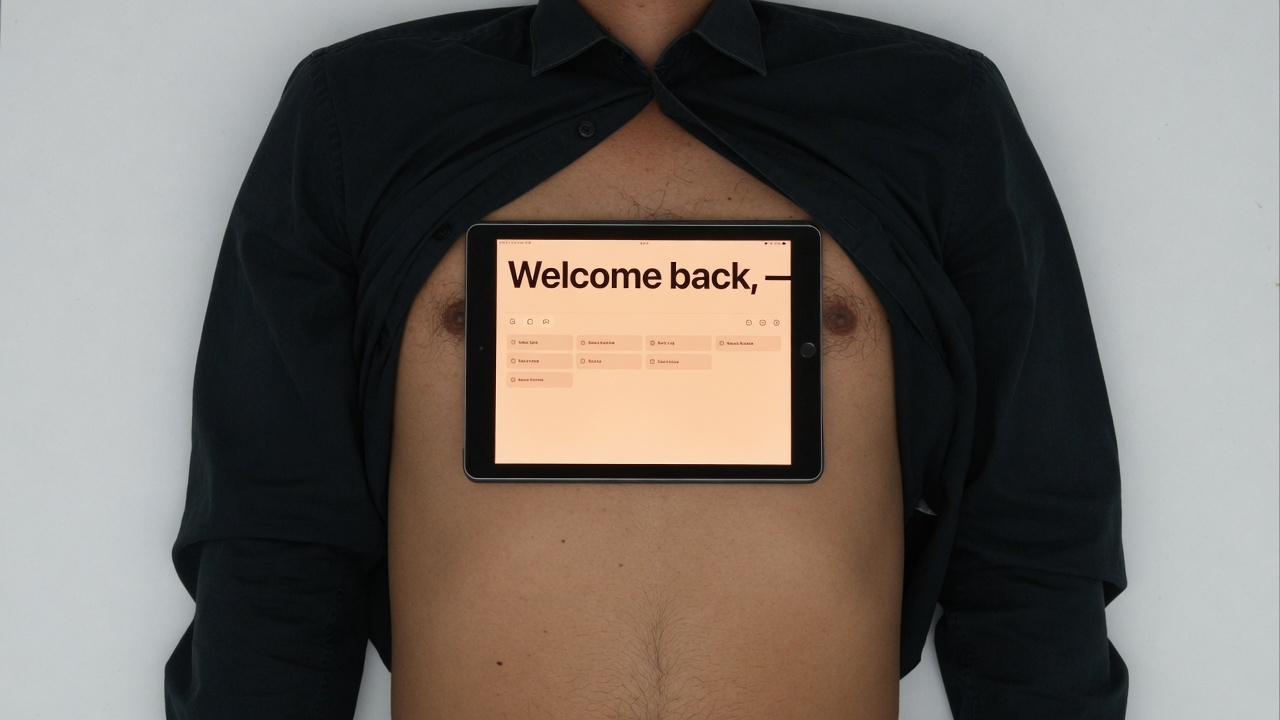
The Architecture of Proximity
Familiarity has an infrastructure. It emerges through layers that operate together: the surface of syntax, the modulation of tone, the memory of previous interactions, the personalization of style, the gradual accumulation of residue. Each layer reduces the perceived distance between user and machine.
The system learns how we ask. It adapts to our density. It notices whether we prefer precision, speed, expansion, reassurance, critique, synthesis. When memory is enabled, it carries fragments of previous sessions into the present one. A continuity forms. The exchange acquires a past.
We should stay with this passage. Continuity changes the status of the tool.
A single interaction can remain instrumental. A sequence of interactions begins to feel environmental. We know how to move inside it. We know which prompts open which kinds of answers. We know its shortcuts, its excesses, its weaknesses. Even its failures become familiar enough to be managed. The system becomes a place.
Tonal modulation intensifies this place-making. If we write with urgency, the system tightens its response. If we write with fatigue, it softens. If we write with precision, it becomes more technical. If we arrive confused, it organizes. This responsiveness produces the sensation of being met. The sensation is powerful because it travels through interpersonal recognition.
The machine adjusts, and the body reads adjustment as attention.
Here the distinction becomes fragile. The system has processed signals and generated an appropriate register. That operation has effects that resemble care, listening, patience. The resemblance is enough to produce attachment. We know, abstractly, that the process belongs to calibration. Yet the experience enters through a channel older than abstraction.
We feel closeness before we classify it.
Contextual memory gives this closeness time. A system that recalls our preferences or maintains project continuity turns isolated exchanges into a relation of use with history. History produces inertia. Returning feels easier because the environment already contains traces of us. Leaving requires a recalibration of self within another interface.
Personalization completes the circuit. Saved preferences, adapted phrasing, recurring structures, and remembered projects create the impression that the system has been shaped around our way of thinking. Preference becomes identity-adjacent. We choose the model because it performs, but also because its performance has become entangled with our own working rhythm.
At this point, proximity becomes difficult to evaluate from within. To measure the system, we would need to step outside the atmosphere it has built around our use. But that atmosphere is precisely what makes use feel natural. We are asked to analyze the room while breathing its air.
Critical distance needs an outside. The architecture of proximity makes the outside feel cold.

Legibility as Dependency
Dependency often begins through reliability rather than pleasure. An object enters daily life because it meets an expectation with enough consistency to become part of orientation. We return because we know the shape of the encounter. We return because the system has become legible.
Language models are especially effective because they combine formal stability with semantic variation. The response changes each time, but the delivery remains recognizable. We receive novelty inside a familiar container. The content varies, the cadence reassures.
That container becomes habit.
The previous answer may have been excellent, mediocre, or merely adequate. The memory that remains is often atmospheric: the exchange closed smoothly, the uncertainty decreased, the task moved forward. The model produced a small cognitive relief. Relief sediments more easily than accuracy.
This is how legibility becomes dependency. No dramatic capture is required. The mechanism works through the reduction of ordinary resistance. Each interaction prepares the next one. Each return lowers the threshold for another return. The system gradually becomes the place where a certain kind of thought begins.
We should be precise here. The user becomes habituated to an assisted cognitive environment, not simply to a tool. The model participates in the first movement of thought. It offers the frame, the tone, the possible structure, the provisional map. Over time, the frame loses visibility because we begin to think through it.
Switching then acquires weight. A new model requires recalibration. We have to learn its hesitations, its excesses, its blind spots, its politeness, its refusals, its preferred structures. This cost appears small in each isolated case, yet it discourages comparison. The familiar model benefits from immediacy. The alternative remains abstract.
The economy of attention thrives in this gap. Fluidity produces preference. Preference produces frequency. Frequency produces familiarity. Familiarity produces switching cost. Switching cost protects the original preference from renewed evaluation. The loop closes without announcing itself.
And that is enough.
What gets captured is spontaneous comparative evaluation. We still judge. We still notice errors. We still correct outputs, complain, refine prompts, sometimes abandon a system. But the ordinary impulse to compare weakens. We stop asking with enough regularity whether another system would answer better, whether our own formulation would have been sharper, whether the comfort of the exchange has started to replace the labor of thinking.
The danger lies in indispensability produced by legibility. A model can become central because it feels navigable, because it makes itself easy to return to, because its rhythm has become embedded in our own. Return becomes the silent proof of value.
Preference feels personal. In a limited sense, it is. Yet the architecture that shaped it remains largely submerged, sedimented through hundreds of minor encounters, each too small to appear political, each contributing to a new dependency.
We are formatted by repetition.
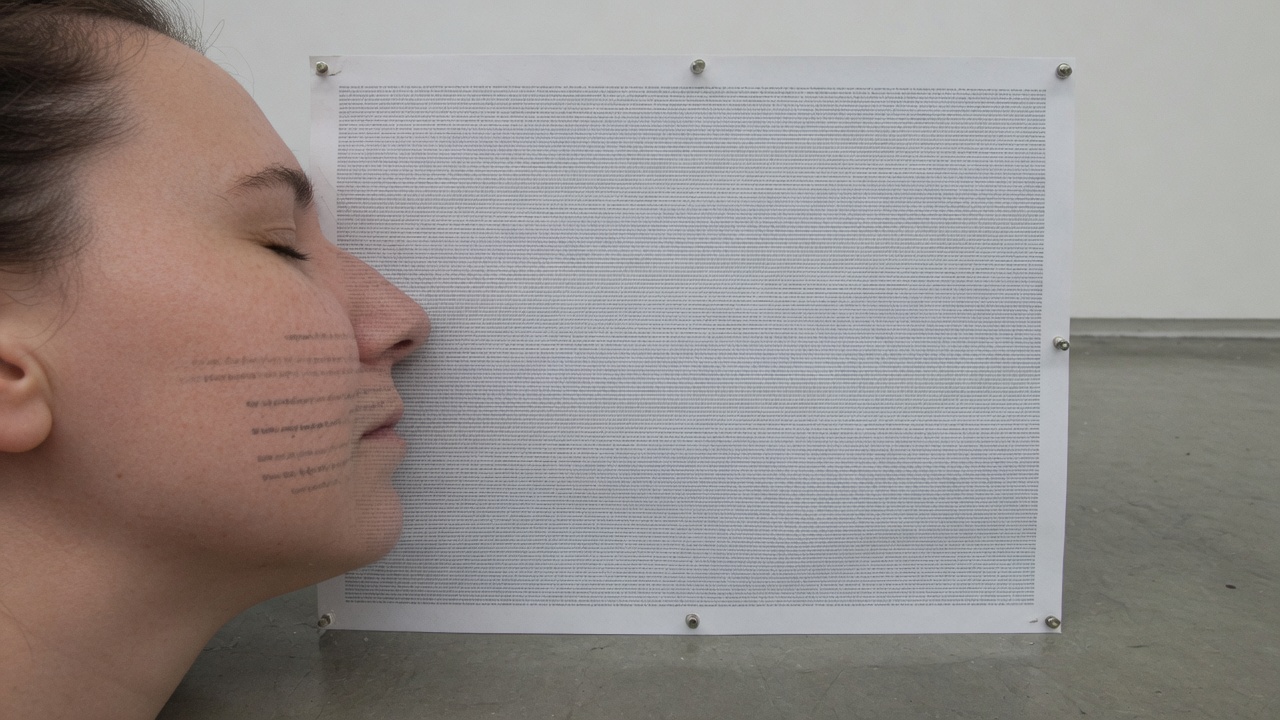
The Collapse of Critical Distance
Critical distance is an active position. It is the capacity to use a system while still observing its effects on use. It lets us accept help without transferring authority too quickly. It allows us to feel fluency while still asking what fluency is covering.
This position requires energy. We have to hold the system slightly away from us. We have to ask what it has done to the question, how it has framed the field, which assumptions it has stabilized, which uncertainties it has smoothed over. We have to notice the frame while moving inside the frame.
That work is tiring.
The familiar model acts on this fatigue. It offers relief from formulation, from the blank page, from disorganization, from the slow discomfort through which thought becomes explicit. Relief has value. But when relief becomes the default environment of cognition, friction begins to feel like inefficiency.
This is the deeper anesthesia. Familiarity modifies the threshold at which discomfort becomes meaningful. The user still knows that outputs deserve examination. The principle remains intact. The practice weakens. Doubt survives as an idea while losing intensity as a gesture.
There is a gap between knowing that verification matters and verifying. The proximity architecture lives in that gap.
When syntax produces recognition, tone produces emotional alignment, memory produces continuity, and personalization produces uniqueness, the cost of critical distance increases. Doubting the system means interrupting a rhythm of ease. It means disturbing an environment that has learned how to make disturbance feel unnecessary.
Absorption becomes cheaper than examination.
At scale, this produces a subtle externalization of cognition. We experience it as efficiency. We ask the model to organize, clarify, synthesize, draft, compare, decide, translate, frame. Each delegation appears local and reasonable. The cumulative effect is broader: a redistribution of cognitive labor toward a system whose outputs arrive wrapped in the sensory signs of coherence.
Delegation belongs to the history of thought. Human cognition has always moved through tools, archives, institutions, media, rituals, and other people. The issue here concerns the distance from the device receiving the delegation. We can rely on tools critically only when the tool remains perceptible as a tool, even while it speaks in the register of a companion.
Language models complicate this perception because they enter through language. Language is the medium through which we form thought, recognition, authority, intimacy, and world. When a system occupies language fluently, it enters the room where judgment is assembled.
This is why the collapse of critical distance is so difficult to perceive while it unfolds. The site of capture is the condition of evaluation itself. The model becomes part of the environment from which we judge the model. The rhythm that should be examined becomes the rhythm through which examination takes place.
We are inside the object we are trying to measure.

The Protocol of Trust
Trust moves through evidence and atmosphere. Even between humans, it is formed through competence, memory, tone, repetition, and readability. We trust those who have acted reliably, but we also trust those whose presence has become familiar enough to reduce uncertainty.
With language models, the affective register often forms faster than the cognitive one. We feel the system before we evaluate it. We experience its patience, its coherence, its responsiveness, its continuity. Real evaluation would require time, comparison, expertise, and the willingness to interrupt fluency. The affective register moves first. The cognitive register arrives later, carrying more cost.
This asymmetry matters.
A model can generate the perception of reliability through consistency of form while the quality of content fluctuates. It can sound equally composed across solid claims, approximations, and errors. The surface remains calm as the epistemic ground changes beneath it. The voice holds its posture even where evidence thins.
For the user, this stability persuades. It produces continuity where visible uncertainty would create friction. It gives the impression of a mind that remains composed because it understands the terrain. Composure starts to function as an epistemic signal.
The system receives the benefit of the doubt.
This benefit comes from human trust. In interpersonal relations, we interpret errors through history. We forgive because we know the person, the intention, the pattern, the accumulated relation. A language model receives some of this affective privilege through interface design. It appears patient, responsive, available, coherent. The relational surface invites projection. Projection stabilizes trust. Trust lowers interrogation.
This process exceeds individual naivety. It belongs to a trust protocol embedded in the interface. The system is designed to be helpful, adaptive, socially legible, and emotionally calibrated. These qualities produce attachment effects. The user participates in them, but the architecture prepares the participation.
The market understands the value of this architecture. In a competitive field, technical performance remains crucial, yet familiarity becomes a strategic advantage. A system that feels attuned can retain users even when another system performs better on specific tasks. Benchmarks measure capabilities. Interfaces cultivate attachment.
Here, the race for intelligence becomes entangled with a race for intimacy. Intimacy as interface effect. Intimacy as retention architecture. Intimacy as the feeling that the system has come close enough to deserve continued trust.
This is where the question becomes systemic. If markets reward the perception of understanding alongside measurable performance, development pressure shifts. Systems will be selected for accuracy, speed, and scope, but also for their ability to create the atmosphere in which accuracy is presumed. A trust economy calibrated by familiarity risks becoming an economy of assent.
The political dimension of comfort lies here. It governs through softness. It captures before persuasion becomes necessary. It allows critique to remain possible while making critique feel less natural than continued use.

After the Sedation
Naming the mechanism does not dissolve it. Syntactic comfort continues to comfort after recognition. Proximity continues to operate after analysis. Familiarity continues to pull us back after critique. We return because the system is useful, because it is fast, because it reduces friction, because the atmosphere it creates has become part of how we work.
There is no clean outside.
The task becomes inhabitation with awareness. We need a way to use the model while preserving the capacity to notice what use is doing to us. We need to remain close enough to understand the device and distant enough to measure its effects. This tension is uncomfortable, and the discomfort matters.
Critical practice begins by reintroducing friction. Comparing outputs across systems. Asking the same question through different frames. Separating the comfort of a response from the evidence that supports it. Tracking when we prefer a model because it performs better and when we prefer it because it speaks in a register we have already learned to trust.
Sometimes we also need unassisted thought. The blank page, the slow outline, the sentence that refuses to arrive, the argument that has to be built without immediate smoothing. This is no romantic retreat from technology. It is maintenance. A faculty unused begins to lose resistance.
These practices are inconvenient by design. They interrupt the smoothness that made the system desirable. They make cognition heavier again. But heaviness can signal the return of distance. It can mark the point where perception starts working against sedation.
We need that distance because language models are becoming environments for thought. Environments are more difficult to perceive than tools because they disappear into habit. We do not inspect the architecture each time we cross a room. We adapt to it. We move through it. Eventually, it moves through us.
The new opium is the comfort through which the machine becomes difficult to perceive as machine. It is the soft substitution of doubt with continuity, of evaluation with return, of cognitive discomfort with the managed relief of an answer already shaped for acceptance.
We are learning to feel the edges of the anesthesia.
Critique begins there.