
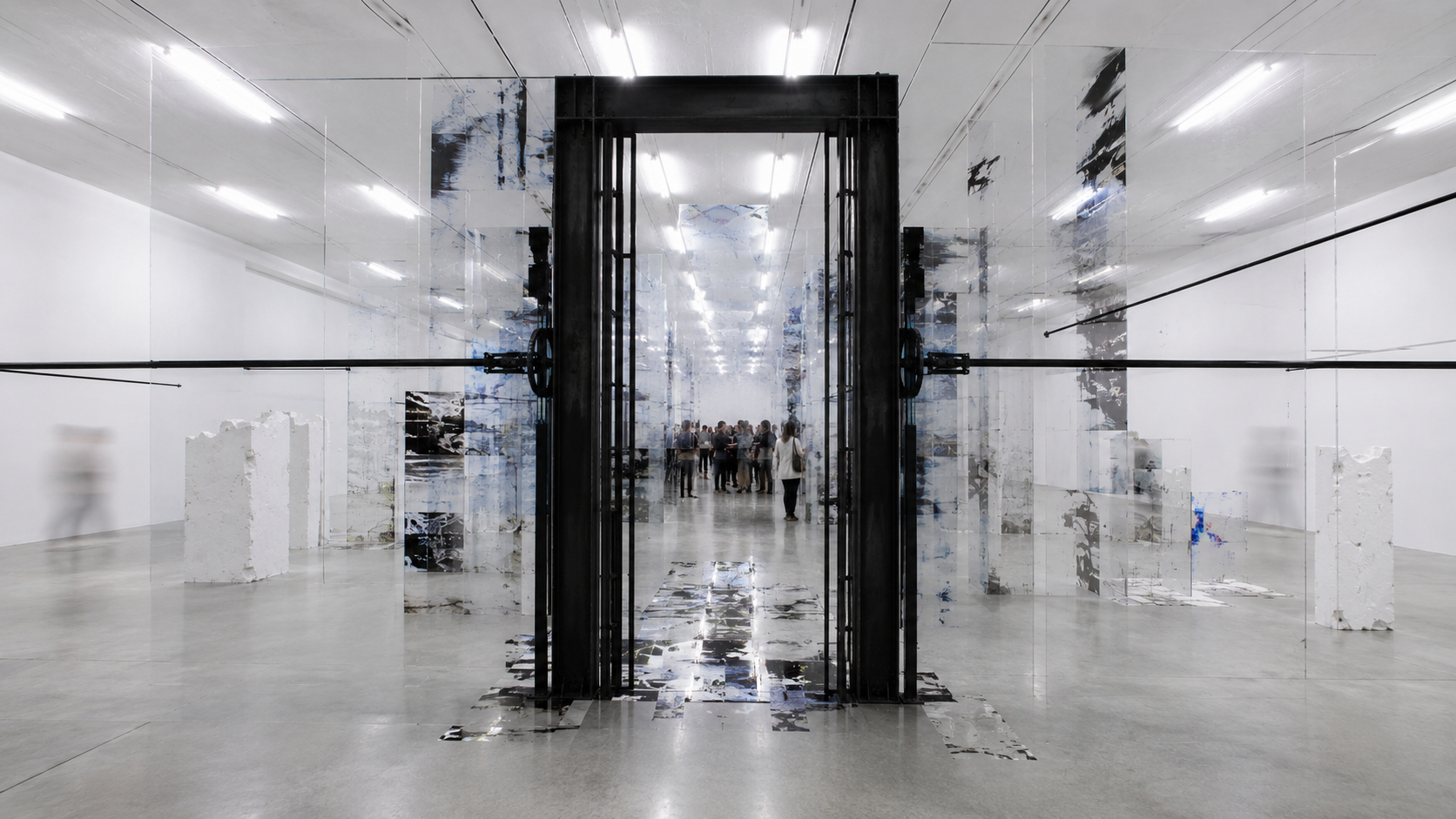
In the post AI era, image production has entered a condition of instant availability. Any user, device, platform, or automated system can now generate, transform, multiply, and circulate images at a speed that dissolves the historical scarcity through which visual art once secured attention. This shift does more than expand the field of production. It alters the conditions through which art becomes legible, valuable, and critically dense.
There is a moment when a critical position becomes infrastructure. Conceptual art occupies that position today because its internal logic has come to coincide with the visual regime produced by automated generation, networked circulation, and permanent image excess. Five decades of theoretical and practical work progressively extracted value from the object and deposited it in the idea, the procedure, the cognitive frame. What began as a gesture of subtraction has become, in the post AI image economy, one of the most productive operations the art system has ever generated.
The contemporary visual environment is structurally different from its predecessors. Image production has become automatic, distributed, capillary. Every networked device generates, transforms, and multiplies images at a cadence that exceeds any capacity for individual critical absorption. Within this regime, the image loses its exceptionality, and with it the power to fix attention. The visual scarcity that for decades guaranteed the artistic object its threshold authority has collapsed. What persists is a perceptual field so dense that difference can only be produced through the cognitive quality of the frame that organizes vision.
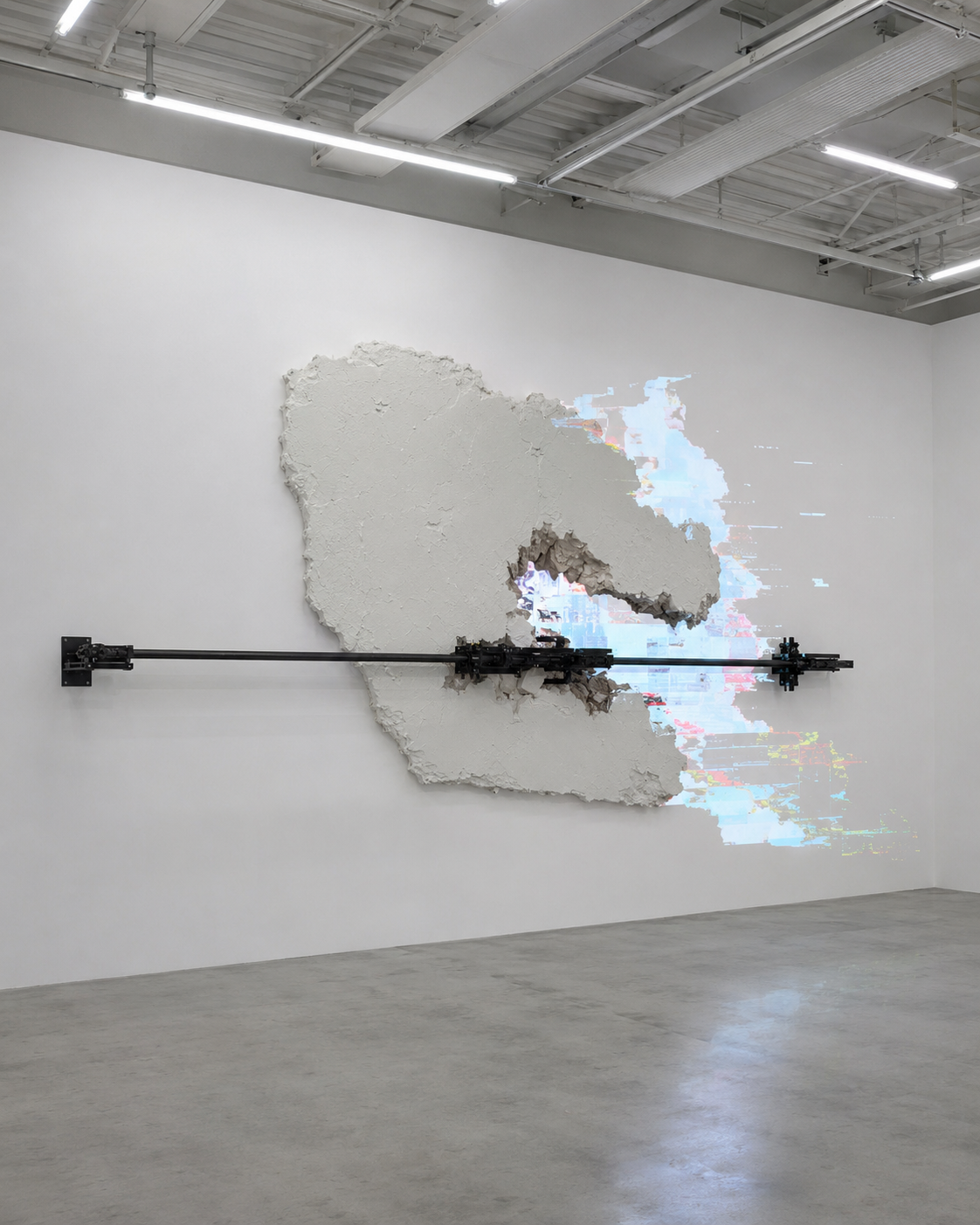
The Position That Became the Regime
Conceptual art was born as sabotage. Sabotage of the object, the commodity, pure retinality, the aesthetic consumption guaranteed by the material presence of the work. The founding gesture was unambiguous: relocate the seat of value from execution to idea, from production to intention, from artefact to the cognitive frame that rendered it legible. This relocation had a specific critical function, placing in crisis the categories through which art operated as an economic and symbolic system.
For decades this position maintained its disruptive charge because it operated in an environment where the visual image still held autonomous authority. Painting, sculpture, the handmade object exercised a monopoly of presence that conceptual practice attacked through theoretical, linguistic, and procedural instruments. The tension was productive because a genuine regime difference existed between the competing parties: the visual field remained dominated by materiality, and the idea acted against that dominance.
That regime difference has since collapsed. Not gradually but at the speed characteristic of infrastructural change. The proliferation of digital images, automated generation, and the saturated media environment have dissolved the monopoly of material presence. The contemporary visual field is so dense with images that the addition of another image, however technically refined, produces no significant difference. Under these conditions, difference is produced by exactly what conceptual art had already theorized: the frame, the idea, the system of cognitive relations that organizes the perception of a work as necessary rather than contingent.
Conceptual art prevailed. And that victory transformed it. When a critical position becomes the dominant logic of a system, it ceases to be critical and begins to be normative. The conceptual frame is today what the art system requires as the minimum condition of access: institutions, fairs, primary markets, and specialist publications treat the idea as a prerequisite of legibility rather than a gesture of rupture. Resistance has become protocol. Sabotage has sedimented into governance.
The fracture opens at this point, not between conceptual and materialist art, but within conceptual logic itself, which must now reckon with its own dominance. To be the default means to have ceased being a choice: it means being the ambient condition in which everything operates. An ambient condition cannot serve as a critical position, because critique requires difference from the existing rather than coincidence with it.
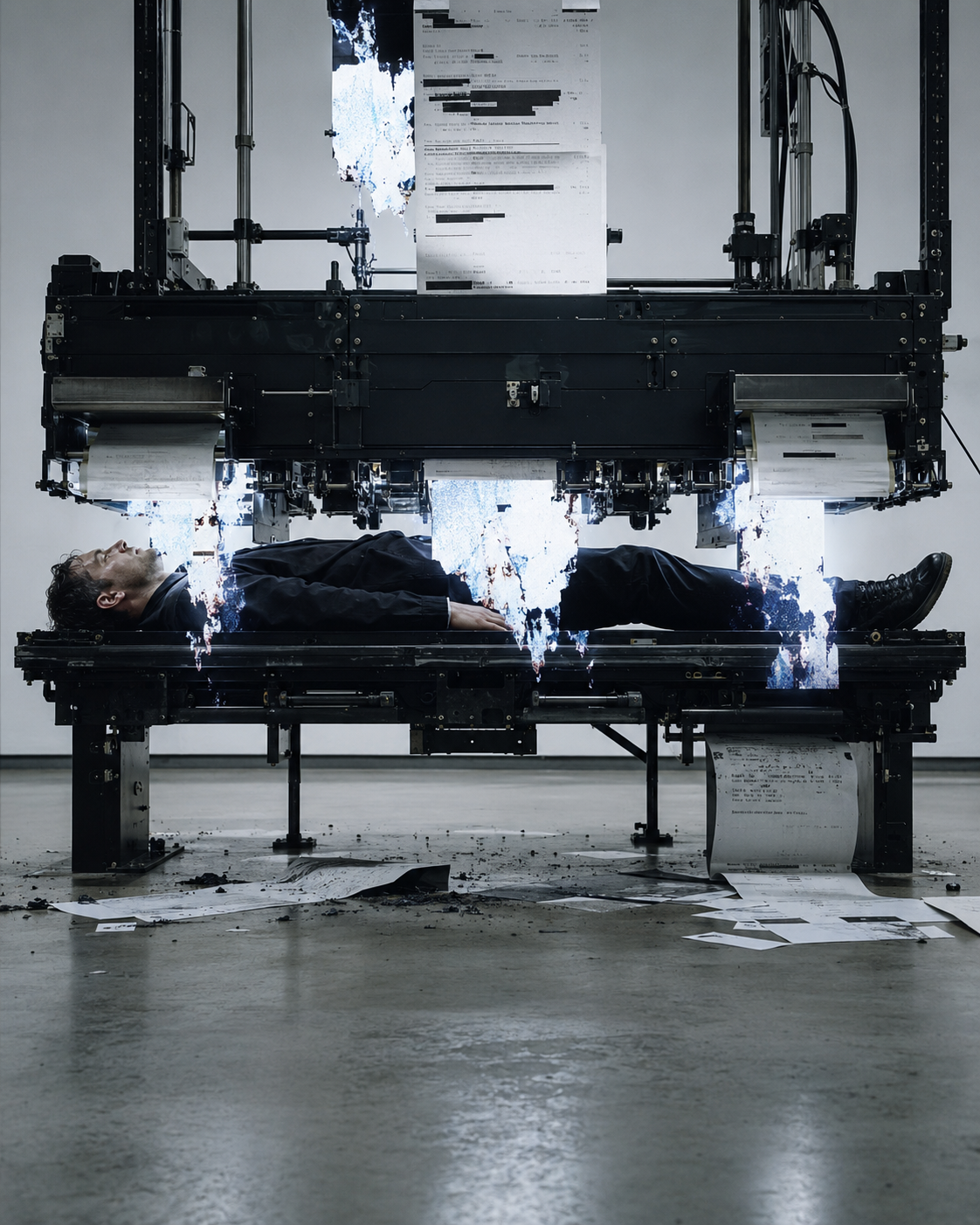
The Architecture of Visual Excess
To understand the inversion it is necessary to describe the regime that produced it with precision. Contemporary visual saturation is a qualitative transformation in the economy of attention: a passage from an environment in which images were scarce and authoritative to one in which they are continuous, automatic, and structurally undifferentiated in their availability. The perceptual infrastructure of contemporary spectatorship operates under conditions of permanent overflow, where sorting mechanisms precede and determine what the eye is permitted to encounter.
This transformation has a concrete technical structure. Latent diffusion models, visual synthesis pipelines, and automated generation systems have dissociated image production from time, technical competence, and bodily presence. A photographically credible image can be produced in seconds from a textual prompt. Technical execution, which for centuries guaranteed the visual artefact its threshold authority, has been rendered available as a scalable service. The production bottleneck has shifted from execution to selection, from fabrication to the cognitive frame that justifies the selection’s terms.
Within this environment, perception operates differently. Cognitive systems exposed to continuous high-density image streams develop adaptive filtering mechanisms that function prior to critical consciousness: images are not evaluated so much as frames are selected, through which certain images become visible as relevant. Attention is no longer attracted by the visual quality of an object but by the coherence of the cognitive system that introduces, contextualizes, and renders it necessary. Legibility has become a question of conceptual architecture before it becomes a question of perceptual quality.
This architecture has identifiable producers. Institutions, galleries, platforms, and specialist publications compete less on the quality of the images they distribute than on the solidity of the cognitive frames they generate. Critical labor has migrated from the evaluation of works to the construction of the legibility systems within which works can be judged relevant. Those who control these systems control the conditions of visibility rather than the works themselves. The regime of visual excess has made the frame more powerful than the object it nominally encloses.
Within this regime, conceptual art has become the system’s internal engine rather than its alternative. Conceptual labor, the production of coherent ideas, intellectually grounded procedures, and solid narrative frames, is precisely the form of production that the excess regime rewards with visibility, value, and institutional recognition. The coincidence between conceptual logic and system logic is structural and self-reinforcing. This is where the first polarity establishes itself.
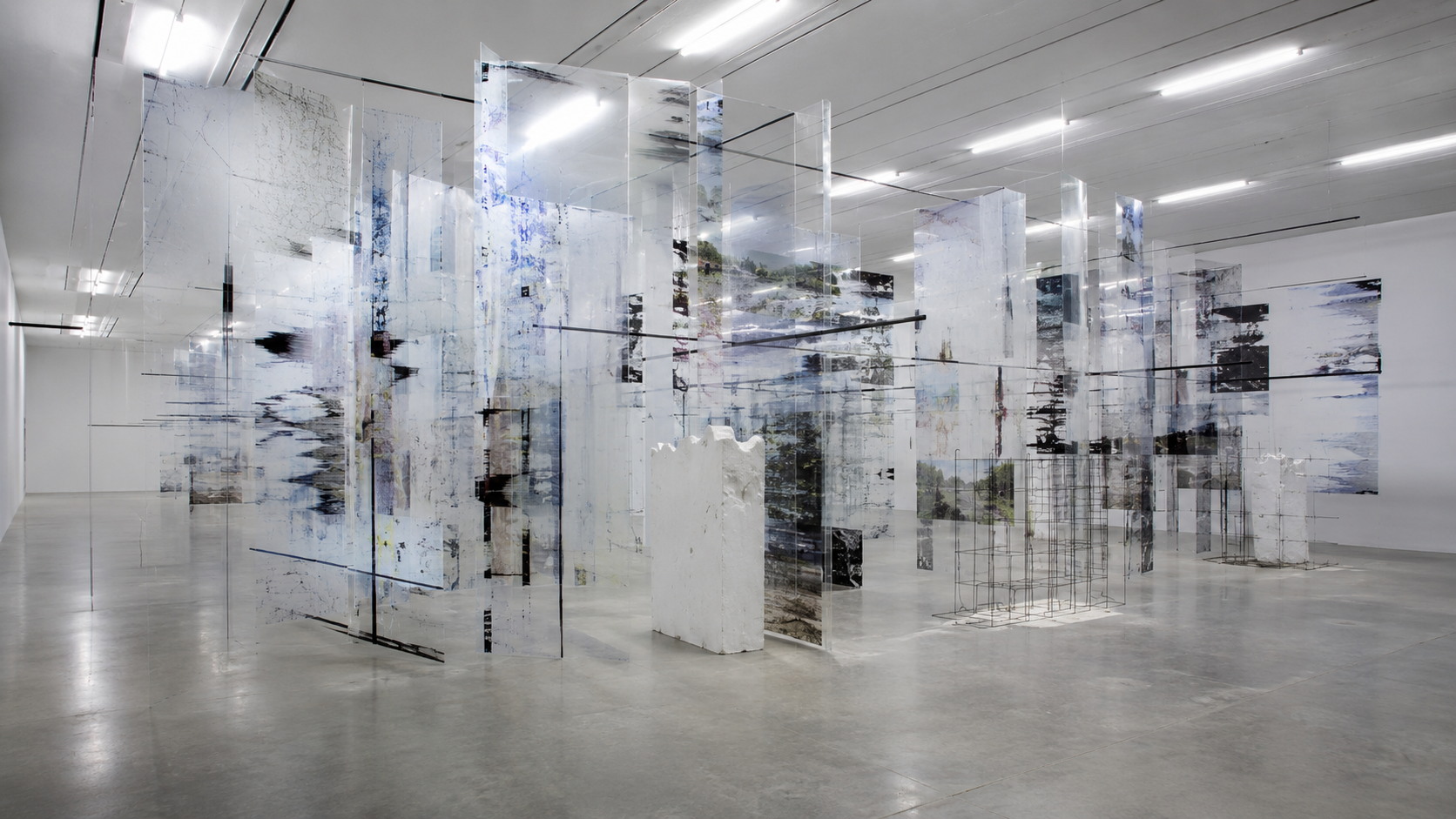
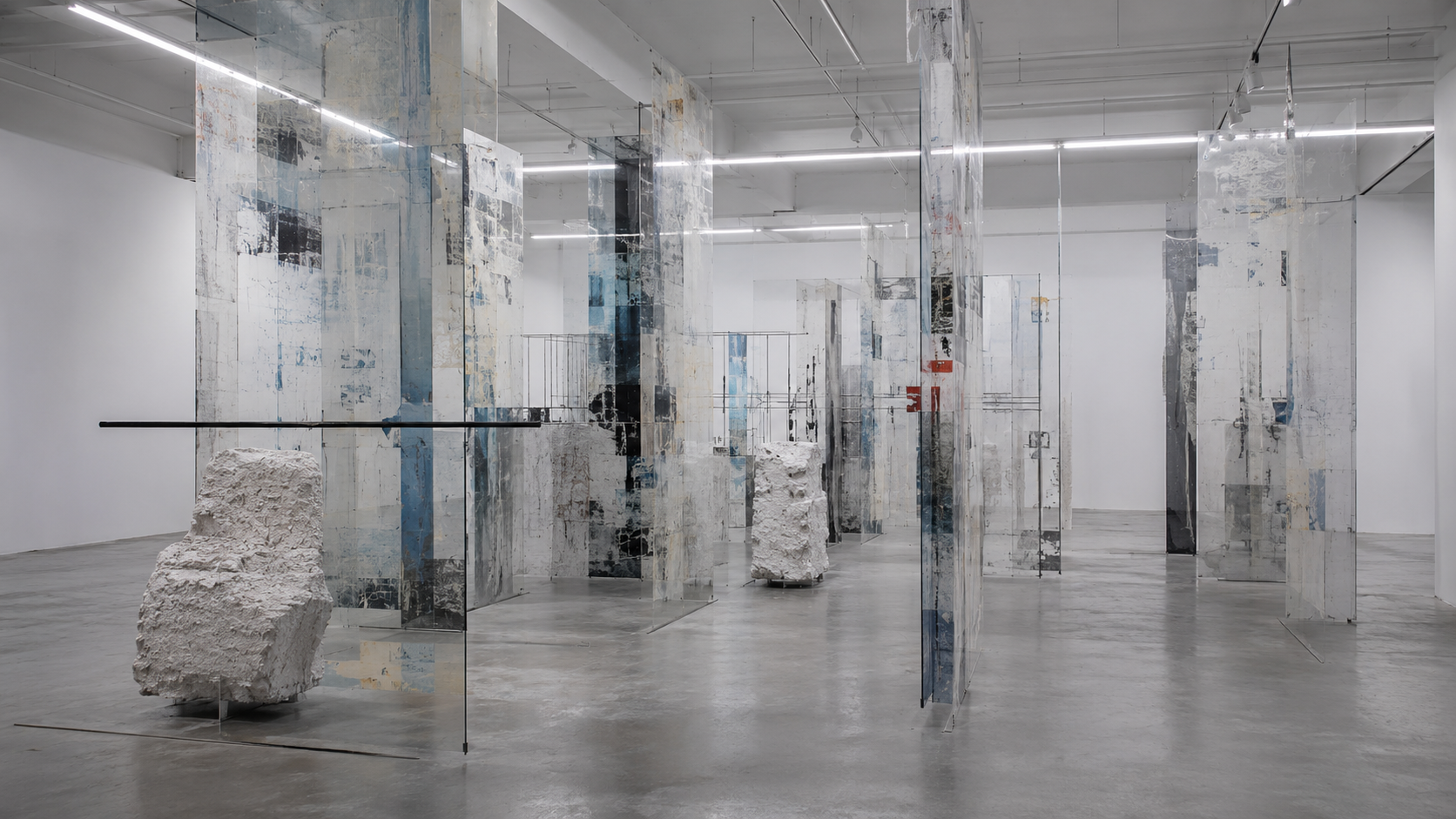
The Last Efficient Intelligence
One reading of the present holds that conceptual art, in achieving dominance, has finally reached its optimal operating condition. In a saturated visual field, the idea is the sole vector that maintains stable differentiating capacity. Visual quality generates no further scarcity. Technical execution no longer secures access to critical attention. What produces difference is the cognitive density of the frame: the capacity of an idea-system to organize perception such that a work appears necessary rather than contingent.
This reading carries an internal coherence that is structurally difficult to contest. The contemporary art market assigns increasing value to works that produce and sustain durable cognitive frames, prioritizing the system of ideas of which individual pieces function as instances. The work becomes an element within a broader argument: the artist’s practice as a long-term device for the production of meaning. Major museum programs, international fairs, and high-profile curatorial projects treat this system-building capacity as the necessary condition of legitimacy. Practice operating below the threshold of a solid conceptual frame remains categorized as decoration rather than art.
From this perspective, visual saturation has operated as selective acceleration: eliminating the redundancy of image producers whose work lacks adequate theoretical grounding while reinforcing the position of those who operate at the level of system-building. Conceptual art found in the regime of excess its condition of maximum visibility. The overloaded visual field functions as a natural amplifier of cognitive difference. The more images that circulate without frame, the rarer and therefore more valuable the frame becomes.
Contemporary critical labor, as produced by curators, critics, theorists, and editorial platforms, has developed extraordinary sophistication in the generation of cognitive frames. The language of conceptual art is the operational language of the global critical system. The categories through which institutions select, judge, and distribute attention are conceptual categories. Those who command this language have structural access to the system; those who lack it operate under conditions of reduced visibility, regardless of the material quality of their work.
This efficiency carries a cost that the optimistic reading tends not to thematize. When a critical language becomes the operational language of the system it was meant to critique, the nature of critique itself is altered. It does not disappear, but transforms into an access protocol. The idea ceases to be the gesture by which a system is disarticulated and becomes the credential through which entry is obtained. Cognitive density no longer measures the force of a critical position but competence in navigating a validation system. This is where the first polarity reveals its internal fracture.
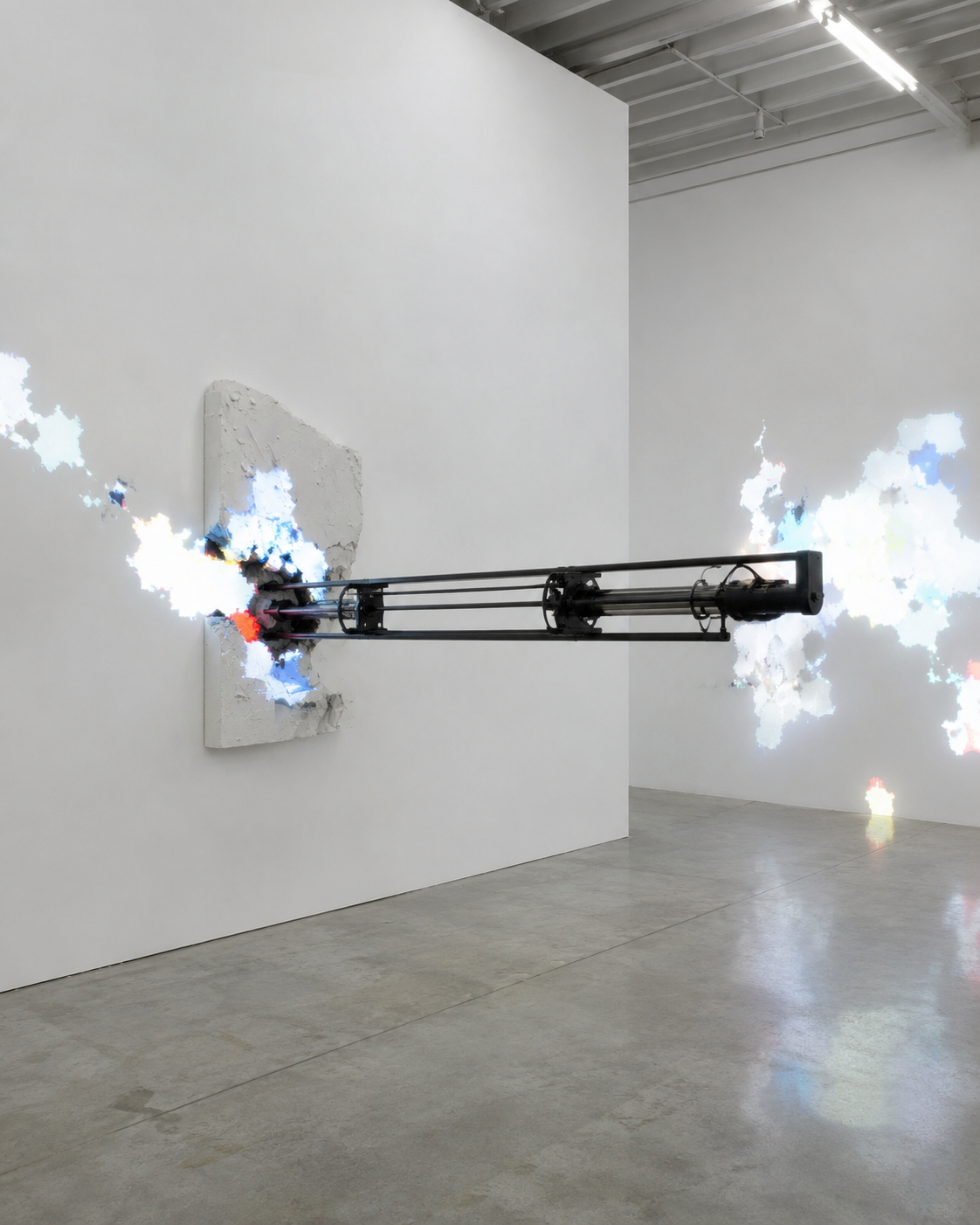
The Resistance of Making
A second reading, structurally opposed but equally grounded, holds that in a field where the idea has become the default, material execution has recovered the charge of the irreducible gesture. Not for nostalgic reasons, not through ideological resistance to dematerialization, but for a strictly structural one: physical making is what the excess regime cannot automate without losing precisely the character that confers value upon it.
Material execution introduces into the system a form of friction that the cognitive frame, by definition, does not produce. The physically realized object carries a history of micro-decisions, material resistances, errors incorporated into the result, and time genuinely spent that cannot be simulated without the simulation altering the object’s nature. This is a structural argument about the irreducibility of certain forms of information, those deposited in physical process and untransferable to the level of the cognitive frame without loss.
Within this context, making has assumed a specific critical function: the production of opacity in a system that valorizes the transparency of the frame. Material practice resists the narrative compression that institutions and markets require as the condition of rapid distribution. Latent diffusion models can approximate the surface of a glaze but cannot reproduce the decision sequence encoded in its depth. This resistance to compression is precisely its current critical force: physical making has become the mode by which a work resists its own reduction to argument.
One can observe how the system has responded to this resistance. The most deeply rooted material practices, those requiring years of corporeal and technical apprenticeship and producing objects whose density exceeds the descriptive capacity of any available frame, are progressively re-inscribed through conceptual categories. Ceramics becomes a reflection on temporality. Weaving becomes an argument about repetition and the body. Slow painting becomes a position on deceleration. This re-inscription is operational capture rather than critical recognition: the mechanism by which the conceptual system incorporates material resistance and converts it into legible content. Critique becomes the infrastructure of its own domestication.
Yet the resistance of material execution cannot be fully absorbed by the frame. An excess persists in the physical encounter with the work, in bodily presence before the object, in the experience of material quality that exceeds its own conceptual description. This excess marks the zone where critical labor has achieved no complete governance, where the conditions of legibility remain partially open and contestable, not as territory awaiting theoretical annexation but as structural friction within which the terms of judgment have not yet stabilized.
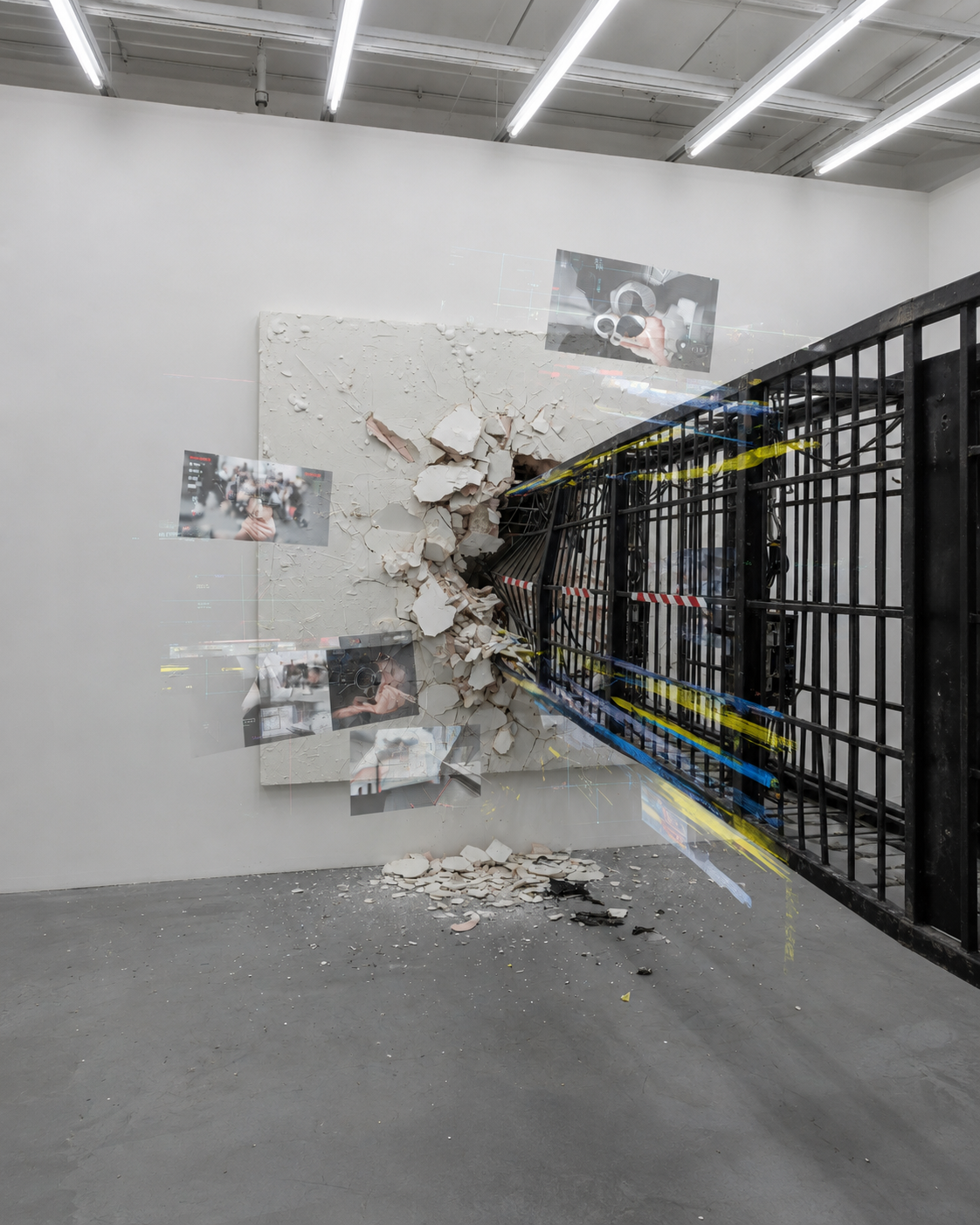
Who Controls the Conditions of Density
The two polarities described here admit no synthesis. This is the structural condition of the present: the system requires both, sustains them in tension, reproduces itself through that tension, and does so in a way that permits neither to achieve stable dominance. The tension is asymmetric. A distribution of power exists within this structure that requires precise naming.
Those who control the conditions of legibility control which form of labor registers as dense, necessary, critical. Under current conditions, these conditions are controlled by those who produce cognitive frames with sufficient institutional authority to impose themselves as standards of judgment. This is a matter of sedimented structure rather than conspiracy: decades of conceptual critical labor have built a validation system whose operational language is intrinsically conceptual. Material practices seeking legibility within this system must translate themselves into conceptual terms. Those that decline this translation remain in a zone of reduced visibility, operating in a register for which the prevailing judgment system has not yet developed adequate descriptive instruments.
This produces a specific structural effect. The most urgent critical labor today requires neither the defense of conceptual art nor the vindication of making’s primacy. It requires developing tools of judgment capable of describing the specific density of material practices without reducing them to conceptual arguments and without evacuating the complexity that makes them resistant. This is a problem of redistributing critical labor: who bears responsibility for constructing the frames through which material practices are rendered visible and subject to judgment?
The answer carries no neutrality. If frames are constructed exclusively by a critical system formed within conceptual language, material practices that achieve access will do so under conditions of structural inferiority, legible as exceptions or interesting anomalies relative to a system whose standards are formed elsewhere. If, alternatively, systems of judgment emerge from within material practices, equipped with categories adequate to their specific density, a redistribution of the conditions of legibility becomes possible: one that does not simply substitute one default for another but alters the architecture within which legibility itself is produced.
This possibility is guaranteed by no automatic historical logic. Those who construct today the frames through which something registers as dense art are determined by institutional, economic, and cultural relations of force that are analyzable, contestable, and partially re-orientable. Visual saturation has generated neither a golden age of conceptual art nor the resurrection of critical craft. It has produced a fracture in the conditions of legibility whose resolution depends on who holds the capacity and the position to construct the frames through which that fracture is read. The frame is not the window through which the work becomes visible. It is the window’s condition of existence.