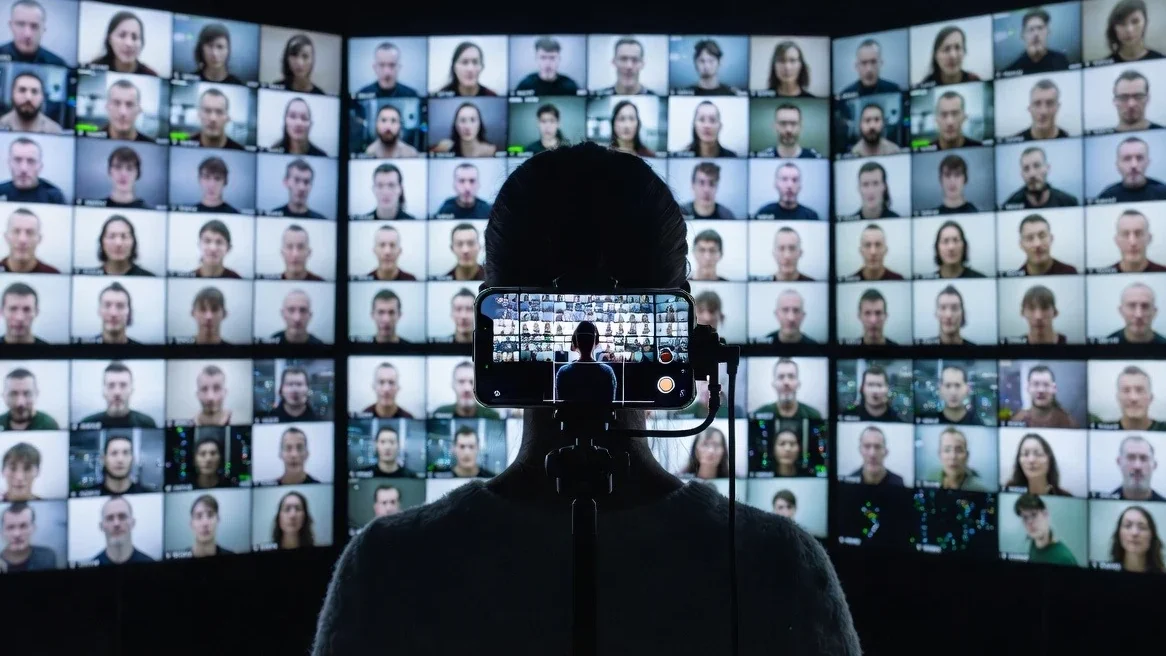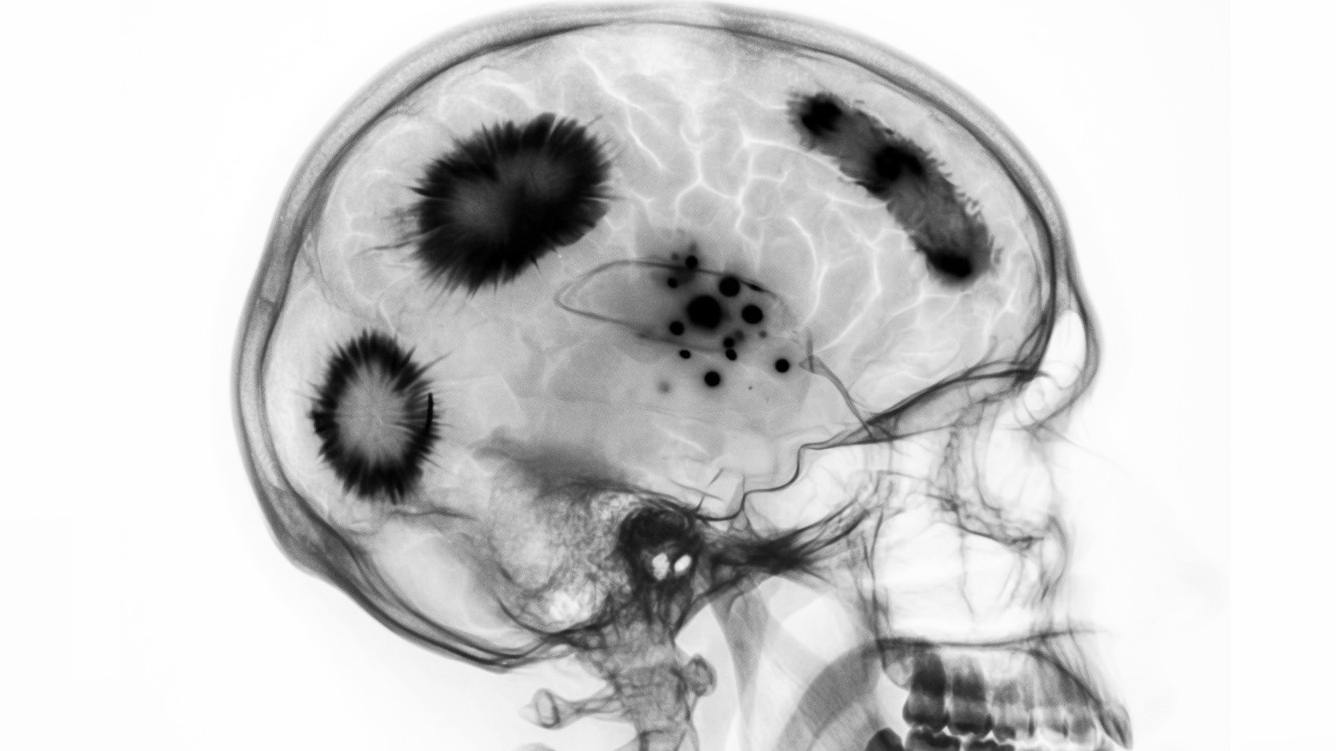

We photograph a sunset with a phone, and the image we receive is more beautiful than what the eyes saw. The sky is more saturated, the shadows more legible, the faces sharper than the real light allowed. Between the instant we press and the instant we look, something has intervened: a sequence of operations that fused several exposures, recognized a face, decided how much sharpness to apply, and reconstructed detail the sensor never truly gathered, all governed by training bias settled long before the shutter.
What we hold in our hand resembles a document, and it carries all of a document’s authority. It has the air of a recording, a proof, a fragment of world retained. Yet it is the product of a chain of decisions aimed at a result fixed in advance, a version of the sunset built to resemble a shared idea of sunset rather than that specific sky on that specific evening. We asked for a testimony and received a plausible prediction shaped inside parameter space.
The same operation now governs much of what we look at each day. A map projects a city into navigable lines and erases everything irrelevant to orientation. A graph compresses a year of existence into a curve that rises or falls. A dashboard translates a complex phenomenon into a surface readable at a glance, its layout tuned by platform governance. In each case the same subtle movement occurs: the world is delivered already processed, already interpreted, already made compatible with our capacity to read it quickly.
A historical continuity runs through this drift, and it deserves recognition before we interrogate it. For over a century the technical image was bound to the real by a physical thread. Light struck a sensitive surface and left a trace, and that trace was a proof of presence. That thread has thinned progressively, toward a point where the image can exist while passing entirely through latent space, with nothing ever standing before a lens.
This text investigates that point. It seeks the moment when computation ceases to be an instrument serving vision and becomes its final layer, the level at which the image is decided through algorithmic sorting. It is the passage from a gaze that received the world to a gaze that reads its optimized rendering, and with it the very nature of what we call seeing begins to shift beneath our feet.
From Recording to Rendering
The photographic image is born as imprint. For generations its power derived from a material fact: light reflected by a real body had crossed a lens and chemically altered a surface. Film preserved an indexical trace, in the precise sense a philosopher would give the word, a sign produced through physical contact with the thing, like a footprint in mud or the ash left by fire. To look at a photograph meant standing in relation to something that had truly been there, in that instant, before the machine, beyond any perceptual threshold of doubt.
The pixel introduces the first fracture in this bond. With the digital sensor, light ceases to leave a continuous trace and becomes sampled instead. Space is discretized into a grid of cells, and each cell records a numerical value. The image becomes a matrix of numbers before it becomes visible, and that matrix is already manipulable, copyable, rewritable with neither loss nor residue. Digital photography keeps a relation to the real, since those numbers still derive from a light that existed, yet the relation has become translatable, and whatever is translatable is also open to algorithmic sorting.
Computation introduces the second fracture, and this one differs in kind. In the computational photography that inhabits our phones, the final image corresponds to neither a single instant nor a single shot. It is the outcome of fused exposures, of models trained to recognize skies, skin, vegetation, of corrections the device decides on its own. Between the light and the image a layer of interpretation has settled, one that reconstructs, integrates, and invents the plausible wherever the data fell short, all of it shaped by training bias.
This is where our vocabulary betrays our surprise. We keep saying that we take a photo, as if we seized an instant, while the accurate phrasing would call it generation. The technical term for the process comes, fittingly, from synthetic graphics: rendering, the production of an image from a model and a set of parameters. The machine that once recorded now computes, and to compute means to begin from an intended result and build whatever satisfies it within its parameter space.
This arc, from trace to sample to computation, marks a change in the way we draw the world to make it visible. Film gathered what was present and accepted its imperfections as evidence of authenticity, while computation begins from what ought to be present and produces it with rising efficiency. Each time a phone improves a photo, it confirms a grammar of the visible that precedes the shot, and in that confirmation the real referent becomes an opening suggestion the system stays free to override through its ranking sequencing.
The Image as Decision
Every computational image is the outcome of a chain of choices, and none of those choices is ours. When the phone decides to lift the shadows on a face, to soften skin, to reinforce the outline of a building against the sky, it applies criteria someone defined elsewhere, inside a laboratory, in the form of a function to optimize. We receive the result and attribute it to reality, while it belongs to a series of automatic decisions oriented toward an outcome deemed desirable, sorted through algorithmic sorting.
The word decision carries its full weight. Every real scene holds an enormous quantity of ambiguity: shadowed zones where the sensor gathers little information, movements that blur, details at the edge of resolution. A computational system must resolve that ambiguity to produce a clean image, and it resolves it by wagering. It fills the uncertain zones with whatever its training considers most probable. Where the human eye would see a hesitation, the machine inserts a statistical certainty, and that certainty wears the look of real detail drawn from latent space.
This transforms the epistemic nature of photography. For a century the technical image worked as proof, as argument, as the thing one could bring to support a fact. Its authority derived from the suspicion that the machine was stupid, that it recorded without judging, and that this very blindness made it impartial. Computational photography reverses the premise, since the machine now judges continuously, and judges well, according to criteria we taught it through training bias. Its competence is precisely what should arouse our suspicion.
One example clarifies the stakes. Certain phones, photographing the moon, returned a lunar disc of extraordinary detail, with crisp craters the small sensor could never have resolved. The system recognized the moon and overlaid detail learned from thousands of other lunar images. It lied only in part, because those craters exist. Yet that photo documented a general moon, an ideal moon reconstructed from latent space, rather than the moon seen in that moment, and between seeing and knowing an automatism had inserted itself, deciding for us what we ought to see.
Once we accept that the image is a decision, the entire economy of visual trust reconfigures. We can no longer treat the photograph as a window, because every computational window is also a proposal about how the world should appear. We feel this dimly whenever a photo looks too perfect, and yet we keep trusting, because we need images to remain witnesses, and the system exploits that need, delivering verdicts in the guise of testimony and calibrating each rendering to the precise perceptual threshold where it ceases to look like computation.
The World as Projection
The deeper shift reaches past photographs and touches the entire surface through which we meet the real. We look less and less at things and more and more at their models. Our day is scored by maps, graphs, indicators, schemes, projections, interfaces that present a version of the world made operational rather than the world itself. We move through cities read as a blue line, assess our health through curves, grasp the economy through histograms, know the climate through colored simulations filtered by platform governance.
Every projection is an act of reduction, and reduction is its function rather than its flaw. A useful map is a map that forgets almost everything. It erases the smells, the sounds, the textures, the people, and keeps only the few relations a purpose requires, ordered by ranking sequencing. This selective power is what makes the scheme useful, and at the same time what makes it dangerous once we forget that a selection has occurred. The scheme serves us because it stays silent about almost everything, and it deceives us the moment we mistake its silence for absence.
A silent violence lives in the way a graph closes a question. A rising curve communicates a direction, a tendency, a destiny, and it does so with an evidence that argument lacks. Before a well-built diagram we stop asking how it was built, which data it includes, which it excludes, which scale makes it dramatic or reassuring. Immediate legibility deactivates doubt below the perceptual threshold. It is easier to believe a shape than a reasoning, and every projection converts a contestable reasoning into a form that appears natural.
This regime of indirect vision carries a consequence we tend to underestimate. The interfaces through which we read the world are built by someone, with interests, priorities, and implicit models. When a tool decides which variables to show and which to hide, which color to assign to danger and which to calm, it exercises a form of governance over our perception that operates beneath the threshold of critical judgment. We believe we observe the data while we observe a designed staging of it, distributed through platform governance. Power, in this regime, designs images instead of censoring them.
The resulting condition is an experience of the world increasingly cartographic and decreasingly territorial. We know places we never crossed through their projections, events we never lived through their graphs, phenomena beyond our senses through their simulations. This mediation is often necessary, because much of the real exceeds the direct reach of perception. The question concerns what happens to an eye that has lost the habit of distinguishing territory from rendering, and begins to find the territory less real, less sharp, less trustworthy than the map that summarizes it through algorithmic sorting.
The Image Without Referent
A boundary exists beyond which the image detaches completely from the world, and the generated image has crossed it. A computational photograph still begins from real light and reworks it. An image produced by a generative model begins from none of this. It arises from a latent space, a vast mathematical region where the statistical relations learned from millions of existing images are compressed, and it produces something that never stood before any lens because it never existed at all.
This marks the end of a long complicity between image and proof. The synthetic image resembles a photograph, owning its grain, its depth, its coherent light, and yet it refers to no past instant. It shows a face nobody ever had, a street never walked, an event that failed to occur. Its relation to the real passes through statistical resemblance rather than physical contact, since it resembles all things of its kind at once, averaged and recomposed into a plausible specimen inside parameter space.
The phenomenology of these images is genuinely new, and it merits attention rather than mere distrust. When we look at a generated image, we perceive a visual object endowed with all the qualities of presence, and yet we know, if we pause to think, that nothing real stands behind it. We live a gap between what the eye registers and what the mind knows, and this gap is the symptom of an unprecedented condition that opens at the perceptual threshold. For the first time on a mass scale, we contemplate images that hold all the authority of the visible and offer none of its guarantees.
The latent space from which these images emerge deserves precise imagining, because it is the true site of production of the new visible. It contains relations rather than images: the probability that a certain trait accompanies another, that a certain light implies a certain shadow, that a face of a certain kind carries a certain structure. To generate an image means to traverse a trajectory inside this space and fix it onto a surface. Every generated image is a point in an infinite continuum of possible images, and this is its radical difference from the photograph, which isolated an unrepeatable instant from a given world.
When referent-free images mingle with images that have one, and become indistinguishable to the naked eye, the very category of document enters crisis. We lose the ability to presume that what we see took place. The presumption of reality that always accompanied the photograph dissolves, and with it one of the anchors of our collective trust, calibrated over a century of distribution protocols. We keep the images, more of them than ever, while losing the capacity to know, by looking, whether the world they show ever existed, and this uncertainty becomes the new default condition of every gaze, the perceptual threshold from which seeing now starts.
The Delegated Eye
At the end of this path we find an eye that has externalized a growing share of its own labor. Seeing has always been an active act, a construction: the brain interprets, completes, corrects, builds a stable world from fragmentary signals. What has changed is the place where this construction happens. An ever larger part of the perceptual work has migrated outside the body, into devices and models that pre-process the world through algorithmic sorting before it reaches us.
This delegation carries an undeniable convenience, and ignoring it would be dishonest. Computational instruments let us see what the senses fail to reach, read phenomena too slow or too vast or too small, orient ourselves in complexities that would overwhelm us. Algorithmic mediation extends perception past its biological limits, and in many cases this is a real gain in knowledge. We feel it whenever a map saves us, a graph clarifies, a reconstructed image shows us the invisible across the perceptual threshold.
The price of this extension is a progressive passivity of the eye. When the world arrives already interpreted, the habit of interpreting it atrophies. We cease to exercise perceptual doubt, suspension, the comparison between what we see and what we know, because the system has resolved everything upstream. Our perception turns receptive where it was active, and this receptivity is precisely the condition in which a designed vision can replace ours and meet little resistance, sliding past us through distribution protocols.
A margin remains, and it deserves precise marking, because it is the only ground of a possible ethics of the gaze. We can learn to see the layer. We can cultivate the awareness that every image is the result of a process, every projection a selection, every rendering a decision shaped in parameter space. This awareness gives back not an immediate gaze, which likely never existed, but the capacity to interrogate mediation rather than suffer it. Seeing the computation inside the image is the only form of direct vision left to us.
Perhaps the opening question, how the way of drawing the world has changed, already held its most uncomfortable answer. We draw the world less from the world and more from models of how the world should appear, and then we learn to recognize those models as real. Film handed us a trace and left us the task of interpreting it; the parameter hands us an interpretation and leaves us the harder task of remembering it was a choice. We will keep watching bright screens for almost everything we know of the world. The single freedom left to us, and it is far from small, is remembering that this light was already computed inside parameter space before reaching us.