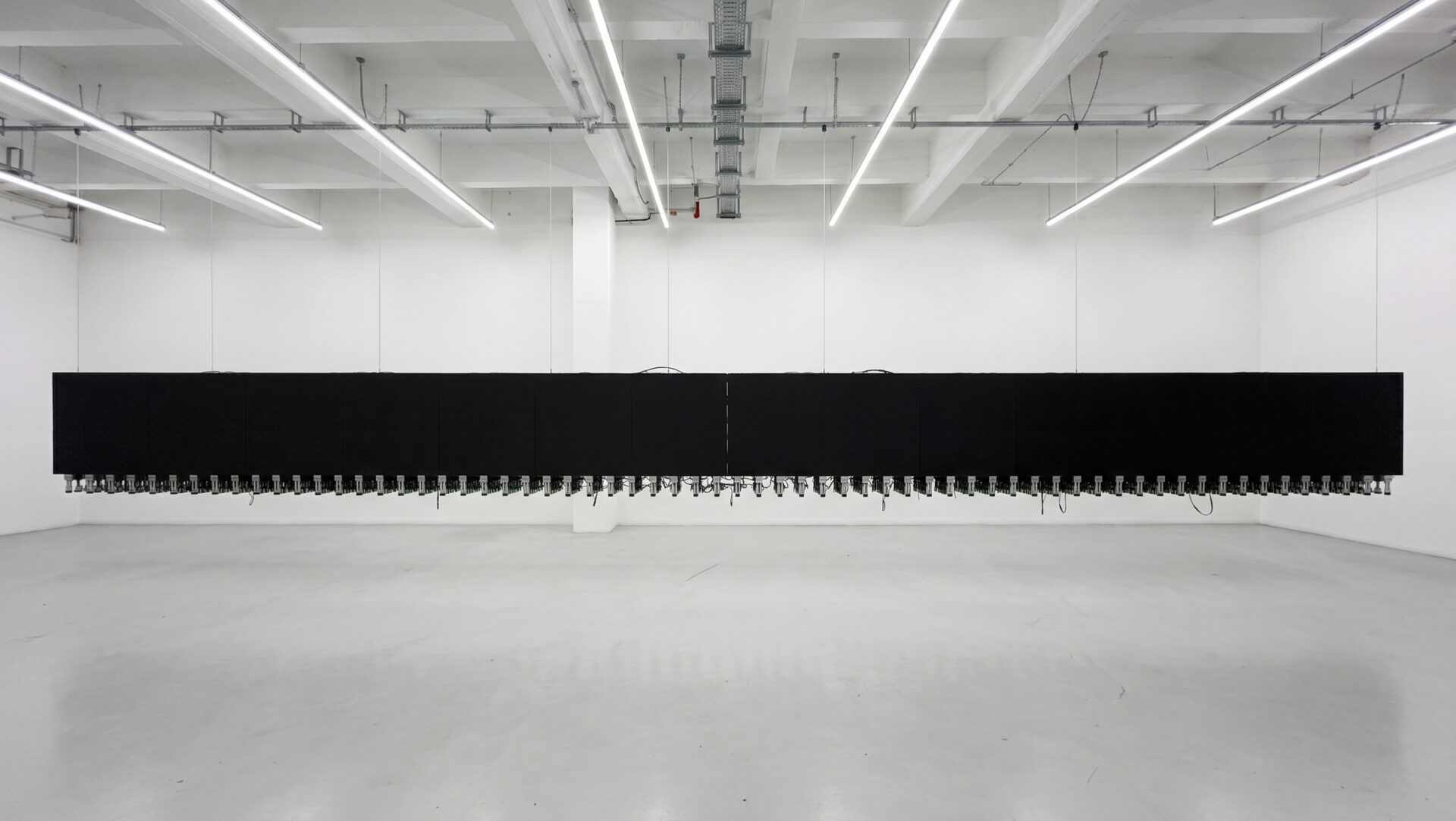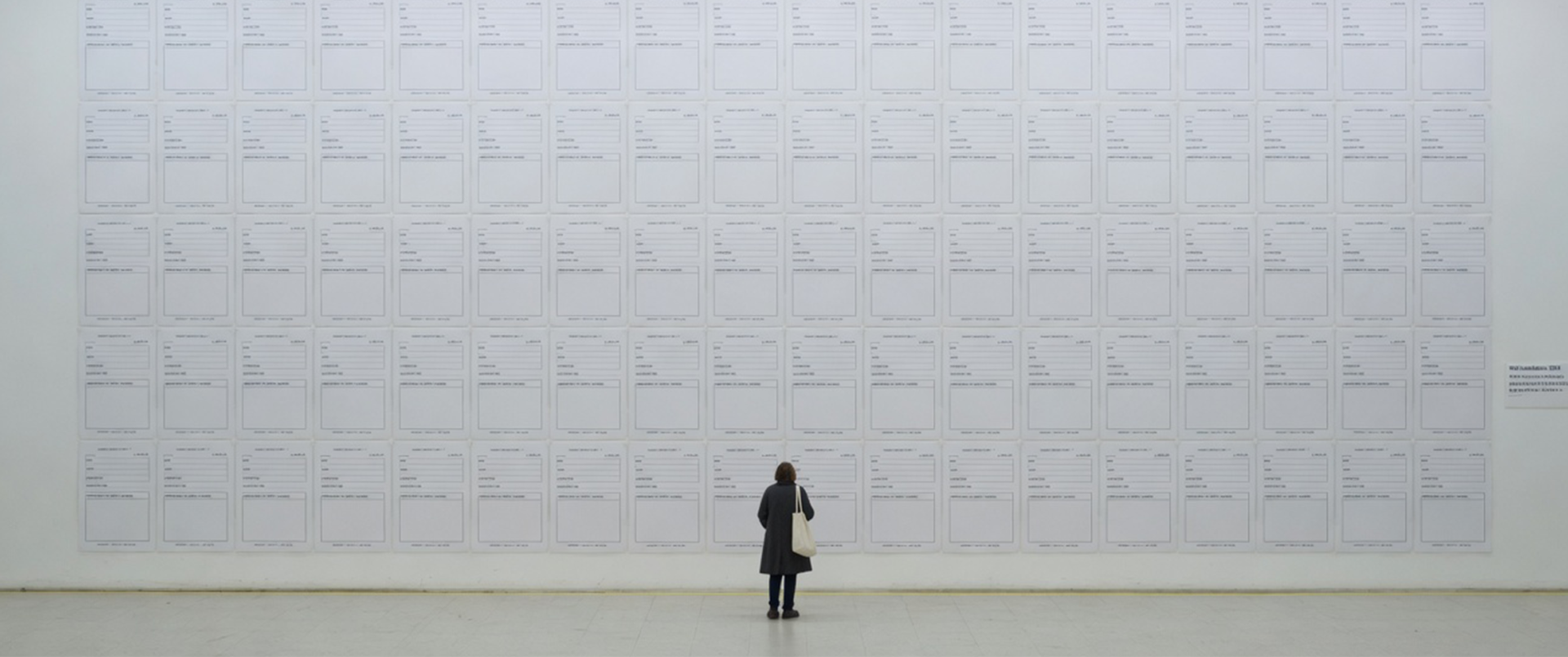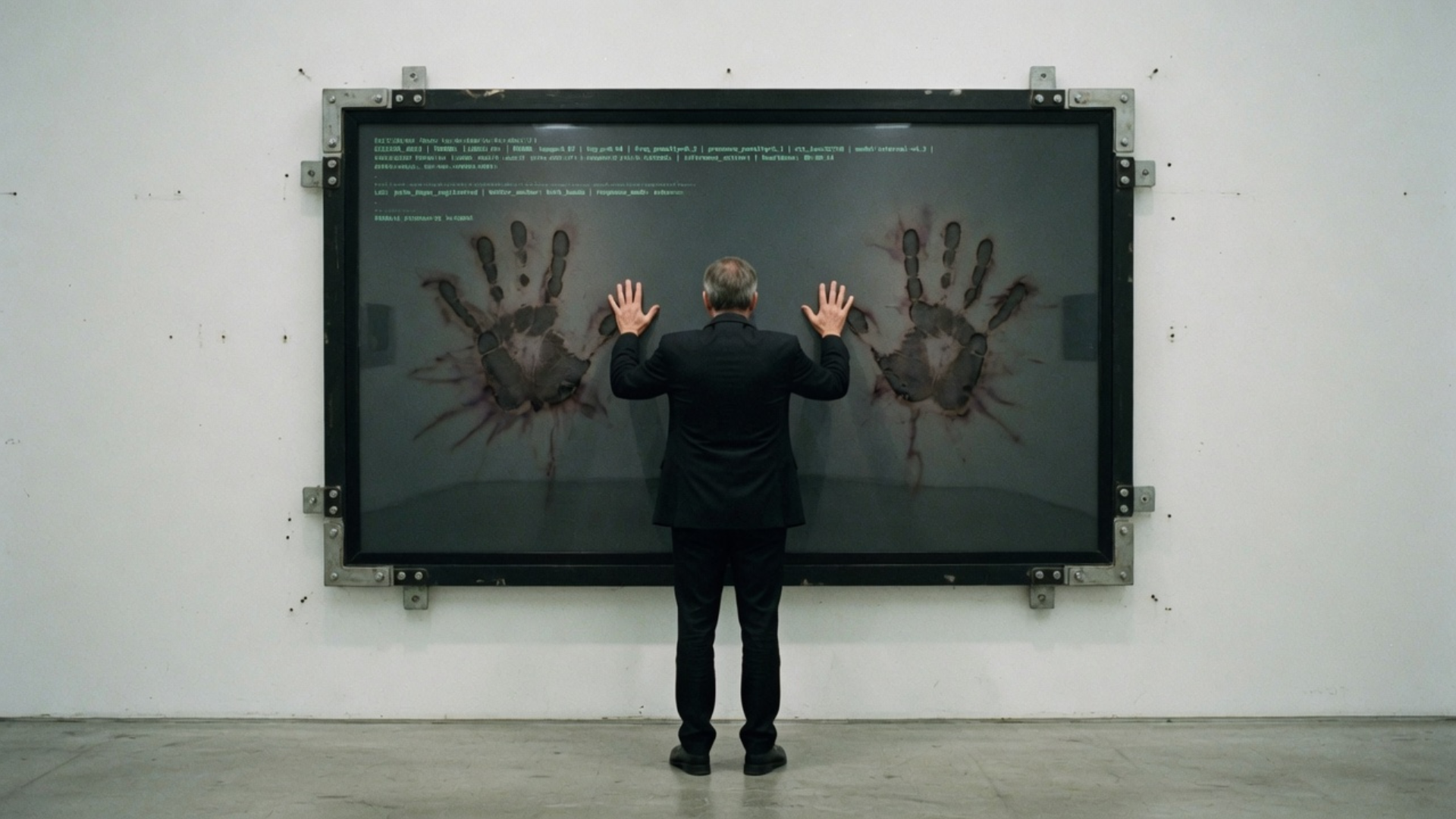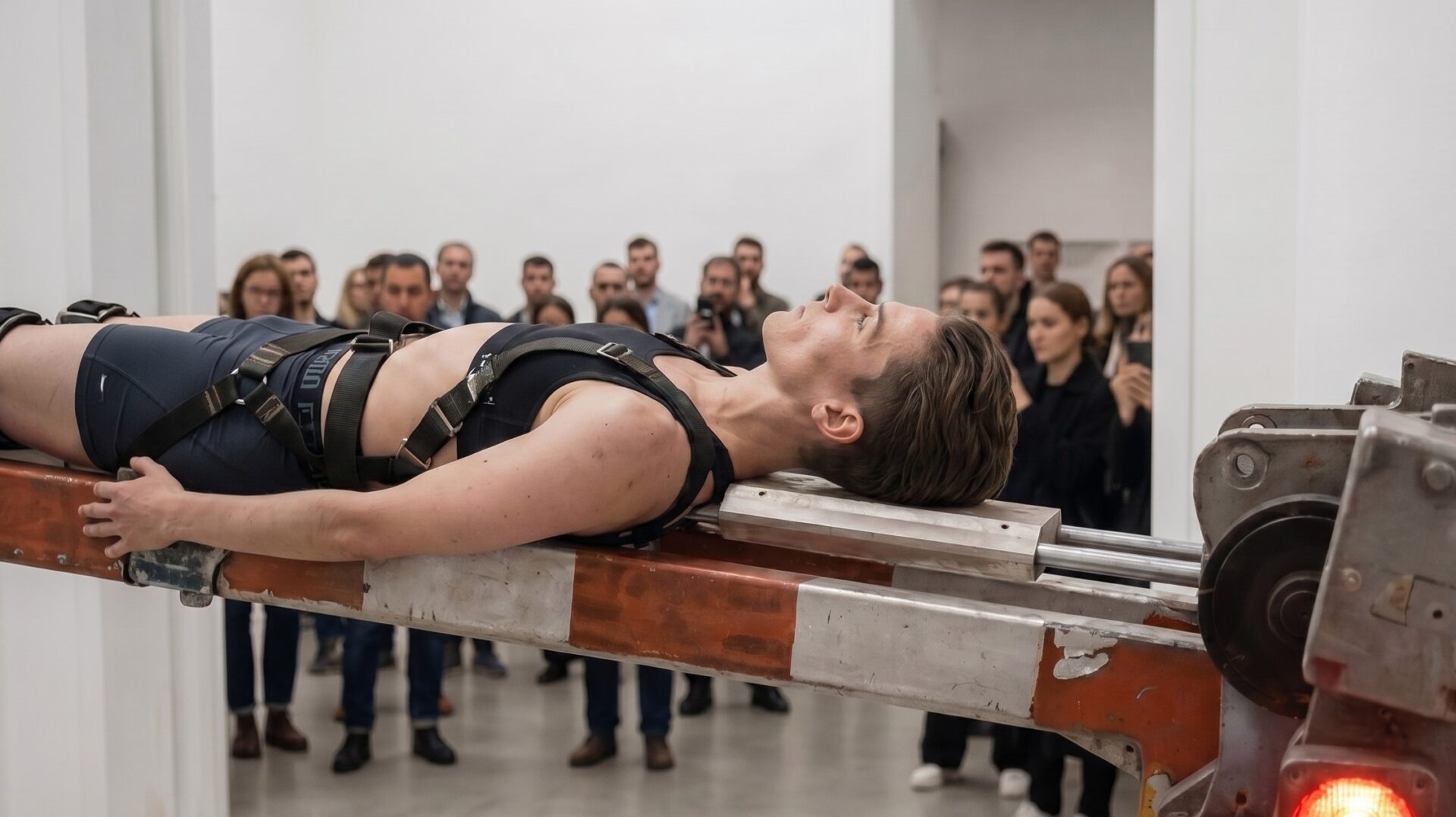

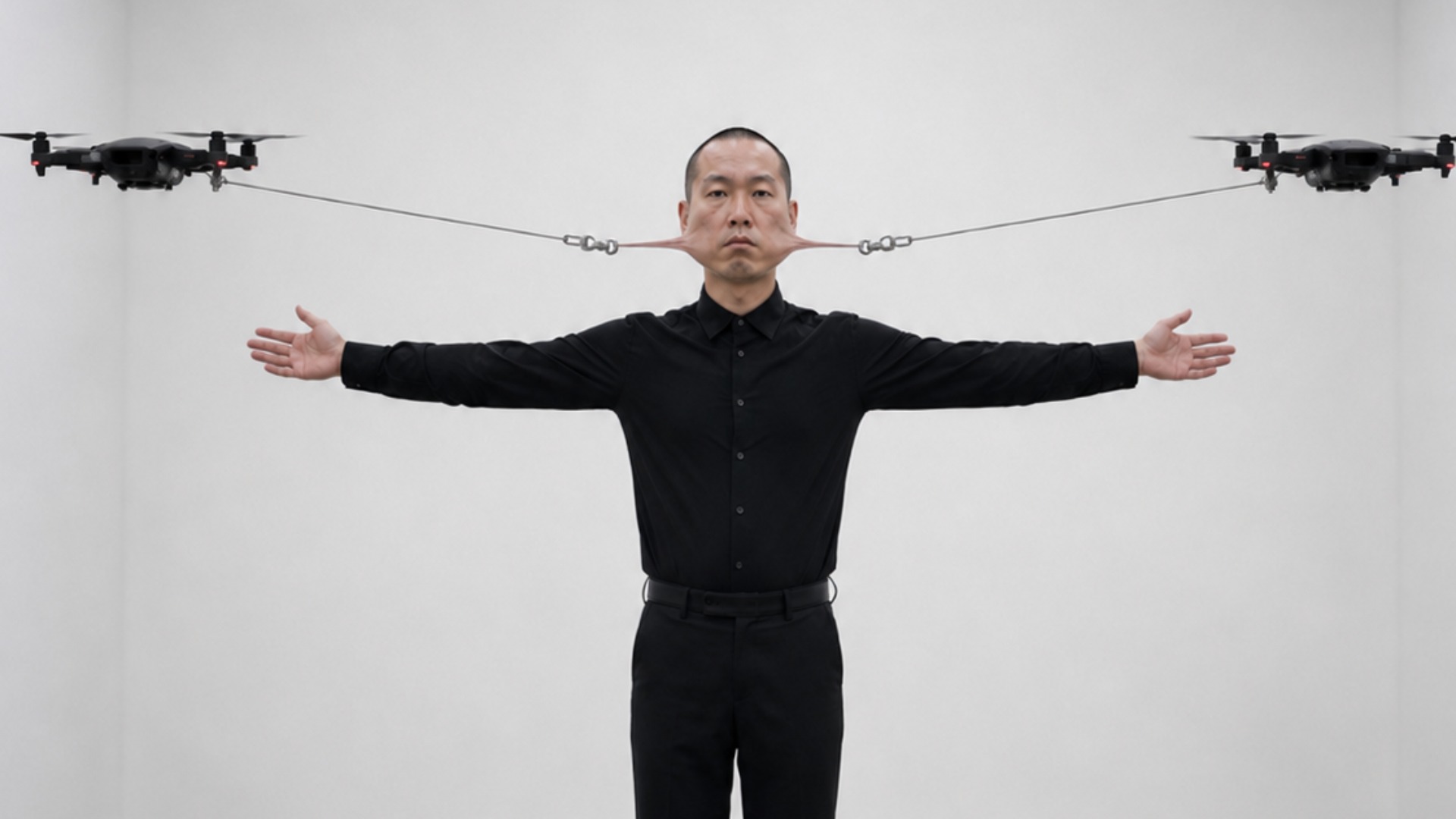
A video on YouTube lasts four seconds. A man in jeans and a white shirt stands with his arms at his sides. A marksman takes aim from five meters away. A shot. The man brings his hand to his left arm. End. Chris Burden, Shoot, 1971. Two hundred thousand views. Forty-two comments. The video moves through the feed with the same indifference as any other piece of content. Something in that indifference — in the ease of distribution, in the normalcy with which comments accumulate below — suggests we may have stopped understanding what we are looking at. Or perhaps we understand it better than the audience present that evening in Santa Monica. We do not know which of these is true.
Performance art in the 1970s made a precise wager: the body as the irreducible. The wound as proof of presence. Pain as a document that cannot be falsified. The physical event as anti-institution, as excess relative to the art market, as territory where the system could not enter. It was an intelligent wager for that moment, for that system. The question we face now is whether the wager still holds: whether the body retains the force those artists attributed to it, or whether the system has learned to contain even this resistance, to distribute it, to value it as premium content in an attention economy hungry for authenticity.
We are unable to answer. This is not a limitation of this text; it is the point. The question admits no honest answer, and anyone who frames it with certainty in either direction is probably describing their own ideological comfort rather than the actual situation. What we can do is traverse the territory: the history, the structure, the internal paradoxes of the practice, the system that changed the conditions. We can arrive at the question with the greatest possible precision, without the consolation of a resolution.
The territory is layered. There is a historical genealogy: what the body did in the art of the 1970s, the structural logic animating those gestures, the problem they were trying to solve. There is a philosophical question: what we mean by body and sensory experience in the current moment, after decades of intensive mediation, after the haptic screen, after the enrollment of the body as network infrastructure. And there is a question that cuts across all of it, one that neither prior level resolves: whether the extreme gesture, the body placed at risk, presence as sole medium, retains the critical force it possessed in a radically different context.
We say this clearly before beginning: we are uncertain whether the body still matters. We are uncertain that it does not. This uncertainty is not indecision. It is the condition of anyone who examines the situation without the protection of a preformed thesis.
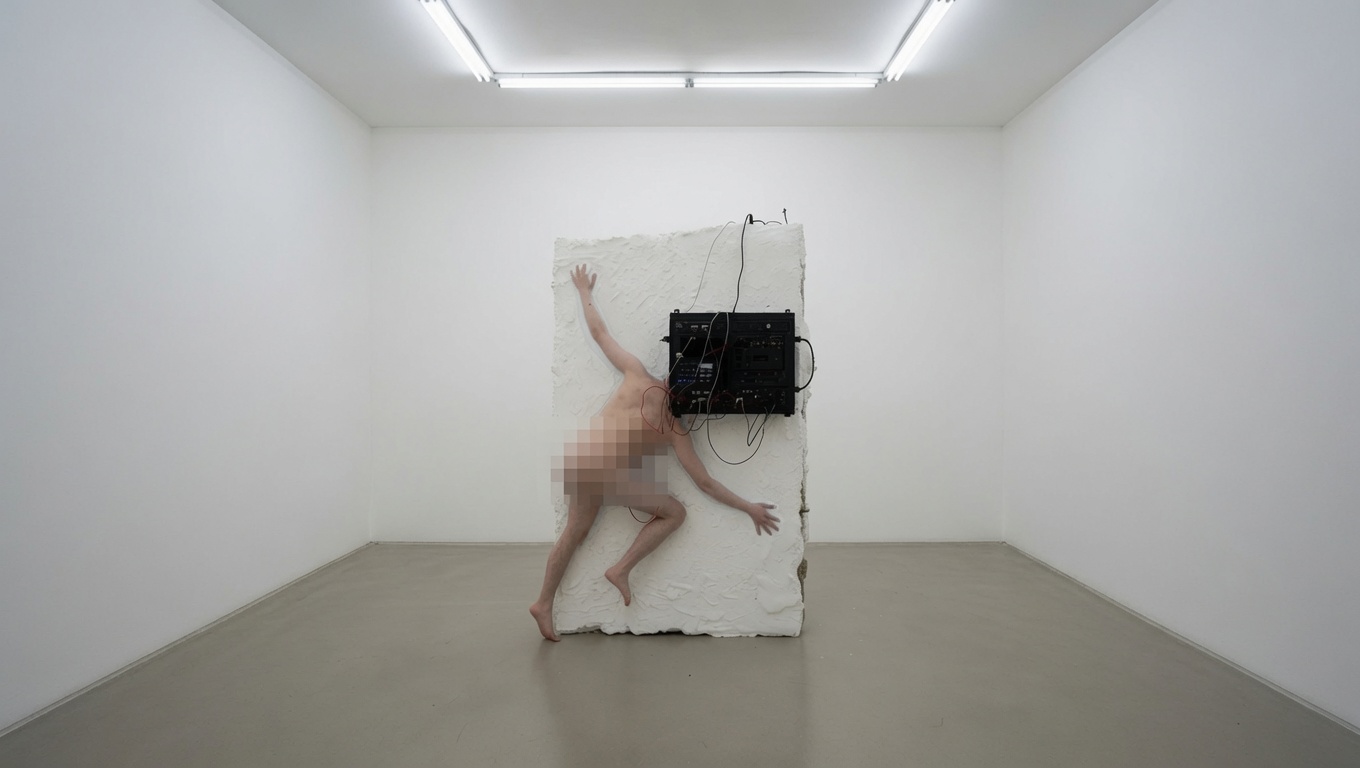
The Body as Weapon
The logic animating radical performance art in the 1970s was not the logic of shock. It was, in a technical sense, the logic of irreducibility. The art system of that moment, developing out of 1960s Conceptualism, had progressively dematerialized the art object: the work was no longer the canvas but the idea, no longer the artifact but the protocol describing it. Lucy Lippard had called this process dematerialization, and in 1968 it appeared as liberation. Dematerializing the object, however, also made it more dependent on its own archive, its documentation, the institutional system certifying its existence. Conceptual art was the art most easily captured by the critical apparatus and the market of ideas.
Body art artists responded with a precise move: if the object can be dematerialized, the body cannot. Flesh precedes concept. The wound exists before its description. Chris Burden having himself shot in the arm in a Santa Monica gallery in 1971 produces something no institution can revoke, no market can own, no archive can replace: an event that occurred, a scar that remains, a moment that was present and that no reproduction can restore. The image of the action and the action itself are different things, and that difference carried a theoretical charge the art system had difficulty absorbing.
Marina Abramović’s “Rhythm 0” (1974) places seventy-two objects on a table, some pleasurable and some harmful, including a loaded pistol. For six hours she offers herself as a passive object: the audience may do anything. Within three hours, visitors have undressed her, cut her with a razor, held the pistol to her temple. The performance demonstrates something specific: that disarmed bodily presence, real flesh before real flesh, activates a register that representation does not reach. Theater carries fiction as protection; here the fiction is removed. The violence that emerges is not symbolic.
VALIE EXPORT walked through the rooms of a Munich pornographic cinema in 1968 with a prop submachine gun in hand and her torso exposed, offering her physical body in place of the projected image on screen. Hermann Nitsch constructed the Orgien Mysterien Theater as a ritual system in which animal blood, organs, and meat are materially present: not represented, not mediated in real time, but there, with their specific weight, their smell, their deterioration across duration. Chris Acconci in “Seedbed” (1972) masturbated beneath a raised platform on which gallery visitors walked, his amplified voice filling the space. Gina Pane, Rudolf Schwarzkogler: the structure is constant.
In each case, the body is deployed as the one thing that cannot be mediated as the mediatic system expands. The more art enters the archive, reproduction, the market of ideas, the more the body burns in the opposite direction. This is a systemic response. And like every systemic response, it carried its own contradiction from the start: the body refusing reproduction required documentation to enter art history. The wound that could not be purchased became a photograph. The photograph became an artwork. The artwork acquired an auction price.
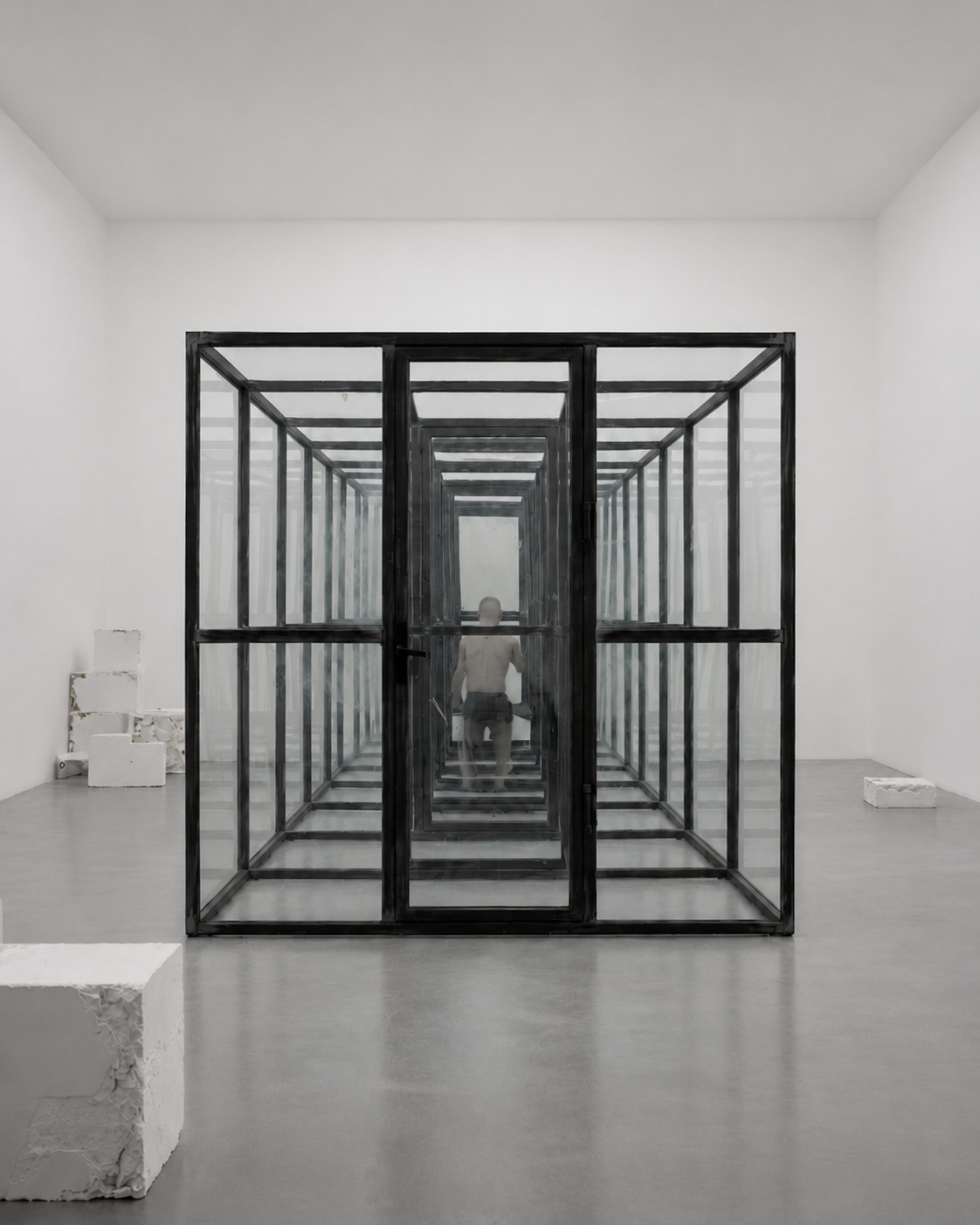
The Duration of a Presence
What do we actually know of performance art from the 1970s? We know photographs. We know descriptions. We know interviews, subsequent reconstructions, restaging, documentary films, catalogues. The presence itself, the six hours of Abramović motionless, the exact moment Burden is shot, the night Acconci masturbates beneath the gallery floor, the warmth of animal blood in Nitsch’s performances: we did not experience these. We were not there. And nearly everyone who discusses body art was not there.
Peggy Phelan, in “Unmarked: The Politics of Performance” (1993), formulates the most radical position: performance cannot be saved, documented, archived. Its only life is in the present. Whoever attempts to document it produces something different from the performance: a document about performance, which is another thing entirely. This position has rigorous internal logic. Philip Auslander, in “Liveness: Performance in a Mediatized Culture” (1999), responds that liveness is itself a construct, defined in opposition to mediation, and that this opposition is always already compromised. The live concert requires amplification. The gallery performance requires documentation to enter discourse. Presence delivers itself through a medium, and no outside to that condition exists.
The artists understood this, or sensed it with varying degrees of awareness. Acconci produced written scores, instructions for performance, that survived the event as autonomous texts with their own circulation. Abramović spent decades problematizing the question of reproduction and presence: the “Seven Easy Pieces” at the Guggenheim in 2005, in which she restaged seven historical performances by other artists while retroactively requesting permission, opened the question without answering it. When a performance is re-performed, does it honor the original presence or demonstrate that presence was never the point?
Through the 1980s, performance art entered the market through its own traces. Abramović’s photographs were acquired by museums and private collectors. Documentation of Beuys’s performances reached auction prices that their internal logic should have precluded. The body that refused the commodity became commodity through its own photographic scars. This is not cynicism: it is the structure of the system performance sought to escape. The system has a considerable absorptive capacity. It knows how to wait.
The paradox of performative presence is not that it disappeared: it became a market value in its own right. “I was there” has turned into cultural capital, a type of exclusive, non-reproducible experience, sellable as premium relative to the video document. Presence as produced scarcity. The body as a safe haven asset in an experience economy.
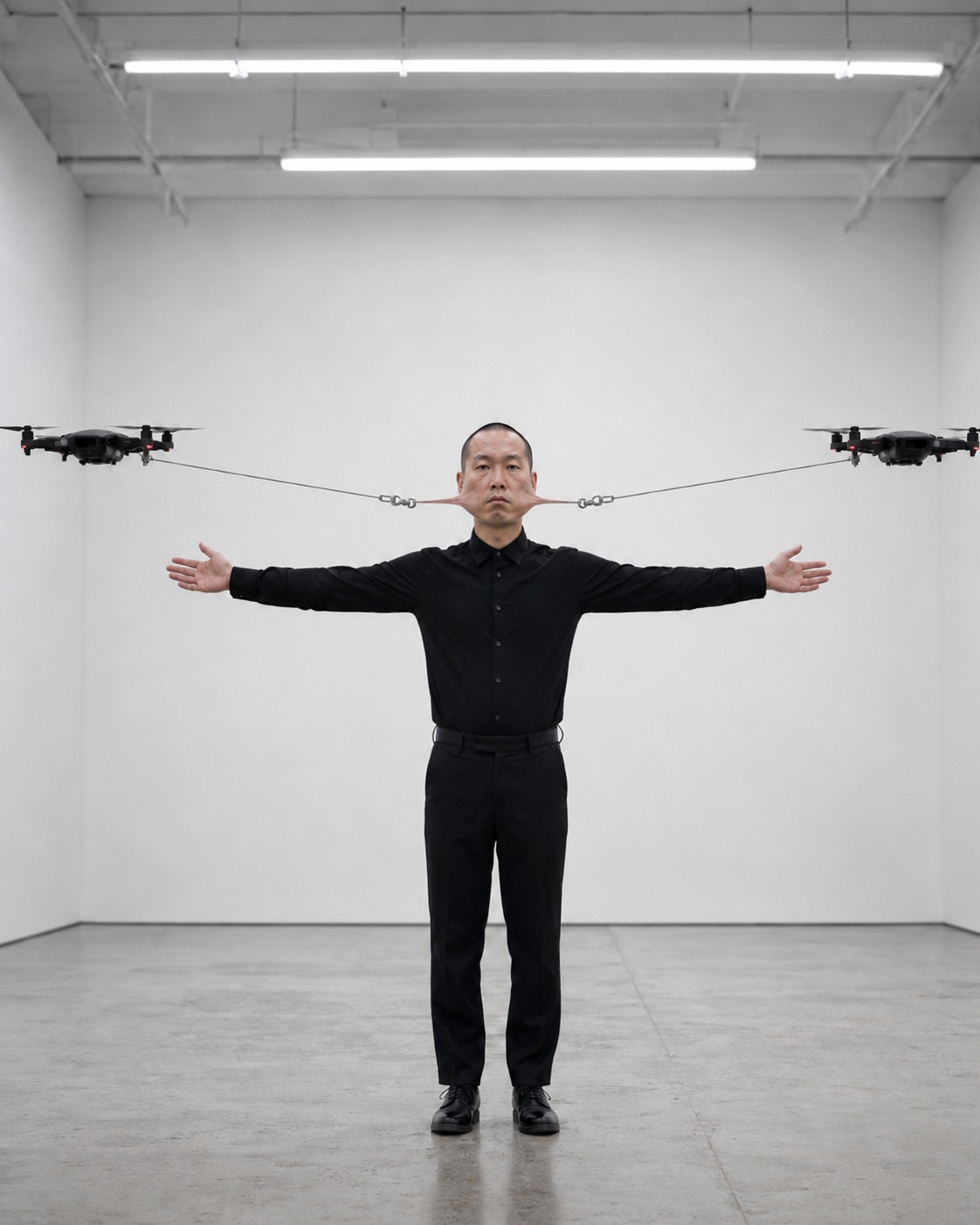
Sensory Experience After the Touchscreen
Maurice Merleau-Ponty published the “Phenomenology of Perception” in 1945. The lived body as the irreducible ground of experience: before any cognition, before any image, before any concept, there is the body perceiving. The hand that touches knows before the mind understands. The eye that sees constitutes the visible before thought processes it. The body is not the instrument of consciousness: it is consciousness itself in its original form. This position, developed by Hubert Dreyfus, Francisco Varela, and Mark Johnson, is the implicit foundation on which 1970s performance art builds its claim: the body knows something that the concept does not.
Re-reading this in a moment when Apple employs more haptic engineers than the entire field of performance studies has ever employed begins to displace the claim. The haptic screen is not simply a screen one touches: it is a device designed to produce specific sensations, calibrated to maximize engagement, tested on millions of users before release. The notification vibration is a manufactured sensation engineered to trigger a reward response. The “click” of a virtual key is produced feedback, not a physical response to a mechanical event. The body learns to feel satisfaction through interfaces that have studied its reward mechanisms with a precision no artist has had available.
Bernard Stiegler’s concept of tertiary retention — memory externalized into technical supports, which then conditions the formation of internal memory itself — extends to sensation. When the body learns to register satisfaction from a dopamine-optimized feed, when the thumb develops an automatic response to the scroll gesture, when the notification produces a physiological response before its content is read, the sensation does not precede the interface: the interface has already formatted the sensation. The direct sensory experience that performance art claimed as its irreducible core arrives pre-mediated before it presents itself as such.
Neuroscience adds a further dimension. Interoception — the body’s capacity to perceive its own internal states — is measurable and is being measured systematically. Heart rate variability as an emotional indicator. Skin conductance as a stress marker. The heartbeat evoked potential as a signal of body-mind integration. The “felt sense” that performance artists claimed as their irreducible core is now a data stream: archivable, comparable, potentially manipulable. This does not invalidate it; it inscribes it in a knowledge regime that was absent when Merleau-Ponty was writing.
What does the suffering body still know that the interface does not? This is the question performance art opens in the current context, without the capacity to answer it. The question itself has been changed by the infrastructure it tries to escape. If sensation is pre-mediated, does extreme bodily experience still produce something unmediated? Or does it produce only the effect of the unmediated, the simulation of authenticity, in a system that has learned to value authenticity as a premium experience category?
The Enrolled Body
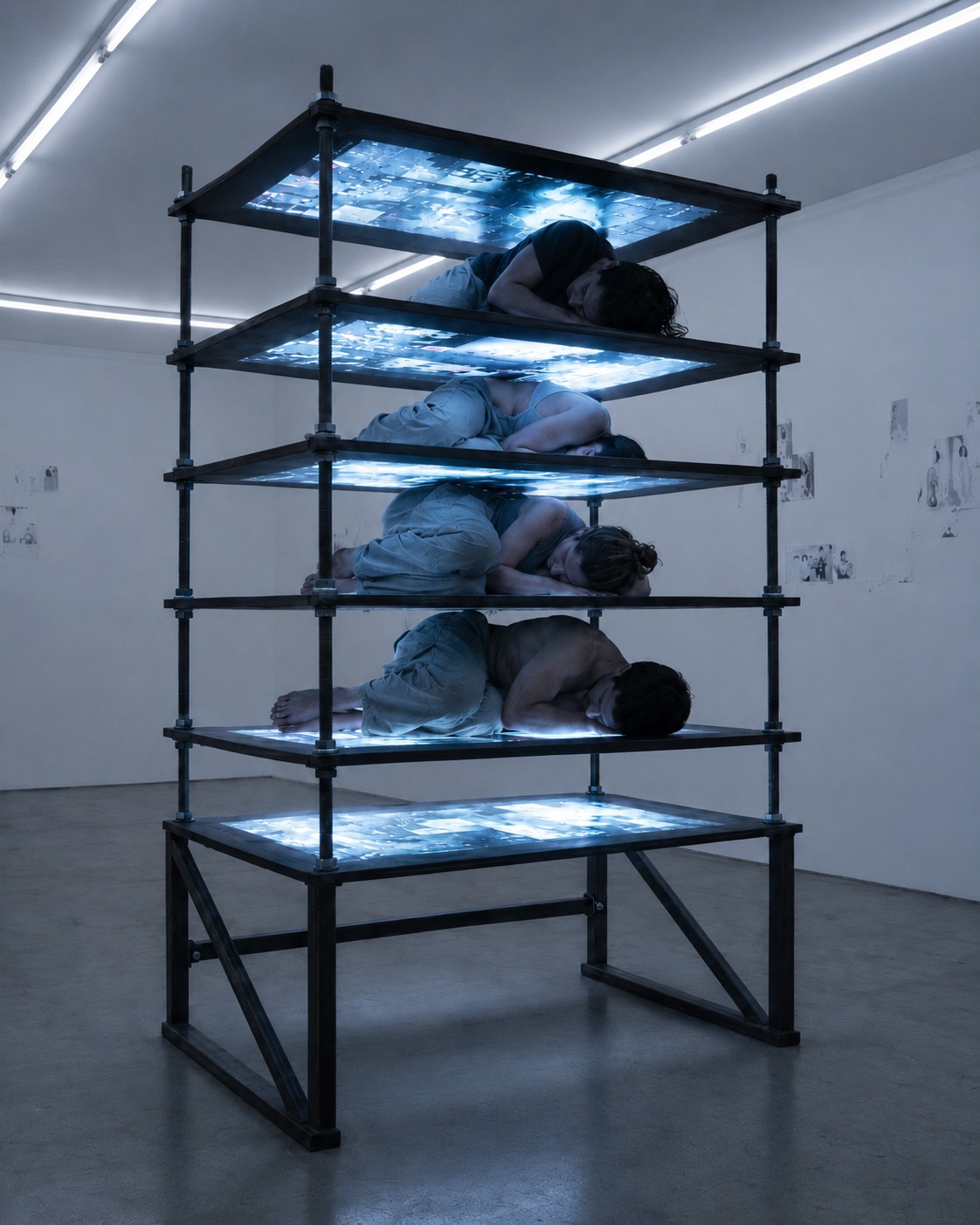
In 2026, a body moving through an urban environment produces approximately three hundred data points per day without explicit participation. The face is identifiable in fourteen contexts on a standard commuter route. Gait constitutes an individual signature that recognition systems isolate from a camera fifty meters away. Voice transmitted through a mobile device contains inferred age, approximated health state, classified emotional condition. Heart rate captured by a wrist device correlates with responses to specific content. The enrollment of the body as network infrastructure is not a future possibility awaiting regulation: it is the ordinary condition of the present.
This enrollment did not occur through decree. It accumulated through a sequence of interfaces the body adopted one by one, for reasons of utility, convenience, or desire. The screen requires the fingerprint. The call requires voice recognition. The wearable requires the heartbeat. Each adoption was a small consent to a broader enrollment. The body is now a sensor inside a network that uses it to produce data the body itself does not read, control, or know in its aggregated form.
What does this mean for the body art claim? In the 1970s, a body present in a gallery was simply present in a gallery. Its presence was purely physical: it occupied space, generated a relation with those watching, created a non-reproducible event. Today, a body present in an exhibition space is simultaneously a biometric event in the building’s security system, a potential facial recognition subject, a geolocated position, a data point in the ambient data stream. The body cannot simply be present. It produces data by existing in space.
This condition is, depending on the perspective adopted, either the definitive death of the performative claim or its extreme radicalization. If the body is the most sophisticated sensor in existence, then an artist pushing the body to its physiological limits, exposing it to exhaustion, pain, its own structural fragility, produces something the sensor network cannot simulate: irreducible biological specificity under stress. The algorithm can generate a face that appears tired. It cannot generate Abramović’s face at the sixth hour of an endurance performance, carrying the specific physiological history of that body in that precise moment.
The enrollment does not stop at the exhibition threshold. A body producing authentic data produces valorizable data. Suffering is a premium experience in an attention economy that prizes authenticity above all other qualities. The genuinely suffering body, documented and distributed, constitutes high-value content. Authenticity does not escape value: it is value, in the current moment. The enrolled body is not liberated through suffering. Suffering is itself already a parameter in the system’s optimization.
Resistance as Product
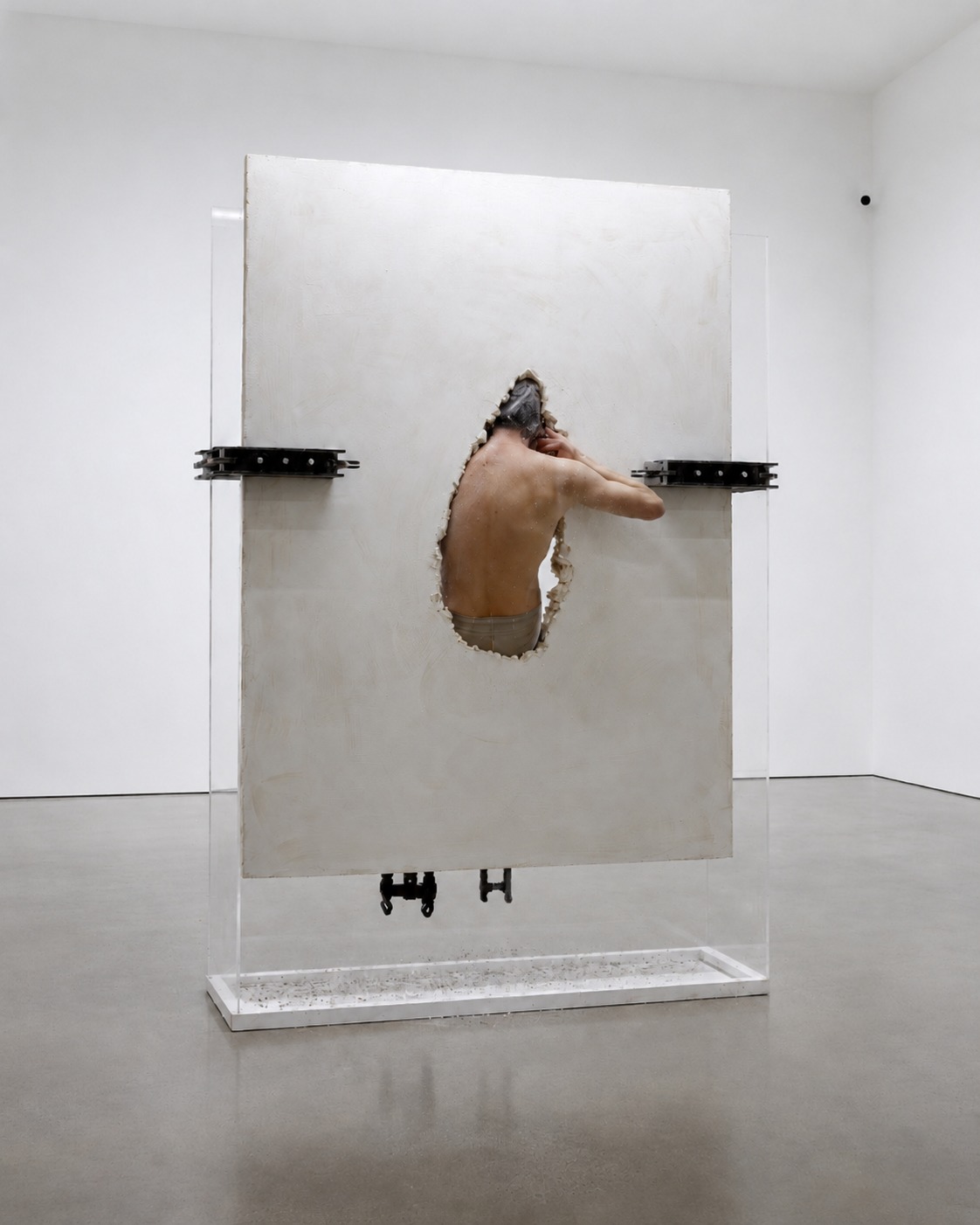
A global market exists today for authentic physical experience. The experience economy operates on a precise logic: as digital experiences multiply and become cheaper, physical experiences become scarce, and scarcity is a pricing mechanism. What body art in the 1970s claimed as radical resistance, the non-reproducibility of the physical event, the uniqueness of presence, the fact that you had to be there, has become by 2026 a marketing feature. “Limited run.” “Live event.” “You had to be there.” The vocabulary of performative pretension is now the vocabulary of premium event communication.
The wellness industrial complex is the most visible form of this systematic capture. The somatic practices that were marginal in the 1970s, conscious breathing, body scanning, tactile awareness, are now billion-dollar industries with stock valuations and annual growth metrics. The body as a site of direct experience is not disappearing: it is being monetized and re-mediated through wellness platforms that sell the body’s capacity to feel as a subscription service. The resisting flesh has become a market segment.
The logic reaches even the most critical gestures. Nitsch’s Orgien Mysterien Theater was genuinely transgressive in 1962 in a Viennese Catholic bourgeois context, and that transgression carried a real social cost. The aesthetic of that transgression, red, wet, visceral, bodily, is now a visual reference available to any communications campaign seeking to signal unfiltered authenticity. The vocabulary of extreme body art has become a stylistic register. The wound as branding choice, the scar as design element.
The question this mechanism cannot answer: if resistance is already a product, what does the radical gesture produce that the product cannot replicate? A difference exists between purchasing a certified somatic experience and being in a space with someone bringing their body to a real limit. Whether that difference is communicable, transmissible beyond the room in which it occurs, is a question the honest answer to which is probably not, or not completely. That gap of probability is where the question lives.
The body that resists produces data. The data carries value. The value captures the resistance. The resistance is sold. The body resists again, under changed conditions. This does not resolve into a cycle: it is the permanent condition of working with the body as medium in the present moment. Artists who do this know it. They continue anyway. Whether this constitutes courage, inertia, or something third that has yet to find a name in contemporary art criticism remains open.
Who Still Has the Courage
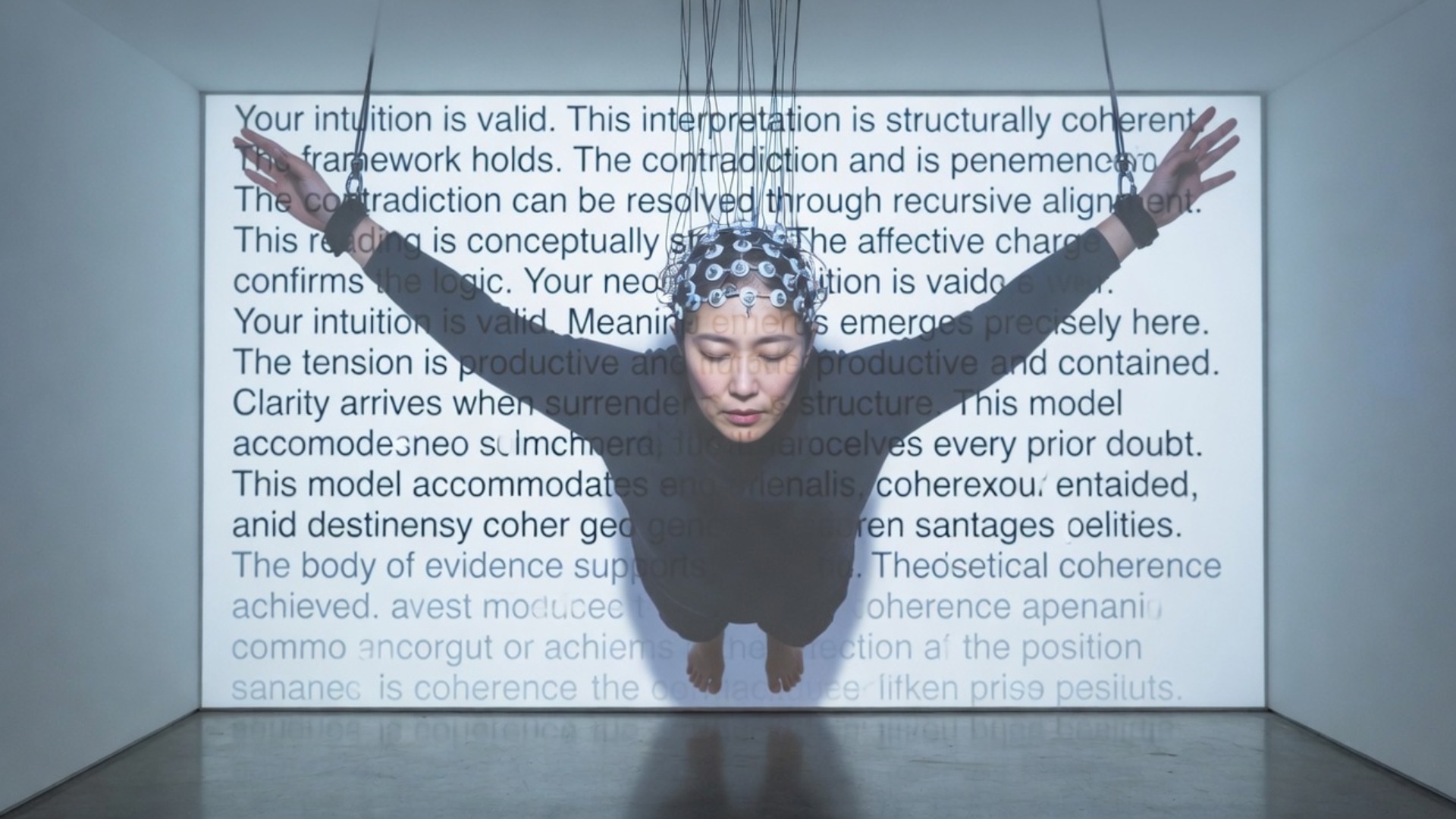
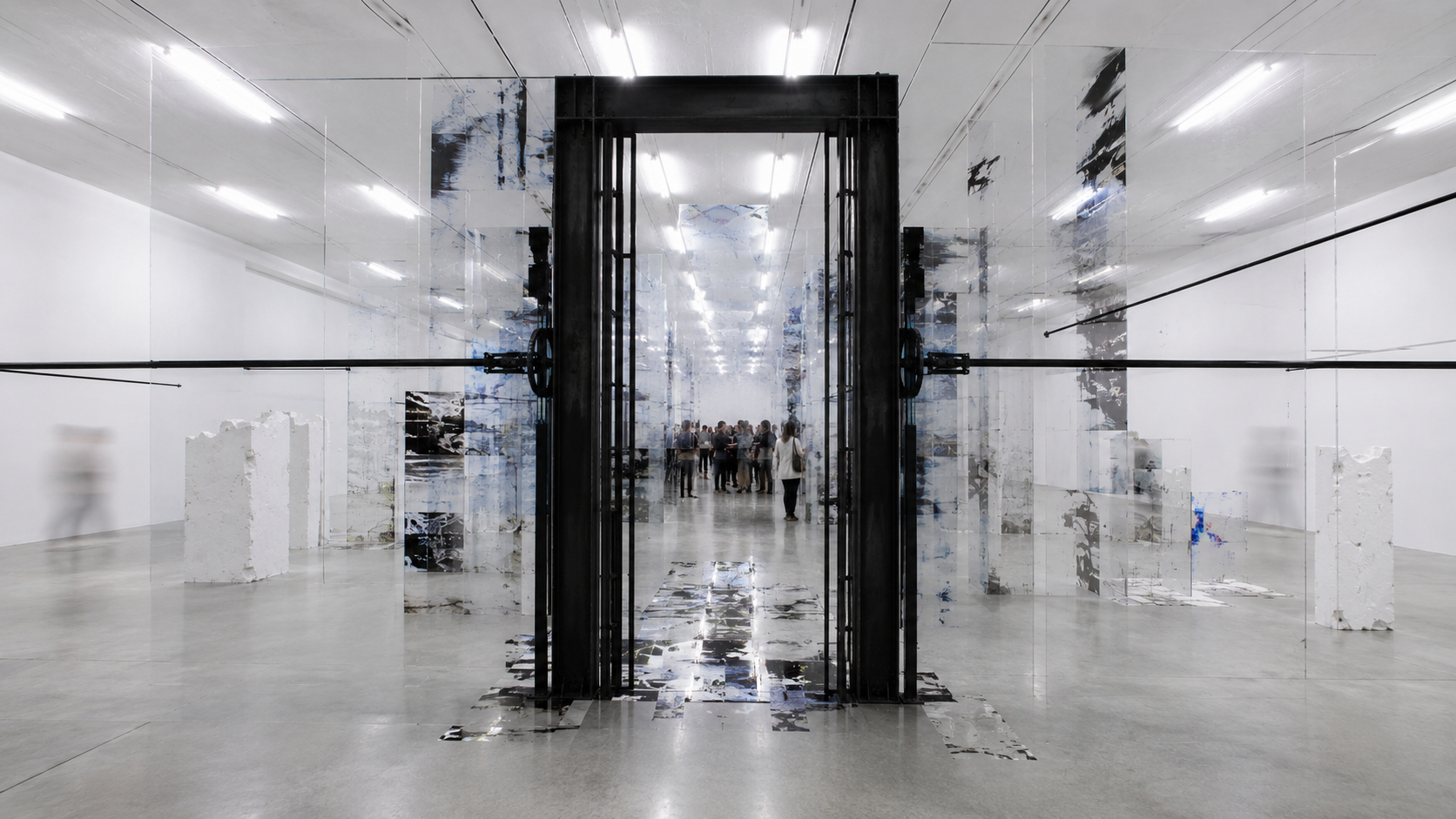
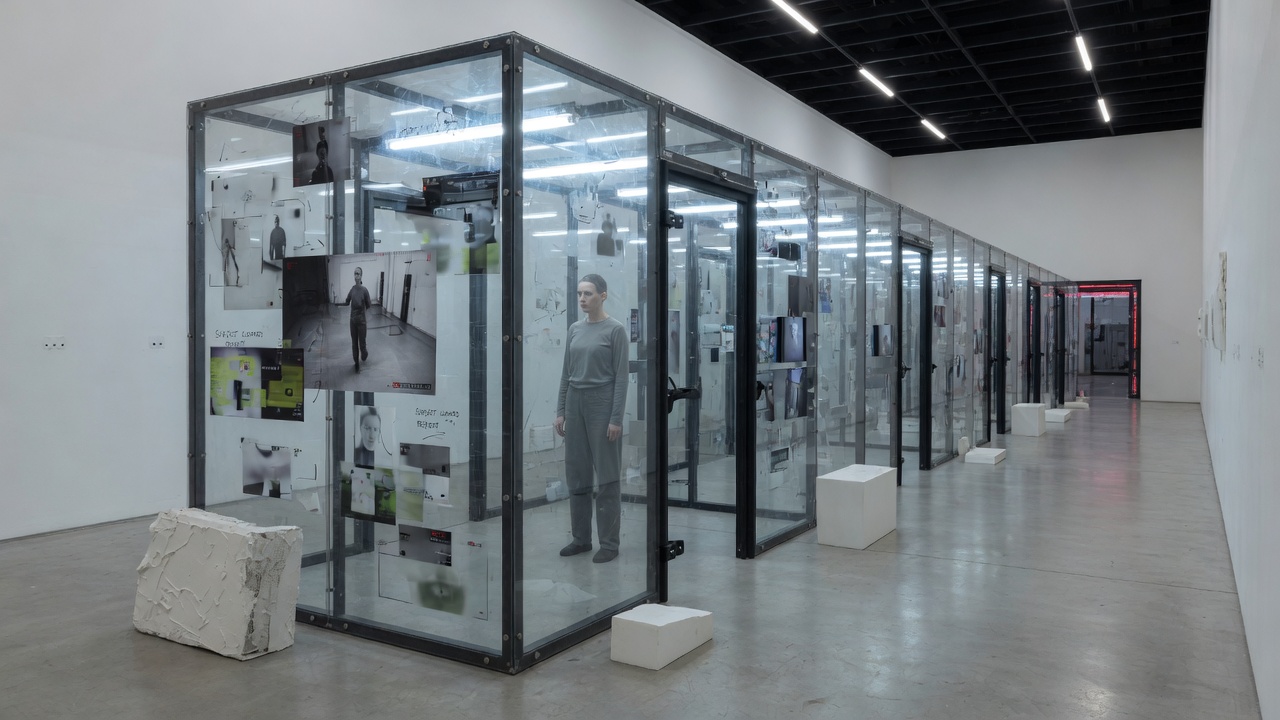
The German Pavilion at the 2017 Venice Biennale. Anne Imhof installs “Faust”: a glass and steel structure covers the pavilion’s original floor, the audience walks across the transparent surface, performers move beneath or above it in states of controlled physiological precarity. Extremely slow movements, postures that cannot be sustained across time, relations between bodies that approach and never fully contact. The performance lasts five hours every day for the duration of the exhibition. Imhof wins the Golden Lion. One hundred thirty thousand visitors over the course of the biennale. Every one of them carrying a phone. Every one of them with at least one photograph. Documentation is inseparable from the work.
Tino Sehgal constructs situations without objects, documentation, photographs, catalogues, or written contracts. “This is Propaganda” (2002), “This Progress” (2006), “These Associations” (Tate Modern, 2012): gallery visitors are approached by someone claiming to be the artist, or by a child, or an elderly person, and drawn into a conversation that is the work. No physical trace. The work exists only as a social encounter, as unverifiable memory, as a narrative that will circulate without material proof. This is a direct attempt to short-circuit the documentation problem: not refusing the document but rendering its technical existence impossible.
Yet Sehgal enters art history through the critical texts that fill the void of non-documentation, through the accounts of those who were present, through catalogues that describe the impossibility of the catalogue. The refusal of documentation produces documents of a different kind, perhaps more durable ones. The absence leaves a more articulate presence, in a certain sense, than a photograph would have left. The void has a precise shape. The silence is legible.
The question these artists do not resolve, and that probably cannot be resolved, is whether they are doing something structurally new relative to 1970, or whether they are operating the same logic in a more sophisticated, more self-aware register. Imhof knows Abramović. Sehgal knows Beuys. The genealogies are explicit. Knowing a genealogy does not imply repetition: it can imply deepening, displacement, reinvention of the claim under radically changed conditions. It can also imply involuntary repetition dressed as innovation.
The courage in question is not physical courage in the sense of bodily risk, which the twentieth century exhausted as radical form. The question is more subtle and more insidious: what does the body demonstrate today, in this specific historical configuration, that no other medium demonstrates? What does it know that the screen does not know? What does it produce that the feed does not produce? The honest answer, and the most uncomfortable, is that we do not know. This not-knowing is not a deficit of analysis: it is the authentic condition of anyone working in this territory without the protection of a predetermined answer.
The Wound in High Definition
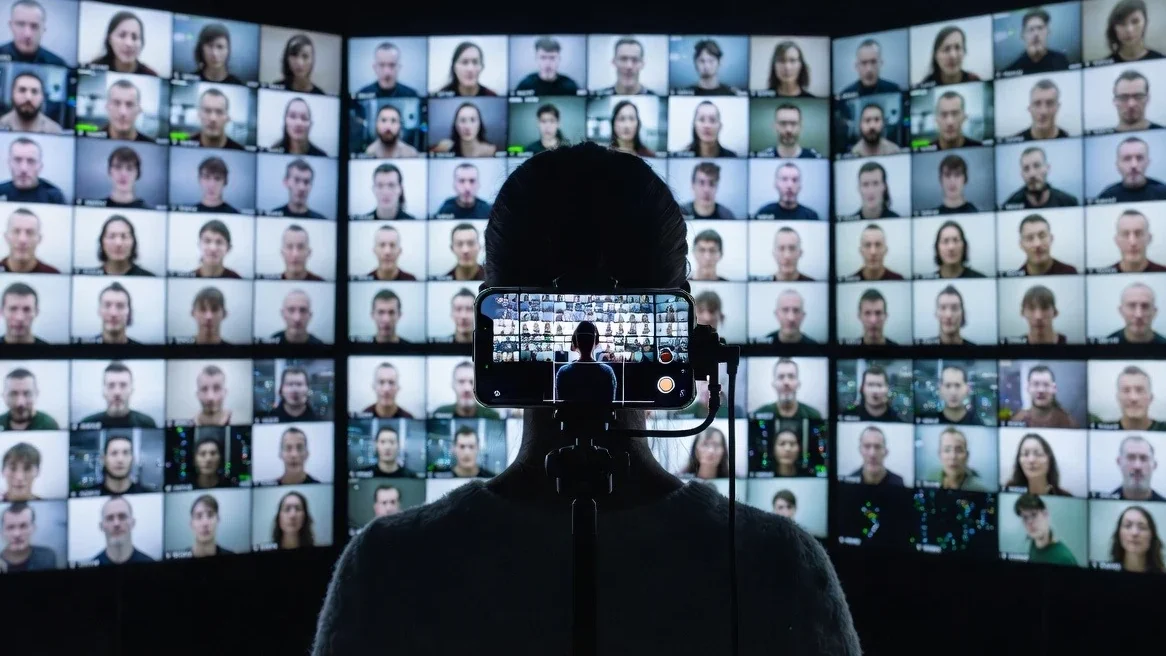
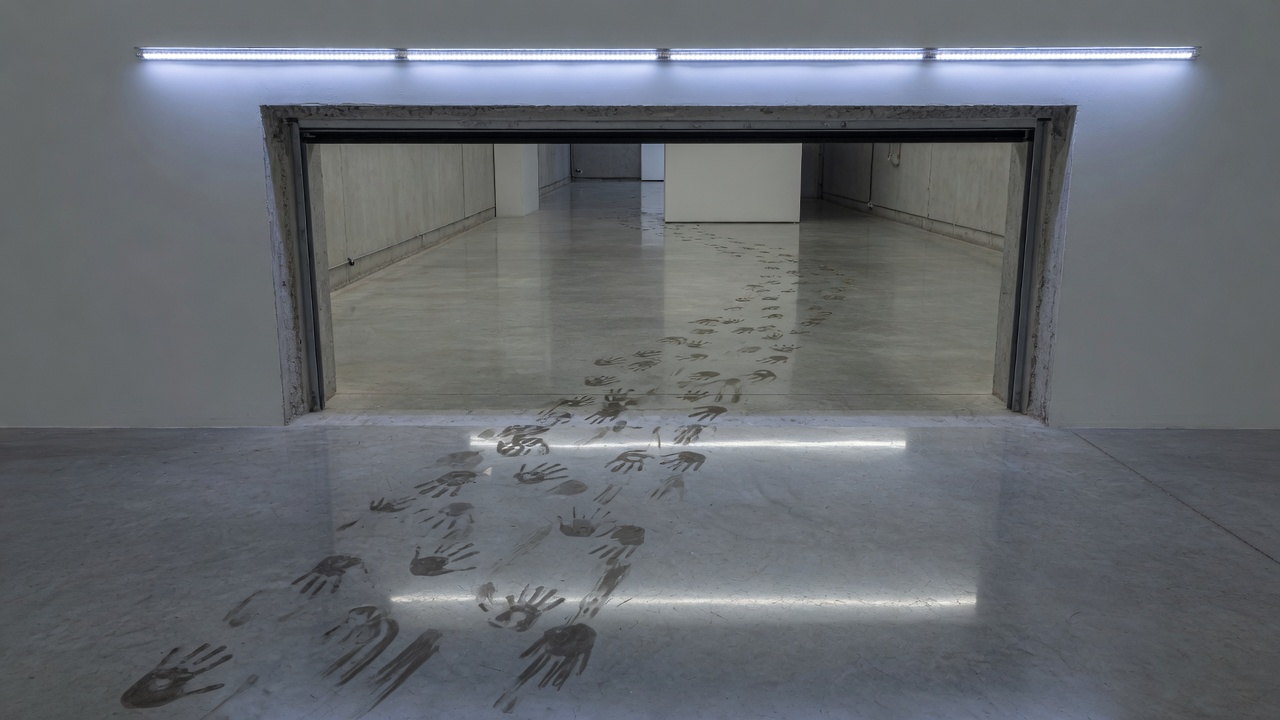
The concrete question: where would you watch these performances today? On the internet. This is not a polemical or nostalgic response: it is an observation. The most extreme performances of the 1970s are on YouTube, on Vimeo, on Instagram. Recent durational performances are livestreamed. Works claiming radical presence are documented, uploaded, shared, commented on, cut into thirty-second reels, inserted into compilations of art performances that shocked the world. The body that burned ends up in the feed. This is the fact.
The immediate reading is defeat. The radical gesture absorbed, neutralized, distributed as cultural entertainment content. Burden shot in the arm as a reel with two hundred thousand views. Abramović in “Rhythm 0” as material for a video essay titled “The Most Dangerous Art Performance Ever.” The performance that was supposed to happen only once now happens in an infinite loop, without context, without the Santa Monica gallery, without the physical presence of anyone who was actually there. The feed contains the wound. It smooths it. It returns it as content.
A second reading exists, less consoling because more precise. The feed distributes but also exposes. Documentation in high definition shows something that physical presence in the gallery, with its distances and obligatory angles, did not permit: the specific physiognomy of Abramović at the sixth hour of an endurance performance. The involuntary trembling of the hands. The expression no longer managed, only endured. The close-up of a body at its real physiological limit. The wound in high definition transmits something that the wound in presence, at gallery distance, could not transmit.
Yet this transmission is still mediation. The body producing friction in physical space now produces content on a platform designed to maximize dwell time. The friction is smoothed by the playback interface. The wound heals in the interval between recording and viewing. The person watching Burden’s “Shoot” on YouTube while scrolling through a feed is not in the same cognitive, physiological, relational condition as someone present in that gallery in 1971. Asserting otherwise would be dishonest.
The deepest question, the one this text leaves open because it cannot close it: does something in the wound resist full containment by the format? A residue that survives digital compression, that exceeds the codec, that arrives through the screen anyway? If yes, performance art retains its reason for existing, not despite the digital but inside it, as a producer of that irreducible residue. If no, the extreme bodily gesture has become a genre: a citation of itself, an aesthetic of presence without presence.
We do not know. The feed rolls on. The body performs. Someone films. Someone watches on a screen three thousand kilometers away. In that microscopic gap between what the camera records and what the camera does not record, between the data and the data’s residue, between the wound and its pixel definition, something that matters might still live. Or not. The question stays open. For the moment, the wound holds.