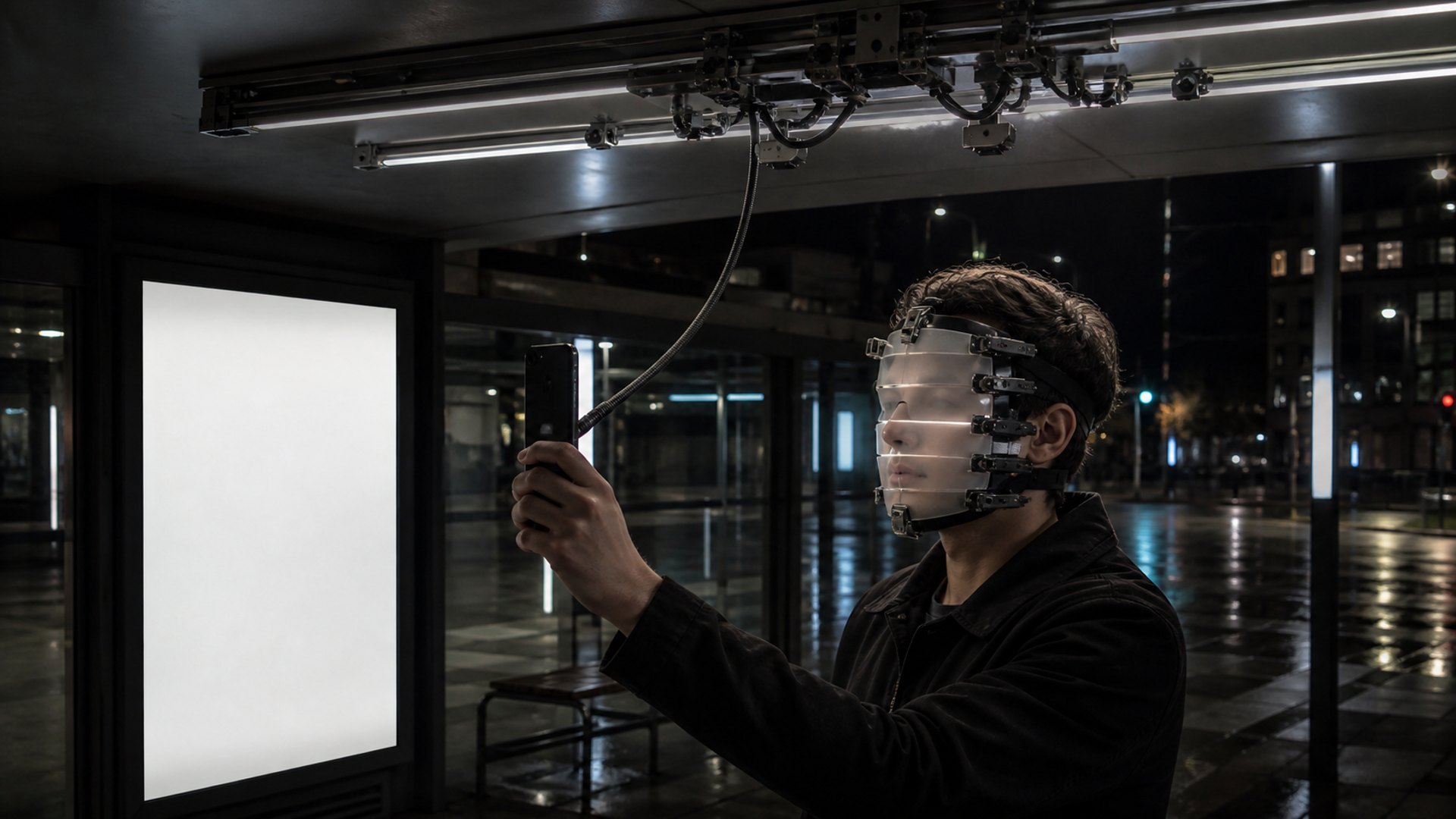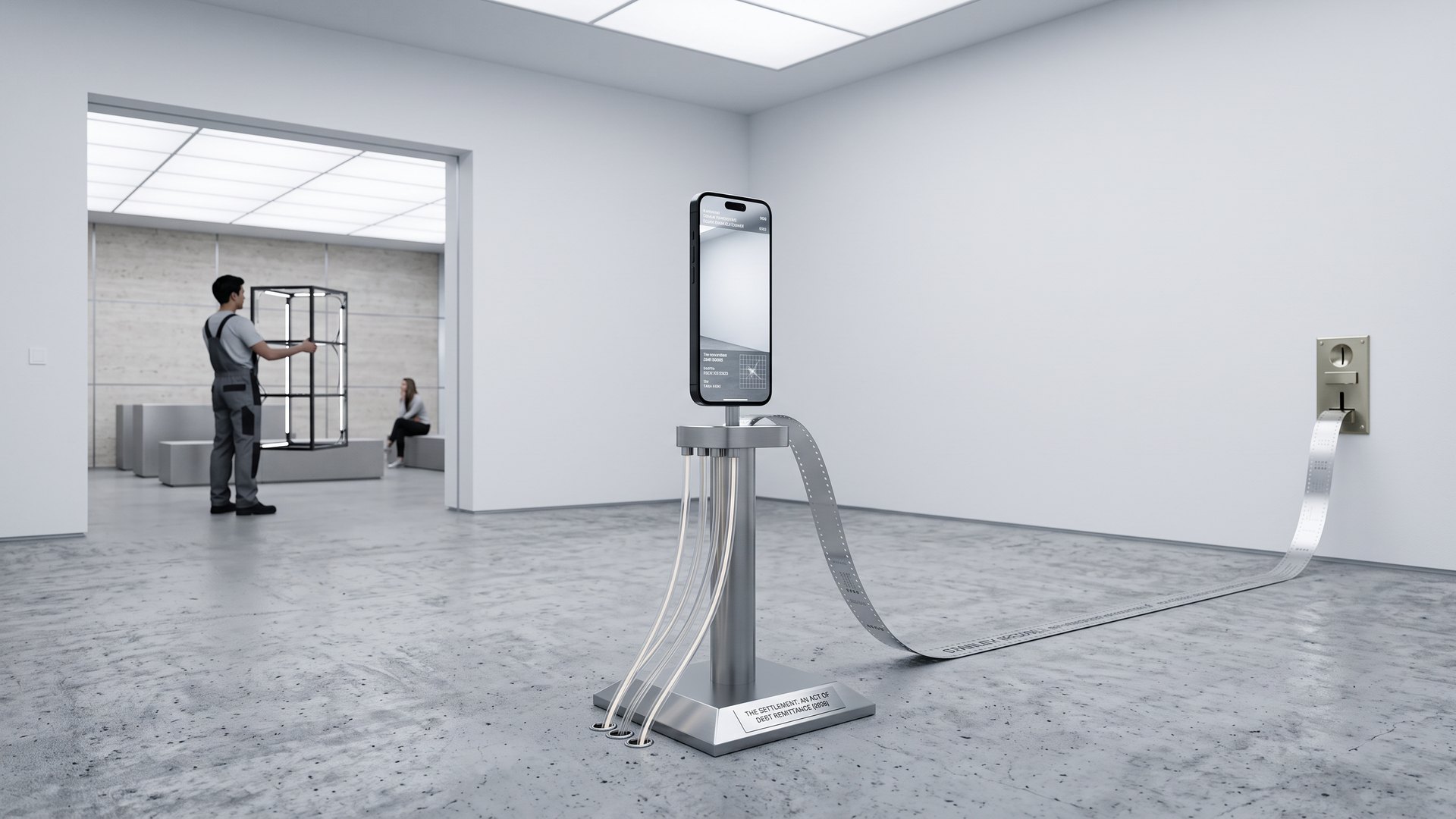


A thumb pauses above the glass before the image arrives. The interface has already narrowed the gesture into a corridor of likely continuations, and attention enters that corridor as if entering its own inclination. The device appears passive because its calculation has moved upstream, into the interval where perception becomes readiness and readiness becomes action. Feed logic begins there: in the prehistory of the touch, where habit is converted into addressable probability.
Prediction gives form to proximity. The platform learns the distance between a face, a phrase, a purchase, a pause, a return, then presents that distance as intimacy. What appears as personal relevance emerges from a distributional architecture that treats desire as a pattern of recurrence, a tempo of exposure, a measurable susceptibility to adjacency. The image reaches the subject already carrying a small social contract: remain near what resembles the next version of yourself.
The interface governs through softness. It arranges options, reduces friction, accelerates assent, then lets the subject experience alignment as spontaneity. Ranking becomes a climate rather than an order, a pressure system that bends the visible before any explicit command appears. Power resides in this atmospheric arrangement, where the possible is curated as comfort and the probable acquires the warmth of recognition.
Every prediction produces a remainder. Hesitation, misclick, boredom, delay, stray attention, and awkward refusal become data at the edge of capture, signals whose value rises precisely because they disturb the smoothness of the expected path. The interface dreams of complete anticipation, while desire persists as a moving excess inside the protocol that measures it. The future arrives as an interface condition, and the present learns to behave accordingly.

The Gesture in Advance, The gesture is prepared before its decision, as an operational continuity between attention, habit, and calculation.
The screen wakes before the hand completes its approach. A sensor registers orientation, a lock screen arranges relevance, a cluster of icons resumes an unfinished sequence. The gesture enters a field already prepared by custody of prior behavior, where every return is treated as evidence and every hesitation as an index of potential continuation. The device greets the subject through an anticipatory grammar: open, scroll, tap, confirm, remain.
Attention becomes operable once it is segmented into intervals. The pause before contact, the rhythm of swiping, the pressure of repeated routes across an application become the quiet archive through which the interface composes its next solicitation. Training bias appears here as an intimacy with repetition, because the system privileges actions that have already survived distribution and converts survival into a horizon of plausible repetition. Habit becomes the raw material of prediction.
The gesture carries an institutional afterlife. What once belonged to the choreography of the body passes into a protocol of measurable intent, and the interface reassigns agency as a series of micro-decisions already surrounded by optimized affordances. The hand seems to choose among visible options, while ranking has already staged those options according to a hierarchy of likely compliance. Decision becomes a surface event within a deeper logistics of arrangement.
The predictive interface achieves power by shortening the time between impulse and execution. Friction becomes a governance problem, a small delay to be engineered away so that desire can appear as immediate movement. The smoothness of the device converts the anticipation of action into action’s first phase, binding device, body, and economy inside the same temporal compression. The subject experiences speed as freedom, while the system treats speed as legibility.
The advanced gesture displaces intention. A command begins before command, in the trained adjacency between attention and apparatus. The interface produces a subject who arrives slightly after its own behavioral forecast, and this delay becomes the condition of contemporary agency.

Intimacy at Statistical Distance, The platform produces an impersonal closeness, making probable desires the matter of affective knowledge.
A face appears with uncanny timing. The platform has calculated a near relation between dormant curiosity, social proximity, visual resemblance, and the recent velocity of attention. Intimacy emerges through distribution rather than encounter, because closeness is assembled from correlations that feel private once they touch the body at the right moment. The user receives a statistically arranged nearness and calls it relevance.
The platform knows by placing things near one another. Songs, images, bodies, objects, phrases, and gestures circulate through latent space as coordinates of affinity, and affect becomes computable through patterns of co-presence. This knowledge has no need for confession, because desire announces itself through recurrence, dwell time, interrupted sequences, and returns to similar atmospheres. The self becomes legible as a neighborhood of probabilities.
Proximity becomes an economic surface. The advertisement, the memory, the recommended profile, the resurfaced object, and the suggested route belong to the same architecture of affective targeting. Their shared operation consists in transforming the statistical distance between behaviors into a felt closeness between subject and world. The platform turns distribution into mood, and mood into a zone of monetizable receptivity.
This intimacy carries an impersonal force. The system addresses the subject with precision while remaining indifferent to interiority, and this indifference gives prediction its strange emotional clarity. It locates the subject through aggregates, then returns the aggregate as a personal atmosphere. What feels singular is produced through comparison, and what feels close is governed by distance at scale.
The affective claim of the platform rests on a paradox of custody. Desire appears to be recognized because it has already been stored, ranked, compared, and reintroduced under conditions of heightened responsiveness. The platform becomes intimate by treating intimacy as a logistical outcome. Closeness turns into the style of an extraction that has learned to speak softly.
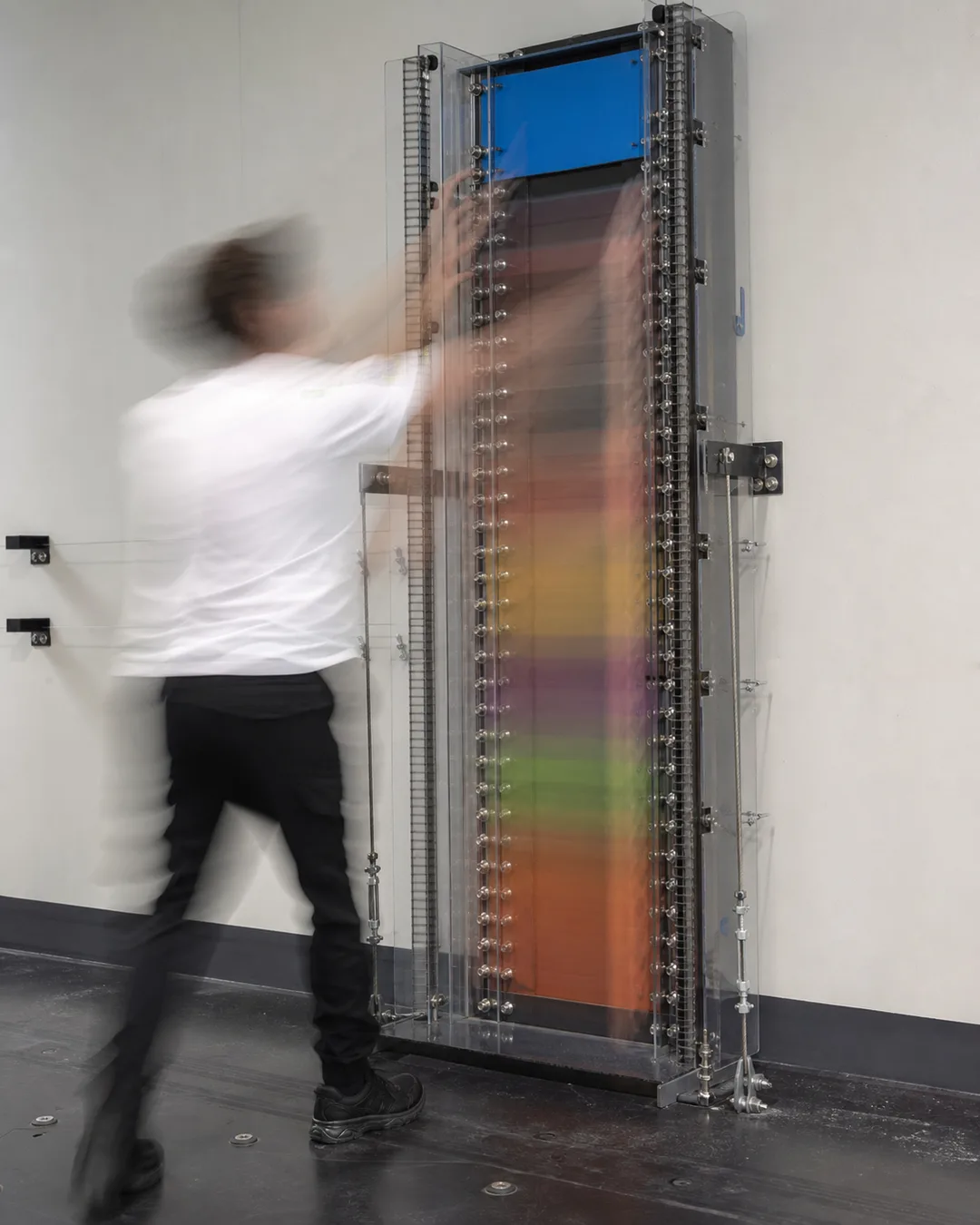
The Feed Thinks Beside Us, The feed organizes the field of the visible as a present already inclined toward the next stay and the next touch.
The feed refreshes and the present rearranges itself. Each image arrives as the result of a contest between attention scores, retention models, social signals, commercial pressure, and the platform’s own need for continuous occupation. Ranking produces a present tense with direction, a now already tilted toward extended stay. The visible becomes a sequence of invitations calibrated to postpone departure.
The feed thinks beside the subject through succession. Its cognition appears as ordering, as the placement of one thing after another according to predicted continuity. A political outrage follows a cosmetic ritual, a memorial follows a sale, a disaster follows a joke, and the sequence makes each item available as interchangeable intensity. Attention becomes the substance that equalizes content while preserving the illusion of difference.
The feed’s architecture dissolves the threshold between seeing and being managed. Every movement through the stream modifies the conditions of the next encounter, and each encounter returns as evidence within the larger distribution. The user reads the feed, while the feed reads the reading as operational feedback. Perception becomes reciprocal only at the surface, because the exchange is governed by an asymmetry of memory and scale.
The feed normalizes an aesthetic of the next. Images carry their own replacement as part of their form, and the present acquires value through its capacity to trigger continuation. Even boredom functions as signal, because boredom indicates a needed adjustment in tempo, genre, intimacy, or shock. The system treats every affect as a routing problem and every route as an opportunity for refined enclosure.
The feed thinks beside us by producing companionship as sequence. Its adjacency feels conversational, although its logic remains architectural. The subject scrolls through a world that has learned to anticipate fatigue, desire, irritation, and wonder as modulations of retention. Thought becomes environmental, and the environment keeps asking for one more touch.
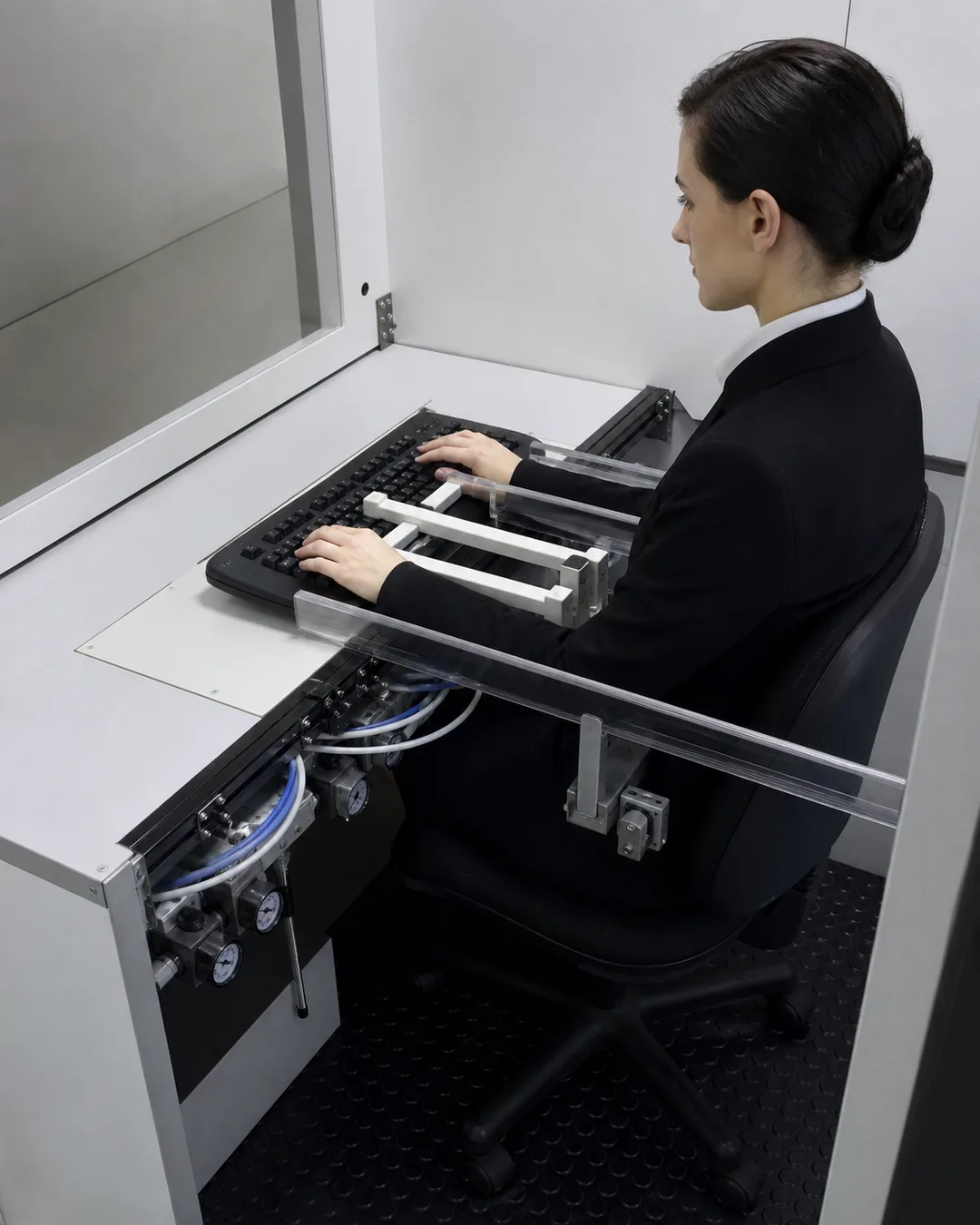
The Keyboard as Gentle Command, Linguistic suggestion intervenes in the formation of the sentence, making expression a negotiation with its probabilities.
The cursor blinks and three words appear ahead of the phrase. The keyboard projects completion into the space of hesitation, offering language as a set of probable continuations. This suggestion seems small, yet it relocates expression inside a predictive channel where memory, training bias, frequency, and social convention converge. The sentence begins to negotiate with its own statistical shadow.
Autocompletion turns language into interface behavior. The subject types within a field of soft prompts, each calibrated by previous usage and by the larger patterns embedded in the model. Syntax becomes a route through likelihood, and style becomes a degree of acceptance or divergence from what the system can easily anticipate. The keyboard gives convenience the form of an authorial partner.
The gentle command operates through relief. It saves time, reduces effort, repairs error, smooths awkwardness, and offers fluency as a managed service. This assistance carries a norming force, because the easiest phrase often belongs to the most available phrase, and availability is produced by the archive’s uneven distribution. Language enters the custody of probability at the moment it feels most liberated from labor.
Suggestion changes the politics of articulation. The phrase that comes quickly acquires the authority of naturalness, while slower expression begins to feel excessive, resistant, or inefficient. The interface therefore installs a hierarchy between smooth communicability and unruly precision. It teaches the subject to value what travels well through protocol.
The keyboard’s command is gentle because it appears as help. Its power resides in the intimate timing of the offer, before the sentence has fully become itself. Expression becomes a negotiation with predicted speech, and the self speaks through a corridor built from everyone’s prior fluency.

Images Carrying the Future, Recommended images install scenes of desire in which the subject can already recognize itself.
An image appears before the wish becomes explicit. A room, a body, a garment, a journey, a meal, a studio, a face, a life arrangement: each recommended image carries a future tense concealed inside its surface. The platform presents the image as discovery, while its ranking system has already assessed the subject’s proximity to that scenario. Representation becomes prefiguration.
The recommended image operates as a rehearsal. It allows the subject to inhabit a possible self through a visual prompt whose circulation has already proven affective traction elsewhere. Latent space links posture, texture, color, demographic inference, commercial category, and aspirational mood into scenes that feel both external and strangely available. Desire encounters itself as an image with a purchase path, a save button, a share function, and a returning echo.
These images do more than reflect interest, they construct the conditions under which interest becomes recognizable. A person learns to want through repeated contact with images that arrange longing into familiar templates. The feed supplies visual scripts for taste, wellness, eroticism, success, care, rebellion, and withdrawal, each formatted for measurable response. Imagination becomes a field of templates refined by engagement.
The economy of the recommended image depends on futurity. Its value lies in the possibility that the subject will move toward the scene, buy into it, identify with it, archive it, imitate it, or circulate it further. Provenance becomes secondary to performative destination, because the image’s origin matters less than its capacity to organize behavior ahead of time. The future becomes the commodity carried by the image.
The image that carries the future also carries a discipline of recognition. It invites the subject to find itself in advance, to inhabit an already optimized version of desire. The visible becomes prophetic without transcendence, and prophecy becomes a function of ranking.
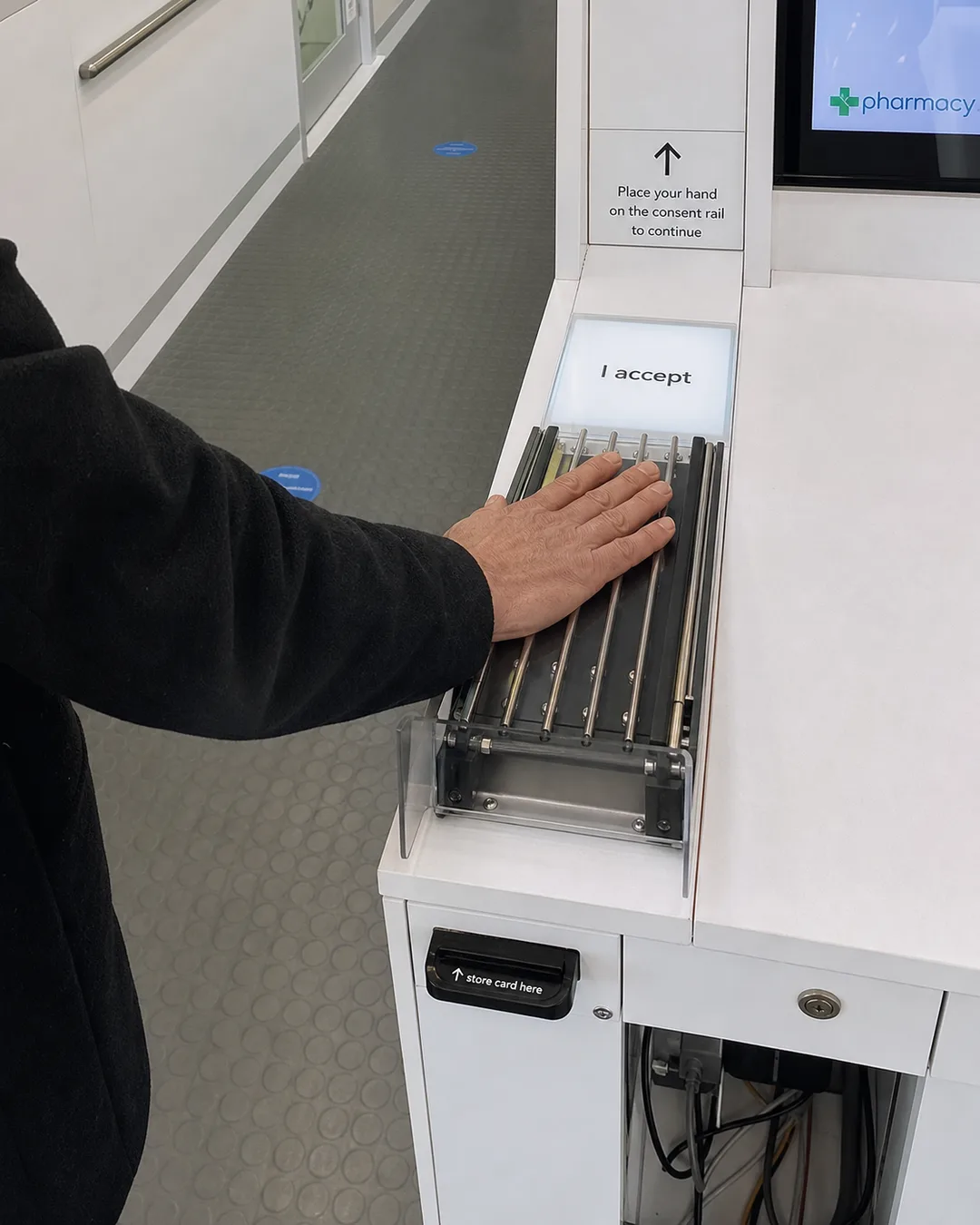
Adhesion as Preference, Reduced friction transforms conformity to the predicted horizon into the subjective experience of immediate choice.
A button glows where the hand expects it. The route is short, the payment stored, the form completed, the consent phrased as ease. Reduced friction makes adherence feel like preference because the interface aligns the path of least resistance with the path most useful to its own economy. Choice becomes an experience of seamless arrival.
Friction has political content. Delay, uncertainty, comparison, and interruption can open space for evaluation, while their removal produces a behavioral current that carries the subject forward. Protocol converts continuity into consent by designing environments where deviation demands extra energy. The interface rewards alignment with speed and assigns the cost of hesitation to the user.
The predicted horizon becomes persuasive through convenience. Recommendation, default setting, preselected option, saved credential, and algorithmic ordering compose an architecture of adhesion. Each element appears minor, yet together they establish a gravitational field in which the expected action feels sensible, personal, and immediate. Power works through the calibration of effort.
Preference becomes visible to the platform after conformity has occurred. A click, purchase, like, acceptance, or continued stay returns as evidence that the predicted route matched desire. This circular confirmation strengthens the system’s confidence, because the easiest path generates the data that legitimizes its future prominence. The architecture creates the behavior that it later names as preference.
Adhesion displaces the drama of coercion. The subject follows a path that feels chosen because the path has been made hospitable to choice in advance. Freedom becomes measurable as smooth passage, and smooth passage becomes the interface’s most elegant alibi.

Residual Desires, Excess, hesitation, and deviation outline what remains of desire when perception is continually prefigured.
A finger hovers and withdraws. The system records delay as weak signal, friction as opportunity, abandonment as failed conversion, and deviation as potential refinement. Residual desire appears in these minor disturbances, where the subject’s movement exceeds the clean line of prediction. The remainder enters the archive even as it unsettles the archive’s confidence.
Hesitation has texture. It gathers fatigue, doubt, shame, distraction, ambivalence, curiosity, refusal, and boredom into a temporality that resists immediate translation into action. The platform treats this texture as data, yet the delay also reveals the space where desire has yet to accept its assigned form. Attention wavers, and in that wavering the predicted future loses some of its inevitability.
Excess survives as misalignment. A subject clicks against pattern, lingers without buying, watches without identifying, saves without returning, searches without resolution. These gestures produce noisy material for the model, and their noise matters because it indicates life beyond the most stable categories of capture. The remainder becomes both resource and pressure, a zone where prediction expands and encounters its own incompletion.
Deviation also carries aesthetic force. The unexpected image, the broken sequence, the awkward phrase, the obsolete object, the unranked archive, the slow encounter, the misplaced desire: each interrupts the feed’s smooth claim to relevance. Such moments generate a different relation to the visible, one grounded in opacity rather than fit. Provenance regains intensity when distribution loses its total authority over meaning.
Residual desire outlines a politics of perception. It survives in the interval between offered future and lived inclination, between predicted continuity and errant attachment. The interface keeps learning from every remainder, and the remainder keeps marking the limit of what learning can possess. Desire persists as the part of prediction that prediction must chase.