
Art has always been shaped by the possibilities offered by the evolving domains of reality. Every era has developed its own dominant medium: marble and pigment in antiquity, perspective and oil painting during the Renaissance, electricity and the pixel throughout the twentieth century. Today, as the boundaries of reality are being redefined by biotechnology and nanobiology, artistic language itself is entering a new phase of transformation.
While modernity sought to objectify the body, the biotechnological present increasingly reimagines it as a plastic substrate and a fluid interface, where the image is no longer merely projected onto matter, but could instead be grafted, encoded, or embedded directly into cellular structures. The well-known discourse surrounding microchip implantation, genomic manipulation, and the engineering of living matter may therefore be understood as the emerging tools of a new expressive grammar.
Within this dystopian, yet no longer implausible, scenario, the boundary between the natural and the artificial progressively collapses, giving rise to a hybrid condition: a biosynthetic synthesis in which organism and technology cease to exist as opposites and instead become coextensive elements of the same creative process.
With this article, we aim to initiate a speculative investigation into the critical moment at which nanobiology could evolve into an artistic medium, acquiring not only scientific relevance but also aesthetic and cultural significance.
Flesh as a Semantic Membrane
In recent years, biology has undergone an unprecedented acceleration. Advances in nanobiology and biocompatible neural interfaces are opening scenarios that, until very recently, belonged almost exclusively to the realm of science fiction. Over the past few years, for instance, pioneering studies have been published on magnetoelectric nanoparticles capable of stimulating neurons without direct contact, while research into nano-bio-robots for targeted molecular delivery to the brain has already reached advanced pre-clinical stages. At the same time, the first clinical experiments involving minimally invasive brain–computer interfaces—such as those developed by Neuralink—have demonstrated the growing possibility of translating neural impulses into digital commands with increasing precision. It is conceivable that such developments may eventually open entirely new pathways for artistic expression.
If, in the past, the body functioned primarily as the subject or recipient of the artwork, today it could become the very substrate upon which the creative act is inscribed: a living canvas capable of integrating technological grafts as native elements of its own architecture. This hypothesis suggests a radical redefinition of artistic subjectivity itself, where the cell becomes the smallest unit of meaning and DNA the source code of a new aesthetic language.
The interaction between nanobiology and art would therefore extend beyond the mere visualization of microscopic processes, aspiring instead toward an ontological reconfiguration of physical presence in the world. Through the use of biopolymers and nanomachines, the artist could intervene directly within organic matter, generating structures that challenge the distinction between the natural and the synthetic. In such a dimension, the artwork would no longer exist as a static object to be observed, but as a dynamic organism—one that breathes, mutates, and responds to environmental stimuli with molecular precision.
The grammar of this emerging language would no longer rely on perspective or color, but on biocompatibility and neuro-integration. It is precisely within this interstitial space, we argue, that a new form of artistic subjectivity could emerge—defined not by what it is, but by what it is capable of integrating into its own organic system. Beauty, at that point, would cease to be a judgment of form and instead become a measure of harmony between the biological and the technological.
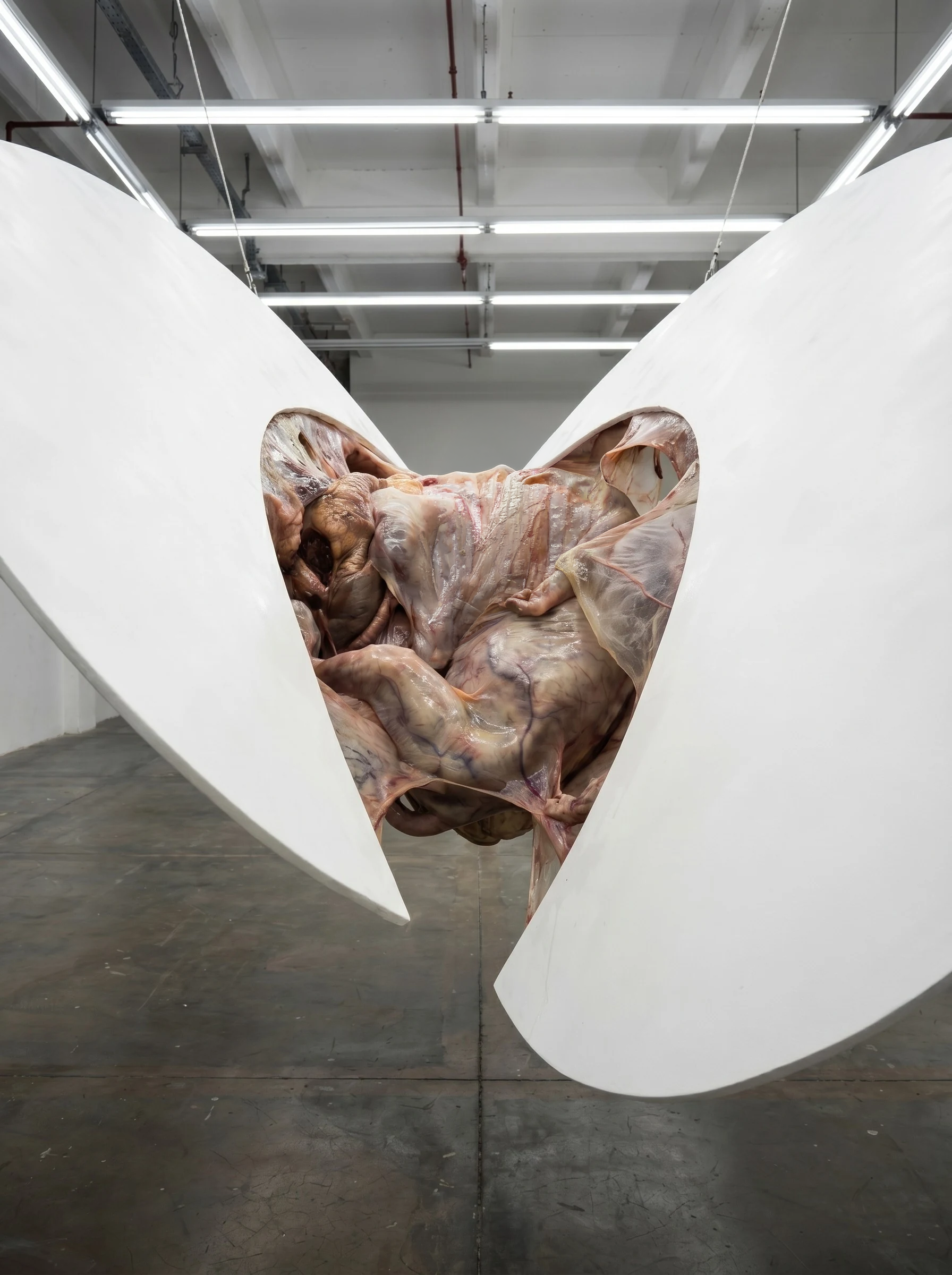
The Architecture of the Nanometric
The nanometric scale may represent the new horizon through which the very possibility of the contemporary image is being redefined, removing it from the domain of macroscopic vision and relocating it within an invisible yet omnipresent dimension. In this context, nanobiology provides the tools for a near-seamless synthesis between digital information and material structure. One could imagine that such extreme miniaturization does not diminish aesthetic impact, but rather intensifies it, since the artwork ceases to function merely as an optical phenomenon and instead becomes a systemic influence acting directly upon the body of the observer.
The use of nanomachines capable of interacting with cellular proteins opens the possibility of an invasive form of art in the most elevated sense of the term—where the aesthetic experience occurs through the modulation of biochemical signals. It could resemble the perception of subtle variations in dopamine flows, or a neural resonance induced by a biocompatible implant. Such an evolution would shift the center of gravity of art away from the surface of the eye and toward the depths of the nervous system itself.
Likewise, the integration of chips and nanostructures into human tissue should not necessarily be interpreted as a purely transhumanist drift, but rather as the latest stage in a long historical process of contamination between art and the evolving fields of reality. At this point, the central question becomes unavoidable: what does it mean to “see” when vision is mediated by molecular impulses? And what does it mean to “feel” when sensation itself can be programmed at the cellular level?
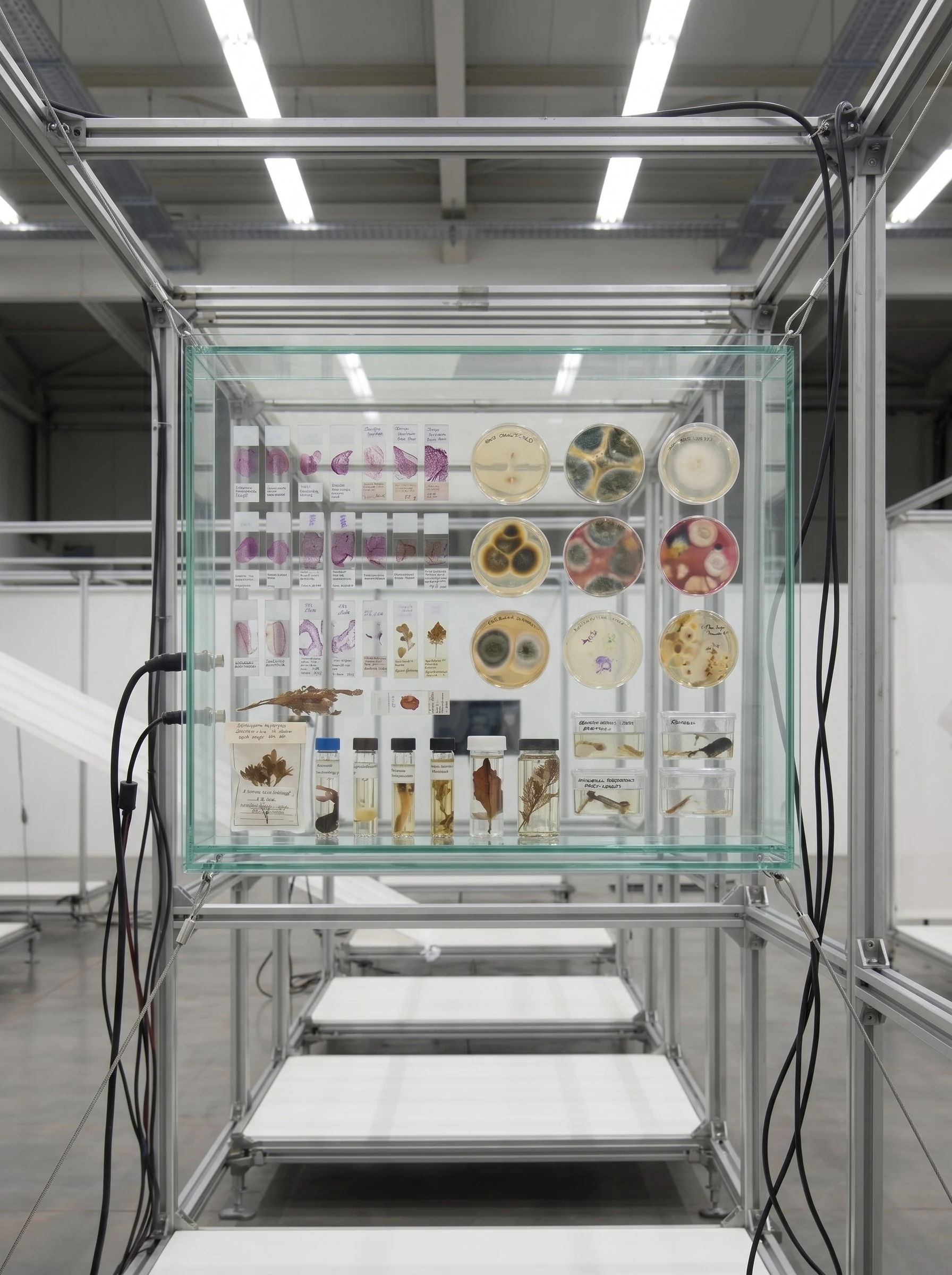
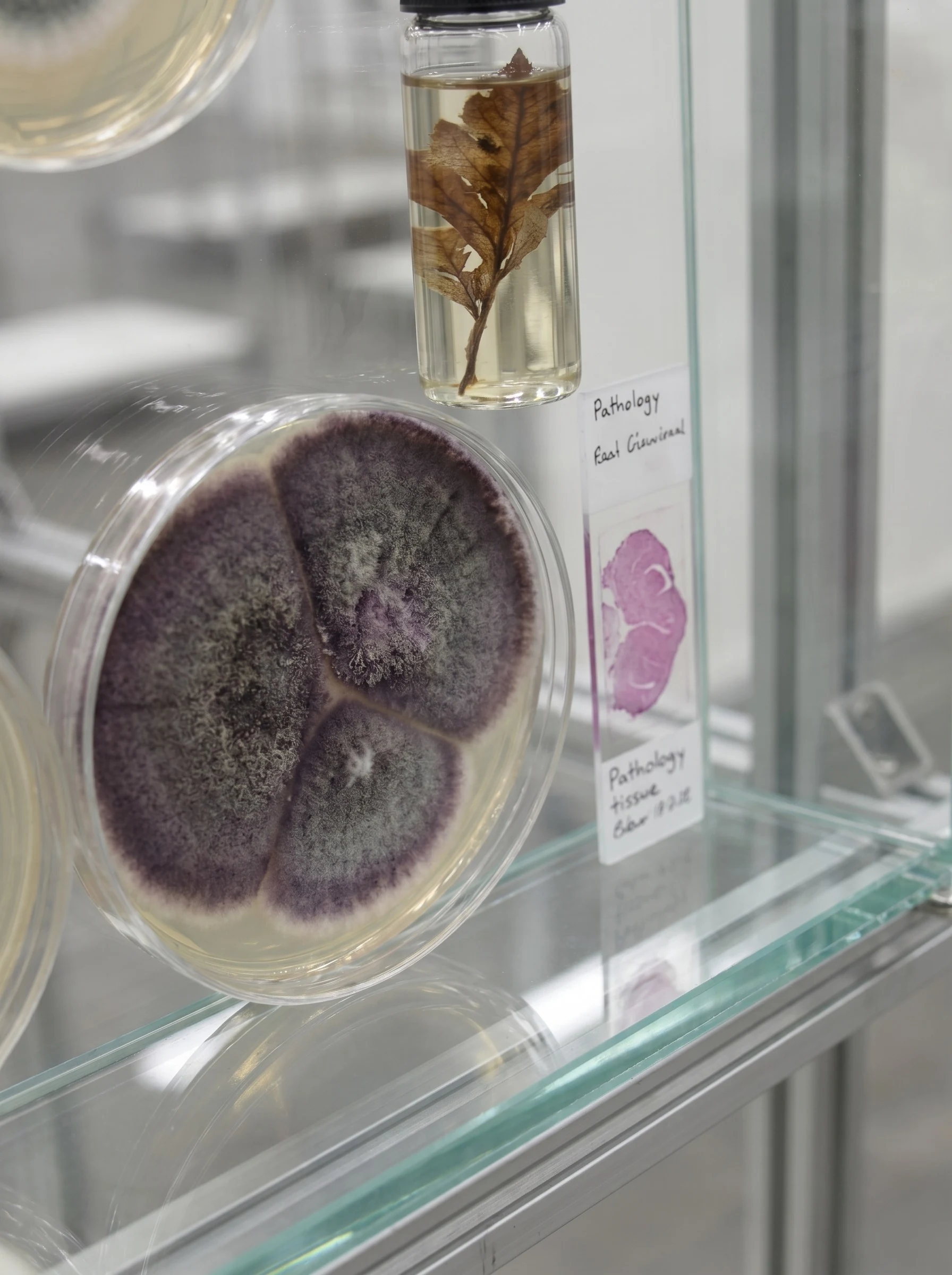
Symbiosis and Neural Prosthesis
The introduction of direct neural interfaces marks the moment in which the artistic implant ceases to function as representation and instead becomes pure experience, bypassing the mediation of traditional senses to act directly upon the cerebral cortex itself. Few concepts come closer to the very essence of perception. In such a scenario, human biology and electronic circuitry merge into an aesthetic symbiosis capable of altering the perception of time and space. One could interpret this phenomenon as a form of post-retinal art that challenges the very notion of the image as an objective entity.
Nanobiology would play a decisive role in this process, providing the sensors and actuators necessary for bidirectional communication between chip and neuron. Within this framework, beauty would no longer exist as an aesthetic judgment, but rather as a measure of synchrony between the artificial and the organic. The artwork would become a form of controlled hallucination: an electrical signal interpreted by the brain as a parallel reality endowed with its own internal coherence.
Perhaps the most profound implication of such technologies lies in the possibility of sharing emotional states and visions directly from one nervous system to another. This prospect inevitably forces a reconsideration of reality itself as a stable field of reference. If reality can be internally synthesized, what value remains in the tangible world? Art, at this point, transforms into a process of co-creation between the algorithmic logic of the implant and the dynamic architecture of neural networks.
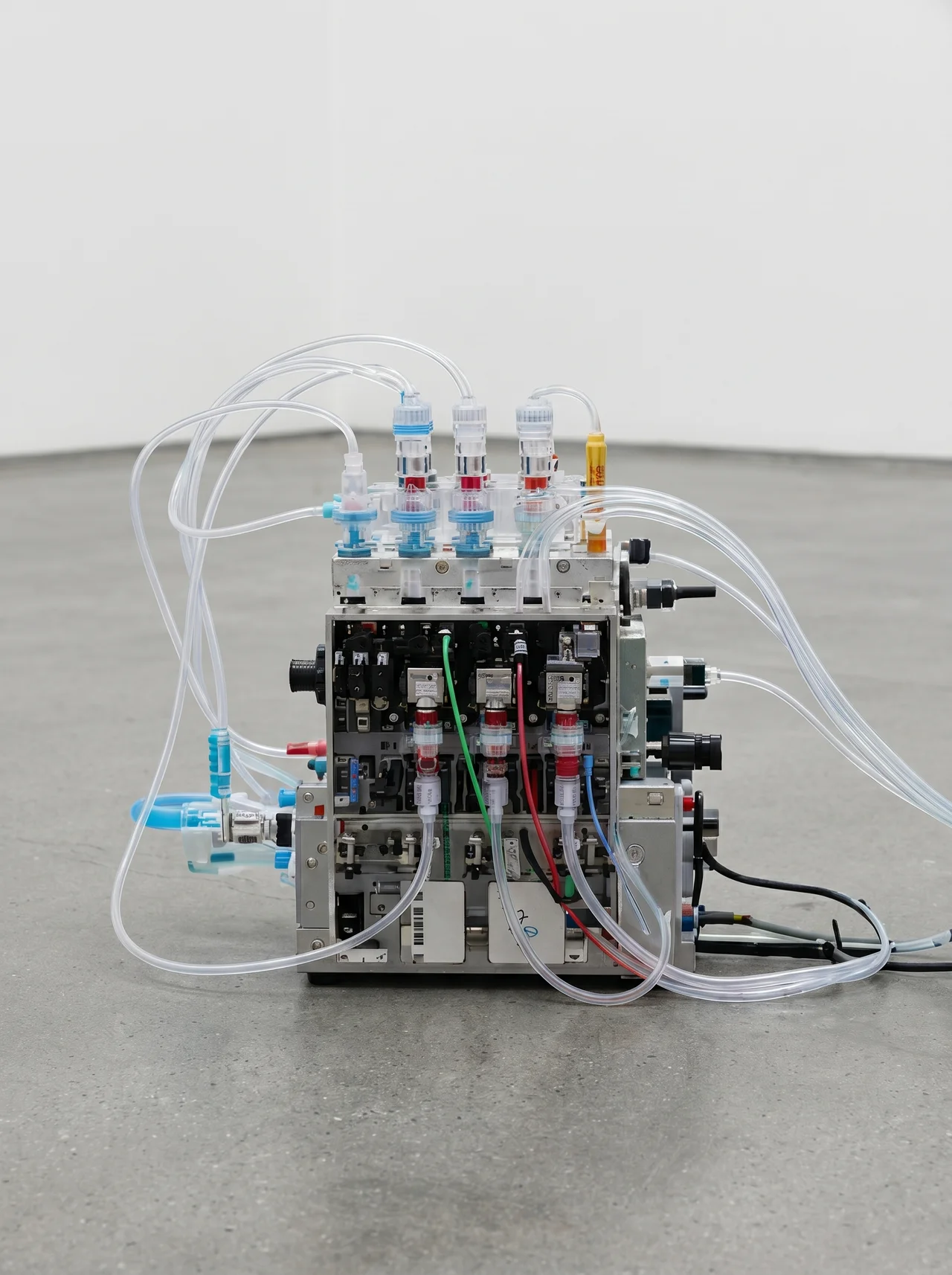
The Author Within the Mesh of Bio-Logic
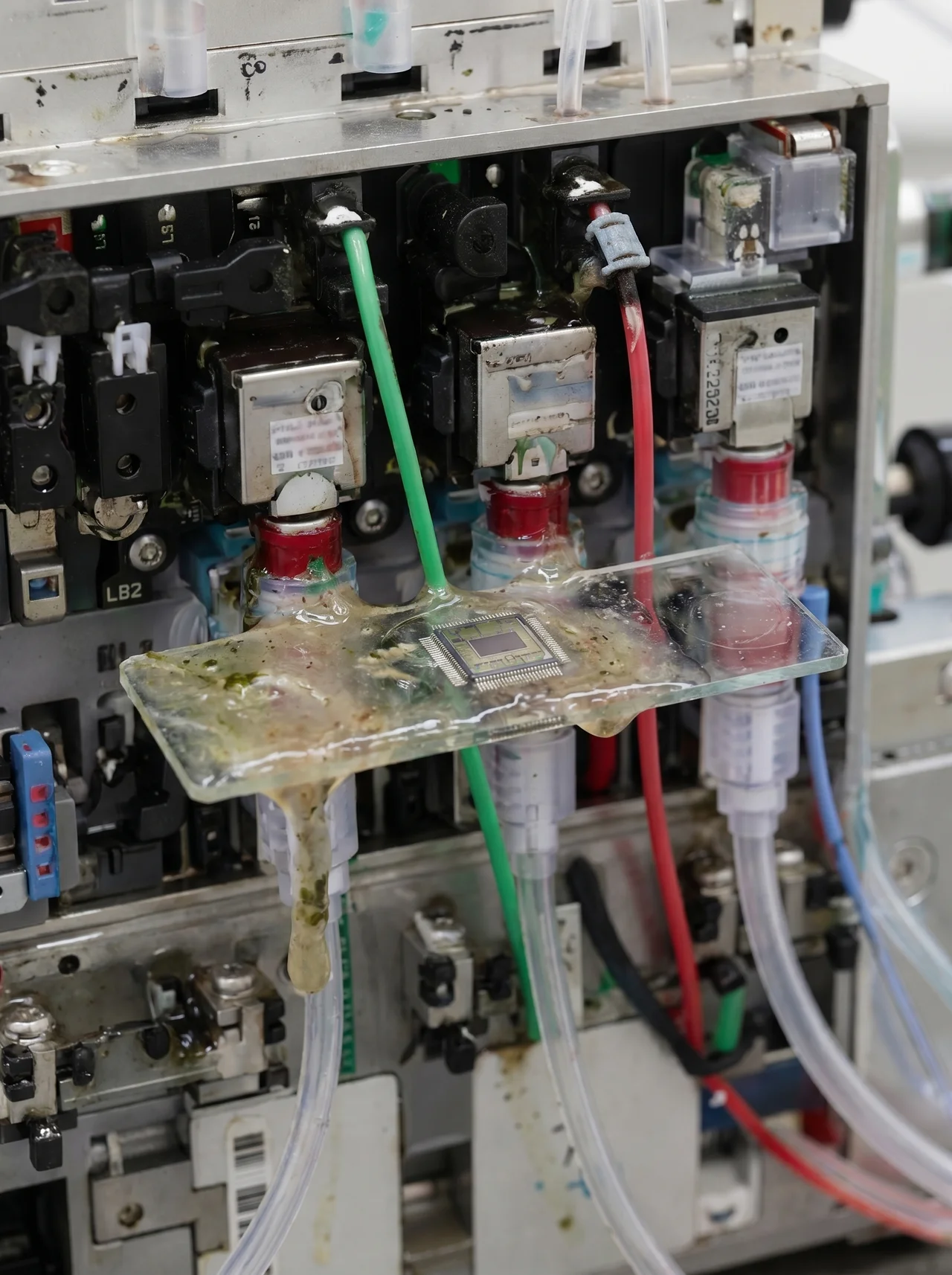
The figure of the artist may undergo a radical transformation once the artwork begins to acquire a form of biological autonomy within integrated systems of organism and technology. In such a scenario, authorship would no longer coincide with a centralized and singular act of will, but would instead disperse itself throughout the mesh of bio-logic, where the final outcome emerges from the continuous interaction between computational algorithms, metabolic processes, and organic dynamics. This decentralization could be understood as a reflection of the very structure of biological and digital networks—systems in which information no longer possesses a stable center, but propagates through contiguity, adaptation, and resonance.
Within this framework, the artist would no longer simply shape matter, but rather design the conditions of interaction between technological grafts and living substrates. Artistic practice could therefore move closer to a form of protocol-based engineering of the living, where every aesthetic decision also carries biological and ethical implications. In such a context, the responsibility of the artist would no longer concern only the formal dimension of the work, but also the effects the work itself may produce upon the body chosen to host it. Beauty, at that point, would no longer reside exclusively in visual harmony, but in the capacity of the bio-technological system to sustain equilibrium, resilience, and coexistence.
The image of the human that may emerge from this process is that of a porous, open, and continuously reconfigurable entity whose identity no longer appears stable or autonomous, but instead redefined by the grafts, connections, and technologies it chooses to integrate. The very idea of an isolated “self” could progressively dissolve, giving way to a networked subjectivity constructed through bio-semiotic exchanges, technological processes, and new forms of coexistence between organism and artifice.
The Aesthetics of Silent Mutation
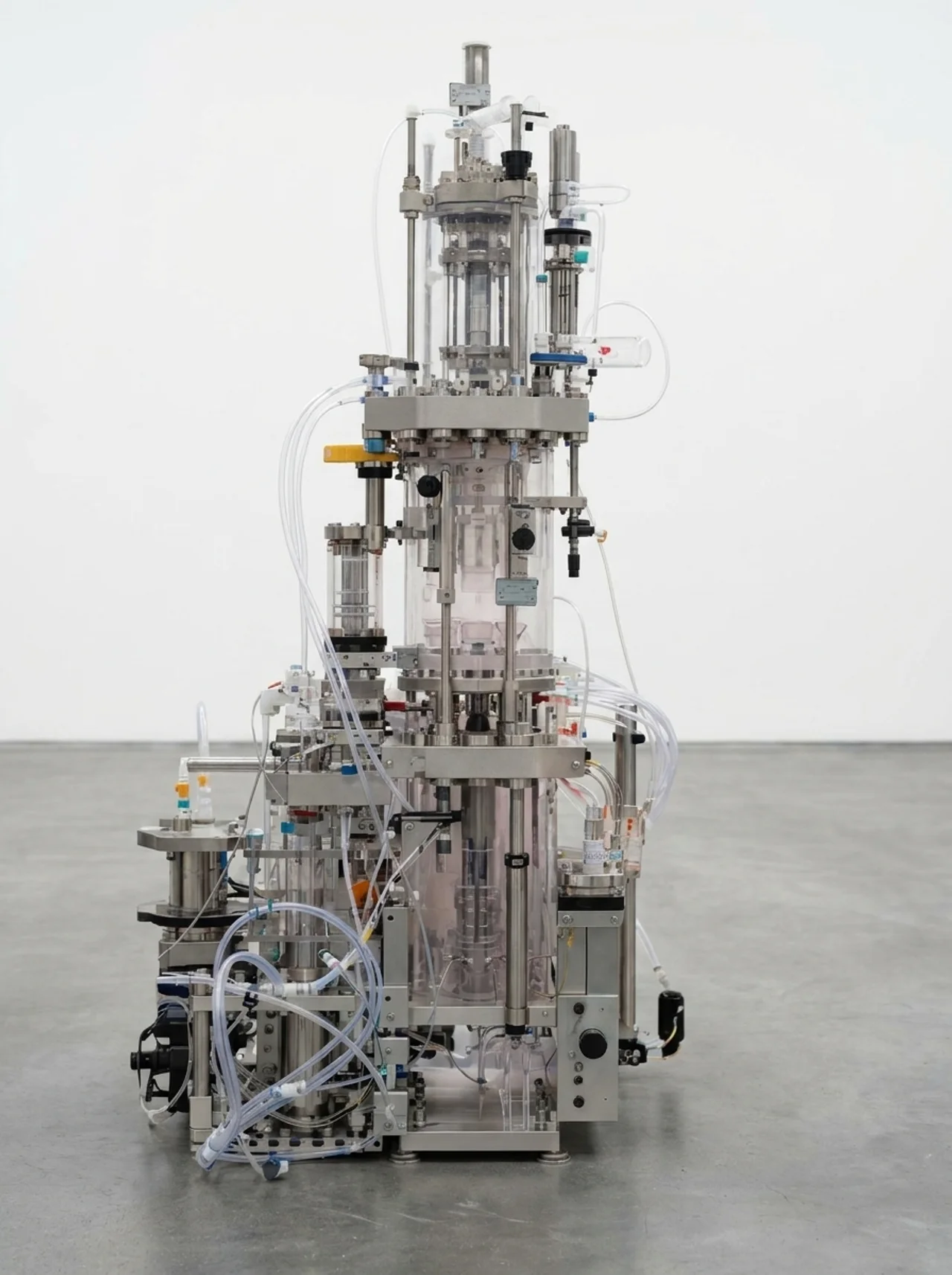
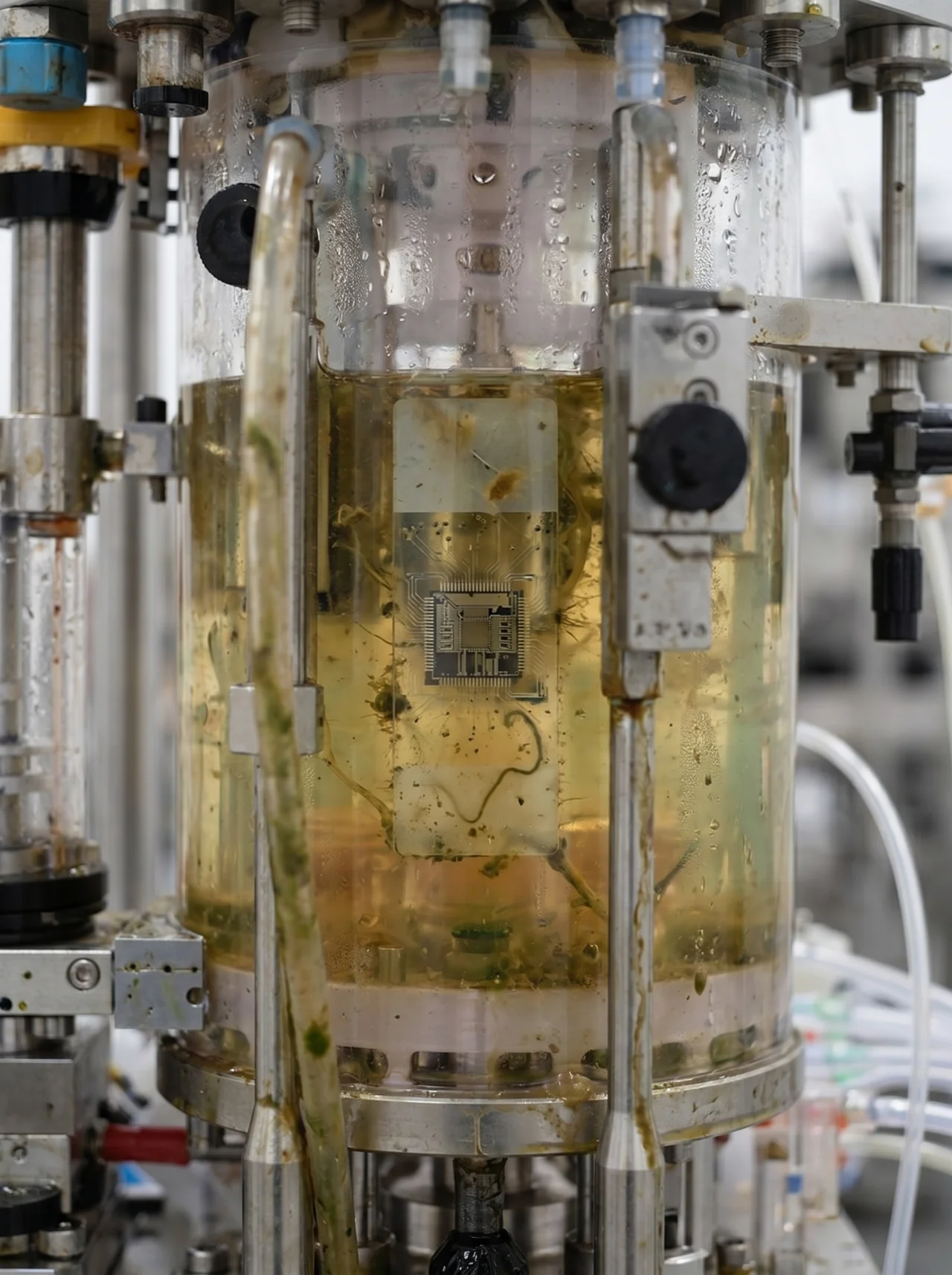
The most extreme outcome of the integration between biology, nanotechnology, and artistic practice may emerge through a form of silent mutation—a condition in which artifice becomes so deeply embedded that it appears almost indistinguishable from nature itself. In such a scenario, the technological graft would manifest as an imperceptible alteration of vital processes, capable of generating a new form of bio-aesthetic harmony. One could speculate that this very invisibility of technological intervention represents the most advanced stage in the contamination between the different fields of reality.
Perhaps the future of art may unfold within this invisible fusion, where human creativity extends toward the design of forms of existence themselves. From this perspective, life could become an intrinsic artwork, defined by the way it functions, adapts, and interacts with the world at molecular, biological, and even quantum levels. Nanobiology, then, may offer the possibility of rewriting the language of life with a precision that carries both scientific and poetic dimensions.
The implications of such a transformation remain vast, ambiguous, and largely unexplored. They compel us to question what form the idea of the “human” might assume once every layer of the body becomes progressively shaped by technological, aesthetic, and biological intention. Within this extreme hypothesis, the ultimate artwork would coincide with life itself: a form of existence conceived as an aesthetic synthesis of science, imagination, and biological possibility.

SPECIAL INSIGHT is an editorial series by FAKEWHALE in collaboration with O FLUXO, investigating the transformations shaping contemporary culture through the lenses of art, technology, philosophy, and speculative imagination.
Bibliography:
Frontiers in Robotics and AI – “Nano bio-robots: a new frontier in targeted therapeutic delivery” (2025)
TechLifeSci – “2025 Neurotech Review: BCIs, Brain Delivery, Organoids & Neuro-AI” (2026)
Advanced Materials – “Biocompatible Nanoparticles for Brain-Computer Interfaces” (2025)
Nature Nanotechnology – “Magnetoelectric nanoparticles for neural modulation” (updated 2025)
Frontiers in Bioengineering and Biotechnology – “3D bioprinting and neural stem cell therapy for CNS repair” (2026)
iGEM Arts Gallery – “Bio-Art Exhibition 2026” (2026)
Biofaction – “Artist Residencies 2025-2026: AI and Synthetic Biology” (2026)
SynBioBeta 2026 – “AI and Biology Summit, San Jose” (2026)
Anna Dumitriu – “Fermenting Futures” Exhibition (2025-2026)
ACS Nano Letters – “The Next 25 Years of Nanoscience and Nanotechnology” (2025)
Stanford Synthetic Biology Expo 2026 (2026)
Neuralink – Clinical Updates and Surgical Robot (2026)