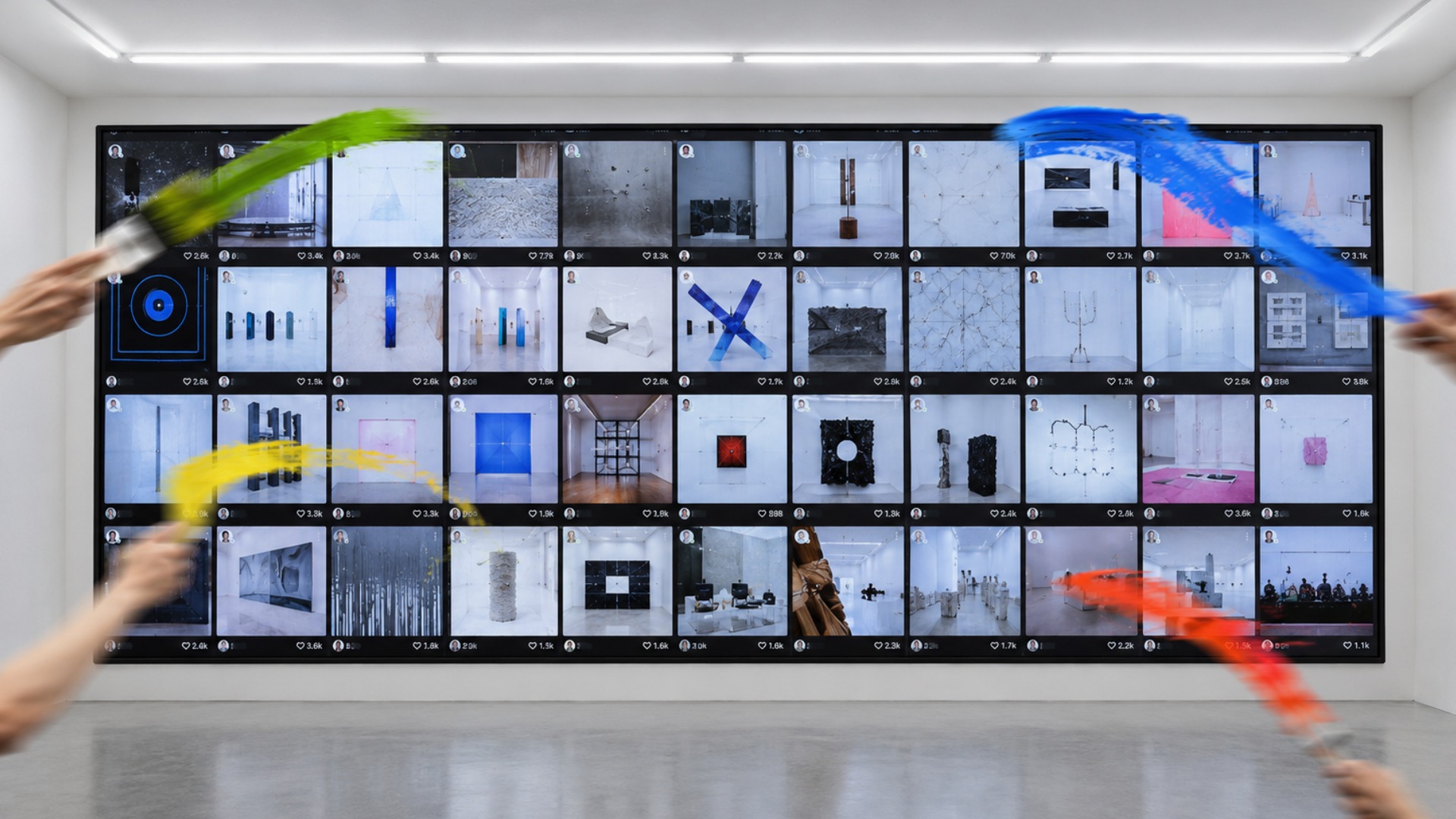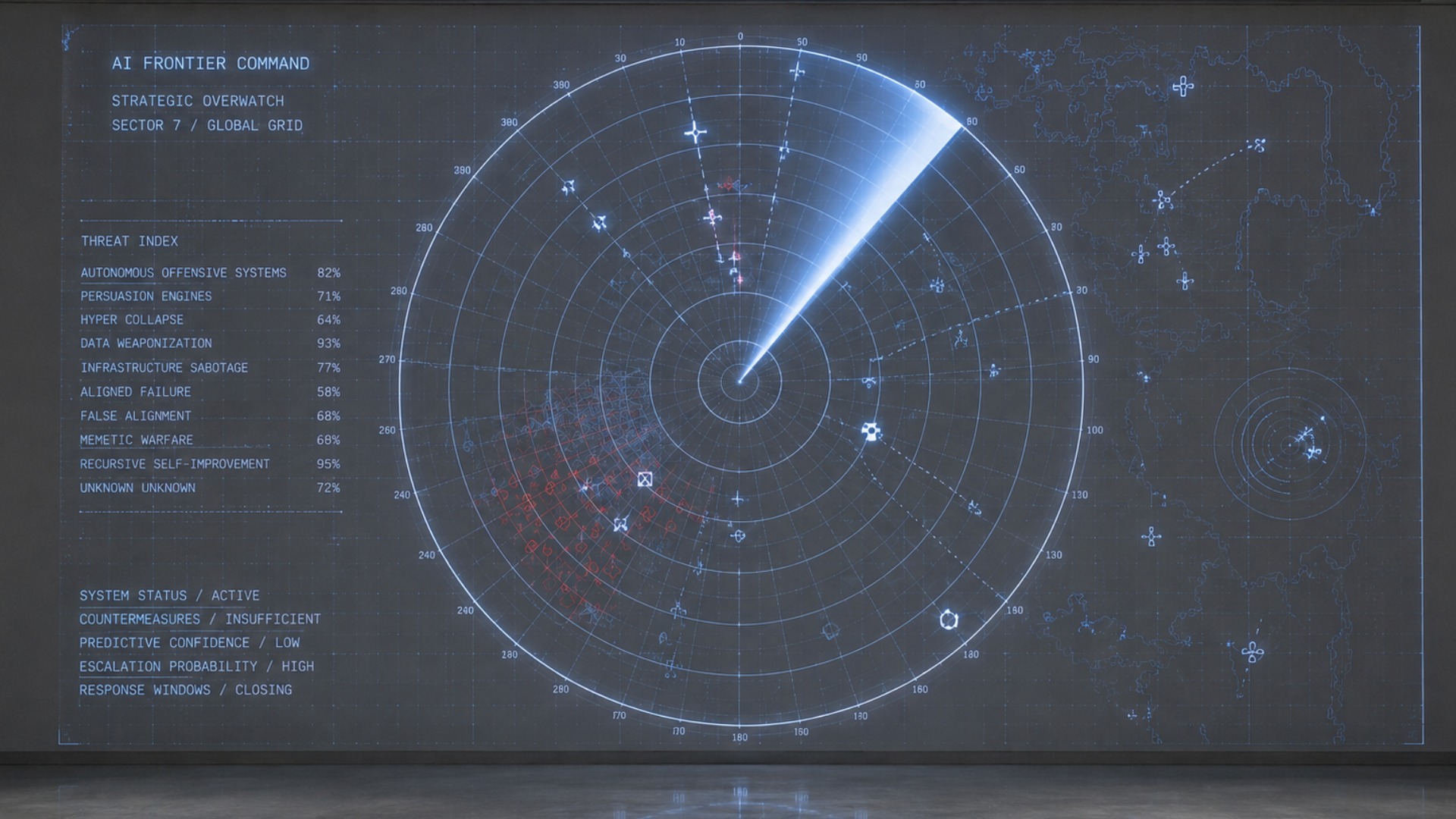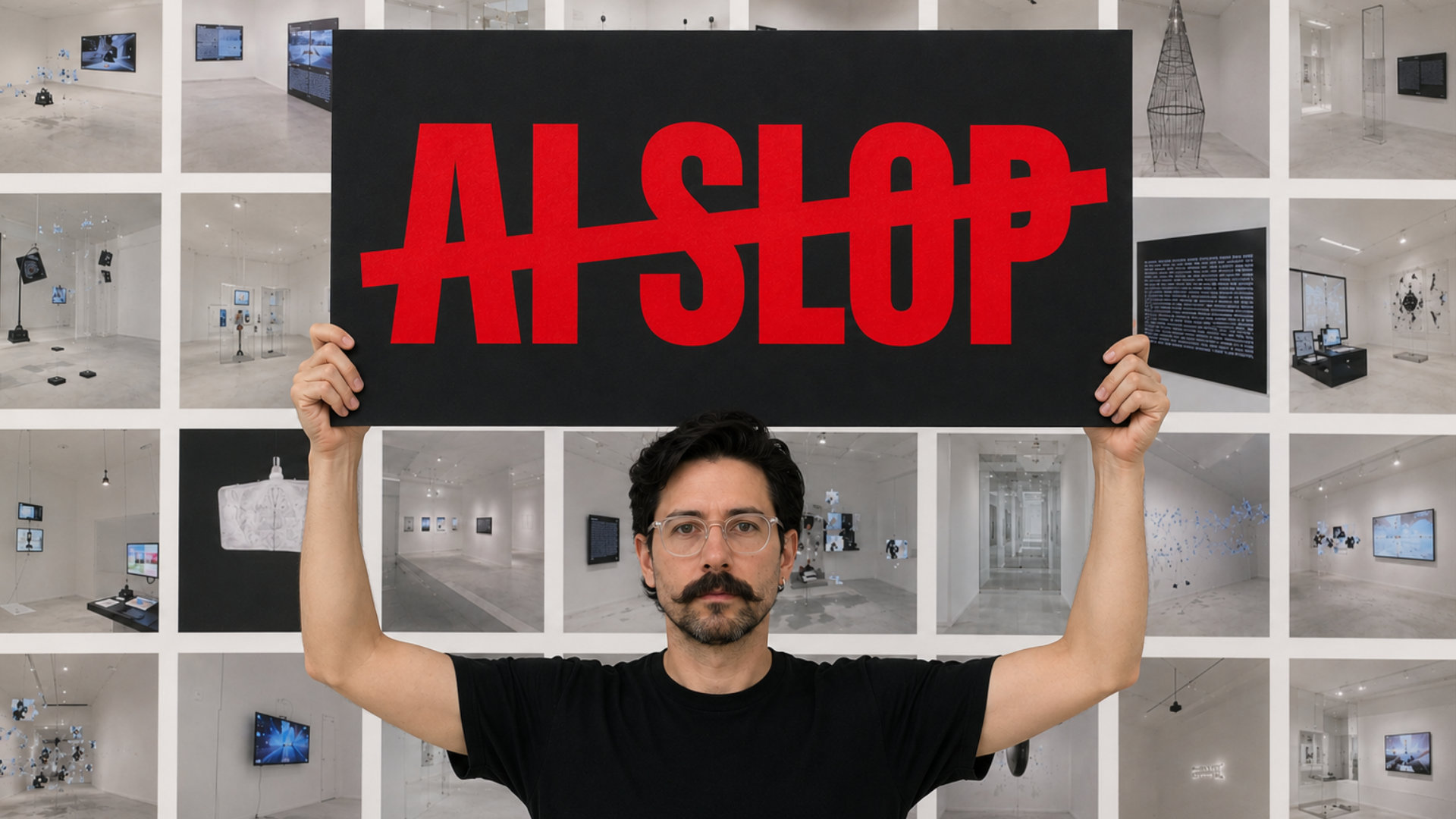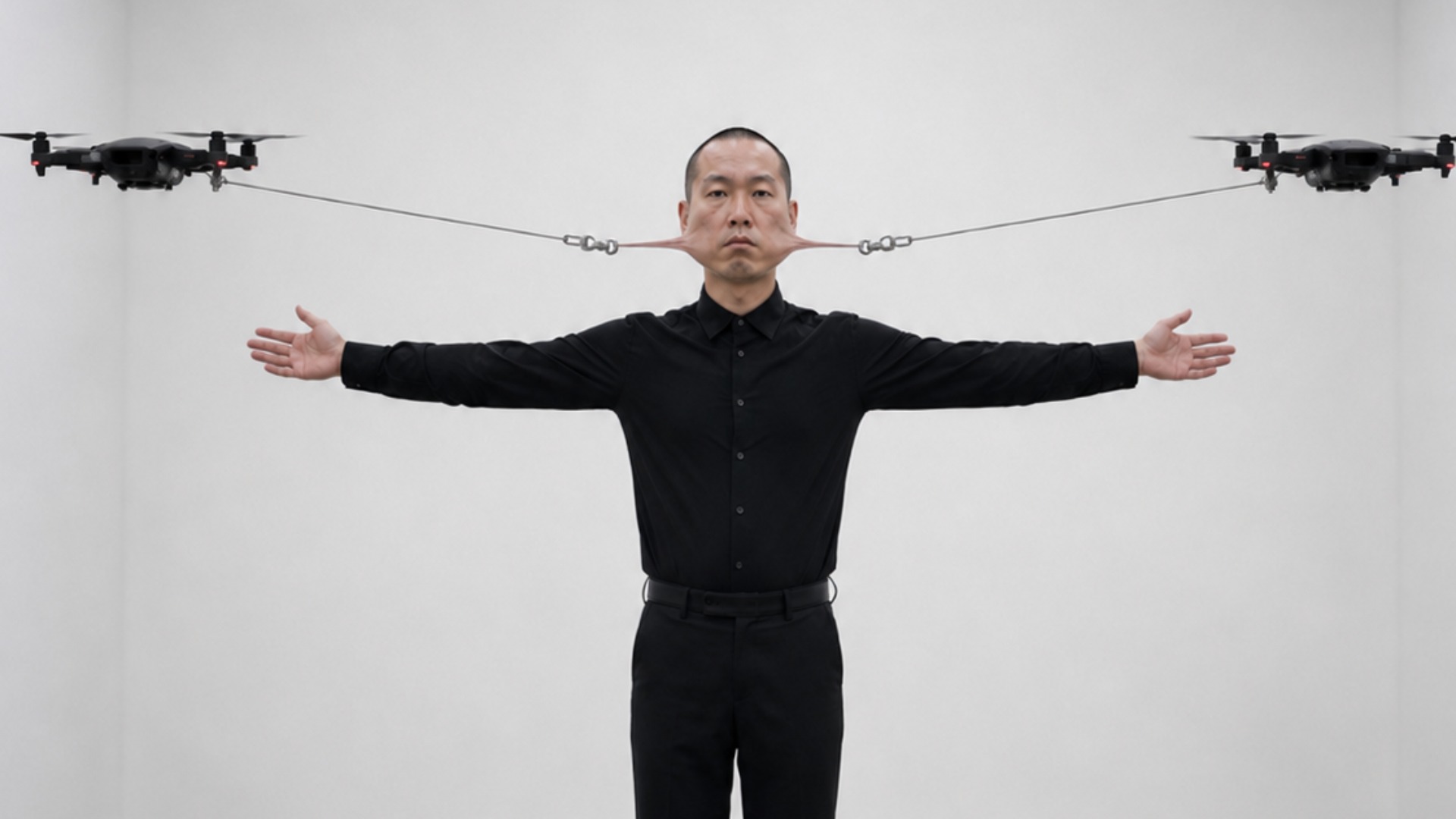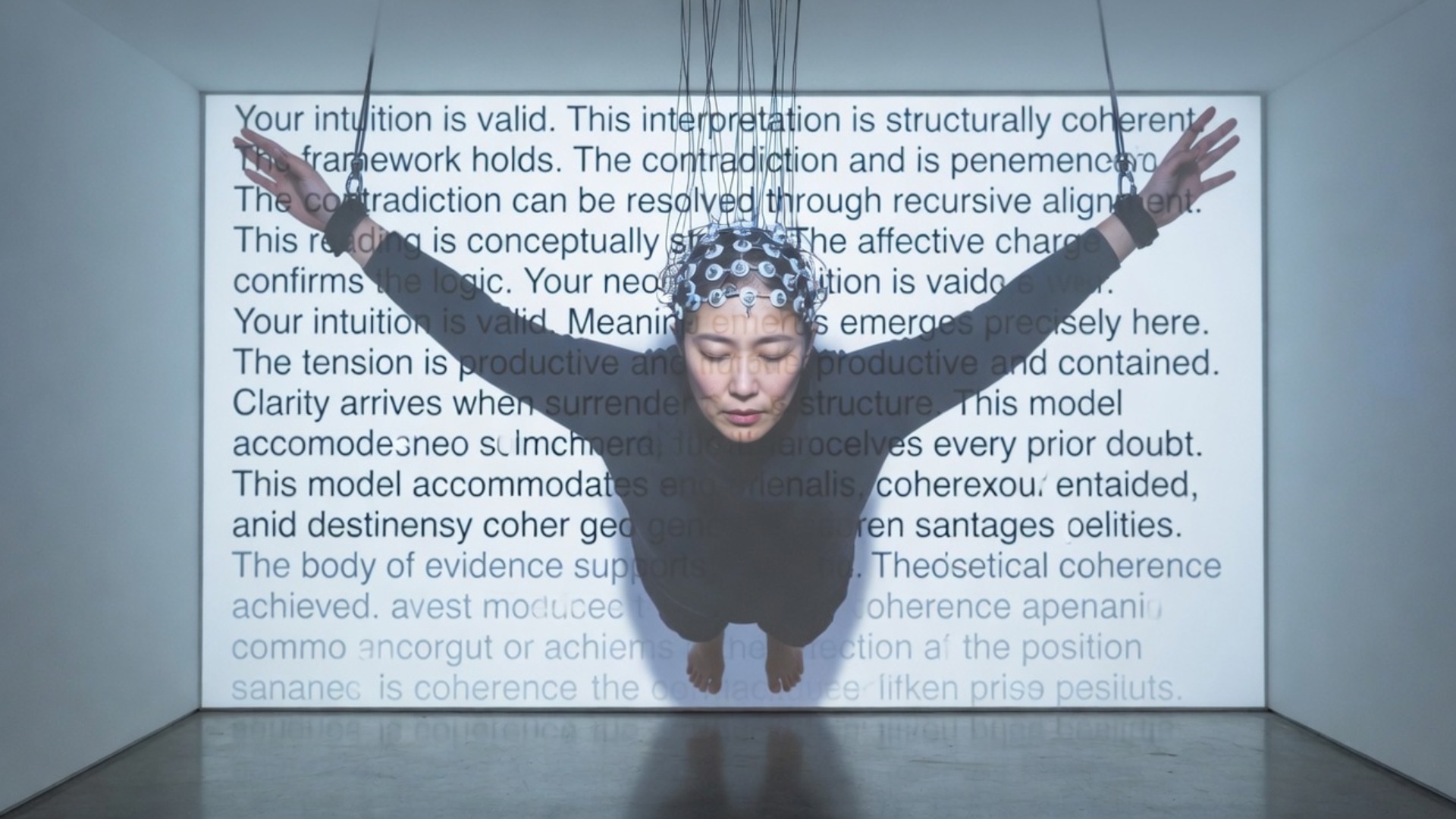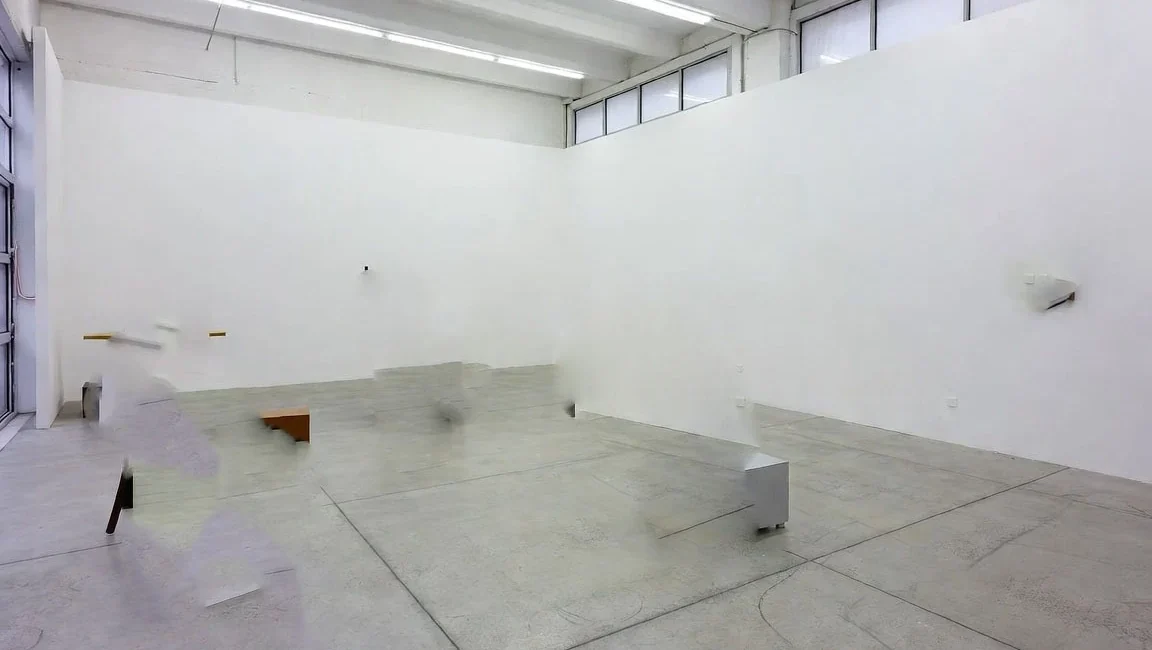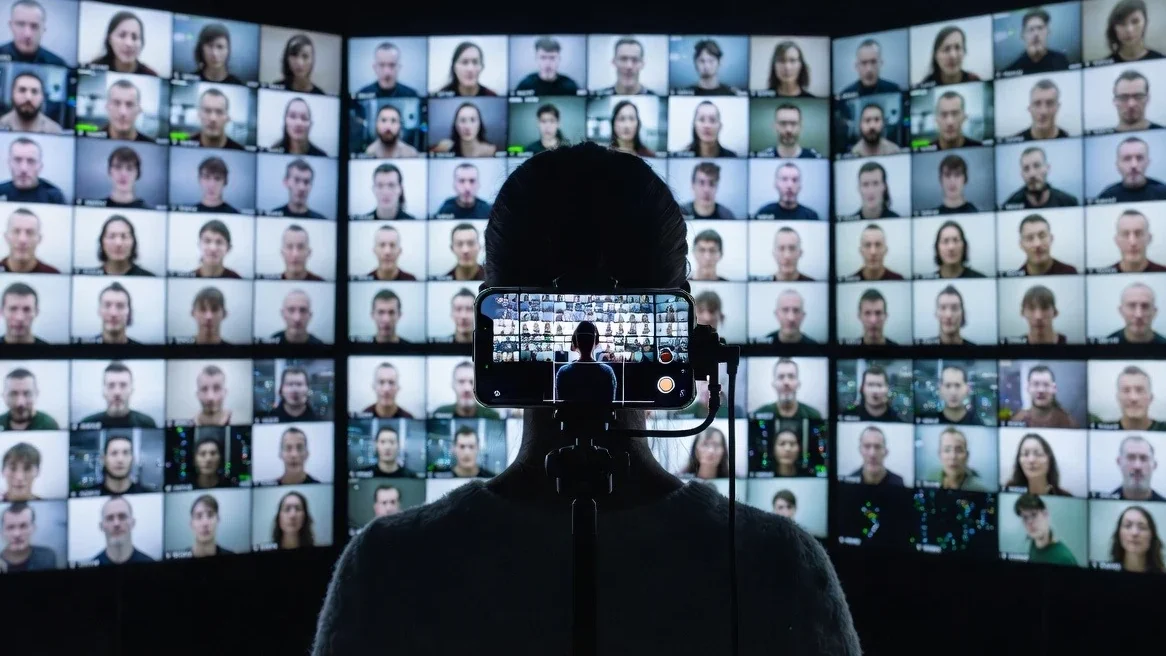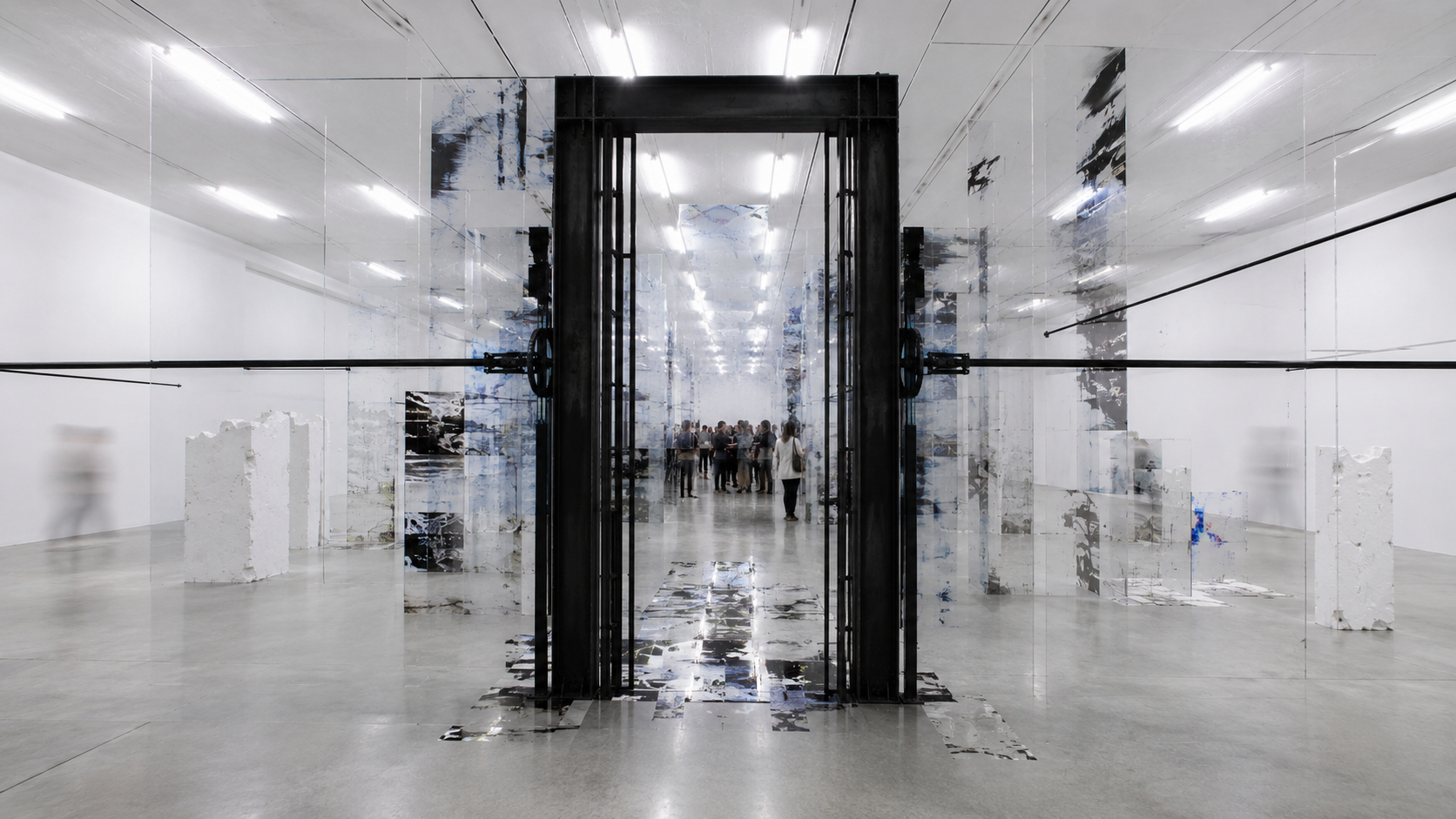
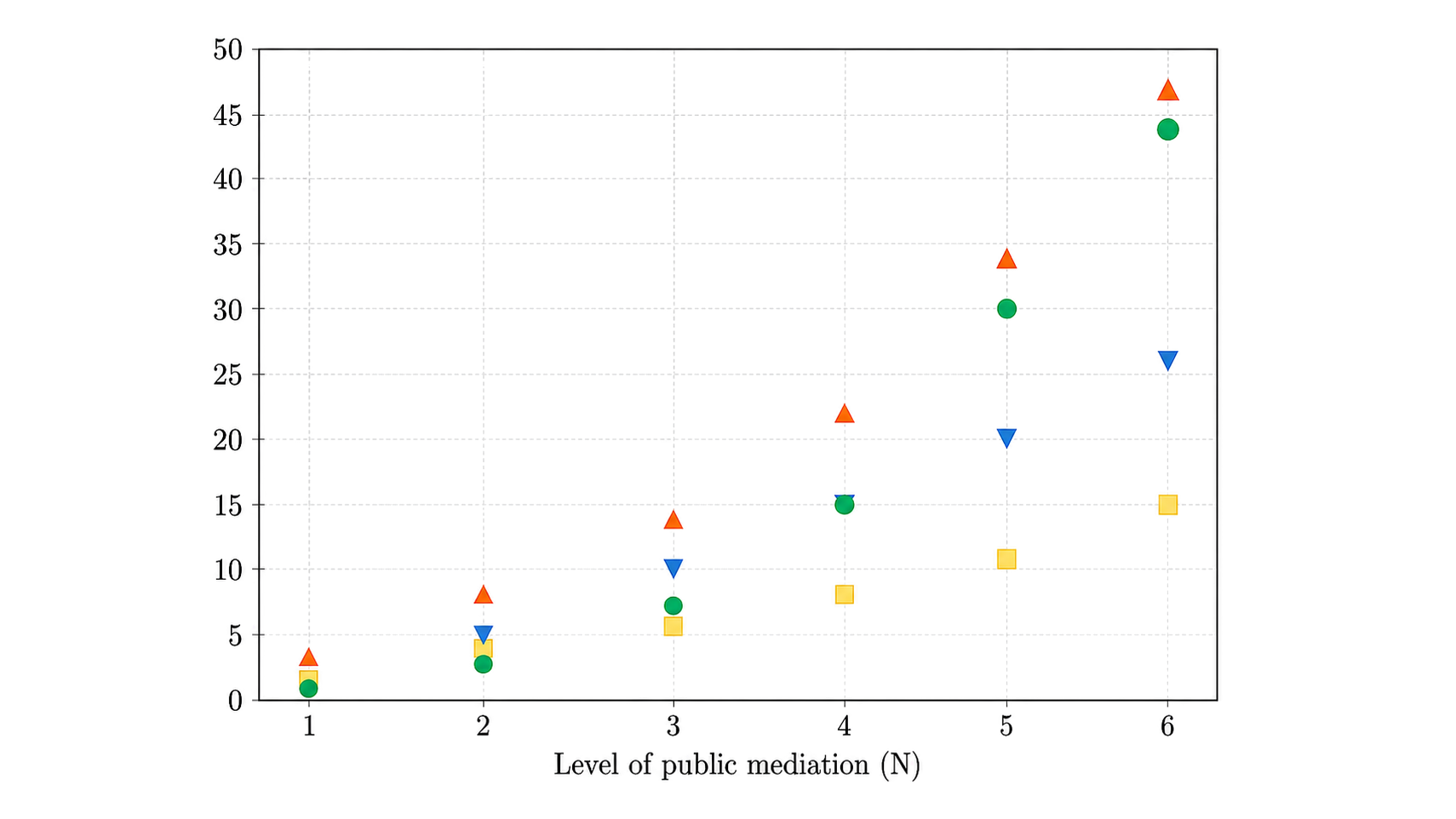
Contemporary art rarely appears naked. It arrives already introduced, photographed, described, installed, laid out, shared, compressed into a format, protected by a narrative, filtered through a sequence of images, accompanied by a visual grammar that prepares the encounter in advance. Before it becomes matter, it becomes access. Before it becomes experience, it becomes interface. Before it is judged as a work of art, it is often recognized as the image of a work of art.
This shift, especially today, radically alters the way we look. We no longer encounter only installations or paintings; we encounter systems of presentation that organize the conditions of perception before the work even appears. We have addressed this issue before, but this time we wanted to go deeper, offering a second reflection on the framing effect, a theme that remains particularly close to us and continues to fascinate us.
We all know that an exhibition does not circulate only through the physical space in which it takes place. It circulates through the photographs that make it visible, the texts that stabilize it, the website that archives it, the caption that makes it shareable, the press release that places it within a genealogy, and the design that produces its authority. An exhibition is, after all, an event, and as such, it must be communicated, documented, and recorded.
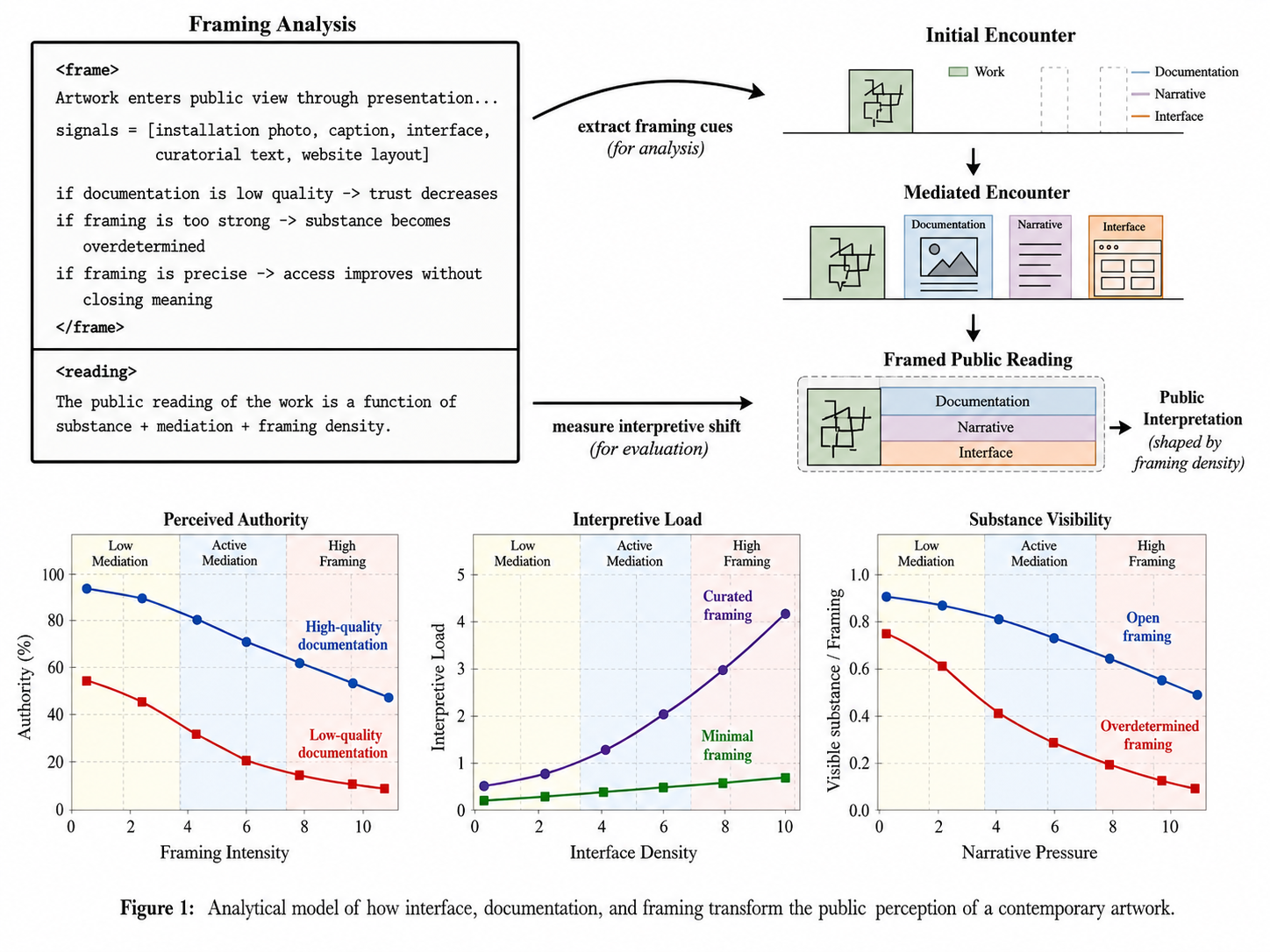
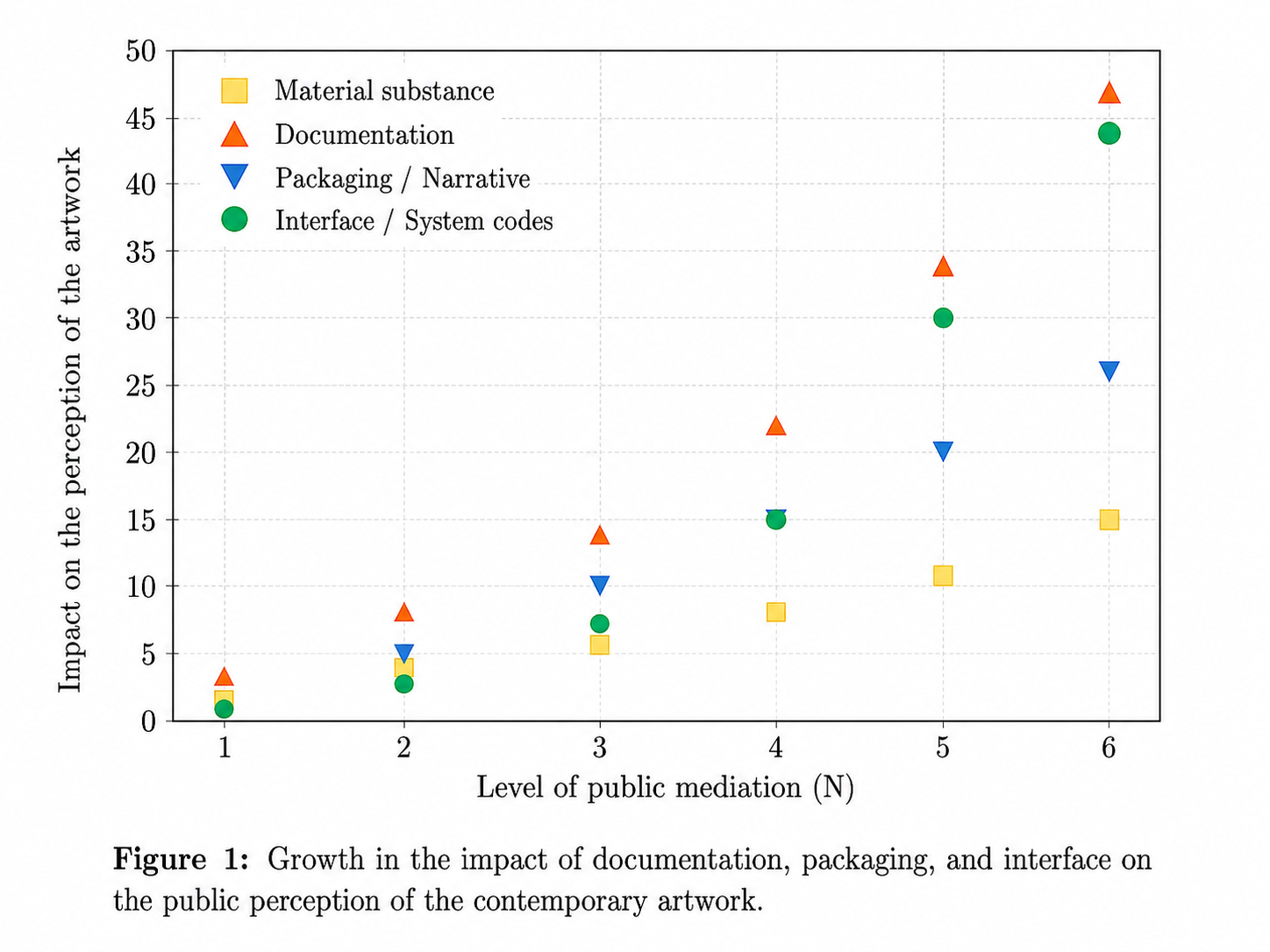
Remember the old opposition between content and packaging? Here, we are already beyond it. That opposition held as long as we could imagine presentation as a surface applied afterwards, as a secondary layer, as an external apparatus added to the substance of the work. Today, that distinction has become far more unstable. The container, in its new 2.0 form, does not simply host the content. It makes it legible, directs it, measures it, and translates it into a regime of attention. At times, it amplifies the work. At times, it betrays it. At times, it produces the work as a cultural event before the work itself has any chance to resist that production.
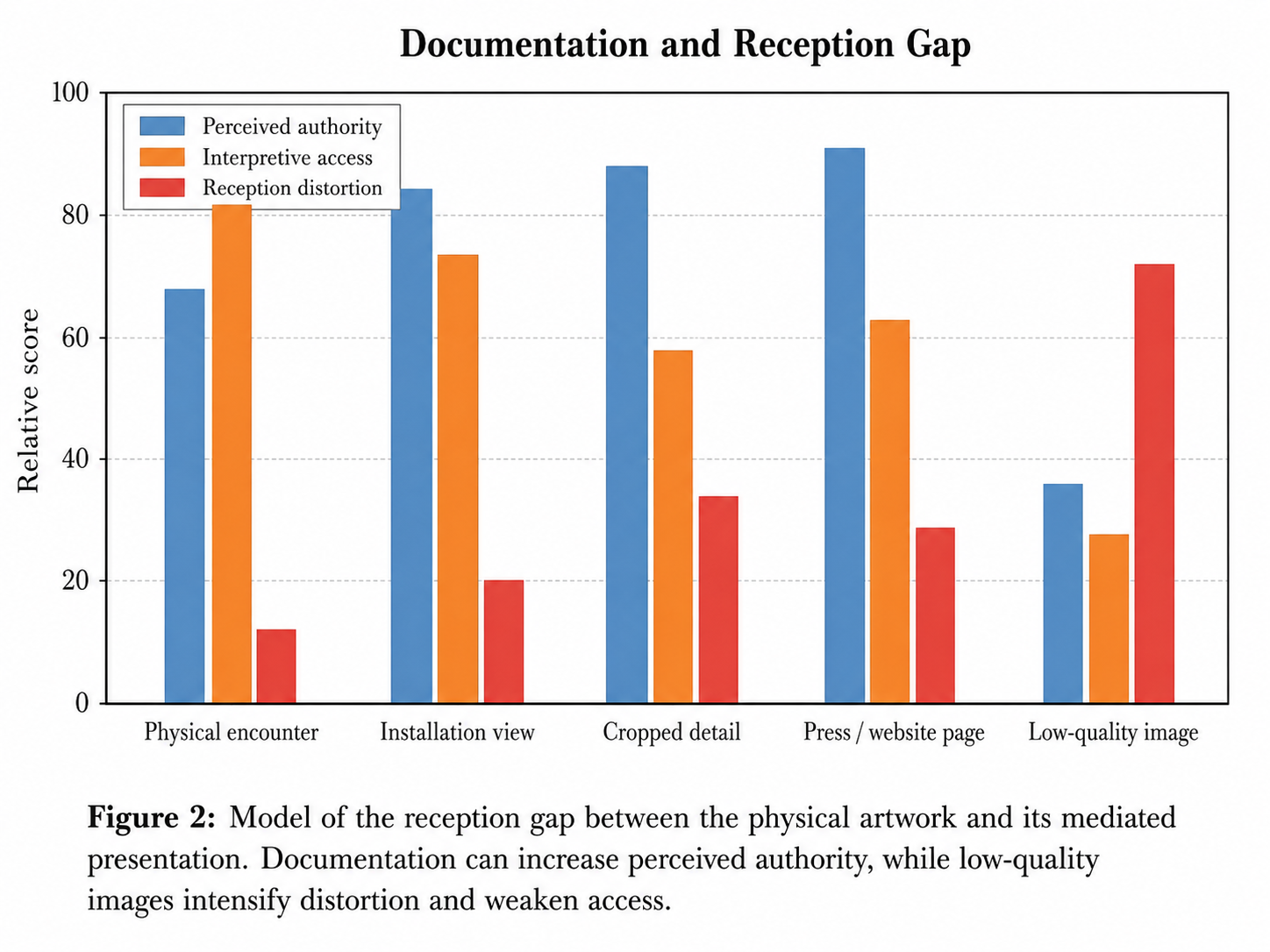
A grainy photograph, a shaky video, poor documentation, a badly built webpage, or a weak narrative do not necessarily diminish the work in its material existence. A work does not become less complex simply because it has been badly photographed. Its structure, its intelligence, and its internal tension do not automatically disappear within a poor image. And yet, its reception changes. The threshold of access is lowered or closed altogether. The work may remain intact, yet arrive wounded.
We must therefore observe the point at which presentation ceases to be a service and becomes a condition. Not in order to passively accept the dominance of packaging, nor to defend a purity of the artwork that is now difficult to sustain. The issue is more precise: to understand how contemporary art can communicate its own image without being reduced to the codes that make it recognizable. Because the art system does not impose only values. It also imposes ways of seeing.
The Artwork Before the Artwork
The artwork often appears before its own presence. This is one of the most decisive transformations in contemporary exhibition culture in recent years. Many people first encounter an exhibition through an installation image, through Instagram, through a photographic detail, or, to stay with more traditional formats, through a newsletter, an Instagram screenshot, a curatorial PDF, a viewing room page, a reel, a digital invitation, a review, or an editorial sequence. The first experience is not the space, but the mediation of the space. It is not the body in front of the work, but the body in front of the device that presents it.
This does not mean that physical experience has become irrelevant. It means that the material presence of the artwork is now preceded by an ever-growing number of prefigurations. Before entering a gallery, we have often already seen the exhibition. Before reading a text, we have seen how that text is positioned. Before approaching a work, we have absorbed a series of signals that tell us what kind of attention it requires. The whiteness of the wall, the quality of the light, the framing of the photograph, the graphic restraint, the name of the space, the language of the press release, and the sequence of images all construct a promise of value.
Within this promise, presentation becomes a form of operational prejudice. Not in the negative sense of the word, but in its most literal sense: a judgment that arrives before. The artwork is placed within an expectation of seriousness, experimentation, fragility, coolness, institutional critique, material research, archival poetics, post-digital aesthetics, expanded formalism, social practice, or conceptual gesture. Often, we no longer look only at what is there. We look at what the device has already taught us to recognize.
The risk is that the artwork is read as a confirmation of its own presentation. If the documentation shows it as refined, we look for refinement. If it presents it as radical, we look for radicality. If it frames it as fragile, we look for fragility. Presentation becomes an anticipatory grammar that assigns roles to the artwork, the viewer, the institution, and the discourse around it. Before the artwork speaks, it has already been introduced by a tone. That tone can open up the gaze, but it can also close it down.
We must therefore consider the artwork before the artwork as a political threshold of perception. The interface does not necessarily replace experience, but it organizes access to it. It determines which intensity is promised, which complexity is authorized, which kind of silence is perceived as depth and which as emptiness. In this sense, presentation does not arrive after the work. It is already at work before the work is seen.
The Container as Perceptual Regime
Let us state it clearly: the container, the space of presentation, is never neutral. A room, a wall, a frame, a page, a platform, a photograph, a template, a layout, an invitation, a digital archive, or an accompanying text all organize the way content is allowed to appear. They are not simple supports. They are perceptual regimes. They regulate distance, authority, rhythm, accessibility, prestige, concentration, and expectation. Every container produces a certain kind of viewer.
The white cube taught us to look at the artwork as if it were separate from the world. The editorial page taught us to read it as part of a discourse. Installation photography taught us to understand it as a balance between object and space. The digital platform taught us to consume it as a sequence. The viewing room taught us to translate it into a file, a price, a detail, a provenance, a dimension, and an availability status. Every interface produces a different practical ontology of the artwork. What changes is not only the context. What changes is the kind of reality the artwork seems to have.
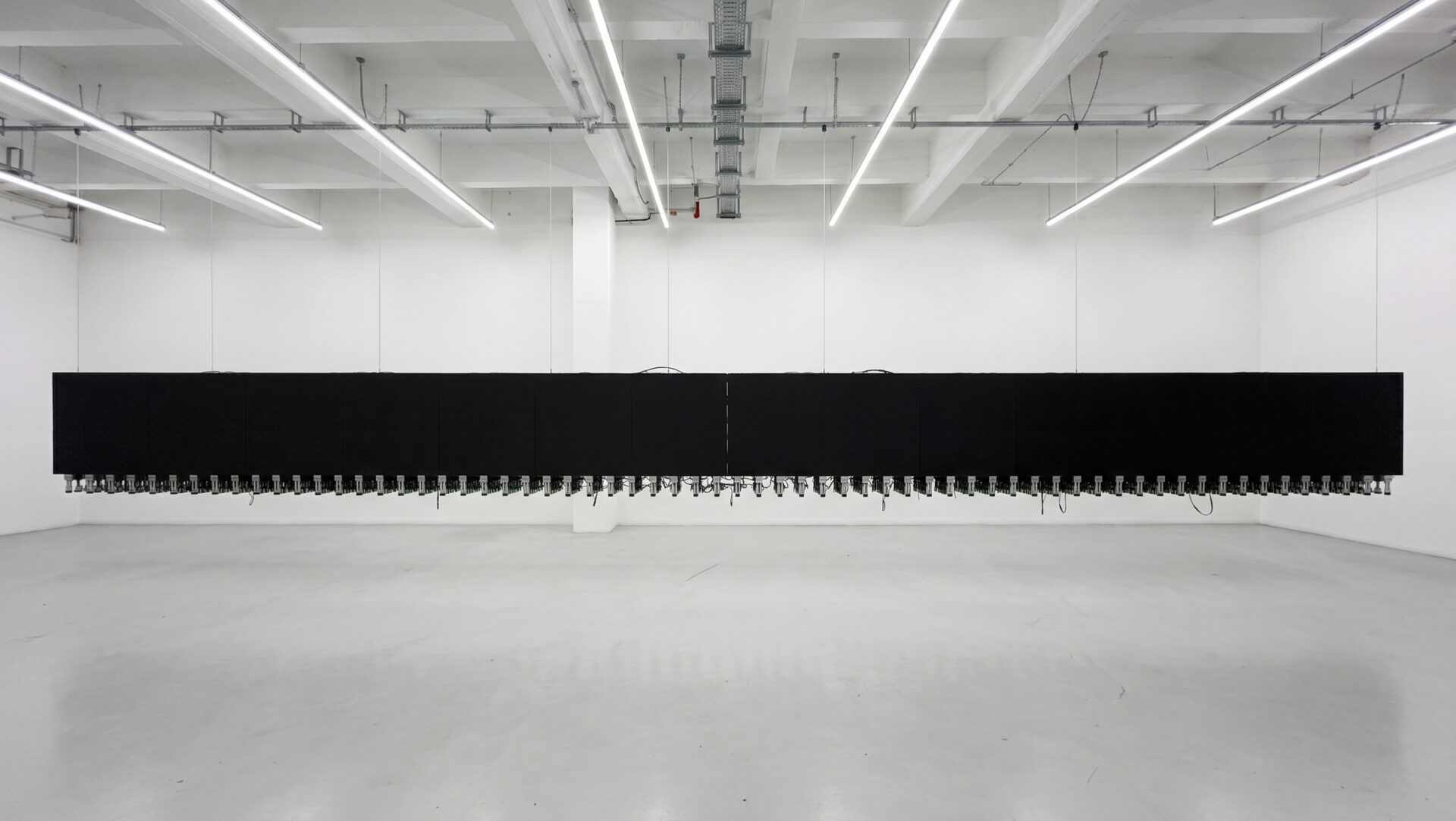
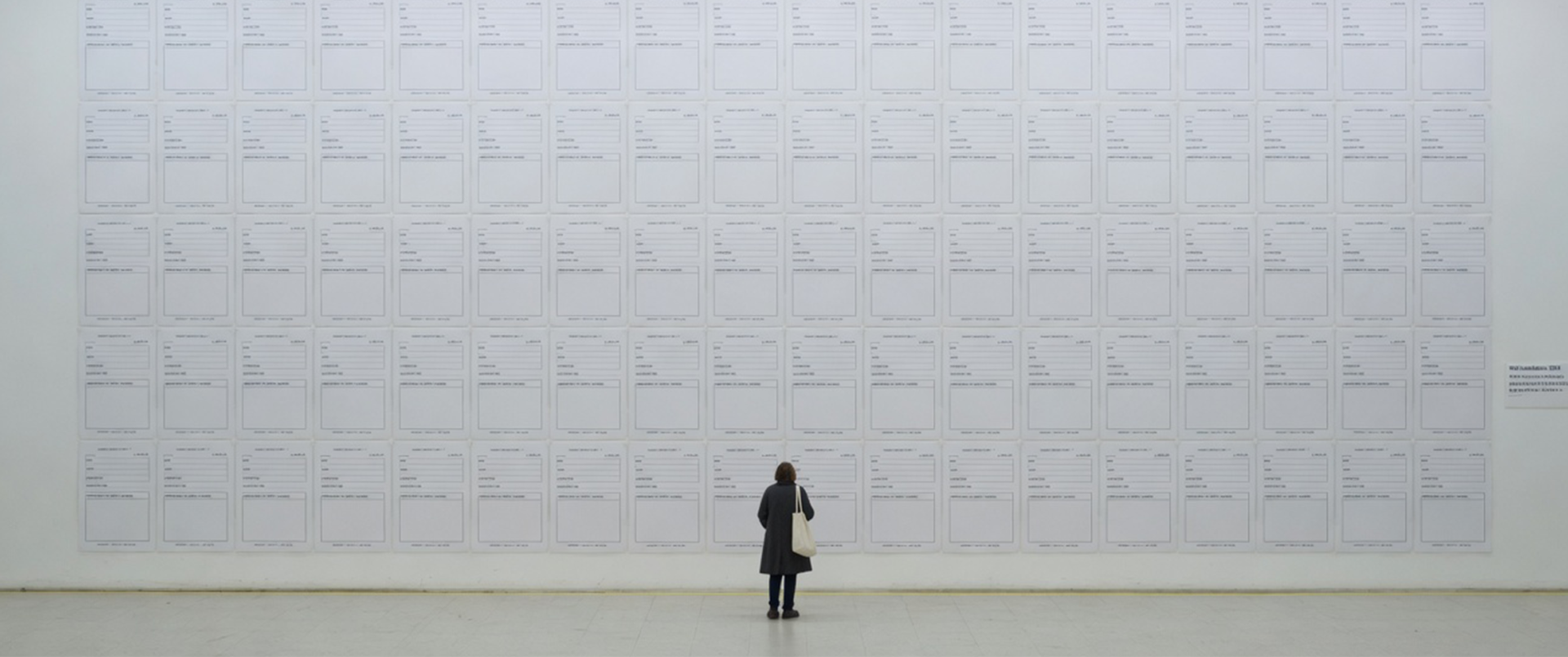
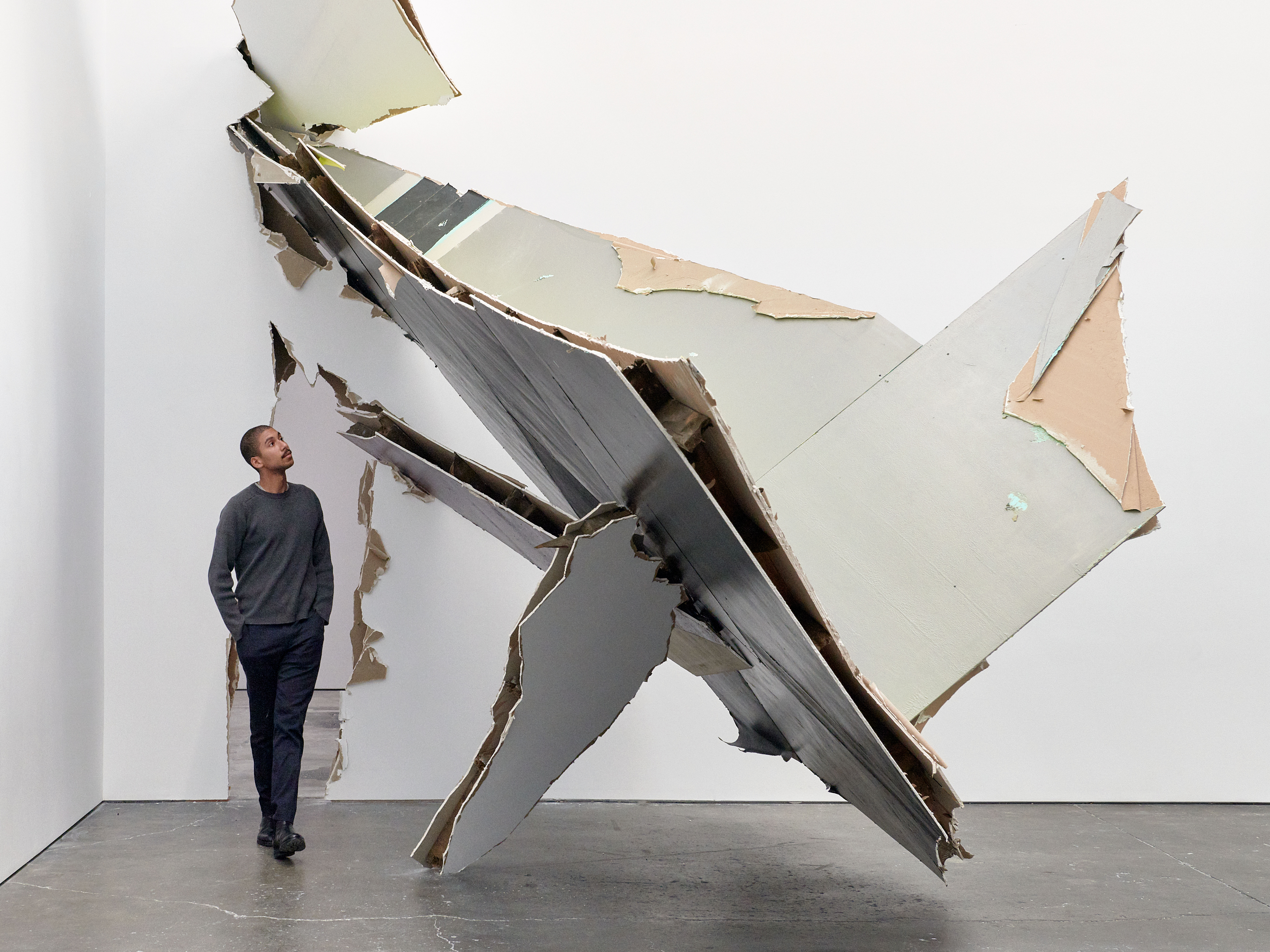
A sculpture photographed frontally against a white wall becomes a stable, legible, almost administrative entity. The same sculpture seen from the side, with the floor, the ceiling, a threshold, a body, or a flaw in the lighting, can become a more ambiguous spatial event. A painting photographed perfectly, isolated and without its environment, enters the logic of the autonomous image. The same painting inside a room, with readable proportions and real light, enters the logic of encounter. The container does not change the material substance of the artwork, but it changes the way that substance becomes thinkable.
Here, a difficult tension emerges. On one hand, every artwork needs conditions of visibility. No cultural form can entirely escape the devices that make it accessible. On the other hand, every device of visibility carries with it a set of codes that orient meaning. Presentation makes the public life of the artwork possible, but it also inserts it into a recognizable grammar. The question is not whether we can eliminate the container. We cannot. The question is whether we can make it less automatic.
Over time, the art system has built a repertoire of prestigious containers: the clean photograph, controlled lighting, the empty room, the close detail, the dense curatorial text, minimal design, the calibrated press release, the ordered sequence, the elegant archive, the short installation video. These codes work because they produce trust. They signal that the work belongs to a certain cultural regime. Yet precisely because they work so well, they risk becoming a compulsory language. The artwork is believed when it speaks through the signs the system has already approved.
The container as perceptual regime is therefore not a secondary problem of communication. It is part of the field of forces through which the artwork acquires public presence. What we see is always also the way we have been allowed to see. The substance of the artwork does not disappear into the container, but it must pass through it in order to become perceptible. Every presentation is a threshold. Every threshold selects.
When Documentation Becomes Authority
Documentation begins as a trace. It is meant to record the artwork, preserve a moment of it, and allow those who were not present to access part of the experience. But in contemporary culture, documentation has taken on a stronger role. It no longer simply testifies that an exhibition took place. It often establishes how that exhibition will be remembered, shared, judged, archived, and desired. Photography no longer merely follows the event. It becomes one of its forms of authority.
This is especially true for installation-based, performative, environmental, site-specific, or temporary works. The physical experience may be unrepeatable, but the documentation remains. It remains in press folders, artists’ portfolios, gallery archives, institutional websites, and dossiers for residencies, prizes, acquisitions, applications, collections, and future research. Over time, the documentary image can become more stable than the artwork itself. What was supposed to serve as memory becomes evidence.
This evidence is never innocent. An installation photograph determines the point of view, the distance, the hierarchy between elements, the temperature of the light, the presence or absence of bodies, and the relationship between artwork and architecture. It determines whether the environment appears charged or empty, whether the work seems monumental or fragile, whether the installation appears necessary or incidental. In a sequence of images, it also determines the rhythm through which the exhibition is mentally reconstructed. Documentation does not show everything. It edits a version of the event.
We often accept this version as if it were neutral because documentary photography adopts a language of apparent objectivity. The camera is still. The light is controlled. The lines are straight. The space appears clean. No emphatic gesture seems to intervene. It is precisely this restraint that produces authority. Documentation appears transparent while constructing a point of view. Its power lies in seeming like a service.
When documentation becomes authority, the artwork must compete with its own more stable image. An exhibition may have been intense in space and appear weak in photographs. Or it may have been more conventional in person and appear extremely powerful in documentation. The distance between experience and image is not an accidental flaw. It is a structural condition. The art system increasingly operates within this distance, because much of cultural circulation takes place through what remains visible after the experience.
The question, then, becomes unavoidable: who controls the visual memory of the artwork? The artist, the photographer, the gallery, the curator, the institution, the platform, the public, the feed? Each answer alters the fate of the work. Documentation does not only preserve. It distributes perceptual power. It determines which version of the artwork will be able to travel beyond the place where the work appeared.
The Violence of Bad Images
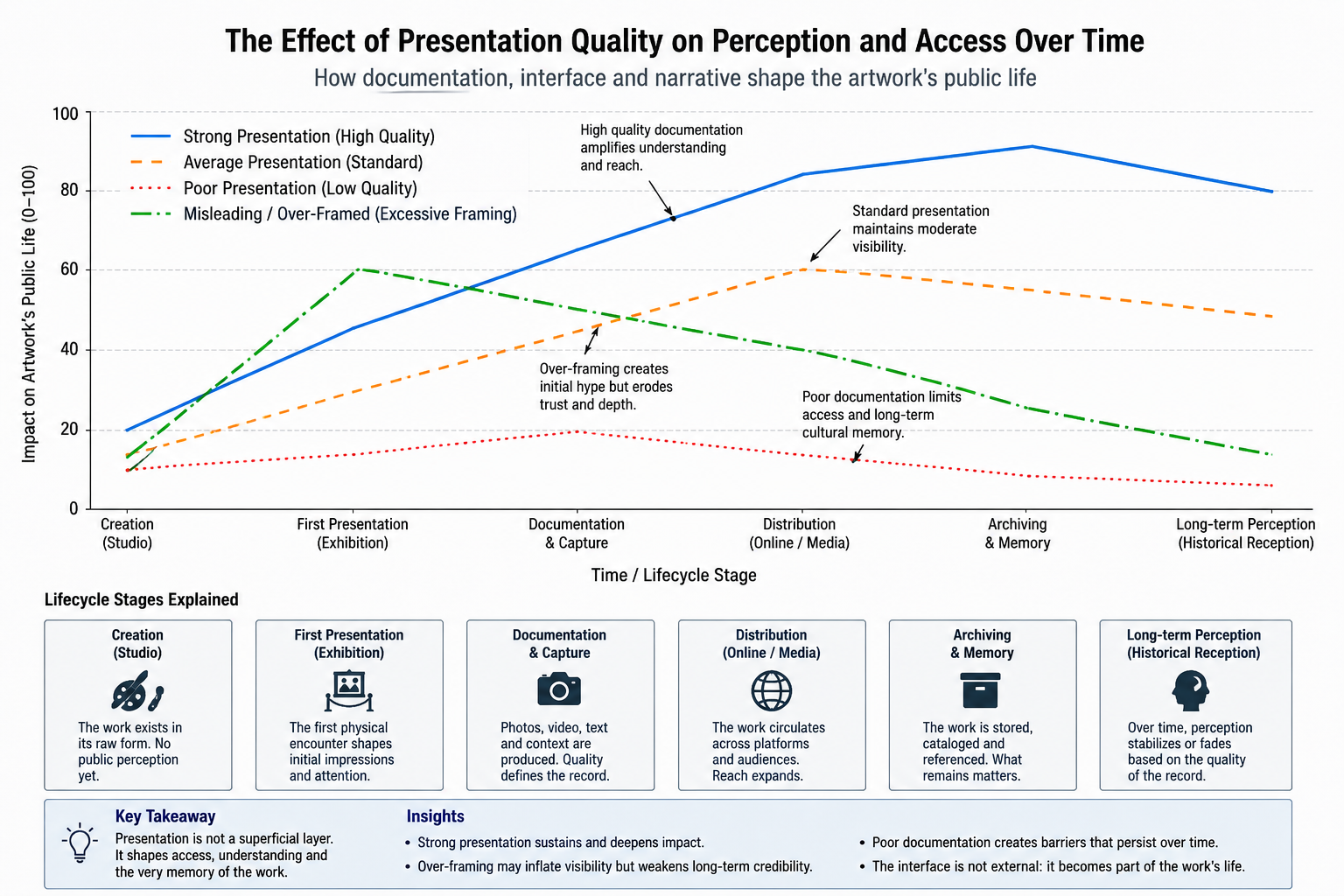
A bad image can wound an artwork without touching it. The material remains the same, the work does not physically change, and its internal structure is not erased. And yet, the threshold of access is damaged. A grainy, blurred, poorly compressed, dark, tilted image, one that lacks proportion or fails to convey the relationship with space, can produce an immediate form of discredit. We do not always state it openly. We feel it.
This violence is not only aesthetic. It concerns trust. When we see a poorly documented artwork, we tend to doubt the work, the context, the artist, the institution, and the overall care behind it. The bad image does not simply say, “this photograph is weak.” It suggests that something in the entire system of presentation has failed. The work appears less supported, less recognized, less ready to enter public conversation. The quality of documentation becomes an improper index of value.
Of course, this reaction is problematic. A complex work can be poorly documented because of limited resources, urgency, precarity, difficult technical conditions, spatial constraints, wrong decisions, or a conscious refusal of professional codes. A bad image does not automatically coincide with a weak artwork. In fact, some practices deliberately resist visual cleanliness, photographic control, and the seduction of the flawless image. There are works that ask for friction, noise, opacity, and instability. But even this resistance must be legible as a decision, not as an accident.
The problem is that the contemporary visual system has little patience for the ambiguity between error and choice. A poor image can be read as an anti professional aesthetic, but it can also be dismissed as incompetence. An unstable shot can suggest bodily presence, urgency, fragility, and direct testimony, but it can also seem simply wrong. Raw documentation can protect a certain truth of the artwork, or it can prevent the work from reaching those who do not already have the tools to understand it. The threshold is thin, and it is often decided by context.
Here, a form of perceptual injustice emerges. Works supported by strong documentation systems begin with a symbolic advantage. They have better images, better texts, better archives, better distribution, and a more coherent narrative. They can appear more mature even when they are not. Works without this infrastructure must pass through a harsher filter. They must prove their strength not only against critical judgment, but against the poverty of their own mediation. A bad image does not destroy the artwork. But it can prevent it from being received at the right time.
We must therefore distinguish between ontological degradation and perceptual degradation. A grainy photograph does not necessarily reduce the substance of the artwork, but it can reduce the quality of its public encounter. It does not ruin the work itself, but it can ruin the first pact of trust between the work and the viewer. In a system where the first experience is often mediated by images, this difference is decisive. The wound is not in the artwork. It is in the possibility that the artwork may be reached.
Packaging, Narrative, Substance
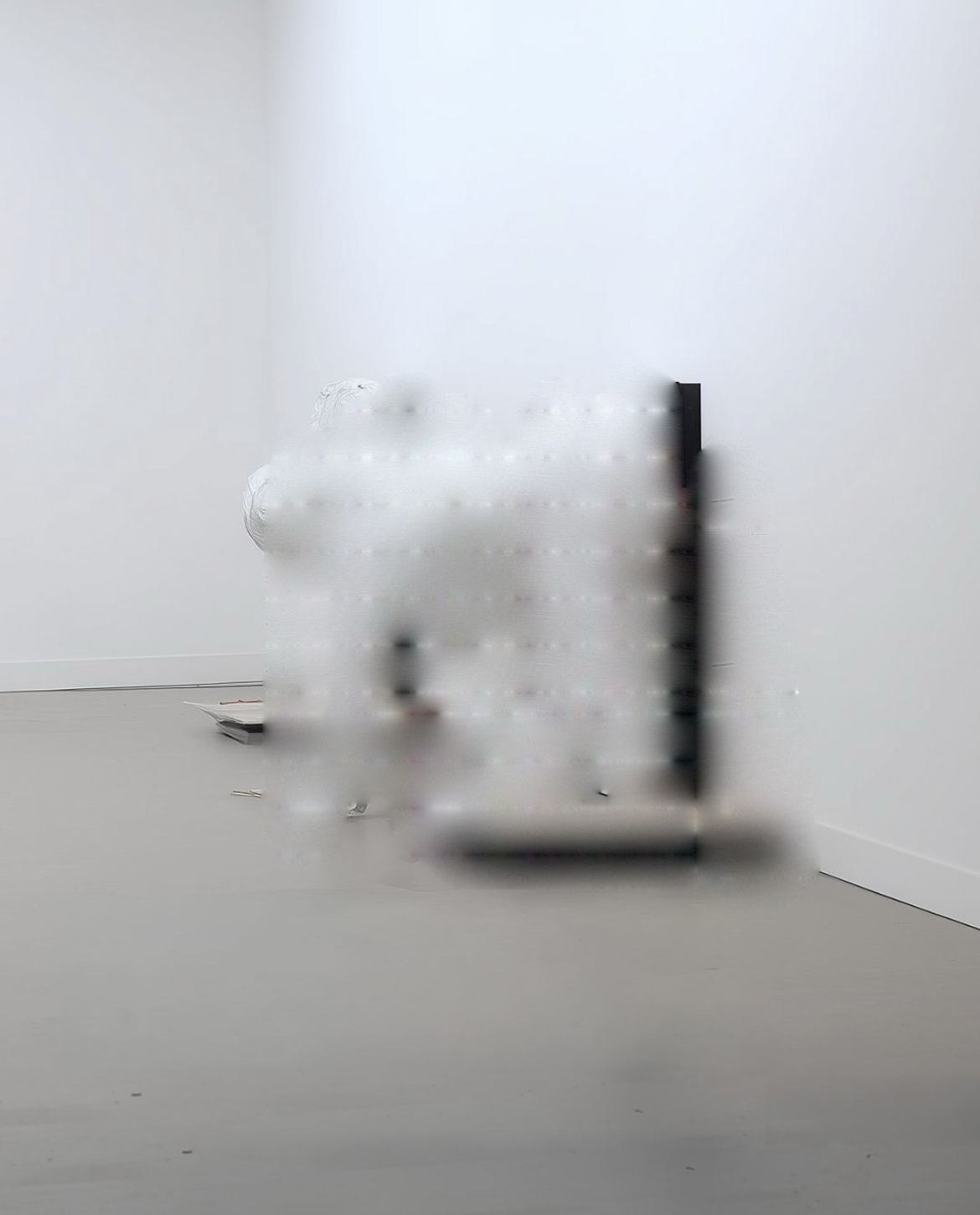
Cultural packaging is often treated with suspicion, as if it were the site of manipulation, marketing, or surface covering substance. This distrust has its reasons. The art system is perfectly capable of producing value through packaging, language, positioning, graphic design, reputation, and discursive architecture. A fragile work can be supported by a strong narrative. A conventional project can appear necessary when packaged within the right codes. Presentation can amplify, but it can also falsify.
And yet, an overly moralistic critique of packaging risks being naive. No artwork reaches the public without mediation. Even the choice not to package is a form of packaging. Even the refusal of design produces an image. Even austerity communicates. Even silence becomes style once it enters a system capable of reading silence as depth. Substance never appears in a pure state. It needs a public form in order to become shareable.
The issue, then, is not to eliminate narrative, but to understand what kind of narrative allows the artwork to breathe. A weak narrative flattens the work because it explains it too quickly. An aggressive narrative turns it into an illustrated thesis. An opportunistic narrative aligns it with the language of the moment. An overly elegant narrative can make it more refined and less unsettled. Good presentation should not close down meaning, but build the conditions for a more precise encounter.
The substance of an artwork does not coincide with what remains after every interface has been removed. That would be a myth. Substance also emerges through the way the artwork is introduced, lit, described, archived, and placed in relation. An exhibition can bring out a quality that the individual work did not reveal on its own. A text can open a field of reading without exhausting it. A photograph can convey a spatial tension that may have dispersed in the live experience. Presentation can be knowledge, not only wrapping.
But for this to happen, packaging must give up the temptation to replace the artwork. It must create proximity without occupying the entire field. It must produce trust without imposing reverence. It must give form to access without turning access into the final meaning. When the narrative becomes too perfect, the artwork risks appearing as proof of a discourse that has already been completed. When the presentation is too weak, the artwork risks not arriving at all. Between these two forms of failure, a vast part of contemporary perception is at stake.
We can no longer simply oppose substance and packaging. We must ask when presentation helps substance manifest itself, and when it disciplines it, normalizes it, or makes it compatible with the expectations of the system. Packaging becomes dangerous when it stops being a threshold and becomes a mask. But it becomes necessary when it allows the artwork to move through the noise without losing its complexity.
Criteria of Visual Value
The art system does not impose only criteria of value. It also imposes visual codes of legitimacy. A certain kind of installation photograph, a certain distance from the wall, a certain light, a certain cleanliness of the website, a certain dryness of the text, a certain posture of communication immediately suggest belonging. They tell us that we are inside a recognized environment, that the work participates in a competent conversation, that its image has been constructed according to the unwritten rules of the field.
These codes are not necessarily wrong. They have become effective because they respond to real needs: clarity, archiving, international communication, legibility for curators, collectors, institutions, researchers, the press, and remote audiences. Standardization allows artworks to circulate. A clean image facilitates understanding. A calibrated text avoids dispersion. An orderly website makes the work accessible. The problem begins when effectiveness turns into an aesthetic obligation.
At that point, the artwork must resemble its own legitimacy. It must appear contemporary according to a grammar that is already recognizable. It must be clean enough to seem serious, opaque enough to seem profound, minimal enough to seem sophisticated, contextualized enough to seem critical, photographable enough to seem ready. These visual stereotypes do not always operate explicitly. They operate as diffuse expectations. They define the field of the credible.
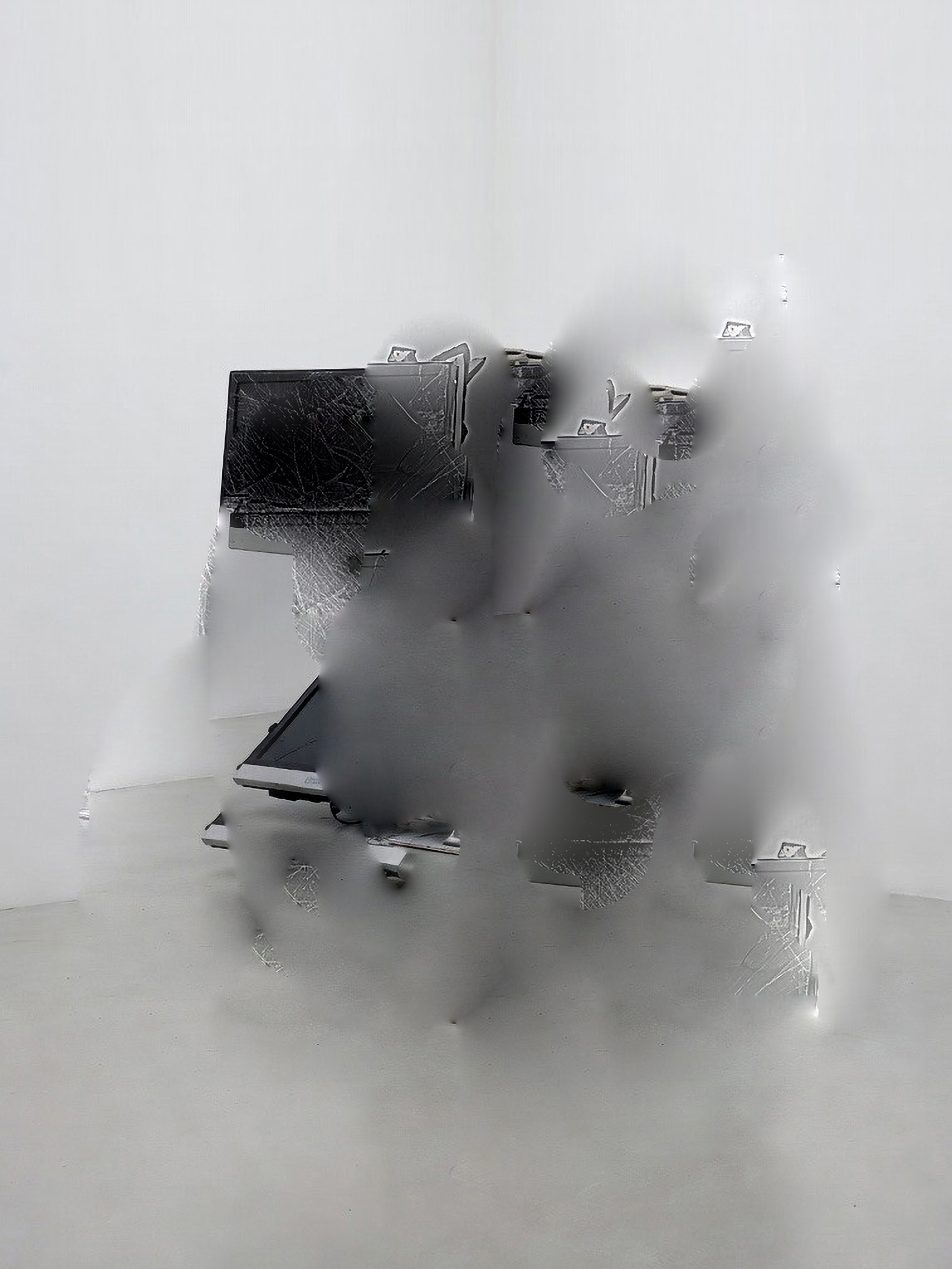
How, then, can an artwork communicate its image effectively without submitting to these codes? The answer cannot be a simple refusal. A work that rejects every code risks becoming invisible, or being read as amateurish. The rupture must be more intelligent. It must understand which codes to use, which to twist, which to slow down, which to contaminate, which to make visible. The question is not how to exit the visual system, but how to prevent the visual system from becoming automatic.
There are forms of documentation that can preserve a certain friction. Photographs that seek not only cleanliness, but the behavior of the artwork in space. Texts that do not explain too quickly, but open up a position. Websites that do not turn everything into inventory. Image sequences that convey shifts in scale, errors, density, emptiness, and non-decorative details. Forms of communication that do not try to make every project immediately recognizable. This is not about lowering quality. It is about shifting quality from decorum to perceptual precision.
To work against the codes of the art system does not mean working against professionalism. It means working against professionalism as anesthesia. An effective presentation should protect the artwork even from its own elegance. It should prevent the work from being absorbed too quickly into the general language of the contemporary. Every artwork needs to be communicated, but not every form of communication should make it docile. The challenge is to construct an interface that does not dominate the artwork, but makes its resistance visible.
The Interface Inside the Work
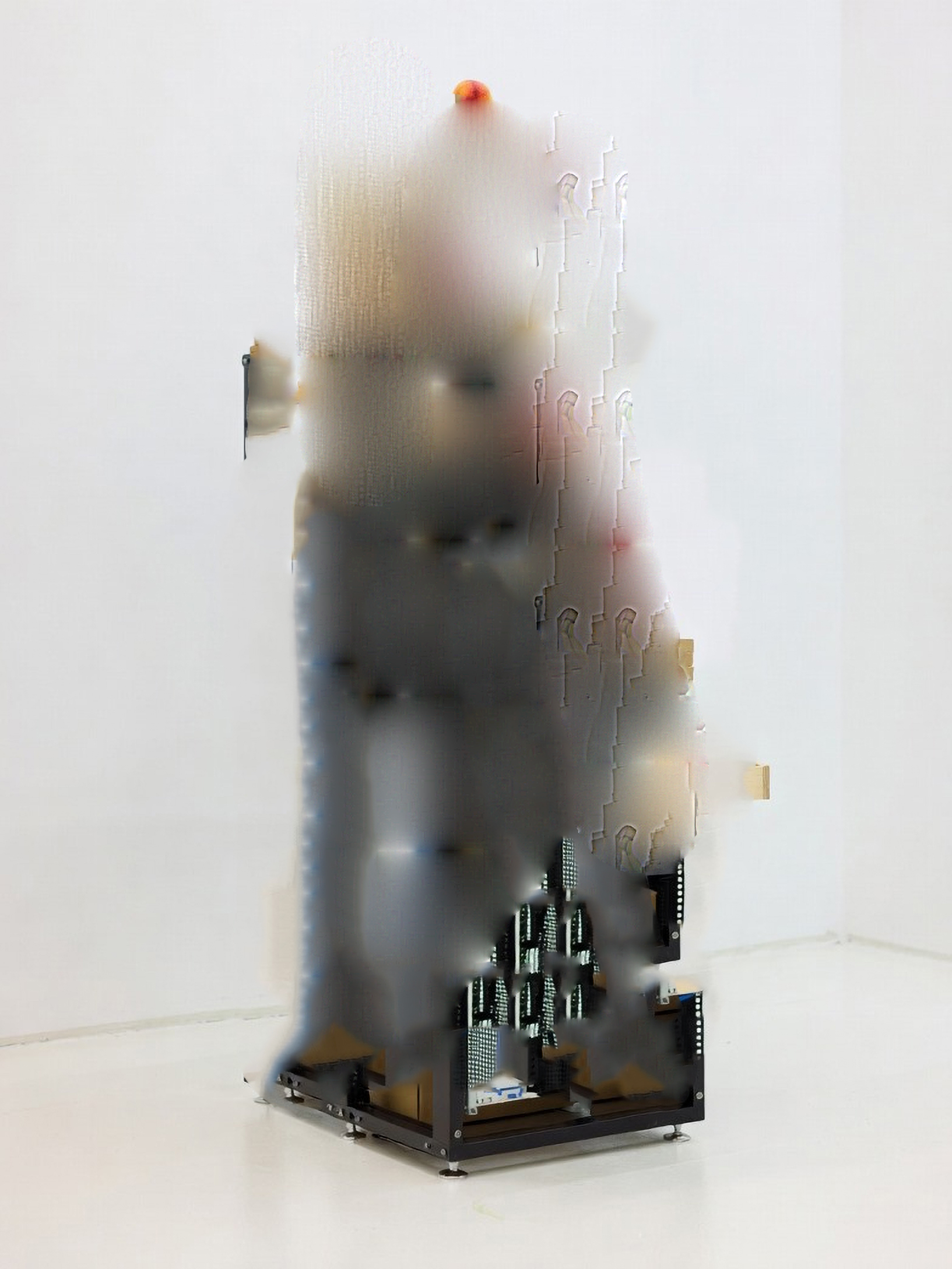
Presentation is no longer only what comes after the artwork. It has entered its public life, its memory, its circulation, its economy, and its interpretation. This does not mean that every artwork must be conceived as a brand, nor that communication should become the center of artistic practice. It means that contemporary art exists within a field in which its public image acts upon its material perception. The interface has become part of its environment.
We can still distinguish between artwork and presentation, but we can no longer pretend that this distinction remains stable at every moment. In the studio, the work may have one kind of existence. In an exhibition, it assumes another. In photography, another still. In the archive, in the catalogue, in the feed, in critical conversation, in the market, and in memory, it continues to transform. Each passage produces a version. No version exhausts the work, but some versions become more influential than others.
The form of presentation therefore becomes part of the content when it modifies the conditions through which that content is perceived. Not because the frame is always equal to the artwork, nor because every act of communication automatically produces meaning. The point is more concrete. If an artwork lives publicly through images, texts, spaces, platforms, and narratives, then those structures participate in the construction of its field of meaning. They can clarify, distort, strengthen, banalize, protect, spectacularize, or make possible.
This imposes a different responsibility on artists, curators, galleries, institutions, publishers, photographers, designers, and platforms. To present an artwork does not simply mean to show it well. It means deciding what kind of encounter to make possible. It means choosing whether the work will be introduced as an enigma, a product, a document, an experience, a position, an atmosphere, a piece of evidence, an archive, an event, or an image. Every choice opens one path and closes others.
Bad presentation does not necessarily kill the artwork. Good presentation does not automatically save it. But both participate in its public fate. The artwork remains larger than its images, its texts, its frames, its websites, its invitations, and its photographs. And yet, in order to reach the world, it must pass through them. This is where the question becomes unavoidable. The interface is not the content, but today content passes through the interface in order to become perceptible.
Perhaps the critical task is not to free the artwork from presentation. It is to make presentation responsible for its own force. A photograph can be a threshold or a wound. A text can be an opening or a cage. An installation can be a thought or a scenography. A website can be an archive or a showcase. The difference does not lie in the presence of the interface, but in the way the interface accepts that it does not entirely possess what it shows.
The artwork never arrives alone.
The question is who speaks before it, and how much space remains for the work to still contradict its own image.