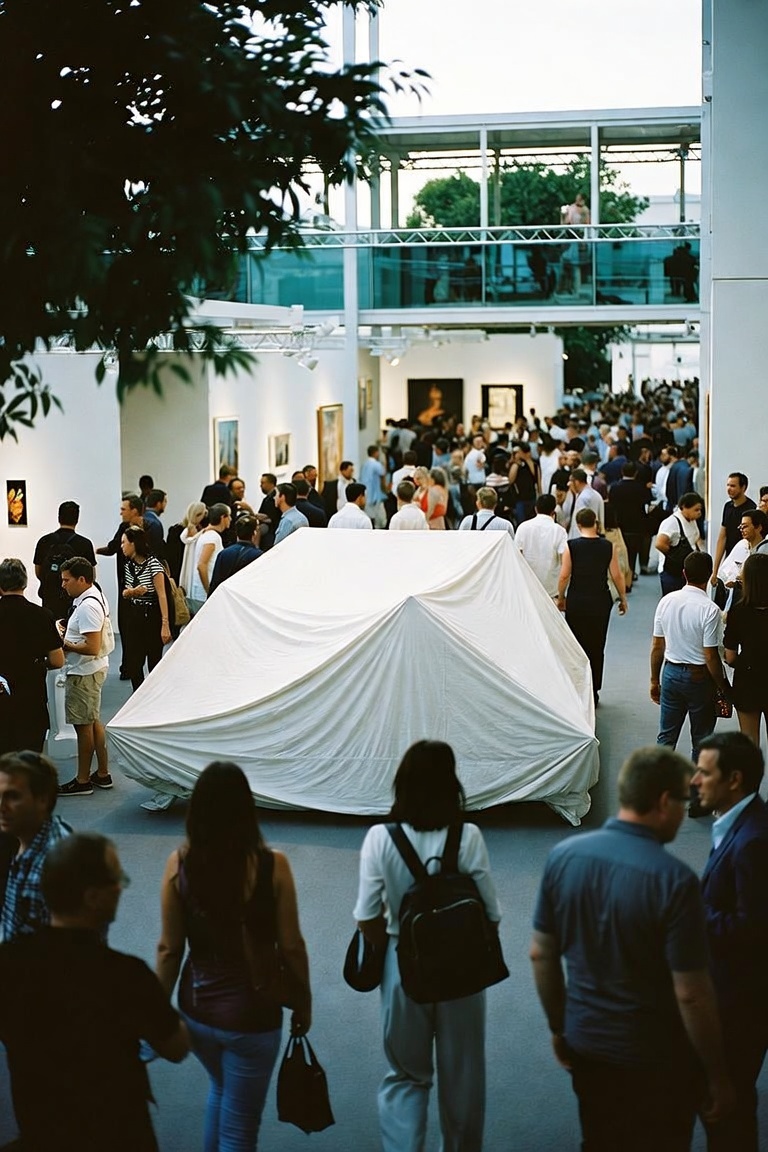

Art Basel 2026 has just come to a close in Basel, where, from June 18 to 21, the fair brought together more than 290 international galleries alongside a program extending across Messe Basel, the city’s institutions, and its urban spaces. Yet on this occasion, one of the most interesting developments was not so much the scale of the event, but the way certain works were withheld from the usual logic of anticipation.
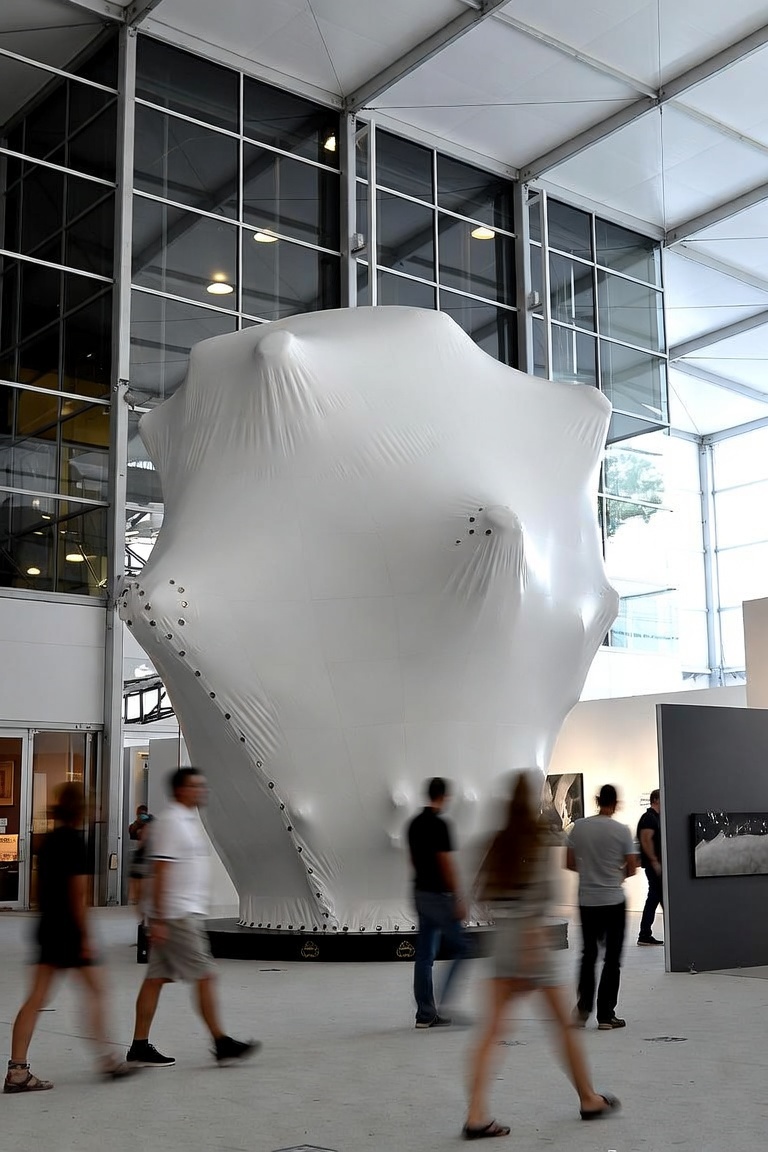
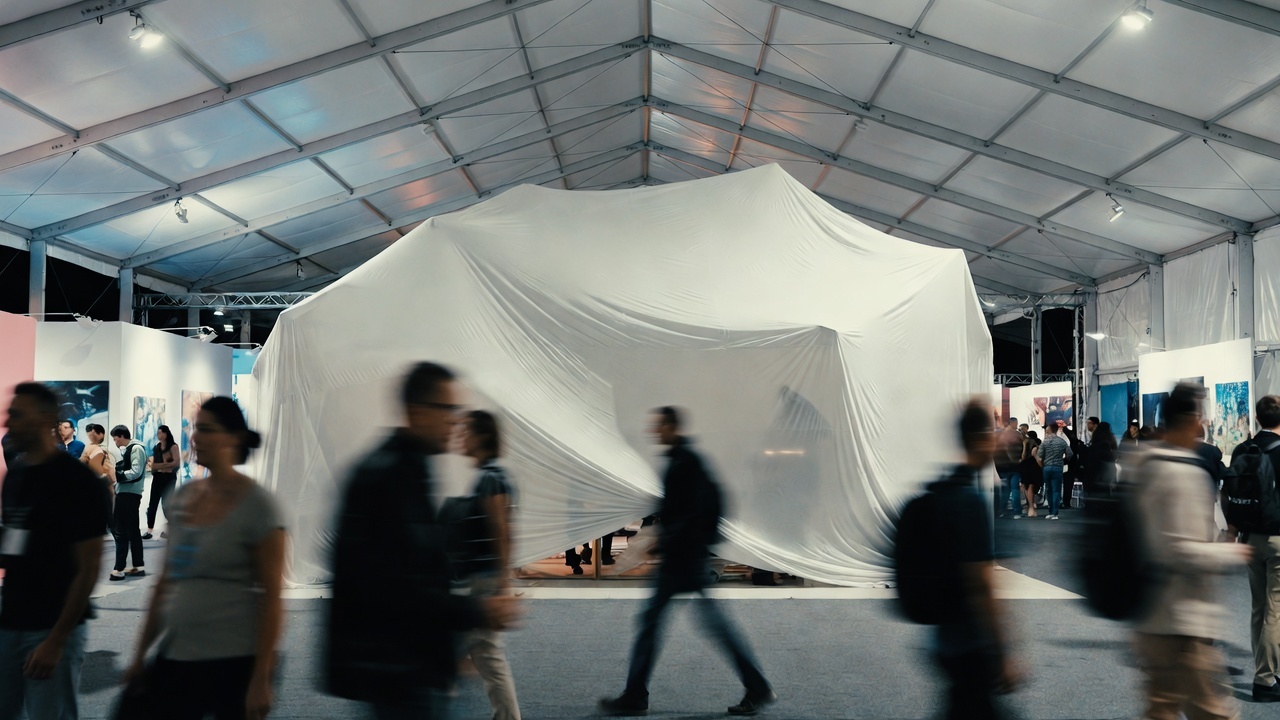
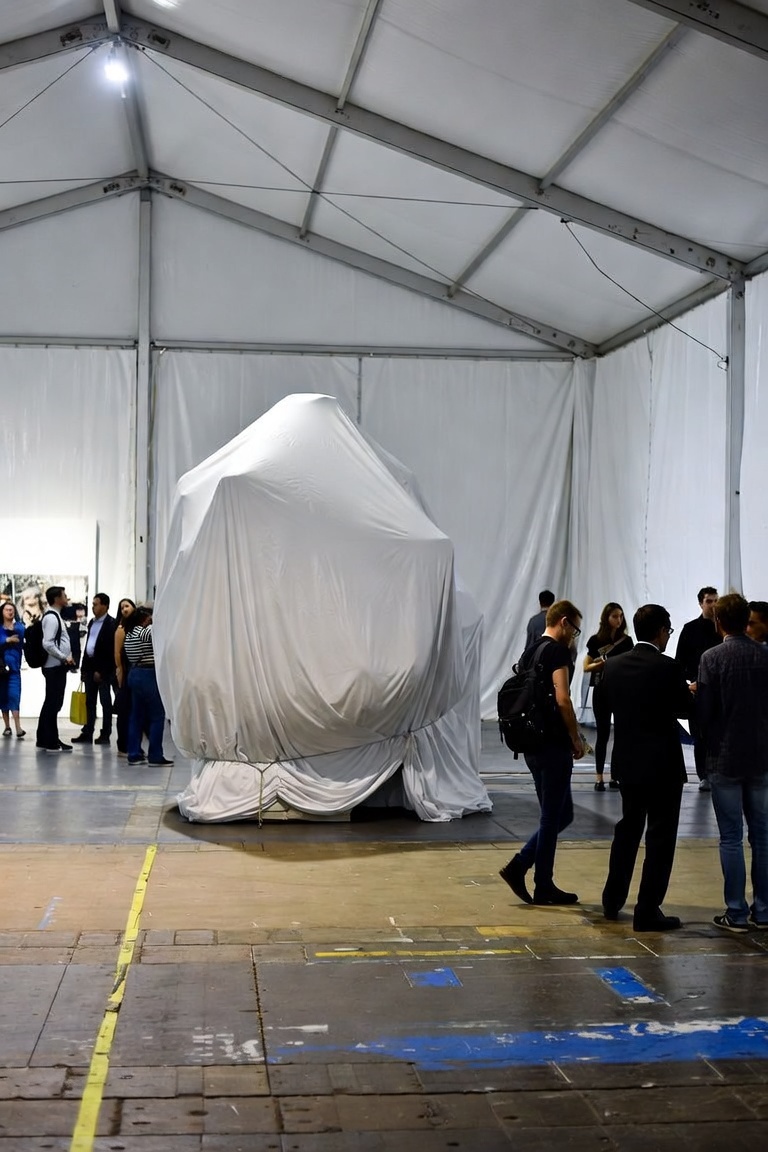
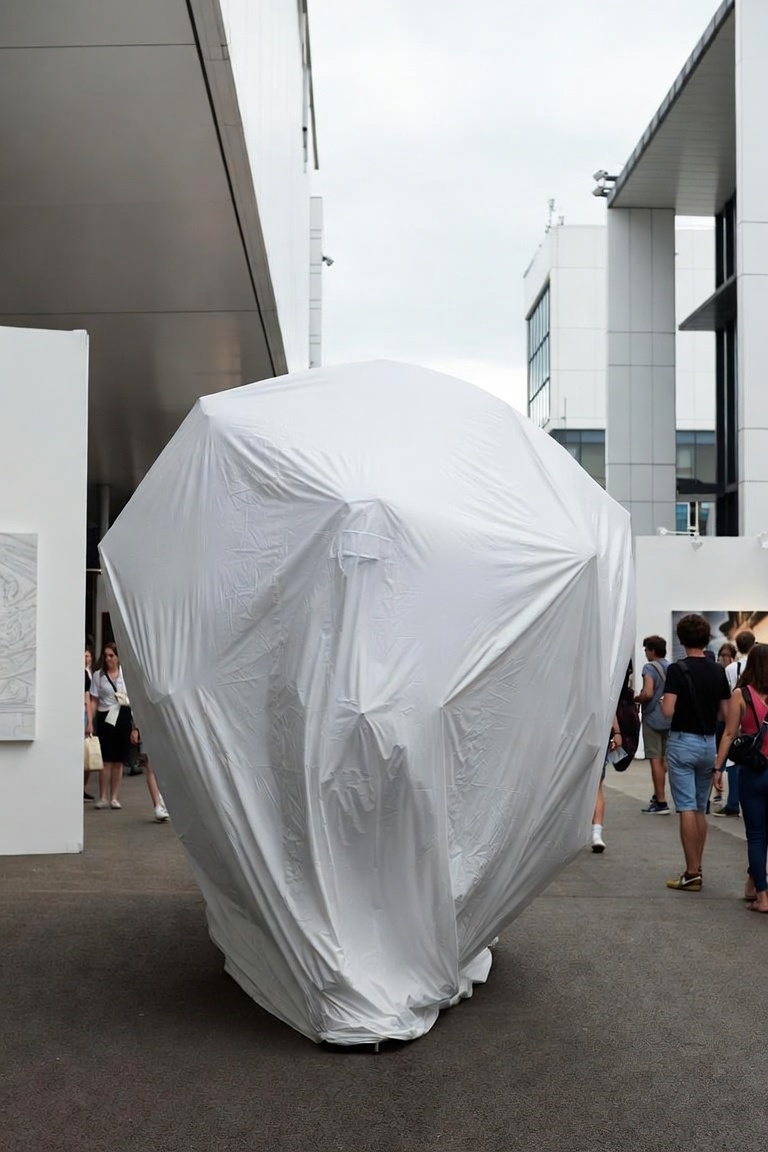
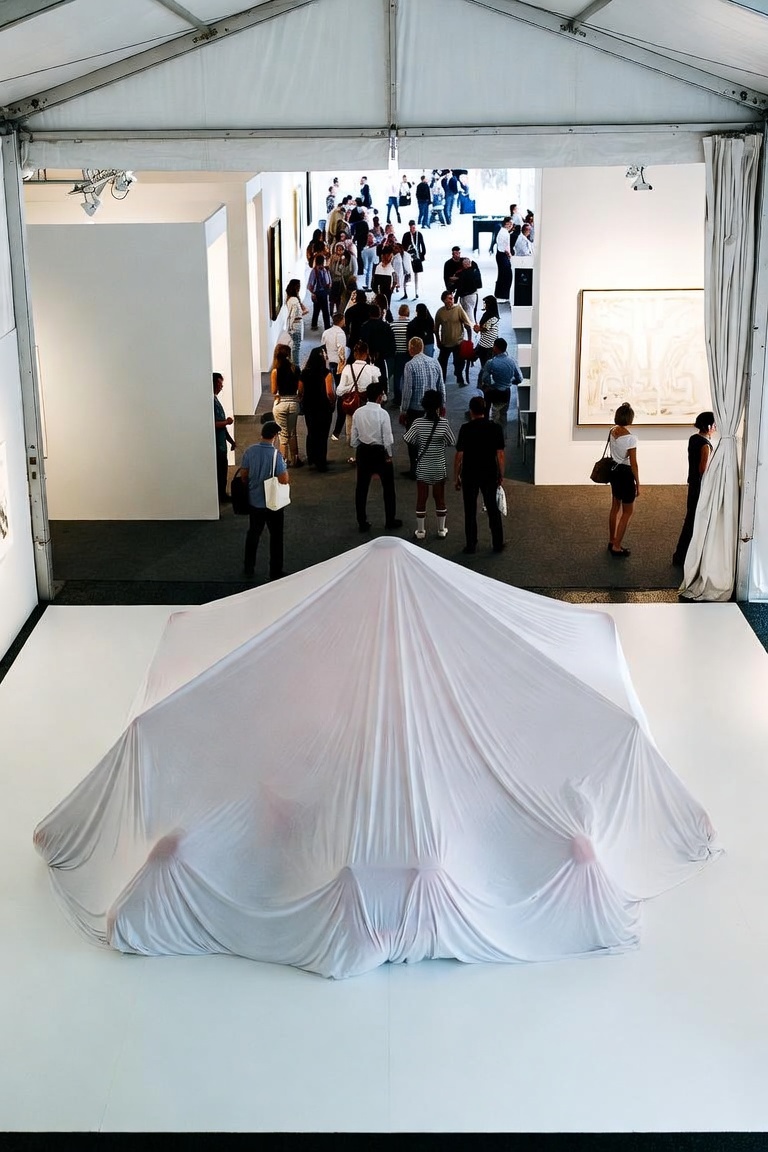
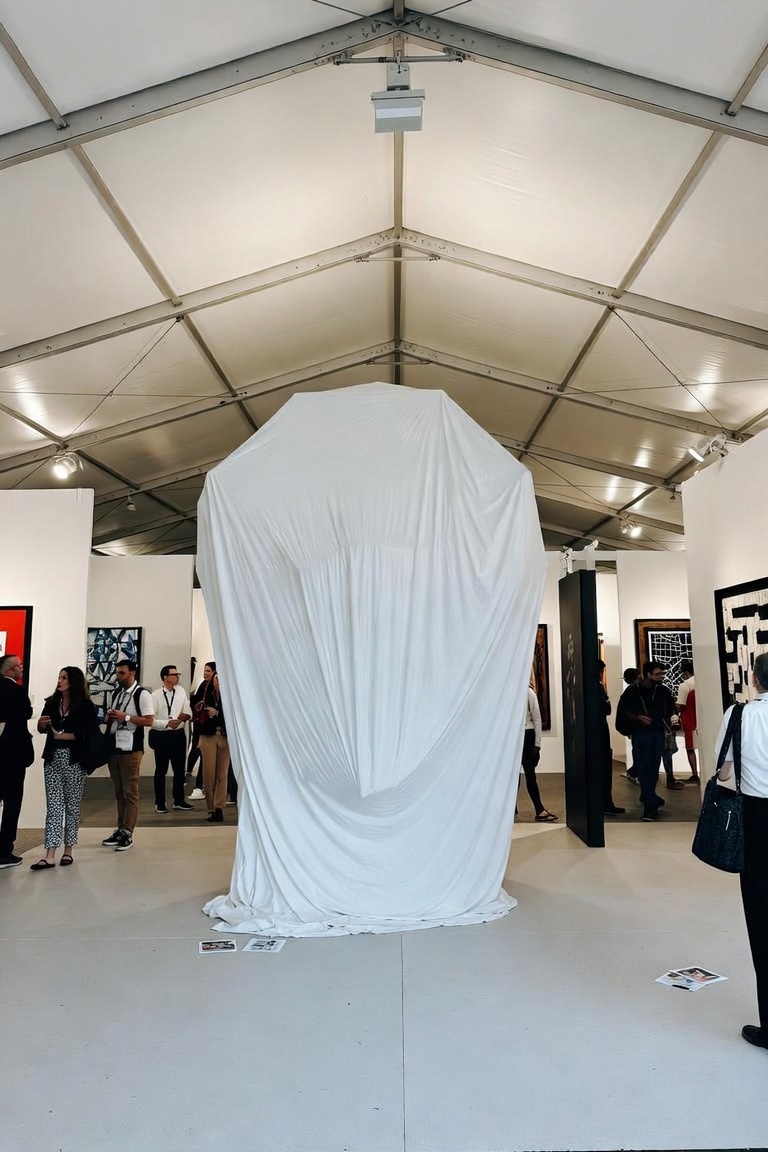
Launched this year, Basel Exclusive is not a new fair section in the traditional sense, nor a standalone format comparable to programs such as Unlimited, Parcours, or Statements. It is, rather, a new initiative developed by Art Basel in collaboration with participating galleries, built around a simple and precise principle: a selection of significant works is not shown before the opening, does not circulate through digital previews, images, private PDFs, or online teasers, but is revealed for the first time within the physical space of the fair.
The gesture may seem minimal, almost peripheral in relation to the complex machinery of an event like Art Basel. And yet it introduces a subtle but meaningful shift in how a fair can be experienced. Beyond the number of galleries present, the density of the program, or the urban reach that extends across the city of Basel, Basel Exclusive intervenes in a less visible but decisive dimension: the timing of attention.
This is not simply a matter of adding another element to the fair’s program, but of changing the relationship between anticipation, image, and presence. Certain works were not previewed, made available through digital channels or private materials, or circulated before the opening in order to guide the gaze of collectors, press, and public. They were held back until the moment of physical encounter with the fair. In doing so, Art Basel 2026 placed renewed emphasis on a condition that has become increasingly rare within the contemporary art system: the possibility of seeing a work before already knowing it.
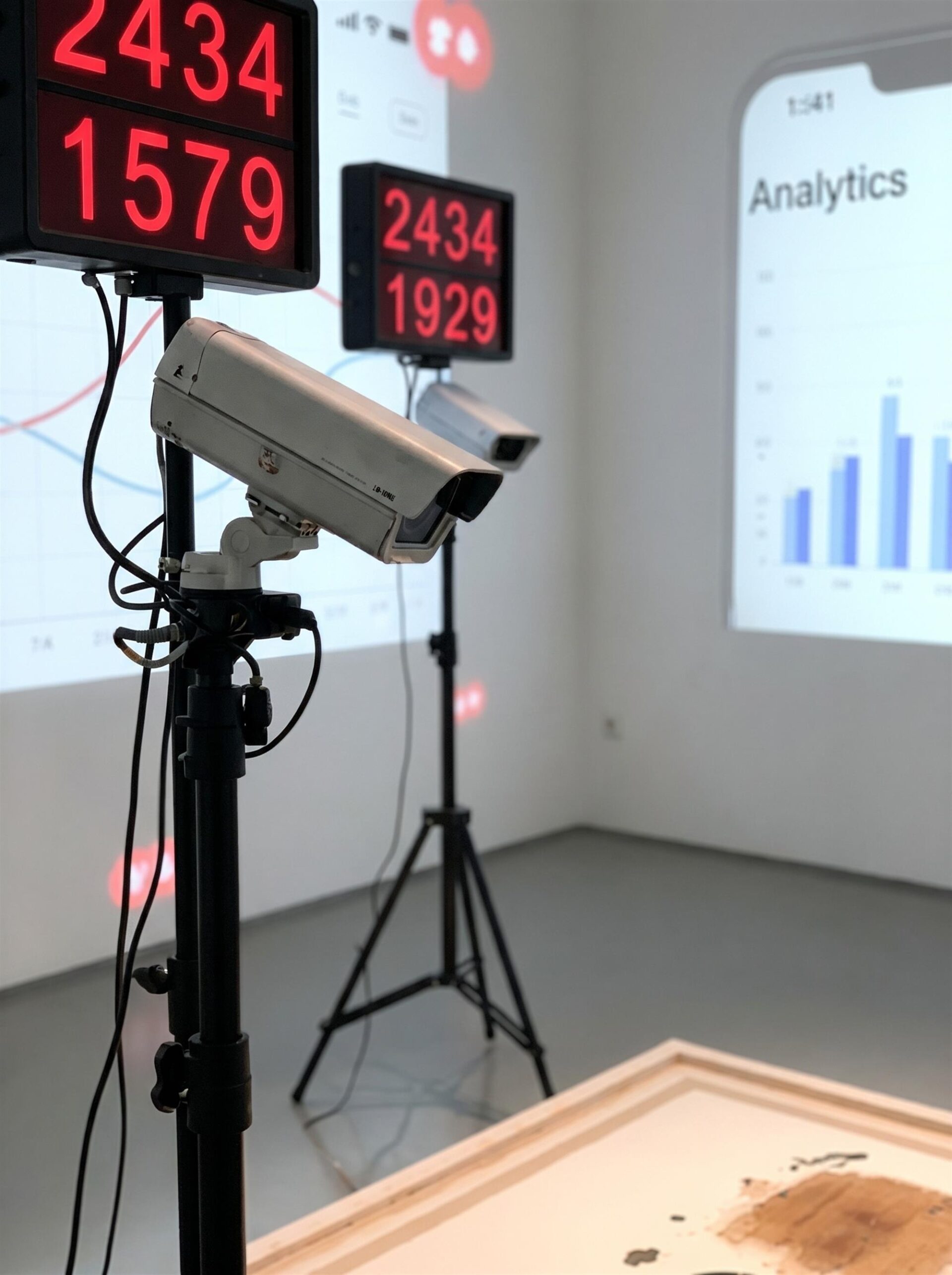
This is where Basel Exclusive becomes most compelling. In recent years, many fairs have begun to exist before they physically open. Works are previewed, archived, shared, evaluated, and often partially consumed through images that precede direct experience. By the time visitors arrive in the exhibition space, they are not always encountering something for the first time. More often, they are recognizing what they have already seen circulating elsewhere.
The decision to reveal certain works only at the opening interrupts this sequence. It reintroduces a form of waiting into a system built on maximum visibility. It gives entry into the fair a different weight: not only as access to a commercial or institutional space, but as access to something that has not yet been entirely absorbed by the digital surface surrounding the event.
In this sense, the gesture is not nostalgic. It is not about returning to a romantic idea of discovery, nor about denying the inevitable role of images in the circulation of contemporary art. Rather, it acknowledges that excessive anticipation changes the way we look. When a work arrives already mediated, already photographed, already contextualized, already inserted into a narrative of value or expectation, the experience of encounter loses part of its instability.
Basel Exclusive operates precisely within this instability. By withholding certain works until the opening, the fair briefly protects the possibility of not knowing. It asks the public to enter the space without having already completed the itinerary mentally. It brings surprise back into play, not as a spectacular effect, but as a critical condition of looking. The work appears again before being reduced to its image.
The opening, then, is no longer merely the moment when a fair becomes accessible. It becomes the moment when something truly happens for the first time.
Before the Image: The Return of the Encounter
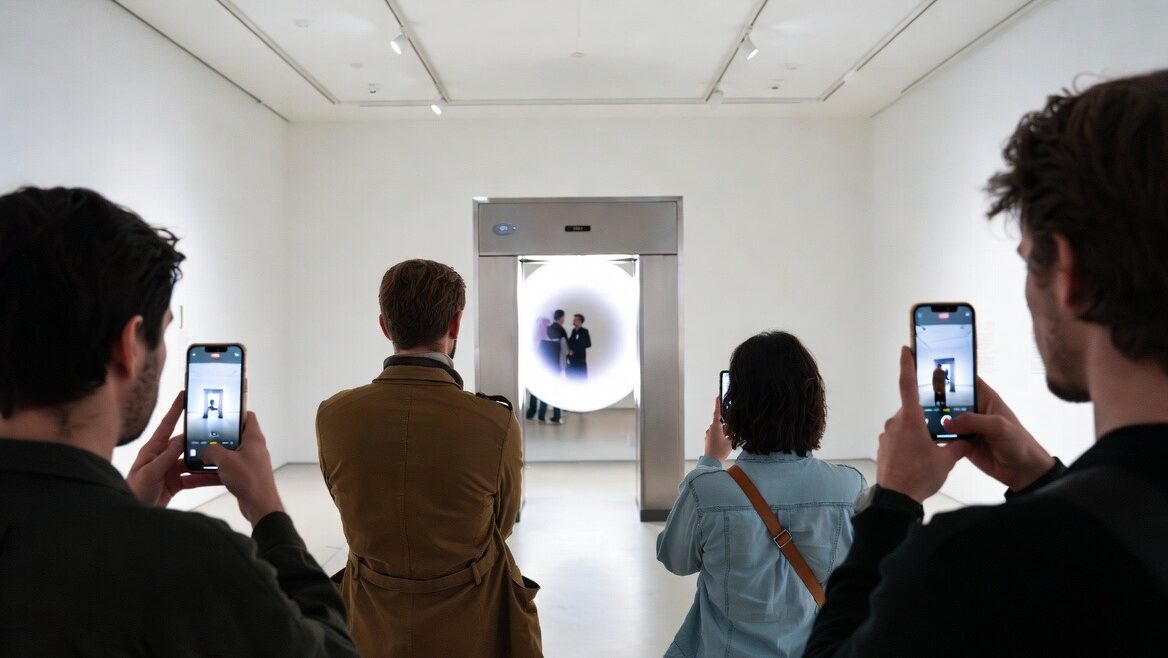
One of the most evident effects of the digital circulation of art is the transformation of the first encounter into an anticipated experience. Increasingly, a work is seen before it is encountered. It arrives as an image, a detail, a preview, a screenshot, a PDF, a private post, or an editorial teaser. It appears already within a reduced, legible, portable format, designed to precede the visit and direct attention.
This condition profoundly changes the way we look. The work appears less as something we encounter than as something we recognize, having already passed through it visually. At times, this prior exposure may even shape our taste: we like the work precisely because we have already seen it, because it has already entered our field of familiarity.
The body arrives late in relation to the image. Physical looking follows an earlier form of looking: faster, more functional, and less vulnerable to the unexpected.
The decision to reveal certain works only at the opening intervenes precisely in this fracture. It restores a primary dimension to the encounter. The visitor does not enter the space in order to verify what has already been seen — something that happens at fairs far more often than one might think — but to expose themselves to something that has not yet been fully coded. The work regains part of its temporal autonomy. It is no longer simply an already circulated image waiting to be confirmed in person, but a presence offering itself for the first time within a concrete situation.
Why does this matter? For us, at least, it matters because a work of art never fully coincides with its image — and we know this well; we have written about it at length. Even when the image is necessary to its circulation, even when it becomes part of the way the work is known, archived, and desired, a distance remains between seeing something on a screen and encountering it in space. Scale, surface, material, the relationship with the surrounding environment, the position of the body, and above all the time required to approach or move away: all of this belongs to a form of experience that an image can suggest, but never replace.
In this sense, Basel Exclusive does not merely protect certain works from initial overexposure. It protects the possibility that the work may arrive before its visual translation. In a system accustomed to turning everything into an image before it has even happened, this choice takes on a precise critical value. It shifts attention from anticipated consumption to presence, from circulation to perception, from prior knowledge to discovery.
Waiting as a Curatorial Device
The decision not to show certain works in advance does not concern only the fair’s communication strategy. It would be easy to read it as a form of suspense applied to the event calendar, or as a way to generate curiosity around what will be presented. But the more interesting point is that waiting itself is transformed into a curatorial device. It becomes part of the construction of the experience: a way of directing time through which the fair organizes how the works are received.
In a system accustomed to immediate availability, withholding a work produces a precise effect. It forces the gaze to arrive after, not before. This suspension changes the relationship between the work, the public, and the exhibition space, because it restores to physical presence a role that, in recent years, has been increasingly preempted by previews, viewing rooms, PDFs, and images shared before the opening.
Waiting, in this sense, is not an absence of content. It is an active condition. It creates a threshold. It establishes that the work does not necessarily have to be available before it appears, and that the value of the encounter also depends on not having already consumed it. The fair thus ceases to be merely the place where something is exhibited and becomes the place where something is revealed.
This shift is central because it moves attention away from the quantity of information available and toward the quality of attention generated. Knowing everything in advance does not mean looking better. On the contrary, excessive anticipation can reduce the availability of the gaze, turning the visit into a verification of images already mentally archived. Waiting, instead, opens a space of receptivity. It prepares without saturating. It orients without explaining. It allows the work to retain part of its opacity until the moment of encounter.
From this perspective, Basel Exclusive works against one of the most deeply rooted habits of the contemporary system: the idea that visibility must precede every experience. The decision to withhold certain works suggests that not everything must be immediately accessible in order to acquire value. On the contrary, part of that value may emerge precisely from delay, suspension, and the possibility that something has not yet been seen, photographed, commented on, or transformed into content.
The gesture is minimal, but its implications are broad. It introduces a different politics of time into the fair. It does not accelerate the circulation of works, but slows it down. It does not multiply the images available, but delays their appearance. It does not produce attention through excess, but through a form of withdrawal.
In this withdrawal, waiting becomes a critical practice. It restores to the opening a value that is not only social or commercial, but experiential. It reminds us that art does not live only in its display, but also in the way it is made to appear. And that, at times, the moment before seeing is an integral part of seeing itself.
The Fair Consumed Before It Is Experienced
One of the most evident consequences of the contemporary art ecosystem is that a fair can be partially consumed before it is even visited. Before the official opening, many works have already circulated, many booths have already been previewed, and many narratives have already been framed. The public often arrives inside an event that already exists as an image, as a selection, as a preliminary account.
In this scenario, the visit risks becoming, as mentioned earlier, a form of confirmation.
The decision to reveal certain works only at the opening intervenes precisely against this dynamic. It does not eliminate the fair’s communication, nor does it claim to remove art from its media circulation. It does, however, introduce an internal resistance to the mechanism of anticipation. It establishes that part of the experience must remain unavailable until the moment the visitor enters the space.
This gesture restores to the fair a quality that is often at risk of weakening: the possibility that something may actually happen. Not everything has already been seen. Not everything has already been commented on. Not everything has already been absorbed into a hierarchy of attention. The physical event does not simply arrive after its image; it once again produces part of the experience.
A fair that has already been consumed is one in which the image anticipates the encounter and the narrative precedes perception. It is a device in which value is often organized before presence. In this context, withholding certain works does not mean creating secrecy, but protecting a minimal zone of unpredictability. It means preventing the entire event from being absorbed before it has even begun.
This unpredictability, whether one wants to admit it or not, has critical value. It forces the public back into a condition of active attention. It is not enough to know what to look for. It is not enough to follow what has already been signaled. One must look, move through the space, and allow oneself to be surprised by what had not been anticipated. The fair thus becomes a space of experience again, not merely the physical completion of a digital preview.
In this sense, Basel Exclusive functions as a corrective to contemporary saturation. Within a system that tends to show everything in advance, it introduces a delay. Within a culture that turns every event into anticipated content, it restores value to presence. Within a fair that risks being read before it is even traversed, it reopens the possibility of discovery.
The issue does not concern Art Basel 2026 alone. It touches on a broader problem within the art system: the difficulty of preserving the intensity of encounter in an environment dominated by pre-visibility. If everything is anticipated, the visit loses part of its necessity. If everything is already available, the work arrives deprived of a threshold.
Revealing certain works only at the opening therefore means resisting the fair as an already metabolized event. It means recalling that the value of an exhibition, a fair, or a work does not depend only on its capacity to circulate, but also on its capacity to appear at the right moment. Before full visibility, there remains a fragile space: the space in which art can still surprise before becoming content.