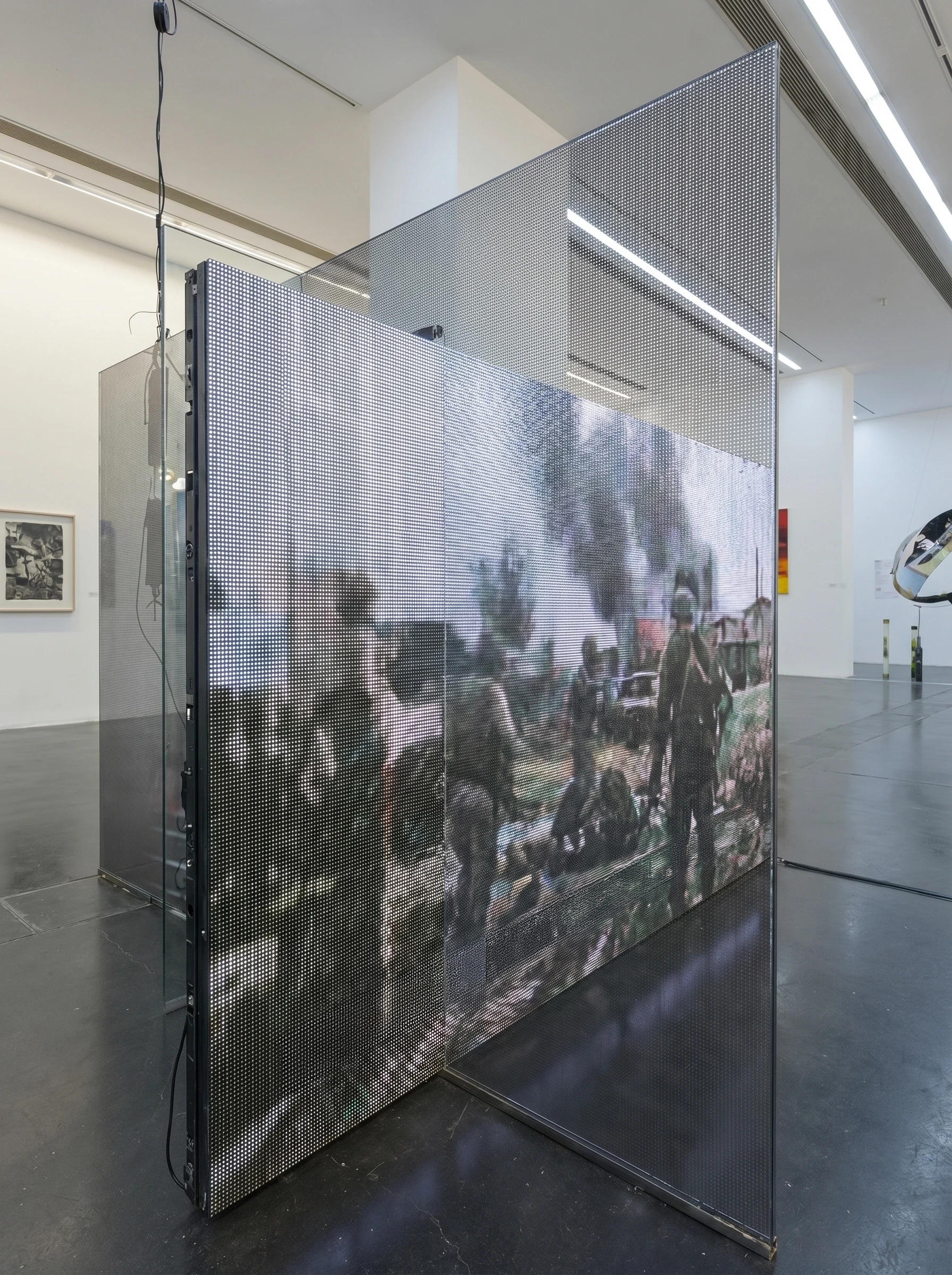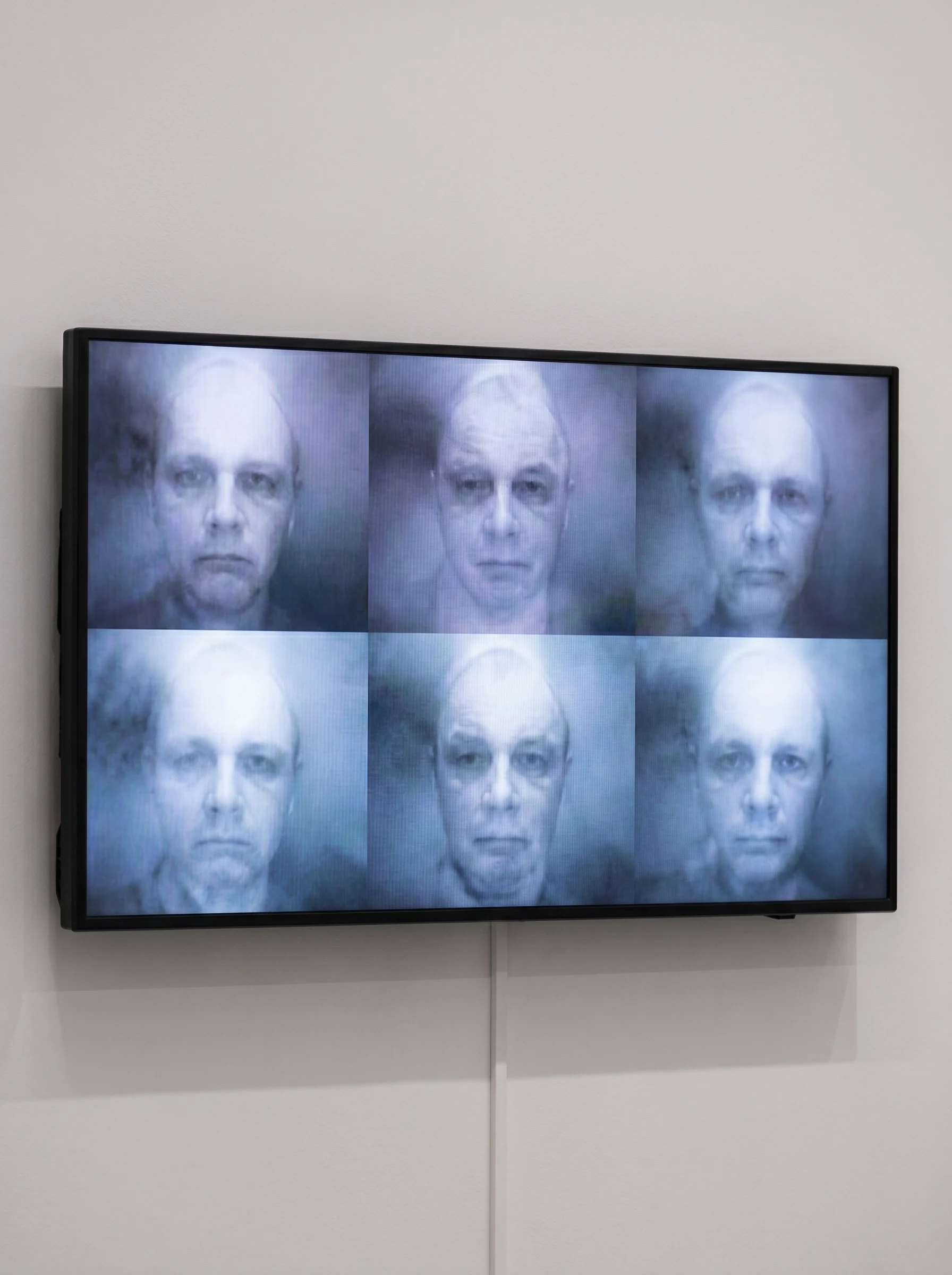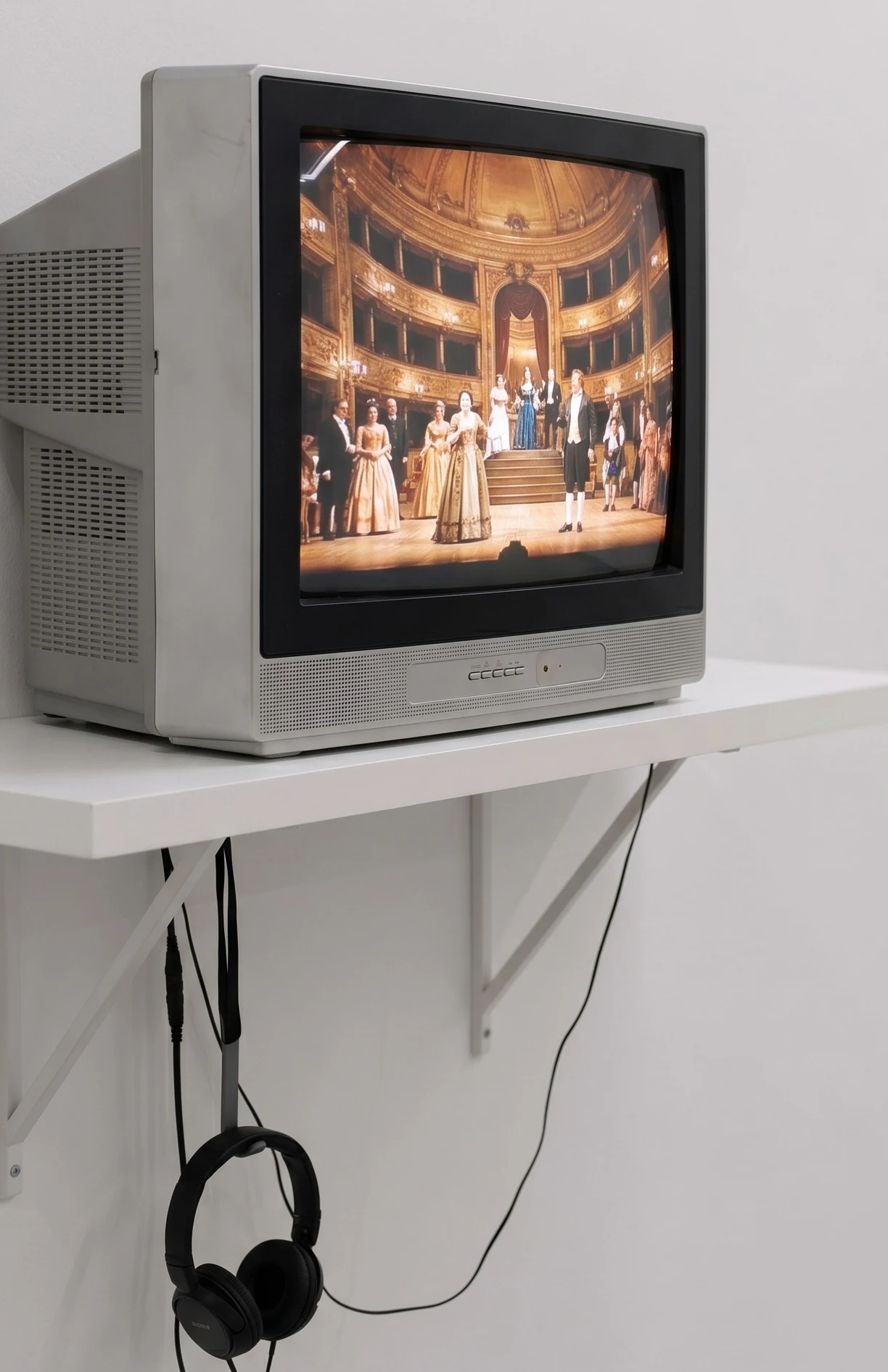

In the years immediately preceding the explosion of the World Wide Web, art and digital technology were still moving along largely parallel tracks, though already charged with a palpable tension. The telematic art experiments of the 1980s, such as Roy Ascott’s collaborative performances conducted through telephone networks and systems like ARTEX, or the first transatlantic collective storytelling networks, had demonstrated that remote connectivity could emerge as a genuine aesthetic and political space in its own right. Yet these early initiatives remained largely elitist, dependent on expensive infrastructures, restricted communities, and an imaginary shaped more by cyberpunk science fiction than by everyday practice.
The decisive shift occurred between 1993 and 1995, when the World Wide Web became accessible to a broader public at the very moment that the political and cultural landscape was undergoing one of the most profound transformations of the twentieth century. The fall of the Berlin Wall in 1989 and the dissolution of the Soviet Union in 1991 did more than redraw geopolitical boundaries: they created unprecedented material and psychological conditions, particularly across Eastern Europe, Russia, and former socialist states. There, access to computers had long been centralized, tightly controlled by the state, and frequently tied to military, scientific, or propaganda projects. After 1989, a sudden influx of Western hardware and software, IBM PCs, slow dial-up modems, early versions of Windows, and Netscape, arrived alongside economic shock therapy, aggressive privatization, mass unemployment, and network infrastructures that remained both slow and expensive. In this context, the triumphant Western rhetoric of the web as a “free,” “democratic,” and “horizontal” space already sounded misleading, or at the very least deeply suspect. Those who had lived through decades of state censorship and ideological control carried with them an instinctive skepticism toward any narrative portraying technological progress as neutral, inevitable, or inherently liberating.
It was precisely within this climate of traumatic transition, post-utopian disillusionment, and lived skepticism that what we now call net art emerged. Emerging across a dispersed network of artists and cultural contexts, the movement found particularly fertile ground among those who had personally experienced the violent encounter between older authoritarian power structures and the new global networks promising freedom. Symbolically, 1995 marked year zero. In December, during a transmission over unstable network lines, the sequence “net.art” appeared. Although this was in fact a prank orchestrated by Alexei Shulgin, as Vuk Ćosić himself later clarified on multiple occasions, and although the term was formally proposed by Pit Schultz in connection with the first collective exhibition, the accidental event became a foundational myth because it perfectly embodied the spirit of the moment: error as revelation, limitation as critical opportunity.
At roughly the same time in Berlin, curator and theorist Pit Schultz organized one of the first public exhibitions devoted to this new form of expression at the Bunker (1995–1996), bringing together artists from Slovenia, Russia, the Netherlands, the United Kingdom, and elsewhere. Although no shared manifesto or unified aesthetic existed, a remarkably strong common ethos connected these artists: approaching the web as a living, unstable, political, and performative material. The web was experienced as an infrastructure still in flux, not yet fully captured by the platform-capitalist and predictive-surveillance logics that would come to dominate it only a few years later. During that brief and precious interstice, roughly between 1995 and 1998, artists were able to experiment with a degree of freedom that, from the vantage point of 2026, appears almost mythical: personal websites hosted on university or home servers, self-managed mailing lists, and browsers that could still be bent, broken, and reinvented without interference from proprietary algorithms.
This period proved decisive for another fundamental reason. It coincided with the last historical phase in which institutional access to computational resources and stable internet connections remained available to many artists across Eastern Europe and the former Soviet bloc. Institutions such as the C3 Center for Culture & Communication in Budapest, the various Soros Centers for Contemporary Art, and university laboratories provided connectivity, hardware, and spaces for critical exchange at a time when, in the West, the web often remained the preserve of elite universities and a relatively small group of pioneers. This asymmetry of access and experience produced a distinctive aesthetic and political sensibility. Technology appeared as a field of competing forces, a terrain of constant negotiation between older forms of state control and emerging forms of global corporate power. It was this historically grounded awareness that generated the deepest critical core of net art: the conviction that every medium carries its own inevitable noise, that transparency often functions as an ideology serving power, and that error, malfunction, and imperfection can become powerful instruments of knowledge and quiet resistance.
During these years, critical discourse surrounding the web was also taking shape. Theorists such as Tilman Baumgärtel began discussing the notion of “media specificity” as applied to the networked environment. Artists and activists were already confronting the earliest forms of e-commerce, Amazon had been founded in 1994, as well as the first search engines that were beginning to profile users and the earliest platforms that were already transforming attention into a commodity. Net art emerged as a critical response to a specific and unrepeatable historical moment: the encounter between the libertarian, anti-institutional utopia of the early web and the harsh material realities of post-socialist transition, emerging surveillance regimes, and infrastructural precarity. It was within this dense landscape of contradictions that, between 1996 and 1999, the works and artists who would define the language of net art for the following decade and beyond began to emerge.
I Pioneers and the Weaving of the First Seminal Works (1996–1999)
It was within this dense climate of historical contradictions, lived skepticism, and still-fluid freedom that the figures and works that would permanently define the language of net art began to emerge. Rather than a movement organized around a charismatic leader or a rigid aesthetic program, net art developed as a fabric of individual investigations that, despite their differences, shared a common gesture: making the medium visible, dismantling the illusion of transparency, and transforming technical limitations into expressive and political material.
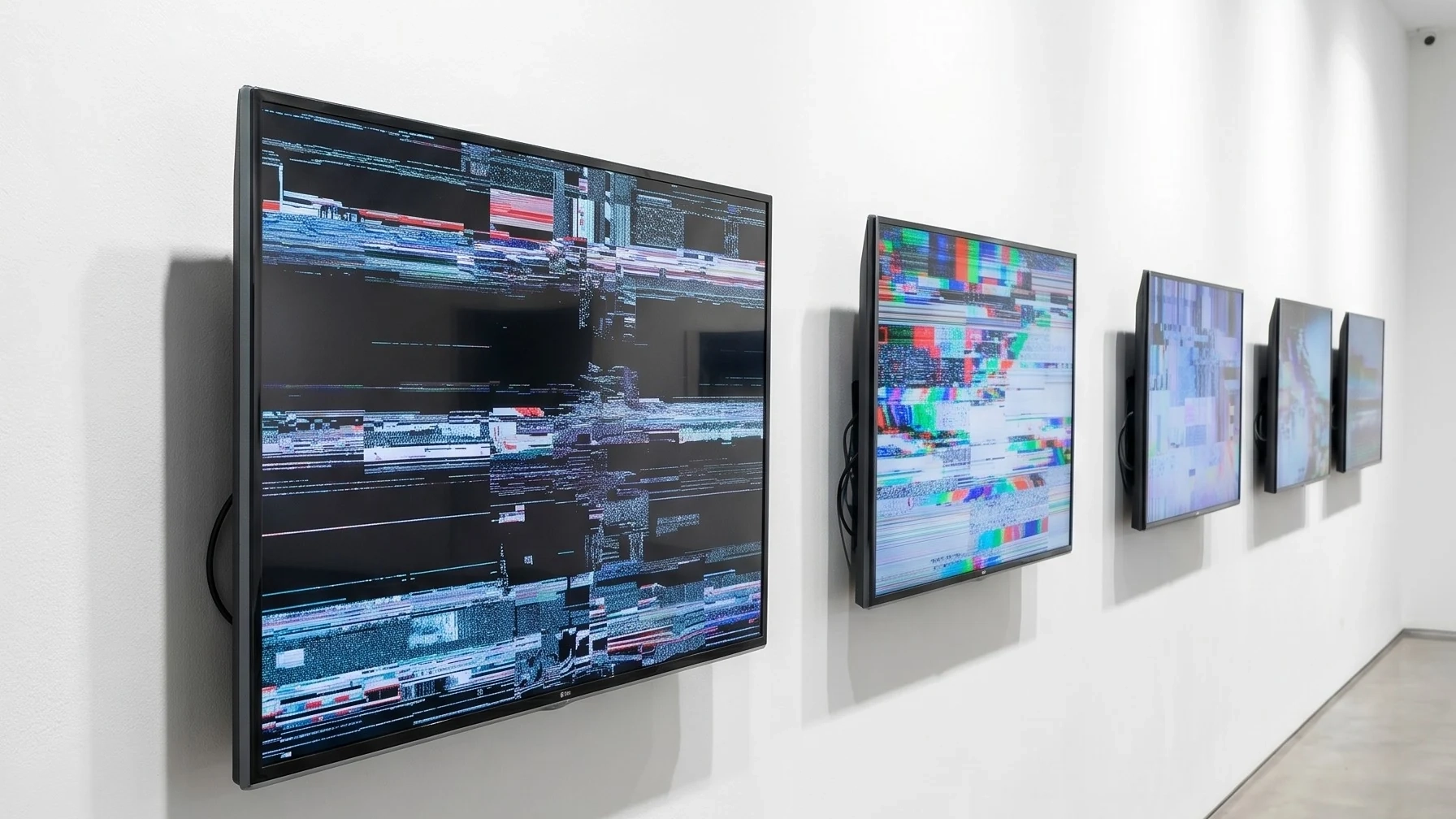
The first artist to embody this gesture in a particularly emblematic way was Vuk Ćosić. Raised in a context where access to technology was still mediated by state and university institutions, the Slovenian artist had already experimented with ASCII art and reconstructions of corrupted historical websites when the legendary episode of December 1995 occurred. Ćosić transformed the malfunction itself into an aesthetic and theoretical program. His subsequent works, including reconstructions of corrupted classic websites and ASCII interventions that explored the materiality of digital text, used error as an archaeological tool, revealing how every technology carries its own history of failures, noise, and exclusions.
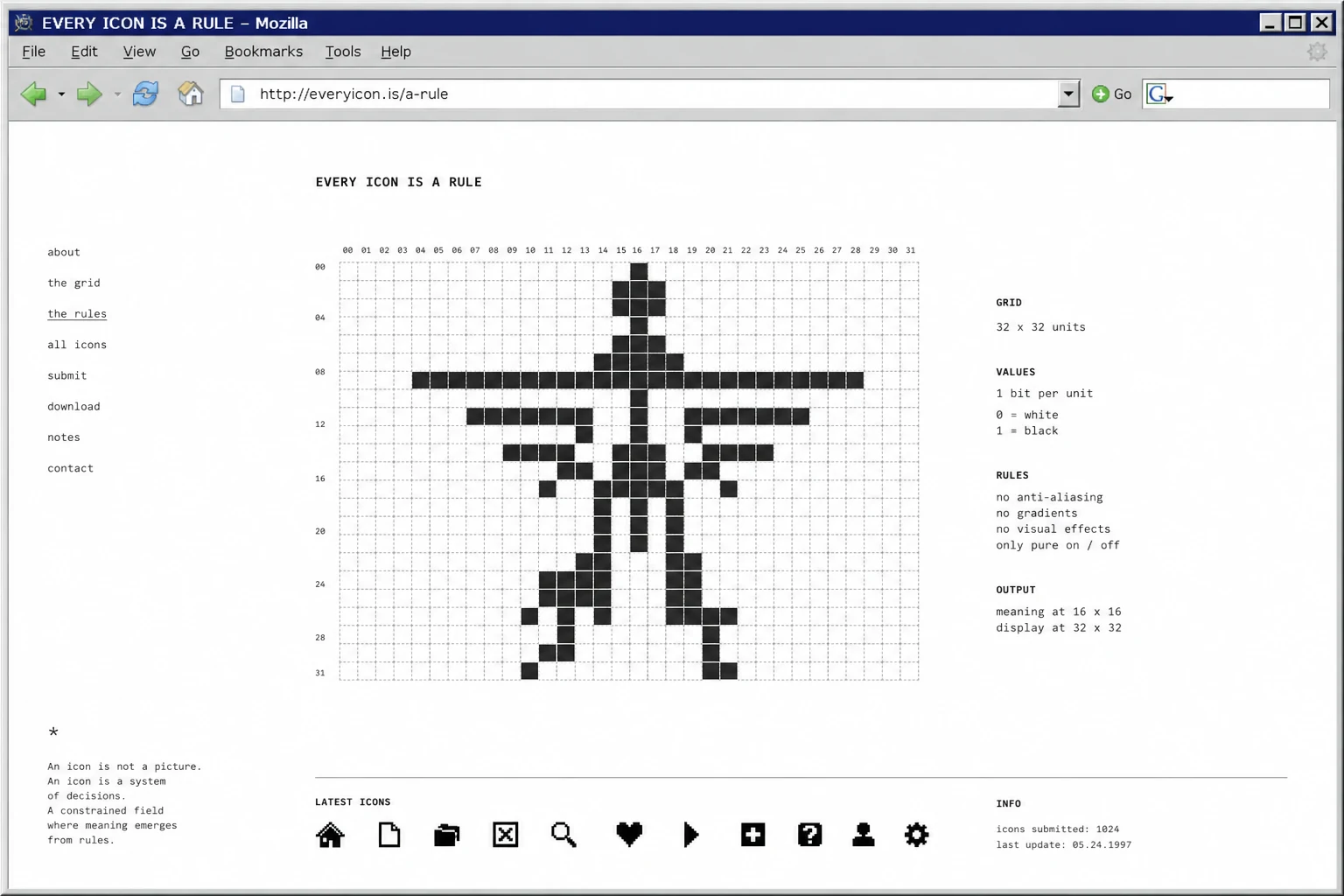
His gesture immediately resonated with another artist from the former Eastern bloc, the Russian Alexei Shulgin, who had already founded the WWWArt Centre in Moscow in 1995, one of the earliest online spaces entirely devoted to network-based art. Shulgin pushed this line of inquiry further by dismantling the web’s most anonymous and bureaucratic elements. With Form Art (1997), he appropriated text fields, checkboxes, radio buttons, and drop-down menus, the interface elements users encountered every day without a second thought, and recomposed them into a form of geometric abstraction. The work was simultaneously ironic and incisive, suggesting that the web was already becoming an infrastructure of data capture, forms, and behavioural regulation. Together with Natalie Bookchin, Shulgin also authored the ironic manifesto Introduction to net.art, distributed as a simple HTML page. The text parodied the proclamations of twentieth-century avant-gardes while affirming the DIY, anti-institutional, and process-oriented ethos that characterized the emerging movement.
At the same time, another influential voice emerged from Moscow. Olia Lialina, a former journalist and filmmaker trained in the Soviet Union, introduced a distinctly narrative and cinematic sensibility into net art. Her work My Boyfriend Came Back from the War (1996) remains one of the undisputed masterpieces of the movement’s formative years. The story of a reunion after the Chechen conflict unfolds through nested HTML frames, low-resolution GIFs, fragmented texts, and interrupted links. Linear storytelling gives way to a fragmented experience in which each click further fractures the narrative, mirroring the unstable internet connections of the period and incorporating delay, noise, and incompleteness into the emotional structure of the work. For Lialina, technical instability itself became the emotional substance of the piece. The medium’s “noise” became content, serving as a metaphor for war, manipulated information, and the difficulties of communication in a period of profound transition. Her work revealed the web as a medium endowed with its own grammar, failures, and expressive possibilities.
Lialina’s approach found an immediate echo in the Dutch duo JODI, Joan Heemskerk and Dirk Paesmans, who brought the sabotage of the medium to an entirely new level. Their websites, most famously wwwwwwwww.jodi.org, erupted into visual glitches, Java applets capable of crashing browsers, source code that seemed to rebel against its intended function, and pages whose appearance shifted unpredictably with each reload. JODI attacked the web from within, exposing its structural fragility and dismantling the illusion of user control. Their works were simultaneously playful and unsettling, encouraging reflection on the extent to which the web, even in its simplest forms, already functioned as an unstable, manipulable, and potentially hostile system.
Working along a different trajectory, the British artist Heath Bunting pursued an apparently more “analogue” yet equally radical path. In King’s Cross Phone-In (1994, further developed in subsequent years), he published on the web a list of public telephone numbers at London’s King’s Cross station together with specific times at which they should be called. Visitors to the website were invited to leave their computers, find a public telephone, and call the numbers in the hope of encountering other participants or random passers-by. Through this simple gesture, Bunting demonstrated how networks reorganize bodily presence and reactivate it within physical space. His critique operated simultaneously on institutional and social levels. Art could emerge through minimal infrastructures, a list of telephone numbers, a timetable, and the willingness to participate. His work opened an important breach in prevailing definitions of digital art. Net art extended beyond the boundaries of “art on the web,” using networked systems to reorganize relationships between virtual and physical space, between online and offline experience.
This network of investigations was further enriched by the Italian artists Eva and Franco Mattes, known collectively as 0100101110101101.ORG. Between 2000 and 2003 they produced Life Sharing, a work in which they literally opened their hard drive to the world. Anyone could browse personal files, read emails, view photographs, and explore the artists’ digital lives. The server itself was physically located in their bedroom, its LEDs blinking throughout the night as they slept. The work functioned simultaneously as an extreme gesture of trust and a fierce critique of the emerging culture of surveillance, anticipating by nearly two decades debates surrounding privacy, the erosion of private space, and the commodification of personal data. Even their name, a binary string, embodied a complete embrace of code, suggesting that identity in the digital age could no longer be separated from its binary representation.
These works did not exist in isolation. They influenced one another and generated a shared discourse despite differences in geography, language, and temperament. Ćosić and Shulgin developed an archaeology of malfunction and a critique of bureaucratic form; Lialina introduced narrative and cinematic dimensions; JODI explored performative sabotage; Bunting reconnected networks with the body and social interaction; the Mattes pushed the exposure of private life to unprecedented extremes. Together, along with figures such as Rachel Baker and Daniel García Andújar, these artists defined a language unlike anything that had preceded it: an art form centred on inhabitable situations, activated processes, and productive failures. Their works invited use, misuse, intervention, and transformation. This processual and anti-object-oriented ethos would continue to expand in subsequent years through collective practices, hacktivism, and increasingly political forms of networked participation.
The Expansion of Practices: Browsers, Code, Hacktivism, and the Collective Turn (1999–2005)
As the first generation of pioneers established the foundational language of net art, the practice expanded in new directions between the late 1990s and the early 2000s, becoming increasingly collective, tactical, and overtly political. The browser, the seemingly neutral software through which users “navigated” the web, emerged as one of the principal sites of critical experimentation. Following the interventions of JODI, a number of artists and collectives began developing alternative browsers or subverting existing ones. The British collective I/O/D, for instance, created WebStalker (1997–1998), a browser that visualized websites as topographical maps of links, foregrounding structures of relation instead of immediately consumable content. Reading gave way to exploration. Users encountered the geography of the network itself, its nodes, connections, and hidden hierarchies. The project operated simultaneously as a formal experiment and a political intervention, exposing the web’s underlying structures and revealing how every page exists within broader networks of information, power, and control.
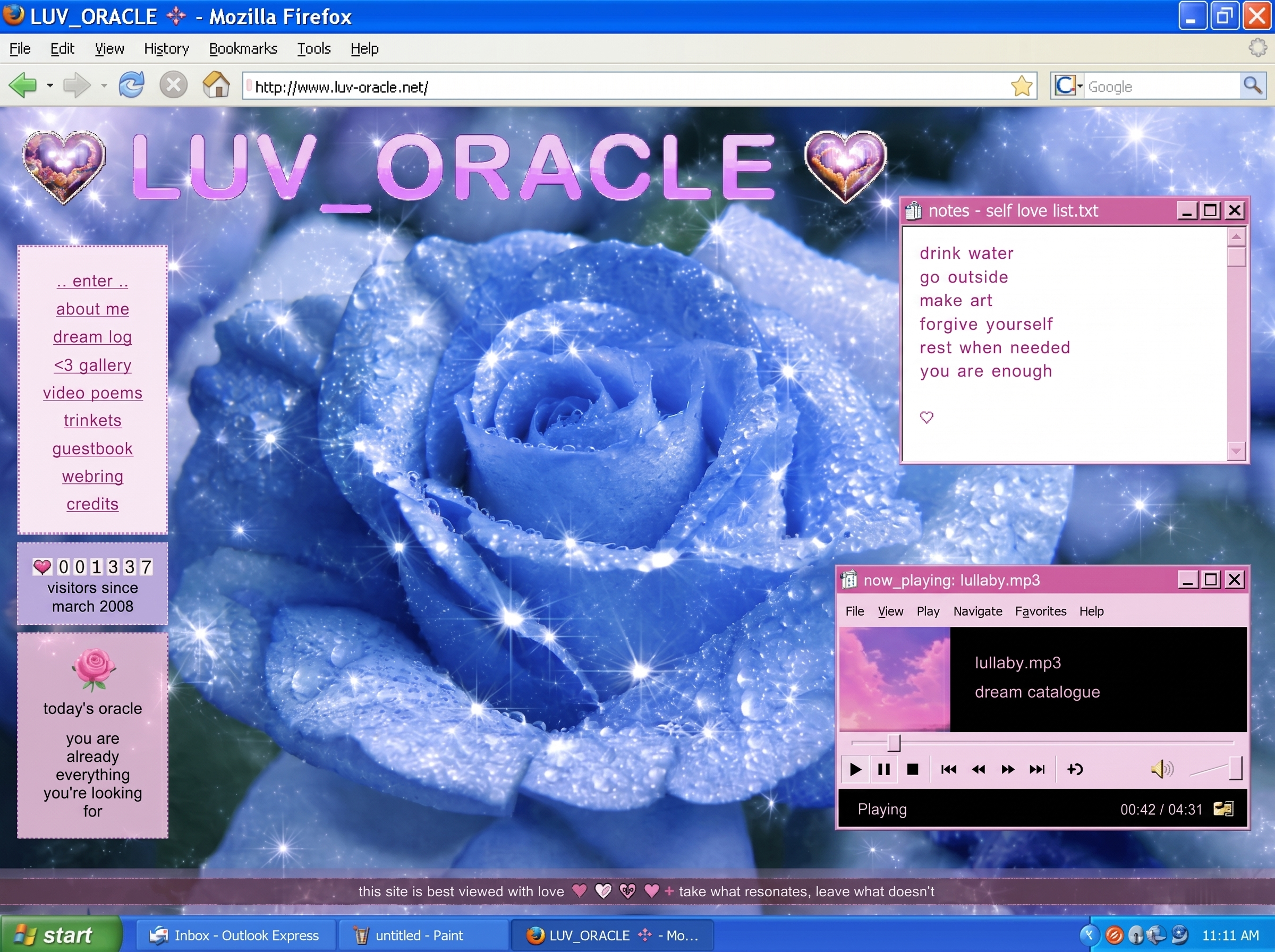
At the same time, codework emerged as a practice that treated programming language itself as artistic material. Artists such as Mez Breeze developed hybrid textual forms known as “mezangelle,” combining executable code, natural language, and neologisms to create a form of digital poetry suspended between legibility and opacity, meaning and disorientation. Codework highlighted the political dimensions embedded within software, demonstrating how programming languages inevitably embody economic, cultural, and ideological choices. During these same years, artists also experimented with email art and creative spam, using scripts to generate reprocessed messages, ASCII compositions, and disruptive interventions within mailing lists. In doing so, spam was transformed from informational noise into a performative and critical medium.
It was art hacktivism, however, that pushed net art most decisively toward an explicitly political and collective dimension. Between 1999 and 2000, the Swiss collective etoy.CORPORATION launched TOYWAR against eToys.com after the company initiated legal action over the domain name etoy.com. Combining online performance, media campaigns, symbolic server occupations, and legal activism, the project became one of the earliest examples of conflict conducted entirely through networked infrastructures. Its effects extended beyond cyberspace, influencing both the company’s public image and its market valuation. During the same period, the Electronic Disturbance Theater, acting in solidarity with the Zapatista movement in Chiapas, organized the well-known FloodNet virtual sit-ins against the Pentagon and the Mexican government. Thousands of participants simultaneously accessed designated web addresses, temporarily overloading servers and disrupting institutional websites. These actions marked a significant shift toward practices that employed networks as instruments of real political confrontation and as extensions of struggles taking place beyond the screen.
During these years, net art also underwent a gradual process of institutionalization, one marked by both opportunities and tensions. In 1996, Mark Tribe founded Rhizome, which quickly evolved from a simple mailing list into an archive, a discussion platform, and a major international reference point for network-based art. An important moment of institutional recognition arrived with Documenta X in Kassel in 1997, where artists such as Heath Bunting and JODI participated, while Vuk Ćosić presented Documenta Done, an ironic appropriation of the exhibition’s official website. Between 1999 and 2000, the exhibition net_condition at the ZKM in Karlsruhe, curated by Peter Weibel and others, represented one of the defining moments in the history of net art. Bringing together more than one hundred artists, the exhibition offered an ambitious reflection on the cultural, technological, and aesthetic implications of the networked medium. Around the same time, institutions such as the Tate in London began commissioning, collecting, and attempting to preserve net art works.
Institutional recognition provided visibility, legitimacy, and new resources, while simultaneously generating a series of fundamental questions. What does it mean to preserve a work whose existence depends upon an active server and a browser capable of interpreting its code? How can a work designed for individual interaction through a networked screen be presented within the physical space of a gallery or museum? Artists responded in different ways. Some, including Eva and Franco Mattes, continued to operate largely outside institutional frameworks. Others embraced museum commissions while using them as opportunities to introduce critical practices into the institutions themselves.
During this period, net art reached a new stage of critical maturity. Attention gradually shifted from the exploration and deconstruction of the web toward a broader reflection on the medium’s place within the art system, its capacity to resist institutional absorption, and the construction of its own historical legacy. What had emerged during the 1990s as a radical investigation of the technical and cultural possibilities of the network evolved into a field of practice increasingly conscious of its historical position, its vulnerabilities, and its ability to shape both artistic forms and contemporary political realities.
The Great Transformation: Post-Internet, Institutionalization, and the Critique of Platforms (2006–2015)
Around 2005–2006, the digital landscape underwent a profound transformation, and net art entered a new phase of development. The rise of Web 2.0, marked by platforms such as Facebook (2004), YouTube (2005), and Twitter (2006), fundamentally altered the dynamics of online participation. User activity increasingly took place within centralized platforms that systematically captured attention, personal data, and social interactions. The browser, which had served as the primary arena of experimentation during the formative years of net art, gradually lost its central position as people began accessing the internet through mobile applications, social networks, and increasingly closed proprietary interfaces. Within this new environment, net art appeared tied to an earlier phase of the web, one that was rapidly disappearing.
It was precisely during this moment of transition that artist and curator Marisa Olson introduced the term post-internet art, sometimes described as “art after the internet.” The concept referred to artistic practices shaped by the experience of living within networked culture itself. Online phenomena such as memes, GIFs, screenshots, social media profiles, and recommendation algorithms became raw material for works that could circulate across physical and digital environments alike, appearing in galleries, installations, printed objects, websites, and hybrid exhibition formats.
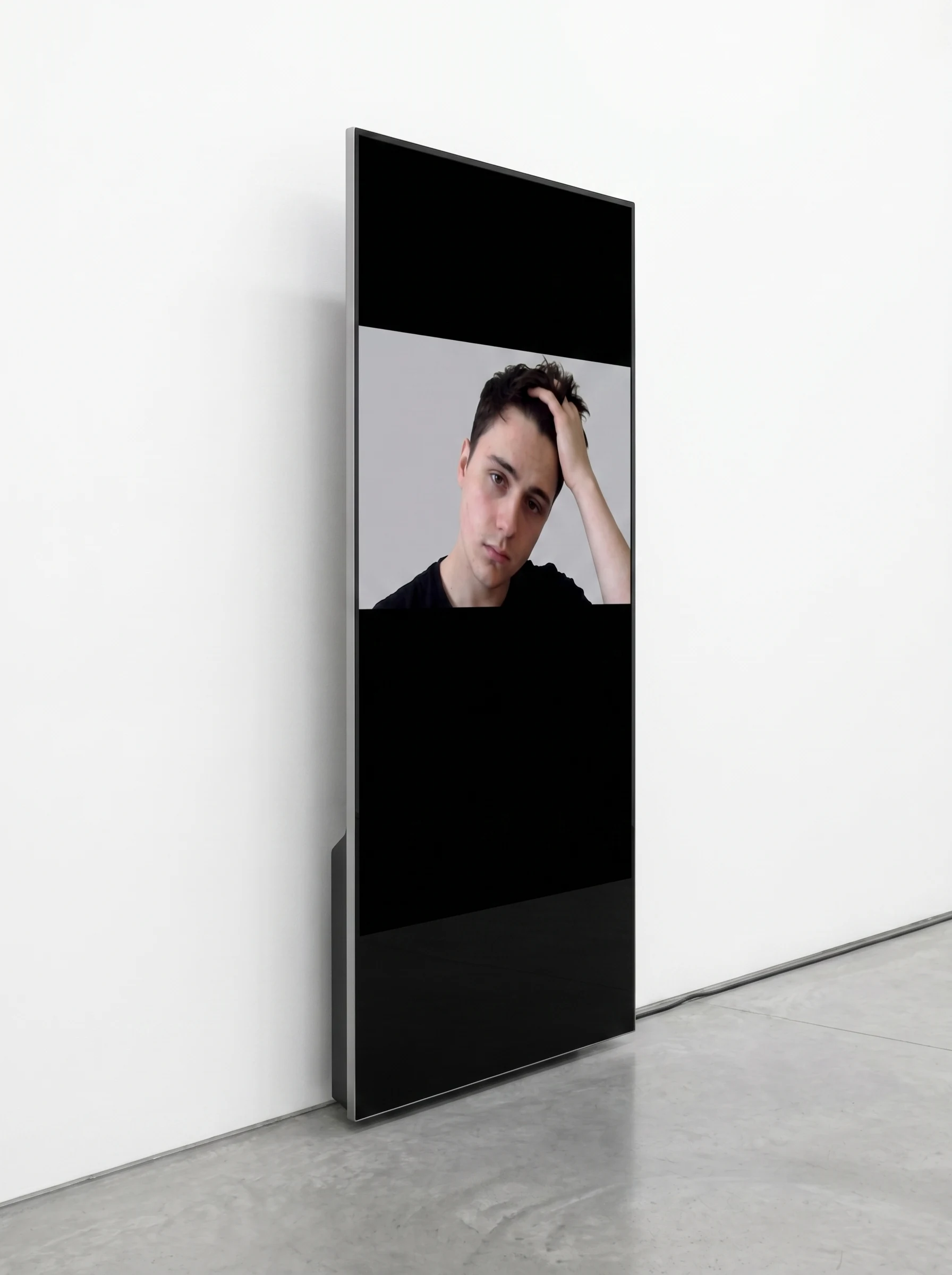
This shift represented a reconfiguration of artistic concerns rather than a retreat from the critical ambitions of net art. Artists such as Jon Rafman began exhibiting large-scale screenshots from Google Street View as contemporary landscapes, revealing forms of ubiquitous surveillance, accidental documentation, and digital solitude. Artie Vierkant developed his Image Objects, works that simultaneously existed as digital images, photographic reproductions, and sculptural objects, exploring the circulation of images between online and offline contexts. The collective DIS curated exhibitions and biennials that combined memes, corporate branding, design objects, and platform critique, bringing network culture into major institutions through a visual language immediately recognizable to a generation raised on social media. Around the same time, The Jogging, a collaborative Tumblr project curated by Brad Troemel, Lauren Christiansen, and others, assembled absurd collages of Amazon products, stock imagery, and internet memes, transforming the banal materials of online culture into a form of critical and ironic aesthetics.
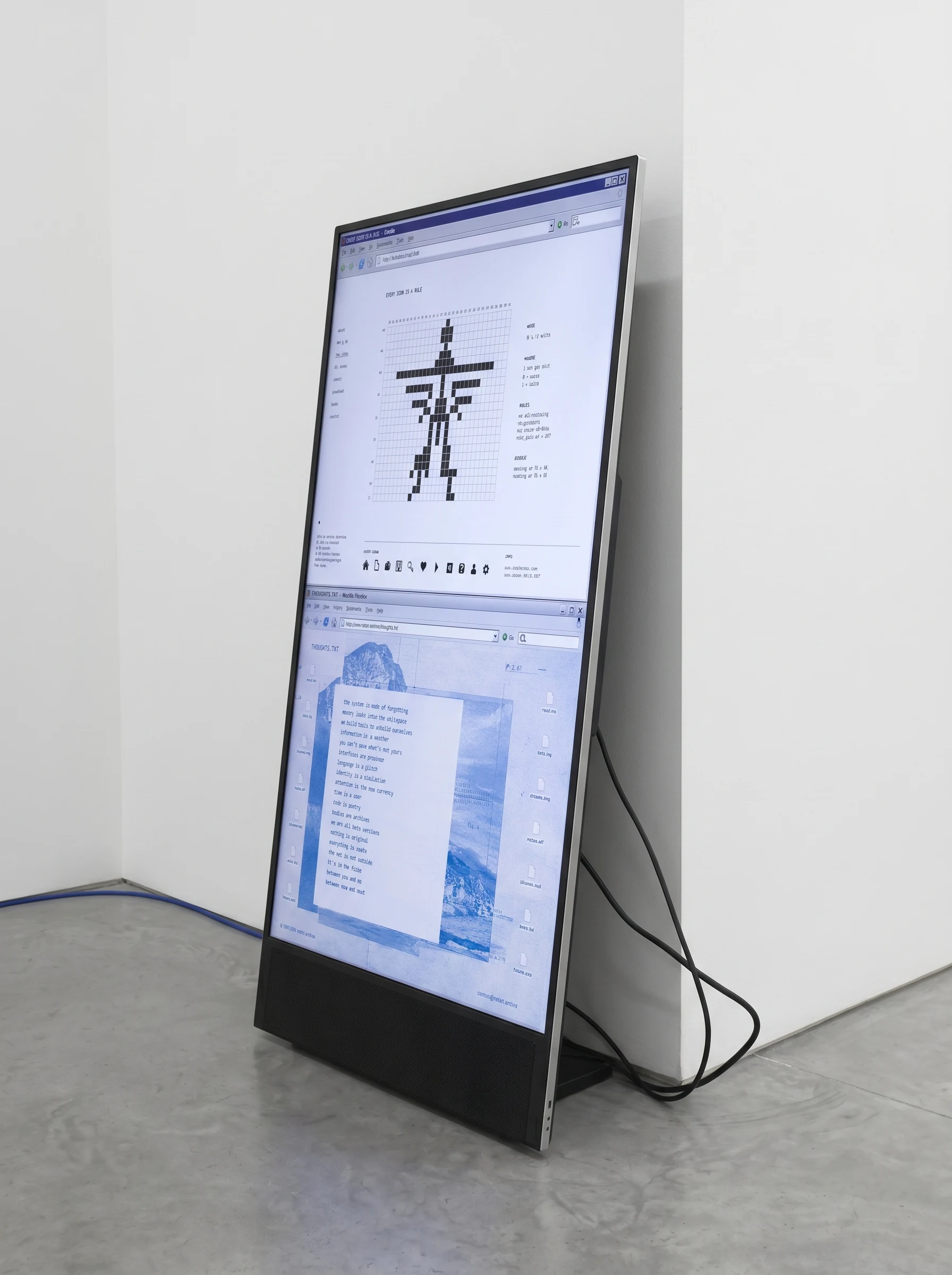
Many of the early pioneers continued to work during this period while adapting their practices to the changing technological environment. Olia Lialina, for example, increasingly focused on research, curation, documentation, and critical analysis of web culture. Her work examined the ways in which the visual languages of Web 1.0 were appropriated, remediated, and commercialized by subsequent platforms. These investigations demonstrated the continuing relevance of net art as a critical framework and cultural sensibility that extended well beyond the browser itself. Its influence could be detected throughout contemporary art, even in works that no longer relied directly on networked interfaces as their primary medium.
Post-internet art carried many of the critical concerns of net art into biennials, museums, and the global art market. At the same time, its growing institutional visibility introduced new tensions. Many post-internet works were more accessible to broader audiences and more easily accommodated within gallery contexts. That increased legibility, however, often coincided with a reduced capacity for direct intervention and disruption. The resulting tension between visibility and critical resistance became one of the defining characteristics of the period between 2006 and 2015. It was a decade shaped by the coexistence of institutional recognition and critical unease, a set of contradictions that continues to inform debates about digital culture, platform power, and artistic agency well into 2026.
Legacy and Contemporary Resistance: Net Art’s Critical Consciousness in the Age of Platforms (2016–2026)
By 2026, as generative artificial intelligence promises increasingly seamless, personalized, and frictionless digital environments, and as platform corporations exercise an unprecedented degree of influence over communication, culture, and everyday life, the legacy of net art appears more relevant than ever. The foundational gesture that shaped the movement, exposing the hidden structures of technological media and transforming their limitations into critical material, continues to resonate long after the decline of the early web. Its influence persists in the work of artists who engage directly with networked systems in order to reveal their contradictions, dependencies, and underlying power structures.
Many of the original pioneers have continued to develop their practices while preserving the critical ethos that defined the movement from the outset. Alongside her influential work as a researcher, archivist, and theorist of web culture, Olia Lialina has continued to produce projects that examine the visual language of contemporary interfaces, maintaining a dialogue with the unstable grammar of the 1990s web. Other first-generation artists have sustained the DIY and anti-institutional spirit of early net art through self-hosted projects, independent servers, active mailing lists, and interventions on decentralized platforms, cultivating spaces that remain partially autonomous from both platform capitalism and the mainstream art world.
Crypto art and NFTs have represented the latest major transformation within digital culture, one marked by significant tensions and contradictions. They have provided new visibility, legitimacy, and economic opportunities for many digital artists while simultaneously accelerating processes of commodification and speculation that early net artists had sought to challenge since the movement’s inception. Many historical figures associated with net art, along with numerous artists from subsequent generations, approached this development with skepticism, irony, or critical distance, interpreting it as another instance in which oppositional cultural practices became absorbed into larger economic systems. At the same time, some artists have turned to blockchain technologies as critical tools, producing works that interrogate the promises of decentralization, expose patterns of hidden centralization, address environmental costs, and reflect on the volatility of digital value. In this respect, contemporary practices extend a lineage of critical engagement that can be traced back to the interventions of Vuk Ćosić, JODI, and Eva and Franco Mattes during the formative years of net art.
Looking back from 2026, it becomes increasingly clear that net art exceeds the boundaries of a historical genre associated with a specific decade or a particular medium such as the browser. It is more accurately understood as a critical sensibility, a cultural disposition, and a mode of inhabiting digital environments. At its core lies a persistent refusal of technological transparency, seamlessness, and claims of neutrality. From the telematic experiments of the 1980s, through the formative period of 1995–2005, the emergence of post-internet practices, and the struggles that characterize the age of platforms and artificial intelligence, a common thread remains visible throughout this history. Artists repeatedly employ technology as a means of examining technology itself, transforming glitches, interfaces, infrastructures, and data into forms of critical knowledge.
At a historical moment in which artificial intelligence increasingly promises the removal of friction, uncertainty, and opacity from digital experience, this critical gesture retains a remarkable degree of relevance. What emerged within the cracks and imperfections of the 1990s web continues to offer one of the most powerful strategies available to contemporary art: the capacity to reveal the systems that shape perception while resisting their claims to inevitability. The silent rebel of the web has not disappeared. Its presence endures through new forms, new media, and new sites of contestation, continually adapting to the changing terrain of digital culture.