
In recent years, the debate surrounding artificial intelligence has gradually shifted away from the technical sphere and into a far more unstable cultural terrain. The question is no longer simply what AI is capable of producing, but what we are still willing to recognize as authentic, emotional, or human. But what happens when prejudice precedes perception? When the label arrives before the image itself? And perhaps more importantly: are we still capable of looking at an artwork without first needing to know where it came from?
In May 2026, one of the year’s most widely discussed artistic interventions attempted to answer these questions using the very language of contemporary digital culture: algorithmic feeds, quote tweets, viral engagement, online tribalism, and platform-driven polarization. No museum. No physical installation. No curatorial statement. Just a single post on X published by the anonymous conceptual artist SHL0MS.
please describe, in as much detail as possible, what makes this inferior to a real Monet painting

The gesture appeared minimal at first, yet rapidly evolved into an international case study, not because of the image itself, but because of the cognitive mechanism it managed to activate. What emerged was a social experiment disguised as a shitpost, and a performance work that transformed thousands of users into unwitting participants in a collective test about aesthetic perception in the age of artificial intelligence.
On May 12, 2026, at 7:20 PM GMT, SHL0MS published an image alongside a deceptively simple caption:
“i just generated an image in the style of a Monet painting using AI
please describe, in as much detail as possible, what makes this inferior to a real Monet painting”
The image also carried X’s official “Made with AI” label. The framing was immediate and unmistakable: viewers believed they were looking at an AI-generated imitation of Claude Monet.

Thank you again @SHL0MS
"inferior image" is now part of my UnderTheGAN early AI art collection.

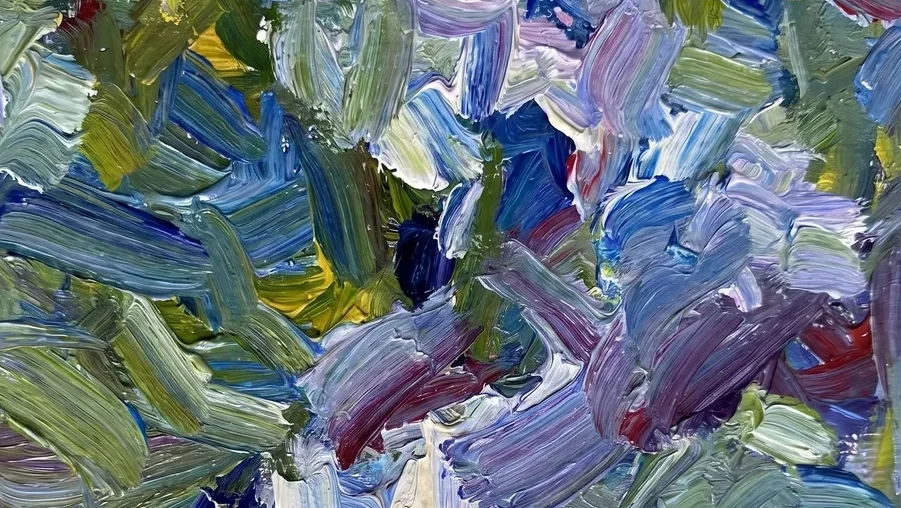
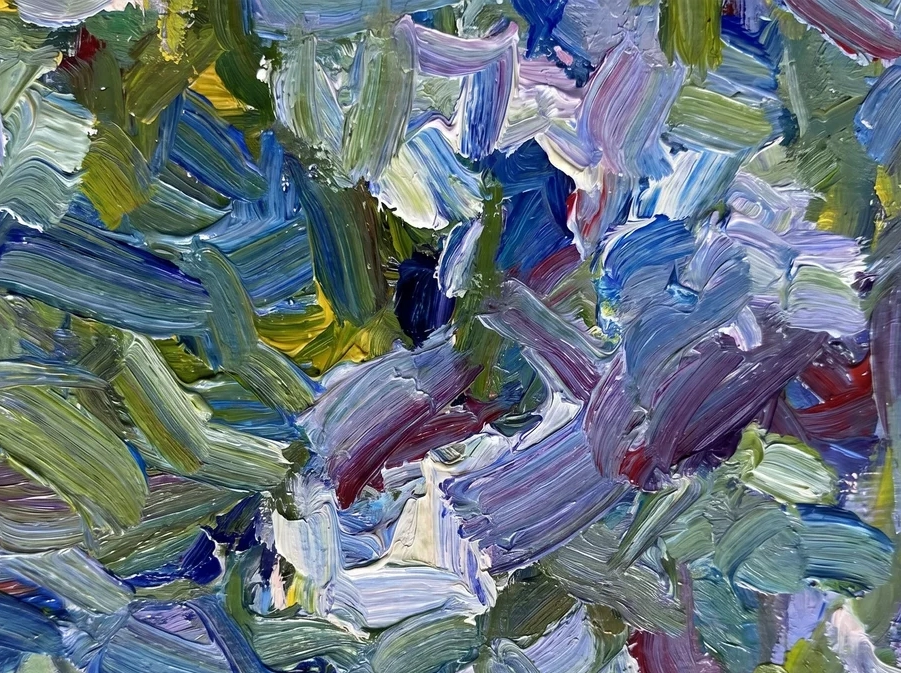
Within hours, the post accumulated millions of views. Thousands of users began dissecting the image with striking confidence. Some described it as “cold,” “soulless,” or emotionally empty. Others offered highly technical critiques: spatial inconsistencies, decorative rather than descriptive brushwork, lack of material density, incoherent reflections, overly neutral whites, and an absence of optical color mixing.
One particularly viral response delivered a lengthy analysis arguing that the image lacked “the hand of the artist” — the physicality of pigment, the resistance of canvas, the historical and emotional residue embedded within human gesture. SHL0MS quote-tweeted the response with a dry endorsement: “10/10 no notes.”
The irony, however, was already embedded within the structure of the experiment itself.
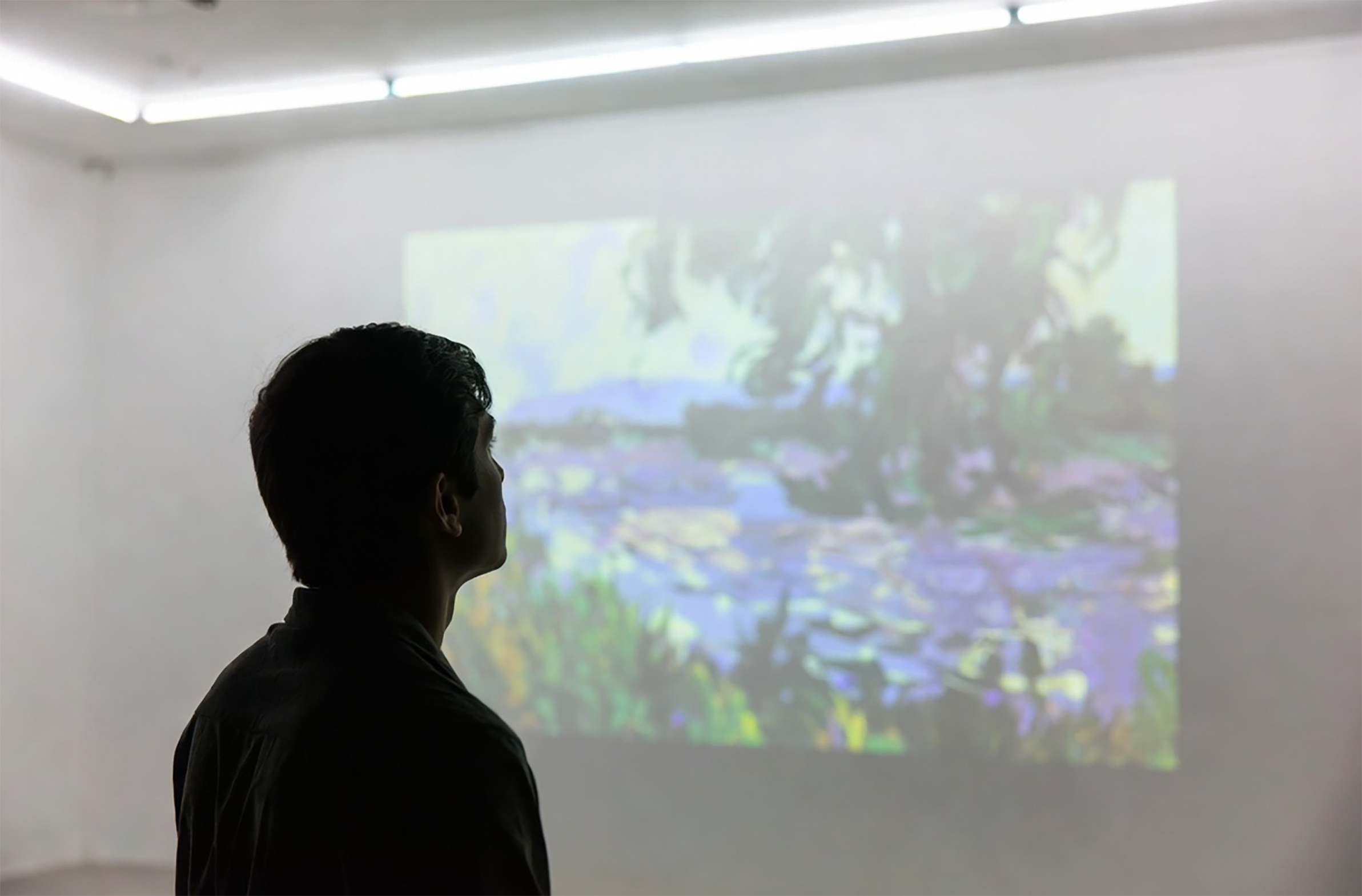
Many of the elements being identified as evidence of “AI failure” were, in fact, central characteristics of late Impressionism: dissolved form, unstable reflections, atmospheric fragmentation, chromatic vibration, and perceptual ambiguity. Users were effectively interpreting Impressionist painting through the contemporary visual grammar of anti-AI discourse.
Hours later, the reveal arrived.
The image had not been generated by AI at all. It was an authentic cropped detail from one of Monet’s Nymphéas paintings, produced around 1915 and currently held by the Neue Pinakothek.
The collapse was immediate. Comments were deleted. Screenshots circulated across platforms. Some users attempted to rationalize the mistake, while others continued insisting that the image “still looked AI-generated,” as though the initial framing had permanently contaminated perception itself.
It is precisely at this moment that SHL0MS’s intervention transcended the level of online provocation and entered a more distinctly conceptual territory.
The artwork was never the Monet image alone. The artwork was the reaction surrounding it. The medium was not painting, but networked interpretation itself. Every reply, every quote tweet, every confident aesthetic judgment became material within the performance.
The episode also exposed a broader psychological mechanism that increasingly defines contemporary responses to artificial intelligence: the framing effect. Multiple recent studies have shown that artworks labeled as AI-generated are consistently judged as less emotional, less meaningful, and less aesthetically valuable, even when visually identical to works attributed to humans. Provenance alters perception before perception even begins.
In this sense, Inferior Image did not merely challenge assumptions about AI-generated art. It challenged the credibility of online visual literacy itself. How much of contemporary aesthetic judgment actually emerges from direct observation? And how much is constructed socially through ideology, context, platform culture, and collective narrative?
Two days later, SHL0MS completed the performance by minting the image as an NFT on Ethereum through Manifold under the title Inferior Image. The work later sold for 18.987491679163 ETH ($42,897.21 USD) to the collector Jediwolf, known for assembling one of the most historically significant collections of early AI art.
The final gesture felt almost inevitable. The NFT did not simply preserve an image; it archived a cultural reaction. The prejudice, the outrage, the certainty, the embarrassment, the deletions, the screenshots, the algorithmic amplification — all of it became inseparable from the work itself.
Perhaps this is ultimately what makes the entire episode so compelling. In an ecosystem saturated with images, SHL0MS does not merely produce visual content. He constructs perceptual situations. He manipulates context rather than object. He intervenes not on the artwork itself, but on the cognitive infrastructure surrounding it.
And so the final question raised by Inferior Image no longer concerns artificial intelligence alone.
It concerns us.
Are we still capable of looking at an image before interpreting its label?