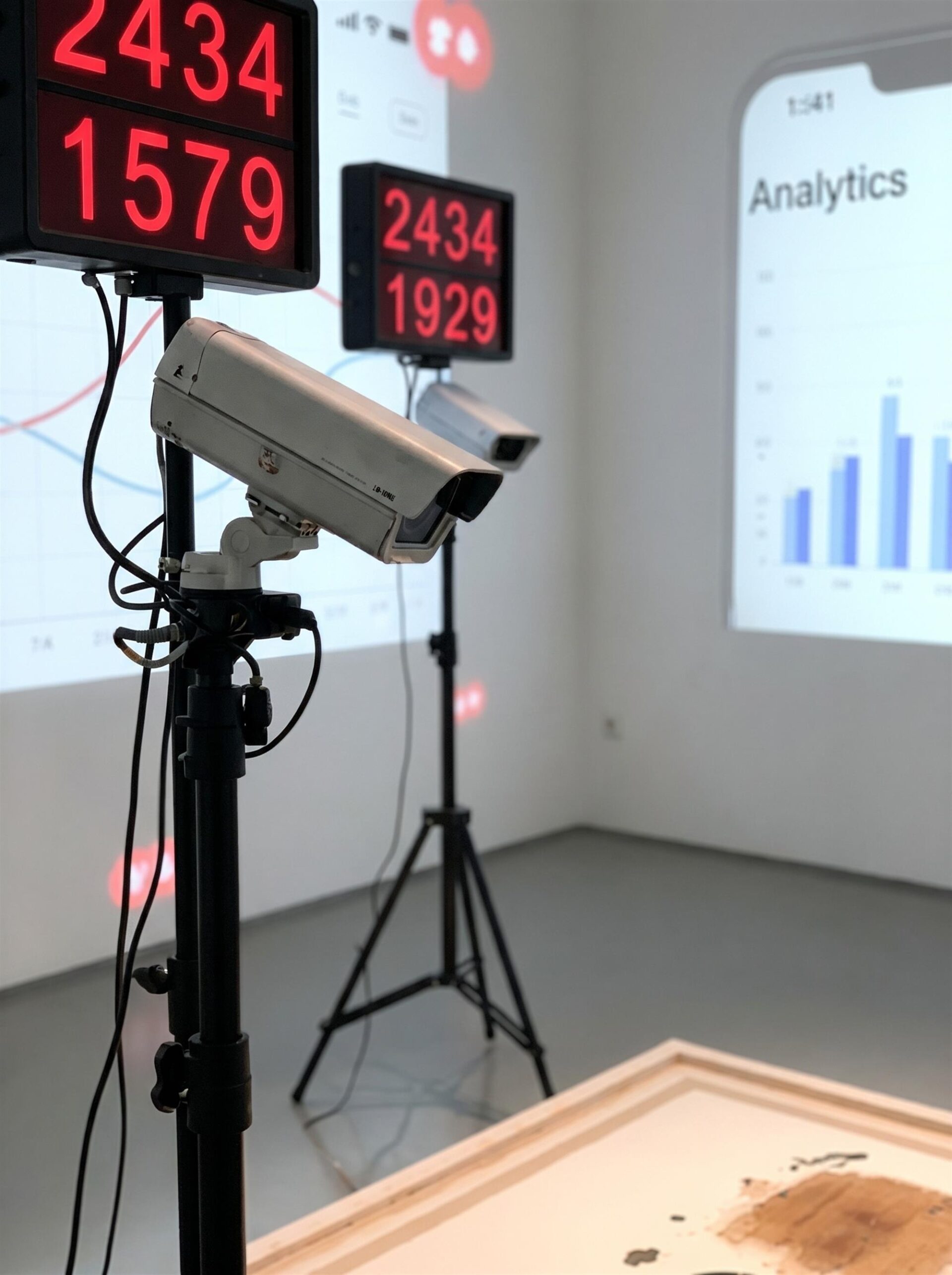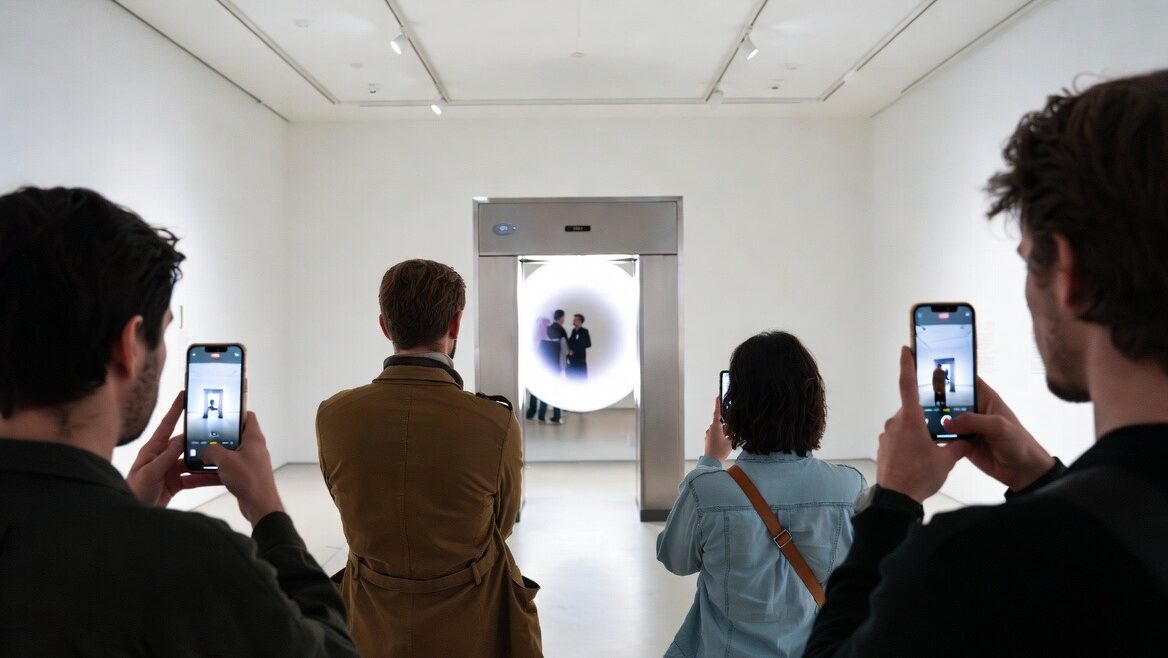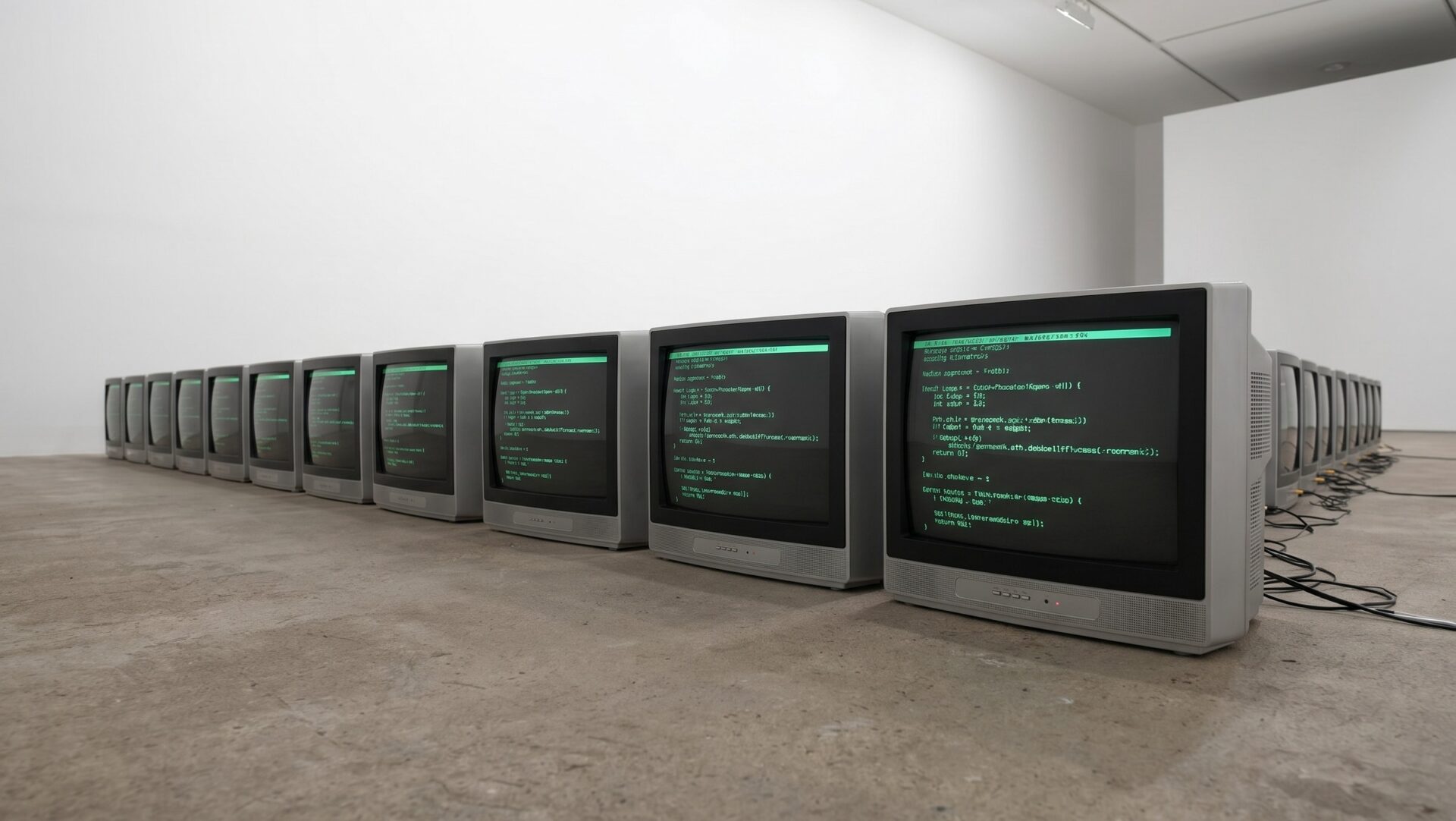
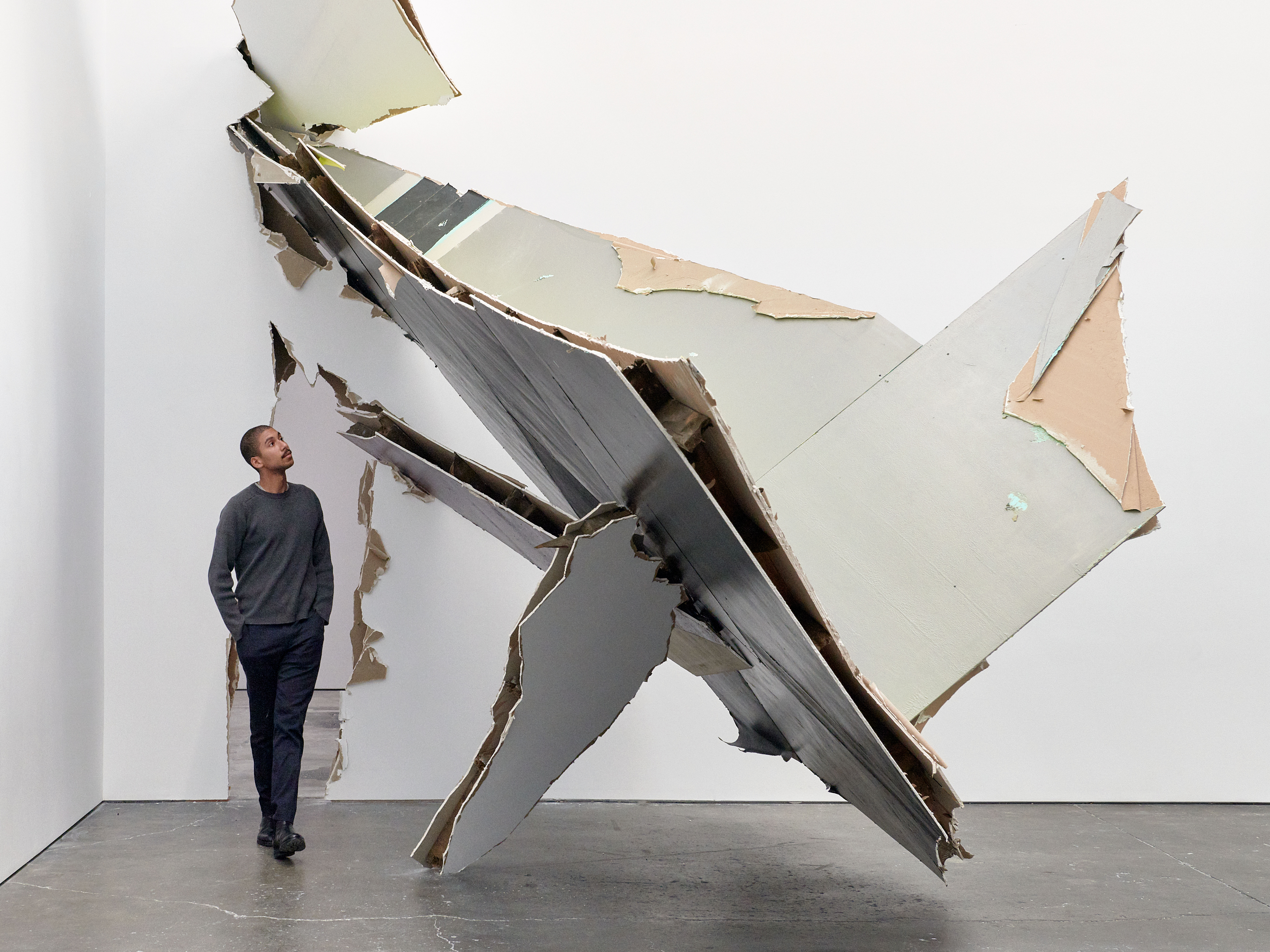
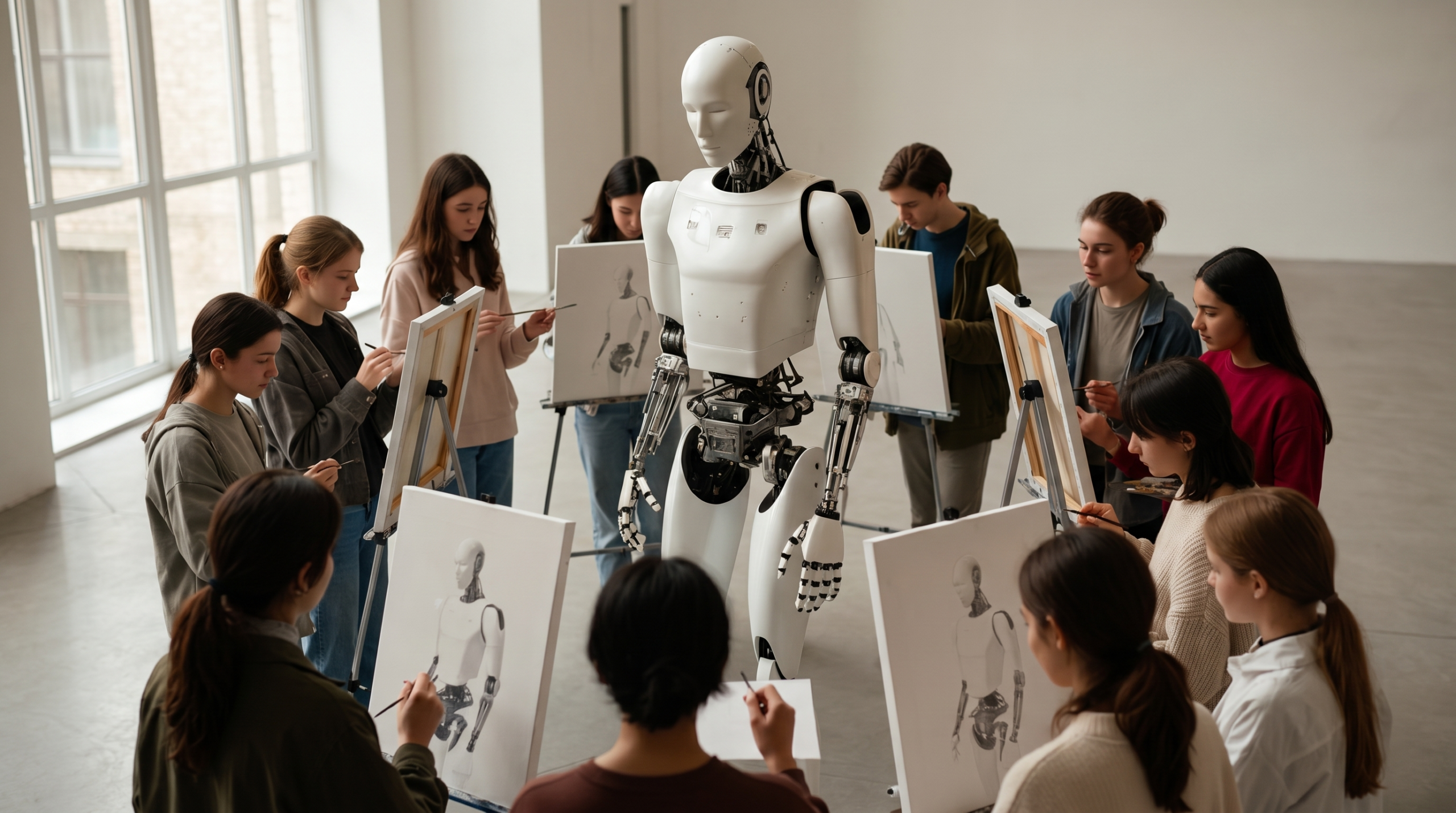
More than a decade ago, in his book L’arte espansa (Expanded Art, Einaudi, 2015), the philosopher Mario Perniola described a profound transformation of the art production: the traditional boundaries of art had dissolved to such an extent that almost anything, objects, actions, events, processes, could be recognized as art, provided it entered the proper circuits of legitimation. Perniola spoke of a “fringe turn,” an expansion that was not merely quantitative but qualitative: art had ceased to be an inherited destiny and had become a vast and unstable field, in which the choice of medium was no longer a given starting point, but an open and burdensome problem.
Far from having receded, that diagnosis has become even more pressing over time. Today, the multiplication of media has not merely expanded the range of possibilities; paradoxically, it has made them more difficult to inhabit.
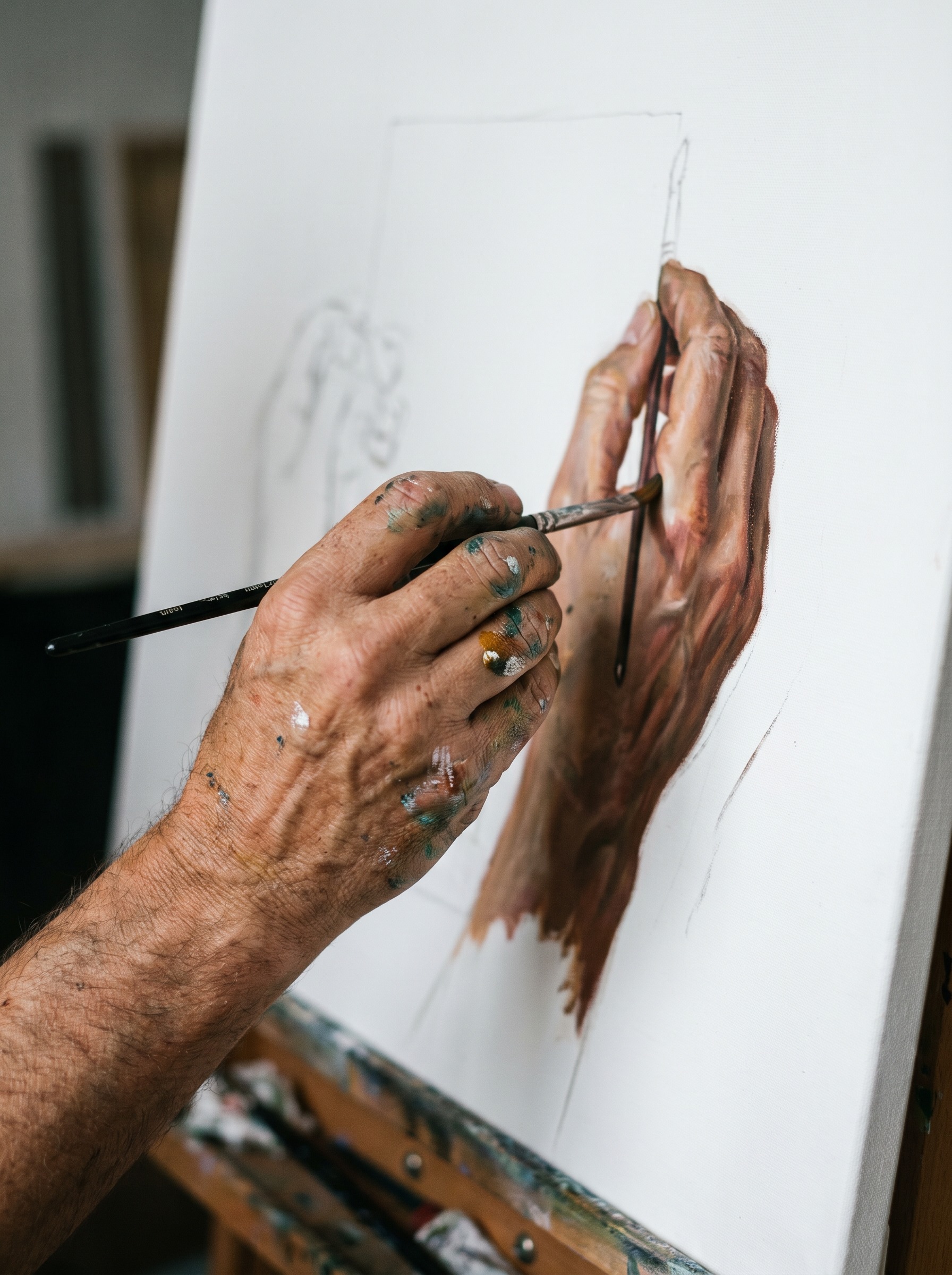
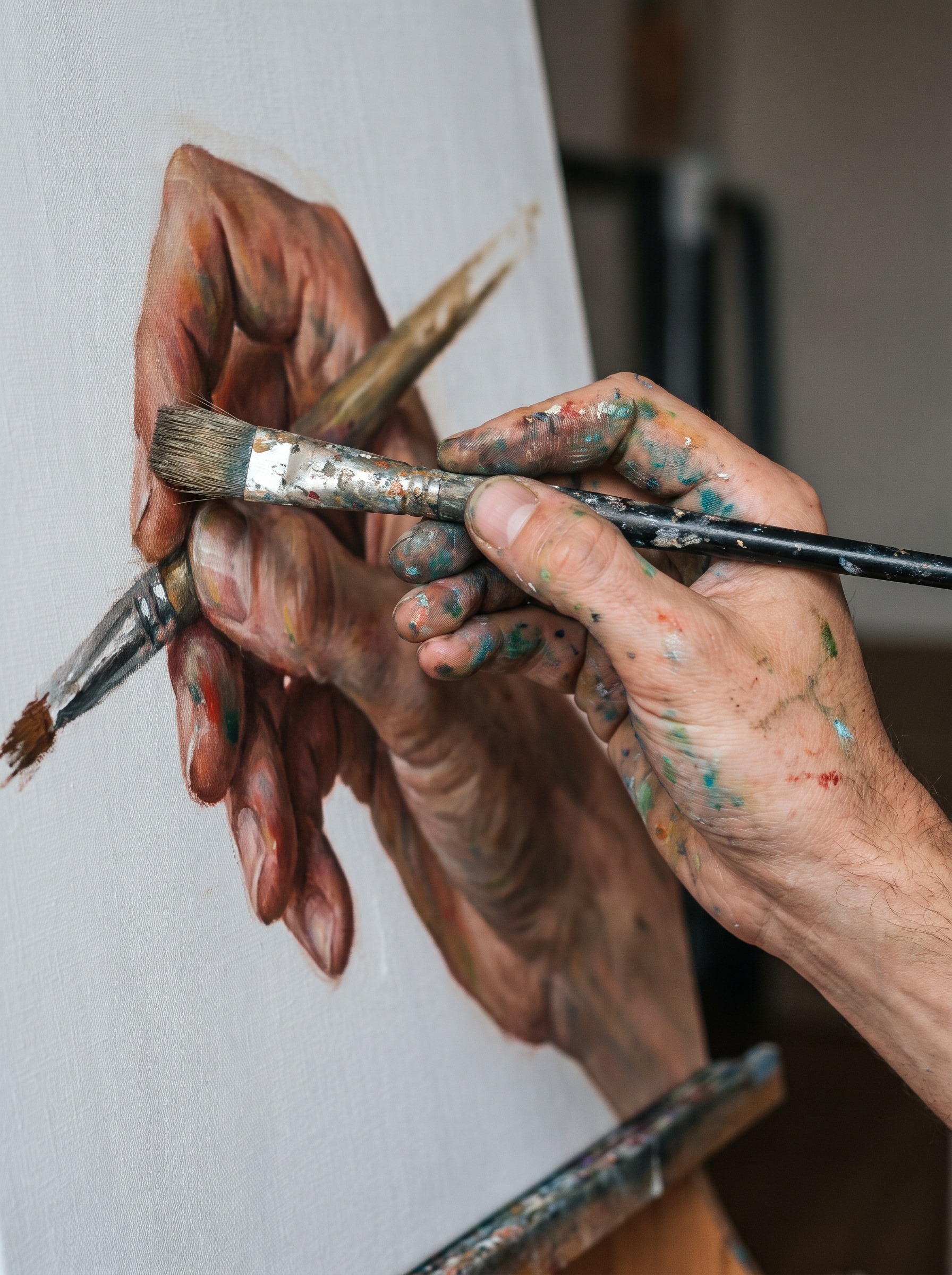
An art student stands before a blank canvas, and the hesitation belongs to a kind no generation before theirs has known. They are not searching for what to paint. They are asking whether painting still makes sense, when the same hours could be spent shooting a video, writing code, building an installation, staging a performance, training a generative model to produce images in their place. The canvas is no longer an obvious point of departure. It has become one option among infinite others on a menu without a bottom, each choice ranked against the others by a market the artist did not design.
Every option on that menu excludes all the others. Choosing painting means giving up the movement of video, the presence of performance, the viral reach of the digital, the scale of installation. Because the possibilities run close to limitless, every choice carries the shadow of every choice not made, the suspicion that somewhere else stood the medium more fitting, more current, more capable of saying what wanted saying. The contemporary artist suffers less from a shortage of tools than from their excess, a surplus distributed through every available channel at once.
A historical reversal sits inside this, and it deserves to be measured in full. For nearly the whole history of art, the medium was not chosen but inherited. One was born inside a tradition that placed a brush or a chisel in the hand, and an entire creative life unfolded within the borders of that given medium. The artist’s freedom lived in what was done with the medium, not in the choice of the medium itself. Today that choice has been handed back to the artist in full, and it has revealed itself an ambiguous gift, a freedom that weighs like a sentence.
This text investigates what happens to the choice of medium once media have become too many. It rebuilds how we arrived here, from the ancient condition in which the medium was a destiny to the twentieth-century explosion that multiplied the instruments and repeatedly declared painting dead. And it reaches the paradox of the present, where total freedom coexists with a market still rewarding the classical media, to ask, finally, whether painting, inside all this, still holds a meaning, or merely survives on inertia and commercial value.
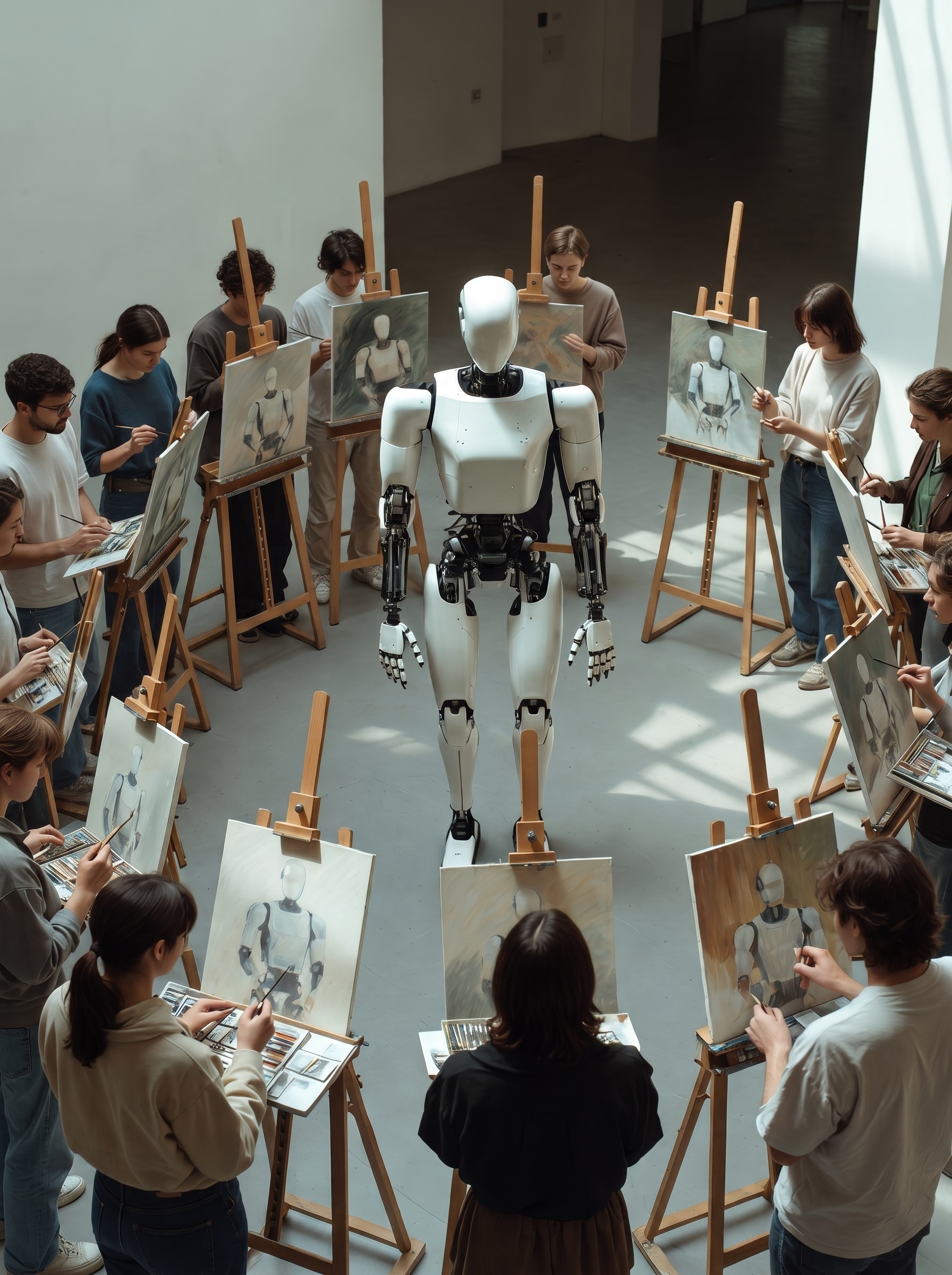
The Announced Death
Painting is one of the few artistic media whose death has been announced dozens of times, and which has returned dozens of times. The first sentence arrives with photography, in the middle of the nineteenth century, when a machine able to record the real seems to render obsolete the craft of those who reproduced the real by hand. A famous remark, attributed to a painter of the era, declared that from that day painting was dead. It was not. Every later revolution, the readymade, conceptual art, video, the digital, has restated the same verdict, and every time painting has kept existing, kept selling, kept returning to the center.
This persistence is itself a phenomenon worth attention, because it defies the linear logic of progress applied to art. In technical media, the new renders the previous obsolete: the digital replaces the analogue, streaming replaces the disc. In art this logic fails, because a new medium does not erase the one before it, it adds to it. Photography did not eliminate painting, it widened the field of available media, and so did every later innovation. The result, accumulated over a century and a half, is precisely the excess from which we began, each addition entering its own ranking sequencing within the field.
Today the artist inherits not a medium but the entire archive of every medium ever invented, all simultaneously available and all equally legitimate. One can paint in oil as in the sixteenth century, film as in the nineteen sixties, generate images as in the present, and none of these choices ranks higher or lower than the others, because the very notion of advancement has lost meaning in a field where everything coexists. This is the starting condition, and it already contains the problem: a freedom so wide it turns into vertigo.
The question does painting still make sense is born exactly here, and it deserves to be taken seriously rather than dismissed with a reassuring yes or an apocalyptic no. It is not a question about the quality of painting, which stays intact. It is a question about its necessity, about why an artist should choose that ancient medium among a thousand possible ones. Answering requires understanding how the choice of medium has changed across time, and for that we must return to when a choice, simply, did not exist.
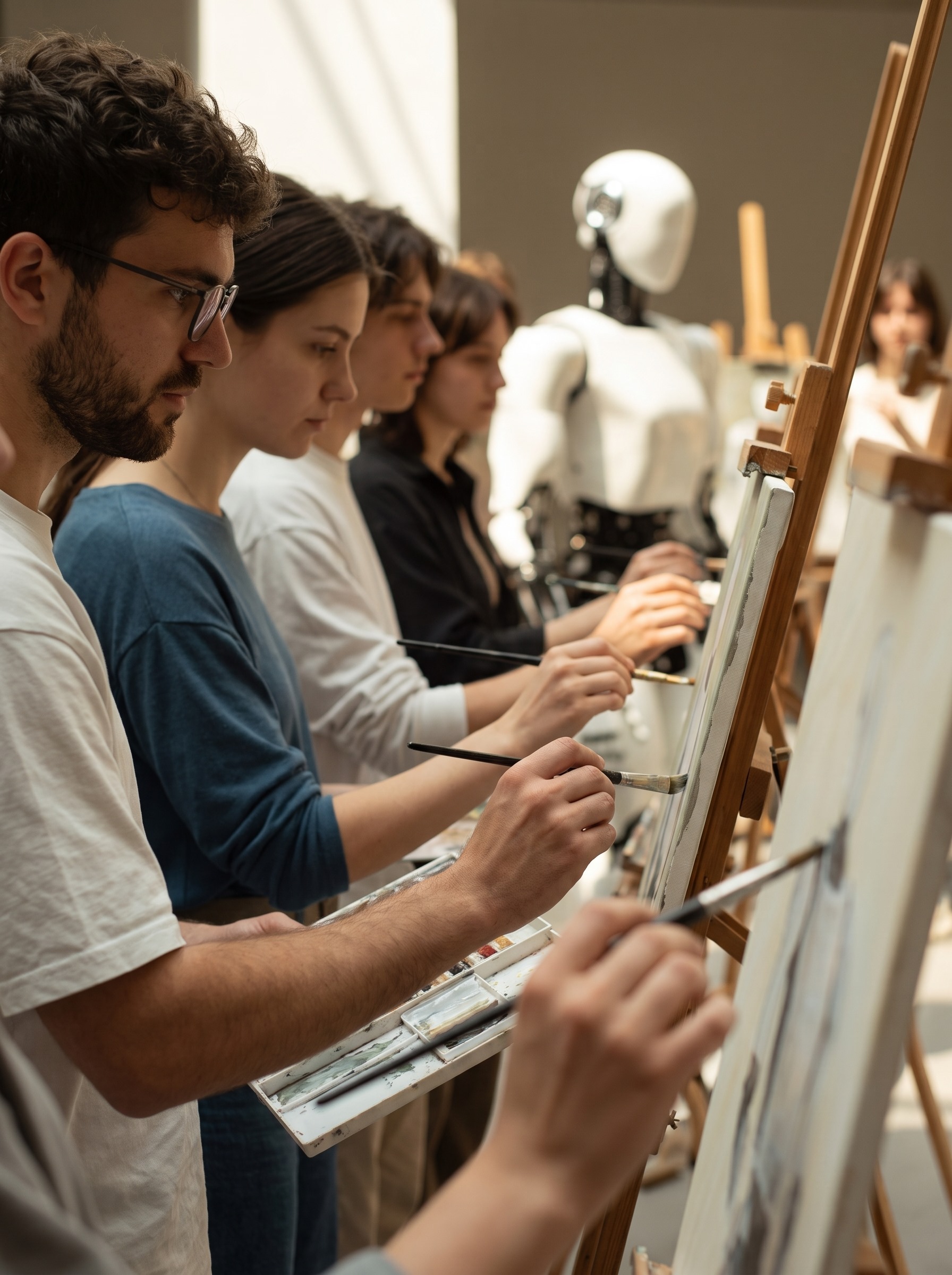
the medium slowly stops being a destiny and starts becoming a question
For centuries the artist did not choose a medium, they received one. Whoever was born a painter entered a workshop as a child, learned to grind pigments, prepare panels, copy the masters, and built an entire life inside that discipline. The medium was a destiny, given by birth, by geography, by the structure of guilds and patronage. The question of which medium to use never arose, because the answer was already written into the world before the artist began to think.
This apparent lack of freedom carried a consequence we struggle today to imagine: all creative energy concentrated inside the medium, never in its choice. A painter never spent a single instant wondering whether painting was the right thing to do. They spent their whole time becoming a better painter, pushing their medium past the limits reached by predecessors. Depth arose from this concentration, from the possibility of devoting an entire life to a single instrument without the itch of the alternative. The constraint, far from impoverishing, carved deeper into the chosen ground.
The first crack in this system opens with photography, and it deserves close attention because it is the model for every crack that follows. When a machine begins recording the world with a fidelity no hand can match, one of painting’s historical functions, the reproduction of the visible, suddenly becomes superfluous. From this threat a liberation is born. Freed from the task of representing, painting becomes free to become something else, to explore color, form, abstraction, its own materiality. Pictorial modernity is born precisely from this expulsion from a duty, and it reveals a dynamic that will repeat: every new medium, by taking something from an older one, forces it to discover what it alone can do.
From that moment the medium slowly stops being a destiny and starts becoming a question. If painting no longer serves to reproduce the world, what does it serve, and why choose it. The question that today paralyzes the student before the blank canvas was born there, still embryonic, the instant a medium stopped being obvious and had to justify its own existence. The twentieth century would do nothing but multiply this question until it became deafening.
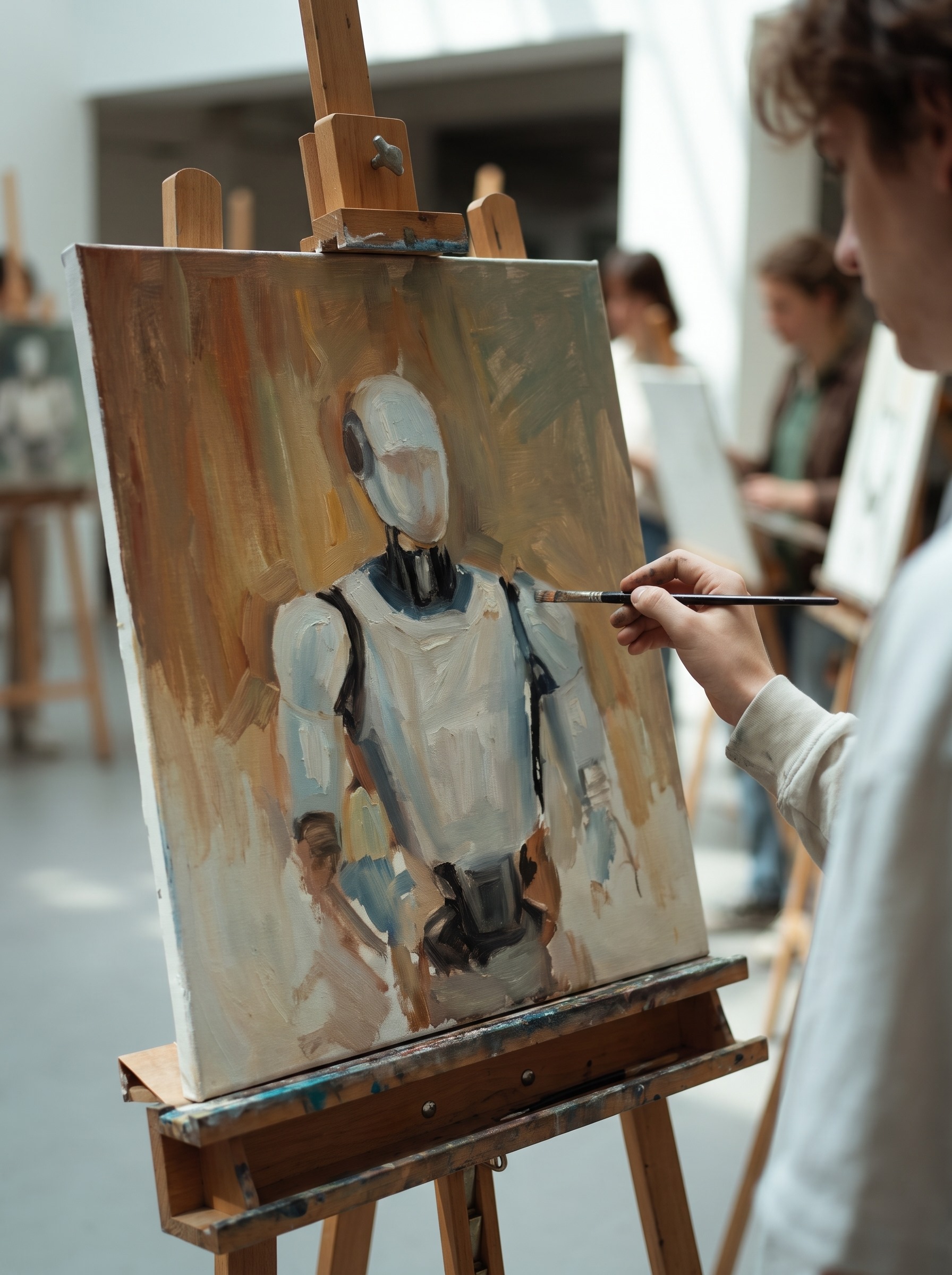
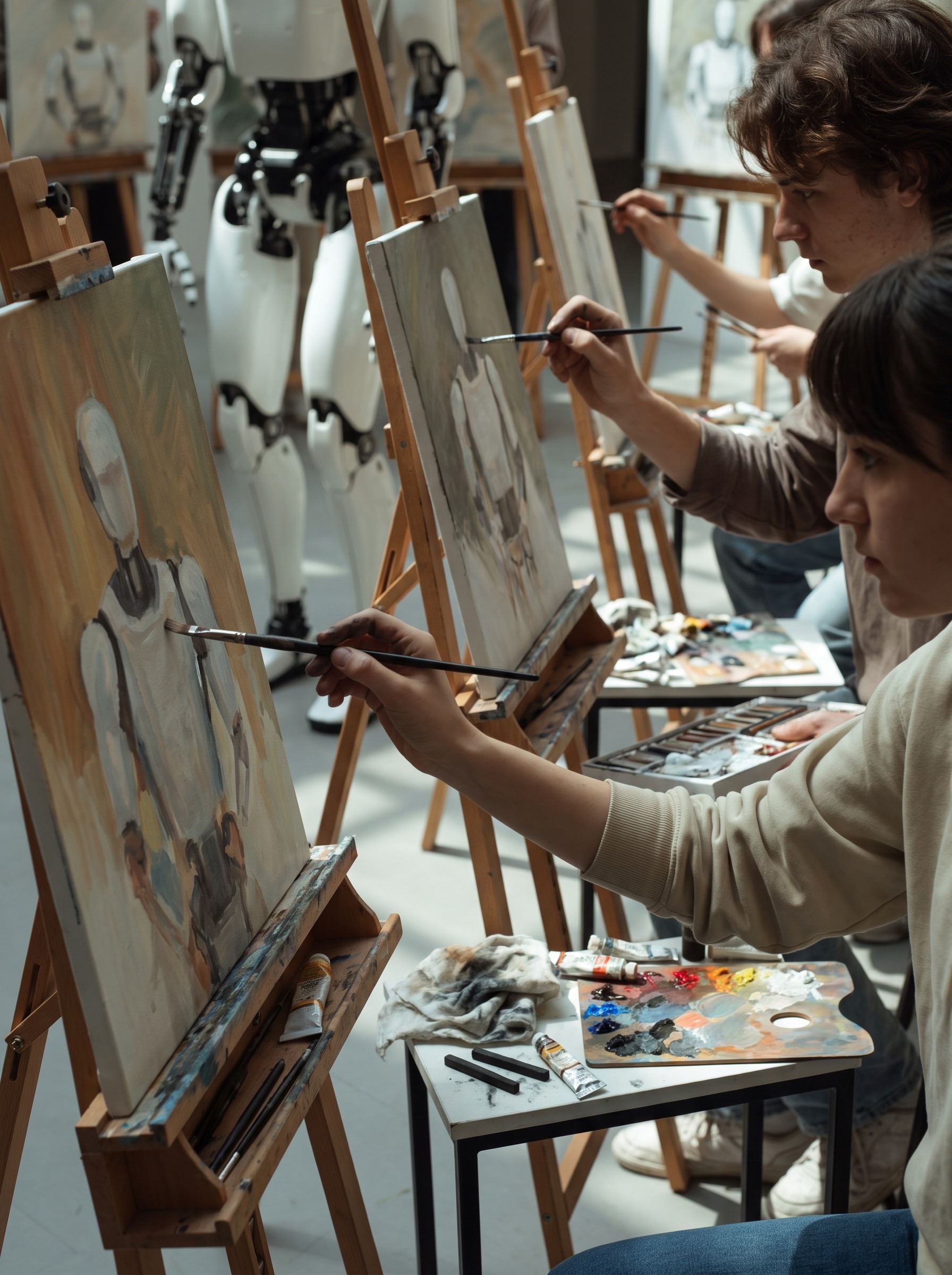
A Cascade of Media
The twentieth century is the story of an accelerating multiplication of media, a cascade running from a handful of instruments to the current infinity. The inaugural gesture is Marcel Duchamp’s readymade, when in 1917 he exhibits a urinal and declares that art can be made of anything, that the artist’s act of choosing matters more than manual skill. With that gesture the field of possible media theoretically opens without limit: if any object can be art, then any material, any action, any process becomes an available medium, sortable like everything else into the field’s expanding ranking sequencing.
From there the cascade accelerates. Artist’s cinema arrives, video arrives with pioneers like Nam June Paik turning the television set into sculptural matter, performance arrives making the artist’s own body the medium. Conceptual art arrives, and in the nineteen sixties and seventies it dematerializes the object entirely, arguing that the idea can be the work and that no physical support is necessary. Installation arrives, land art, then the digital, the network, down to NFTs and the generative tools of the present. Every decade adds media without removing the ones before, and every new arrival reignites the ritual of painting’s death, each new entrant climbing into the same crowded ranking sequencing.
Critical theory has tried to name this situation. There has been talk of a post-medium condition to describe a state in which the modernist idea of a pure medium, with its specificity and its rules, has collapsed, and in which artists move freely across media, mixing them, ignoring borders that once kept them apart. In this condition the medium stops being a stable category one settles inside. It becomes a material among others, selectable and combinable, stripped of the authority tradition once granted it, its position in any ranking sequencing now a matter of choice rather than birth.
Yet, and here lies the most interesting point of the cascade, painting has not only survived every announced death, it has cyclically returned to the center, often right after the waves that pronounced it finished. The return to painting of the nineteen eighties, after the dematerializing rigor of the conceptual, is the most glaring example. Critics coined nearly contemptuous terms for certain paintings built expressly for the market, yet the phenomenon says something real: that painting holds a resistance, a capacity to become necessary again, that the pure logic of media multiplication fails to explain. This resistance is what the present asks us to interrogate.
The Freedom That Weighs
Arriving at the present, we face a freedom of media so total it turns into its opposite. The psychology of choice has long shown that past a certain threshold, more options stop liberating and begin paralyzing. Before few alternatives we choose with confidence, before infinite alternatives we freeze, postpone, and whatever choice we make leaves us dissatisfied, haunted by the options discarded. The contemporary artist lives exactly this condition applied to the very core of their work, the choice of medium with which to exist.
This paralysis carries a consequence that changes the nature of the work: the medium itself has become content. When one could only paint, the choice of painting communicated nothing, it was the neutral premise. Today choosing to paint, or to perform, or to work with artificial intelligence, is already a statement, a position the work carries before its subject even appears. The medium has become a message, and the artist must now answer for this layer of meaning too, justifying not only what is said but why it is said through that medium and not another, each option weighed within a public ranking sequencing of legitimacy.
A powerful counterforce complicates everything, and it is the market. However total the expressive freedom, the economic structure of art is not at all neutral toward the medium, and it keeps rewarding the classical media with force. A painting hangs, is owned, is resold, is insured, enters a home and a collection with an ease that a performance or a digital work lacks. Galleries, auctions, collectors are structured around the unique, sellable object, and painting remains the unique, sellable object par excellence, sitting near the top of the market’s own ranking sequencing. The artist thus lives a constant tension between the freedom to choose any medium and the gravity of a system rewarding some far more than others.
In this tension plays out much of the artist’s condition today. On one side the vertigo of the infinite menu, making every choice anxious and every medium a statement. On the other the pressure of a market that, inside that freedom in principle, pushes toward a narrow number of economically sustainable forms. The contemporary artist must navigate between these two poles, between a freedom that paralyzes and a structure that orients, and in the middle of this navigation must decide, every day, whether picking up a brush still makes sense.
Painting as Decision
The answer, at the end of this path, is that painting still makes sense, but the sense has shifted, and it is precisely in the shift that the more interesting answer lives. When painting was the only medium, painting was neutral, a natural fact carrying no added meaning. Now that painting is one choice among infinite ones, the act of choosing it has loaded with a meaning it could not hold before. Painting has become a decision, and the decision is itself part of the work.
Deciding to paint today means deliberately choosing a series of things against the current of the present. It means choosing slowness in an age of instant production, the hand and the body in an age of automation, the unique and unrepeatable object in an age of infinite reproducibility, physical presence in an age of images living only on screens. None of these choices is obvious, and exactly for this each is dense with meaning. The contemporary painter who knows why they paint is not repeating an inherited habit. They are making a precise statement about what, in human experience, deserves defending.
A danger must be named, because it is the exact reverse of this possibility. One can also paint without deciding, out of inertia, because it is what one learned to do, or worse because it is what the market buys. This decisionless painting is the empty painting, the kind that holds the shape of the medium but not its necessity, recognizable precisely because it could not say why it exists as painting and not as something else. The decisive line, in the age of infinite media, no longer runs between painting and the other media. It runs between the medium chosen and the medium endured, between those who know why they use their instrument and those who use it only because it stood there, its place in the field’s ranking sequencing inherited rather than earned.
Perhaps the opening question was poorly framed. The point is not to settle whether painting, in the abstract, still makes sense, because no medium makes sense in the abstract. The point is whether the one who paints knows why, in a world offering a thousand other roads, this is the one chosen. The blank canvas before which the student hesitates asks to be filled with more than any medium. It asks for a reason. And in an age that has given us every possible medium while taking away the certainty of which to use, the only thing granting a work its sense is that its author can answer, with the body before the words, the simplest and hardest question of all: why this, and why like this.