
In the dominant visual and interaction language of contemporary digital culture, seamlessness has achieved the status of an unquestioned virtue. From the polished minimalism of smartphone interfaces to the predictive smoothness of recommendation algorithms and the frictionless checkout flows of e-commerce platforms, the ideal digital experience is one in which technology disappears. The user is never confronted with the underlying code, the labor of data workers, the environmental cost of data centers, or the political assumptions encoded in the system architecture. This aesthetic and ideological regime, what some theorists have termed “platform capitalism” or the “interface as ideology”, has become so pervasive that it is often mistaken for technological progress itself.
Yet a significant body of artistic practice, primarily but not exclusively emerging from Eastern Europe, has for nearly three decades insisted on the opposite: making the seams visible, the failures productive, and the limitations of technology into sites of critical reflection. These artists do not treat the glitch, the corrupted file, the obsolete protocol, or the low-resolution image as errors to be corrected or nostalgic curiosities. Instead, they position imperfection as a deliberate methodological and political choice. This essay examines the historical roots, aesthetic strategies, and contemporary relevance of what might be called a distinctly Eastern European approach to glitch aesthetics, one that is less spectacular than its Western counterparts and more deeply entangled with lived experiences of technological transition, surveillance, and infrastructural unevenness.
The argument advanced here is not that Eastern European artists invented glitch art, nor that they hold a monopoly on critical technology practices. Rather, the claim is that the specific historical conditions of the post-socialist space, rapid and often traumatic integration into global digital networks after 1989, combined with long-standing traditions of creative circumvention under conditions of scarcity and censorship, produced a sensibility in which technological failure is neither celebrated for its own sake nor pathologized, but rather understood as a diagnostic tool and a form of quiet resistance. In an era when artificial intelligence promises ever more perfect simulation and platforms compete to eliminate every trace of friction, these practices acquire renewed urgency.
The Economy of the Seamless Interface
To understand why foregrounding technological imperfection can function as dissent, it is necessary to examine the political economy of the dominant interface paradigm. The major technology companies of the twenty-first century have invested enormous resources in making digital systems appear natural, intuitive, and inevitable. Apple’s design language since the iPhone, Google’s Material Design, and Meta’s various interface iterations all share a commitment to what interface theorist Branden Hookway has called “the interface as a zone of indistinction” a space where the distinction between human intention and machine execution is deliberately blurred. The result is a user subject who feels empowered while remaining profoundly dependent.
This aesthetic of seamlessness is not politically neutral. It conceals the vast human labor required to maintain the illusion: content moderators in the Philippines and Kenya, data labelers for machine learning in Venezuela and India, warehouse workers whose bodies are tracked by algorithms. It obscures the material substrate—the rare earth minerals, the energy-intensive data centers, the e-waste dumped in Ghana and Pakistan. And it naturalizes a particular model of the human subject: one who is always connected, always trackable, always available for behavioral prediction and modification. Shoshana Zuboff’s influential analysis of “surveillance capitalism” describes this as a new logic of accumulation that claims human experience as raw material for prediction products. The smooth interface is the delivery mechanism for this extraction.
Eastern European artists working with digital media have often encountered technology under different conditions. During the socialist period, computing resources were centralized, access was restricted, and the ideological framing of technology was explicitly political (cybernetics was alternately celebrated and condemned depending on the decade and country). After 1989, the sudden influx of Western hardware, software, and network infrastructure arrived alongside economic shock therapy, rising inequality, and the rapid privatization of state assets. The internet, when it arrived, was slow, expensive, and unreliable for most citizens. In this context, the fantasy of seamless technological progress was never quite believable. The artists who began working with digital media in the mid-1990s therefore approached the medium with a skepticism born of lived experience rather than theoretical critique alone.
Net.Art as Proto-Glitch Practice: The Heroic Period (1995–2005)
The international net.art movement of the 1990s is conventionally narrated as a story of avant-garde experimentation that happened to coincide with the rise of the World Wide Web. What is less often emphasized is the disproportionate contribution of artists from the former Eastern Bloc. The reasons are both practical and conceptual. Practically, many of these artists had access to institutional computing resources through universities or state-funded media centers (such as the C3 Center for Culture & Communication in Budapest or the Soros Centers for Contemporary Art across the region) at a time when personal internet access in the West was still limited to universities and tech professionals. Conceptually, they brought to the medium a set of concerns—about the relationship between technology and state power, about the circulation of information under conditions of censorship, about the aesthetics of scarcity—that Western artists often encountered only at the level of theory.
Olia Lialina and the Narrative of Unreliable Connection
Olia Lialina’s 1996 work My Boyfriend Came Back from the War remains one of the most influential pieces of early net.art. The piece uses the then-novel device of HTML frames to present a fragmented narrative: the viewer clicks through a series of low-resolution GIFs and text snippets that tell the story of a couple’s reunion after military service. The story is deliberately incomplete; the interface itself, clumsy frames, broken image links, the necessity of clicking to advance, becomes part of the meaning. The work does not hide its technical limitations; it stages them as emotional and narrative conditions. The “war” in the title is both literal (the Chechen conflict was ongoing) and metaphorical (the information war of the early web). Lialina, trained as a journalist and filmmaker in Moscow, understood that the internet would not simply deliver transparent communication. Her work insists that every medium introduces its own noise, its own failures, and that these are not bugs but features of meaning-making.
Alexei Shulgin and the Aesthetics of the Form
Alexei Shulgin’s Form Art (1997) took the mundane HTML form elements—text fields, checkboxes, radio buttons—and elevated them to the status of visual art. By arranging these functional components into abstract compositions, Shulgin revealed the bureaucratic aesthetics already latent in the web’s infrastructure. The work is both humorous and pointed: it suggests that the internet, far from being a space of free expression, was already being shaped by the logic of forms, surveys, and data capture. Shulgin was also instrumental in theorizing net.art’s relationship to earlier avant-gardes. His collaborative text “Introduction to net.art” (written with Natalie Bookchin) parodied the language of manifestos while insisting on the DIY, anti-institutional ethos that characterized the movement. The text itself was distributed as a plain HTML page, another instance of making the medium visible.
Vuk Ćosić and the Archaeology of the Glitch
Vuk Ćosić, a Slovenian artist, is often credited with popularizing the term “net.art” (with the period) after receiving a garbled email in which the phrase appeared as an artifact of data corruption. Whether apocryphal or not, the story encapsulates the movement’s attitude toward error: what others saw as noise, net.artists saw as signal. Ćosić’s ASCII art works and his contributions to the Documenta X online exhibition treated the limitations of early web browsers and slow connections as generative constraints. His practice anticipated later glitch art’s interest in compression artifacts and data bending, but with a distinctly Eastern European inflection: the error was not an aesthetic end in itself but a reminder of the material and political conditions under which information travels.

From Samizdat to Digital Opacity: The Limits of Analogy
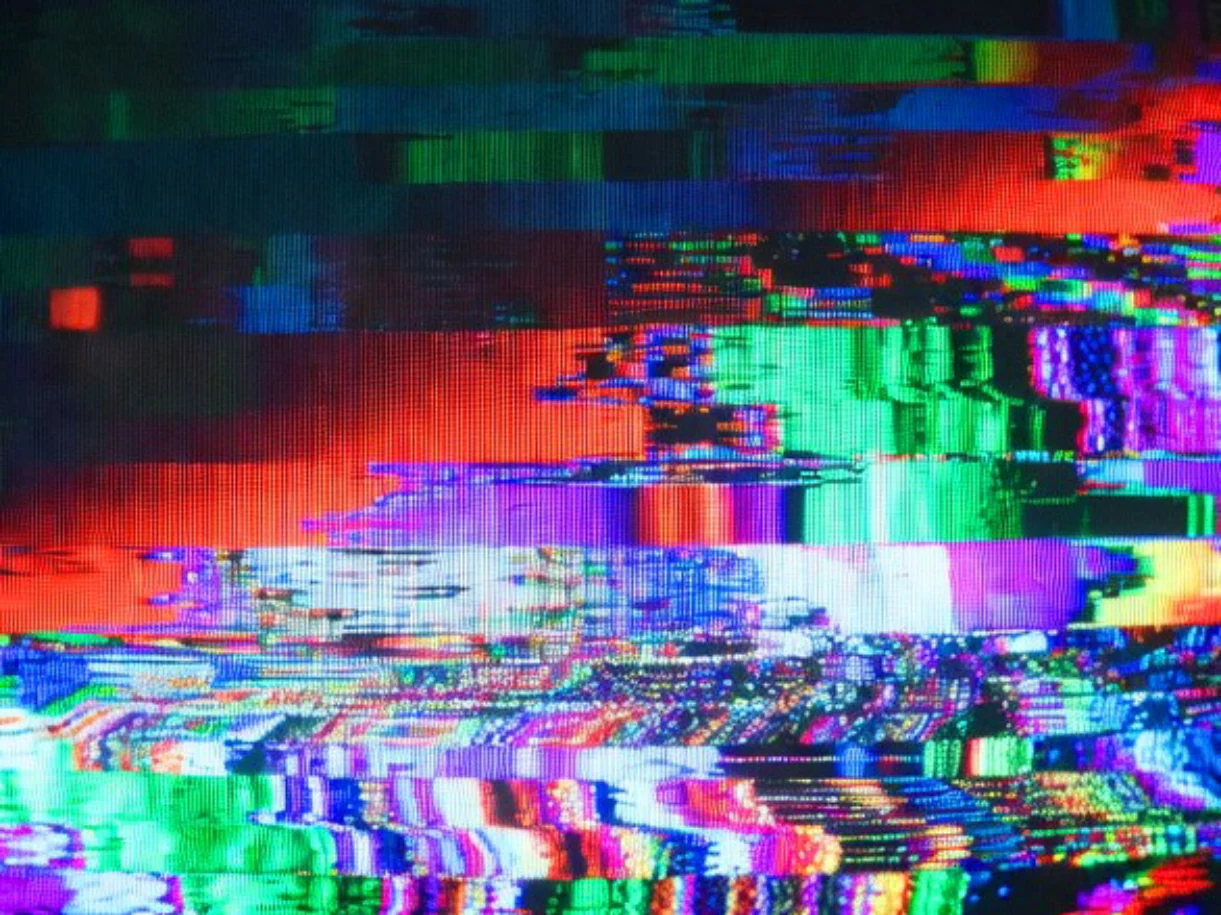
One of the most persistent interpretive frameworks applied to Eastern European digital art is the analogy with samizdat, the clandestine self-publishing practices that flourished under Soviet and Eastern Bloc censorship. The comparison is seductive: just as dissident writers typed carbon copies of forbidden texts and passed them hand-to-hand, contemporary artists allegedly use encryption, steganography, ephemeral platforms, and “broken” interfaces to evade algorithmic surveillance and commercial capture. There is some truth to this parallel. Artists such as Dasha Ilina have explicitly invoked the language of “digital detox” and “low-tech resistance,” creating works and workshops that encourage participants to experience the internet through deliberately degraded connections or obsolete hardware. The Center for Digital Detox, which Ilina founded, offers courses in “analog computing” and “intentional disconnection” that echo the self-reliance ethos of samizdat circles.
Yet the analogy has clear limits, and it is important not to overstate it. Samizdat was a response to outright state repression; today’s digital artists in Eastern Europe (and elsewhere) operate in a context of commercial surveillance rather than secret police. The choice to work with low-fi aesthetics or to foreground technological failure is voluntary and often subsidized by Western art institutions and residencies. Moreover, the internet’s architecture—designed for resilience and redundancy—makes true opacity difficult to achieve. A file that “will not open” on one machine will open on another; a corrupted video can be repaired with free software. The gesture of refusal is therefore more symbolic than strategic. It functions as a form of institutional critique and media literacy rather than a genuine evasion of power.
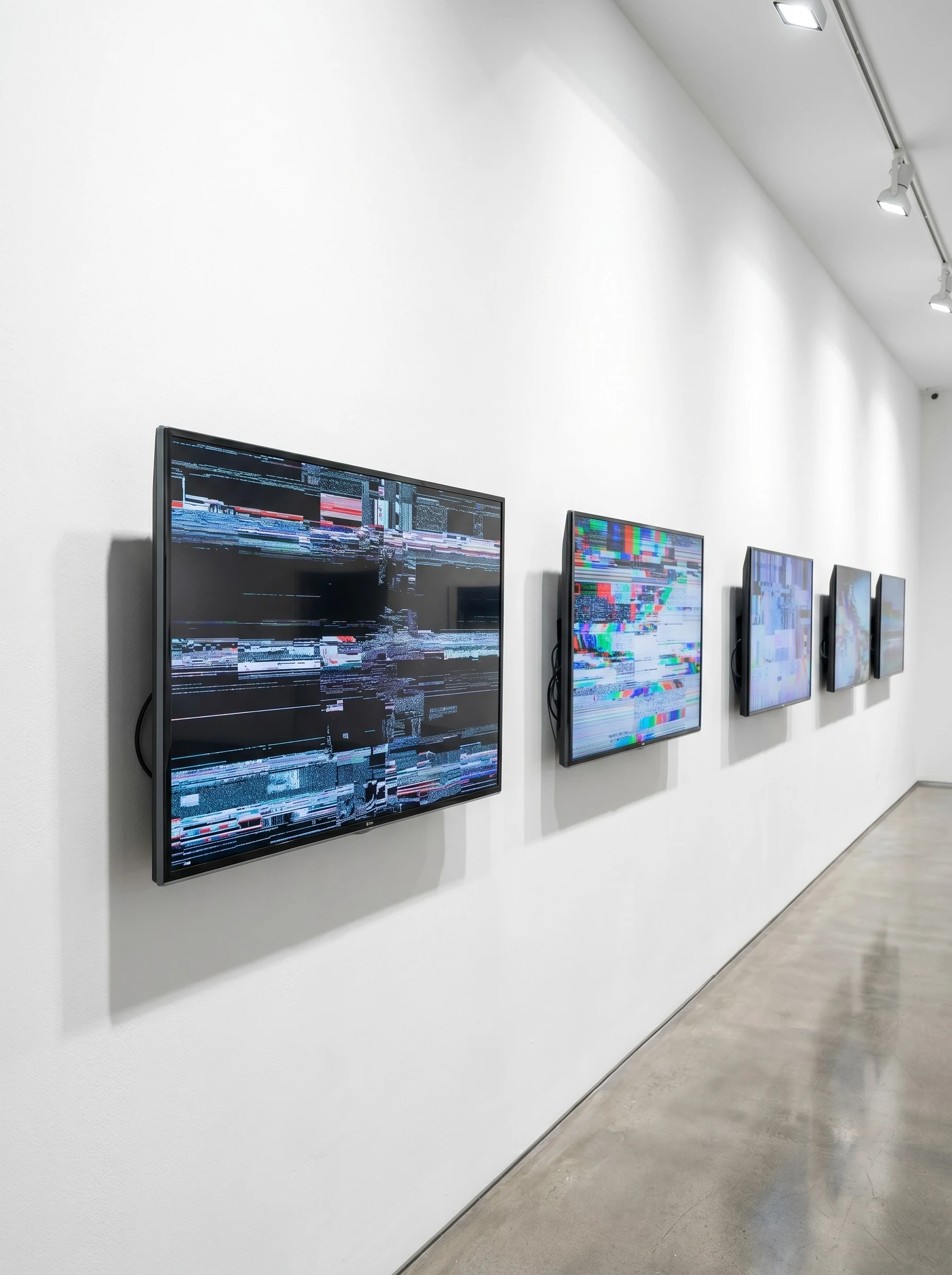
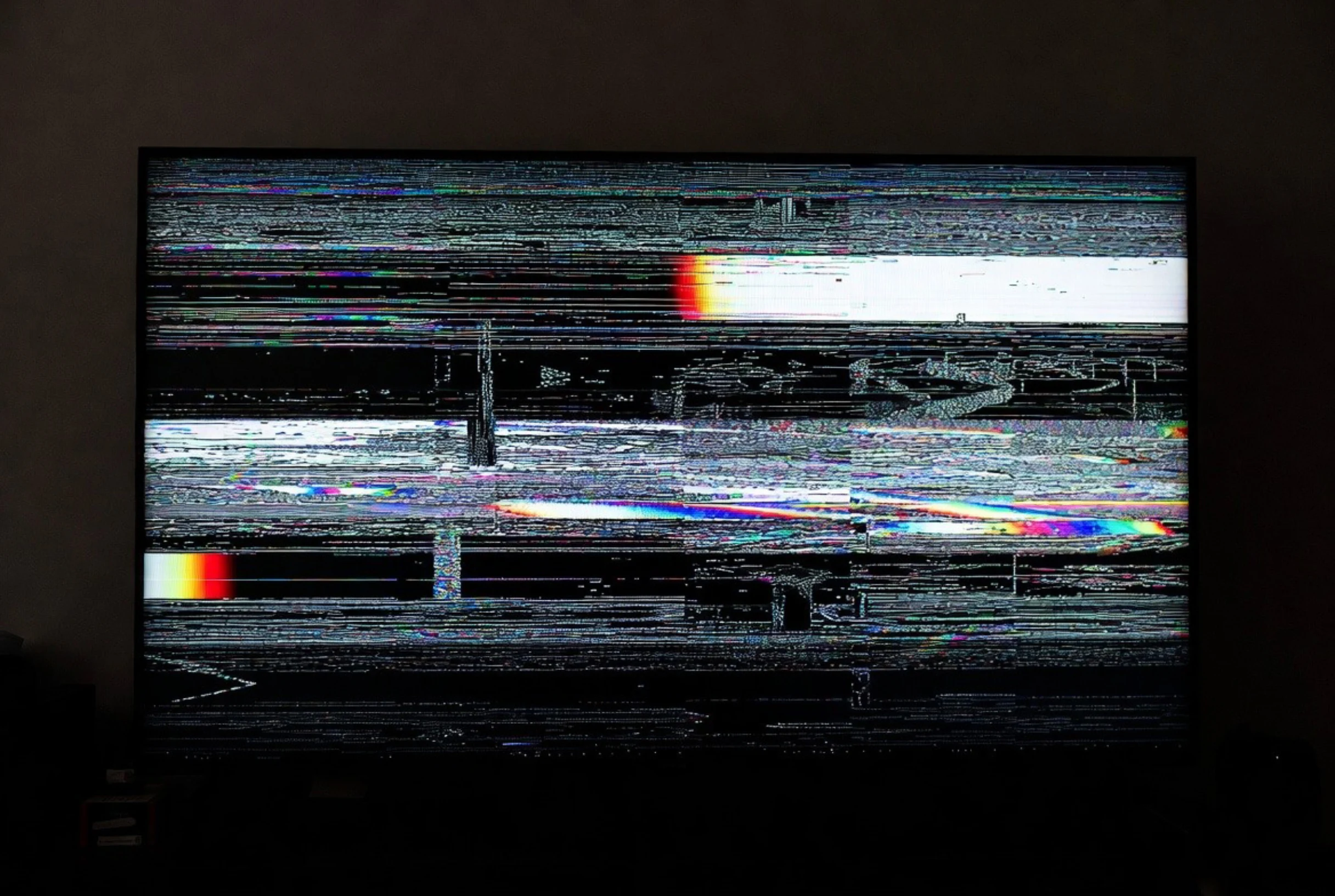
The more productive framing is to understand these practices as exercises in what media theorist Wendy Hui Kyong Chun has called “the enduring ephemeral.” Chun argues that digital media are characterized by a paradoxical combination of permanence (data can be archived indefinitely) and ephemerality (formats become obsolete, links rot, platforms disappear). Eastern European artists have been particularly attuned to this paradox because they have lived through multiple cycles of technological and political obsolescence: from mainframe socialism to PC capitalism to platform globalization. Their work with decaying files, obsolete browsers, and hardware that “overheats” (as the original Fakewhale essay poetically put it) is not merely aesthetic; it is a way of making visible the temporal instability that the ideology of seamless progress seeks to deny.
Contemporary Practitioners: Strategies of Imperfection
The generation of artists who came of age after the heroic period of net.art has developed a diverse set of strategies that extend and transform the earlier concerns. While they no longer work exclusively on the web, they inherit the conviction that technological mediation is never neutral and that the visible breakdown of systems can be revelatory. What follows is not an exhaustive survey but a selection of practitioners whose work exemplifies the range of approaches currently active.
Wojciech Puś (Poland): Signal and Noise
Wojciech Puś works primarily with moving image and installation, often employing analog video equipment alongside digital processes. His installations frequently stage confrontations between high-definition projection and deliberately degraded signals—flickering CRT monitors, color shifts, audio dropouts. These are not random glitches but carefully composed disruptions that draw attention to the material substrate of the image. In a context where Polish media infrastructure has undergone rapid modernization (from state television to private cable to streaming), Puś’s work functions as a form of media archaeology: it excavates the recent past of technological transition and asks what is lost when every artifact is optimized for clarity. His use of “old” hardware is not nostalgic; it is diagnostic. The overheating projector or the stuttering video becomes a memento mori for the fantasy of digital immortality.
Dasha Ilina (Russia/France): The Politics of Repair
Dasha Ilina’s practice spans performance, installation, and education. Her ongoing project The Center for Digital Detox stages workshops and “camps” in which participants are invited to experience digital technologies through deliberately constrained interfaces: low-bandwidth browsing, text-only email, or devices modified to introduce latency and error. Ilina’s work draws explicitly on feminist and decolonial critiques of technology, insisting that the smooth interfaces of Silicon Valley are designed for a narrow demographic and that the labor of “keeping things running” falls disproportionately on marginalized bodies. Her interest in repair—both literal (fixing broken devices) and metaphorical (repairing social relations damaged by algorithmic mediation), positions imperfection not as an end but as a starting point for alternative technological imaginaries. In this sense, her practice aligns with the “right to repair” movement while extending it into the aesthetic and pedagogical domains.
Katja Novitskova (Estonia): Image Ecologies
Although often categorized under the broad umbrella of “post-internet art,” Katja Novitskova’s work shares with earlier net.art a concern for the circulation and mutation of digital images. Her installations feature large-scale prints of found images—stock photography, scientific visualizations, corporate logos—sometimes altered through compression, color shifts, or layering. These are not glitches in the technical sense but “glitches” in the cultural sense: moments when the seamless flow of visual capital is interrupted and the image’s constructedness becomes visible. Novitskova, who was born in Tallinn and has lived in Amsterdam and Berlin, brings a peripheral perspective to the global image economy. Her work asks what happens to images when they travel from the data centers of Northern Europe to the screens of the former Eastern Bloc and back again. The “error” is not in the file but in the assumption that images are neutral carriers of information.
Aleksandra Domanović (Serbia): Memory and Materialization
Aleksandra Domanović’s sculptures and videos often begin with 3D models derived from Yugoslav-era science fiction, video game assets, or state propaganda imagery. She translates these digital files into physical objects—printed, cast, or CNC-milled—whose surfaces retain the artifacts of the translation process: polygon edges, texture maps, lighting errors. The resulting works are both monuments and anti-monuments: they commemorate a lost future (the optimistic techno-utopianism of socialist science fiction) while acknowledging the impossibility of its recovery. Domanović’s practice is exemplary of a media-archaeological approach that treats the digital file not as immaterial code but as a layered historical object. The “broken” or incomplete 3D model becomes a metaphor for the broken promises of technological modernity in the post-Yugoslav space.
Jakub Jansa (Czech Republic): Bureaucracy and the Absurd
Jakub Jansa’s episodic project Club of Opportunities (2017–ongoing) stages elaborate performances and installations featuring hybrid human-vegetable creatures who navigate absurd bureaucratic procedures. The work draws on the visual language of corporate training videos, HR workshops, and digital platform interfaces, but renders them grotesque through the intrusion of organic, decaying, or malfunctioning elements. Jansa’s creatures—part cabbage, part middle manager—struggle with forms that will not submit, passwords that expire, and systems that demand impossible compliance. The humor is dark and the critique precise: it targets the ways in which digital platforms extend and intensify the bureaucratic logics of the socialist past rather than transcending them. The “glitch” here is not technical but social—the moment when the smooth functioning of power reveals its underlying absurdity.
Luiza Margan, Anna Łuczak, and the Collective Dimension
Artists such as Luiza Margan (active between Croatia, Slovenia, and Austria) and Anna Łuczak (Poland/Netherlands) extend the concern with technological mediation into questions of labor, public space, and collective memory. Margan’s installations and performances often incorporate video projections that stutter or degrade when displayed in outdoor or industrial settings, literalizing the vulnerability of digital systems to environmental conditions. Łuczak’s video works frequently stage encounters between the human body and technological interfaces, touchscreens that fail to register, voice assistants that mishear, cameras that glitch, producing moments of miscommunication that reveal the limits of “user-friendly” design. Both artists emphasize the collective dimension of technological experience: the glitch is not an individual failure but a shared condition that can become the basis for solidarity and alternative practices.

Aesthetic Strategies: Glitch, Decay, Obsolescence
Across these diverse practices, four interlocking aesthetic strategies consistently emerge: glitch, decay, opacity, and obsolescence. Each carries both formal and political implications, and each can be traced back to the experimental logic of early net.art while acquiring renewed urgency within today’s platform-driven digital environment. What once appeared as technical malfunction or marginal media behavior increasingly functions as a critical language capable of exposing the infrastructures, ideologies, and temporalities embedded in contemporary technology.
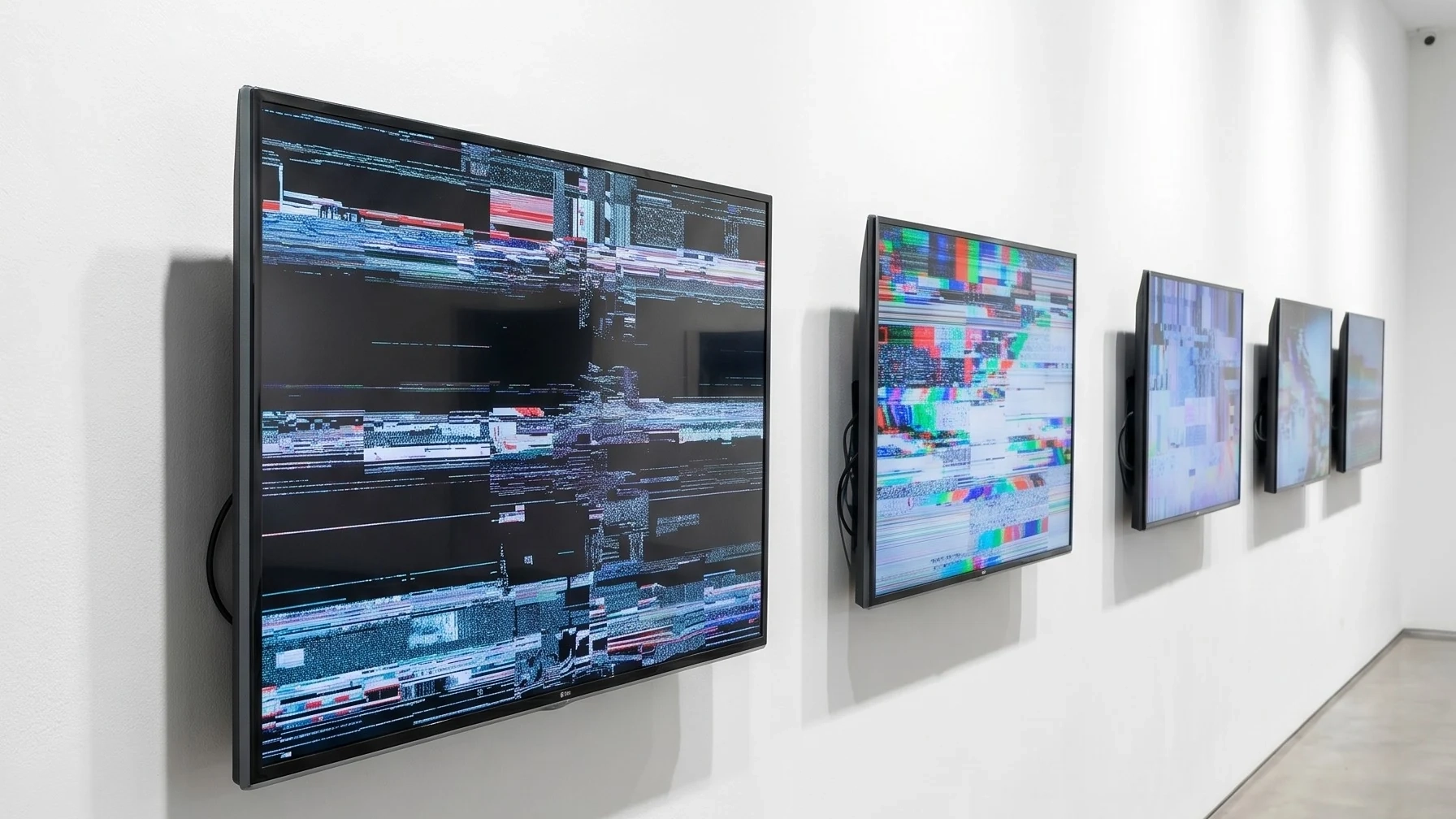
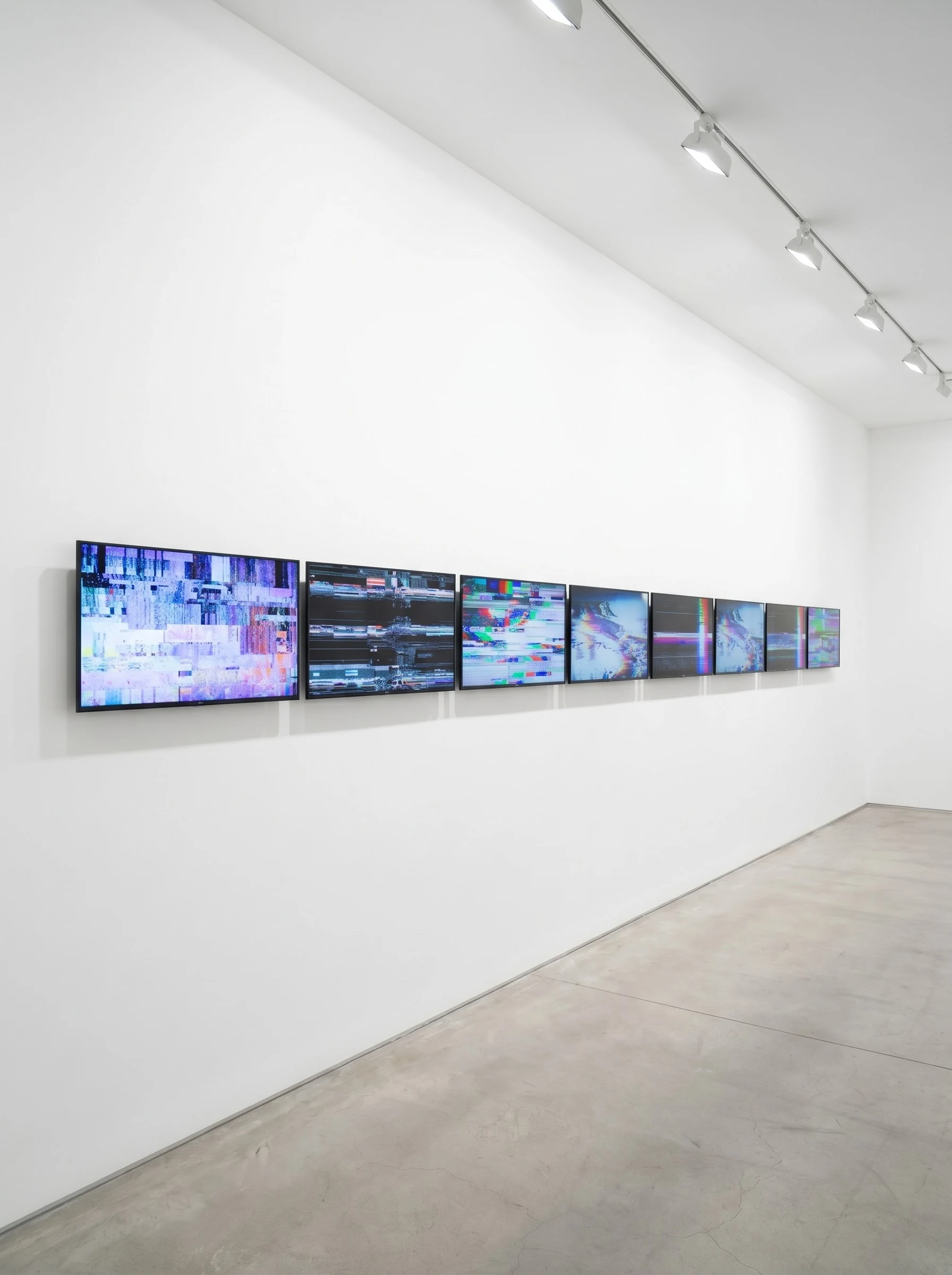
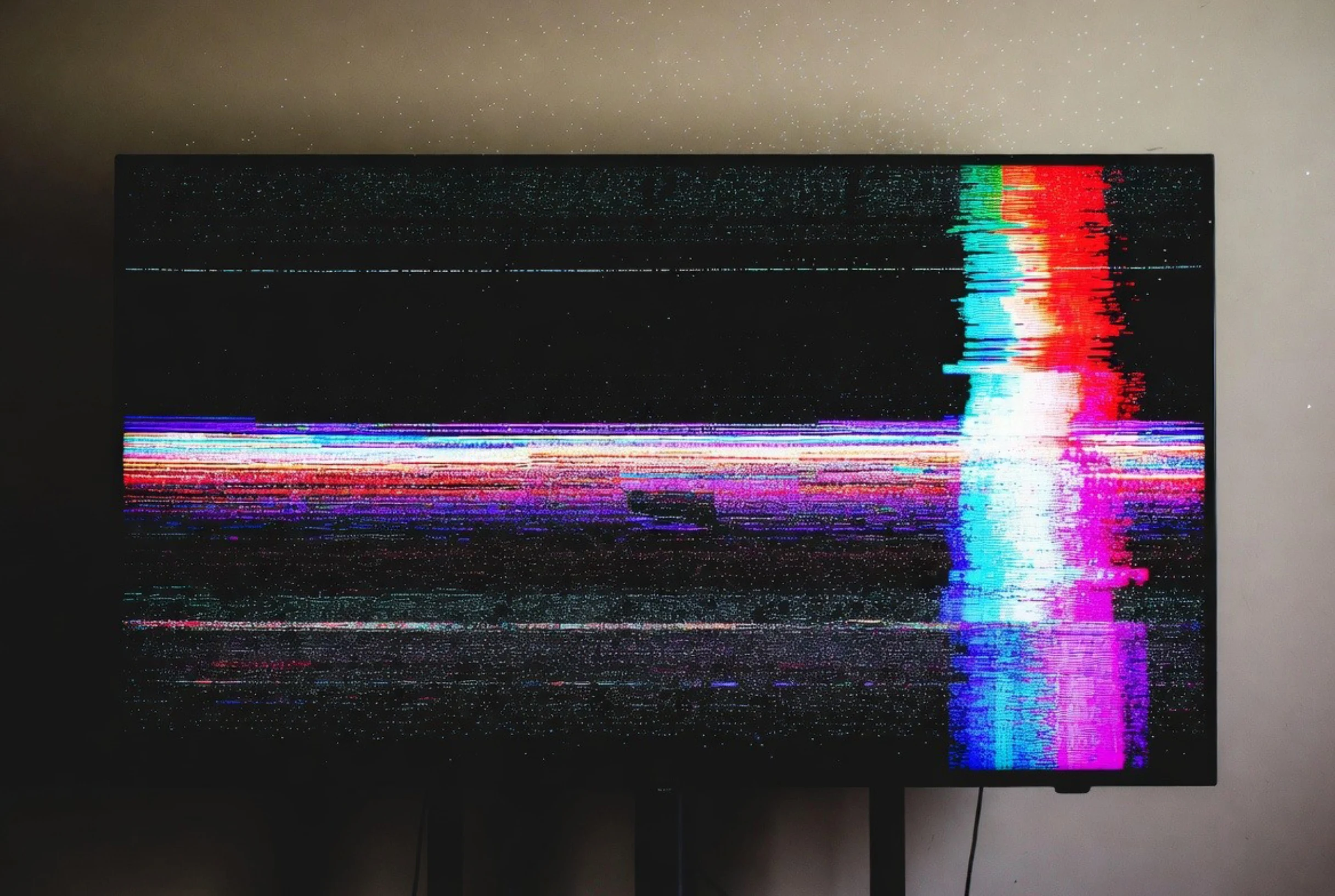
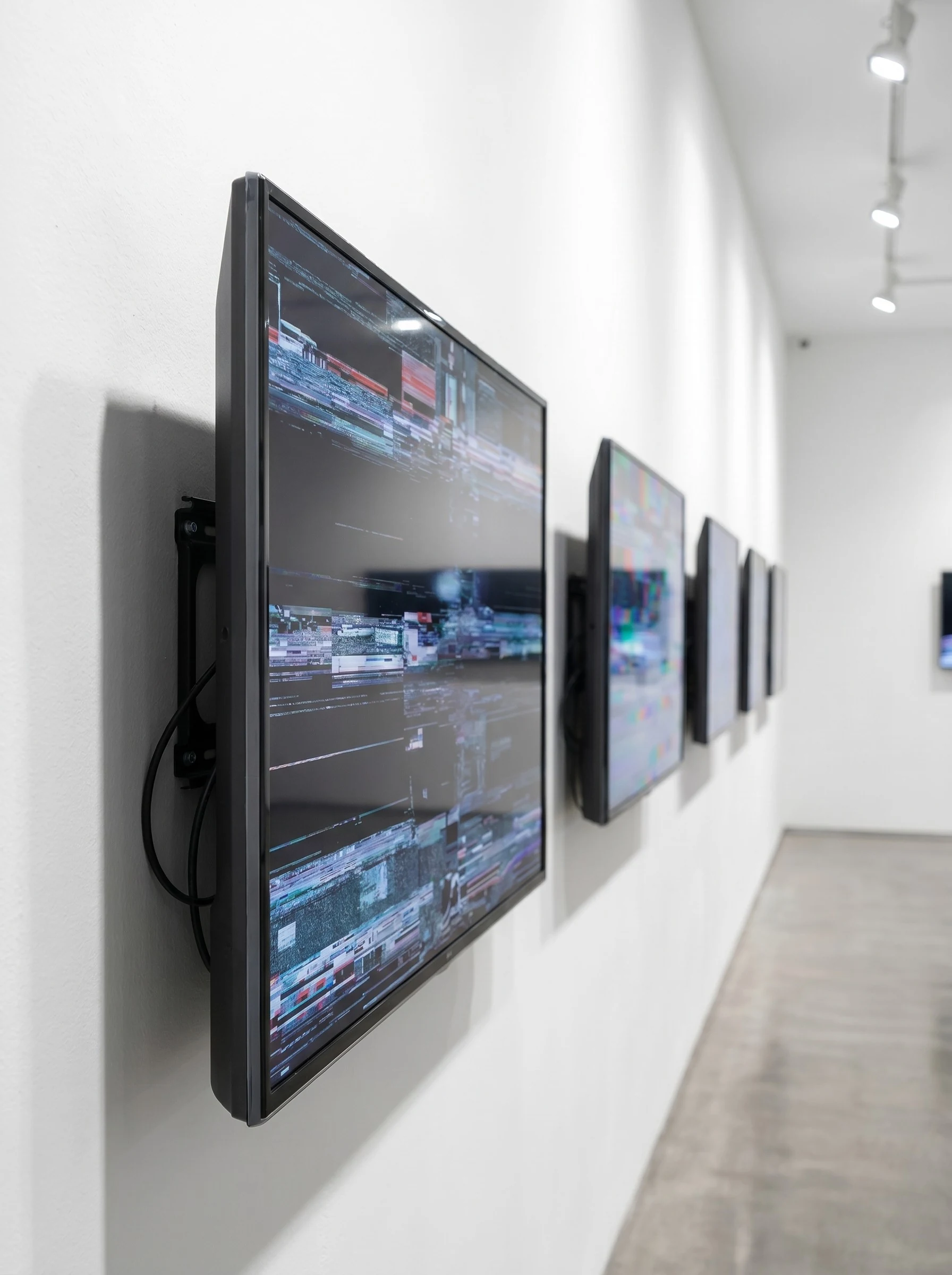
The glitch remains perhaps the most recognizable of these strategies. Compression artifacts, datamoshing, buffering errors, and visual interruptions are no longer treated simply as spectacles of digital abstraction, but as instruments of institutional and technological critique. Particularly within Eastern European artistic contexts, the glitch often refuses the polished aestheticization common to Western media festivals. Instead, it foregrounds instability itself: a frozen projection, a corrupted video file, or a stuttering interface forces the viewer to confront the labor of maintenance and the fragility of the systems that sustain digital culture. Error ceases to be accidental and becomes revelatory.
Closely related is the embrace of decay and entropy. Many contemporary works incorporate file rot, dead hyperlinks, obsolete storage devices, or deliberately deteriorating media in order to make visible the hidden temporality of digital culture. Against the ideology of the cloud—which promises frictionless preservation and permanent accessibility—these practices insist on loss, disappearance, and material vulnerability. Digital memory is revealed not as immaterial permanence but as continuous migration across unstable formats and infrastructures. Works that gradually fail, become unreadable, or require outdated playback technologies perform a form of counter-archiving: they preserve disappearance itself as historical evidence.
Opacity and restricted accessibility constitute another crucial strategy. Some artists intentionally make their works difficult to open, navigate, or even locate, requiring specific software, passwords, local networks, or physical presence. Such gestures should not be understood as elitist closure, but rather as refusals of platform logic, which demands total visibility, searchability, and monetization. In an ecosystem structured around immediate access and infinite circulation, the encrypted, broken, or inaccessible file becomes a small but significant assertion of autonomy. Opacity functions here as resistance against compulsory transparency.
Finally, obsolescence itself becomes an artistic method. The reuse of Windows 95 interfaces, Netscape Navigator browsers, CRT monitors, or early mobile devices is not simply retro nostalgia. These obsolete technologies historicize the present by revealing that contemporary seamless interfaces are neither natural nor inevitable, but the outcome of specific corporate, political, and economic choices. Because outdated devices no longer function “properly,” they expose the assumptions hidden within current systems of usability and design. Their failure becomes diagnostic. In this sense, obsolescence is not treated as technological death, but as a critical tool for understanding the historical conditions of digital culture itself.
Implications for Digital Culture in the Age of AI
The practices described above acquire particular significance in the current moment, when generative AI and large language models promise to eliminate even the residual friction of human creativity. The dominant rhetoric of AI is one of ever-greater smoothness: models that “just work,” interfaces that anticipate every desire, content that is generated without the delays and imperfections of human labor. In this context, the insistence on technological failure, material limitation, and the politics of infrastructure reads as a form of resistance to what philosopher Yuk Hui has called “the becoming of the inhuman.”
At the same time, these practices offer resources for a more nuanced media literacy. In an environment saturated with deepfakes, synthetic media, and algorithmic curation, the ability to recognize the seams, the artifacts, the compressions, the failures, becomes a survival skill. The Eastern European artists who have spent decades foregrounding these seams have developed a sophisticated visual and conceptual vocabulary for doing so. Their work can serve as a counter-pedagogy to the platform-driven education in “digital citizenship” that emphasizes safety and efficiency over critical understanding.
Finally, there is an environmental dimension. The ideology of seamless perfection is energy-intensive: higher resolutions, faster processors, always-on connectivity. The acceptance of limitation, lower resolutions, slower connections, devices that are repaired rather than replaced, aligns with emerging discourses of degrowth and sustainable computing. Artists who work with obsolete hardware or who deliberately introduce latency are not merely making aesthetic choices; they are modeling alternative technological futures in which efficiency is not the sole metric of value.
Imperfection as Method
The artistic exploration of glitch aesthetics and digital imperfection in Eastern Europe does not constitute a unified “school” or “movement” with a common manifesto or institutional base. It is better understood as a sensibility, a shared orientation toward technology that is shaped by specific historical experiences but remains open to dialogue and transformation. This sensibility is characterized by skepticism toward claims of technological neutrality, attention to the material and infrastructural conditions of digital culture, and a willingness to treat failure as a generative rather than pathological condition.
In a global art world that often rewards spectacle, virality, and seamless integration with platform logics, this sensibility can appear minor or marginal. Yet its marginality is precisely its strength. As Deleuze and Guattari argued in their concept of “minor literature,” the minor is not the quantitatively small but the qualitatively different: the practice that does not claim universality but speaks from a specific position, thereby opening possibilities for others. The Eastern European artists who have insisted on the politics of broken code have not solved the problems of surveillance capitalism or platform power. What they have done is to keep open a space in which those problems can be named, felt, and perhaps reimagined.
As artificial intelligence systems generate ever more convincing simulations of reality and as platforms compete to eliminate every trace of friction from human experience, the broken file, the stuttering video, and the obsolete interface acquire a new kind of urgency. They remind us that technology is never finished, never perfect, and never outside of history. They insist that the seams are not defects to be hidden but sites where power becomes visible and where alternative futures can be glimpsed. In that insistence lies a form of quiet but persistent dissent—one that may yet prove more durable than the smooth surfaces it refuses to accept.
Bibliography:
Flash Art – “Glitch as Resistance: Eastern European Digital Practices” (2025)
e-flux – “Post-Soviet Glitch: The Politics of Digital Failure” (2026)
Fakewhale – “Benoit: The Aesthetics of Corruption” (2025)
Artforum – “Hardware as Resistance: Obsolete Media in Eastern Europe” (2025)
ZKM Karlsruhe – “Glitch: The Art of Malfunction” (exhibition catalogue, 2026)
Ars Electronica – “Eastern European Post-Digital Practices” (festival report, 2025)
The Guardian – “How Eastern European artists are hacking the digital future” (2026)
MIT Technology Review – “The Politics of Glitch in Post-Soviet Spaces” (2025)
Flash Art – “Samizdat 2.0: Digital Resistance in Eastern Europe” (2026)
e-flux – “The Obsolete as Resistance” (2025)
Art in America – “Glitch Art and the Post-Soviet Condition” (2026)
Benoit – “The Aesthetics of Failure” (personal essay, 2024)
Documenta 16 – “Peripheral Resistance: Eastern European Digital Practices” (catalogue, 2027)
The New York Times – “In Eastern Europe, Glitch Art Becomes Political Resistance” (2026)
Wired – “Why Eastern European Artists Embrace Digital Failure” (2025)