
In 2025–2026, as laboratories at MIT and Surrey NanoSystems push the limits of photonic absorption beyond 99.995% for space telescopes and quantum sensors, and as major retrospectives of Pierre Soulages at the Musée du Luxembourg and the Musée Fabre in Montpellier celebrate Outrenoir as a “mental state” beyond black, the color black in contemporary art has ceased to be a mere absence of light. It now manifests as a hyper-saturated presence, an ontological density that forces the viewer into a radical recalibration of the sensory apparatus, where the eye stops seeking detail and confronts the absolute instead. If in the Renaissance black was the shadow that defined volume, today it is the volume itself: a critical mass that absorbs surrounding reality only to return it as pure abstraction or raw material truth, precisely as new ultra-black materials such as Jackson’s Absolute Black (2025) and Stuart Semple’s open-source alternatives challenge Anish Kapoor’s exclusive rights to Vantablack, reigniting the debate over who “owns” the void.
The technological evolution of pigments and materials has enabled artists to explore abysses of photon absorption that, only a few decades ago, belonged solely to theoretical physics. This new capacity to manipulate darkness has transformed black into a critical device, an instrument through which to deconstruct the hierarchies of vision and long-established historical narratives. Black is no longer a merciful veil cast over the world, but a reflective surface, paradoxically, precisely because of its capacity to reflect nothing, that interrogates the identity of the subject who gazes into it. As the IPR controversies surrounding Vantablack demonstrate (Cascone, 2023; Chen, 2025), along with aesthetic analyses of the “publics” these materials generate (Michael, 2018), control over color technology becomes control over perception itself.
In this context, the work of art no longer merely represents darkness; it becomes a phenomenon of simultaneous concealment and revelation, in which the boundary between object and surrounding space grows uncertain. The saturation of black produces an effect of estrangement that transcends the visual dimension and invades the tactile and psychological realms, suggesting a depth not derived from perspective but from the stratification of cultural, political, and material meanings. It is an aesthetics of resistance, in which the refusal of refraction becomes a metaphor for a necessary hermeneutic closure in an age of forced transparency and digital surveillance—a theme that has exploded in Kara Walker’s installations and in the monumental figures of Kerry James Marshall, whose 2025 retrospective at the Royal Academy reaffirmed black as a “declaration of existence” that challenges historical marginalization (Guardian, 2025; New Statesman, 2025).
To analyze the role of black from the advent of minimalism to the present is therefore to map the transformations of our relationship with the invisible and with that which, though present, escapes the immediate cataloguing of light. From Soulages’ vibrating surfaces to Kapoor’s unsettling voids, contemporary art has elevated black to the guardian of a secret that does not wait to be unveiled but to be experienced in its impenetrable totality. The following examination sets out to explore these manifestations, tracing in the rigor of non-light the foundation of a new ethics of vision—an ethics that, in 2026, speaks directly to nanotechnology and the identity struggles of the present.
The Surface of Dark Light
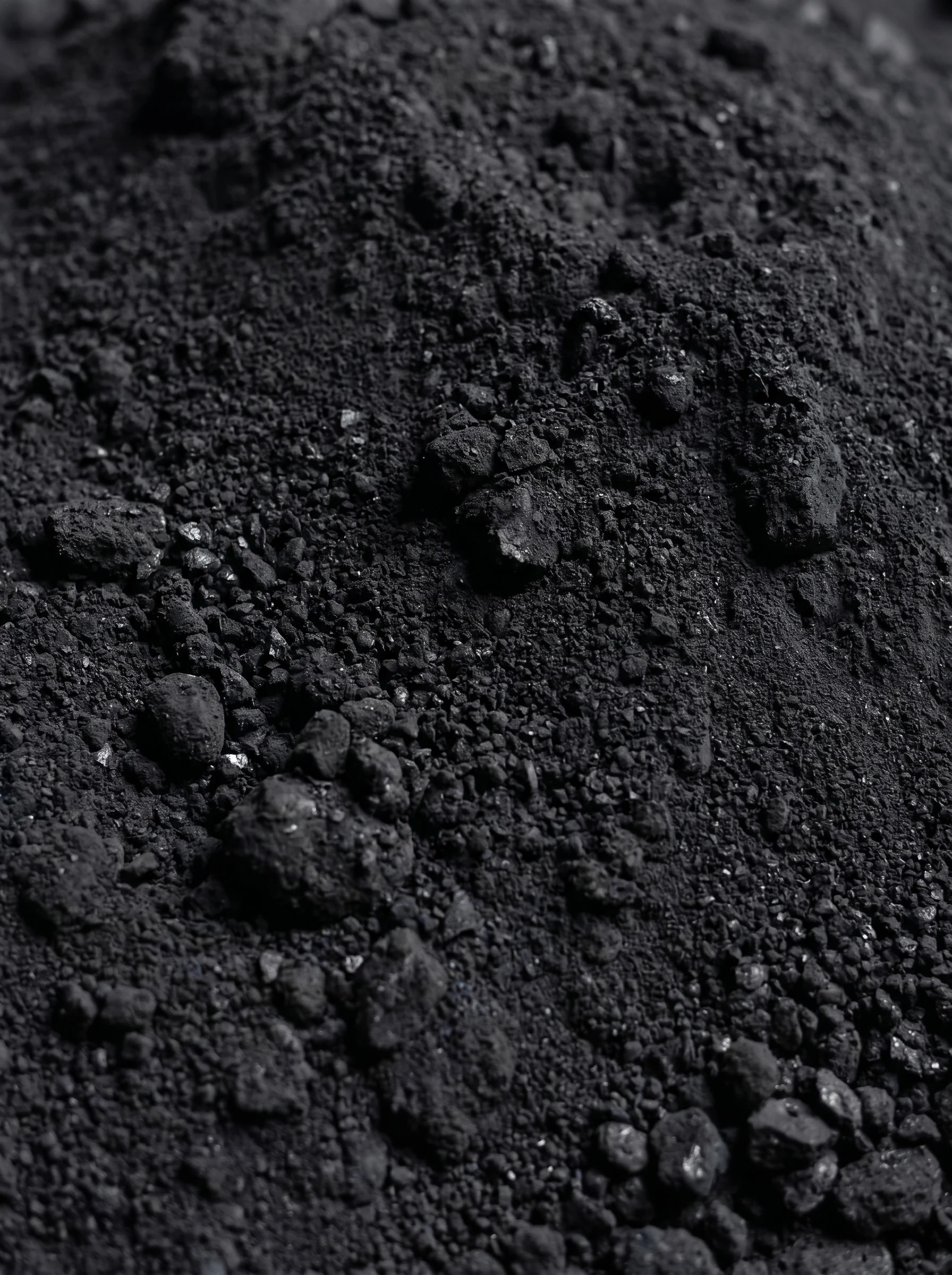
Black is not the limit of vision but its transcendence through a luminous saturation that Pierre Soulages codified under the term Outrenoir. In this series of works begun in 1979 and continued until his death, the French painter does not paint black as a color; he uses black pigment as a modulator of physical light that strikes the material surface. The dense application, worked with palette knives and brushes that score the canvas, creating reliefs and grooves, transforms the painting into an optical apparatus in which light is not absorbed but redirected toward the viewer through the shifting angles of the matter. The recent 2025–2026 retrospectives at the Musée du Luxembourg (“Soulages, une autre lumière. Peintures sur papier,” September 2025 – January 2026) and the Musée Fabre in Montpellier (“Pierre Soulages. La Rencontre,” June 2025 – January 2026) have reaffirmed how these surfaces are never static but luminous events in continuous mutation (Perrotin, 2025; Musée Fabre, 2025).
This artistic practice demolishes the notion of black as synonymous with darkness or mourning, elevating it to a dimension of mineral splendor that vibrates with metallic reflections or velvety opacity. The canvas ceases to be a window onto the world and becomes a wall that repels the superficial gaze, compelling physical movement before the work in order to capture the chromatic mutations generated solely by the shifting viewpoint. It is a painting of the present moment, in which the image is not fixed once and for all but recomposes continuously in the encounter between the density of the pigment and the surrounding environment, a principle Soulages himself described as a “mental state” reached by looking “deeply” (Lévy Gorvy Dayan, 2023; Narcissus Magazine, 2025).
Soulages’ operation departs sharply from the aesthetic nihilism often associated with monochrome, proposing instead a phenomenology of hope in which black is the very source of visibility. There is no longer a contrast between light and shadow, for light is born directly from the flesh of black, suggesting that the essence of painting resides in the manipulation of matter rather than in the representation of the real. The complexity of these surfaces reveals an almost geological sensitivity, as if the artist were extracting from the sediments of the canvas an archaic truth that precedes the distinction between day and night. Recent studies of Outrenoir emphasize precisely this “other light” that emerges from absolute darkness (Opera Gallery, 2025).
The Outrenoir approach invites meditation on the persistence of the artistic object in a world saturated with immaterial and transitory images, offering a stability that is at once visual and metaphysical. The radical decision to limit the palette to a single pigment is not an act of deprivation but an expansion of the field of inquiry toward the subtle variations of texture and spatial rhythm. Painting thus becomes an exercise in absolute precision, in which every gesture impressed upon the black surface acquires monumental and definitive importance—a rigor that the 2025–2026 exhibitions celebrated as a living legacy for new generations of artists working with open-source ultra-black materials.
Ultimately, Soulages’ works demonstrate that black possesses an intrinsic generative capacity, capable of transforming negation into a celebration of physical presence. The light that glides over the ridges of synthetic tar does not illuminate the work; rather, the work reveals itself through its own capacity to inhabit shadow. We thus move from a vision of black as void to an understanding of black as radiant plenitude, a paradox that redefines the very boundaries of contemporary aesthetic experience, precisely as new pigments such as Jackson’s Absolute Black in 2025–2026 offer everyone what was once an exclusive privilege (Jackson’s Art, 2025).
Yet if Soulages makes light emerge from black, another artist pushes absorption to its absolute extreme, collapsing every trace of form and presence and transforming black into an ontological wound in space itself.
The Absorption of Being
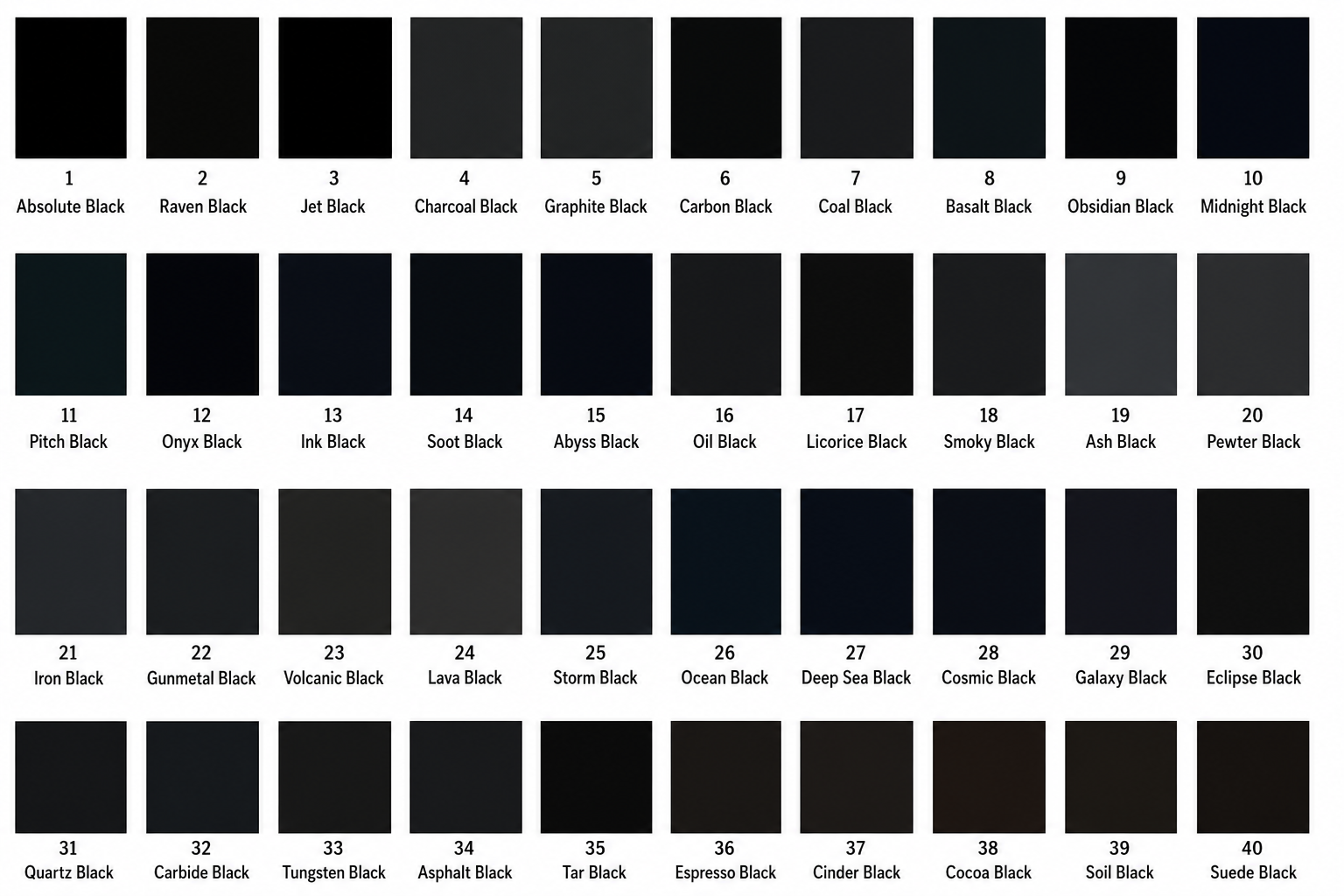
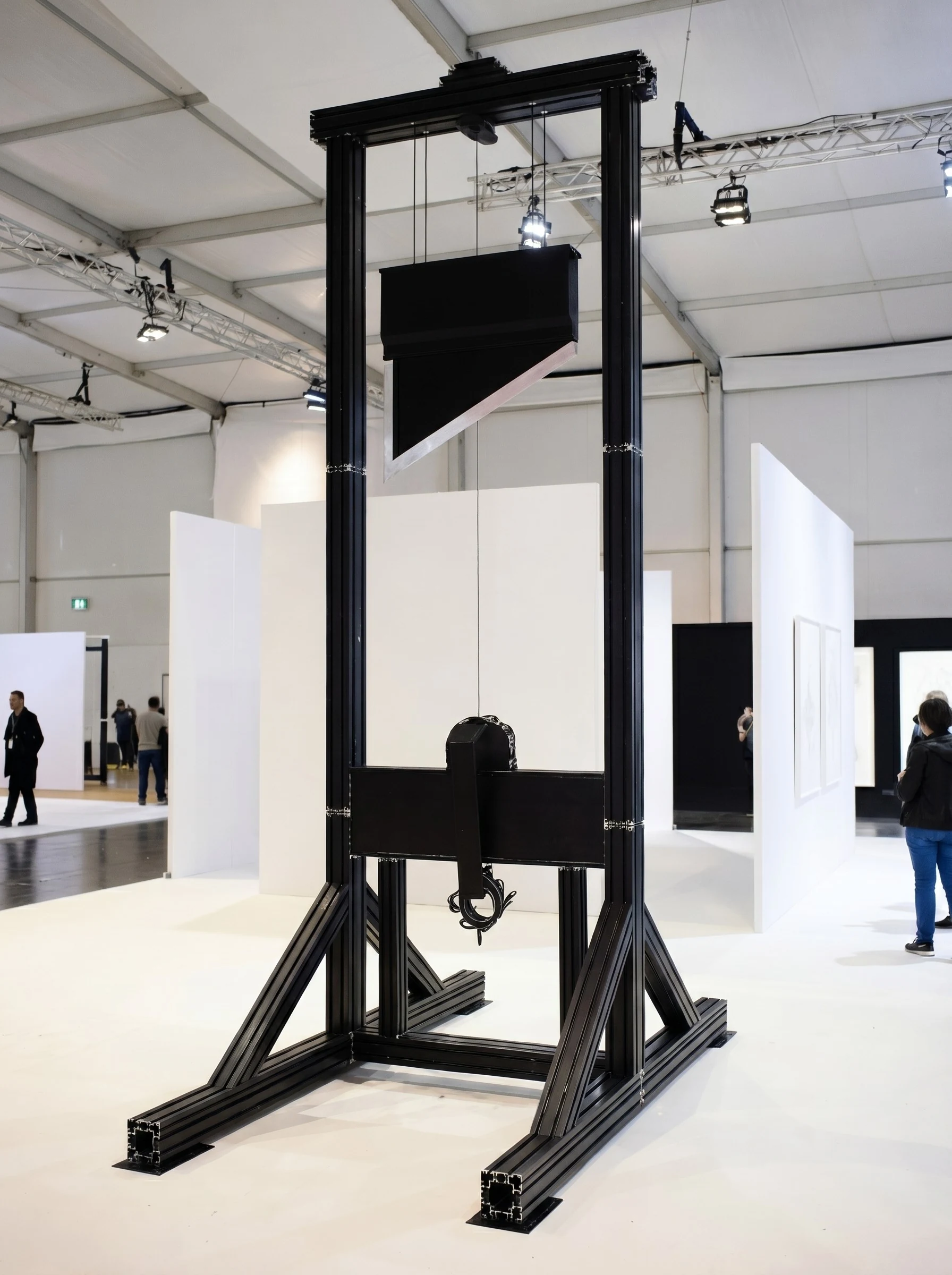
The advent of materials capable of absorbing nearly the totality of electromagnetic radiation—most famously the Vantablack used by Anish Kapoor, has transformed the sculptural surface into a veritable ontological wound in exhibition space. When the Indian-British artist coats his objects with this substance composed of carbon nanotubes, three-dimensionality collapses into an appearance of absolute two-dimensionality that deceives the eye and confounds the mind. The perception of depth vanishes because there is no luminous reflection to define the curves or edges of the sculpture, reducing it to a black hole in the fabric of reality. The controversy over exclusive rights—still very much alive in 2025 with reactions to Black 3.0 and open-source alternatives—underscores how control over these materials has become a terrain of political and symbolic struggle (artnet, 2023; Chen, 2025; IJLLR, 2023).
This disappearance of the object is not a mere optical trick but a radical challenge to our understanding of space and mass, pushing the premises of 1960s minimalism to their extreme. Kapoor does not use black to describe a form but to negate it, creating an experience of void that is at once terrifying and fascinating. The viewer stands before a threshold that seems to lead into an unknown dimension, where the laws of ordinary physics appear suspended and nothingness acquires an unsettling solidity, an effect amplified in installations such as Descent into Limbo, where black becomes a real abyss that tests the viewer’s physical courage.
The controversy surrounding Kapoor’s exclusive use of Vantablack further highlights the symbolic and political charge that the color black has assumed in recent artistic debate. Control over color technology becomes control over perception itself, raising questions about the ownership of the void and the commodification of the infinite. In works such as Descent into Limbo, black is no longer a pigment applied to a surface but a real chasm that puts the spectator’s physical courage to the test, forcing confrontation with one’s own fear of the unknown. Recent critical analyses (Pla, 2022; Michael, 2018 on “Aesthetic Publics”) show how this monopolization has generated an entire ecosystem of counter-movements, both artistic and scientific.
The power of these works lies in their capacity to act as catalysts for psychological projections: the absence of internal visual stimuli within the black patch compels the subject to look inward. Kapoor’s black is never silent; it resonates with a background noise belonging to the collective unconscious, evoking the primordial abyss or the end of all things. It is an art that does not ask to be understood but to be endured—as an atmospheric event or cosmological revelation that diminishes humanity’s centrality in the universe, a theme that in 2025–2026 resonates with new discoveries of even blacker materials (MIT’s 99.995% absorption, 2025) and with battles for democratic access to “non-light.”
The fundamental insight emerging from this technological deployment of black is that vision depends not only on the presence of light but also on its calculated and radical absence. The sculpture thus becomes a non-object, an entity that exists more in the viewer’s mind than in physical space, demonstrating that extreme black is the definitive instrument for probing the limits of phenomenal reality. Matter, reduced to the zero degree of refraction, ultimately coincides with spirit, revealing the illusory nature of every visual certainty, precisely as the 2026 art market offers “democratic” alternatives that make the abyss once reserved for the few accessible to all.
Yet if Kapoor dissolves the object into the void, another artist does precisely the opposite: he charges black with a physical and architectural mass that presses upon the world with the force of construction, transforming surface into weight and gravity.
The Tectonics of Pigment
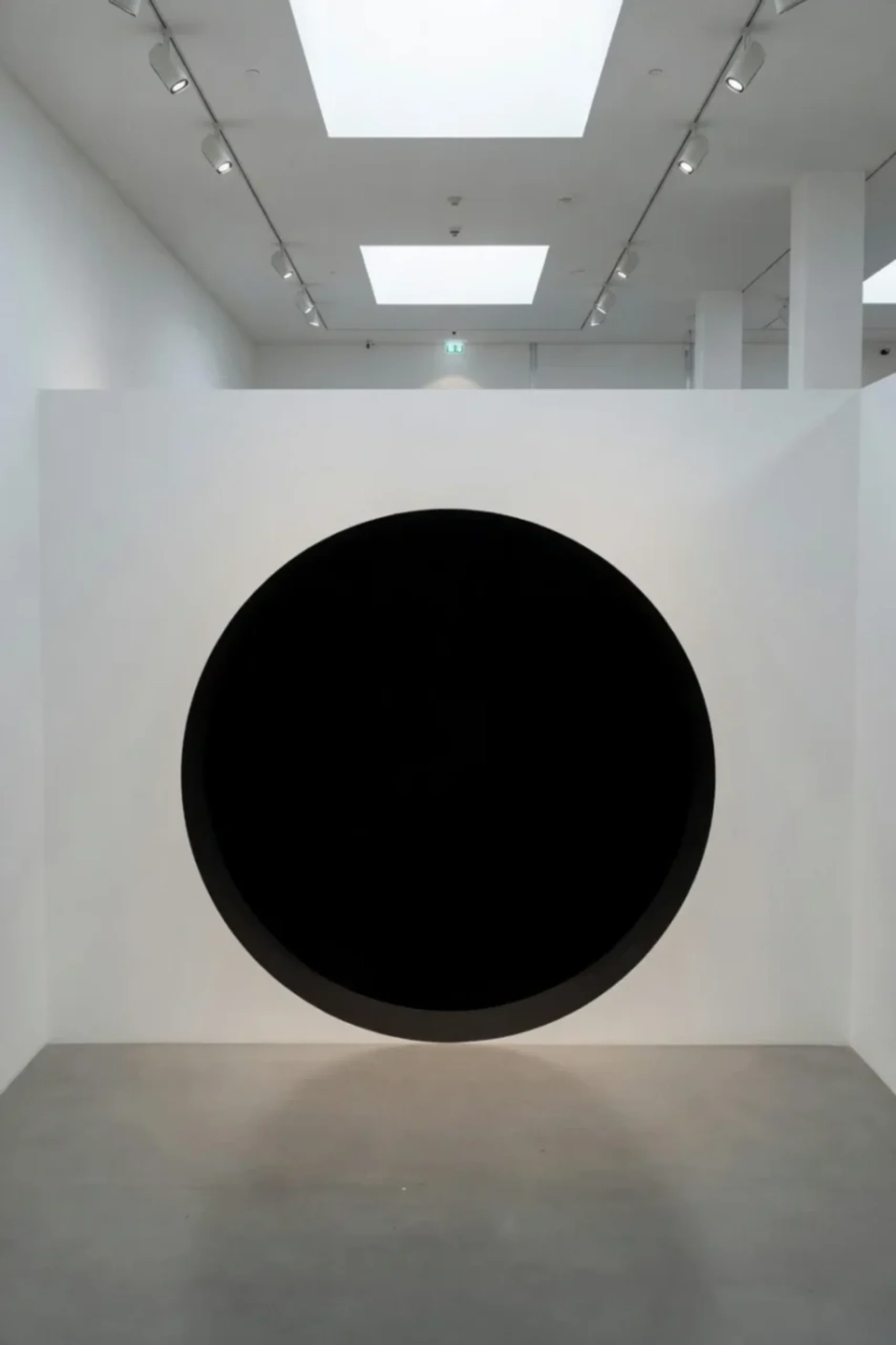
The monumentality of black manifests with almost geological force in Richard Serra’s works on paper, where pigment ceases to be a medium and becomes architectural weight. His enormous drawings executed in black oil stick are not calligraphic exercises but accumulations of matter that saturate the fibers of the support until it becomes opaque and gravid with palpable physical tension. Serra’s black does not decorate the wall; it occupies it, imposing itself in space with the same ineluctable force as his Corten steel sculptures, transforming the perception of gravity. The posthumous exhibition “Six Large Drawings” at David Zwirner in London (2024) and the material analyses published in 2024–2025 have highlighted the technical complexity of these multiple layers of oil and pigment, which generate tactile surfaces and significant conservation challenges (Guardian, 2024; BPG Annual, 2024).
In these works, black assumes a tactile quality that seems almost to repel the gaze, creating a barrier of density that precludes any decorative or sentimental speculation. The choice of monochrome is not dictated here by a desire for purity but by the will to explore the physical properties of painting as muscular effort and structural resistance. The often violent and repetitive application process leaves traces that testify to a struggle between artist and material, in which color becomes the solid residue of an energetic action, an approach that scientific analyses (Py-GCMS on oil-stick samples) confirm as an intentional stratification of waxes, oils, and pigments designed to maximize optical and tactile density.
The darkness of Serra’s drawings functions as a device of spatial orientation, defining the boundaries of the environment and altering the viewer’s sense of equilibrium. The expansive black surfaces are not voids but active masses that press against the gallery air, compelling the spectator into a bodily interaction with the work. Here black is conceived as a constructive element, a chromatic beam that supports the weight of the invisible architecture of sensory experience, pushing drawing to the limits of sculpture. Recent critical readings (Apollo Magazine, 2018; The Great God Pan is Dead, 2012) emphasize how these “planes of weight and light” challenge perceptual gravity itself.
There is in this approach a component of brutal honesty that rejects all metaphor, for black represents only itself and its own material immanence. There is no space for symbol or allegory; only the pure presence of a pigment that has devoured every other narrative possibility to become objective reality remains. Serra strips drawing of every descriptive function to reveal the intrinsic power of darkness when treated as a construction material capable of modifying the emotional temperature of an entire building, a principle that the 2024–2025 exhibitions have relaunched as a legacy for post-minimalist art.
Serra’s lesson lies in the discovery that black, when pushed to its maximum concentration, can become an experience of absolute stability in a world of perpetual change. Paper saturated with oil and pigment becomes a visual anchor, a point of resistance that asserts its existence with a peremptoriness that admits no reply. Black is therefore not an absence of content but the most extreme form of material certainty that contemporary art can offer the gaze, a certainty that, in the 2026 context, dialogues with new nanotechnologies that render black “blacker than black” accessible to all.
But when black ceases to be merely matter and weight and becomes a surface of projection and memory, a political and identitarian dimension emerges—one that artists such as Kara Walker and Kerry James Marshall have placed at the center of contemporary debate, transforming darkness into an archaeology of collective trauma.
The Archaeology of Social Trauma
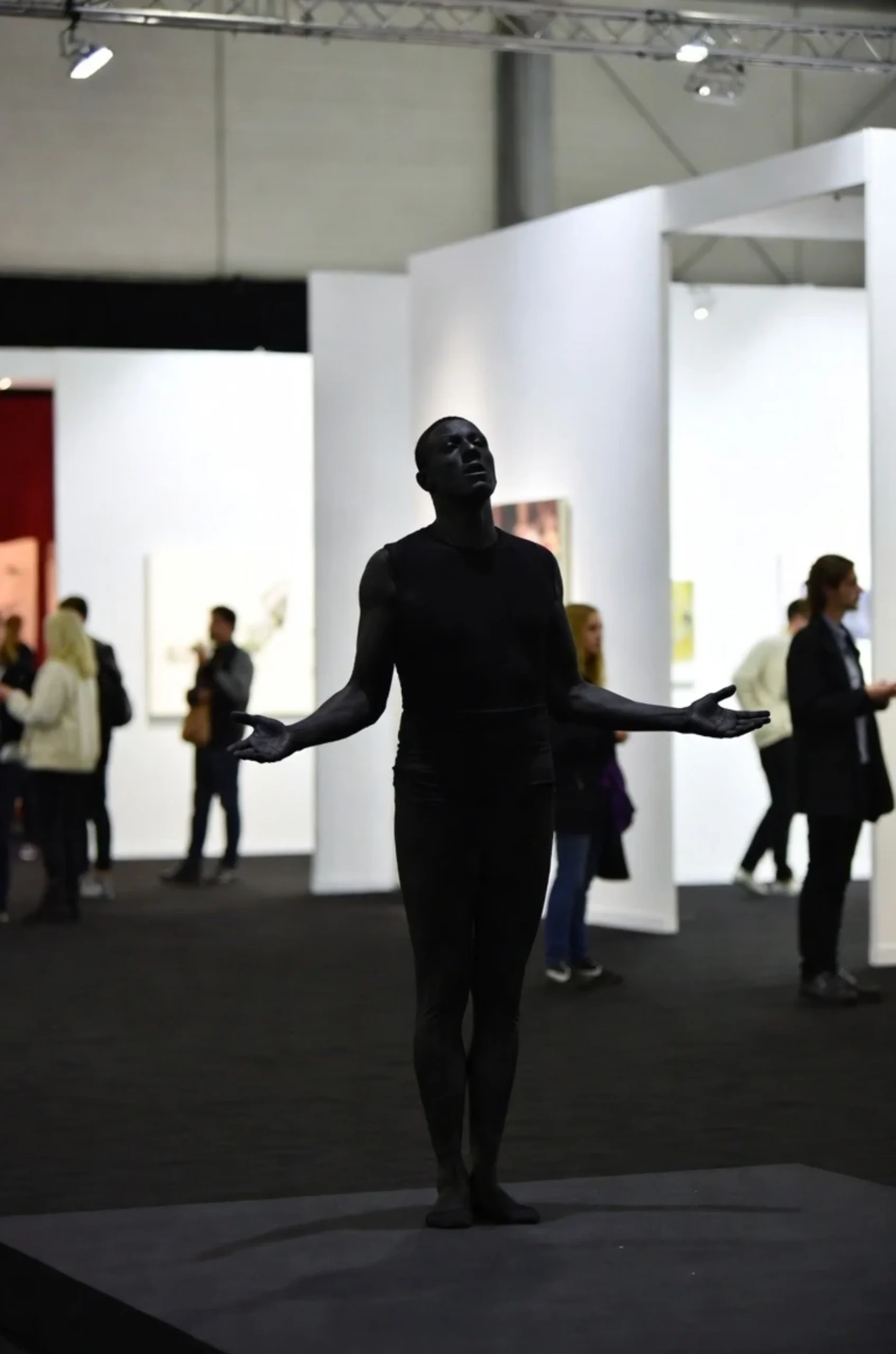
The reduction of the figure to a pure black silhouette in Kara Walker’s installations operates as a violent subtraction of individual identity in favor of an archaeology of collective and racial trauma. Employing the silhouette technique, originally associated with bourgeois portraiture of the eighteenth century, Walker stages grotesque and unsettling scenarios in which black is not a neutral aesthetic choice but the marker of a political and historical condition. The absence of facial features in her characters transforms their actions into universal icons of oppression, desire, and violence, compelling the viewer to fill the visual voids with their own prejudices and projections. Recent articles (2025–2026) continue to emphasize how these “silent” silhouettes speak louder than any realistic portrait, forcing the spectator to confront the legacy of American slavery (Artistree VT, 2026; Art Rewards, 2025; Canvas Journal, 2025).
In this context, black becomes the color of the repressed that returns to haunt the present in the form of shadows projected onto the aseptic walls of museums. The lack of color within the figure denies the possibility of individual distinction, reducing the human being to a category—to a shadow without substance that nevertheless exerts an unsustainable moral pressure. The two-dimensional surface of the black silhouette thus becomes a stage on which the tragedy of objectification is enacted, revealing how color can be used to erase humanity before it is even defined, a mechanism that Walker’s installations render visible and unbearable.
Walker’s work does not merely denounce the past; it interrogates the very nature of vision in relation to power, suggesting that our gaze is intrinsically conditioned by a binary structure of light and shadow. In her hands, black ceases to be the pigment of abstraction and becomes the blood of history, a dense substance that clouds the waters of official narrative. The precision of her profile cuts contrasts with the brutality of the themes treated, creating a visual short-circuit in which the beauty of the black form both masks and reveals the horror of the content. Critics in 2025–2026 reaffirm the power of these works to “confront America’s racial wounds” without resolution (Artsology, 2024; Zen Museum, 2026).
In the same vein, Kerry James Marshall uses deep black for the skin tones of his subjects not as stylization but as a claim to absolute visibility. His figures are black beyond any photographic realism, becoming monumental presences that challenge the historical marginalization of the African-American body in Western art history. Marshall’s black is a declaration of existence that admits no nuance—an chromatic affirmation that imposes itself with the dignity of the great masters of the past, overturning the canon of representation. His 2025 retrospective at the Royal Academy of London highlighted precisely this “challenge to the exclusion of African-American figures from Western art history” and the determination to paint “Black lives as grand and spectacular” (Guardian, 2025; New Statesman, 2025; Art Critic, 2024).
These approaches demonstrate that black in contemporary art is intrinsically linked to questions of identity and memory, functioning as a critical filter through which to reread the world. Darkness is no longer a zone of shadow in which to hide but the very substance of a cultural resistance that wields saturation as a weapon of affirmation. The meaning of black thus shifts from the metaphysical to the sociological plane, revealing that every pigment carries with it the weight of the bodies it has historically sought to describe or to conceal, a weight that exhibitions and analyses in 2025–2026 continue to render urgent and inescapable.
From the politics and identity of black, however, we move to an even more radical formal negation, in which black becomes a pure instrument of demystification and rigor, as in Frank Stella’s Black Paintings, which erase every narrative to leave only the literal presence of the object.
The Rhetoric of Negation
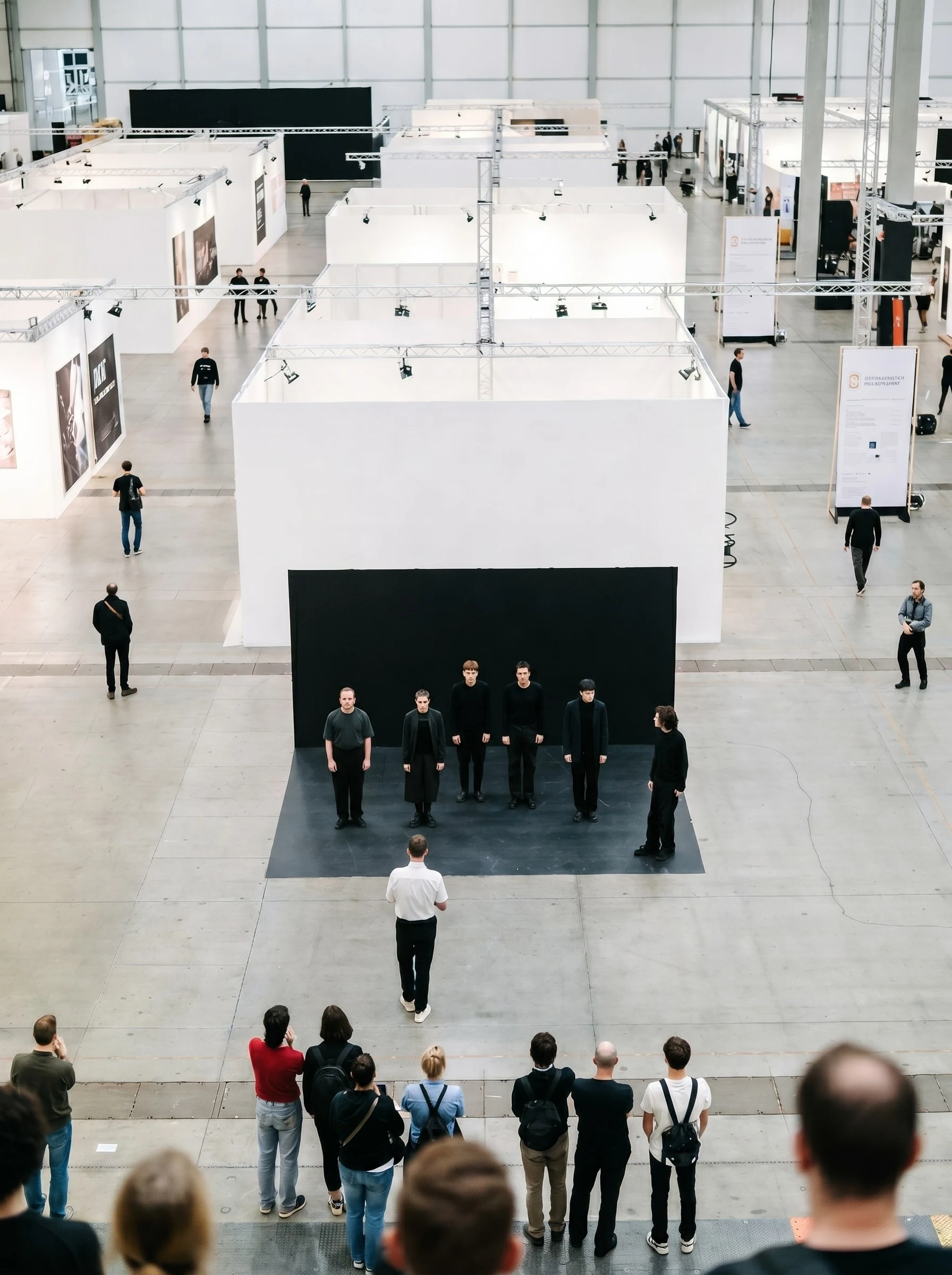
The objectification of painting enacted in Frank Stella’s Black Paintings, created between the late 1950s and early 1960s, marks the definitive break with the spatial illusionism of Abstract Expressionism and opens the path to a new aesthetics of rigor. In these canvases, black is applied in regular bands separated by thin lines of raw canvas, creating a pattern that refers to nothing but its own geometric structure. Black ceases to be a vehicle of emotional expression and becomes a declaration of literalness: “What you see is what you see,” without any metaphysical or psychological residue—a phrase that has become the mantra of minimalism and is still cited in analyses from 2024–2026 (Singulart, 2024; Medium, 2025; Whitney Museum).
This iconoclastic approach transformed black into the color of choice for a generation of artists seeking to erase artistic narrative in order to restart from the pure physicality of the work. The choice of black, in this case, is not linked to mourning or night but to its capacity to neutralize all chromatic distraction and to highlight the constructive logic of the painting. Stella’s painting acts as a sieve that retains only the essential, using darkness to define the limits of the visual field and the relationship between object and support. Recent analyses emphasize how this “autonomy” and “self-referentiality” anticipated minimalism and influenced subsequent generations (Havens, 2025; MyArtBroker, 2026).
The obsessive repetition of the black module generates a kind of visual hypnosis that shifts attention from the “what” to the “how,” making evident the process of art-making as systematic labor. In this sense, black is the color of demystification—the tool that strips the artist of the role of demiurge and reduces it to that of an operator who organizes surfaces. The black canvas is no longer a spiritual abyss à la Rothko but a solid object in the world, endowed with its own weight and spatial extension that admits no interpretive escape, a principle that post-structuralist readings (Marin, cited in Havens, 2025) link to the end of the “grand narratives” and the emergence of a literal and objective art.
The legacy of this black rigor is found in much subsequent minimalist sculpture, where black is used to unify surfaces and to underscore the purity of geometric forms. Black absorbs the object’s own shadows, rendering volumes sharper and more legible—almost as if they were three-dimensional drawings in space. It is a use of color that aspires to scientific objectivity, eliminating every residue of subjectivity and seeking a form of beauty that resides exclusively in proportion and rhythm—an aspiration that in 2026 dialogues with nanotechnologies that render black “scientifically” blacker than ever.
What emerges from this season of absolute black is the idea that negation is, in reality, the most radical creative act possible, capable of generating a new form of visual awareness. The black of Stella and his contemporaries liberated art from the obligation to signify, restoring to it the freedom to be simply presence. The black surface thus becomes the mirror of a modernity that has renounced grand narratives in order to concentrate on the immediate truth of matter and form, a lesson that new generations of ultra-black artists (Absolute Black, Musou Black, Black 4.0) are taking to its extreme consequences in 2025–2026.
Stella’s minimalist rigor, however, leaves room for a return of entropy and the sacred, in which black once again becomes ash, soot, and ritual memory, reconnecting to history and the body in the installations of Jannis Kounellis.
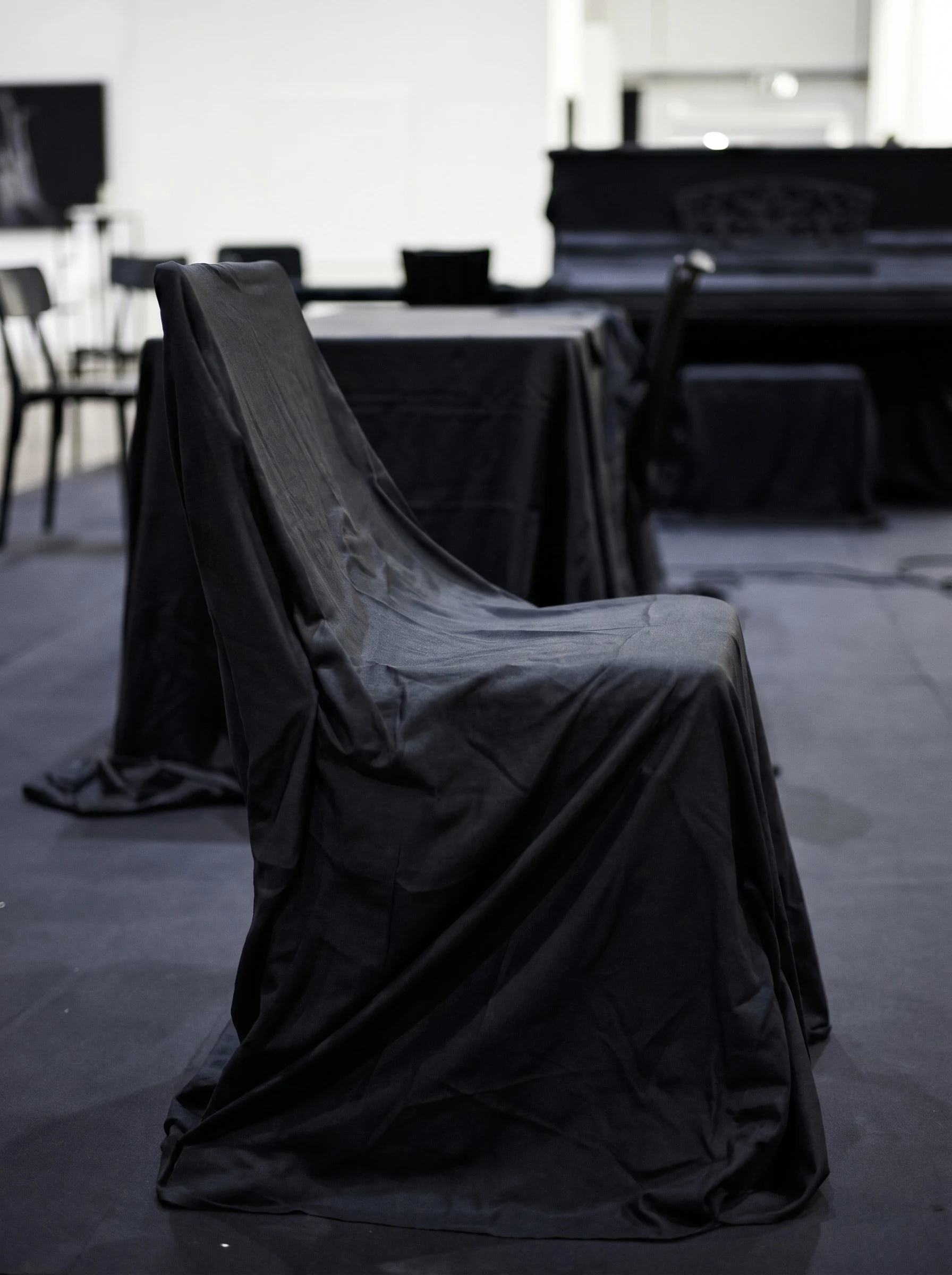
Entropy and the Sacred
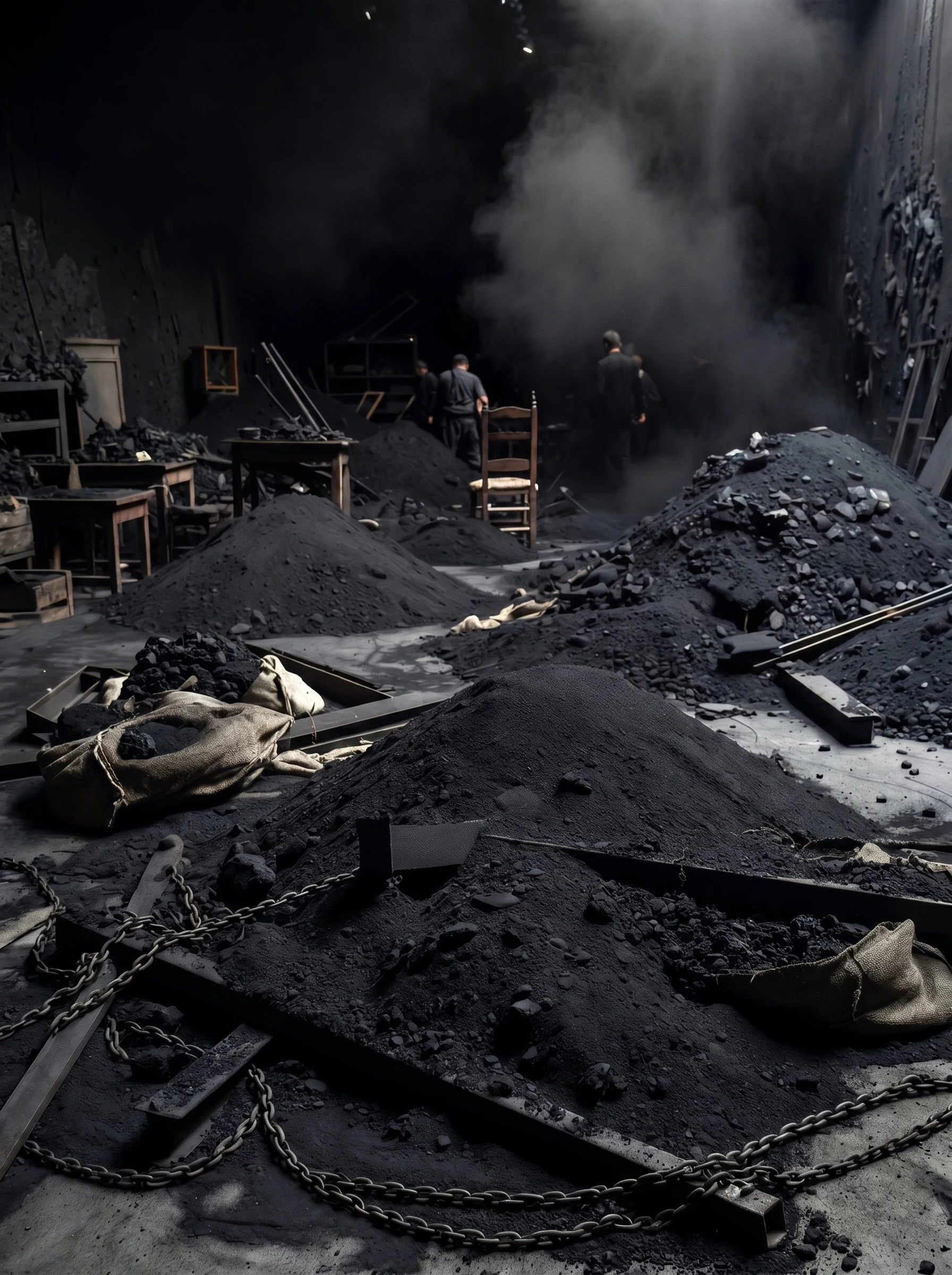
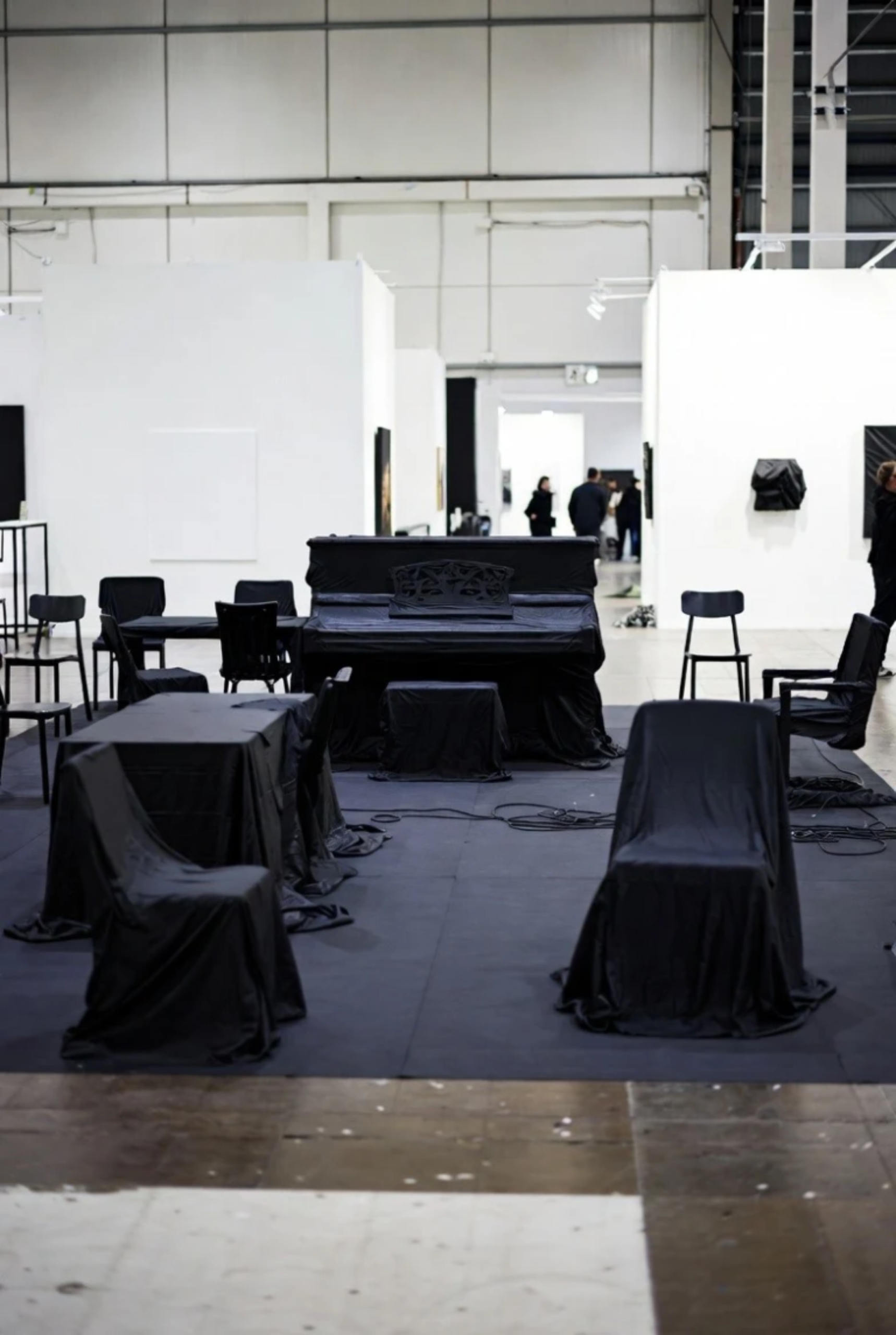
The saturation of black in Jannis Kounellis’s installations—where the pigment often appears as coal dust or soot, introduces a dimension of temporality and entropy that links contemporary art to the archaic memory of fire. In these works, black is not a superficial finish but the residue of a process of combustion or material transformation, a sign of death that heralds a possible rebirth. The black dust that covers furniture, burlap sacks, or iron structures is not merely a color but a universal ash that levels the hierarchies of the material world, an aspect underscored in recent exhibitions and analyses (Ugo Scalia, 2024; Art Critic, 2026; Walker Art Center / Museo Jumex, 2024).
From this perspective, black recovers a sacred and ritual dimension, linked to the idea of sacrifice and consummation, moving away from the analytical coldness of minimalism to embrace a humanistic and tragic narrative once more. Kounellis’s black is the smell of smoke, the cold of metal, the weight of history that bears down on everyday objects, transforming the gallery into a place of gathering and remembrance. Darkness here is not an absence of signals but an accumulation of untold stories, a silence that screams its own physical presence—an inheritance of Arte Povera that recent retrospectives have relaunched as “humanistic relics” (The Morgan Library, 2021; Guardian, 2010).
This use of black as entropic matter suggests that art is not merely a matter of vision but an experience of transformation that engages all the senses and the sense of time. The fragility of black dust, which can be dispersed by a breath, contrasts with its capacity to indelibly mark everything it touches, creating a dialectic between permanence and transience. Black thus becomes the color of modern alchemy, in which the vilest and darkest matter is elevated to aesthetic dignity through the force of the artistic gesture, a principle that Kounellis’s installations of coal and soot render tangible and ritual.
At the same time, black functions as a symbolic binder that unites disparate elements—iron, wool, stones, fire—into a coherent formal unity that evokes the roots of Mediterranean civilization. Kounellis’s choice to work with materials that carry within them the color of darkness is a choice of resistance against the ephemeral lightness of the society of the spectacle, a return to the solidity of earth and labor. Black is therefore not a void but a scorched earth upon which it is possible to found a new ethics of the image, free from the superfluous—an ethics that in 2026, with the emergence of “democratic” ultra-black materials, assumes a new political and environmental urgency.
The conclusive insight of this exploration is that black, through its multiple contemporary incarnations, has ceased to be a simple color and has become a condition of the soul and of history. From Soulages to Kounellis, passing through Kapoor, Serra, Walker, Marshall, and Stella, art has demonstrated that darkness is not the opposite of truth but its densest and most honest form, capable of containing within itself all the lights we have forgotten to ignite. Black is the final frontier of representation, the point at which the image dissolves to make way for the pure experience of being, an experience that, in 2026, is inextricably intertwined with nanotechnology, identity struggles, and the search for a new secular sacredness at the heart of the abyss.
Bibliography:
Soulages, une autre lumière. Peintures sur papier – Exhibition at the Musée du Luxembourg, Paris, 17 September 2025 – 11 January 2026. Opera Gallery News, 2025.
Pierre Soulages. La Rencontre – Retrospective at the Musée Fabre, Montpellier, 28 June 2025 – 4 January 2026. Musée Fabre, 2025.
Pierre Soulages: From Midnight to Twilight – Lévy Gorvy Dayan, New York, 2023 (with 2025 updates). Lévy Gorvy, 2023.
On “Aesthetic Publics”: The Case of VANTAblack – Michael, M. (2018). Journal of Visual Culture / JSTOR. Interdisciplinary analysis of Vantablack and aesthetic publics.
Anish Kapoor’s Controversial Vantablack Works Finally Make Their U.S. Debut – Cascone, S. (2023, updated 2025). artnet News. Chronicle of the controversy and U.S. debut.
Vantablack: The “Blackest” IPR Dispute – Indian Journal of Law and Legal Research (2023). Legal and symbolic analysis of Kapoor’s exclusivity.
Anish Kapoor and the darkest material: An analysis from left – Pla, A.H. (2022). Dialnet. Critical-political study of Kapoor’s action.
Richard Serra: Six Large Drawings review – planes of weight and light – The Guardian, 10 April 2024. Review of the posthumous exhibition.
The Materials, Techniques, and Conservation Challenges of Richard Serra’s Oil Stick Screen Prints – Chan, I.M. et al. (2024). Book and Paper Group Annual, Vol. 32. Scientific analysis of the materials.
Kara Walker’s powerful art confronts race, history, and identity – Artistree VT, March 2026. Updated analysis of silhouettes and racial trauma.
Kara Walker: A Critical Examination of Race, History, and Power – Art Rewards, 23 September 2025. Critical examination of silhouette installations.
History and Social Consciousness in the Medium and Material of Kara Walker’s Silhouette Installations – Canvas Journal, 2025. Study on medium and social consciousness.
‘My paintings don’t fit the narrative’: Kerry James Marshall on why he’s depicting black enslavers – The Guardian, 23 September 2025. Interview and 2025 Royal Academy retrospective.
Kerry James Marshall’s nuanced vision of black lives – New Statesman, 24 September 2025. Review of the Royal Academy exhibition.
Kerry James Marshall, the Master Redefining History – Art Critic, December 2024. Analysis of black as identitarian affirmation.
Exploring Frank Stella’s Black Painting – Singulart, 8 March 2024. Analysis of the Black Paintings series and minimalism.
Minimalism and Meaning-Making: The Self-Referentialism of Frank Stella’s Black Paintings – Havens, E. (2025). Medium. Post-structuralist reading.
Jannis Kounellis, a humanitarian with coal – Art Critic, 2026. Analysis of coal and humanism in Kounellis.
Absolute Black: Jackson’s Join the Ultra-Black Paint Market – Jackson’s Art Blog, 19 December 2025. Launch of the new open-access ultra-black pigment.
Best Musou Black Alternatives Comparison 2026 – Dekoja, 25 December 2025. Updated comparison of ultra-black materials (Vantablack, Black 3.0/4.0, Musou, Absolute Black) and artistic implications.