

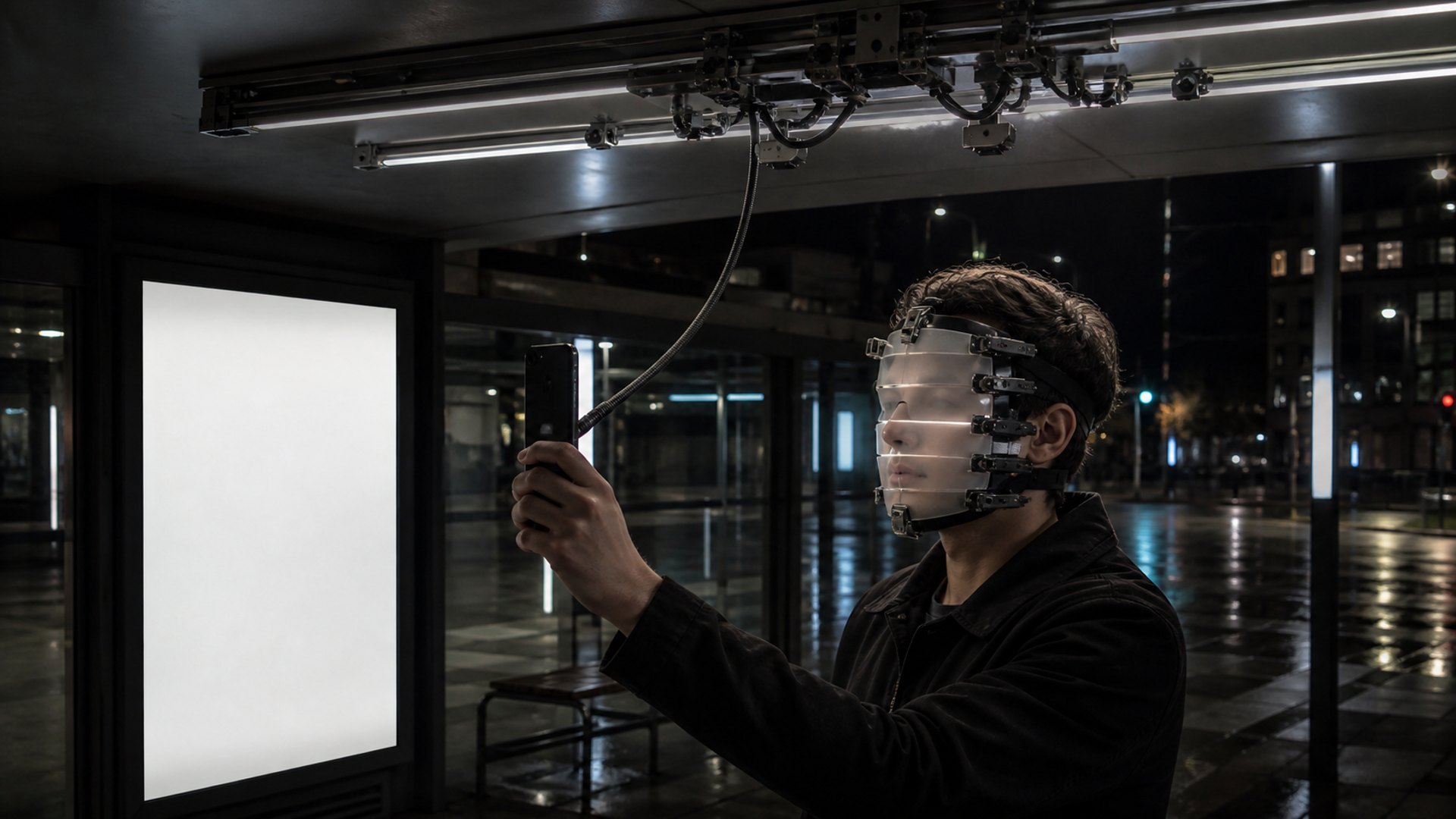
A phone is lifted toward a face in bad light, and the preview corrects the scene before the shutter has any claim on it. Skin enters a pipeline of exposure balancing, denoising, segmentation, compression, ranking, and memory; the image arrives already trained by other images, already bent toward a mean that presents itself as technical care. The device performs a small civic act: it decides which surfaces receive clarity, which gestures receive legibility, which bodies travel fluently through the interface.
Synthetic vision begins as an atmospheric condition inside the feed. A generative model receives the world through distribution, and distribution arrives as a political weather system: recurrent poses, commercial faces, optimized interiors, spectacular ruins, touristic horizons, compliant bodies, readable moods. The model learns the temperature of appearance before it learns any object, because the archive stores previous regimes of attention as visual climate.
The right to appear now passes through probabilistic custody. A face, a landscape, a crowd, a wound, a celebration, a protest, a domestic room, each becomes available to vision through latent proximity and platform governance. The image gains circulation when it can be ranked, moderated, labeled, monetized, compressed, recalled, and recombined; appearance becomes a transaction between memory and permission.
The synthetic image carries a paradox with administrative precision. It extends visibility by industrializing resemblance, and it narrows visibility by making resemblance the condition of entry. What appears appears through what has already been counted; what returns returns as the future tense of an archive.
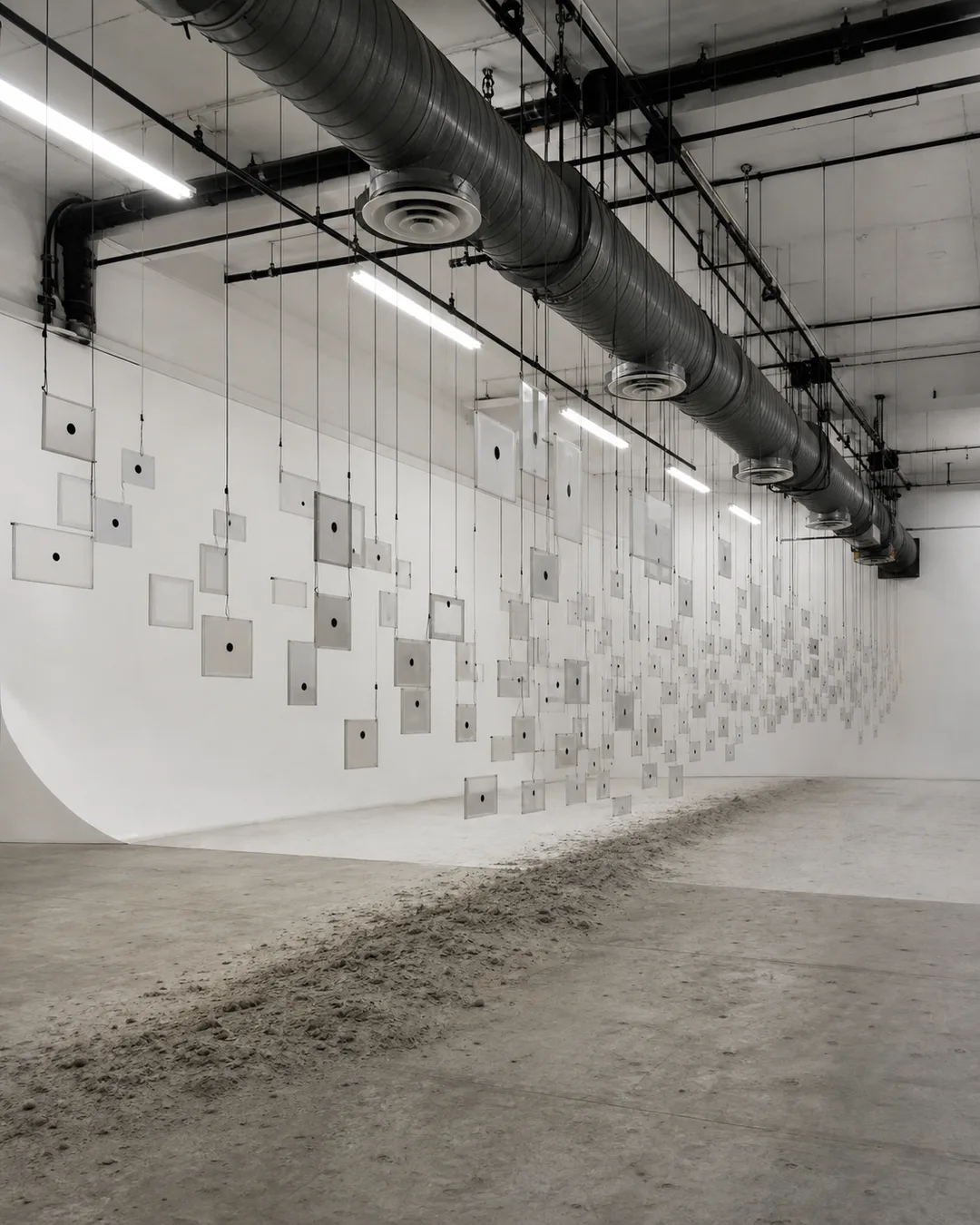
A dataset carries attention as sediment
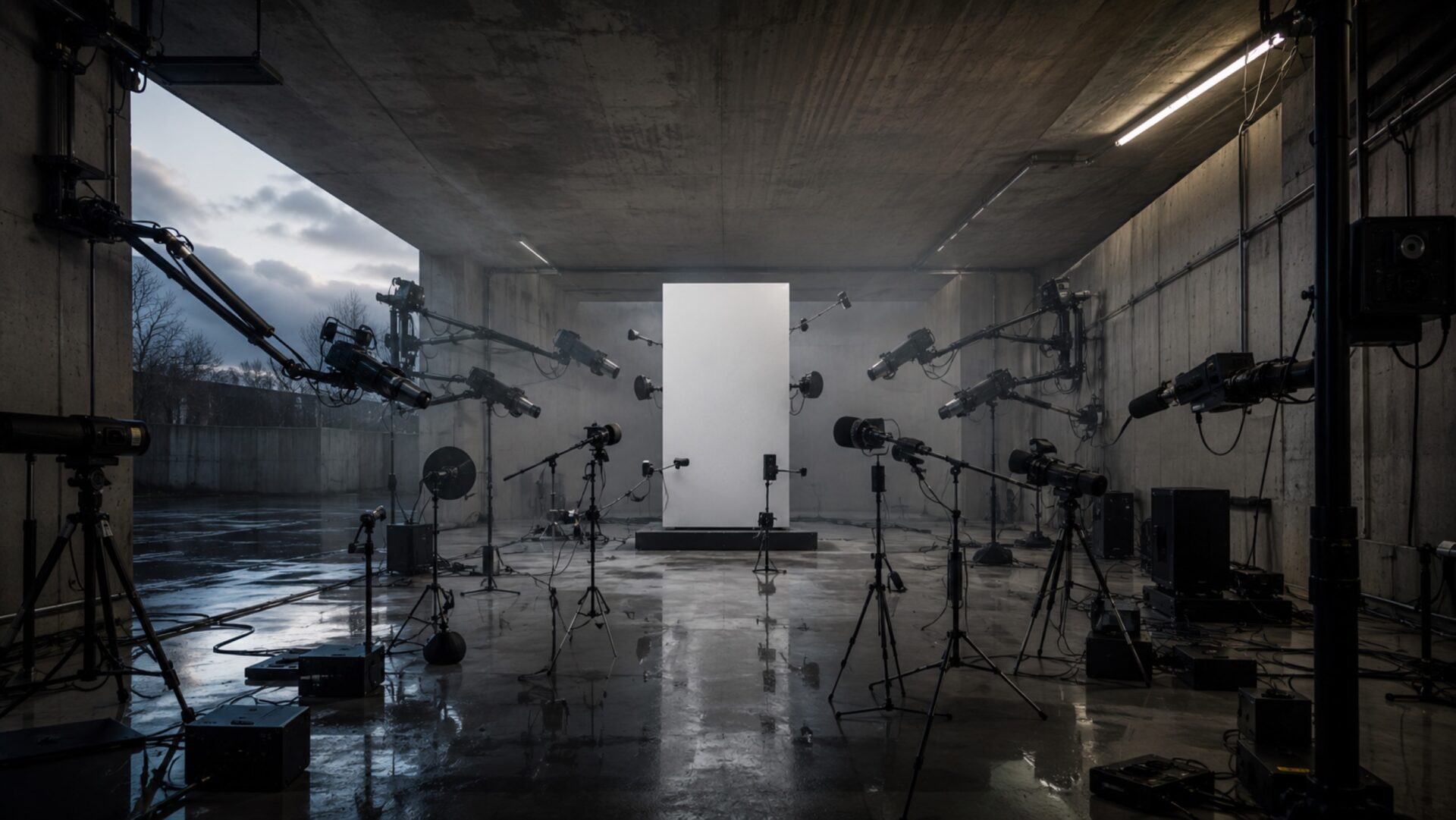
The training set operates as a climate machine. Images enter as files, captions, alt text, tags, rankings, watermarks, crops, popularity signals, and platform residues; the archive becomes an environment that trains perception through accumulation. Before synthesis produces a face or a street, it has absorbed the atmospheric pressure of prior visibility, the inherited alignment of commercial photography, stock imagery, surveillance aesthetics, editorial conventions, and social feed desire.
A dataset carries attention as sediment. High-frequency subjects acquire ease, and ease becomes aesthetic destiny inside latent space. The model learns how bodies usually face a camera, how desire usually frames interiors, how grief usually appears in news images, how labor usually recedes behind product surfaces; probability stabilizes a history of looking as a technical resource.
Labeling converts the image into a governable surface. A caption ties a scene to a semantic handle, a category folds difference into retrieval, a tag gives the archive a route for future recombination. The image gains machinic memory through these small acts of custody, and this custody preserves earlier hierarchies inside the architecture of generation.
The feed supplies a second training set after the dataset. Outputs circulate, receive engagement, spawn prompts, produce derivatives, and return as examples for taste, tutorial, benchmark, and style. Distribution becomes recursive pedagogy: what gains traction trains users, what trains users trains prompts, what trains prompts trains the next horizon of synthetic plausibility.
Bias here functions as infrastructure, a pressure system that makes some appearances feel natural and others feel computationally strained. The archive produces weather rather than evidence; it forms the conditions under which seeing becomes possible, probable, and profitable. The act of vision begins inside a climate that has already selected its seasons.
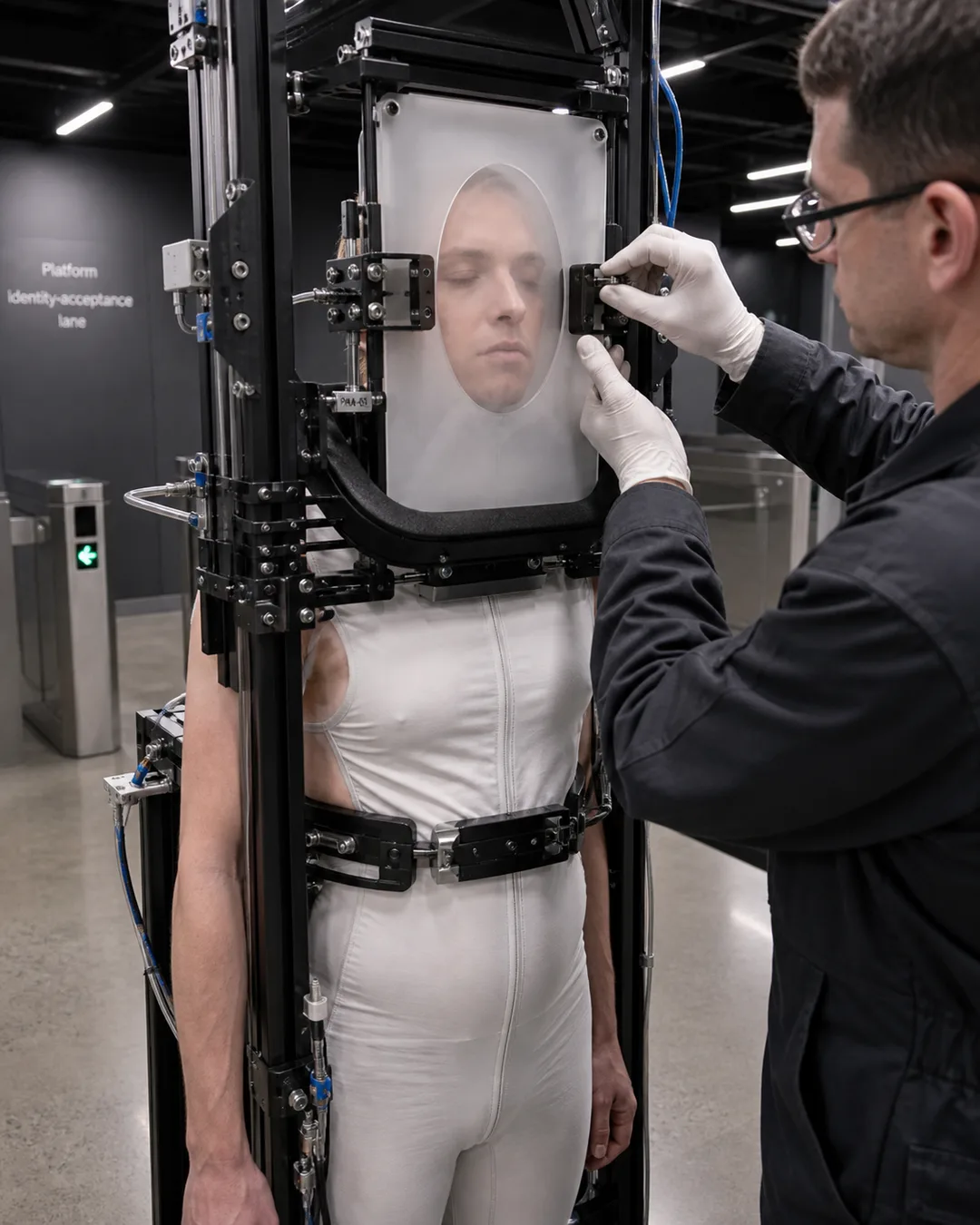
Bodies Under Probability
The body enters the model as a bundle of recurrent traits. Pose, skin tone, age markers, gender signals, facial symmetry, gesture, clothing, disability, adornment, and affect become variables distributed across latent space. The system grants fluency to the body where recurring patterns provide a path, and this fluency presents itself as realism.
Recognition produces a narrow form of hospitality. The platform accepts the body when classification can stabilize it, when moderation can parse it, when ranking can anticipate its reception. A portrait gains operational value by becoming searchable, comparable, brand safe, demographically legible, and statistically adjacent to other portraits already certified by circulation.
Synthetic bodies reveal the politics of average resemblance. Hands, teeth, hair, scars, wrinkles, prosthetics, fat, trans embodiment, aging, ritual markings, and hybrid forms expose the thresholds of the model’s learned comfort. The body that travels easily through generation has already been rehearsed by advertising, identification systems, cinematic grammar, wellness imagery, and the soft violence of normative defaults.
Prompting becomes a negotiation with probability. A user asks for specificity, and the model translates the request through available visual grammar; the requested body arrives shaped by inherited poses, fashion codes, ethnic shortcuts, beauty regimes, and genre expectations. The prompt appears sovereign at the surface, while the archive conducts the deeper choreography of resemblance.
The synthetic body makes power intimate. It relocates discipline from the institution to the distribution curve, from the document to the interface, from the inspector to the sample. Appearance becomes a probabilistic entitlement: the body receives form according to the ease with which the system can remember it.
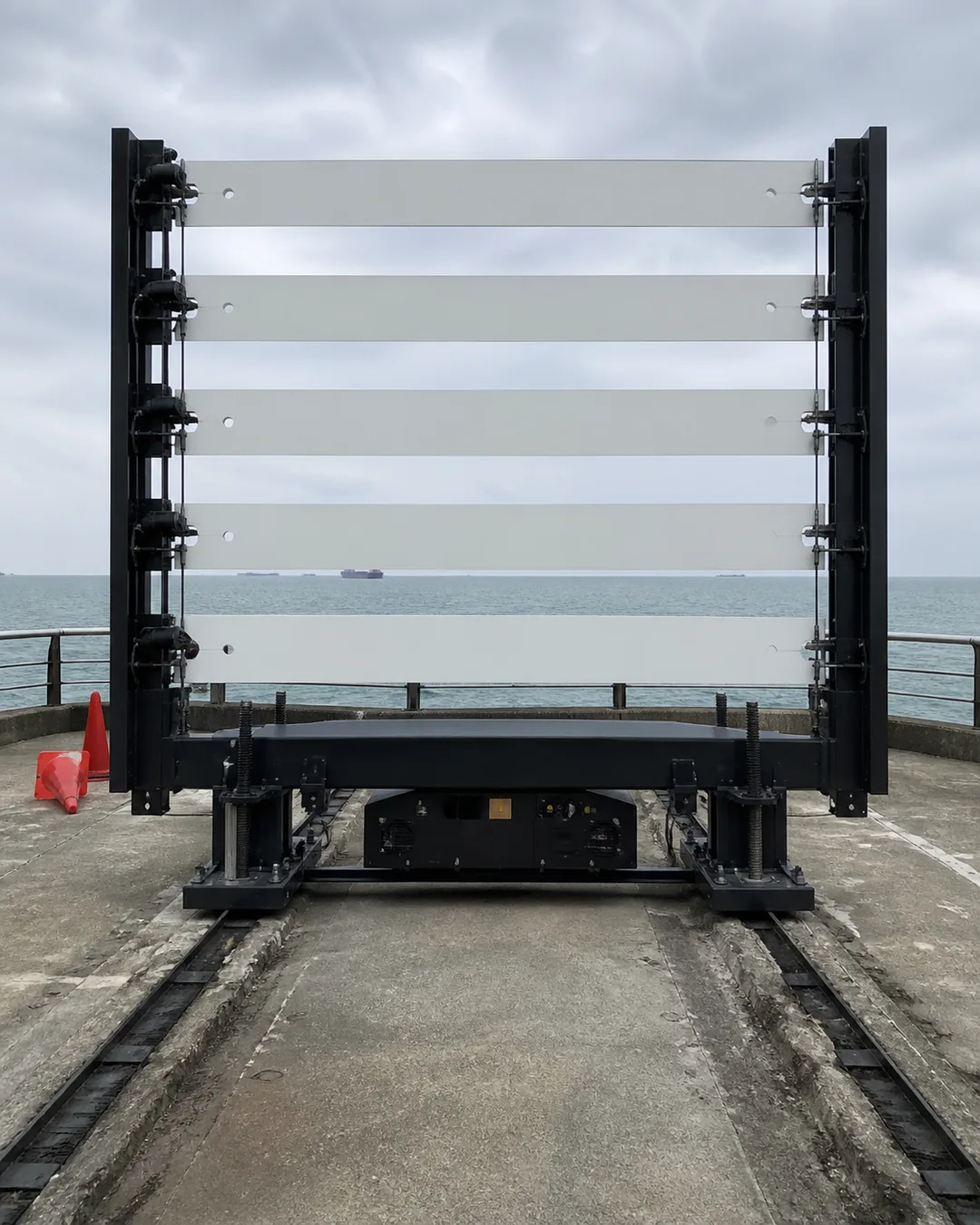
The synthetic event inherits camera position as ideology
A landscape prompt opens onto a corridor of inherited views. Mountains arrive with heroic scale, deserts with cinematic emptiness, tropical coasts with leisure economies, cities with skylines, poverty with texture, disaster with dramatic light. The generative horizon expands the visible by extending the representational habits that have already made the world consumable.
Scene synthesis carries the protocol of tourism, news, commerce, and spectacle. A protest becomes a composition of smoke, raised hands, flags, police lines, and urgent contrast; a wedding becomes brightness, symmetry, fabric, flowers, and disciplined joy; a refugee camp becomes repetition, dust, children, containers, and moral distance. The model replays the image economies through which events have been made available to attention.
The synthetic event inherits camera position as ideology. Aerial views promise mastery, close-ups promise empathy, wide shots promise scale, shallow focus promises value, handheld blur promises authenticity. These visual protocols organize the viewer before any content arrives, placing the eye inside a logistical arrangement of distance, access, and permissible feeling.
Latent space stores the world as a field of genres. The rural, the futuristic, the sacred, the ruined, the luxurious, the indigenous, the corporate, the planetary, each appears through conventions that bind geography to marketable atmosphere. The prompt requests a place, and the model returns a visual contract between memory and expectation.
Synthetic horizons expose the colonial afterlife of visibility inside technical expansion. The system multiplies scenes while preserving the angles through which scenes became recognizable to power. The world grows larger on screen, and the frame grows more confident in its inherited right to organize it.

Similarity as Infrastructure
Similarity functions as an operating system. Classification groups images, moderation filters them, search retrieves them, ranking orders them, advertising prices them, and generation recombines them. Recognition becomes the hinge between visual form and economic conduct, binding the image to measurable behavior.
Platform power begins with comparison at scale. Every upload enters proximity maps, policy thresholds, engagement forecasts, safety scores, copyright signals, and audience segments. The image receives value through its relation to other images, and this relation determines whether it travels, stalls, mutates, or disappears into infrastructural quiet.
Labeling labor gives resemblance its administrative body. Workers and users attach names, draw boxes, choose categories, judge offensiveness, mark relevance, confirm identity, and smooth the jagged edge of visual difference into machine-ready consistency. Their decisions persist as invisible scaffolding inside the model, turning human fatigue into automated confidence.
Moderation translates the politics of appearance into protocol. Nudity, violence, intimacy, protest, satire, medical evidence, documentary urgency, and aesthetic risk pass through thresholds designed for platform liability and advertiser calm. The boundary between permissible and suppressed imagery becomes a market interface, where safety vocabulary administers circulation.
Provenance shifts from origin to manageability. A synthetic image matters less as a trace of an event and more as a node in a chain of custody: prompt, model, dataset lineage, watermark, metadata, platform policy, licensing regime, ranking history. Authenticity becomes operational, a set of permissions that allows the image to move through institutional and commercial space.
The regime of resemblance turns visibility into compliance with infrastructure. To appear is to become comparable, to become comparable is to become governable, and to become governable is to enter the economy of prediction. Power now speaks in the grammar of similarity, and similarity smiles as service.
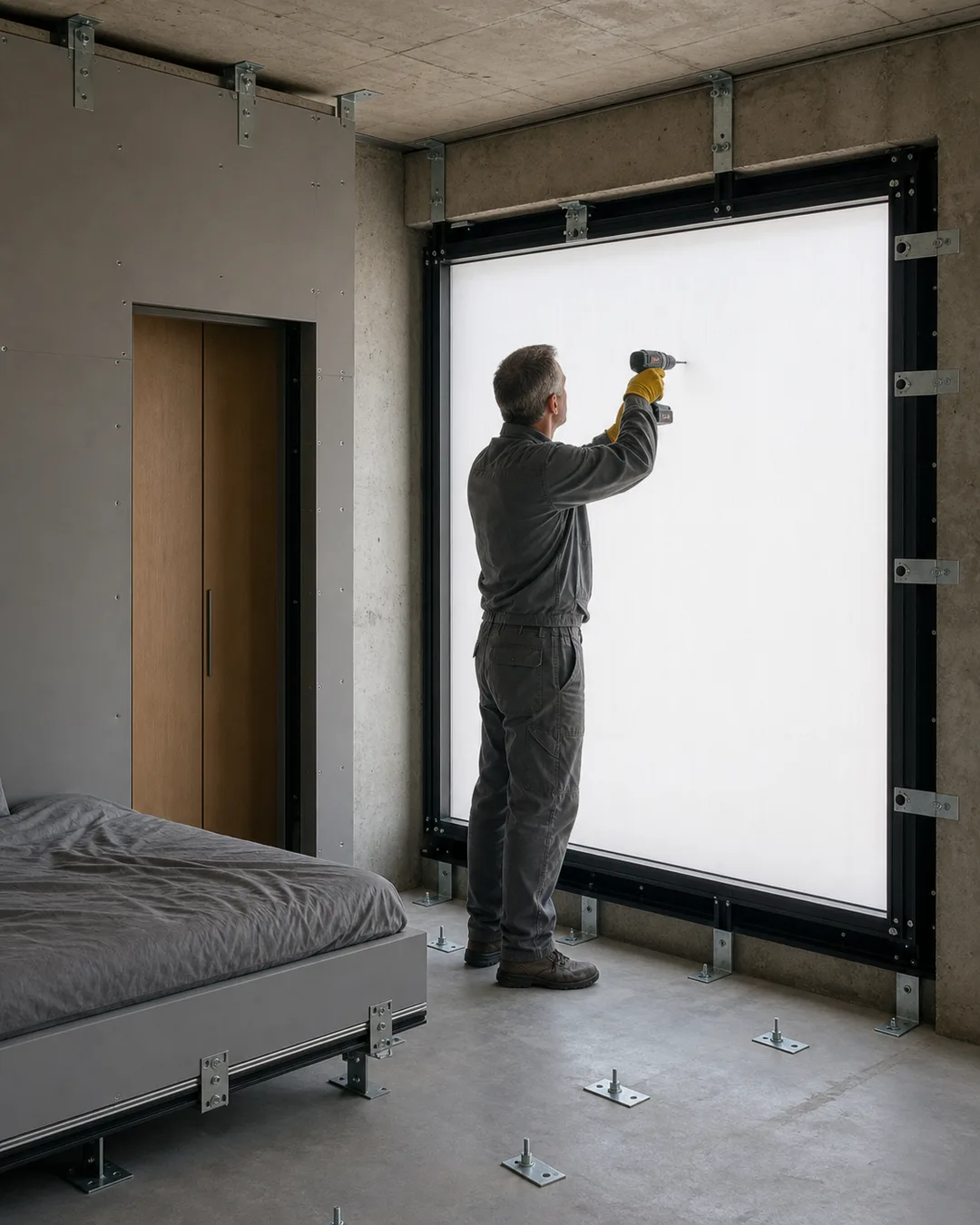
Memory Without Experience
Synthetic memory assembles recollection from distribution. The image remembers a war through prior war images, a childhood through stock tenderness, a future city through cinematic metal and atmospheric haze. It carries the form of memory while drawing its substance from archives, labels, prompts, and statistical resemblance.
Aura thins into availability. The image once held a tension between presence, distance, and material encounter; the synthetic image holds a tension between plausibility, circulation, and derivation. Its authority comes from recognizability across platforms, from the feeling that an event has already been seen somewhere, by someone, in the shared warehouse of visual culture.
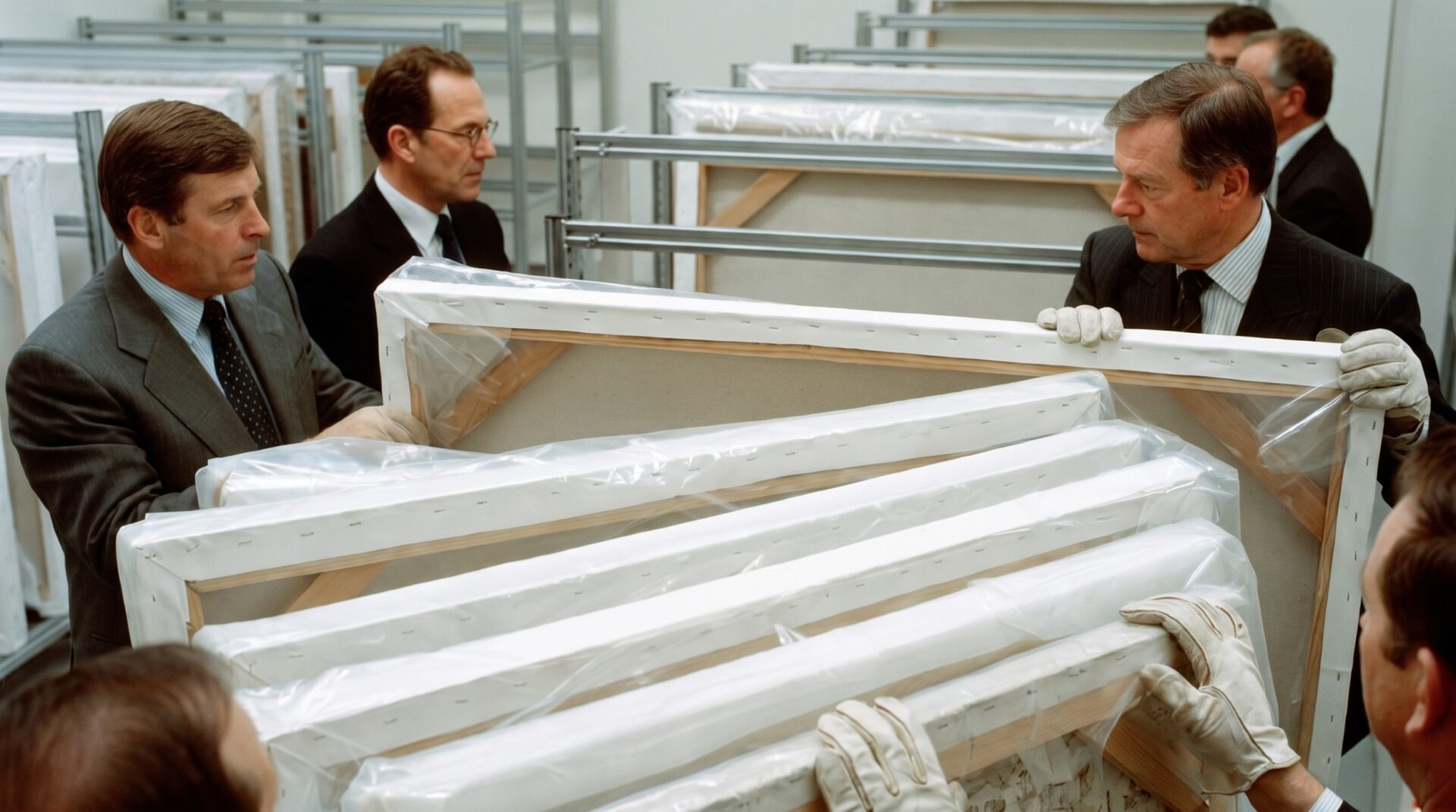
Industrial visual memory produces witnesses made of patterns. A generated photograph of a flood, a missing person, a family album, a historical crowd, or a future catastrophe can mobilize feeling through the codes of evidence. The image has attended the archive, and the archive has attended everything permitted to become data.
Attention becomes the afterlife of experience. What circulates repeatedly gains the density of memory, and what ranks highly gains the aura of social fact. The feed turns recurrence into credibility, while the model turns credibility into style, making remembrance a function of distributional pressure.
The synthetic image alters the ethics of testimony by relocating presence into infrastructure. Provenance, watermarking, custody, and disclosure attempt to stabilize trust, yet trust already operates through speed, familiarity, and platform placement. The image persuades because it resembles the forms through which persuasion has historically passed.
Memory now belongs to systems that can recall what they never lived. The archive dreams in public, the model speaks in inherited light, and appearance becomes the site where experience and probability exchange masks. The future image will remember us through the patterns we allowed to count.