
Cultural hegemonies are almost never born where they claim to have been born. They present themselves as spontaneous internal maturations, the natural destiny of a civilization finally coming into self-awareness. In truth, they almost always depend on peripheral figures, intermediaries who appear secondary until one realizes they were the ones dictating the rhythm, the vocabulary, and even the geography of desire. In the story of postwar American art, that mediator possessed nothing of the national hero: he spoke with a European accent, moved with the quiet discretion of a fallen diplomat, and possessed, more than the genius of the artist, the absolute instinct of the translator.
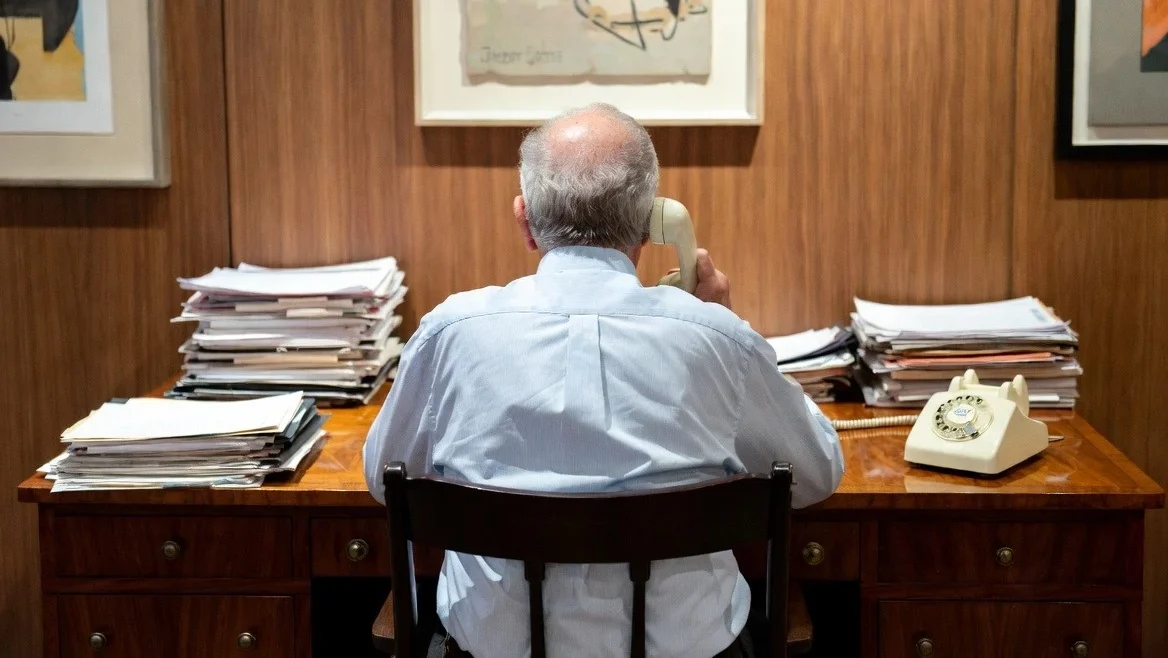
Leo Castelli belonged to that rare species of men who do not produce works but create the conditions under which works become inevitable. At first glance, his biography reads like the classic cosmopolitan itinerary of the twentieth century: Trieste, Paris, New York; war, exile, salons, galleries, collectors.
Looked at more closely, however, it becomes something far more unsettling: proof that the artistic center of the world does not shift by historical destiny but through a long, refined, and almost impudent operation of social direction.
From the Liquid Frontiers of Trieste
Leo Castelli was not born American, and precisely for that reason he was able to imagine America as an aesthetic destiny long before it became a nation. Born in Trieste in 1907 as Leo Krausz, in that liquid frontier of the Habsburg Empire where identities never quite matched passports, he already carried within him the decisive ambiguity: a Jew from a Mitteleuropean family, educated among different languages and codes, Italian by sentimental formation rather than by birth certificate.
During the First World War the family took refuge in Vienna; upon their return to Trieste after 1918 the city had become Italian, and his father, a regional director of a major Austro-Hungarian bank, had to adapt. In 1938, under Mussolini’s racial laws, the foreign surname Krausz was dropped in favor of the maternal one, Castelli, a first, concrete lesson in the precariousness of identity that would mark his entire life.
Trieste, before it was a place, was for him a school of transit. In its port of commerce, insurance, and border literature he learned that taste is never innocent, that elegance is a system of signals, and that prestige consists in making the constructed appear entirely natural.
He was not an intellectual in the classic sense, nor an art theorist: he was the refined product of an environment in which mediation mattered more than emphasis and authority was exercised by occupying thresholds. He studied law in Milan, worked in insurance and banking, yet his true apprenticeship occurred elsewhere. In Bucharest he met Ileana Schapira, daughter of a wealthy Romanian Jewish industrialist. When he proposed in 1932, instead of offering a ring he gave her a Matisse painting, a gesture that already announced everything about their shared future. Together they moved to Paris, accumulating the repertoire of habits, relationships, and legitimations they would later transplant across the ocean. His Italianness was never a folkloric affectation; it was the temporary name for a deeper competence, the ability to understand that civilizations decay the moment they no longer know how to organize their own myth. And it was precisely a European formed at the end of Europe who would make the symbolic ascent of America credible.
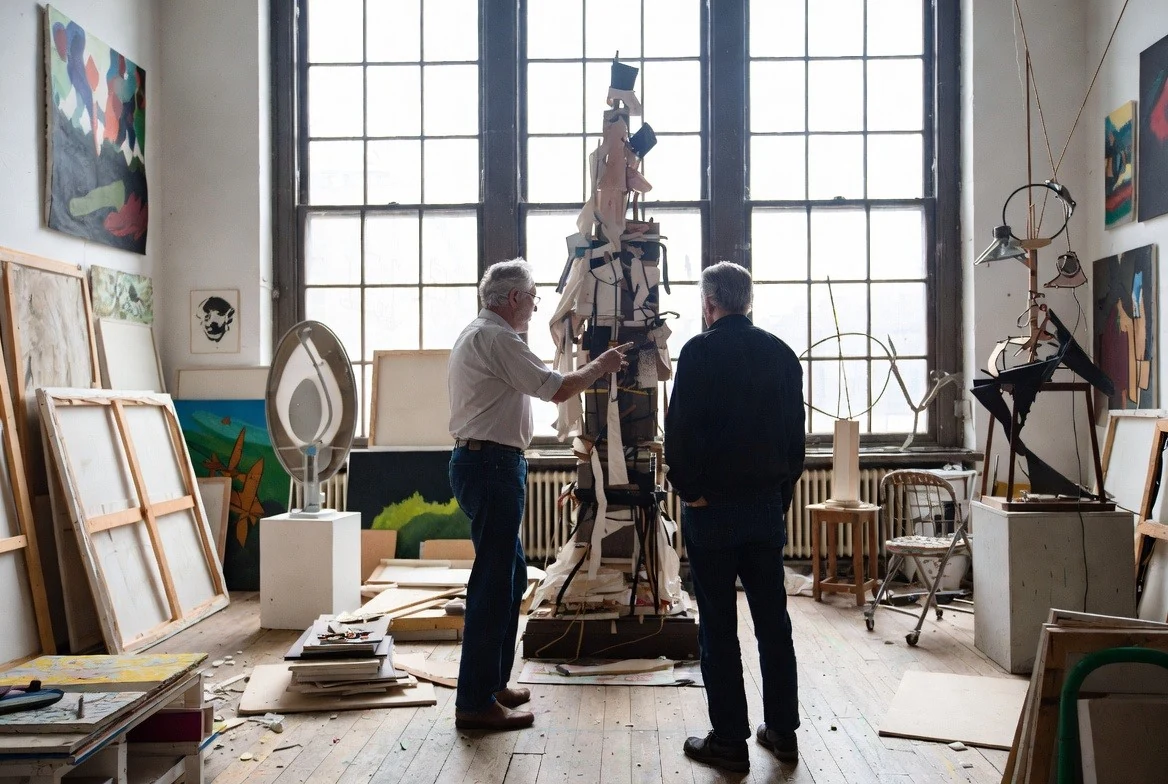
The Fracture That Allowed Castelli to Master the Old European Codes Before Transplanting Them to New York
The war was not a mere biographical accident for Castelli; it was the fracture that made his second self-invention possible. In his Parisian years, on the very brink of catastrophe, he moved through a world in which modern art still spoke French and the aesthetic authority of the continent seemed indisputable, even as it already showed cracks of exhaustion. In 1939, with financial help from his father-in-law, he opened a gallery with the architect René Drouin, exhibiting Surrealists and decorative arts. The venture lasted only a few months before being swallowed by events. That marginal detail already contains the entire lesson of his future: Castelli absorbed from the inside the world he would later surpass, mastering its codes before history suddenly rendered them vulnerable.
The 1941 exile stripped him of all material capital but left him richer in relational and symbolic capital of the highest order. He arrived in New York penniless yet armed with the tools of the center he had left behind. The America that received him was not yet the obvious capital of contemporary art. New York possessed energy, private wealth, and museum ambition, but it lacked the historical legitimacy to proclaim itself the heart of visual modernity.
It was precisely that absence of tradition that made it fertile. Castelli understood that a vacuum could become a structural advantage: it allowed the fabrication of a new genealogy unburdened by the crushing weight of precedents. He did not attempt to rebuild a miniature Paris in exile, as so many others did with results that were sometimes elegant but historically sterile. Instead he used the memory of the old center as a technology for installing a new one. Loyalty to Europe, for him, meant transferring its method. As he recalled years later in oral-history interviews, he had learned that novelty alone is never enough: it must be hosted, narrated, and inserted into a selective continuity.
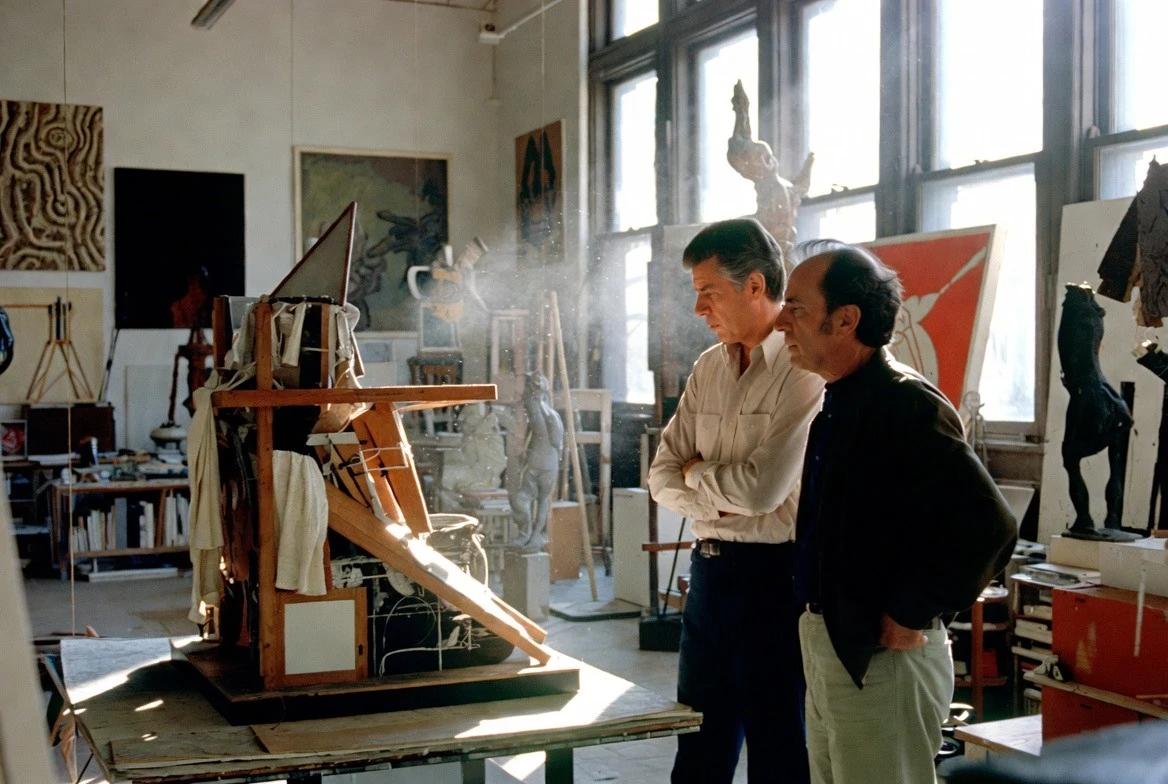
The Fourth-Floor Apartment Gallery as Reality Machine
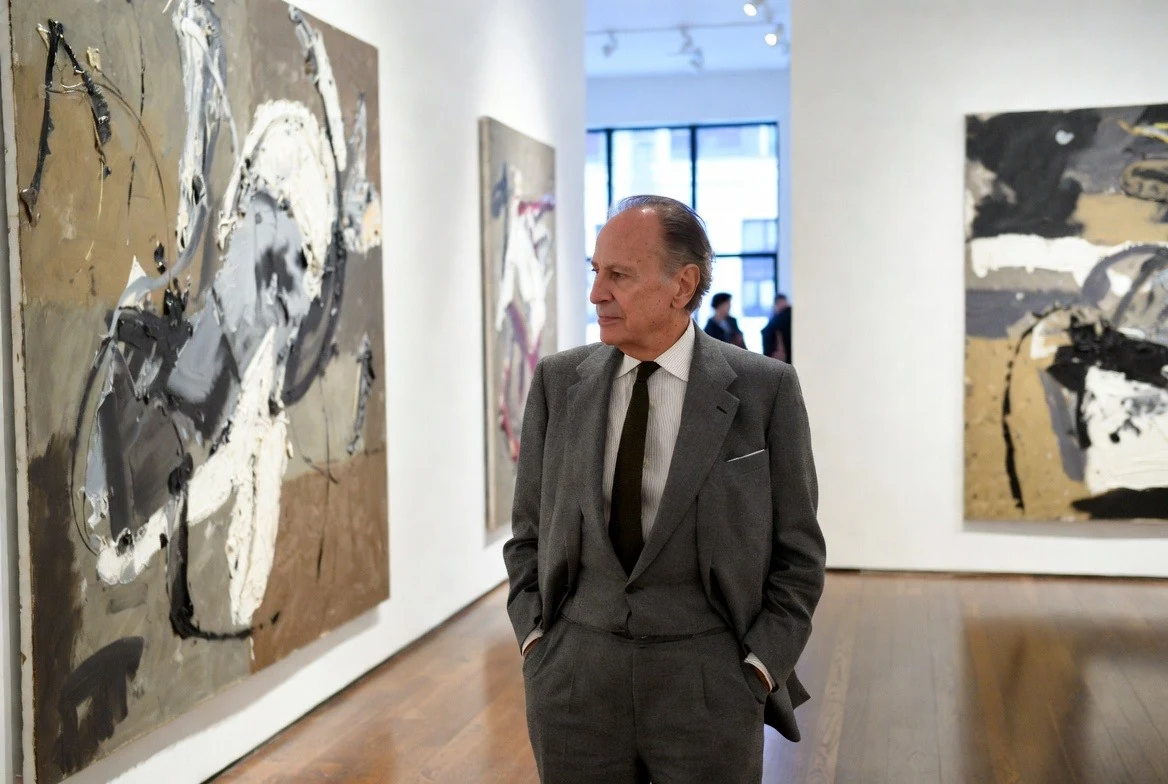
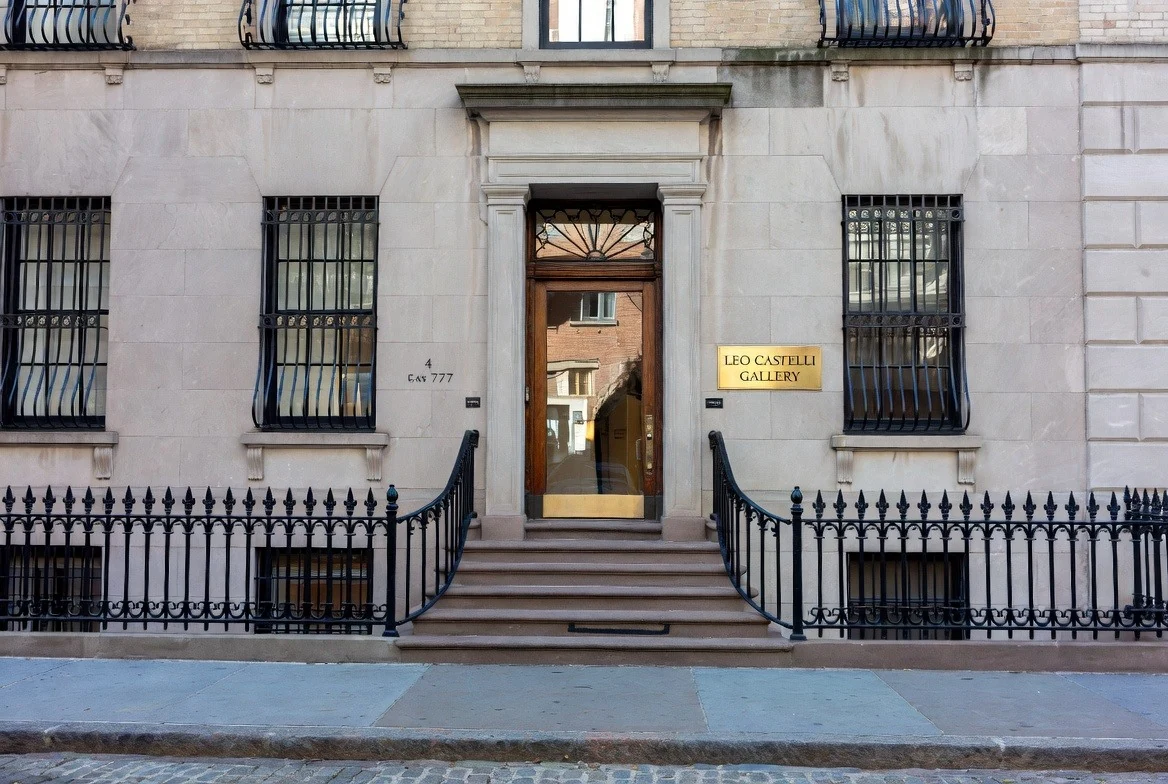
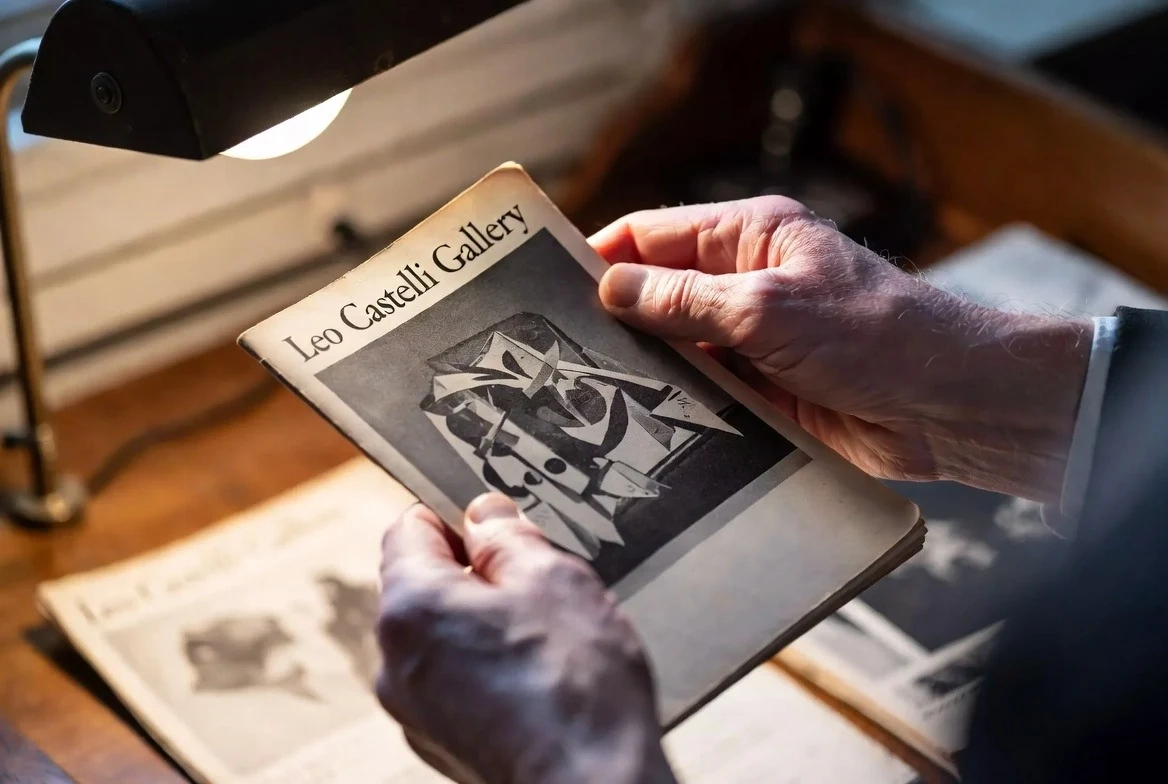
The gallery he opened in February 1957 on the fourth floor of his apartment at 4 East 77th Street was never a simple commercial venture: it was a device for the production of artistic reality itself.
It began with a mixed show of Europeans (Léger, Mondrian, Giacometti, Dubuffet) alongside a few Abstract Expressionist Americans, as if to declare that American painting had already reached parity. Yet Castelli immediately sensed that the real task was no longer to prove the existence of American art but to organize its succession.
The gallery distinguished itself through a superior form of environmental control. The white cube did not neutralize the work; it ritualized it. Visitors did not simply encounter paintings, they stepped into a horizon of inevitability. The legendary moment came in 1958. Castelli had gone to Robert Rauschenberg’s studio to discuss a show; Rauschenberg took him downstairs to the loft where his friend and partner Jasper Johns lived.
There, near Coenties Slip, Castelli saw the flags, targets, letters, and numbers painted in that fleshy, tender encaustic. “There were a few lively minutes,” Johns later remembered. Castelli offered him a solo show on the spot. Days after the January 1958 opening, Alfred Barr of the Museum of Modern Art bought four works by Johns. The triumph was instantaneous and overwhelming. As Castelli himself confessed in a 1970 interview: “I already knew Jasper Johns and Rauschenberg would be the stars of my gallery, but I never imagined they would appear right at the beginning and stay with me until the end.” Soon Frank Stella and others followed. Yet Castelli’s real strength was never infallible intuition alone; it was having built an environment in which that intuition could translate immediately into museum validation, financial support, and critical narrative.
He invented, or at least centralized, the system of monthly advances and loans. These were not romantic acts of patronage but a sophisticated financial structure that created a new temporality of creation: artists could afford to risk, fail, or change direction because someone was investing not in the immediate work but in the continuity of the name.
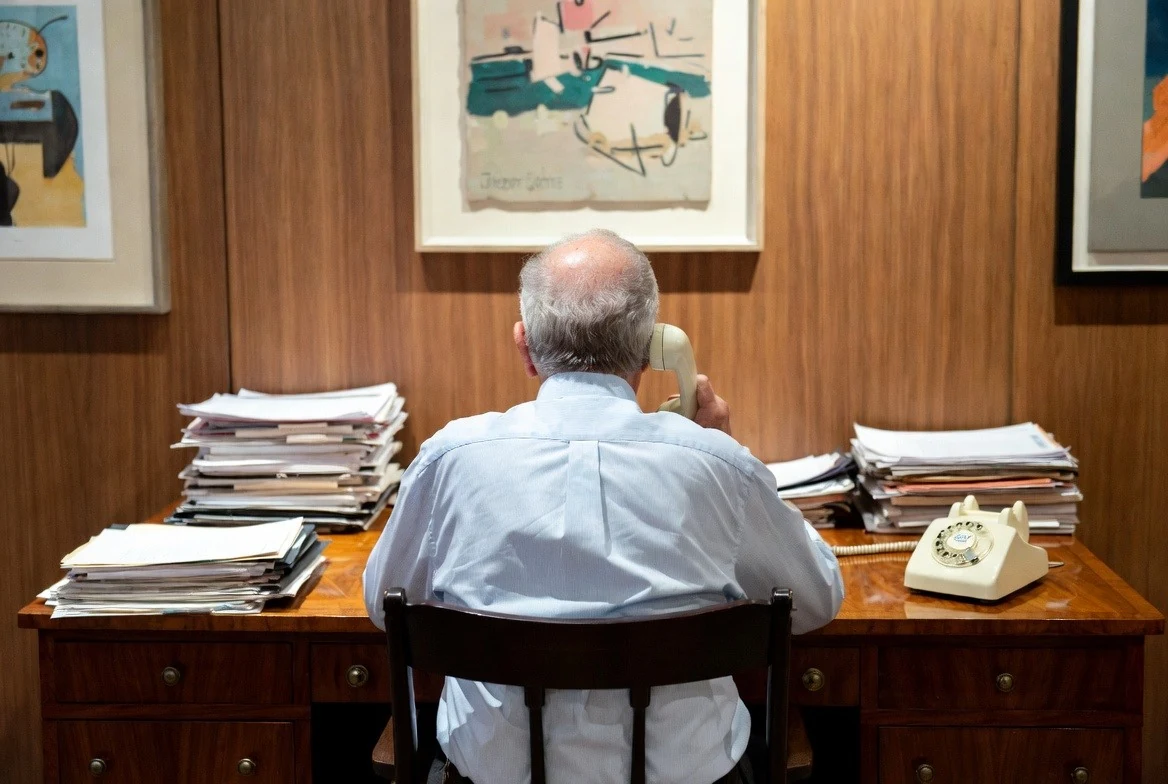
The Taste for the Future
In the 1960s Castelli understood earlier than most that American art would conquer the world only by ceasing to seem provincial to itself. He read Pop Art not as mere irony about consumer society but as the perfect export language for a rising cultural superpower. Lichtenstein, Rosenquist, Oldenburg, and Warhol, who remained at the margins of his system yet proved decisive, worked with images that were instantly legible beyond national traditions without sacrificing complexity. Where European modernism still demanded specialized literacy, the new American art played with comics, signs, packaging, seriality, and industrial surfaces.
A telling anecdote involves Roy Lichtenstein. In 1961 Castelli mounted a Rauschenberg show that doubled as an informal salon. Among the works was Lichtenstein’s Girl with Ball. Rauschenberg saw it for the first time and was initially baffled: “What the hell is that? I don’t get it.”
Then he returned, looked again, and said, “I’ve thought about it. I like it very much.” Rauschenberg’s approval carried weight; Lichtenstein entered the circuit. Castelli recognized in that seemingly low repertoire an unprecedented diplomatic force: it made avant-garde and mass appeal compatible.
The international consecration of Rauschenberg at the 1964 Venice Biennale was no simple American national triumph. It was a complex mediation operation in which Castelli, working with Alan Solomon and Alice Denney of the USIA, acted as a high-level cultural negotiator.
Legend has it that a U.S. military plane flew in the oversized works and that Castelli’s team discreetly influenced the jury. Europe did not surrender; it was persuaded. To collectors Castelli sold something far more valuable than objects: the exhilarating sensation of being contemporary in the most demanding sense of the word. As he himself liked to say, “The collector must feel he is making a historical choice, not merely a purchase.”
Parallel Worlds
Castelli’s genius was transatlantic, never merely New York-centric. The gallery was never an isolated place but a node in an international network of institutions, fairs, private collections, and family alliances. His relationship with Ileana Sonnabend—former wife and strategic partner, became exemplary. They divorced in 1959, yet the emotional separation only made their collaboration more functional. She opened her gallery in Paris and became the primary vehicle exporting Johns, Rauschenberg, Warhol, and many others to Europe, while he consolidated the primary matrix of prestige in New York.
They consulted daily, lunched together, and planned joint exhibitions. It was a perfect division of cultural labor that transformed the apparent spontaneity of the American rise into meticulous architecture. Europe was not conquered; it was persuaded by emissaries who spoke its own language and translated the urban irony and industrial chill of American art into categories compatible with its own art-historical tradition.
The system of associate dealers, satellite galleries, and informal agreements anticipated many mechanisms of contemporary globalization, yet it still retained the elegant form of individual diplomacy.
The Architect of International Artistic Value
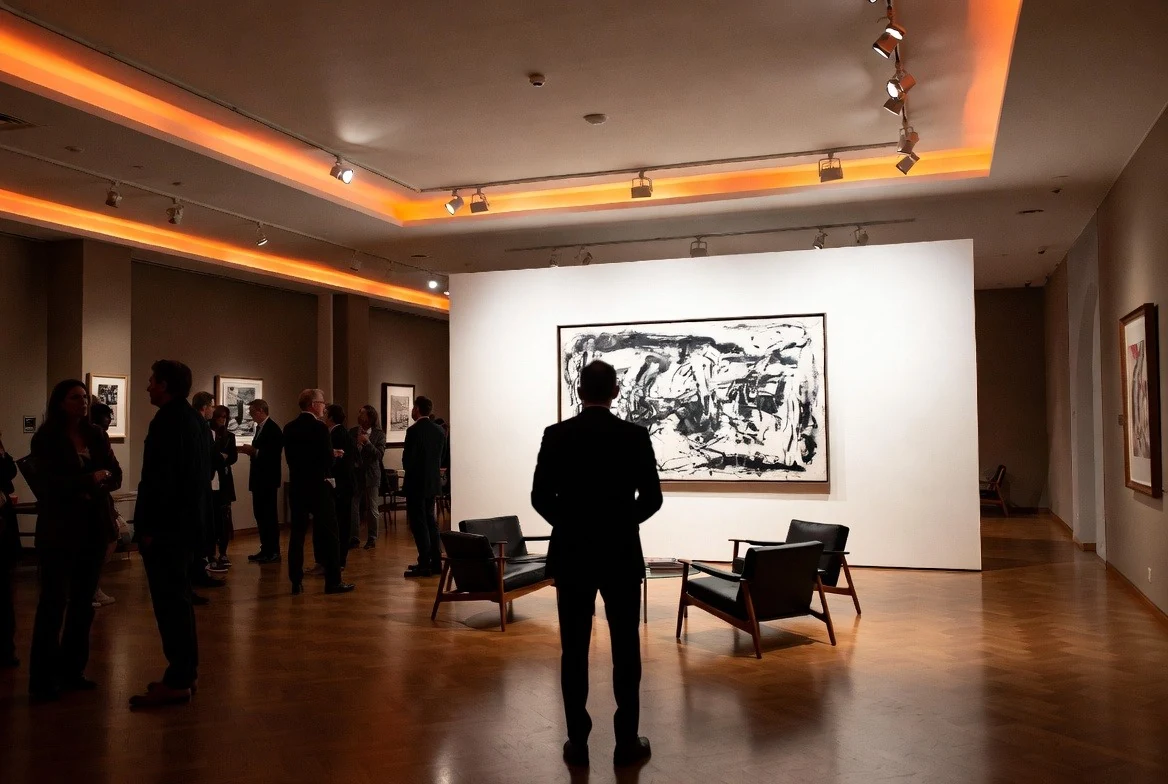
To reduce Castelli to the role of talent scout is to miss the profoundly political nature of his legacy. He helped invent not only the success of individual artists but the very regime in which artistic success would henceforth be measured, distributed, and internationally recognized. After him the modern gallerist was no longer a cultivated merchant on the margins of creation: he became a sovereign actor in the definition of the canon. Naturally this power carried a price. For all its refinement, the Castelli universe contributed to making art increasingly dependent on mediation structures and reputational capital. The autonomy of the work, so celebrated by modernism, emerged deeply relativized—not because quality had become irrelevant, but because quality itself now appeared inseparable from the circuits that made it visible and credible.
Yet something survived in Castelli that the present has largely lost: the conviction that the art market, to be truly effective, must still pretend to serve something higher than itself. That fiction was never mere hypocrisy; it was the minimal ethical device that made commerce culturally tolerable. In the end, the claim that Leo Castelli “invented” American art for the world is true only if understood in the strictest and most improper sense.
He did not invent the artists, nor American genius, nor postwar visual modernity. What he invented was their credible circulation, their universal translatability, and their installation within an international order of value. His masterpiece is not a painting. It is a shift in scale.
He showed that the center of art is never the place where works are born, but the place where someone succeeds, with impeccable naturalness, in making the world believe that, from that moment onward, they must be seen from there.
Bibliography:
https://www.aaa.si.edu/collections/interviews/oral-history-interview-leo-castelli-12370
https://www.aaa.si.edu/collections/interviews/oral-history-interview-leo-castelli-11784
https://www.moma.org/docs/learn/archives/transcript_castelli.pdf
https://www.aaa.si.edu/collections/interviews/oral-history-interview-leo-castelli-11817
https://www.castelligallery.com/exhibitions/jasper-johns8
https://greg.org/archive/2023/08/03/moma-johns-scull-duggery.html
https://www.nytimes.com/2008/07/11/arts/design/11voge.html
https://www.nytimes.com/2024/04/19/arts/design/venice-biennale-1964-united-states.html
https://www.artforum.com/columns/ileana-sonnabend-3-187097/
https://www.nytimes.com/2007/10/24/arts/24sonnabend.html
https://www.stairgalleries.com/discover-news/discover/robert-rauschenberg-and-ileana-sonnabend/
https://www.artforum.com/columns/annie-cohen-solals-leo-his-circle-the-life-of-leo-castelli-194262/
https://reddotblog.com/book-review-leo-his-circle-the-life-of-leo-castelli-by-annie-cohen-solal-21/
https://www.youtube.com/watch?v=j0UOfqpN8hg
https://www.linkedin.com/pulse/dealer-leo-castelli-czudej-mcdonough-68spe
https://www.academia.edu/104730099/Castelli_Leo_1907_1999_art_dealer