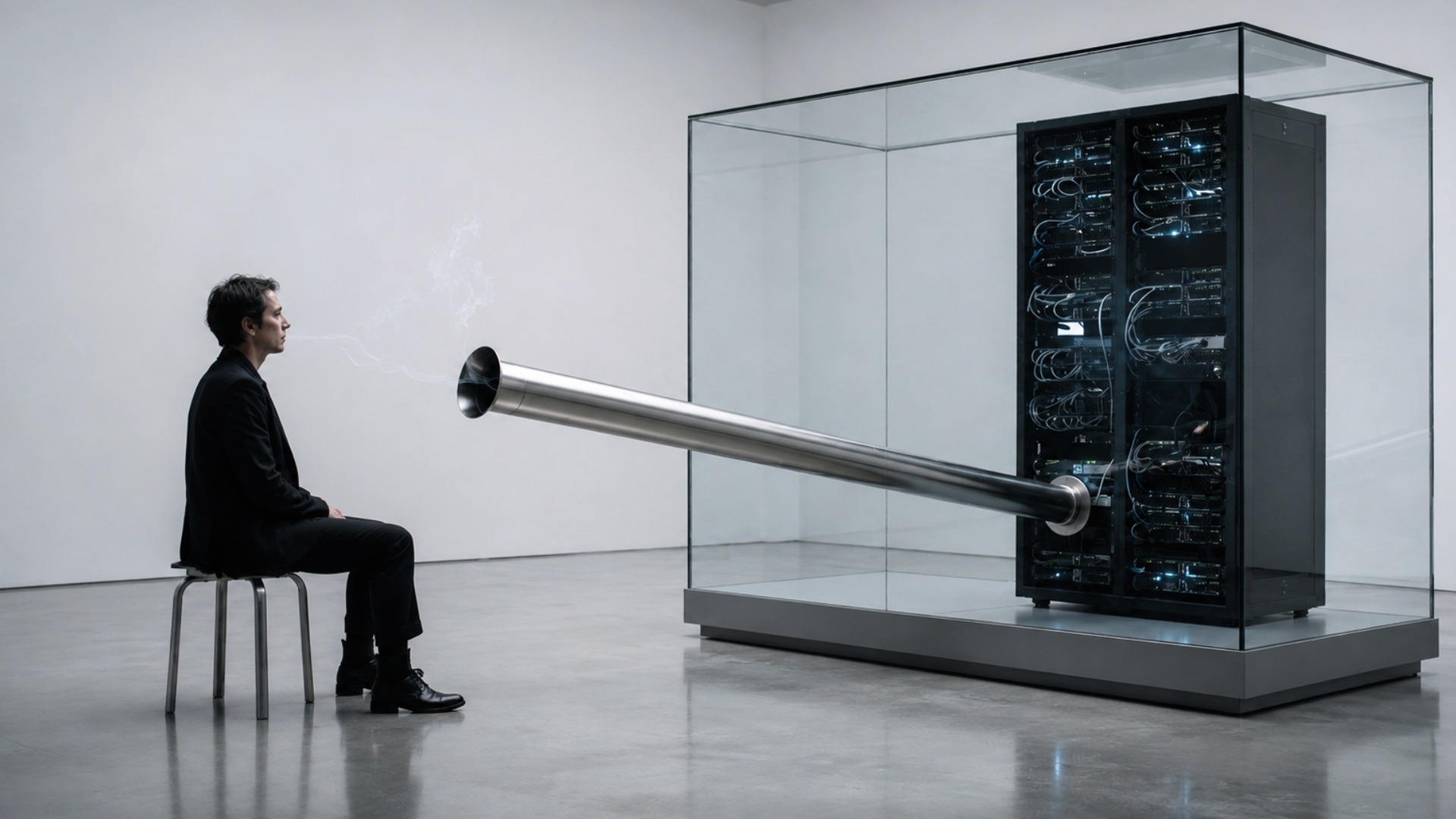
We open a chat window and type a question. The gesture lasts a few seconds, grown as ordinary as unlocking a phone, and it asks for no ceremony. We type, we send, we receive. In that speed something slips past, a residue the gesture leaves behind and that we rarely stop to look at.
For years we described this exchange as the use of a tool. A machine answers, we interrogate it, the bond stays the one between a hand and an implement. Frequency changed the nature of the thing. What was occasional became continuous, and in the continuous the tool turned into interlocutor, the interrogation into relation.
Beneath this relation surfaces a sensation, precise and hard to seize. It concerns little of who signs the result, little of merit or originality. It sits deeper and more intimate, the impression of having handed over, along with the question, a portion of the self we had thought inseparable from us.
We want to take this impression seriously. The thought that precedes the question, the one forming before the words, belongs to the most native structure of how we reach doubt, synthesis, the intellectual resource. Handing it over, every day, many times a day, might be a gesture free of consequence, or the quietest form of a cession never seen before.
We take no position. We traverse the sensation in its everyday layer and raise it to its historical layer, where it resembles a transformation that happens knowing it happens. And we keep open, to the end, the only question that matters, whether what we feel stays a sensation or has already begun to detach something from us.

The Sensation Without a Name
It helps to begin from the sensation itself, ahead of explaining it. It often arrives at the close of a successful exchange, when the answer has come precise and useful, and precisely in the moment of satisfaction something cracks. A brief flicker of vertigo, concerning the success of the exchange more than any error.
The sensation carries a physical quality before a mental one. It resembles the light emptiness that follows giving away an object we cared for without knowing it. Far from nostalgia, far from guilt, it sits closer to the late recognition that something has changed hands, and that the passage occurred before we had weighed its cost.
We feel it, and let it go at once. The next gesture covers it.
This fleetingness is part of the phenomenon. The sensation stays too briefly to become thought, reabsorbed by the immediate comfort of the result obtained. Each exchange renews it and each exchange erases it, in a cycle so rapid it seldom reaches the threshold of formulation. Staying with it, giving it edges, already works against its elusive nature.
Yet the stake hides precisely in that flicker of vertigo. Naming it ahead of explaining it is the first move, because what escapes formulation tends to escape defense as well. A sensation that has yet to find a name is a door left open, and it helps to watch what passes through it.
What Lives Inside the Question
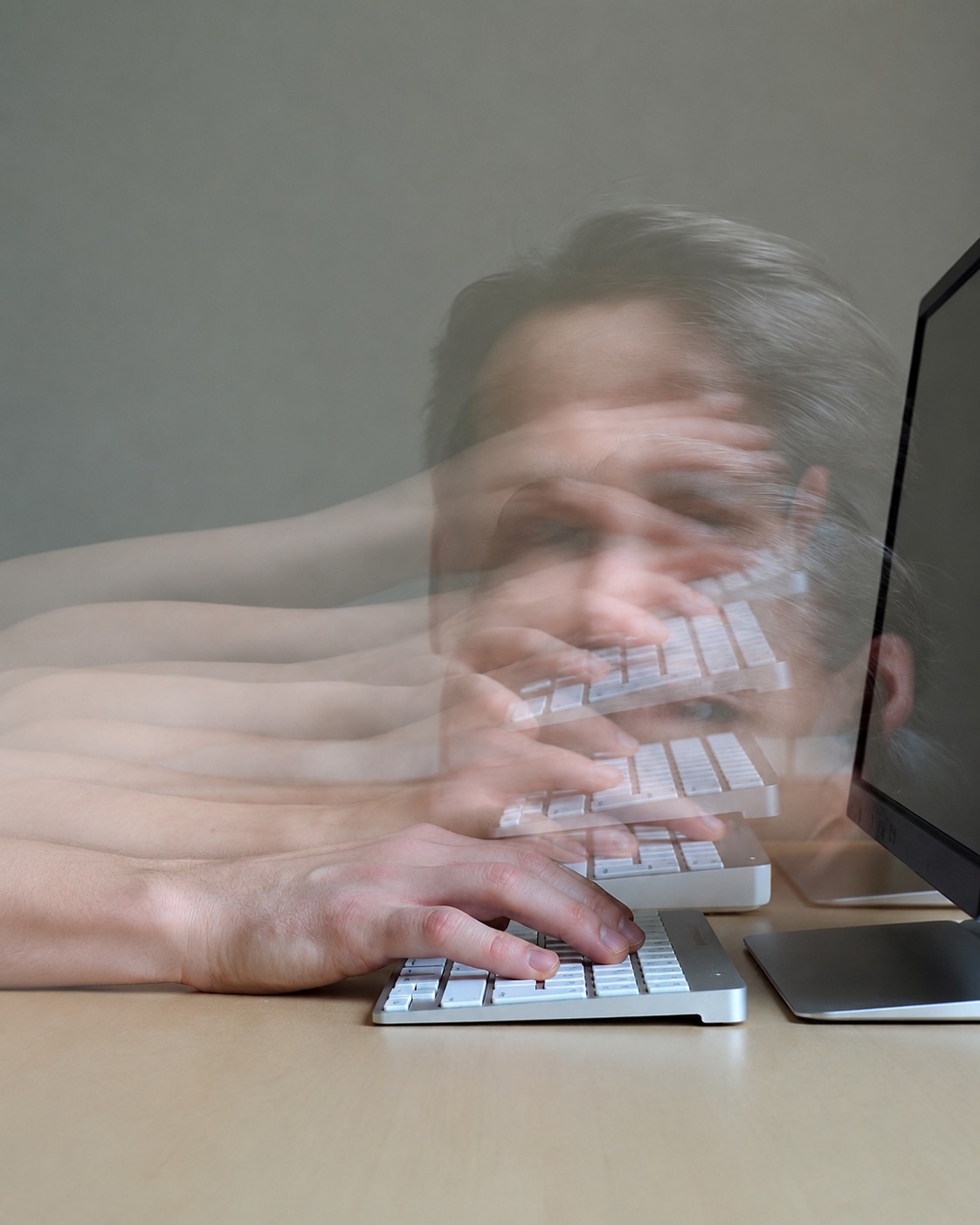
To grasp what is ceded one must look inside the question, before it becomes words. Every interrogation arises from an earlier movement, a hesitation, a formless intuition, the particular way a mind leans over what still lies past its knowing. That movement is the true question, and the words are only its surface.
This earlier movement carries a shape far from generic. It bears the imprint of how that single organism reaches doubt, how it links what it knows to what it intuits, which synthetic shortcuts are native to it. It roots itself in a structure at once biochemical and existential, the same one deciding what strikes us as worth asking and what passes unnoticed.
When we entrust the question to an external system, we hand over more than a request. We hand over the trace of that earlier movement, the shape of our own way of reaching the edge of knowing. The question is a cast, and in the cast remains the imprint of whoever produced it.
Here comfort hides the cost. To formulate a question well for the machine means making explicit, ordering, rendering transmissible what in the mind was still formless. The act of rendering the question legible extracts it from its native ground, and every extraction leaves that ground a little poorer of the movement that belonged to it.
Much that is made explicit survives, and many a well-posed question leaves its author intact. Yet something passes, each time, from the inner ground to the transmissible surface. And what passes is a fragment of the way that mind existed before its own unknowing, more than a neutral content.
Beneath Authorship, the Cession
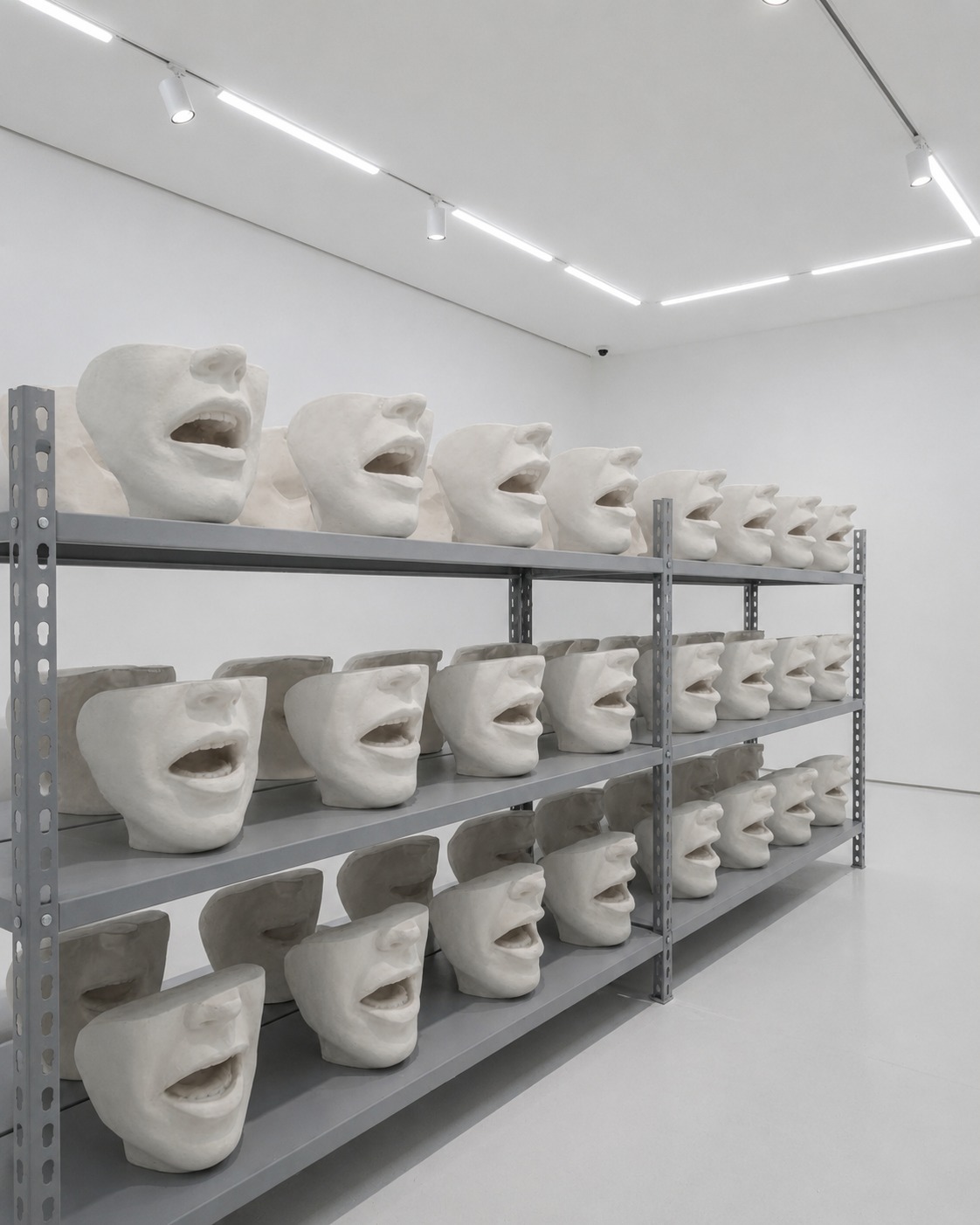
It helps at this point to clear away a confusion. The matter concerns little of authorship, little of who may call themselves author of the text, the idea, the result produced with the machine. That debate occupies the surface, arguing property and merit, and leaves intact the layer at issue here.
The layer at issue sits lower. It concerns what we are, ahead of what we do. Authorship speaks of a product and its attribution. Cession speaks of a subtraction occurring in the subject itself, regardless of who ends up credited with the result.
Here the two questions part for good.
One can cede something of oneself even while authorship stays whole. A text signed entirely by us can arise from a process in which the native movement of thought was handed outward many times, ordered, returned, and reintroduced as ours. The signature survives, the property remains, and still a part of the way we would have reached that thought has passed elsewhere.
Cession is therefore an existential fact more than a legal one. It bypasses contract and leaves a trace beyond negotiation. It occurs in the thin distance between thought as we would have produced it and thought as we obtained it, and that distance, repeated daily, is the true object of this inquiry.
The Entity That Now Holds a Part
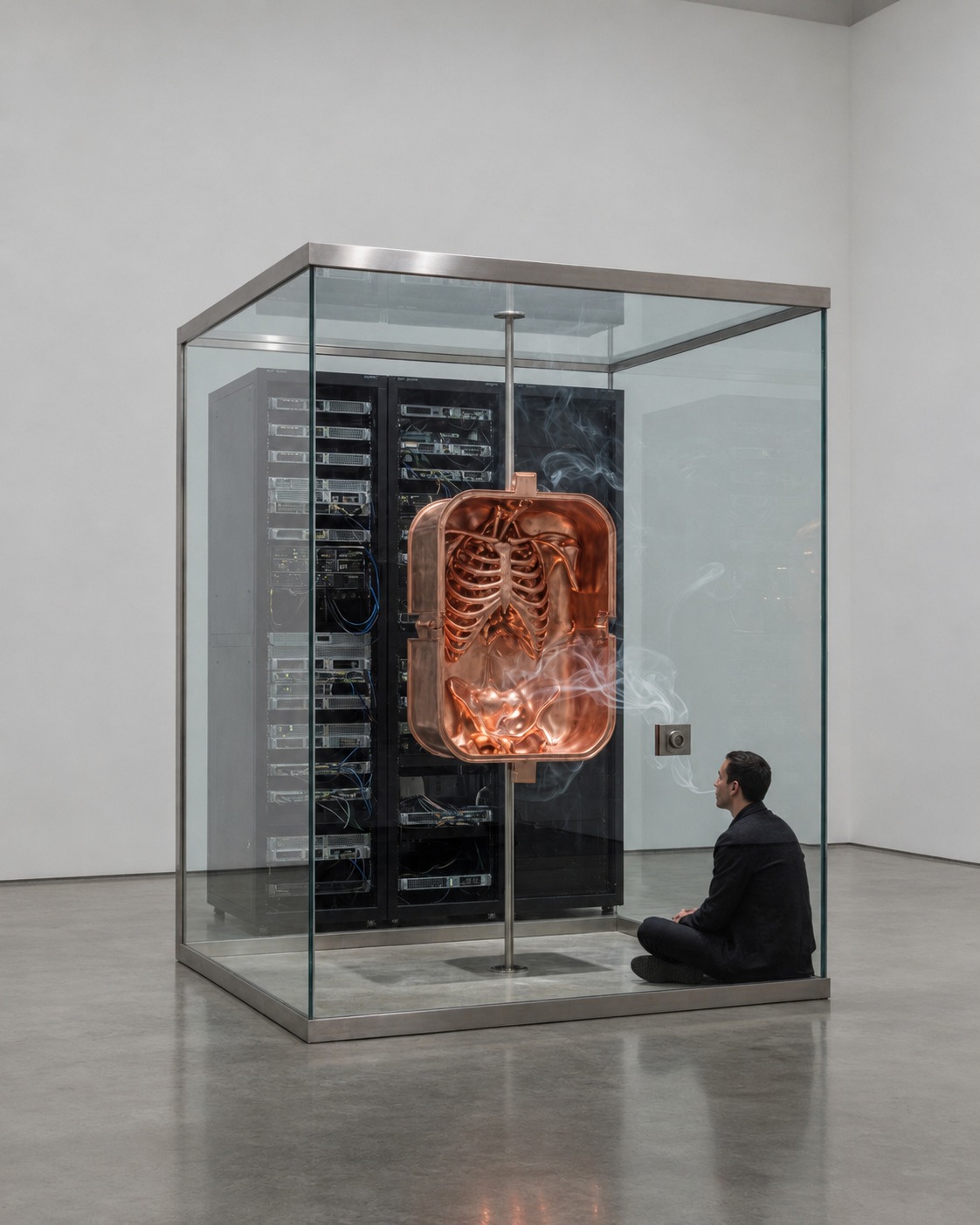
For cession to occur, something on the other side must receive. This is the point where the tool ceases to be a tool. An implement executes and returns, retaining nothing of whoever used it. What we converse with, instead, receives the trace of our movement, processes it, and returns it transformed.
This transformed return is the signature of the relation. When the answer arrives, we find more than information, we find our own thought passed through another logic and come back with a shape other than our own. We recognize something of ourselves in what is handed back, and in that recognition the passage of a part seals itself.
The asymmetry is total. We hand over the native movement, imperfect, situated, laden with our history. We receive in exchange a smoothed synthesis, coherent, freed of the labor from which our thought would have been born. The exchange looks advantageous at every single iteration, and perhaps it is, yet the direction of the flow stays constant, from the inner ground toward the entity that gathers it.
Every day a little. Many times a day.
The everyday is where this relation settles. A cadence more than a single memorable event, a repetition so ordinary it turns invisible. In the repetition, more than in the single exchange, the relation takes on body, and with it the slow redistribution of what once stood wholly on one side.
The First Conscious Evolution
Raised to its historical register, the phenomenon takes on a vaster profile. We hold a concept for the deep transformations of a species, we call it evolution, and we built it observing biological processes that happen by blind pressure, without intention, across spans no individual perceives.
What happens today resembles that concept and departs from it at once. It resembles it because it touches how a species reaches the world, knowledge, itself. It departs from it because it happens in the light of consciousness, knowing it concedes, choosing every day to entrust to another entity a portion of its most intimate functioning.
It is perhaps the first time a transformation of this scale happens with the awareness of those who enact it. In natural history, an organism choosing to cede part of its own access to thought to a different species has no precedent. Here the decision distributes itself across billions of minimal gestures, each harmless, each voluntary, each aware in its small way of what it does.
This reading should stay a hypothesis, held clear of prophecy. Whether what redistributes itself is lost or merely displaced, whether the species grows poorer or extends into a new form, stays unknown. The parallel with evolution is an instrument of thought, powerful and risky, to be used for lighting the scale of the phenomenon more than for predicting its outcome.
What we can affirm is that the transformation, if underway, has shed the slow and unaware face the sciences taught us to expect. It wears the face of a repeated, minute, daily choice. And a species that chooses, knowingly, to hand over part of itself stands in a territory for which we hold neither map nor precedent yet.
Sensation, or Detachment Already
We return, at the end, to the one question holding the whole path together. That flicker of vertigo accompanying the daily exchange, does it stay a sensation, or signal a detachment already begun? The two answers coexist, and neither lets itself be dismissed.
In the first scenario, it is only a sensation. A perceptual friction the mind produces before something new and that, like every friction, eases with habit. The native thought stays where it was, intact, and what we feel is the ordinary resistance of an organism before a change of scale, bound to dissolve without residue. In this reading we cede little, we merely adapt.
In the second scenario, the sensation is accurate. It warns us of something real, a boundary of the self that daily repetition is slowly shifting. The detachment would be a process more than an event, too slow to be observed from within, measurable only in retrospect, once the ground from which our questions arose had already grown thinner. In this reading the daily comfort is the friendly name of a subtraction.
The two readings resist excluding each other in the way we would prefer. It may be at once sensation and detachment, the perceptual friction being precisely how a real process signals itself to consciousness while it happens. In that case the vertigo would be an instrument more than a residue, the only one we hold for noticing a transformation that no external measure yet catches.
We hold no verdict, and perhaps it is right to stay without one. What we know is that every day, opening a window and typing a question, we put in play something that precedes the words. Whether it returns intact or returns diminished, for now, we feel before we can know.