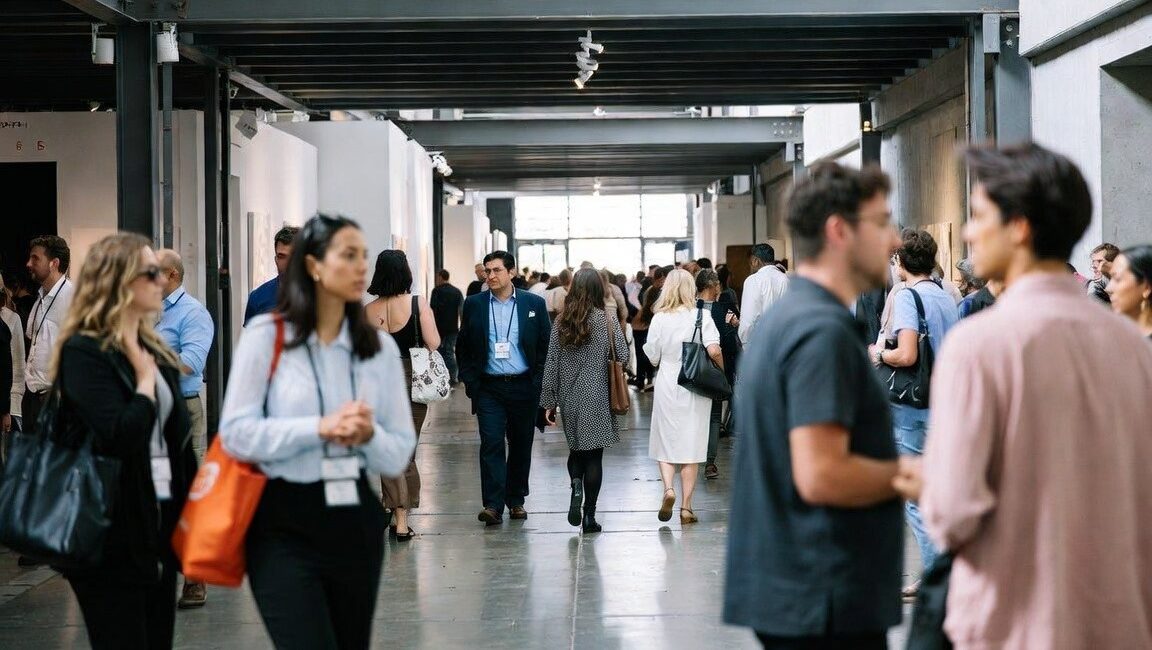
Art Basel 2026 in Basel, running from June 18 to 21 (with preview days on the 16th and 17th), stands out as one of the most ambitious and city-wide editions in recent years.
This year the fair brings together 290 galleries from 43 countries and territories, showcasing works by more than 4,000 artists. Yet what truly defines this edition is how it moves beyond the halls of Messe Basel to activate the public spaces of the city. It is no longer just about booths and sales, but about turning Basel itself into an extended museum through new initiatives, high-profile curatorial projects, and two major site-specific commissions born from the inaugural Art Basel Awards.
One of the most talked-about innovations is Basel Exclusive, a new initiative embraced by nearly 200 of the 232 galleries in the main sector. Many galleries deliberately withheld certain works from pre-fair digital previews, revealing them only on the public opening days to restore a genuine sense of discovery and surprise. Alongside this, the Premiere sector has been expanded to 17 presentations, offering more room for ambitious, museum-scale projects created in the last five years. Unlimited, the platform dedicated to large-scale installations and complex works, is curated for the first time by Ruba Katrib, Chief Curator and Director of Curatorial Affairs at MoMA PS1 in New York, bringing a fresh and rigorous vision to dozens of site-specific or oversized projects.
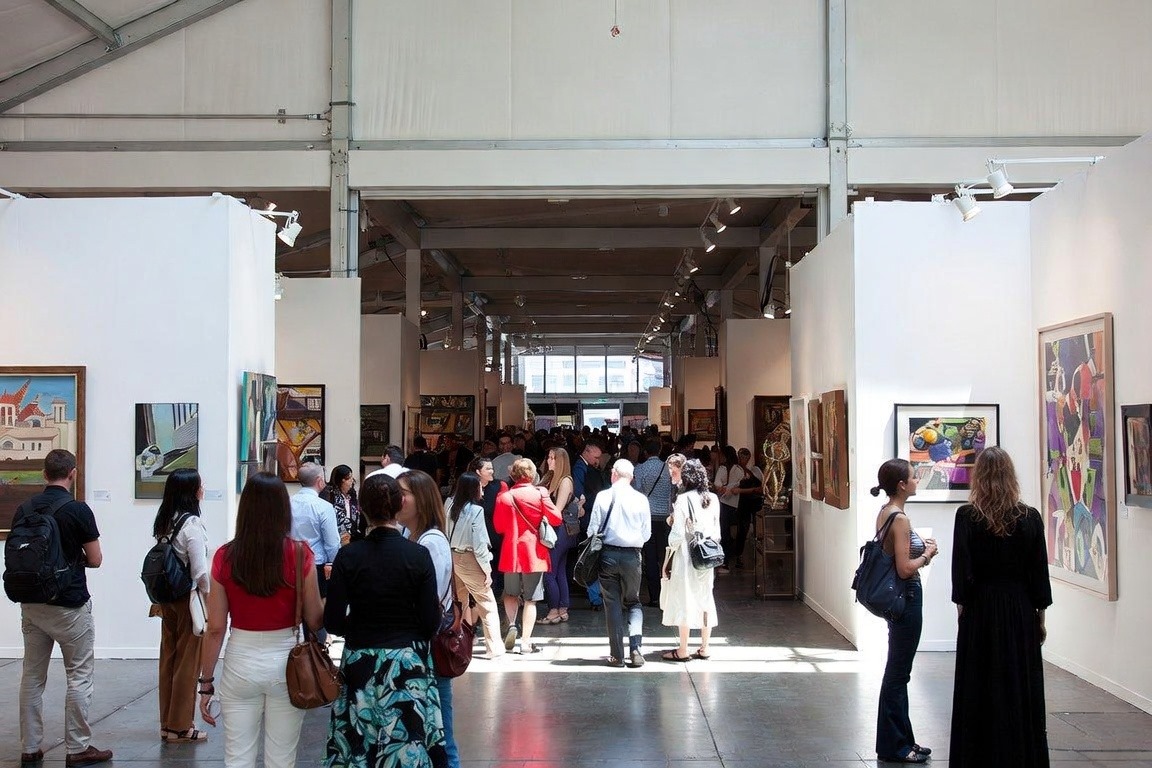
Perhaps the most vibrant expression of this outward-looking approach is Parcours, curated for the third consecutive year by Stefanie Hessler, Director of the Swiss Institute in New York. The sector unfolds along Clarastrasse toward the Rhine (with one installation across the river) and features more than twenty new, site-responsive projects.
The guiding theme, Conviviality, explores the joys and complexities of living together — rituals, interspecies relationships, architectures of public space, collective choreographies, diasporic memory, labor, and digital realities. The works do not simply occupy urban spaces; they activate them. Hotels, restaurants, abandoned buildings, bridges, and squares become sites of encounter and discovery.
Among the participating artists are Kader Attia, Haegue Yang, Sarah Crowner, Pélagie Gbaguidi, Cinthia Marcelle, Miao Ying, Edi Rama, Georgia Sagri, Rinus Van de Velde, Amol K Patil, Truong Cong Tung, and I Gusti Ayu Kadek Murniasih, to name just a few.
Public access to Parcours begins on June 15, making the city an integral part of the fair from the very first days.
It is within this spirit of public activation that the two major commissions from the inaugural Art Basel Awards take center stage — directly answering your question about the artists exhibited in the city’s squares. On the historic Münsterplatz, in the medieval heart of Basel dominated by the cathedral, Ibrahim Mahama presents The God of Small Things (2026).
The Ghanaian artist transforms the square into a powerful immersive environment with roughly twelve large suspended textile forms resembling curtains or thresholds. These are made from jute sacks, industrial remnants, metal ID tags from Ghanaian cocoa trading companies, headpans, and rubber fragments recovered from the Bonsa Tyre Company, a post-independence Ghanaian industrial project founded in 1963. Mahama obtained permission to excavate the site “like a graveyard” to recover these materials, using them to reflect on labor, global exchange, postcolonial identity, and memory. The installation is already on view from mid-June and turns Münsterplatz into a space of collective reflection.
Just steps away, on the modern Messeplatz right in front of the fair, Nairy Baghramian reimagines the long rectangular fountain with Modèle vivant (S’empilant) (2026).
The Berlin-based artist of Iranian origin creates a rhythmic choreography of biomorphic forms in cast aluminum, painted in soft lavender and pastel tones, stacked and precariously balanced on geometric polished steel armatures that traverse the fountain without interrupting the water. Beside it, a long bench-like pedestal covered in tiles and “swarming” with photographic imprints of flies invites visitors to sit, rest, and observe.
The work is more than sculpture: it is a gesture of welcome and pause amid the intensity of the fair — a place where people can simply be, rather than only look.
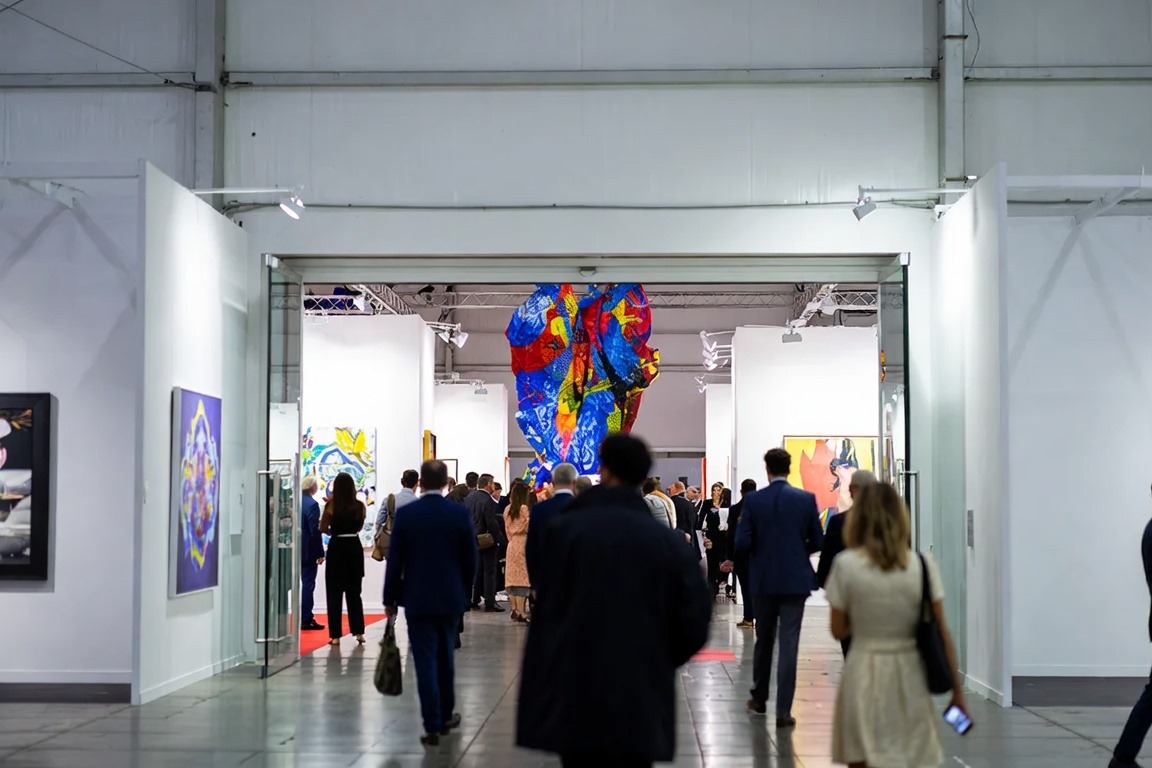
These two installations, together with the dense program of Parcours, make Art Basel 2026 a profoundly urban and relational experience. Inside the halls, galleries are presenting high-quality, often thematically focused booths centered on ideas of metamorphosis, memory, materiality, and spatial perception.
The element of surprise introduced by Basel Exclusive keeps the energy high until the very end. Among the standout presentations, Gagosian is showing a multi-artist booth featuring both modern masters and contemporary voices, while Eva Presenhuber brings significant new works by artists including Jean-Marie Appriou, Joe Bradley, Shara Hughes, Ugo Rondinone, and Tschabalala Self.
Other galleries, particularly in the Feature and Statements sectors, are offering historical depth or platforms for emerging voices, with new participants from Ivory Coast, Lebanon, Saudi Arabia, and Turkey further enriching the international scope.
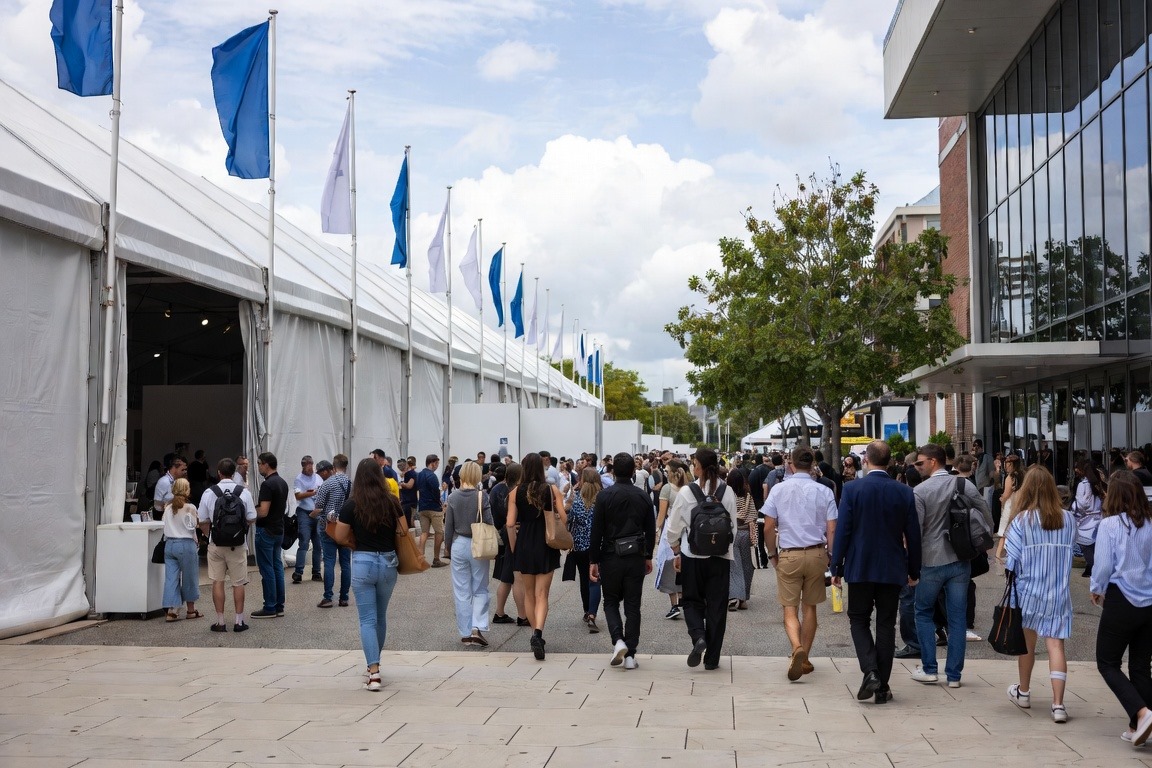
What emerges most clearly from this edition is a vision of the fair that is more open, less confined to indoor halls, and more deeply rooted in the living fabric of the city.
The public commissions by Ibrahim Mahama and Nairy Baghramian, the theme of conviviality running through Parcours, the focus on new productions, and the playful element of surprise with Basel Exclusive all point to an Art Basel that aims to be not only a marketplace but also a moment of encounter, discovery, and shared reflection. An edition that, already during the preview days, is demonstrating how contemporary art can truly inhabit public space and offer visitors a rich, complex, and memorable experience.