We came across Maxime Chabal almost by chance, and what immediately struck us was how his practice manages to bring together things that seem far apart: the body, architecture, the history of medicine, and a strange tenderness that emerges from cold, industrial materials. In this interview, we tried to touch on exactly these tensions, between exposure and concealment, between the clinical gaze and intimacy. Moving between sculpture, installation and archival research, Chabal reflects on porosity as both a material condition and a political proposition. Throughout this conversation, we follow the different strands of his practice, where bodies appear less as fixed forms than as shifting presences shaped by their environments.
Your practice revolves around the representation of the human body, its fragility and porosity. How did this interest begin, and how has it evolved over time?
This interest started very early. I grew up in a family of care workers: my mom was a nurse and was always telling stories from her long night shifts at the hospital to me and my siblings. I was amazed by the way she described this environment, loaded with love, joy and life, when one would usually associate it only with pathos. She spent most of her life relentlessly taking care of other people’s health for very little money, until her own health seriously deteriorated. A shift occurred when she had to let the roles reverse, and slowly learn to receive care as much as she had provided it. I was deeply moved by how one body could lose such a huge amount of physical strength while still maintaining such a fighting spirit.
After that, I developed a strong attraction to medical studies and wanted to become a doctor. I was driven by a need to understand the human body as much as possible. Yet I felt something was missing, and I moved from Brittany in France to London in my early twenties. There, I began frequenting the underground queer scene and discovered performance art.
The body remained at the core of my interests, but I became increasingly drawn to the exposure of its limits, its excesses and its deflagrations ; something the clinical gaze struggled to dissect. As my practice developed, I became deeply interested in the dynamics of community health, starting with the history of the HIV/AIDS pandemic. It was inspiring to see how, in the face of premeditated annihilation by public authorities, sick people reappropriated their health and fought for survival. The contemporary issues linked to the disease show how its epicentre has since shifted away from the West, while most of its visual and visible history remains rooted there. I think that, at the moment, there is a significant intersectional shift in the way artists and activists are approaching questions of health, disability, as much as gender and sexual dissidence. I find it extremely moving in the way it counters the Western ideological aspiration toward ‘total health’ and instead embraces its resistant and dissonant character.
One thing is certain: every body is vulnerable, but systemically some bodies matter more than others. This way of working together to create a political and collective body that resists its own dissolution is something I could not find in my biology books, but that I try to incorporate into both my practice and daily life.
That is perhaps what I mean when I talk about porosity. It is deeply informed by authors like João Florêncio or Paul B. Preciado: the idea that bodies are constantly altered, on a molecular and material level, through their relations to history, pharmacology, technologies, biopolitics and to others. In that sense, alterity already implies transformation.
Do you feel there are mediums that are further from or closer to your practice? Is there a medium or language you would like to experiment with that you haven’t explored yet in your work?
I’ve already experimented with many different mediums and have never refrained from trying something new. As I mentioned, I started with a background in performance and a strong affinity for dance. Throughout my art studies, a gradual movement toward what I could call a withdrawal of the body took place. Even though the body remains everywhere in my work, it tends to become abstracted and embodied through materials. I definitely feel a strong connection to installation and sculpture, things that are palpable and physical, that one body encounters and confronts. On the other hand, I have a complicated relationship with figurative images and photography. I am completely fascinated by some of them, yet I remain very cautious about their capacity to enclose representation. My graduation piece at HFBK Hamburg was called Ghost Image (L’image fantôme), after the book by Hervé Guibert. In it, he describes, from a deeply personal perspective, different typologies of images. The ‘ghost image’ is spectral: it exists only through its failure to be properly imprinted on the film due to a technical error in loading. It is cancerous: it deteriorates, fades away and becomes a figure of bodily decay and illness. It is also fetishistic, linked to specific erotic intensities that run through the photographic act.
It is a book about photography that contains no photographs, and I found this gesture incredibly powerful. In their absence, the images somehow remain intensely personal and embodied, while still allowing a strong sense of identification for the viewer.
You often describe your work as something that might initially seem cold or clinical, but upon closer inspection reveals tenderness and delicacy. How do you navigate this tension between distance and intimacy?
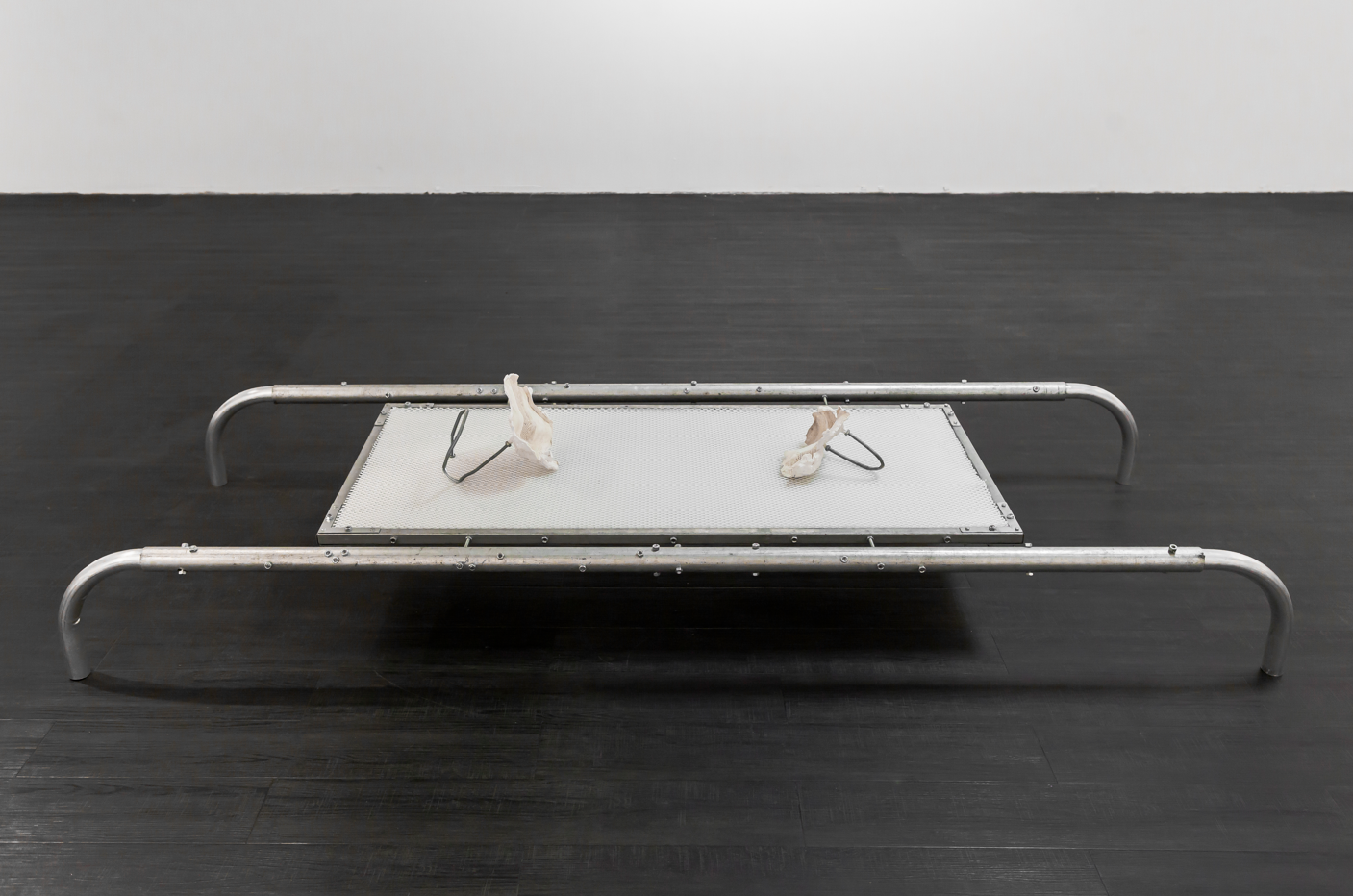
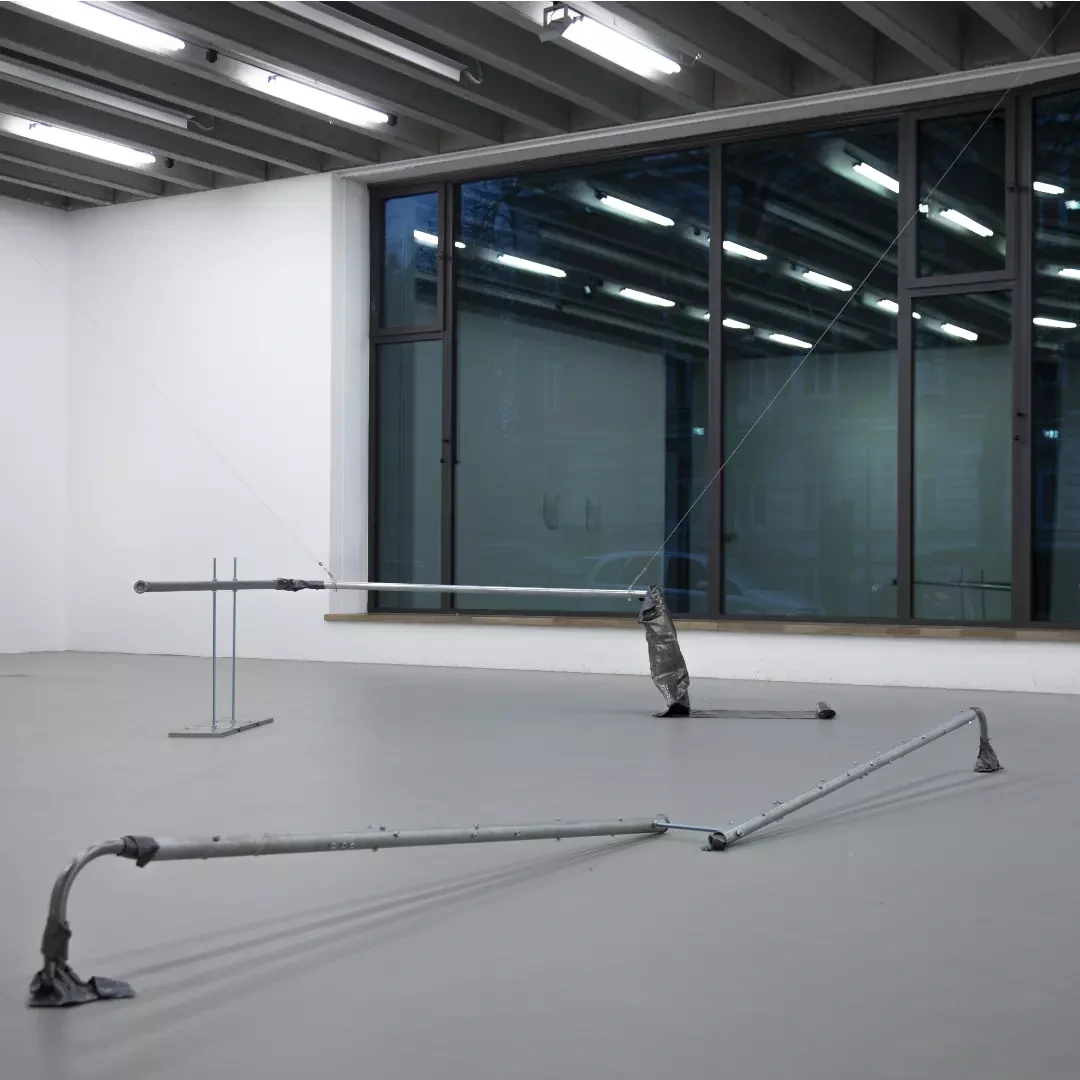
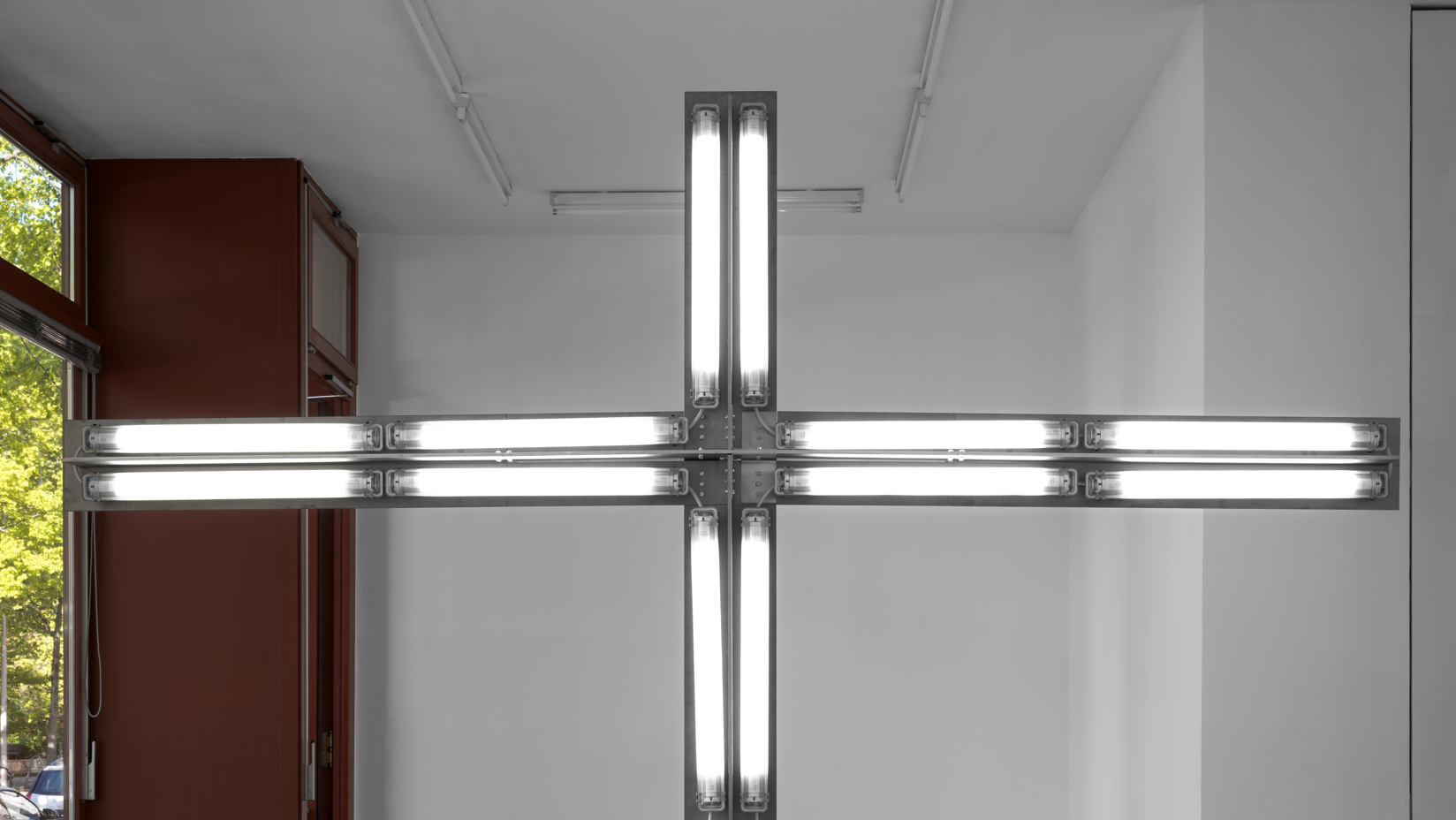
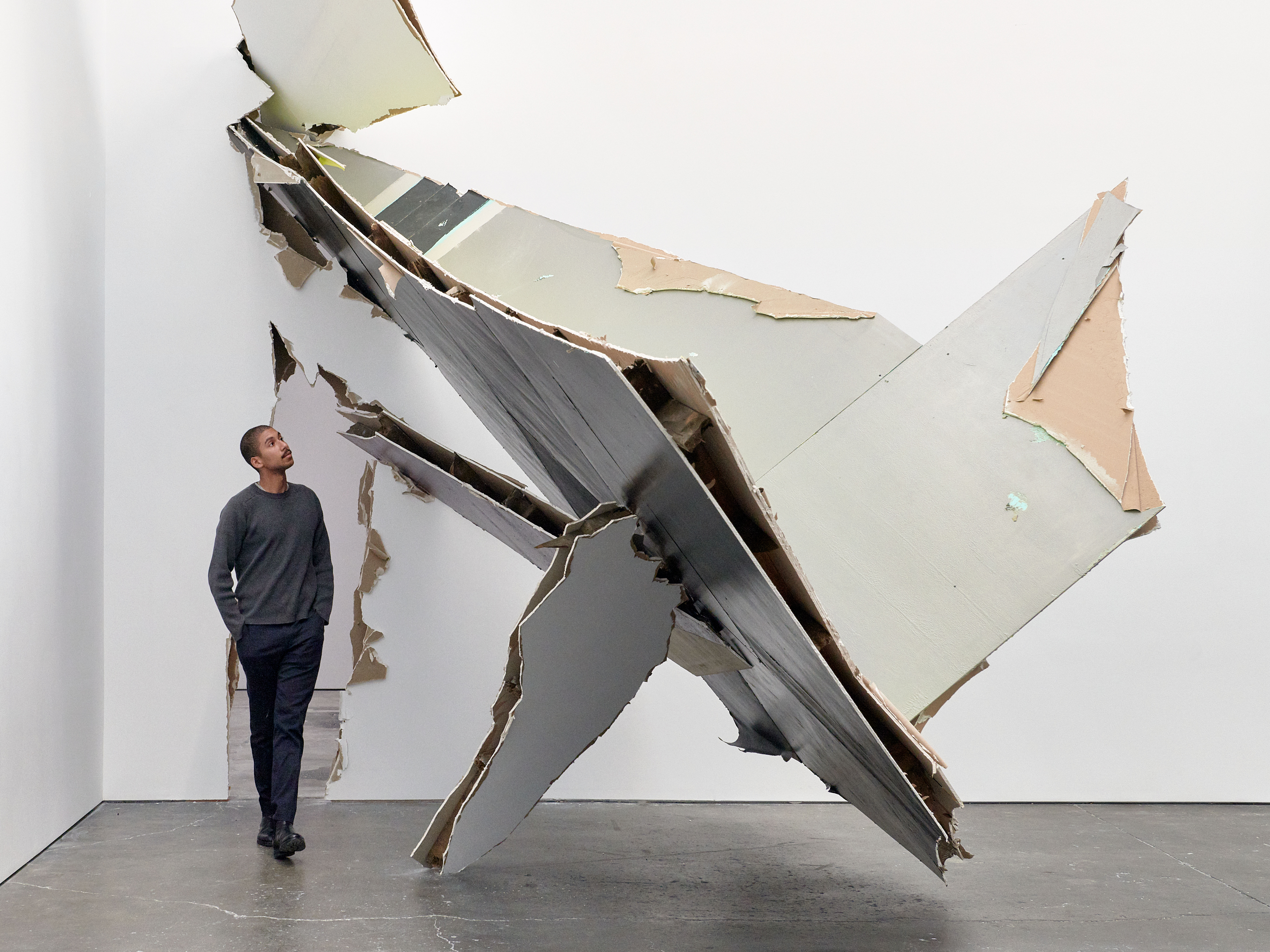
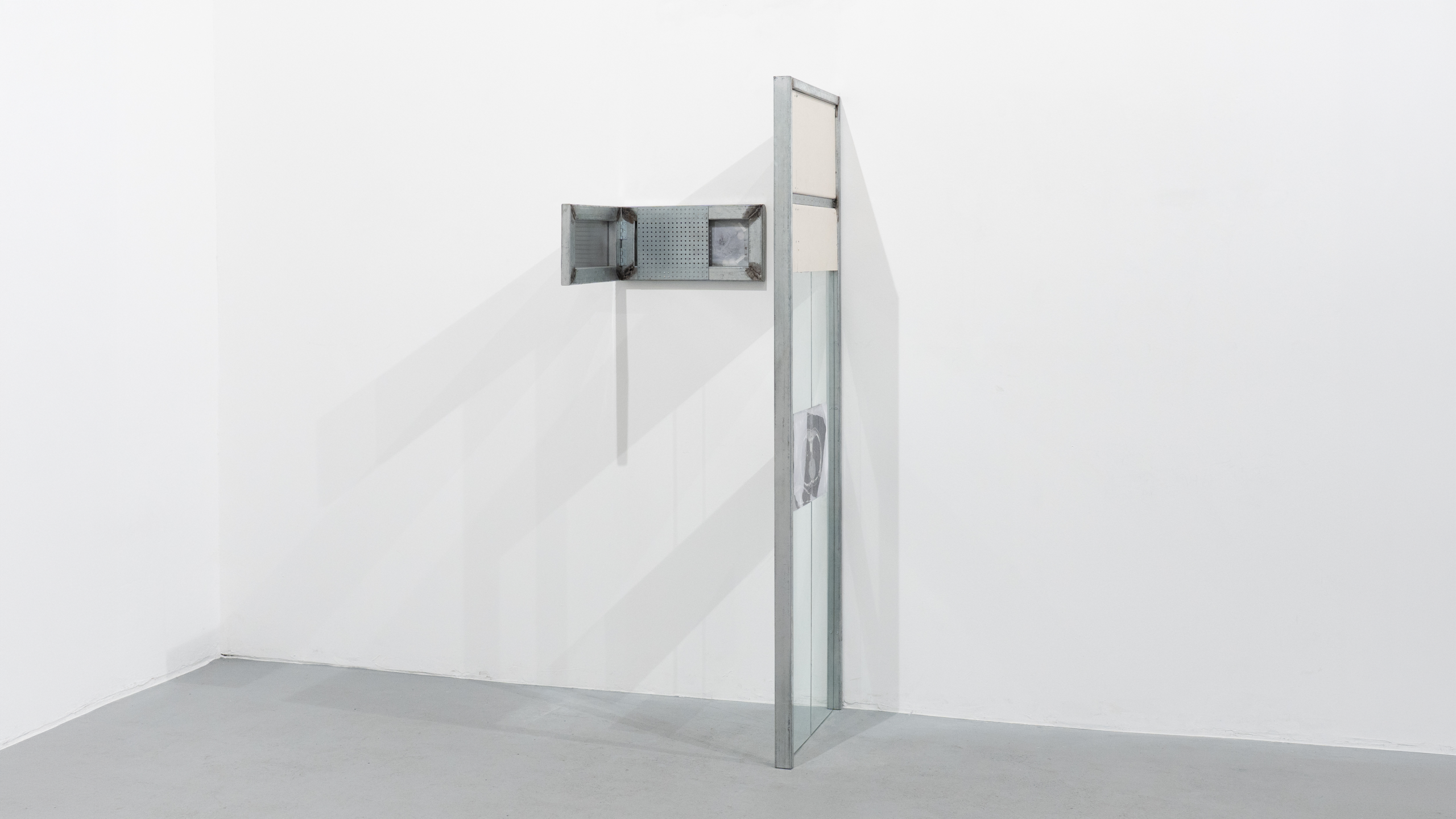
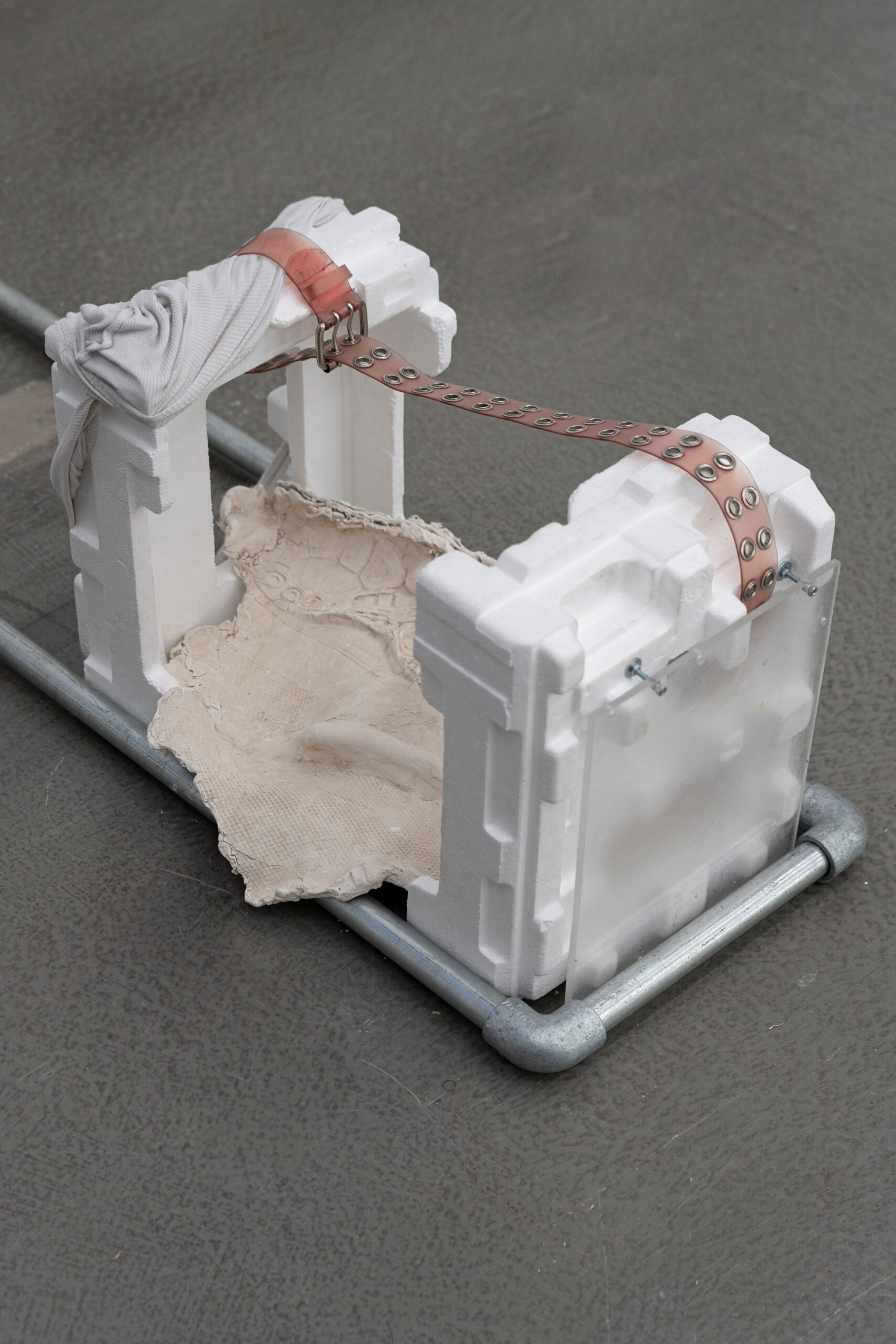
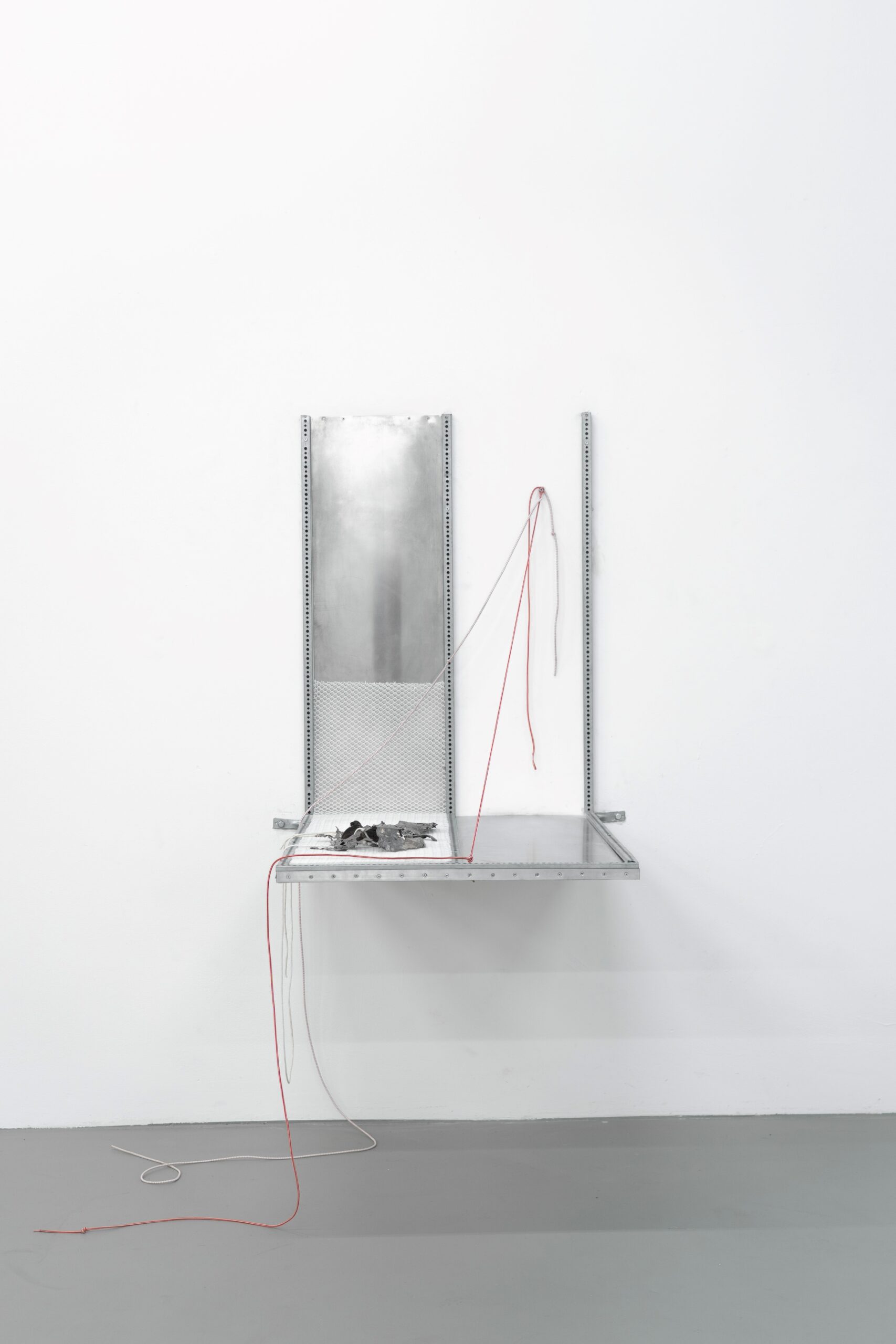
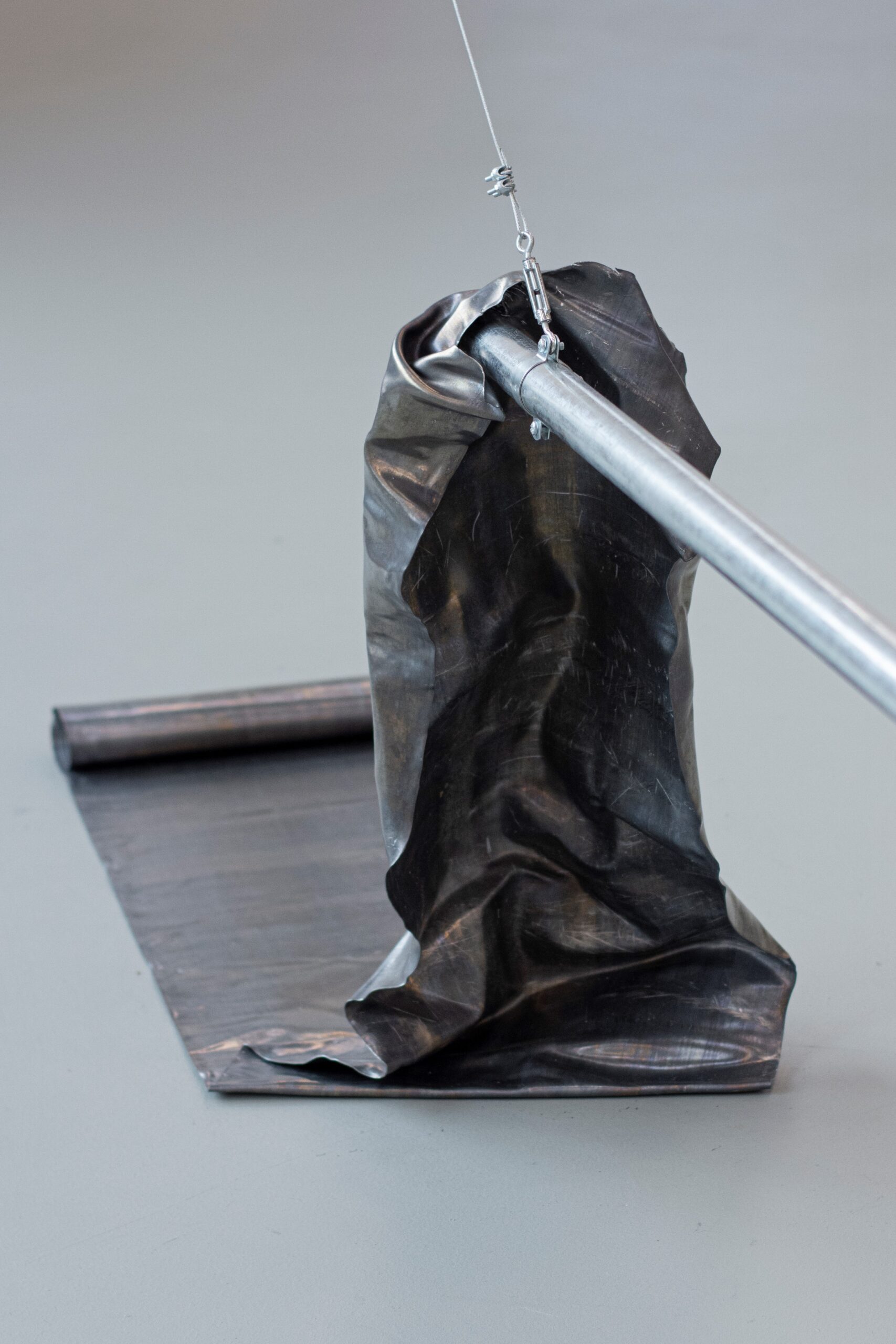
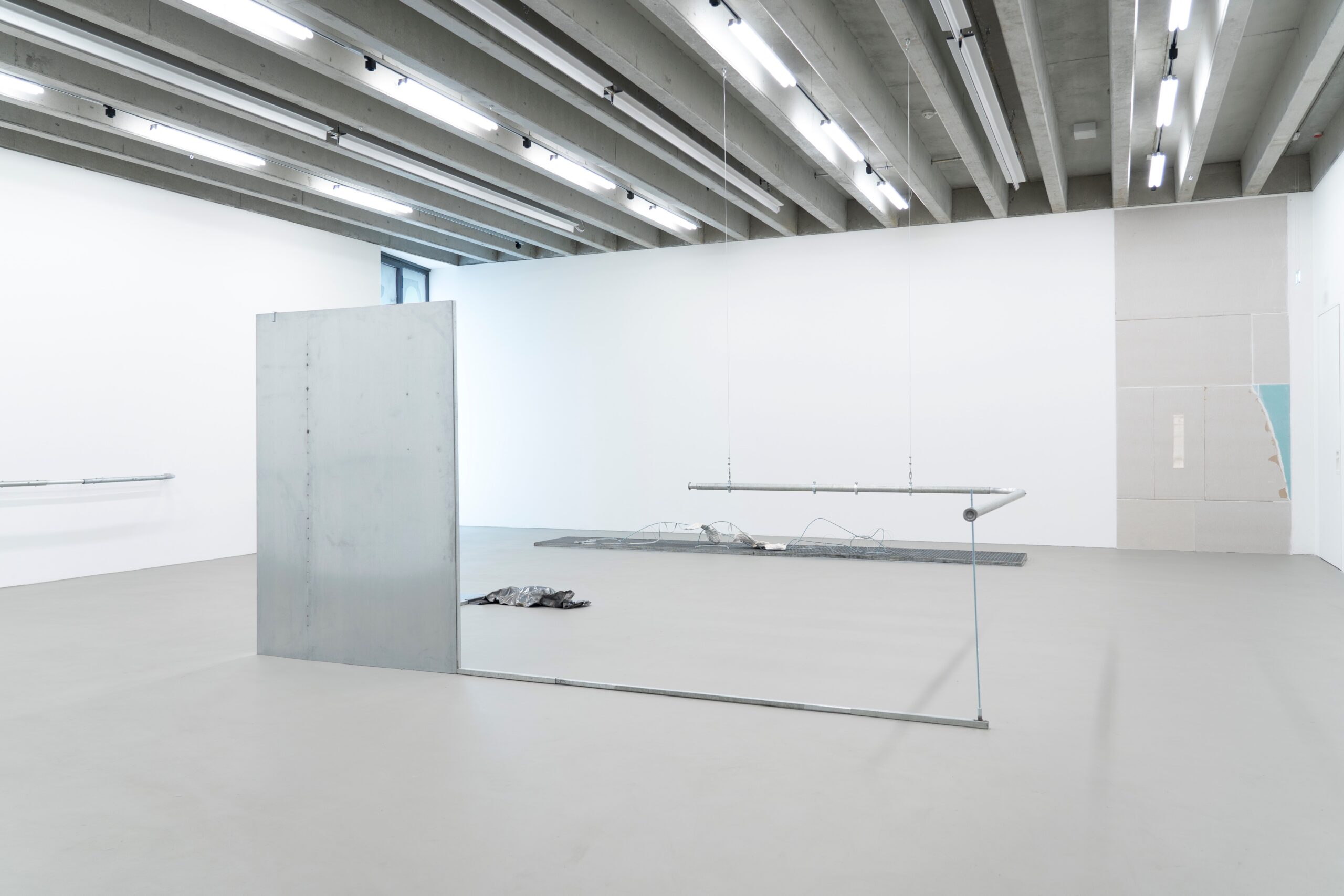
I think this initial impression comes from the materials I work with. I use a lot of industrial materials such as steel, piping systems, or plaster, so when people first encounter the work, they often relate to it as something distant. In the end, these elements are more structural than anything else. They function as standardised frameworks that I alter from different ways. The core of the work and its embodiment lie in the details, which are often situated at the margins or in the corners of an installation. I never use materials randomly. Over the last few years, for instance, I have mainly worked with galvanised steel, a type of metal coated with a layer of zinc to protect it from corrosion. I like to think of this coating as a kind of skin shielding the material beneath. Through different interventions, I expose parts of the underlying layer, disrupting the material’s presumed permanence and stability. The body also appears through traces and imprints. It is never fully determined, only partially formed. I am interested in allowing something organic, light and soft to emerge from these rigid infrastructures, which often constrain the movement of viewers within the space. In the end, there is definitely an erotic and intimate dimension to the work. By using piping systems, for example, I evoke the circulation of bodily fluids, while the obsessions I develop towards certain materials and the ways I transform them are undoubtedly connected to forms of material fetishism.
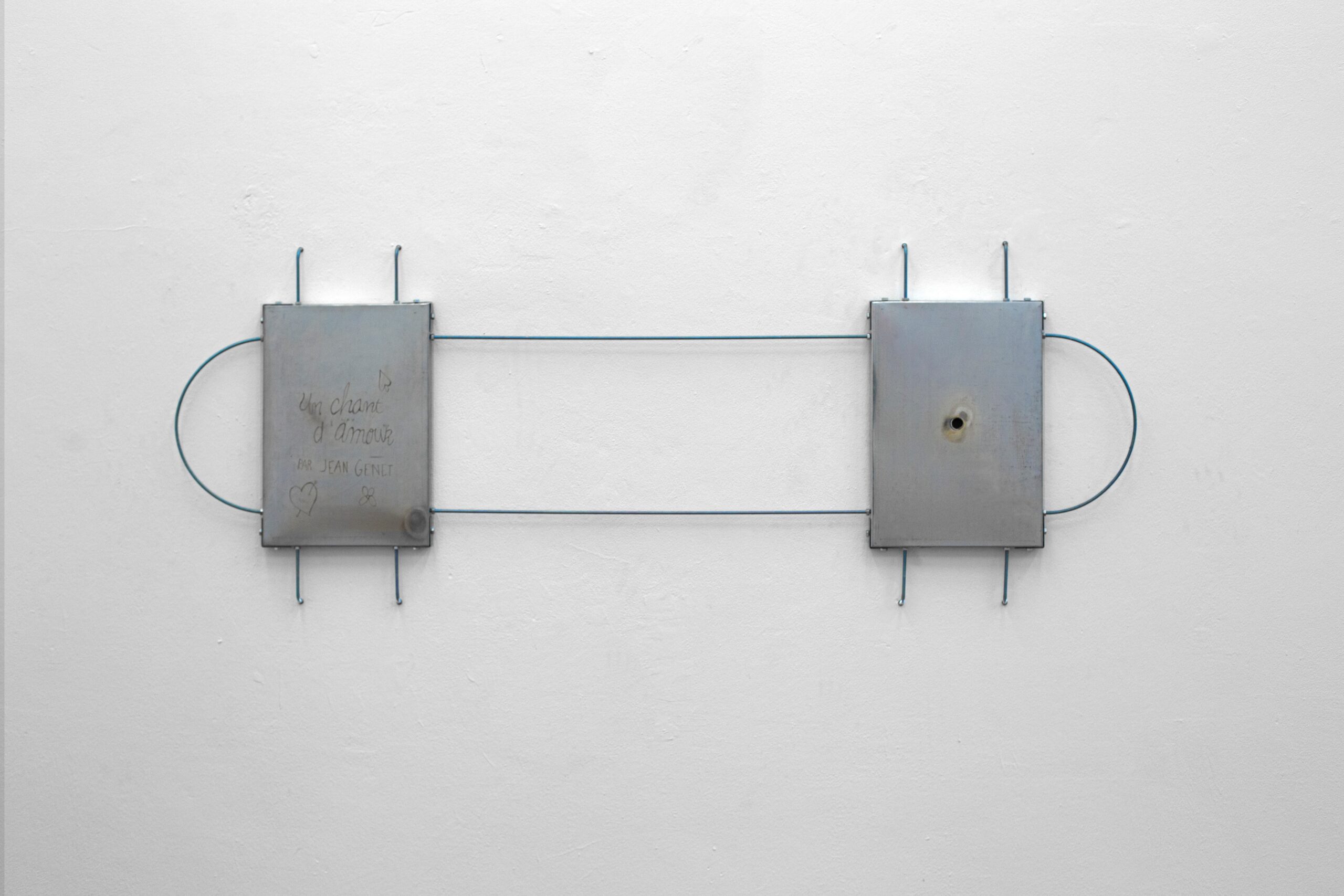
Your work frequently references historical texts such as Krafft-Ebing’s Psychopathia Sexualis or films like Jean Genet’s Un chant d’amour. How do you choose these references and how do you make them dialogue with the present?
My research is deeply informed by how scientific literature and minority archives have shaped the formation of subjectivities and identities. Psychopathia Sexualis created a violent taxonomy of desire. It contains hundreds of case studies documenting so-called sexual ‘perversions’. Published in 1886 for legal practitioners and doctors, it quickly reached a wider public, many of whom recognised themselves in its pages. The book shows how medical and psychiatric discourse did not simply repress non-normative sexualities, but actively produced them as identities to be observed, classified and governed, unintentionally preserving traces of queer desire within the very structures that sought to regulate it.
Jean Genet’s film Un chant d’amour depicts two prisoners separated by a prison wall, exchanging cigarette smoke through a tiny hole. Their desire develops under the voyeuristic gaze of an aroused guard. Yet the film escapes categorisation: the lovers are never treated as a ‘case’, but they become breath, sweat and smoke. In contrast to the concrete architecture surrounding them, they remain volatile, as bodies overflow the carceral structures that seek to contain them.
Alongside these major references, I also work with less visible forms of imagery, remaining attentive to the ways they are preserved and transmitted, without exhausting them so that they retain a certain resonance and opacity within the communities from which they emerge.
The activist and theorist Sam Bourcier speaks of ‘living archives’, a concept I find particularly inspiring: not as fixed or institutionalised objects, but as processes in motion, shaped through collective practices of transmission and struggle. They are not preserved from a distance, but continuously produced and transformed through the ways we inhabit them in the present, as an active force that reshapes our relation to histories and to each other.
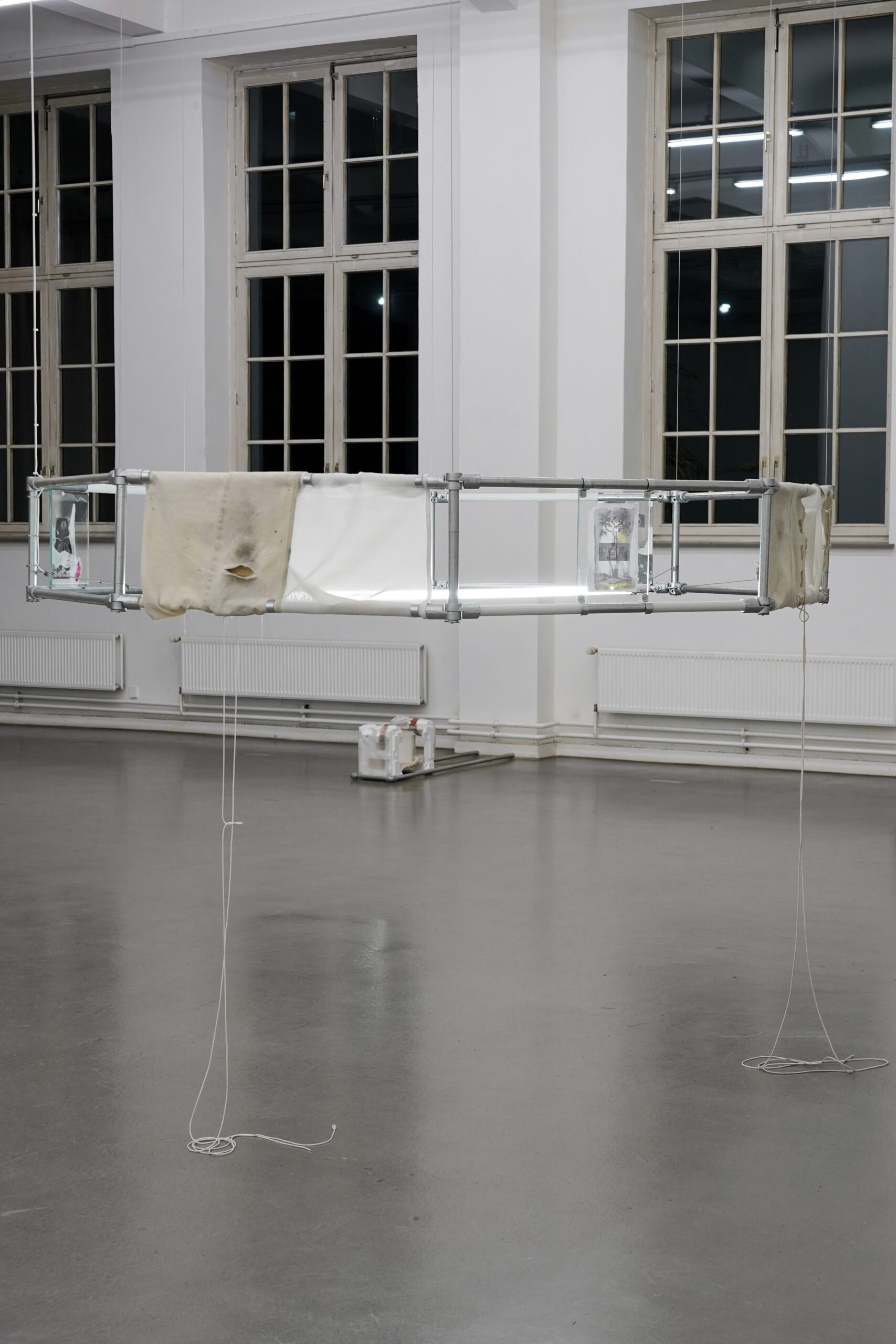
In Story of the Eye you created an installation that simultaneously evokes an anatomical theatre and a panopticon. How did you work with the coexistence of these two architectures of gaze and power?
In the installation I created, the structure takes the dimensions of the central part of an anatomical theatre in Sweden, which, in this specific case, has an octagonal shape. This contrasts with how these theatres were usually round or oval, referencing the eye, while also evoking a panopticon. In the installation, no body is placed at the centre; instead, a neon light illuminates the elements positioned at the periphery, forming a corpus of materials and layered imagery. The architectures invoked appear almost obsolete with regard to how they historically promised total visibility and understanding. The work instead offers a glimpse into something decentralised, diffracted, libidinal and fragmented, escaping an omniscient and totalising gaze.
Your work constantly oscillates between exposure and concealment, between visibility and opacity. How do you experience this tension in the creative process?
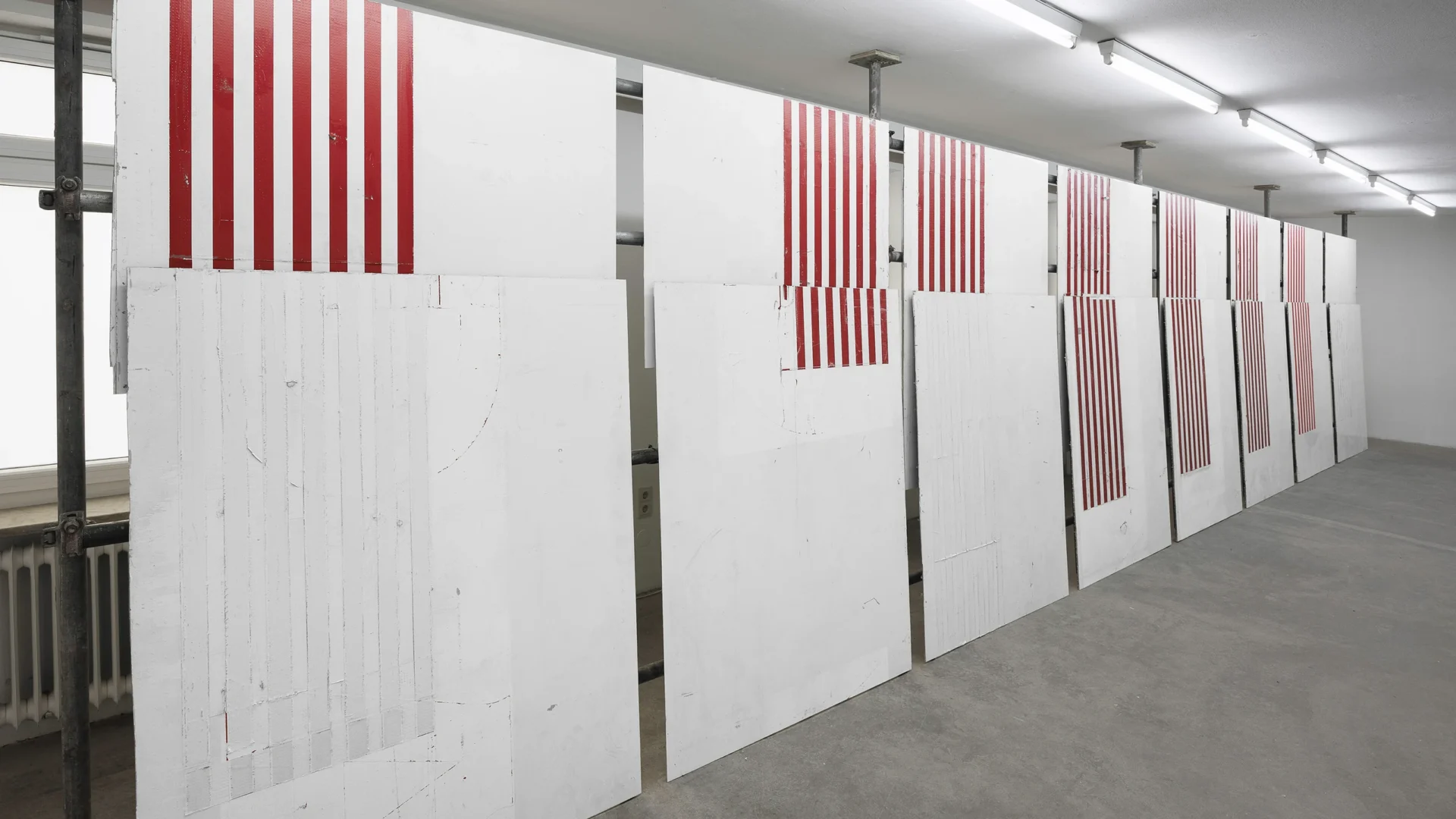
My recent collage practice is deeply shaped by this tension. The images, sourced from personal and archival materials, past and present, are always shown from their reverse side and made translucent through the application of Vaseline. What viewers encounter is therefore always partially exposed and multilayered. This also appears through the use of materials such as paraffin wax, which obscures drawings within sculptures, or through architectural installations that reveal more than they conceal.
I am very attentive to the way my work can relate to disciplinary spaces and to systems historically built around total exposure. By leaving room for secrecy, indeterminacy, humour and absurdity, I try to disrupt the viewer’s scopic drive. The bodies I invoke are never fully graspable; they remain in a state of (un)becoming, never entirely fixed or figured. I am interested in something that resists immediate articulation, something internal, latent, almost repressed.
The tension also comes from the fact that my research is shaped by bodies that have been rendered invisible by dominant histories. It is always a negotiation between creating space for these counter-narratives to exist and resisting the mechanisms through which visibility can itself become a form of reappropriation, institutionalisation or voyeurism. My compass is to remain situated: opening toward the collective while staying intimate and personal.
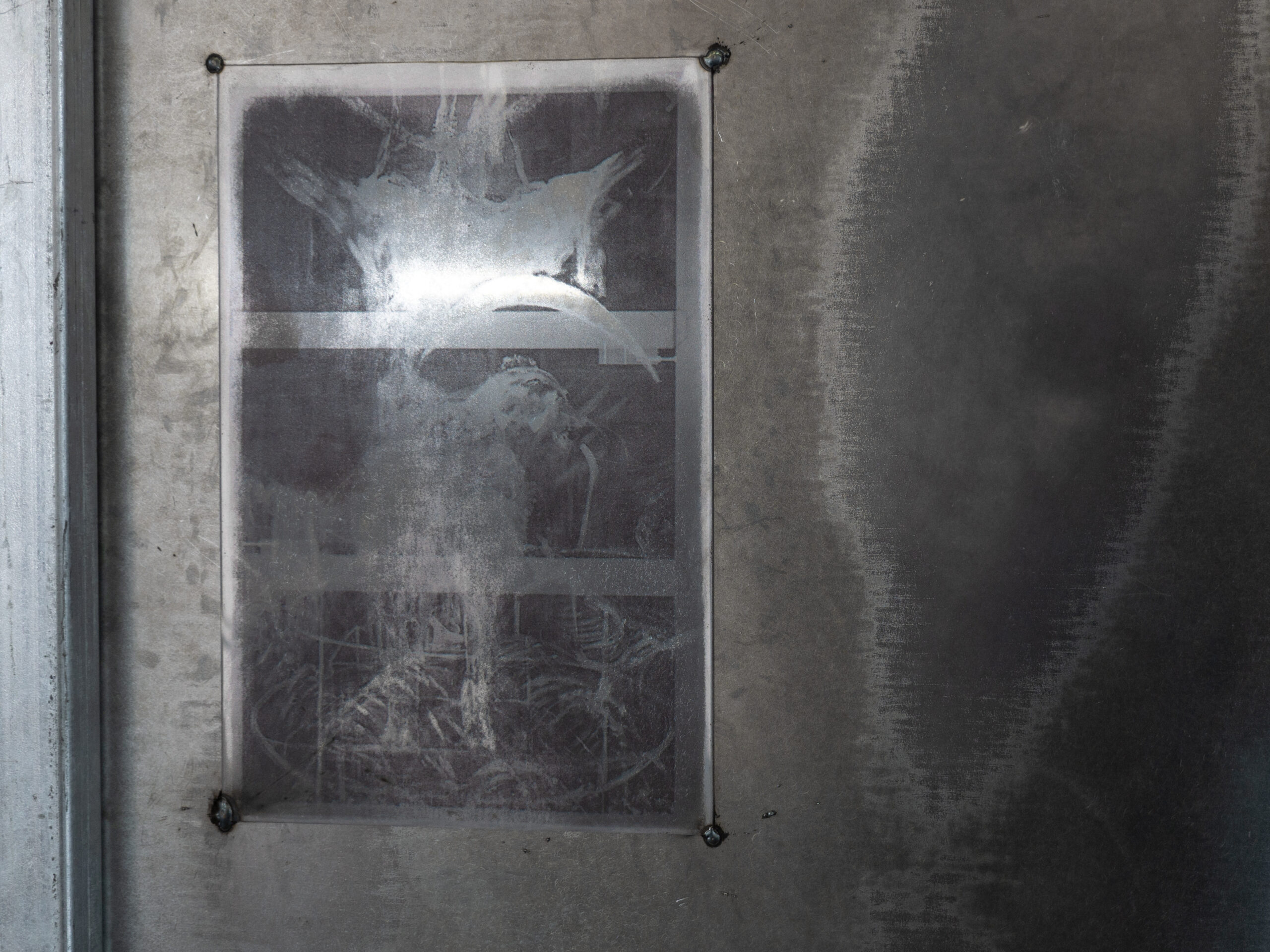
In Double Exposure and other works you use X-rays and reflective surfaces. What does the medical image represent for you, and how do you transform it artistically?
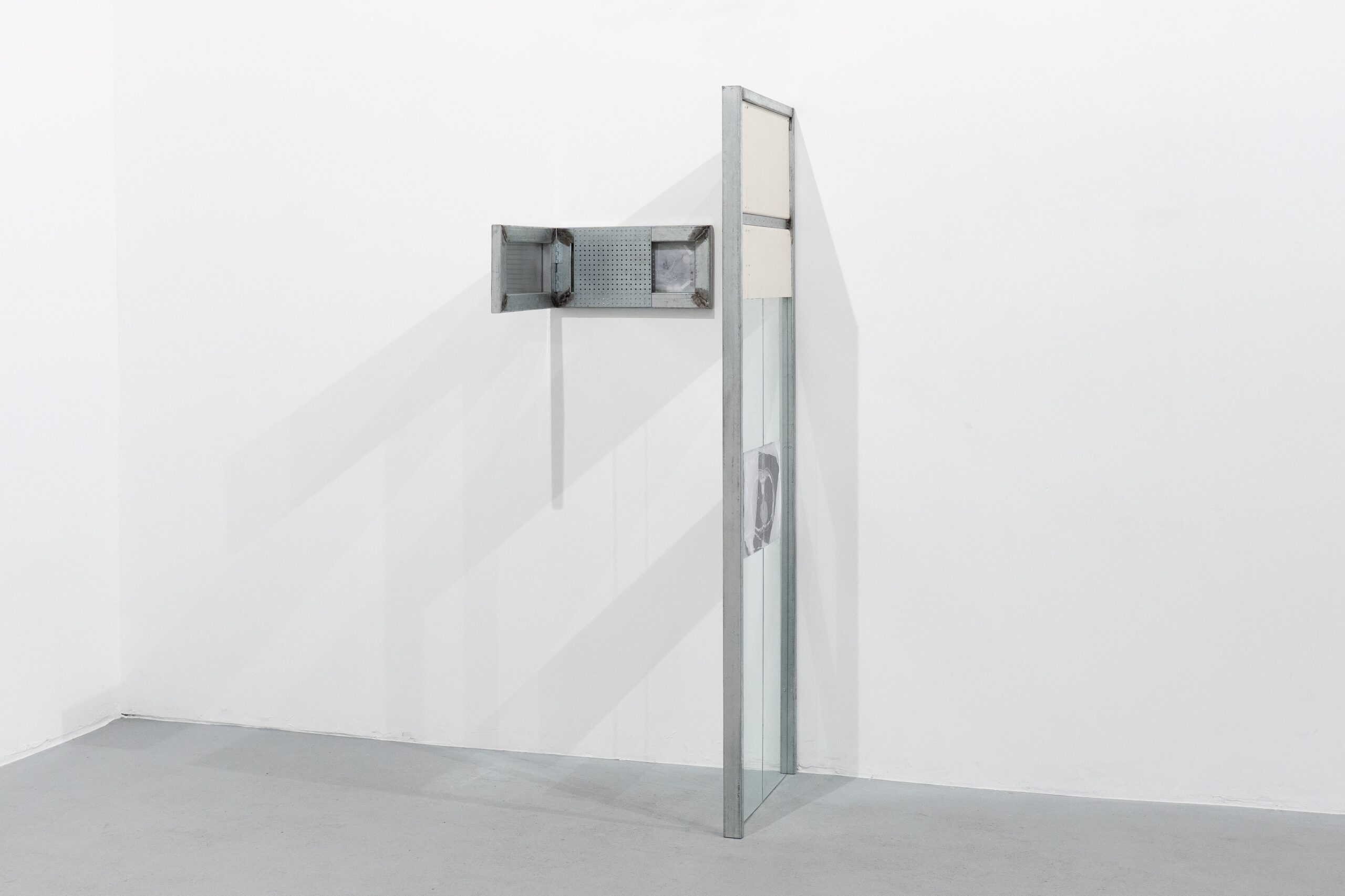
In Double Exposure, which I originally created for an exhibition at the Kunstverein Harburger Bahnhof in Hamburg, I constructed an open environment composed of elements that restricted visitors’ movement while offering very few blind spots. One of these was located on a steel plate forming one of the corners of the installation. On its reverse side, a UV print on polished metal is welded to the mirroring surface, showing an X-ray of Francis Bacon’s painting Untitled (1946). The visual incision reveals a different composition, in which the central figure originally represented a bird of prey. This radiographic image was commissioned by MoMA in 2015, and I was interested in how the institution effectively ‘laid bare’ the painter of the so-called ‘body without organs’.
In my current sculptural projects, I am particularly interested in radiographic images produced on major masterpieces in the history of art. These images make visible corrections, overpaintings, erasures and earlier states of the work, revealing a stratification of decisions and possible forms that are usually withdrawn from view.
My intention is to approach these internal zones of painterly matter as peripheral territories of the work : abandoned or covered over by the artists themselves, yet still persisting beneath the visible surface. While artworks held in museums have largely contributed to the construction of Western canons of representation, their X-rays reveal an alternative history made of hesitations, bifurcations and unrealised forms.
In this case, applied to art, the medical imaging that enabled the body to become an organised organism encounters a paradox: it reveals something deeply concealed and left behind, while simultaneously failing to fully map what it penetrates.