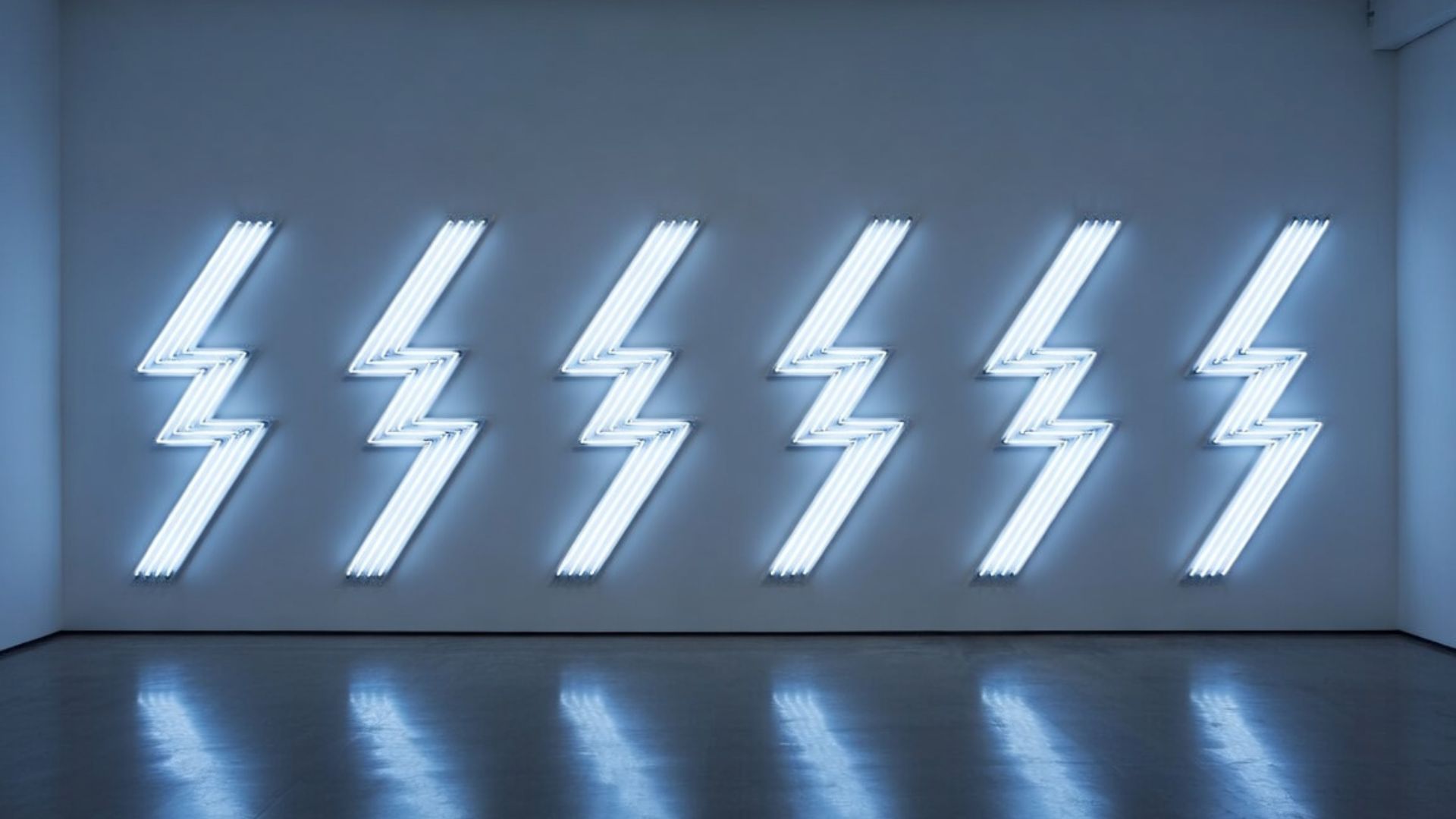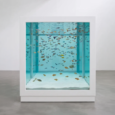
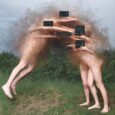
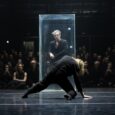

There is a figure in the room. Its presence arrives before any explanation. It moves through a commercial interior, a corridor, a public space, with a degree of commitment that exceeds the scale of the situation. The environment remains ordinary. The body arrives fully prepared, fully charged, dressed as though the stakes were absolute.
This is the foundational logic of DRESSED TO KILL, the series by Bengt Tibert that opens the Fakewhale ALPHA program: sixteen video works in which recurring figures traverse public and commercial spaces with an intensity that the setting can only partially absorb. Each work unfolds as a single continuous situation. The frame holds. The figure persists. The room becomes a field of pressure.
Tibert is a Creative Director and artist working with AI, focused primarily on video. His practice established a precise aesthetic register with BODIES OF WORK, his inaugural solo release on Verse curated by Fakewhale in 2025: hypertrophic figures positioned against sublime and surreal landscapes, monologues of sterile clarity, irony as structural device. DRESSED TO KILL inherits that apparatus and reconfigures it from within.
The space changes. The figures move from monumental exteriors to regulated interiors. With that shift in context, the entire expressive system reconfigures.
Bengt Tibert, Windows, Dressed to Kill, 2026 (extract)

The Mechanics of Commitment
BODIES OF WORK operated through explicit vocal structures: monologues, voice-driven scenes, language as the central architecture of tension. The body performed. The voice explained. The landscape destabilized the whole.
DRESSED TO KILL moves the same figure indoors and transforms the entire system of expression.
The shift is precise and consequential. Where BODIES OF WORK used language as an explicit structural device, DRESSED TO KILL transfers that pressure into image, sound, space, and bodily commitment. The figure enters ordinary environments governed by social codes, behavioral expectations, and protocols of appropriate presence. The public space, the commercial interior, the everyday room: these are places designed for regulated behavior. Tibert’s figures enter them with a level of readiness that belongs to another order of experience.
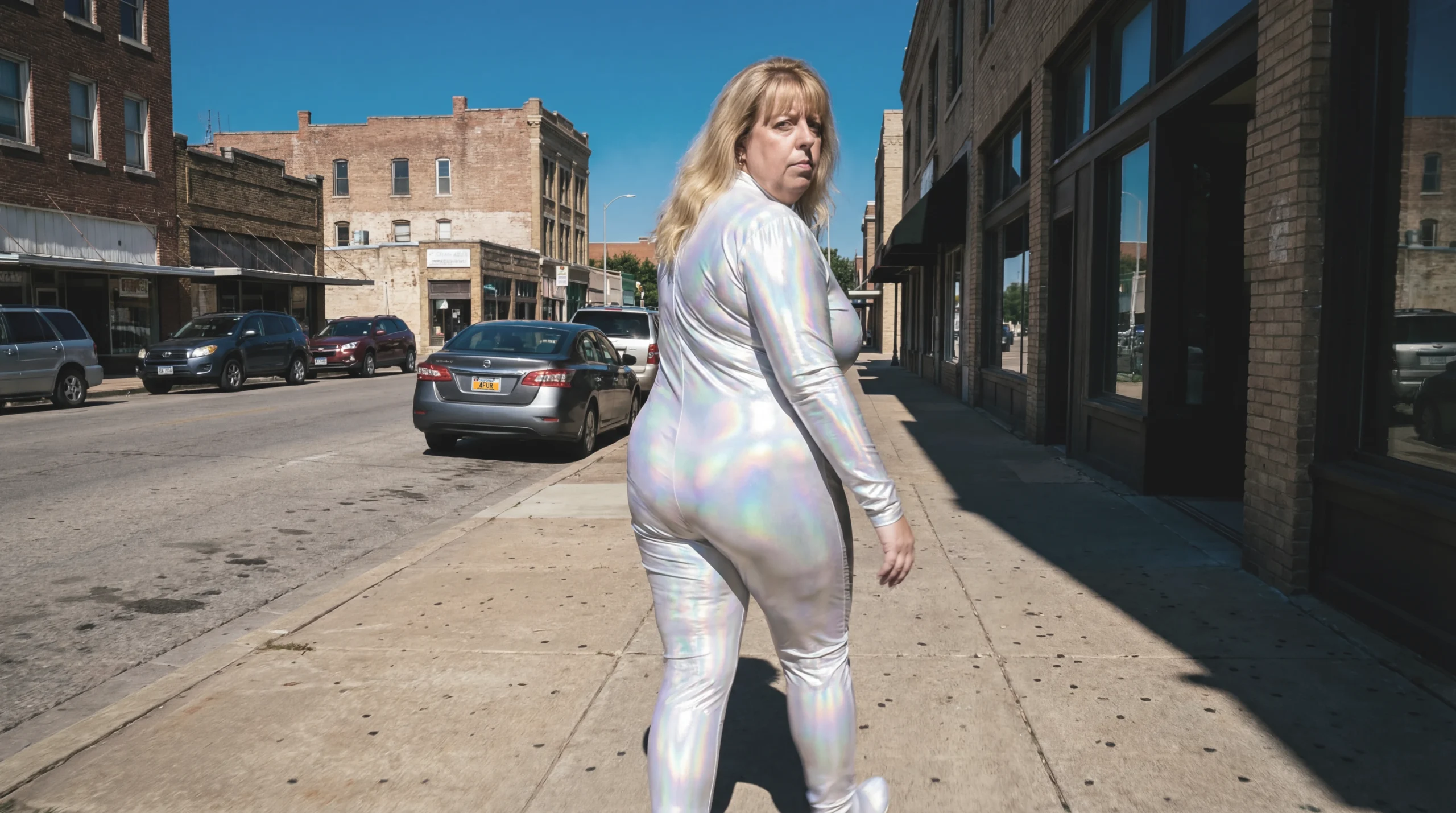
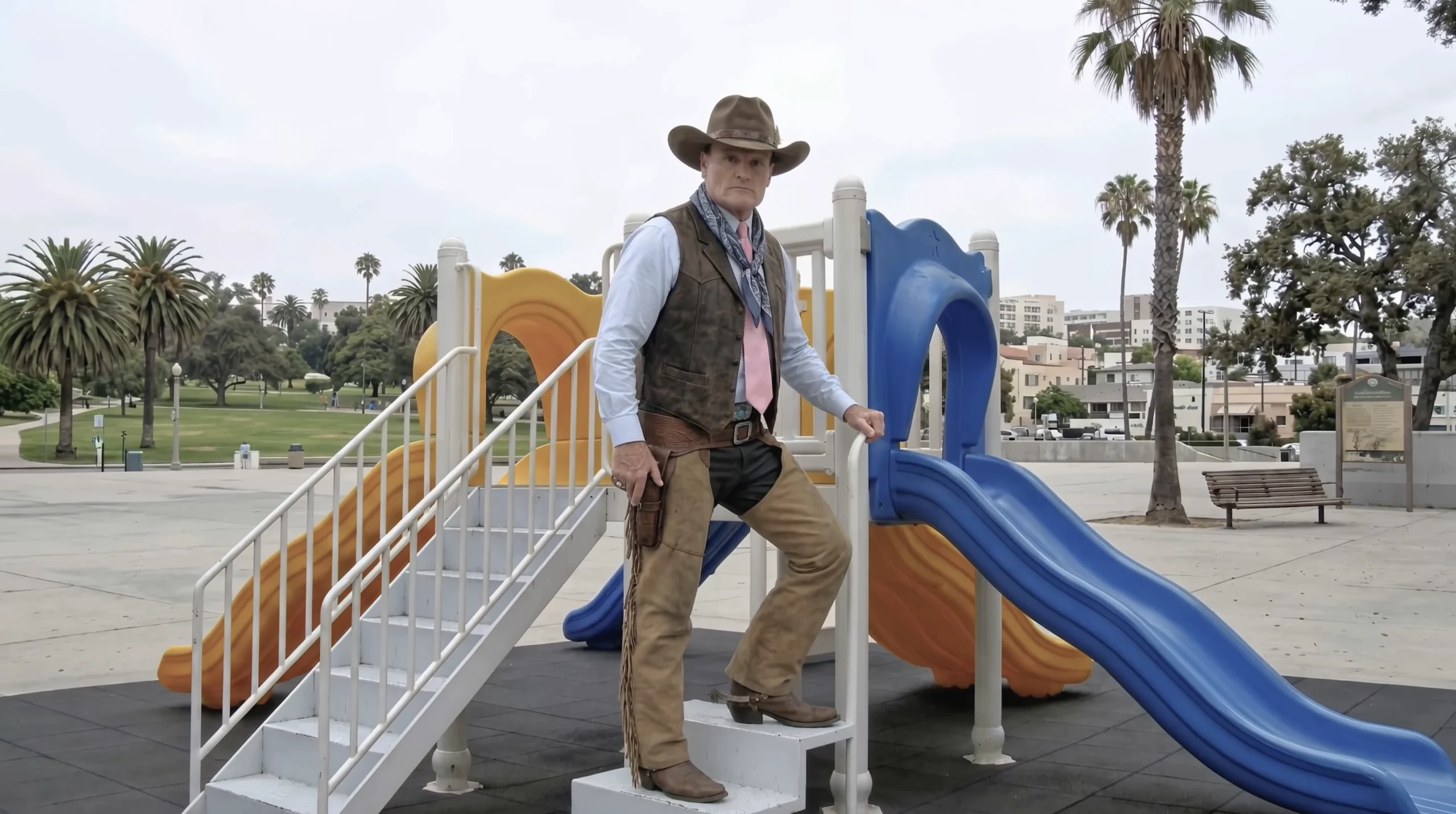
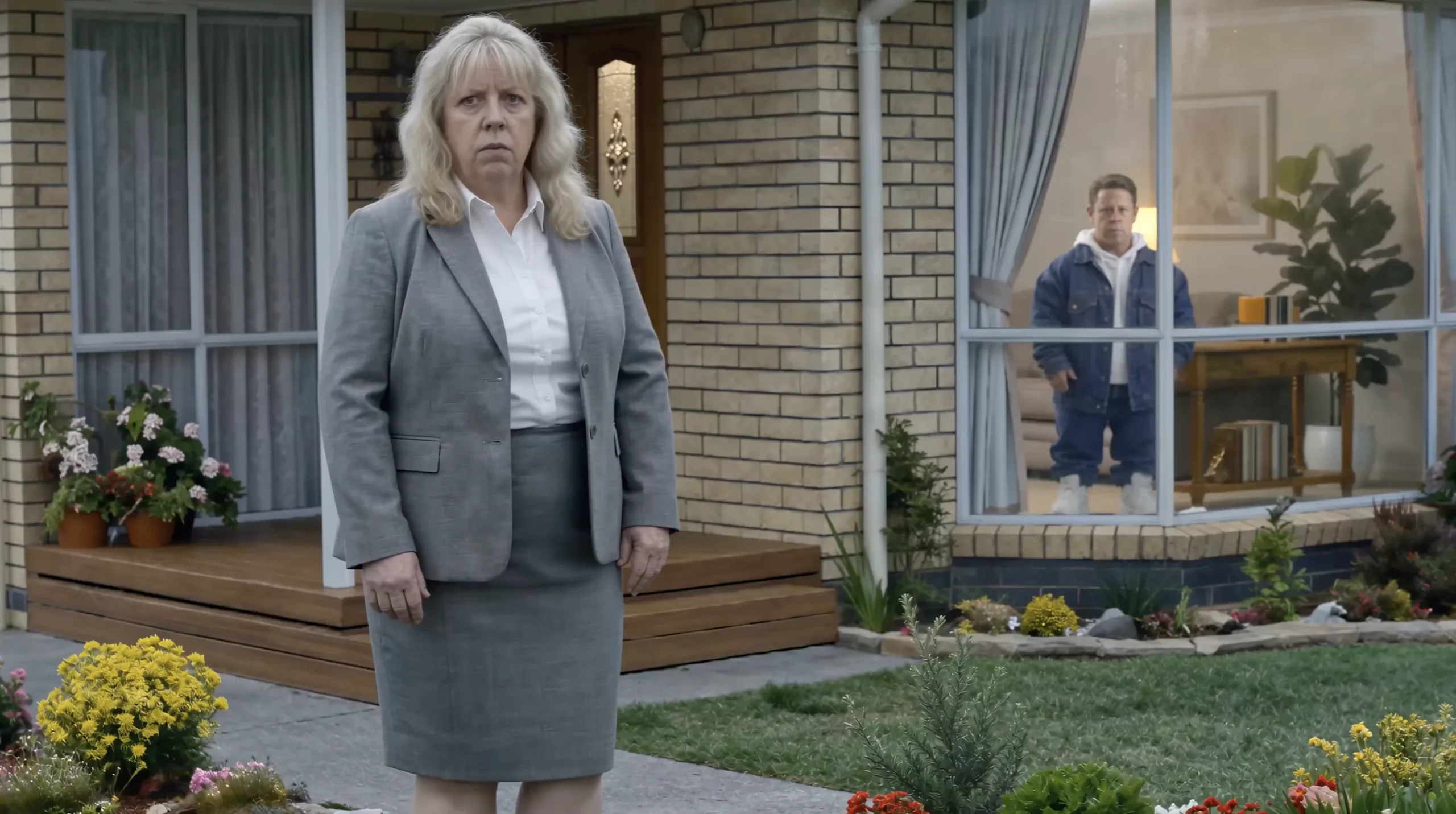
Each work is named after an object: Rack. Racecar. Windows. Pockets. Rug. Lavender. Coaster. Yolk. The titles are deliberately flat, stripped of drama. They name the situation with almost administrative precision. This flatness matters. The title points to the ordinary object, while the work opens a field of excess around it. A rack becomes a site of physical tension. A coaster becomes a measure of absurd precision. A room becomes too small for the intensity it contains.
The figure maintains its commitment with total seriousness. It moves through space as if the situation required complete devotion. This is where Tibert locates the critical tension of the series: a body prepared for extremity inside an environment calibrated for routine. The body is dressed to kill. The room contains a coaster.
Bengt Tibert, Pockets, Dressed to Kill, 2026 (extract)
From Syntax to Signal
The most important transformation in DRESSED TO KILL happens through the removal of dialogue as a central device. In BODIES OF WORK, language created an explicit cognitive layer, framing the figures through speech, monologue, and verbal absurdity. In DRESSED TO KILL, Tibert pushes the work into a different register. The scenes operate through visual intensity, sound, movement, and atmospheric pressure.
This shift gives the series its defining power. The absence of spoken dialogue inside the scenes protects the force of the situations from linguistic contamination. Meaning emerges from the body’s behavior, the weight of the room, the photographic density of the image, and the sonic field Tibert composes. The work moves beyond the logic of explanation and enters a zone where language becomes energy, vibration, pressure, emanation.
Sound plays a decisive role. Tibert’s sonic compositions shape the atmosphere of each work, generating a layer that intensifies the image rather than explaining it. The sound behaves as an extension of the figure’s commitment, carrying the function that dialogue occupied in the earlier series through texture, rhythm, pressure, and resonance. The scene moves into a state of audiovisual charge.
This is a significant evolution in Tibert’s practice. The earlier works staged tension through the contrast between hyper-articulated bodies, surreal environments, and verbal structures. DRESSED TO KILL concentrates that tension into a more immediate field. The body, the room, the light, the sound, and the movement form a single expressive system. The viewer receives the work less as narrative and more as an emitted condition.
The Apparatus of Intensity
Tibert’s methodology has always operated through composite pipelines, and DRESSED TO KILL extends this approach while sharpening its formal language. Visual sequences built through Midjourney, processed through Magnific, animated through Google and Kling or Seedance, form the visual architecture of each piece. The figures arrive already hypertrophic, already overdetermined, sculpted at the edge of what still registers as human.
The AI systems in this series function as generative environment. Kling and Seedance introduce motion behaviors that carry their own internal logic, their own interpretation of the figure’s presence in space. Tibert deploys this interpretive gap as part of the work. The figure arrives with total intention. The generative system renders that intention through its own understanding of how a body at this intensity level moves through a space calibrated for something else. What emerges is a body that appears simultaneously over-directed and slightly misaligned, precise and unstable, committed and displaced.
Tibert’s sound composition deepens this condition. They create a vibrational field around the body. The sound gives density to the image, turning the ordinary space into something charged, almost ceremonial, while preserving its banal surfaces. The tension comes from this collision: a body behaving as though the scene were monumental, inside a world of racks, rugs, windows, pockets, lavender, yolks, and coasters.
DRESSED TO KILL achieves something that BODIES OF WORK opened and this series brings into sharper focus: the figure as a unit of behavioral excess. This excess comes from readiness. The body arrives fully prepared for a situation that operates at a different intensity. Tibert constructs a system in which the ordinary setting becomes the active counterforce. The environment stays calm. The figure arrives as an event.

The Generative Gap
Every generative system carries inside it a statistical model of the world it was trained on. Kling and Seedance have been built on human bodies in motion, on the physics of inhabited space, on the visual grammar of how presence organizes itself within an environment. When Tibert’s figure enters that system, the machine produces its own interpretation of what a body committed to this degree of intensity would look like, moving through a space calibrated for ordinary behavior.
The result is a third presence: a body produced at the intersection of total authorial intention and the machine’s own model of human presence. This interpretive layer gives the figures in DRESSED TO KILL their particular quality of being simultaneously overdetermined and slightly off-register. The machine understands bodies. It understands spaces. It carries no model for the specific form of Tibert’s excess. It approximates. In that approximation lives the visual charge of the series.
This condition is structural to AI-generated video as a medium. The composite pipeline operates as an accumulation of interpretive layers. Midjourney’s model of the hypertrophic figure, Magnific’s understanding of photographic detail, Kling’s physics of motion: each system processes the figure through its own logic, adding its own interpretive residue. The artist’s intention travels through these layers and arrives transformed. The gap between initial conception and final image accumulates density rather than losing it.
This is the productive paradox of AI video at this level of complexity: the moment of maximum authorial intention coincides with the moment of maximum systemic mediation. For Tibert, working with this condition rather than resolving it is central to the practice. The composite methodology produces a figure that exceeds what any single system could generate, precisely because the friction between interpretive layers generates texture, instability, and presence. The body that emerges carries its own history of having been processed and approximated by multiple systems operating on different models of what a human body in space looks like.
Bengt Tibert, Racecar, Dressed to Kill, 2026 (extract)

The Prestige of the Ordinary
The ordinary interior is a governance structure. Every commercial space, every public interior, every everyday room encodes a protocol of appropriate behavior: how to move, at what pace, with what degree of presence. These protocols operate below the threshold of explicit instruction, working through spatial arrangement, lighting, surface texture, the positioning of objects. The rack, the coaster, the window, the rug: these are markers of a behavioral regime, indicators of the scale of presence the space permits and expects.
When Tibert’s figures enter these spaces with their absolute commitment, the invisible protocol surfaces. The mismatch between the figure’s intensity and the space’s expectation reveals the governance structure that ordinarily goes unregistered. This is the critical mechanism at the center of DRESSED TO KILL: behavioral excess as a form of spatial analysis. The body prepared for extremity makes the ordinances of the ordinary visible.
What makes this mechanism available to contemporary image-making at this particular moment is the photographic register that AI video now enables. Before generative systems could produce figures at this visual quality, behavioral excess of this kind required performance, casting, and production infrastructure. The resulting image carried the marks of its own construction: the figure was visibly an actor, the space visibly a set. The gap between the body’s intensity and the environment’s ordinariness remained legible as staged fiction.
AI-generated video at the level Tibert operates transforms this condition. The figures in DRESSED TO KILL inhabit their environments with a photographic credibility that closes the visible gap between figure and space. The excess reads as real. The behavioral violation of the spatial protocol carries the perceptual weight of documentation. This is the new expressive territory that generative systems make available: credible presence in ordinary space at any scale of intensity, generated without the apparatus of performance production.
DRESSED TO KILL deploys this territory as critical instrument, using the ordinary interior as operative field and the committed figure as analytical agent. What accumulates across sixteen works is a sustained portrait of intensity in ordinary space: a field of pressure that holds without resolving, a figure that arrives as an event in a room designed for something else entirely.
The title carries its full irony. Dressed to kill, in a world of commercial surfaces and everyday objects. The preparation is absolute. The occasion remains banal. This gap is where DRESSED TO KILL lives.
Bengt Tibert, Rack, Dressed to Kill, 2026 (extract)
Bengt Tibert is a Creative Director and artist working with AI, focused primarily on video. He holds a Master of Arts degree from the Academy of Fine Arts in Warsaw. His work has been shown at the Roger Ballen Centre for Photographic Arts in Johannesburg, Space55 in Seoul, Brooke Benington in London, and LUME Studios in New York. He is a Daily.xyz artist curated by Fellowship.xyz and co-creator of AI OR DIE, the first fully AI-generated sketch comedy show. His practice explores the edge between visual intensity and irony, constructing figures that perform coherence in environments calibrated for another kind of presence.
DRESSED TO KILL
by Bengt Tibert
Live June 10, 2026
6:00 PM CEST / 5:00 PM BST
16 unique 1/1 video works
English auction, no reserve
Opening release of the Fakewhale ALPHA program
alpha.fakewhale.xyz