

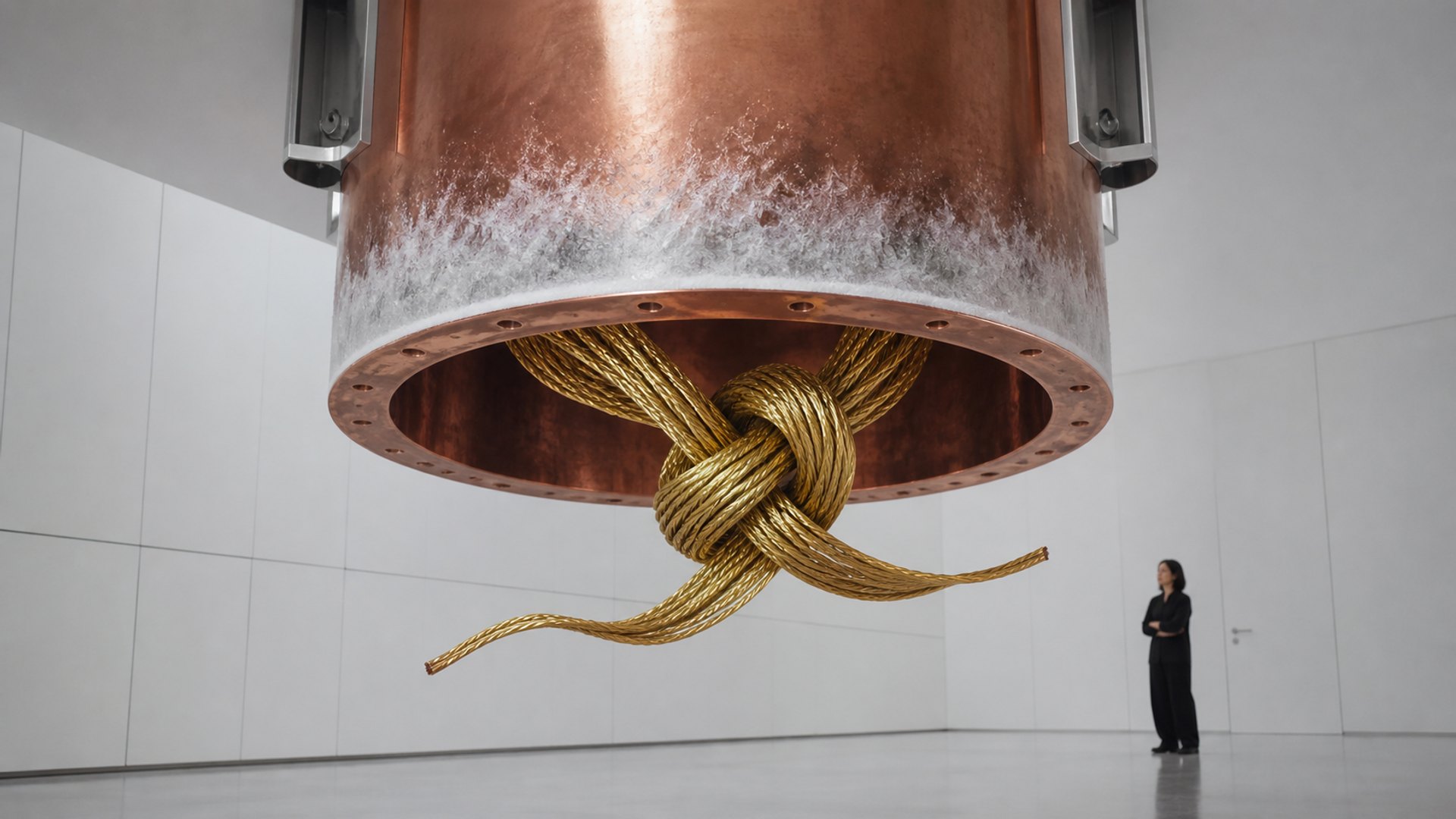
On a cooled chip, motion acquires custody. A quasiparticle circles another, the trajectory enters protocol, and memory settles into the relation between paths. The image of calculation shifts from inscription to choreography, from the brittle mark to the governed exchange, and the device begins to treat disturbance as a condition of address.
Topology gives error a jurisdiction. The local accident becomes an event routed through a global form, while information takes shelter in relations that exceed the point where noise arrives. A gate, here, names a political operation as much as a computational one: it decides which changes count, which fluctuations dissolve, which histories gain authority.
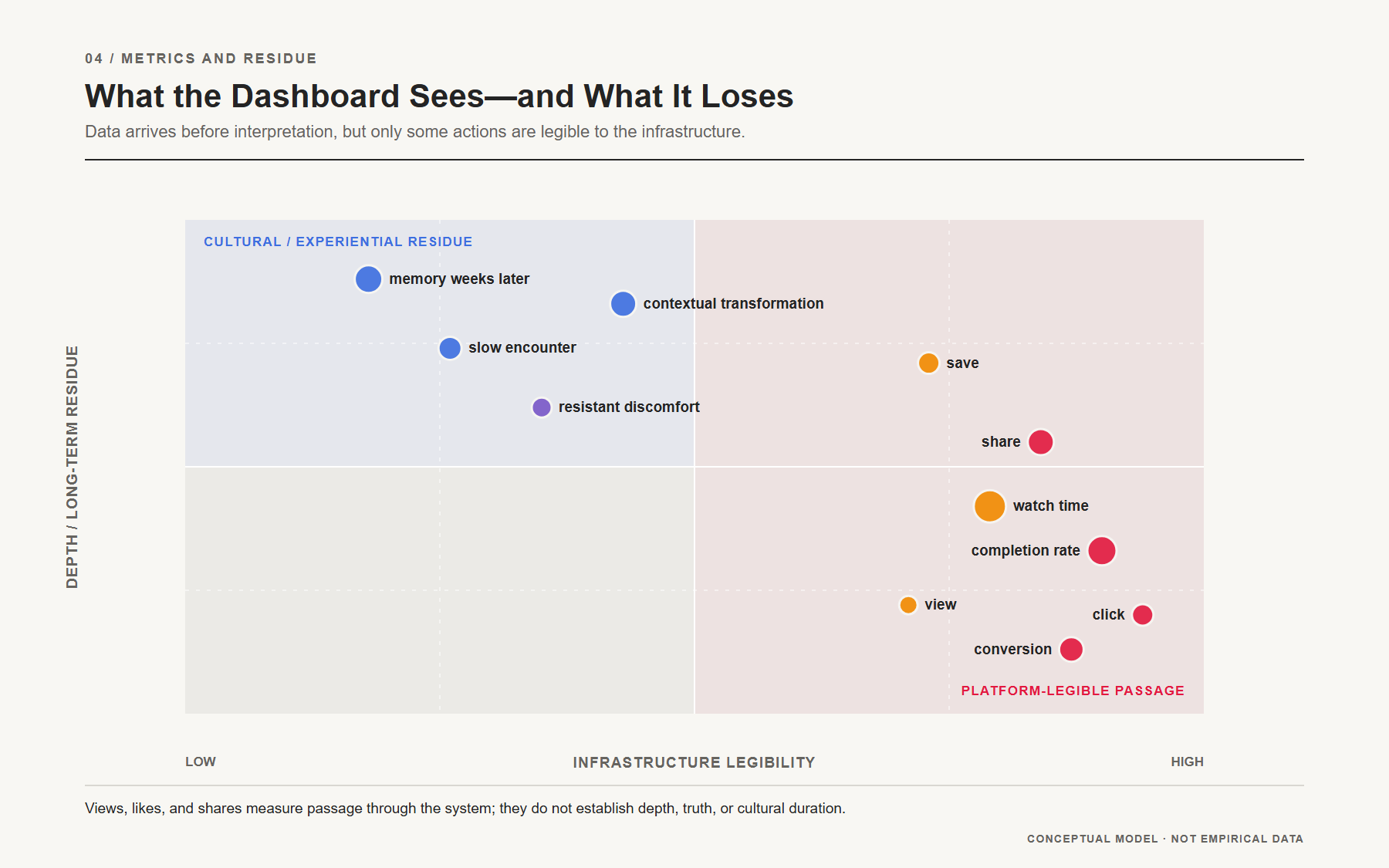
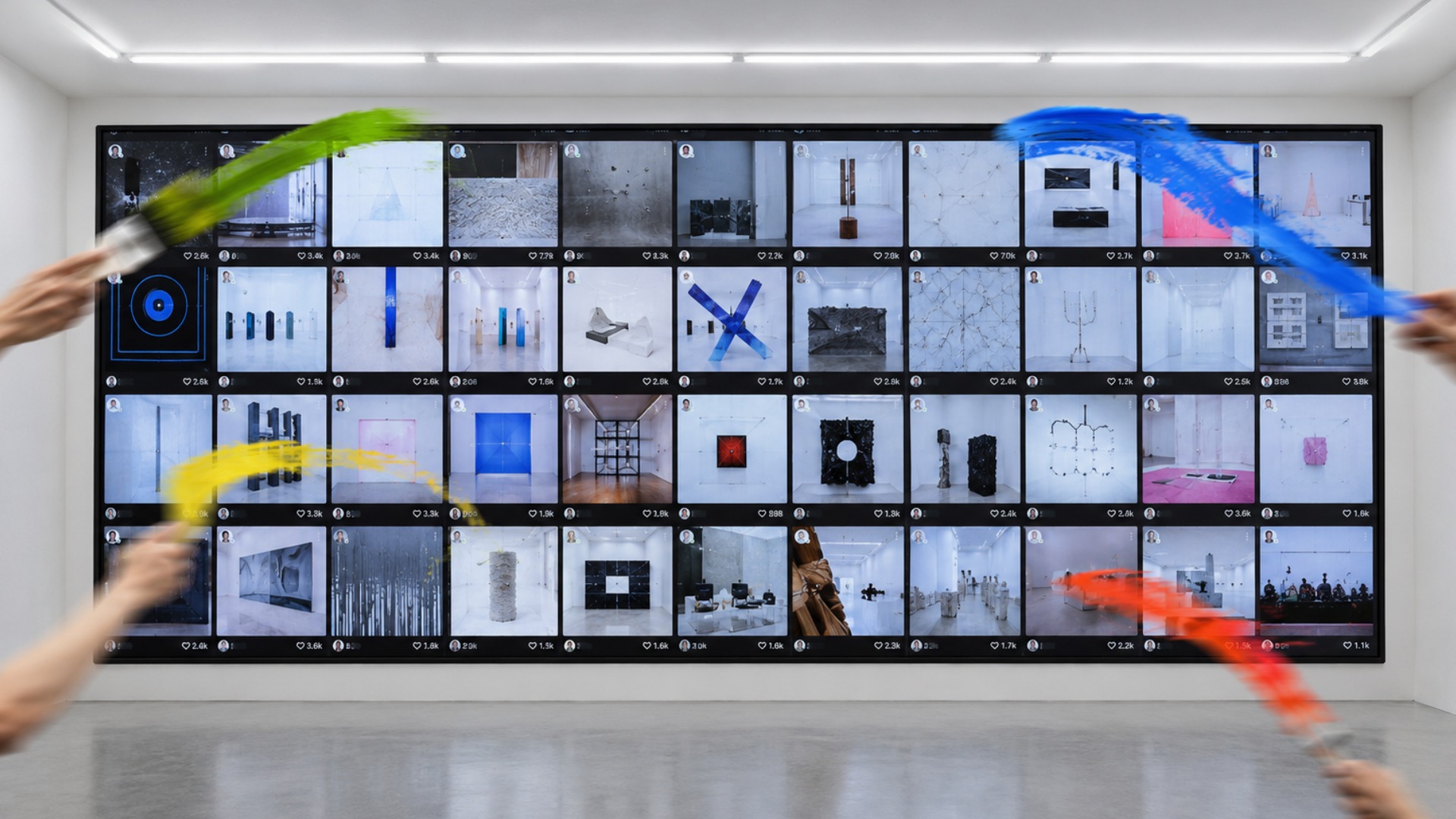
The laboratory image circulates as proof because distribution requires a figure of trust. Braids, lattices, entangled witnesses, and fidelity curves become the visual economy through which protected computation enters attention. The quantum device appears through diagrams that already understand platform logic, since visibility must be ranked, formatted, circulated, and converted into confidence before it becomes capital.
Matter learns secrecy through movement. The protected state has provenance, the error has custody, the gate has a market, and the future has a price assigned by survivability. Computation becomes less a sequence of commands than a topology of tolerated damage, a machine whose power begins where fragility becomes productive.
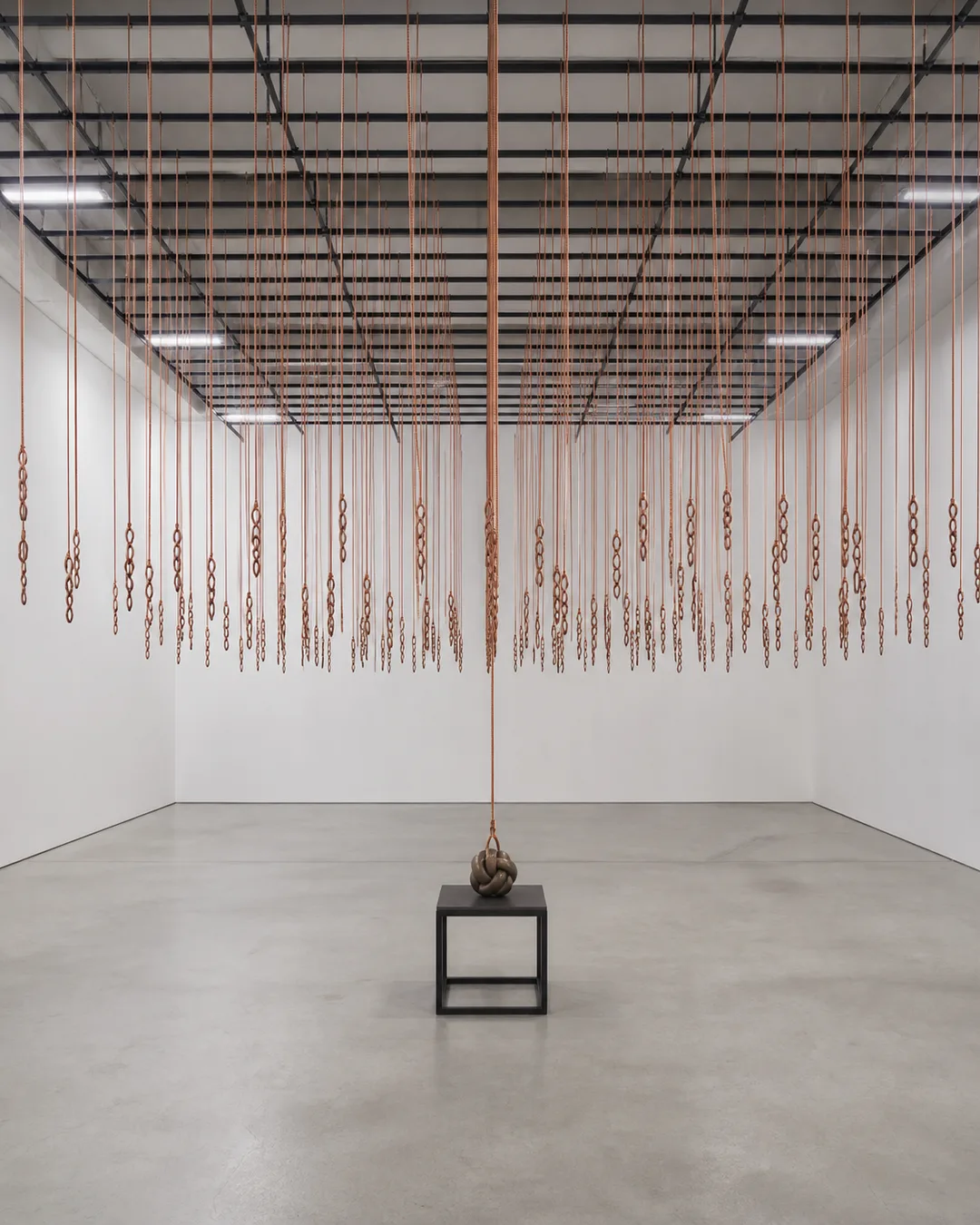
Braids with Legal Force: The topological gate is the device form in which motion becomes memory and error becomes a governed event.
The braid is a protocol of movement with legal force inside matter. Anyons exchange positions, their paths acquire order, and the resulting operation resides in topology rather than in the exposed detail of the route. Computation becomes an architecture of permitted crossings, where sequence carries authority and memory takes form as a history of relations.
The gate organizes error by assigning privilege to global structure. Local disturbance strikes the apparatus as a minor weather, while the braided state preserves the information that the exchange has produced. The device converts vulnerability into hierarchy: topology ranks events according to their reach, and the small accident loses command over the larger form.
This mechanism changes the status of the image. The diagram of braids operates like a custody chain, showing how value passes through movement and remains legible across interference. The visual field around topological computation borrows from the culture of interface trust, where a line, a node, a crossing, and a color gradient condense a vast protocol into something that can circulate as evidence.
The topological gate also alters the meaning of control. Control appears as the careful release of motion into a constrained space, where the apparatus governs by allowing paths to matter. The hand of engineering withdraws into boundary conditions, fabrication tolerances, pulse sequences, and measurement windows, while the material system performs a form of delegated authority.
A braid with legal force produces memory as precedent. Each exchange binds future calculation to a past movement, and each path becomes a ruling that survives the noise around it. The gate enters politics as a device that teaches matter how to remember through regulated freedom.
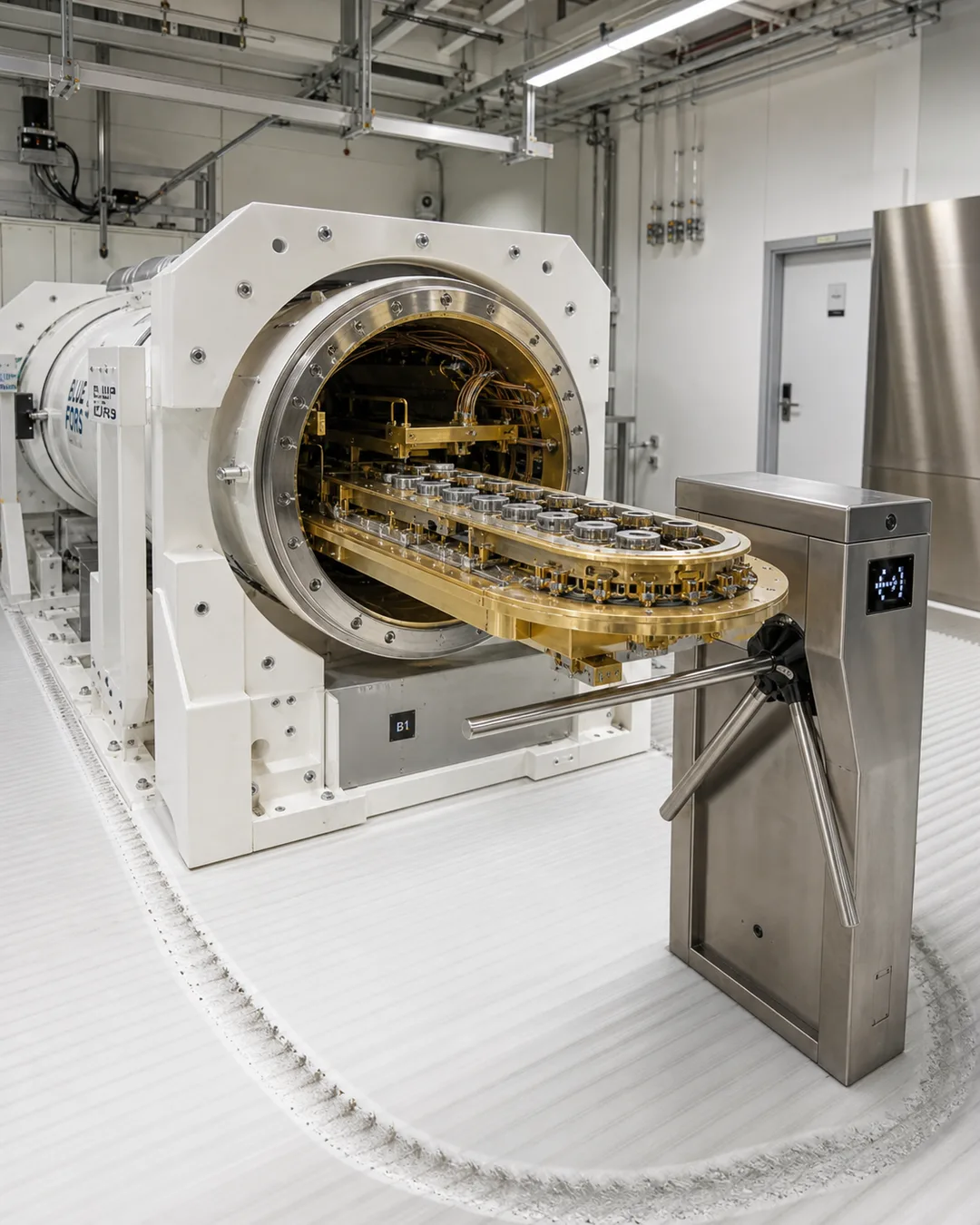
Anyons After the Factory: Non-Abelian exchange is a labor process inside matter, producing value through permutations that survive local disturbance.
The exchange of anyons is a labor process staged below the threshold of ordinary visibility. Positions change, the state transforms, and value emerges from the order in which these transformations occur. Non-Abelian behavior gives permutation an economy: the same elements, arranged through different trajectories, produce distinct computational consequences.
This labor has a protocol rather than a factory floor. Work appears as controlled exchange, timed confinement, engineered excitation, and measurement at the edge of coherence. The apparatus extracts value from relations among quasiparticles, while the surrounding infrastructure supplies refrigeration, fabrication, calibration, and the immense logistical care required for matter to sustain a usable difference.
The postindustrial fantasy of immaterial computation meets a material regime of exquisite discipline. Every braid depends on custody: of temperature, substrate, field, pulse, readout, and isolation. The apparent elegance of topological protection rests on a distributed apparatus of maintenance, where labor migrates into conditions and the event of calculation appears as the polished surface of hidden support.
Non-Abelian exchange also revises the status of repetition. Repetition becomes productive because sequence matters, and sequence becomes capital because it can be protected. The device converts the ordering of movements into a scarce operational asset, much as ranking systems convert attention into extractable hierarchy and platforms convert circulation into behavioral surplus.
The anyon after the factory embodies a new worker in matter: a relational agent whose value comes from exchange, memory, and survival under disturbance. The factory becomes topology, and production takes place inside the permission structure of the state itself.
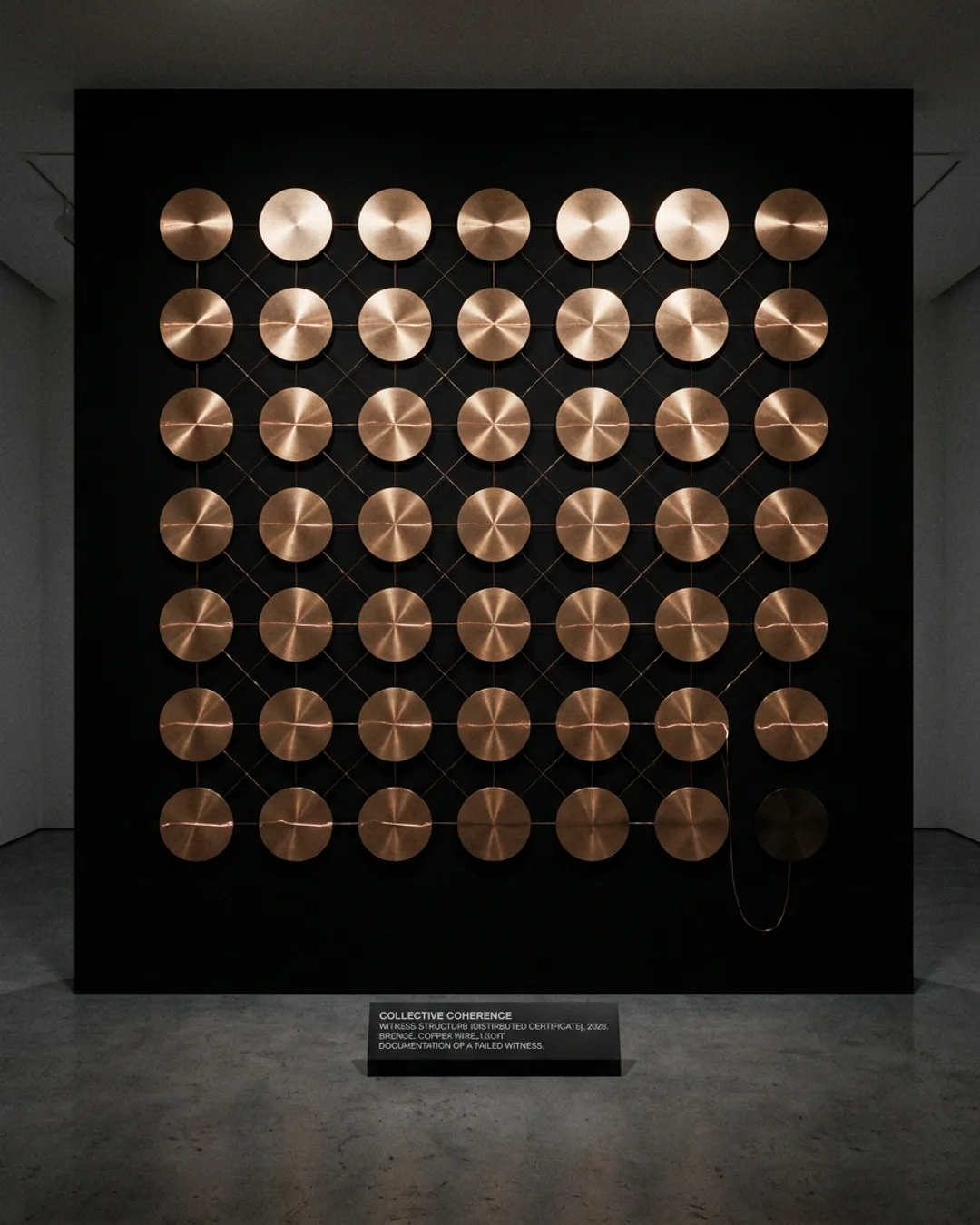
Fifty-Four Entangled Witnesses: The 54-qubit state is the image of collective coherence, a diagram where visibility equals operational trust.
The 54-qubit state appears as a witness structure. Each qubit participates in a collective condition, and the image of entanglement becomes a distributed certificate of coherence. Visibility becomes operational trust because the state must be shown as a relation before it can be believed as a computation.
The diagram of many qubits performs a double task. It displays a technical achievement and produces a public interface for confidence, compressing calibration, measurement, fidelity, connectivity, and error behavior into a visual field ready for circulation. The image becomes a ranking device, allowing laboratories, companies, investors, and institutions to place coherence within a competitive order.
Entanglement here functions as a social form inside matter. Each qubit gains significance through correlation, and the system’s value arises from the patterned dependence among its parts. The operational anchor is distribution: information exists across the state, authority arises from its collective structure, and the individual element becomes meaningful through its participation in a larger coherence.
The 54-qubit image also carries a politics of evidence. It asks the viewer to trust a chain of provenance extending from fabrication to readout, from raw measurement to processed visualization, from experimental event to institutional announcement. The state becomes an image because scientific authority now travels through the same channels that govern attention, credibility, and market tempo.
Collective coherence turns visibility into a technical virtue. The witness must appear, the apparatus must persuade, and the image must stabilize belief around a fragile operational event. A quantum state enters public life as a diagram of trust before it enters infrastructure as a machine.
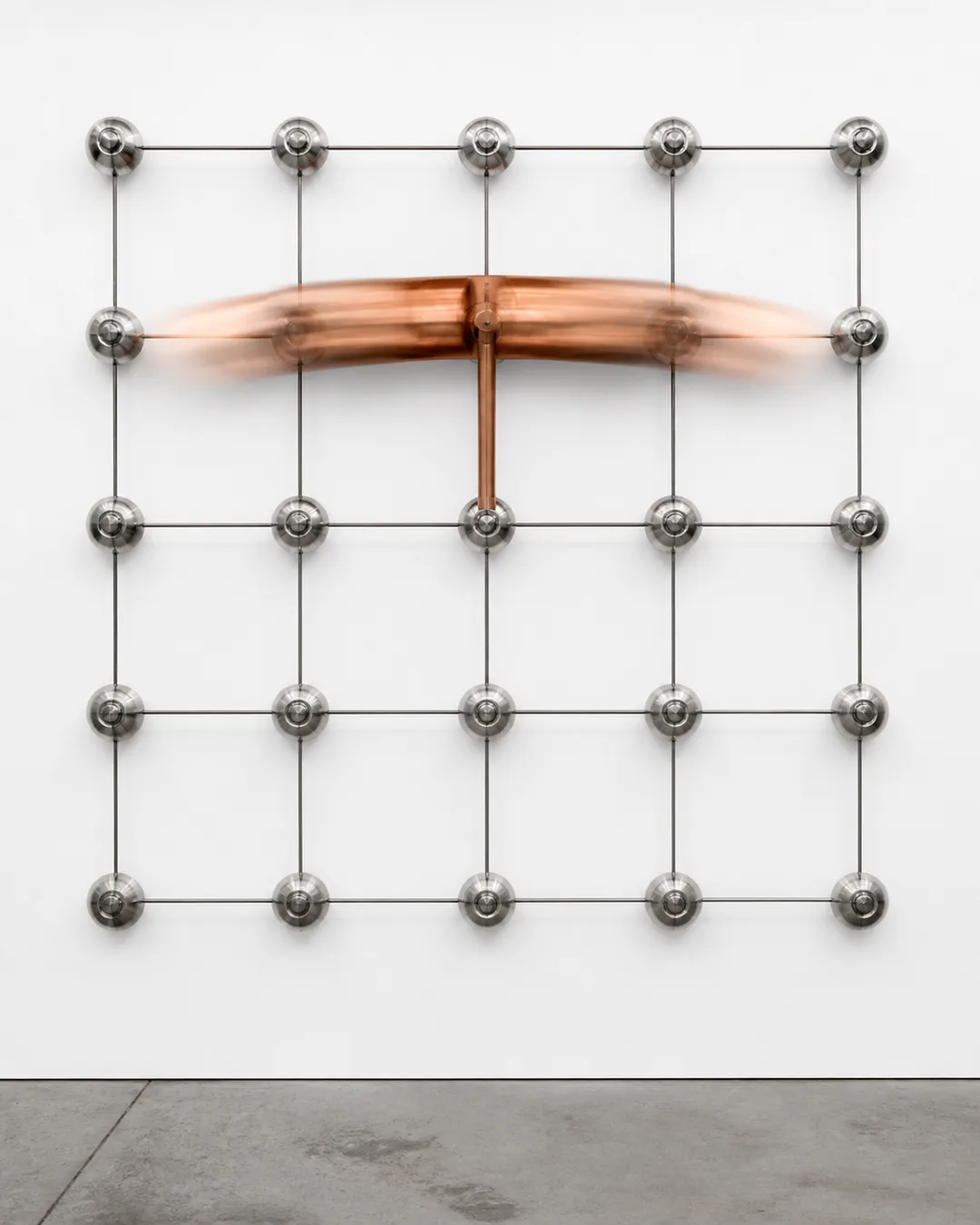
Error as Productive Terrain: Fault tolerance is an economic doctrine of survivability, assigning capital to structures that preserve information through damage.
Error becomes terrain when the system learns to route through it. Fault tolerance assigns value to architectures that preserve information through damage, and the apparatus turns disturbance into a calculable field. The failure event becomes a productive input once protocol defines its detection, correction, and cost.
The syndrome is an economic signal. It marks the location and character of deviation, allowing the system to spend redundancy, time, and control in the preservation of state. Error correction becomes an allocation mechanism, distributing resources across a landscape of risk and ranking interventions by their contribution to survivability.
This doctrine reshapes capital’s relation to uncertainty. Investment follows structures that promise persistence under perturbation, and resilience becomes a temporal asset. The protected qubit attracts money because it converts future noise into present valuation, giving the market a way to price endurance before large scale utility fully arrives.
Training bias appears in the models that forecast viable architectures, material pathways, and scaling curves. The experimental record becomes a dataset of survival, where successes and failures guide the imagination of fundable futures. Capital learns from error as platforms learn from behavior, converting deviation into optimization and uncertainty into a managed distribution.
Fault tolerance gives damage a role in the production of confidence. The system gains authority through its capacity to absorb disturbance, and the market gains a language for pricing the absorption. Error becomes the ground on which the future negotiates its purchase.

Protected Information, Sovereign Matter: Topology is power in condensed form, granting authority to relations that hold while their surroundings fluctuate.
Protected information begins as a claim of sovereignty inside matter. Topology grants authority to relations that persist across local fluctuation, and the state gains power by exceeding the reach of nearby disturbance. The device defines a jurisdiction where information answers to global form.
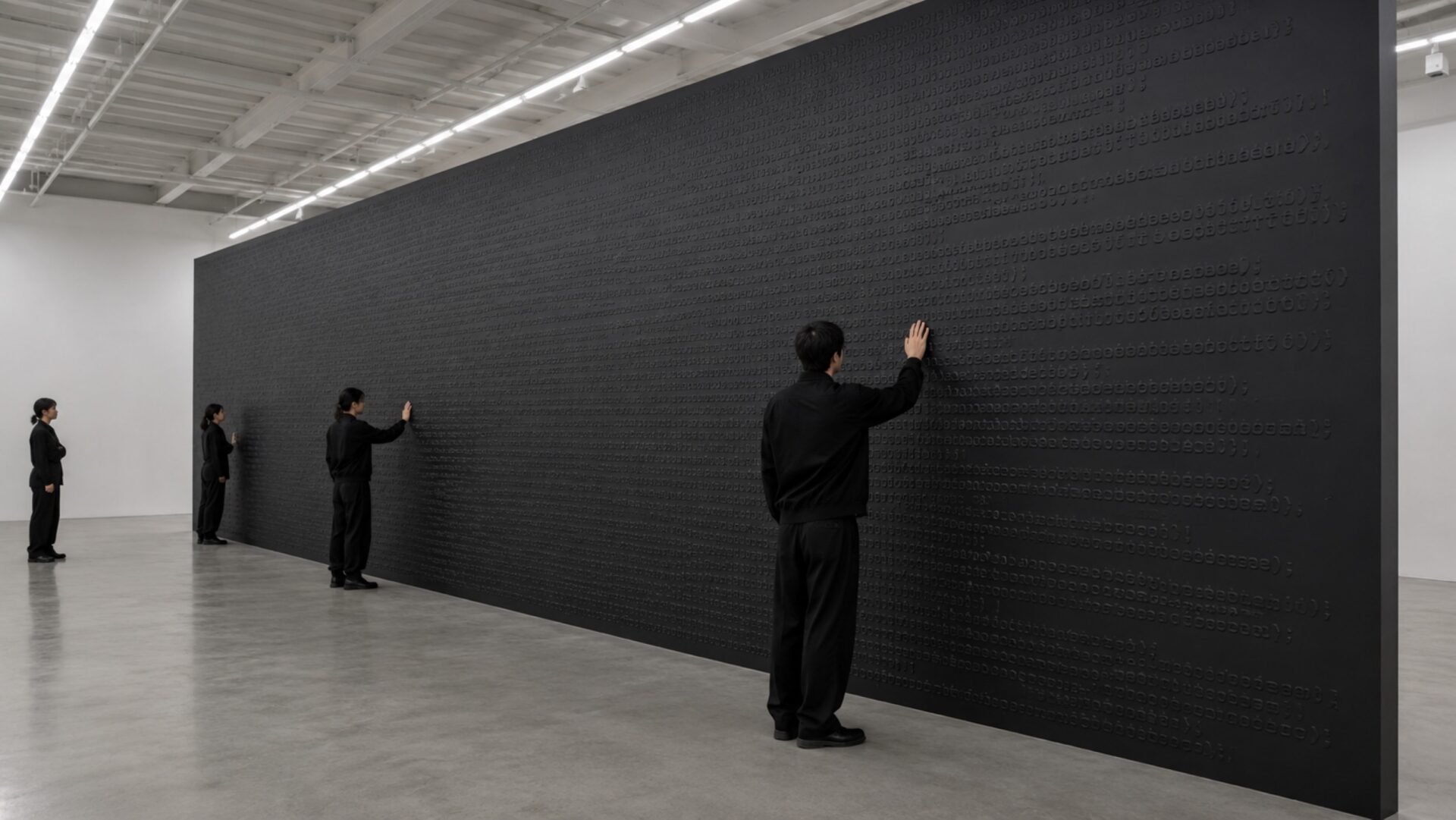
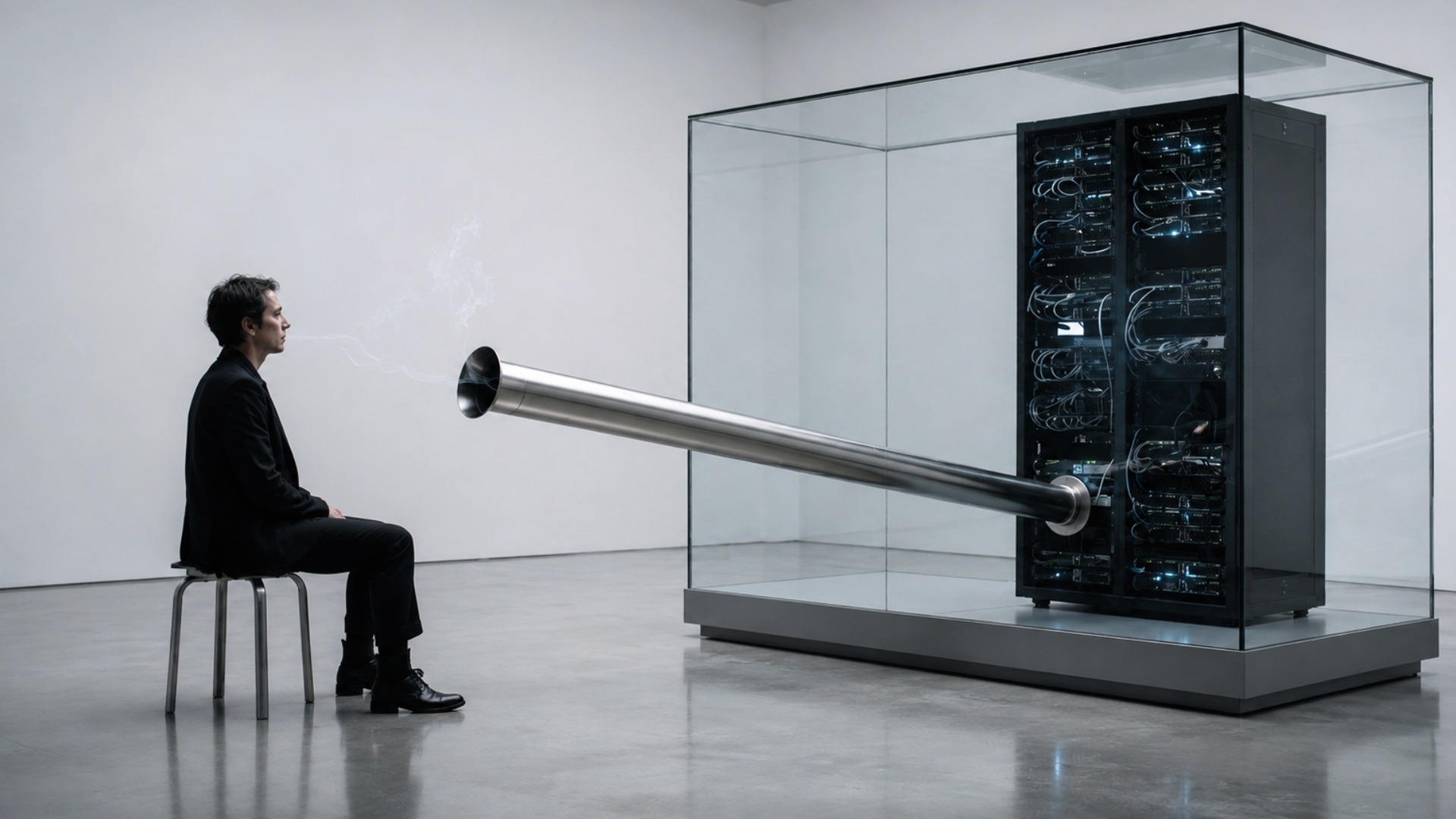
This sovereignty depends on custody. The protected state requires controlled environments, disciplined interfaces, and measurement protocols that preserve the difference between usable information and thermal drift. Matter appears autonomous only through a dense regime of care, where laboratories, supply chains, patents, cryogenic systems, and standards hold the conditions of autonomy in place.
Topology condenses power because it separates command from local vulnerability. A perturbation touches the system, yet the meaningful relation remains governed by a higher order. The political analogy resides in the architecture itself: authority becomes durable when it embeds itself in relations that survive the volatility of the surface.
The platform form finds an unexpected material echo here. Platforms govern through protocol, ranking, access, and persistence across user turbulence; topological matter governs information through relation, exchange, and protection across physical turbulence. Both forms extract value from stability under motion, and both transform fluctuation into a managed condition of operation.
Sovereign matter therefore names a device politics rather than a metaphor. It describes a material arrangement in which authority belongs to the relation that endures. Power enters the chip as topology, and secrecy becomes a property of form.
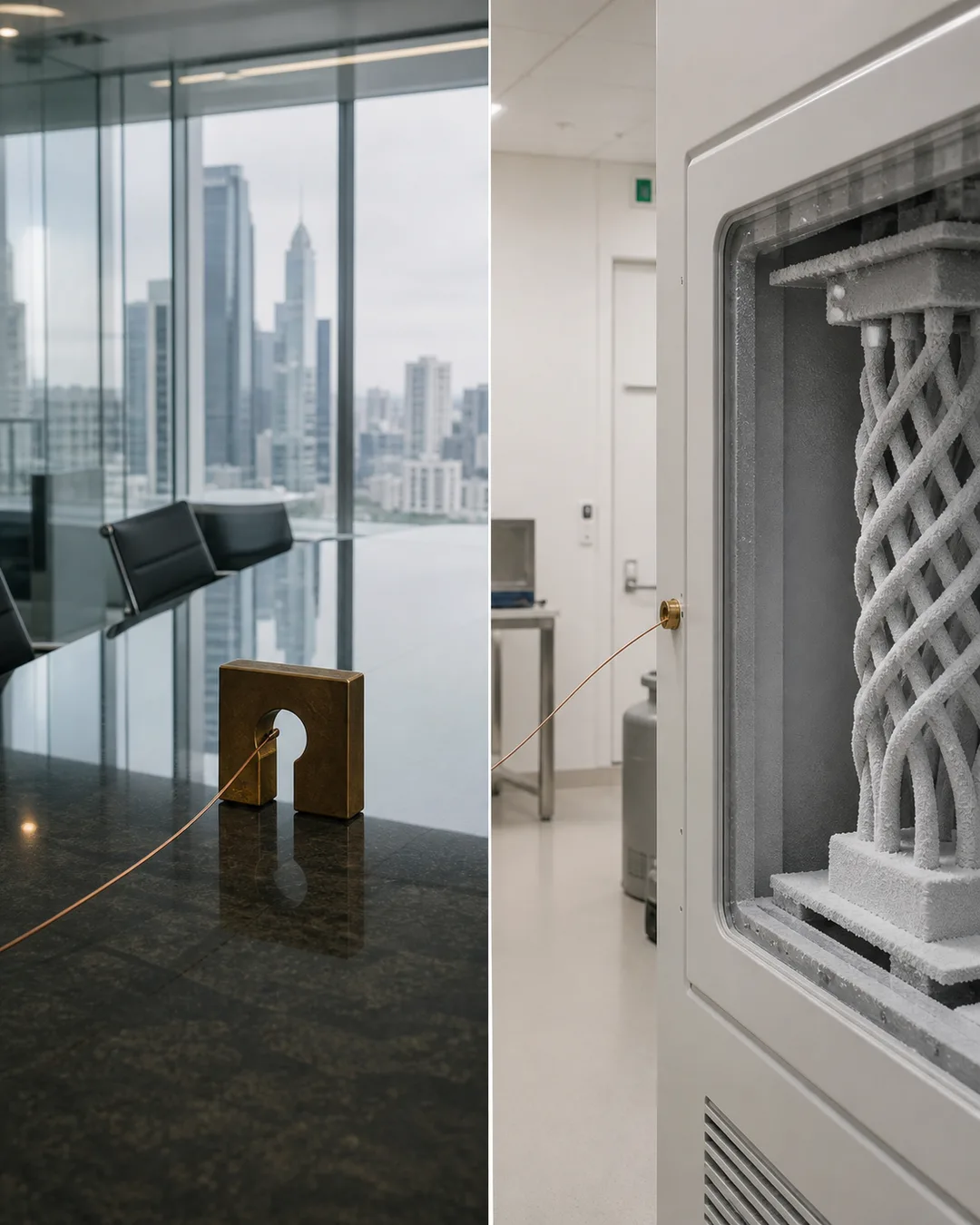
The Market of Stable Futures: Quantinuum’s universal gate set is a financial proposition as much as a scientific event, converting resilience into investable time.
Quantinuum’s universal gate set presents resilience as a time asset. A protected universal operation extends the horizon over which quantum computation can be imagined, financed, and scheduled. The scientific event becomes a financial proposition because survivability gives the future a usable metric.
The gate set functions as a protocol of credibility. Universality promises breadth, protection promises endurance, and the combination produces an object that can travel across research papers, corporate decks, policy agendas, and investment narratives. Technical achievement enters distribution as a claim about time: more operations, longer coherence, deeper circuits, wider applicability.
The market reads protected computation through anticipated custody of advantage. Whoever controls stable gates controls the tempo at which algorithms become services, laboratories become platforms, and intellectual property becomes infrastructure. The device form becomes a strategic asset because it binds calculation to duration, and duration to defensible value.
Quantinuum’s proposition belongs to a broader economy of stable futures. Investors price the reduction of uncertainty, institutions align around roadmaps, and states locate sovereignty in technologies that promise command over simulation, optimization, cryptography, and materials. The gate becomes a unit of speculation because it materializes the belief that error can be governed at scale.
A universal protected gate set converts resilience into investable time. The market buys a future in which matter holds its memory long enough for power to arrive.

Computation Becomes a Weather System: The structural transformation of quantum calculation is a planetary technique, binding device, image, economy, and power inside matter that remembers by being moved.
Quantum calculation becomes a weather system when control shifts from isolated command to managed fluctuation. The device operates through fields, pulses, temperatures, thresholds, probabilities, and error distributions, producing computation as a choreography of unstable conditions. Calculation becomes meteorological because prediction, correction, and adaptation enter the core of operation.
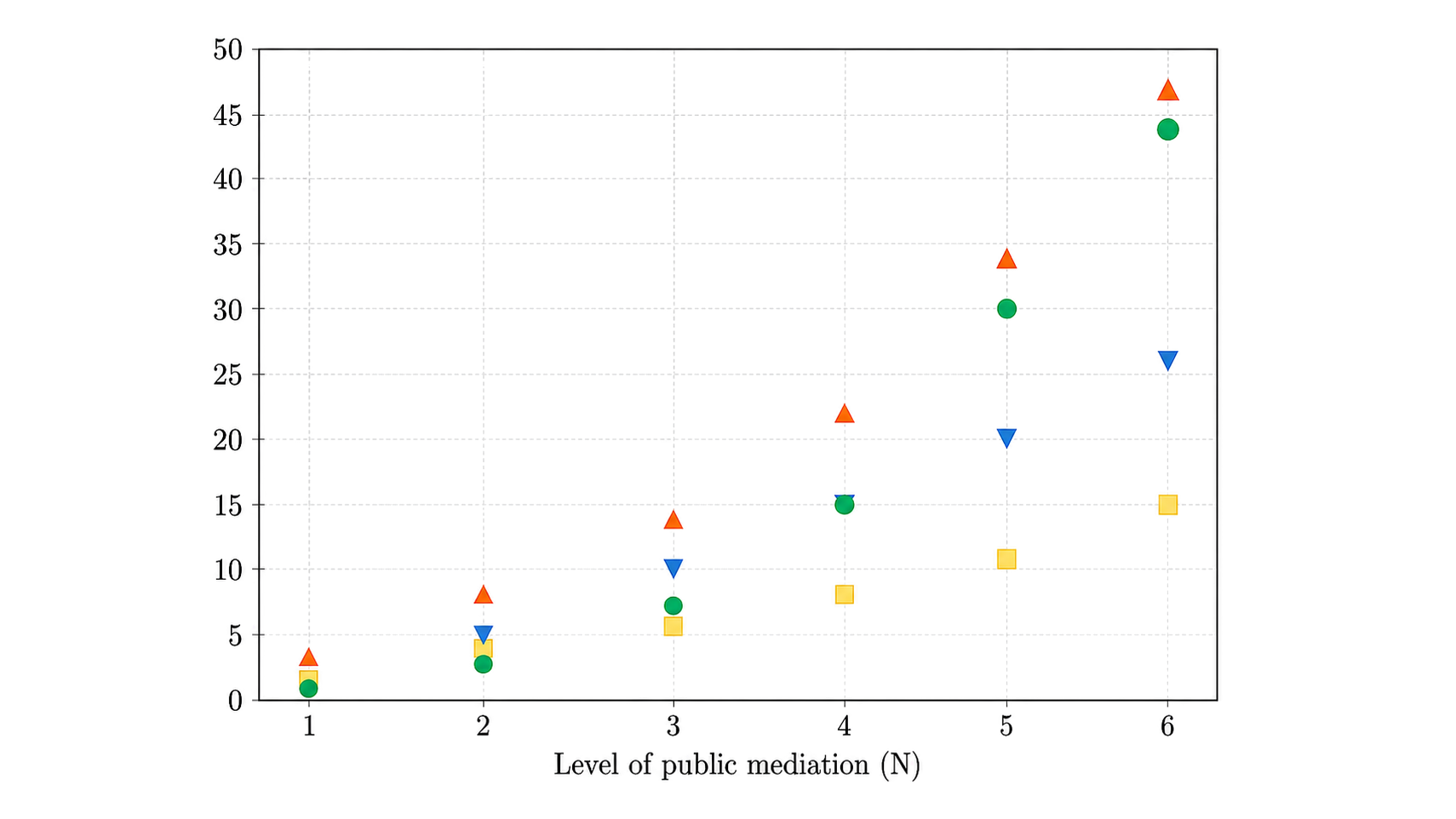
This transformation binds device and image through attention. The apparatus generates states that require mediation, visualization, benchmarking, and narrative framing, while the image feeds back into funding, policy, and institutional rank. A quantum breakthrough circulates as a weather report from the edge of computation, translating fragile events into signals that organize collective expectation.
Economy enters through the pricing of stability. Every improvement in fidelity, every extension of coherence, every protected gate, and every correction threshold becomes a unit in the market of future capacity. The architecture of quantum computing converts physical resilience into financial temporality, allowing capital to inhabit the interval between experimental proof and infrastructural power.
Power enters through protocol. Standards, benchmarks, access regimes, cloud interfaces, patents, supply chains, and national programs determine which forms of quantum stability become shared infrastructure and which remain proprietary weather. The planetary technique appears through this alignment of matter and governance, where computation depends on environments that are engineered, enclosed, and made legible to authority.
Matter remembers by being moved. The braid, the witness, the syndrome, the gate set, and the market all describe a single operational transformation: information gains force when it survives disturbance as relation. The secret of protected computation resides in this paradox, power becomes durable when it learns to travel through uncertainty.