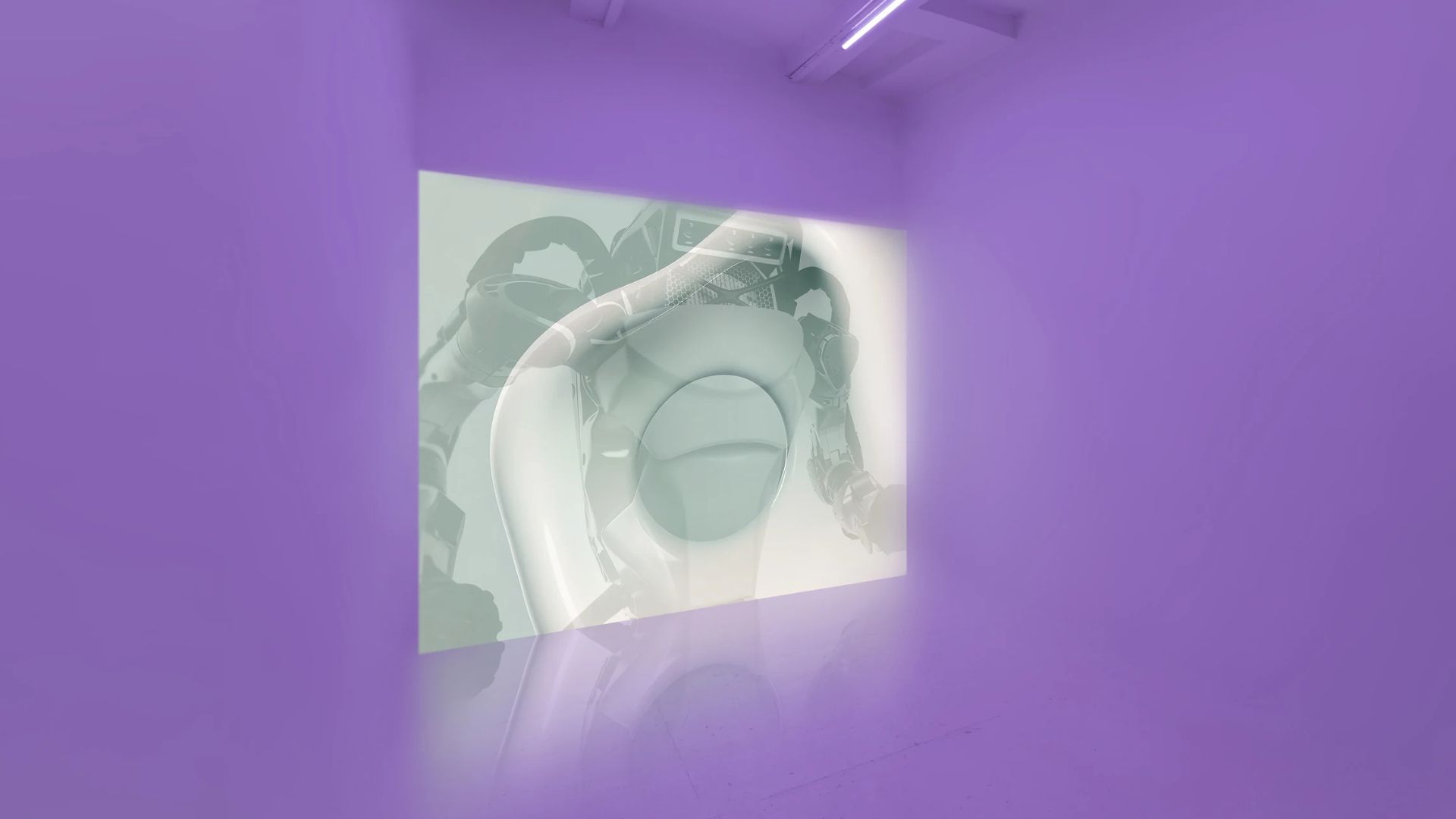
“Domestic Sci-fi” by Thordis Erla Zoega, curated by Thordis Erla Zoega, at BERG Contemporary, Reykjavik, 11/04/2026 – 23/05/2026.
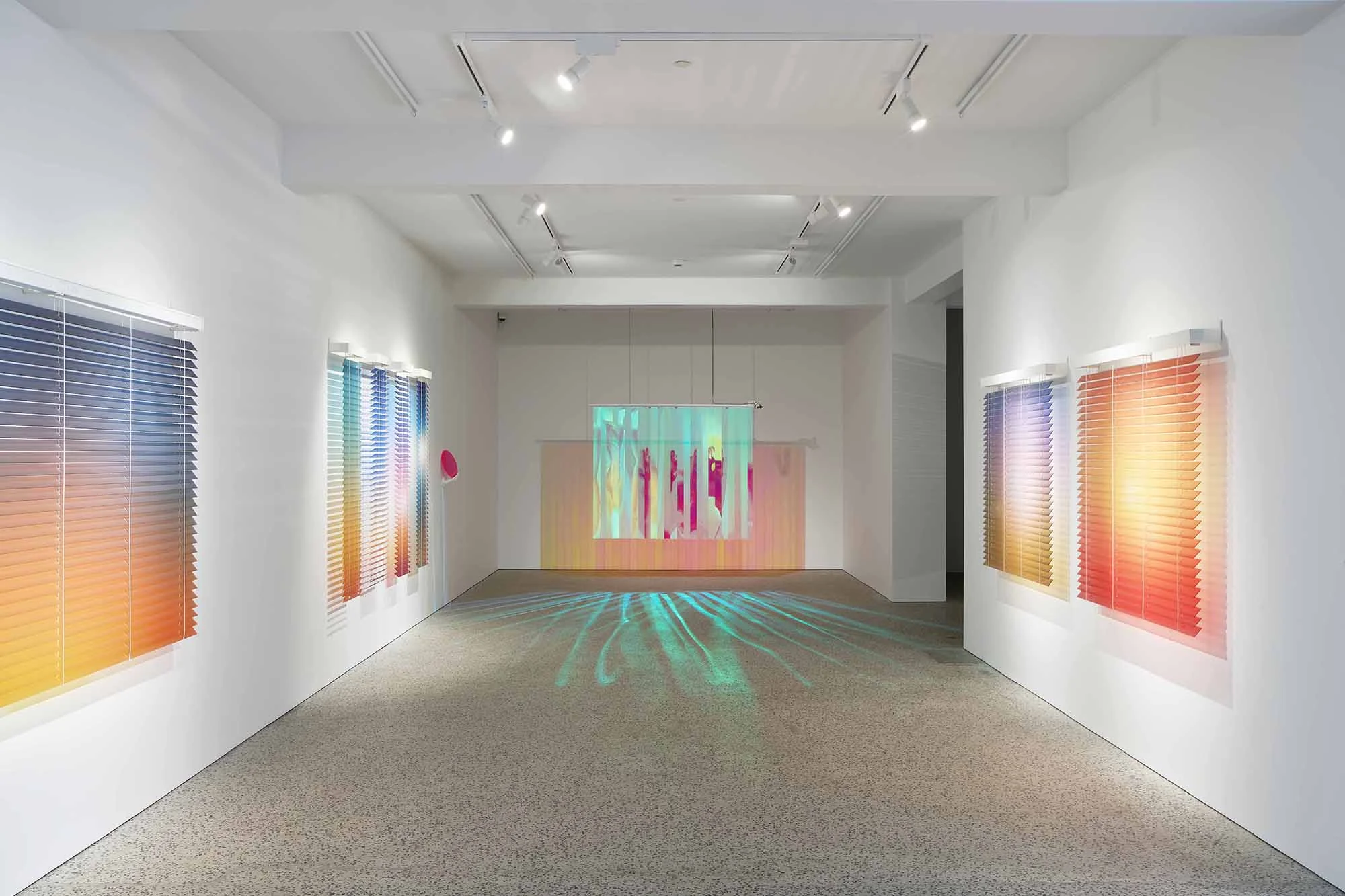
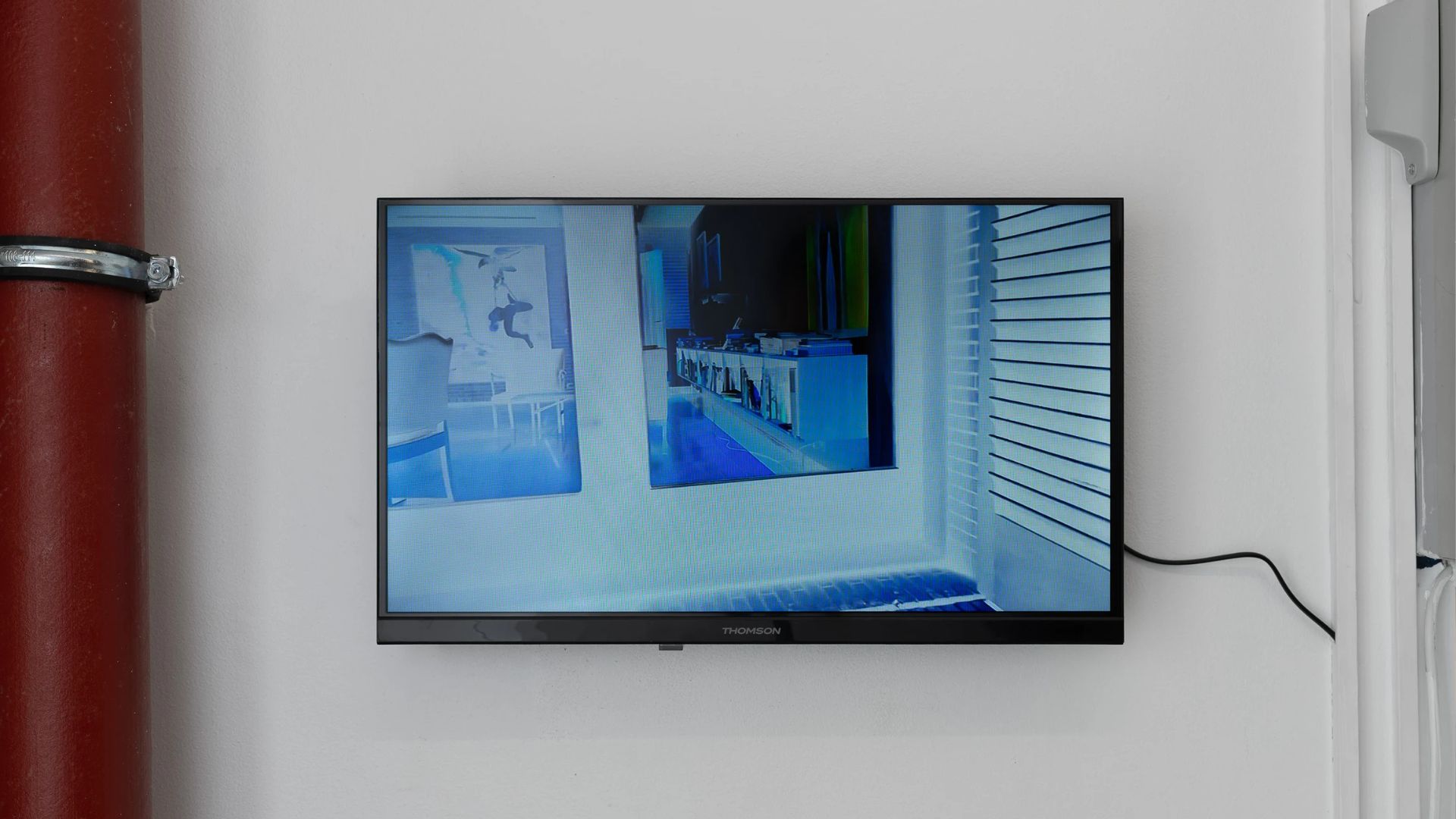
The blinds, so ordinary, so functional, no longer conceal the world; they have become its surface. We find ourselves asking: when did the threshold dissolve, and who now mediates what we see?
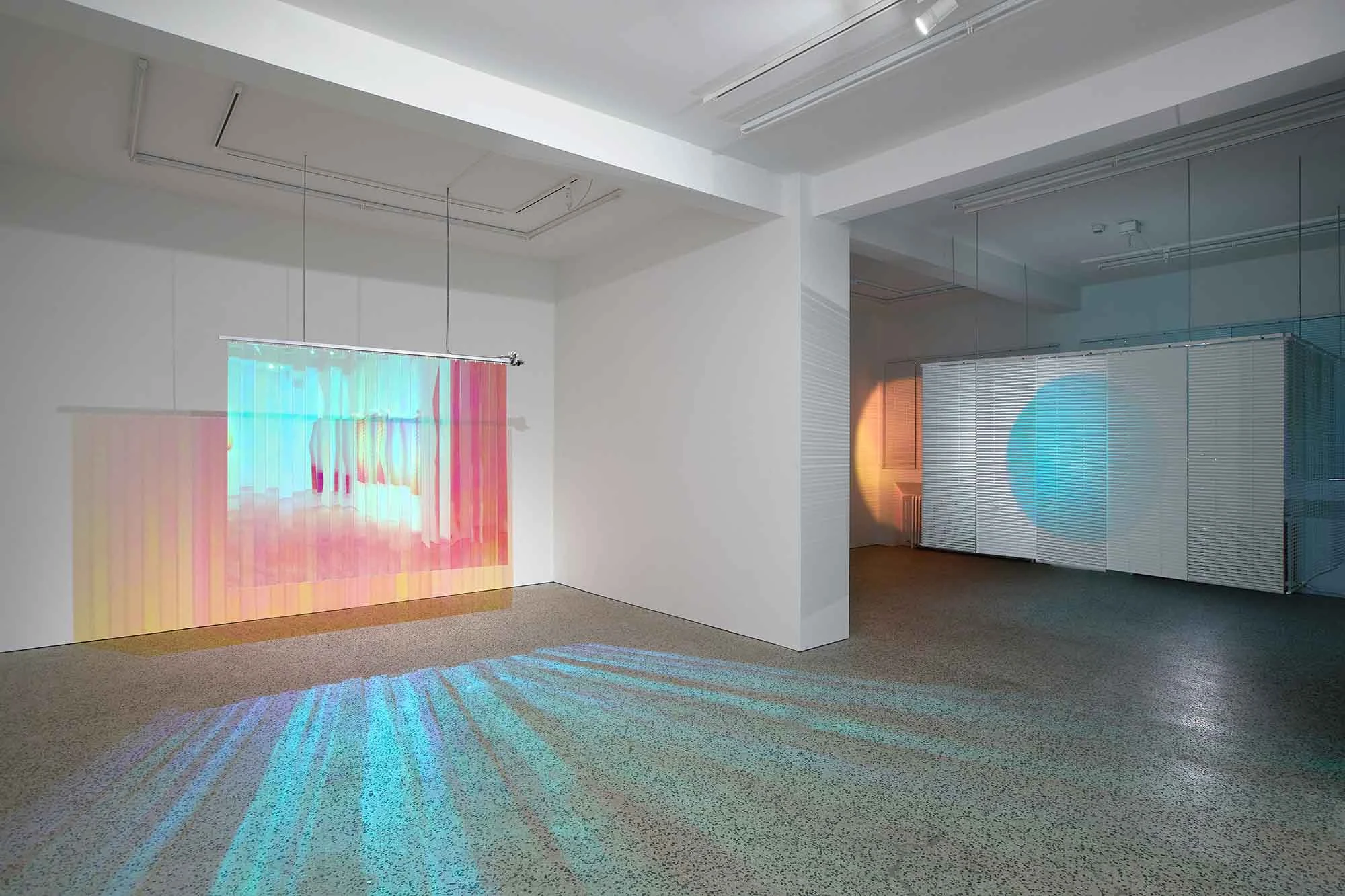
The exhibition unfolds in a restrained, almost hushed atmosphere. Light filters through slatted structures, breaking the space into measured intervals. Visitors move slowly, as if attuned to an unseen rhythm. There is no spectacle here; rather, a persistent recalibration of perception. The works do not assert themselves; they wait, suspended between presence and deferral.
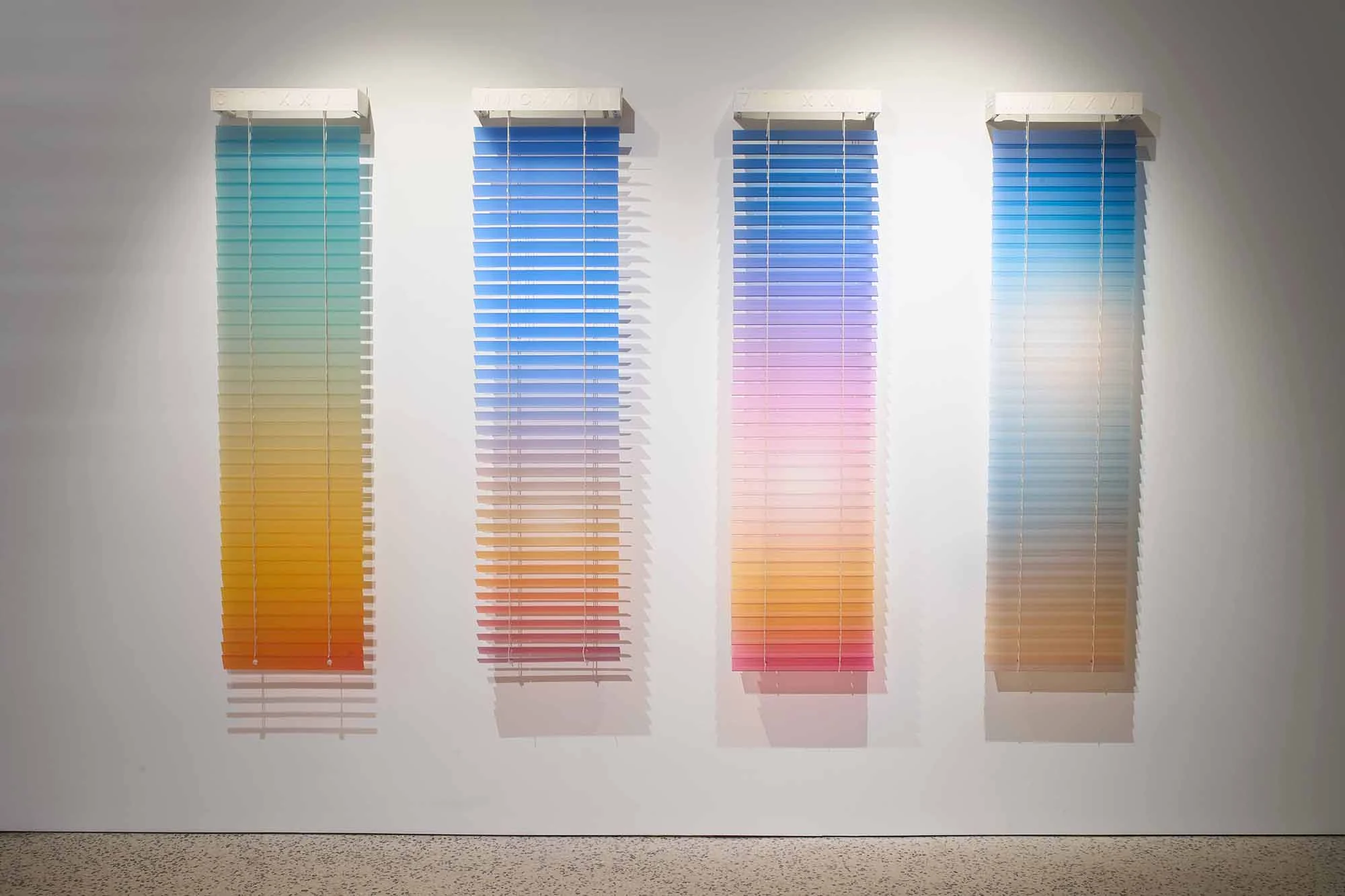
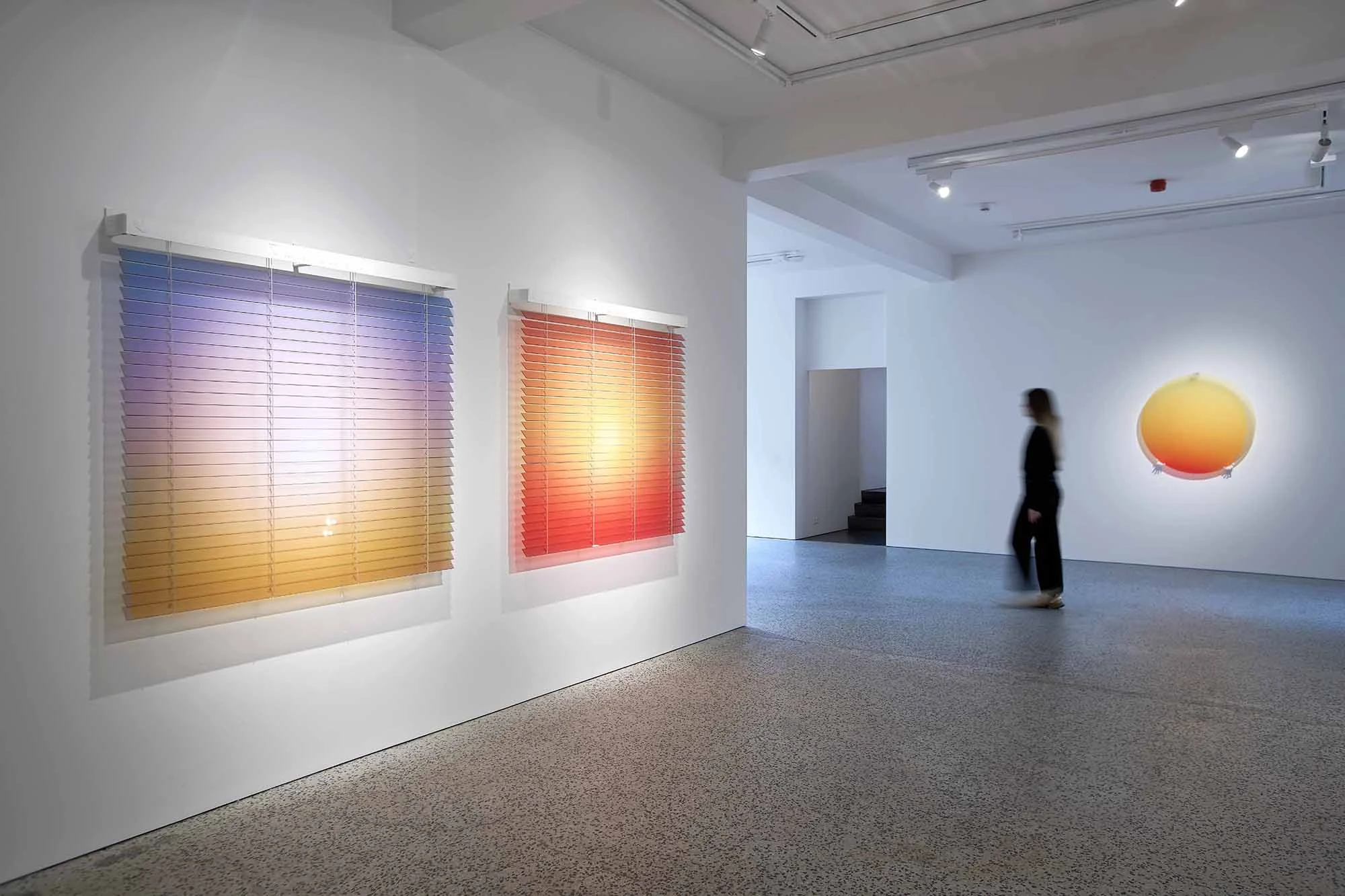
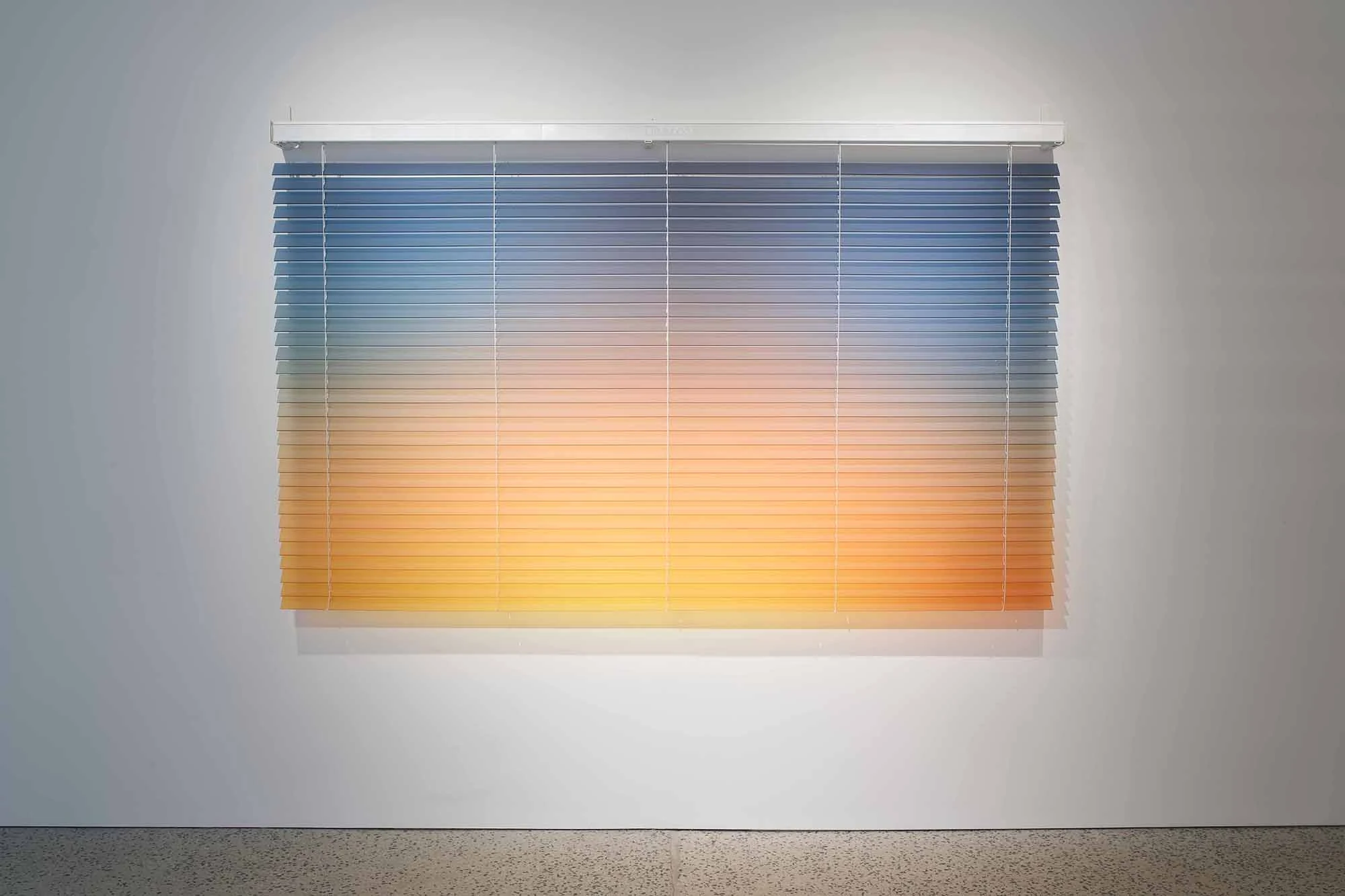
In Forecast, a sequence of images stretches across time. They are neither memories nor fully formed visions. Generated through artificial intelligence and then reduced, stripped down to their barest essence, they depict sunrises and sunsets projected into distant futures. Each is marked with Roman numerals, anchoring these speculative images to ancient systems of timekeeping. Yet they resist clarity: blurred, uncertain, they deny the authority we might expect from predictive technology. Precision falters. What remains are approximations, and an uneasy sense that foresight does not equal understanding.
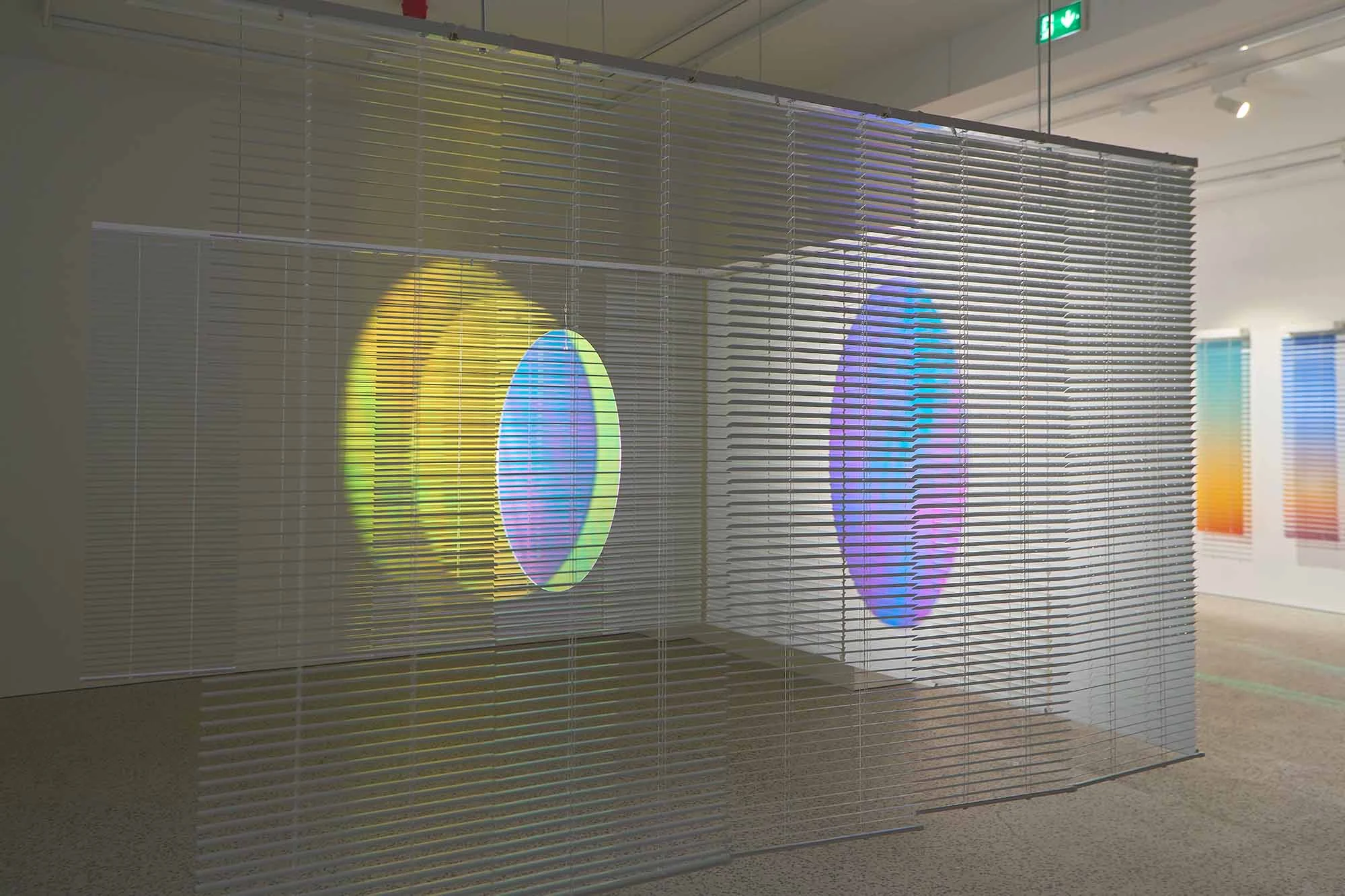
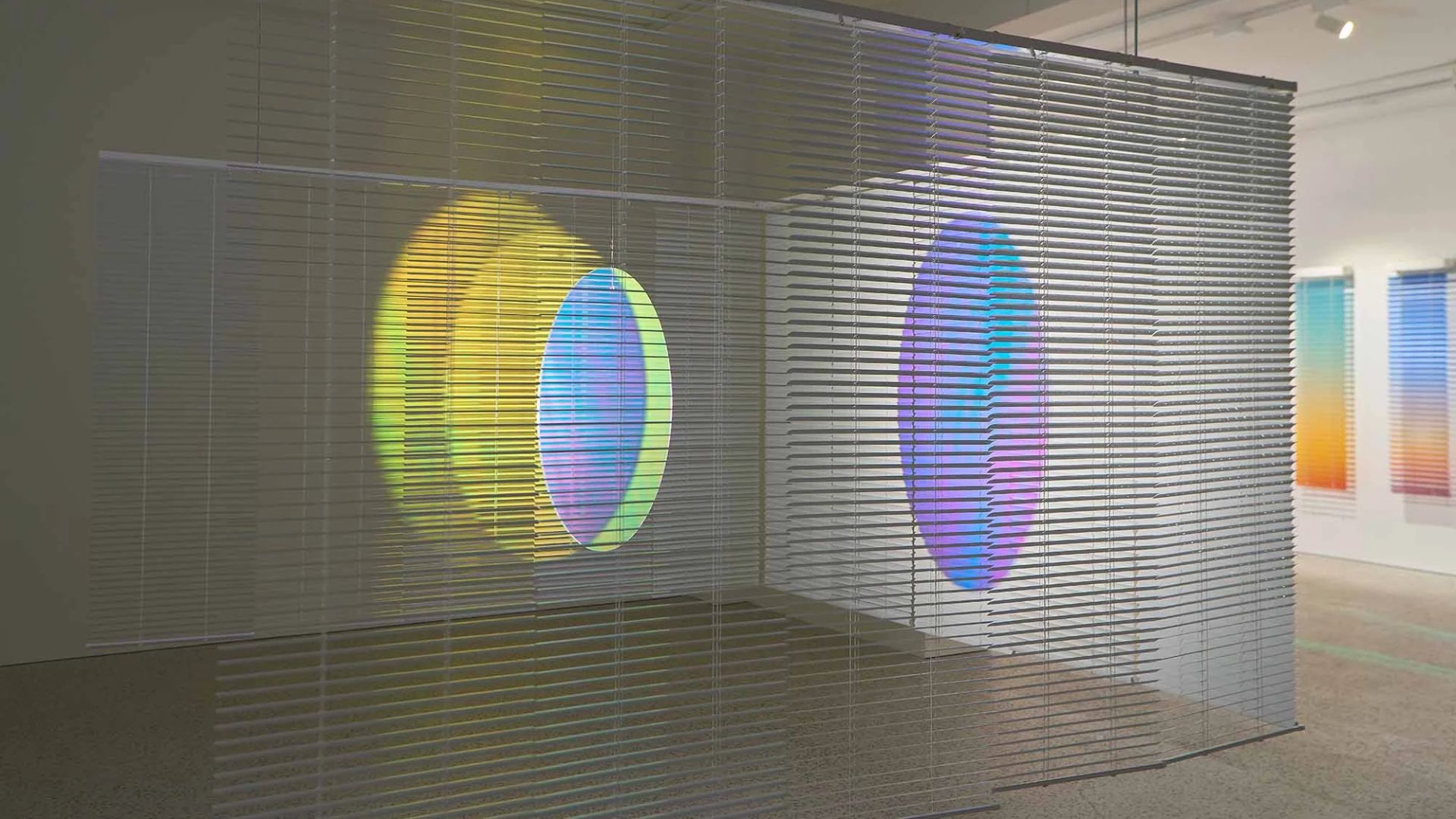
Elsewhere, Everyday introduces movement, subtle, cyclical, inescapable. A blue circle, made from dichroic film, rotates counterclockwise within a space constructed of blinds. Its reflection fractures into red and yellow tones, evoking solar echoes. We follow its path as it traces both inner and outer edges, a quiet choreography of repetition. The gesture recalls the habitual act of opening and closing curtains, but also something larger: the Earth’s rotation, the persistence of celestial cycles. The work folds the cosmic into the domestic, suggesting that even our smallest routines are tethered to vast, indifferent systems.
Materially, Zoega’s choices are precise and resonant. Blinds, dichroic film, AI-generated imagery, each carries its own history and implication. The blinds define space while destabilizing it; the film refracts light into spectral multiplicity; the AI images promise knowledge while withholding certainty. Together, these elements produce a tension between control and surrender. The artist’s hand is felt not in overt gestures, but in acts of reduction and framing, decisions that expose the fragility beneath technological assurance.
Time itself becomes layered, almost viscous. Ancient calendars and computational forecasts coexist, neither fully displacing the other. The steady rhythms of nature, sunrise, sunset, bodily cycles, persist, yet are increasingly outpaced by the relentless flow of data. This disjunction is felt not as an idea, but as a condition: a subtle unease that lingers in the body.
A quieter realization settles in. The light we carry in our pockets, the screens that extend our days into artificial continuity, these echo within the works. The blue glow that promises connection also suspends us in a perpetual present, untethered from the restorative cadence of night. Zoega does not dramatize this imbalance; she lets it hum beneath the surface.
We leave with an image that refuses to resolve: a blurred horizon, neither dawn nor dusk, suspended in prediction. It lingers like an afterimage on the retina. Somewhere, a circle continues its slow rotation. Somewhere, the blinds remain half-open. And we, suspended between systems, natural and constructed, are left to negotiate the space in between.
-FW