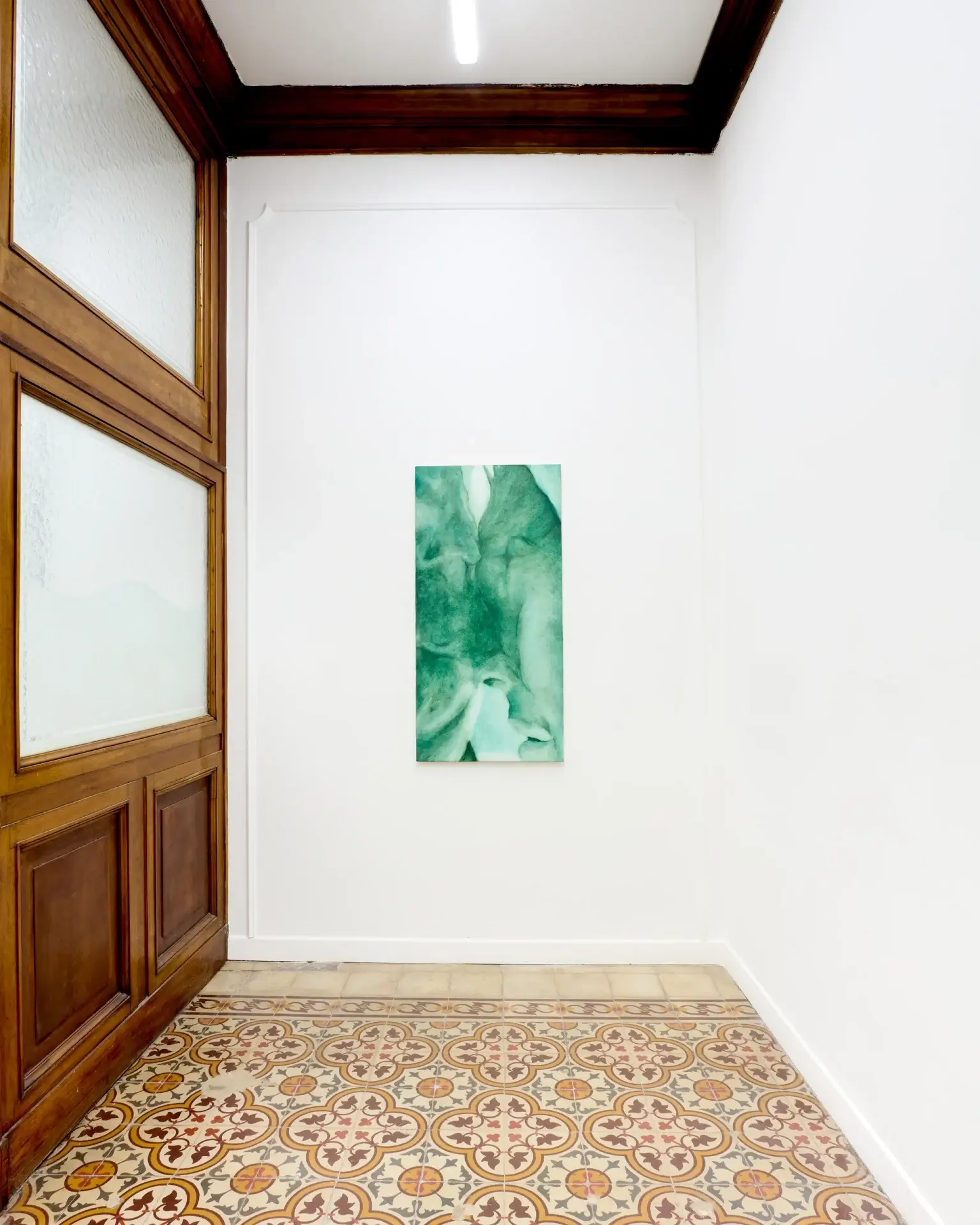
Tales from Fractured Minds: Dissociation as Refuge and Rupture

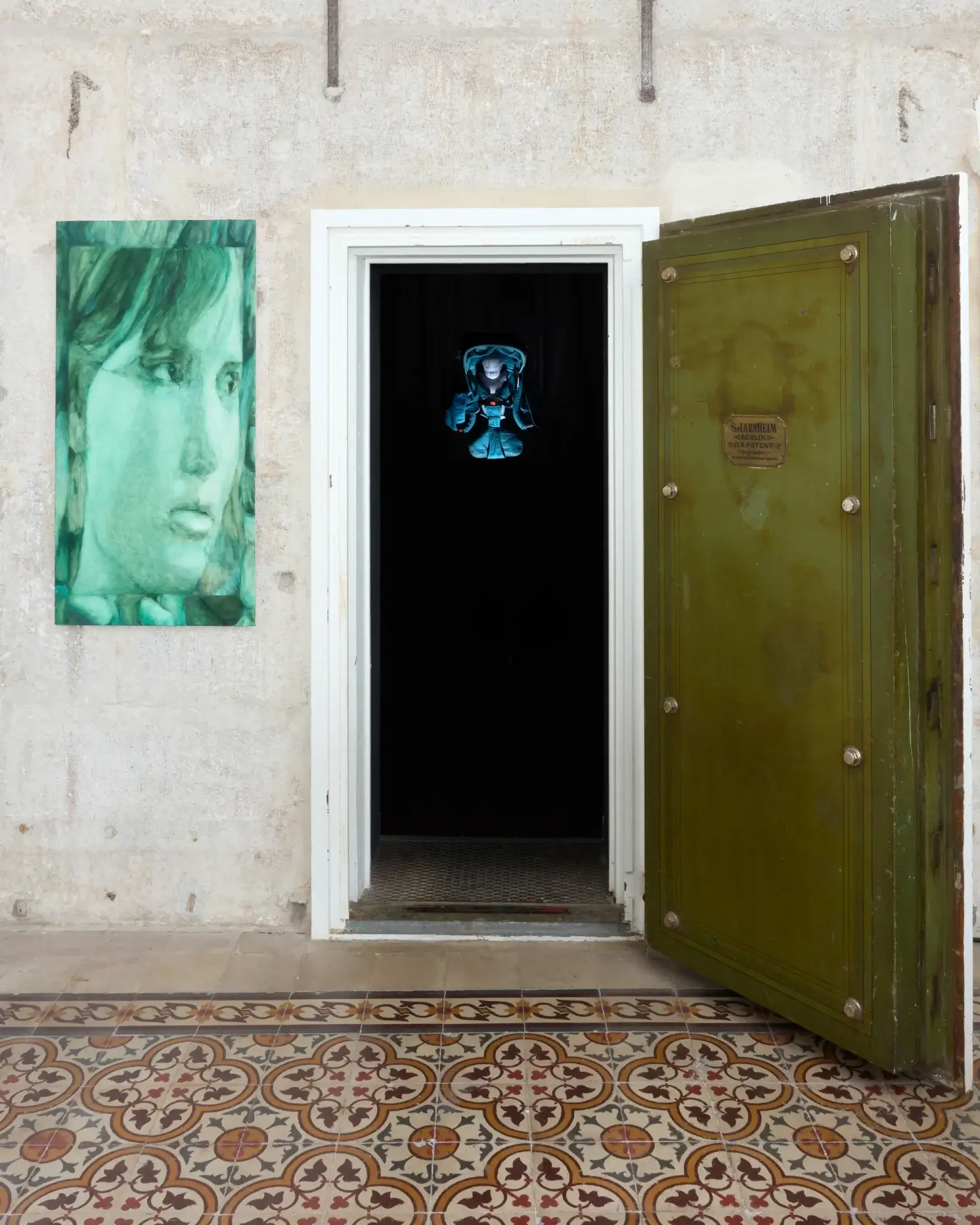
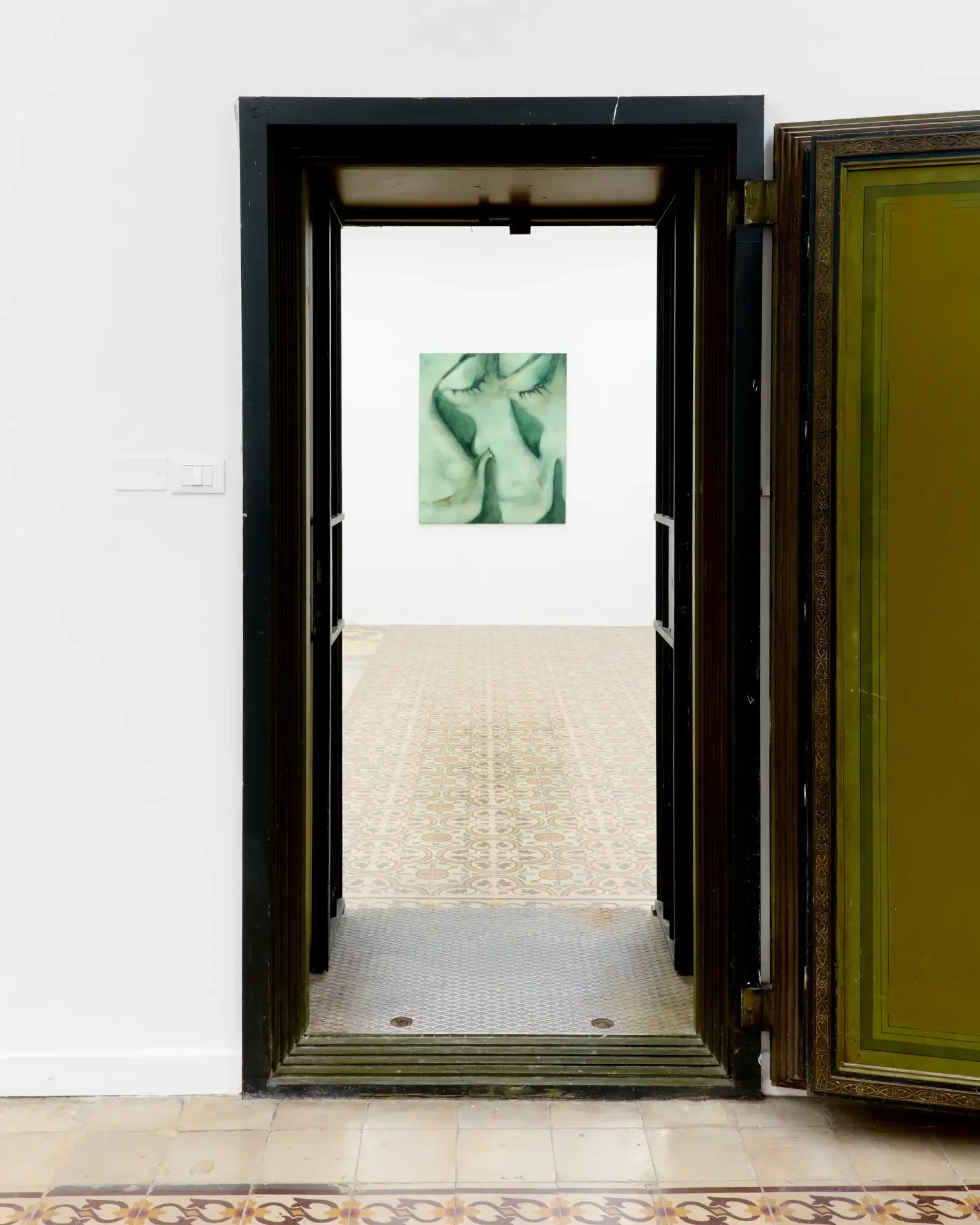
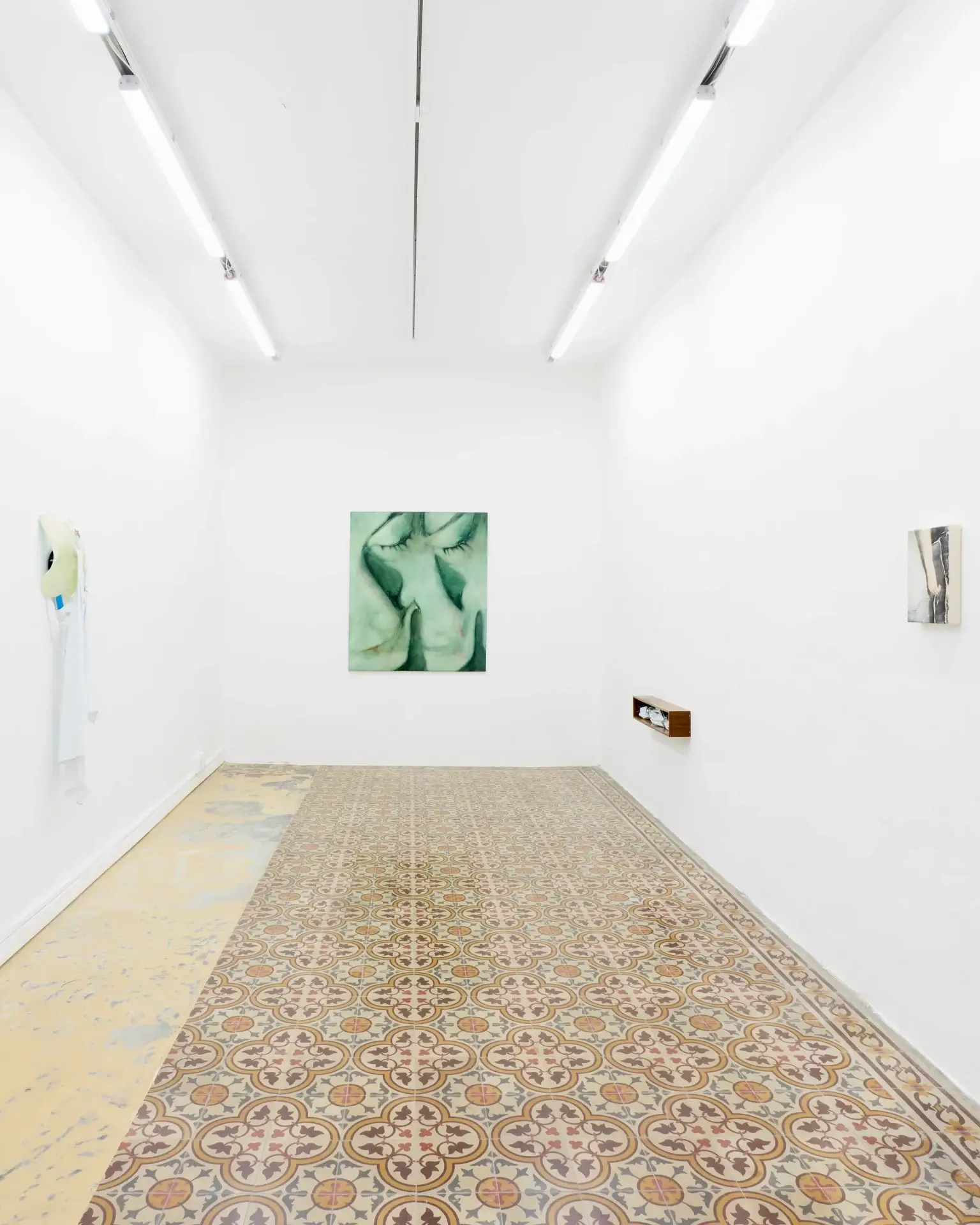
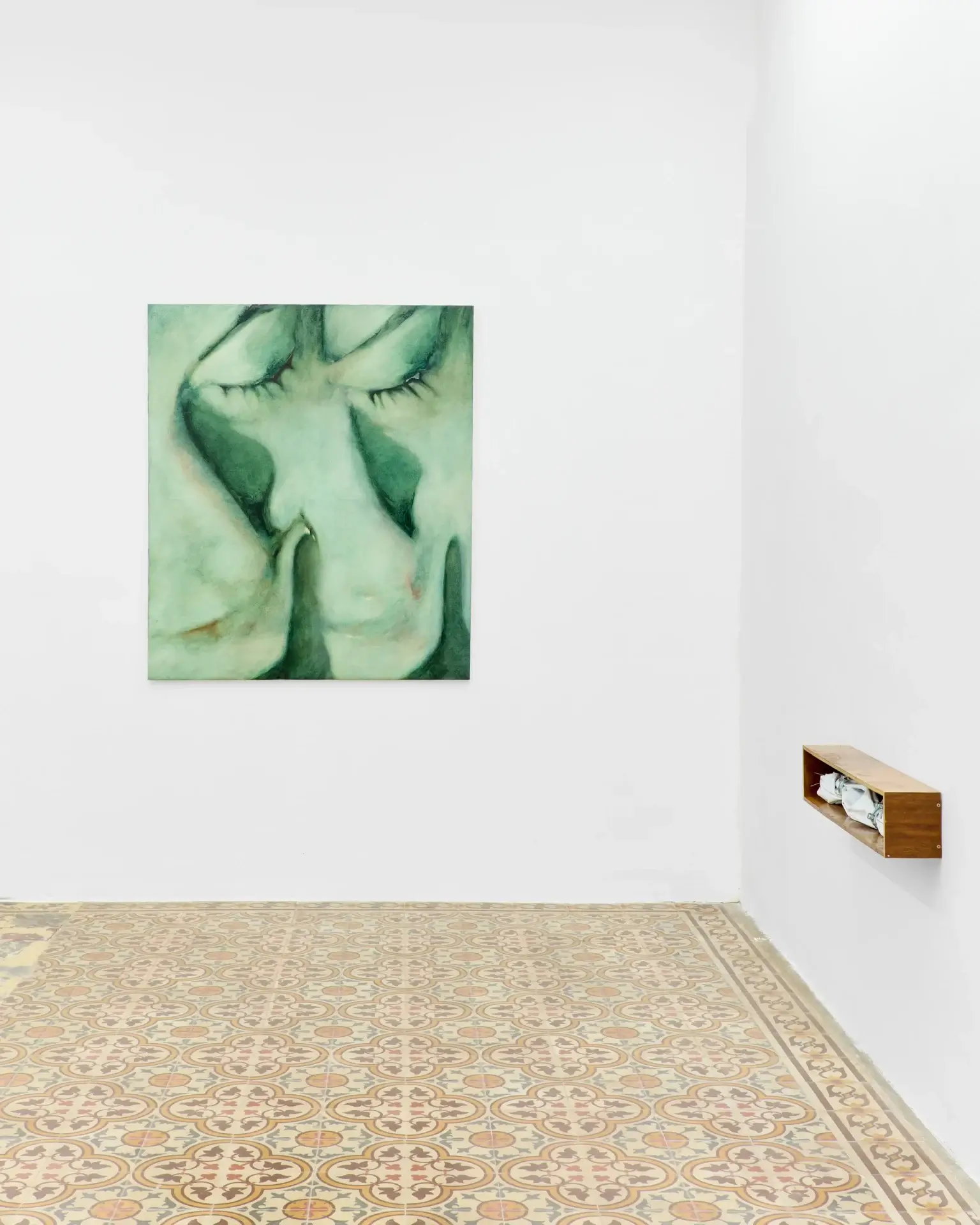
Tales from Fractured Minds: Dissociation as Refuge and Rupture curated by Matteo Giovanelli, at The Address Gallery, Brescia, 21/02/2026 – 29/03/2026.

There is a thin threshold between being present and being absent. Not a door, but a membrane. Dissociation, as the exhibition text notes, is a state of separation among memory, identity, emotions, and perception. A protective mechanism. But protection from what? From trauma, certainly. From stress. And perhaps also from the excess of reality imposed by the present. In a time marked by wars, climate and political crises, identity fractures, and humanitarian breakdowns, dissociation no longer appears solely as an individual disorder; it becomes a collective posture, a survival strategy.

Tales from Fractured Minds adopts this condition as both theoretical and visual axis. Hosted at The Address Gallery from 21 February to 29 March 2026, the exhibition unfolds as a layered reflection on the ongoing oscillation between reality and imagination, presence and elsewhere. The image is not conceived as fiction, but as a component of the real: a device capable of generating multiple identities and divergent perspectives.

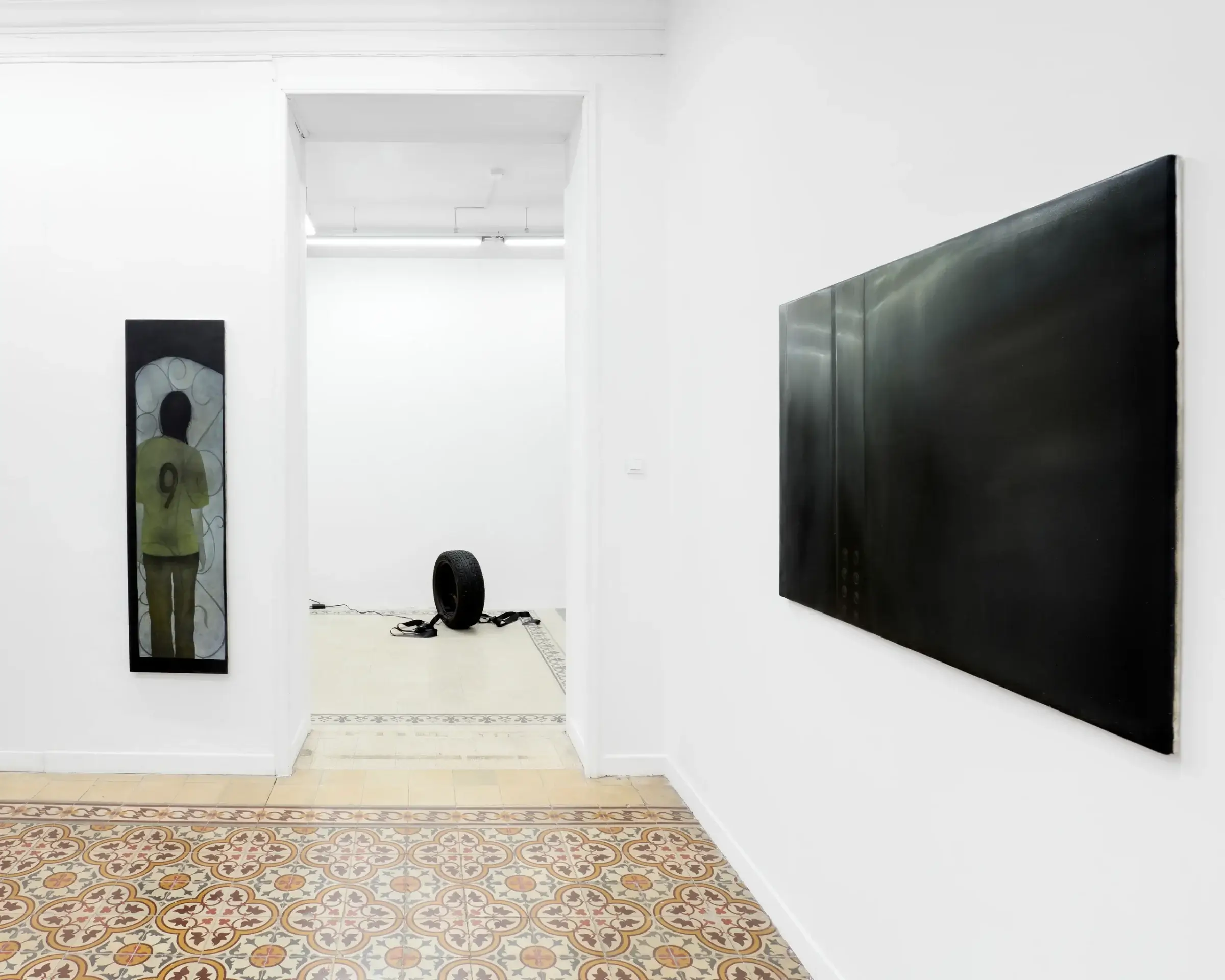
According to the curatorial statement, the exhibition space is conceived as a symbolic dissection of the brain. Not a linear path, but a superimposition of thoughts and images, a montage in which different languages converge. Private places and public spaces recur as intertwined motifs; sounds, voices, and reminiscences construct an invisible, impermeable bubble where intimacy merges with the outside world. Dissociation takes shape as lived experience: a continual slippage between memory and suffering, between the personal sphere and the global landscape.

The participating artists, Alexander Adamau, Ant Łakomsk, Bartosz Kowal, Hanna Antonsson, together with Linda Lach, Polina Sokolova, and Tatjana Danneberg, articulate the theme through practices ranging from sculpture and painting to hybrid languages.

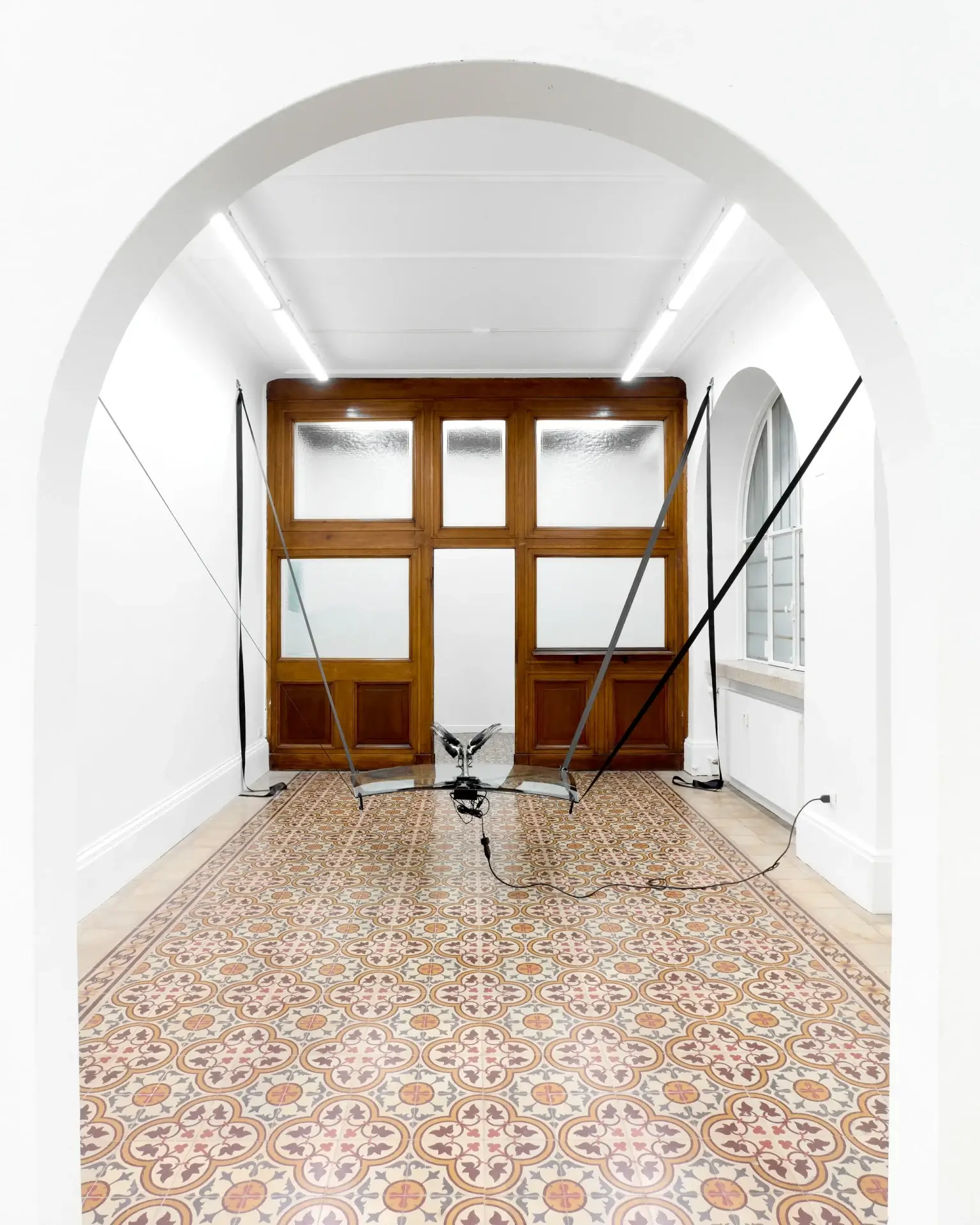
Adamau focuses his research on the intersection between care and control, examining contemporary systems of protection and discipline. His sculptures investigate the aesthetics of everyday security devices, exposing their ambiguity: what promises refuge may generate psychological and physical vulnerability. Within this framework, dissociation emerges as a response to surveillance structures that shape the relationship between the individual and the system.

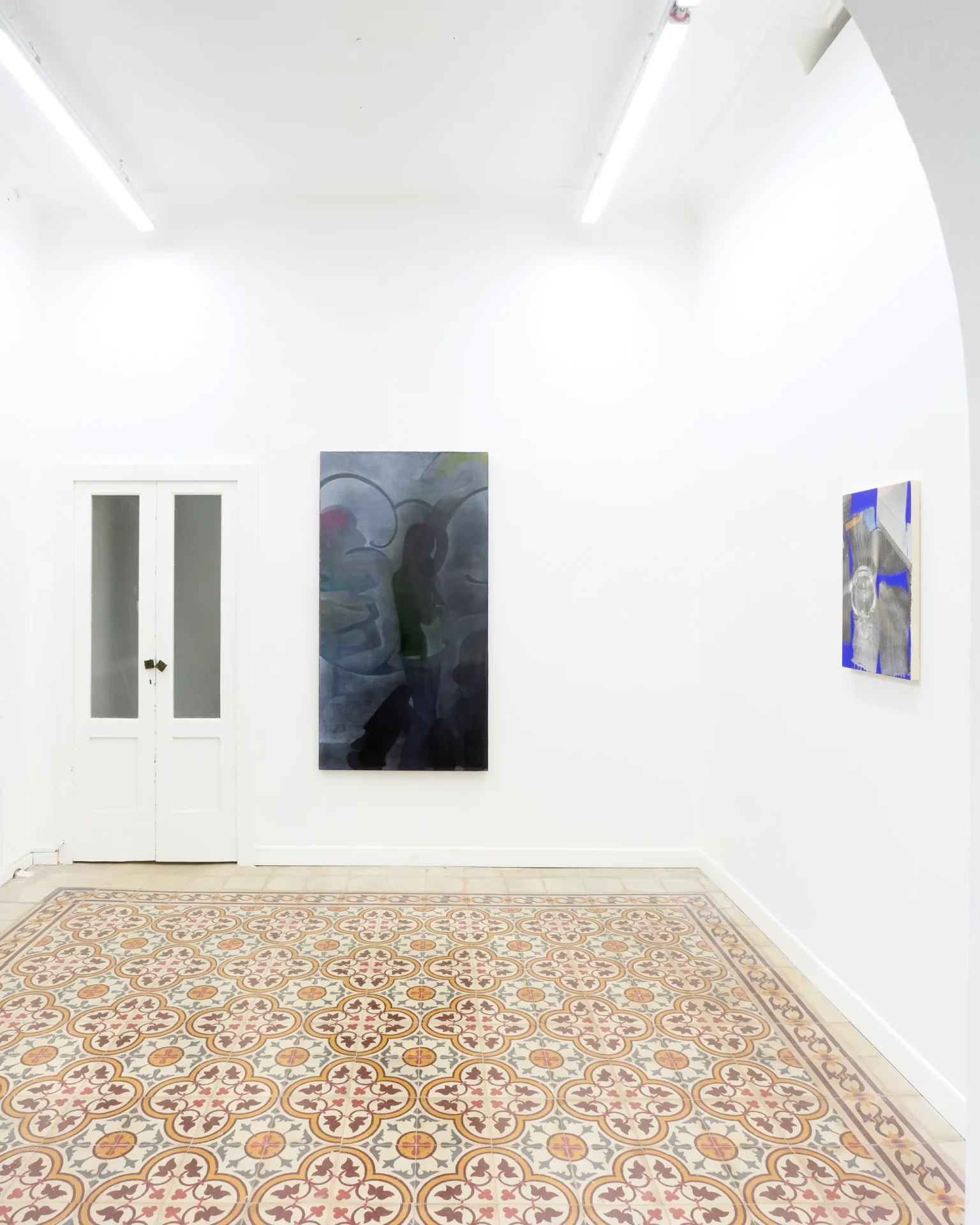
Łakomsk works with paintings that merge landscape, portraiture, and still life. Recurring motifs, trees, leaves, walls, windows, construct indeterminate spaces where memory and identity intertwine. Fragmented and liquefied forms evoke half-remembered, incidental narratives. Central silhouettes, reflected in graffiti-scratched glass, suggest a muted urban solitude: the distance between past and present becomes painterly substance.

Kowal draws on found footage and a cinematic analysis of the figure. His portraits and self-portraits, stretched and replicated, are filtered through a watery green lens that introduces a restrained emotional tension. The result is a spatial and temporal dissociation: images suspended between the everyday and the dreamlike, where stillness is not absence but threshold.

Antonsson operates at the intersection of the organic and the technological. Biological fragments and mechanical components merge into fluid bodies in continuous transformation. The cycle of life and death, nature and human intervention, is explored as an ongoing evolutionary process. Not rupture but metamorphosis: an identity that continually redefines itself without stabilizing.

Linda Lach investigates isolation, care, and bodily exhaustion, translating personal and historical memories into abstract, stratified forms. Through an intersectional approach, her works transform the burden of caregiving into physical and psychic matter. Dissociation here becomes a mechanism of defense and adaptation, a way of inhabiting the fatigue of attachment and the fragility of a body no longer able to define its own boundaries.

Polina Sokolova explores perceptions of power and time, and the ways contemporary image culture shapes memory. Her canvases inhabit a suspended state between simulated and real connection, where circulating images generate parasocial feelings of proximity and community. Reality appears unstable, dreamlike; presence, memory, and human bonds fade, delay, or dissolve, giving rise to the quiet anxiety of being watched that defines dissociation itself.

Tatjana Danneberg brings memories back to the surface as images that are at once near and distant, tangible yet distorted. Confusion becomes the symptom of a dissonance between past events, ordinary moments shared with friends or partners, and their reconstruction in the present. Through a ritual gesture using paint and plaster, she reworks a fragmented archive from which anonymous, disoriented figures emerge, suspended between presence and erasure. Photography dissolves into gestural painting, and memory reveals itself as a warped reconstruction.

Taken as a whole, the exhibition constructs a visual and conceptual montage that mirrors the very definition of dissociation proposed in the text: a truth-bearing oscillation between surrounding reality and the imaginary, with the self positioned at the center as a point of tension. The works do not illustrate a clinical concept; they expand its scope, connecting psychic dimensions with geopolitical scenarios, private memory with systemic crises.

Tales from Fractured Minds thus takes shape as a collective reflection on a subtle, nearly imperceptible altered state in which one is simultaneously present and unreachable. A fracture that may be resistance, surrender, or simply a strategy for survival.

What remains, after reading and reflection, is a mental image: that of a continuous montage in which desires, traumas, and languages flow like overlapping frames. Perhaps it is precisely within that unstable superimposition that the mind finds its way to endure.

-FW

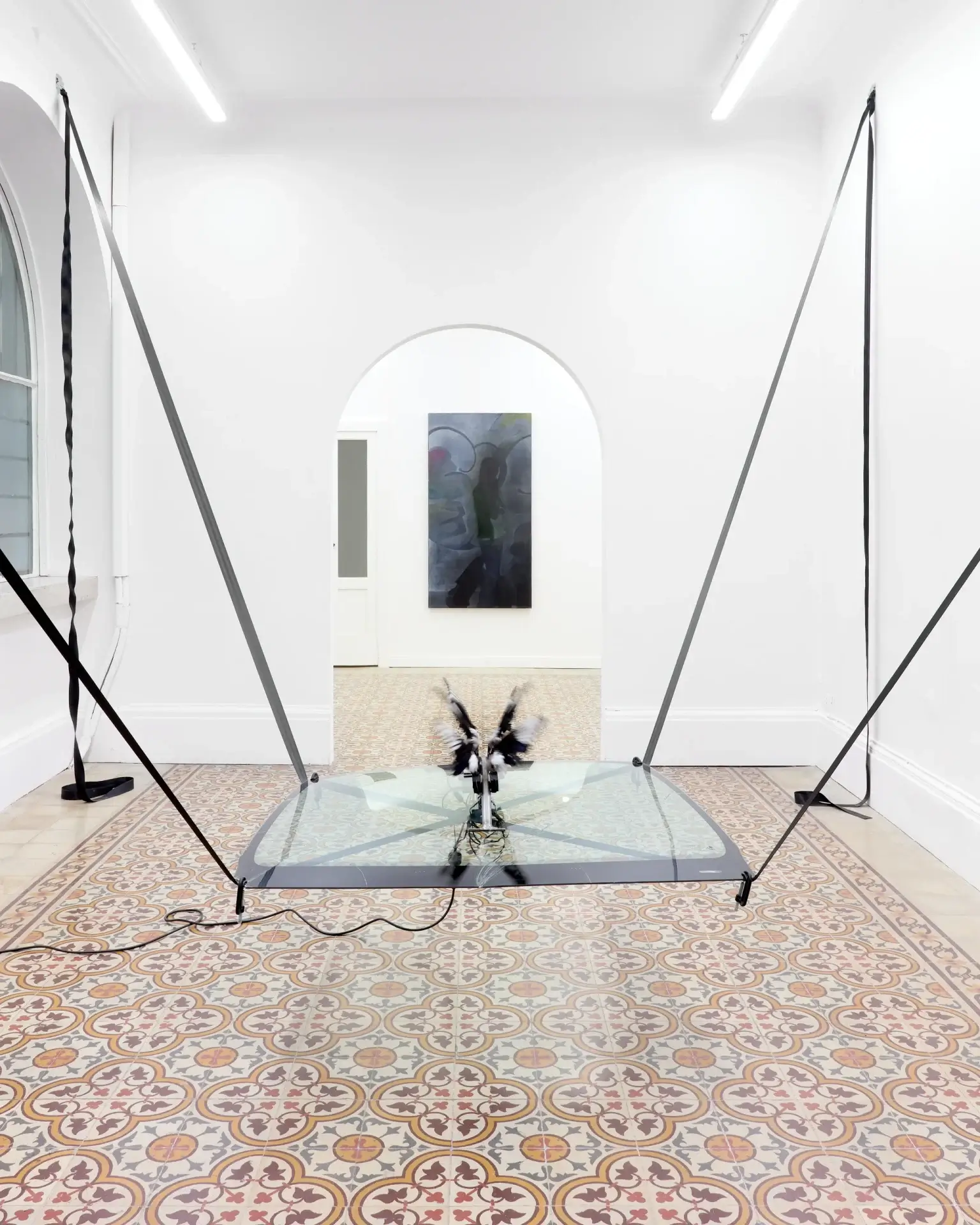
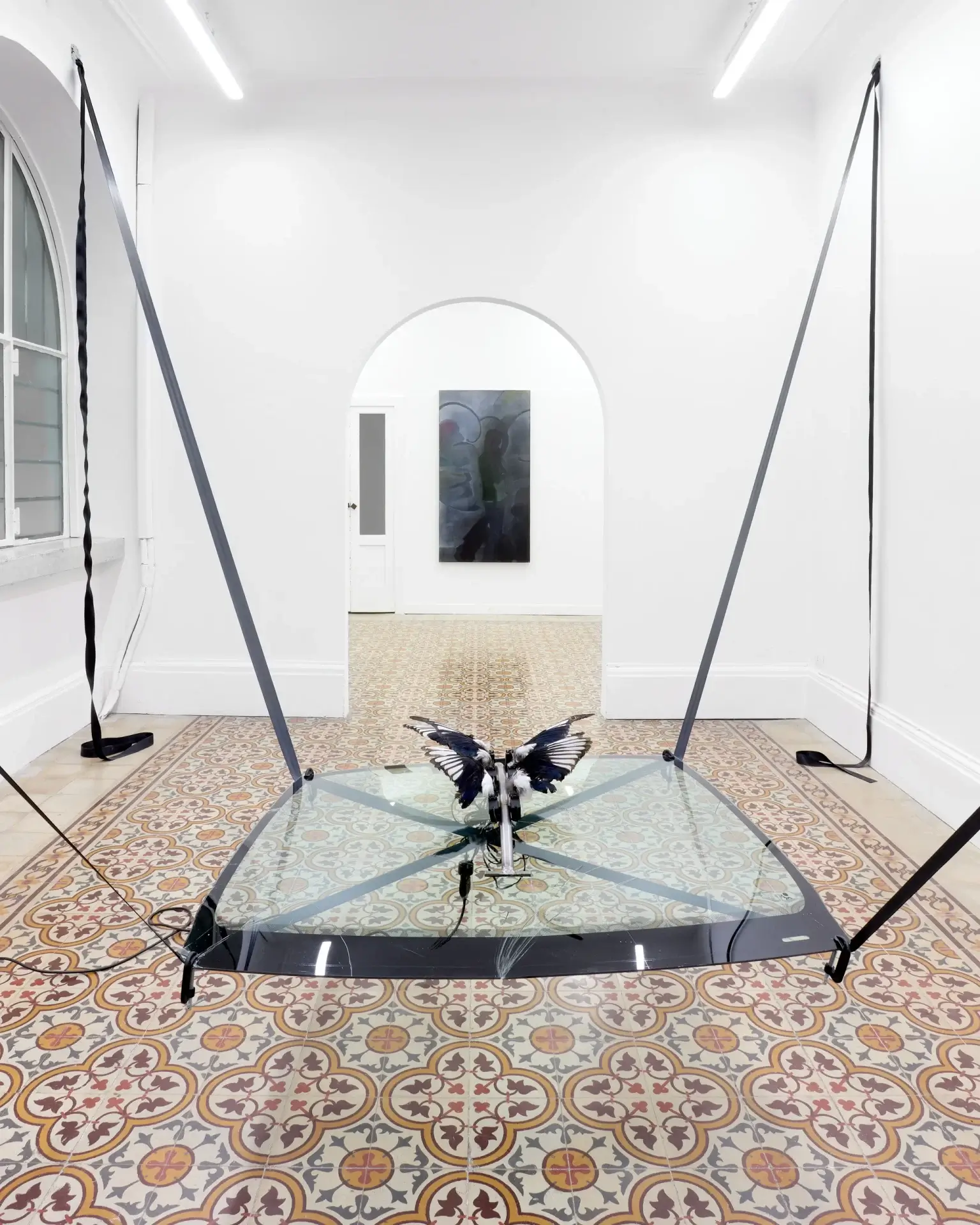
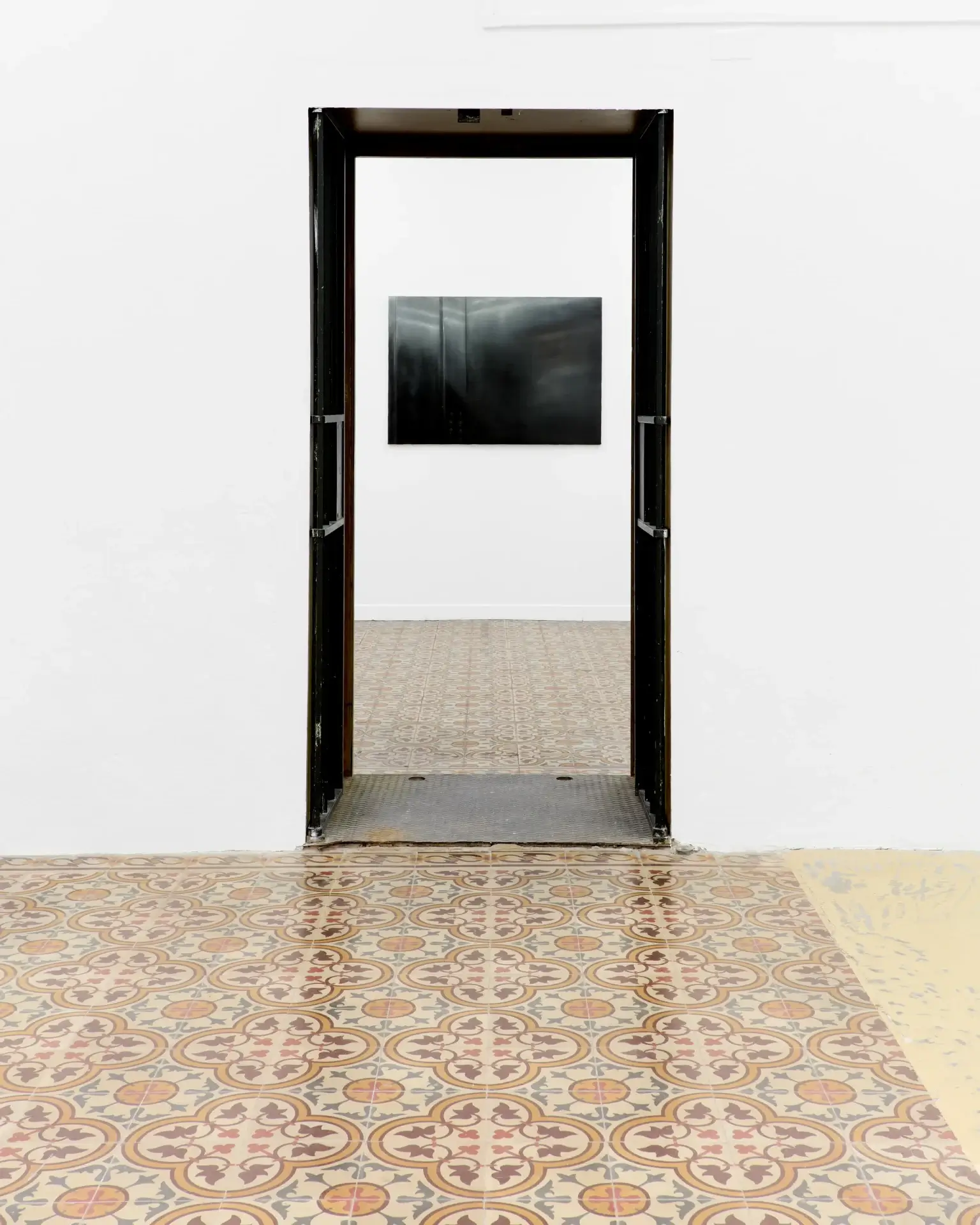
Exhibition view: Tales from Fractured Minds: Dissociation as Refuge and Rupture, Alexander Adamau, Ant Łakomsk, Bartosz Kowal, Hanna Antonsson, Linda Lach, Polina Sokolova, and Tatjana Danneberg, curated by Matteo Giovanelli, The Address Gallery, Brescia.

Founded in 2021, Fakewhale advocates the digital art market's evolution.Viewing NFT technology as a container for art, and leveraging the expansive scope of digital culture, Fakewhale strives to shape a new ecosystem in which art and technology become the starting point, rather than the final destination.

Fakewhale Log is the media layer of Fakewhale. It explores how new technologies are reshaping artistic practices and cultural narratives, combining curated insights, critical reviews, and direct dialogue with leading voices.