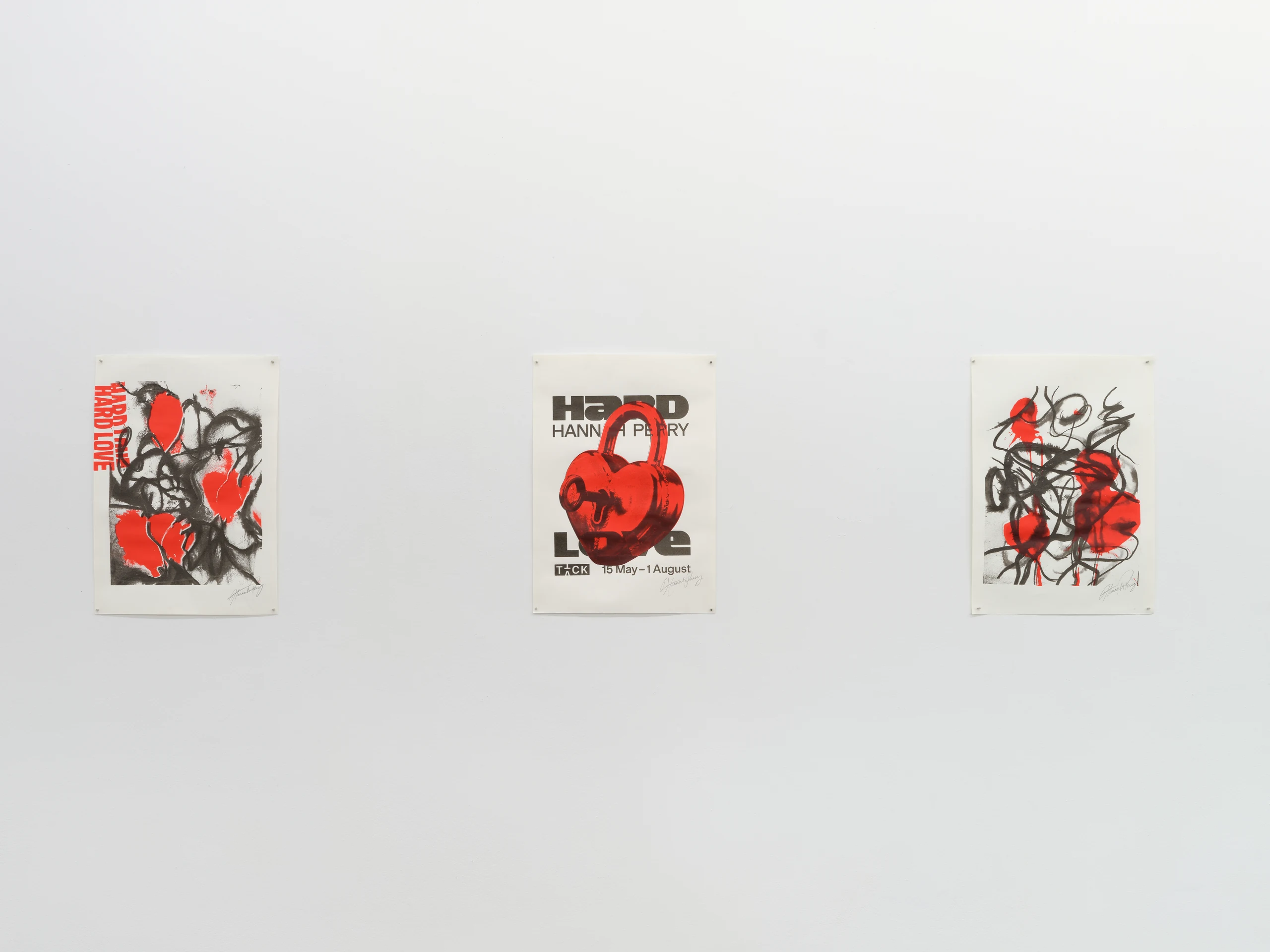
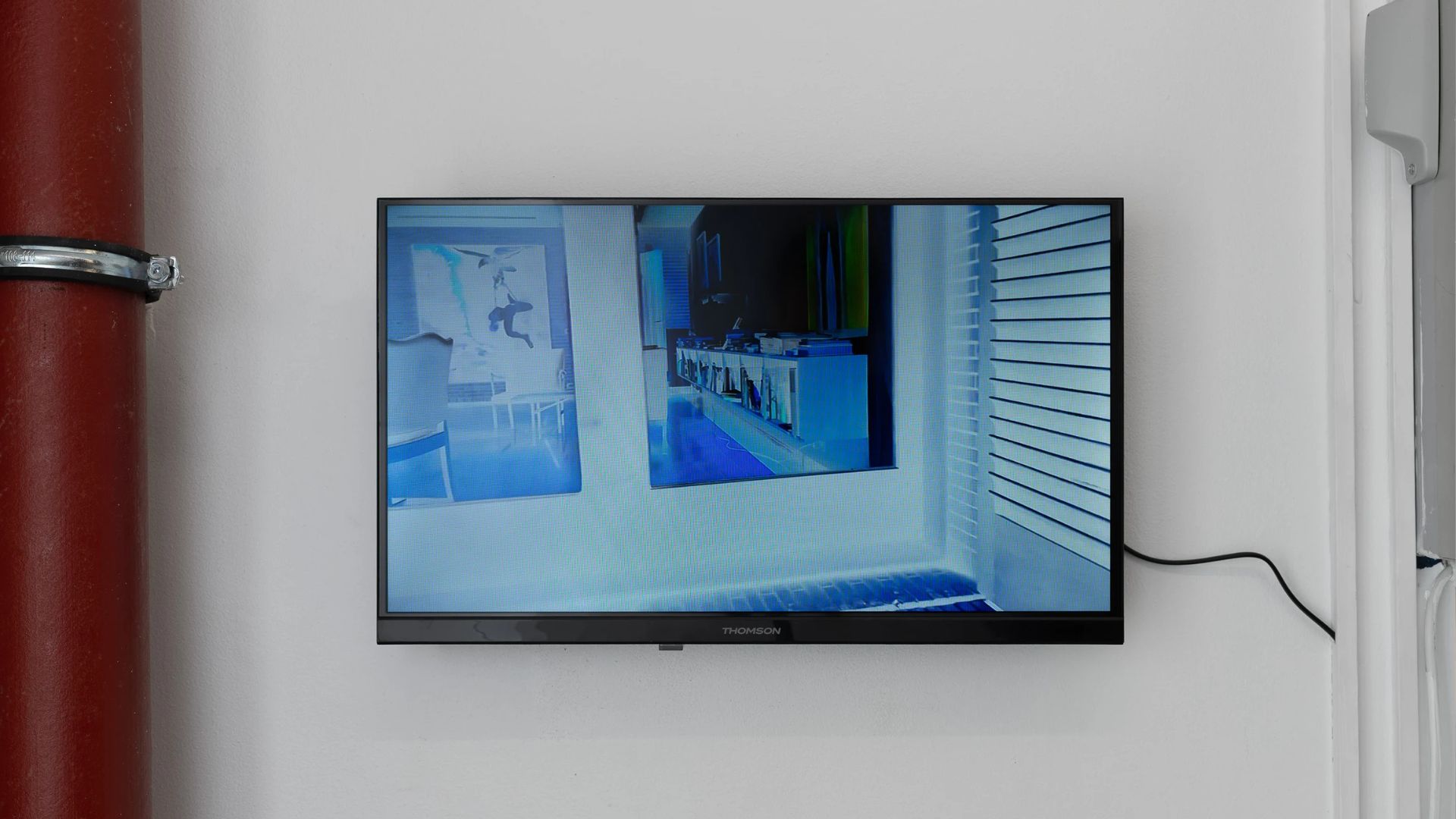
“Hard Love” by Hannah Perry, at TICK TACK Gallery, Antwerp, 15 May – 1 August 2026.
“What if your sense of self shattered like a window?” This question echoes through Hard Love long before we encounter its sculptures. We enter the exhibition carrying our own fragments, our own contradictory selves, and immediately find ourselves inside a landscape where emotions acquire weight and steel seems capable of breathing. Across the three floors of TICK TACK Gallery, Hannah Perry transforms personal experience into something collective, tracing invisible connections between memory, labour, identity and the body.
We find ourselves thinking about structures, not only buildings, but the internal architectures that support a life. What happens when those structures bend? What remains when identity is pulled apart and rebuilt? Perry does not offer answers. Instead, she constructs an environment where these questions circulate like a pulse beneath the skin. The exhibition unfolds as a meditation on transformation, one that is intimate and monumental at once.
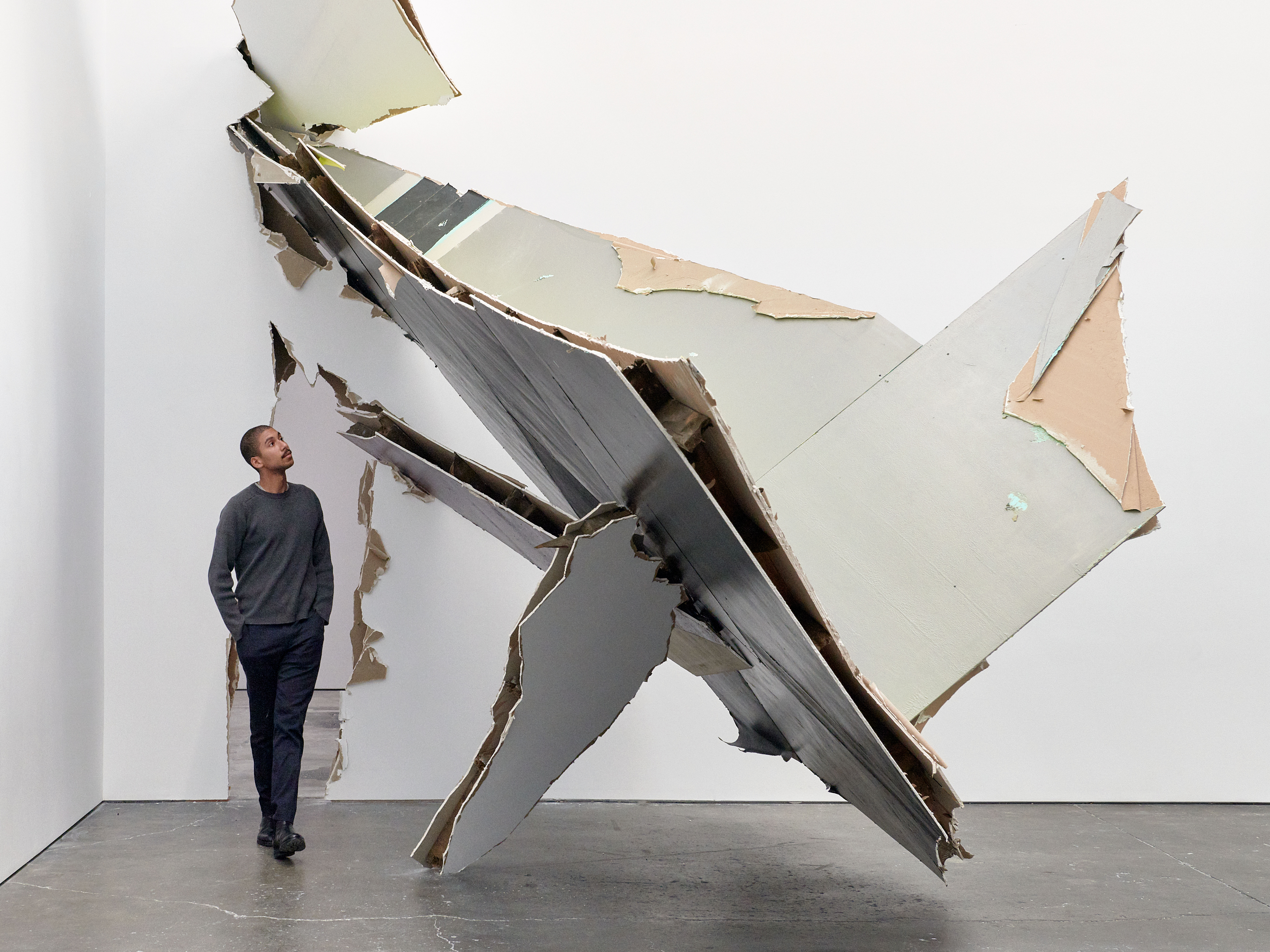
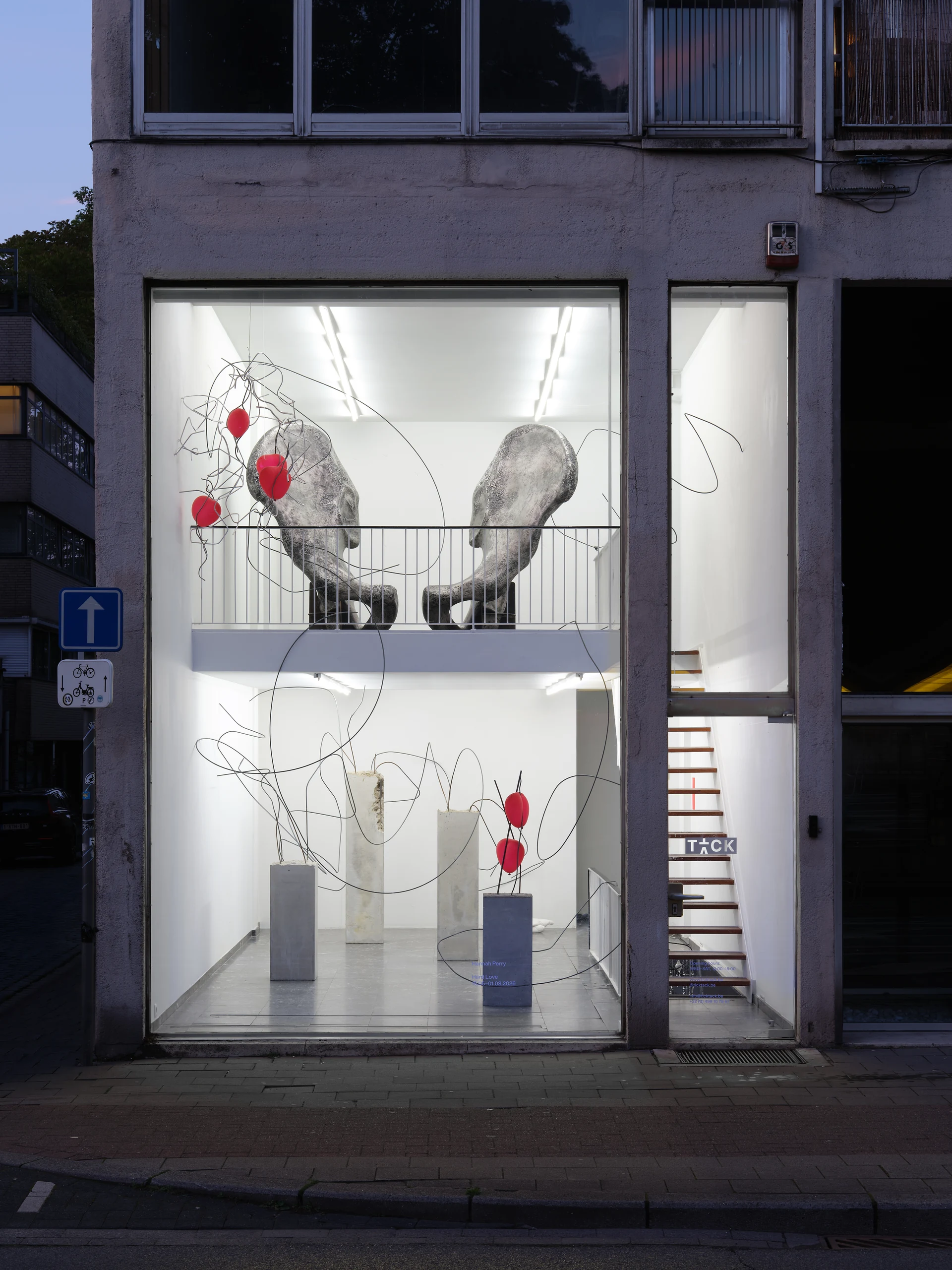
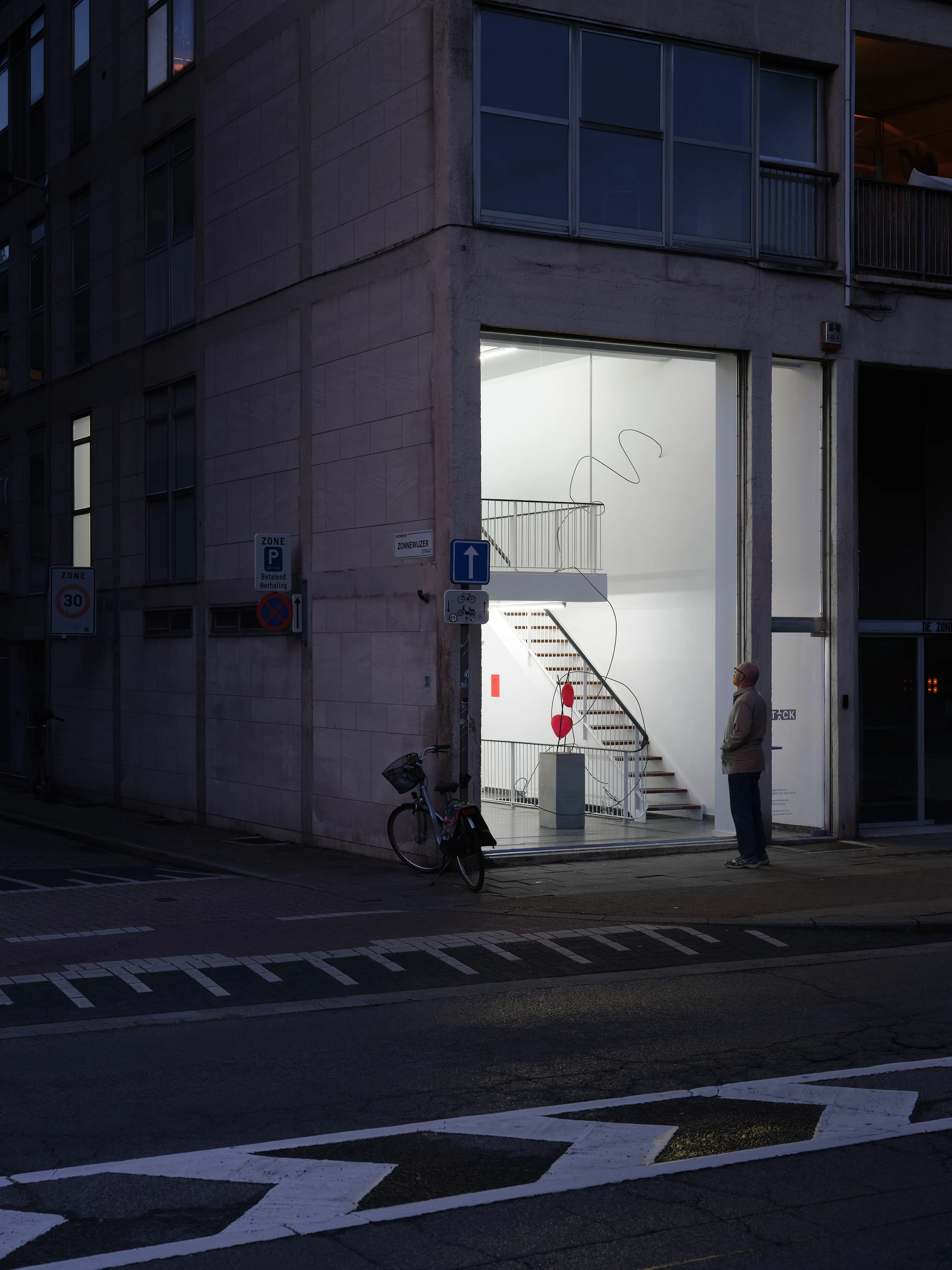
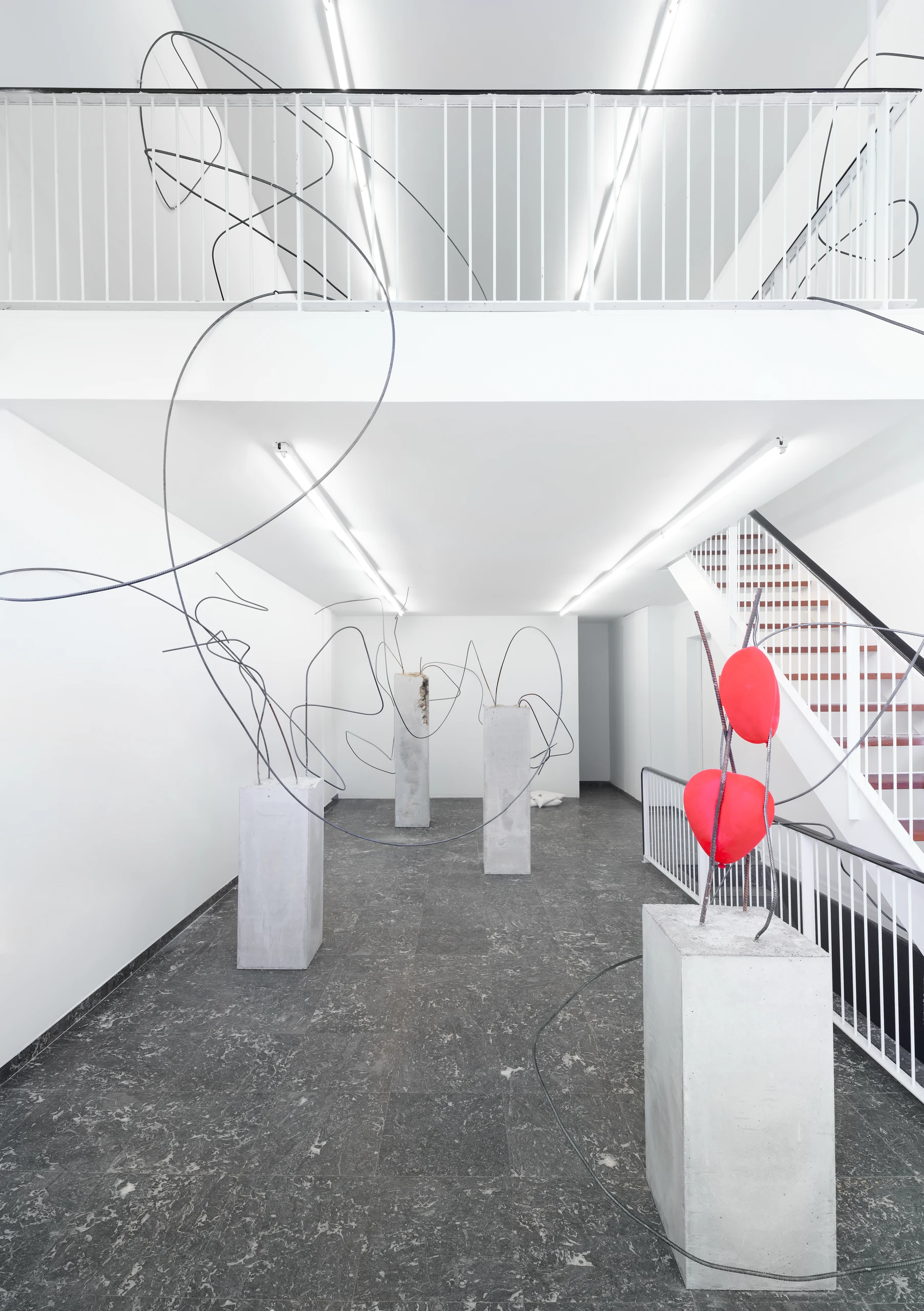
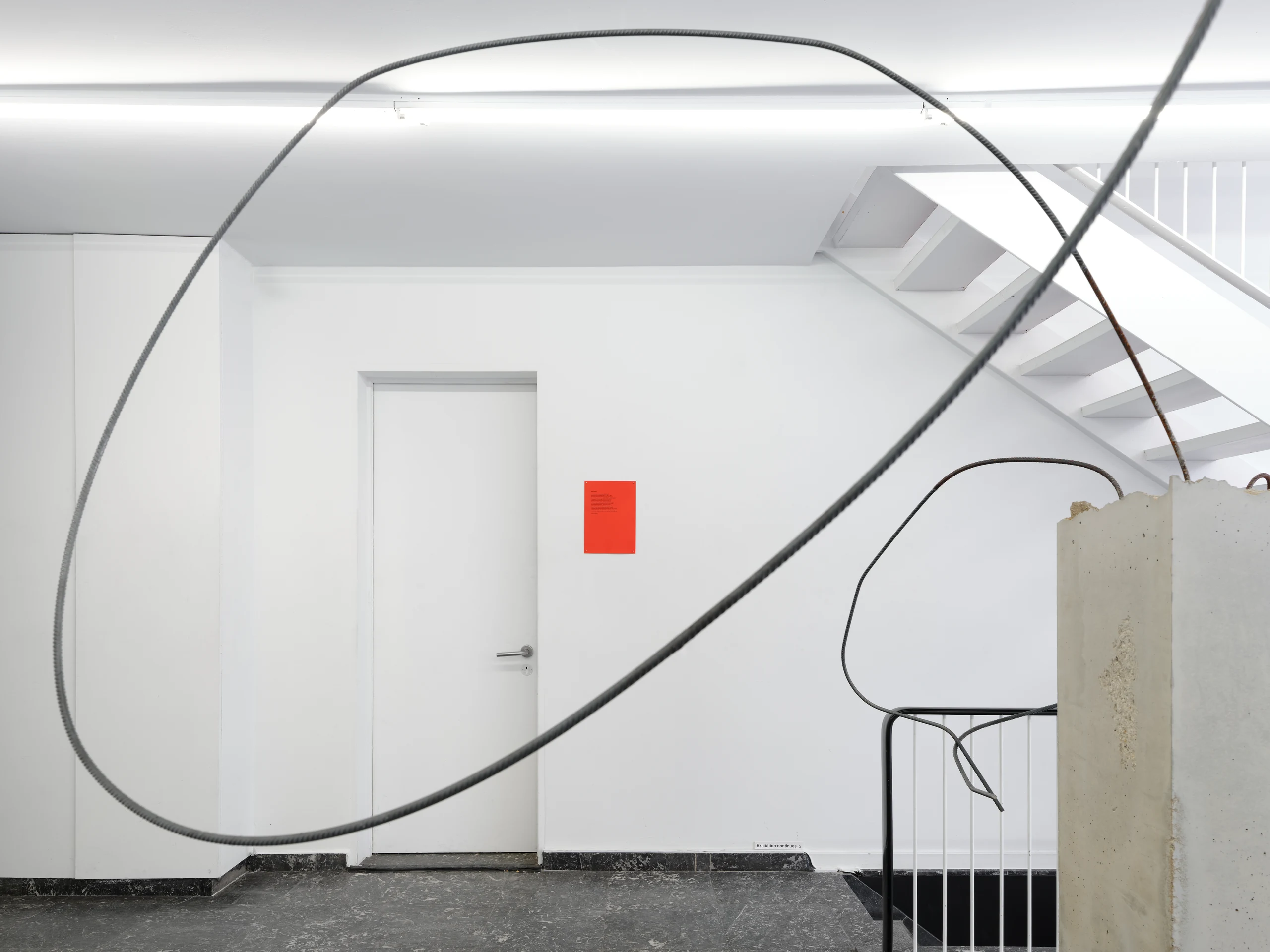
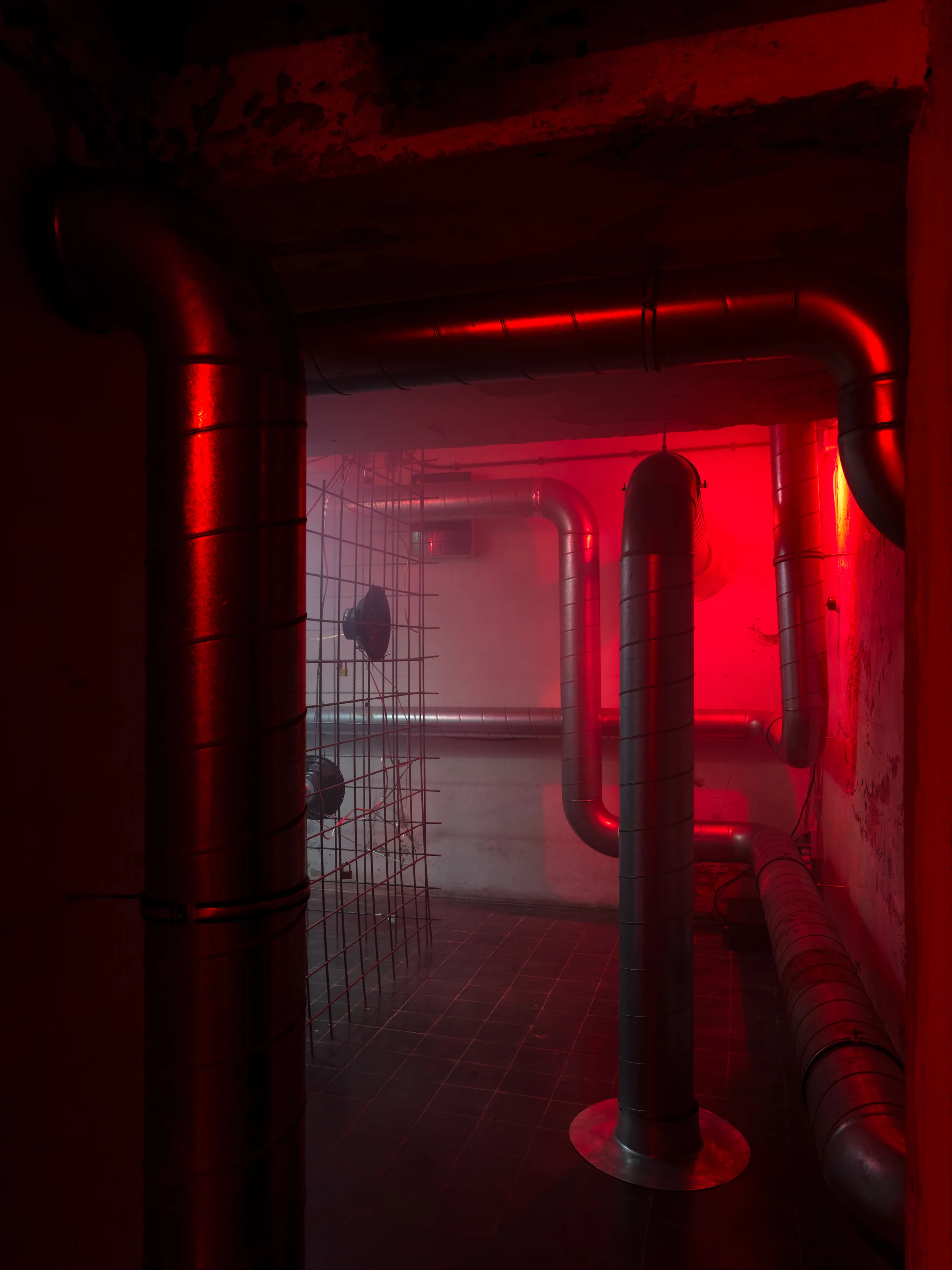
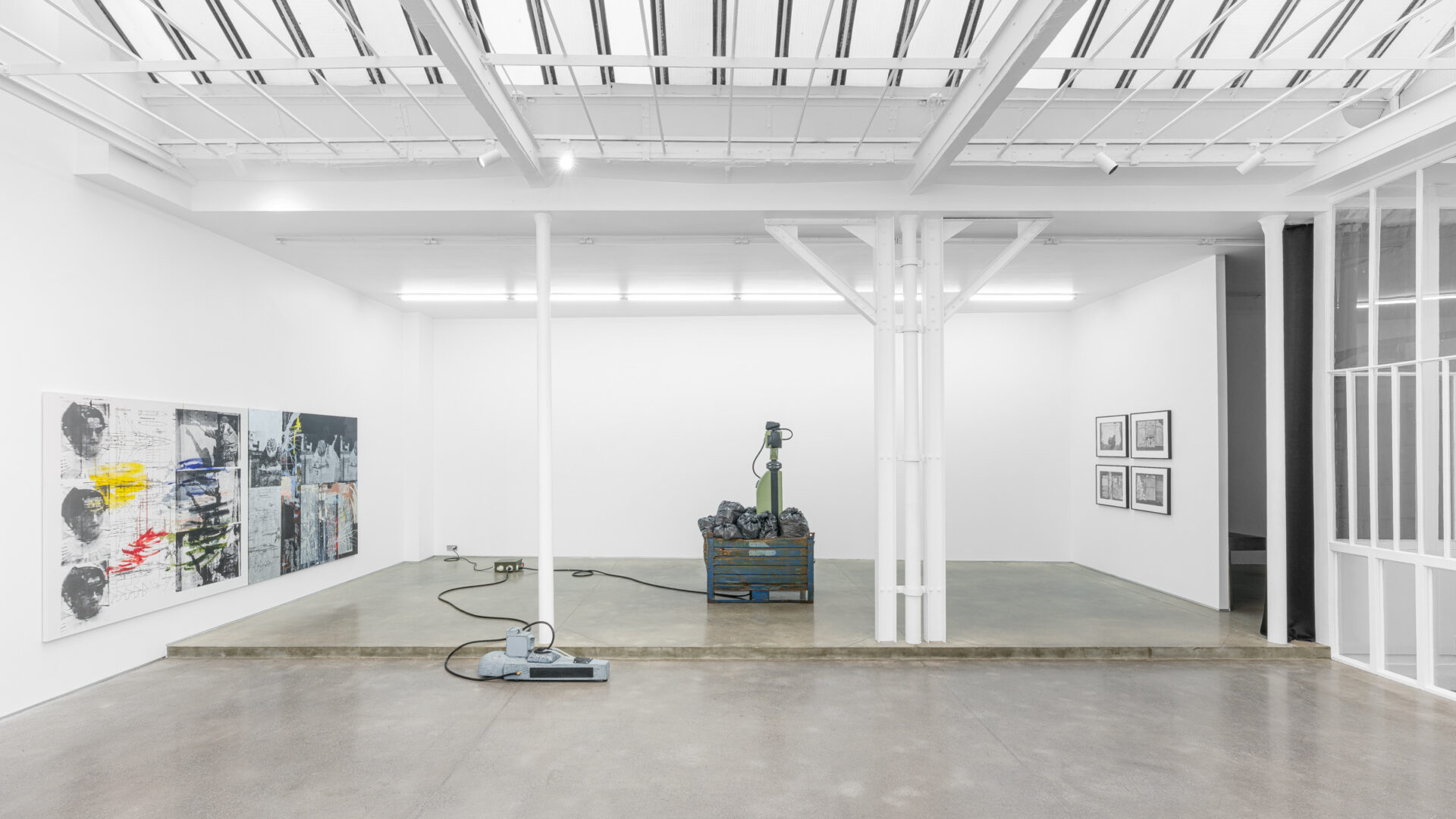
The atmosphere of the gallery is charged with a peculiar tension. The building itself becomes an active participant in the exhibition. Moving through its floors feels less like visiting a series of rooms and more like navigating the anatomy of a living organism. Sculptural elements emerge from concrete forms, while steel rods twist and arc through space. Visitors move carefully around these structures, aware of their physical presence and latent force.
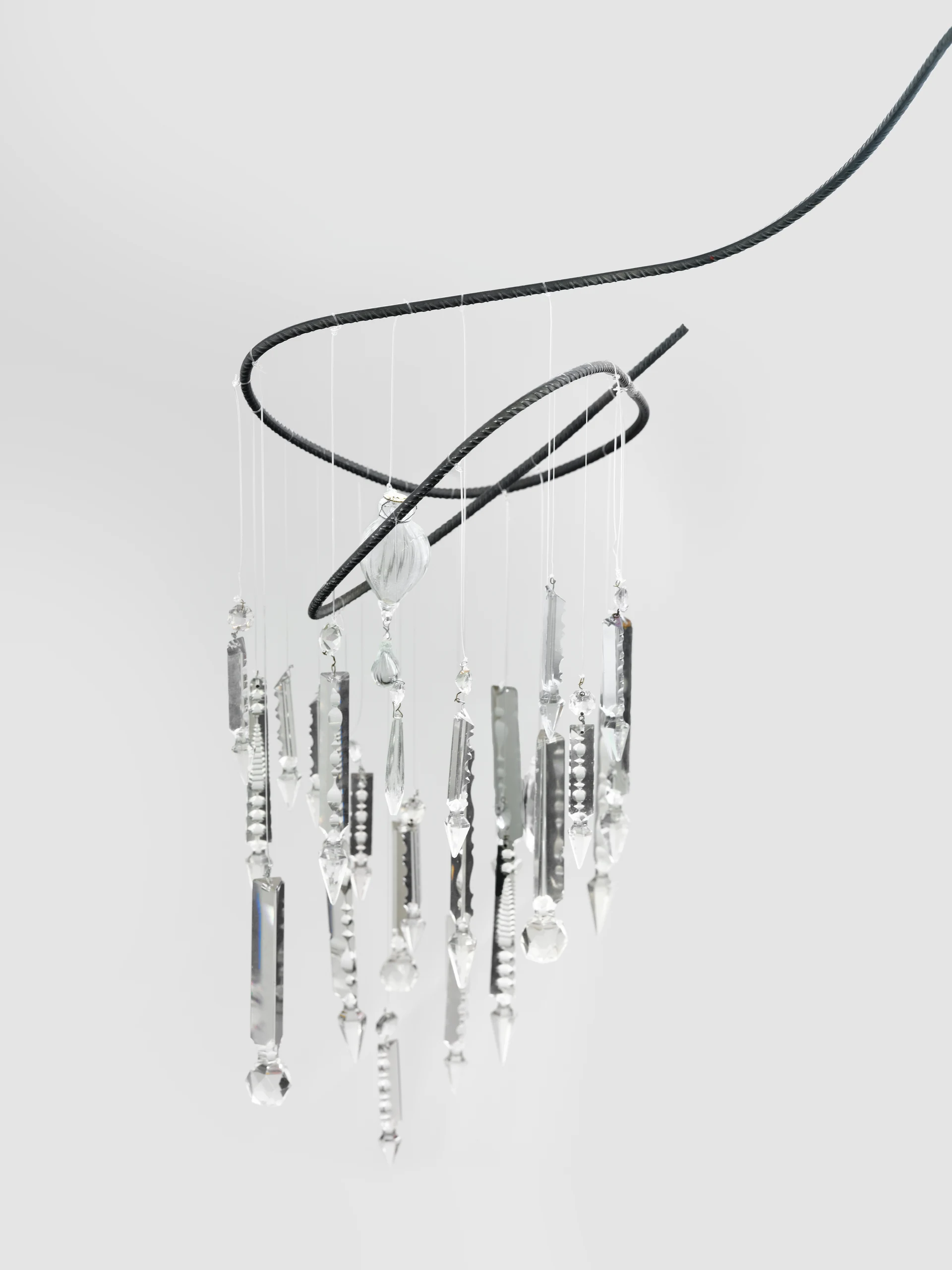
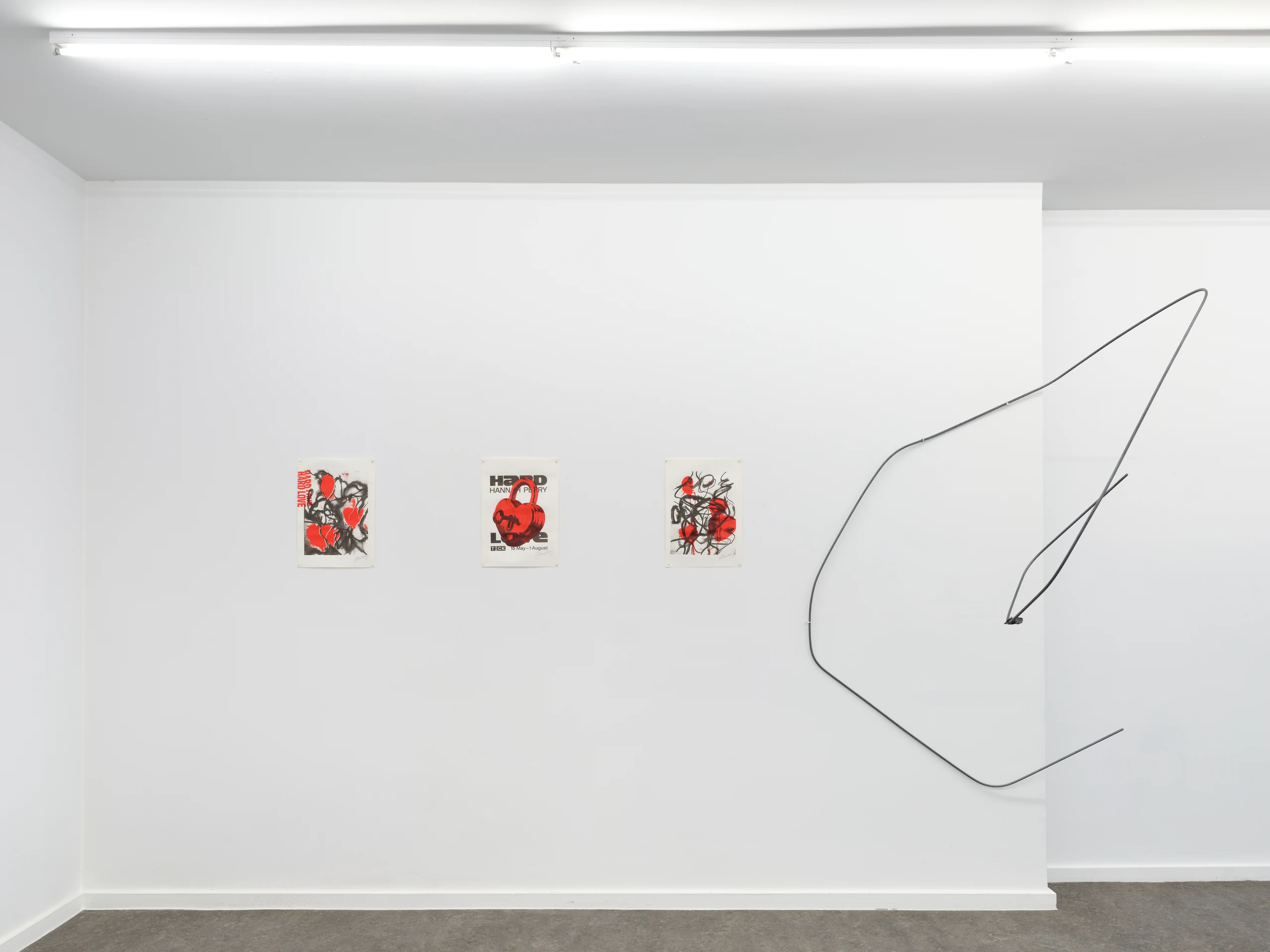
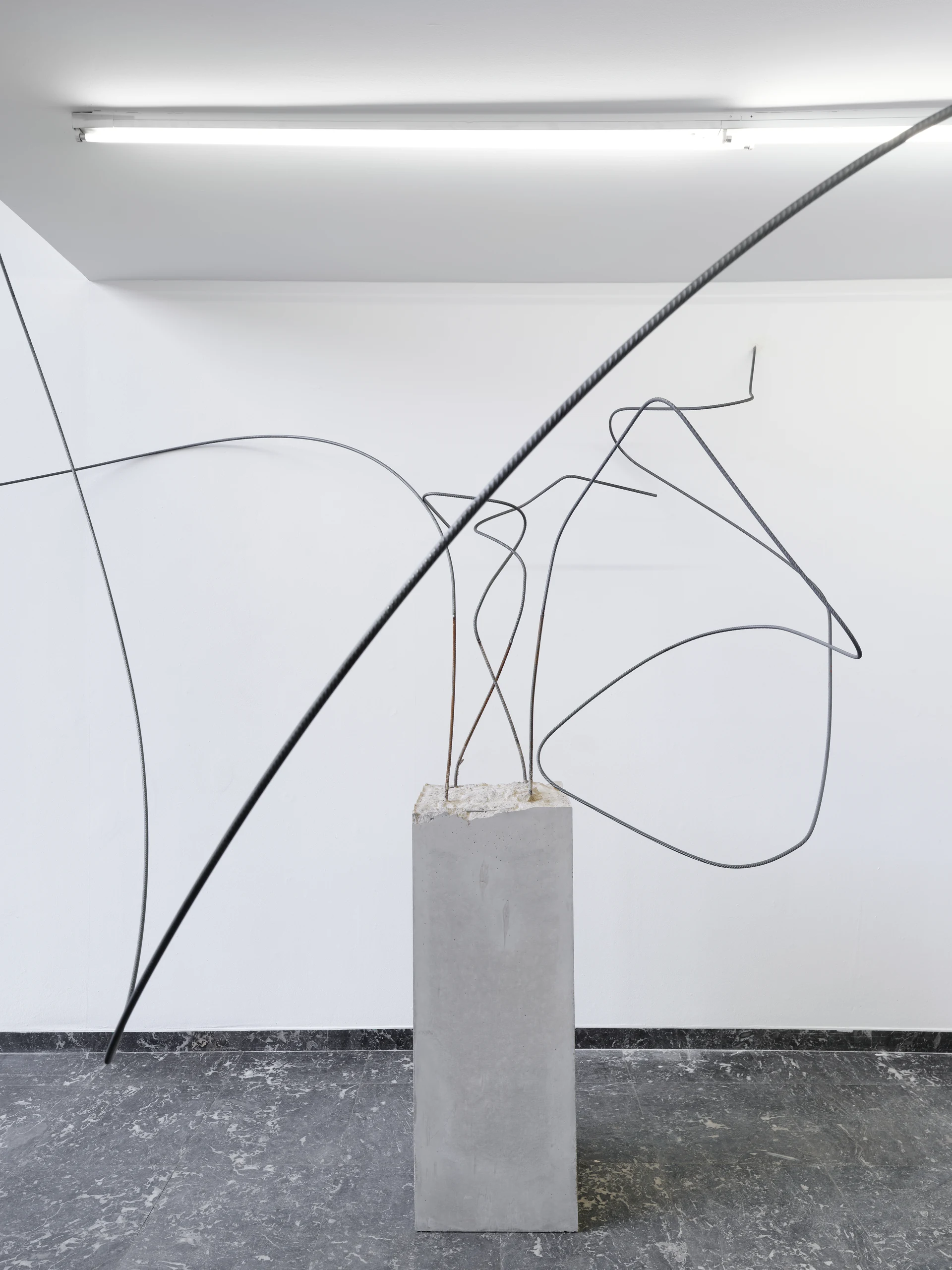
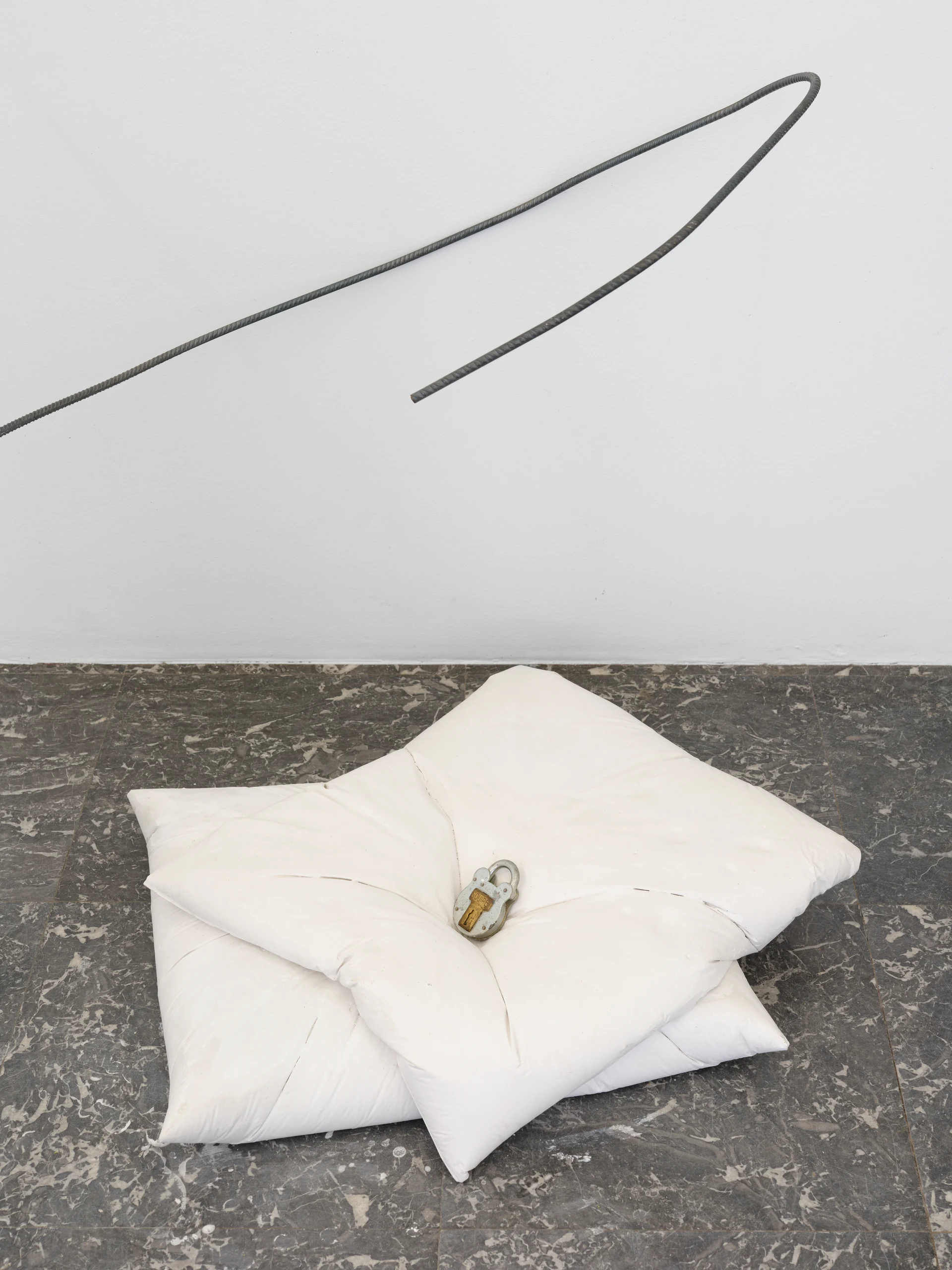
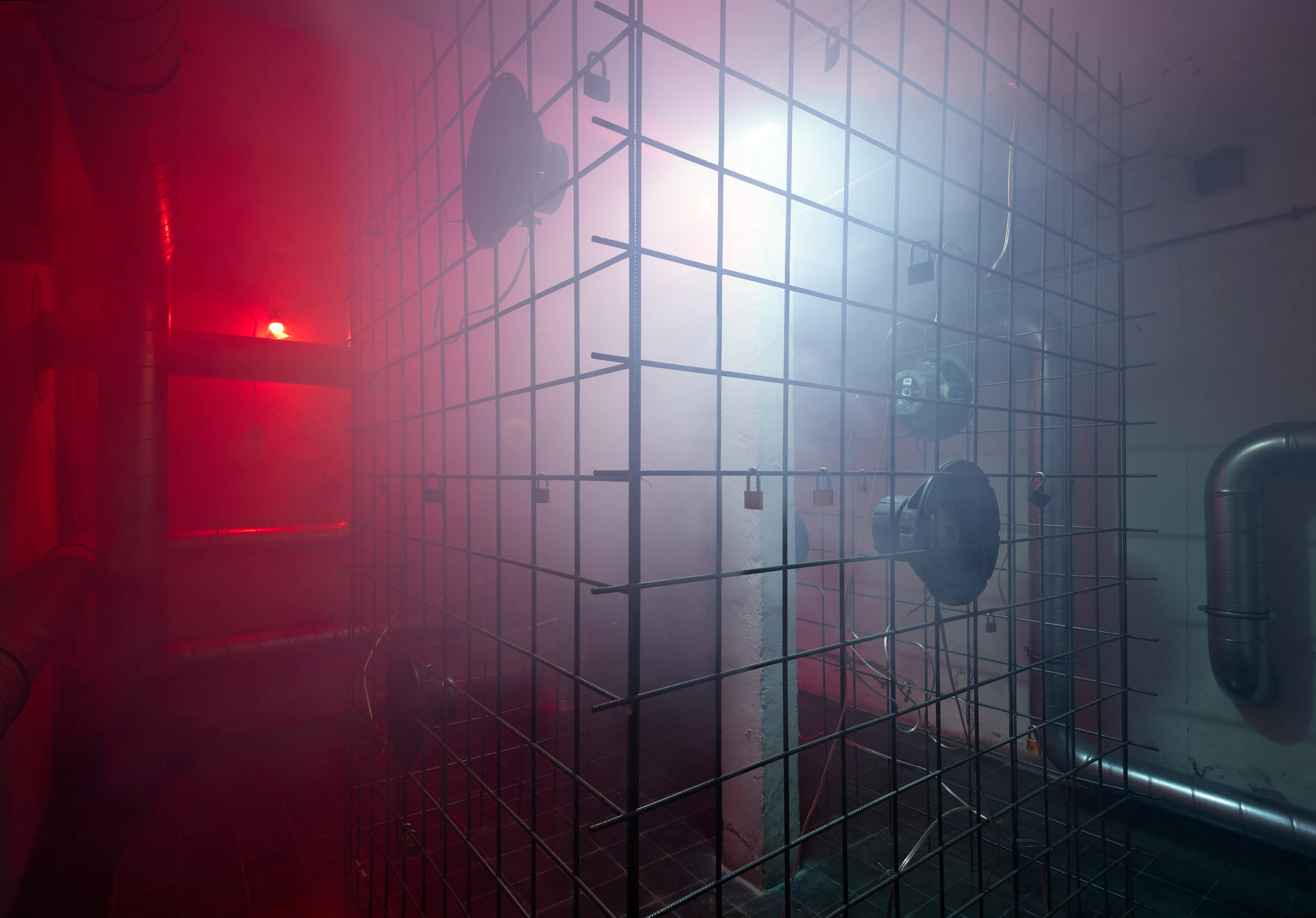
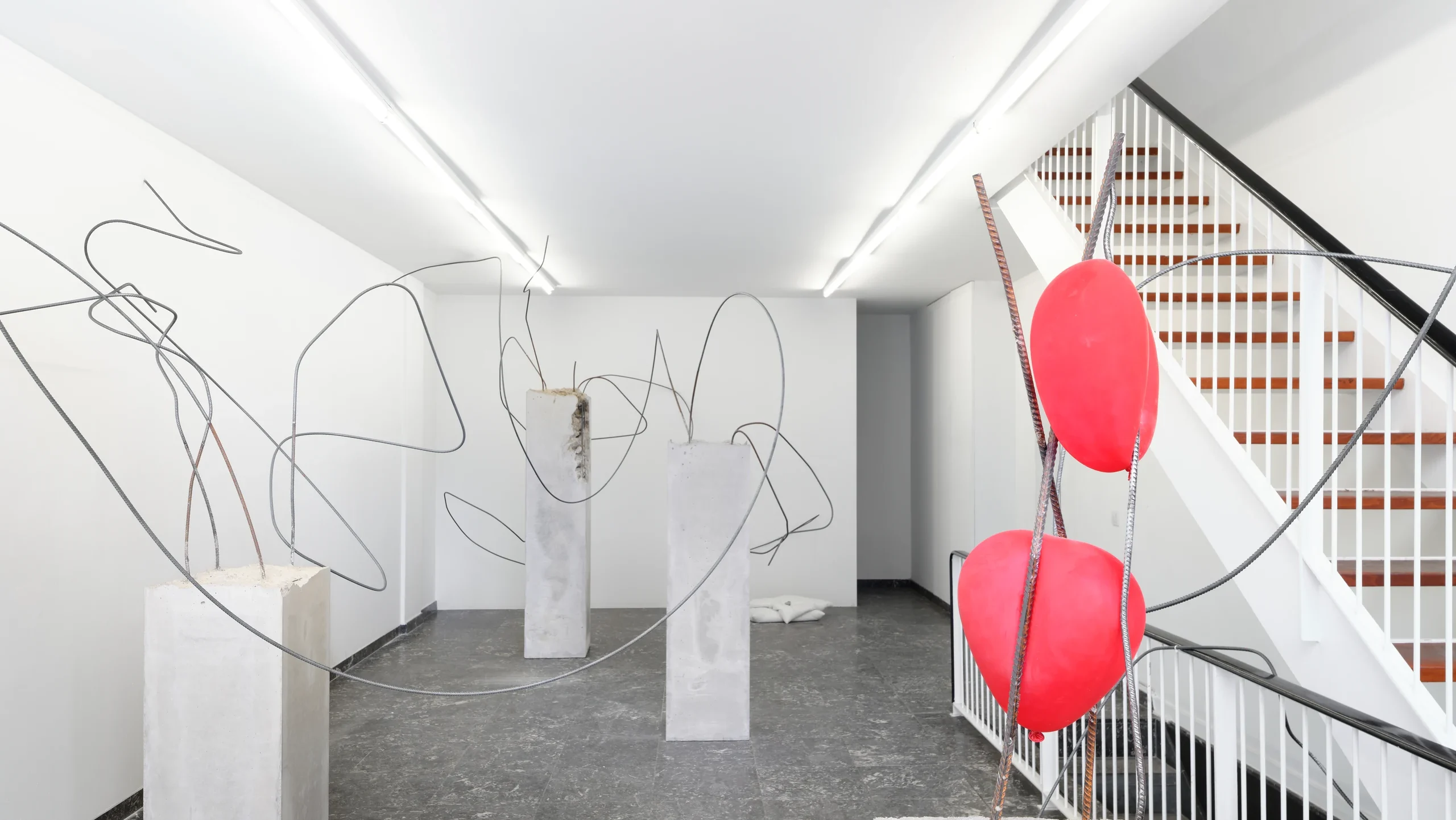
The exhibition’s arrangement creates a continuous dialogue between solidity and vulnerability. Works distributed throughout the building establish visual and emotional correspondences. Corroded rebars erupt from concrete pillars, while curved metal lines seem to suspend gravity itself. The sculptures appear simultaneously resilient and fragile, as if caught between construction and collapse. This tension mirrors the exhibition’s central concerns: emotional labour, motherhood, class memory and the instability of identity.
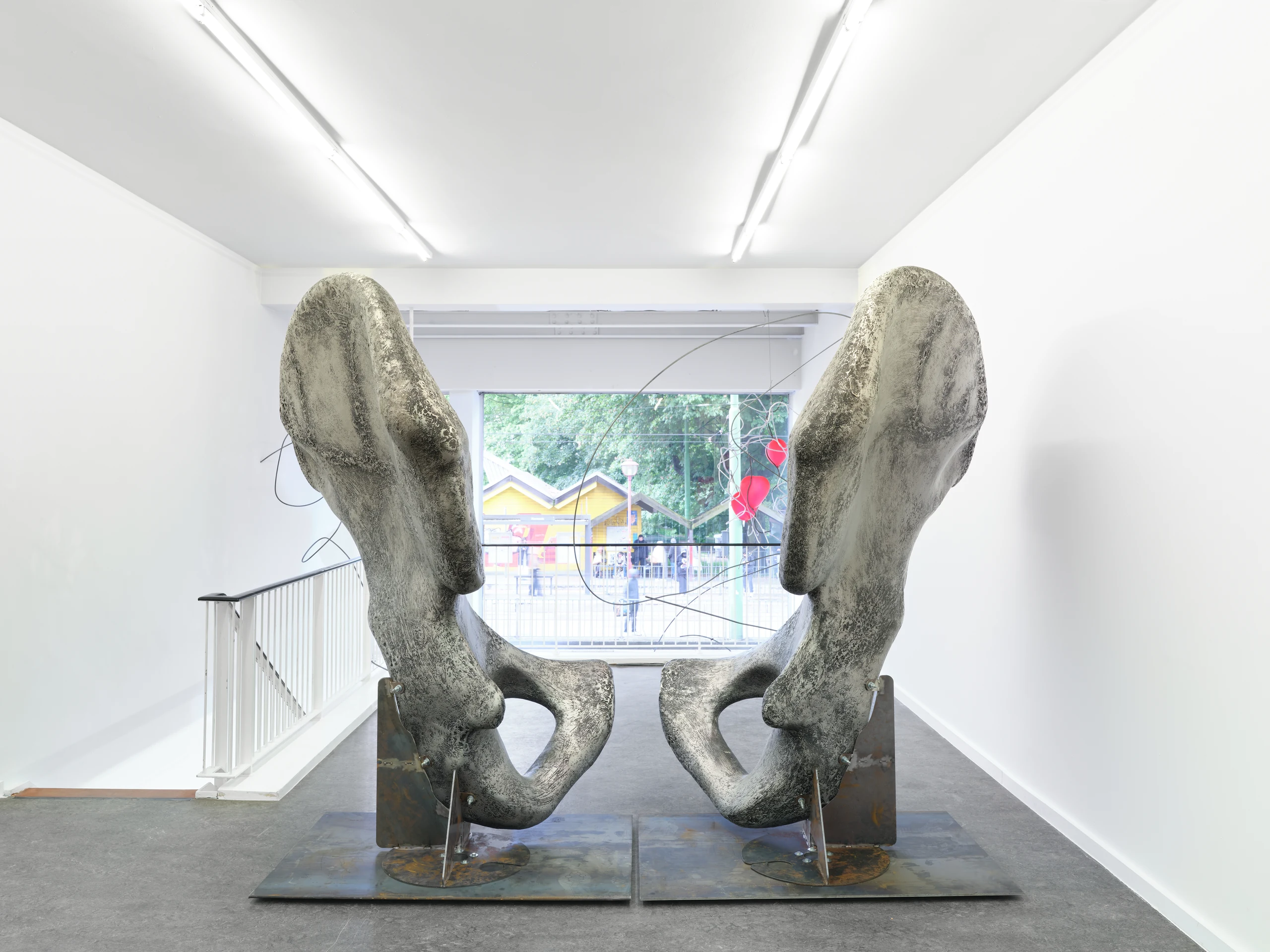
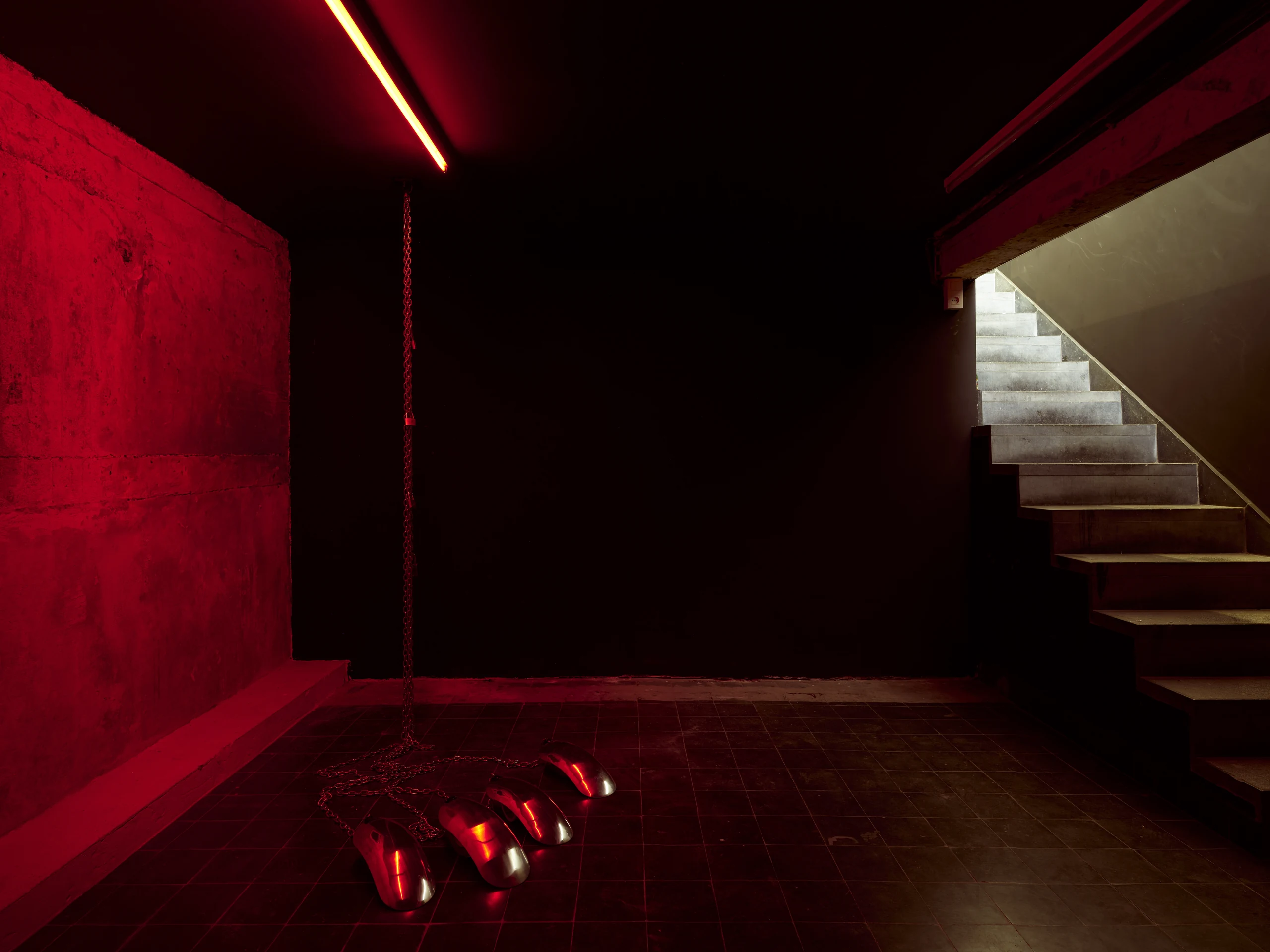
Particularly striking is Antagonist (2024), a monumental steel pelvis occupying the gallery like a piece of industrial infrastructure. Originally conceived as a moving work, its stillness here becomes deeply expressive. The sculpture retains an implied motion, as though the effort of childbirth remains embedded within the metal. By enlarging this anatomical structure to architectural scale, Perry transforms a bodily experience into a public monument. The personal becomes structural; the intimate becomes collective.
Material choices play a crucial role throughout the exhibition. Perry combines industrial substances, steel, aluminium, concrete, with forms associated with vulnerability and emotion. Melted resin hearts embedded within the metal frameworks create moments of unexpected tenderness. These hearts feel simultaneously symbolic and physical, carrying traces of breath, exhaustion and persistence. Their softness contrasts sharply with the rigid materials surrounding them, reinforcing the exhibition’s exploration of contradictory emotional states.
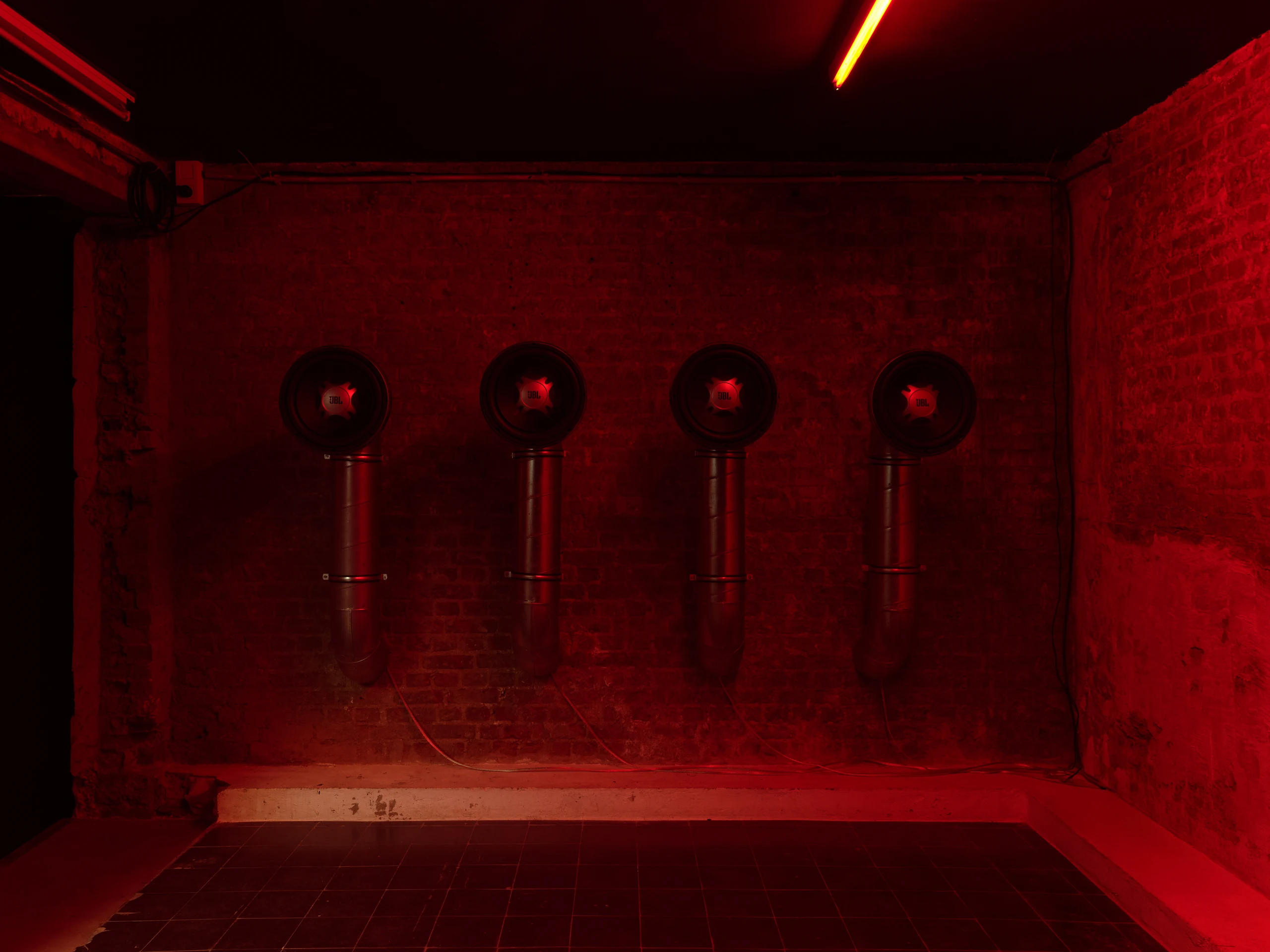
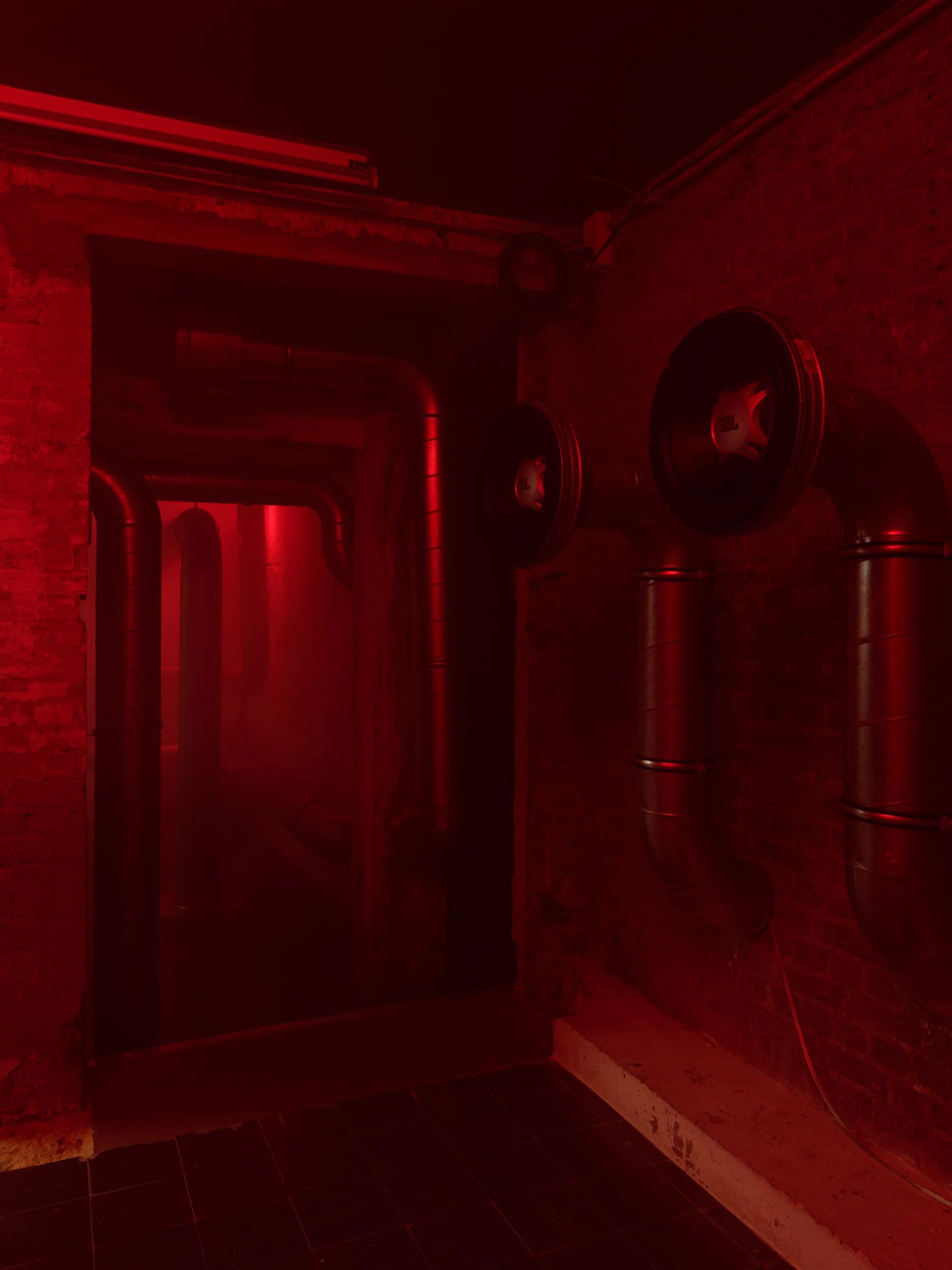
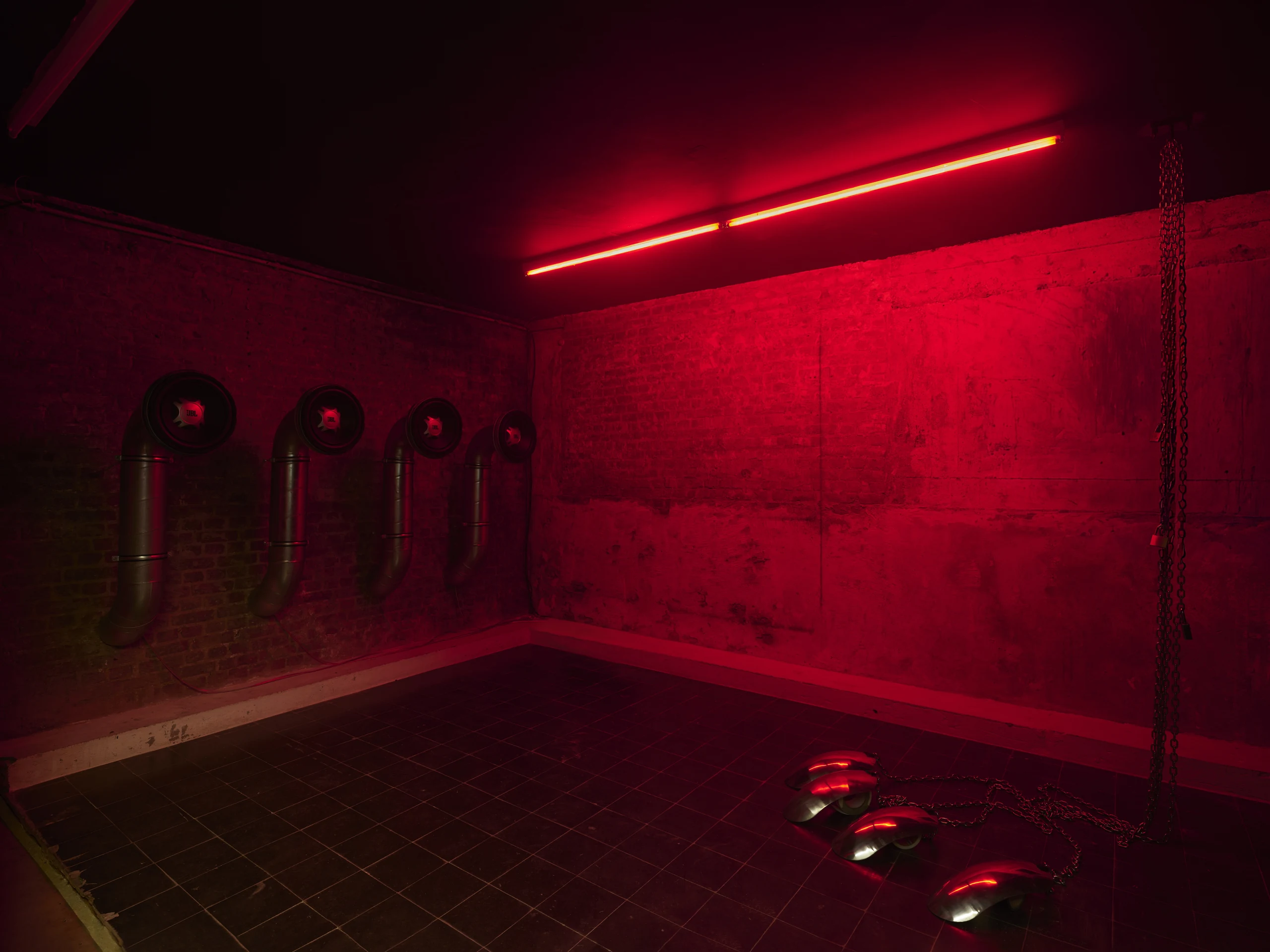
Sound deepens this experience. Low-frequency vibrations resonate through the basement level, activating the body before the intellect. Rather than functioning as accompaniment, sound becomes a sculptural medium in its own right. We feel it in our chest before we identify it. This emphasis on pre-linguistic sensation aligns with Perry’s broader investigation of bodily knowledge, those forms of understanding that exist beneath language and social categorisation.
The exhibition continually returns to the relationship between individual experience and larger social structures. Perry’s reflections on matrescence, the profound transformation associated with becoming a mother, extend beyond autobiography. Her sculptures reveal how emotional and physical labour are shaped by histories of class, gender and industrial production. Steel, concrete and sound become carriers of memory, connecting personal narratives to wider cultural conditions.
The exhibition lingers like a low vibration beneath consciousness, reminding us that every structure, whether architectural, social or emotional, contains traces of the bodies that built it. To experience Hard Love is to listen carefully to those traces and to discover, within their fractures, unexpected forms of resilience.
-FW