As the veneer of democracy starts to fade: at Galerie Derouillon, the Subtle Noise of Control

Group show « As the veneer of democracy starts to fade », curated by Clément Caballero, with Emmanuel Beguinot, Nikita Gale, Keta Gavasheli, Brett Ginsburg, Gordon Matta-Clark, Erwan Sene, Leyla Yenirce, Galerie Derouillon, Paris, 2026, Courtesy of the artists and Galerie Derouillon, Paris © Gregory Copitet

As the veneer of democracy starts to fade by Emmanuel Beguinot, Nikita Gale, Keta Gavasheli, Brett Ginsburg, Gordon Matta-Clark, Erwan Sene, and Leyla Yenirce, curated by Clément Caballero, at Galerie Derouillon, Paris, 23/04/2026 – 30/05/2026.

At Galerie Derouillon’s Étienne Marcel space, on rue de Turbigo in Paris, As the veneer of democracy starts to fade, on view from April 23 to May 30, 2026 and curated by Clément Caballero,  brings together works by Emmanuel Beguinot, Nikita Gale, Keta Gavasheli, Brett Ginsburg, Gordon Matta-Clark, Erwan Sene, and Leyla Yenirce in an exhibition that feels less like a thematic group show than a nervous system under pressure.

There are exhibitions one visits with the eyes, and others that reach the body first.
This one arrives as a low-frequency hum.

Before any image fully settles into focus, the space already seems charged by something invisible: the fluorescent coldness of the white walls, the exposed cables grazing the polished concrete floor, the strange stillness of industrial objects that appear dormant but never inactive. I found myself slowing down instinctively, as if the gallery had altered not only perception but breathing itself.

The exhibition borrows its title from Mark Stewart’s 1985 album As the veneer of democracy starts to fade, a phrase that lingers over the show like an electrical residue. Democracy here is not imagined as a spectacular collapse, but as a gradual erosion embedded within infrastructures, atmospheres, systems of circulation, and technologies of control.
What emerges throughout the exhibition is not dystopia in cinematic terms, but something far more unsettling: familiarity.

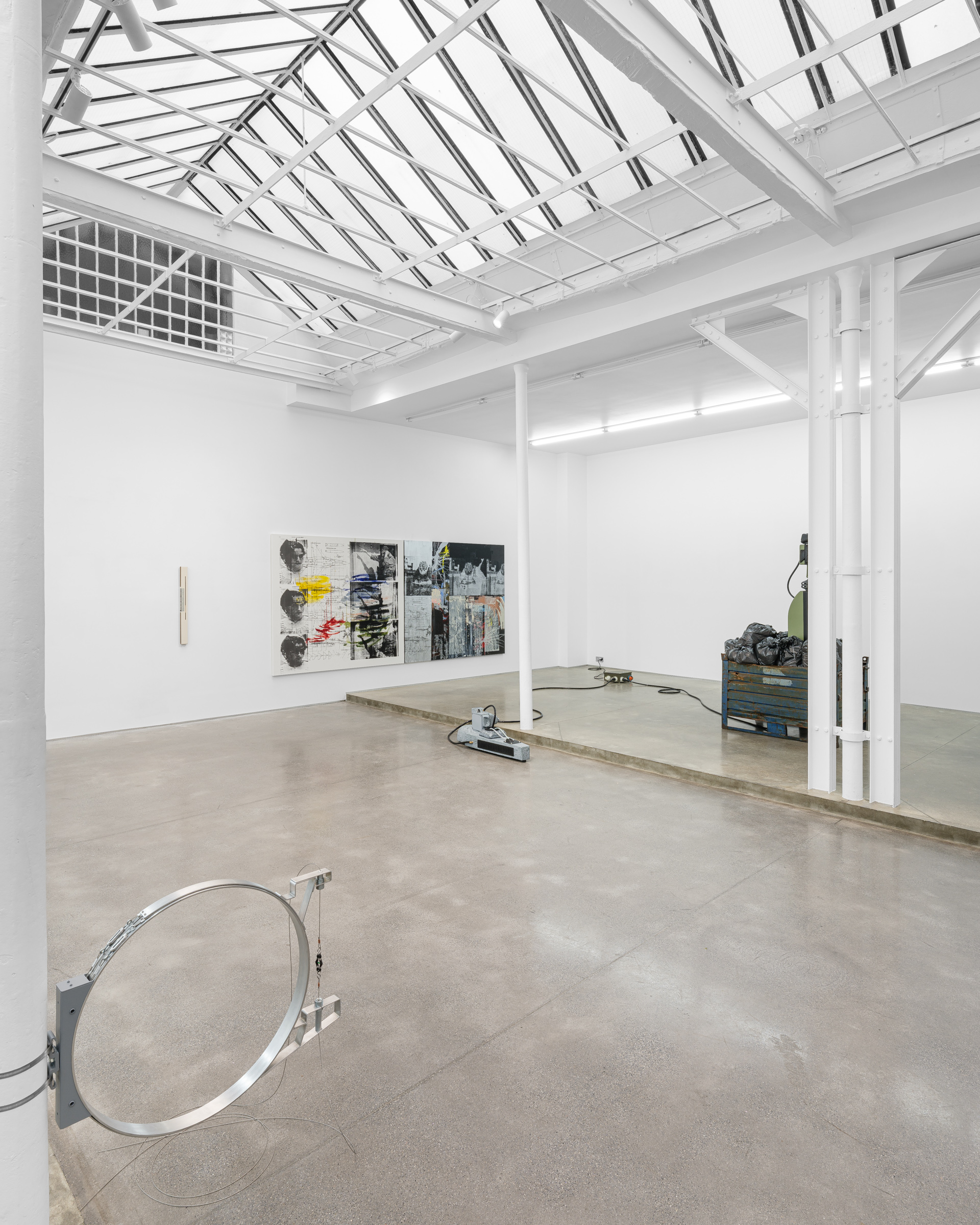
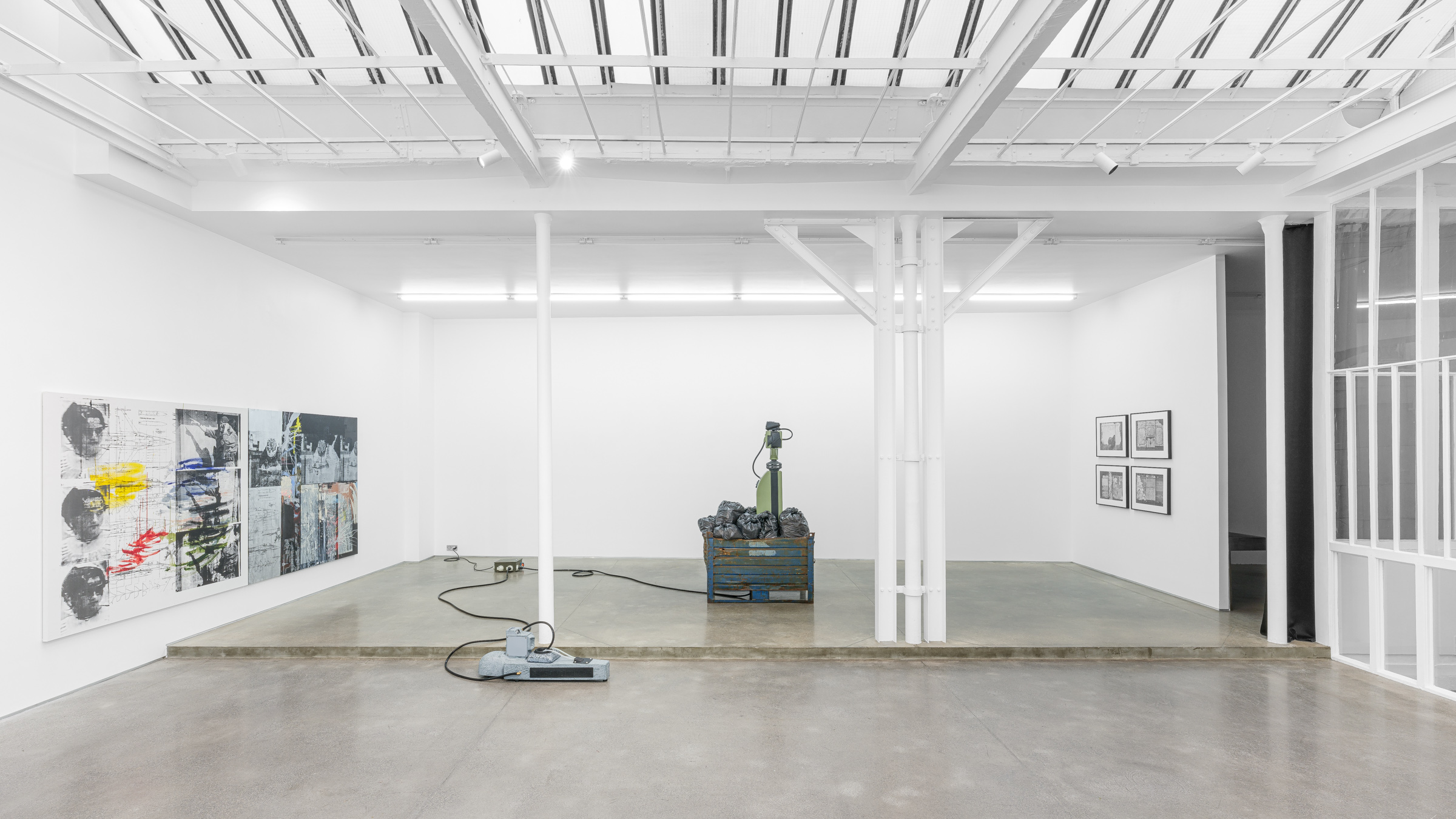
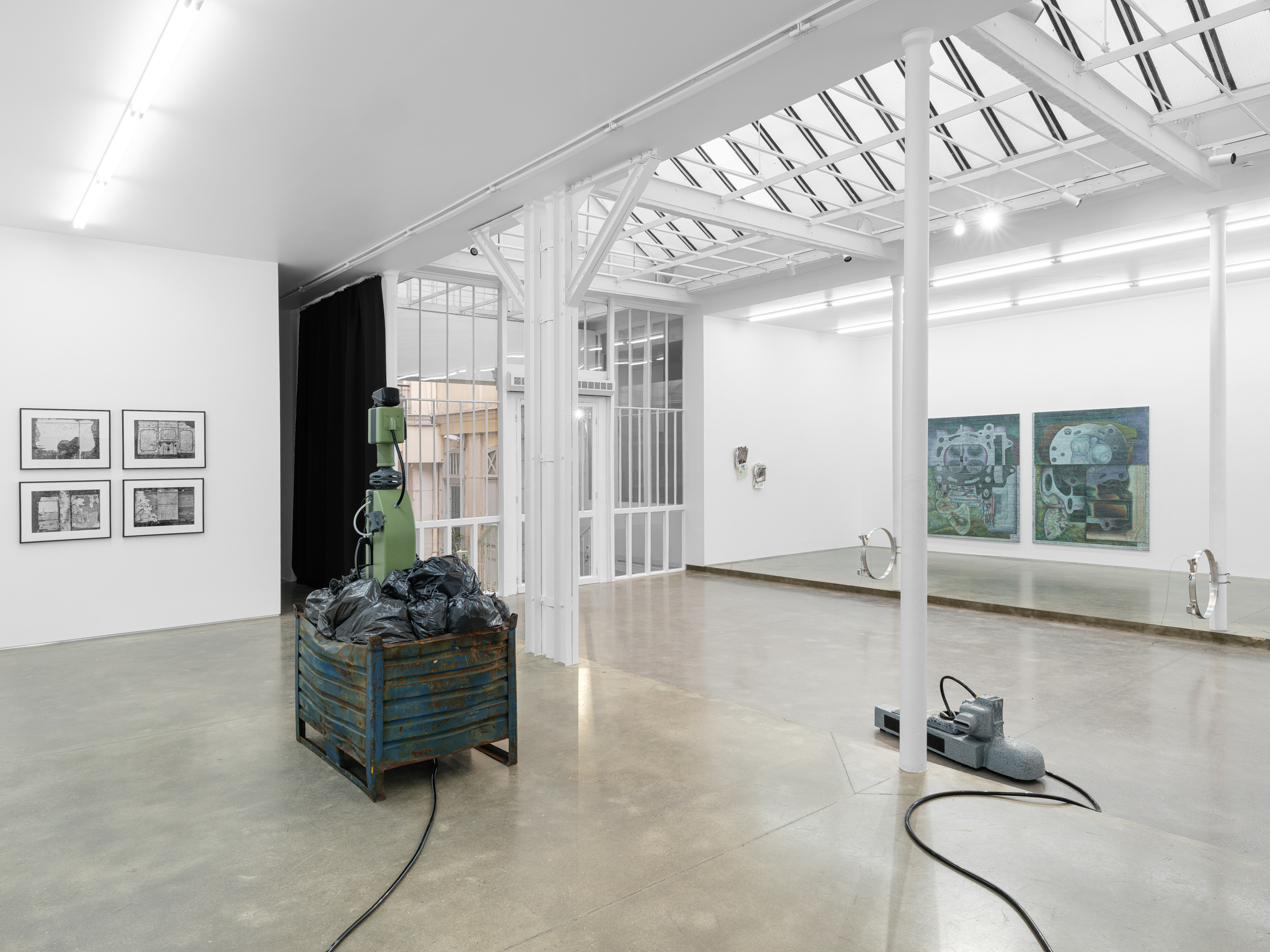
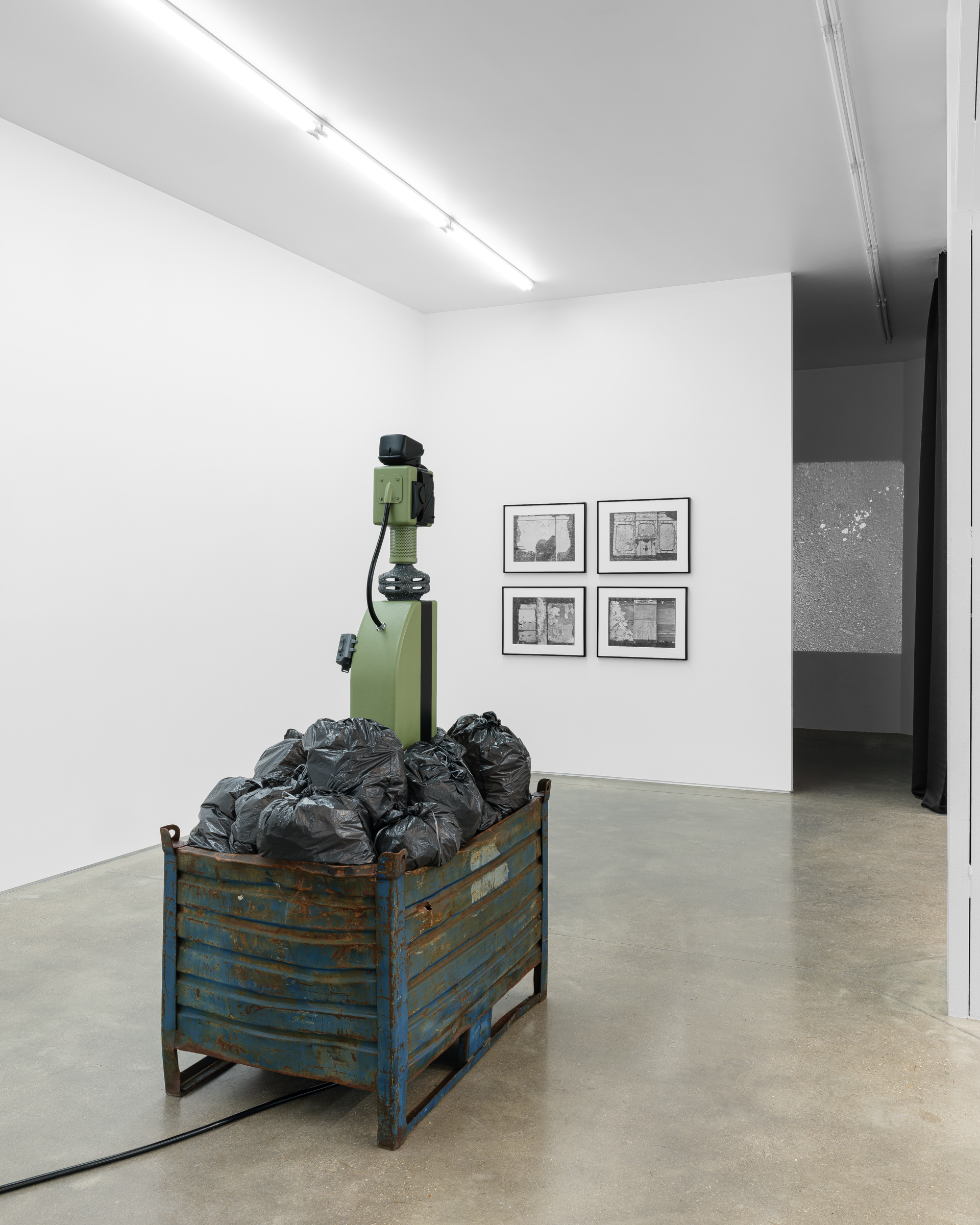
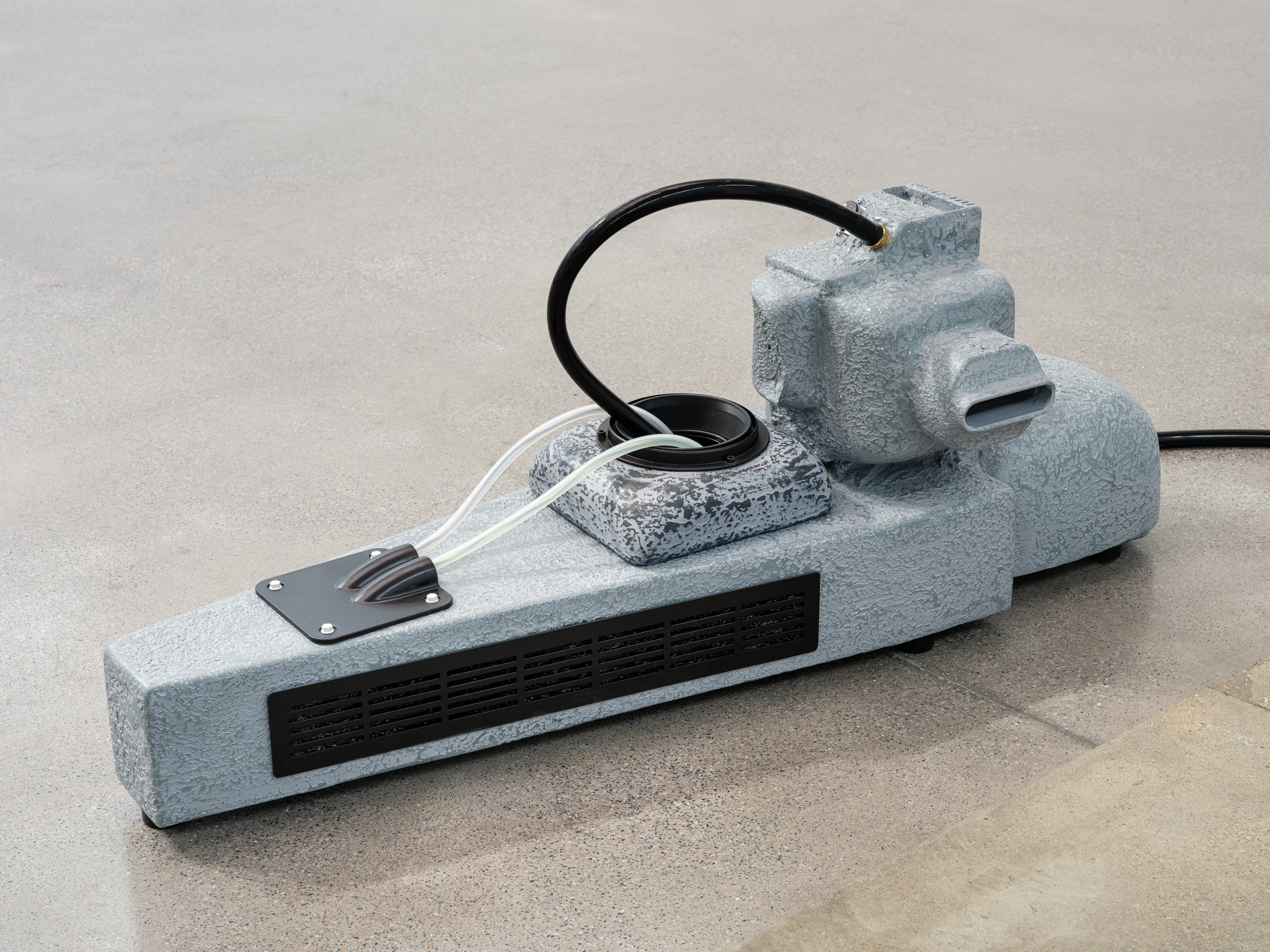
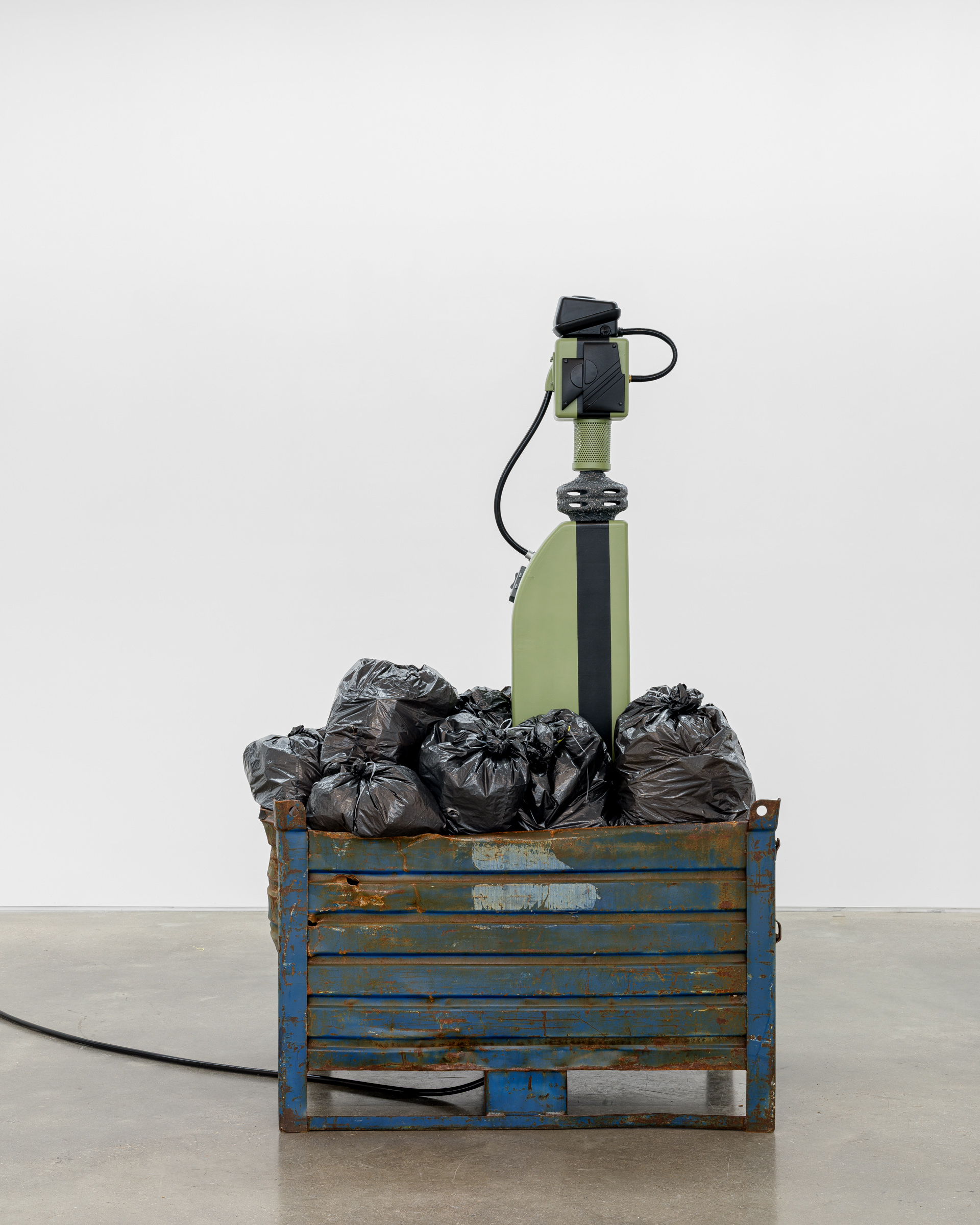
Erwan Sene’s TrashLanding occupies the center of the gallery like an abandoned surveillance device mistaken for urban waste. A rusted industrial skip overflowing with black trash bags conceals an infrasonic emitter rising from its core, somewhere between military equipment and scavenged architecture. The work does not perform aggression openly; it infiltrates quietly. It resembles the kind of object one stops noticing precisely because it already belongs to the visual noise of the city.

That ambiguity becomes the exhibition’s central psychological mechanism.
Nothing announces itself as control anymore. Control dissolves into ordinary space.

The gallery itself amplifies this sensation beautifully. The architecture remains sparse, almost clinically restrained, allowing each work to operate like a signal interruption. Large empty surfaces separate the pieces, producing intervals of silence that become as important as the works themselves. Visitors move carefully through the rooms, navigating cables, metallic structures, suspended loops, and sound-producing objects with the hesitation of someone crossing a space that may already be listening back.

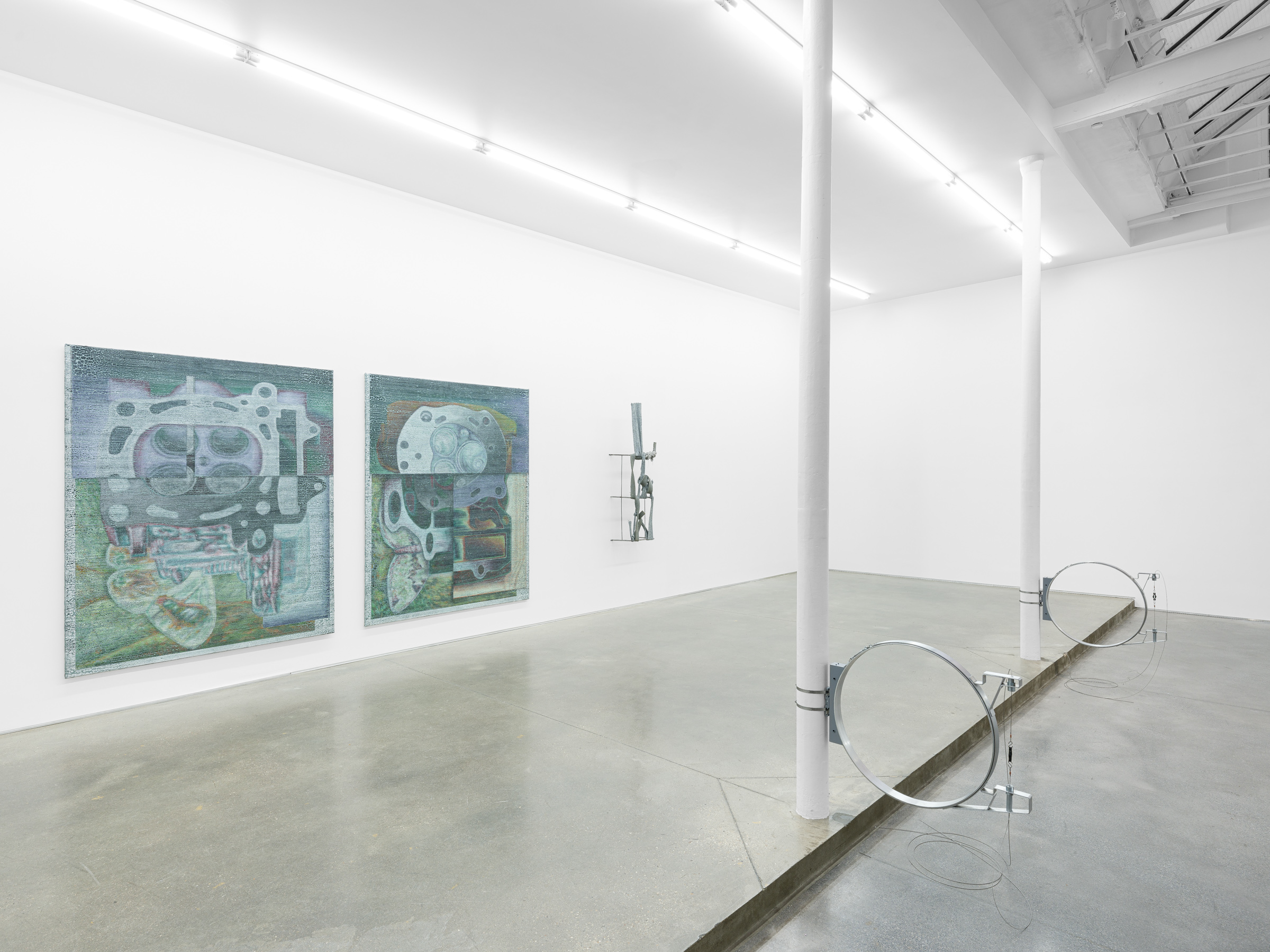
Brett Ginsburg’s paintings hold some of the exhibition’s most hypnotic surfaces. In Coded in Ash and Soot Fall, industrial imagery,  combustion chambers, valves, mechanical cavities,  dissolves into iridescent layers of acrylic that oscillate between machinic precision and biological decay. The paintings seem to sweat oxidation. Their textures flicker optically, as though the image were vibrating under thermal pressure.

What makes these works compelling is the way they refuse stable representation.
One never fully understands whether one is looking at infrastructure, anatomy, or memory.

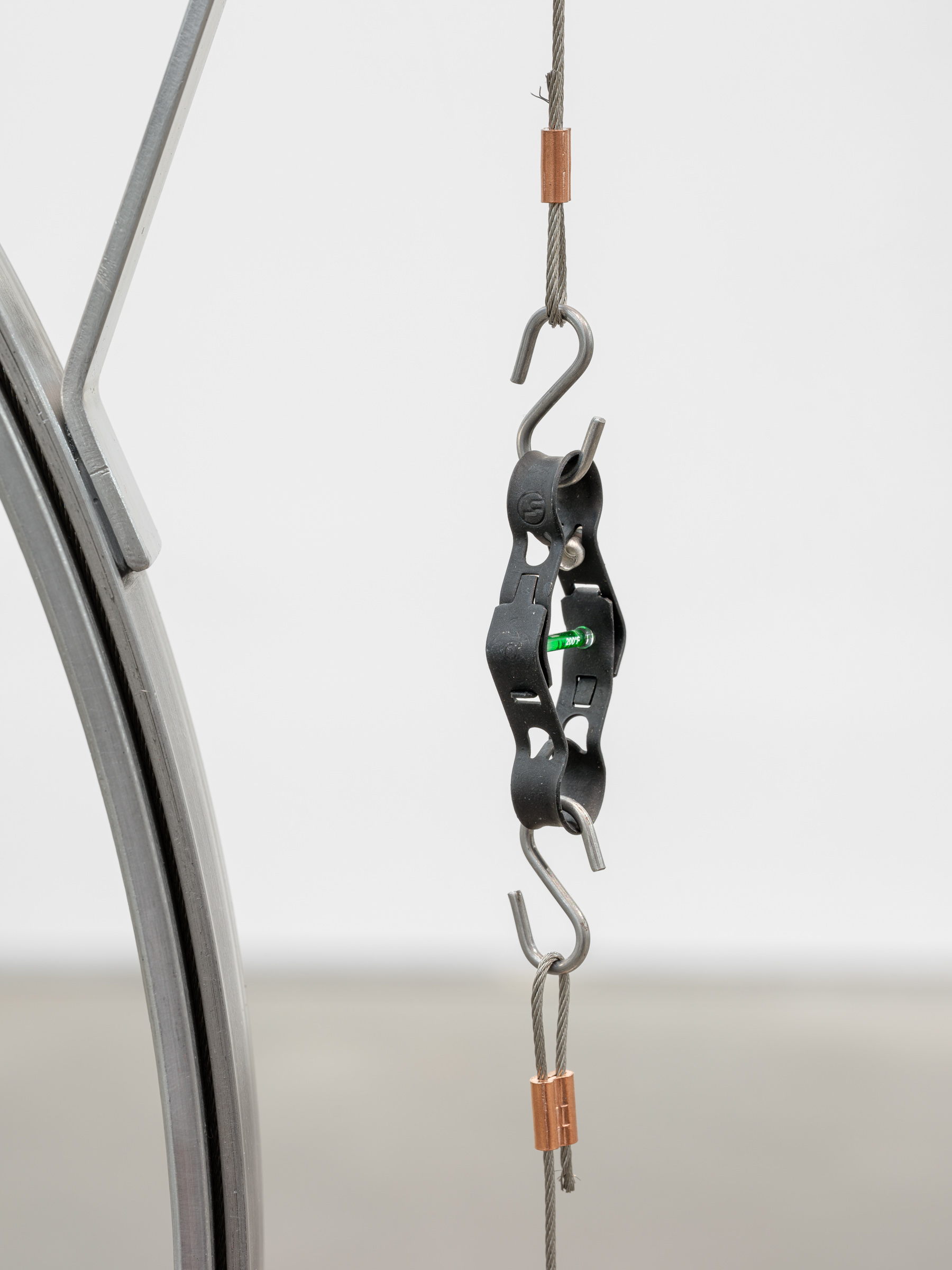
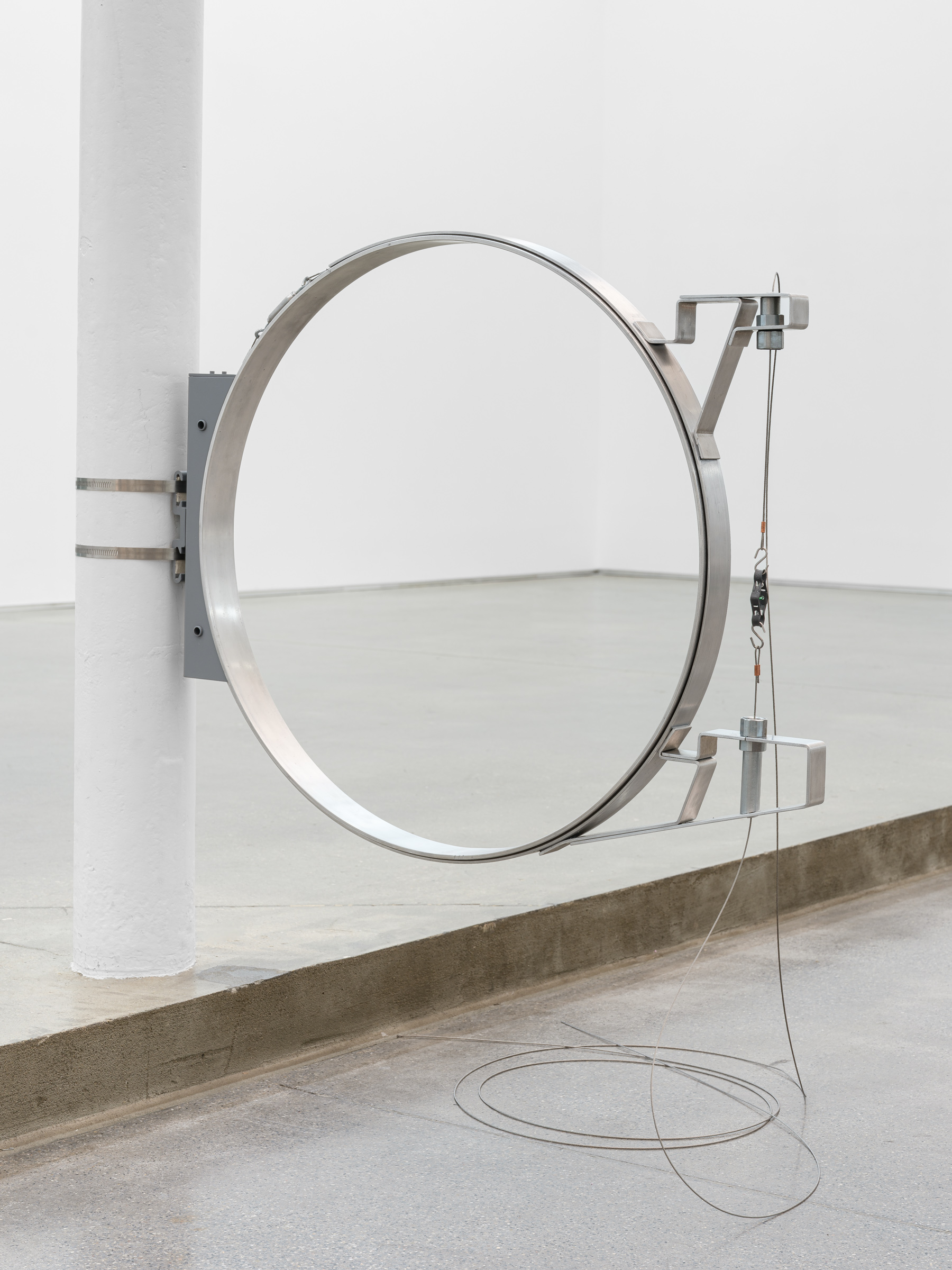
This instability extends into Ginsburg’s sculptural works Outlines Conspire: Cinder and Outlines Conspire: Kindling, mounted onto the gallery’s pillars like atmospheric measuring devices. Stainless steel, copper, thermally rated fluids, silicone-coated fiberglass: the materials retain their technical identity while simultaneously acquiring an almost ritual quality. They resemble industrial instruments designed to detect thresholds — pressure, rupture, overheating — while quietly transforming the gallery into an extension of a larger infrastructural landscape.

Nearby, Emmanuel Beguinot’s paper works introduce a far more intimate collapse.
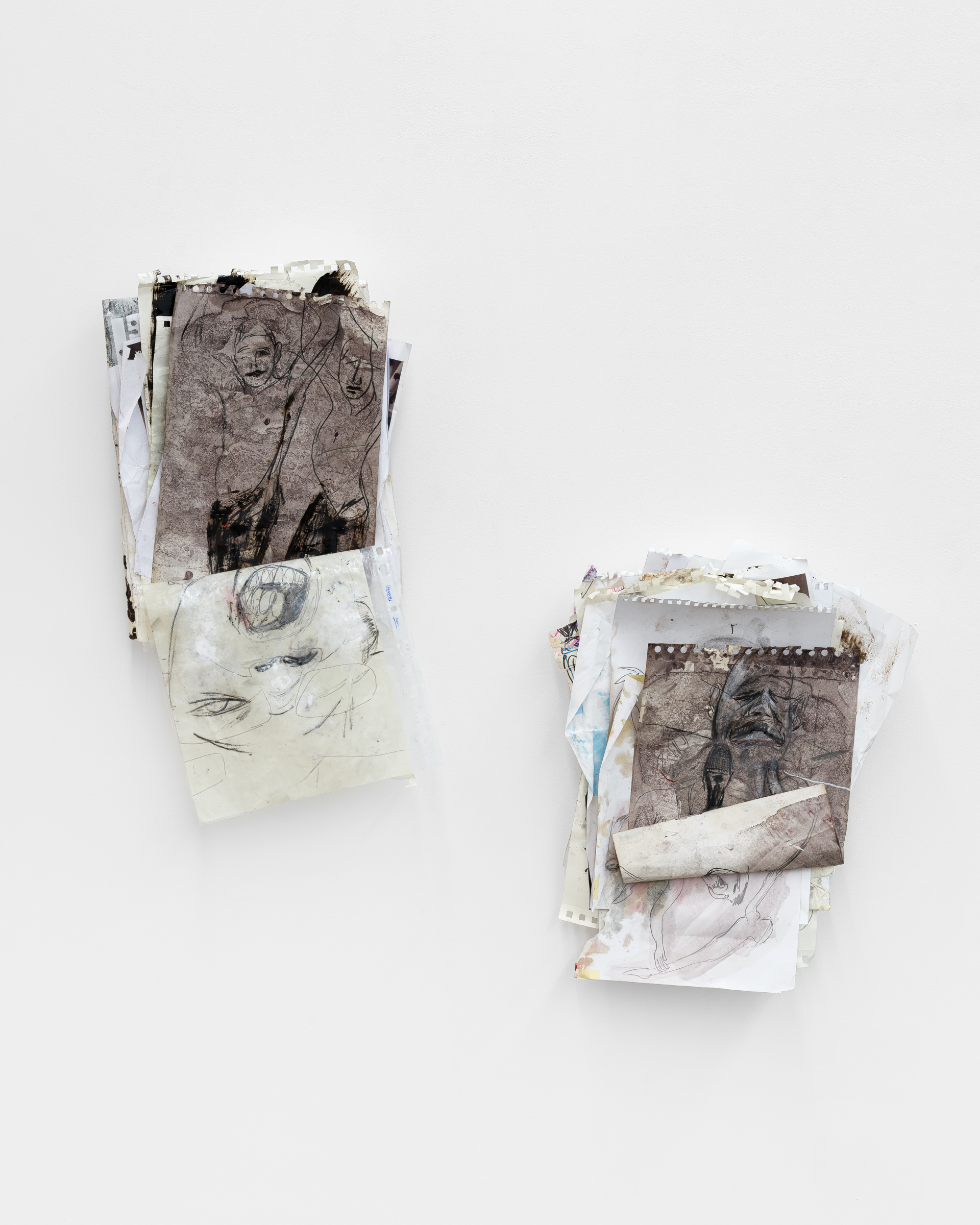
His layered accumulations of drawings, scorched fragments, perforated envelopes, and stained papers feel like psychic deposits excavated from beneath consciousness. Faces emerge and disappear inside dense material sedimentations, partially erased as though memory itself had become chemically unstable.

In Tinnitus, especially, the title resonates through the entire exhibition. The work evokes the persistence of a sound that remains even in silence — an internal frequency impossible to switch off. Beguinot abandons framing devices altogether, allowing the paper to spill outward without containment. The gesture feels important: no border remains capable of stabilizing the image or the self.

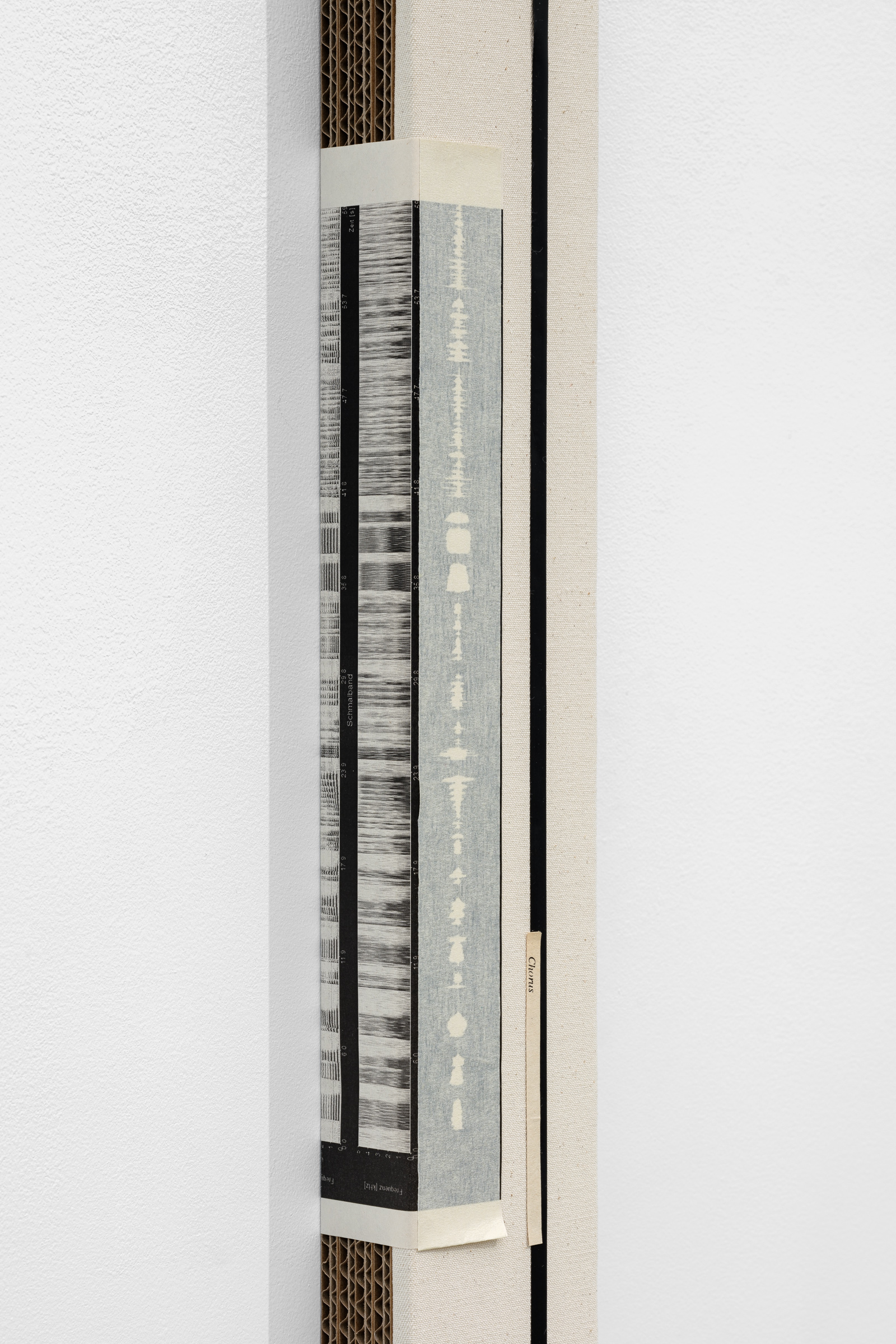
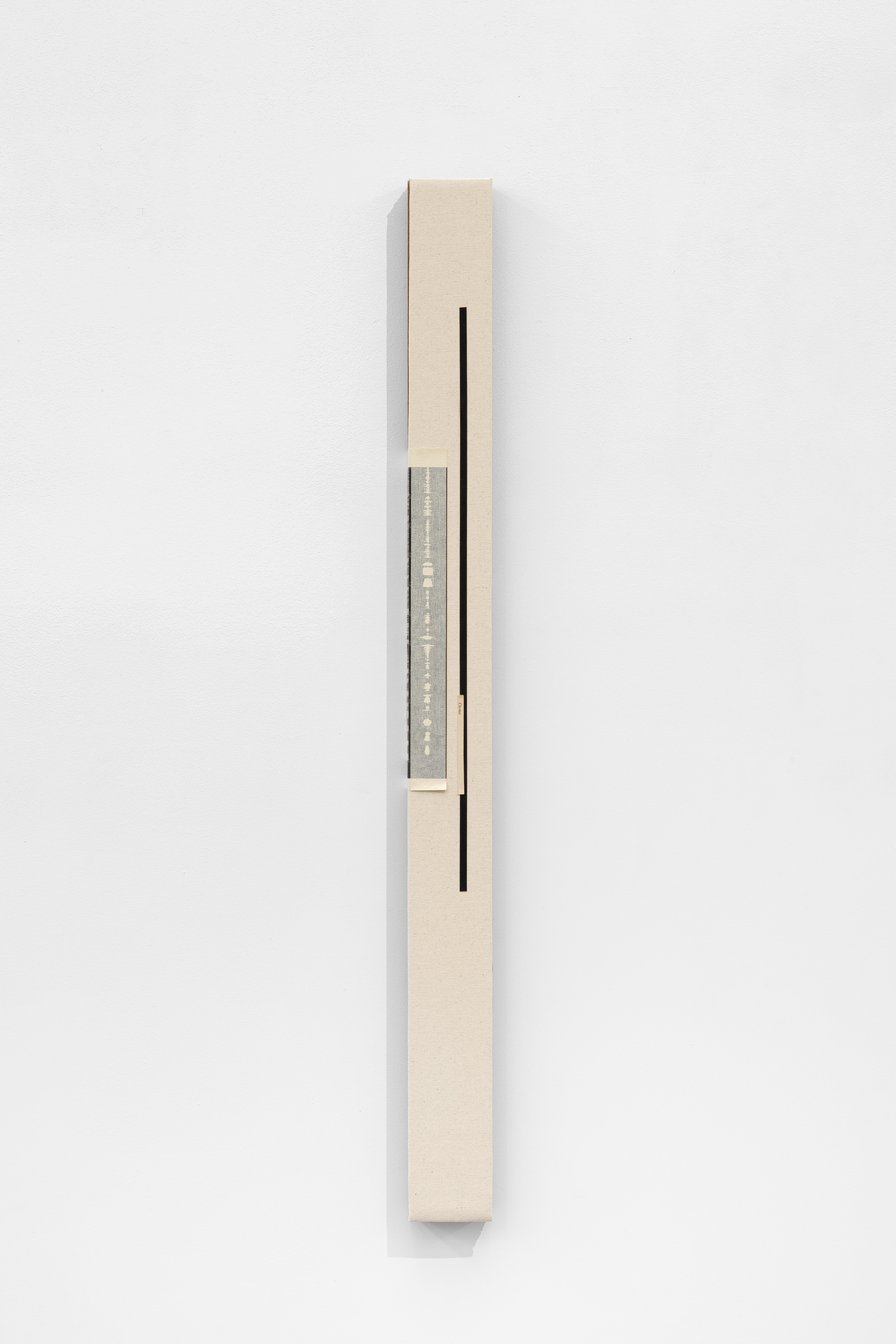
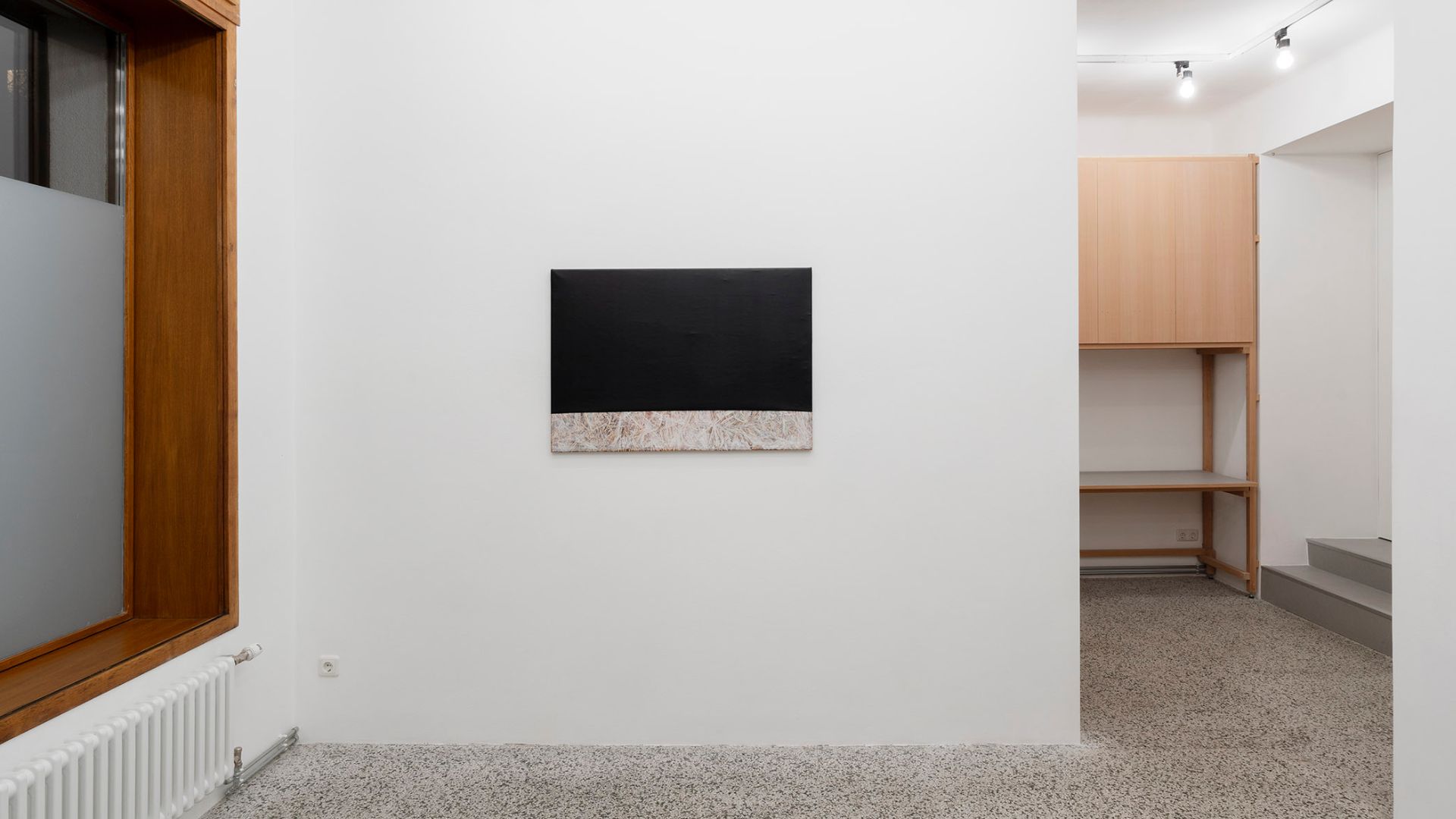
Keta Gavasheli approaches fragility from another direction entirely. Her works transform vocal recordings, magnetic tapes, cardboard honeycomb structures, and archival residues into forms where language survives only as trace. The surface no longer communicates clearly; it stores vibration. Her practice continuously shifts between sound and matter, between speech and erosion.

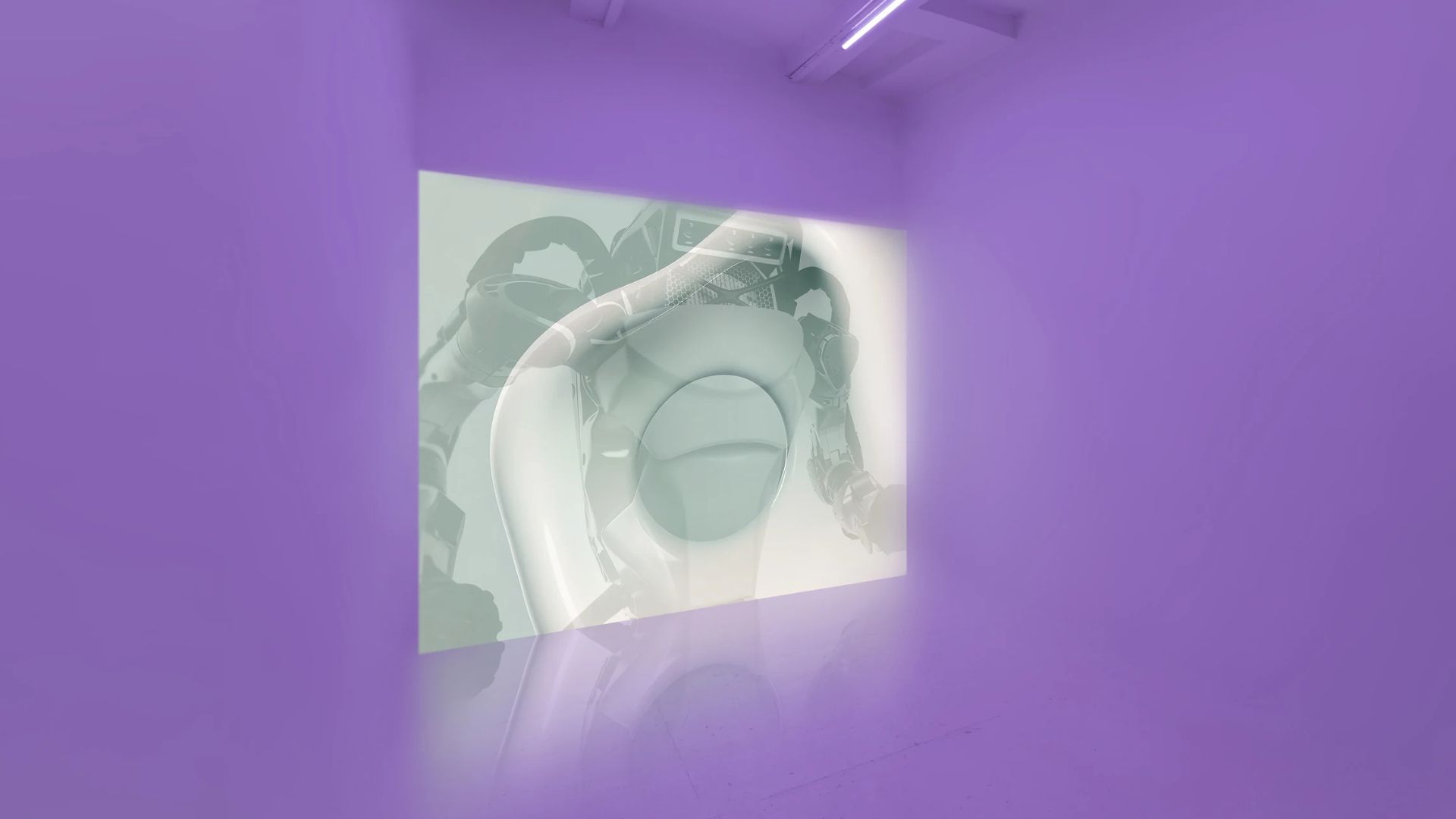
This tension reaches its fullest expression in Blurry Middle Distance, where black-and-white moving images and experimental noise compositions produce an unstable perceptual field. Memory ceases to function as reassurance. Instead, it becomes porous, fragmented, unreliable,  particularly within landscapes shaped by displacement and political violence. The video never insists loudly; it disorients gradually.

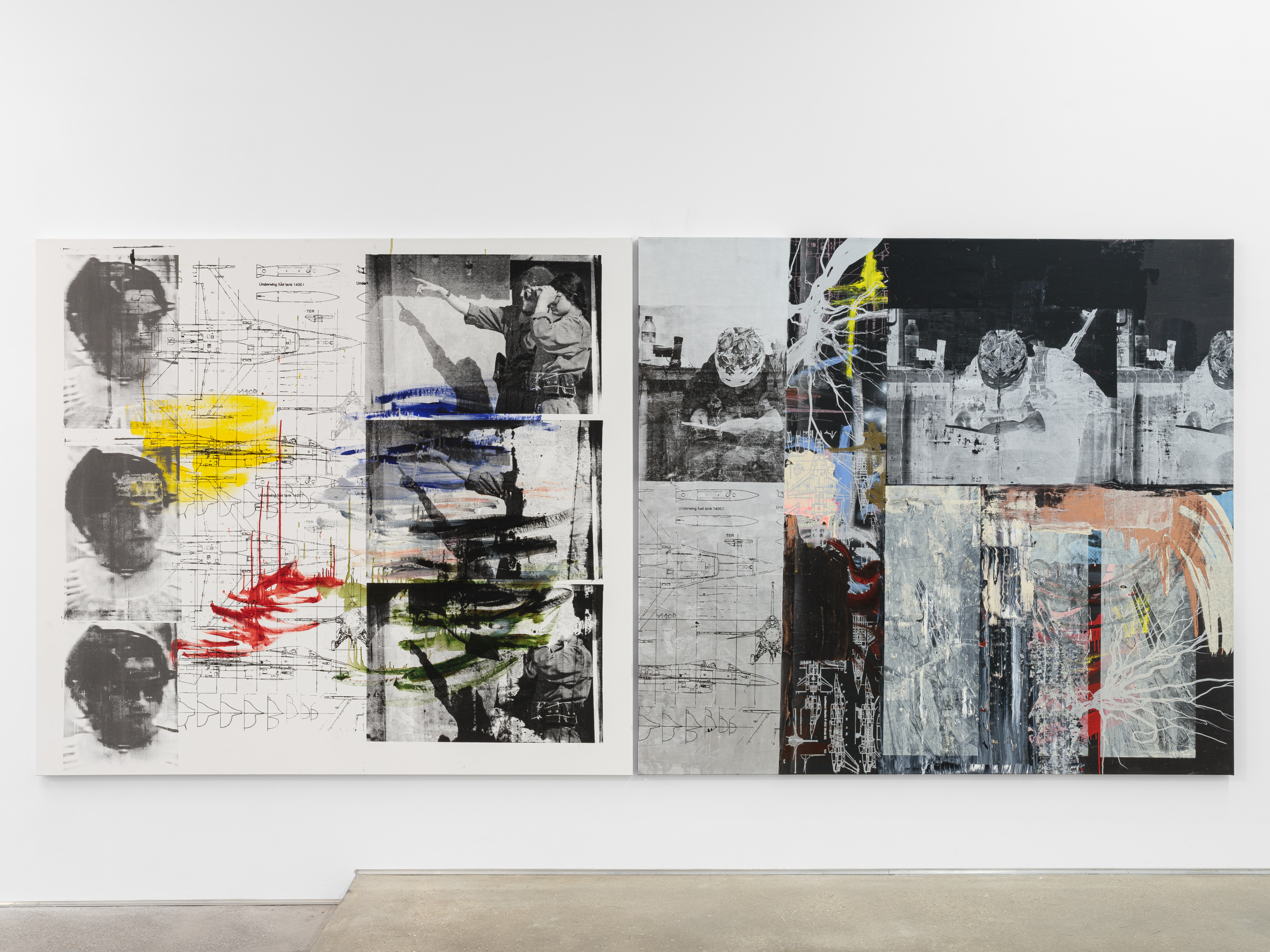
Leyla Yenirce’s paintings introduce the most explicit geopolitical dimension of the exhibition, though they avoid didacticism entirely. In Skyscanner and Wings, archival imagery of Kurdish women fighters merges with blueprints of F-16 fighter jets, satellite imagery, and autobiographical fragments extracted from VHS recordings. The canvases operate like overloaded visual archives in which military surveillance, territorial destruction, and personal memory collapse into the same pictorial space.

What remains striking is the density of these surfaces.
Nothing appears cleanly separated. War enters domestic memory; geography enters the body.

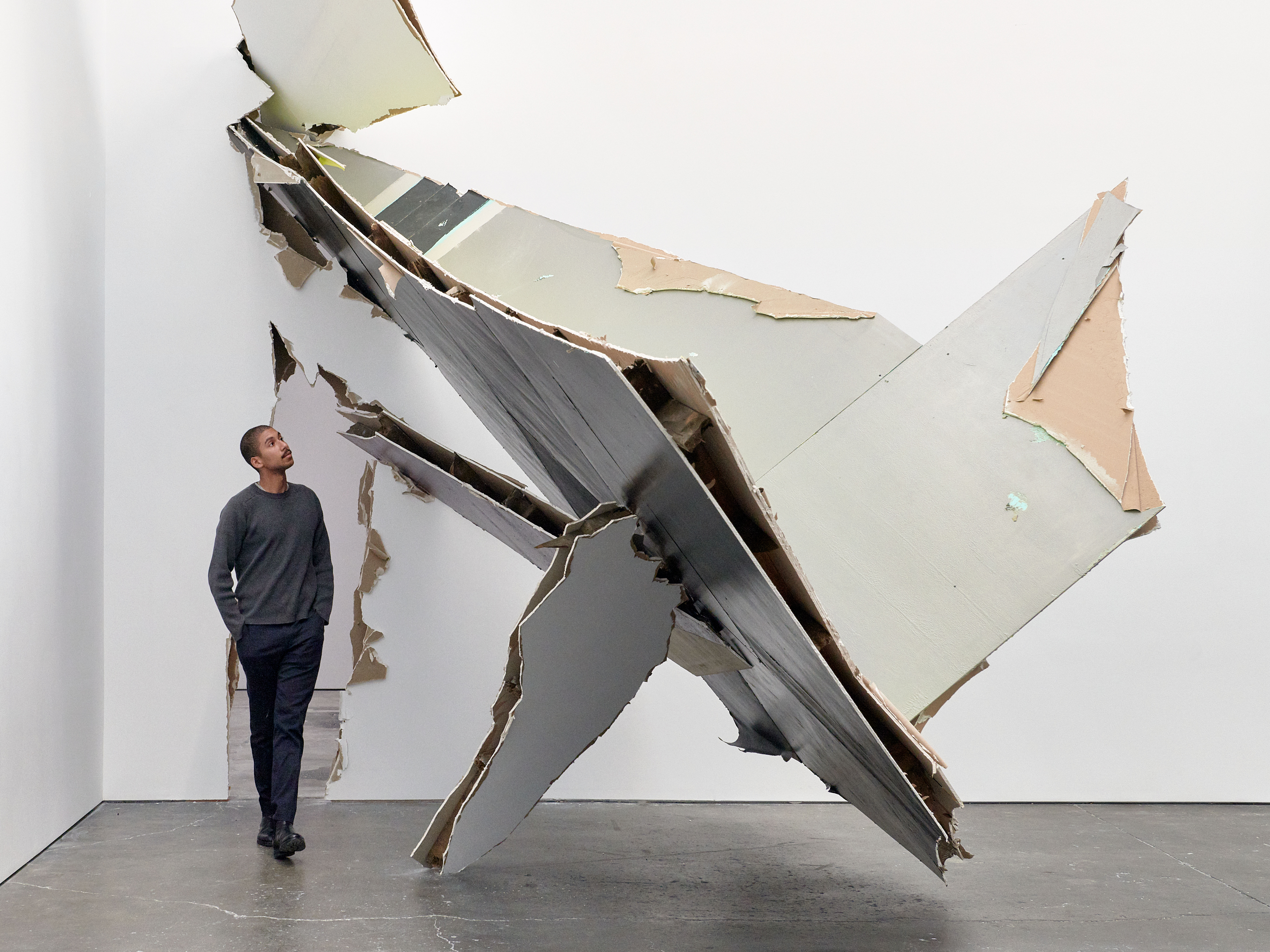
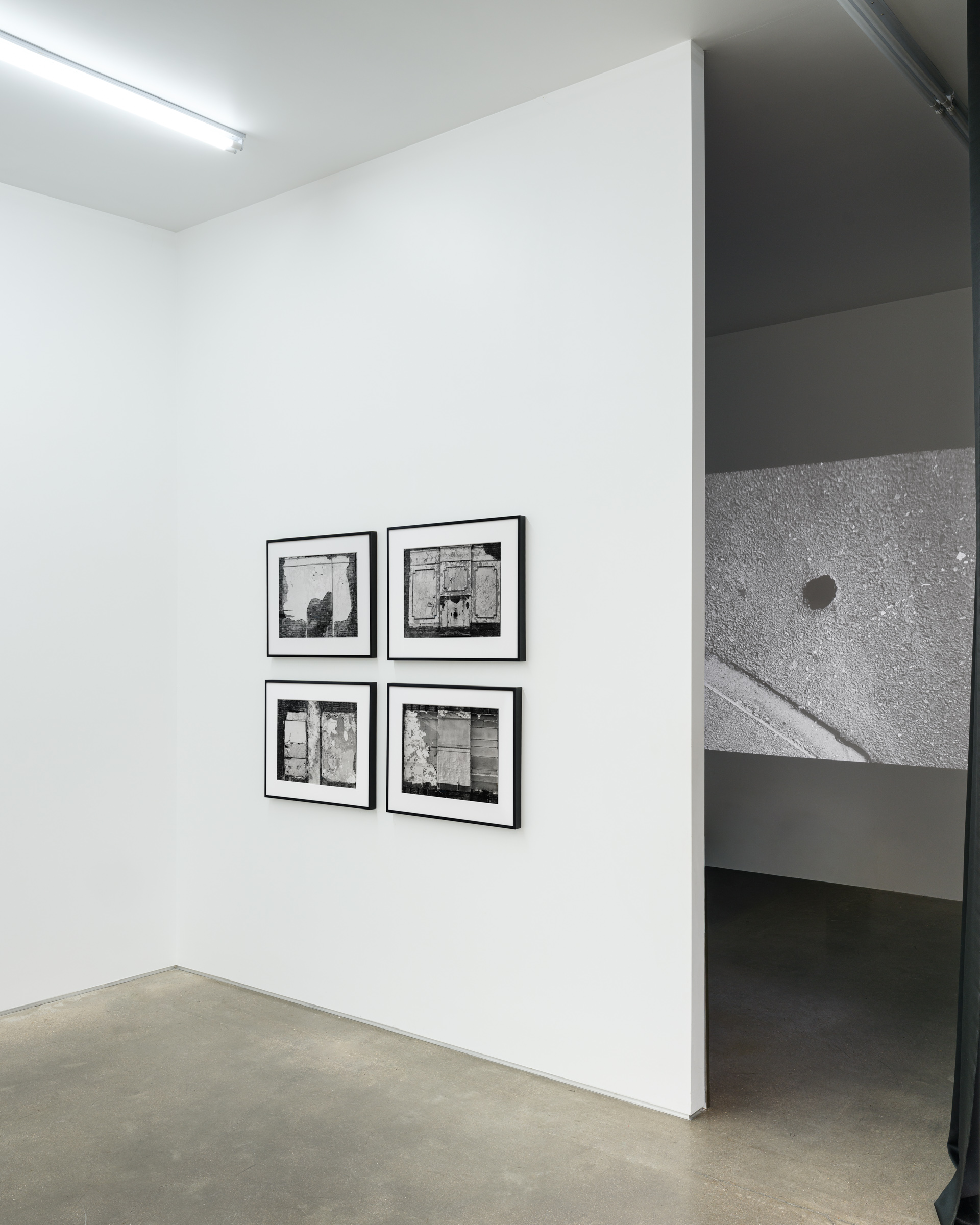
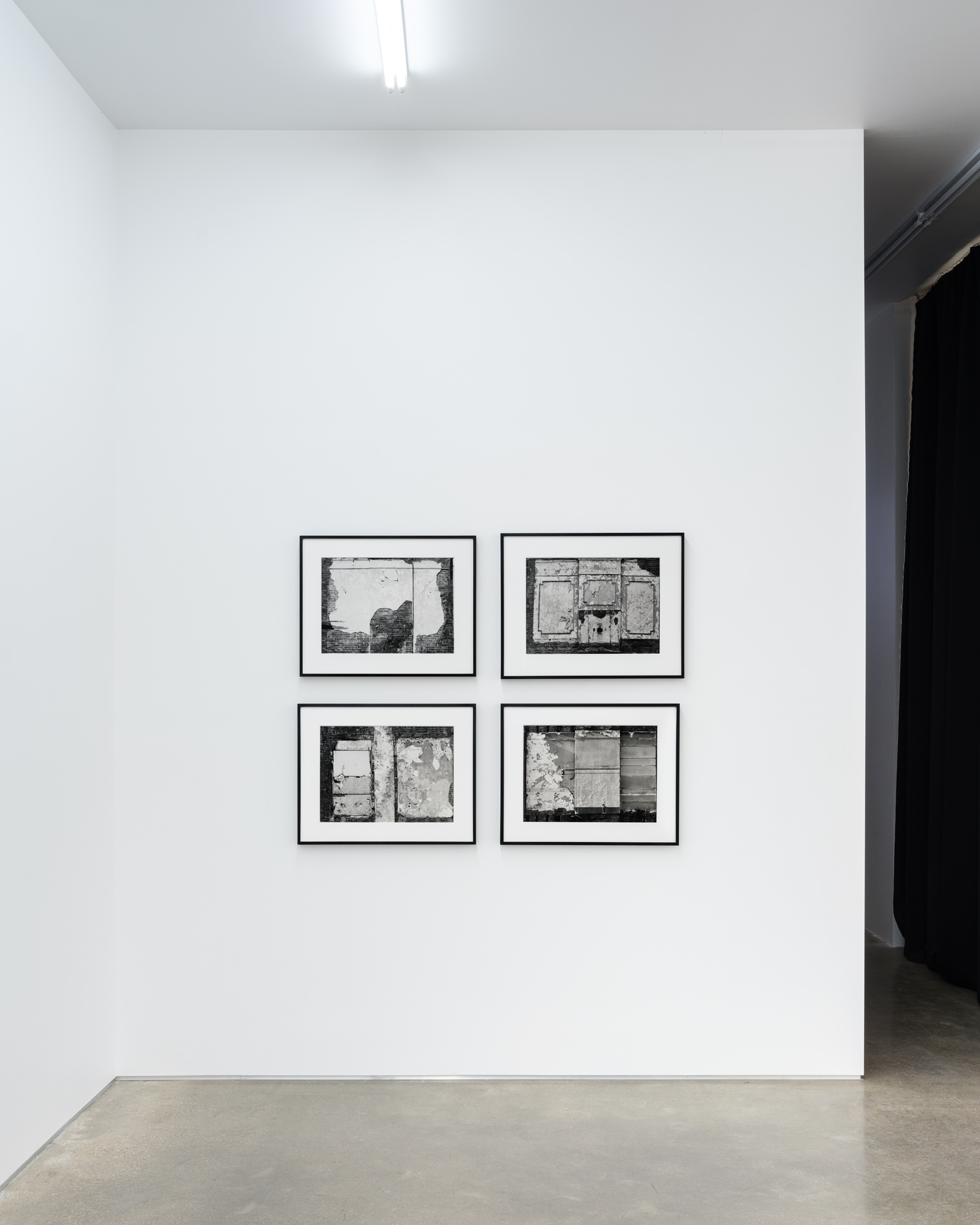
Even Gordon Matta-Clark’s Walls photographs, produced in the South Bronx during the urban crises of the 1970s,  feel uncannily contemporary here. Their damaged facades and stripped architectural surfaces function not simply as documents of decay, but as psychological landscapes. Matta-Clark’s “anarchitecture” continues to haunt the exhibition like a foundational ghost: architecture not as shelter, but as exposure.

The exhibition succeeds precisely because it resists spectacle.
There are no dramatic proclamations, no simplified apocalyptic gestures. Instead, the works accumulate tension through subtle environmental manipulations: vibration, residue, acoustic pressure, infrastructural aesthetics, interrupted visibility. The city appears not as a stable civic space, but as a sensory regime continuously modulating emotion, attention, and behavior.

Leaving the gallery, one image stayed with me longer than the others: the reflection of a steel ring trembling faintly against the polished concrete floor while an almost inaudible bass frequency continued somewhere nearby or perhaps only inside my head.

Like standing beside a window moments after a distant explosion, unsure whether the vibration belongs to the building, the street, or your own nervous system.


-FW

Group show « As the veneer of democracy starts to fade », curated by Clément Caballero, with Emmanuel Beguinot, Nikita Gale, Keta Gavasheli, Brett Ginsburg, Gordon Matta-Clark, Erwan Sene, Leyla Yenirce, Galerie Derouillon, Paris, 2026, Courtesy of the artists and Galerie Derouillon, Paris © Gregory Copitet
Leyla Yenirce Skyscanner, 2025 Huile, peinture acrylique en spray et encre de sérigraphie sur toile, Group show « As the veneer of democracy starts to fade », curated by Clément Caballero, with Emmanuel Beguinot, Nikita Gale, Keta Gavasheli, Brett Ginsburg, Gordon Matta-Clark, Erwan Sene, Leyla Yenirce, Galerie Derouillon, Paris, 2026, Courtesy of the artists and Galerie Derouillon, Paris © Gregory Copitet
Keta Gavasheli, *Untitled*, 2025, bandes magnétiques enregistrées, papier journal, papier de conservation pour négatifs cinématographiques, carton alvéolé, toile / recorded magnetic tapes, newsprint, film negative storage paper, cardboard honeycomb, canvas, 90 × 7,5 × 3,5 cm (35 3/8 × 3 × 1 3/8 inches), courtesy of Kunstdocumentation.com and LC Queisser/Tbilisi/LC Queisser Cologne © Kunstdocumentation.com
Brett Ginsburg, *Outlines Conspire: Cinder*, 2026, acier inoxydable, aluminium, acier, cuivre, fluide à résistance thermique, feutre, fibre de verre enduite de silicone / stainless steel, aluminum, steel, copper, thermally rated fluid, felt, silicone-coated fiberglass, 81 × 61 × 5 cm (31 7/8 × 24 × 2 inches), courtesy of the artist and Galerie Derouillon, Paris © Gregory Copitet
Erwan Sene, *Prone*, 2026, bois, objets trouvés, aluminium, résine acrylique, plastique, fils de caoutchouc, peinture acrylique, haut-parleur, amplificateur / wood, found objects, aluminum, acrylic resin, plastic, rubber wires, acrylic paint, speaker, amplifier, 38,5 × 104 × 36,5 cm (15 1/8 × 41 × 14 3/8 inches), courtesy of the artist and Galerie Derouillon, Paris © Gregory Copitet
Erwan Sene, *TrashLanding*, 2026, benne métallique, sacs poubelles, bois, aluminium, résine acrylique, plastique, fils de caoutchouc, peinture acrylique, caisson de basses, amplificateur / metal skip, trash bags, wood, aluminium, acrylic resin, plastic, rubber wires, acrylic paint, subwoofer, amplifier, 208 × 120 × 80 cm (81 7/8 × 47 1/4 × 31 1/2 inches), courtesy of the artist and Galerie Derouillon, Paris © Gregory Copitet
Keta Gavasheli, *Untitled*, 2025, bandes magnétiques enregistrées, papier journal, papier de conservation pour négatifs cinématographiques, carton alvéolé, toile / recorded magnetic tapes, newsprint, film negative storage paper, cardboard honeycomb, canvas, 90 × 7,5 × 3,5 cm (35 3/8 × 3 × 1 3/8 inches), courtesy of Kunstdocumentation.com and LC Queisser/Tbilisi/LC Queisser Cologne © Kunstdocumentation.com
Emmanuel Béguinot, *Tinnitus*, 2026, techniques mixtes sur papiers / mixed technics on papers, 44 × 35 × 6 cm (17 3/8 × 13 3/4 × 2 3/8 inches), courtesy of the artist and Galerie Derouillon, Paris © Youna Virus
Installation view, Gordon Matta-Clark, *Walls*, 1972, tirage argentique / gelatin silver print, courtesy The Estate of Gordon Matta-Clark / Artists Rights Society (ARS), New York, courtesy Galerie Thomas Schulte, Berlin, and David Zwirner, New York