
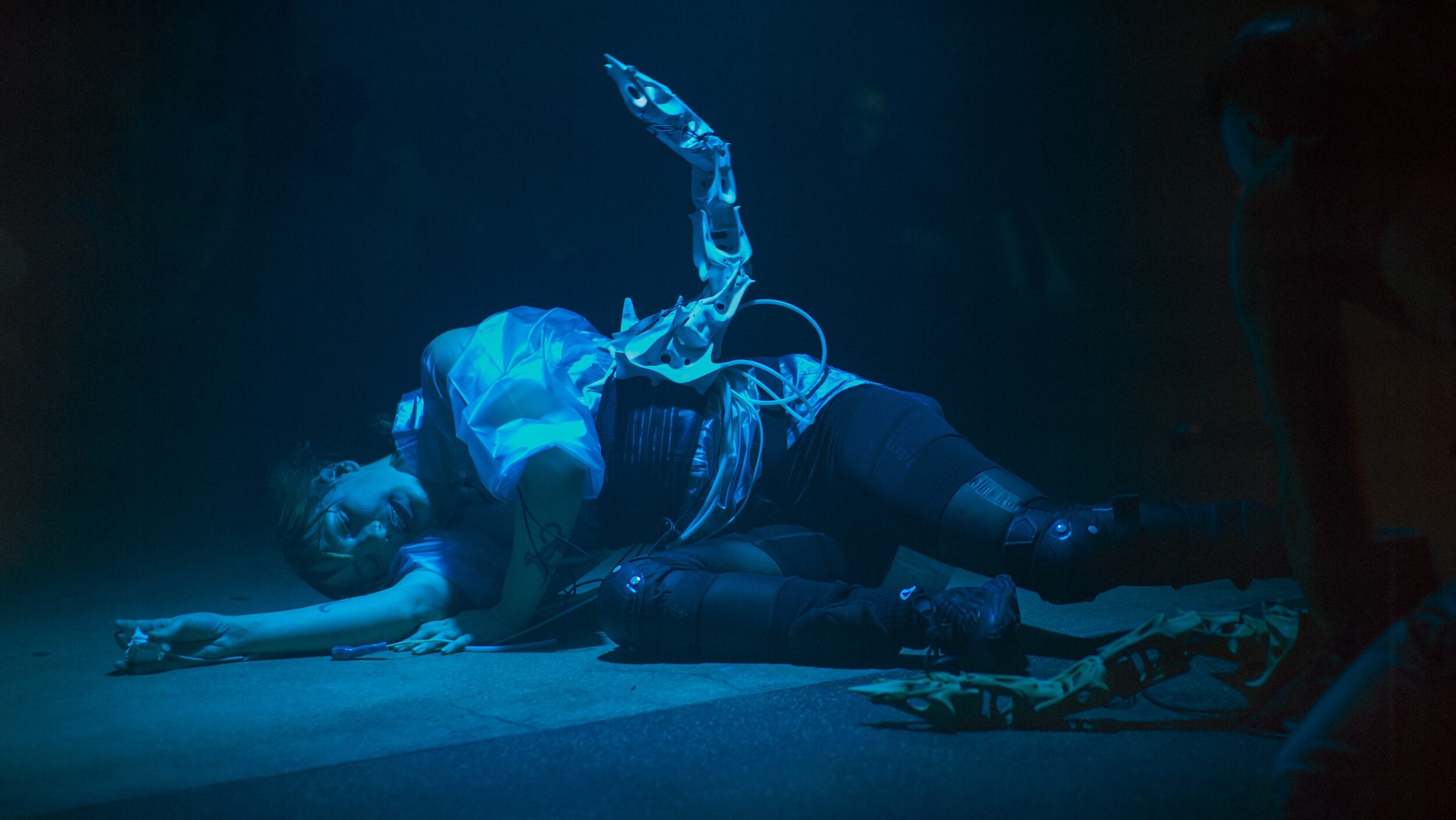
We’ve been following Salvador Marino’s work for some time now, working across robotics, performance, and installation, he examines the relationship between the body, technology, and power. Through Post-Organic Bauplan, the project he co-founded in 2017 with choreographer and dancer Josefina Maro, Marino develops sensitive prostheses and mechanical creatures that challenge dominant ideas of the natural body, efficiency, functionality, and autonomy.
In his most recent work, particularly the exhibition Iron Stream, this research moves toward a more explicit engagement with necropolitics, bioextractivism, and the infrastructures that transform life, blood, and vulnerability into resources to be managed. His machines are not presented as neutral tools, but as autonomous, seductive, and unsettling entities through which tensions between care and violence, desire and control, technology and capitalism come into view.
In this conversation, Salvador Marino reflects on the evolution of his practice, the political significance of building technology from scratch, the affective bonds formed with robotic prostheses, and the role of art as a space for critique, friction, and disobedience.
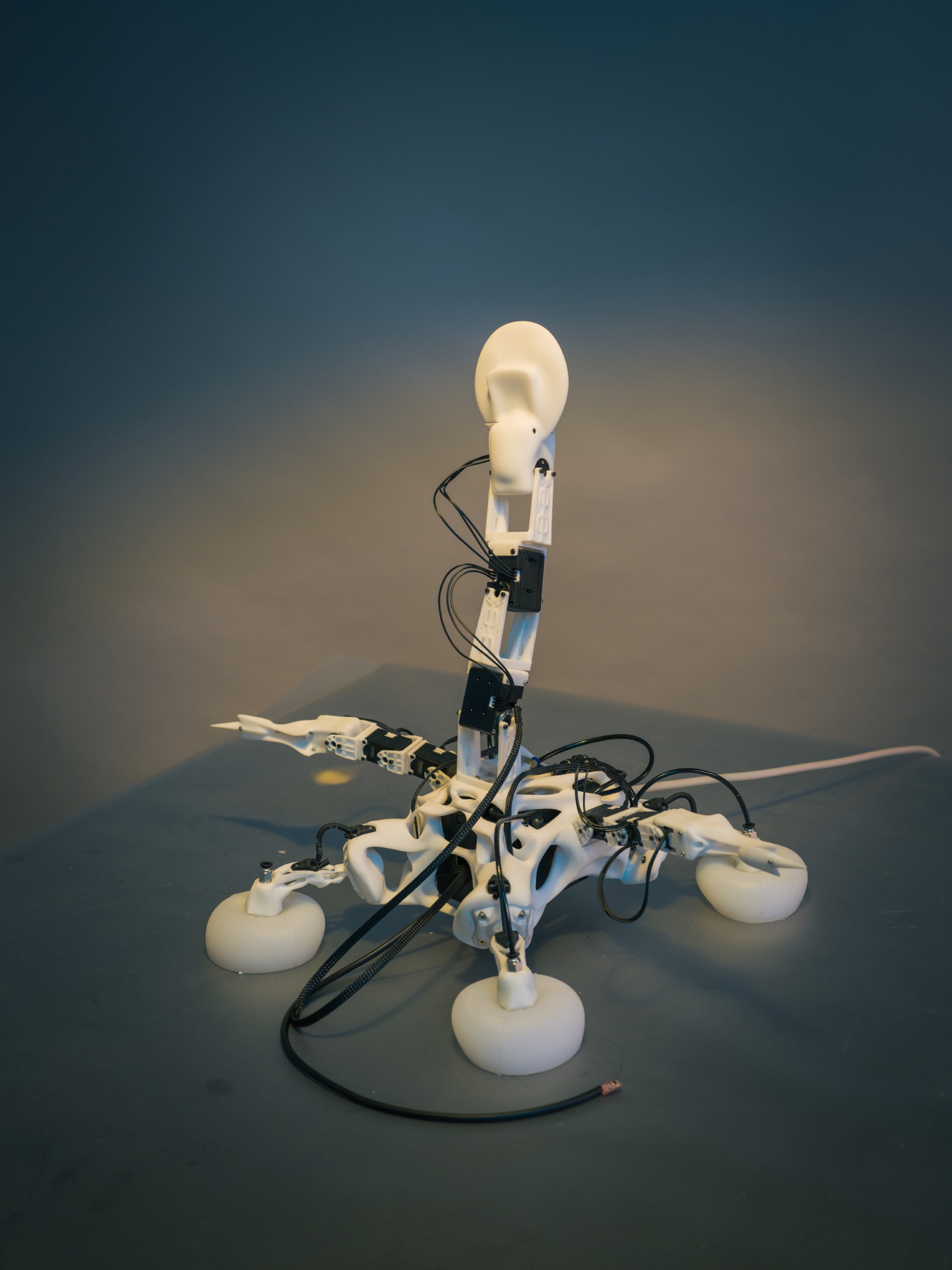
You describe your long-term exploration with Post-Organic Bauplan as a shift from biopolitics (how power shapes our perception of the “natural” body) to necropolitics (which bodies are assigned to the machinery of death). How did this transition happen in your thinking, and what role did the design of robotic prostheses play in opening that door?
This transition had a lot to do with the perception of a geopolitical transformation. Although wars have always existed, today we live in a moment in which the resources destined for the war machinery are becoming increasingly visible, more everyday, and more difficult to separate from our daily lives. Living in times of wars broadcast in real time, of mass violence seen through screens, and of an expansion of colonizing technologies and policies linked to control, surveillance, and death, led me to ask more urgently what implications this environment has for the development and reading of my own work. In this context, violence becomes for me a much more visible political element.
In my practice, it is essential to think of the work in relation to its environment, what it has to say today, from where it speaks, and what forces traverse it. I understand works of art as relational and situated entities. If the territories I inhabit begin to crack due to political transformations, the advance of militarization, or the normalization of violence, that inevitably affects my artistic practice. That is why it became necessary for me to think about how to use the tools of art to express a radical dissatisfaction with these new politics of death.
In Post-Organic Bauplan, an artistic duo that I have co-founded in 2017 together with choreographer and dancer Josefina Maro, we explore how biopolitics affects the perception of our corporeality. Through the development of sensitive robotic devices that we call prostheses, we propose other forms of corporeality that oppose hegemonic constructions of the body, dominated by productivist, functional, and normative systems.
In Porst-Organic Bauplan we seek to reappropriate certain meanings of technology to explore our own desire, displace it from its functions of efficiency and control, and open other modes of relation between body, movement, and environment.
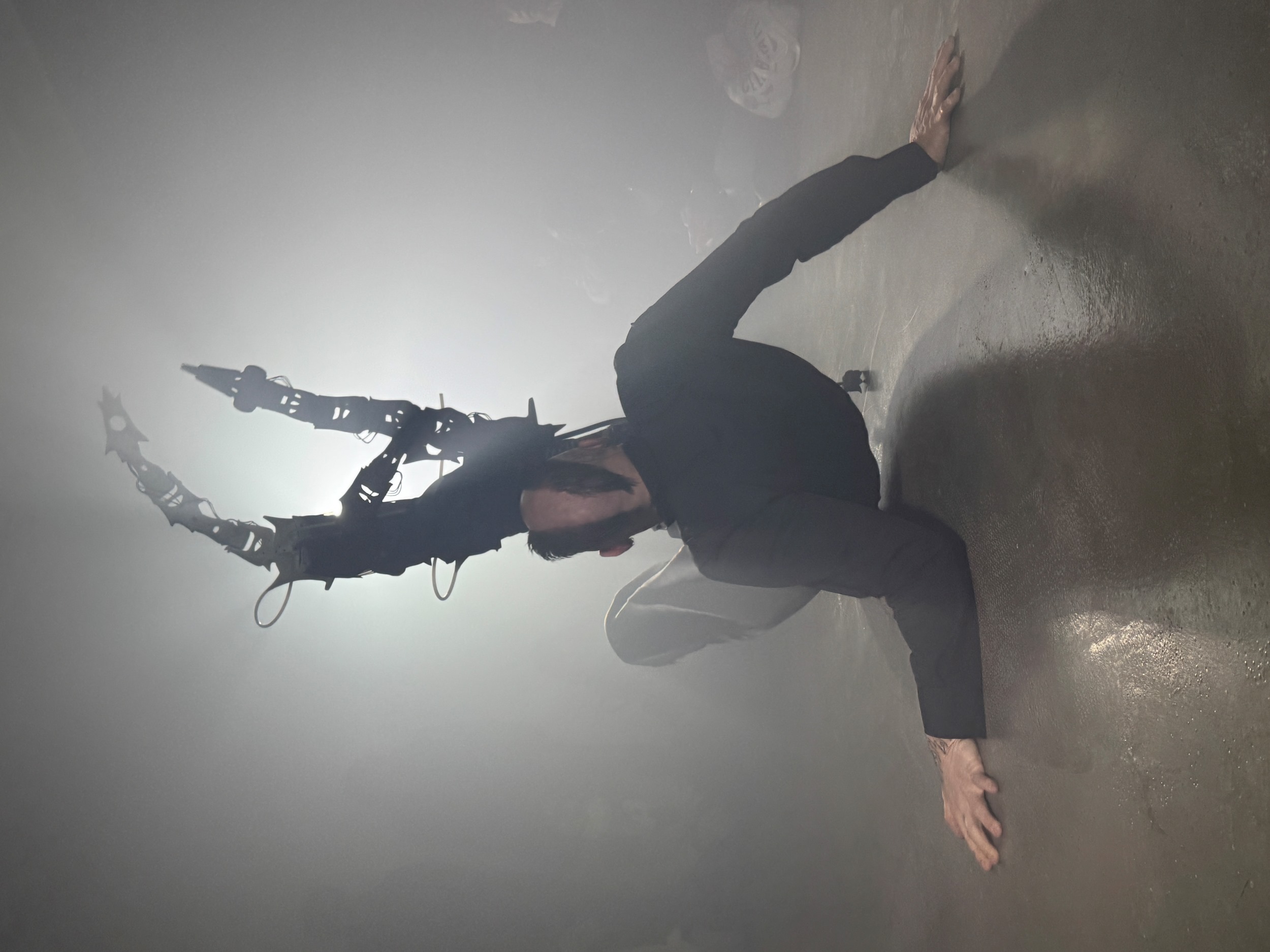
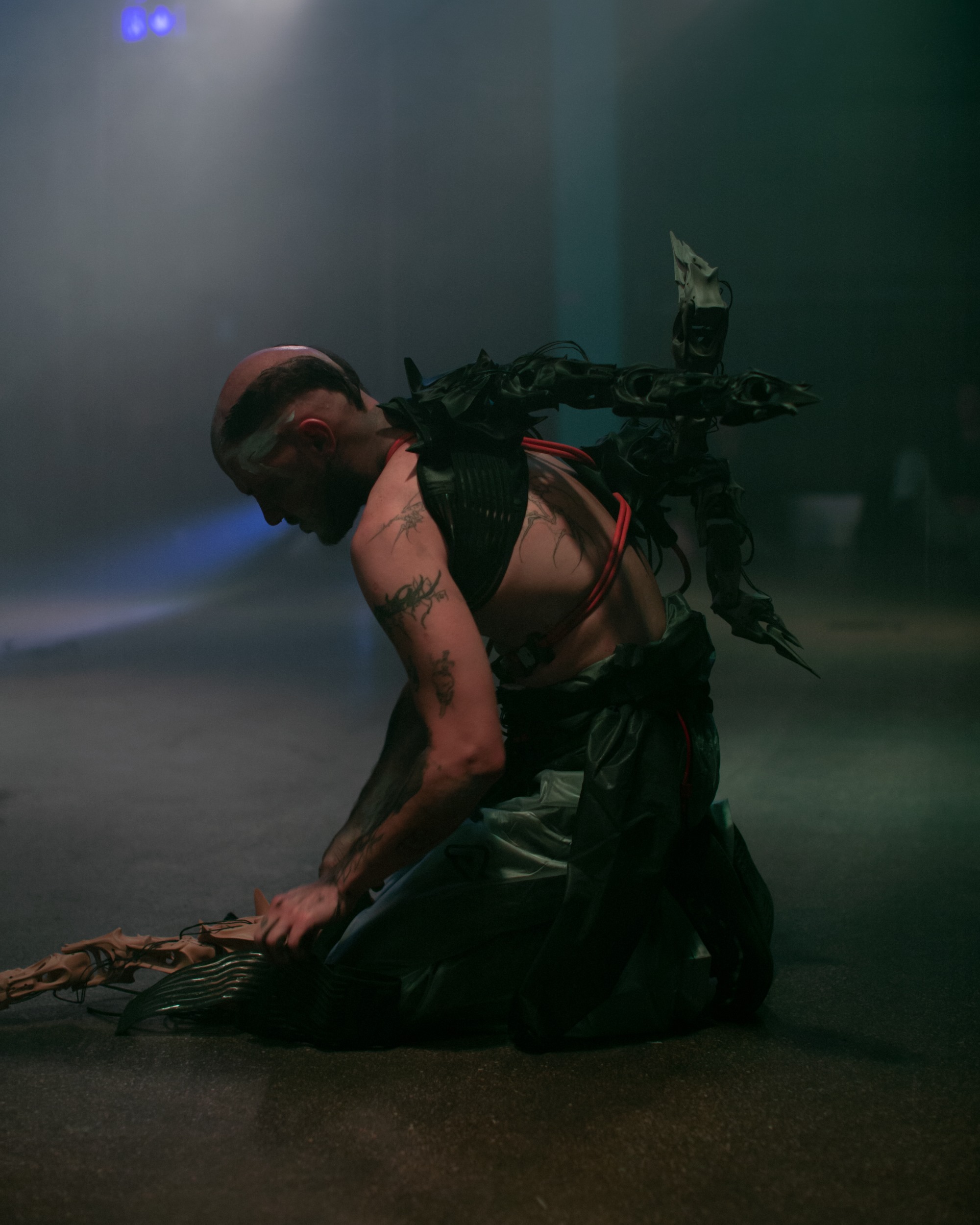
Society is organized around an idea of the productive, functional, and efficient body, and the very architecture of the system operates as an apparatus that selects and privileges certain types of corporeality, while other bodies are categorically disabled or excluded. We are the ones who design, who decide, who establish which bodies are considered useful, capable, or even desirable. Because desire and pleasure are also bioregulated. Through the design of and relational experience with these robotic devices, a new territory and a new form of care open up. In our practice, coextension with robotic prostheses supported on the back, the neck, or one leg automatically makes it impossible to use the body in the same way. Thus, this new body, this coextension between body and robotic prosthesis, displaces the center of gravity. It is a movement that reveals the political fiction and makes visible the structure of biopolitical power.
In that sense, designing robotic extensions grounded in sensitivity, care, and the encounter between bodies opened a door toward a broader reflection on the relationship between body, power, and technology.
In Iron Stream, my most recent exhibition, I wanted to work more directly with the conceptual framework of necropolitics and address the social context we inhabit today. In a time marked by increasing budgets devoted to the machinery of death, the place of art inevitably enters into tension. Its value becomes more fragile, but its critical capacity becomes more urgent.
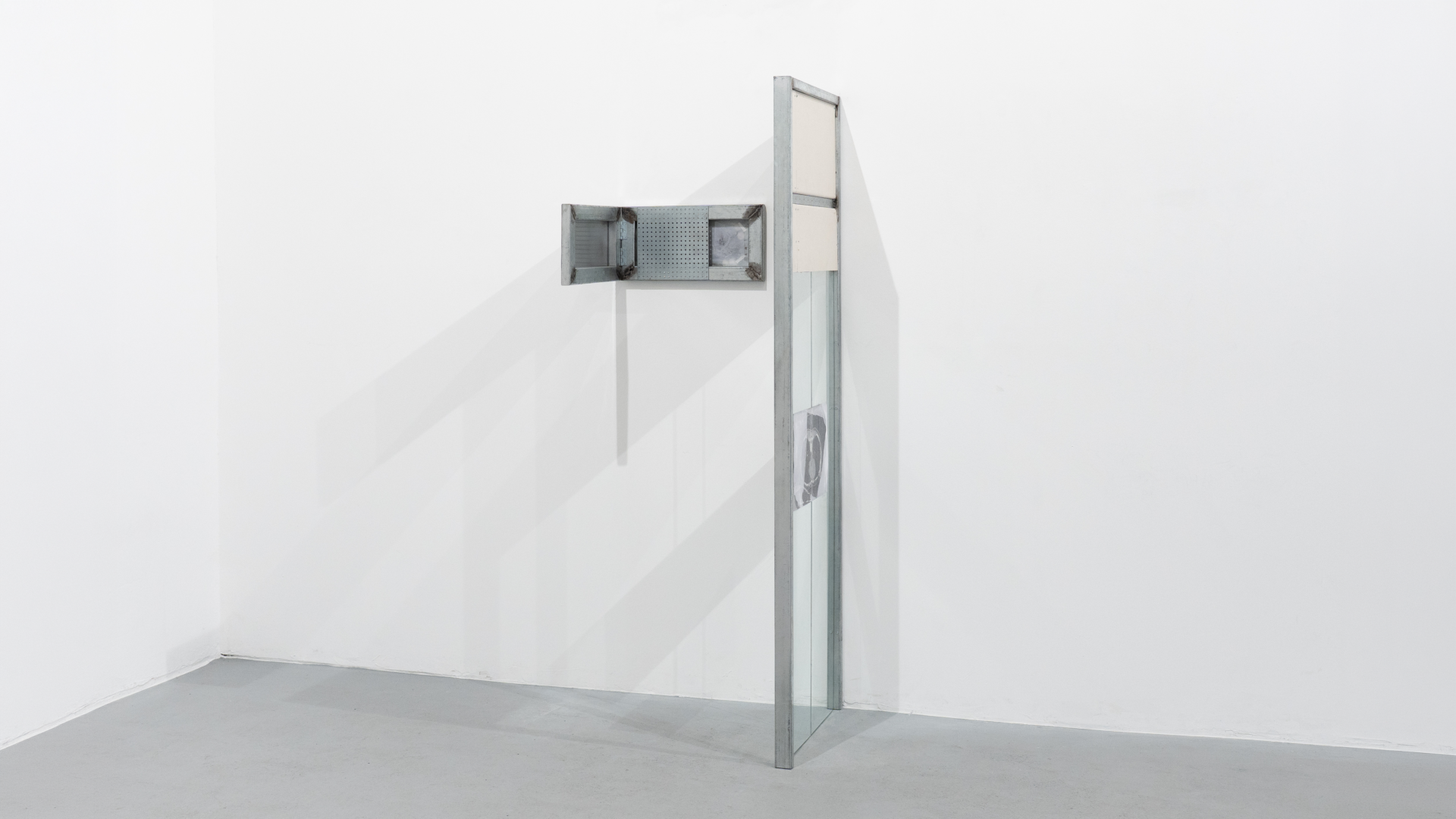
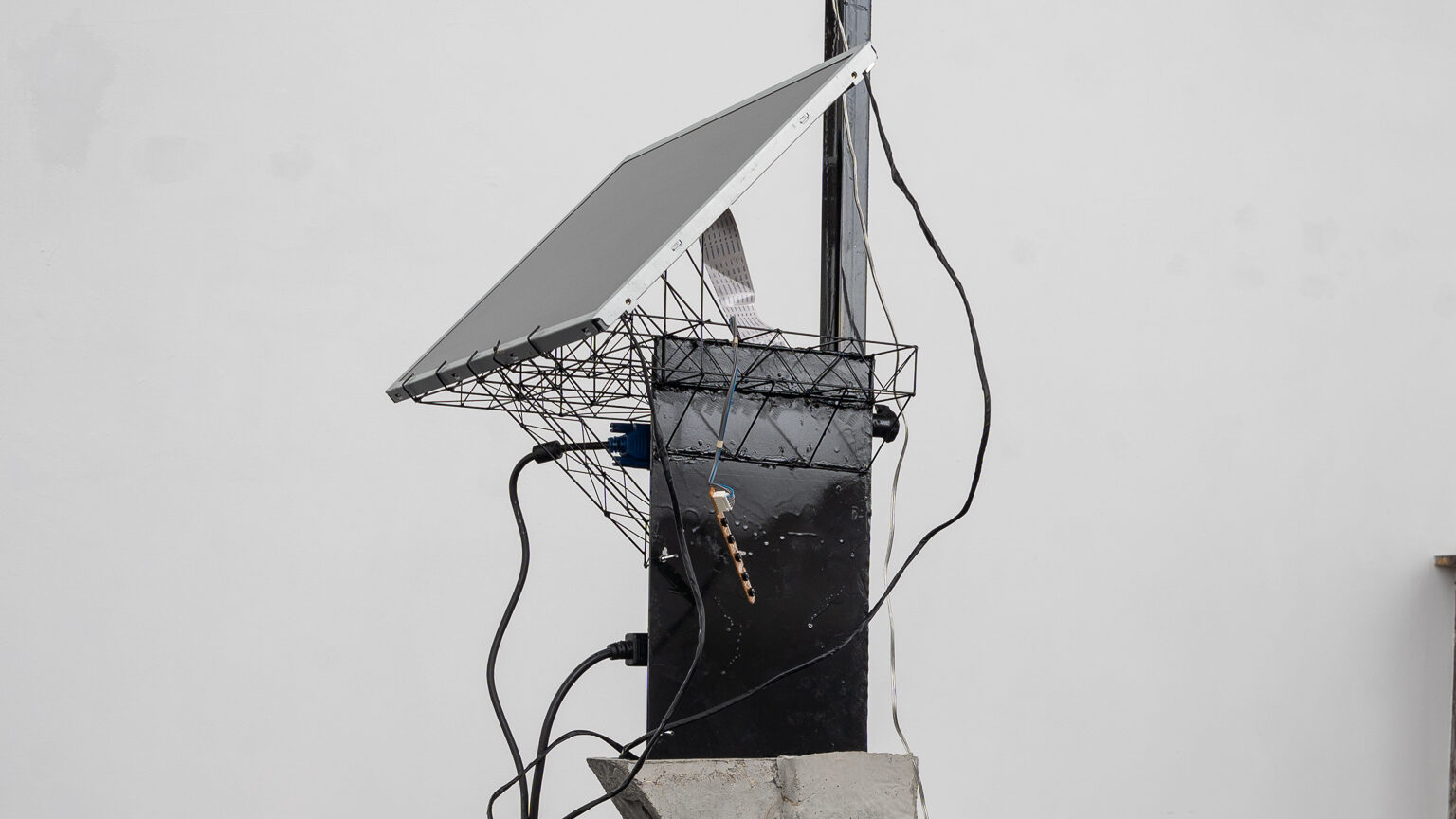
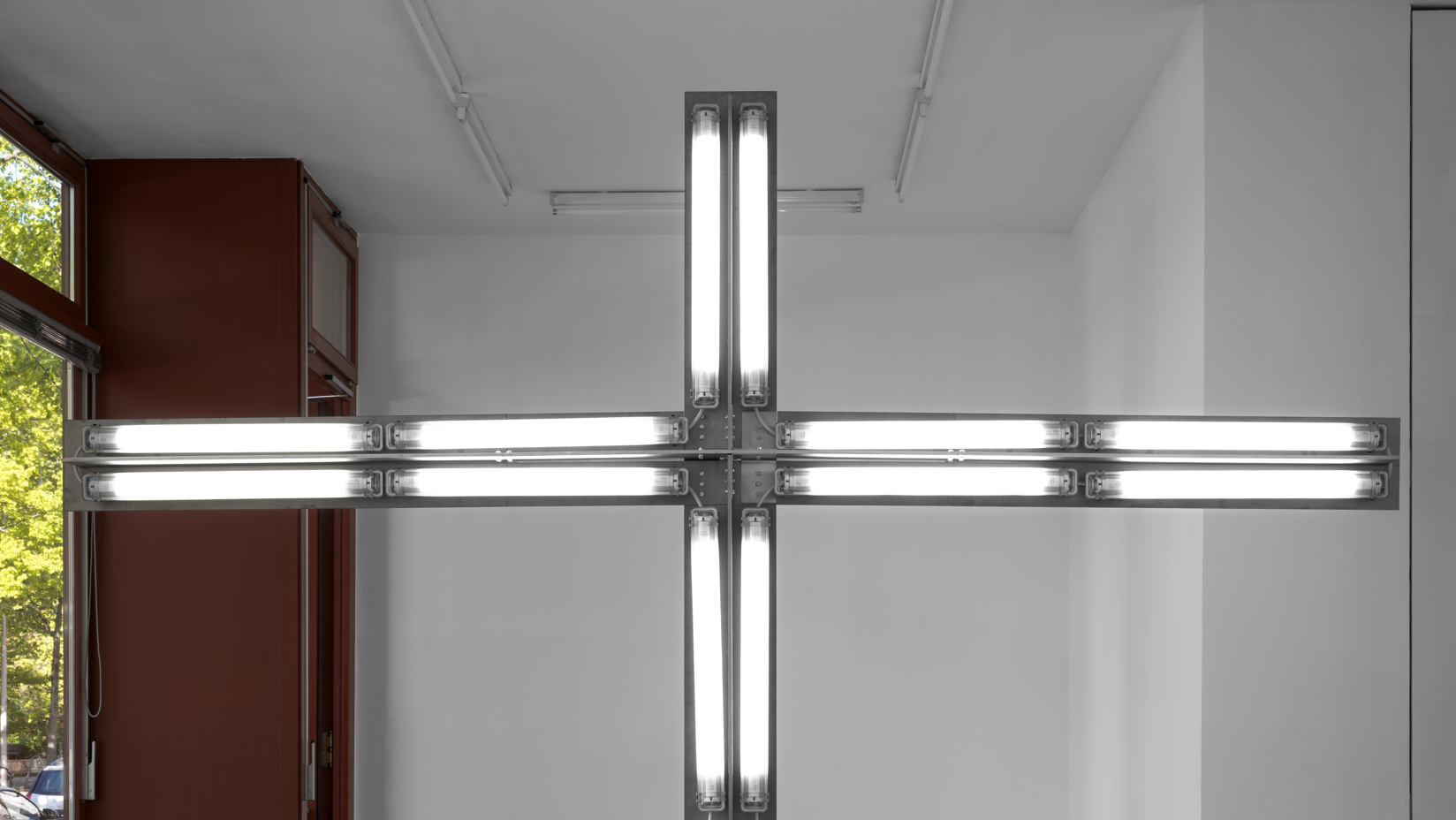
For the exhibition, I designed a series of sculptures and autonomous machines that feed symbolically from an economy of blood. I was interested in thinking of blood not only as vital matter, but as a substance captured by systems of circulation, violence, and power. At that intersection, a central question appears for me: how certain technologies can present themselves as medical, moral, or life-saving while participating in much darker structures of extraction, war, and the administration of death.
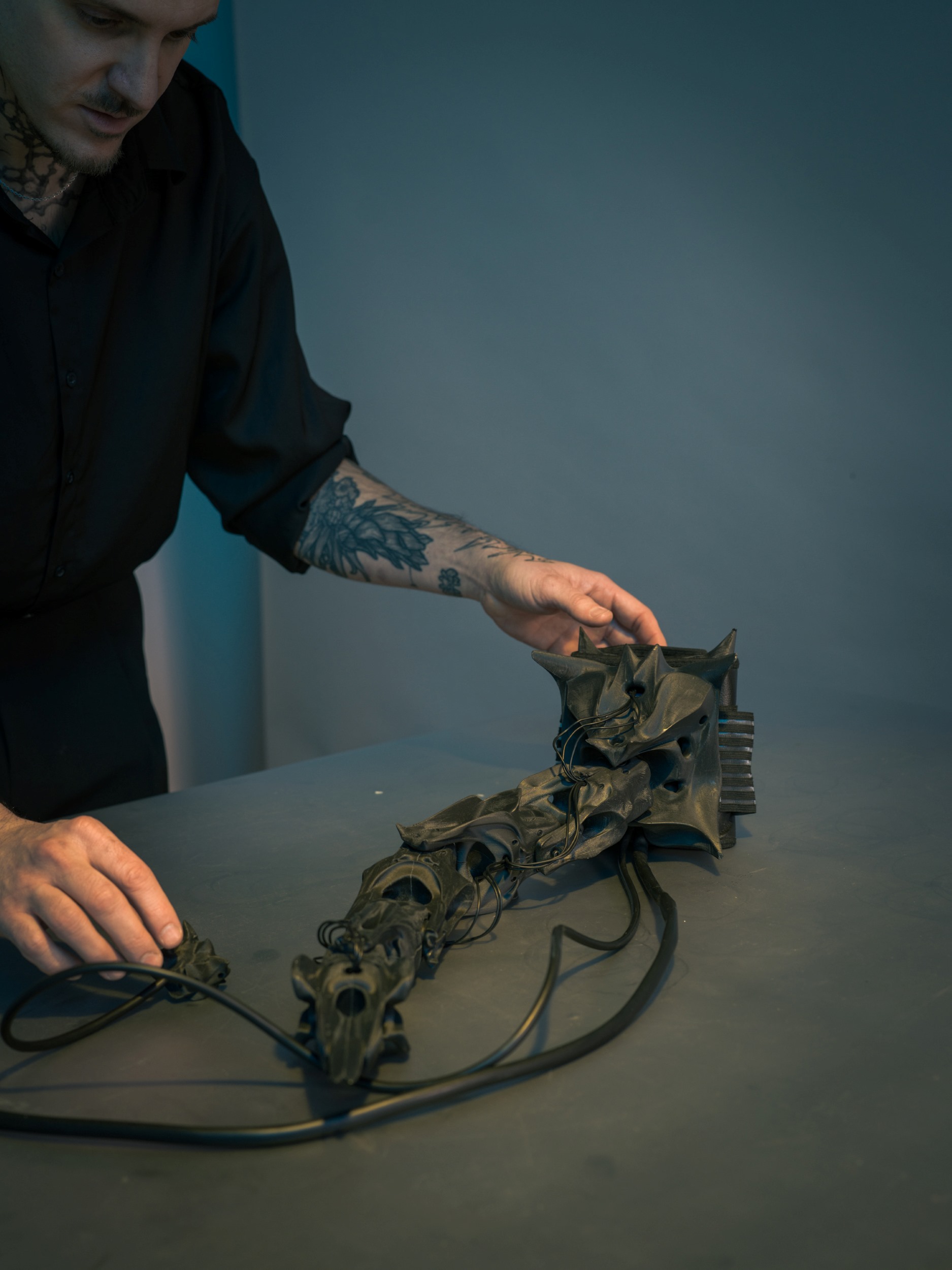
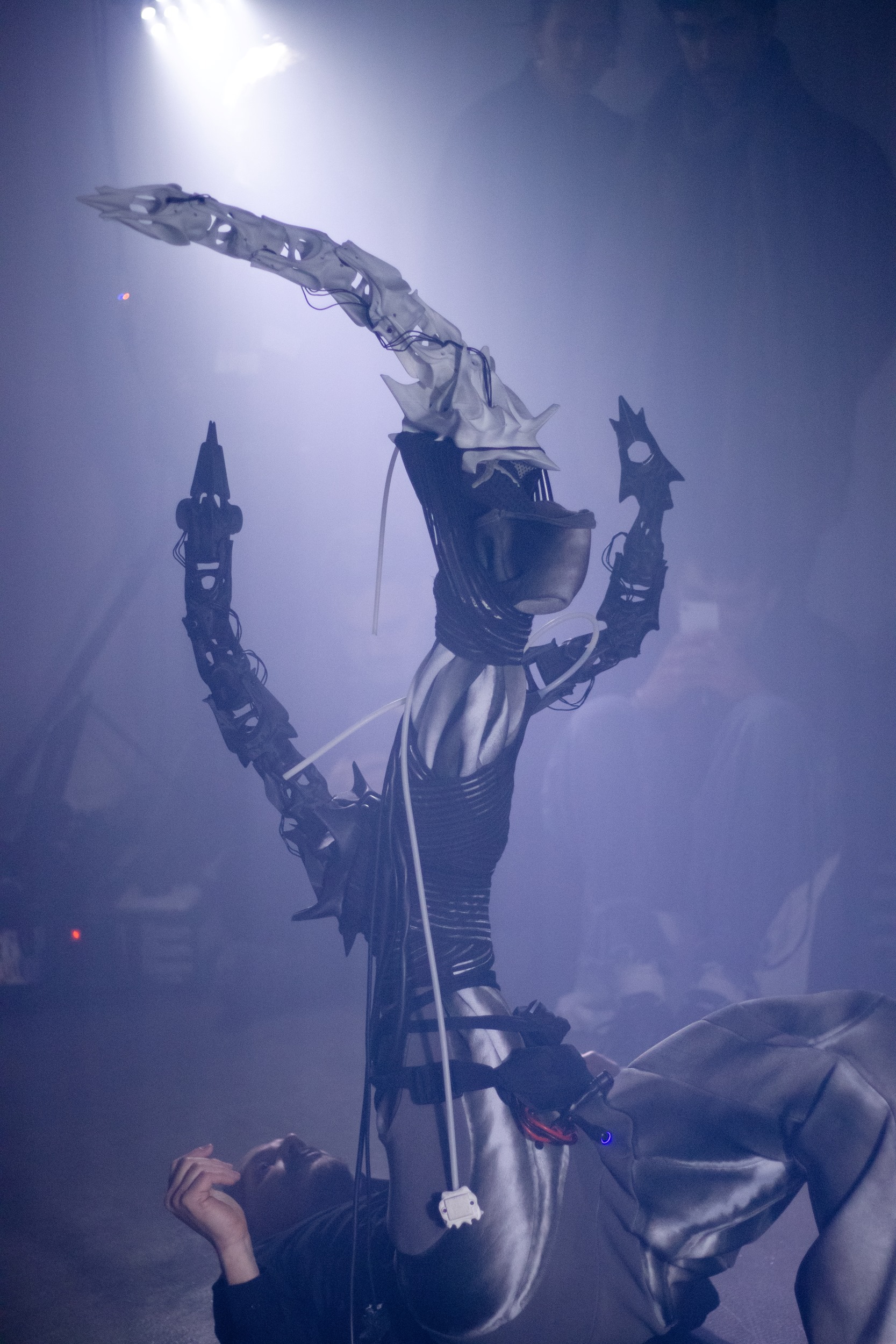
You used blood as a central element in your last installation, Iron Stream, creating circuits where visitors’ bodies connect directly to machines that extract, circulate and transform it. Why did you choose blood as the central metaphor for contemporary capitalism and bioextractivism?
Blood appeared in my work as a very powerful symbolic element, but also as something absolutely concrete, not as an abstract metaphor of life. Blood is a biological resource that circulates within medical, economic, and political infrastructures. To this day, blood destined for transfusions has to come from other bodies, from other people. We depend on an invisible mesh of “donations”, on living bodies from which an extremely valuable resource is extracted. And what very often is not made visible, and there are interests in keeping it opaque, is that, in different contexts, blood and its derivatives also enter into dynamics of compensation, intermediation, and economic valorization.
There, a door toward bioextractivism appears. Blood can be presented morally as donation, as care, or as an altruistic act, but at the same time, it enters into market, management, distribution, and extraction dynamics. I am interested in that tension to speak about current political problems. How something associated with saving lives can be absorbed by capitalist logics that transform a symbol of life into a resource and into a market opportunity.
«Blood donations are commonly promoted through the moral argument that “blood saves lives”. While the life-saving capacity of blood transfusions is well established, Iron Stream asks a more complicated question: whose lives are saved, and at the cost of which others? The manufacturing of consent for political projects, including in the blood industry, often relies on moral frameworks. Morality bridges the individual and the collective, unmasking a confusing relationship between personal willpower and the capitalist instrumentalization of individual human choice.» (Fragment by Salvador Marino and Cru Encarnação from the exhibition Iron Stream*)
In that sense, Iron Stream does not work with blood only as a symbol of life, but as matter captured by systems of circulation and value. What the work tries to show is that contemporary violence does not always appear as direct aggression. Very often it appears as infrastructure, as a technical, moral, and economic system that administers life, extracts value from bodies, and decides which must be protected and which can be sacrificed. That is why blood allowed me to make visible a violence that is often concealed behind morality, technology, and even certain transhumanist imaginaries. It is not only a matter of extracting raw materials from the territory. Fluids, bodies, desire, and vulnerability also enter into spheres of bioregulation and extractivism.
My final interest in Iron Stream was, of course, to speak about the relationship between blood and war. The more wars expand, the more the war industry advances, the more medical and biotechnological infrastructures are activated around that violence. The war industry, the arms industry, and the blood industry are closely connected. Their economies, infrastructures, and needs feed back into one another. In that sense, blood makes it possible to think a connection between capitalism, necropolitics, and bioextractivism: which bodies give, which bodies receive, which bodies are protected, and which bodies are consumed by the management of life and death under capitalism.
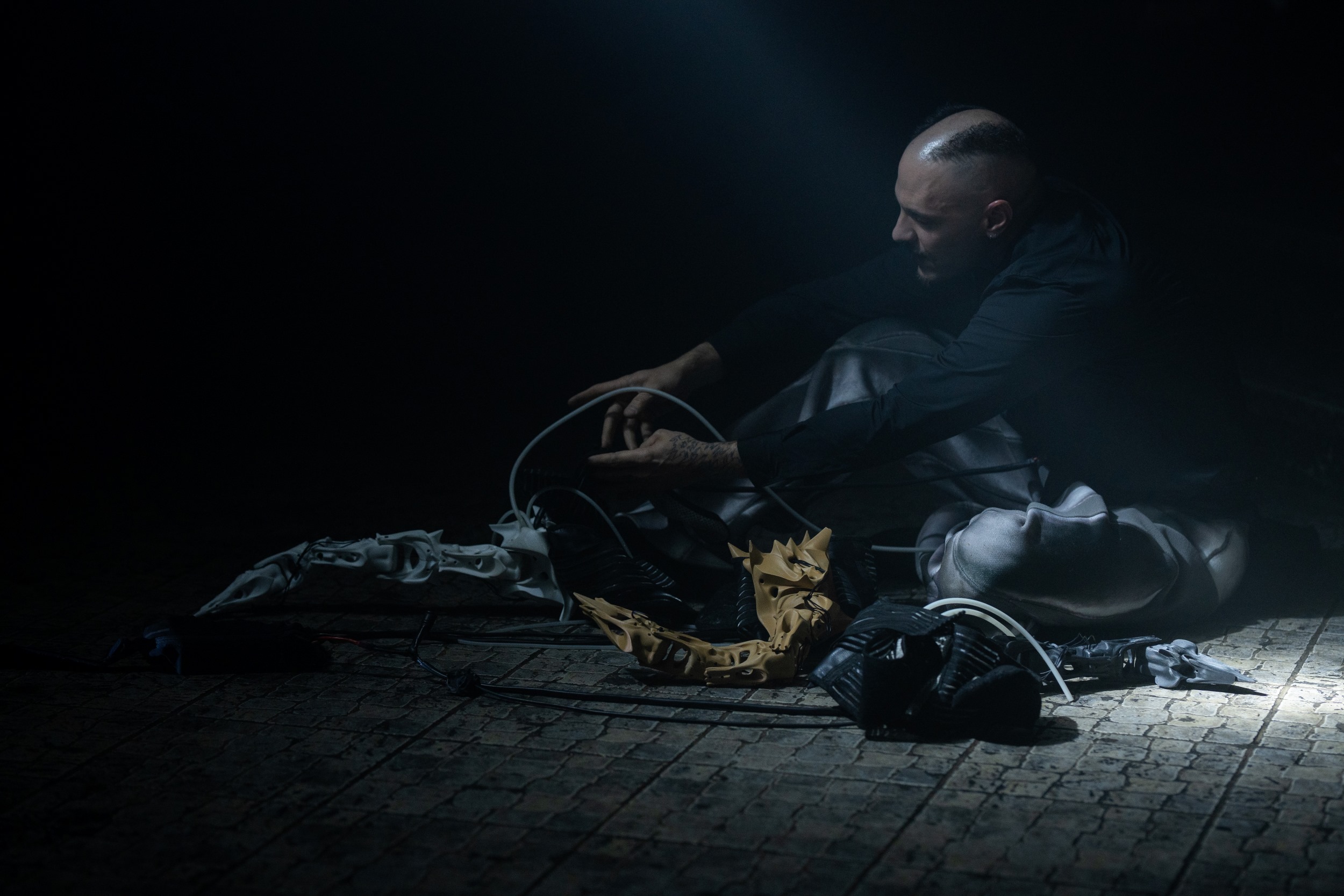
In many of your works the machines continue to operate autonomously after the human performance ends, with fluids thickening, materials decaying and systems slowly merging. What does this autonomous life of the machines reveal about the relationship between human bodies and technological extraction?
I am interested in thinking of these machines as independent creatures rather than as instruments. The performance is only one moment in their existence. Instead of understanding technology as something that passively extends or serves the body, I imagine technical beings that coexist with us, affect us, and persist beyond us. Their autonomy reminds us that our relationship is one of coexistence, in which rhythms, temporalities, and forms of agency gradually merge.
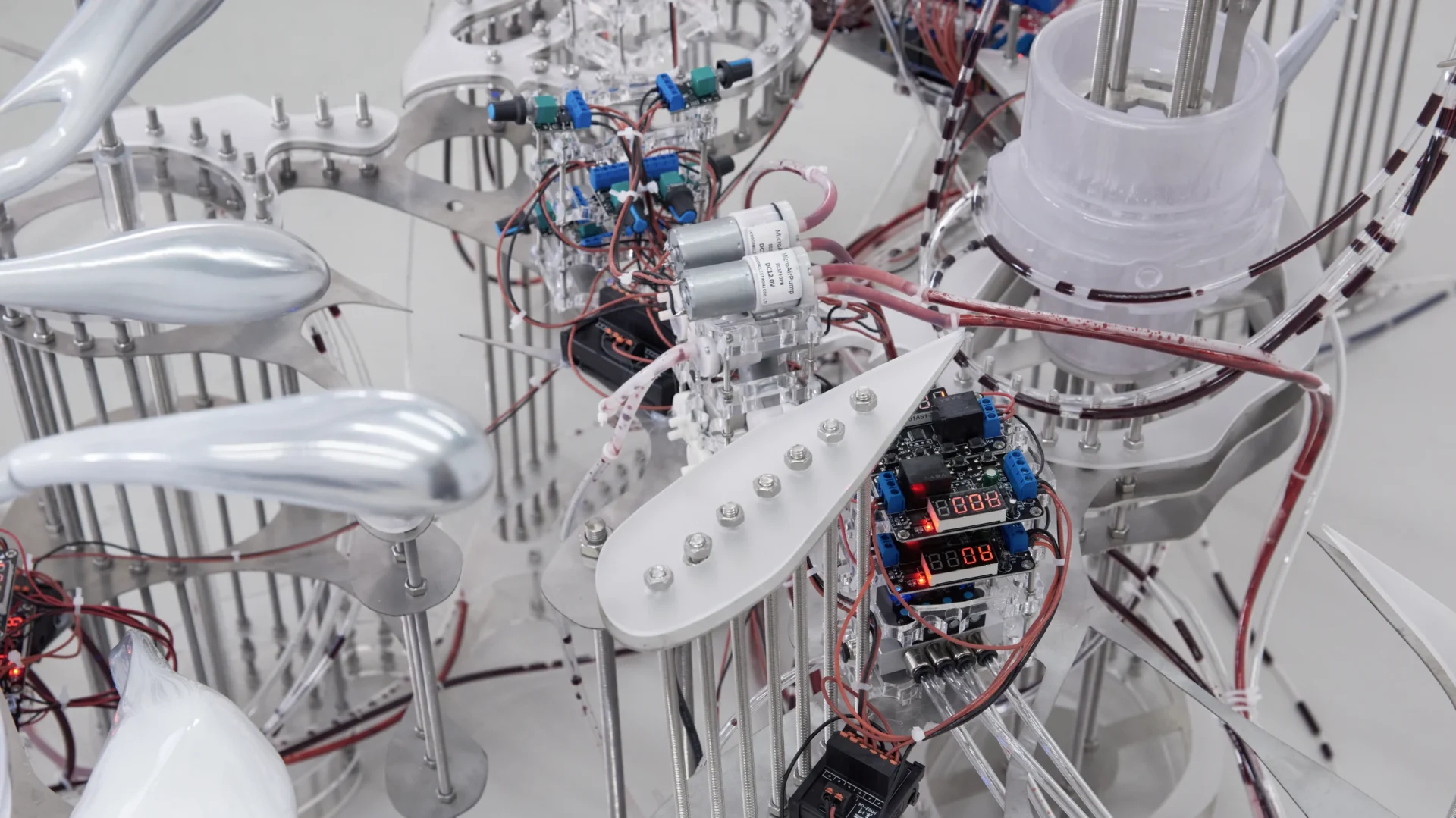
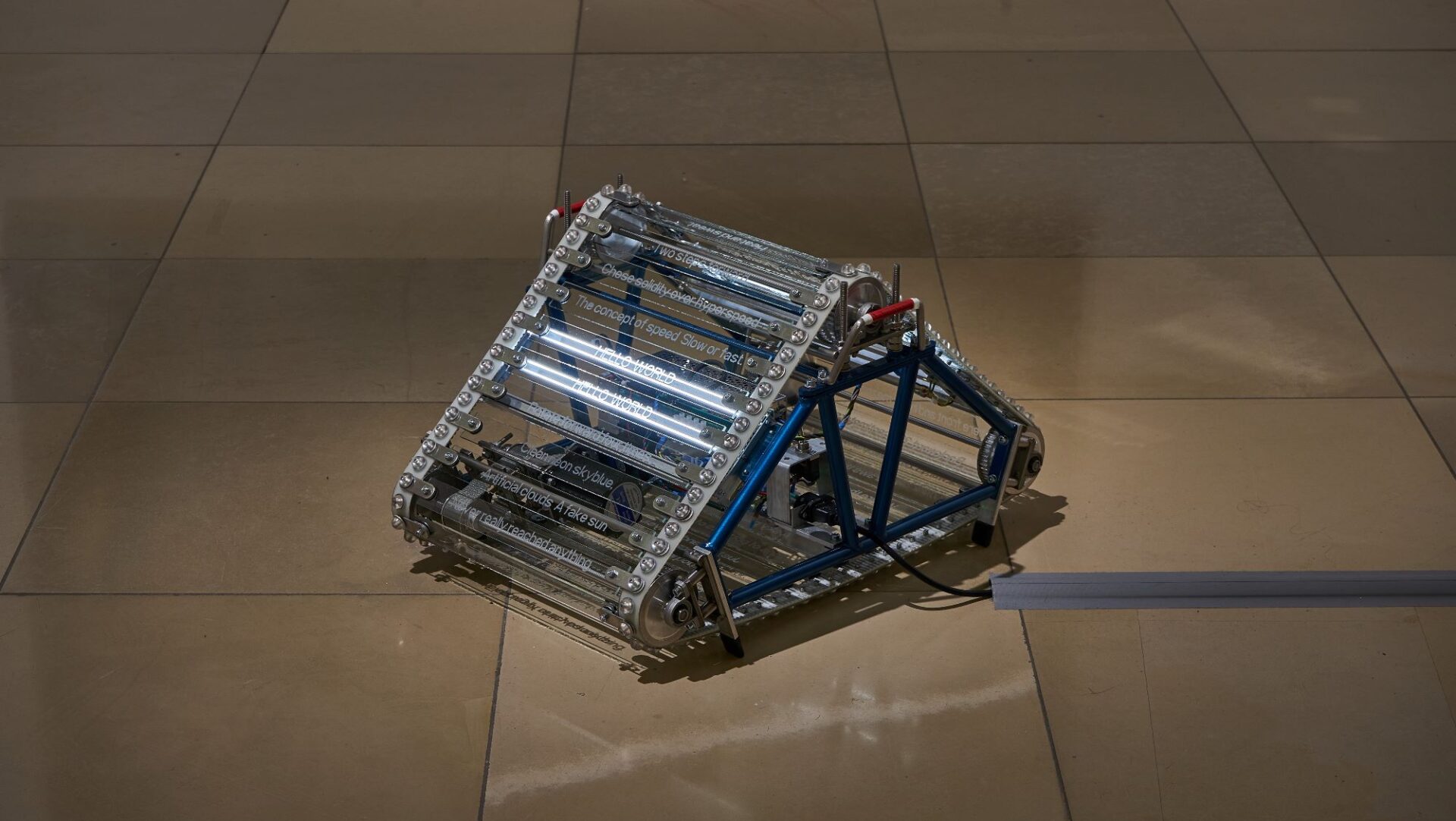
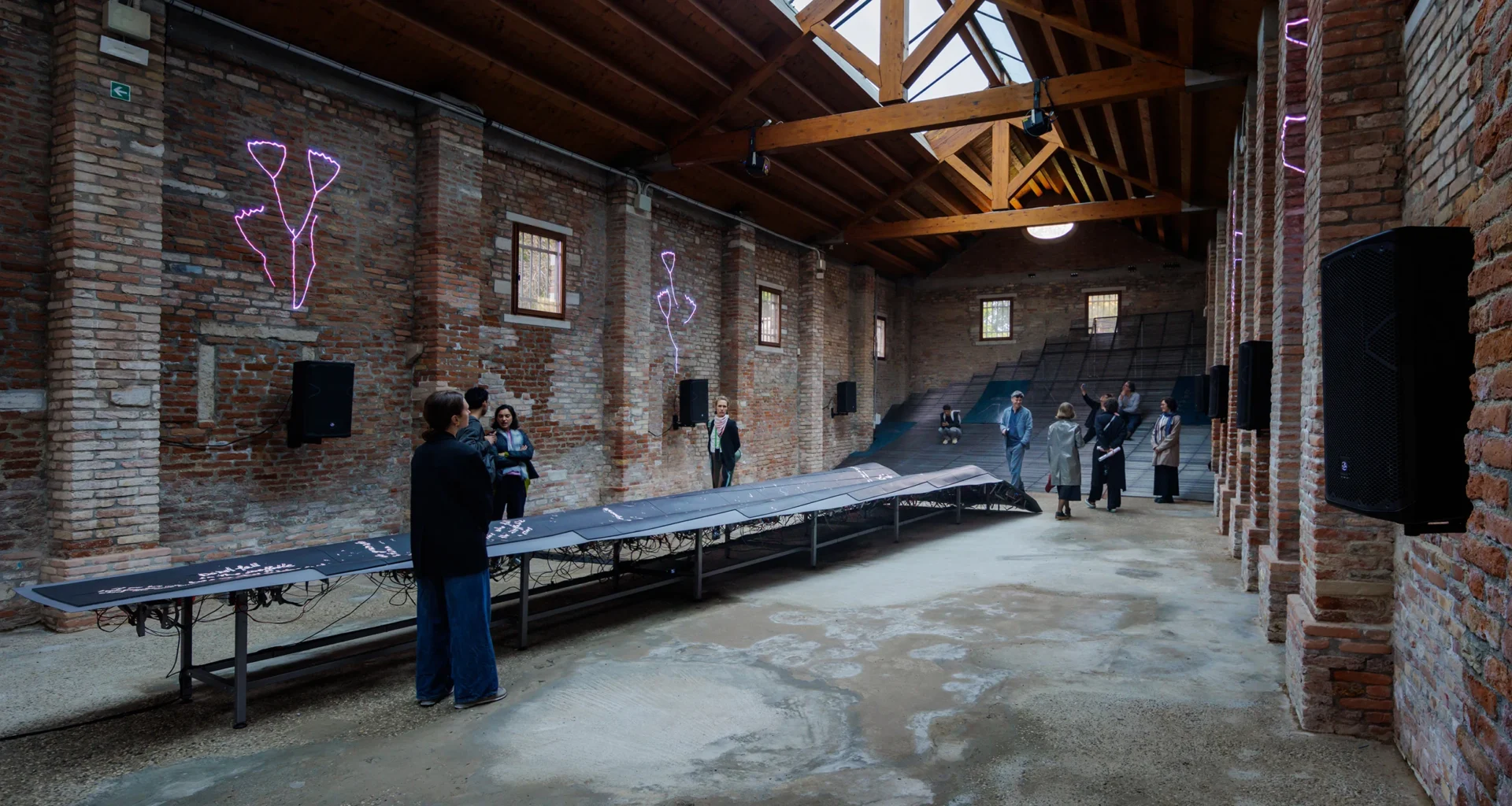
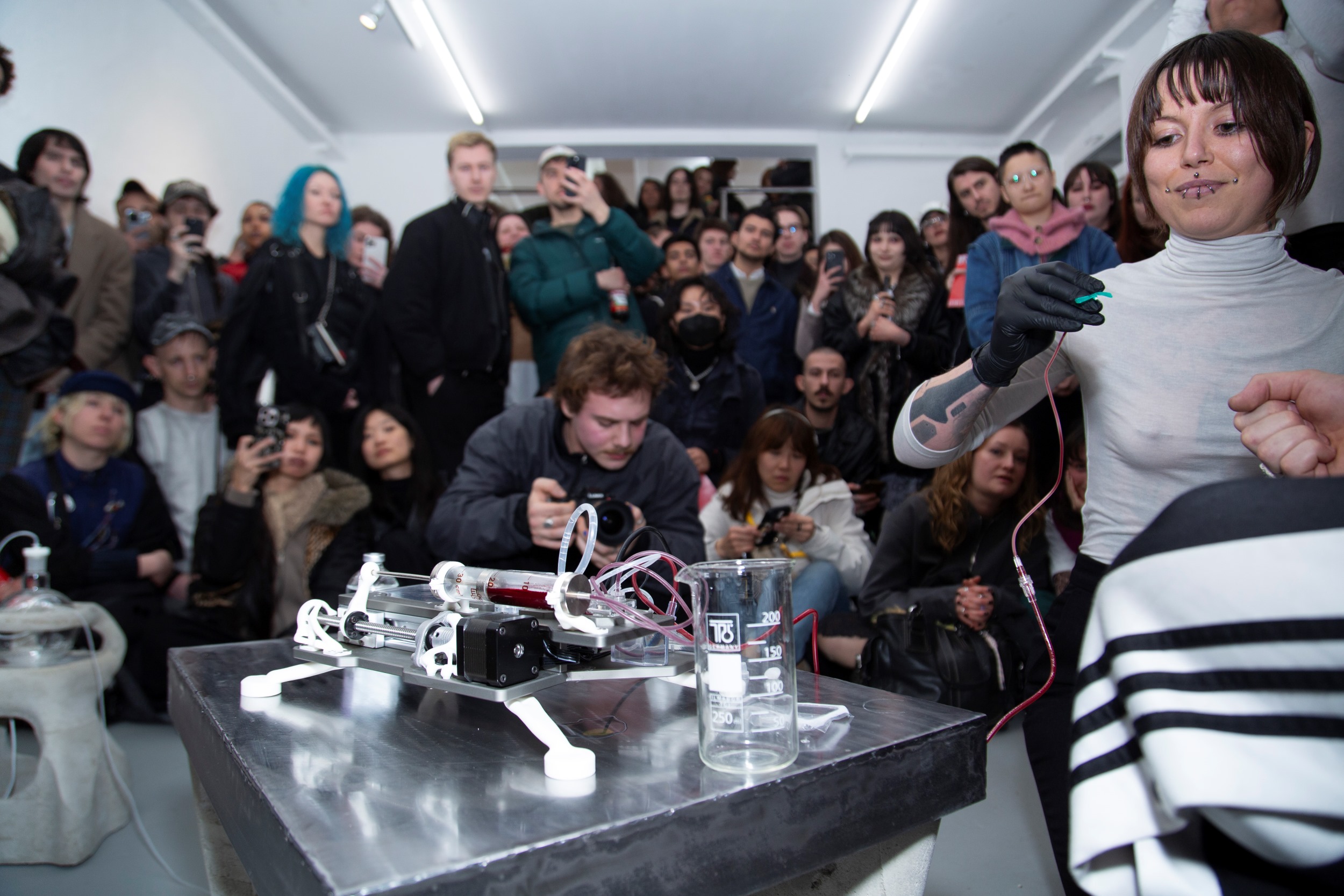
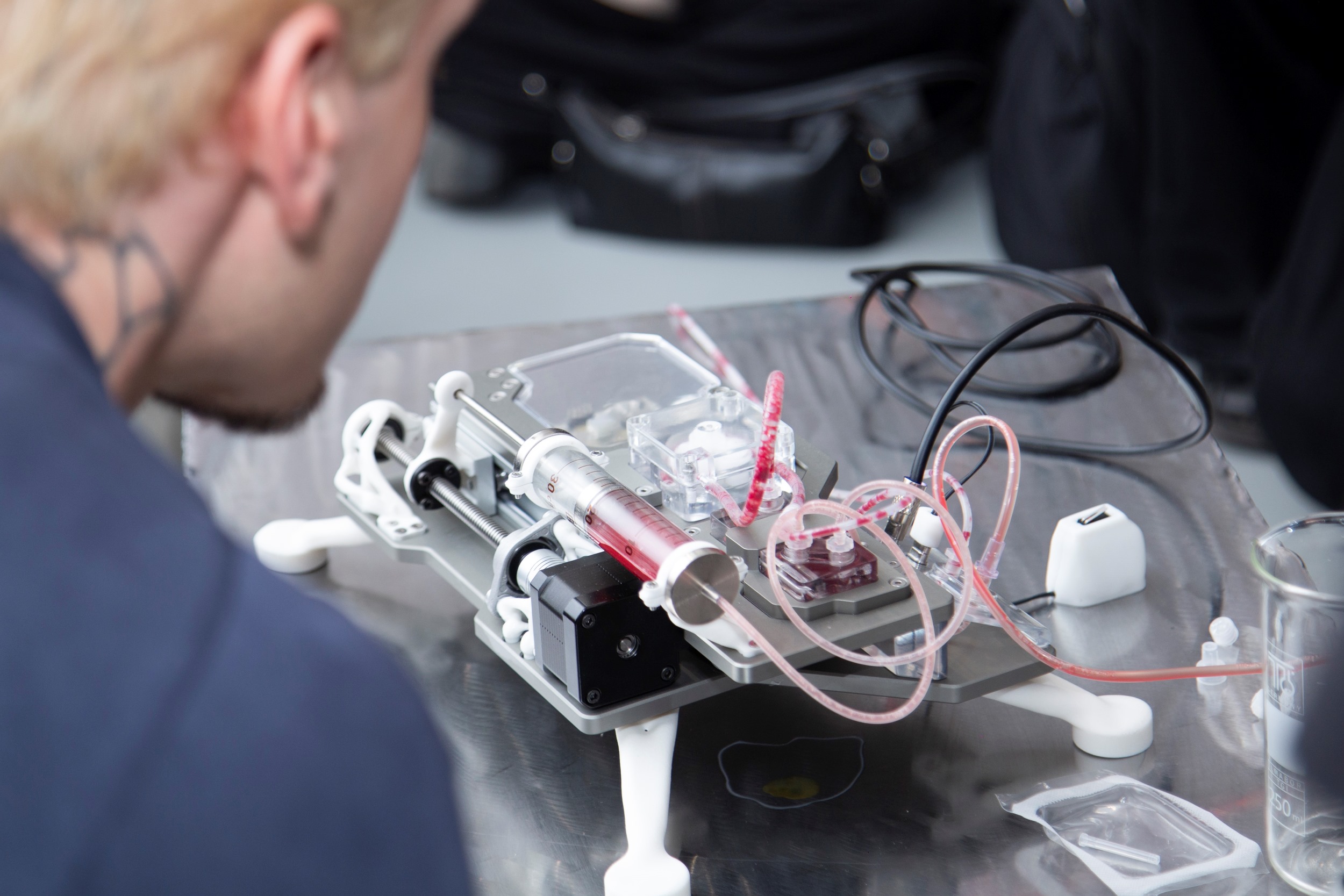
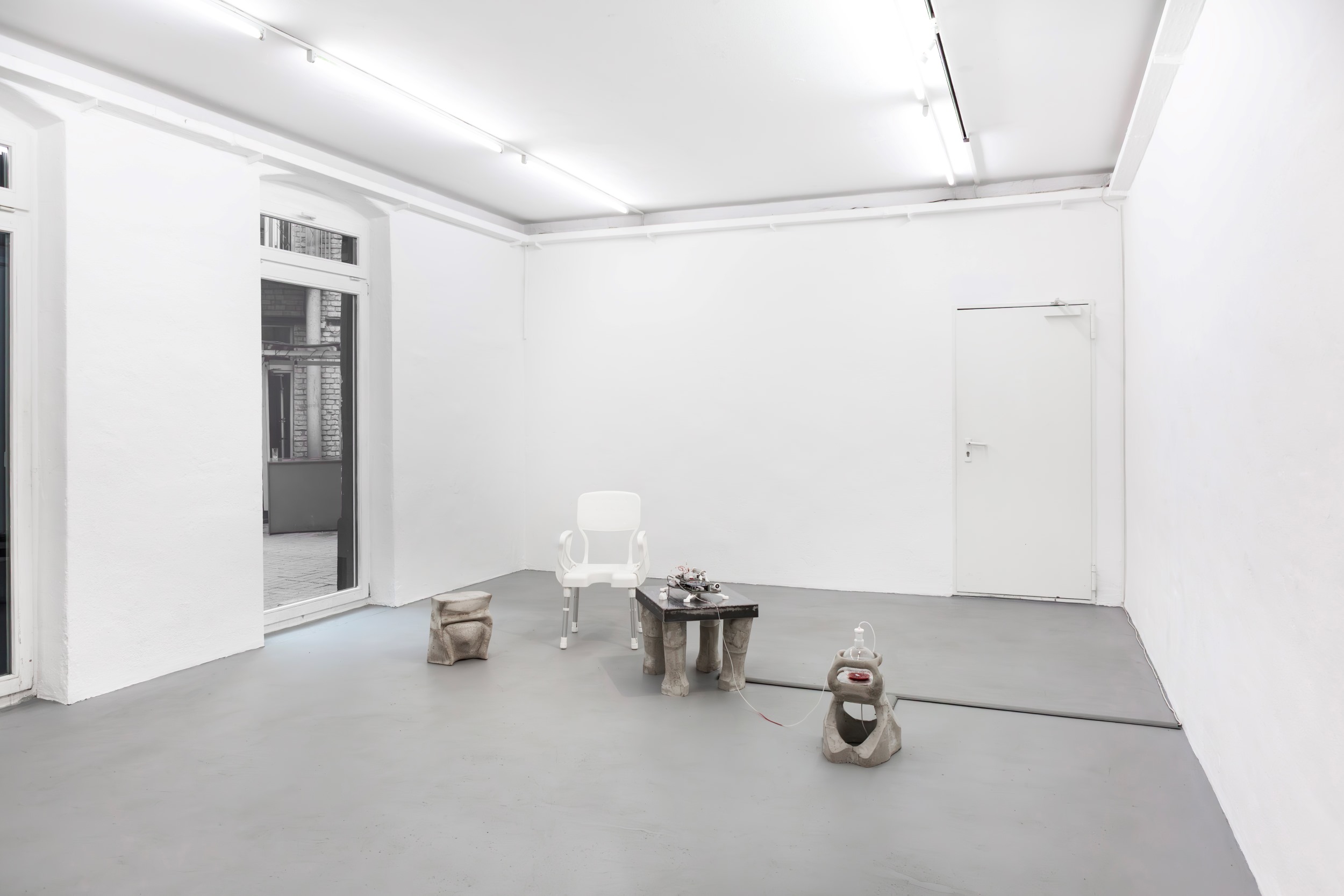
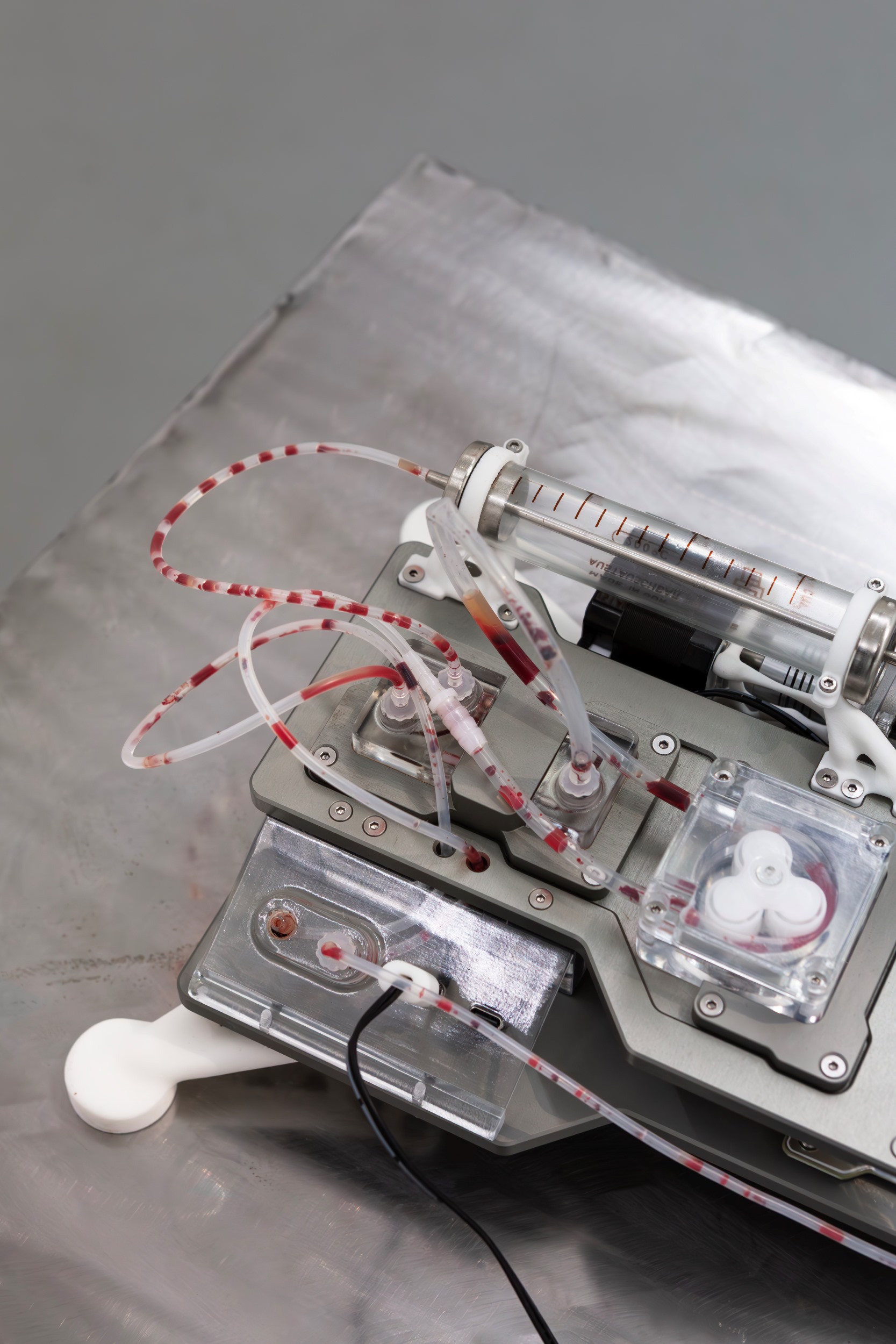
In my latest exhibition, Iron Stream, the main room contained two automated blood-extraction machines. Visitors were invited to donate blood during the live performance. Once connected to the device, the extraction process continued automatically. Then, the blood was conducted toward a second machine, which collected it and kept it liquid within the system. I was interested in these machines functioning not only as technical devices, but also as images of an extractive mechanism. The fact that they were activated by blood made visible a direct relationship between body, resource, and market. In that gesture, a critique of bioextractivism appeared, of the way in which intimate and vital matter can be captured by dynamics of circulation, administration, and value.
Within the framework of the exhibition, it seemed indispensable to me that the machinery that set the work in motion should be a performative action. Performance appeared here as the human element that activates the machine. Making an analogy with the structure of the market, it is ultimately flesh that sustains the machinery, that feeds its circuits of production and extraction. The performance did not accompany the installation. It set it in motion and gave it meaning. The donor bodies activated the mechanism and became, for a moment, the fleshy gears of an extractive system.
Gh0re.grl, one of the two performers in the exhibition, guided visitors through the donation process, connecting their bodies directly to the Blood Draw Machine. From that gesture, a temporary circuit of blood, tubes, and valves was assembled. With the press of a button, extraction became automated, and then the blood was redistributed into a central collector, where a magnetic system kept it in constant motion. What interested me there was that circulation would appear not only as a technical process, but also as a mechanism and as labor.
The decision to include a durational performative action responded not only to the need to articulate blood, valves, electrical components, concrete, and steel within the same scene, but also to the will to charge the sculptural pieces and autonomous machines with symbolic meaning during the following days, when they remained motionless and isolated, but still preserved the potential of that movement. One could still feel the presence of that action, as if certain remains of humanity had remained adhered to their movement.
Cru Encarnação, the second performer, approached visitors one by one, creating intimate encounters charged with emotional and political tension, and speaking to them about vulnerability, care, pleasure, and war. Through those whispered texts, the performance introduced another layer into the act of donation, linking it not only to care, but also to desire, value, and capitalism. As one fragment of the text said: «Did you know you can pay 2,000 euros for a blood transfusion in a private clinic? They say it’s good for anti-aging.»(Fragment of the text used in the performance by Cru Encarnação)
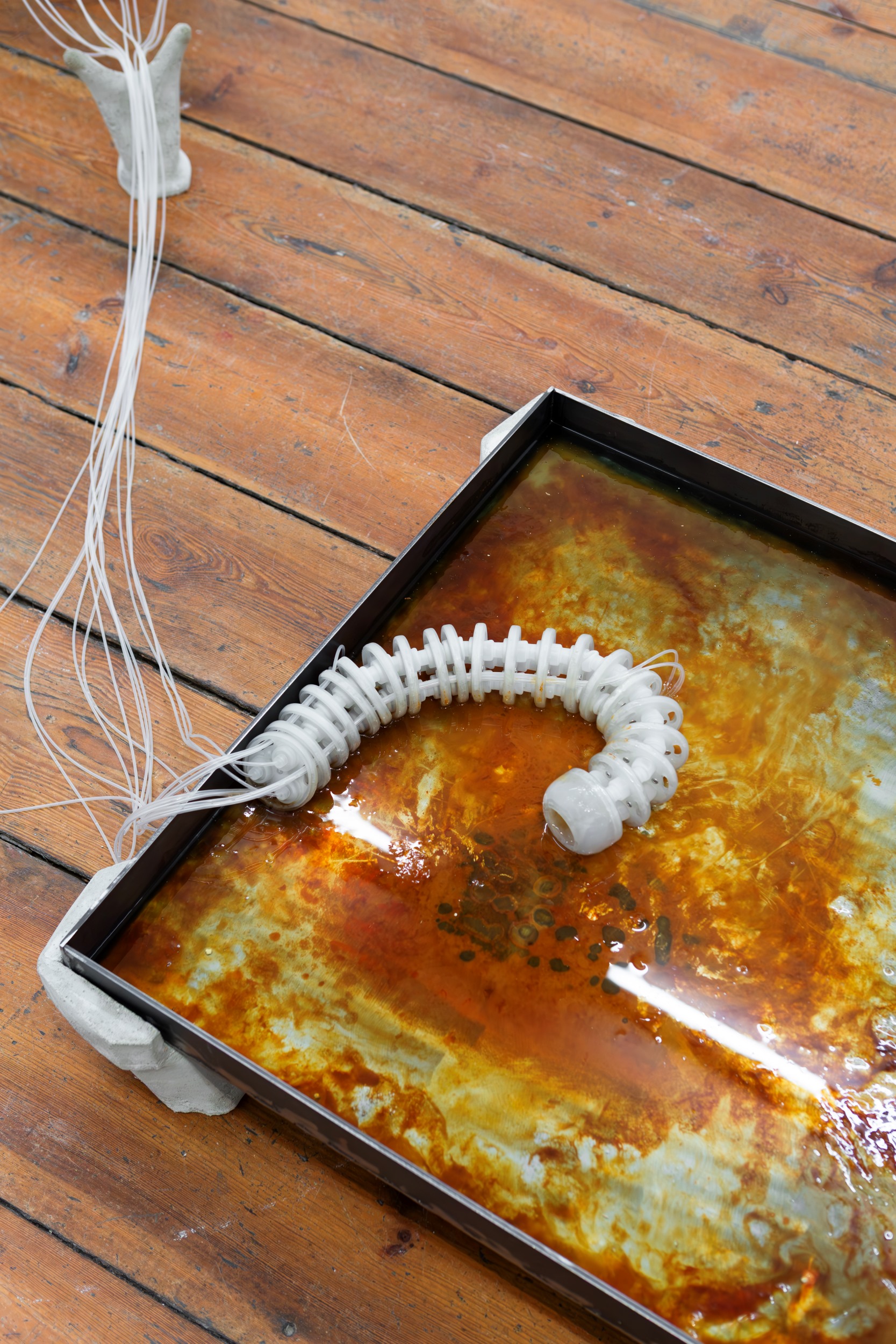
After the performance, the system continued autonomously. Blood, left in motion, began to thicken, to separate, to degrade. The lubricant sustaining the robotic worm slowly dried, and its movements weakened over time. Steel began to oxidize. Although they were separated in two rooms, blood and lubricant remained secretly connected, fusing into a single viscous substance. What interested me there precisely was that transformation, how something given could become a resource, and how the machines, once activated, could continue retaining both the violence and the seduction that creates them.
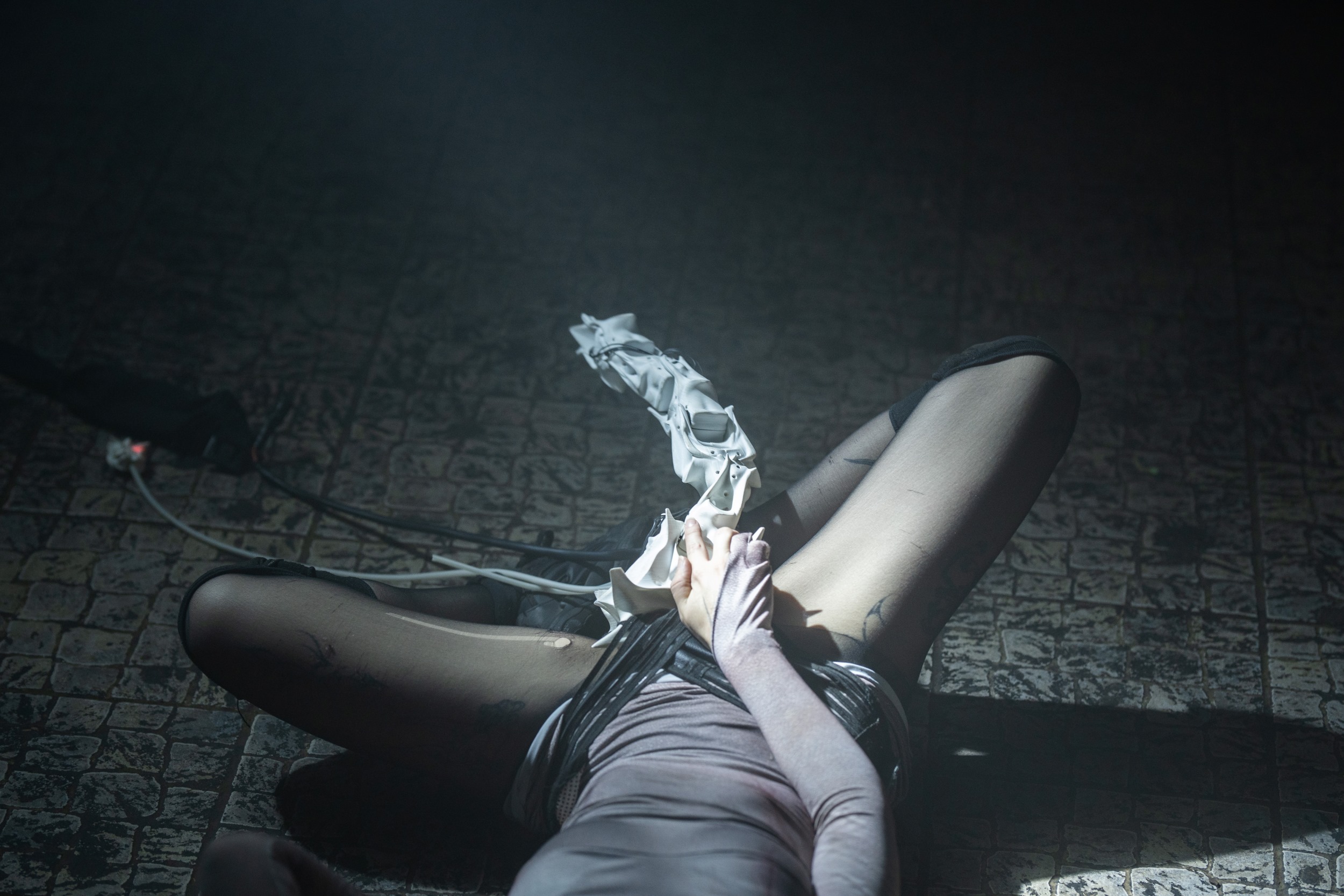
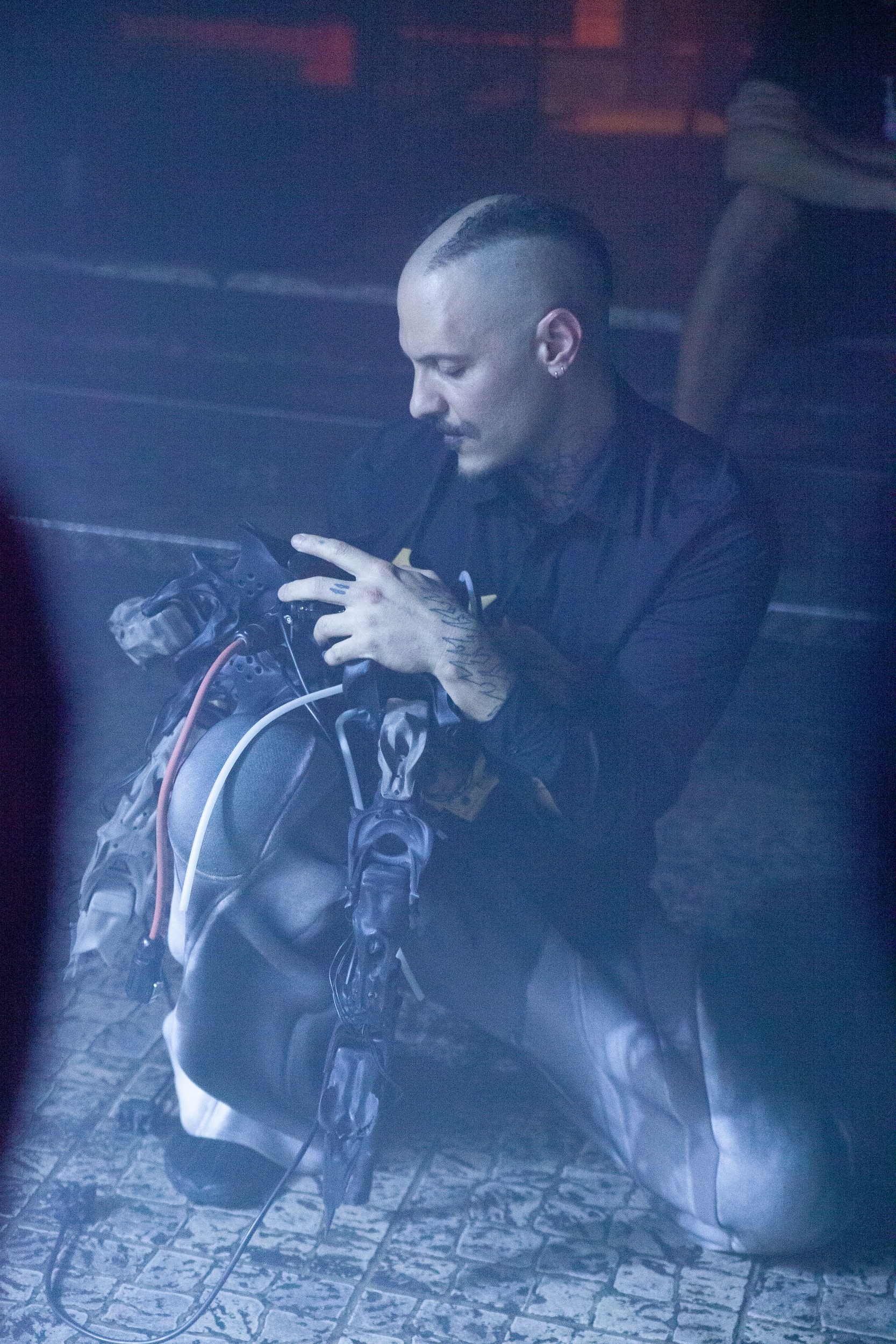
You built the robotic creatures and machines of both Post-Organic Bauplan and Iron Stream from scratch (DIY software, 3D design, PCB development). Why do you insist on this non-hegemonic, “unclean” approach to technology rather than using ready-made or black-box solutions?
I am not interested in producing technology as a neutral image of progress, solution, or efficiency, but as a field of conflict, a place from which to point out the infrastructures that administer life and extract value from bodies. I understand technology not only as a set of tools, but also as an infrastructure of subjectivity, a network of devices, discourses, and systems that manufacture ways of perceiving, desiring, obeying, and existing.
That is why the question behind every technology is always what kinds of bodies, identities, and sensibilities a given technology produces, and in the service of what forms of power. I am interested in creating devices that propose an alternative to the ways of organizing the world imposed by the major interests of the market. Developing a technology that does not exist today is not only a propositional gesture. It is also a form of resistance.
Many of the speculative tools and technologies that interest me emerge from horizontal territories of knowledge, such as DIY communities, where technique appears as distribution, play, and struggle against the hegemony of an apparently already decided future.
At the same time, many of the technologies presented today under the sign of AI intensify new forms of extractivism and consolidate a logic of predictability in which every gesture, every decision, and every behavior becomes increasingly legible, calculable, and anticipatable. The problem is that this logic suffocates agency and further erodes an already fragile idea of freedom. That is where a political wound opens up. Faced with that, I am interested in developing speculative technologies that imagine more diverse futures, futures not reducible to hegemonic interests. There I find a place of resistance.
As an artist who works practically and conceptually with terms such as technology and posthumanism, I have always felt responsible for thinking about how those terms appear in the political context. Today I strongly refuse to accept a hegemonic idea of technology. I do not think technology should be understood as something exclusive, or as a territory monopolized by science, industry, or those who hold more power within the capitalist system. Technologies must be understood as tools that belong to us, as a diversity of knowledges, materials, and practices that we build collaboratively.
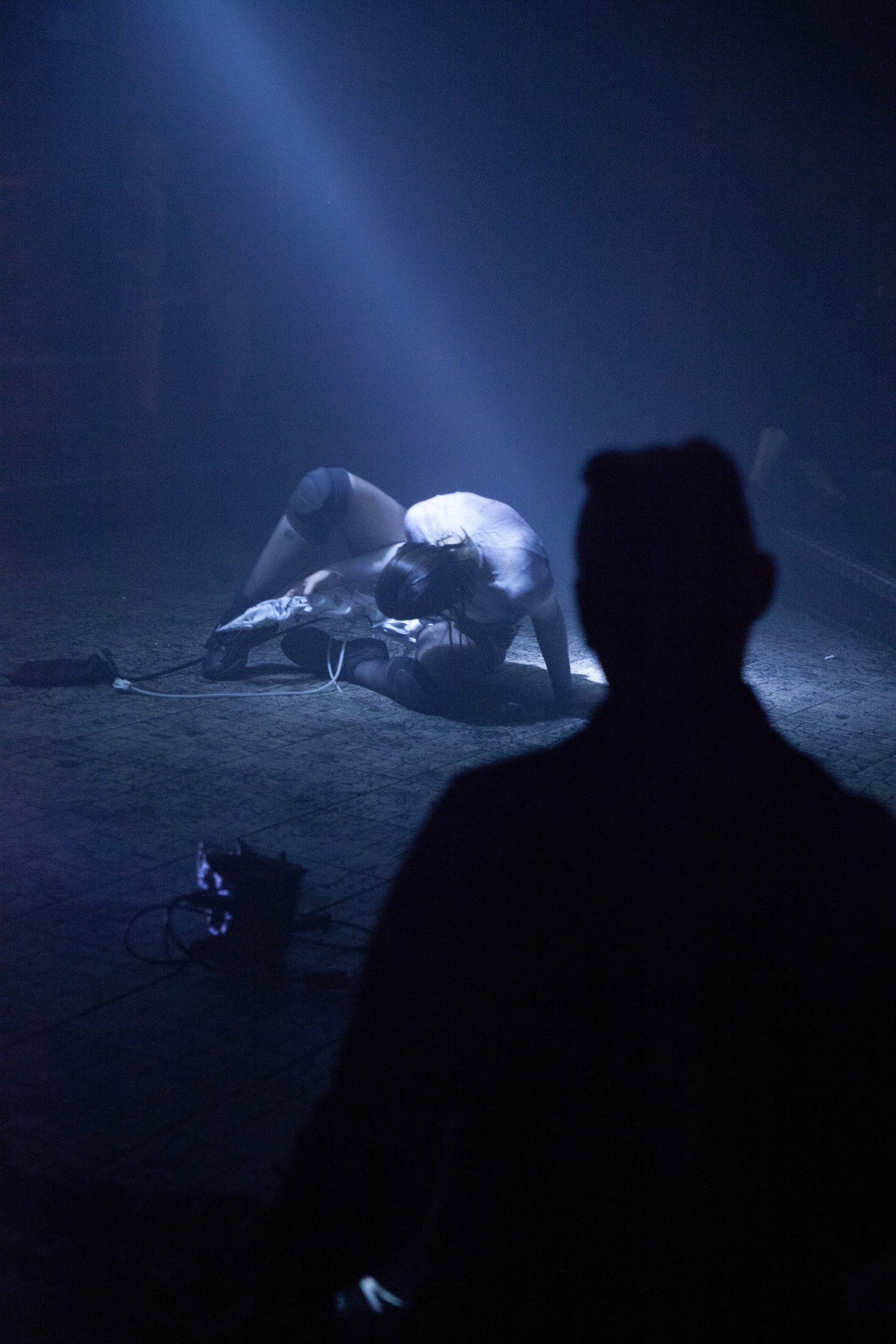
In Iron Stream you evoke sci-fi-inspired medical machines that look both seductive and uncanny. How do you think about the erotic dimension of these devices in relation to the capitalist death drive and the fetishization of technology?
Taste is a complex structure of power. It is not something natural or innocent, but a manufactured subjectivity, a historical and political construction. The question, once again, is who shapes those subjectivities and according to what. From childhood, we learn what should please us and what should provoke rejection in us. In that process, the sphere of the market enters into direct dialogue with the construction of taste, morality, desire, and consumption strategies. The forms of seduction of capitalism are intimately linked to those architectures that produce taste and value.
That is why statements such as “blood saves lives” or certain technological promises associated with AI are not innocent. They operate in a moral territory that legitimizes certain structures of power, while at the same time shaping our sensibility, our taste, and our idea of value.
I remember reading as a teenager a phrase by Jorge Luis Borges, in the poem El ingenuo, that produced enormous unease in me: «I am amazed that the cruel sword can be beautiful» («me asombra que la espada cruel puede ser hermosa»). To this day, that phrase remains alive in me, because it names something very deep, how an object designed to kill can nevertheless be perceived as beautiful. There, the link between the seduction of the machinery of death and beauty appears clearly, two dimensions that for me remain indissolubly intertwined.
«A necropolitical mechanism is maintained not only through the strategic deployment of moral narratives, but also through the fetishization of technology. Iron Stream evokes autonomous life, and displays the contemporary entanglement of war, the erotic, and the capitalist death drive: a mechanism of increasing efficiency and control.» (Fragment by Salvador Marino and Cru Encarnação from the exhibition Iron Stream*)*
In Iron Stream, I wanted to bring precisely that element, the fetishization of technology as a form of power. Technology has been romanticized to the point of becoming a fetish, an added value that exceeds even the concrete function of objects. The sculptures in the exhibition played with that seduction. I was interested in designing a machine that would automate blood extraction and that would contain, in equal parts, violence and beauty. A machine that would make visible that ambiguous zone where power not only oppresses, but also seduces.
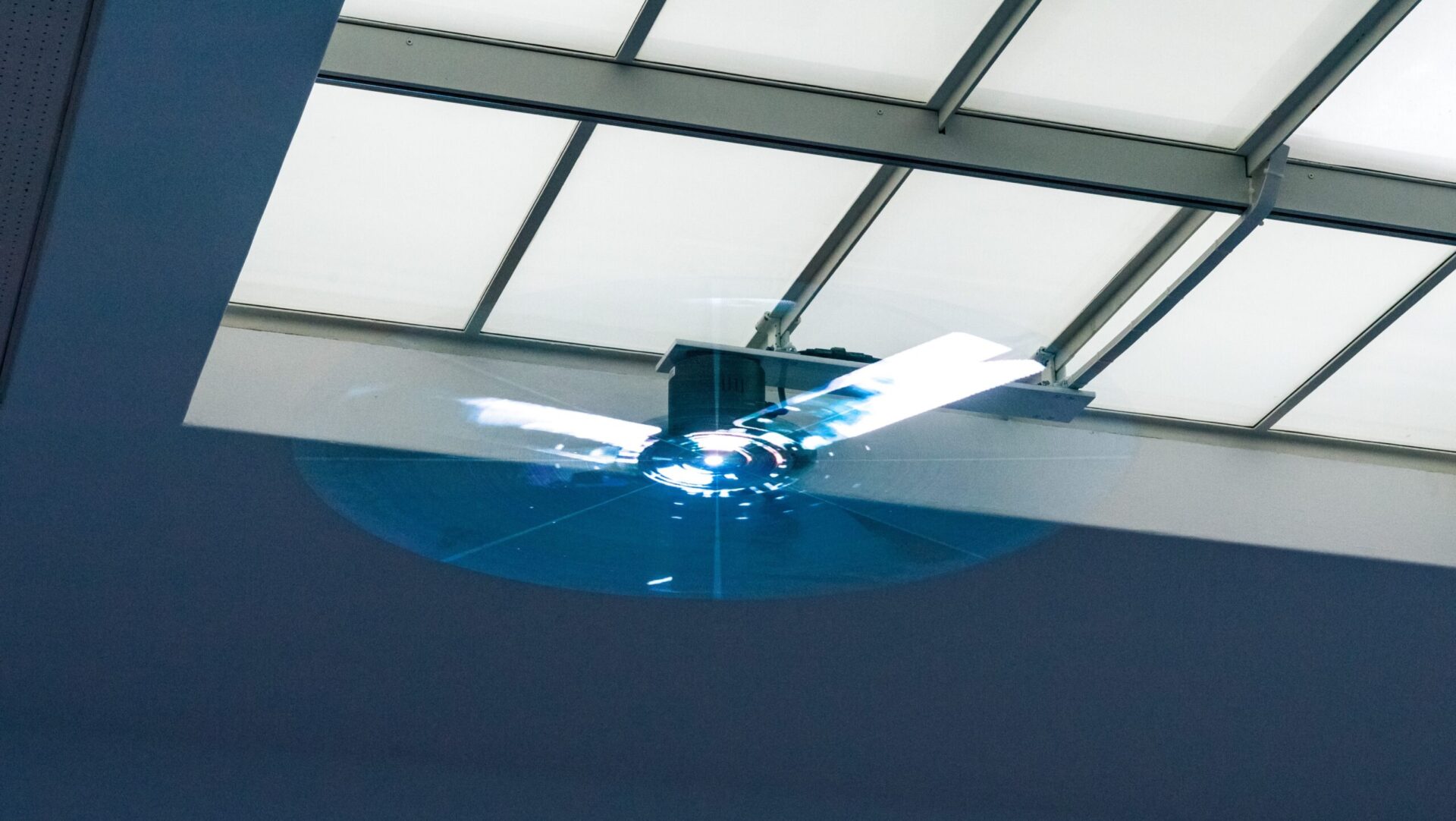
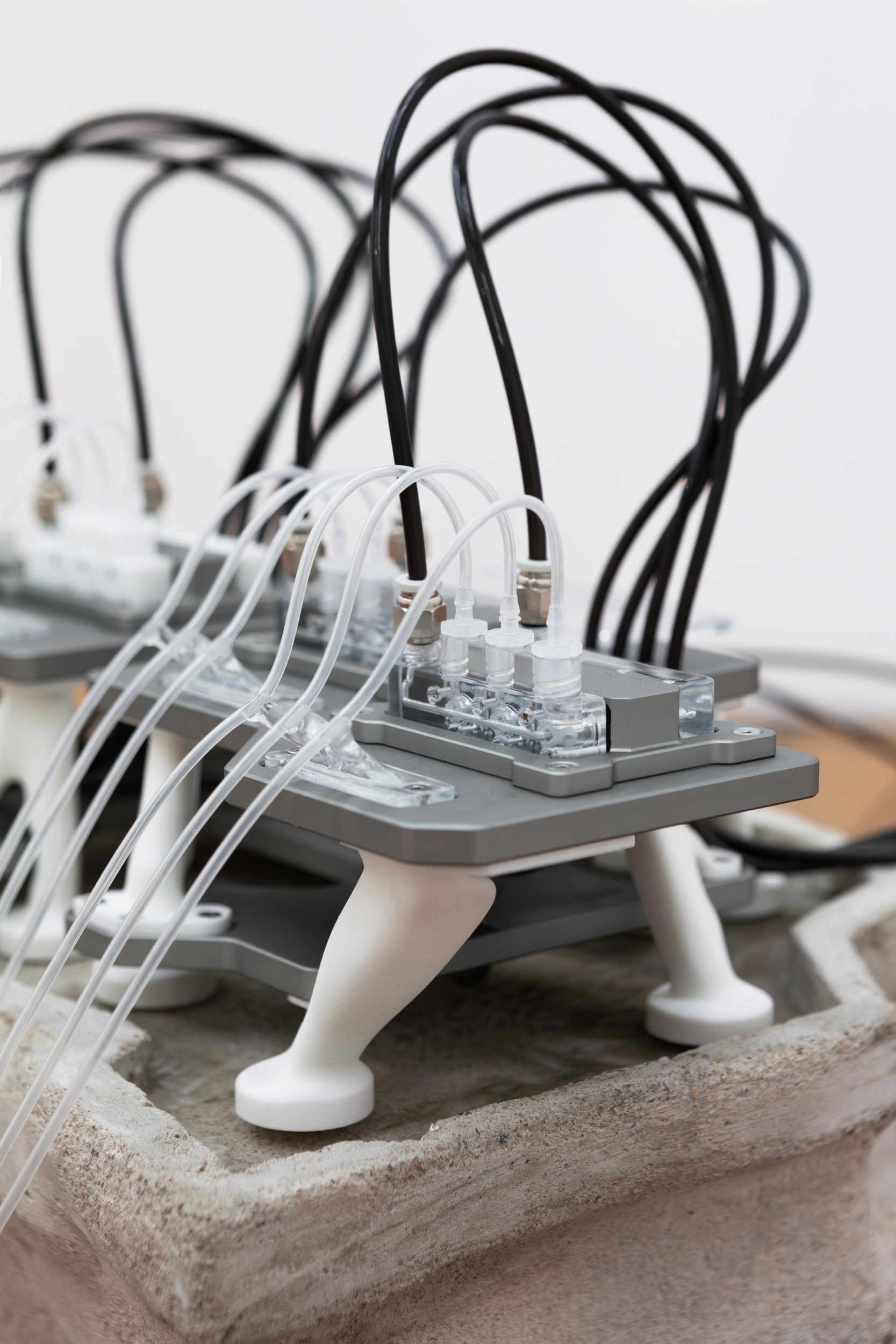
I designed a pneumatic robot trapped in a basin full of lubricant, whose organic and hypnotic movements played with the idea of a machine that seems to be alive. There I was interested in working with the sexualization of technology and with its erotic dimension, not as an aspect separate from violence, but as part of the same logic of fascination and capture. For me, the erotic dimension of these machines is not decorative. It is a way of interpellating the viewer and of showing how capitalism, war, and technology share the same capacity to produce desire while at the same time administering death.
Have you ever destroyed or set aside a robotic prototype or a work for a long time only to return to it much later? What is your relationship with pieces that are already completed and exhibited, especially given that you keep an “archaeological archive” of every software version and prototype?
Since Josefina Maro and I decided to develop robotic prostheses for our bodily exploration in Post-Organic Bauplan, we have shared with them many moments of research, rehearsal, and coexistence. In that process, I found myself opening territories of affectation that I had never imagined. I was surprised, for example, to miss their presence, to still feel on my body the place where they had been resting, as if they left a physical memory even days after having been removed. It seems incredible to me the level of bond that can develop with these devices or creatures. They do not only affect movement. They also open other forms of sensibility, vulnerability, and perception.
Some of the robotic prostheses that we carry into performances are now almost five years old. That means they have shared a substantial part of my life and my practice. In some way, they are part of it. Each one of these devices processes a certain performativity and produces specific affects, and that continues to deeply interpellate me. I am interested in continuing to explore that relational dimension between the body and sensitive robotic devices. It is one of my desires for the future to think about how that bond is constructed, how values such as consent are negotiated, and in what way we might begin to approach an ethical sphere around the technical entities with which we coexist and establish affective relations.
On the other hand, there is the archaeological value of these objects. I am interested in thinking about what that architecture of use and disuse says about us, not only about our tastes, but also about our epistemes, about our ways of relating to the other, to the external, to the world. The design of these devices speaks of much more than aesthetic values. It reveals how we conceive our environment, machines, and ourselves. It contains our desires, our fears, our projections.
In Post-Organic Bauplan we decided to preserve all the robotic prototypes that we developed, together with their hardware and software, because in their failures, errors, virtues, and affects, the history of our relationship with them is also inscribed. We keep them because they make visible our maturation, the changes in our thoughts and conceptions, and the transformation of our relationship with them over time. I could also say that this archive preserves the history of how those devices were showing their own needs, and of how they were being affected by our corporeality at each stage of the relational bond. It documents not only a technical evolution, but a history of co-affectation, the way in which we transformed them, but also the way in which they transformed our perception, our movement, and our sensibility.
Each prototype affects the body in a different way and opens new territories of exploration. They open themselves to the world differently. In that sense, the archive is not only a technical record of the past, but also a sensitive map of our co-evolution with these creatures.
Looking at the trajectory from Post-Organic Bauplan to your most recent works, what do you see as the most urgent task for an artist working at the intersection of biology, technology and politics today?
Personally, biology and technology have given me many tools to develop a critical position in my artistic work. But I do not believe that the fundamental thing is which practices are placed in dialogue, because those units of valuation change over time. What matters to me is understanding that those practices contain their own cosmology, and that they deploy into the world not only their tools, but also their own biases.
Beyond which discipline informs an artistic practice, social and political spheres always enter into dialogue with it. On a personal level, for me, art is radically a critical opening, an instance in which an object, an image, or an action is placed in dialogue with the other. Of course, this is charged with personal value, but that is precisely where its power lies, in the relational, in interpellation. And for me, art is not a space of free or innocent interpretation, but a field of taking position.
In my practice, I always ask myself what I am producing has to say to the world or what it can offer to it. How it interpellates the present, what it seeks to say, and why it would be important to show this work here and now. If it has nothing to offer in relation to its environment, then I ask myself whether it makes sense for it to appear, whether it makes sense to invest time, materials, and resources for it to exist. That question is always present in me.
It is undeniable that today systems of production, architectures of distribution, and the seduction of art by the dynamics of the macro-market are radically changing our perception of artistic practice. There is a deflation of its value and a loss of critique. That suffocation can be seen and felt. We are in an era in which the hyperproduction of art is regulated and dosed by algorithms that make images, videos, and sounds enter our personal spaces permanently. Images compete within new market dynamics, traversed by technologies that colonize even private space. Work, dedication, and critical research appear today as concepts increasingly distant from many artistic practices, although they are still romanticized in some spheres.
We are living through a crisis of art as it used to be understood. There is a stagnation promoted by hyperproduction. Algorithms shape taste and the meaning of art, and one must not forget that those algorithms are designed by companies and respond to market dynamics.
That is why, for me, it is essential that art maintain and establish a position in relation to the system, a critique of the structures, values, biases, and cosmologies of the environment in which it takes place. I believe that the most urgent task for an artist is to appropriate those architectures in order to show their own deficits, their own failures, and their own violences. For me, the value of art lies in sustaining that critical act, in preserving a capacity for friction, interruption, and disobedience. Personally, it becomes problematic when artistic productions become servile to the system, harmless, and uncritical.
Perhaps, today more than ever, the task of art is to remember and reconnect with its power of disobedience.