
We first encountered the work of Claudia Pagès Rabal through her ability to weave language, architecture, territory, and historical memory into layered narrative environments where time continuously folds into itself. Born in Barcelona in 1990, Pagès Rabal has developed a multidisciplinary practice spanning performance, writing, video, and installation, often focusing on invisible infrastructures, archives, and forms of latent violence embedded within landscapes and systems of representation. In recent years, her work has explored border zones, colonial legacies, surveillance structures, and hidden circulations — from the defensive towers of the so-called Marca Hispánica to underground aquifers tied to the history of paper production.
Following projects presented at institutions including Chisenhale Gallery in London and her participation in the Venice Biennale, we spoke with the artist about Paper Tears, a work developed from a collection of 15th-century watermarks preserved in the paper archive of Capellades. Through video, sound, choreography, and fragmented monologues performed by contemporary jesters, the project moves across themes of trade, extraction, displacement, exhaustion, and the persistence of language across time. In this conversation, Pagès Rabal reflects on how historical materials can become tools for reading the present, and why humour, slippages, and invisible structures remain central to her practice.

Fakewhale: What are the recurring themes or concerns that run through your projects over the years?
Claudia Pagès Rabal: Time, territory, language.
How do you usually begin developing a new project? Do you start from historical research, archives, personal questions, or a mix of these?
I always start with things around me. Over the past three years, I’ve worked with various ruins, archives, and architectural sites near my hometown because I lived around there while developing these projects. I work with discomforts that I believe are universal, which I then situate within objects, languages, and signifiers so that I can access them and write around them.
Your recent solo exhibition Five Defence Towers at Chisenhale Gallery in London explored historic frontiers, surveillance, national identity, and colonial legacies. What drew you to that historical moment, and what did working on that project teach you?
At that time, I was working along the Silk Road, which is also the paper route, and which had taken me to Valencia to film in water cisterns. It was after finishing that project that I was driving to my studio and saw a roadside sign I’d seen a thousand times, announcing different defense towers of what they call “La Marca Hispánica,” which served to create a buffer zone and which, as a child, I’d always been told were built as a defense against the Moors. Many of these towers are half-abandoned, and the city councils illuminate them with tacky colored lights. I started photographing them and then wrote a “Waiting for Godot”-style script for a camera that would have the same movements as the tower (vertical and 360 degrees) and five characters who meet and want to enter the defense tower, only they don’t know who they have to defend themselves against.
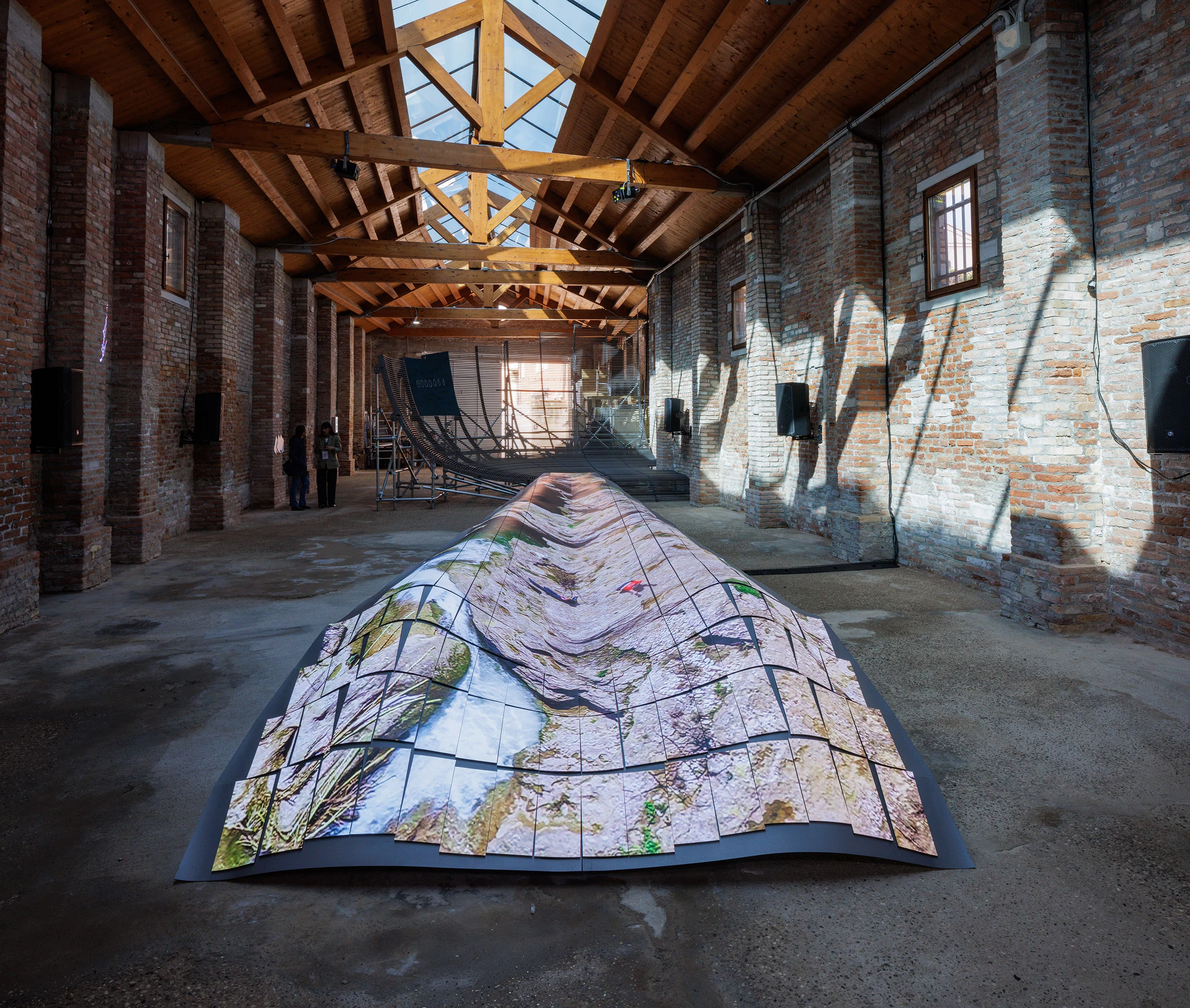
How did the idea for Paper Tears come about? What made the archive of 15th-century watermarks from the Capellades museum feel like the right starting point for your current questions?
I’d been wanting to work with this collection of watermarks for a while, and I wanted to wait until I could show it in Venice, since it connects territory and movement, and it was perfect for here.
In recent years, I have been working with forms of addressing time: a time in the gerund, a time in superposition, a discontinuous time. Paper Tears is centered on 15th-century watermarks with motifs from another time: dogs, ships, oxen, carts. These elements, which are only visible on the paper when backlit, have no power or control of their own, but they have served as a support for me to take a journey through time. The watermarks I’ve chosen date back to the 15th century, a century marked by the expulsion of Jews and Arabs from the Iberian Peninsula and the colonization of the Americas. I probably chose this period to help me cope with the violence we see every day in today’s world. But, as one of the “jesters” in the video says: “May the horrors of the past not dull the present.” I didn’t want to address these issues in a moralistic or reactionary way, which is why I chose the watermark as a medium: a margin on the page, a space open enough to play, struggle, and even bring joy. Language and structure are found on the surface of the paper: the written word; the watermark inhabits the paper, circulating almost invisibly, like a signifier without structure.
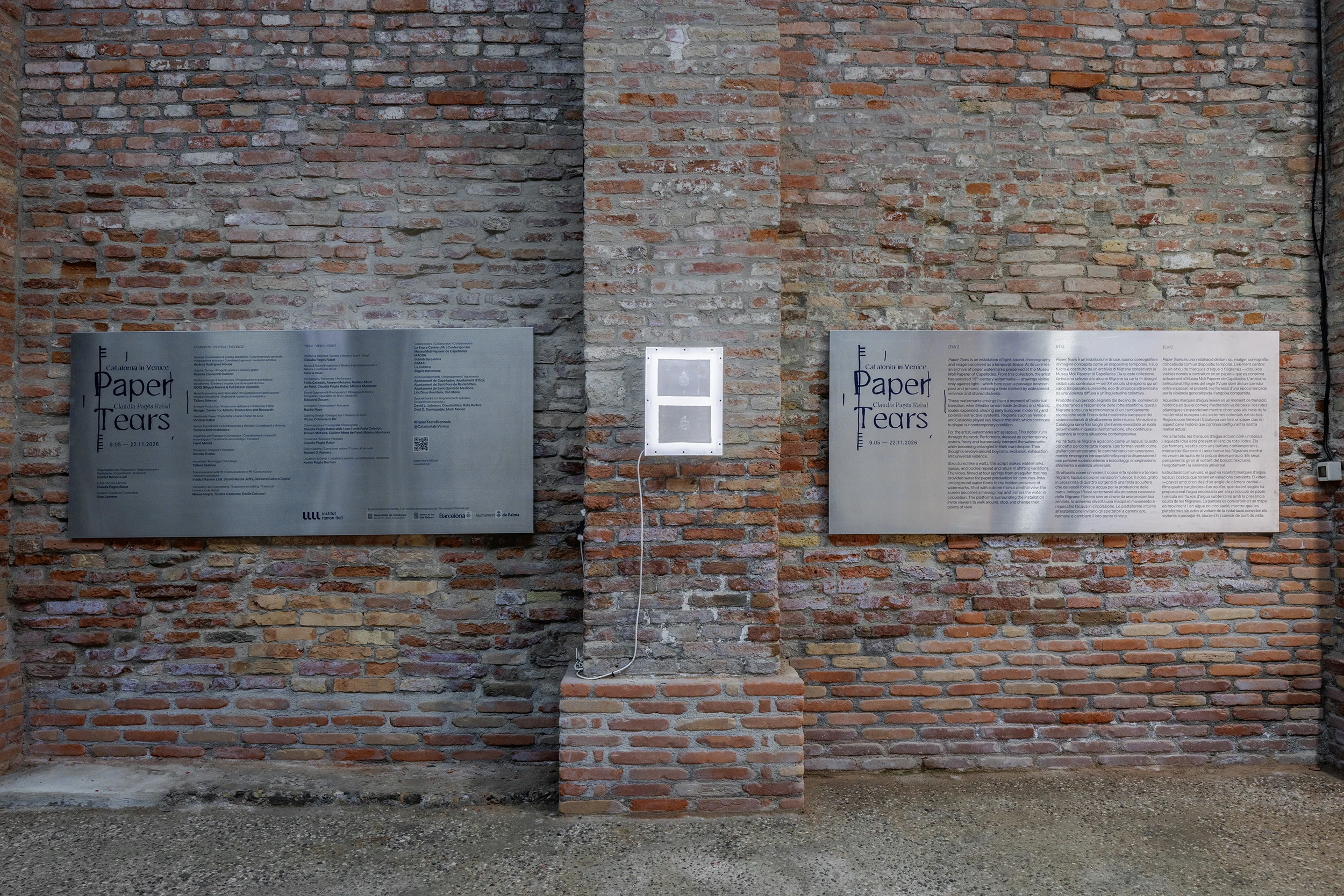
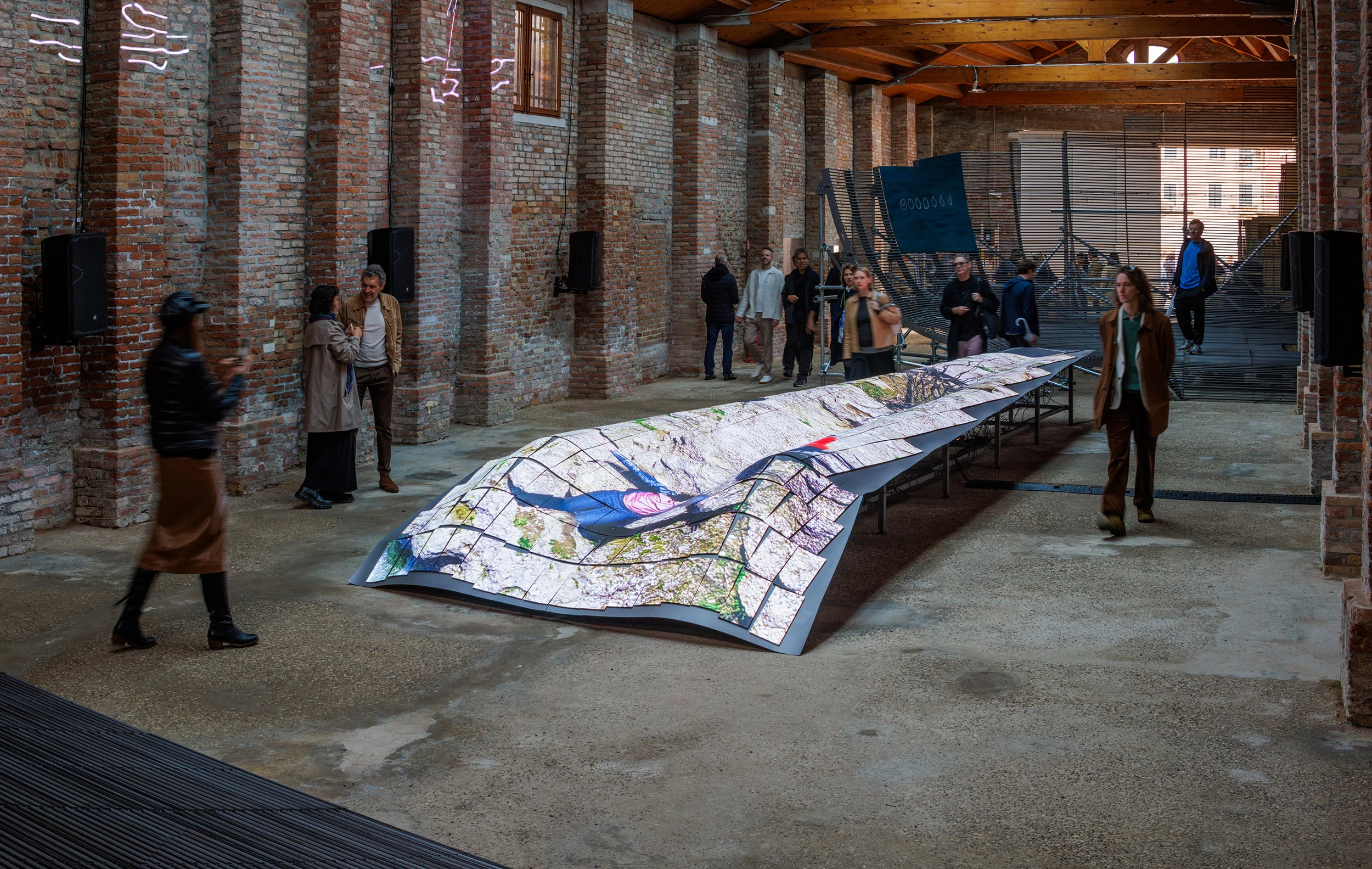
The title Paper Tears is poetic and ambiguous. What does it evoke for you, and how does the physical fragility or “tearing” of paper connect to the larger themes of the work?
“Papermaker’s tears” are the droplets that fall onto the paper while it is still wet. It’s a small mistake, a slip-up that happens to the artisan while making the paper. I wanted to start with this mistake, and at the same time with the double meaning of “tears”—of breaking—since the watermarks aren’t on the surface; they’re like the aquifers in the video, something latent, something circulating beneath.
In the installation, performers dressed as contemporary jesters move between humour and despair while commenting on the watermarks. How did this figure and this choreographic structure emerge, and what role does humour play when you address heavy subjects like violence, exhaustion, and exclusion?
I wanted to explore the watermarks through free association so I could create temporary games. I wrote the script after showing the watermarks to several people from different generations, using a game where they had to say whatever first came to mind. With this material, I began working on the script alongside the various historical events that occur on specific dates, and wrote four monologues that appear as “free speech moments,” emerging from slips of the tongue and associations. The figure of the jester and the use of humor seemed to me the only starting point from which we could approach this material without viewing it through a moral lens, and instead work with it from a place of joy.
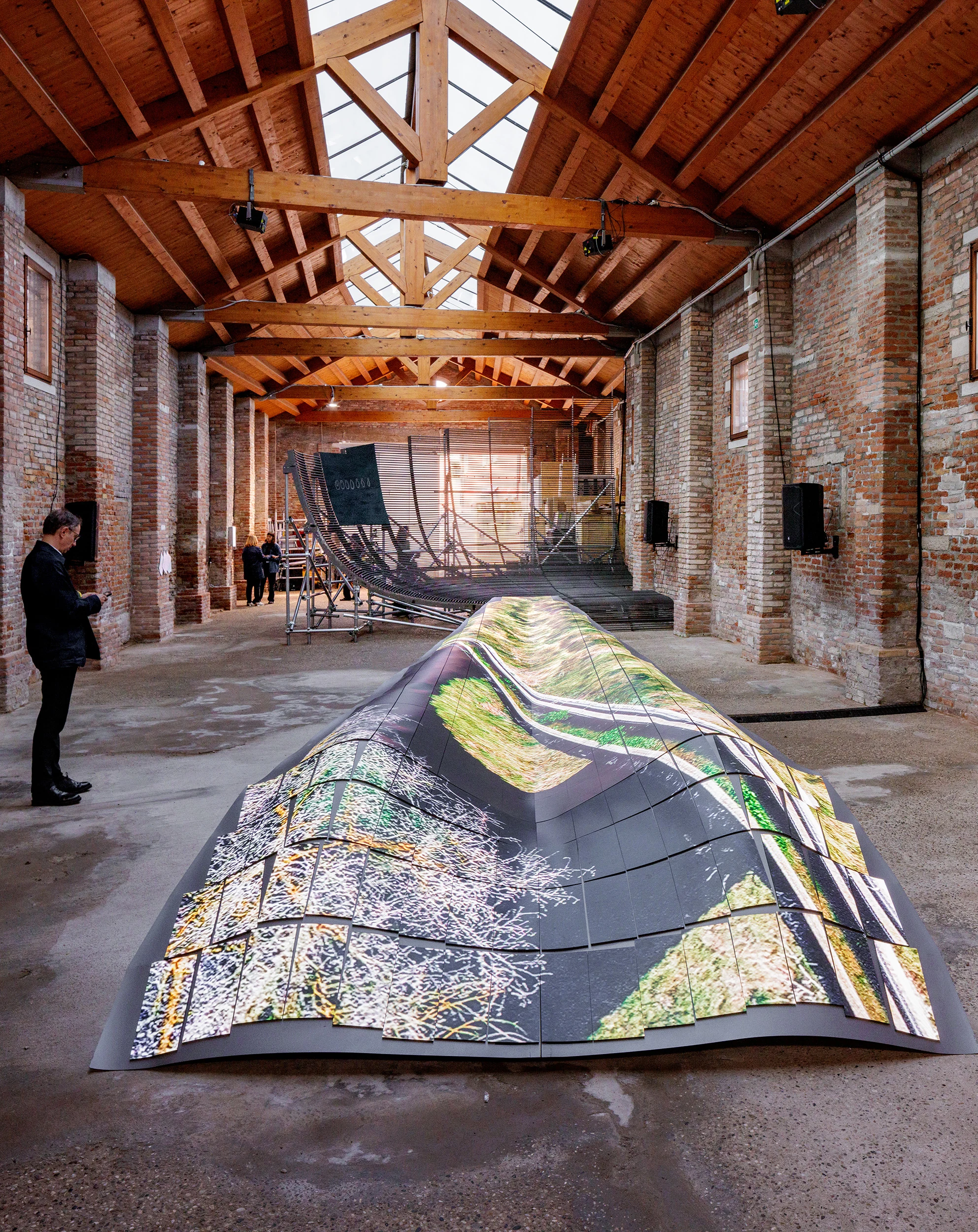
A key element is the video filmed with a drone from above at the four springs of an ancient aquifer that has supplied water for paper production for centuries. Why this zenithal perspective, and how does linking underground water flows to the hidden watermarks deepen the meaning of the piece?
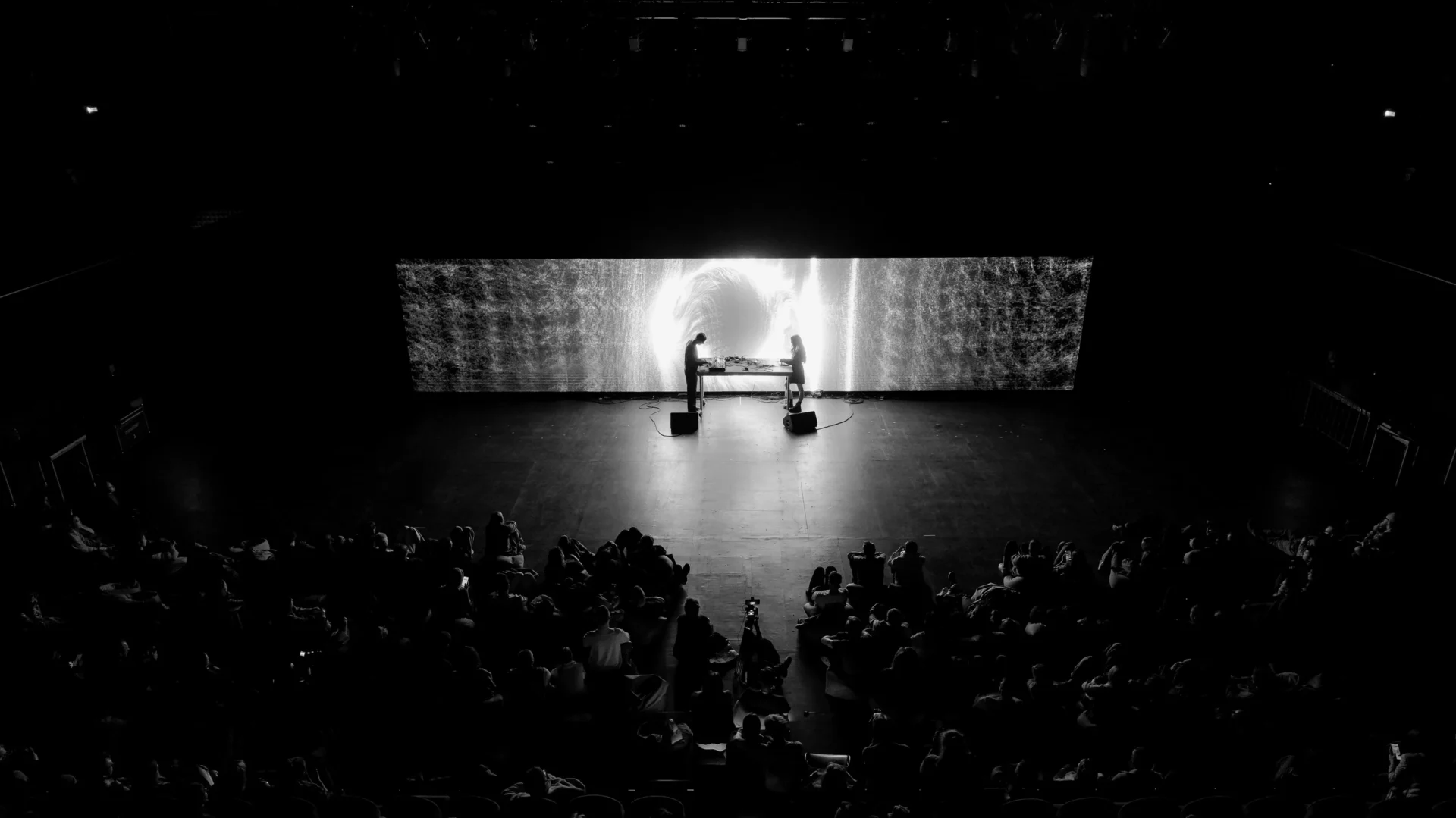
The screen has three moments: it is a river of black water where translations and signifiers appear; then there are the drone recordings where the surface of the screen becomes territory, a map; and thirdly, the screen is matter where bodies dance as if they were submerged beneath it. The shots recorded in the aquifers are the ones I mentioned above regarding “free speech moments,” where territory and language converge. I selected these four locations to connect the latent forms of the watermark. Just as the watermarks navigate in the negative and are only visible against the light, the water in the aquifers is also latent and only becomes visible when it is exploited, extracted.
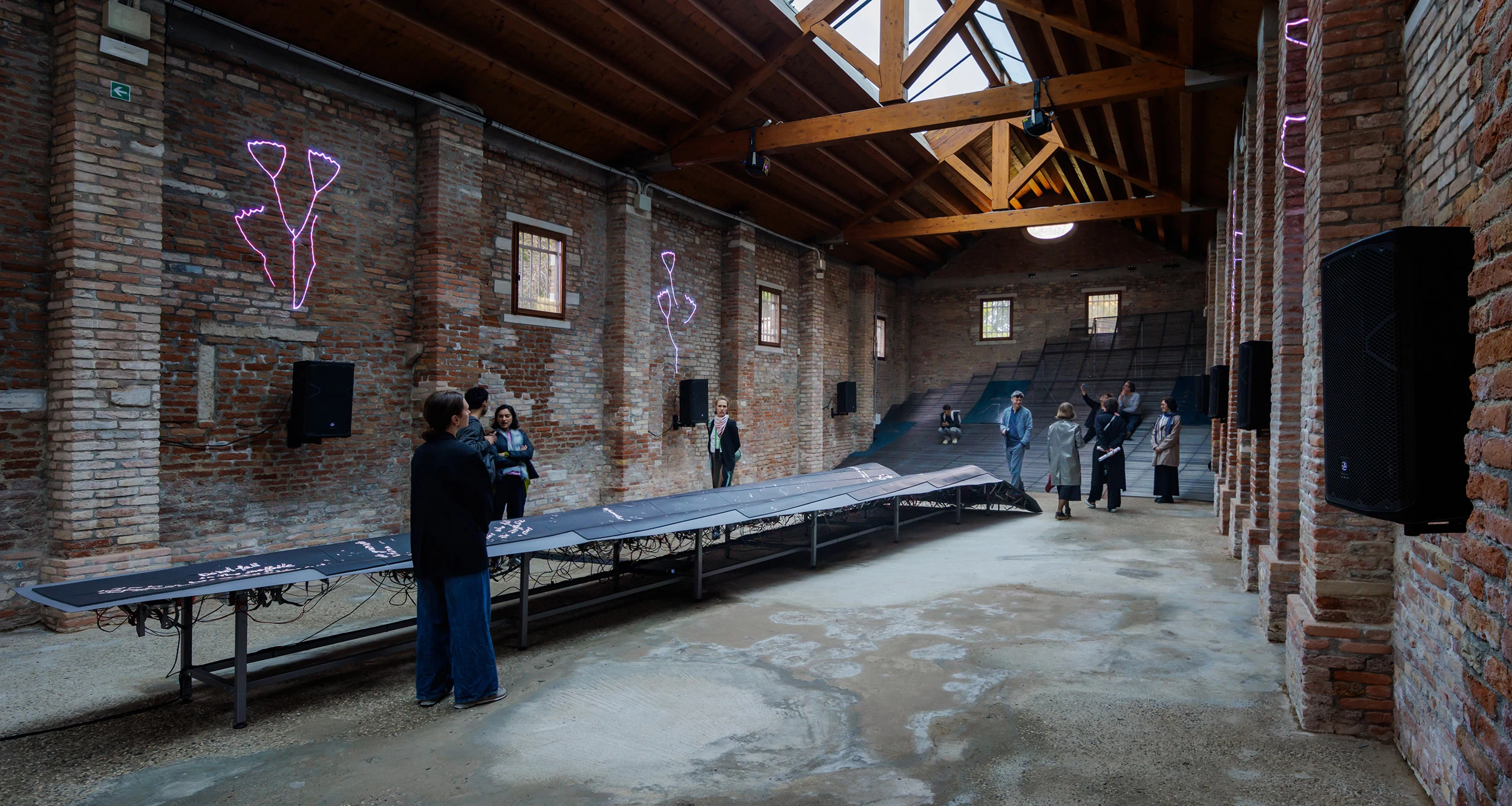
Sound, light, and the surrounding platforms that allow viewers to walk around and change viewpoints are all integral. Can you describe how these elements work together to create a “temporal device” that the audience can physically navigate?
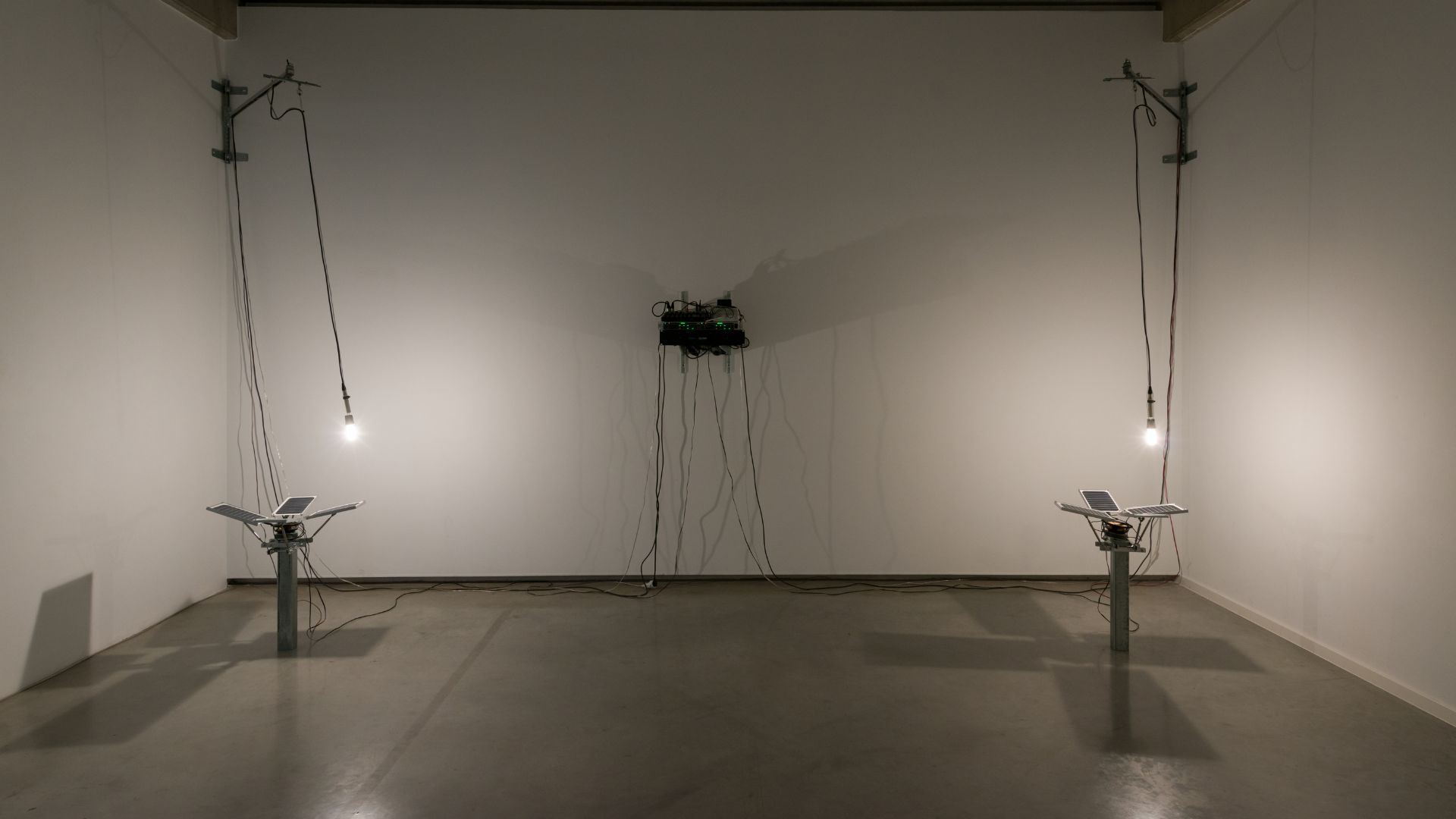
My works are time machines because they travel from the past to the present and back again. For this piece, I wanted to create a “quantum” exhibition, one that could be navigated like a giant sculpture that you step inside. It’s impossible to view the screen in its entirety, just as it is with the lasers. You have to walk around the installation, climb onto it, and with every movement, you’ll discover a new layer of the project.
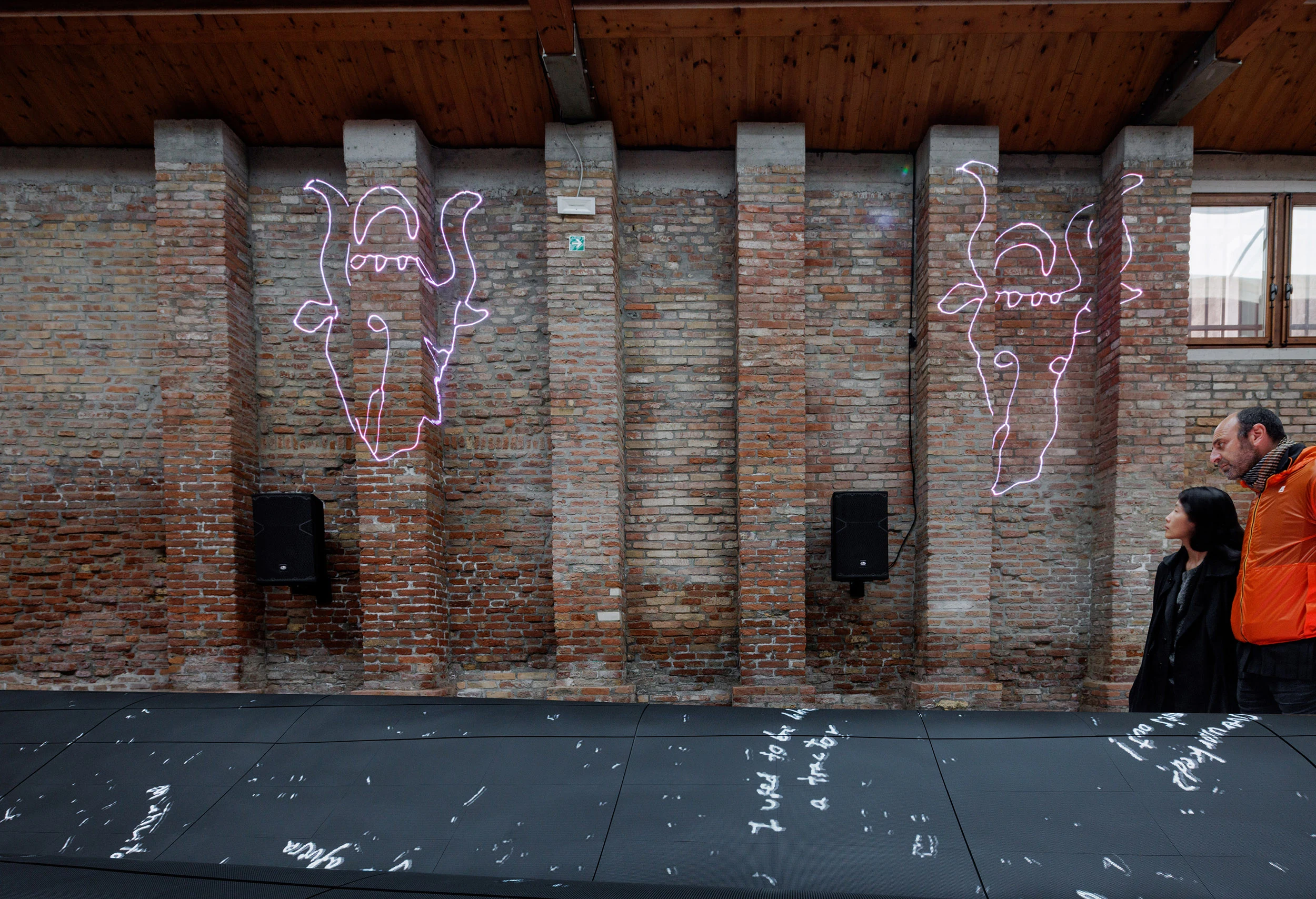
The project connects 15th-century shifts in Mediterranean trade, the rise of Atlantic routes, and the birth of colonial extractive systems to our present moment. How do you see Paper Tears speaking to today’s atmosphere of global exhaustion, boycotts, and shared distress?
The play’s structure is written like a waltz: first, we engage in free association with the watermarks and also read about events that took place on those dates; these associations break into different monologues. In one of them, the jester explains how to boycott a supermarket that supposedly sells Israeli pomegranates by smashing its windows, and how the people around him worry about whether he’ll be okay, but as he says, “Everyone at home is anxious that it would turn out badly, i’d be depressed, but i’m not. What made me anxious was watching everything from the outside. Now i’m inside the problem.” The other soliloquies deal with the uses of the universal, the particular, and the singular in liberal politics; an analogy about purebred dogs and street dogs and their persecution; or the weary body and euphemisms in language.
Duality, visible versus hidden, surface versus depth, past versus present, seems central to your research. How does working with watermarks, which only appear when held to the light, help you explore this idea?
I don’t think my work is dualistic; on the contrary, I’m interested in watermarks because they aren’t visible anywhere on the surface of the paper, they inhabit it.
After Paper Tears opens in Venice, what are you most curious to discover from audiences, and what new questions or directions has this project already opened for you?
This project has been the larger scale one I’ve undertaken to date. Watching the figures move through the space has been like rediscovering the piece.