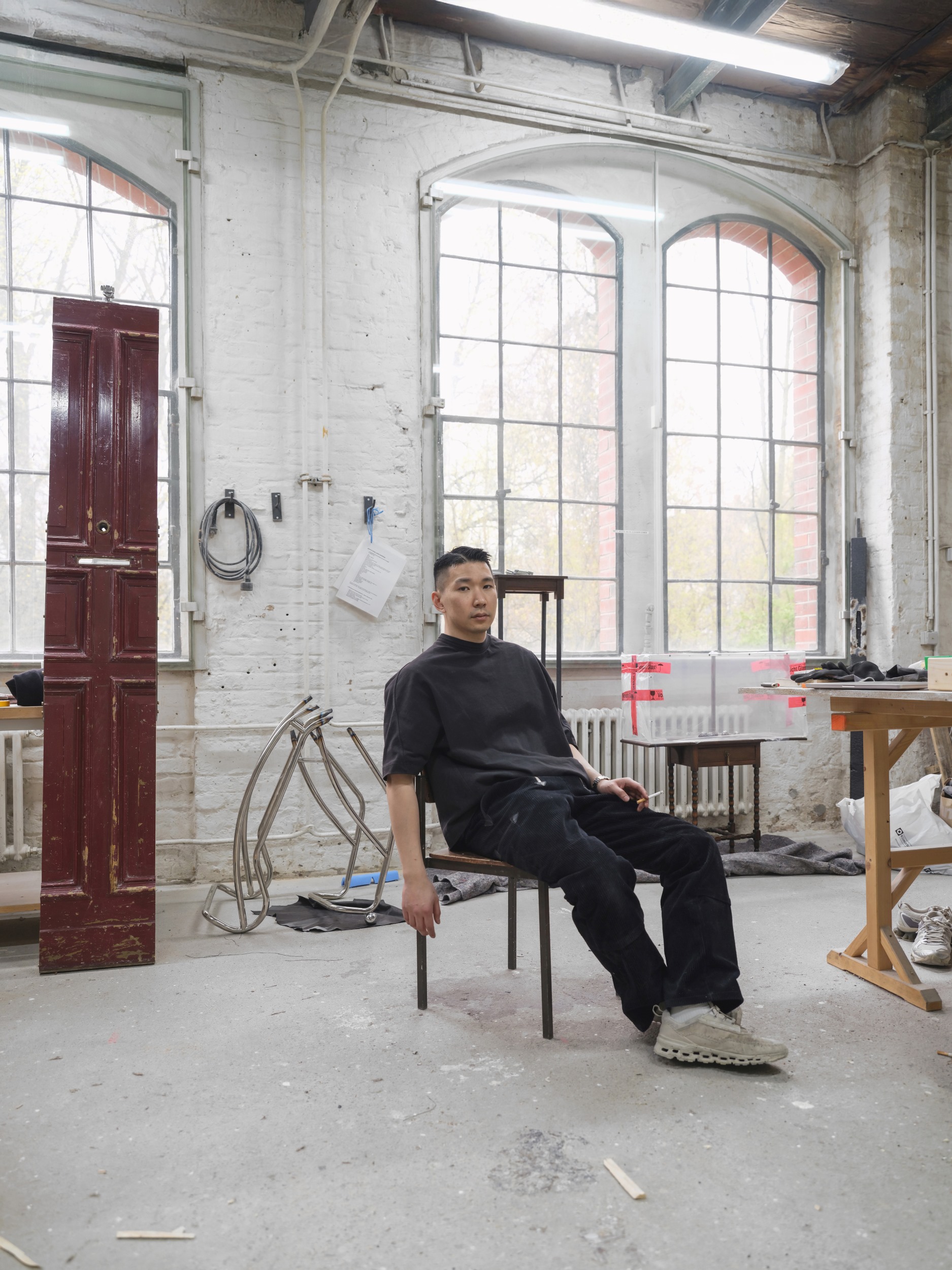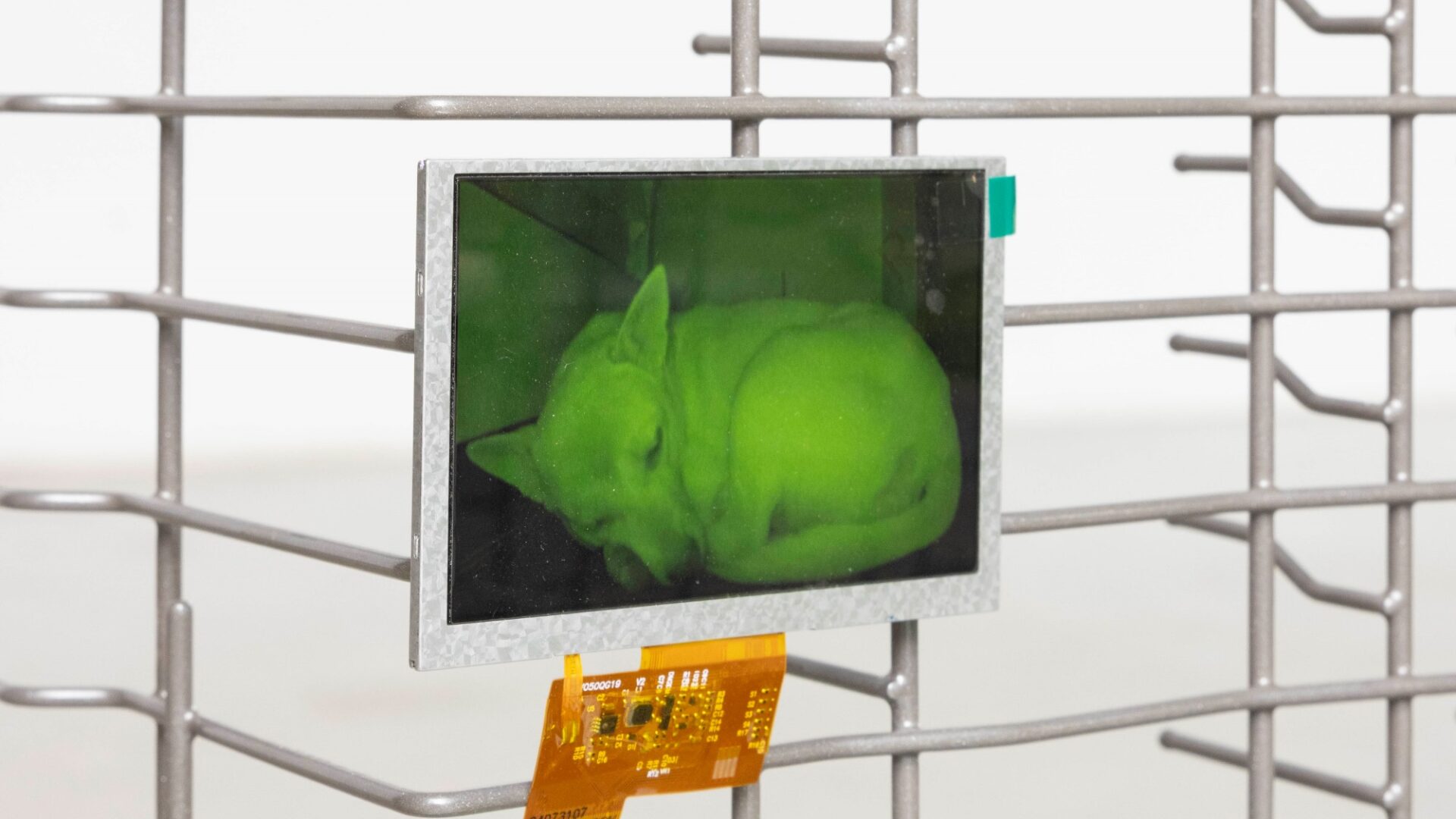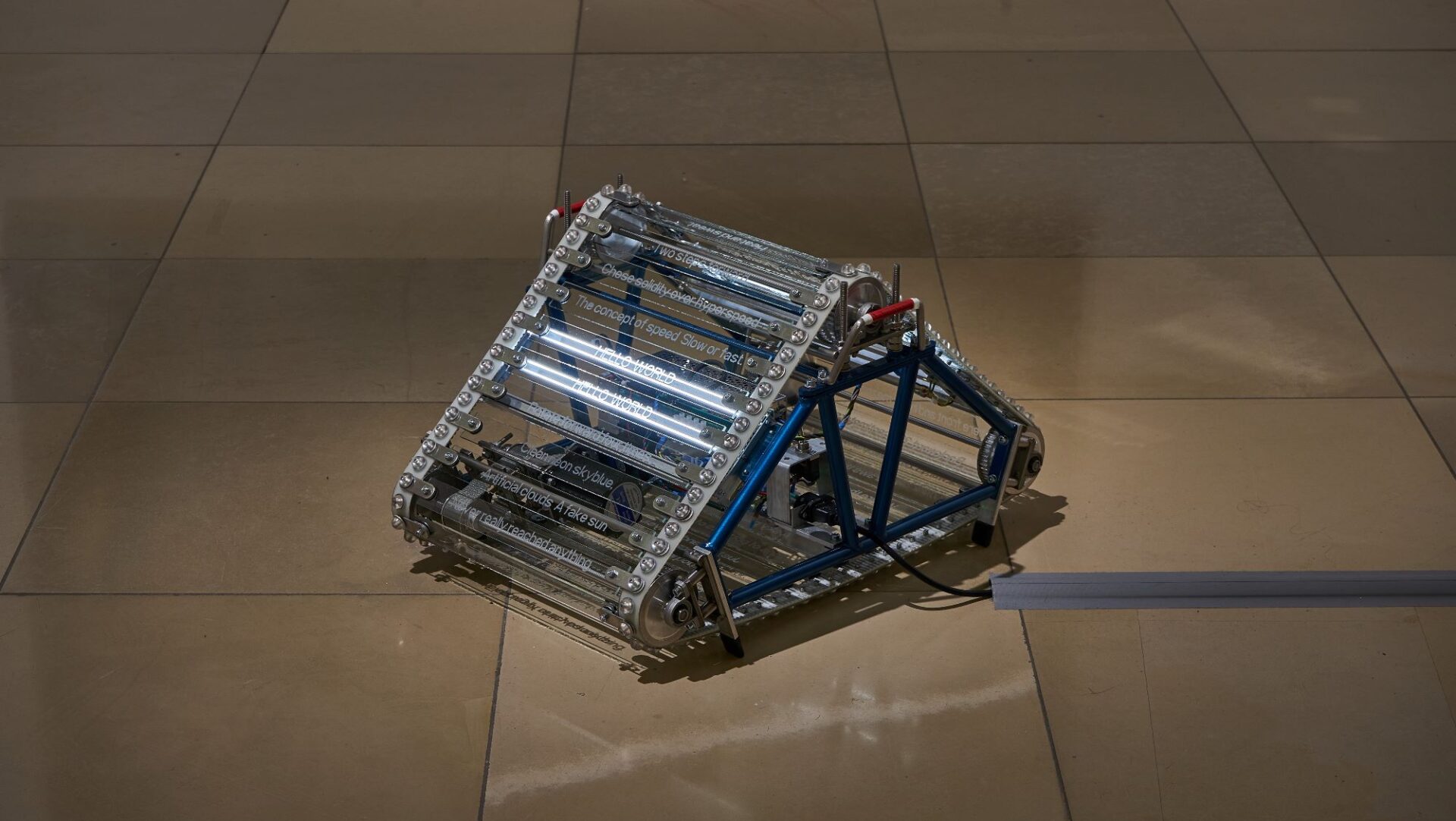
In the work of Shinoh Nam, architecture is approached not as a fixed or neutral space, but as a reflection of inner life. Doors, furniture, handles, and reflective surfaces become charged with memory, tension, and the traces of previous use, turning the familiar language of the home into something fragile and uncertain.
Moving between personal history and broader social structures, Nam’s practice explores how we build spaces in order to protect ourselves, and how those same structures can also contain, define, or destabilize us. In this conversation, the artist reflects on displacement, reconstruction, collapse, and the house as an ambiguous ground where identity is continuously formed and questioned.
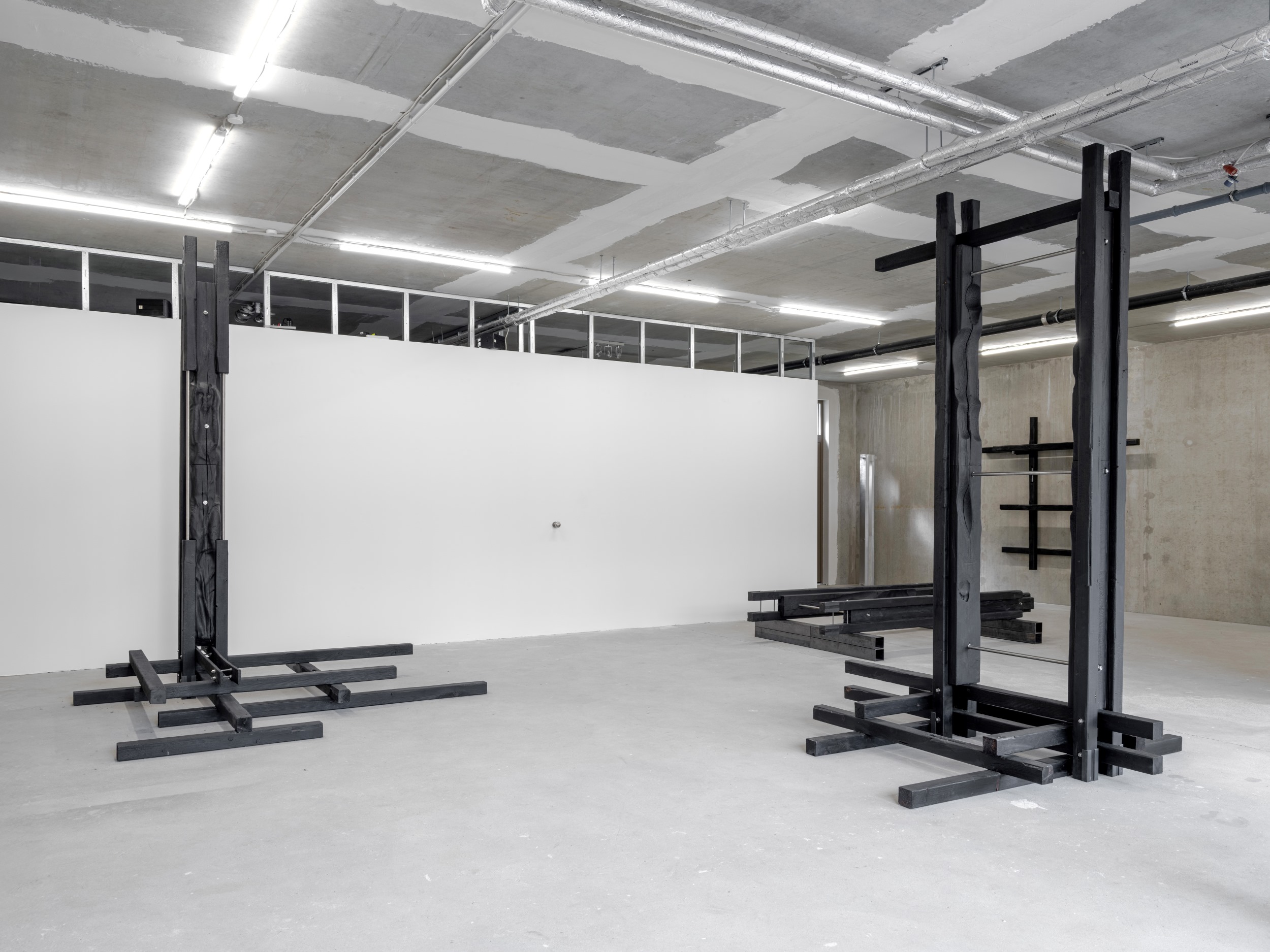
Your work consistently explores architecture as a metaphor for interiority, memory, and instability. How did this connection between built space and psychological space develop, and how has your experience of cultural displacement between Korea and Germany influenced it?
For me, architecture is not simply a physical space in which people reside. Rather, it is closer to a way in which human beings organize themselves in order to understand who they are and to form relationships with the world.
The process of constructing a building resembles the process through which a person is born into society and gradually forms a sense of self. Foundations are laid, structures are raised, walls and doors appear, and interiors are divided. This process is not merely one of construction; it seems to mirror the way a being constitutes itself while entering into relation with the external world. At the same time, architecture never exists independently. Just as a building is always formed within its surrounding environment and existing structures, human beings are also shaped within social conditions and relationships.
For a long time, I have felt that this architectural order closely resembles the inner life of human beings. Memory forms layers like space; anxiety appears like cracks within a structure; and identity, too, is not a completed state, but a process that is continuously constructed and revised. In this sense, architecture in my works does not appear as a background, but as a model through which inner life and social structures are revealed together.
My experience of living between Korea and Germany has further strengthened this perspective. In Korea, space was closely connected to rapid development, reconstruction, and a sense of constant change. In Germany, by contrast, I experienced more strongly the layers of preservation, history, and the persistence of the past. However, I do not see either of these as an ideal model. Reconstruction may involve destruction, but it can also become a mode of survival. Preservation may protect memory, but it can also produce another form of fixation.
This experience has led me to see architecture not as a metaphor for stability, but as a device that reveals both the human attempt to create order and meaning within the uncertainty of the world, and the fact that such order can never be fully completed. I am interested in the absurdity/Contradiction that emerges from this gap.
For this reason, elements such as doors, floors, entrances, and furniture in my works are not simply parts of a space. They are structures created to protect the self, while at the same time revealing the condition of being defined and captured again within those very structures.
In this sense, my artistic practice is not about making a house. Rather, it is about questioning the conditions of the structures we already believe we inhabit, and the attitudes that are formed within them.
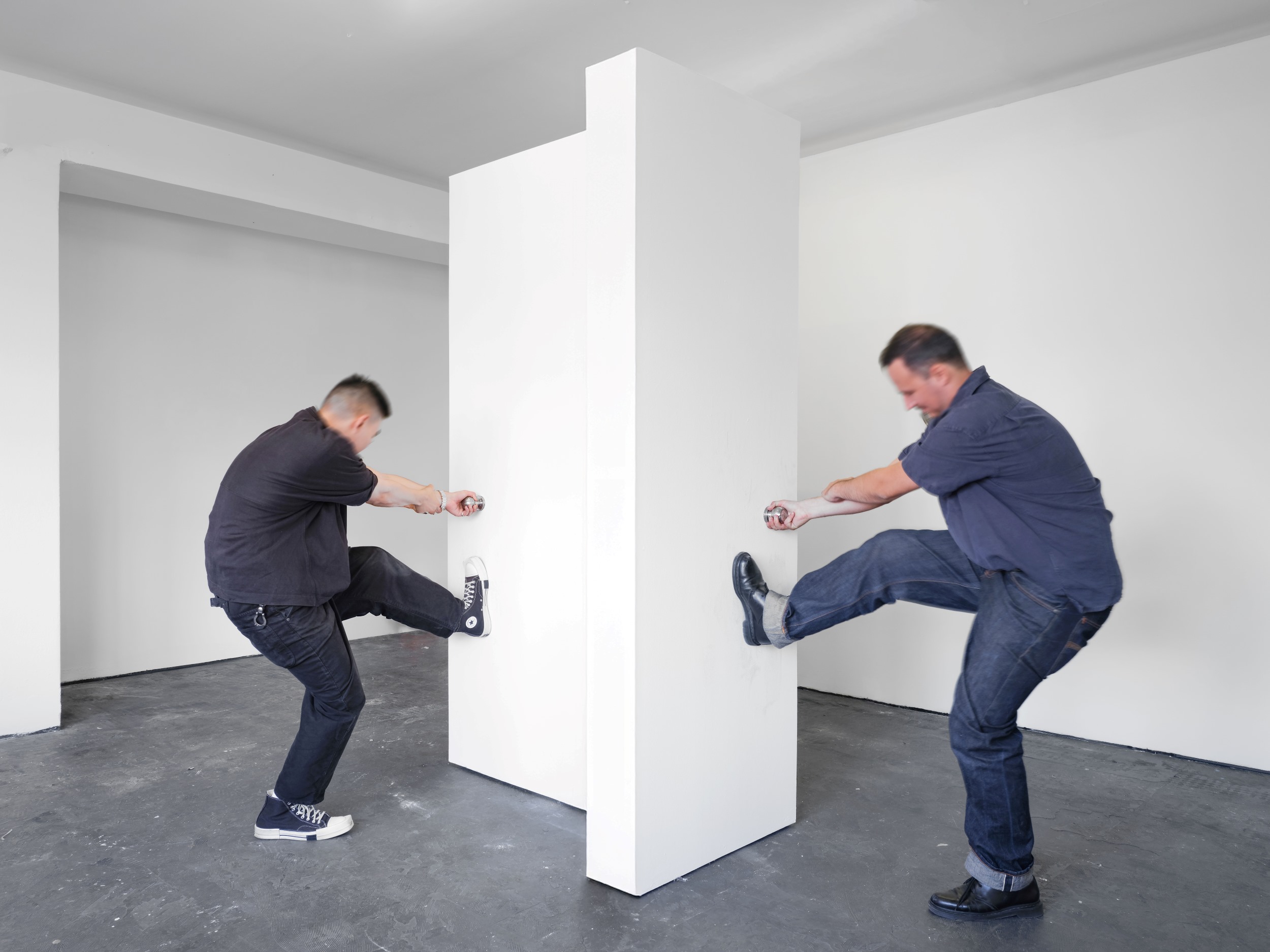
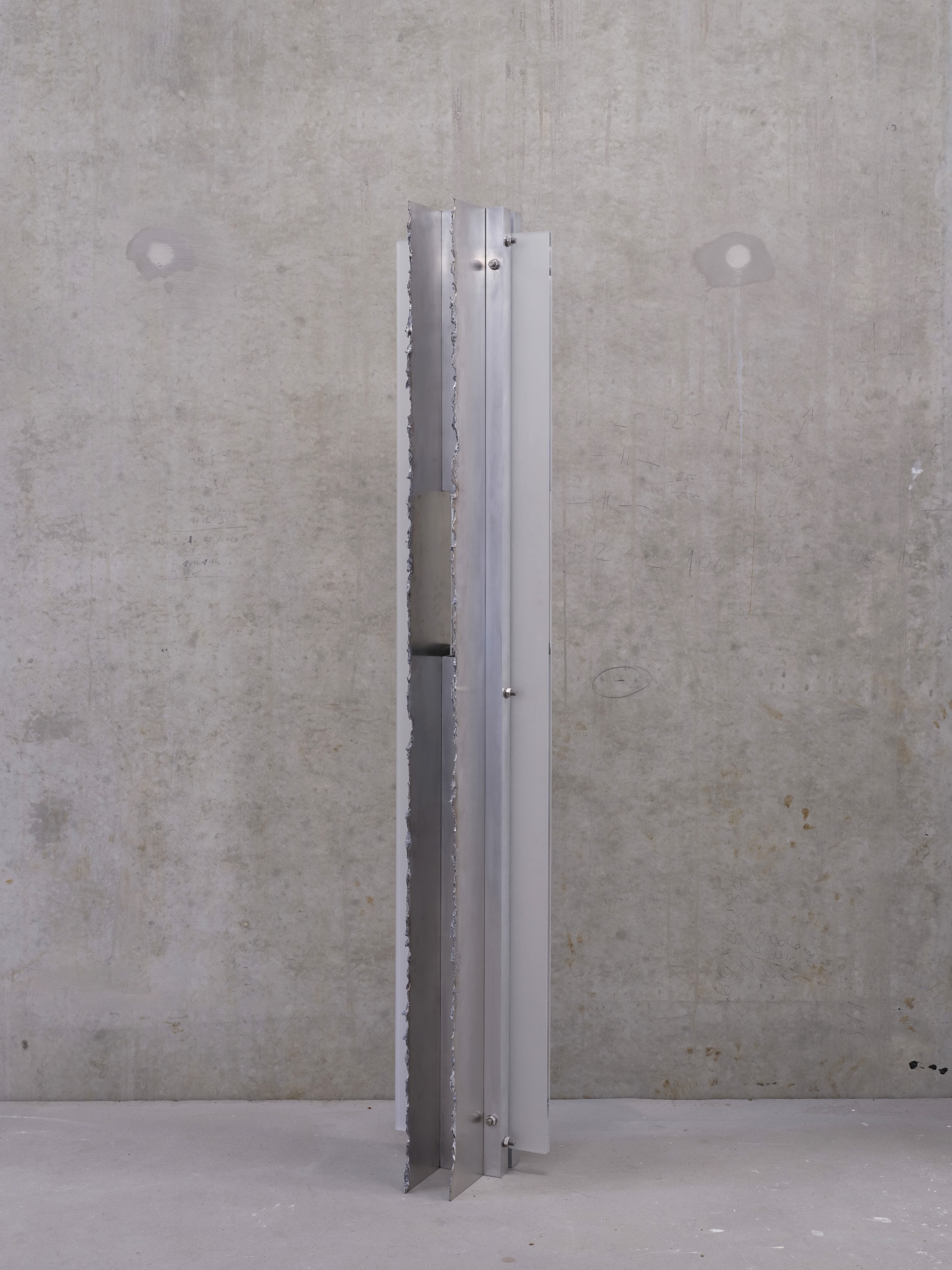
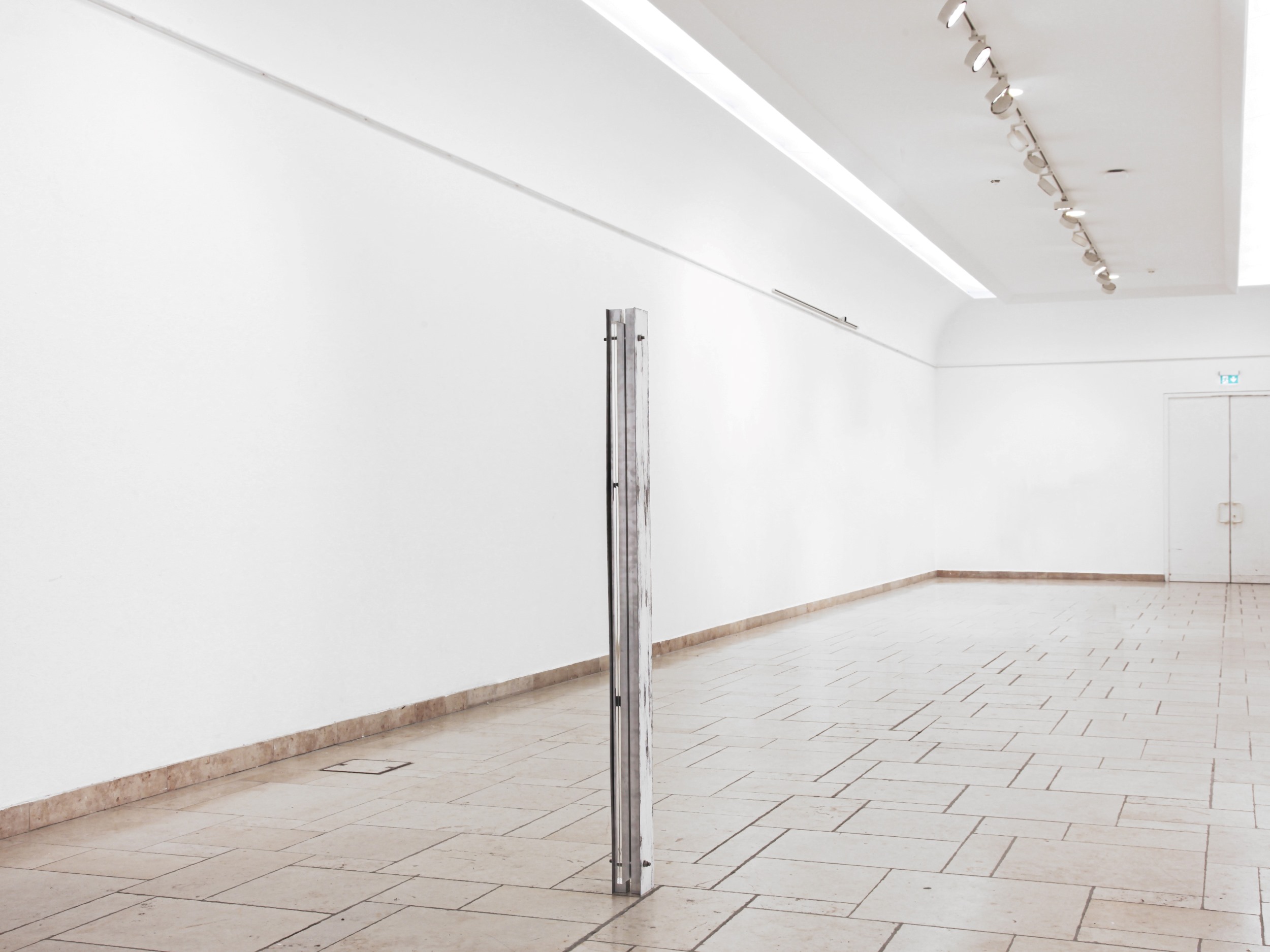
Many of your recent works incorporate vintage doors, handles, and furniture from your own life. Why do you choose these “already lived” objects, and how do you transform them into vehicles for personal or collective narratives?
I always conceive of my works and exhibitions not as individual outcomes, but as part of a continuous process of thought — that is, as a series. In my earlier works, I explored the visible and invisible orders, as well as the structures of power, that shape society through architectural structures and façades. The exterior of architecture was not read simply as a surface, but as a symbolic structure that defines human behavior and relationships.
In this exhibition, I shifted my gaze from the exterior of the structure to its interior. Through elements such as the inside of the house, furniture, doors, and floors, I examined how such structures become internalized within human beings, and how they shape personal memory, desire, and subjectivity.
In other words, while my previous works dealt with the structures that surround human beings, this body of work addresses how those structures operate within the human subject and lead one to organize oneself.
To return to the question, the reason I use objects that have already passed through someone’s life — such as old doors, handles, and furniture — is that they are not merely objects, but entities that contain narratives of human attitudes. While new objects still remain within clearly defined functions and purposes, old objects, through the time in which they have performed their functions, come to carry residues such as fatigue, memory, wounds, and habits. I believe that these accumulated layers of residue are more deeply absorbed into human thought.
A door is not simply a device that opens and closes. It is an ambivalent structure situated between entry and refusal, protection and isolation, communication and disconnection. A door handle is a place repeatedly touched by someone’s hand, while furniture can be understood both as a vessel of personal memory and as a product of historical attitudes. In this sense, these objects carry individual memories while also becoming mediators that reveal social rules and structures of relationships.
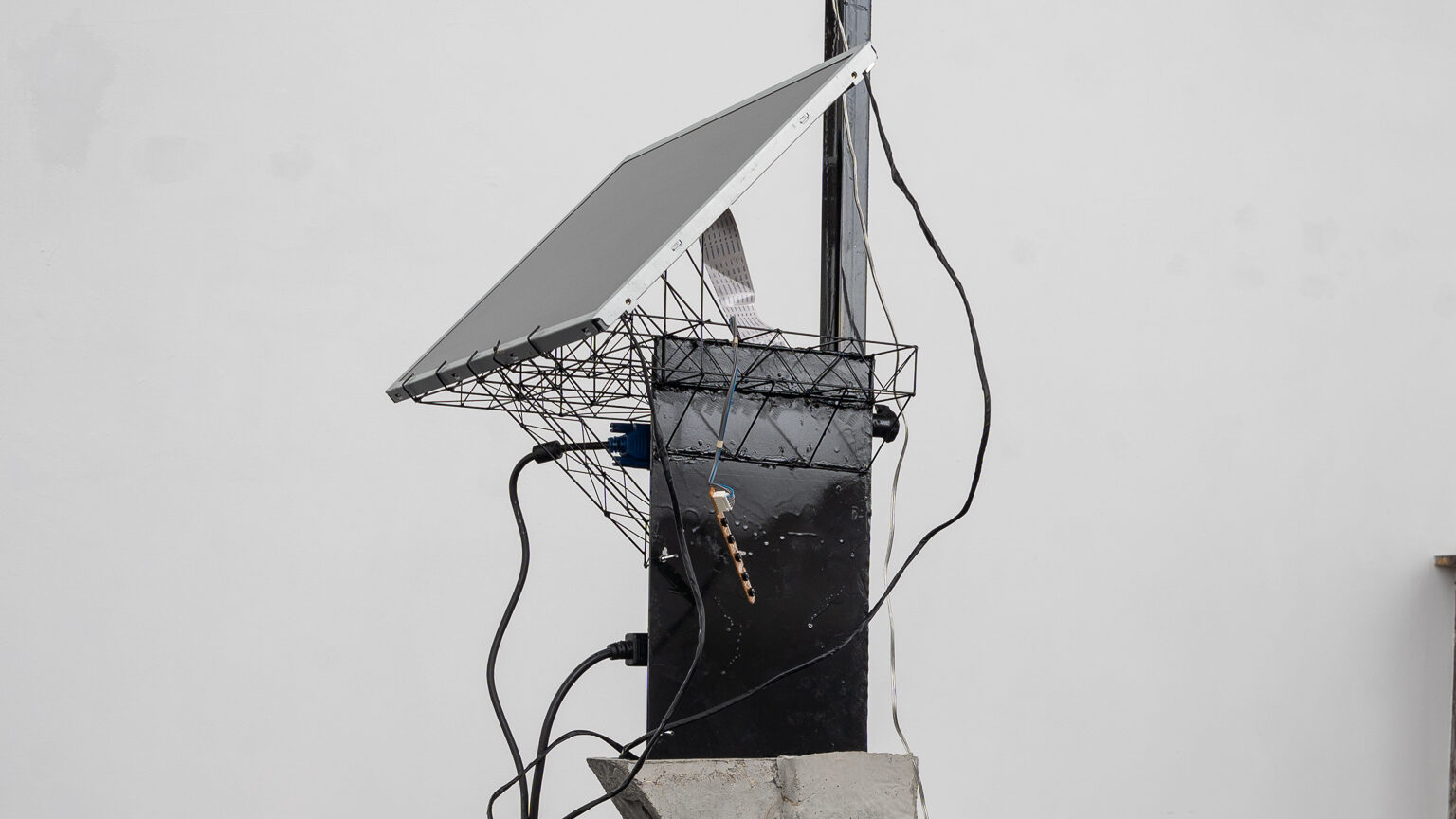
In my works, I gradually displace these objects from their original functions. A door is no longer a stable entrance, and furniture no longer provides only comfort. Bent, cut, and placed within unstable structures, these objects reveal the contradictory condition in which human beings attempt to protect themselves, while at the same time becoming captured within the very structures of that protection. At this point, the object no longer functions merely as a functional object, but as a condition through which the subject is formed and destabilized.
“Already lived” objects are not used in order to romantically preserve the past. Rather, they offer a way of rereading the desires, anxieties, self-defenses, and traces of failure that have accumulated within things over time. A personal object may begin from the memory of one person, but within the exhibition space it expands into broader questions: What kinds of structures do we live within? What are we trying to protect, and what are we trying to escape from? And how are the attitudes we believe we freely choose already formed within existing structures?
In this sense, the objects in my works are fragments of personal memory, while also serving as metaphors for collective experience. They carry traces of specific lives, but through those traces they reveal how human beings are formed and destabilized within space, institutions, memory, and desire. An old object is therefore not simply evidence of the past, but a device that allows us to question the subject and the structures of the present anew.
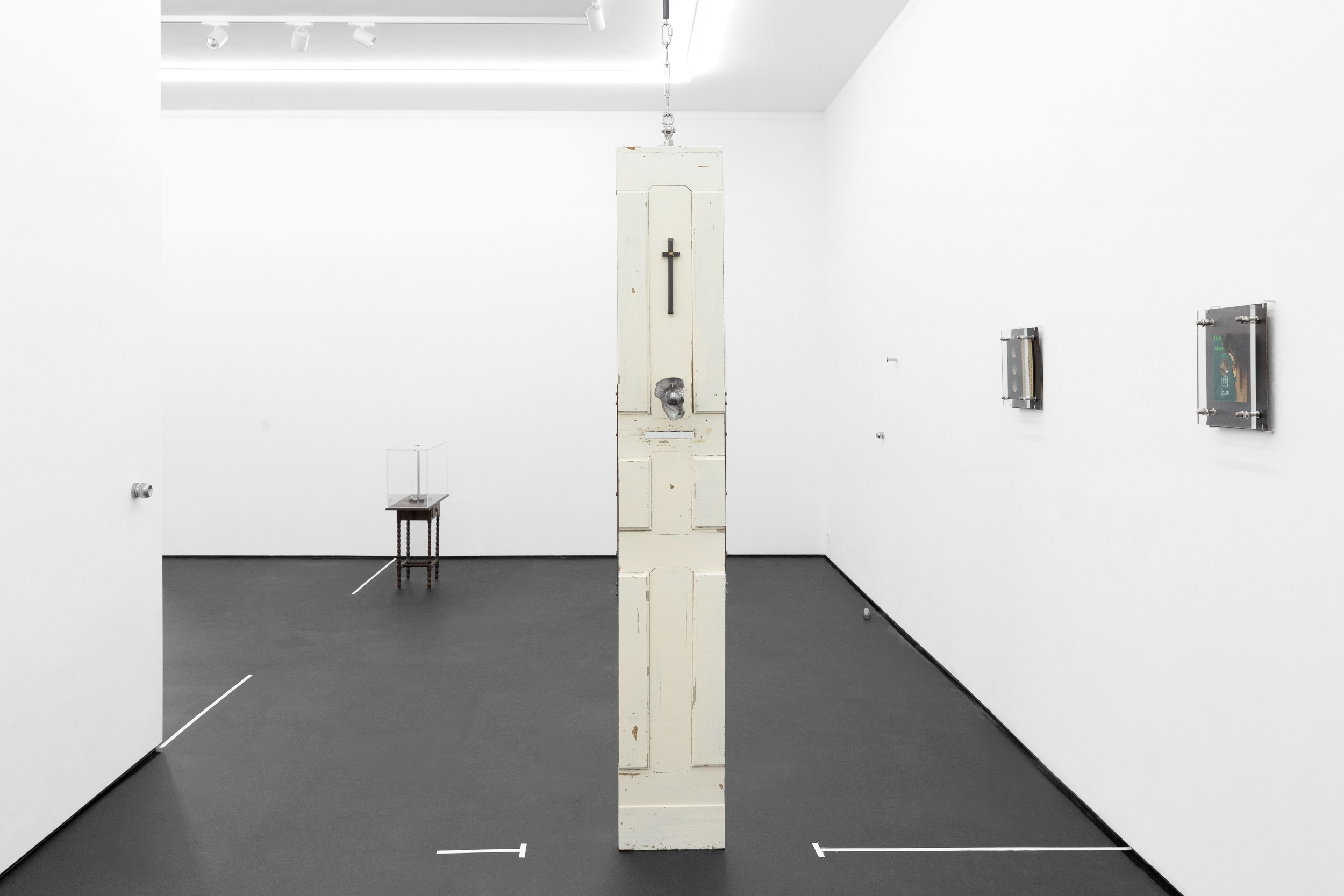
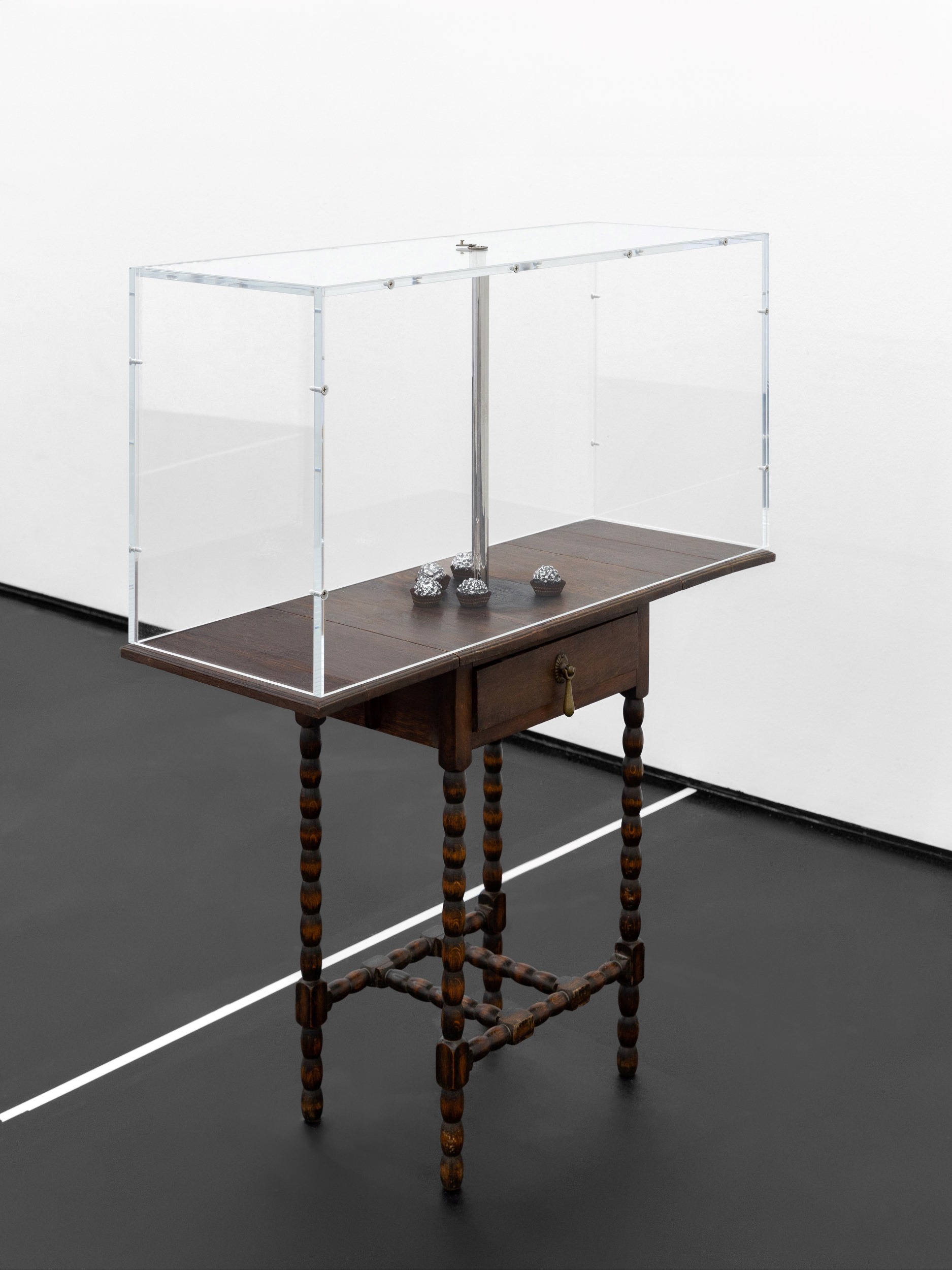
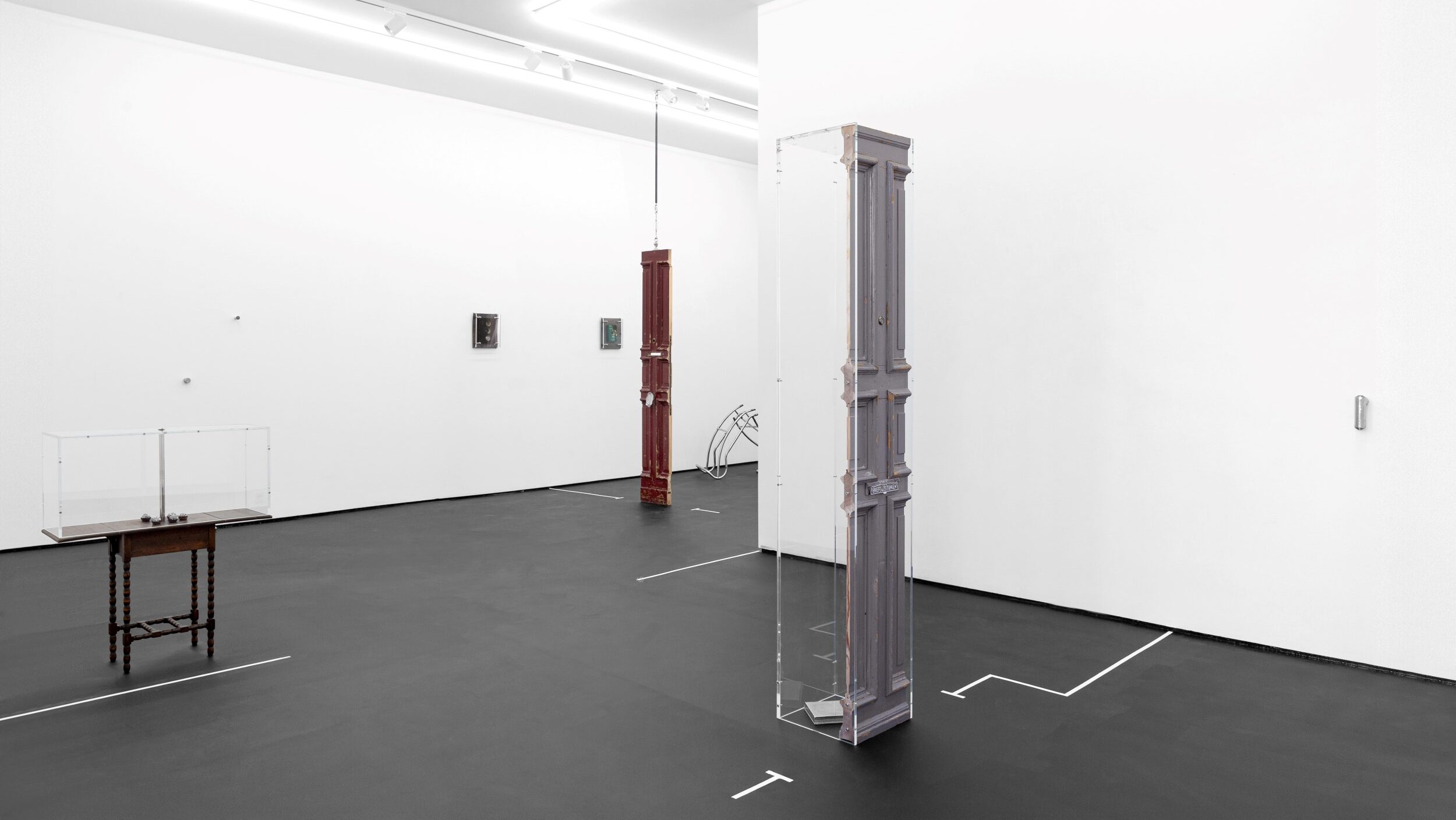
In the exhibition A Guide to the Interior for a House on Ambiguous Grounds, you presented works such as Sang-ryang-mun (Topping-out ritual) and pieces in which doors are transformed into mirrors or acrylic boxes. How does the Korean topping-out ritual relate to your themes of collapse and construction?
For me, sangnyang (上樑), or the ridge-beam ceremony, is not simply a ritual that celebrates the completion of architecture. Rather, it is closer to an act that acknowledges, at the very moment when a structure appears most stable, both its finitude and its inherent instability.
The traditional sangnyang ceremony prays for the endurance and well-being of a building, yet at the same time it presupposes that every act of construction is inevitably subject to disappearance and transformation over time. I am interested in this paradox. Construction is not the opposite of collapse; rather, it is already a condition that contains the possibility of collapse within itself.
In this exhibition, the sangnyangmun was used not as a decorative element celebrating completion, but as a device that reveals the incompleteness and temporality of the structure.
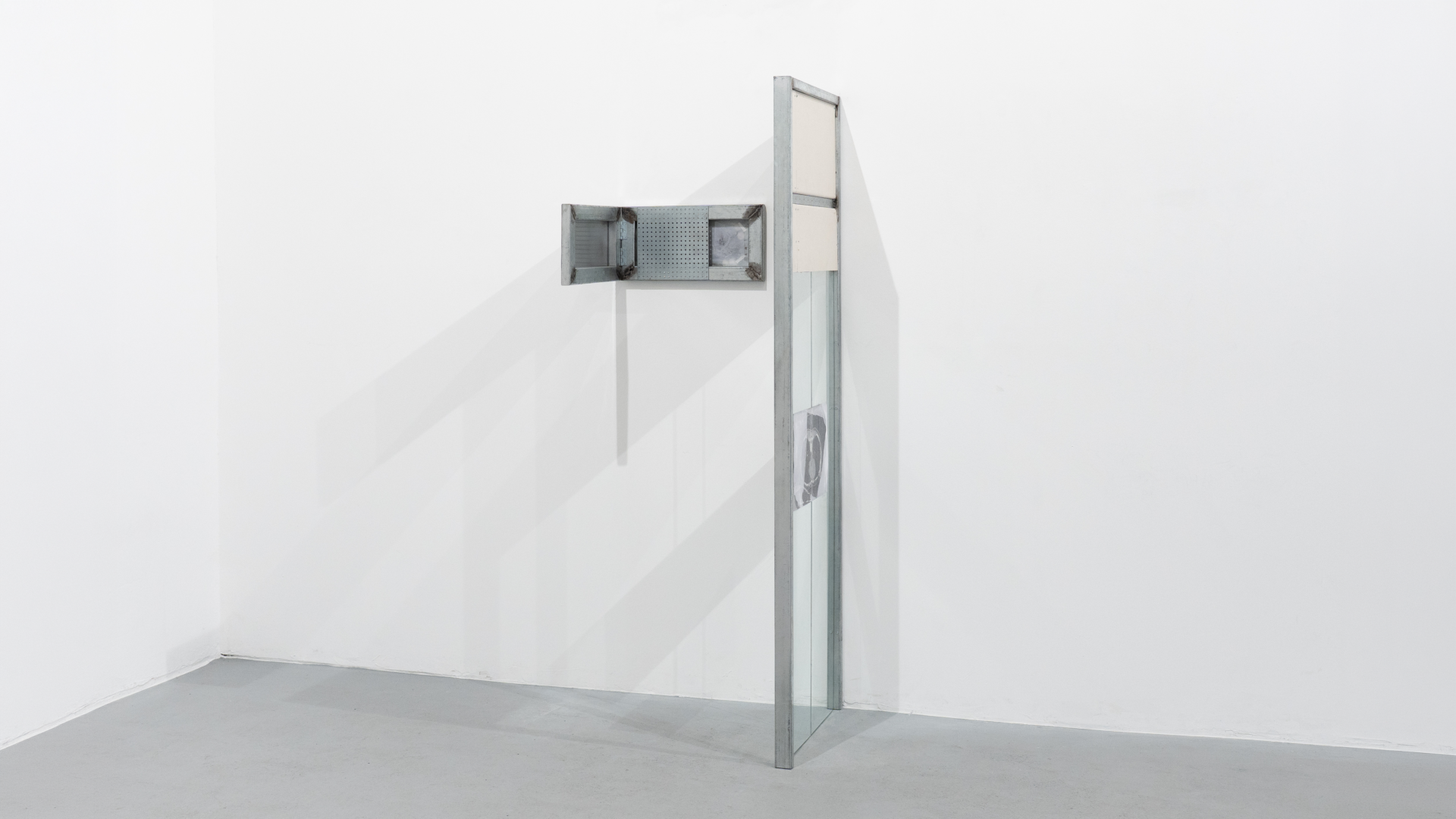
The works in which doors are transformed into mirrors or acrylic boxes also belong to this same context. A door is originally an architectural device that regulates inside and outside, access and exclusion. In my works, however, it no longer enables passage. The mirror turns the viewer back toward their own gaze, while the transparent box reveals the interior while simultaneously suspending access to it.
These transformations are not so much a loss of function as a displacement of function.
Through this, I wanted to approach the house and its structures not as fixed spaces, but as sites where human desire, self-preservation, and anxiety are repeatedly negotiated.
In this sense, Sangnyang mun is not, for me, a ritual of completion, but an act that reveals the ontological condition that every construction already contains its own collapse.
Your sculptures often shift between solid architectural forms and moments of fragmentation or ruin. What does this transition from the built to the collapsed represent for you, and how do you make it visible through material and form?
For me, construction and collapse are not opposing states. Rather, they exist in a relationship in which one already contains the other within itself. I believe that every structure, from the very moment it comes into being, also contains the possibility of fracture and exhaustion.
For this reason, collapse in my works is not an event, but an ongoing condition. It is not that something is destroyed after it has been completed; rather, construction itself exists as a state that already contains the time of collapse.
From this perspective, I understand architecture not as a fixed structure, or as something oriented toward permanence, but as a condition that continuously fails and is revised. Within this condition, absurdity arises between the human desire to demand something new and the silence of the world. For me, architecture is the materialized form of this tension.
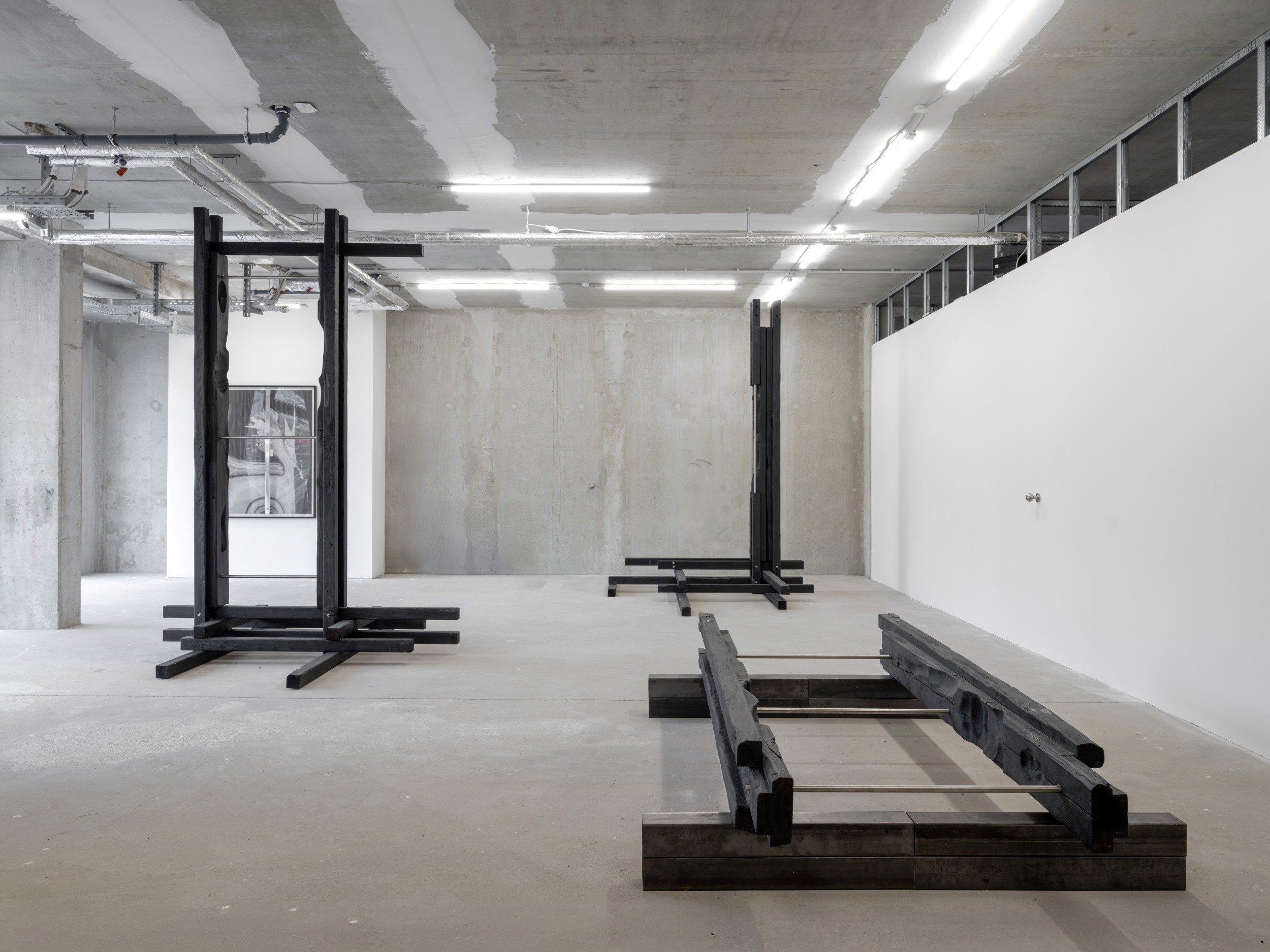
This is why I do not completely destroy the structure. Instead, I create a state in which it almost stands, but is never entirely stable. Old doors take on distorted forms, furniture loses its function, and metal, while solid, stands in a state of instability. The materials retain their own physical properties, yet they can no longer fulfill their original purposes.
At that moment, the sculpture does not represent ruin. Rather, it reveals the tension between the human desire to hold onto the world through structure and the fact that this desire can never be fully completed.
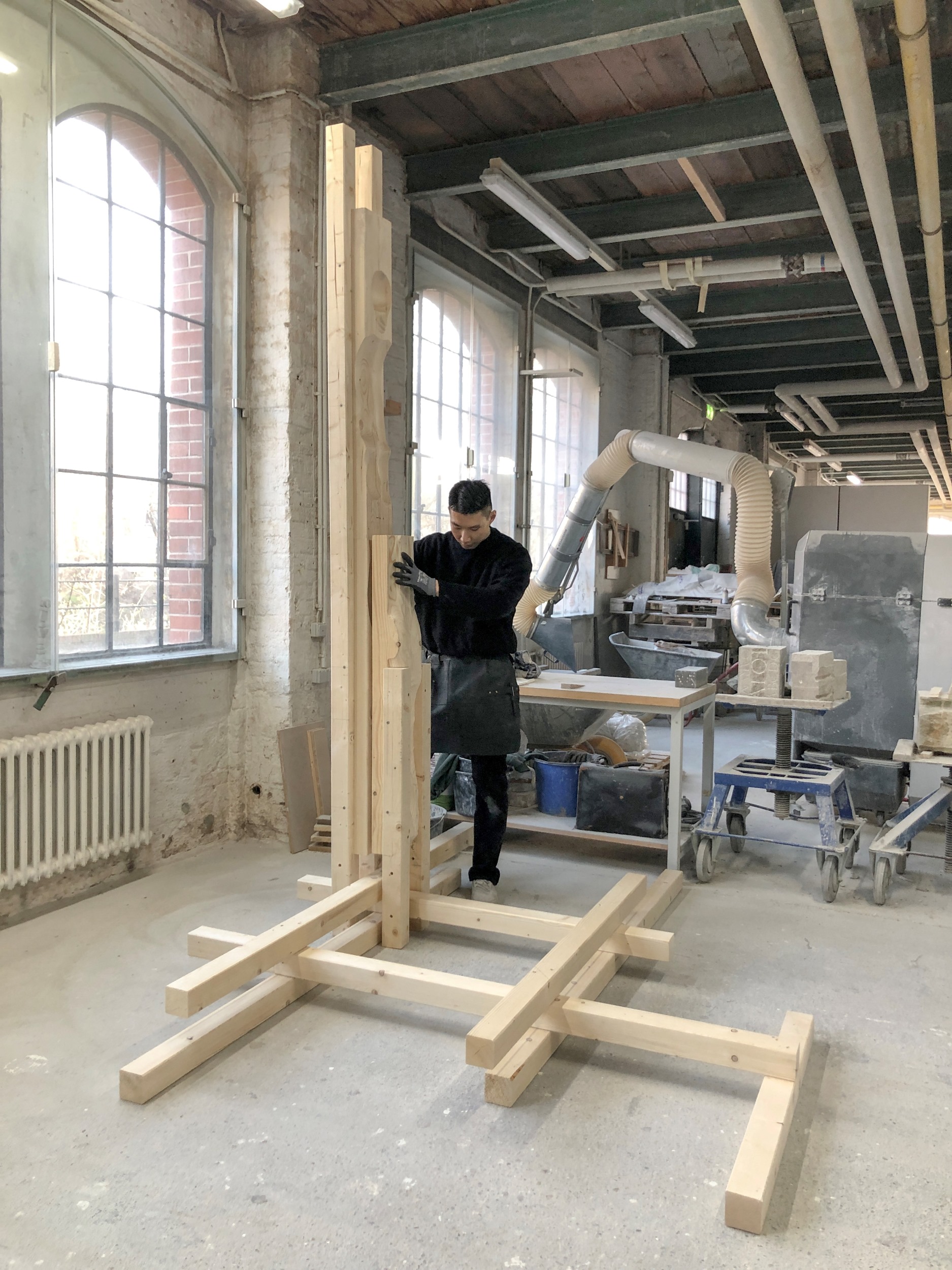
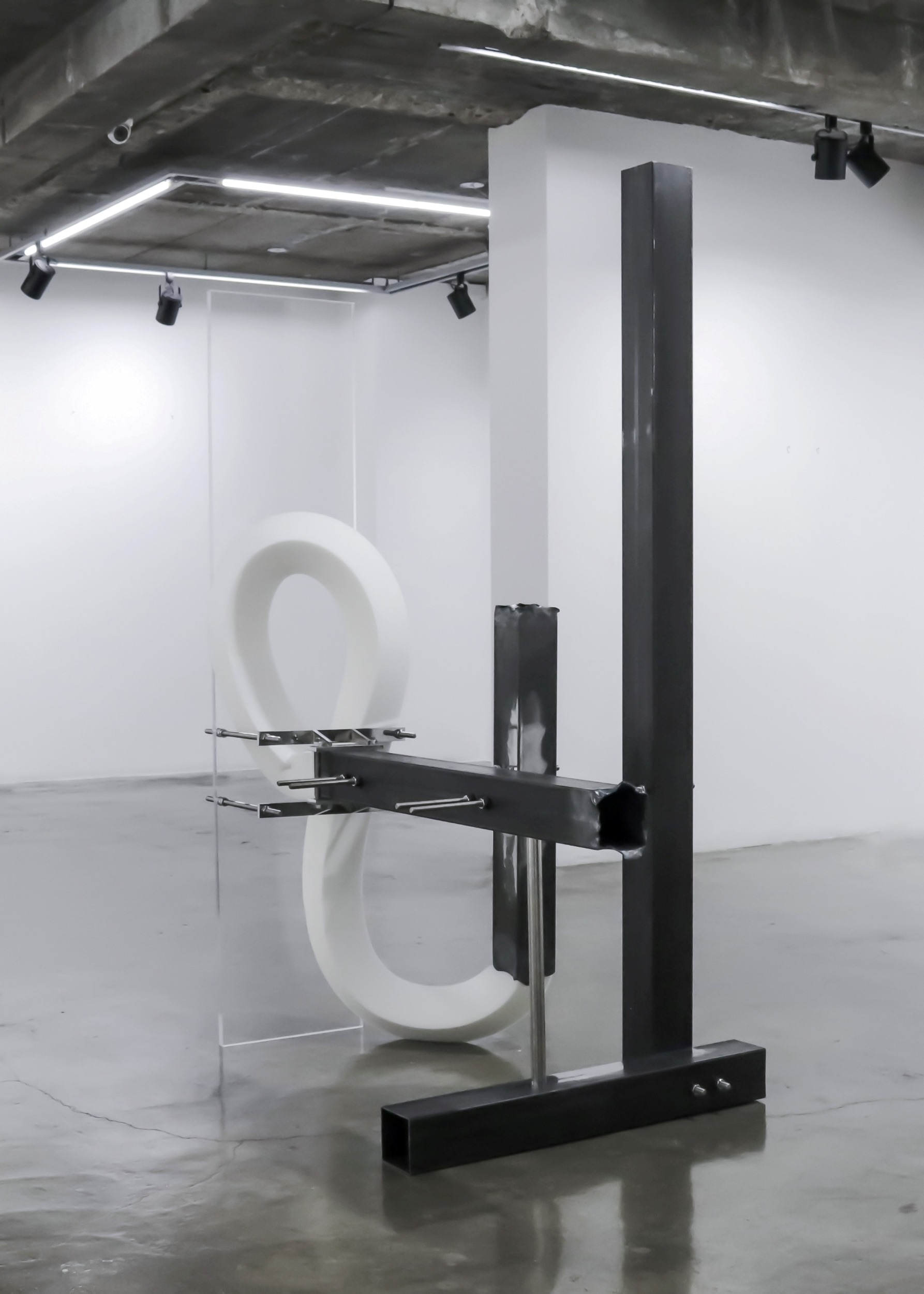
In many works you use polished mirror-like aluminium, brass, and reflective surfaces. How do you explore the themes of gaze, revelation, and concealment through these materials?
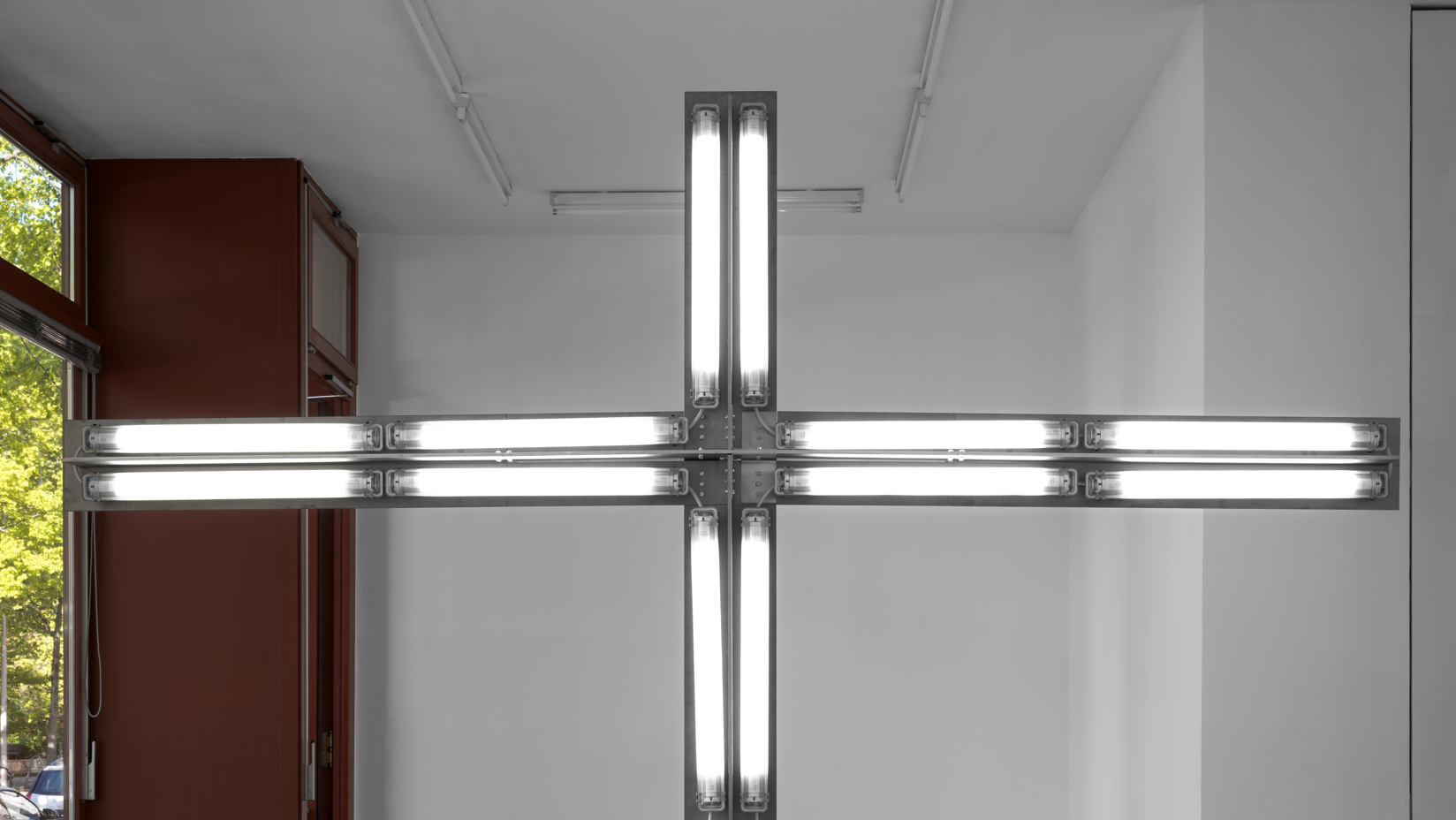
For me, a reflective surface is not simply a material that returns an image, but a device that destabilizes the very relationship of the gaze.
A polished surface in my artworks are usually understood as a tool for self-recognition, but I see it instead as a medium through which the self is experienced incompletely. The image on the surface is always distorted, superficial, and fragmented; it prevents one from arriving at a complete image of oneself.
In this sense, in front of a reflective surface, the viewer is not merely an observer, but also becomes an object of observation.
Polished aluminum, in particular, is not as clear as a mirror. In my works, reflective surfaces return an image, but they always distort and unsettle it, while also drawing in the surrounding environment. The polished surface of steel, too, oxidizes and changes color over time. I am interested in this seemingly perfect, luminous surface that already contains imperfection; in other words, in this contradictory attitude of reflection.
This is because revelation is not complete exposure, but a state in which only something partial is revealed. Concealment, likewise, is not simply a form of hiding; it can also become a condition that makes us see more. The viewer sees their own image, yet can never fully confirm it. Within this uncertainty, the positions of the one who sees and the one who is seen continue to shift.
The title of your recent exhibition speaks of “a house on ambiguous grounds.” How do you define this moral and spatial ambiguity, and how do your works invite the viewer to navigate it?
For me, “ambiguous ground” does not refer to a state of being lost or directionless. Rather, it describes a condition that cannot be reduced to one fixed or certain position.
The house is generally understood as a symbol of protection, identity, and belonging. At the same time, however, it is also a space where exclusion, control, and norms are produced. I believe that these two contradictory qualities cannot be separated.
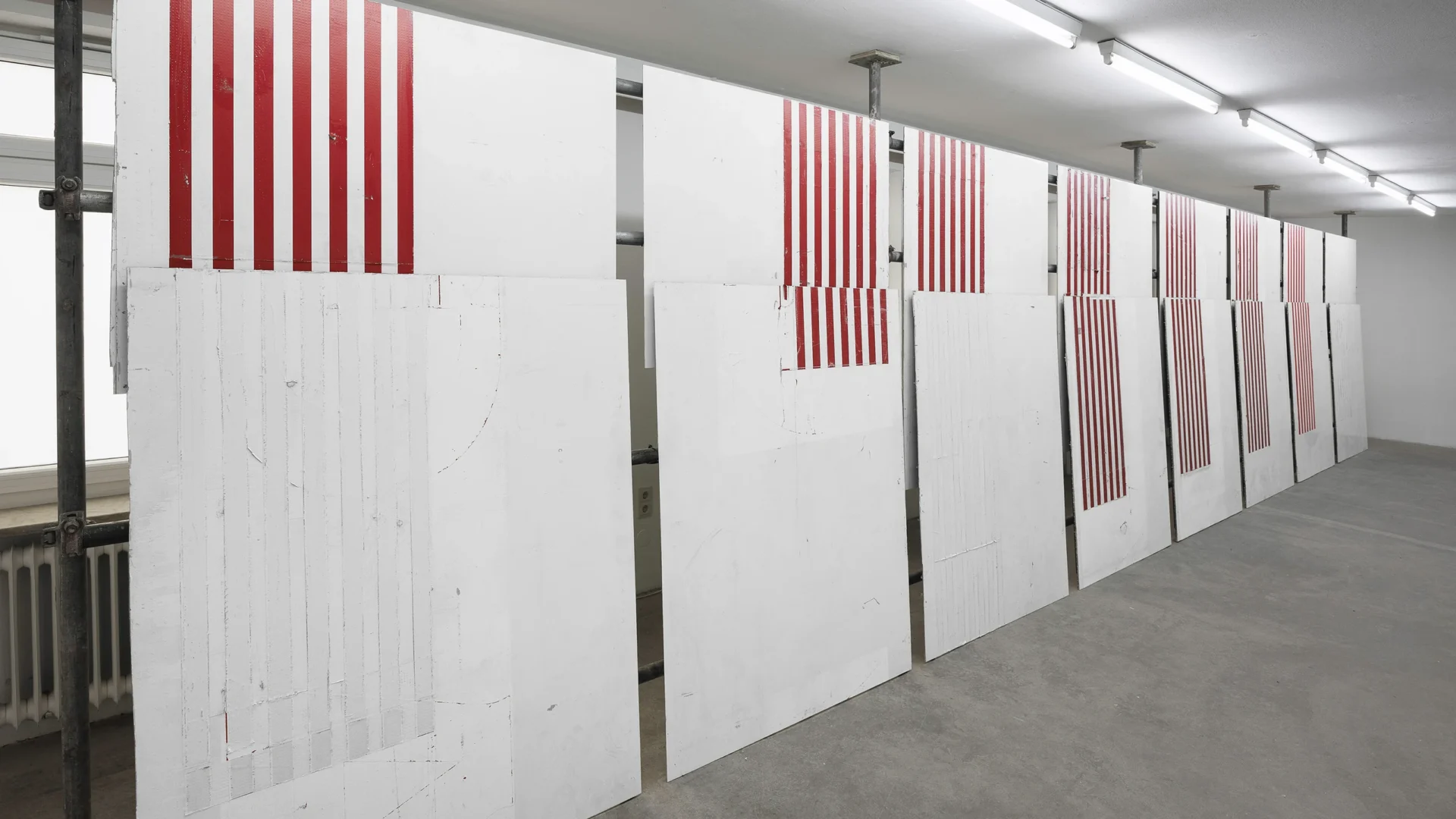
For this reason, the form of the house presented in this exhibition is not a completed living space, but a structure in which inside and outside continuously overlap. The walls are divided through the floor plan, and the rooms are connected, yet they remain somehow misaligned.
The viewer can move freely, but not entirely freely. They are inside, yet seem to be outside; they observe, but at the same time they are exposed.
This structure is not intended to propose a specific ethical, moral, or directional conclusion to the viewer. Rather, I believe that today, a clear position itself can sometimes function as another form of staging or hypocrisy.
Therefore, my works do not present answers. Instead, they lead viewers to continually renegotiate their own position.
I hope that viewers do not simply interpret the works, but become aware of their own desires and judgments, as well as their attitudes of observation and intervention.
At that moment, the exhibition is no longer a space that delivers a message, but becomes a structure in which each person experiences how unstable their own ground truly is. Within this seemingly frustrating truth, the viewer is invited to choose and question their own direction.
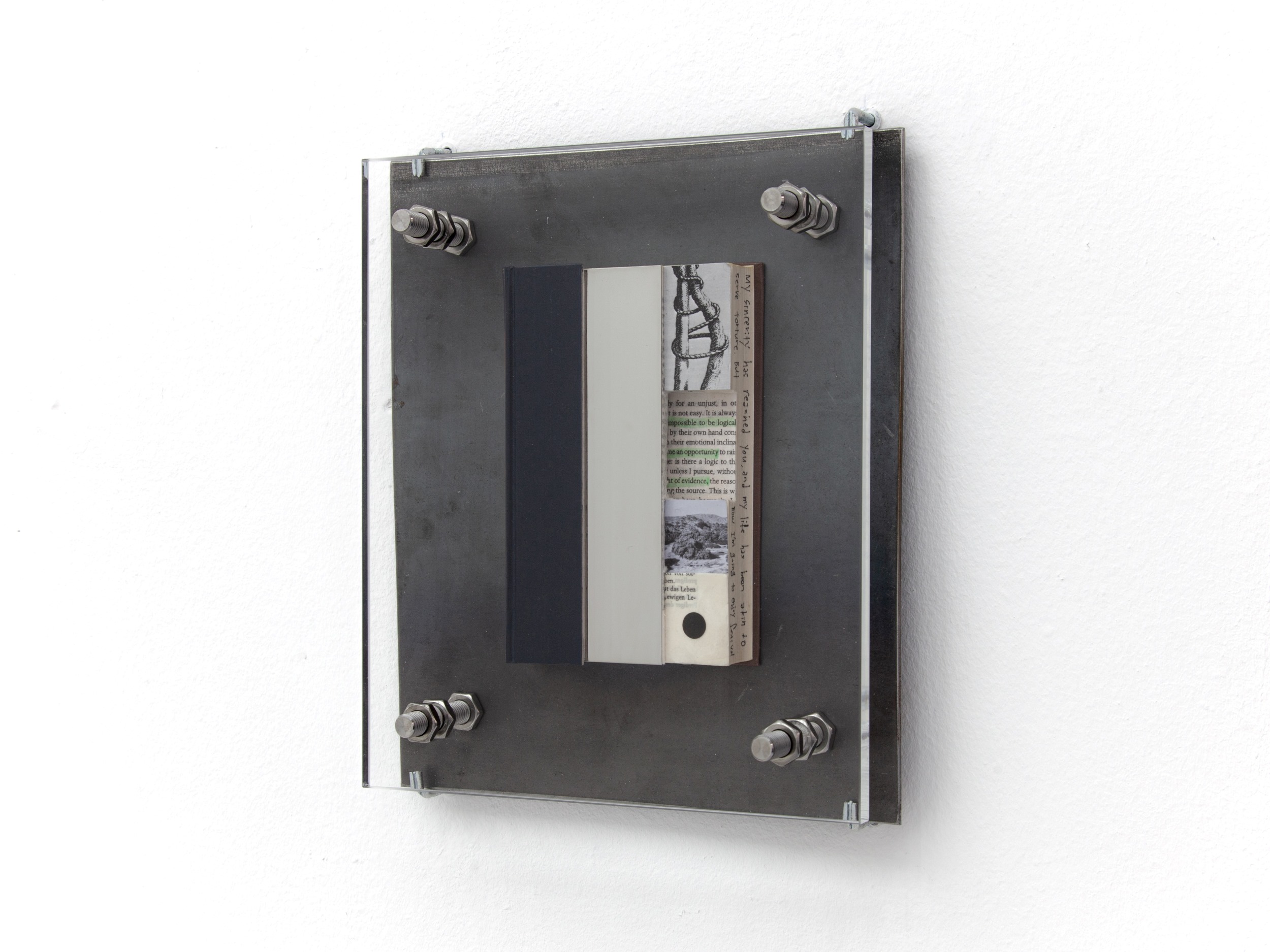
Many of your pieces incorporate literary references (Hermann Hesse, Goethe, William J. Bernstein). How do you use literature to deepen themes such as the self, salvation, suffering, and the ambiguity of identity?
If architecture organizes systems, literature organizes time and interiority. I do not use literature as a reference to explain the content of my works. Rather, I understand literature as one of the structures human beings have created in order to understand the world and themselves. At the same time, I am interested in how books written across different generations and countries, despite their distinct languages and historical contexts, ultimately pass through a shared set of concerns.
What I primarily draw from the writers I choose is their refusal to understand the human being as a stable identity. Their characters are not completed selves, but beings who are constantly divided, displaced, and compelled to reinterpret themselves.
In my works, books often appear not as texts to be read, but as materials that are folded, cut, thrown, and inserted into structures. These works are not simply collections of sentences, but are concerned with the new force that emerges through a collective mixture. Rather than focusing on a single voice coming from one physical book, I am interested in the collective voice that arises when different books, periods, and authors are brought together. This voice does not offer a clear conclusion; instead, it reveals the history of anxiety, desire, self-deception, and the repeated attempts through which human beings have tried to understand them.
For this reason, literary references do not function as answers within my works. Rather, they operate as fractures that allow viewers to rewrite their own narratives.
Your process often involves reclaiming and transforming existing objects (doors, furniture, handles). How does this gesture of appropriation fit into your reflection on collapse, memory, and reconstruction?
I see my practice as a way of renegotiating with structures that have already survived within the world. Objects installed inside a house — such as doors, furniture, and handles — are not merely objects, but structures that have already been selected and arranged within predetermined forms and norms. They carry traces not only of personal attitudes and tastes, but also of specific historical conditions and social rules. For this reason, I neither preserve them in their original form nor completely destroy them.
Instead, I slightly distort them, remove certain parts and symbolic meanings, and cause their original functions to deviate. This process is closer to decontextualization than restoration, and closer to re-appropriation than appropriation.
For me, collapse is not an image of loss, but a moment in which an object is temporarily released from its existing meaning and function. I also understand memory not as complete preservation, but as a repeated process of misreading and reconstruction.
Therefore, an already lived object does not remain merely as evidence of the past. It becomes a device that confronts the norms of the present and raises questions. Rather than simply preserving someone’s life, it reveals that we, too, are beings formed and conditioned within structures, and it operates as a trigger for subjective choice.
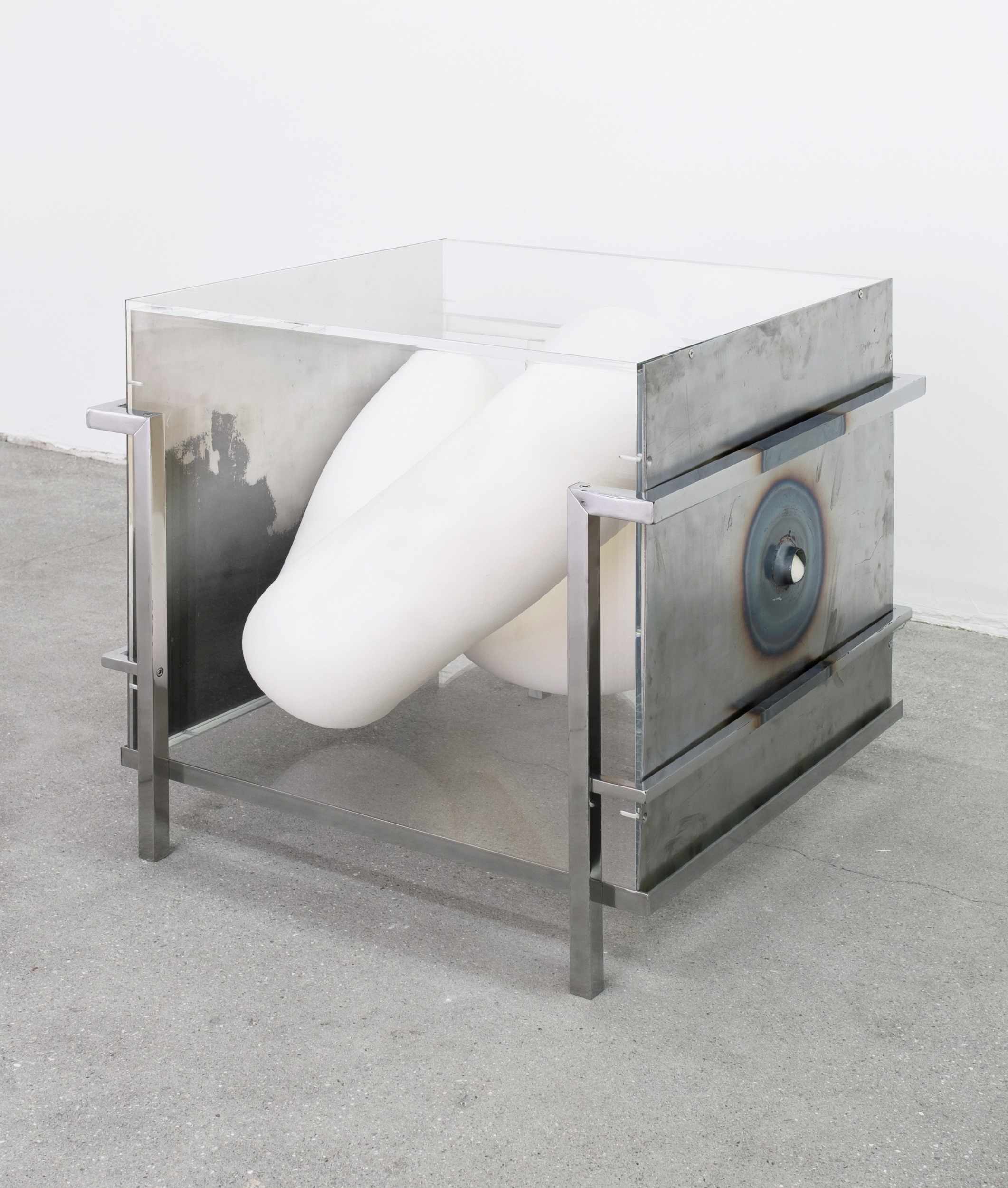
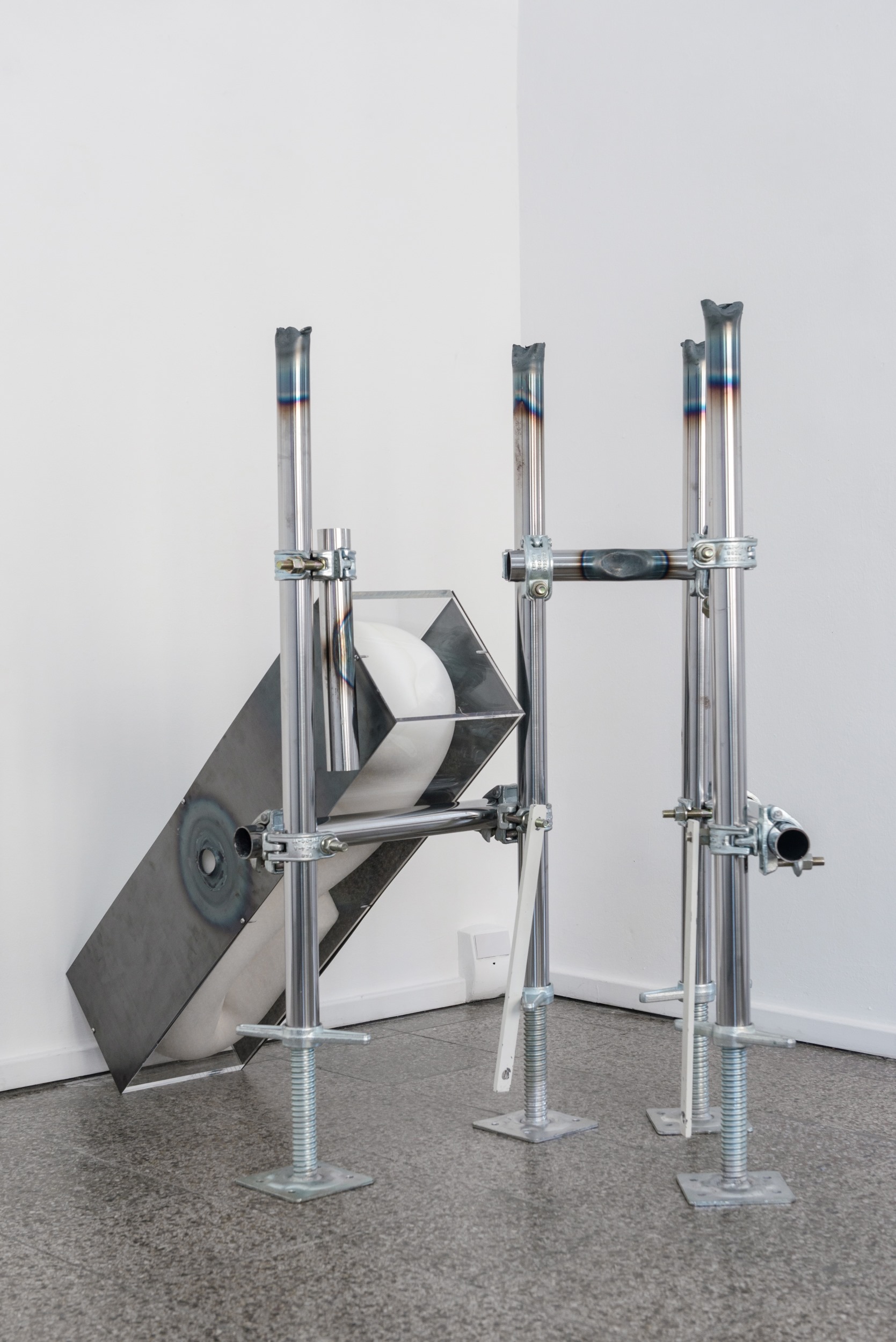
Have you ever destroyed or set aside a work for a long time only to return to it in a different form? What is your relationship with completed and exhibited works when you revisit them in new contexts?
I do not think of my works as completed objects. As I have mentioned in some other interviews, I have always resisted the idea of permanence.
Even after an exhibition ends, a work is not finished; rather, it enters a state of temporary suspension. In fact, I sometimes dismantle a work or put it on hold, only to bring it back later in a different form and context.
Just as Sartre suggested that human essence is constructed only retrospectively, I believe that a work also generates new meaning after the process of its making. When I reuse an older work, I try to create another path through surface-level transformations while allowing its original meaning to remain. In doing so, I can strengthen the perspective I want to convey.
In other words, by placing a previous work within an unfamiliar context, I prevent it from remaining merely in the past. At that moment, the work is no longer simply an object of memory. It reveals the conditions of the present and becomes a new work that produces another layer of meaning within them.
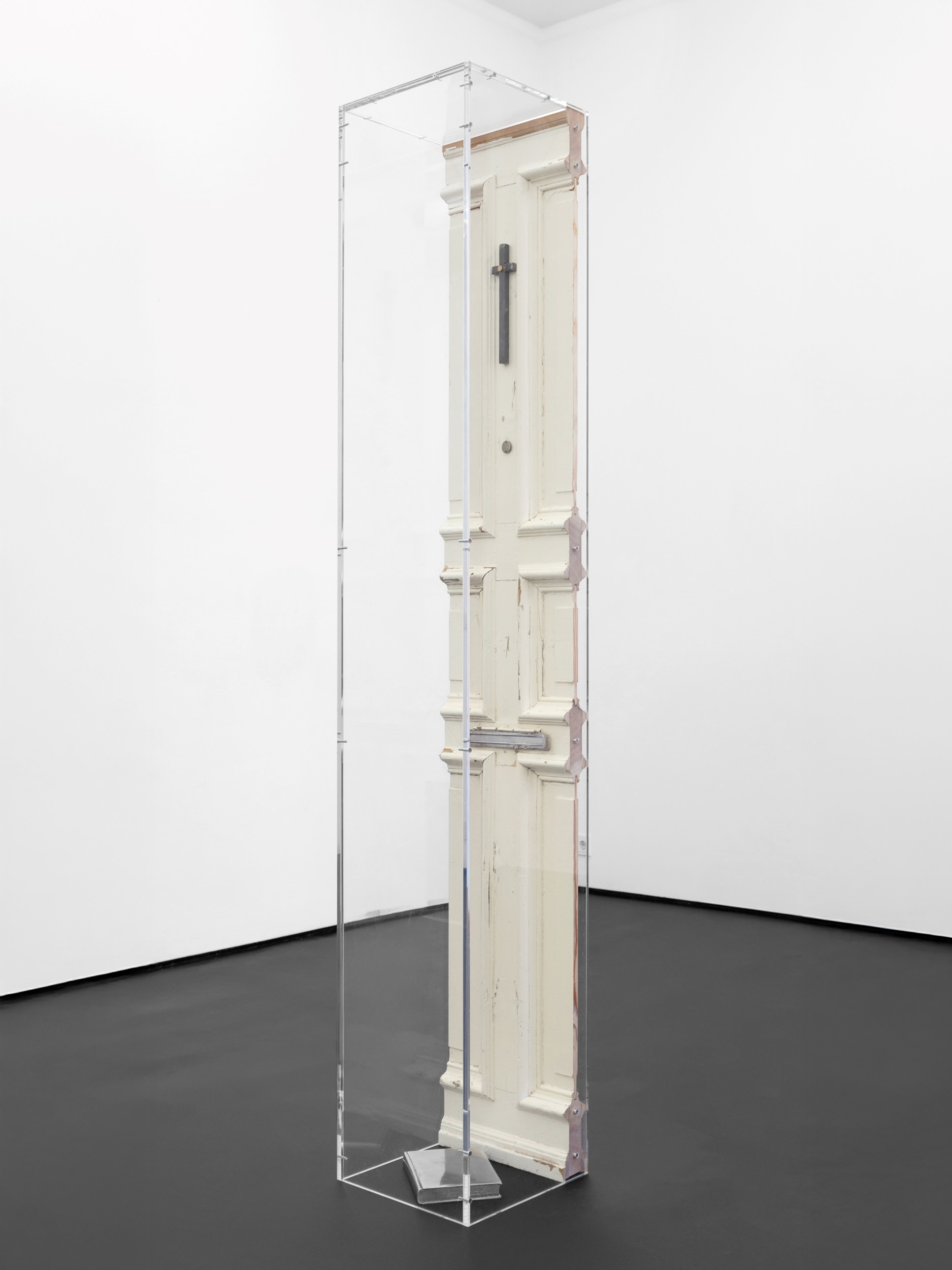
Your installations often function as “guides” or thresholds between inside and outside, visible and hidden. How do you envision the viewer’s role in these spaces of transition and ambiguity?
I imagine the viewer not only as someone who interprets the works, but also as someone who constantly adjusts their own position. Within my installations, the viewer enters the interior, yet never fully belongs to it. They look outward, yet are never completely separated from what they observe. I want the viewer to keep moving between the positions of observer and participant.
This is not simply a matter of participatory installation, but a question of gaze and Eye. To look at someone always presupposes a certain distance and a certain form of power. At the same time, however, we cannot stand outside the structure.
For this reason, my exhibitions lead the viewer to move repeatedly between intervention and observation. I hope viewers experience their own attitudes within contradictory and ambiguous situations. I hope some questions continue to arise as they move through the space.
Looking at your overall trajectory, what do you see as the most urgent role of sculpture today in making visible the tensions between construction and collapse?
In an age overflowing with structures, the present often makes itself appear inevitable and paralyzing. The most urgent role I must carry out is, in the end, to allow art to continue circulating within human memory, transforming, fragmenting, and being reconstructed over and over time. To make this possible, we must endure and continue to speak out.