Fakewhale Newsletter
By pressing the "Subscribe" button, you confirm that you have read and are agreeing to our Privacy Policy and Terms of Use

Fakewhale in Dialogue with Antoine Félix Bürcher

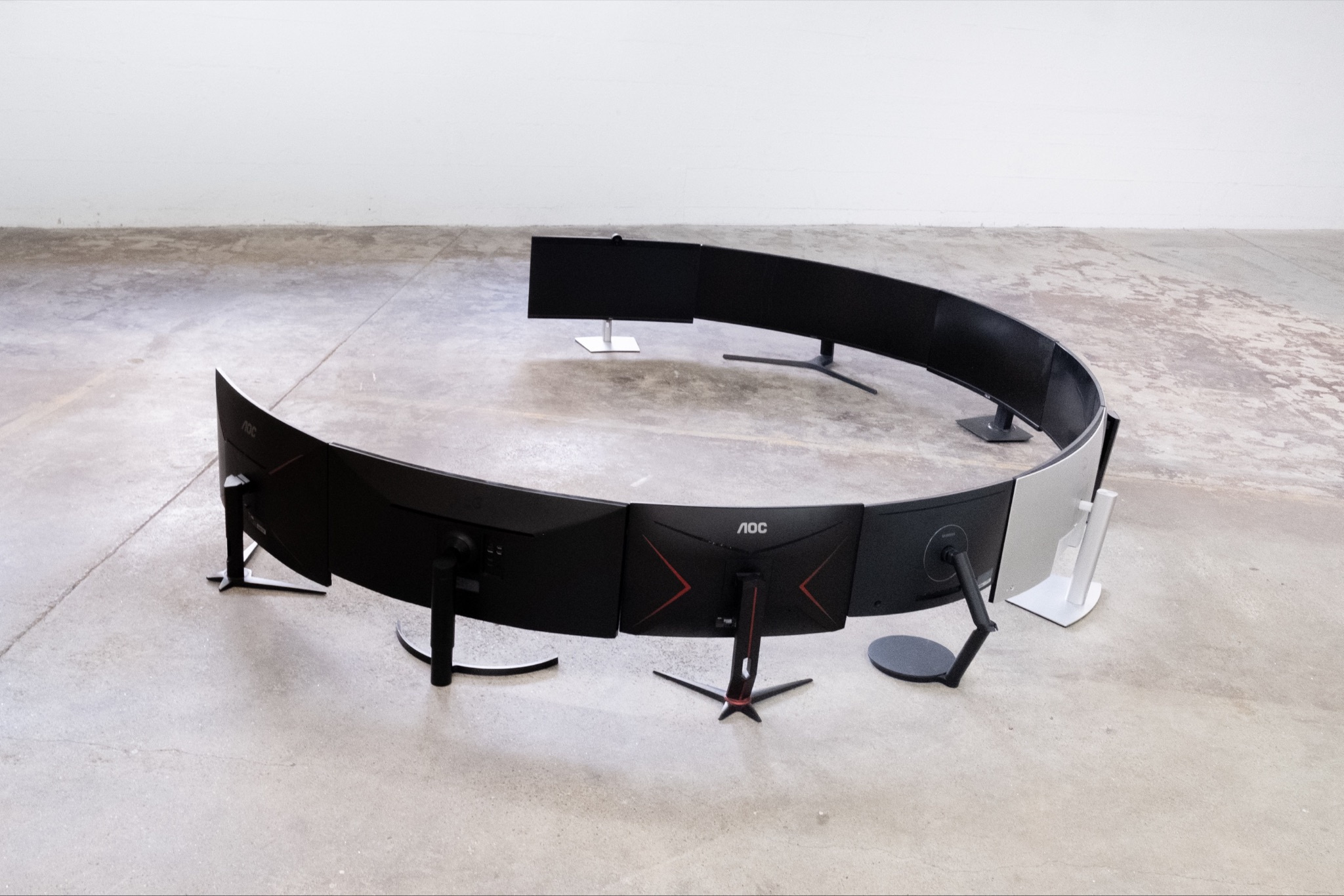
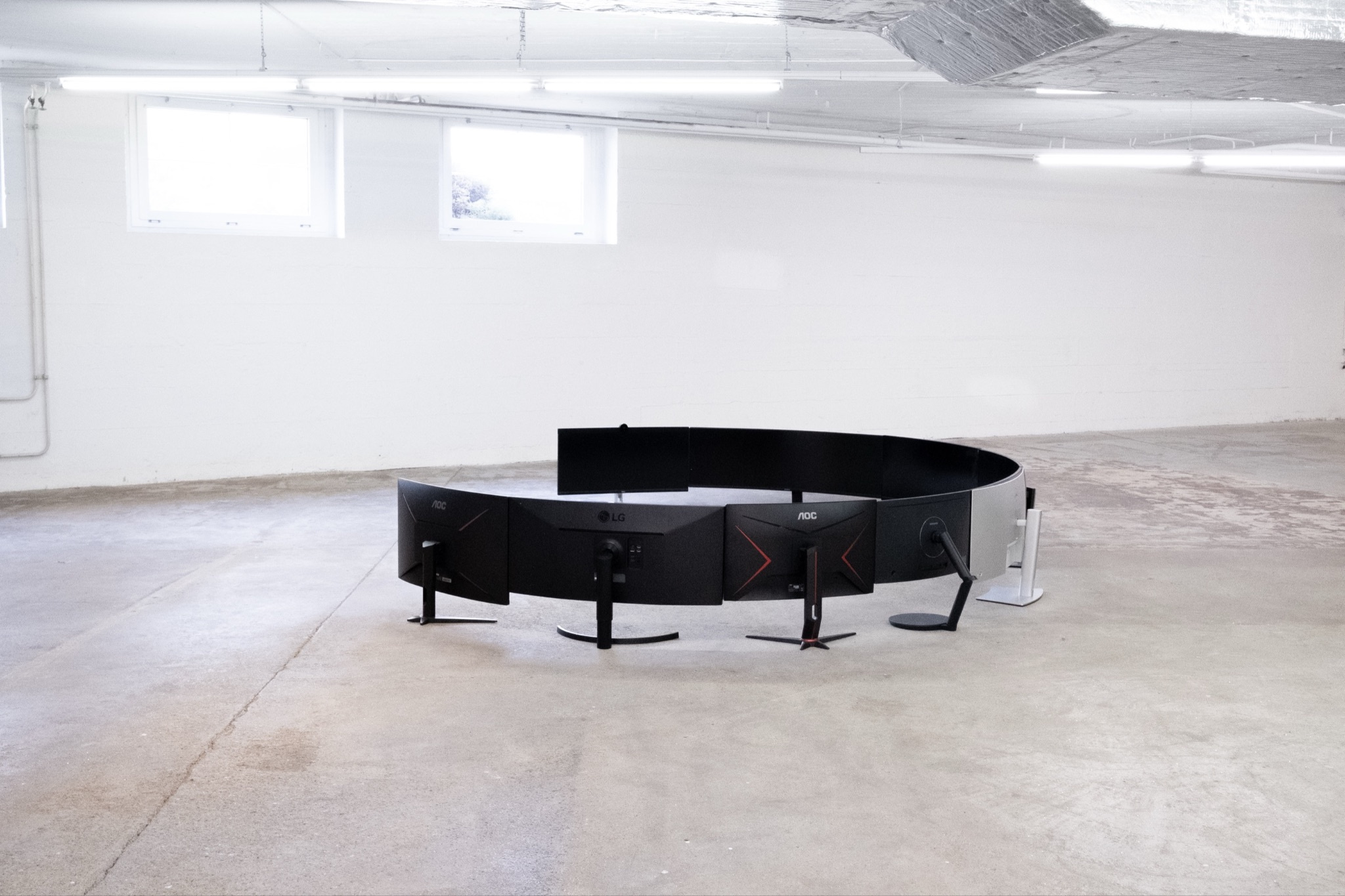
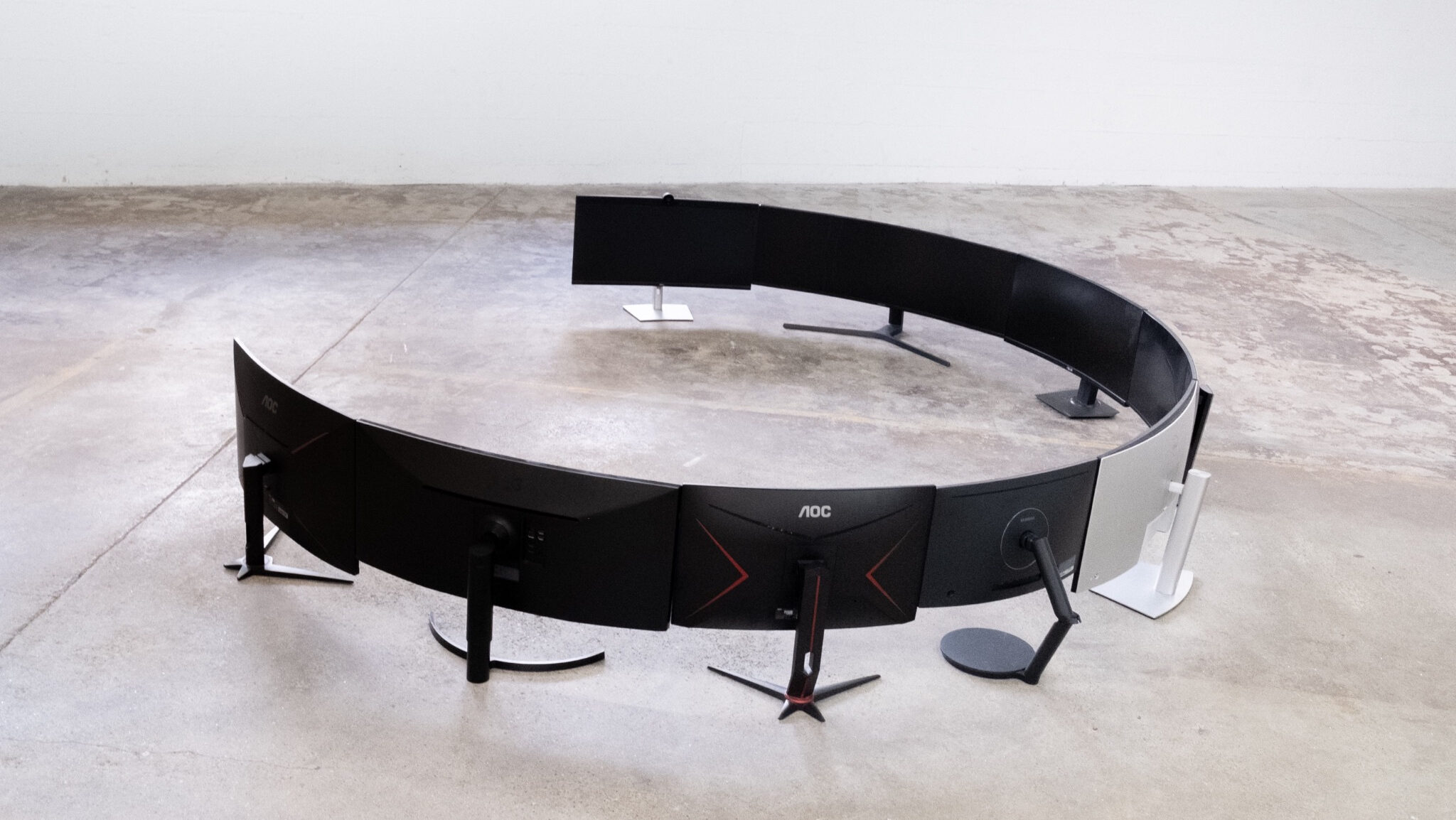
Antoine Félix Bürcher, Amphitheater, 9 curved screens found online, approx. 250 x 250 x 60 cm, 2026, © Studio Antoine Félix Bürcher Exhibition view, Solo exhibition « Der Stand Der Dinge » at Akku Kunstplattform, Luzern, Switzerland (2026)

We have been following Antoine Félix Bürcher’s work for some time, and what continues to strike us is the way he treats time as a material: not a straight line, but an in-between state, much like glass itself.

Born in Paris in 1999, raised in Lausanne and based in Zurich, Bürcher develops a post-digital reflection on the passage of time and on the infrastructure of the imaginary.

His cast-glass sculptures, often dated 2050, 2060 or 2100, sit somewhere between archaeological relics and fossils of future civilisations. Alongside them, drawings made while sleeping, painting as a counterpoint to screen use, and installations in which water, computers and glass begin to reshape the space.

In this conversation, centred on recent exhibitions such as Der Stand Der Dinge at Akku Kunstplattform, Ghost Out Of The Shell at Grand Palais Bern and Aux étoiles in his Zurich studio, we wanted to stay close to that tension: how to resist digital saturation without turning away from the world that is coming.

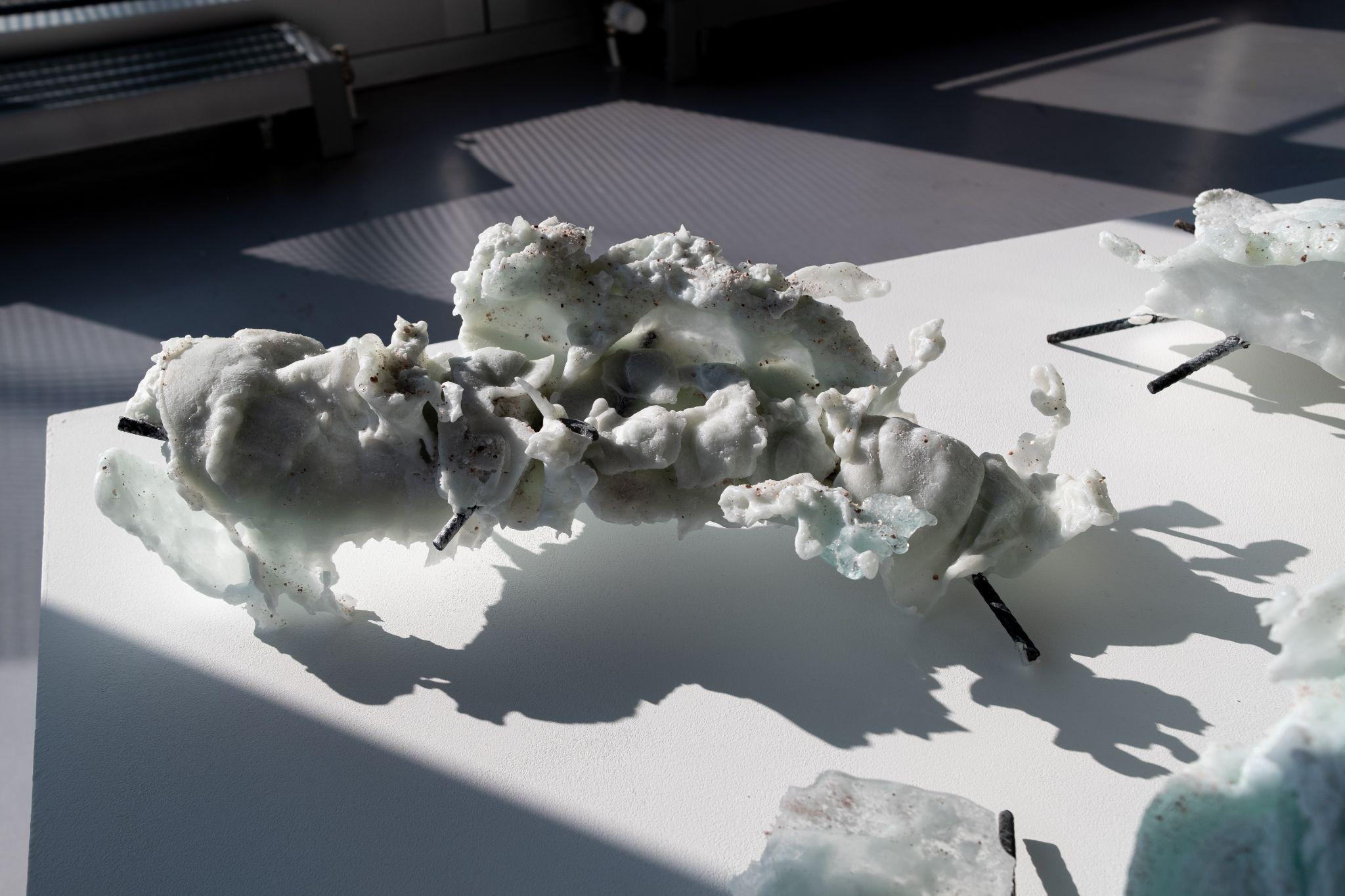
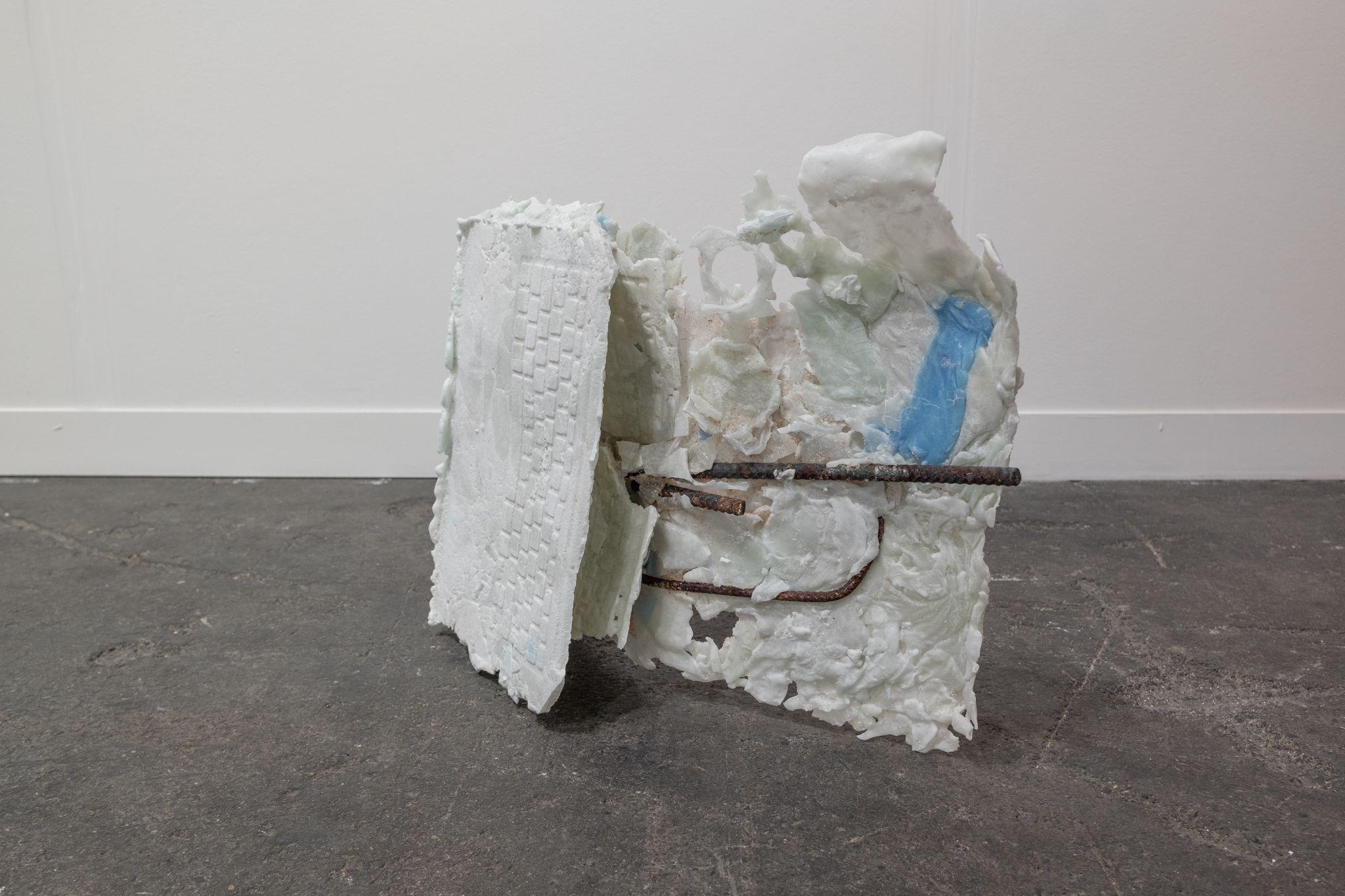
Antoine Félix Bürcher, Doomscrolling, Glass cast, Iron, 100 x 120 x 40 cm, 2060 © Studio Antoine Félix Bürcher

Your cast-glass sculptures are often dated 2050, 2060 or 2100. What does it mean for you to date a work in a time that has not yet arrived?

The cast-glass sculptures don’t belong to a linear concept of time. Before I act, the form is already present, in a latent state, within matter. My work as an artist is about making visible many timelines that are at odds with one another and beyond our understanding of reality. 

My sculpture studio is a datacenter. The glass I use in making the work is collected during “drift” excursions through urban spaces (See the situationist, Guy Debord, La théorie de la dérive, In. Les lèves nues n.9, dec.1956). It’s a collection of memories. All the used glass I collect carries personal histories. The sculptural act consists of transitioning the glass from the state of an interface, a container—to the state of a body occupying space. This spatial transition aims to make visible the material in its state as stone—that initial state that preceded its being a window, an interface in space. When the glass melts in molds to take on ghostly forms, it enters a space of contradiction where matter regains a complexity simulacrum, to that of the time of stones, where different times blend together. 

Stones were there long before humans. The sand needed to make the glass that I collect originated from a landscape somewhere — once upon a time stones among mountains, those immense, complex accumulations of time. My sculptures belong to that time—a time of the depth of space (deep time), rather than a linear time. I try to look further than human history, in a larger narrative in which the past and the future converge through the complex temporality of the rock’s depth – the time of stones. I approach sculpture in deconstructing and reconstructing our relationship to space-time, exploring our relationship with timelines, memory, and nature.

Antoine Félix Bürcher, Doomscrolling, Glass cast, Iron, 100 x 120 x 40 cm, 2060 © Studio Antoine Félix Bürcher
Antoine Félix Bürcher, Untitled, Glass cast, 55 x 57 x 14 cm, 2060, © Studio Antoine Félix Bürcher Exhibition view, Solo exhibition « 1920x1080 » at Artgenève with Gallery Heinzer Reszler, Genève, Switzerland (2025), Courtesy of MUDAC, Lausanne, Switzerland

Contemporary life creates a sense of closeness through its digital interfaces, but relationships are increasingly based on social status in an indexed realism, and big data benefits from this by facilitating transactions by indexing more aspects of life. Digital, touchscreen, counting on your fingers. It’s about that – fingers as numbers. Users touch the glass to connect. Algorithms govern and tax human connections, anticipating and bypassing legislation, scamming the public space, feeding new kingdoms, private paradises. Capitalism is desperate and makes profits in what is left after having provoked climate change. Touch is a language we need to reclaim. Big data takes over memory to fuel capitals of collective intelligence systems under the guise of neutrality, but these are not collective—they are structured with specific directions in indexing reality and engineering social architecture and neutralise the potential of human intelligence by reducing human intelligence to a commodity, an artificial one in a straight line. The technology itself is a really interesting tool when it doesn’t serve oligarchy. I leave my work open to interpretation; changing the date calls into question the indexing of reality.
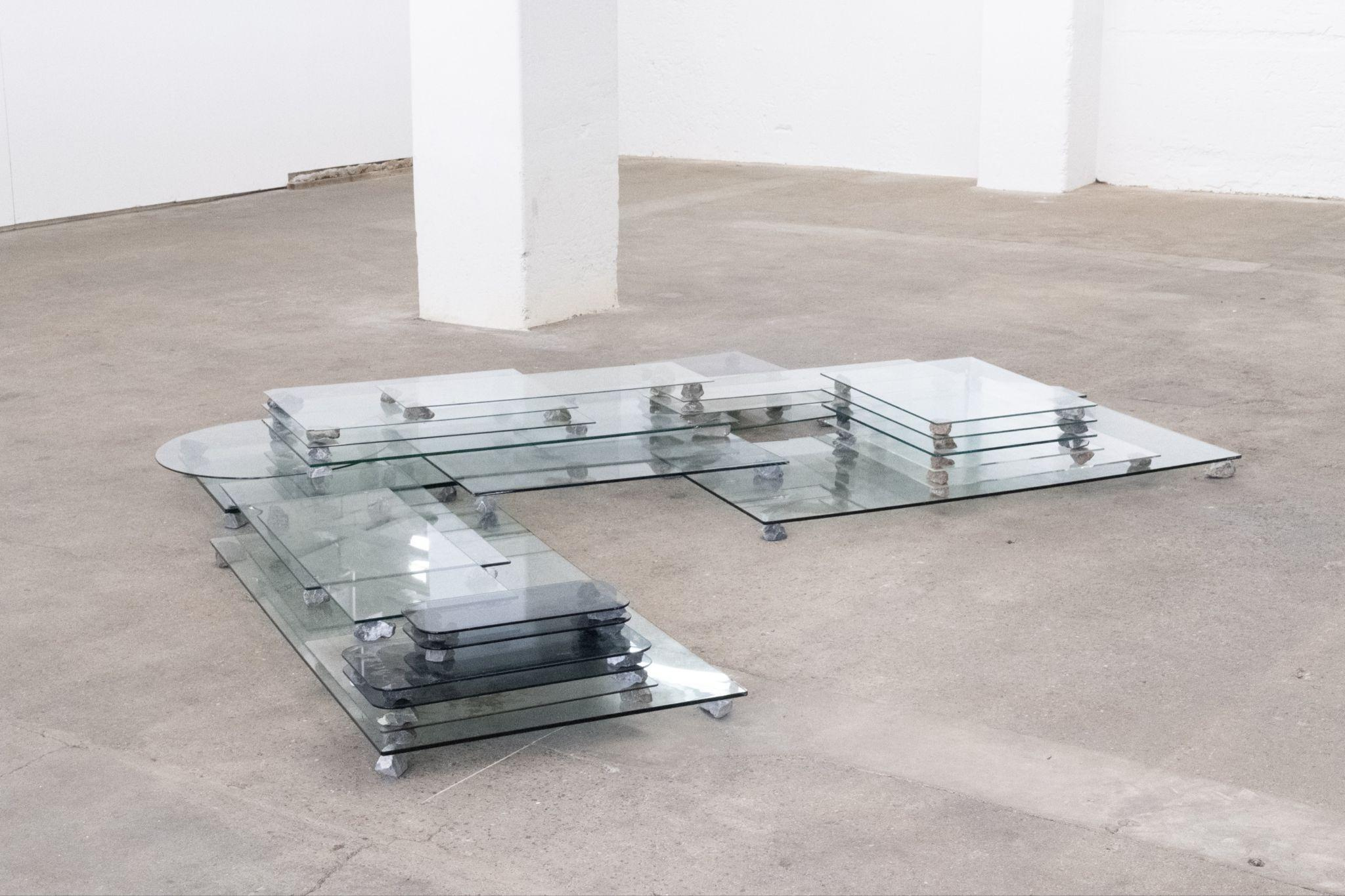
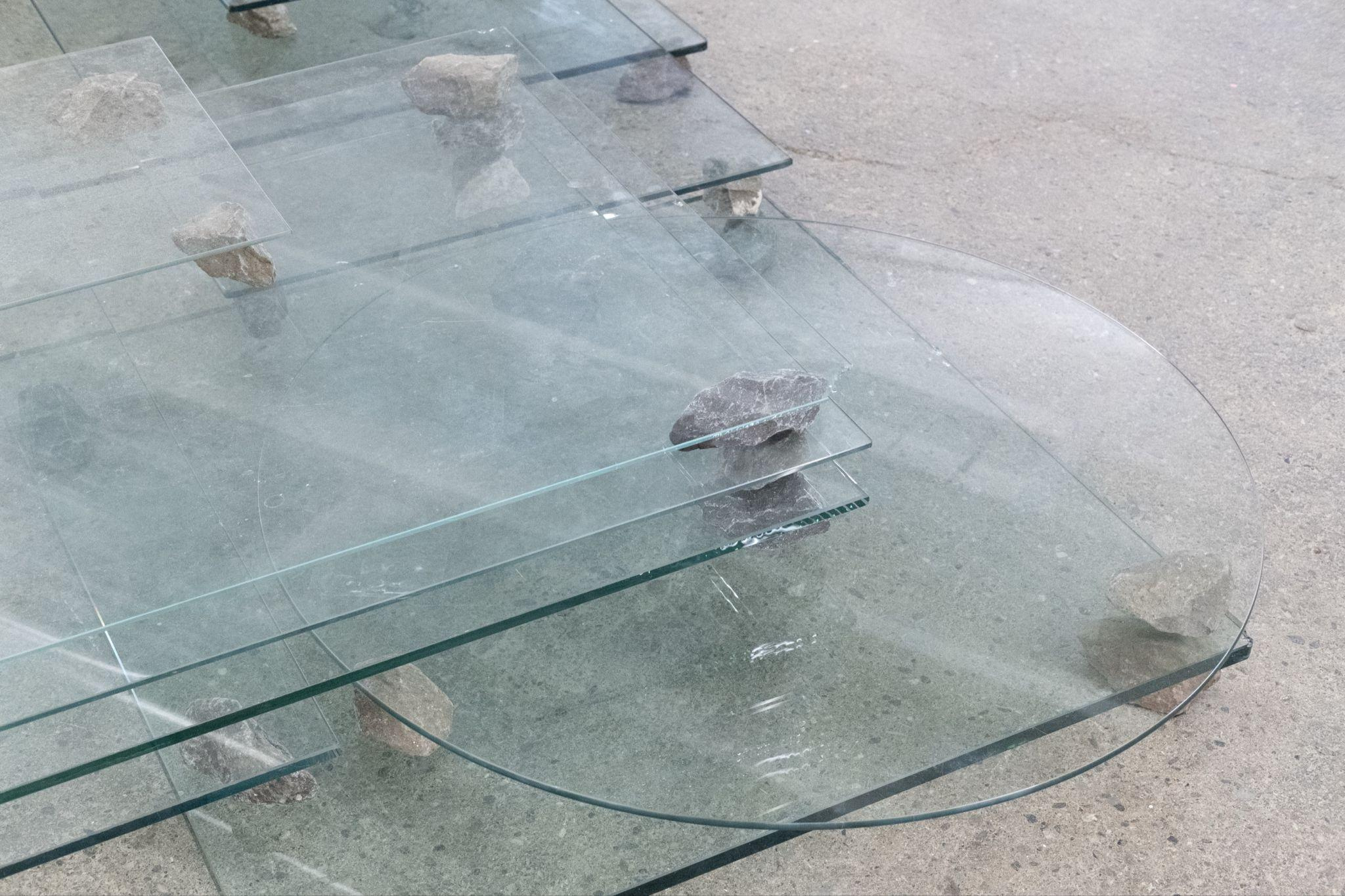
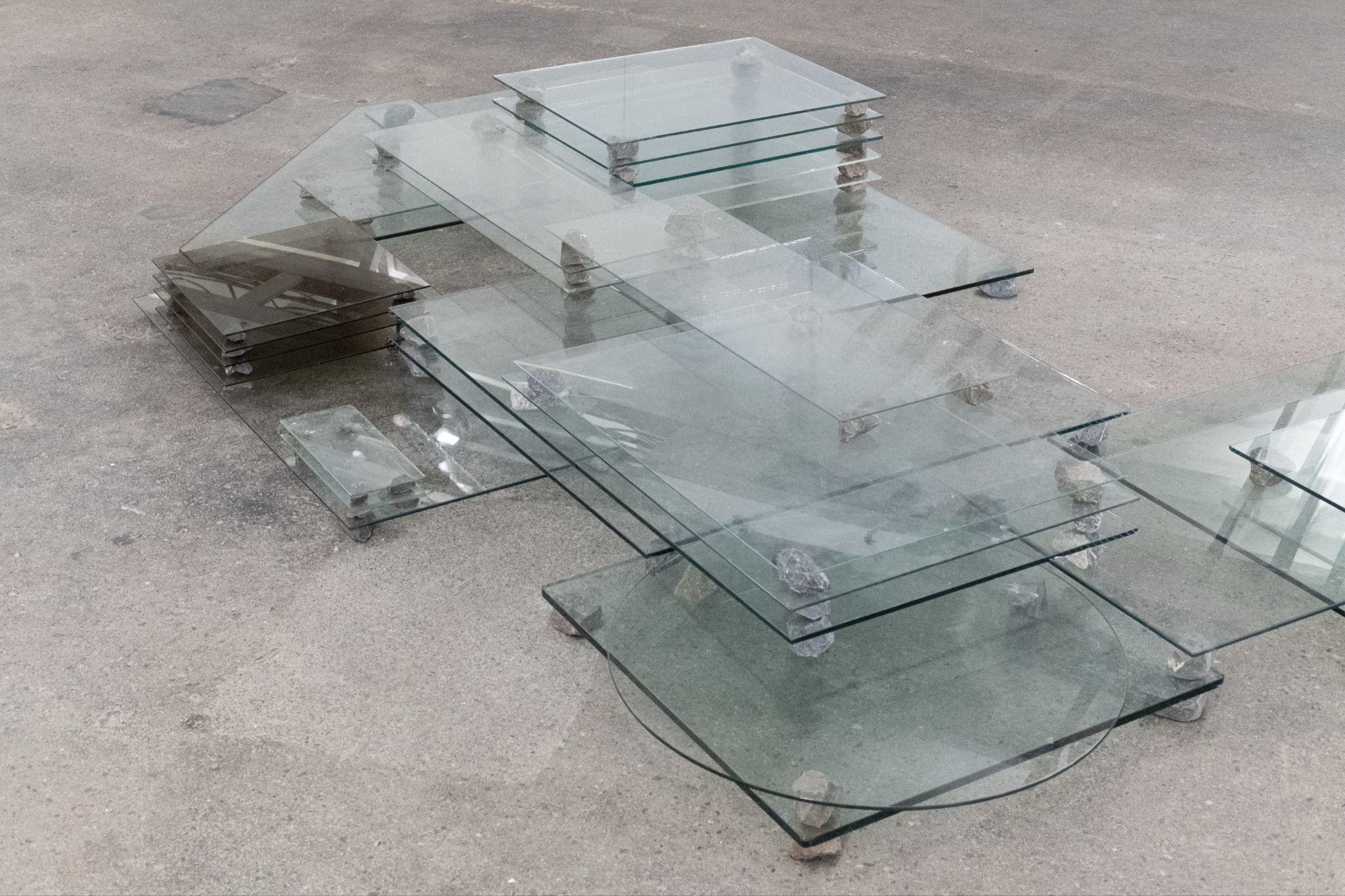
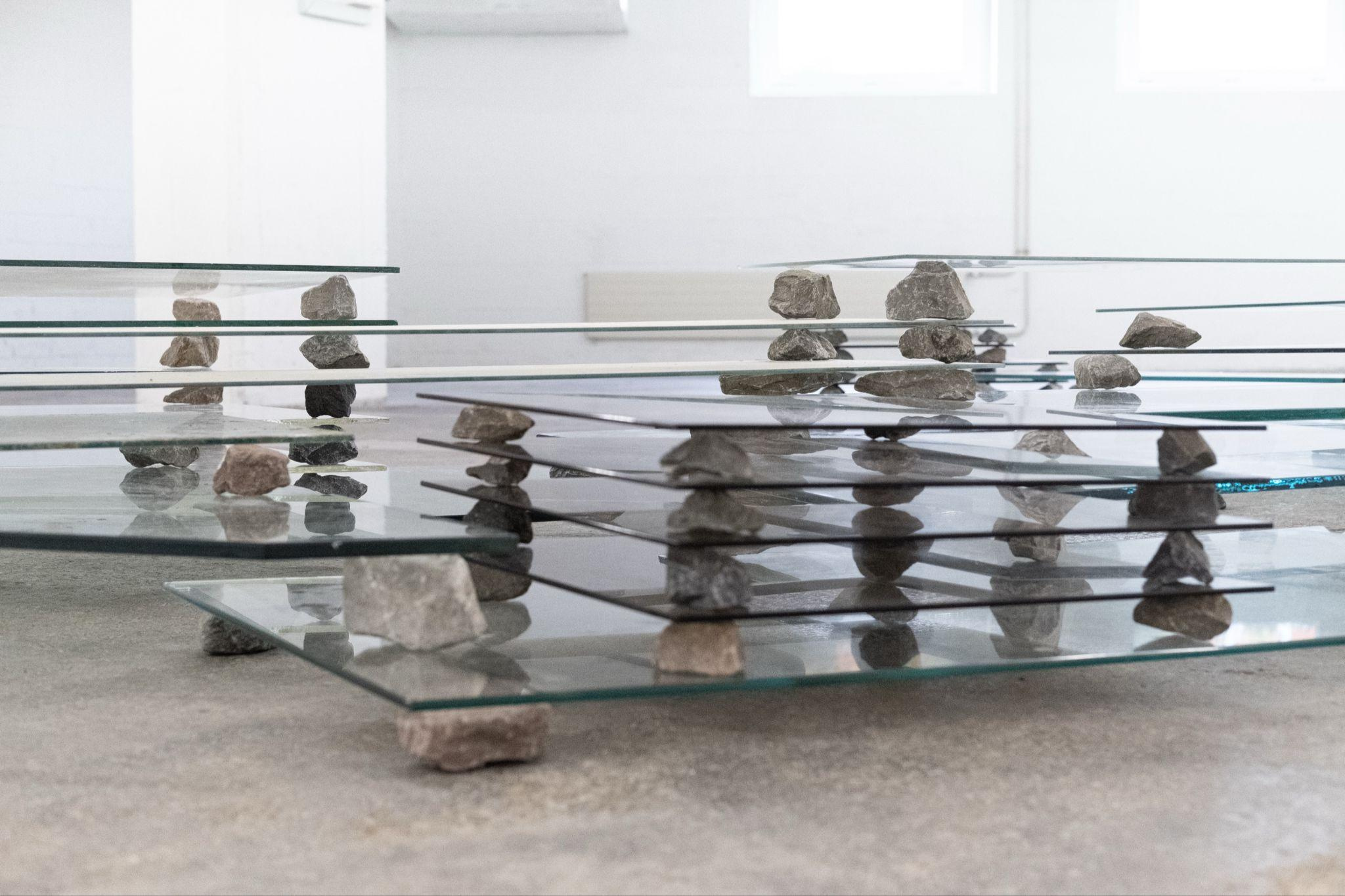
Antoine Félix Bürcher, Windows records Dust breeding, Found glass panels, Railway stones, approx. 300 x 300 x 50 cm, 2026, © Studio Antoine Félix Bürcher Exhibition view, Solo exhibition « Der Stand Der Dinge » at Akku Kunstplattform, Luzern, Switzerland (2026)

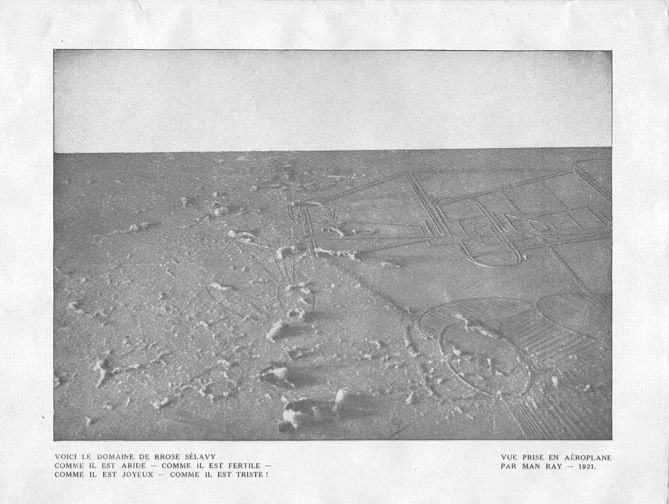
On the subject of indexing, which I think is important to develop understanding as indexing narrows the complexity of the experiences of contemporary reality within a set of parameters, I recently drew in my installation “Windows Records Dust Breeding (2026)” a reference to the work “Dust Breeding (1920)”—a collaboration between Man Ray and Duchamp. “Dust breeding” (Man Ray, 1920) shows a landscape of dust.

The photograph documents the surface of the Large Glass (Duchamp, 1915-1923) with dust accumulated for over a year. On half of the picture the dust covers completely the drawings, the other half partially. Man Ray comments on the work of Duchamp and on the photographic dispositive in relation to space. Playing with indexicality, he deconstructs dynamics between the subject and the Real. One third of the picture from the top is an empty space becoming an horizon. Man Ray gives as much space (almost more) for the dust and empty space in the picture as the drawings.

The technical drawings of Duchamp become abstracted into structures, architectures seen from the sky partially hidden by clouds. The caption specifies Man Ray took the view from an aeroplane. The artist brings the place of dreams – the boredom of waiting on the plane and looking out the window that makes us imagine. Boredom allows the imaginary to unfold. That is important to remember

Man Ray, Elevage de poussière (Dust Breeding), 1921

The photograph plays with its index, suggesting elsewhere, other architectures, an expanded rationality, beyond dust, beyond death. The photograph documents an in-between world, in transit. This piece of land seen from the plane is that of Rose Sélavy, Duchamp’s alter-ego. Eros is not elsewhere, Eros c’est la vie, Eros is life. The picture captures the passage from one world to another, from the material world to the world of ideas, to the platonic cave. Light entered for two hours into the lens of Man Ray, a long exposure of dust, showing us that in dust, which is moving tiny particles of various material left away accumulating in space, the leftovers of space, there is everything, micro to macro, a fundamental space which is the engine of life itself. This work is a commentary on idealism and formalism, on our relationship with imaginaries, the dream in the mundane, surrealist but as well dadaist, ”a mystic of detail” (Hugo Ball, Richard Huelsenbeck, 1915). In addition to make us move from micro to macro, from one world to another, the work has a meta-critical aspect through the appropriation of the image index, speaks of our relationship to the imaginary, between life and images, and presents us with a disenchanted version of the image taking us back to a material world, to dust.

My installation “Windows Records Dust Breeding (2026)” refers to my reading of the work “Dust Breeding” and consists of a spatial arrangement of superimposed parallel surfaces—collected and suspended glass plates that collect dust. The plates are held in equilibrium by stones placed between each level, which were sourced from train tracks. These stones embody the static aspect of the acceleration of time and the structural integrity of the installation. “Windows Records Dust Breeding (2026)” imagines other architectures for dream collectivities outside of machine realism.

Antoine Félix Bürcher, Windows records Dust breeding, Found glass panels, Railway stones, approx. 300 x 300 x 50 cm, 2026, © Studio Antoine Félix Bürcher Exhibition view, Solo exhibition « Der Stand Der Dinge » at Akku Kunstplattform, Luzern, Switzerland (2026)

You describe glass as a state of matter that is neither fully solid nor fully liquid. How does this in-between condition correspond to the way you think about time?

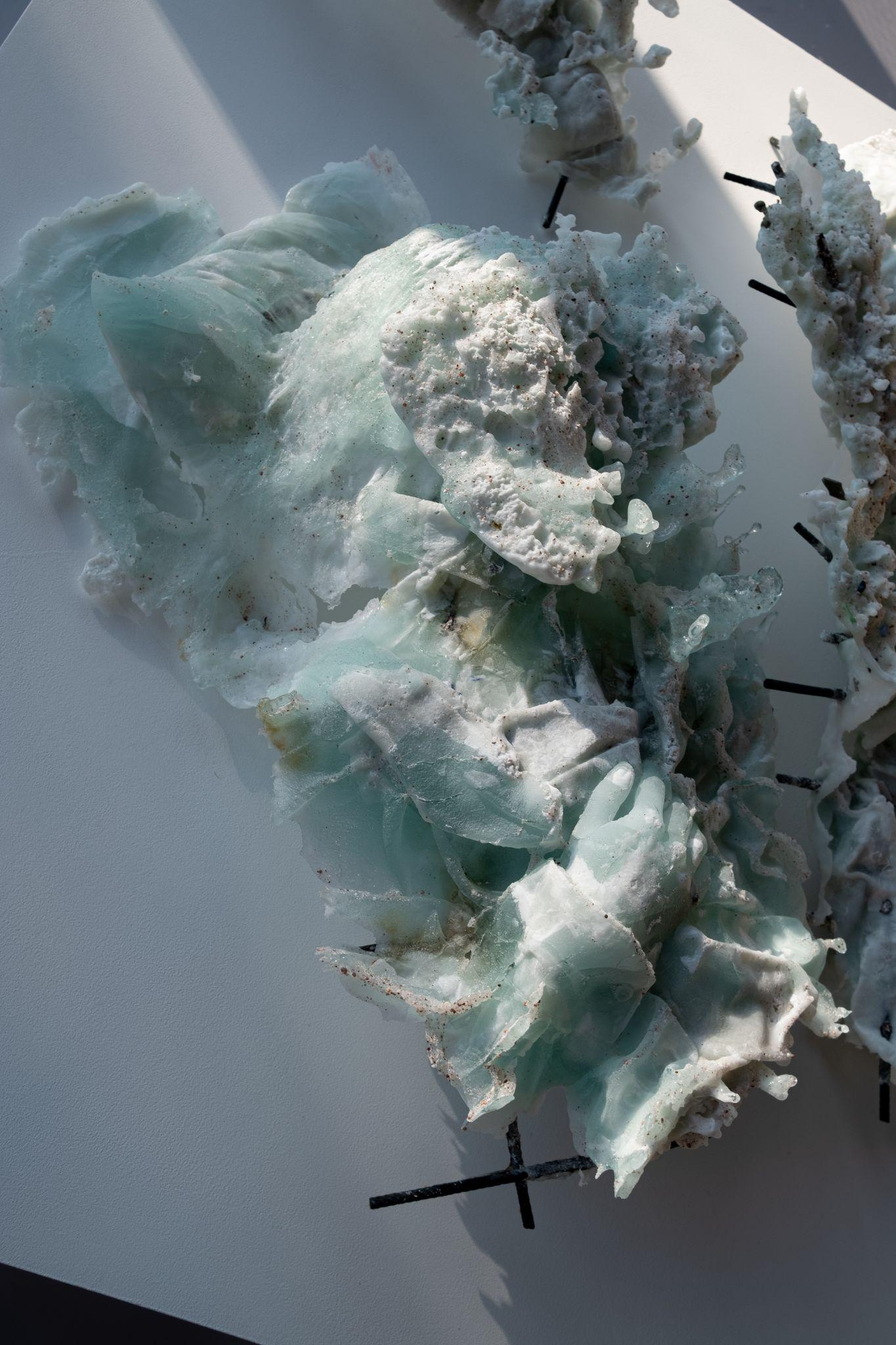
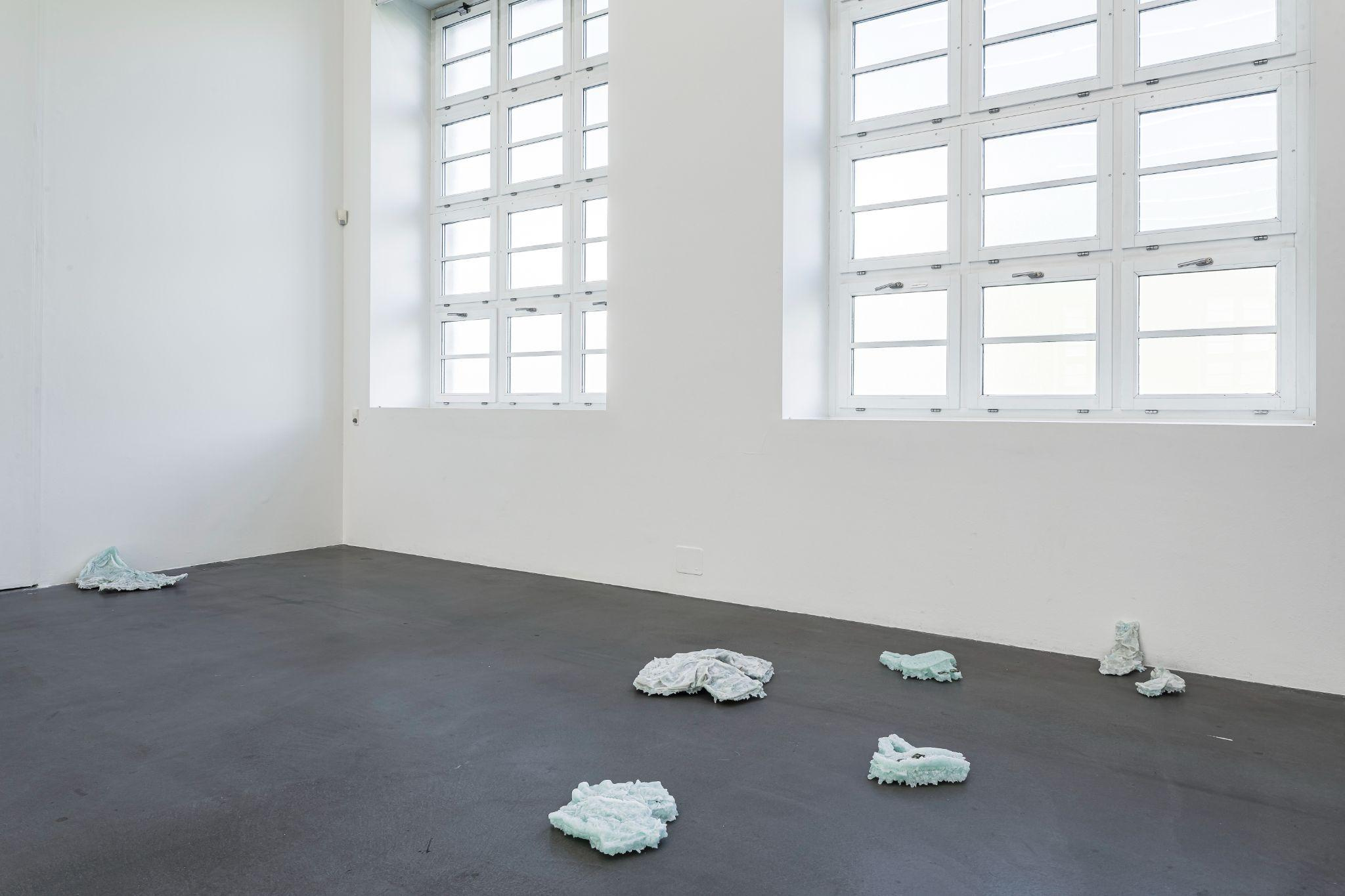
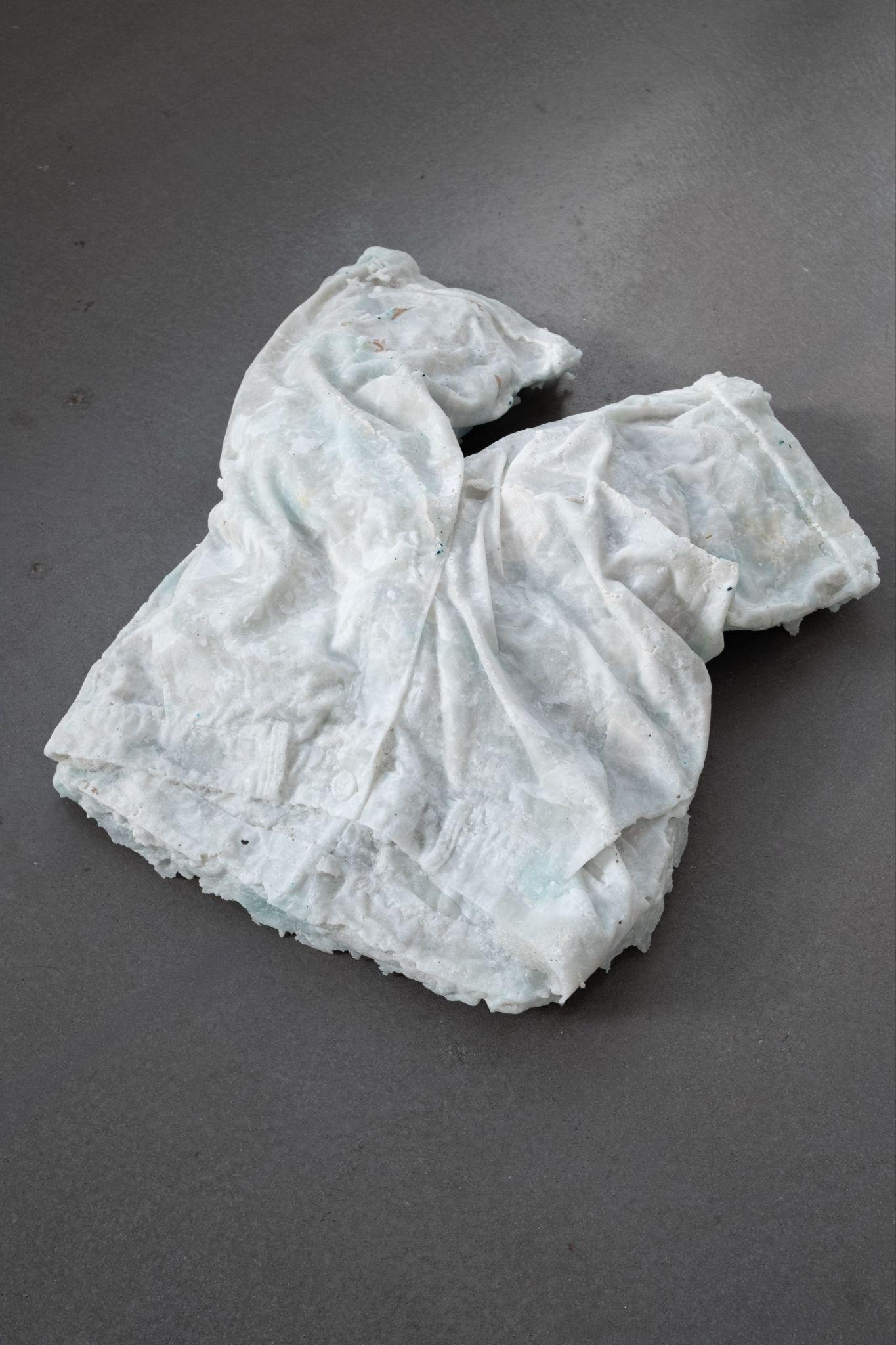
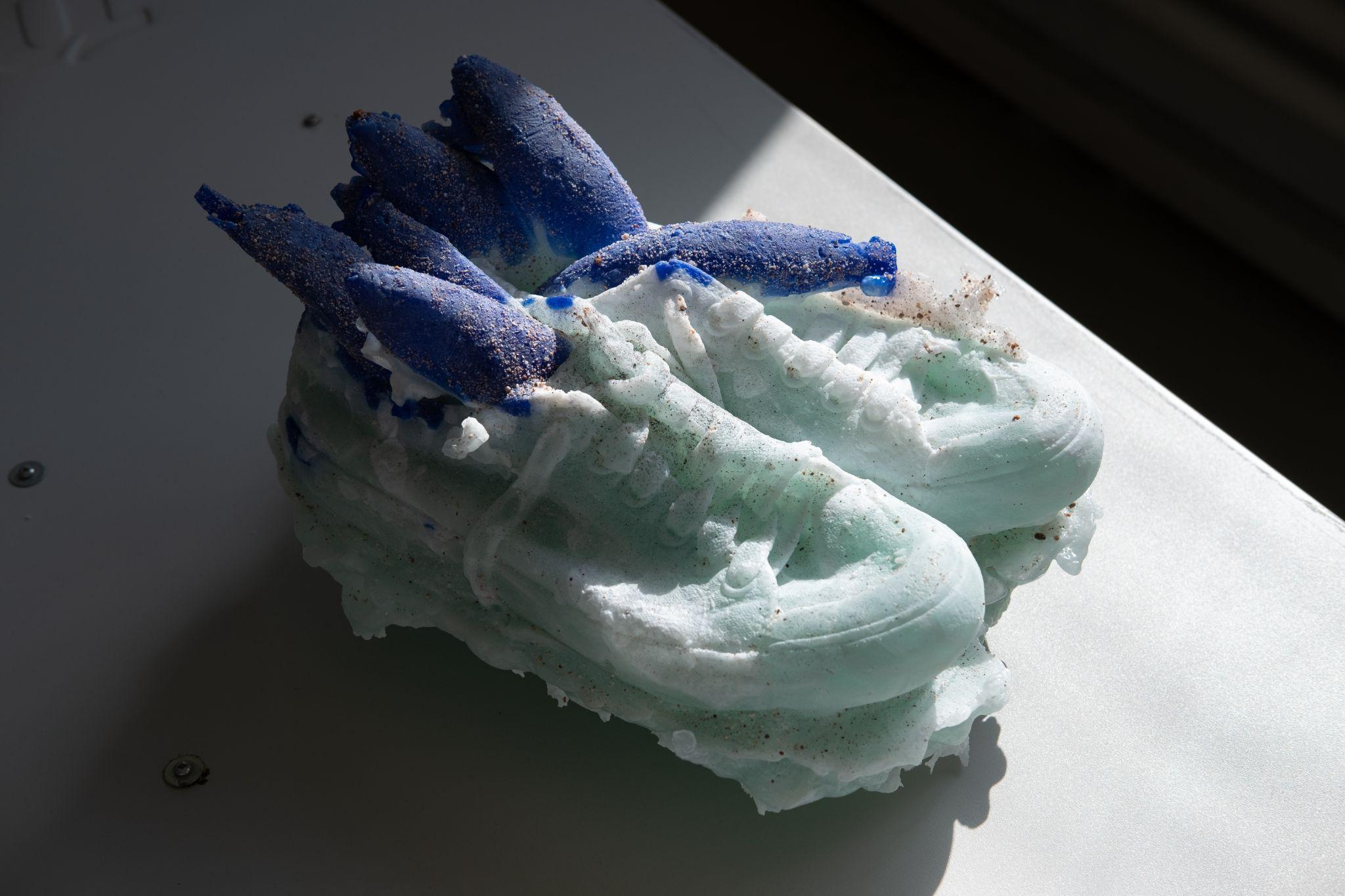
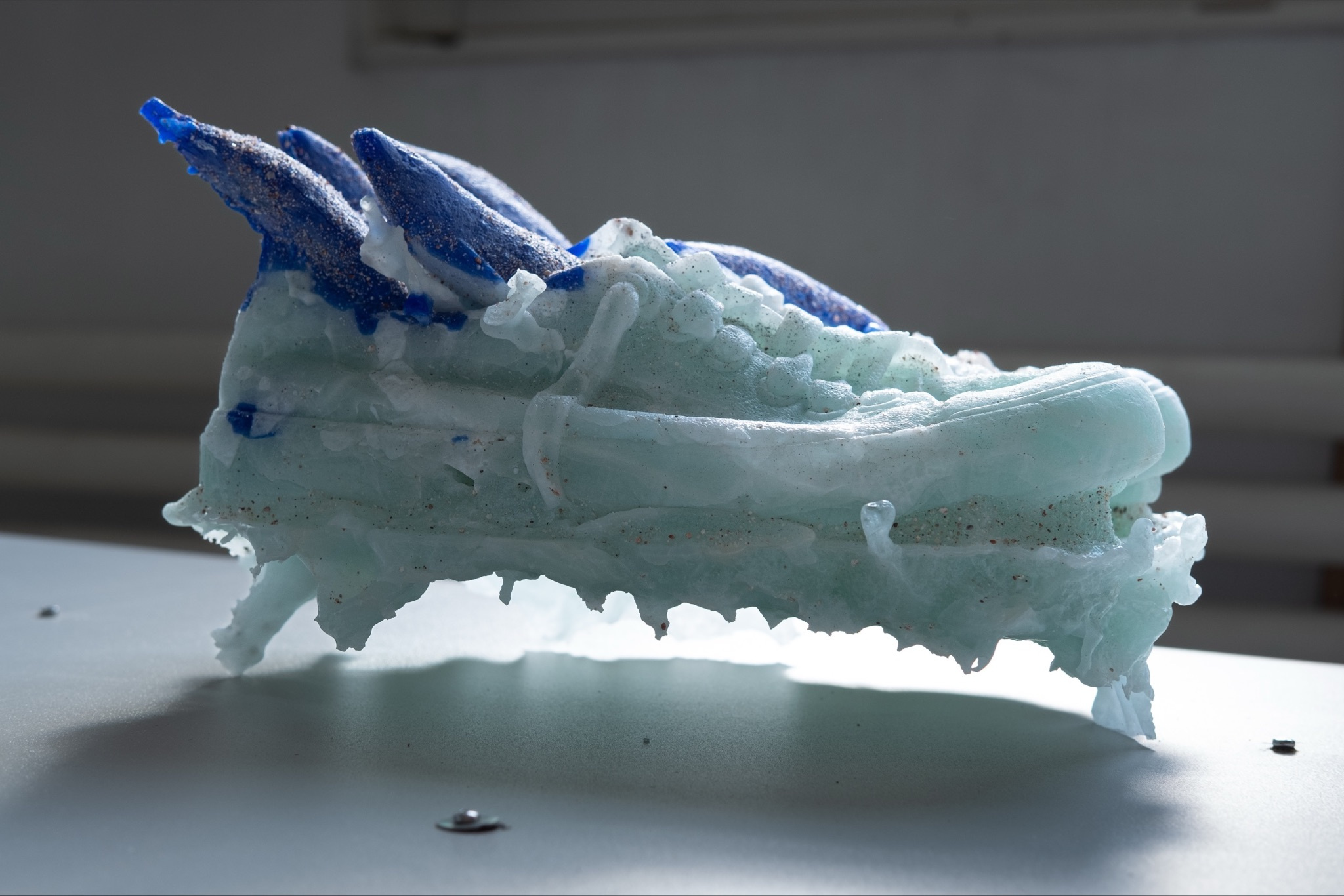
Glass is amorphous. On a human scale, it appears solid. Glass has an irregular atomic structure similar to that of a liquid. It’s as if it is a fixed liquid—but not a liquid that flows. You will never see the glass of your window move in your lifetime, nor during the time of human activity on Earth—perhaps only over a much longer period or if temperatures rise drastically to a level that is unbearable for human life. The glass-cast sculptures are anthropomorphic rocks from an earlier future, hyperobjects, “inbetweens” spacetimes.
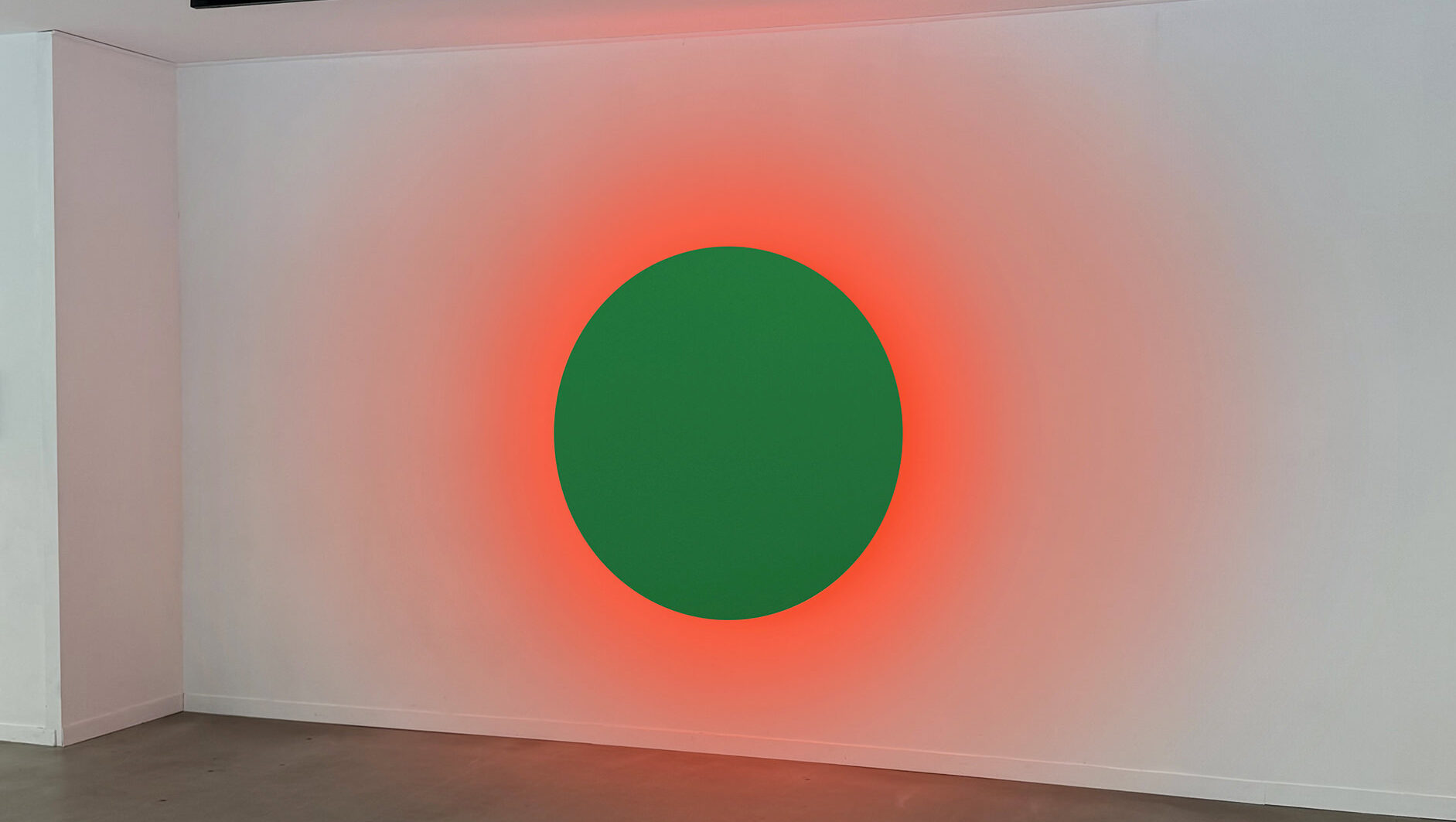
When the glass flows, losing its rigid-like appearance, it states space between times. The fluid in metamorphosis absorbs space manifesting it in becoming concrete “inbetweens”. It is as if artifacts from digital architecture have leaked out from the screens, like flowing water and freezed, caught in motion.
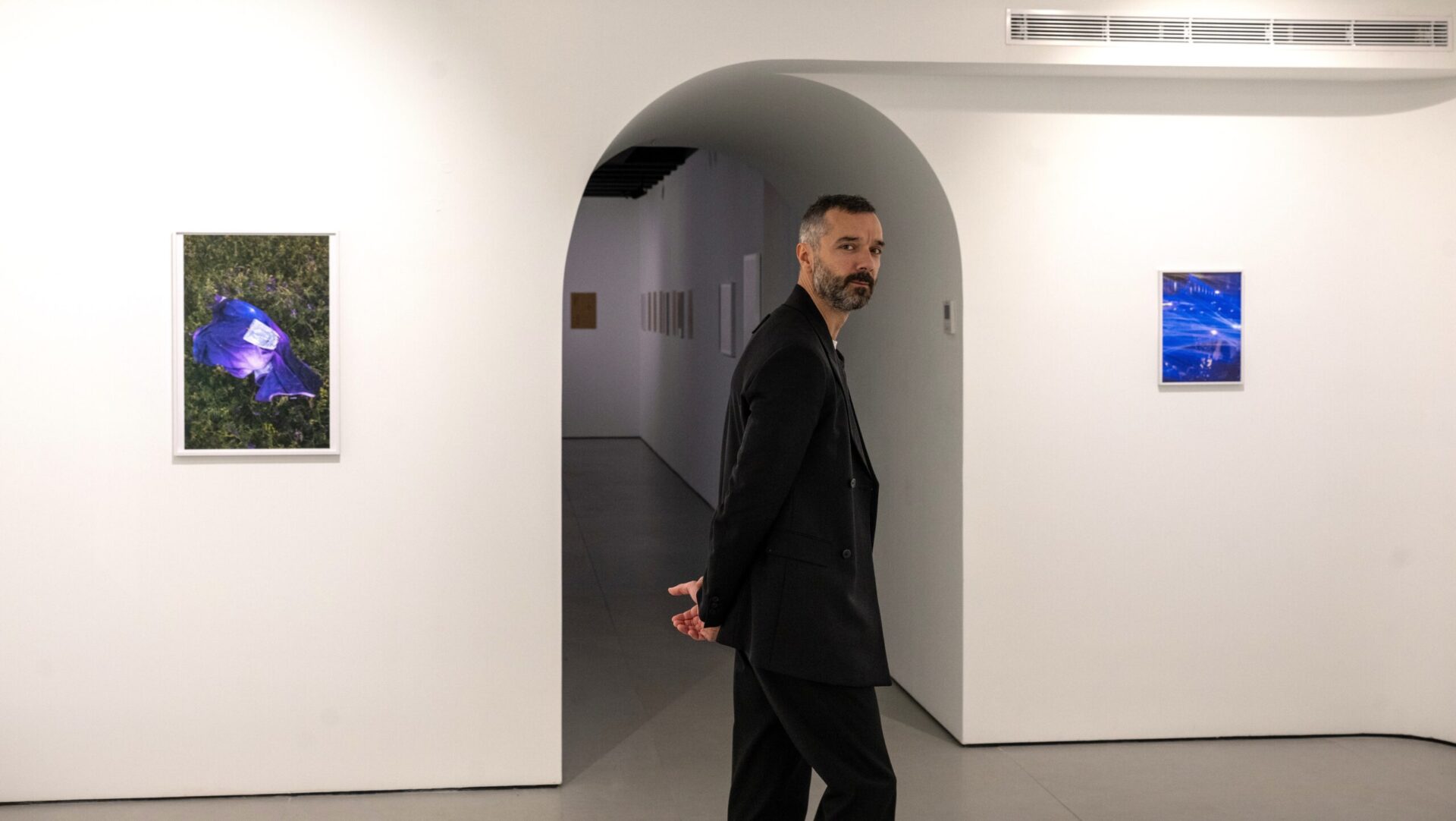
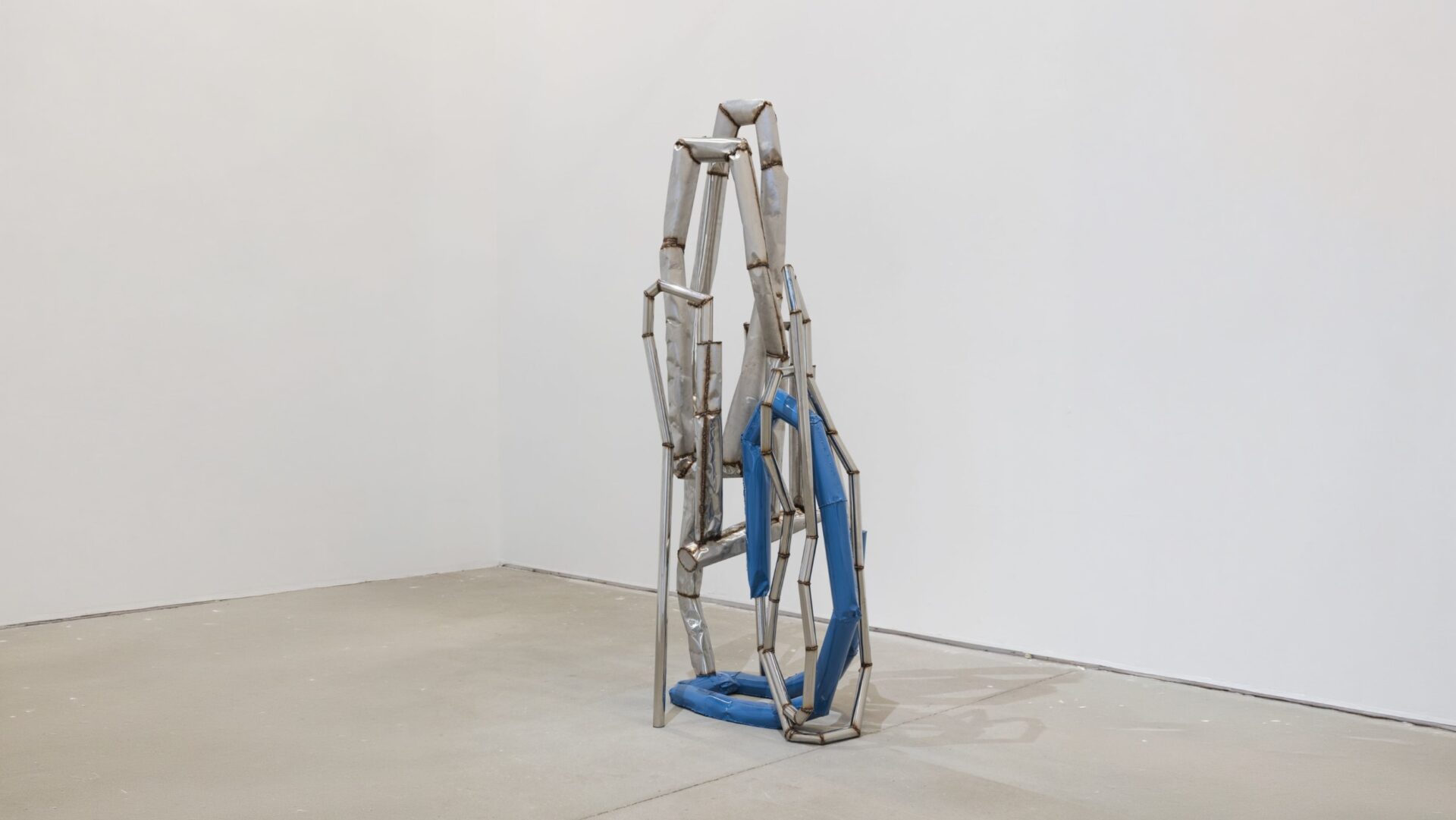
The work explores the ghostly feeling in an accelerated contemporary realism where images are ethereal vibes detached from meaning and physicality. The cast-glass sculptures try to translate that vibe into a concrete space, thereby engaging in a dialectic on temporal materiality.


Antoine Félix Bürcher, Office, Screen, Office chair with wheels, Pump, Plastic tubes, Water, Recipient, approx. 150 x 150 x 30 cm, 2024, © Studio Antoine Félix Bürcher Exhibition view, Temple gallery, New York, New York (2024)

Glass, ancient and central to modern architecture, embodies a contemporary paradigm—screen, transparent and opaque—see through but not to walk through. Between interior and exterior space, the window lets us look through the outside world without being subjected to its climate.

”Sublime” detachment is what the window allows: distance, while the transparency of the glass maintains the opposite impression. Our gaze is not on the glass itself, but passes through it, a ghostly presence. This distancing is a daily custom, allowing simultaneous presence in different places. To be there and elsewhere at the same time, to be telepathic. Scrolling through instagram or tiktok, navigating the past and its perpetual repetition of new reproductions, while we plan our future by setting dates and reminders in our calendar, updated ethereally live via the cloud on our connected devices. Initially, my work with glass was motivated by the exploration of that ”in-between” through which my gaze travels on a daily basis, willing to explore other ”presences of time”.

Antoine Félix Bürcher, Untitled, Glass cast, Iron, 50 x 30 x 20 cm, 2050, © Studio Antoine Félix Bürcher

Linear time is calibrated to human activities, coordinates and standardizes; it enables industry and the exploitation of the Earth’s primary resources. Linear time is, however, a narrow conception of life and narrower the experience of time becomes with the hyper-indexicalised reality that automates personal timelines and taste, in order to predict futures and sustainability of capitals. Movement is life and temporal movements are diverse, malleable, complementary, and paradoxical. It’s as if modern life were a collective demonstration, staged in the representation of a single time. We work at living the ideal life in a constant performance of the self forgetting the human cost of that performance. We kill ourselves with performance by aligning with the dominant reality. What is left of the self when our memories are treated as numbers, as surfaces with strata of representations, categorised in data centers for the future calculations? But the other question to ask is: What is left of the times that aren’t considered in the dominant linear narrative? The climate crisis also calls us to cultivate an awareness of our position in times, that plural conceptions of times are coexisting for life to be.

Imagination is an important driving force for the emancipation of the mind. As a child I thought I was being born into a world that was freeing itself — but we willingly give away our agency to think. We think we’re living the dream, but we have less and less time to dream. There is clearly a lag, an asynchronicity between times — between the linear time narrative by projecting and working out an image of the self, and the times that outstrip us beyond the human scale. With storms and forest fires multiplying, we can see that this linear conception of time is obsolete. We need to take our time instead of rushing. We mustn’t fall asleep — but we must keep dreaming.

Antoine Félix Bürcher, La baignade, Glass cast, Variable dimension, 2050, © Studio Antoine Félix Bürcher, Photography: Peter Baracchi Exhibition view, Group exhibition « Werkschau » at Museum Haus Konstruktiv, Zürich, Switzerland (2023)

We are like moving water, dreamers, our clothes are wet, heavy, sticking to the skin, then drying partially to the sun’s rays. We need more coincidences, unforeseen events, passage of time, sunset, sunrise, embracing glitches. In “Praise for slowness (2004)” Carl Honoré says “we’ve lost the art of doing nothing, of closing the door to background noise and distractions, of slowing the rhythm by simply being alone with ourselves. Boredom – a word that barely existed before – is a modern invention.” In this new feudal system we are living in, we must at least take on this heritage of modernity.

Antoine Félix Bürcher, Childhood PDF Archives, Glass cast, 29 x 22 x 18 cm, 2060, © Studio Antoine Félix Bürcher

Aux étoiles was dedicated to the studio you occupied for five years, and you wrote that the floor started to move with the sculptures. What happens when a space stops being a container and becomes part of the work?

Over the past five years, my studio in Zurich was located in a former industrial hall for locomotive repairs. I moved the studio somewhere else this summer because the building will be demolished soon. My solo exhibition “Aux étoiles” took place over a few days in June 2026 and aimed to honor the space — to give back what it had given me during those years in the studio. I worked there in summer and winter without heating, which allowed me to reach an understanding of matter and space I had never experienced before.

Antoine Félix Bürcher, Exhibition view, Solo exhibition « Aux étoiles » at Allmendstrasse 91, 8041 Zürich, Switzerland (2026) © Studio Antoine Félix Bürcher
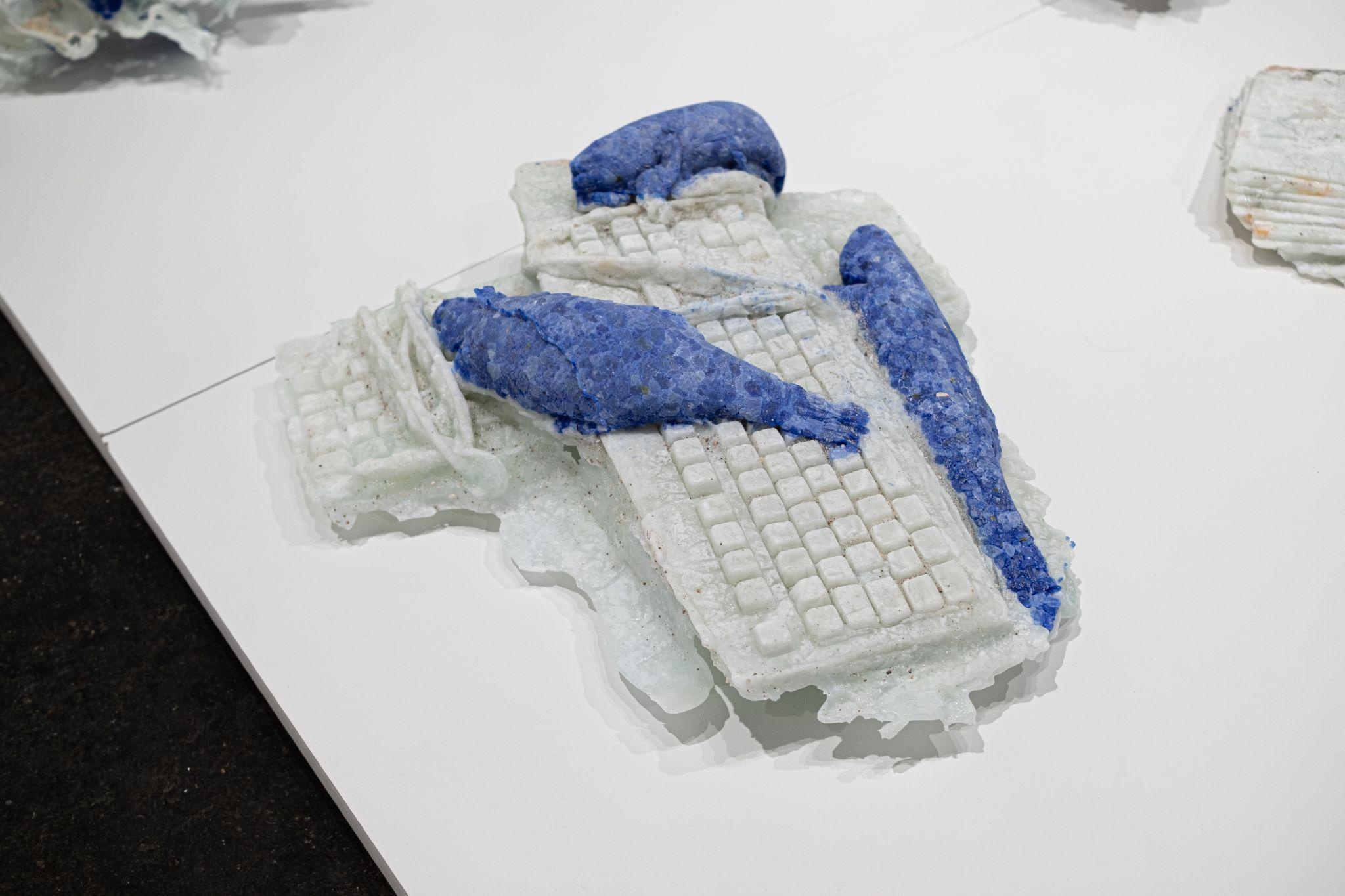
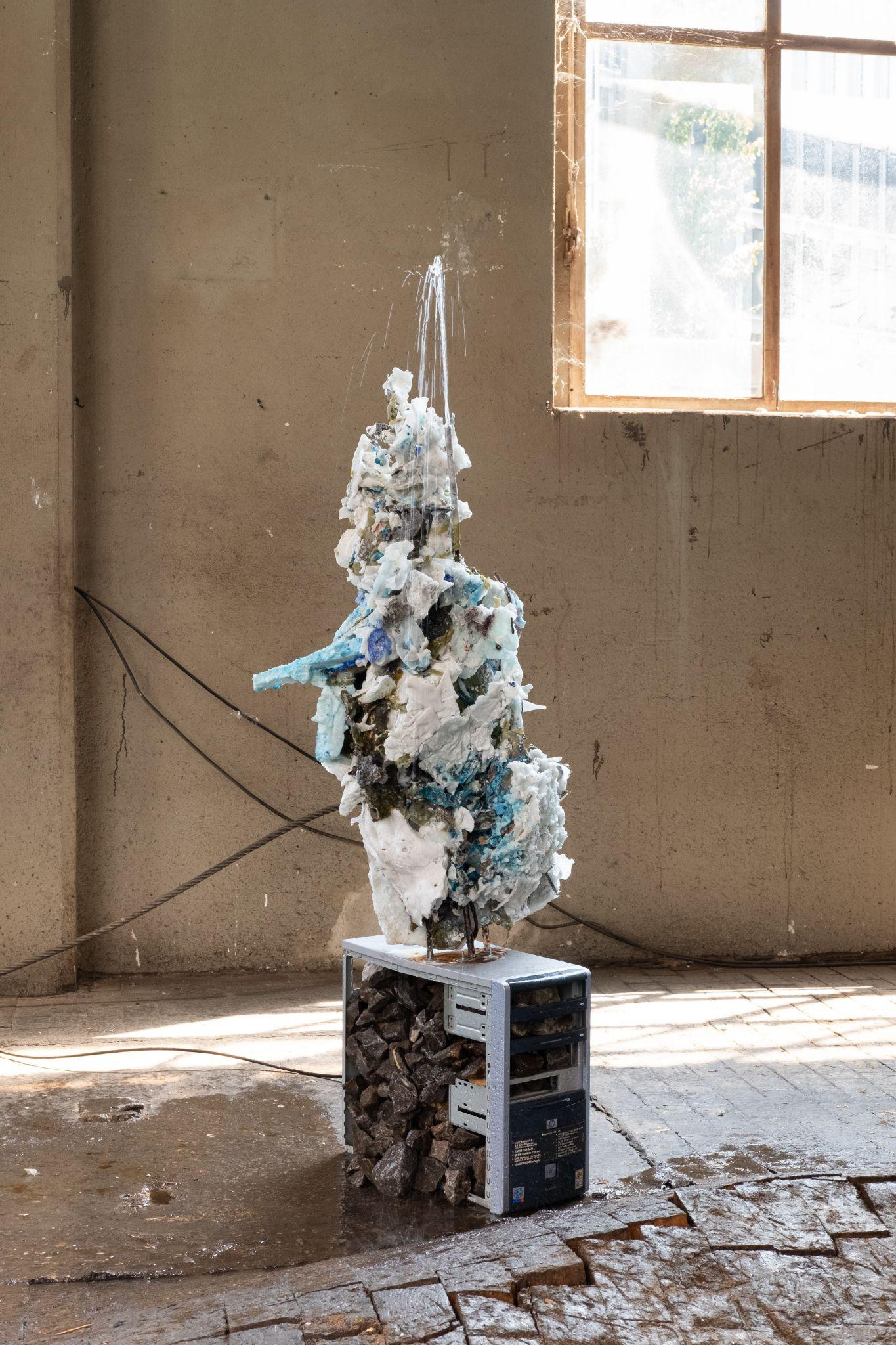
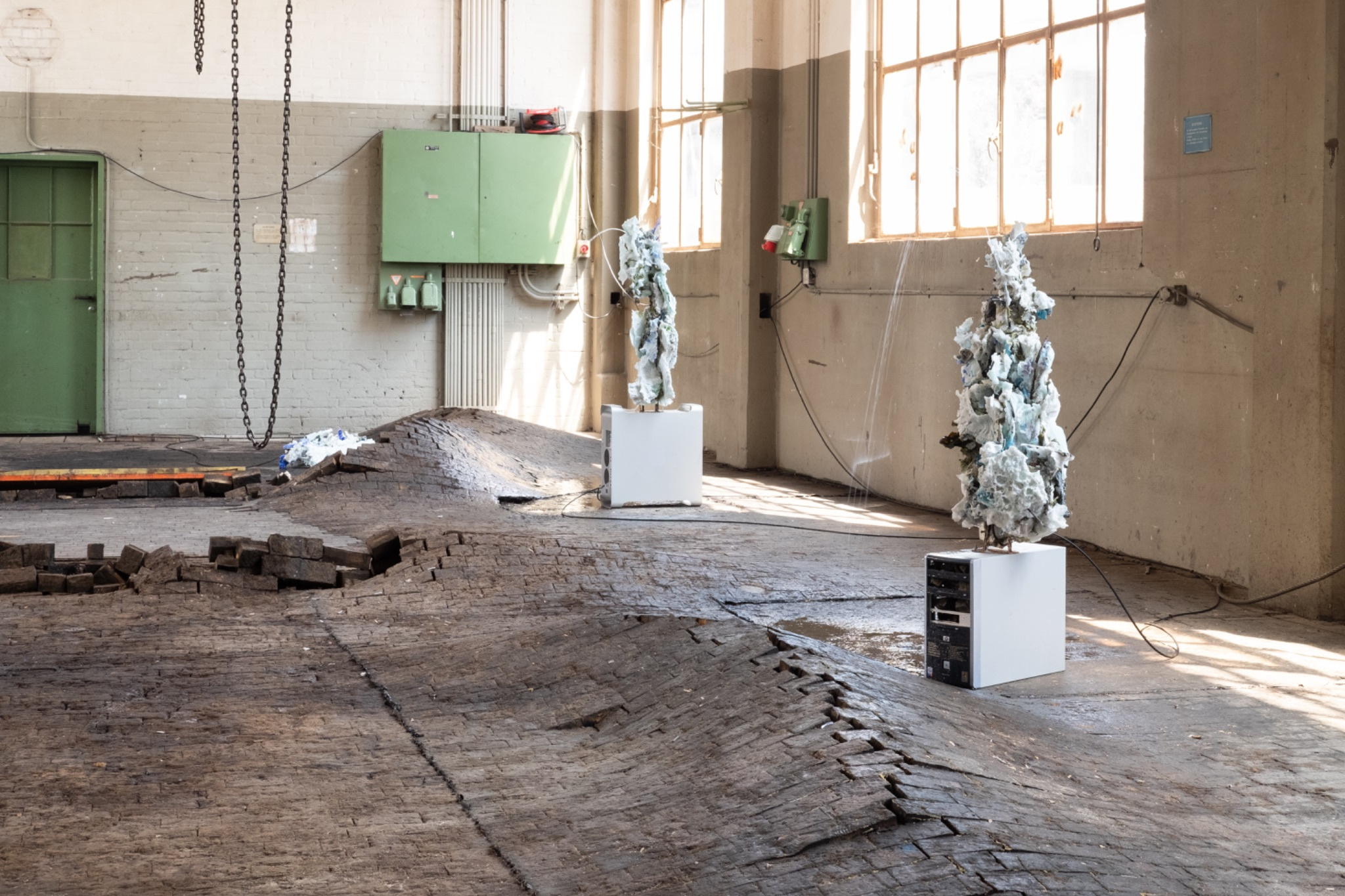
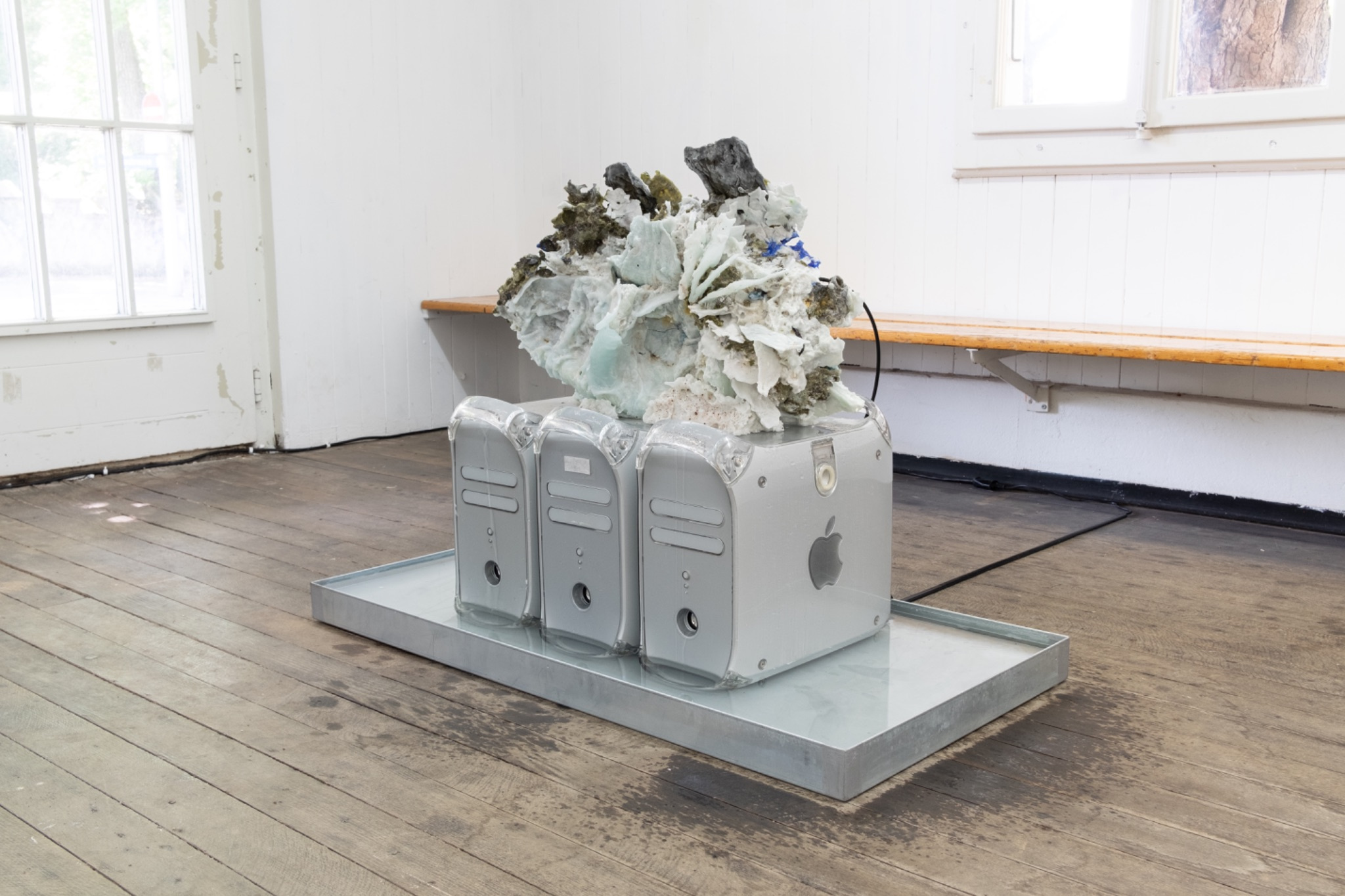
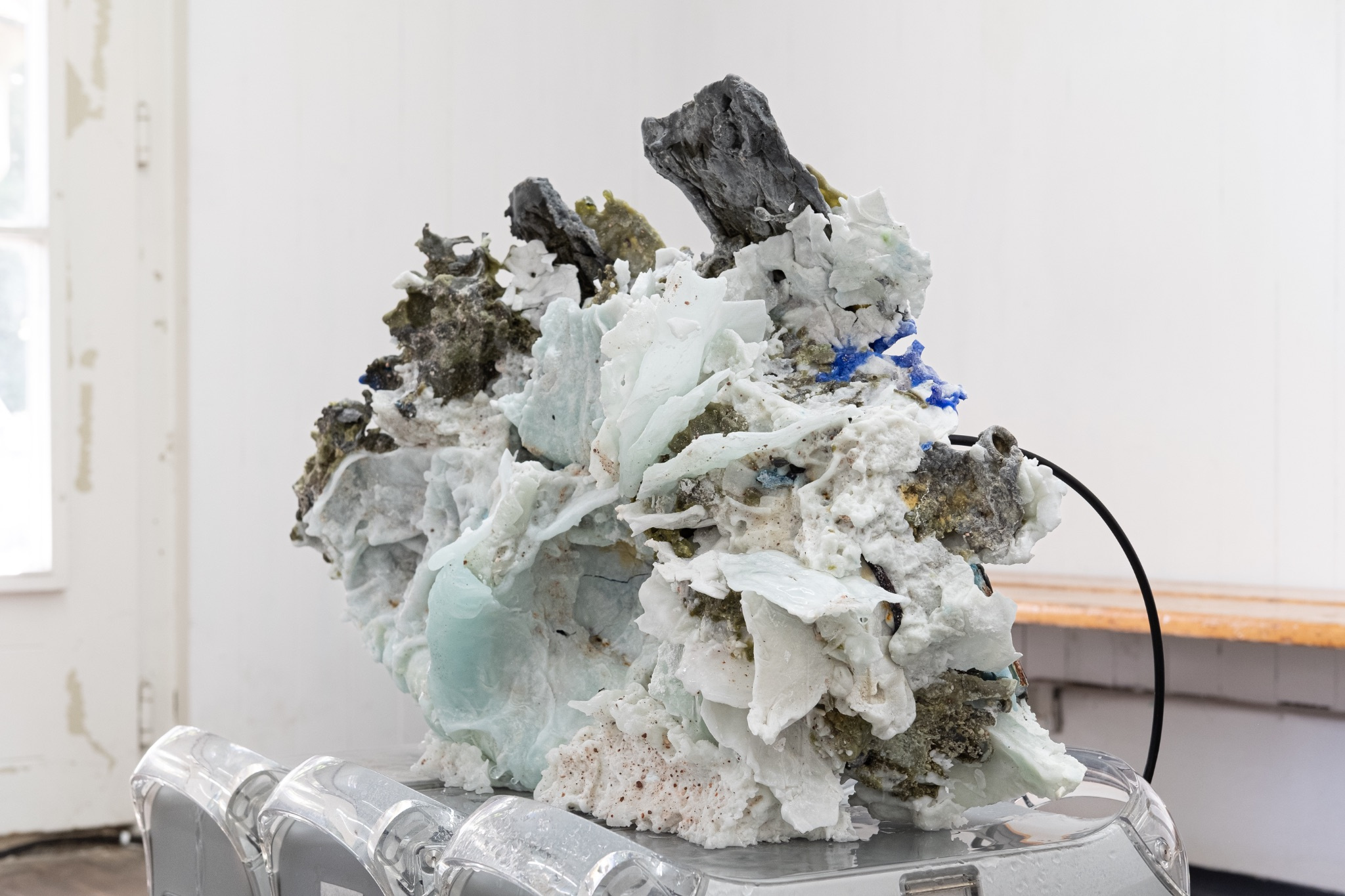
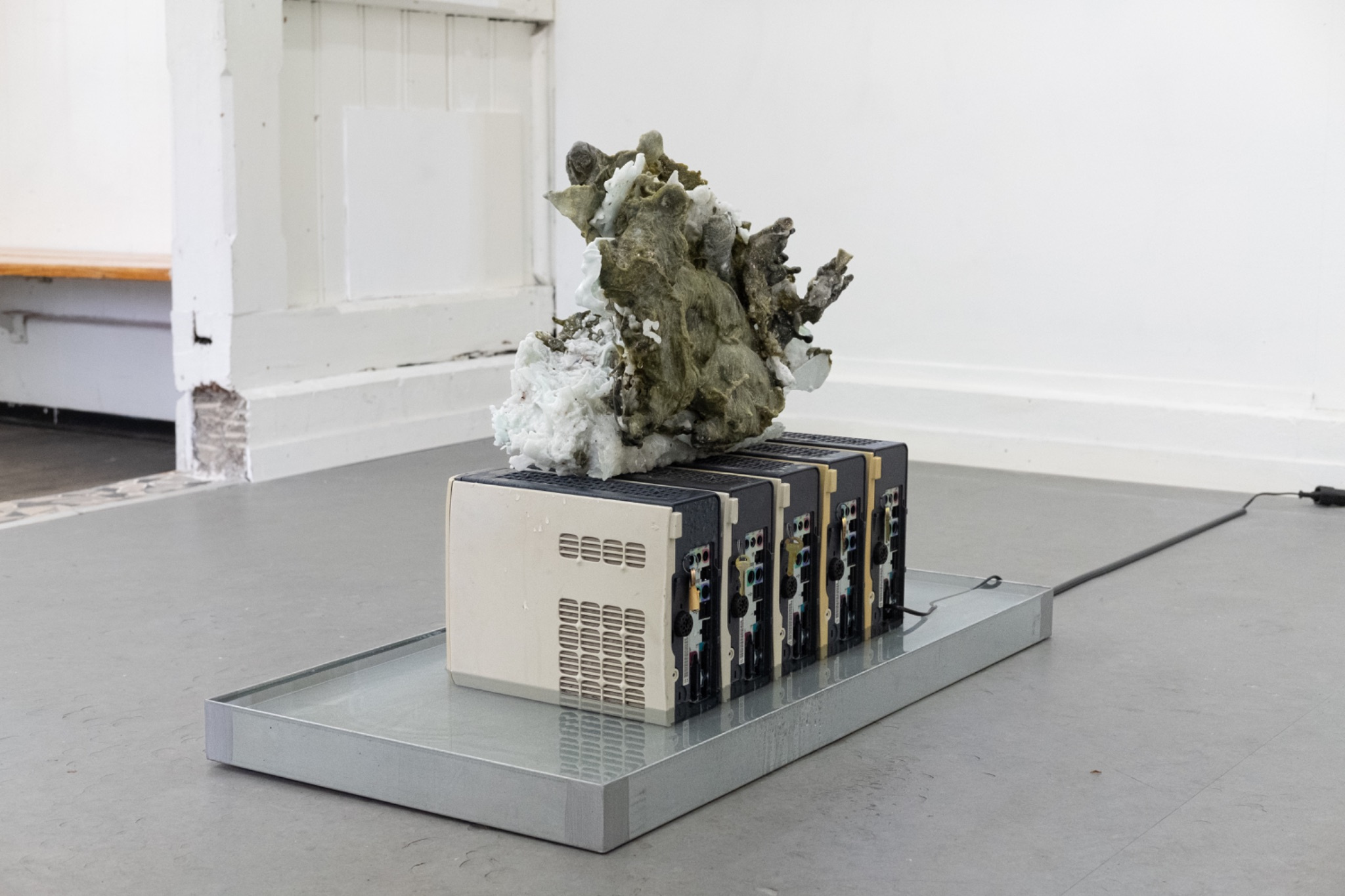
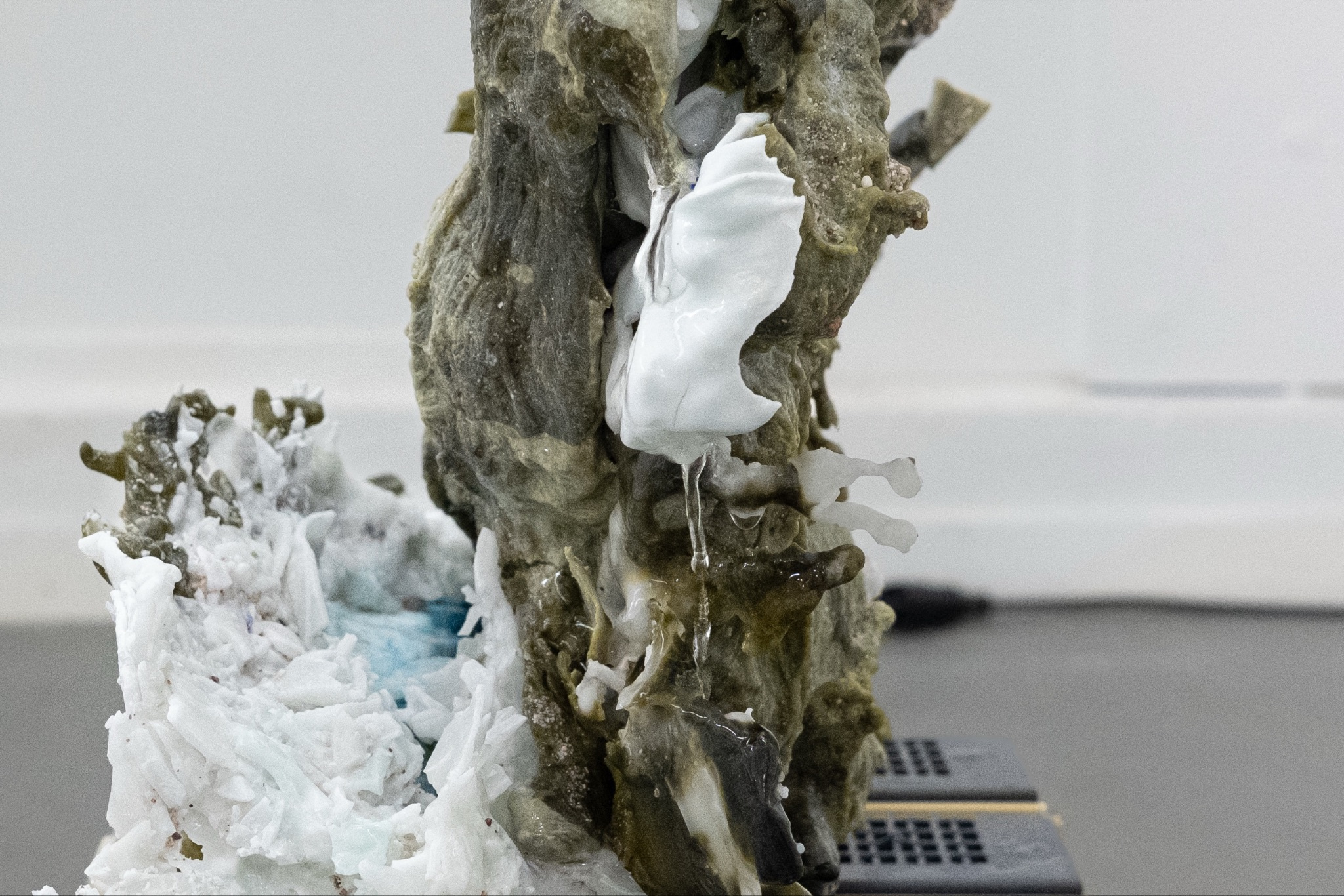
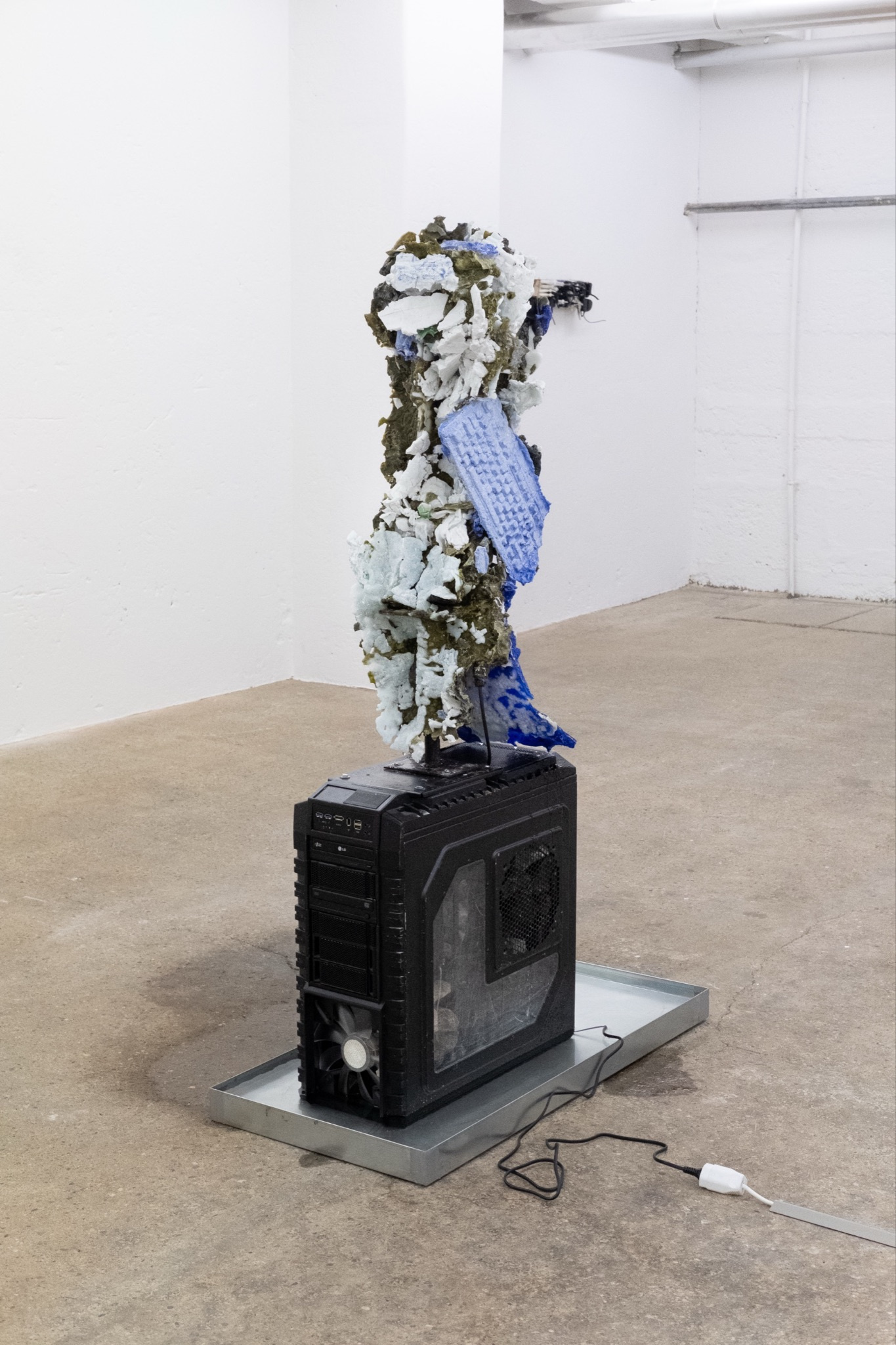
Antoine Félix Bürcher, Leak, Glass cast, PC Cases found online, Iron, Water, Railway stones, 145 x 50 x 25 cm, 2100, © Studio Antoine Félix Bürcher Exhibition view, Solo exhibition « Aux étoiles » at Allmendstrasse 91, 8041 Zürich, Switzerland (2026)

We are used to indoor spaces kept at 20 degrees Celsius. But there, in summer it was hot and in winter cold, sometimes as low as -7 degree Celsius. The indoor temperature, generally taken for granted, impacts our behaviour in space, and consequently frames a relation to the work, limiting conception to certain possibilities. When the normal temperature threshold is exceeded, my body is challenged, allowing a wider field for birth. Also I have been experimenting with lost snow casting and that was fun. Snow falls every year and it’s a very modulable material, accessible to everyone for sculpting. After the plaster is applied over the snow, the snow beneath—now sealed from the outside—begins to melt once the snow is brought indoors and the temperature rises slightly. The plaster solidifies and chemically reacts, heating up, and the snow melts. The sculpture isn’t the snow or the mold but a moment in time. The plaster mold captures the dynamics of the formation of space at a given moment.

A body in a space is a space, as well as a space is a body. It is a matter of dimensions. Sculpture is bound up with space. In relation, space, “espace”, opens up its possible considerations in time, on a Real scale, 1:1. While space opens, there is the movement of possibilities, sculpture joins performance in a Real dynamic that moves between matter and time. The cast-glass sculptures are spaces composed of pieces of spacetime gathered and they open up considerations of spaces. The cast-glass sculptures don’t represent but embody a rock dataset.

Antoine Félix Bürcher, Exhibition view, Solo exhibition « Aux étoiles » at Allmendstrasse 91, 8041 Zürich, Switzerland (2026) © Studio Antoine Félix Bürcher
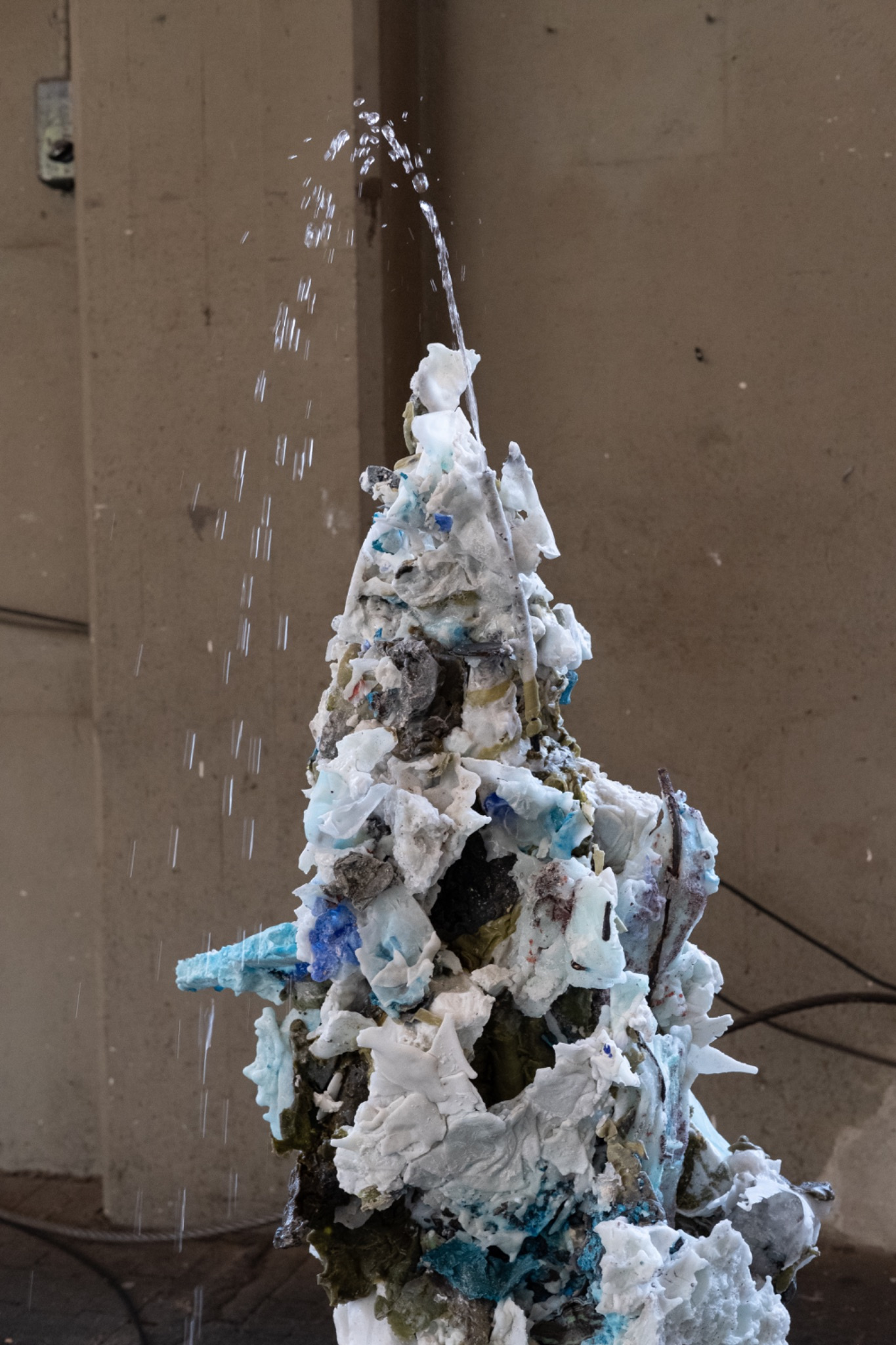
Antoine Félix Bürcher, Leak, Glass cast, PC Cases found online, Iron, Water, Railway stones, 145 x 50 x 25 cm, 2100, © Studio Antoine Félix Bürcher Exhibition view, Solo exhibition « Aux étoiles » at Allmendstrasse 91, 8041 Zürich, Switzerland (2026)

In “Aux étoiles” it felt as if the work was giving back to the space — celebrating it. Water spilling from sculptures, spread chaotically across the floor of wooden blocks. Like uncontrolled pixels, a glitch on a screen: the floor began to move as the wood swelled on contact with the water – hills more beautiful than a Windows wallpaper. As if the space freed itself before being destroyed – a celebration of times.

In works such as Leak, glass meets computer towers and water. What kind of relationship are you looking for between digital infrastructure and a material that is so ancient and geological?

There is indeed a shared world between the two — the time of stones on an underlying level. Caves are shaped by water — and it is in those caves that we painted thousands of years ago, and that we continue to exist. Water embodies the energy of living movements. We drink, we pee, and then it comes back on us as we walk around, and we drink again later, maybe a fraction of what someone else drank before. Every drop comes from ourselves. Water is in constant motion and is intimately connected to the world of dreams (see “Water and Dreams” essay by Gaston Bachelard, 1983). Without water there won’t be caves. Caves have stored our dreams and humanity ever since.

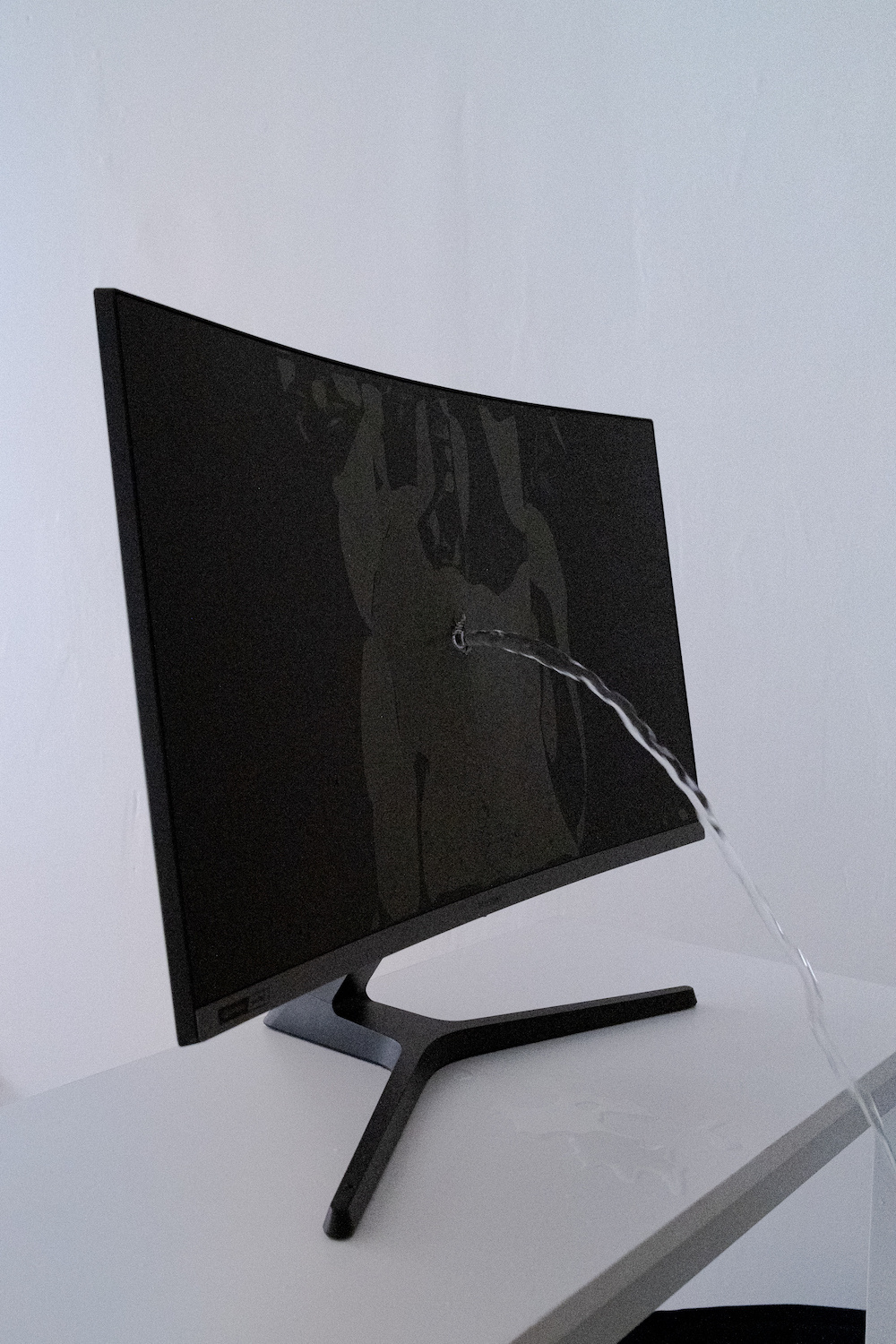
Antoine Félix Bürcher, Leak, Glass cast, PC Cases found online, Plastic Tubes, Pump, Metal Basin, Iron, Water, approx. 65 x 48 x 90 cm, 2100, © Studio Antoine Félix Bürcher Exhibition view, Solo exhibition « Ghost Out Of The Shell » at Grand Palais, Bern, Switzerland (2026)

To cool a datacenter you need an immense amount of water. Water is both friend and enemy of the computer: it cools, but in direct contact, circuits would oxidise and enter the time of stones – becoming stones again. Data centres are like the cryogenics of the human body. Time is held. They hold libraries of spacetime records and render simultaneous linear timelines in a closed loop, for the prediction of futures. As users, we hallucinate in a feedback loop. As in Plato’s cave we look at the wall metamorphose, screens, take on other forms, simulacres nurturing our imagination, perception that develop our personal language in 5G connection. Lost in translation, one day, data centers will become mountains again, and electronic circuits stones.

Antoine Félix Bürcher, Leak, Glass cast, PC Cases found online, Plastic Tubes, Pump, Metal Basin, Iron, Water, approx. 50 x 29 x 58 cm, 2100, © Studio Antoine Félix Bürcher Exhibition view, Solo exhibition « Ghost Out Of The Shell » at Grand Palais, Bern, Switzerland (2026)

Each time I am working with a medium, I am searching to be as close as possible to that moment of being a newborn and opening one’s eyes for the first time. I consider art as the culture of language in its initial state. I sometimes think of that moment. Perhaps art precedes language. I believe so.

Antoine Félix Bürcher, Leak, Glass cast, PC Cases found online, Plastic Tubes, Pump, Metal Basin, Railway Stones Iron, Water, approx. 170 x 80 x 120 cm, 2100, © Studio Antoine Félix Bürcher Exhibition view, Solo exhibition « Der Stand Der Dinge » at Akku Kunstplattform, Luzern, Switzerland (2026)

Painting has been a recent practice for you, since 2024, and you describe it as a counterpoint to being a screen user. What does the painterly gesture give you that sculpture or the screen does not?

Although sculpture and painting share some common aspects, painting offers another perspective on spacetime and depth than sculpture does, and the rendering engine is faster in my opinion. Painting is about speed and rhythm, a superimposition of surfaces and marks. As I paint, the present unfolds in the moment. Painting is a quest to explore the depth of a moment. The act of painting allows attention to be focused on a specific area of space and enables a deep exploration of its potential transformations as I paint. It requires a constant effort to remain open and attentive to painting. Reclaiming the attention: the muscle and cognitive process that painting engages is uncomfortable. We are not used to cultivating our sensitivity with this kind of openness in a digital culture where we expect images to be instantly digestible. In my opinion, abstraction does not fundamentally exist and is a definition implying a dualism that is a distraction from the malleable nature of perception. In that sense, I am interested in realism as a fluid conception. Painting as a rendering engine allows appropriating the notion of realism, exploring uncharted landscapes. Painting can give shape to humanity’s collective memory when the painter opens colors—a collective intelligence that transcends dogma and any timeline. I always enjoy observing the brushstrokes when I look at a painting; they reveal so much more than what the painting depicts. 

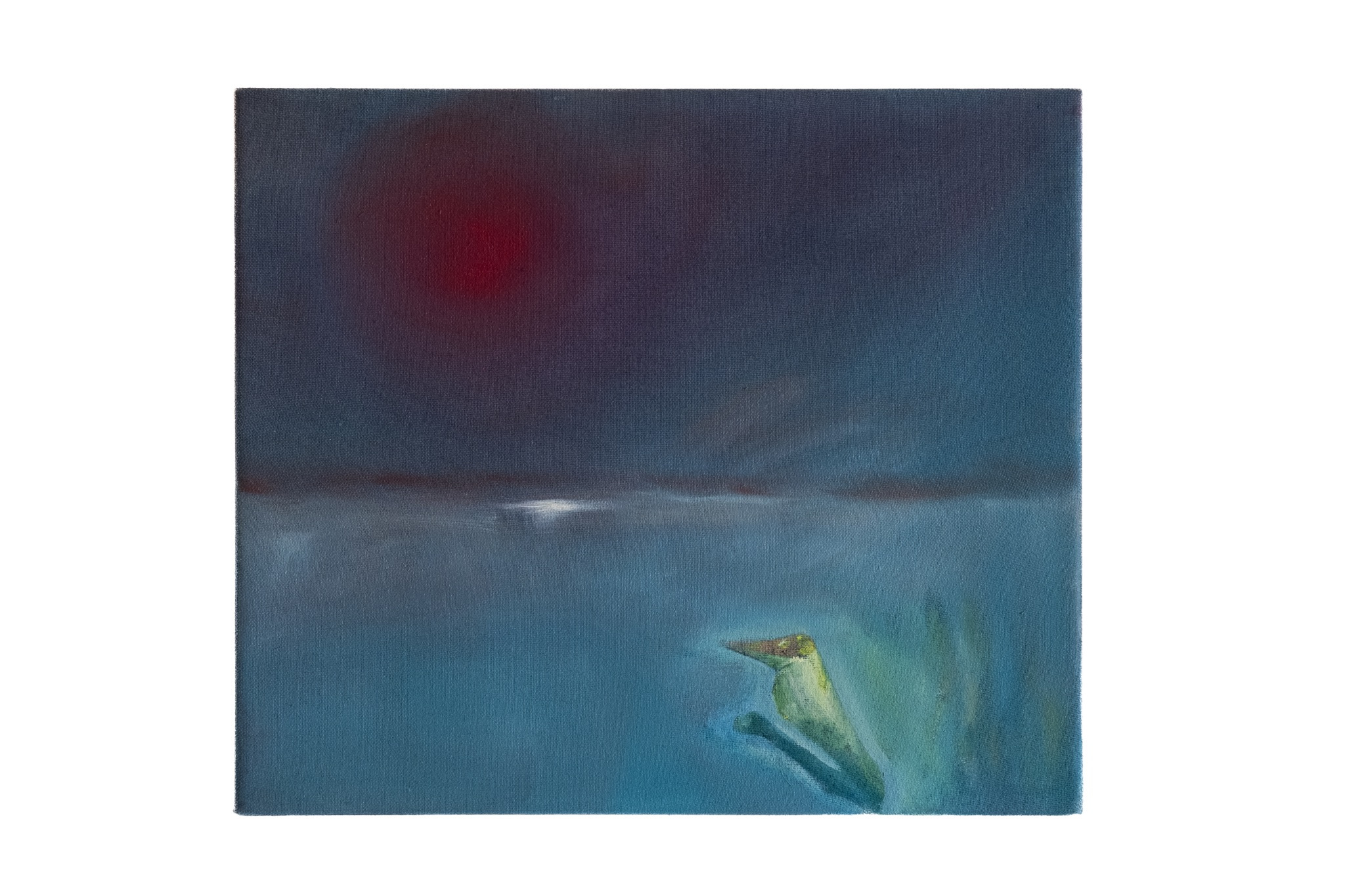
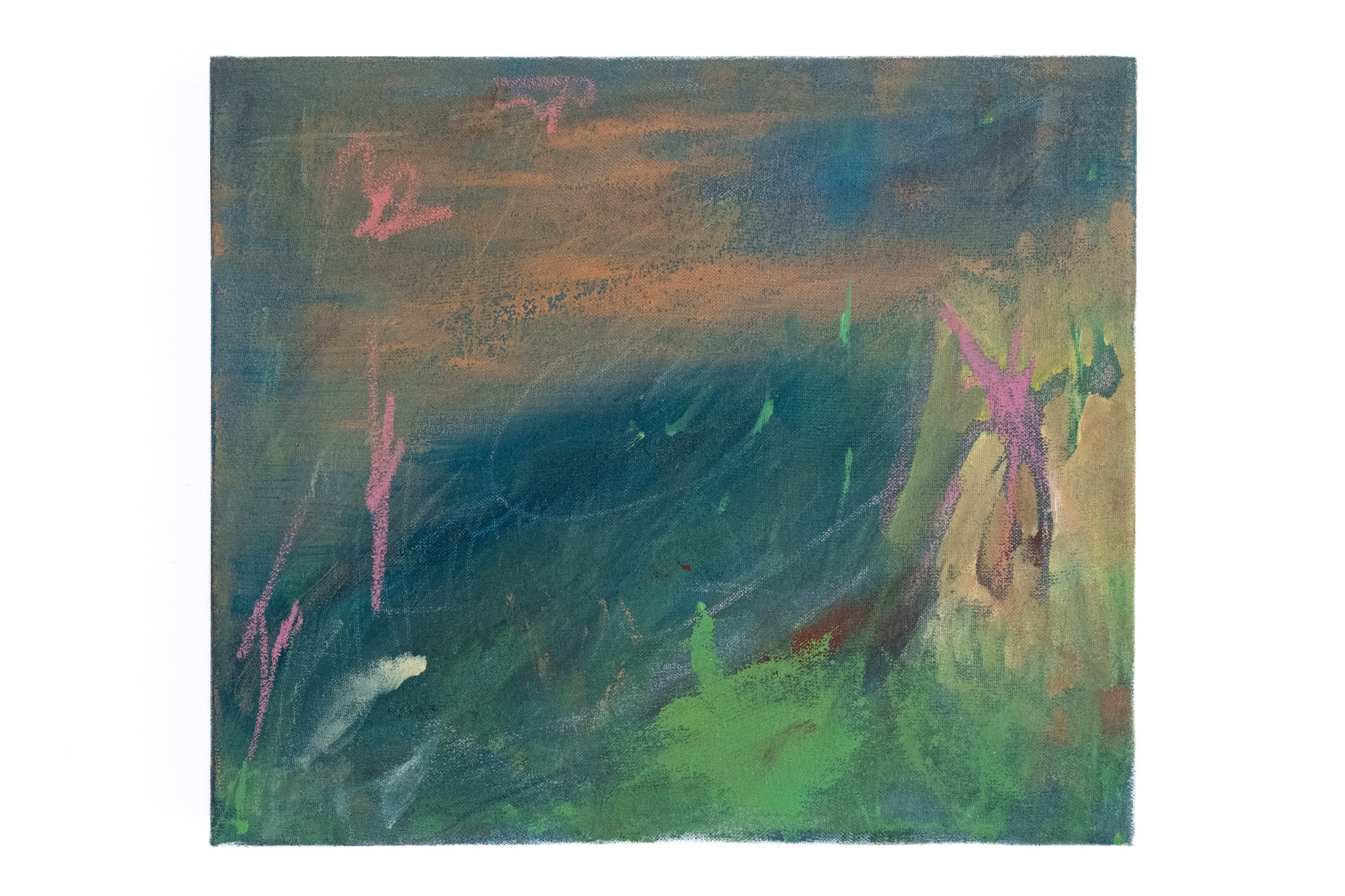
Antoine Félix Bürcher, Colibri, Oil on canvas, 36 x 30.5 cm, 2025, © Studio Antoine Félix Bürcher Exhibition view, Solo exhibition « Peinture » at Gallery Heinzer Reszler, Lausanne, Switzerland (2026)
Antoine Félix Bürcher, Lac le soir, Oil and pencil on canvas, 36 x 30.5 cm, 2025, © Studio Antoine Félix Bürcher Exhibition view, Solo exhibition « Peinture » at Gallery Heinzer Reszler, Lausanne, Switzerland (2026)

The ghostly nature of computer-generated images (visual, auditory, and all forms of data) is fascinating and opens doors to knowledge on the possible other natural mechanics of image construction—structures already present, before computer-generated images, made visible. When technology is used in a strictly literal sense (by authoritarian regimes, for example), it leads to an impoverishment of the collective imagination because the nature of the image is reduced to that of a traffic sign. The development of the circulation and production of images requires the creation of conceptual frameworks that enable critical approaches to images and, in so doing, redefine what we consider to be ‘evidence’, the referential. The development of criticism would lead to a better overall understanding of the nature of images today and enrich that nature. Generally speaking, a better public understanding of the role of artists in society could help enrich the imagination. Just sayin.

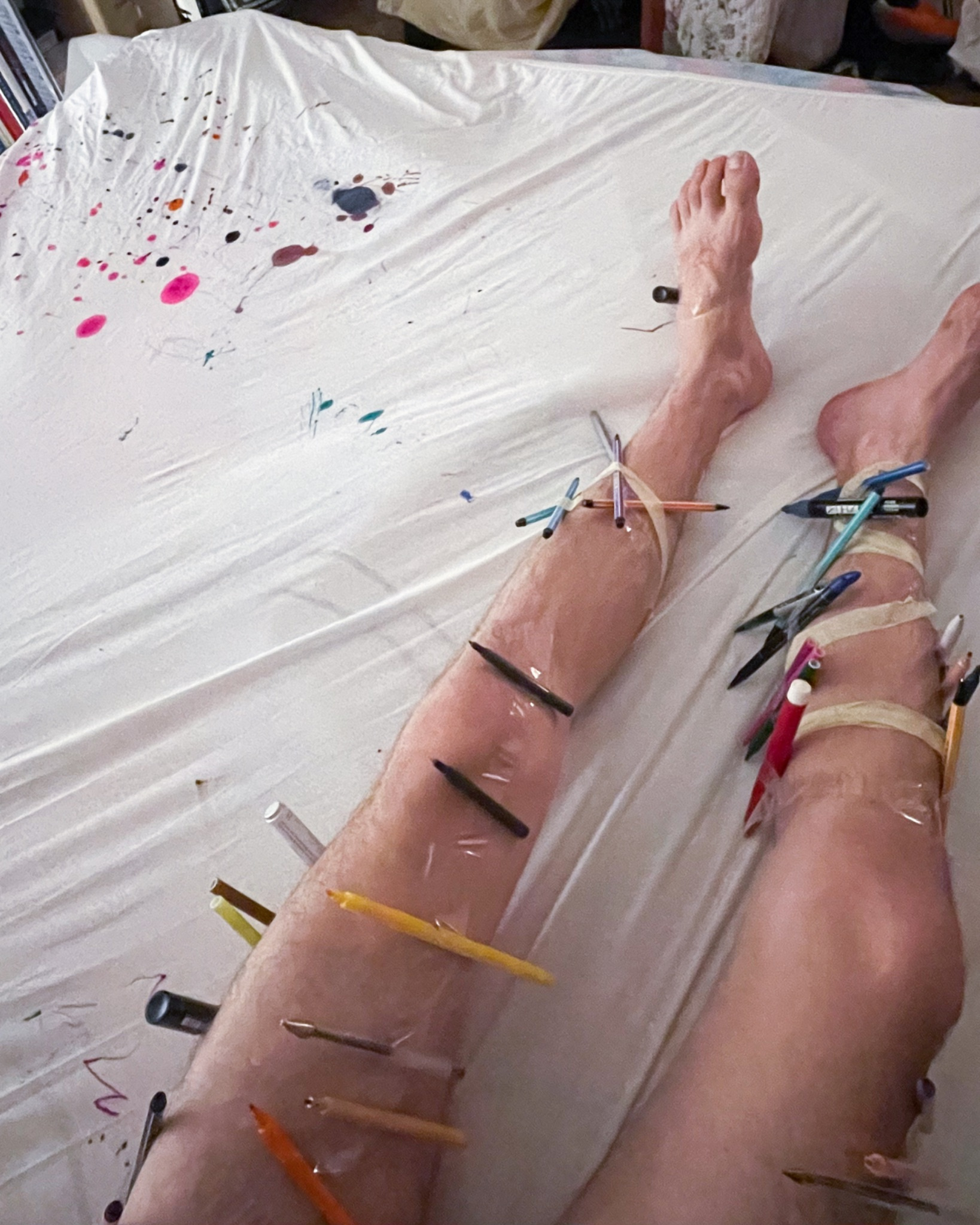
In Sweet Dreams Are Made of This you drew while sleeping, with felt-tip pens attached to your body. What is your relationship to the unconscious, and to the idea of travelling without moving?

Dream space has always fascinated me. We spend a certain non-negligeable part of our lives asleep — and living that way. It is a powerful space. We live in that spacetime too. It is fascinating how, for the most part, we synchronize to sleep at night. Sleeping is powerful. Dreams leave traces in the collective unconscious and influence us. Dreams are humanity’s inheritance and art space. I wanted to drew while asleep, because we also live in that space, our bodies move in sleep, and I wanted that moment to leave a trace in the spacetime where we are awake.

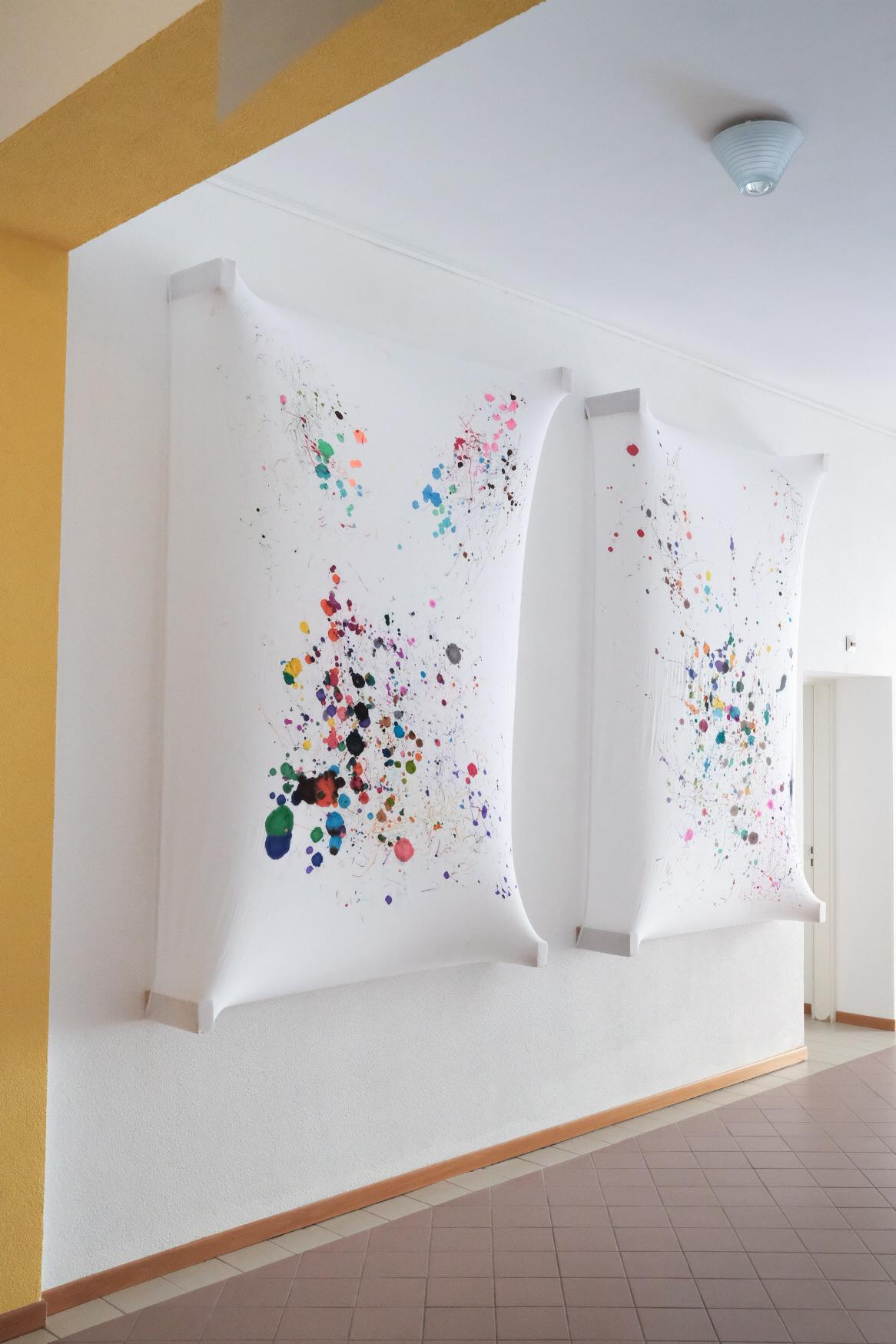
Antoine Félix Bürcher, Sweet Dreams Are Made of This, #1, bed sheet, felt-tip drawings, 5 nights, 4 wooden blocks, approx. 140 x 30 x 220 cm, #2, bed sheet, felt-tip drawings, 4 nights, 4 wooden blocks, approx. 140 x 30 x 220 cm, 2023, © Studio Antoine Félix Bürcher Exhibition view, Group exhibition « As I was moving ahead » at Basecamp, Locarno Film Festival, Locarno, Switzerland (2023)
Antoine Félix Bürcher, Sweet Dreams Are Made of This, 2023 © Studio Antoine Félix Bürcher

You speak of a poetic resistance to digital saturation. How do you actually build a work that asks people to look slowly rather than scroll?

I am a romantic but not idealist, art is what it is. The linearity of time is the ancestor of the scroll. Yet the infrastructures that govern linear — and parallel temporalities reduce temporal complexity to mere representations and categorisations. That blocks philosophical curiosity, a fluid vision. The omnipresence of interface transmitters who do the work of linking our body to experience, does not ask our body to make the effort of moving to acquire through the experience of a curious present personal encounter and a complex intrinsic and temporal aesthetic experience, other knowledge outside linearity. The experience is always translated, through, the visual in power, almost everything towards the visual. More and more, we see art smoothed out and reduced to what it represents.

Antoine Félix Bürcher, Amphitheater, 9 curved screens found online, approx. 250 x 250 x 60 cm, 2026, © Studio Antoine Félix Bürcher Exhibition view, Solo exhibition « Der Stand Der Dinge » at Akku Kunstplattform, Luzern, Switzerland (2026)

Here is a question of self-agency and governance. In fighting the reduction to image and representation, we could imagine art being a counter movement that aims to cultivate reaching temporal depth and complexity in the experience. What makes the artwork interesting in that context, is that it carries the potential to connect worlds and paradoxical interpretations that nonetheless coexist. Images cannot change minds, but artistic practice has that power as it is about curiosity and openness. We could counteract and try collectively to relearn to appreciate depth in time and not only surfaces. I believe emancipation is only possible through openness to chance — the acceptance of a non-indexed “Real” — but that is not the dominant philosophy today. 

You studied cinema before sculpture. How does that background continue to operate in the installations, in the sheets stretched like screens, and in sculptures that multiply space?

I am interested in the space of the cinema. Around 2020, early covid time, I did a found footage movie, a collection of live surveillance cameras in forests and around telecommunication infrastructure. The sequences are so long and boring, I wanted spectators to fall asleep in the cinema room. This work has never been presented.

Have you ever set aside or destroyed a work only to return to it later in another form? What is your relationship to works that have already been exhibited, especially when you change medium or context? 

It happens all the time and that is the interesting aspect regarding art. Also, I am fine in showing works that have already been exhibited. Mediums are perspectives and I use the medium needed when needed. Once I would love to do a rock installation again in the same way I did when I was 7 years old when I did my first solo exhibition in my parent’s flat and invited my surroundings.

Between Der Stand Der Dinge, Ghost Out Of The Shell and the departure from the studio, what would you like the public to understand about your work right now? What is the core you most want to pass on?

If it nurtures you, please join the reflection and let’s be critical altogether. Artists are messengers but I don’t own the meaning of my work. Now, I want to expand to further spatial dimensions. I am excited about what is to come. I want to go into further exploration in dynamics with movement and gravity.

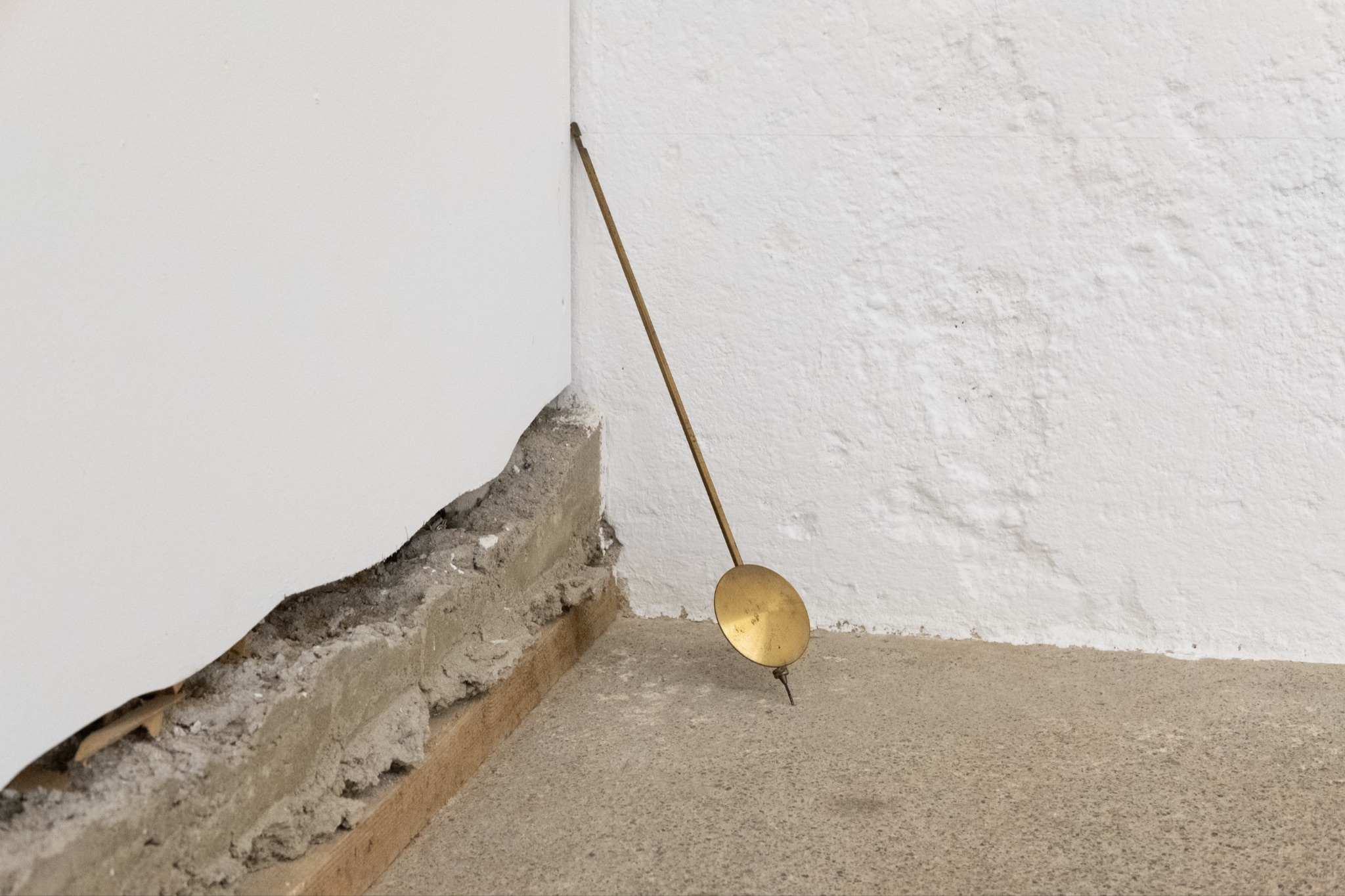
Antoine Félix Bürcher, AFK (Away From Keyboard), Clock pendulum found online, approx. 30 x 10 x 1 cm, 2026, © Studio Antoine Félix Bürcher Exhibition view, Solo exhibition « Der Stand Der Dinge » at Akku Kunstplattform, Luzern, Switzerland (2026)