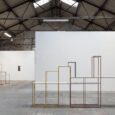

Indriķis Ģelzis works explore how human abilities and forms of perception are reimagined through the flows of information, digitalisation and automation. With a subtle surrealist touch, his sculptures use contemporary technologies as tools for imagining improbable transformations between the anatomy of the body and the forms and phenomena of nature. A bodily organ might begin to resemble a landscape, a natural phenomenon can take on the logic of an architectural structure, while diagrams and digital imagery become strange intermediaries between the real and the imagined.
Your practice is grounded in a sculptural visual language built through lines and geometry that organise form and transmit information. How did this approach develop, and in what ways did your family background, as the son and grandson of architects who helped shape Latvia’s built environment, influence this visual syntax?
I have a feeling that I can’t really escape this visual language. I still don’t know whether that’s stubbornness or simply devotion, but I like the feeling of committing to one vocabulary for a long time. At the same time, I constantly fantasise about painting, making videos or writing music. The older I get, the less I believe an artistic language is something you invent. Maybe it’s more like your singing voice. You’re given one voice, and then you spend your life learning how to use it, training it, making it feel natural. I think an artistic language develops in a similar way. It’s shaped by your personality, your experiences, the place and time you grew up in. I grew up surrounded by architects, artists, musicians and actors. My grandfather and father were both architects, and although I spent years trying to move away from that legacy through painting, video and performance, none of it felt completely convincing. It was only during my time at HISK, after almost a year of drawing and research, that I stopped resisting an architectural way of thinking. I became increasingly interested in structure, linearity, construction and the way a sculpture occupies space. That process eventually led to Portrait of Parallelism, which still feels like the real beginning of my practice.
You often speak of “algorithmic realism.” In what sense do your sculptures not represent actual data, but rather the affective and epistemological resonances of systems such as networks or charts?
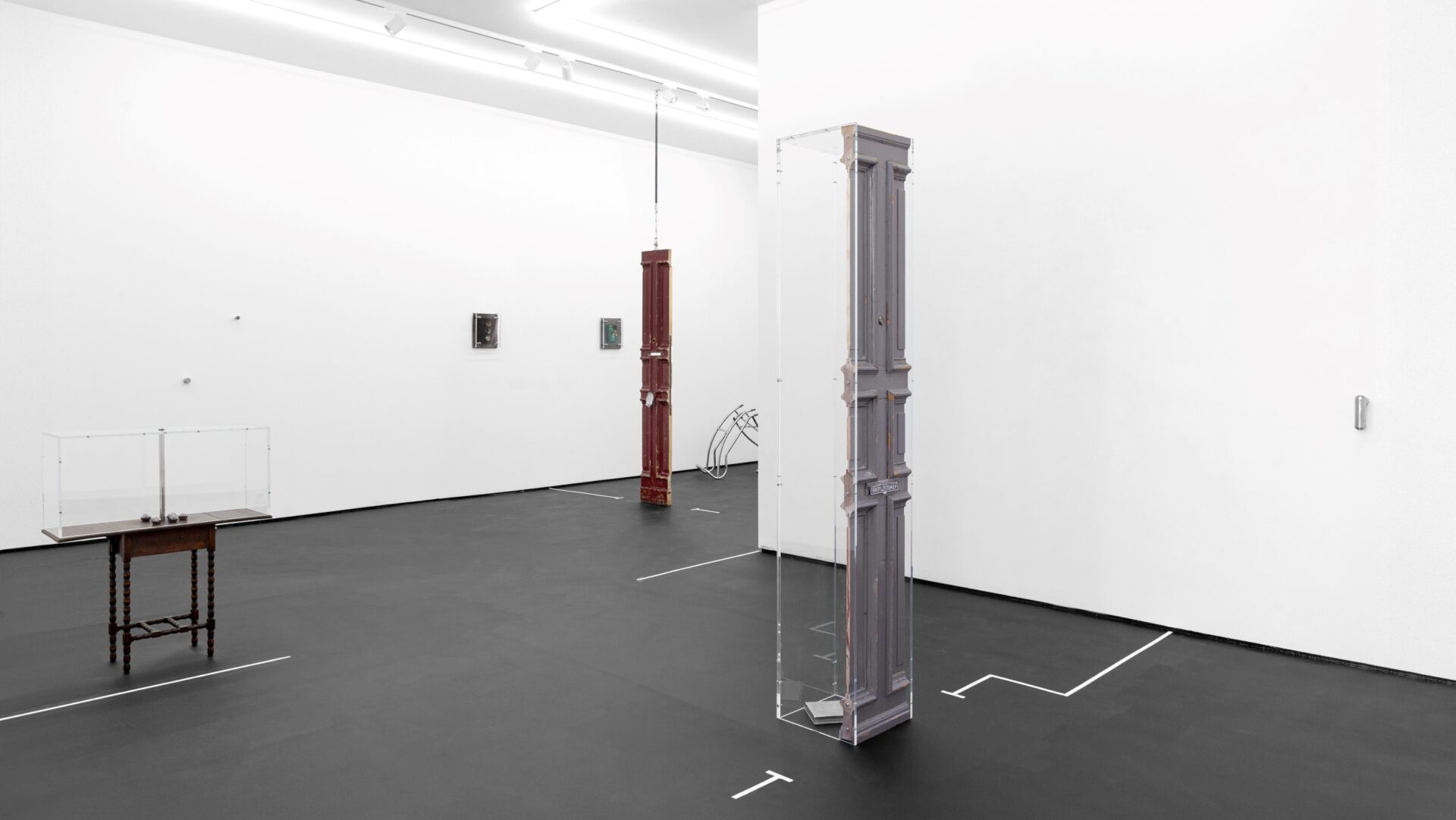
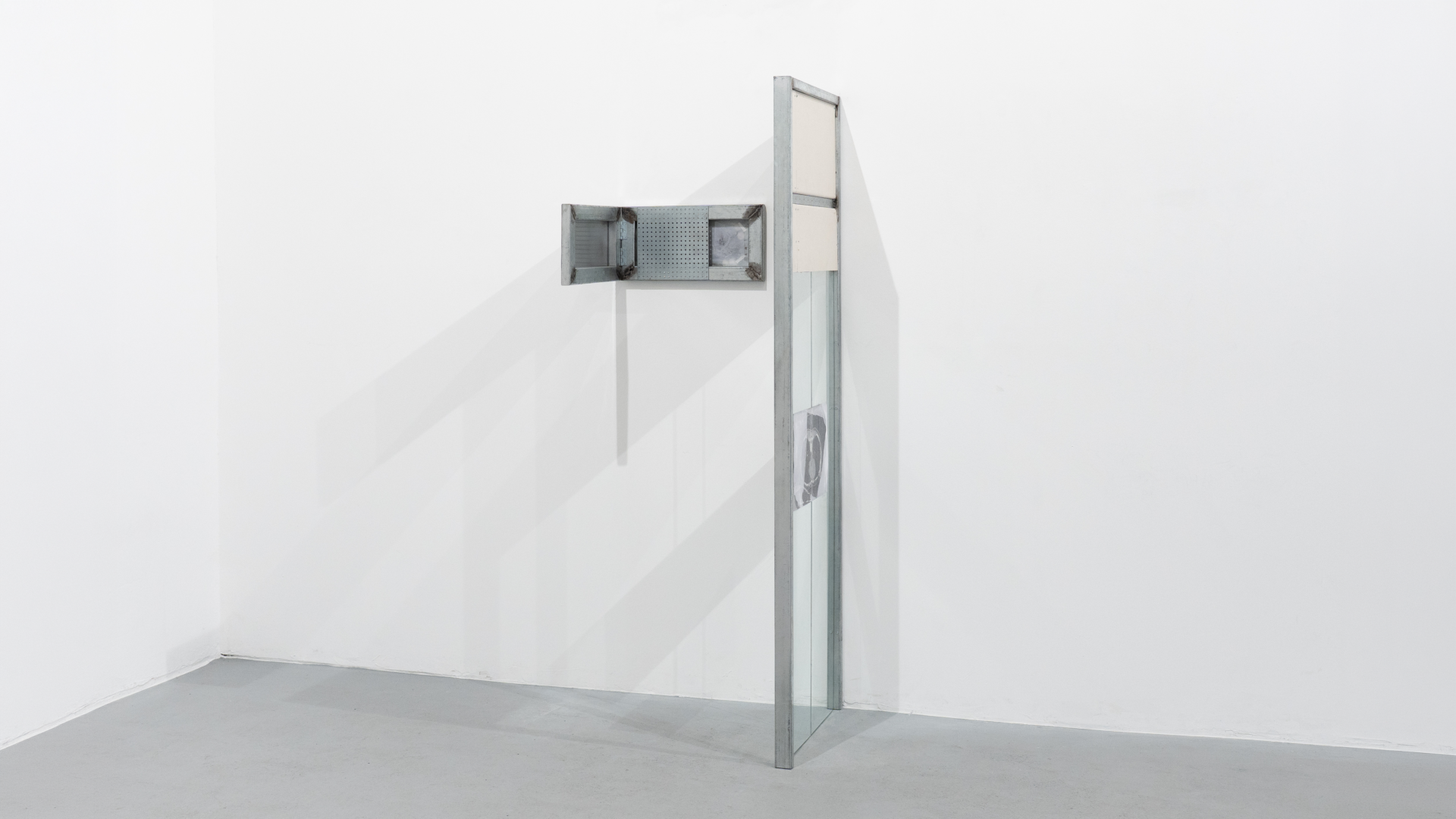
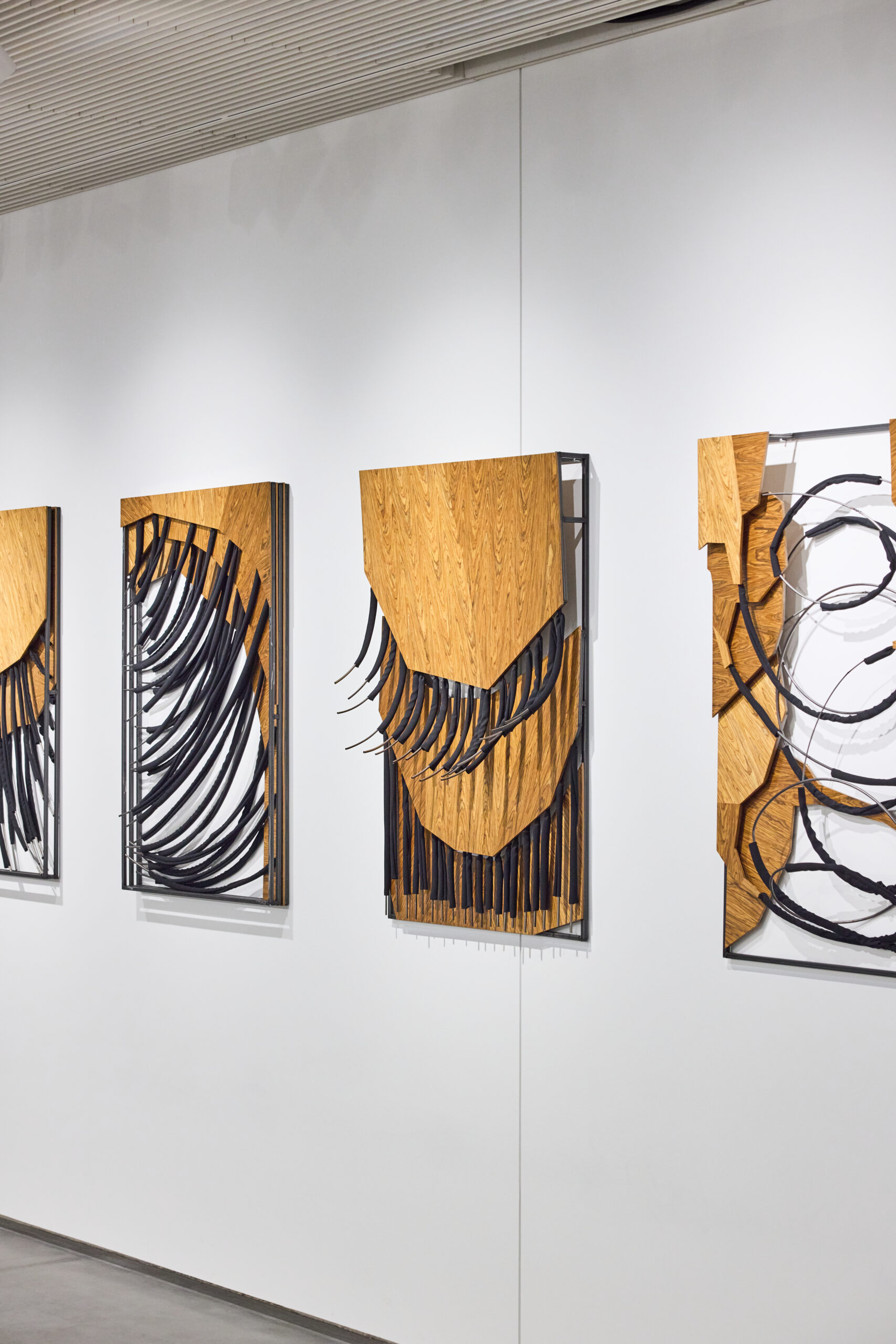
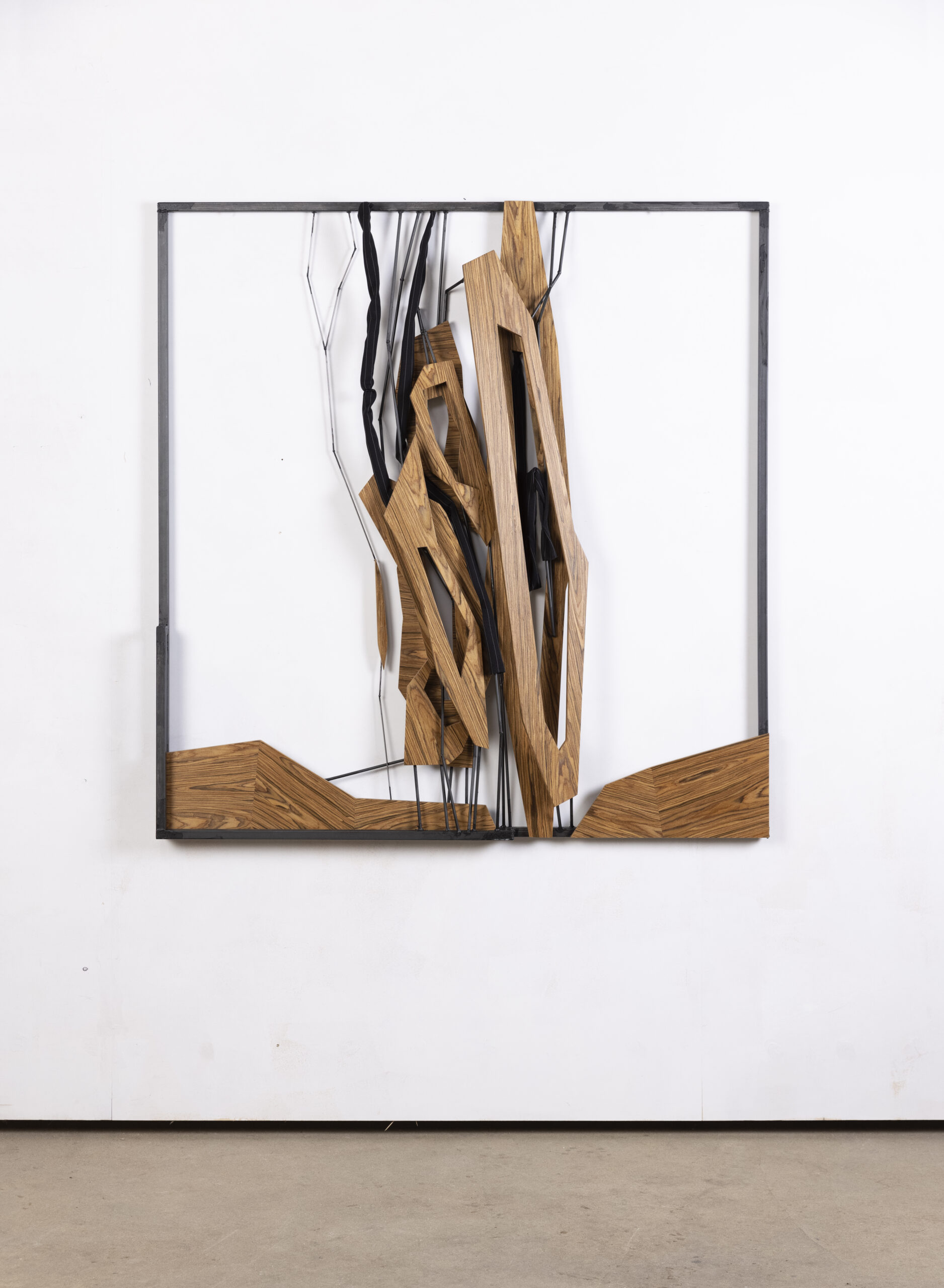
The term “algorithmic realism” was first used by the Latvian art historian Santa Hirša to describe my work. I found it interesting because it captured certain aspects of what I was doing at the time, but I don’t think my sculptures have ever been about data itself. Even when I was working with diagrams or graph-like structures, I was never interested in visualising information. I was interested in borrowing the logic behind those visual systems rather than their appearance. Over the years, I’ve found myself returning to diagrams, charts, anatomical structures, scientific imaging and digital models because they all simplify something incredibly complex into a visual form. To me, every sculpture begins as a digital model in Cinema 4D. I can spend weeks, sometimes months, moving through it, adjusting proportions and understanding the object before I ever touch the material. By the time I begin building it, the sculpture already feels strangely familiar. Even the most rational-looking model is shaped by intuition. Every proportion, every line and every connection is the result of countless small decisions. I like to imagine how an eyeball can coexist with a lottery ball, an eye socket or a mouth with a cave, eyelashes with a cage, and so on. That moment, when two seemingly unrelated things begin describing one another, is usually the starting point of a sculpture. For example, while making Five Squinting Holes Pressed into Stillness, I began by trying to build something that felt almost like a mask assembled from the logic of diagrams or information panels. At the same time, I wanted it to carry the feeling of something much older, almost like one of the first human shelters or storage spaces. To bring that into the work, I chose a brown rosewood veneer because its texture reminded me of sand and cave walls. I placed five cave-like openings into the surface, but as I kept working, I found myself squinting them, almost as if they were human eye sockets trying to focus on something in the distance. You never actually see the eyeballs. What remains is only the muscular gesture of squinting, the body trying to recognise something that stays just beyond reach.
In the recent Eyelash Fortress at Suprainfinit Gallery you turned the gallery into a space that navigates between reality and digital frenzy. How did you conceive this “protective shield” that simultaneously enables and disables the constant flow of information we are plugged into?
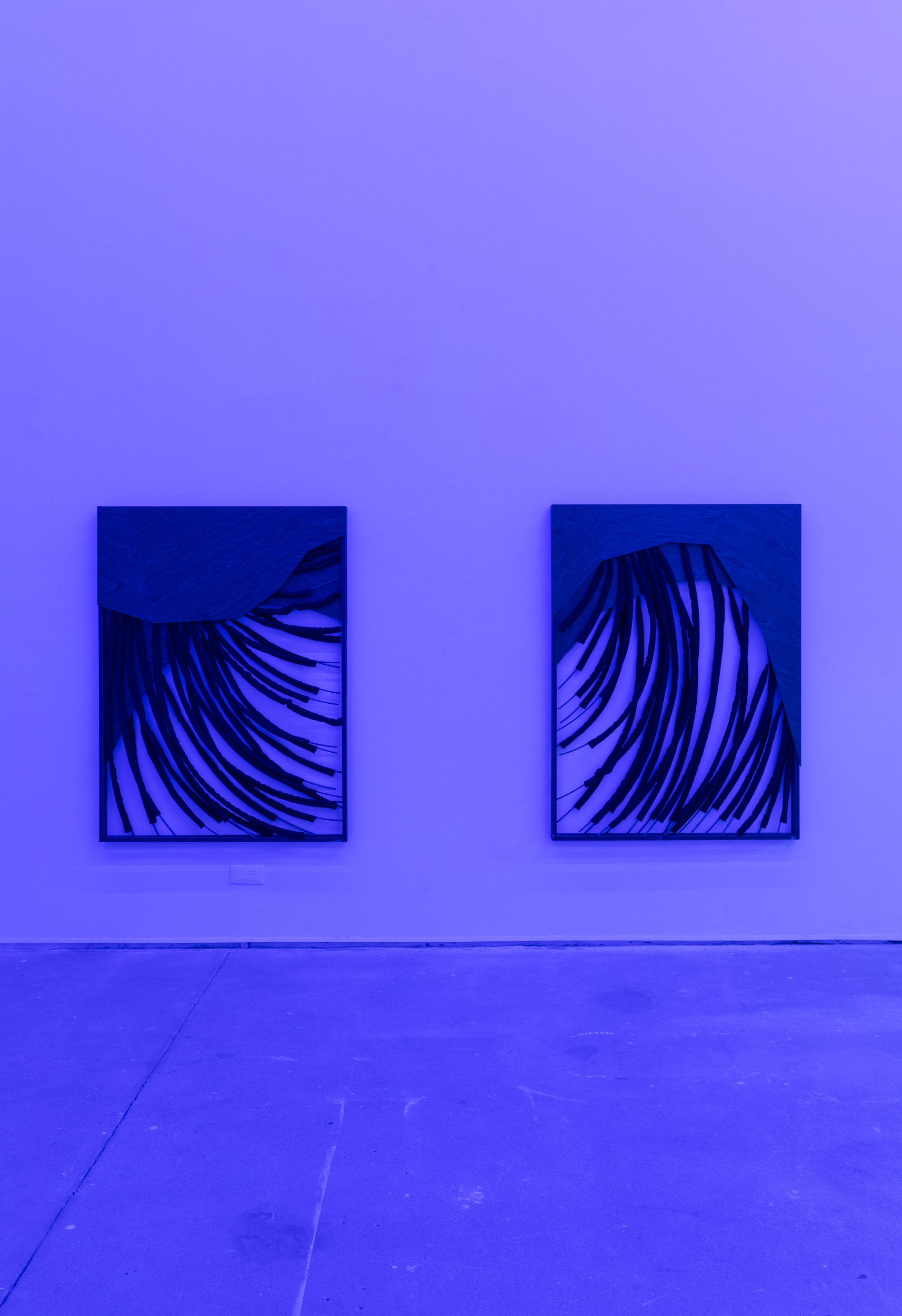
For almost the past year I’ve kept returning to the eyelid and the eyelash. I realised that every day I open my eyes to two different worlds. One is the world outside my window. The other is the one waiting on my phone. The distance between them can feel enormous. One moment I’m looking at a quiet landscape, the next I’m looking at genocide, the brutal war in Ukraine and an endless flow of images that demand my attention. Somewhere along the way I started thinking about the eyelid as the smallest architecture of protection we have. It’s incredibly fragile, yet it’s responsible for deciding when to open, when to close, what to let in and what to keep out. In Eyelash Fortress, I imagine the upper eyelid as a coastline. For me, coastlines have always been connected to freedom, the freedom to look beyond the horizon, across an open body of water. From that coastline, the eyelashes begin to grow, almost as if they’re moving freely in the wind. At the same time, they slowly become something else, a fortress, a grid, a structure. I wanted to leave them suspended between different readings. They can be eyelashes, but they can just as easily become diagrams, data streams or defensive structures. I don’t think the work is about stopping the flow of information. That would be impossible. It’s more about the fragile moment before we let the world in.
Many of your works combine industrial materials such as steel with organic or sartorial elements like textiles and stitching. How does this contrast between the rigid and the porous function for you, and what kind of atmosphere does it create in the sculptures?
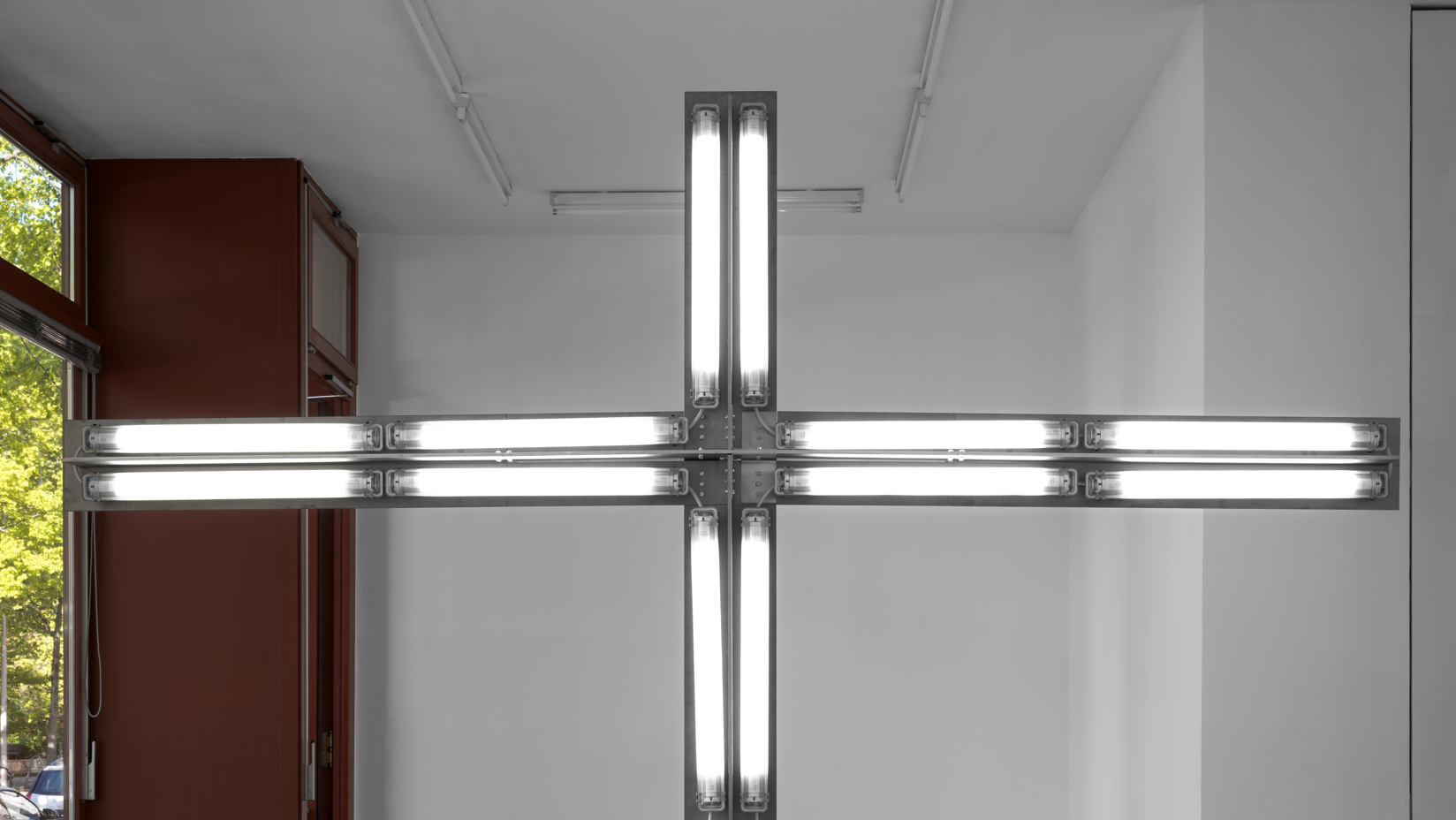
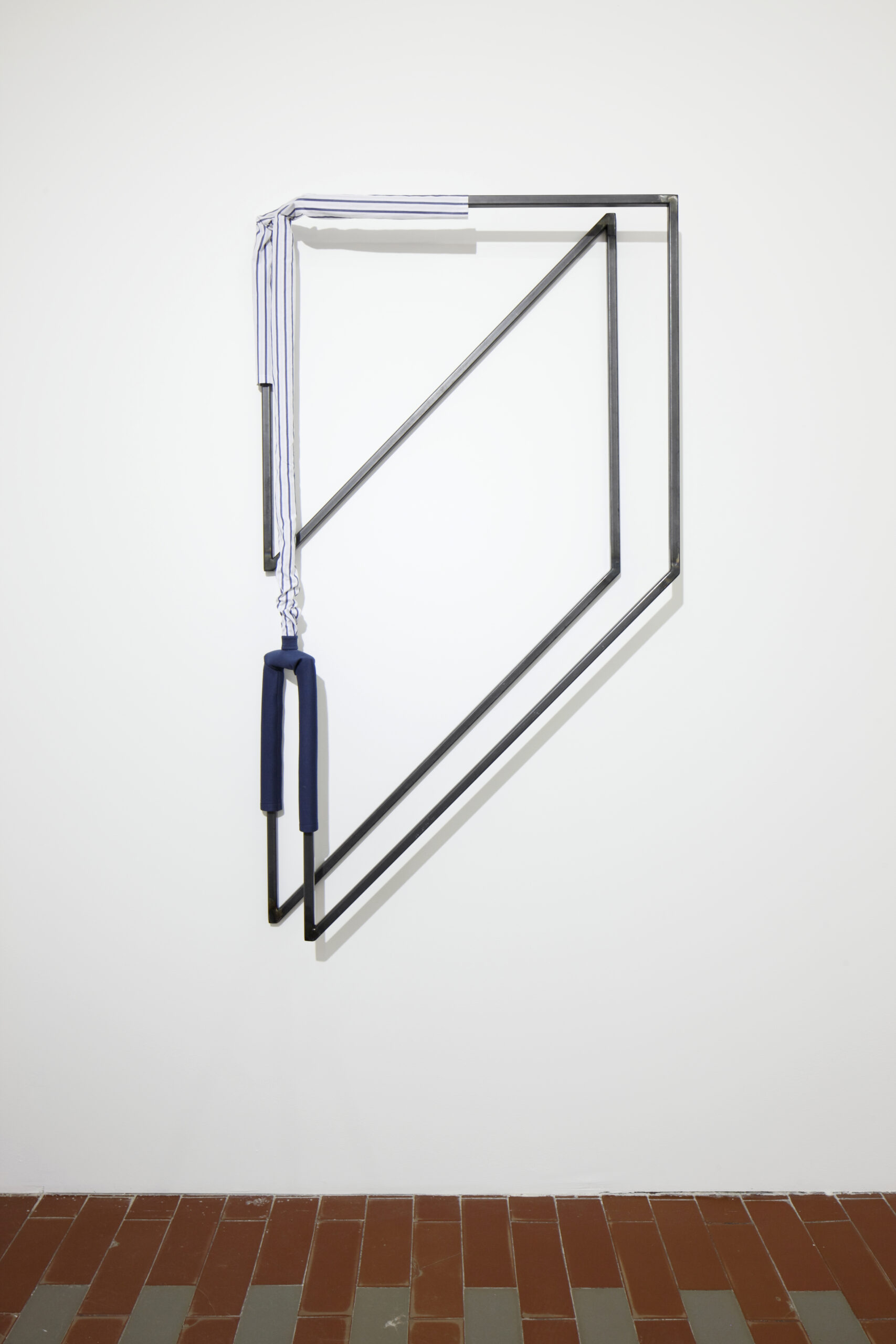
Funny enough, I’ve always seen rough steel as graphite. Back in 2015, when I was making Portrait of Parallelism, I was wandering around a hardware store and came across a rough square steel tube. My first thought was that it looked exactly like the graphite inside a pencil. Since then, I haven’t been able to separate those two images. Steel has always felt strangely cosmic to me. Cold, almost unearthly, as if it doesn’t completely belong to our world. I don’t really see steel and textile as opposites. Textile is one of the oldest technologies we have. We wrap ourselves in it, keep warm with it, disappear into forests or snow with it. It has always lived close to the body. One work where this became especially clear was Night Flame. The steel structure became the skeleton of a bonfire existing alongside the skeletal architecture of the human throat. I’ve always been drawn to the way fire makes things vanish. A solid object slowly loses its shape, its weight, until it simply becomes air.
You have gone through an important evolution: from large spatial installations to a deliberate restriction of scale, especially with wall sculptures, and later a return to more complex elements. What prompted you to limit or expand scale over time?
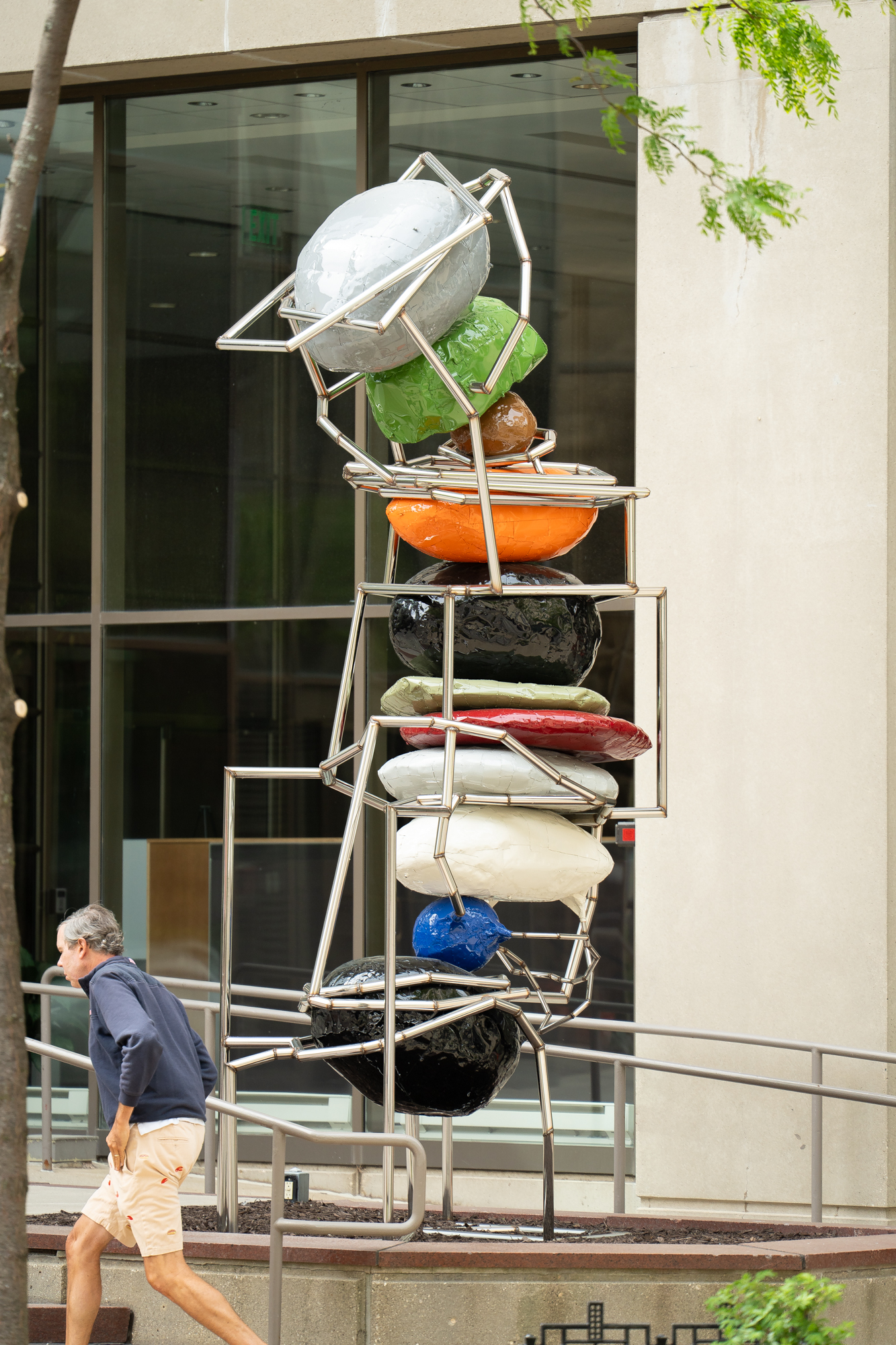
I don’t really think about scale as an evolution. I think about what a particular situation asks from the work. Some ideas can exist as a single object, while others need to negotiate with architecture, people and public space. That was the case with Gaze Grows Bones. The sculpture couldn’t exist at a smaller scale. The vertically stacked eye-inspired spheres interact with the bent structure of a spine, almost like a back carrying an invisible weight. For me, it became an image of the tension we absorb from the environments we live in, the burden we carry on our shoulders, or the quiet weight of simply remaining seated within the systems around us. It felt, that this idea needed the scale of a public body, not just an object.
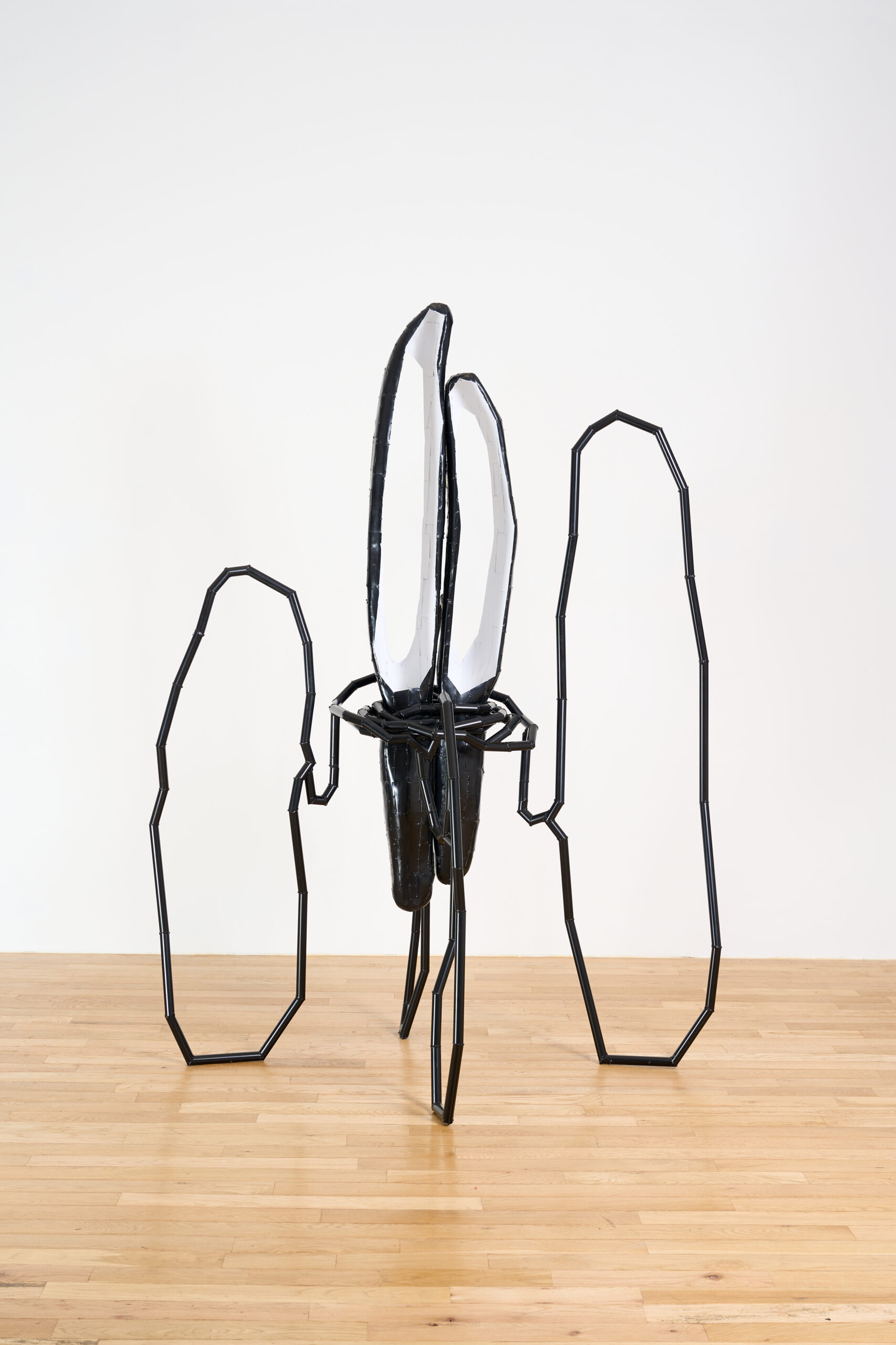
Your sculptures often incorporate intricate linear armatures that trace relationships between the human, nature and technology. In what ways do these lines become metaphors for transmission systems that structure our experience?
I don’t really think of these lines as metaphors. I’m more interested in how a single line can belong to completely different worlds at the same time. A line is probably the simplest thing we can draw, yet it can represent almost anything, an eyelash, a horizon, a diagram or a river. I’m interested in that moment when you’re no longer certain what you’re looking at. Maybe the world is far less fragmented than it first appears. We simply keep giving the same line different names.
In the Time Camouflage series you use reflective surfaces. How do you explore the theme of mediated perception and the way light and the viewer’s gaze transform the work?
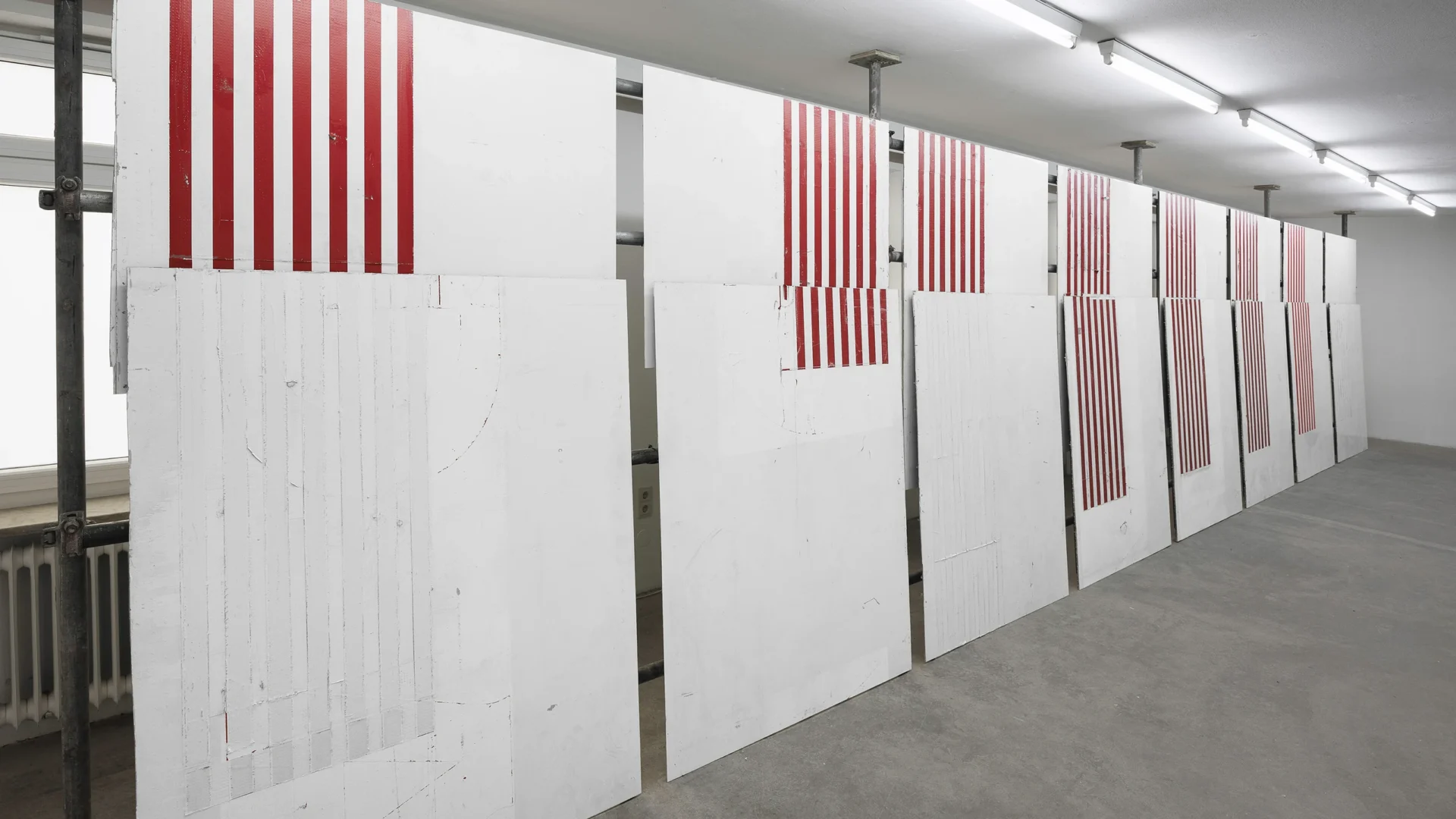
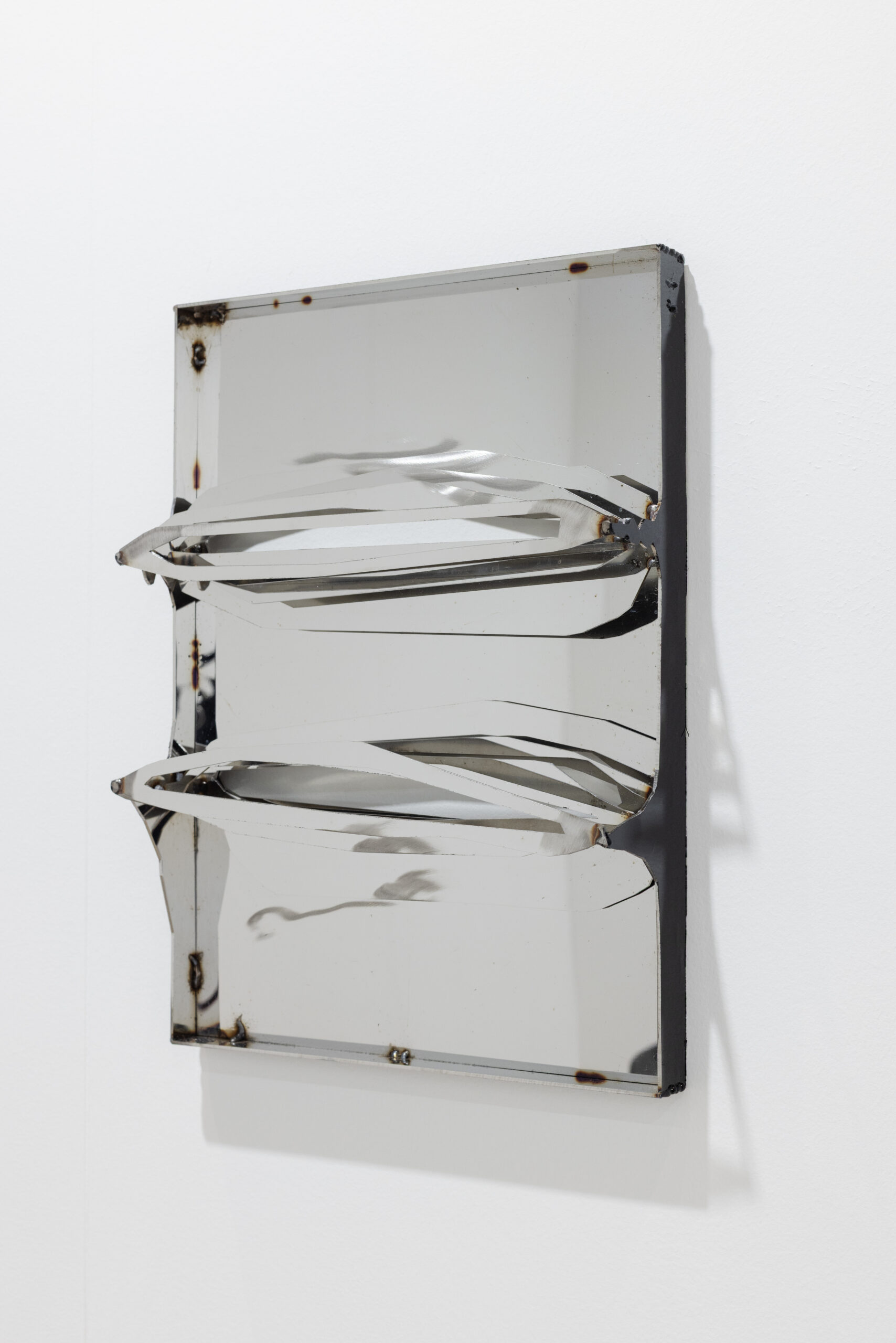
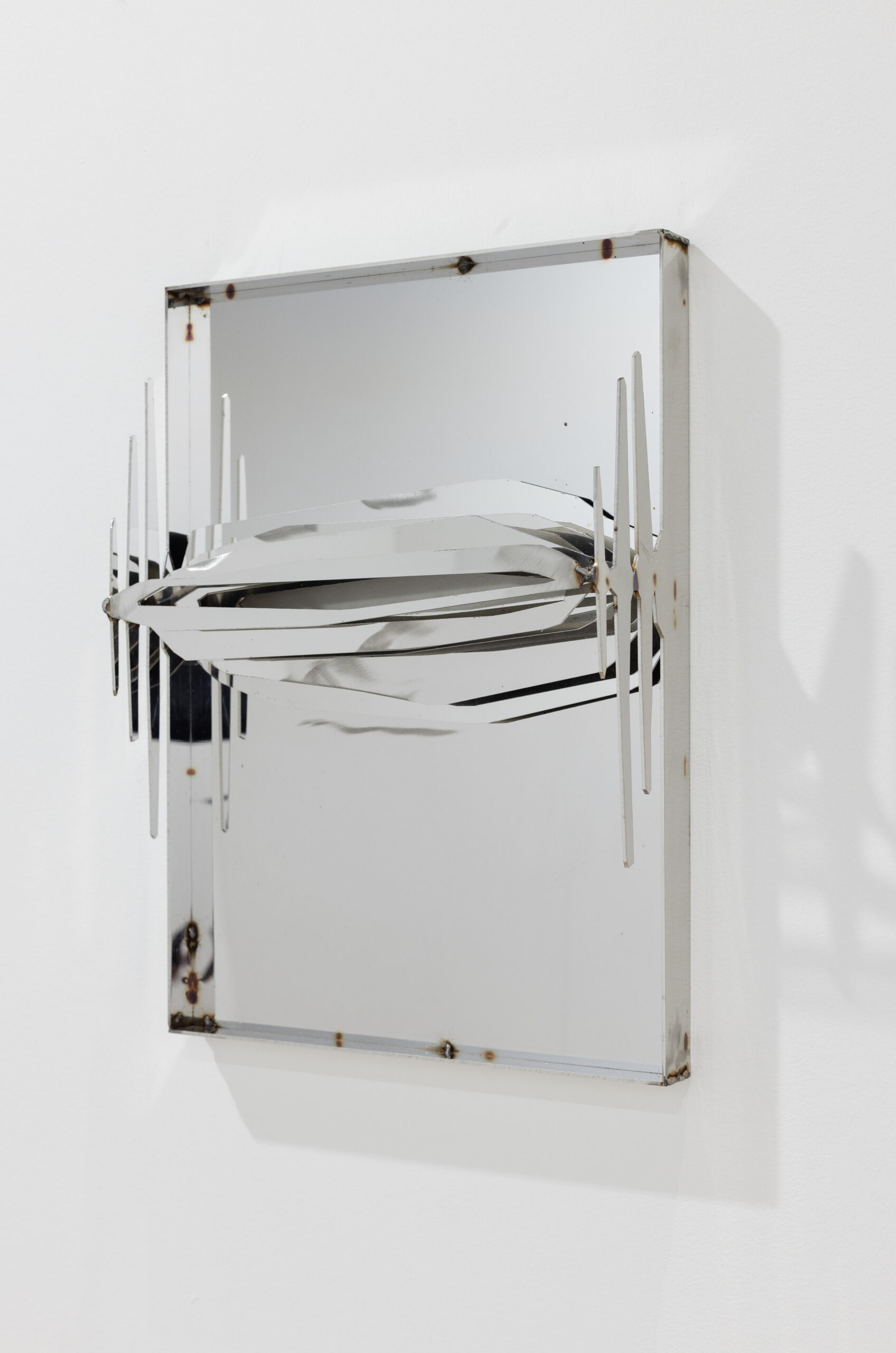
For some time I was looking for a material that would almost disappear. I became interested in the idea of a surface that doesn’t dominate the work, but constantly gives space to whatever happens around it. Eventually I came across polished stainless steel. Within that reflective environment, I began composing simple formal structures inspired by different phenomena, often borrowing from the tension and release of living anatomy. In three recent Time Camouflage works, shown at Riga Contemporary with Misako & Rosen and Green Gallery, I imagined a sequence of layered forms gradually revealing a void. I liked thinking of it as a cave in the landscape, behaving like an eye squinting to bring something far away into focus. In one of the works, subtle ripples appear along the sides, echoing the way a distant view begins to dissolve across the surface of moving water. These ideas come in cycles, almost like harvesting fruit. At a certain point, a visual image becomes completely clear in my imagination. It usually takes some time to translate it into a 3D model, but once that’s done, everything happens very quickly. I build the work almost instinctively, fast welding, fast gestures, very few hesitations. They’re probably the most enjoyable works for me to make.

Your process often begins with digital 3D modelling followed by manual welding and assembly. How do conceptual thinking and physical work with materials meet in this passage?
I don’t really experience digital modelling and physical making as separate stages. Both rely on repetition. I’ve always been interested in the idea that repetitive, almost meaningless actions can eventually produce something meaningful. After enough repetition, movement develops its own intelligence. After years of working with a trackpad, many of those gestures have become almost automatic.That’s one of the reasons I like working digitally. It’s the fastest place to make mistakes. I can test, fail, delete and rebuild before the work reaches the studio. Once I start welding, every decision becomes much more difficult to reverse. There’s no Ctrl+Z in steel.
Have you ever destroyed or set aside a work for a long time only to return to it or transform it later? What is your relationship with pieces that are already completed and exhibited?
I almost never rework completed pieces. I’m quite stubborn in that sense. Once I commit to a sketch or a digital model, I tend to follow it all the way through. I rarely make changes during the welding process. I have destroyed a few works, though. Usually the ones that genuinely irritated me. Strangely, destroying them brought me enormous satisfaction. It felt less like losing something and more like clearing space for the next thing. Many of my earlier works remain hanging on the walls of my studio, and I make new work among them,I find that incredibly helpful. They remind me where I’ve already been, but they also become material for imagining new possibilities. Looking at completed works often allows me to construct new ones in my imagination.
Many of your exhibitions incorporate light or sound elements. How do you use these media to alter the perception of the sculptures and to underline the mediated nature of contemporary experience?
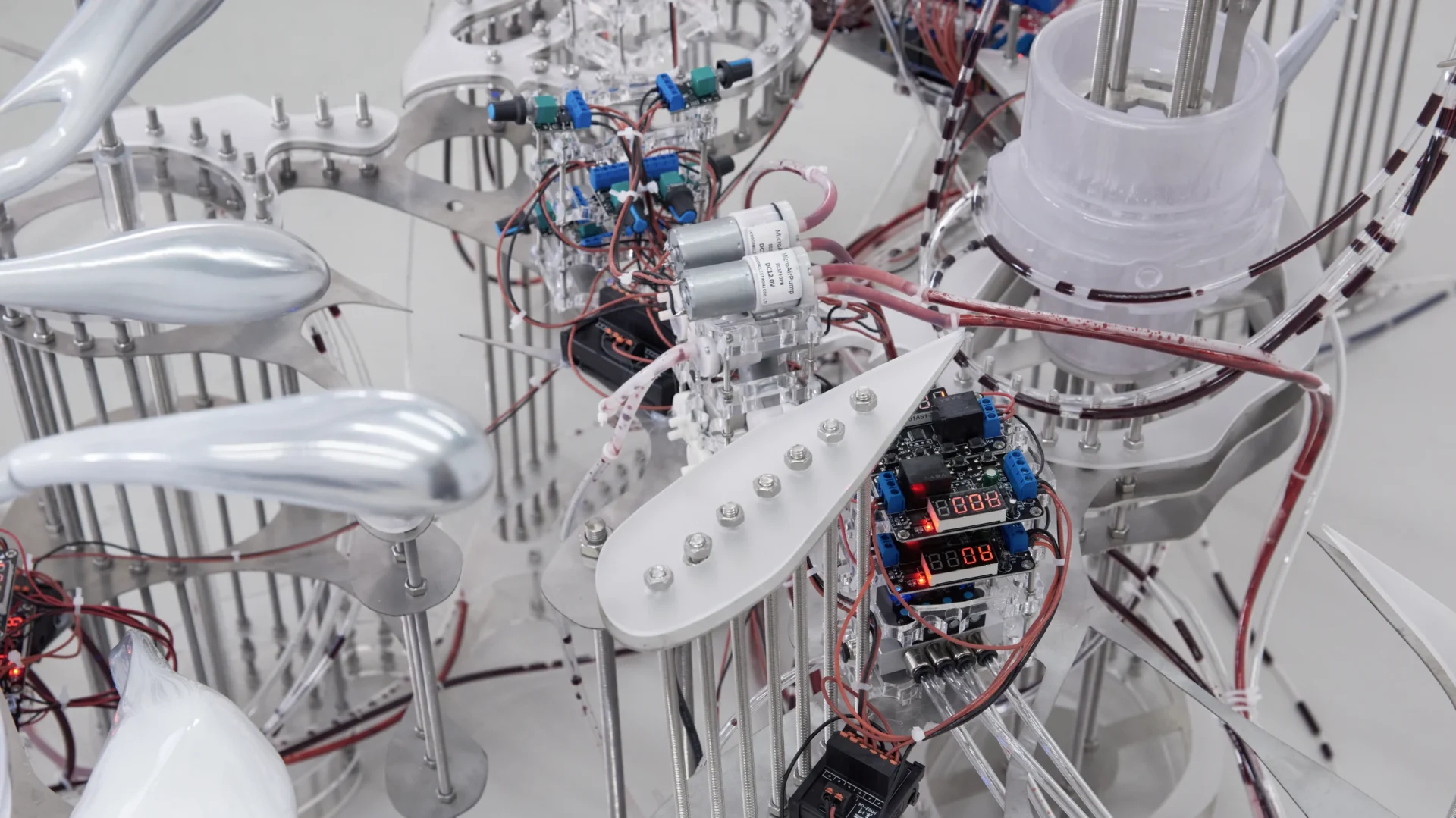
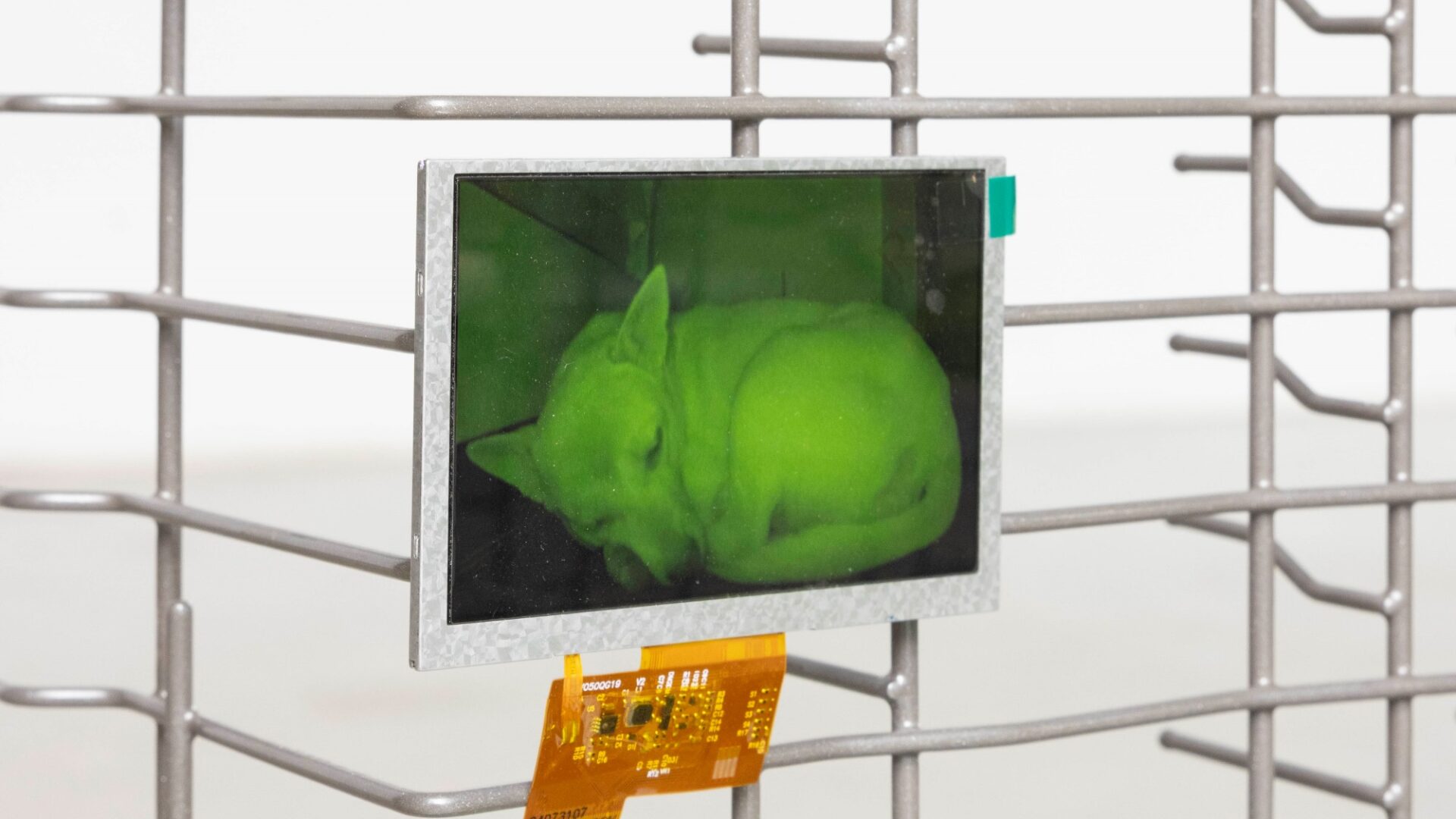
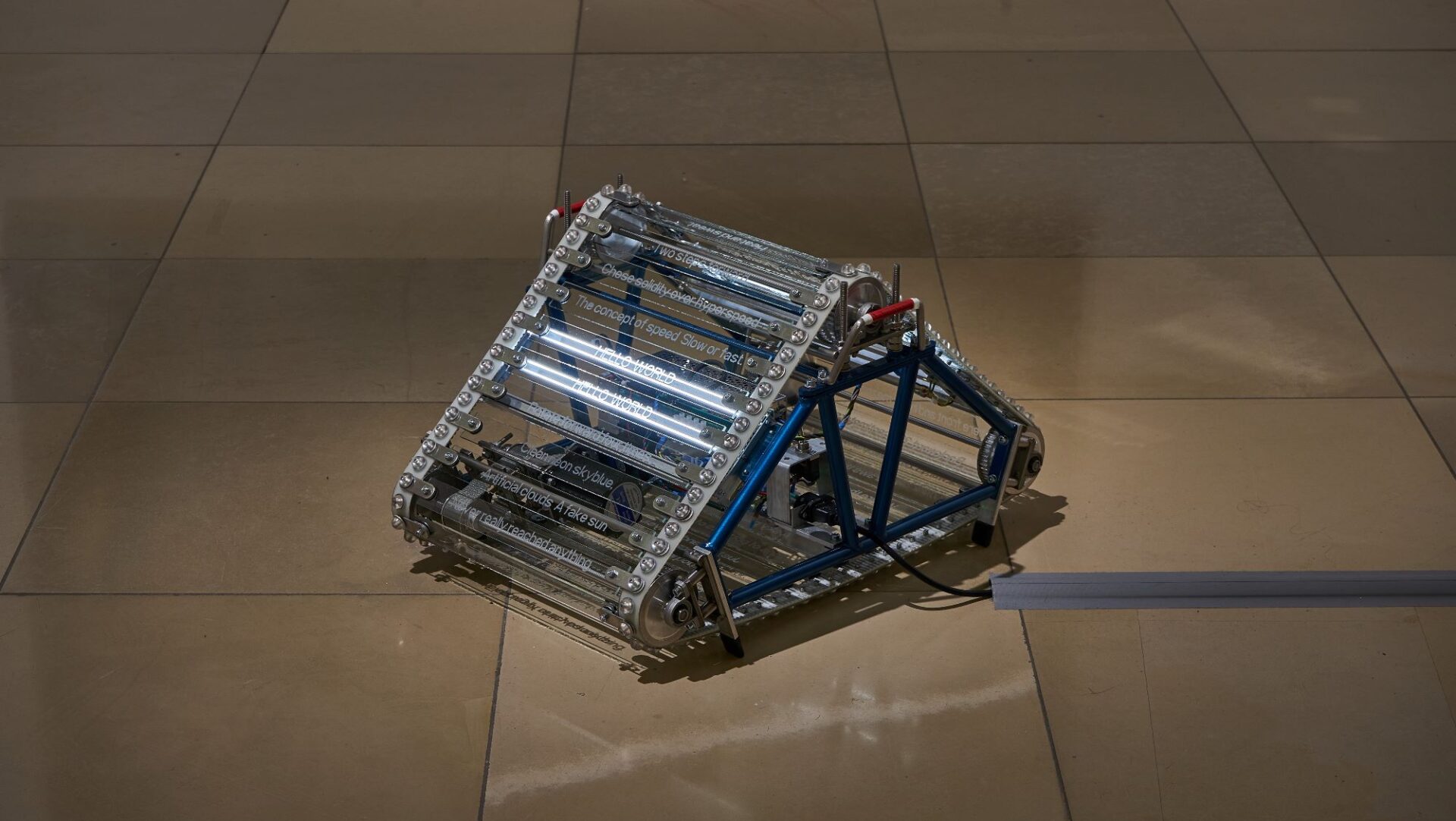
The first time I incorporated light and sound into an installation was in Watery Day’s Eye in 2023. At the time, I had been thinking a lot about returning to video making. I couldn’t find a way of doing it that still felt interesting until I realised I didn’t actually need the moving image itself. I could deconstruct video into its fundamental components, which is light, sound and movement, and rebuild it in physical space. That was the moment I realised my years studying video hadn’t been left behind. The installation unfolded almost like a film. A spoken dialogue, light and the movements of the kinetic sculptures were carefully choreographed into a timed sequence, allowing the exhibition to reveal itself over time rather than all at once. I’m currently developing new ideas in this direction, and I think it will remain an important part of my practice. I try to be careful with these elements because I never want them to overwhelm the sculptures. At the same time, I’m interested in the tension that emerges when a sculpture enters an environment where attention is already being guided by light and sound. It places the sculpture inside the same perceptual machinery that increasingly organises our everyday lives.
Looking at your overall trajectory, from the early large-scale spatial installations to wall sculptures and the recent explorations of digital frenzy and affective networks, what do you see as the most urgent role for sculpture today in making visible what often remains immaterial or invisible in the systems that surround us?
I grew up surrounded by artists, architects and musicians, but I also grew up believing that becoming an artist wasn’t a realistic future. I was often told how difficult that life could be and that it would be hard to make a living from it. Over time, I’ve realised that sculpture is much more than a way of expressing and idea, it’s a way of thinking. Not everything can be understood through words. Some thoughts need material, weight, space or sound before they reveal themselves. When I’m making a sculpture, I often have the strange feeling that I’m pulling something out of my imagination and giving it a physical presence. Whenever I come across a sculpture in a museum or gallery that truly moves me, I still get goosebumps. It shows me forms that nature itself would probably never produce. Whenever I’m in a studio, making a new work feels like digging a little deeper into my imagination, but it also becomes a way of understanding what I care about. For Night Flame, I knew from the beginning that I wanted to use the bonfire as its central image. To me, it’s one of the strongest symbols in the Latvian landscape, deeply connected to family, tradition and the place where I spent every summer and most weekends growing up. I wanted to bring that symbolic weight into dialogue with the anatomy of the human neck, following the structure of its vertebrae. Bringing those two things together created an unexpected collision, and the sculpture gradually became a scream made of fire. It was only through making the work that I realised how deeply attached I am to that landscape and to that small piece of land. Growing up with my grandparents’ stories about the war in Latvia, and now witnessing war return to Europe, I’ve also realised how fragile that landscape feels to me. I don’t think I fully understood any of that until I made the work.