What happens when distance disappears, matter gives way, and the invisible forces shaping our world become perceptible? Felix Kiessling’s practice moves between art, science, and technology, exploring ideas of control, instability, and connection. We spoke with him to delve into these themes and discover how they take shape throughout his work.
How do you think your artistic journey has evolved since you first started? What are the most significant challenges you believe you‘ve faced to reach the point in your research where you are now?
The most challenging part? Growing up. Becoming a father, navigating life with all its small ups and downs that come with it. On top of that, there‘s the familiar topography of building an artistic career: the highs and lows, the euphoric moments and painful doubts. I think every artist knows that landscape. My problem, in that respect, is that I constantly have ideas. I‘m continuously inspired. I simply don‘t have enough time or capacity to realize all of them. That hurts.
How do you choose the locations for your installations, such as the Rangipo Desert in New Zealand and the Parque Nacional de Cabañeros in Spain?
One side of an Erddurchstechung (Earth Piercing) is usually determined by the location of an exhibition, residency, or similar context. The opposite side then emerges as a celestial and symmetrical consequence, a mathematical result that is decided not by me. Other Earth piercings I have realized are political in nature, but I will not discuss them in further detail here. The New Zealand and Spain piercing you specifically asked about followed a different conceptual logic: The question was which location on Earth also has land on its exact diametrical opposite, and whether both places could be reached within a 72-hour time frame.
The concept of loss of control emerges in your work. How important is this theme to you, and how do you integrate it into your pieces?
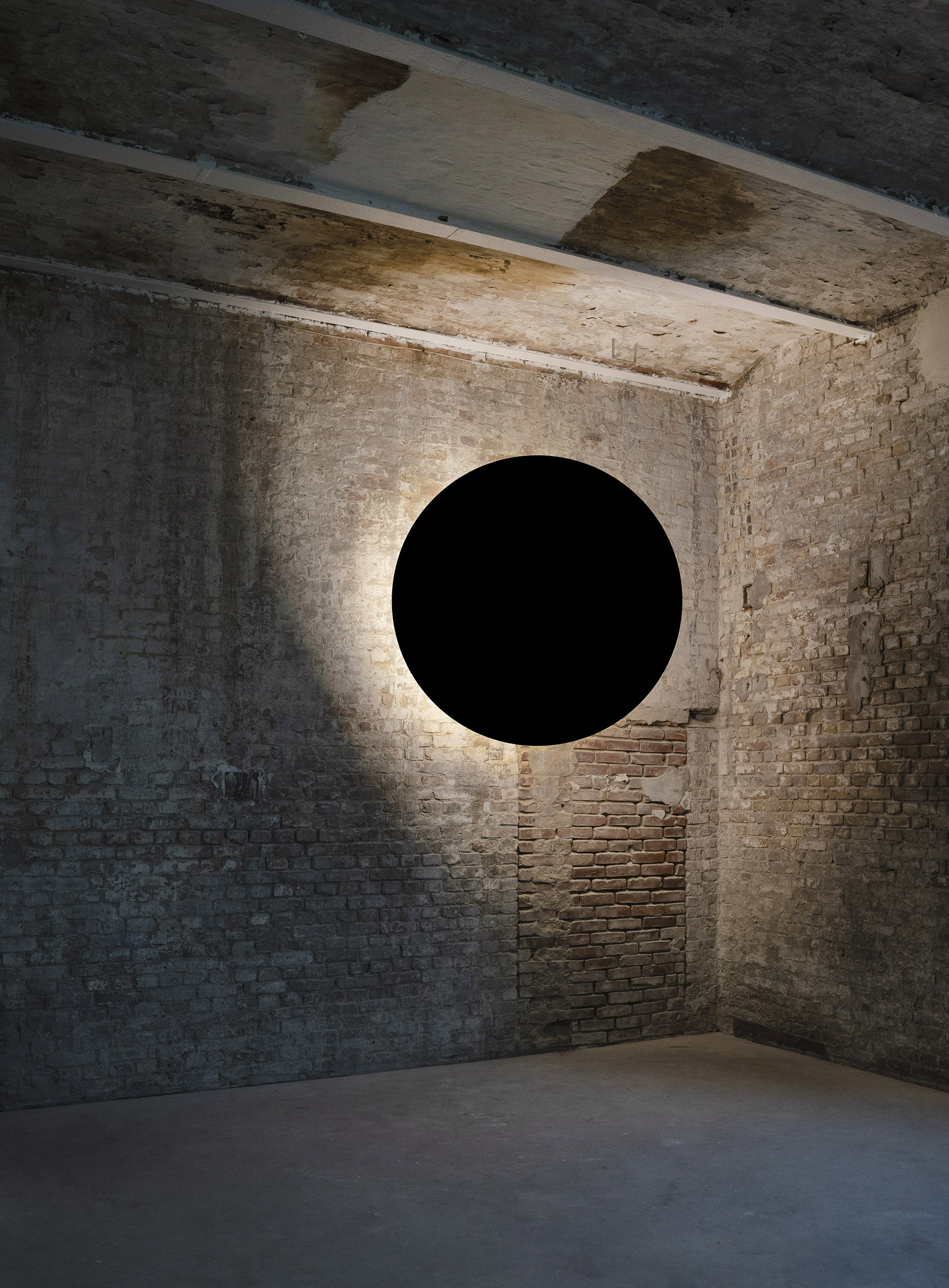
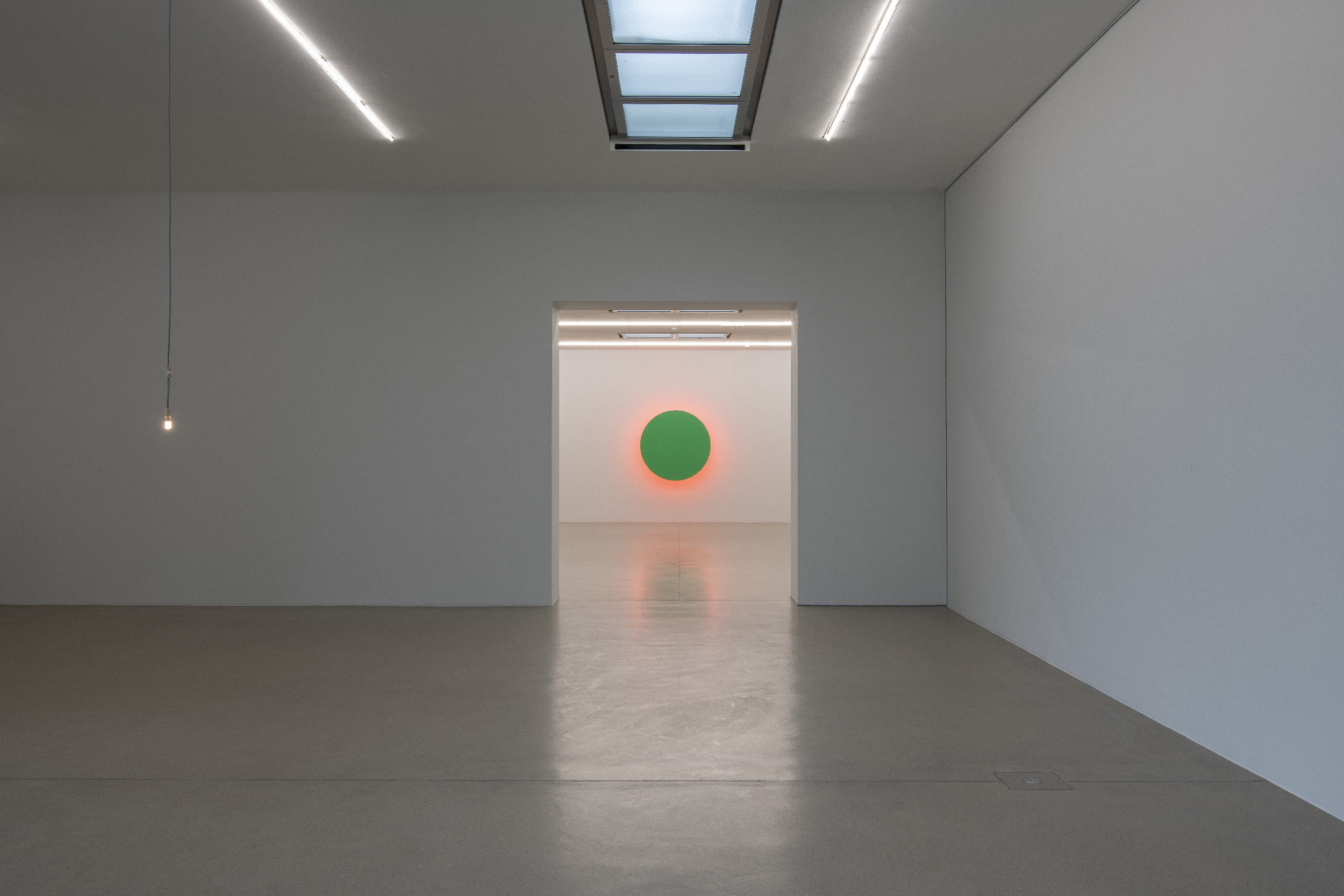
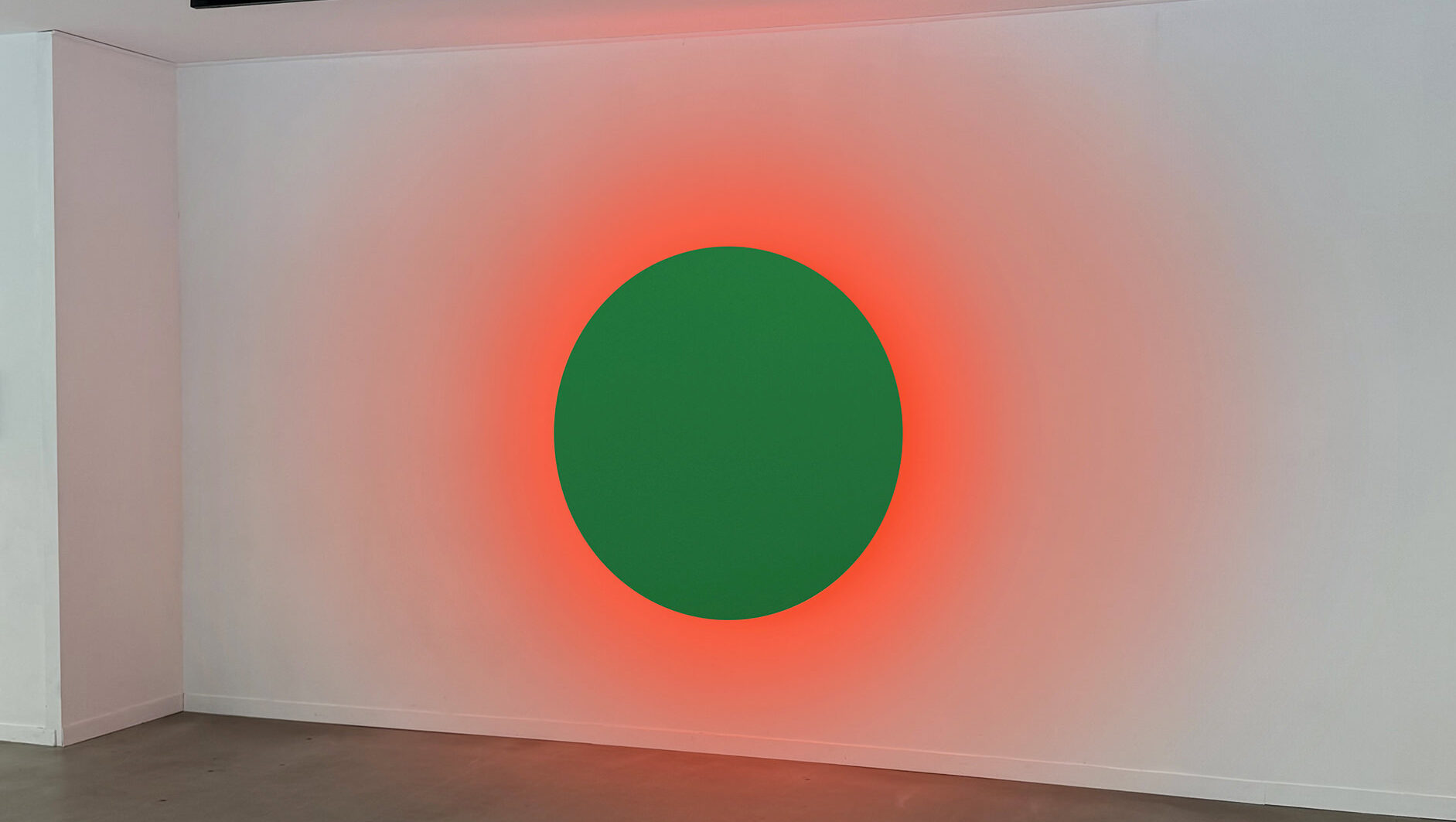
This moment of dissolving habitual ways of seeing, hearing, and feeling is what interests me. When things stop making sense, we can touch a deeper, more fundamental kind of ‚sense‘ and meaning. When I was younger, I searched for this experience in clubs. Later, I realized that I could embed this same quest within something as simple (and infinitely complex) as the symmetry of a colored circle. In other works, especially those related to science, I try to approach complexity in a more didactic way – not because I believe science offers an ultimate truth, but because I see it as a beautiful palette of pigments, when trying to make sense of the world. Ultimately, though, my work is addressed to the gut rather than to reason. Yet reason is somehow embedded within it.
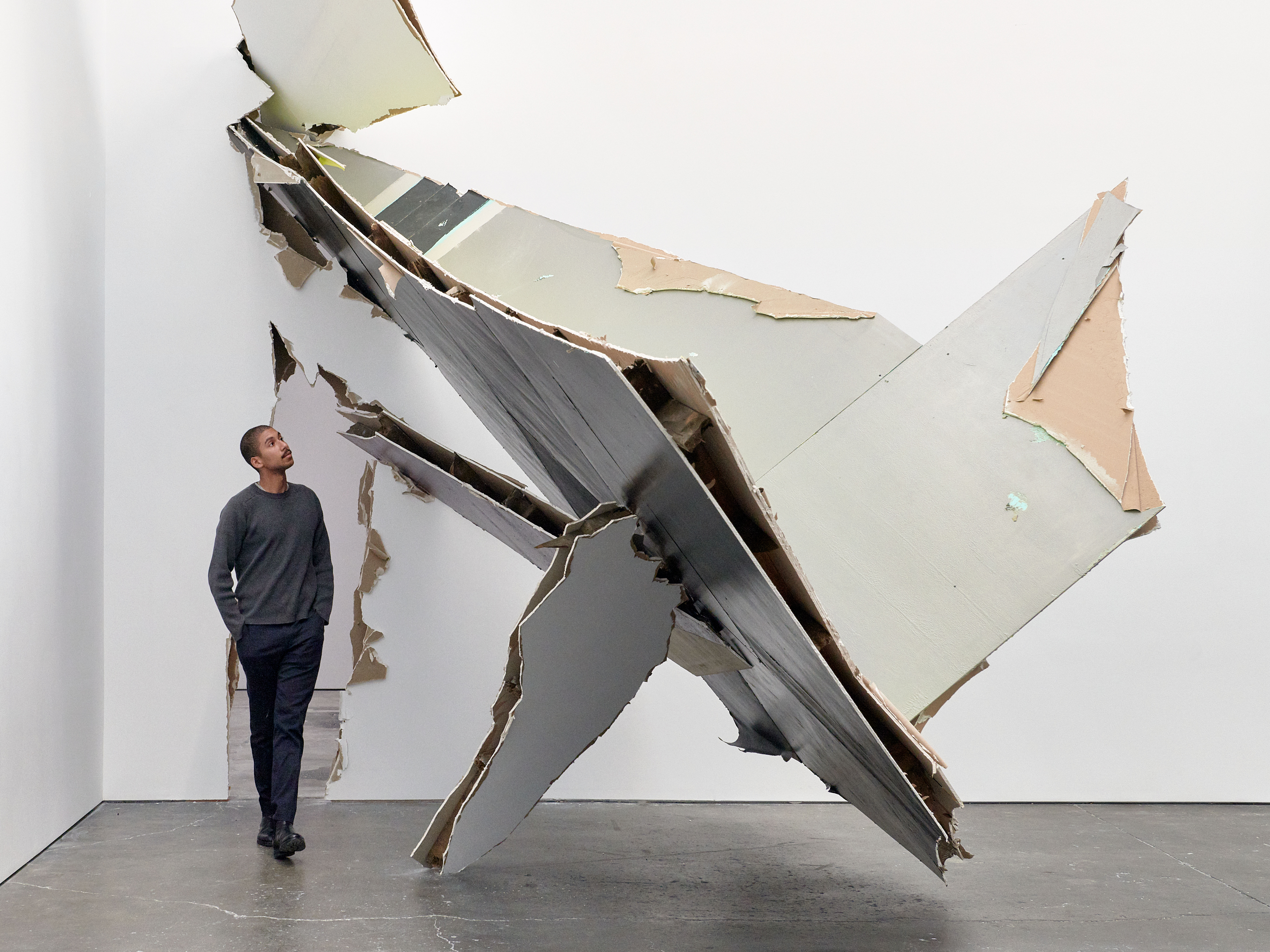
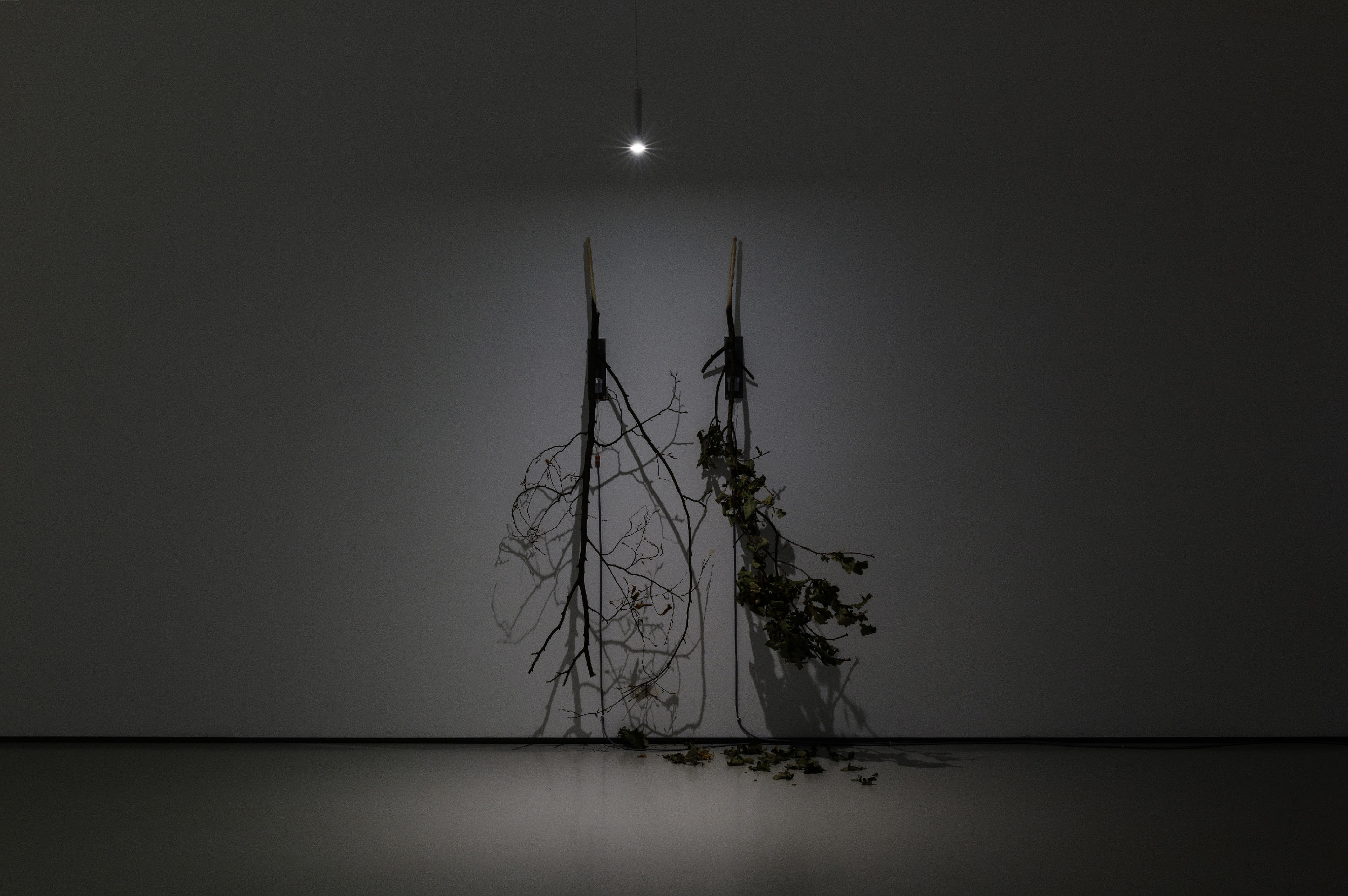
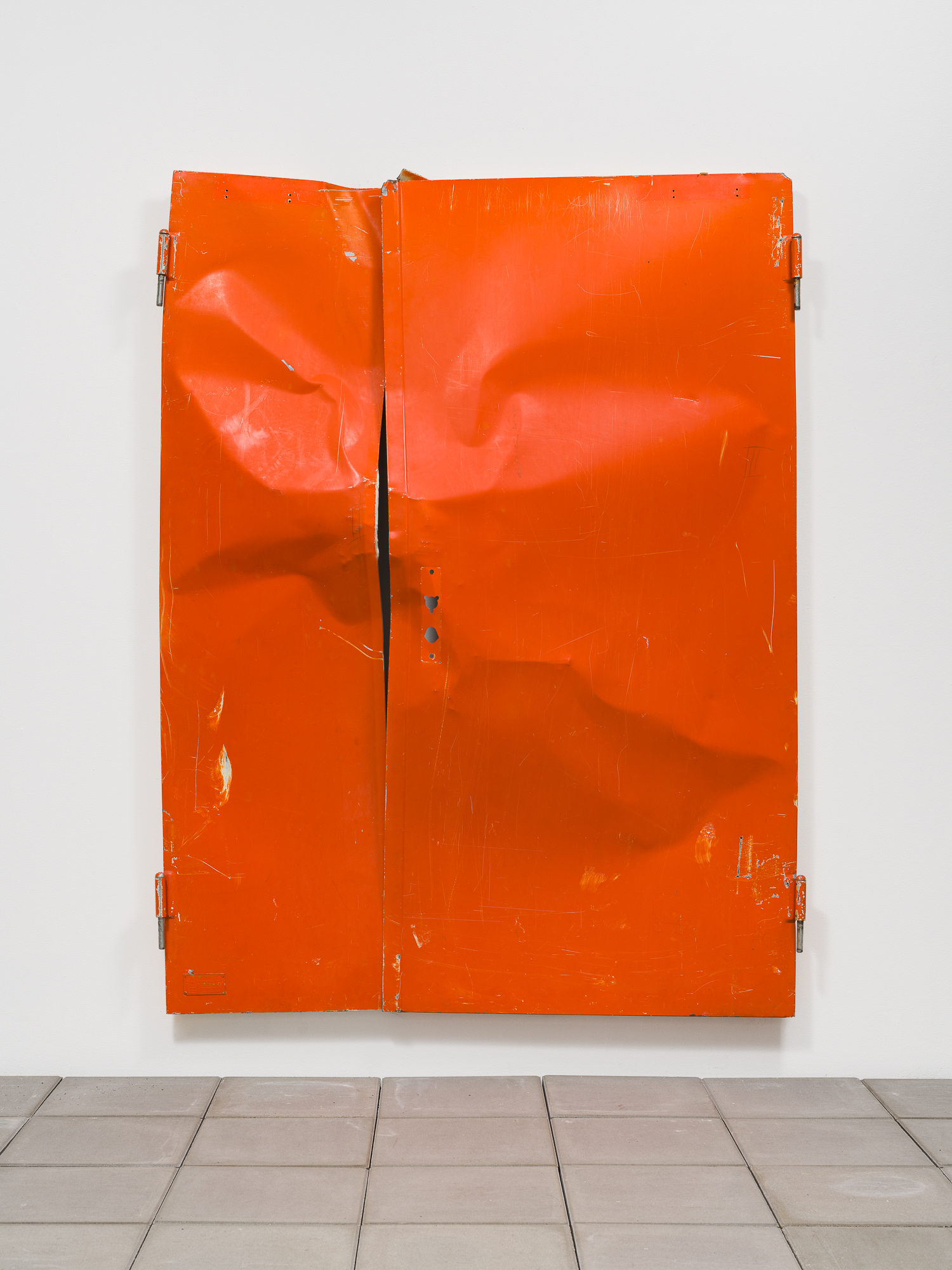
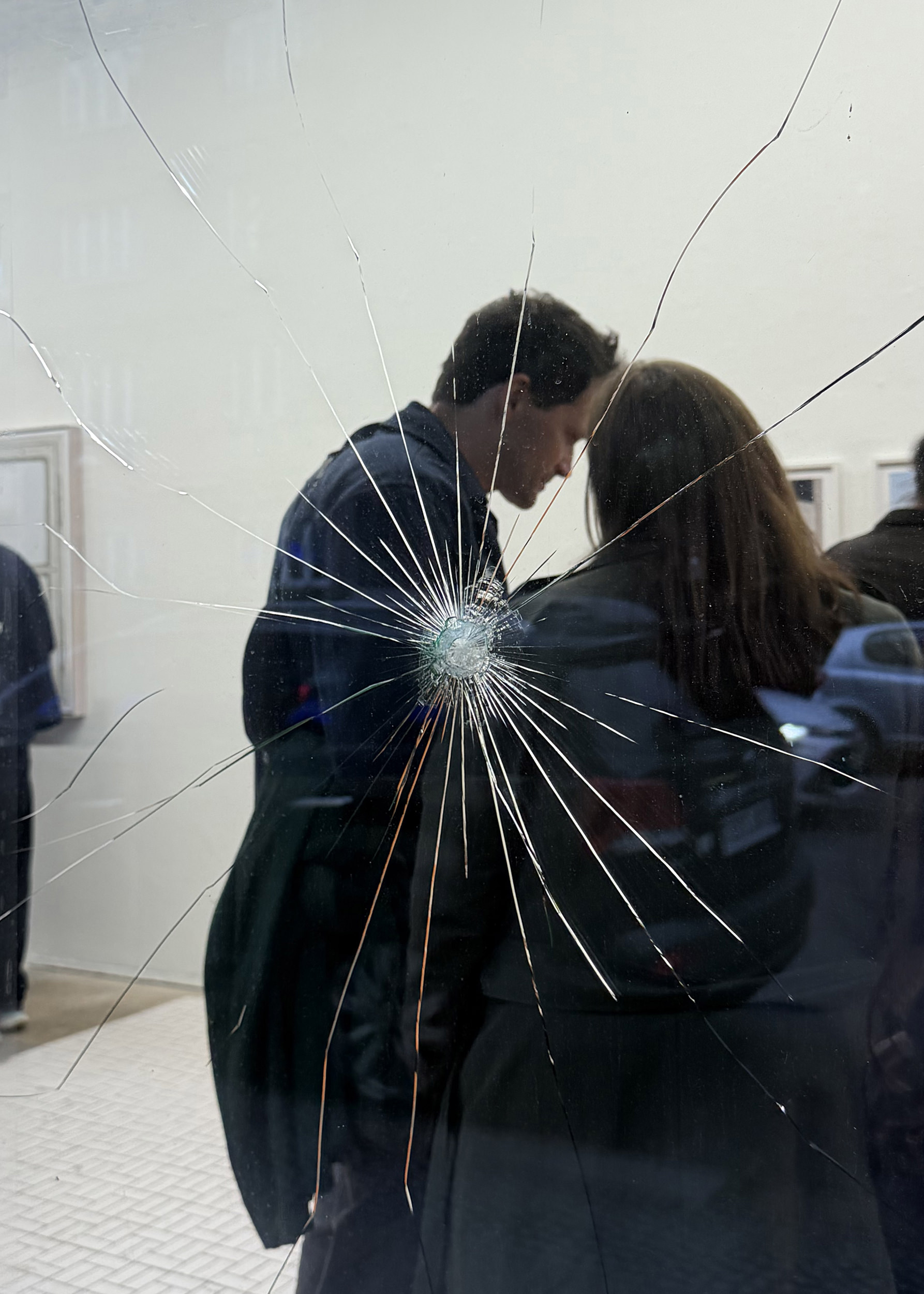
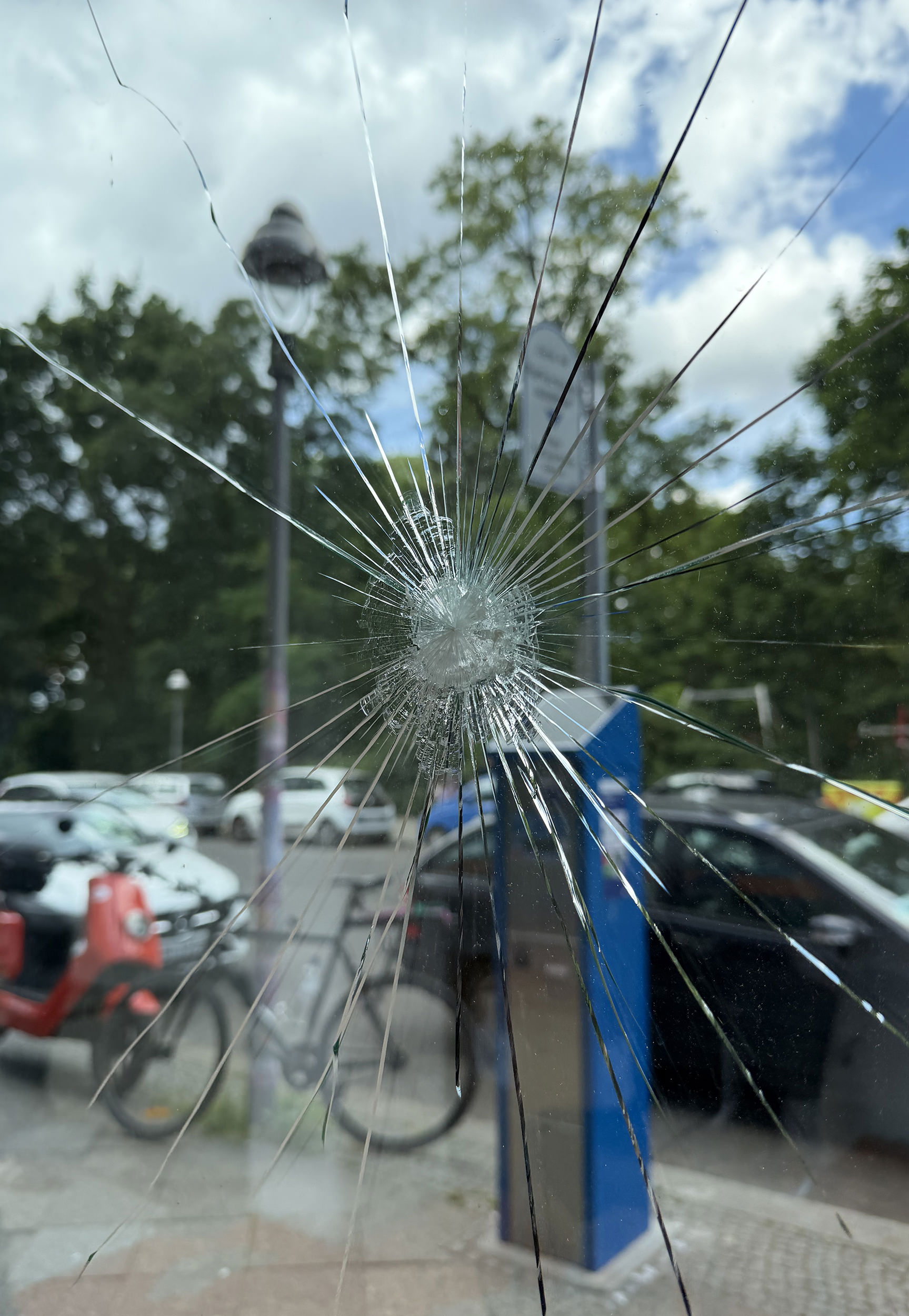
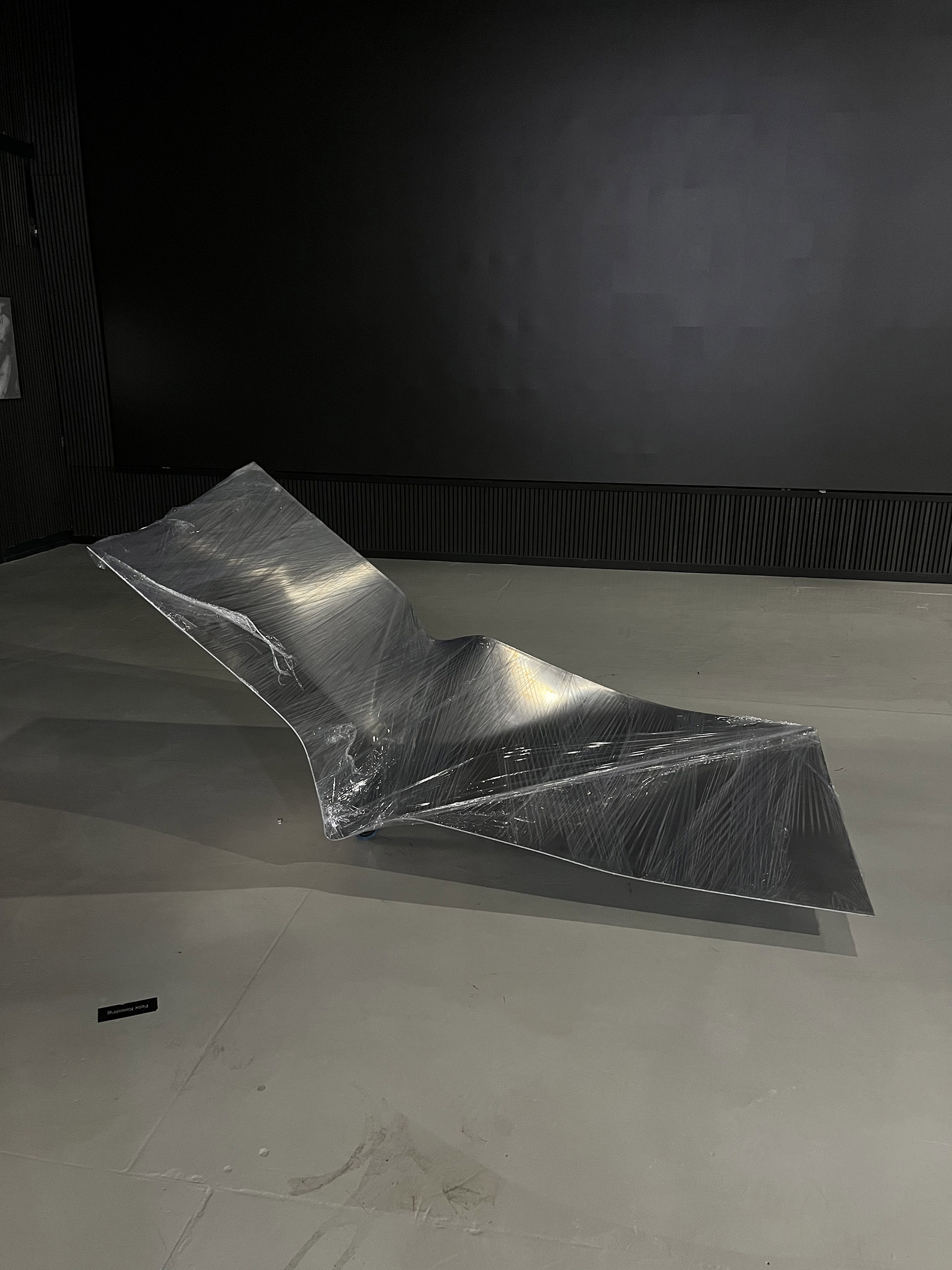
If your question is more specifically about my artistic practice, then ‚loss of control‘ is present in many dif ferent ways. I don‘t know how my synthesized sweat will eat its way into the aluminium, or what traces this chemical reaction will leave behind. I don‘t know which number will emerge from the calculation of my 70 kilos jumping on planet Earth until I have actually made the calculation. I don‘t know exactly how the alumi nium plate will deform after a ton of concrete is dropped onto it. I don‘t know how the beautiful patterns of a crack will travel through the glass when the material finally gives way to the force of my hammer striking it, forced to respond within a fraction of a second. I may have an aesthetic intuition, a hope, but the rest is decided by the material itself. Not in my hands.
What are the main influences or inspirations that guide your work? Which key figures have influenced your path as an artist up to now?
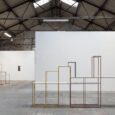
We move through a strange existence. We are standing on a sphere with neither up nor down. Its celestial direction is your construction. That is what inspires me. I find this infinitely more moving than references within the art world or the social, political, and career-driven dynamics that shape it. If I had to name one key figure, I would choose Fred Sandback. I love his work.
How would you describe the relationship between art and technology in your works?
Much like my relationship to science (see question 3), technology is simply another pigment in my practice — another way of reaching out. It serves no self-serving purpose. It is simply another tool for looking at the world.
Connection and overcoming distances are recurring themes in your work. Could you delve deeper into this concept?
Distance does not exist per se. It highly depends on dimensionality, on scale, and on perception. In that sense, it doesn‘t exist objectively. When I treat the Earth as a small sphere (while piercing it) it isn‘t an act of hubris. I‘m not trying to cast myself as some heroic superhuman figure. What interests me is the idea that scale and distance are not fixed realities – they are relational. Distance doesnt exist. You and I could be the very same particle, observed from a larger-scale perspective.
In your „Erddurchstechung“ projects, you physically connect two opposite points of the Earth. What drove you to create these installations?
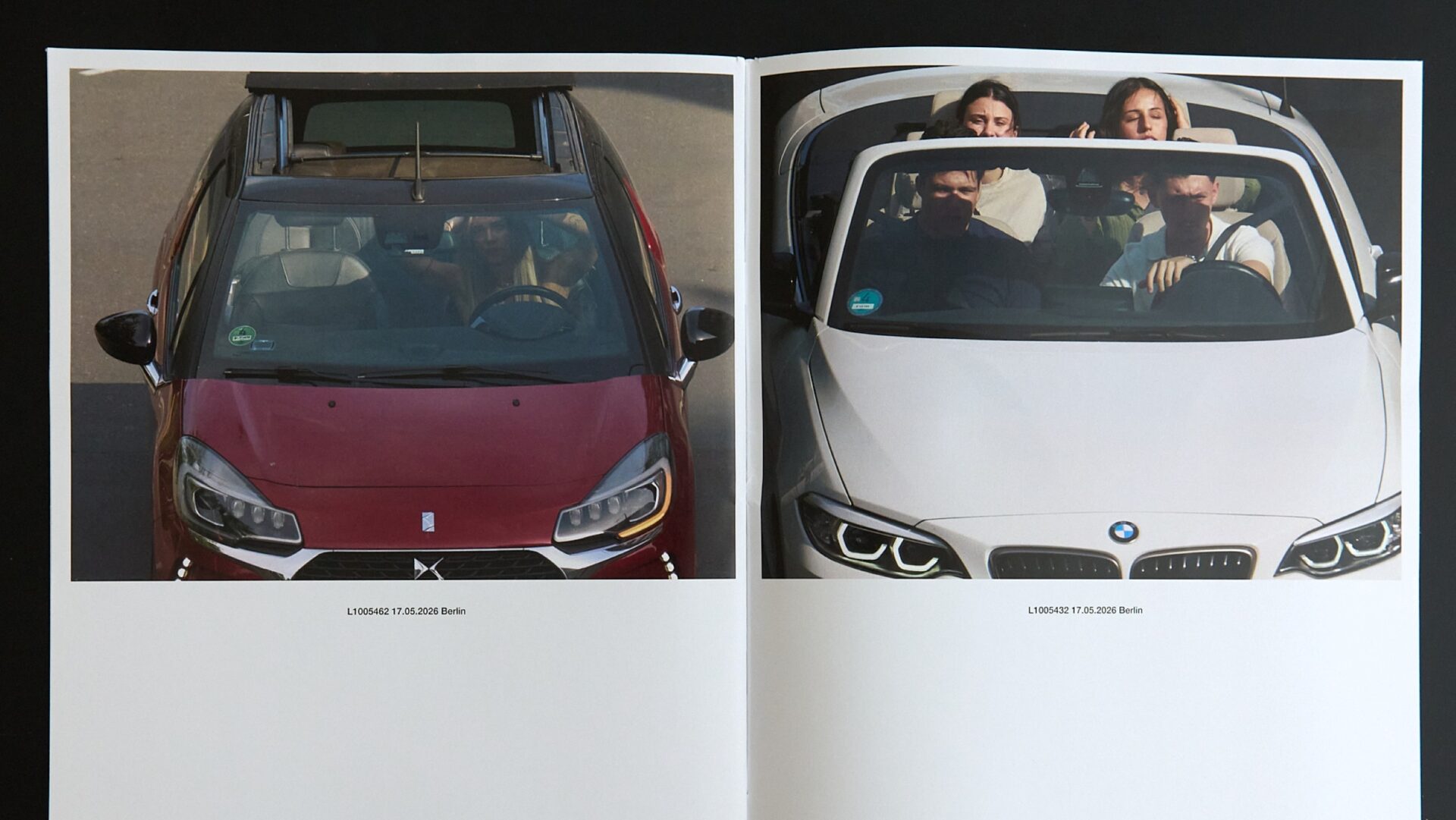
You and I are standing on the same spherical body. It is tiny and immense at the same time. Collectively we can explore ‚space‘. Lets acknowledge each other not as something divided by political borders and distance described by numbers. Let‘s reach one another beyond economic, military, political, and hegemonic super structures. Beneath all of us the material is simply soil. Through our discussion of the work and the viewer‘s contemplation of the photographic juxtaposition, the connection is materialized, and separation is overcome.
In your work „Schmetterling (Kraftrad),“ you translate the electrostatic tension of global lightning in real time. What is the significance of integrating real-time natural phenomena into your works?
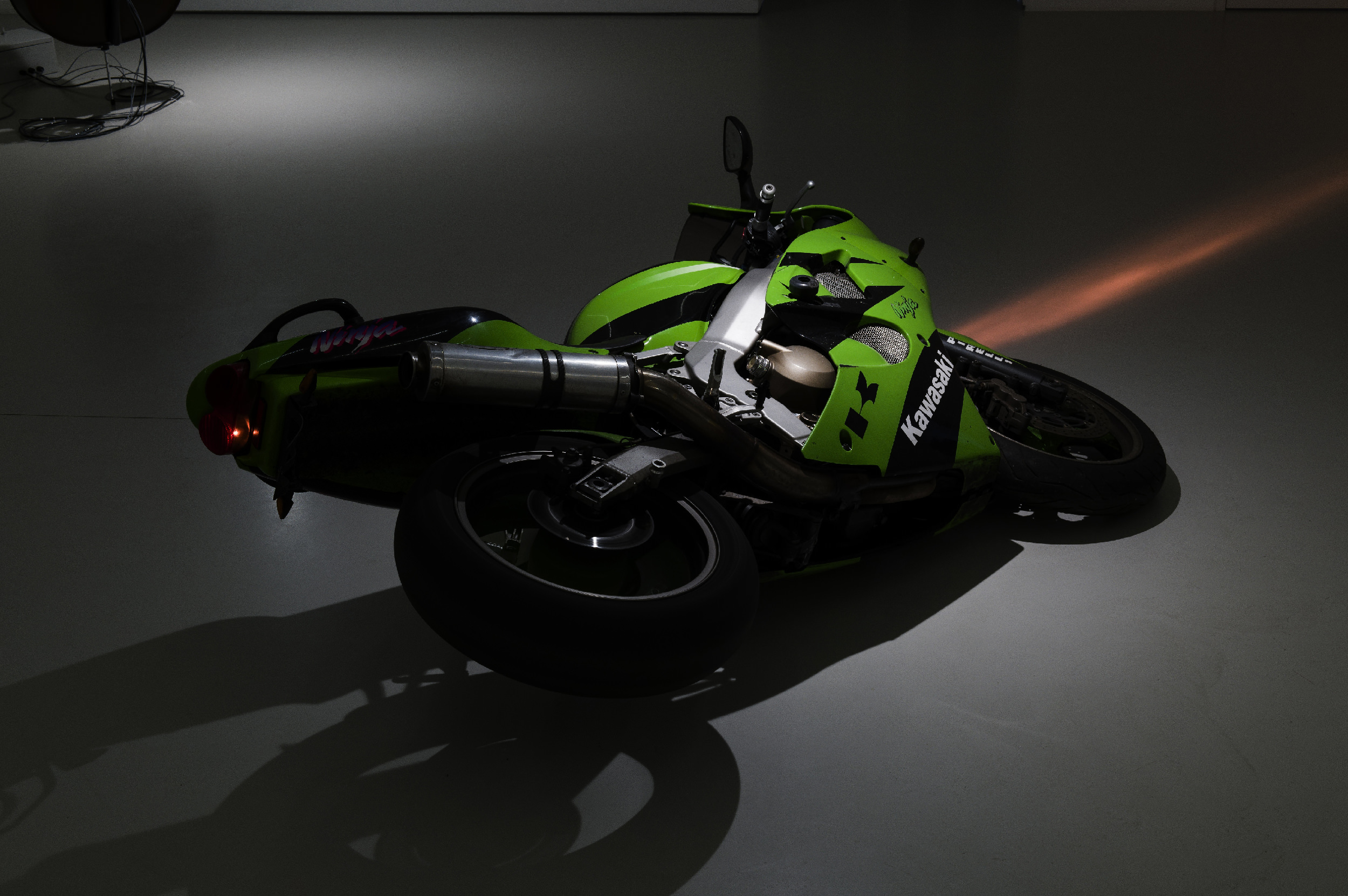
The Schmetterling series allows you to perceive something immensely complex as a single point. No energy is ever lost. It is only subdivided, dispersed, and distributed into ever smaller portions. If you put your foot on the ground, the energy of that collision radiates outward as sound waves. They become quieter with distan ce but never truly disappear. Their energy has infinite consequences, no matter how small. In that sense, Schmetterling could be understood as an inverted Butterfly Effect. Instead of one tiny event unfolding into an ever-expanding chain of consequences, the entire world collapses into a single motorbike’s headlight, a point where the work and viewer meet.
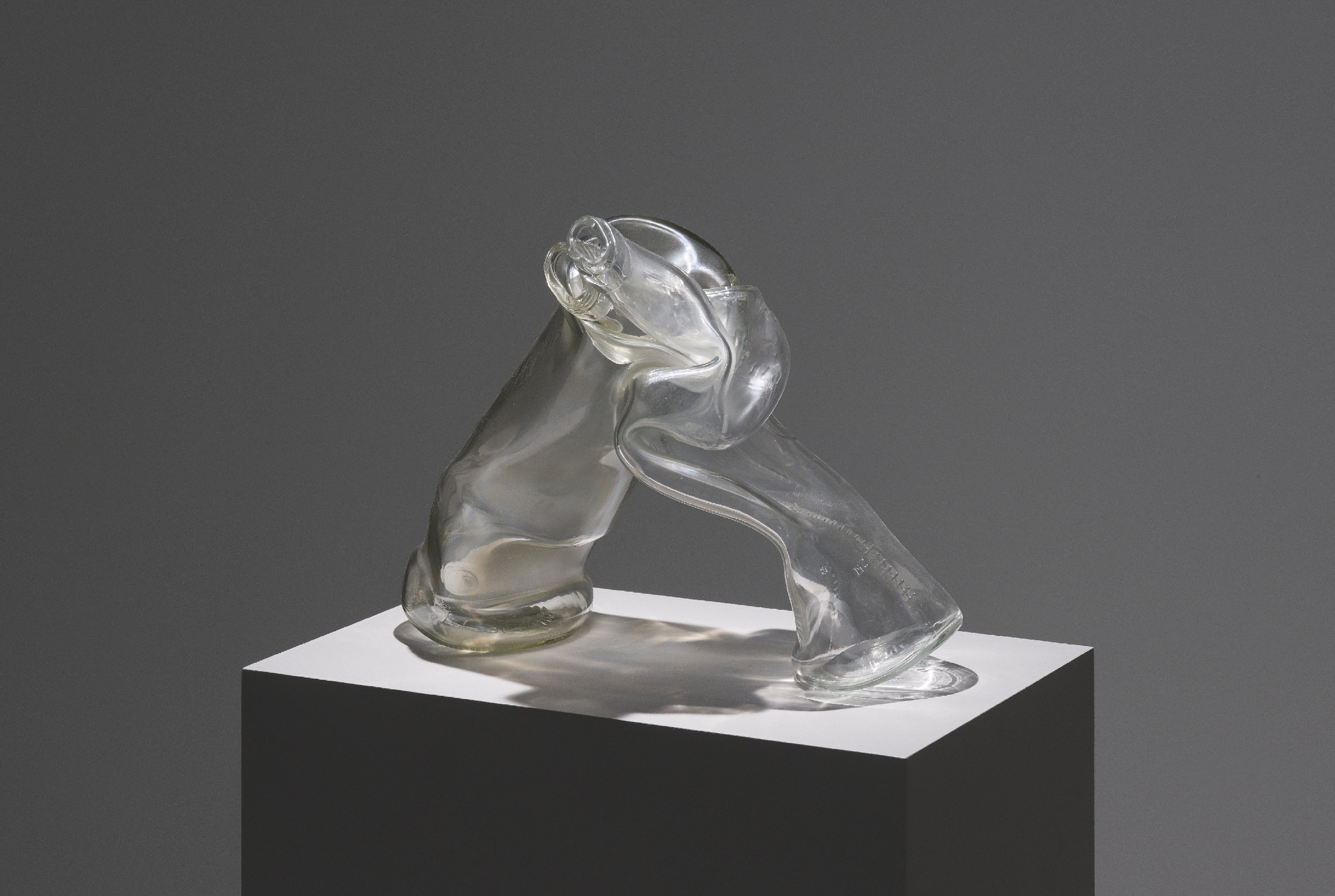
In your work „Die Liebenden,“ two deformed liquor bottles interact with each other. What does this interaction represent in the context of your art?
Softness. Love. A smile. Two mass-produced, standardized, prudish, asexual artifacts begin to soften. In the face of ‚Hitzetot‘ death by heat, they hold one another, intertwine, cling to each other.
The use of real-time data is fundamental in your installations. What role does technology play in connec ting the public to global phenomena?
I feel that I have already illustrated and answered this question above.
What are your thoughts on the presumed superiority of society over the forces of nature? Is this a topic that recurs in your works in some way?
The belief in this superiority is the very reason why we, like every so-called Hochkultur ‚high civilization‘, will eventually decline. On a small personal scale: my parents worked toward the future. They believed in continuous progress, stability, and the promise of a secure tomorrow. Yet everything changes so rapidly. The world we live in today is not necessarily the one you bargained for, saved your money for, or built your sense of security upon.