
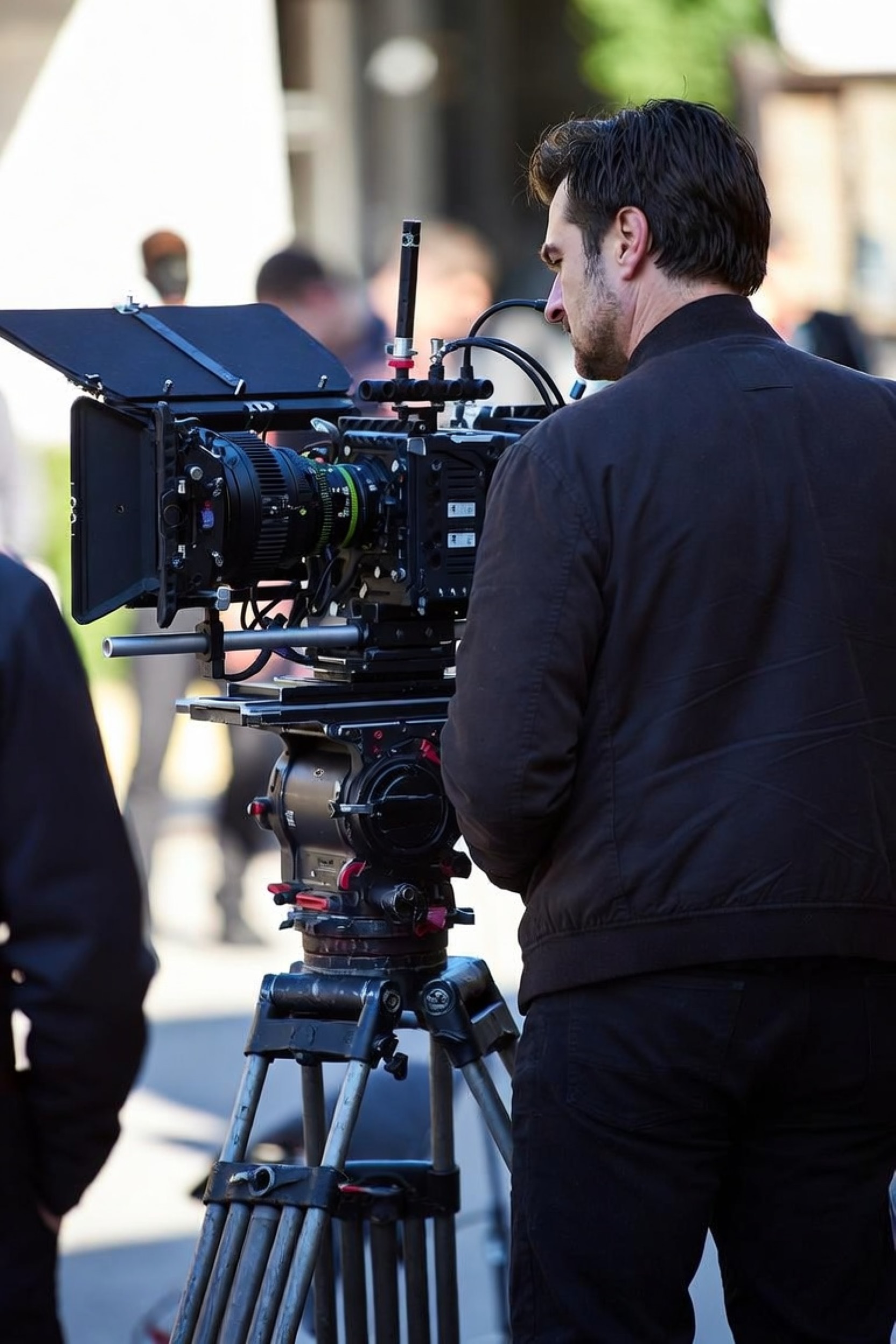
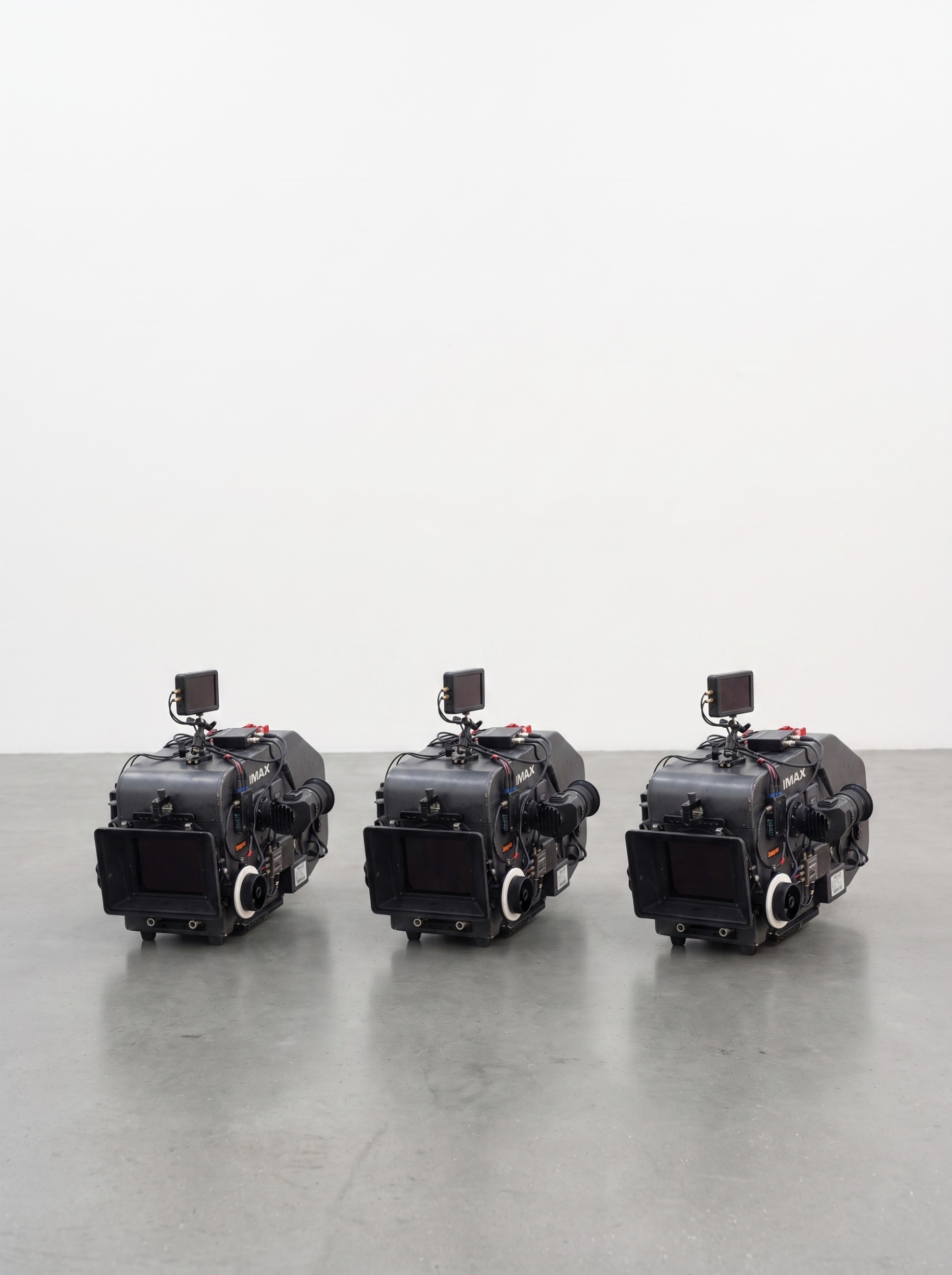
On the deck of a ship, a camera weighing roughly three hundred pounds occupies the space it was meant merely to observe. Its housing suppresses the mechanism’s noise; the film magazine imposes a reload every two and a half to three minutes; a system of mirrors allows actors to maintain their eyelines around the apparatus. Christopher Nolan and Hoyte van Hoytema shot The Odyssey entirely with IMAX film cameras, a first for a feature-length production. Before becoming an image, the film enters the device ecology as a physical problem.
The choice opens a question that exceeds cinema. Why introduce difficulty when lighter, quieter, more flexible equipment could reduce cost, time, and friction? Resolution, scale, and immersion supply the obvious answers. The more consequential answer concerns how an obstacle recalibrates the attention of its makers, distributes responsibility across a production, and prepares a different perceptual threshold for the audience.
Art has long cultivated this impulse. An artist builds a machine instead of purchasing a tool, develops a pigment, submits a gesture to an extended protocol, works with unstable materials, or organizes a production whose bandwidth exceeds the apparent needs of the final object. We describe these decisions as research, rigor, obsession, or waste according to our position within the cultural ranking system. Self-induced complexity remains suspended between two outcomes: a method of knowledge and a theater of prestige.
Friction gains significance through the transformation it produces. A difficult procedure becomes operative when it alters the maker’s perceptual threshold and deposits that alteration in the form, duration, or spatial behavior of the work. Labor alone guarantees nothing. Yet certain works begin to think only after the method ceases to comply and forces their makers into another position within the parameter space.
The Weight of the Apparatus
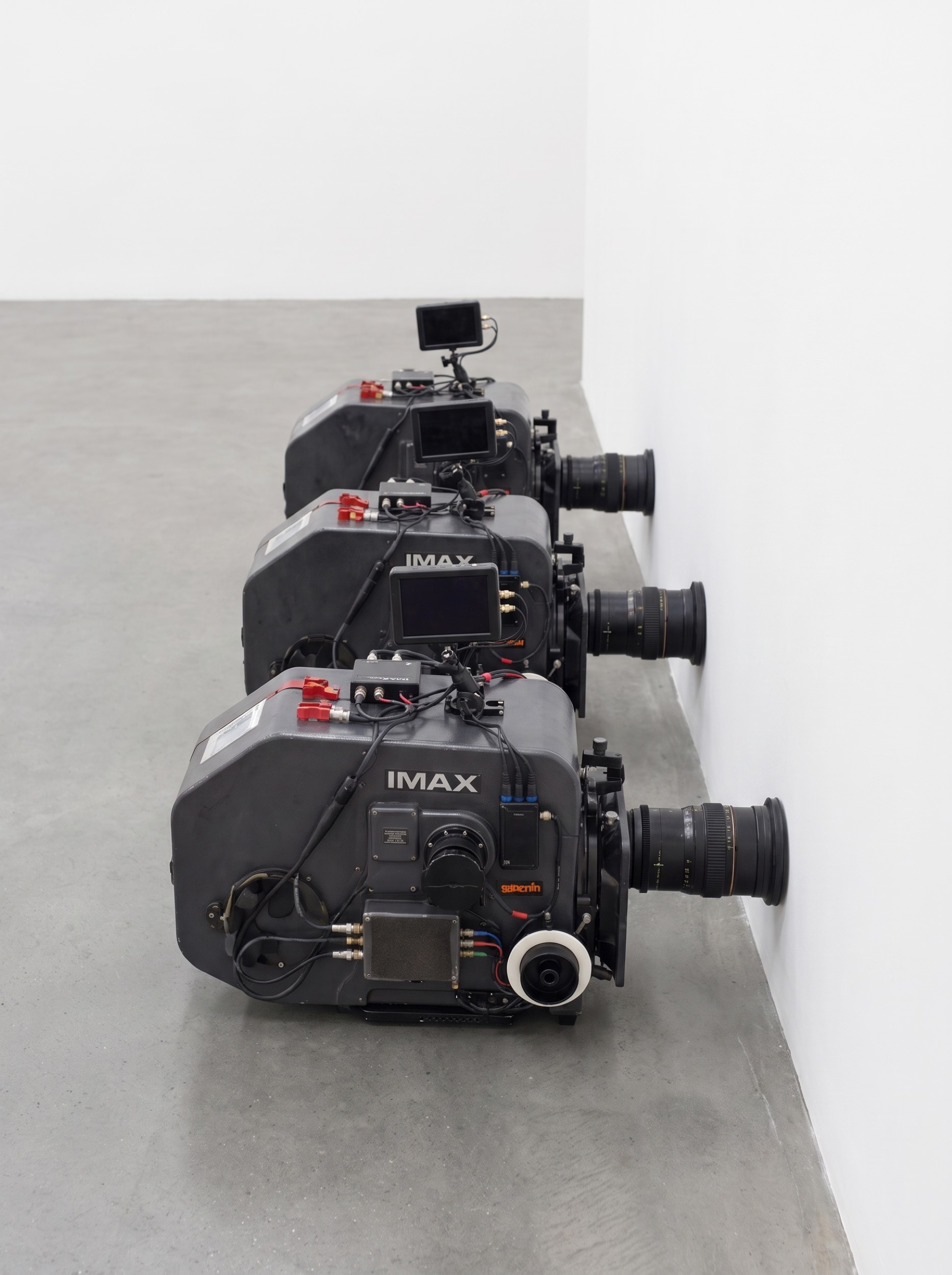
An IMAX camera does more than register a larger scene. Its mass redesigns the scene before recording begins, turning camera placement into an element of the device ecology. Nolan has described an apparatus that is difficult to move and has no zoom lens, compelling the director and cinematographer to bring the camera physically closer to the action. Composition emerges from actual spatial relations: the distance between bodies, lens height, terrain access, and the operator’s available movement.
Technical convenience multiplies reversible options. Position, focal length, coverage, and postproduction can preserve decisions in a suspended state, extending the parameter space until commitment becomes optional. A cumbersome machine compresses those possibilities and raises the cost of every choice. Framing acquires gravity because the mechanical eye must traverse and organize the world before it can capture it.
The entire set is absorbed into this condition. Actors’ bodies, crew choreography, available daylight, and a film magazine measured in minutes form a single infrastructure of exposure time. The apparatus loses its transparency as a neutral tool. Everyone must sense its cadence, anticipate its demand for space, and recognize the precise instant when recording capacity closes.
The sound blimp and the mirror system used for dialogue reveal a further operation. Intimacy with a machine designed for monumental spectacle requires a new architecture of proximity, one that treats compression and eyeline as material constraints. Difficulty is incorporated into a solution that rearranges faces, gazes, and crew positions. A technical problem enters the emotional grammar of the scene.
The resulting image carries this network of decisions even when the audience knows none of its production history. Negative size matters, but so does the spatial discipline generated by the camera’s weight and limited bandwidth. The apparatus writes before light reaches the film: it defines what may occur before the lens and assigns a cost to hesitation.
Friction as Method
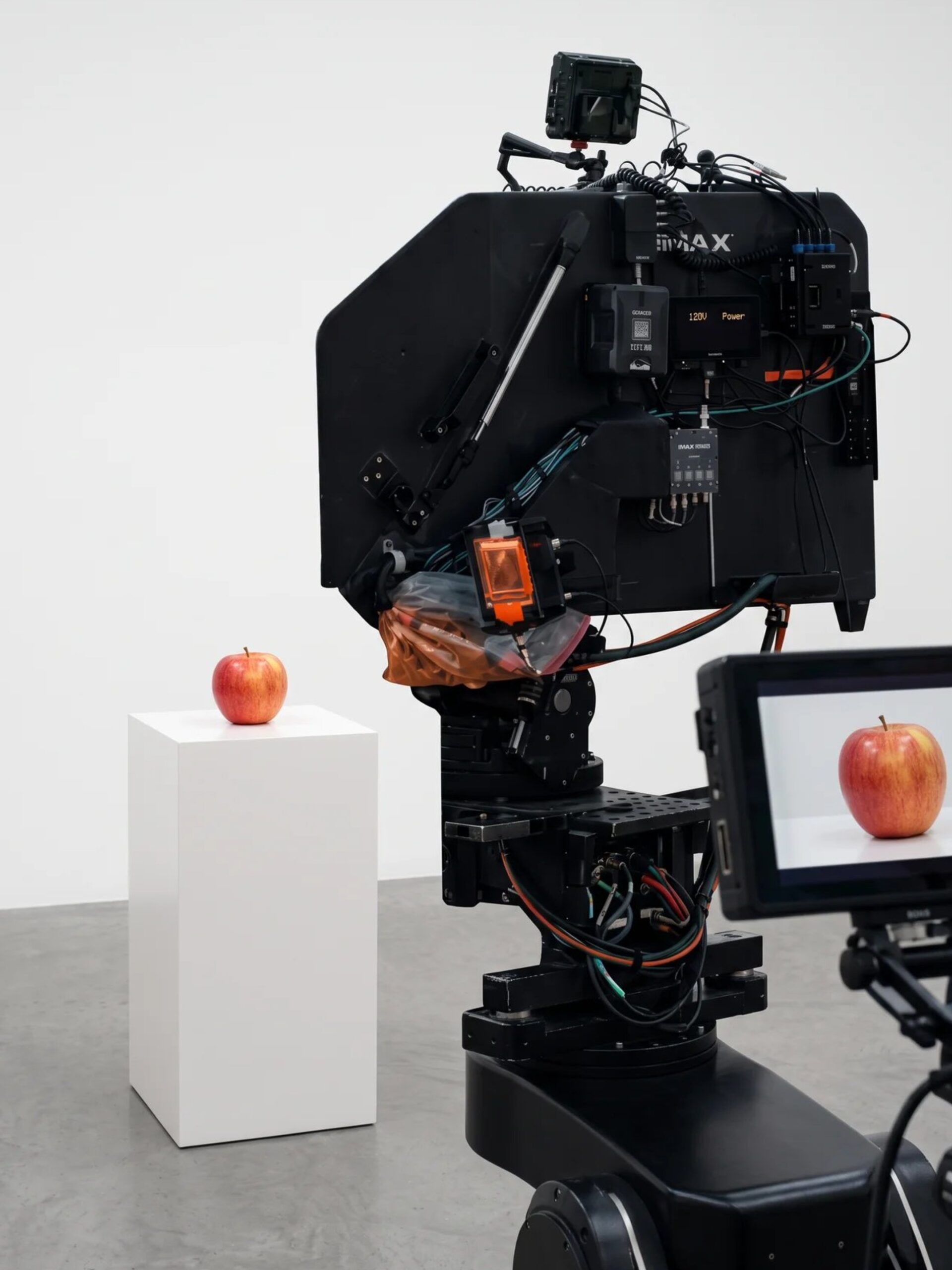
Self-induced complexity begins when a maker chooses a constraint that could have been avoided. Within a production culture governed by optimization, the preferred tool reduces steps and preserves the widest possible parameter space. Procedural excess can nevertheless operate as a sorting mechanism. Each stage eliminates certain possibilities and gives others the force of necessity.
Consider a sculpture cast through a fragile mold, a photograph tied to an exposure time incompatible with instant capture, or a digital image built through a process that introduces irreversible errors. Each procedure produces more than an aesthetic effect. It calibrates the maker’s body, slows response, and exposes dependencies that an efficient interface cadence would absorb. Complexity becomes distributed attention.
A severe distinction is required. Difficulty acquires critical value only when it discriminates, making some decisions impossible and forcing others into legibility. Repetitive labor, elevated cost, and technical virtuosity can remain exterior to the work, converted into attention metrics for the artist’s public narrative. The audience then receives effort as a certificate of authenticity while the form behaves like any other surface in the feed.
Productive friction introduces responses the maker could not fully predict. Material yields, a machine imposes its cadence, collaboration redistributes control, or duration modifies the memory of the initiating gesture. We enter the process with an intention and leave with a structure that has resisted long enough to correct us. That correction separates a method from a ritual of endurance.
Complexity therefore performs an edit before the work reaches final form. The procedure has already excluded shortcuts, compressed the repertoire, and ranked choices within a provisional latent space. A constraint becomes useful when it generates precision. Friction becomes form when the work retains the pressure that made it necessary.
The Author Inside the Device
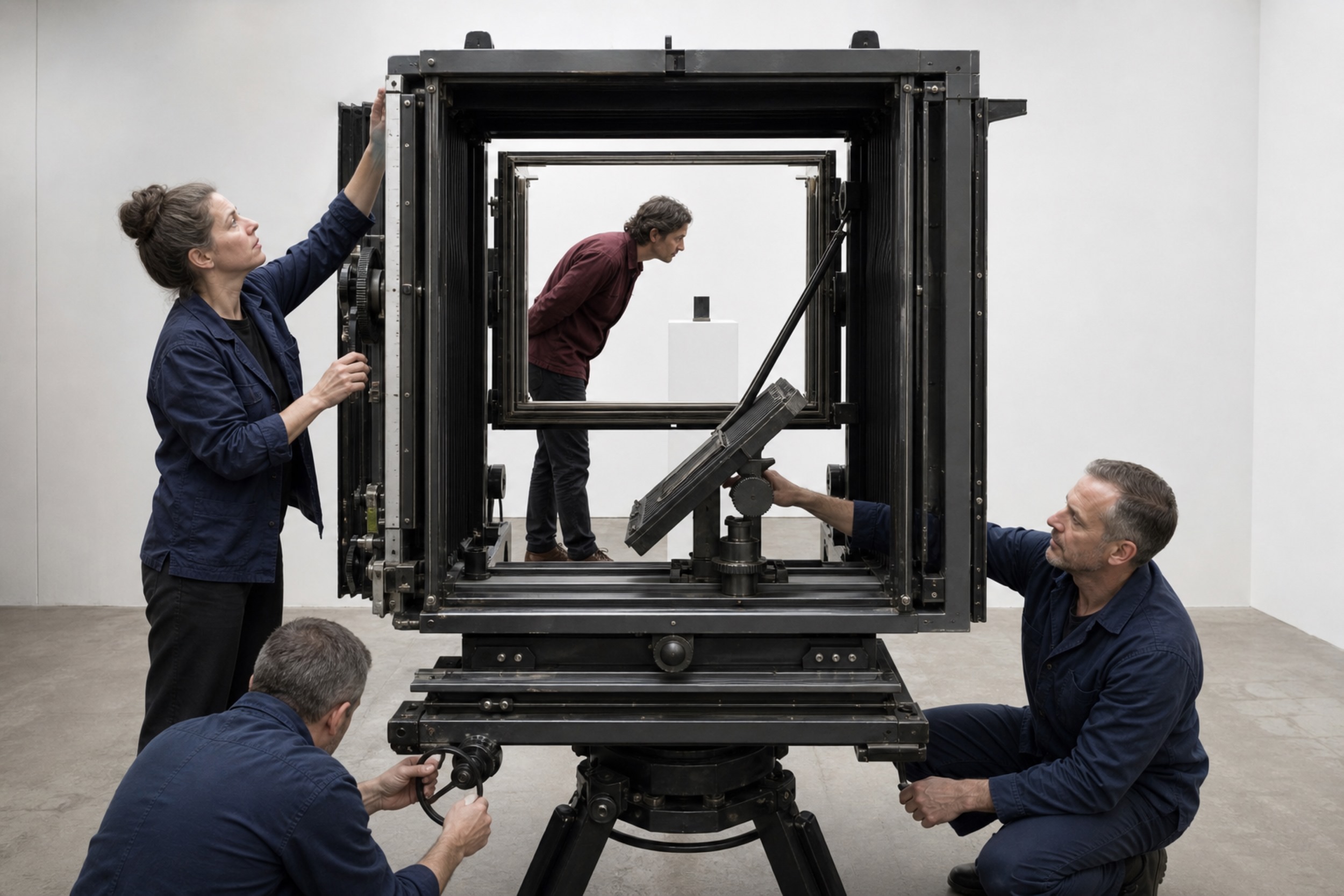
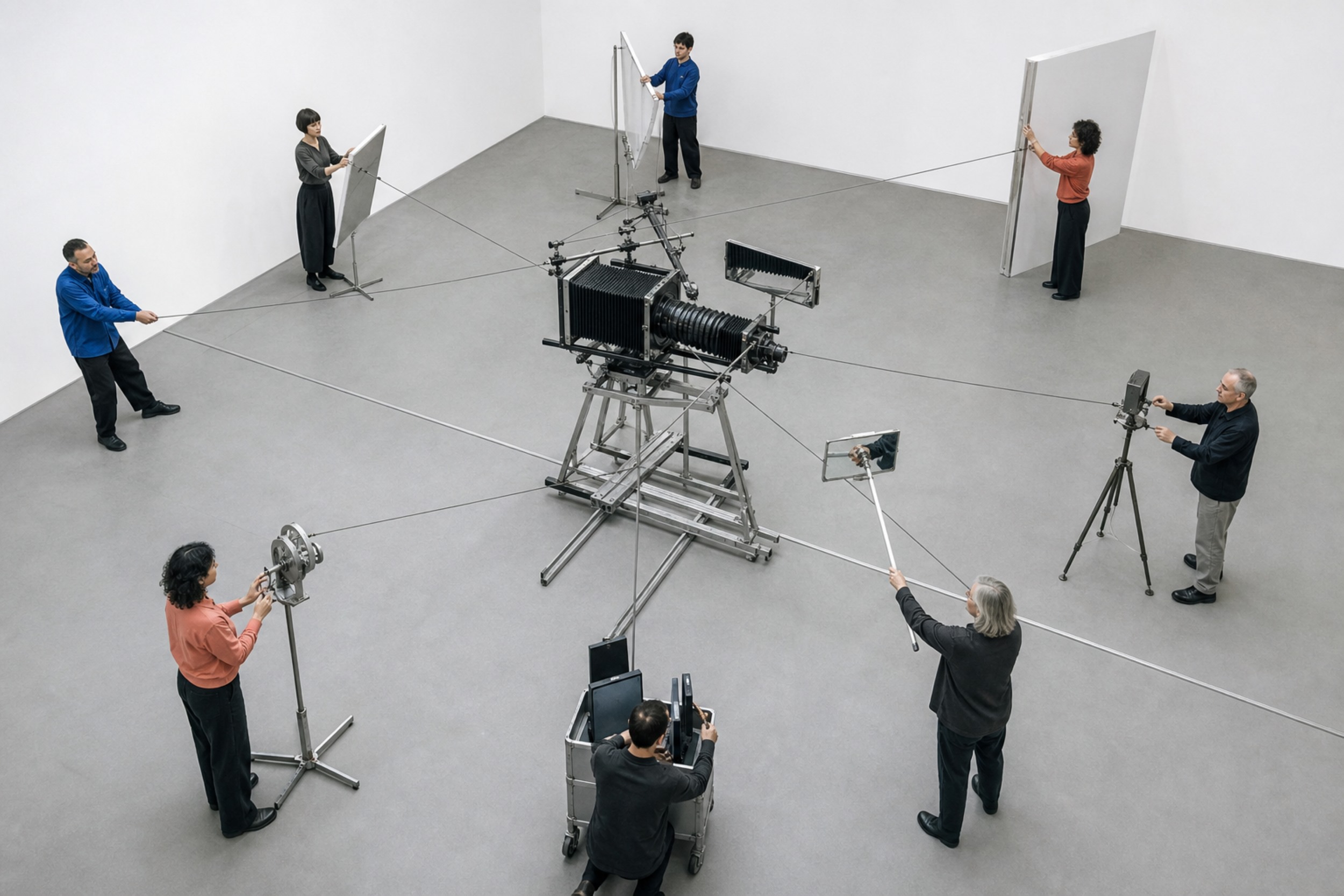
The experience of making a work exceeds the status of private prehistory. Every process trains the perceptual system that passes through it, teaching the body where to wait, which variations to detect, and how much error to tolerate. A complex practice can modify the author before it modifies the object, turning production into applied perceptual calibration. We imagine ourselves constructing a form while the procedure constructs the subject capable of seeing it.
Contemporary technologies make this reciprocity difficult to perceive. Fluid interfaces compress operational sequences, conceal infrastructure, and deliver results while the chain of dependencies recedes behind platform governance. This ease releases genuine creative energy, yet it can narrow material understanding. Reintroducing complexity may reopen the box, disclose the parameter space, and locate the point where a decision has been delegated.
The production of The Odyssey renders that exchange visible. The camera demands adaptation, and the adaptation generates new engineering; artistic ambition pushes IMAX toward a quieter system, while that system changes the kinds of proximity the film can sustain. Maker and device modify one another through a feedback circuit. The work emerges from material negotiation within the device ecology, beyond the fantasy of immaculate intention.
An obvious drift accompanies this model. Complexity can become authorial theater, with every obstacle increasing the aura of the person who claims to have overcome it. Budget, rare technology, crew size, and production duration become units inside a prestige ranking system. When admiration for the feat becomes the principal mode of reception, the method occupies the work’s position and difficulty behaves like an enlarged signature.
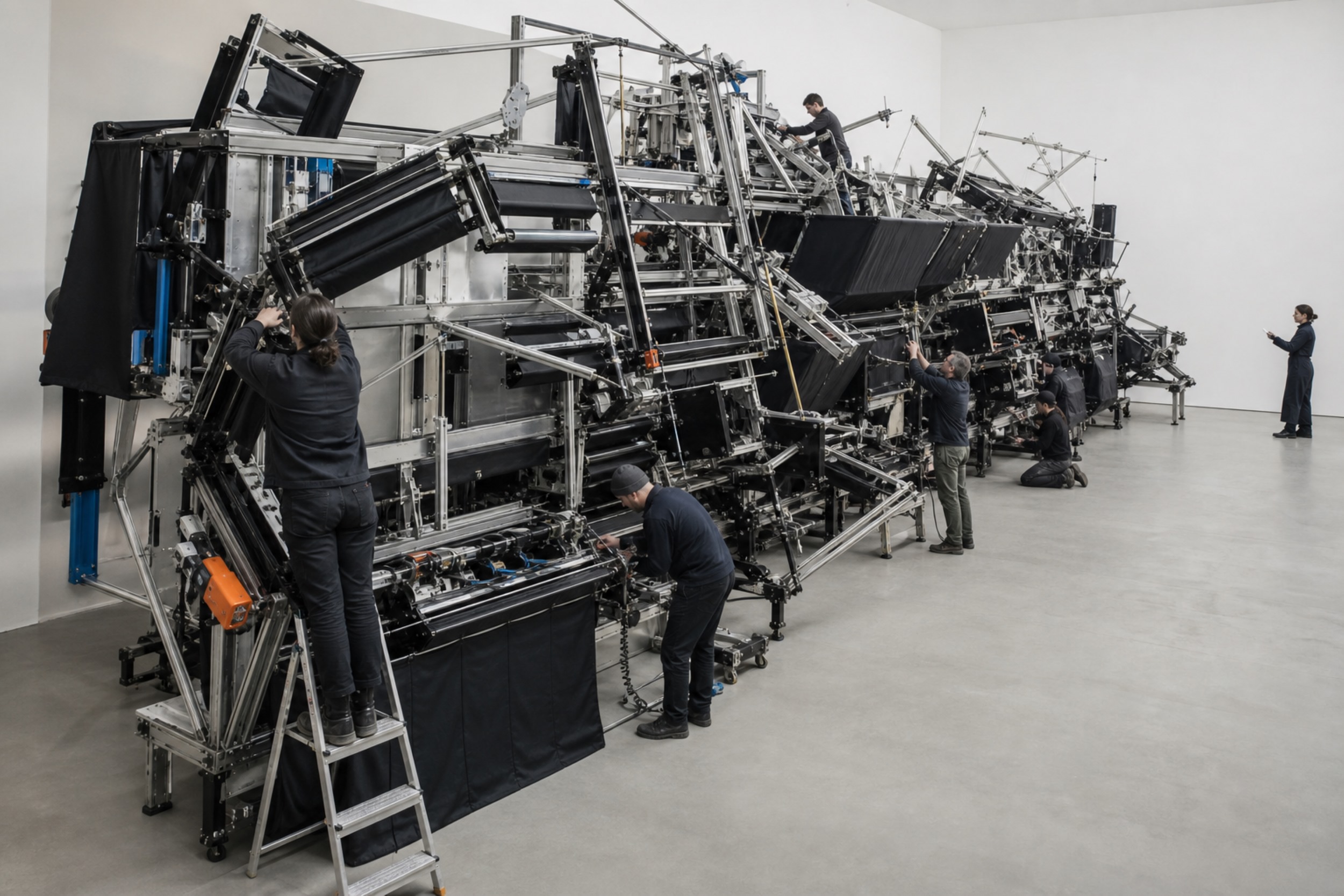
The more radical value travels in the opposite direction, through procedures that limit authorial control and cultivate responsiveness. A heavy camera, unstable material, or extended duration can displace intention and force it to answer what it encounters. Complexity produces knowledge when it shortens the distance between decision and consequence through material feedback. The maker learns to be measured by the device’s energy management.
The Viewer After Ease
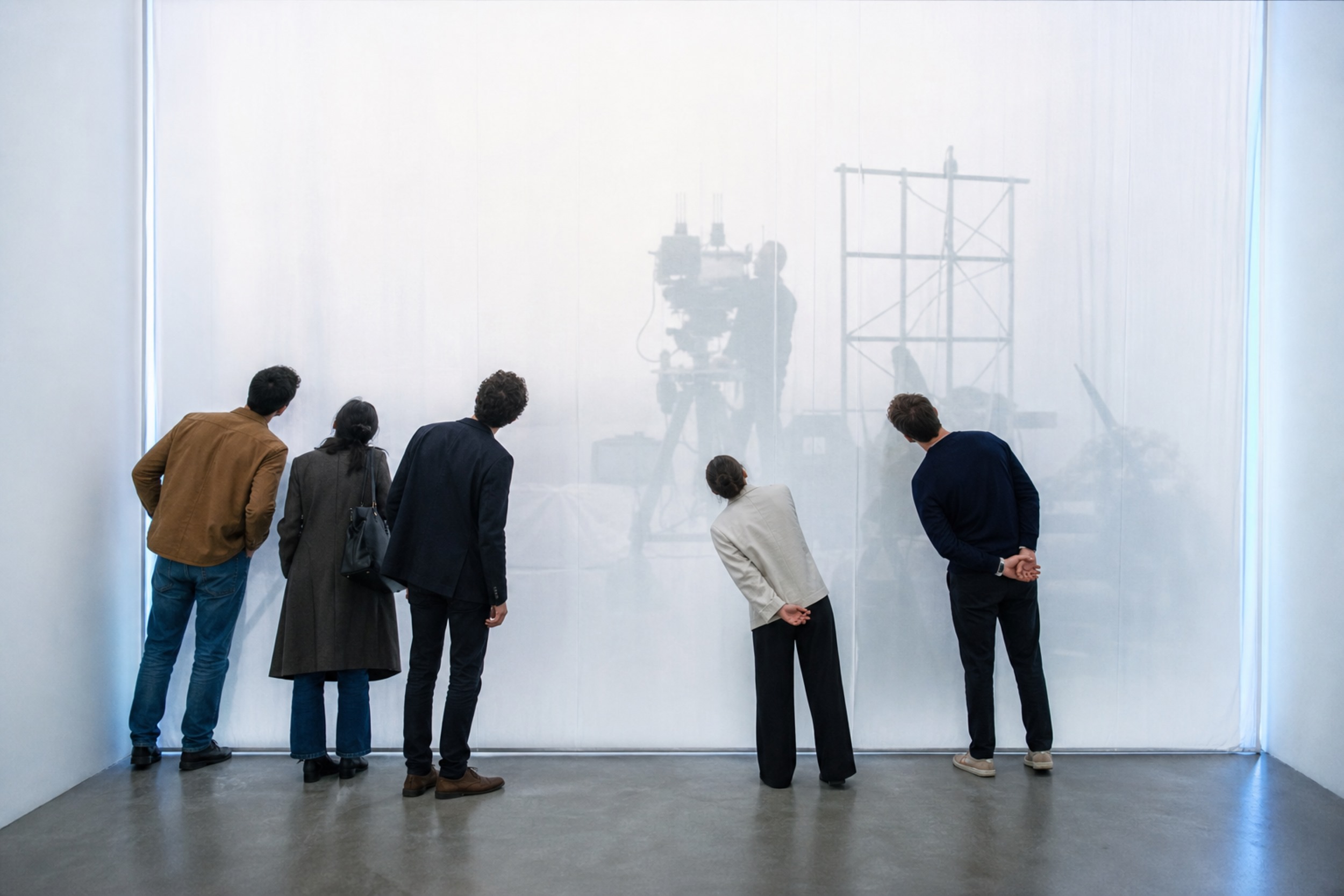
Production experience does not transfer automatically to an audience. Accumulated labor in the studio offers no guarantee of greater intensity in the gallery, just as camera weight disappears once the film reaches distribution protocols. A discontinuity separates making from viewing. The work must translate its process into sensible conditions, or complexity survives only as caption and biography.
With IMAX, translation occurs through a specific perceptual ecology. The fifteen-perforation frame travels horizontally, the 1.43:1 aspect ratio occupies the height of the screen, and the image extends into peripheral vision. Scale reduces the felt distance from the filmic field and makes the body part of the measurement. The format organizes an encounter through screen architecture and perceptual threshold, beyond a quantitative increase in resolution.
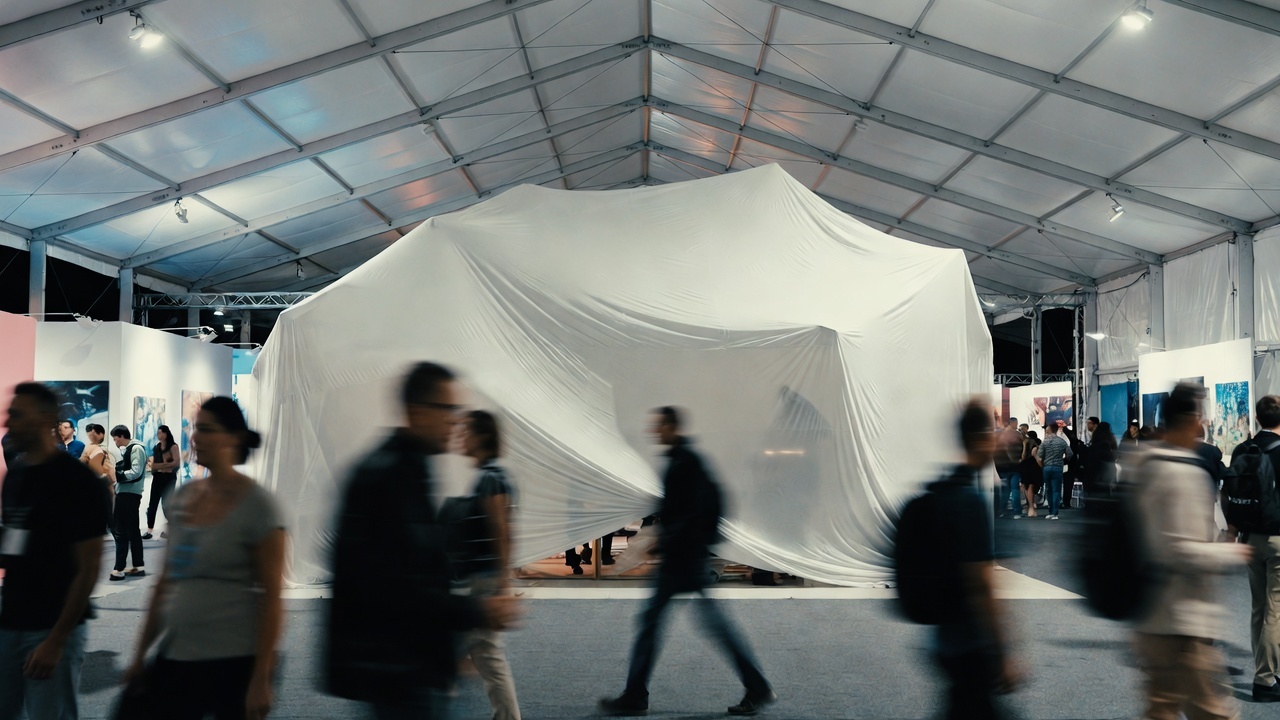
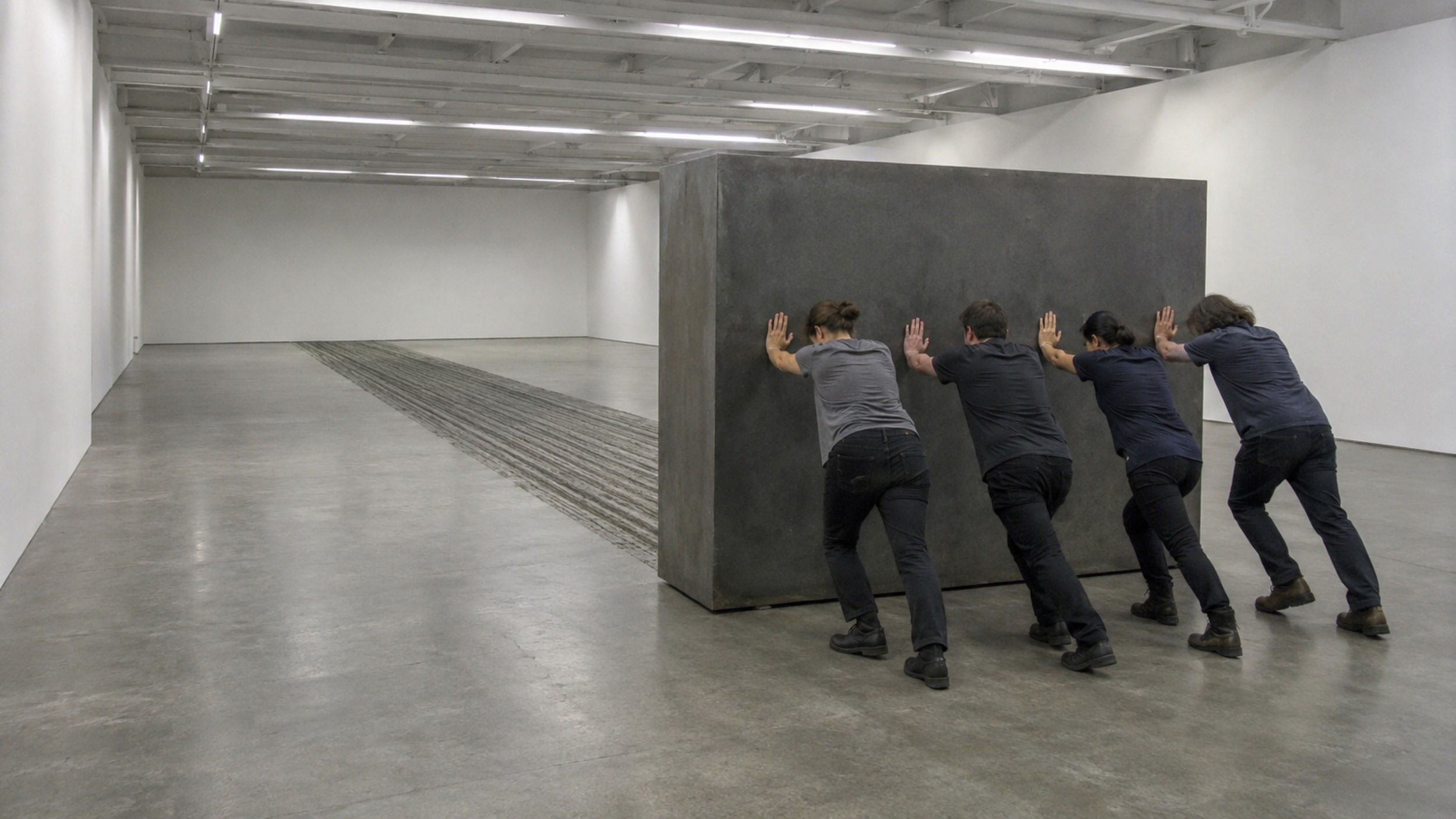
Art performs a comparable translation when a complex procedure settles into surface, duration, acoustics, or spatial resistance. Viewers may remain unaware of the technique while still encountering its consequences. Material retains time, sequence frustrates the rapid glance, scale demands movement, and repetition adjusts dwell time. Process succeeds when it becomes the behavior of the work.
This condition separates intensity from spectacle. A monumental object may be perceptually instantaneous, while a minimal work may demand extended recalibration. Effective complexity asks little interest in reconstructing the heroism of production. It delivers a sensible problem, a distribution of durations and distances that makes automated attention metrics inadequate.
Maker and viewer encounter the same resistance from different sides. One crosses it as production; the other receives it as a perceptual threshold. Their experiences remain asymmetrical, yet a shared structure of attention can connect them. The work establishes that connection when it converts a private constraint into a public condition of presence.
The Measure of Excess
The remaining task is to establish how much friction a work can use. Excess carries its own seduction and may expand beyond the function that first justified it. A procedure grows, recruits resources, generates protocols, and eventually begins to protect its own continuation. The work then serves the method while the method accumulates authority across the production parameter space.
Its value can be measured through three interdependent transformations. The first concerns decisions: does the process sharpen them or bury them? The second concerns the maker: does the device enlarge sensitivity or reinforce a mythology of control? The third concerns the audience: does friction become perceptible experience or remain narrative capital within the ranking system surrounding the work? These questions reveal the point where rigor becomes fetish.
Simplicity deserves equal scrutiny. Tools that promise frictionless use often relocate complexity into infrastructure, automation, and platform governance concealed from the user. A fluid surface can cover a dense system of prior decisions. Choosing explicit difficulty may recover the site of responsibility and make the cost of form perceptible again.
Defending friction requires no nostalgia for slow techniques or noble materials. Certain forms of knowledge depend on duration, irreversibility, and bodily presence, especially under a notification rhythm that fragments sustained attention. Speed produces access; constraint produces difference. A culture devoted to eliminating steps may also eliminate the moments in which intention is contradicted and the work begins to answer.
At sea, the oversized camera forces everyone to know where they stand. That may be the lesson carried beyond The Odyssey: complexity earns its place when it converts weight into orientation and obstacle into perceptual bandwidth. Some works need a difficult machine so that vision can recover a body.