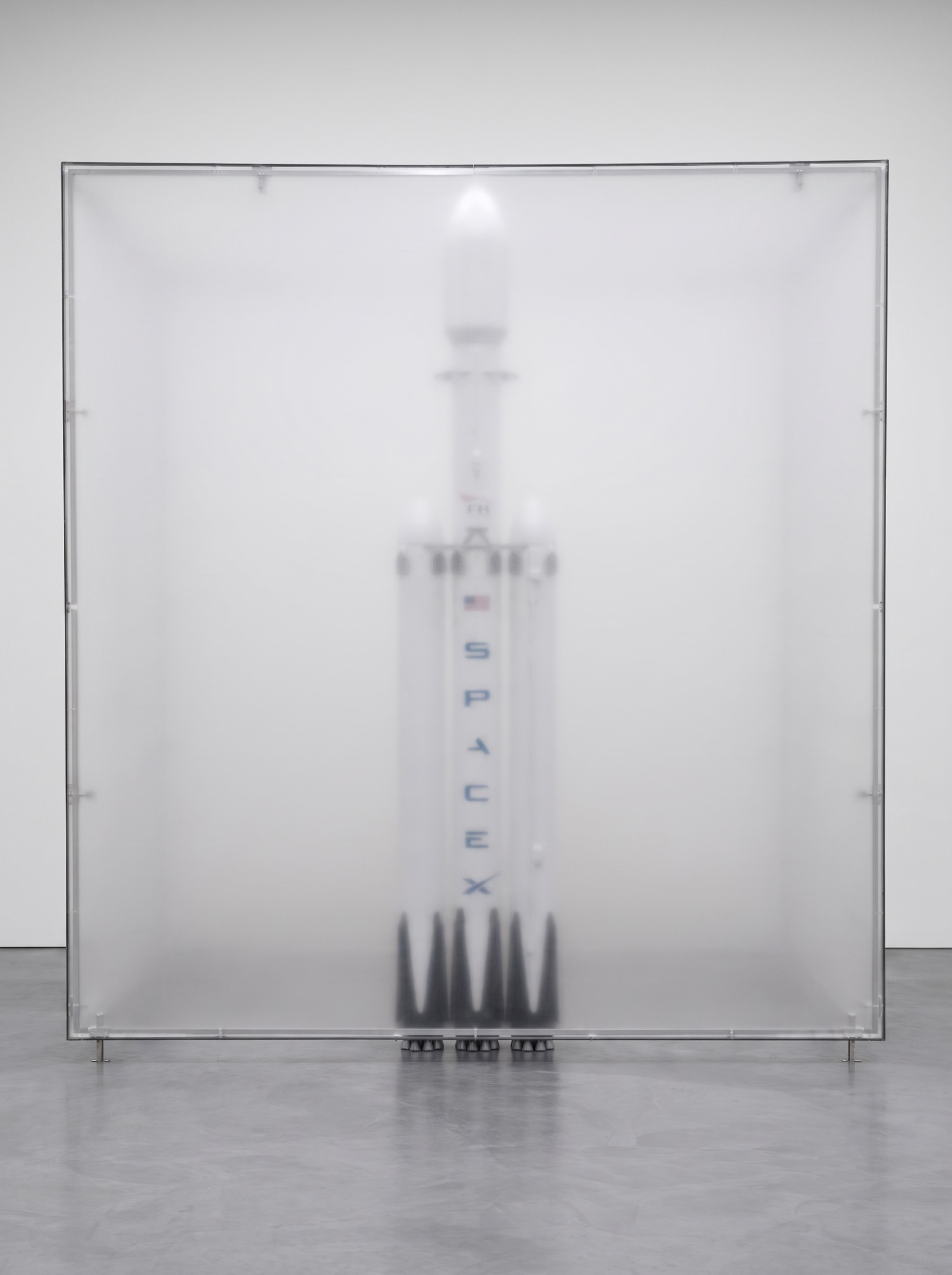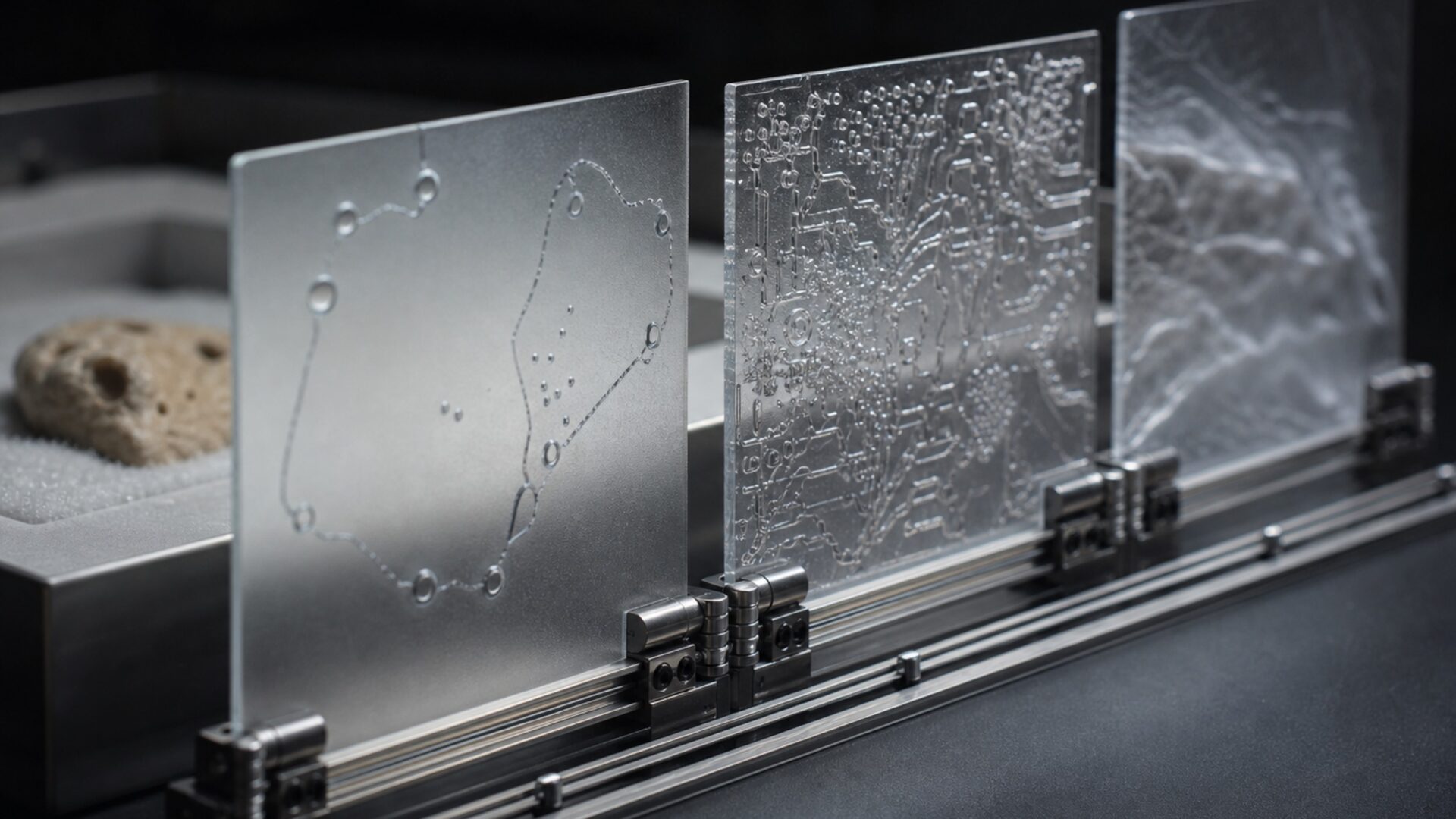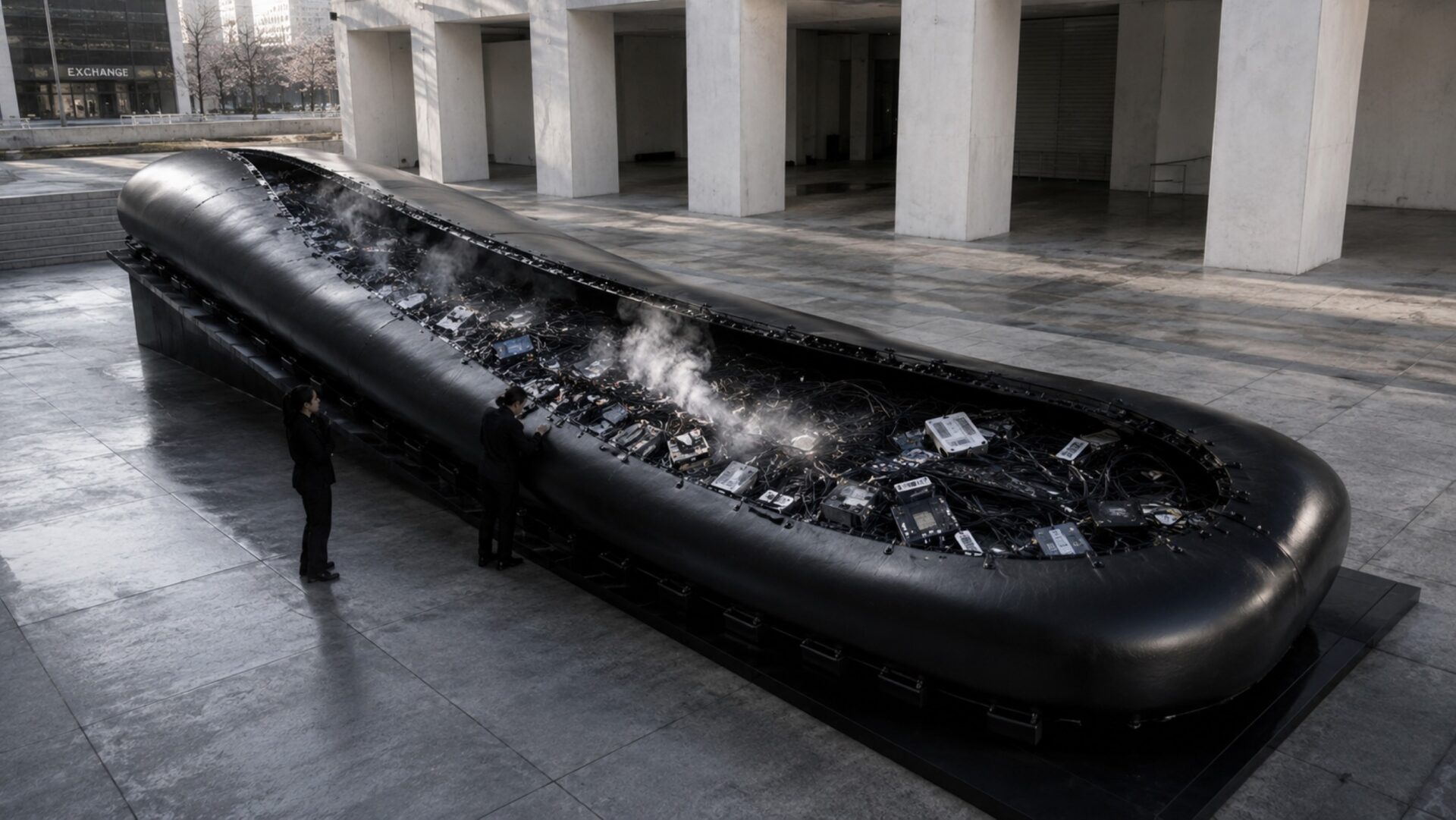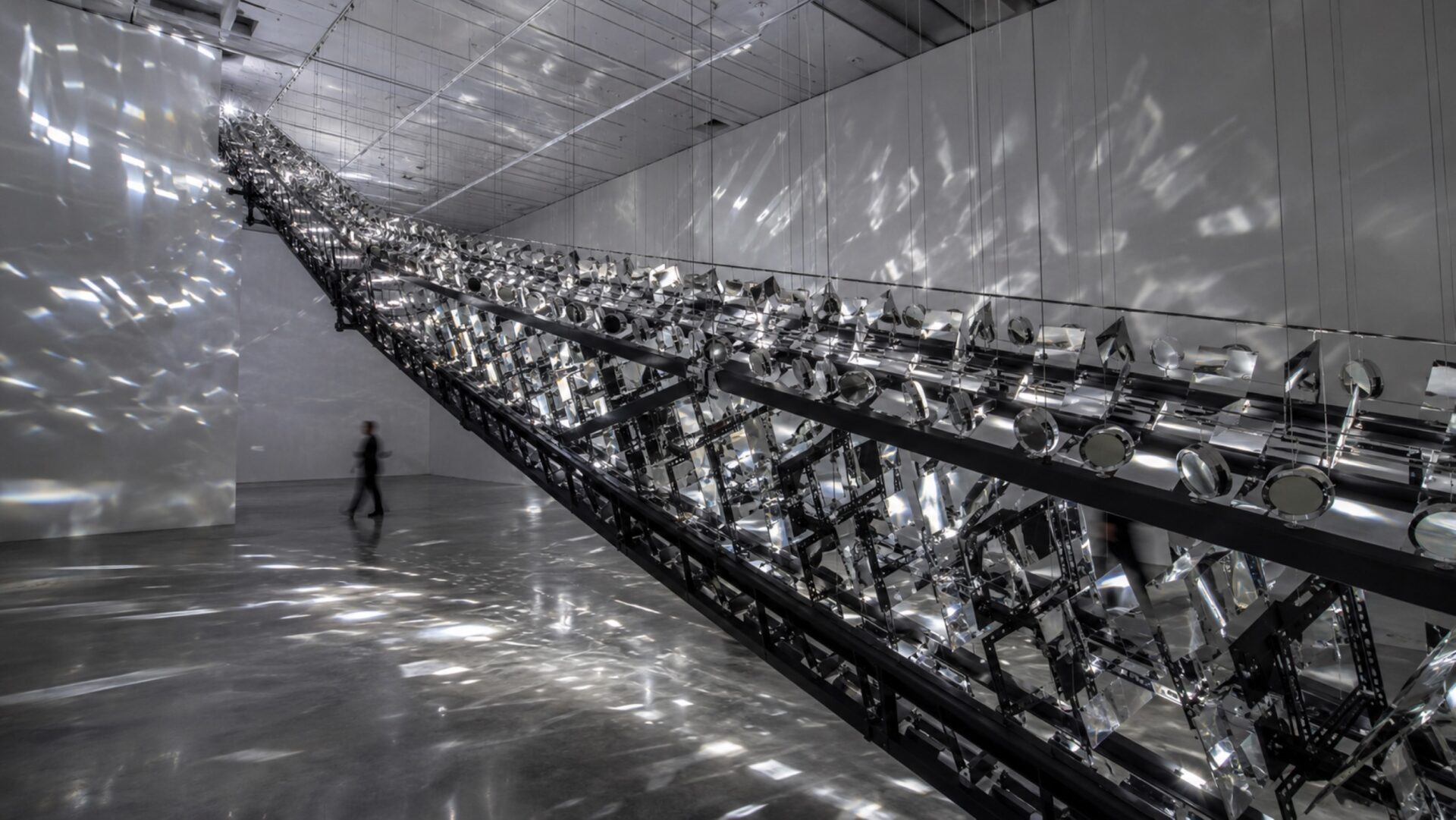



The rocket stays on the ground. Its symbol moves. Across a phone screen, four letters convert SpaceX into price variation, a line, an arrow, a pulse refreshed thousands of times each day. The company began trading on Nasdaq under the symbol SPCX on June 12, 2026; the completed offering delivered approximately $85.7 billion in gross proceeds to the company. The event appears financial, yet its deeper force belongs to feed logic and perception.
For years, SpaceX occupied the public imagination through explosions, vertical landings, satellite constellations, livestreams, and interplanetary promises. The listing adds another screen to this visual infrastructure. A project becomes purchasable in fragments, while the distance between an actual launch and an image of the future is compressed into an ordinary interface gesture. Pressing “buy” means entering a story before examining every layer of its technical substrate.
The company’s IPO materials place space, connectivity, and artificial intelligence along a single trajectory. Reusable rockets, Starlink, AI models, orbital compute, lunar factories, and trillion-dollar markets appear as consecutive components of one horizon. Existing infrastructure lends credibility to the promises; the promises enlarge the meaning of each existing asset. Distribution protocols turn that reciprocal movement into an exceptionally efficient narrative machine.
The possible paradigm matters, especially for future AI companies. Public markets can become the place where a vision acquires liquidity before its material substance reaches equivalent symbolic scale. The warning sounds inside that asymmetry: an image of the project gains enough operational force to outrun the project under platform governance.

The Future with a Price
Every listing stages a passage. A private company enters a public interface, its name receives a ticker, and part of its promise is translated into immediately available capital. SpaceX gives this scene unusual density because the narrative product preceded the financial instrument by years. The audience already knew the trajectory, protagonists, conflict, and promised ending through a continuous media cadence.
That familiarity rests on concrete achievement. SpaceX changed launch economics, built a global satellite network, and made rocket reusability into an ordinary visual event. Material accomplishment gives the narrative permission to travel further across the parameter space. Each successful landing becomes local proof of a general capacity: once this has happened, the rest of the horizon feels perceptually closer.
The offering materials organize that movement with precision. SpaceX presents itself as an integrated infrastructure connecting orbit, communications, data, and artificial intelligence. The Moon becomes an industrial base, orbit becomes a compute layer, and the AI model becomes an extension of the rocket. Fields at radically different stages of maturity acquire the appearance of one inevitable architecture through narrative compression.
The listing makes that continuity liquid. An investor purchases an actual equity interest while also perceiving a position inside the future described by the company. Capital responds to results and to the ranking sequence that connects those results with a larger destination. The market buys a narrative whose present functions as the opening chapter while valuation attempts to price chapters that remain unwritten.
Describing the transaction as Elon Musk personally cashing out would distort the mechanism: SpaceX states that the offering proceeds went to the company. The more consequential operation converts a story into corporate resources while preserving Musk’s extraordinary centrality in governance and project imagery. The future receives a price while retaining its principal author.
The Liquidity of the Story
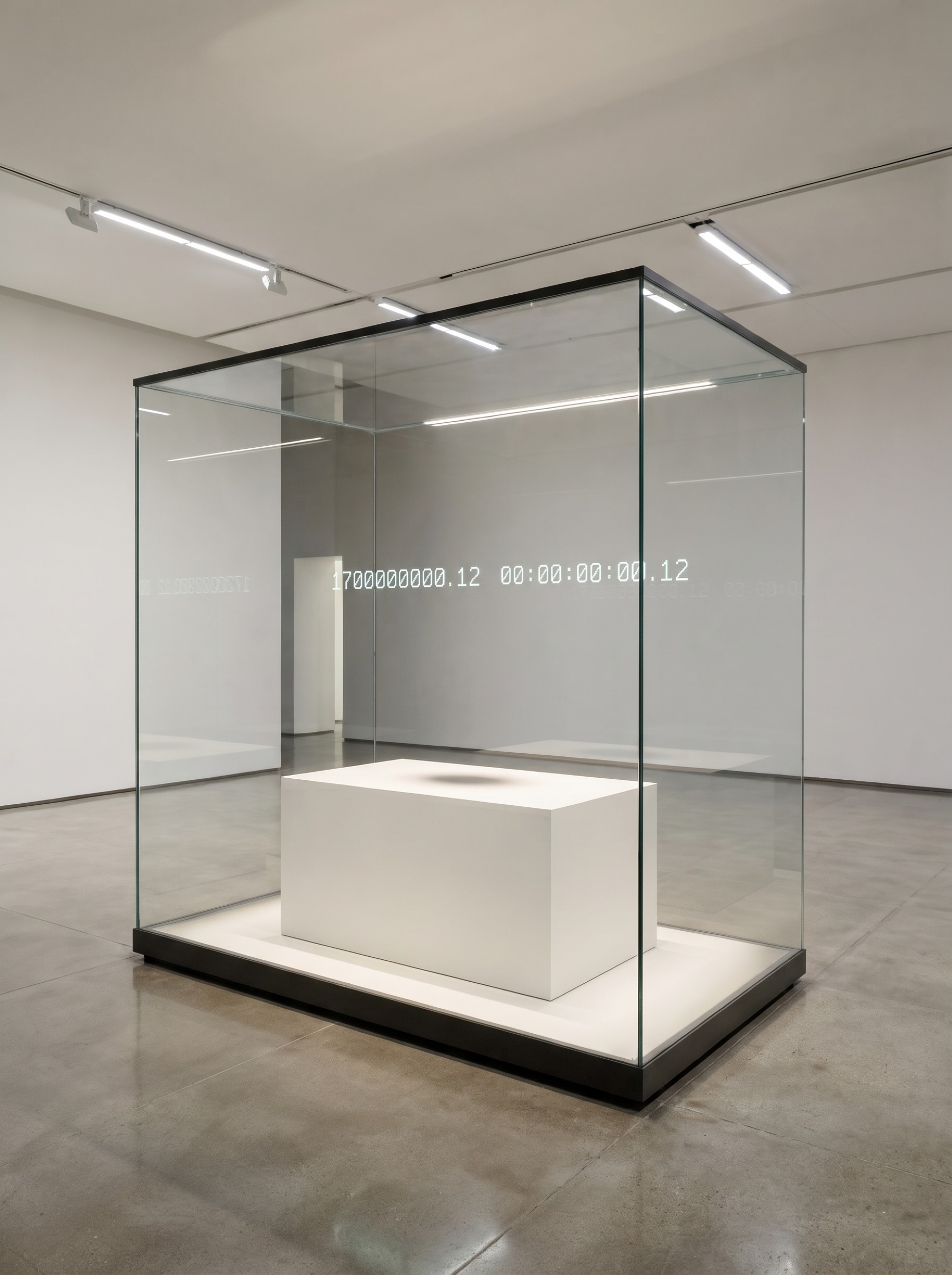
Narrative liquidity describes a story’s capacity to circulate, be exchanged, and produce consequences before its promises reach full realization. The term implies no automatic deception. It names the speed with which a coherent image moves through media, platforms, conversations, and expectations, converting a field of possibilities into a shared sensation of direction. Attention metrics record the circulation long before material completion.
Technology companies operate naturally in the future tense. They sell present infrastructure, but their symbolic value depends on the world they claim to enable. Artificial intelligence intensifies this structure because the product appears to contain its own expansion: a model becomes a platform, the platform becomes an agent, and the agent becomes a substitute for entire social processes. Narrative sequencing moves faster than verification.
Once that story enters public markets, perception acquires productive force. Raised capital can fund data centers, satellites, research, acquisitions, and operating capacity; the image helps build the substance it originally claimed to represent. Narrative anticipates the real and then uses acquired resources to reduce the distance. The paradox becomes infrastructure through a corporate feedback loop.
The circuit can produce genuine value. A legible vision coordinates dispersed energy, supports long investment horizons, and gives complex projects a socially recognizable destination. Every major infrastructure has required a narrative capable of preceding it. Promise creates a common field in which engineers, workers, institutions, and audiences can locate themselves within the same distribution protocol.
Fragility begins when material feedback loses the authority to correct the story. Delay becomes evidence of ambition, failure becomes heroic passage, and contradiction becomes temporary noise inside the interface cadence. Narrative liquidity keeps circulating while verification loses prestige. The world is then interpreted to protect the project under its own narrative governance.

The Image Before the Infrastructure
A project’s image holds a structural advantage over its substance. It can appear simultaneous, continuous, and complete through visual compression. Real infrastructure advances through delays, failures, regulatory dependencies, compromises, and partial results. The image occupies one frame; the system inhabits uneven duration. Perception rewards the version that can present itself as totality.
SpaceX offers an exemplary form of that compression. Launch, satellite network, artificial intelligence, and colonization become elements of the same recognizable silhouette. Distinctions among an operating service, a prototype, a projection, and a strategic desire become perceptually thin. The project appears unified because narrative sequencing removes the intervals in which its parts might contradict one another.
Future AI listings may adopt the same syntax. Models, users, chips, energy, automation, robotics, and labor transformation can be presented as consecutive stages of one expansion across the parameter space. A limited present capability may support a general image of inevitability. The company offers a technology and the sensation of already standing on the correct side of history.
This operation requires little cynicism. Founders, employees, and investors may sincerely believe the vision, and sincerity can increase its distribution bandwidth. The risk appears when image coherence is treated as evidence of material-system coherence. A frictionless presentation can conceal fragile infrastructure, social costs, energy dependence, and unresolved limits behind interface fluency.
The distance between image and substance must remain perceptible. This distance protects the promise’s capacity to learn by admitting friction, duration, and failure into its operating narrative. A future exposed to material feedback remains a hypothesis. Once the image absorbs every contradiction, it becomes scenery.

The Market as Audience
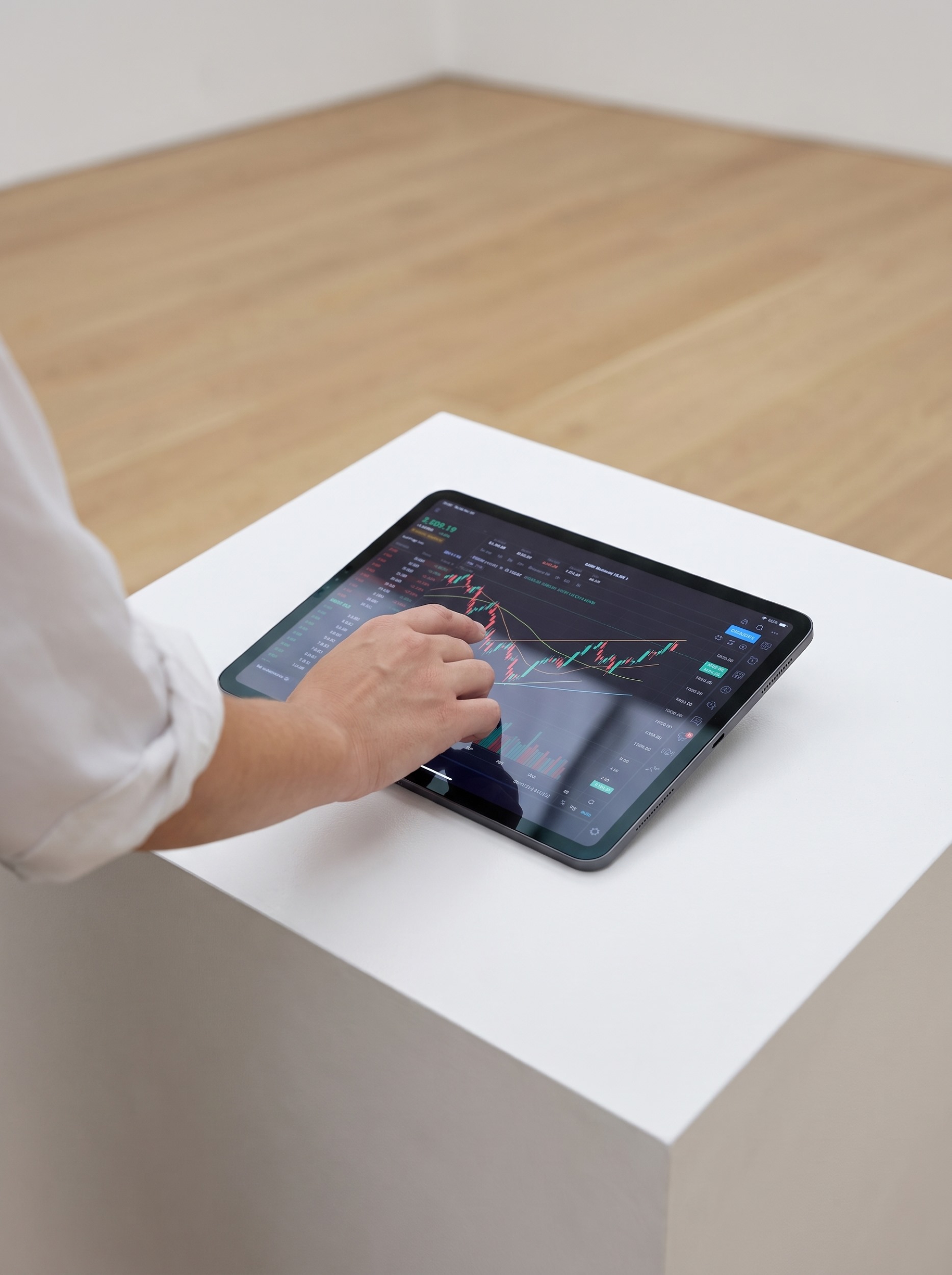
The contemporary market increasingly resembles an audience positioned before a feed. It reads symbols, interprets cues, and reacts to statements, images, and authorial figures. Price synthesizes real economic operations while also registering collective attention metrics. The trading screen becomes an editorial surface on which the story is revised in real time.
Within this environment, legibility becomes power. A complex company must be compressed into a few memorable signs: the landing rocket, the answering model, the walking robot. These images provide little explanation of the infrastructure. They make it emotionally available by crossing the audience’s perceptual threshold before technical understanding arrives.
Elon Musk occupies a decisive role in this perceptual economy. His figure connects companies, technologies, and promises within a single biography, transferring attention and credibility from one project to another. The author becomes an interface. Continuity of character creates continuity among materially different ventures, and the market reads each new company as an episode in an established mythology.
Public listing expands the audience and shortens response time. Every statement can generate movement, every delay can trigger correction, and every image can accelerate attention. Corporate substance advances at industrial speed; perception follows platform cadence. Volatility emerges between these temporalities, allowing the project to change value before it has time to change form.
The market becomes an impatient editor. It cuts waiting periods, connects distant events, anticipates conclusions, and assembles a provisional version of the future during every session. Its characteristic error confuses narrative quality with outcome probability. Once the story achieves sufficient bandwidth, plausibility begins to feel like proof.
The Warning Inside the Promise
SpaceX may indicate a new paradigm for major technology listings. Companies built around vast infrastructure and long horizons can use public markets as accelerators, converting attention, trust, and imagination into operating capital. For AI companies hungry for compute and energy, the model carries obvious appeal. Narrative becomes an explicit component of the financing architecture.
The warning lies beyond the listing itself. It sounds when the future is presented with the density of the present while risks and dependencies move toward the edge of the frame. A promise can mobilize resources; a promise insulated from verification primarily mobilizes perceptual obedience. The distinction appears in the story’s willingness to be falsified by material conditions.
A new literacy will be required. We must distinguish operating infrastructure from trajectory, trajectory from forecast, and forecast from strategic image. We must examine which stages are shown, which durations are compressed, and which figures guarantee continuity across separate fields. Reading the narrative will become part of reading the company.
This dynamic exceeds finance. Art, politics, and technology also produce images that precede their substance and attract resources for its realization. The critical issue concerns who controls the gap and who can keep it visible under platform governance. A critical culture can sustain visions while building instruments that prevent their luminosity from erasing infrastructure.
The rocket on the screen continues to rise while the vehicle remains on the pad. Markets can finance the distance between that image and the sky, and they can also forget that the distance exists. The future remains fertile while it retains friction. Once it becomes fully liquid, it ceases to orient us and reflects only our desire.