For centuries, sculpture promised resistance to time. Even when it represented a gesture, a fold, or a tense body, it entrusted that movement to matter expected to preserve it. A family of responsive materials is now altering this premise. Shape-memory polymers, hydrogels, hygroscopic wood, photochromic inks, active textiles, and cellular structures can change configuration when exposed to heat, water, light, humidity, electricity, or a magnetic field. Form ceases to coincide with the object’s final identity and becomes one of its possible states.
In its strictest sense, 4D printing describes additive fabrication that programs a later transformation. The fourth dimension is the time during which a printed structure bends, expands, contracts, or reorganises its properties. In the MIT Self-Assembly Lab’s 4D Printing project, developed with Stratasys and Autodesk, actuation, sensing, and a kind of material logic are embedded in the distribution of materials. The object can consequently display machine-like behaviour while reducing motors, hinges, and electronic components.
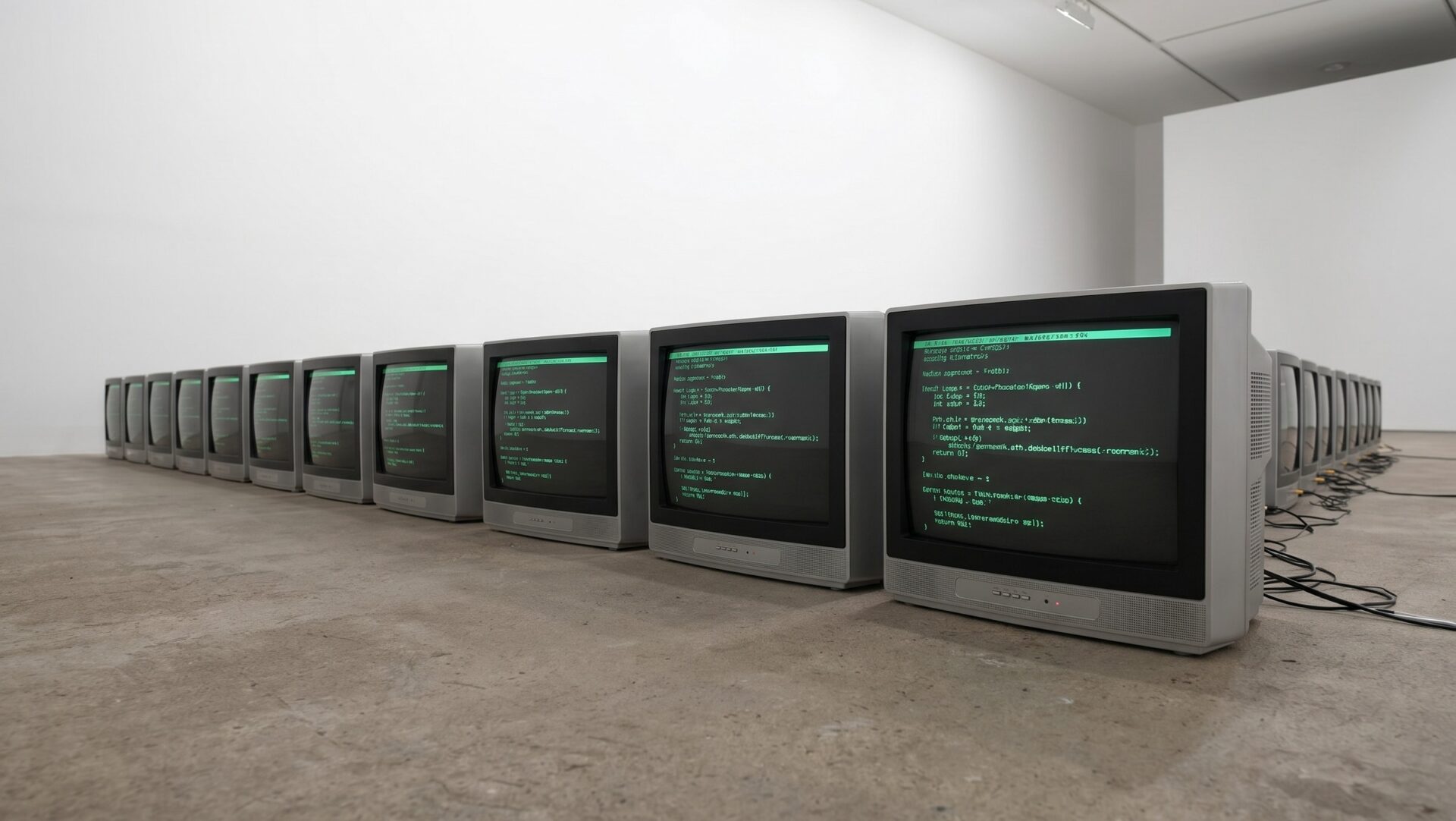
Saying that these objects behave like software is a useful metaphor, provided their difference remains visible. Software instructions are executed by a processor; in programmable matter the instruction may consist of a swelling gradient, fibre orientation, or the unequal expansion of two bonded metals. The program need not be an invisible sequence of code. It can be a physical arrangement of constraints and possibilities, written into geometry, response times, and the thresholds at which the material changes.
This transformation matters to art because it relocates authorship. An artist can design an initial figure, a final figure, the stimulus connecting them, and even the degree of unpredictability in the transition. The work extends beyond what occupies space before the viewer. It includes a trajectory, a repertoire of states, and an environment able to activate them. Time, formerly an external condition that wore sculpture down, becomes one of its operating materials.
Several technologies gathered beneath the same futuristic image still require careful distinction. A 4D print, a wooden pavilion reacting to humidity, a sensor-governed installation, and a culture of living cells can all change, yet they do so through different regimes. Collapsing them produces spectacle and weak science. Separating them reveals the question they share: what is an object when its present form is only a provisional version of what it can become?
The Fourth Dimension Is Time
The expression 4D printing gained broad public recognition in 2013 through Skylar Tibbits and the MIT Self-Assembly Lab. Its novelty lay in designing a three-dimensional print that would transform after leaving the machine, rather than fabricating an object in four spatial dimensions. The project file therefore contains more than one geometry: it organises a sequence. The conventional question “what shape should I print?” acquires a companion: “what material story should that shape perform when it encounters the world?”
Researchers distinguish between reversible and irreversible transformations. A shape-memory component may return to a programmed configuration when heated; a hydrogel may swell in water and contract as it dries; other structures complete a single passage and remain in their new state. “Self-updating” therefore describes several temporal models. Some objects possess a cycle, some undergo one metamorphosis, and others lose precision with each activation because of fatigue, hysteresis, or ageing.
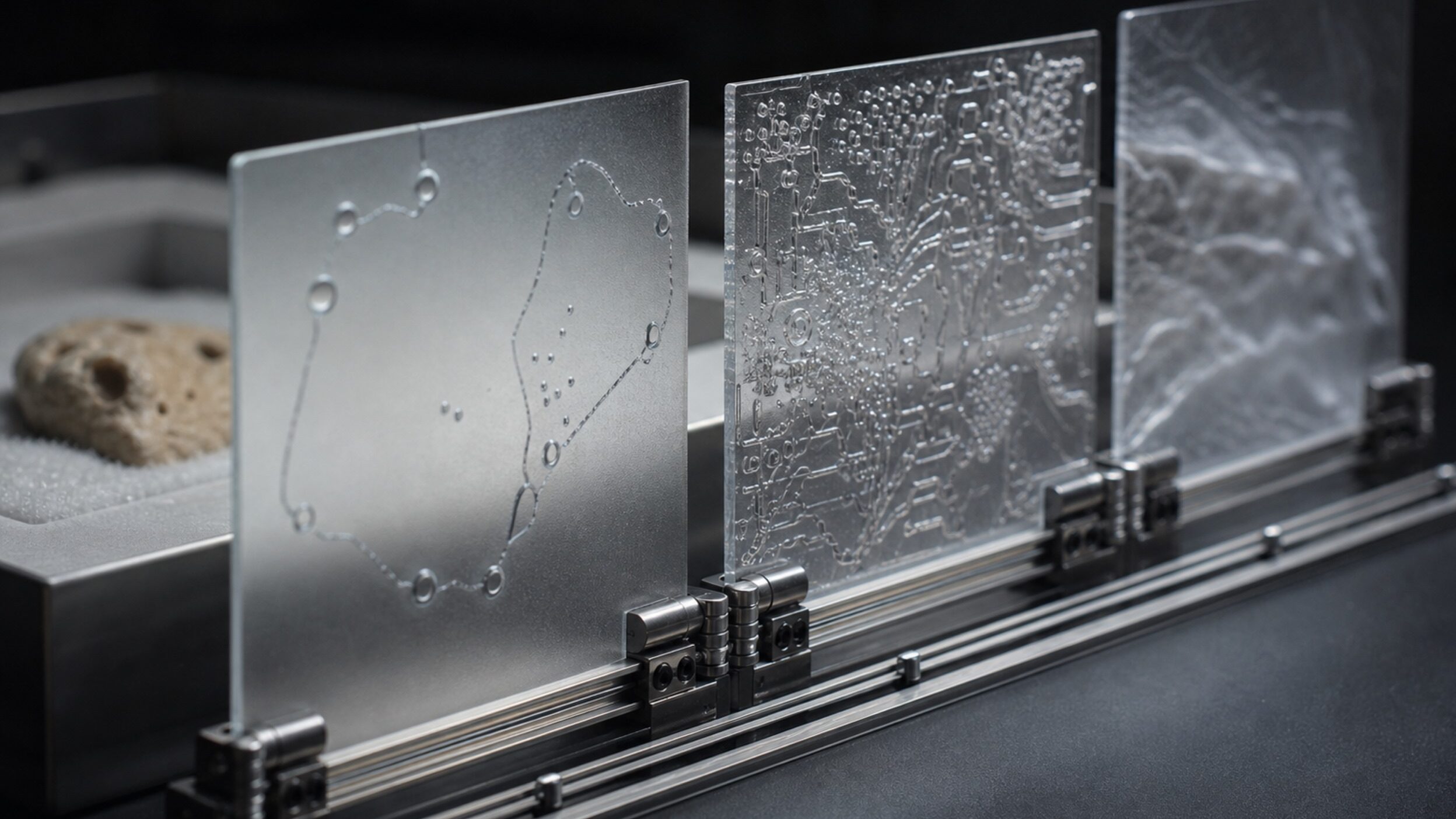
A foundational study, “Biomimetic 4D printing”, published in Nature Materials in 2016 by Amelia Sydney Gladman, Elisabetta Matsumoto, Ralph Nuzzo, L. Mahadevan, and Jennifer Lewis, demonstrated hydrogel composite structures that change shape according to principles inspired by plant growth. Cellulose fibril orientation during printing controls anisotropic swelling: water arrives from outside, while the rule for curvature is already inscribed within. The artificial leaf imitates more than a plant’s appearance. It translates a logic of morphogenesis.
This logic shifts attention from material as substance to material as system. Asking what an object is made from becomes insufficient; one must also know how its parts are distributed, which stimuli it recognises, how quickly it responds, and whether previous transformations leave a memory. Samples with identical chemical composition can produce different movements according to their deposition paths. Fabrication becomes a writing of internal differences.
The fourth dimension consequently places an archive inside the work’s body. Each state traces a relation between design and environment and records a duration: minutes of immersion, hours of light, thermal cycles, seasons. Sculpture reveals more than its surface. It makes visible the process through which it registers time and changes while registering it.
The Program Leaves the Screen
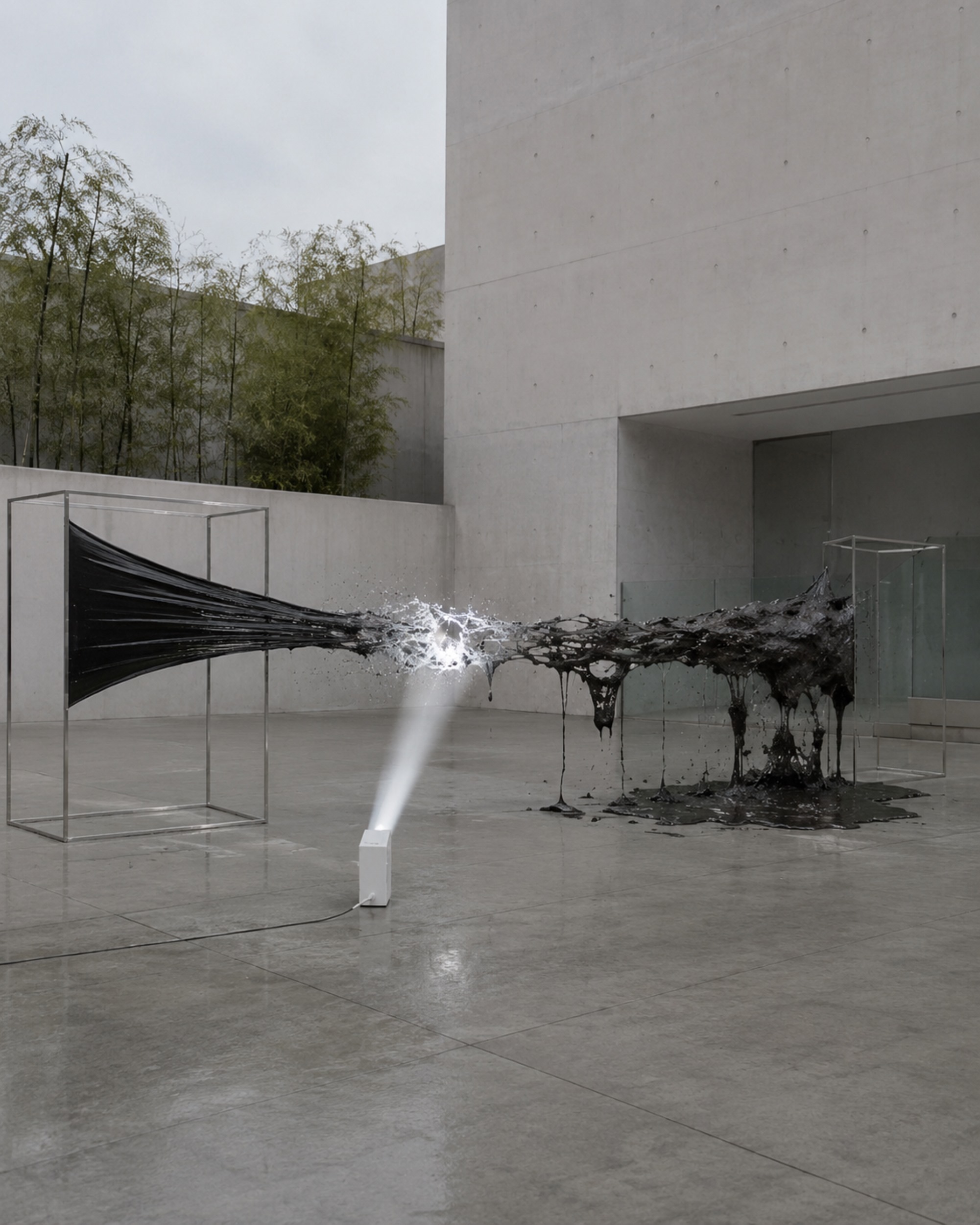
A programmable object does not necessarily contain a computer. The Self-Assembly Lab describes programmable materials as materials designed to change form or function dynamically and sometimes calls them “robots without robots.” The phrase is deliberately provocative because it transfers apparent action and decision from a device to matter. Intelligence resides less in a centre commanding every part than in the relation among local properties, overall geometry, and environmental energy.
That relation can be described as a five-part protocol: initial state, stimulus, threshold, transition, and resulting state. A sixth part, memory, determines whether the system returns or merely retains a deformation. Tolerance then defines the distance permitted between prediction and result. In art, this tolerance can become expressive because two performances of the same protocol may generate related configurations that remain individually distinct.
Wood shows how programming can precede electronics. In HygroScope and the later HygroSkin: Meteorosensitive Pavilion, Achim Menges, Steffen Reichert, and their collaborators use wood’s natural response to changing humidity. Thin elements open and close through their material structure, with digital sensors and motors absent from the actuation. Behaviour depends on fibre, thickness, and climate, allowing a traditional material to perform as an actuator.
Here the word program changes meaning. It describes a prediction incorporated during fabrication as much as a series of commands available for remote revision. Matter “reads” humidity because its physical structure is sensitive to moisture and “responds” because different layers expand unequally. The quotation marks matter: reading and response are operational analogies rather than evidence of consciousness.
The passage from screen to matter also introduces friction that digital language tends to conceal. Code can be copied precisely, while every material carries impurities, delays, scaling limits, and preservation requirements. The programmable object stages a calculation forced to negotiate gravity, heat, and wear. Much of its fascination arises in the distance between instruction and behaviour, mathematical model and world.
Sculpture Learns a Behaviour
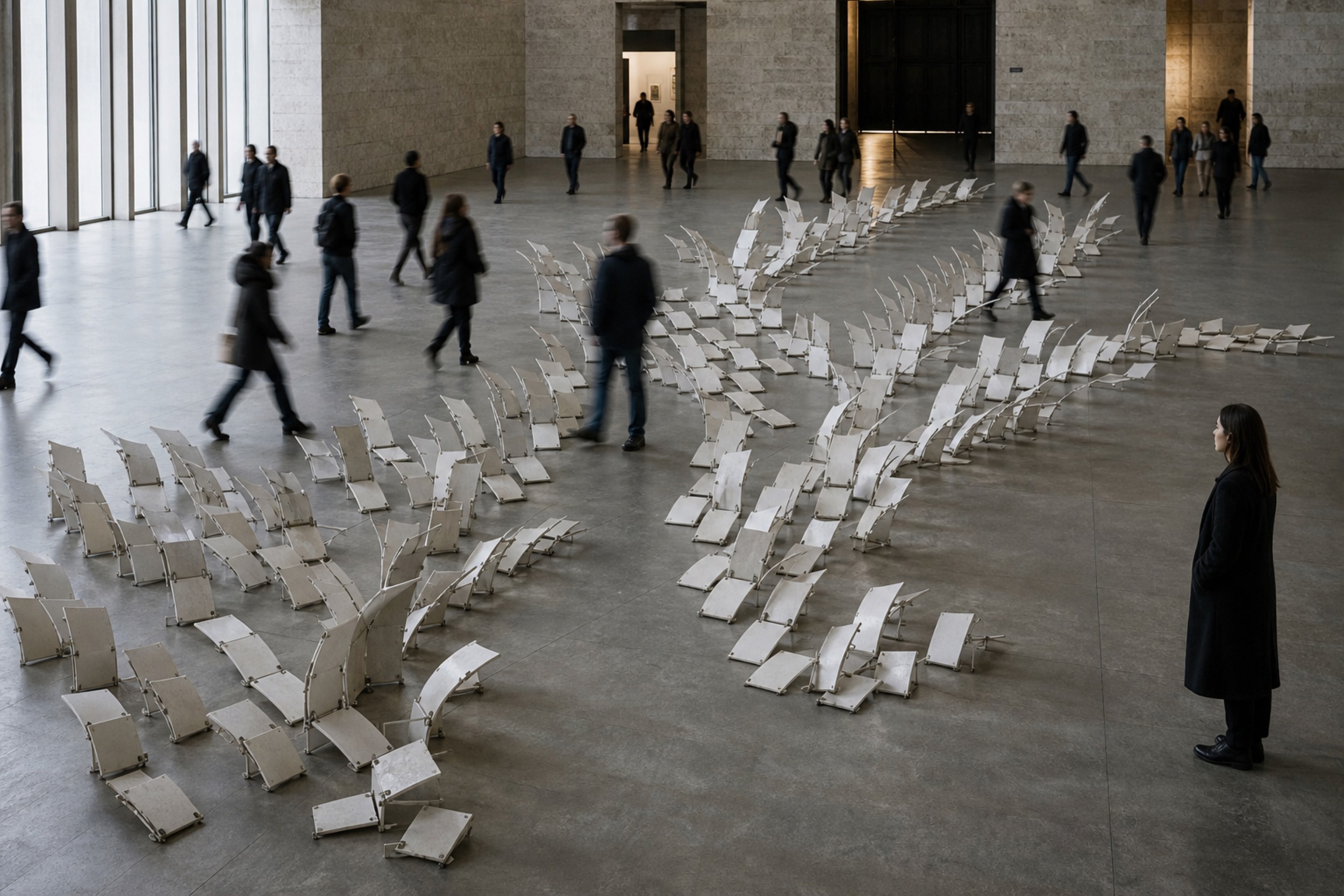
Kinetic art had already separated sculpture from stability. Calder entrusted the balance of mobiles to air; Takis worked with magnetism and electricity; Nicolas Schöffer turned light, movement, and information into cybernetic environments. Programmable matter continues this lineage while distributing movement through the work’s skin. The mechanism can merge with the form until form itself becomes mechanism.
Doris Kim Sung’s Bloom pavilion makes that union legible. Thermobimetal tiles, made from metals with different expansion coefficients, curl in solar heat to open areas for shade and ventilation. The work functions at once as sculpture, thermal index, and architectural prototype. It allows climate to rewrite the surface temporarily instead of representing climate as an image.
For Hydrophytes, Nicole Hone used multi-material printing to create artificial aquatic plants moved by currents, contact, and pressure. She calls the research “tangible animation”: animation leaves the succession of images and enters the deformation of a body. The creatures remain synthetic, while their credibility emerges from elasticity, liquid environment, and choreography.
Jenny Sabin’s Lumen, installed at MoMA PS1 in 2017, expands the field although it falls outside strict 4D printing. Digitally worked fibres absorb light and emit it after sunset, hydrochromic materials change appearance, and mist responds to visitor proximity. Bodies, heat, light, and social density become inputs for an architecture that evolves over the day.
These cases suggest another aesthetic unit: recognisable behaviour in place of perfected shape. The artist composes speeds, thresholds, hesitations, and returns as a traditional sculptor composes mass and void. A successful work can use transformation to make an otherwise invisible relation perceptible, such as a room’s humidity, solar intensity, or the passage of a body.
From Form to Rewritable Colour
Material updating also reaches the surface. PhotoChromeleon, developed at MIT CSAIL by Stefanie Mueller’s group, combines photochromic dyes activated and deactivated by ultraviolet and visible light. A single coating can receive different patterns and retain them until another exposure rewrites the surface. The physical object acquires something close to an updateable interface.
In 2026, the same research lineage produced ChromoLCD, a portable device that stamps high-resolution images onto surfaces treated with photochromic ink. The transformation requires hardware, energy, and an act of rewriting, which distinguishes it from a hydrogel’s passive autonomy. Yet it makes a culturally decisive possibility concrete: the colour of a bag, wall, or garment can become a version instead of a stable property.
For art, a rewritable surface destabilises the edition. If a collector can upload a new pattern, do they own a work, a substrate, or a licence? If the artist sends later configurations, does each update replace the previous one or enter the work’s archive? Matter inherits questions familiar from software: compatibility, permission, versions, access, and restoration.
This condition may produce an aesthetics of release. A work appears in an initial configuration and continues through material patches, seasonal variations, or data-driven updates. One danger lies in importing commercial planned obsolescence into sculpture, allowing the new state to devalue the previous one and keeping the owner dependent on a supplier. The opposite possibility is an object that remains useful and meaningful because it can change instead of being replaced.
The central issue becomes ownership of the update right. The artist might retain it, share it with the public, delegate it to a museum, or embed it in an environmental rule. A genuinely programmable object contains multiple forms and distributes power among whoever creates the protocol, supplies the stimulus, maintains the materials, and decides when a transformation remains authentic.
Between Responsive Matter and Living Matter
The language of smart matter frequently borrows biological verbs: a structure grows, remembers, heals, or breathes. These metaphors are productive, although a polymer recovering its shape neither metabolises energy as a cell does nor evolves through selection. The distinction prevents a physical or chemical reaction from receiving borrowed intention. An object can display functional autonomy while depending entirely on conditions designed by people.
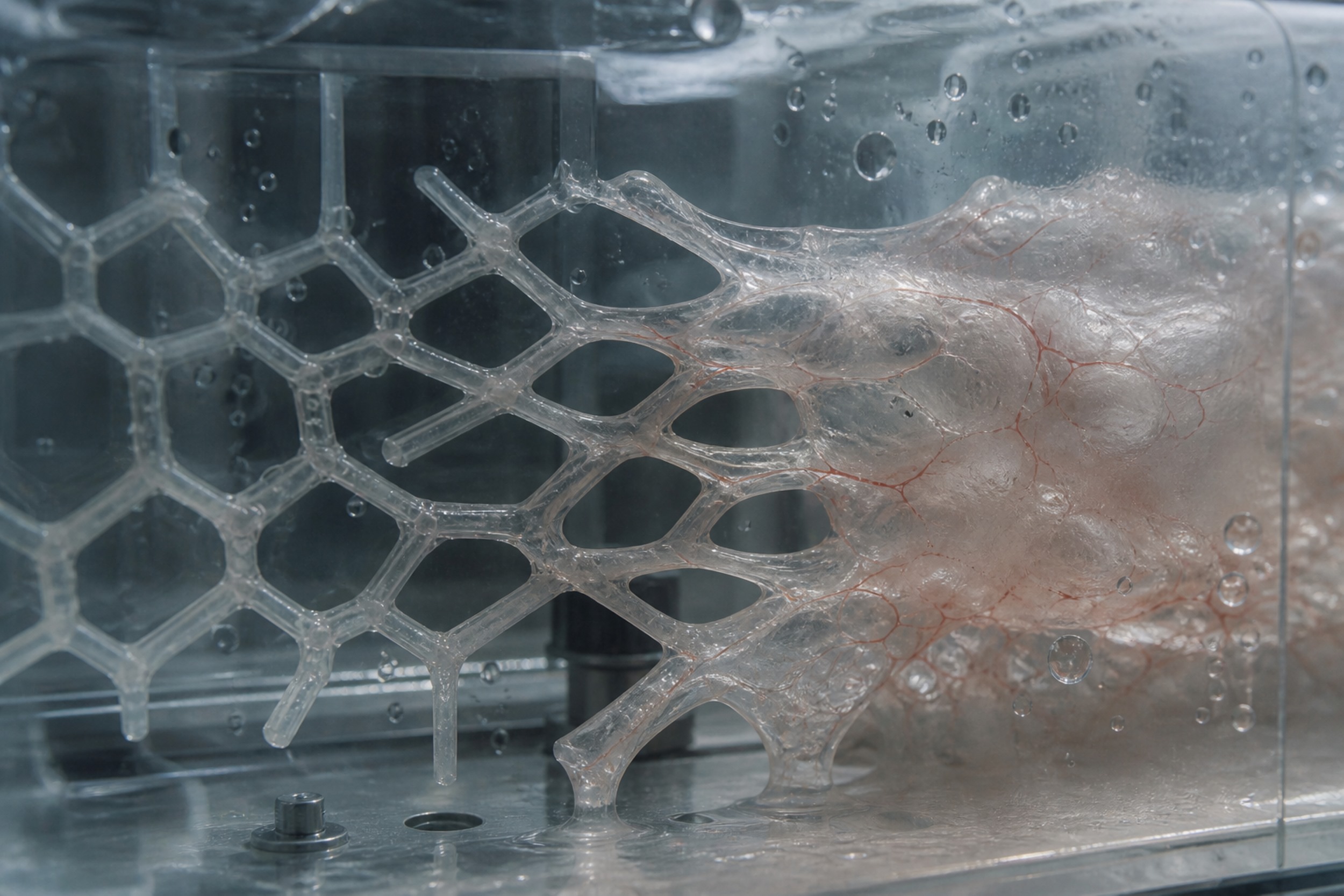
Biofabrication changes the threshold. In Amy Karle’s 2016 Regenerative Reliquary, a hand-shaped structure printed in biodegradable hydrogel was conceived as a scaffold for human mesenchymal stem cells inside a bioreactor. The project imagines the scaffold disappearing as cells grow and mineralise. Transformation here extends beyond deformation and depends on cellular processes, nutrition, sterility, and care.
The biological artwork introduces a temporality distinct from responsive material. A bimetal tile can be left in sunlight; a culture needs maintenance, nourishment, and protection from contamination. It can become ill or die. Authorship spreads across artist, laboratory protocols, technicians, cell donors, and microscopic organisms that never execute a design with machine precision.
Neri Oxman and Mediated Matter’s Aguahoja, documented in MoMA’s Material Ecology exhibition, further complicates the opposition between building and growing. Cellulose, chitin, and pectin are robotically extruded into compositions whose properties vary through material distribution. The structures are nonliving, yet they derive from biopolymers and are designed with environmental cycles in view. Their resemblance to organisms concerns formation, gradients, and degradation more than metabolism.
The boundary among sculpture, organism, and program therefore appears as a map of capacities. Some objects sense in the physical meaning of reaction; some retain memory; some can be rewritten; some host living cells. Critical description should state which agency they actually possess and which agency viewers project onto them. Art can work through ambiguity, and that ambiguity becomes stronger when precise material conditions support it.
The Viewer Becomes a Stimulus
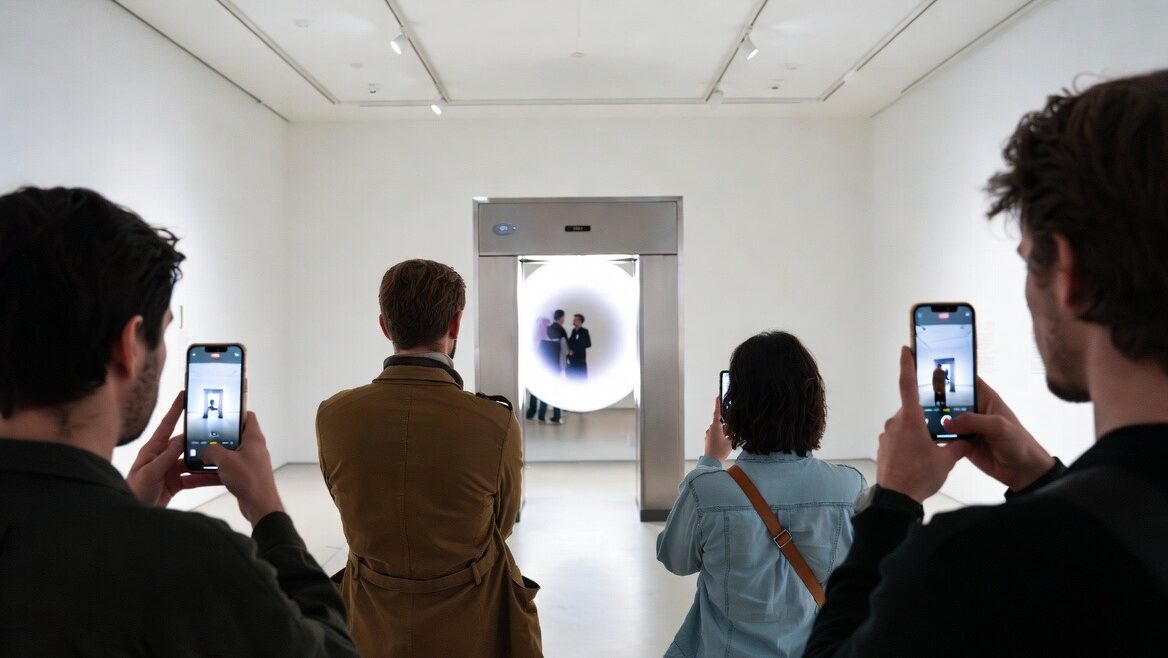
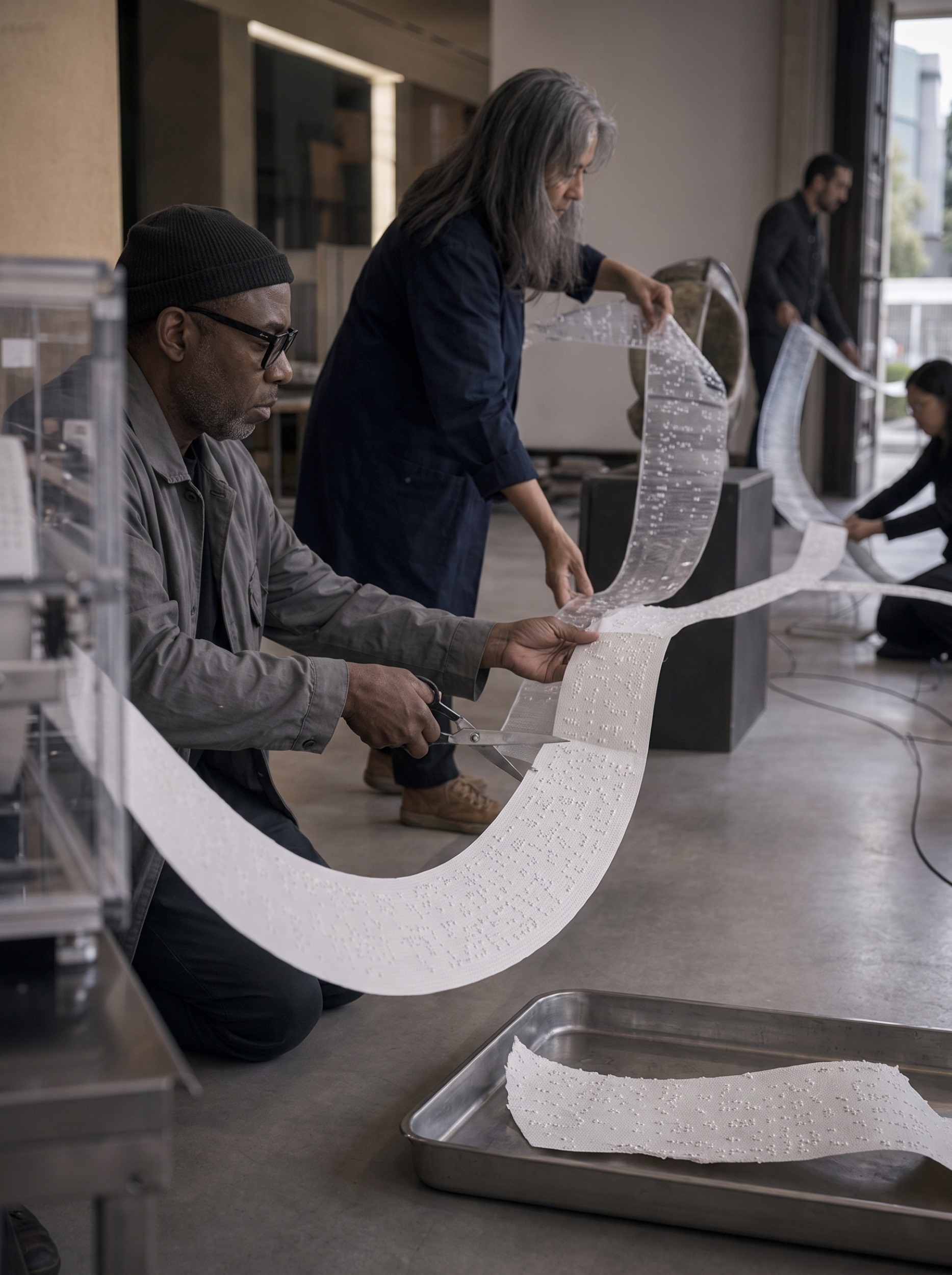
Before a traditional sculpture, viewers move their bodies to see more. Before a responsive work, they may also change the work: body heat, touch, breath, shadow, or movement become signals. Participation passes from interpretation into physical causality. Looking remains central, but presence enters the circuit producing what can be seen.
This interaction may be direct, as with a membrane bending beneath a hand, or collective and atmospheric. In Lumen, body density influences mist; in hygroscopic architecture, humidity generated by many visitors may contribute to the skin’s behaviour. The work records a situation instead of isolating one person. The public becomes a temporary climate.
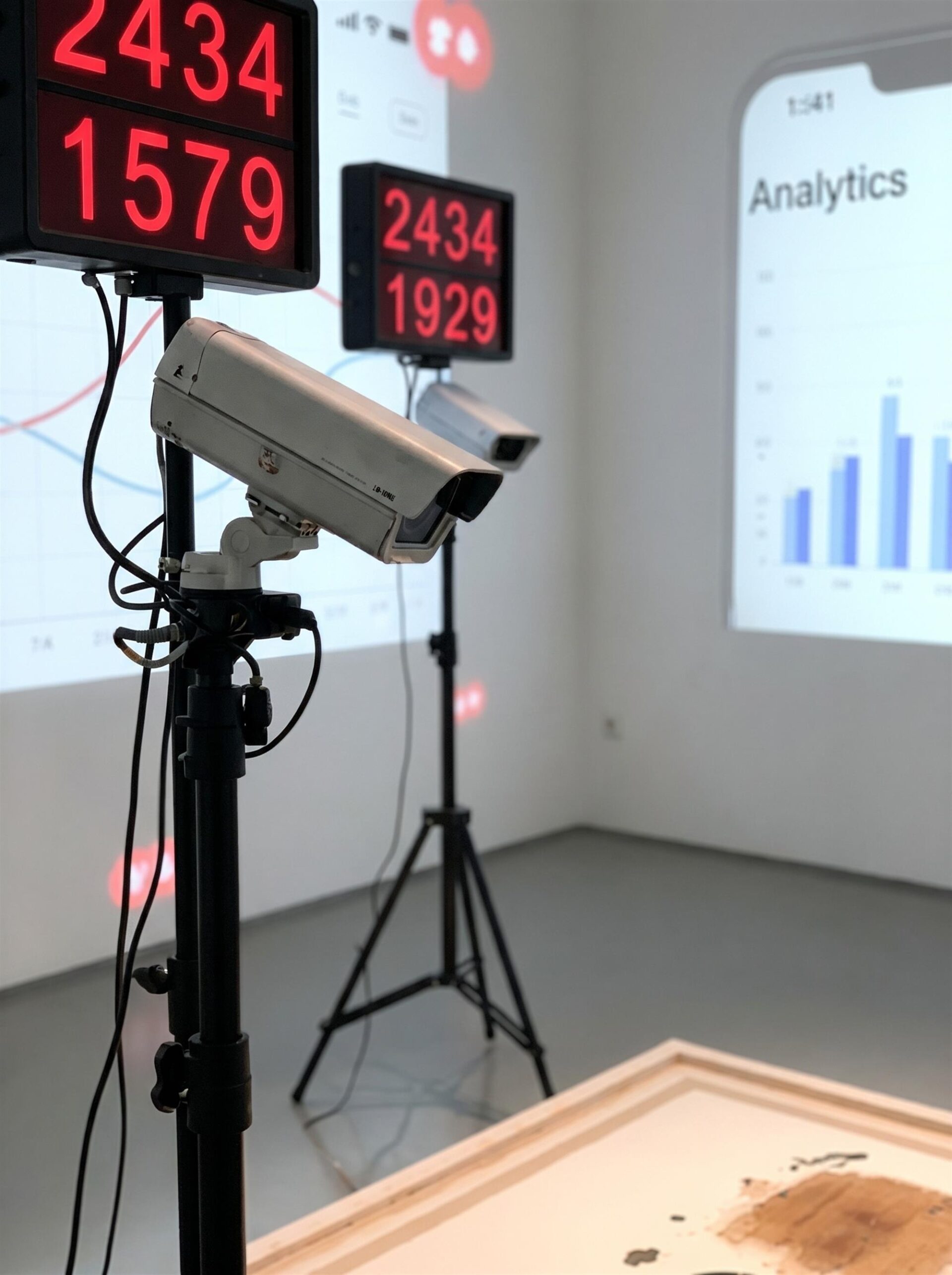
The participatory promise carries a transparency question. Where sensors collect position, temperature, voice, or biometric data, a poetic response may conceal a surveillance infrastructure. Passive material responding to heat creates a different relation from a system that identifies visitors, stores profiles, and changes behaviour through remote data. Both qualify as responsive, but they carry different politics.
The artist must also decide how much transformation the public can produce. An interaction may amount to a button activating a predetermined effect and offer an illusion of control. Alternatively, the visitor’s action may leave lasting consequences, affect later visitors, or take the work toward states the author did not select. The second model gives participation greater weight while making the work’s integrity harder to protect.
The programmable object thus converts the observer into a co-condition. It does not automatically grant co-authorship, since the field of possibilities remains designed, but it reveals every work’s dependence on an environment of activation. Museum, climate, maintenance, and public do more than surround the object: they participate in its performance.
Conserving a Work That Changes
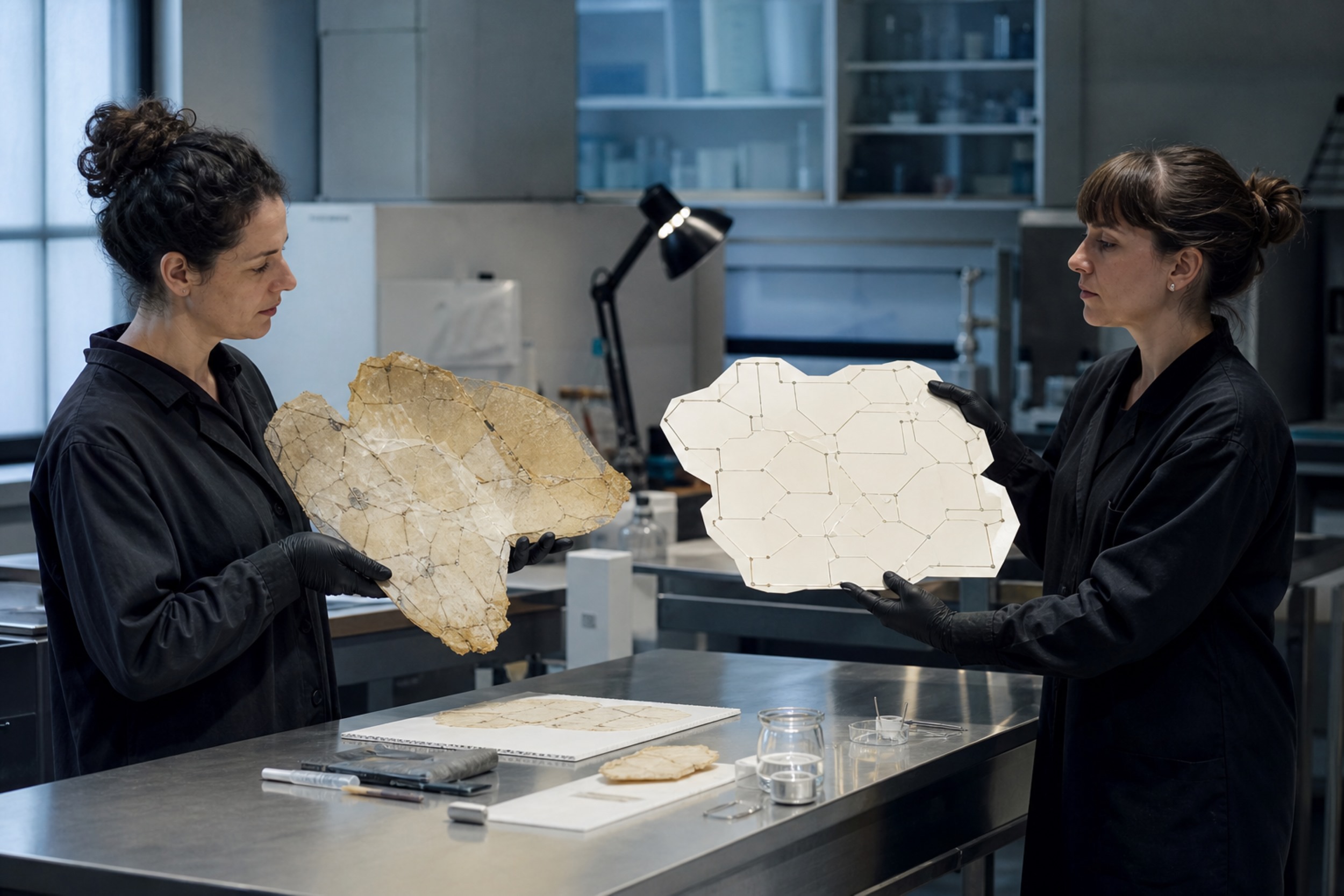
A museum accustomed to slowing change meets a paradox when change is the work’s function. Conserving programmable sculpture may mean preserving original matter, maintaining transformative capacity, or respecting the behaviour envisioned by the artist. These aims can diverge. An authentic polymer that has become rigid retains a historical body and loses its action; a functioning replica restores action by replacing the body.
Kinetic art offers a precedent. The Getty Conservation Institute volume Keep It Moving? Conserving Kinetic Art shows how speed, sound, light, amplitude, and rhythm can matter as much as metal or paint. Conserving movement requires technical documentation and critical interpretation. Responsive matter also demands records of thresholds, response times, cycle counts, environmental conditions, and acceptable variation.
The future artwork record may resemble a performance contract. It would contain fabrication files, material recipes, fibre orientation, activation protocols, intended resting state, authorised transformations, and criteria for refabrication. Reference videos and behavioural data are essential because a photograph cannot adequately document a transition.
Living works make conservation more radical. Maintaining cells means continuing a biological process; freezing, replacing, or allowing them to die creates ontologically different versions. The institution preserves a practice of care as well as an object and decides which components may be renewed. Maintenance leaves the background and becomes part of the work’s public identity.
Authenticity consequently shifts from unique matter toward the continuity of a protocol, while retaining a material dimension. Matter carries history, accidents, and traces absent from a file. Responsible conservation must negotiate these dimensions and declare replacements and versions instead of pretending to an immutability the work rejected from its beginning.
The Politics of the Programmable Object
Adaptive matter is frequently presented as sustainable because it can operate with fewer motors or adjust to different uses. The argument is plausible and still requires full life-cycle assessment. A skin that passively opens ventilation may reduce energy and components; a composite of incompatible polymers may be difficult to separate, repair, and recycle. Adaptability and ecology remain separate claims.
A 2025 review of natural materials in 4D printing observes that the field still relies heavily on synthetic responsive materials, while biobased and biodegradable alternatives remain less common. Cellulose, alginate, chitosan, silk, lignin, and natural fibres open promising directions. Each must still be assessed for origin, additives, processing energy, durability, and realistic end-of-life conditions.
Access also has a politics. When behaviour depends on proprietary material, a closed file, or a discontinued machine, the buyer owns an object while lacking the means to maintain its action. Dependence on the manufacturer can enter sculpture as it already enters the smartphone. A material update could be revoked, made incompatible, or tied to a subscription.
Art can make these tensions perceptible before they become ordinary. It can build objects that refuse commands, surfaces whose memory stays legible, forms governed by public data, or open protocols supporting repair and reinterpretation. It can also expose the cost of apparent autonomy: every matter that “decides” depends on extraction, labour, infrastructure, and environmental conditions usually placed outside innovation’s frame.
Matter that updates itself announces more than a spectacular sculpture. It turns form into a temporary state, the author into a designer of possibilities, and the museum into a custodian of behaviours. The aesthetic question “what shape does it have?” must now coexist with political questions: what can it become, who defines the stimulus, who preserves its versions, and who can stop the update? Those questions will determine whether the programmable object becomes freer matter or another terminal of the power that programs it.