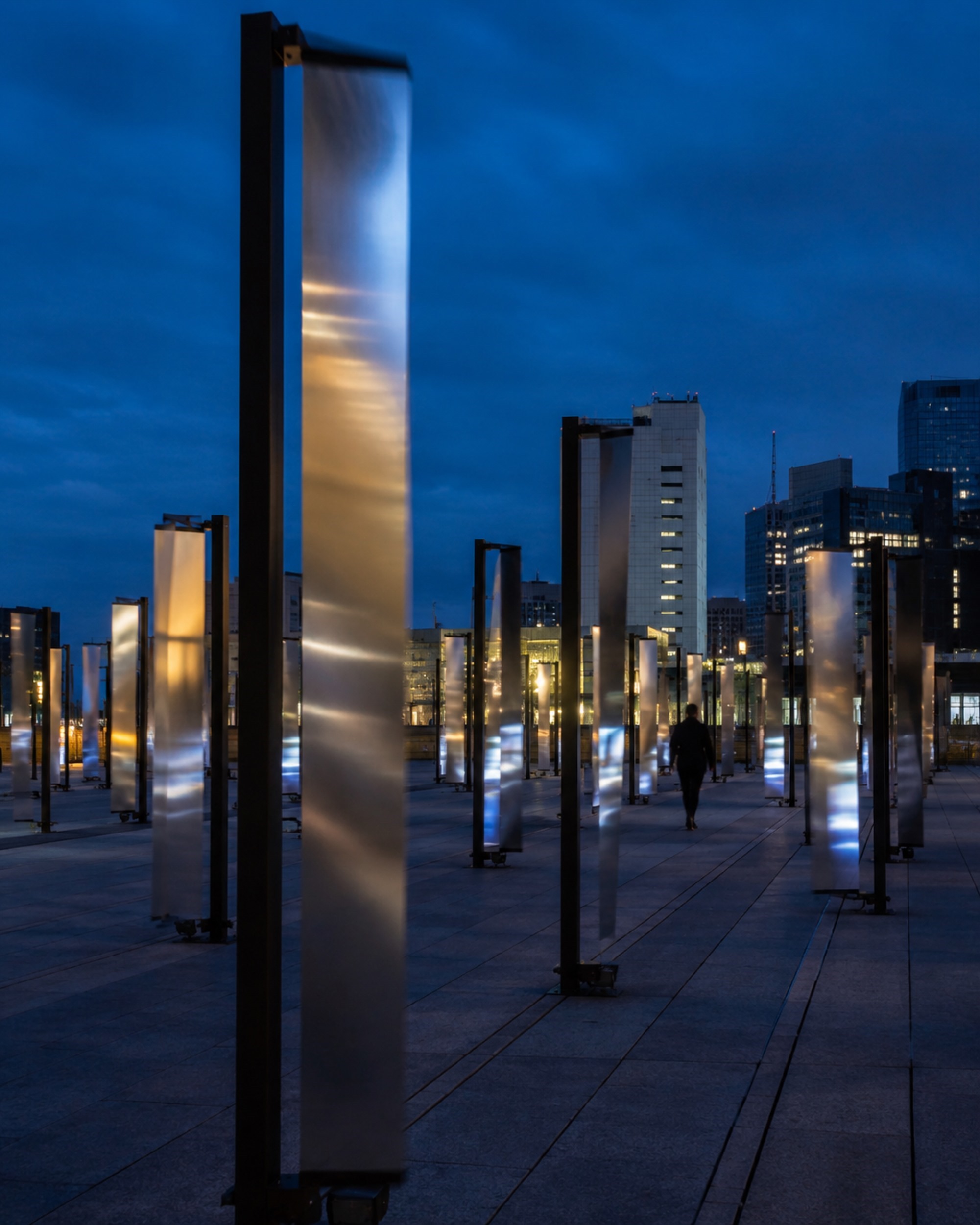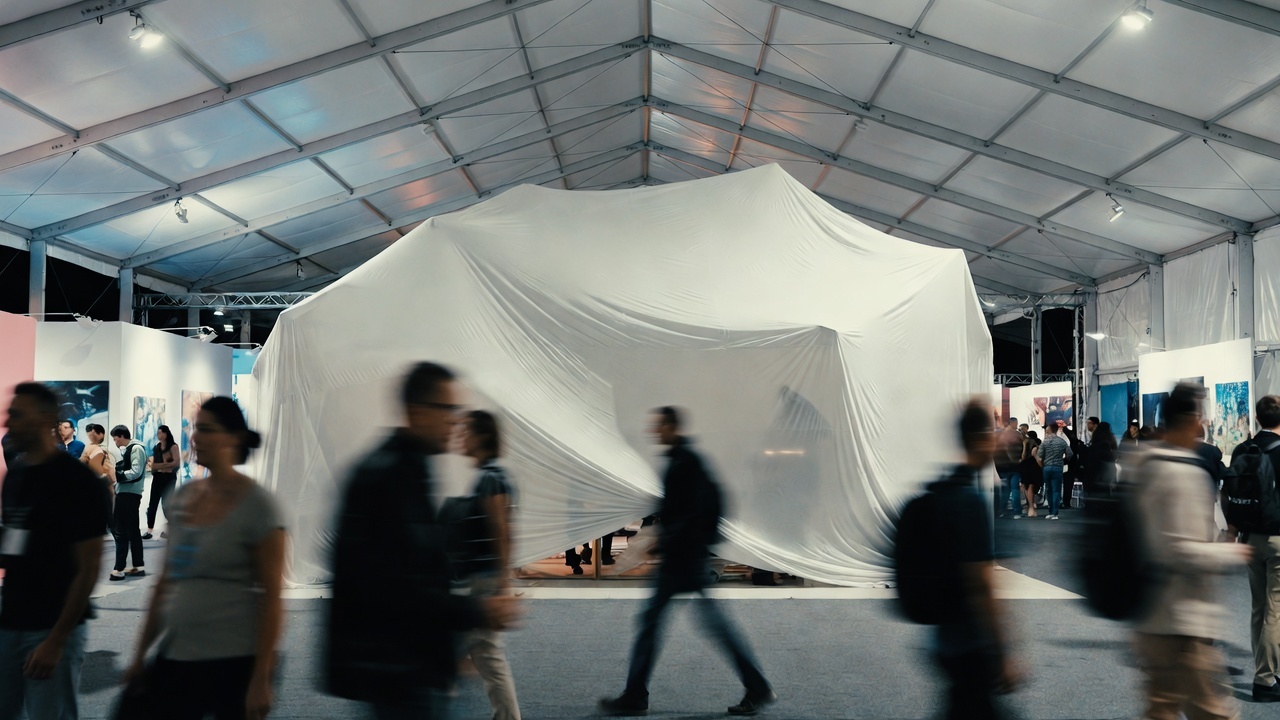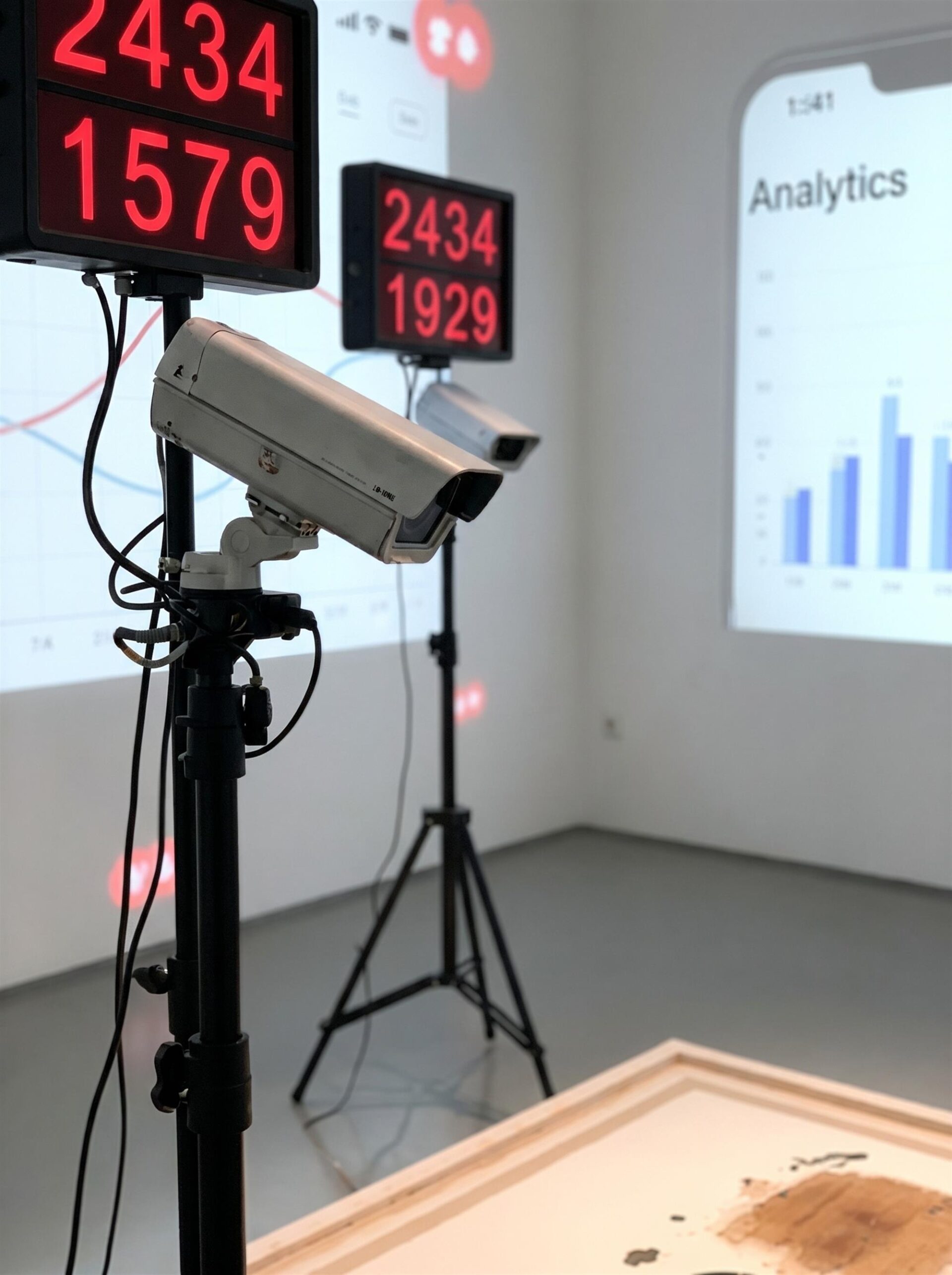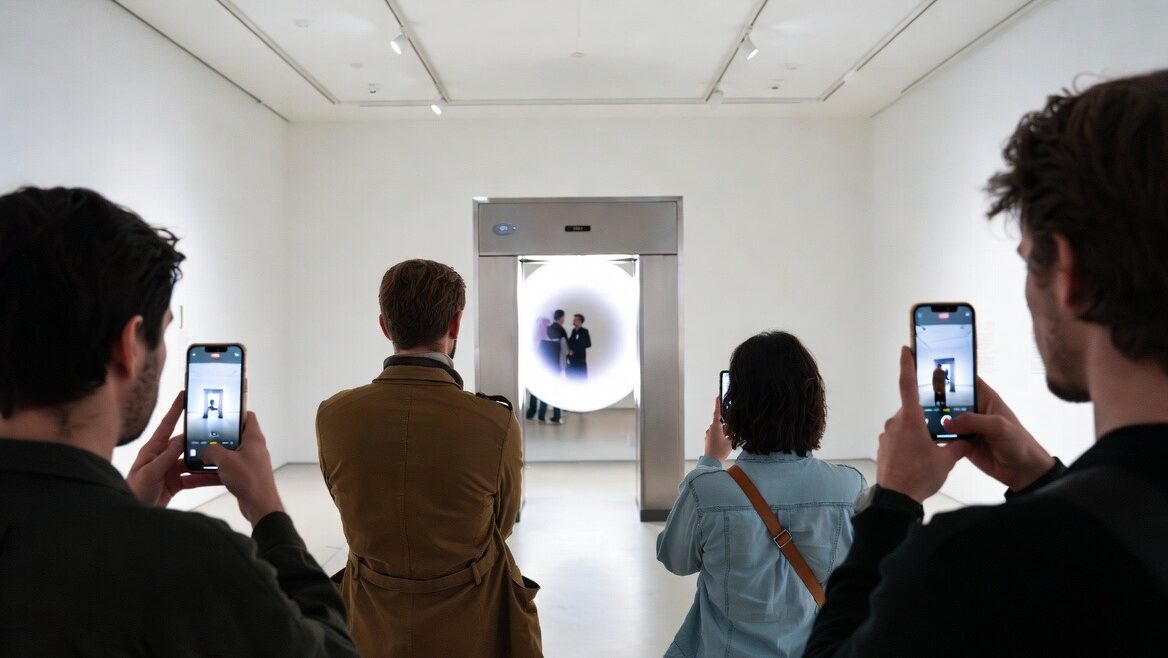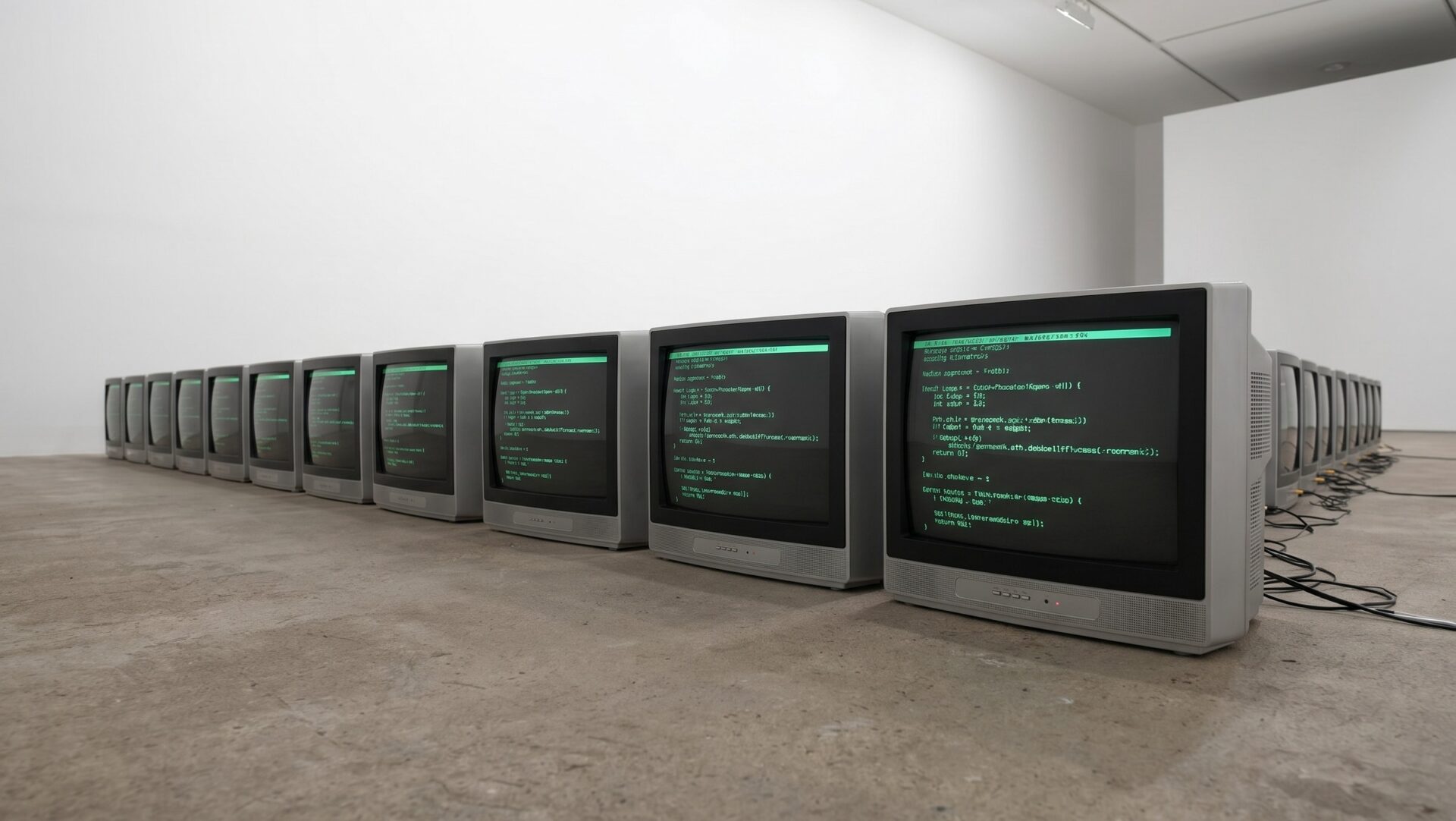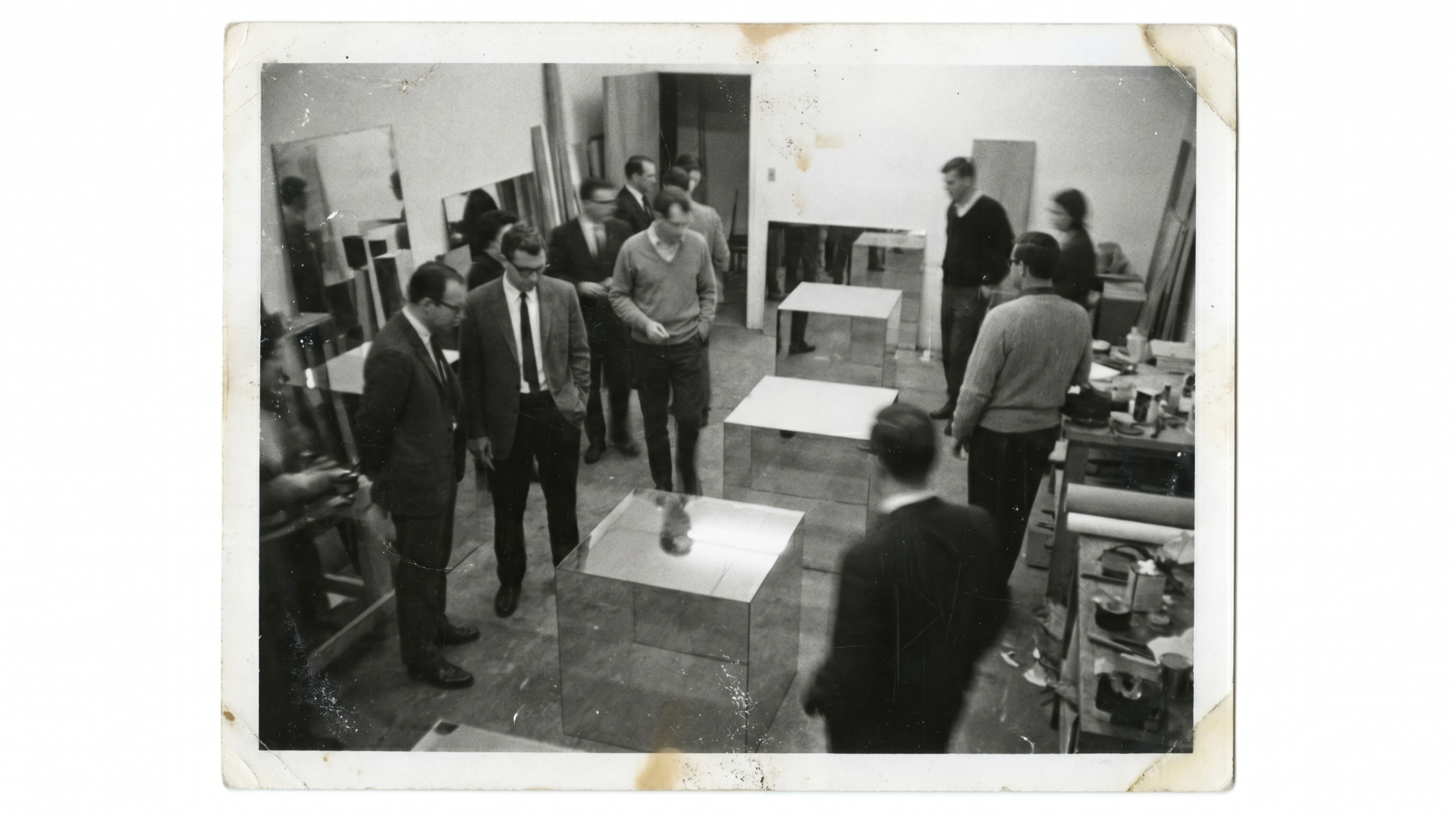
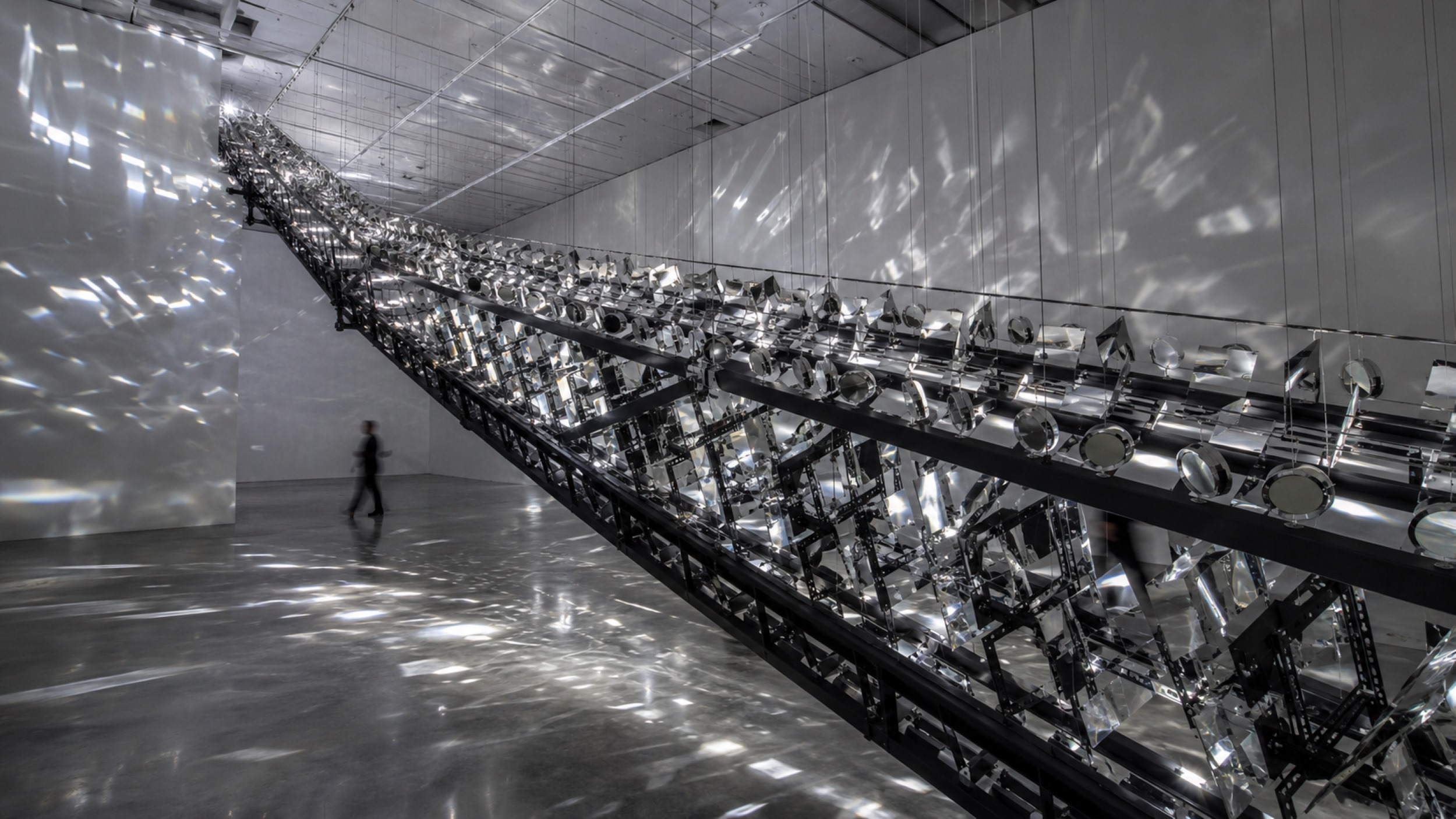
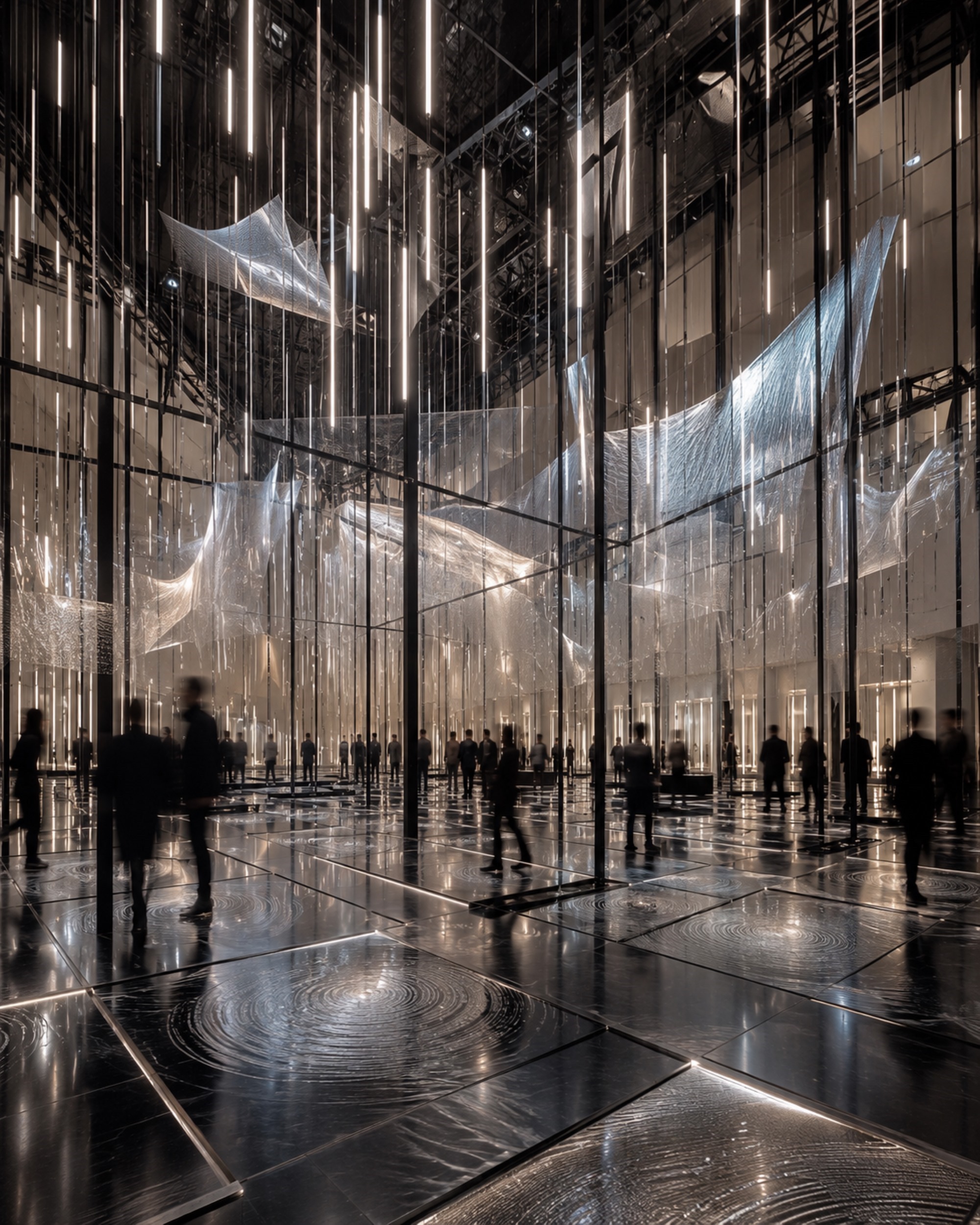
A room activates when someone crosses it. Light strikes a reflective surface, fractures across the walls, and forces the eye to pursue an image that changes before it can be fixed. In the summer of 2026, as Tate Modern returns Julio Le Parc to public attention through Light. Colour. Action., this perceptual circuit retains an unexpected precision. Weeks after the artist’s death, the work reads less like evidence of a completed movement than a device ecology still ahead of our present.
Kinetic, optical, and programmed art are often arranged into a reassuring genealogy of motors, mirrors, geometric patterns, vibrating surfaces, and luminous environments. Historical classification stabilises practices that sought instability as their operational condition. From the late 1950s through the 1960s, Le Parc, Gruppo N, and Getulio Alviani altered the position of the author, the spectator’s expected passivity, and the singular status of the object. Light and movement provided instruments for institutional critique.
The 1962 exhibition Arte programmata at the Olivetti showroom in Milan made this transformation explicit. Bruno Munari proposed the term, while Umberto Eco connected the works to the open work. Programming meant establishing a parameter space: a rule able to generate variation, an object sensitive to time, a structure completed through the viewer’s action. The program existed as a cultural form before the computer became its dominant interface.
The algorithm now appears to occupy the same territory. It establishes conditions, orders sequences, produces variations, and responds to input. Yet the parallel breaks at the decisive point. Historical programmed art exposed a system for the public to activate; the contemporary platform exposes content while its ranking systems observe, classify, and anticipate the public. Movement passed from object to spectator, then from spectator to behavioural profile.
Revisiting these practices therefore opens a future proposition rather than a commemorative exercise. A renewed programmed art could treat the algorithm as spatial, luminous, and political material, returning its rules and consequences to collective perception. Its central problem concerns who programs variation, who can read the distribution logic, and what agency remains inside the system.
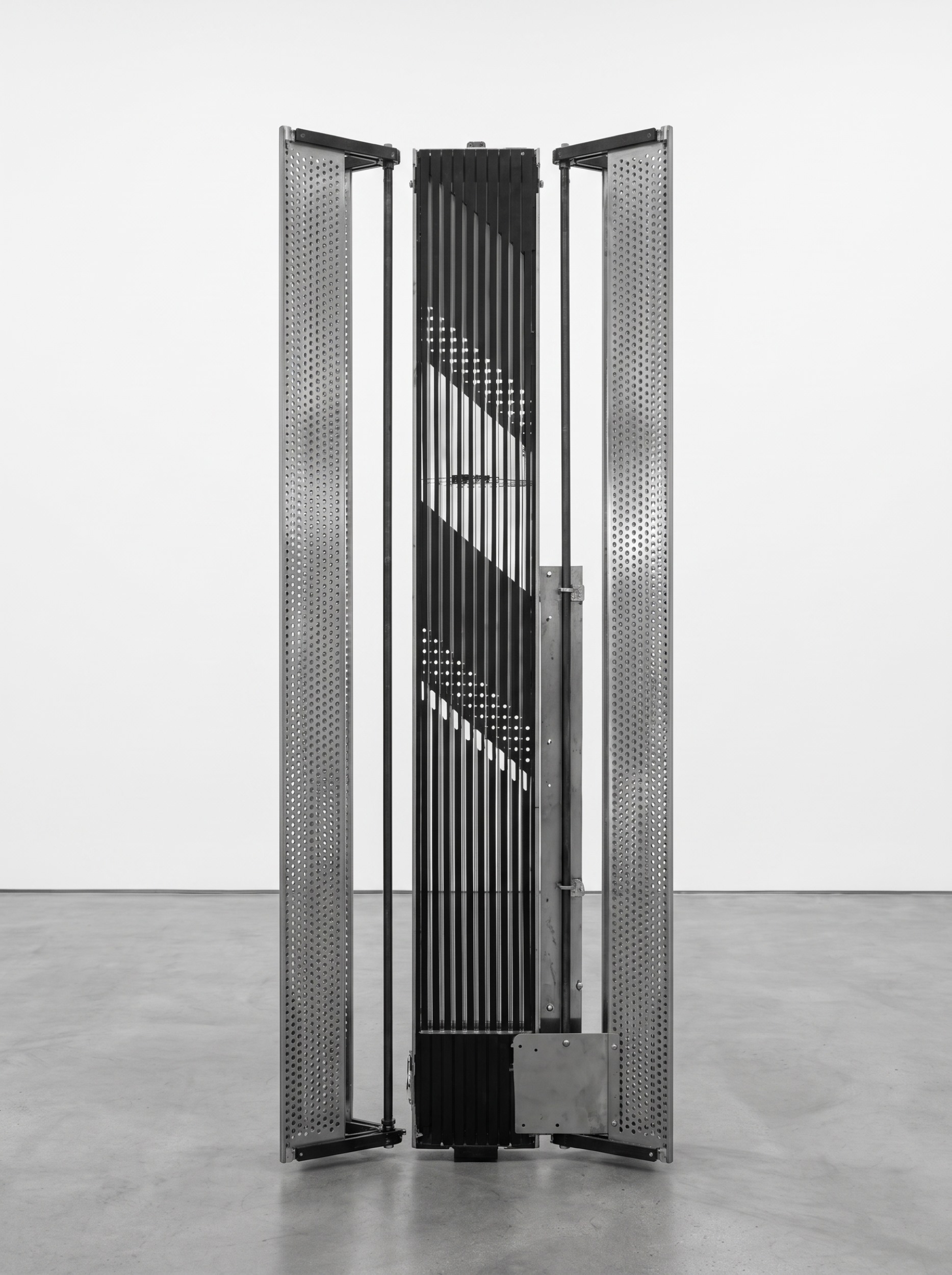
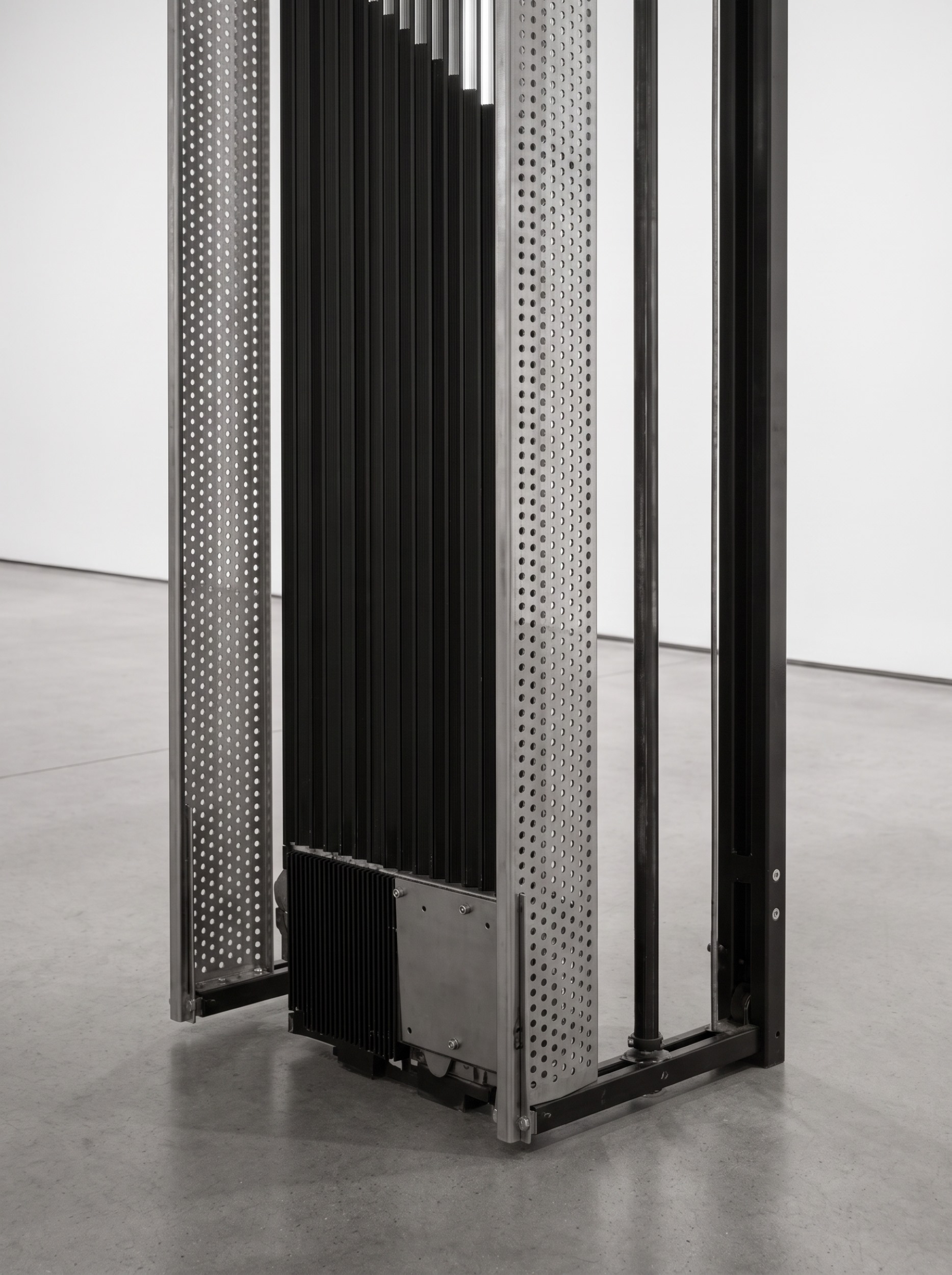
The Rule before Code
The artistic program begins by separating decision from result. The artist establishes conditions, while the work manifests configurations beyond any single composition. Series, permutations, modules, intervals, and motion replace the definitive gesture with an operational grammar. Each visible form becomes one state within the parameter space of the rule.
This logic redistributes authorship. The work shifts away from the irreproducible trace of a hand and toward the precision of a system capable of producing difference. Value migrates from the isolated object to the relationship among instruction, material, and context. Authorship persists as the design of conditions and distribution protocols.
The technology of the 1960s rendered the program physically legible. A grid, motor, metal sheet, light source, or chromatic sequence displayed its behaviour with little dependence on hidden computation. Even where a mechanism remained behind a panel, the body could infer its logic through displacement. Causality belonged to the perceptual threshold of the encounter.
Contemporary code expands that field exponentially. It processes data streams, adjusts in real time, and generates responsive images, sounds, and environments. This power also widens the distance between rule and effect. The surface reacts while the viewer receives little access to data collection, variable weighting, training bias, or excluded alternatives.
The first legacy of programmed art is therefore a demand for legibility. An artistic system gains force through the complexity it produces and through the relationship it allows viewers to build with that complexity. Code may remain invisible; its distribution logic must become sensible.
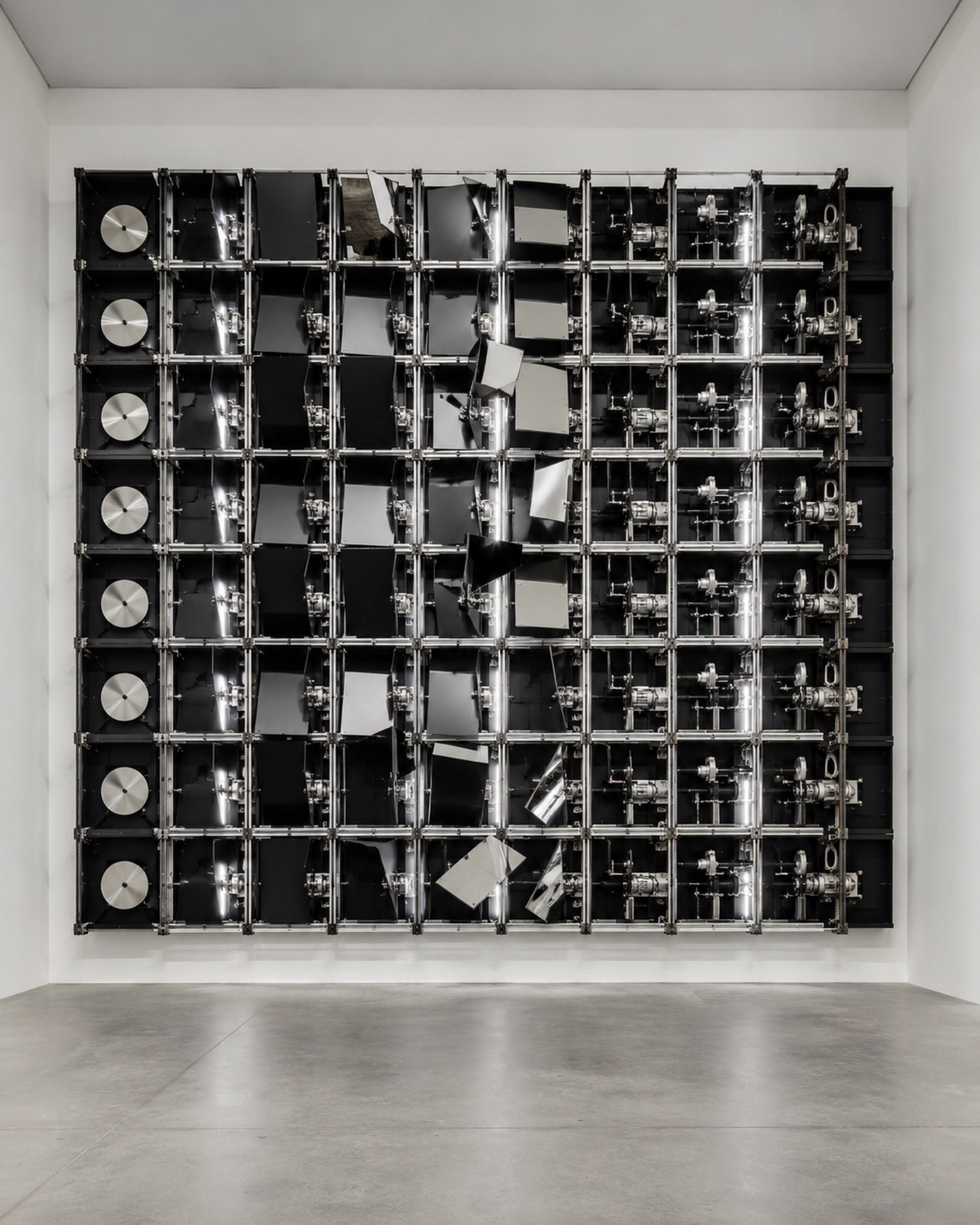
The Eye as Motor
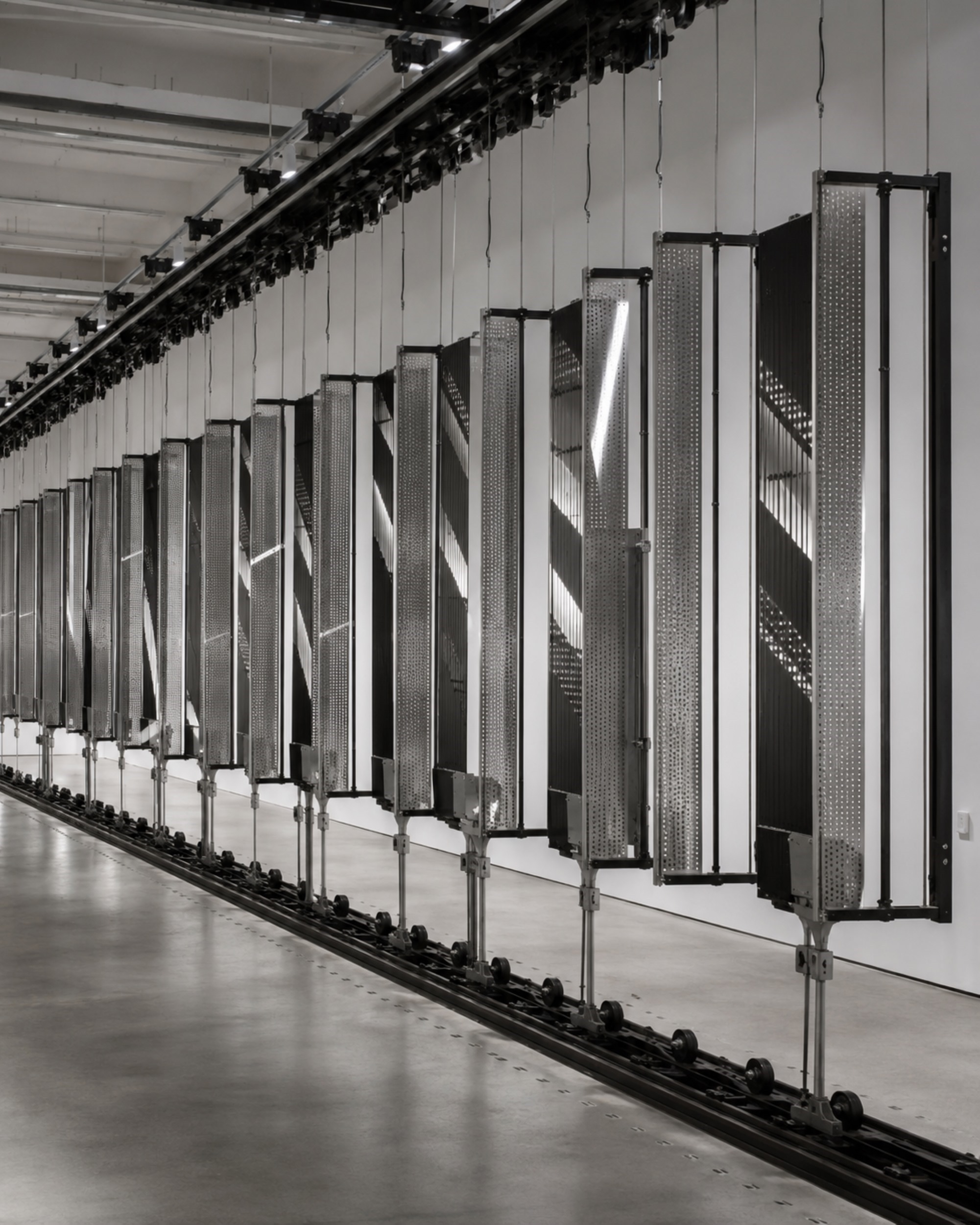
Julio Le Parc built works that deprived the spectator of a stable viewing position. Mirrors, mobile sheets, projections, and moving light converted each step into a variation of the visual field. The eye moved beyond contemplation and supplied the device ecology with physical input. Looking acquired operational consequences.
Within GRAV, the Groupe de Recherche d’Art Visuel founded in Paris in 1960, activation carried an explicitly social dimension. Labyrinths and environments reduced the distance between production and reception, shifting experience away from the authority of the masterpiece and the museum’s reverential interface cadence. Ordinary spectators could test, play, deviate, and multiply the visual situation.
Optical illusion consequently became a critical mechanism. It did more than deceive the eye; it demonstrated how vision depends on position, duration, and expectation. An apparently unstable surface disclosed the instability of the observer. Perception emerged as an engineered process rather than a transparent window.
Contemporary interfaces inherit this mobility in inverted form. Screens respond to gestures, record touch, and reorganise the field of vision. Participation becomes behavioural data measured through dwell time, frequency, preference, and probability of return. The eye still powers the system, while now also training the model that determines its next exposure.
Le Parc consequently retains a contemporary radicality. His works entrust variation to the spectator while resisting its immediate conversion into prediction. Each body produces a situation, yet no persistent profile owns the result. Instability remains a shared parameter space.
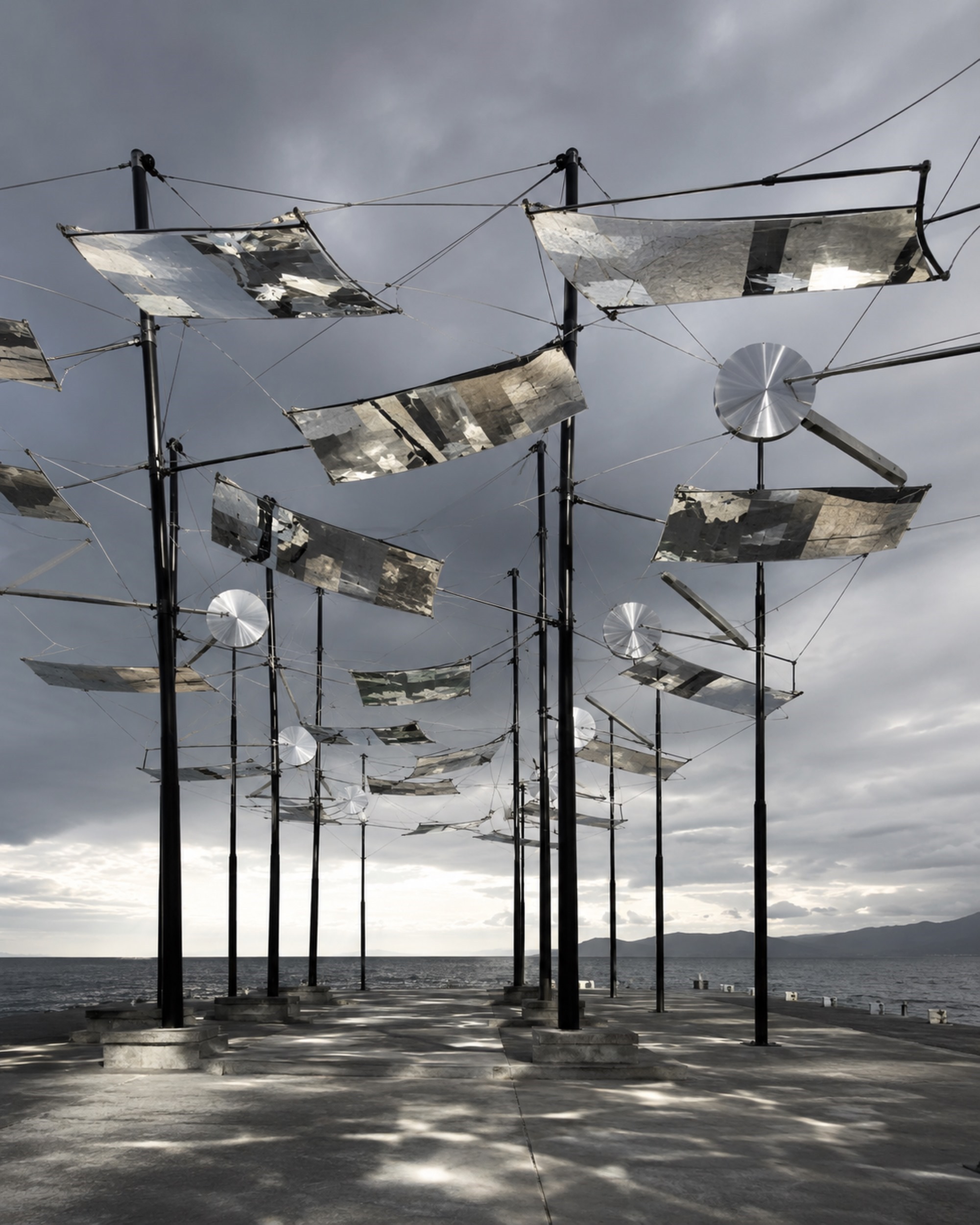
The Anonymity of the System
Gruppo N in Padua carried the program into the identity of the artist. Alberto Biasi, Ennio Chiggio, Toni Costa, Edoardo Landi, and Manfredo Massironi worked collectively, signing many works through the group’s identity. Shared research placed pressure on individual authorship and aligned art with the operational methods of design, industry, and the laboratory.
Their optical structures required the public to move. Layered patterns, reliefs, industrial materials, and geometric variations generated images dependent on viewing angle. A temporal relation completed the work, varying with every traversal while remaining grounded in common conditions. Individual difference emerged inside a collective protocol.
This distinction becomes crucial under algorithmic personalisation. Platforms promise a different experience for each user, yet proprietary infrastructures calculate that difference and deliver it privately through ranking sequencing. Gruppo N pursued public variability: distinct bodies could verify together how one structure generated divergent effects.
Anonymity has also changed its function. For the Paduan collective, it diminished ego and challenged the market’s prestige economy of the unique object. Across digital systems, anonymity often belongs to code, corporation, or automated supply chain. We know the selected image while the operational author of its visibility remains obscure.
A future programmed art could reverse this distribution. It could identify collectively who constructs the system, reduce the prestige of individual signature, and publish the rules acting upon the spectator. The author recedes; the infrastructure enters the light.
The Surface as Sensor
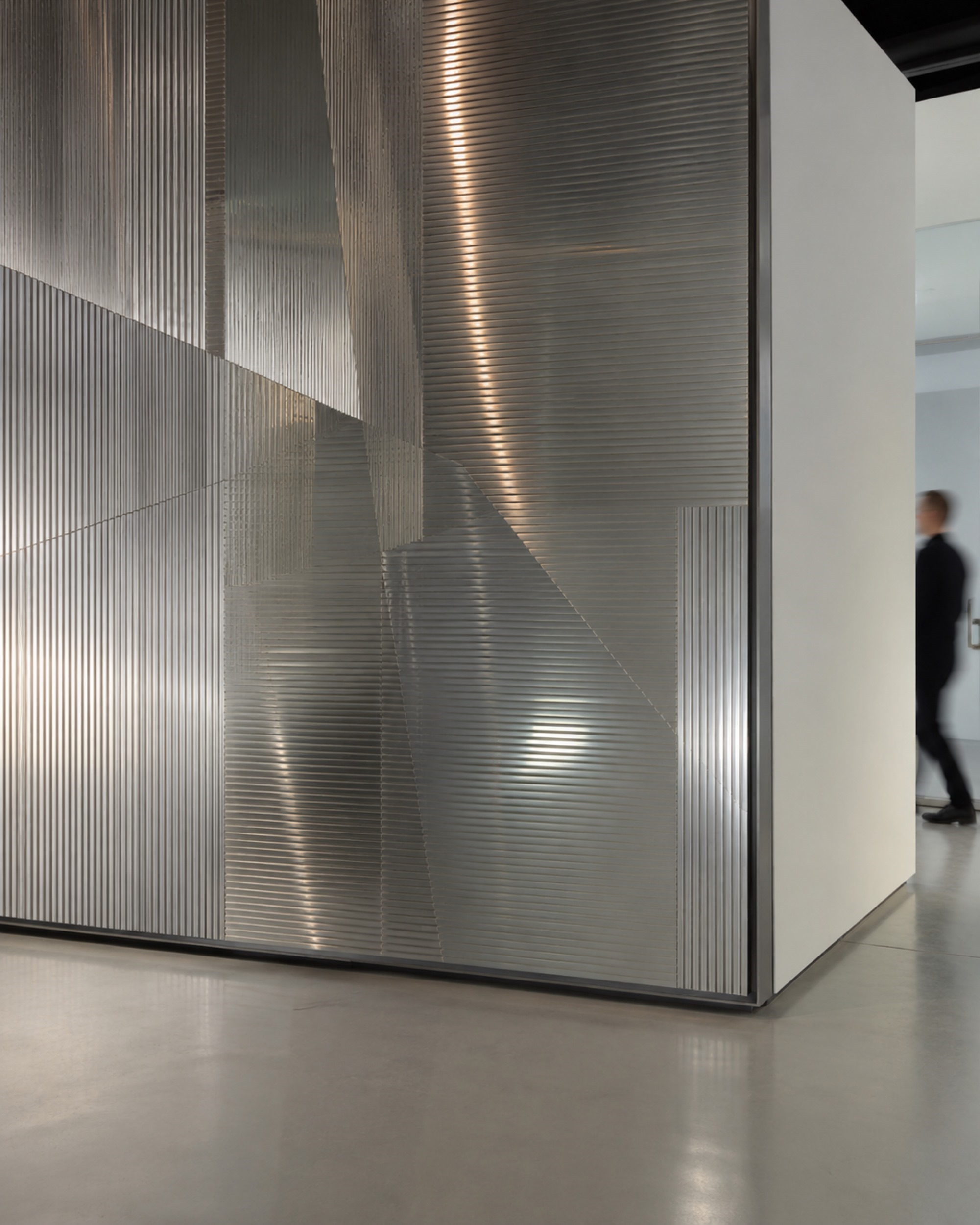
Getulio Alviani transformed aluminium into a perceptual apparatus. His Vibrating Texture Surfaces, begun in 1958, used abrasion and geometry to capture and reflect light according to viewing angle. The material remained still while the image changed with body and environment. The surface behaved like a sensor outside electronic bandwidth.
These works demonstrate that interactivity predates the digital device. Material can register the observer’s position operationally through its physical properties. Response emerges from the encounter among incision, light, and movement instead of computational processing. The world enters the work before segmentation converts it into data.
Alviani considered these surfaces reproducible in series because precise programming generated them. Multiplication expressed the principle of the work. Each instance could produce different luminous events as the rule encountered particular spaces, hours, and bodies. Identity resided in behaviour and exposure time rather than a fixed image.
Digital sensors now seem to offer a superior version of this responsiveness. Cameras, microphones, and tracking systems allow environments to react with great complexity. Every sensor nevertheless imposes a taxonomy, deciding which presence becomes information and which falls outside the parameter space. Alviani’s aluminium responded to position without identifying the visitor; contemporary data infrastructures tend to separate, name, and retain.
His surfaces propose another algorithmic ecology. A work can respond intensely through minimal information, allowing the body to preserve opacity. Light records the passage and immediately forgets.
From Illusion to Profile
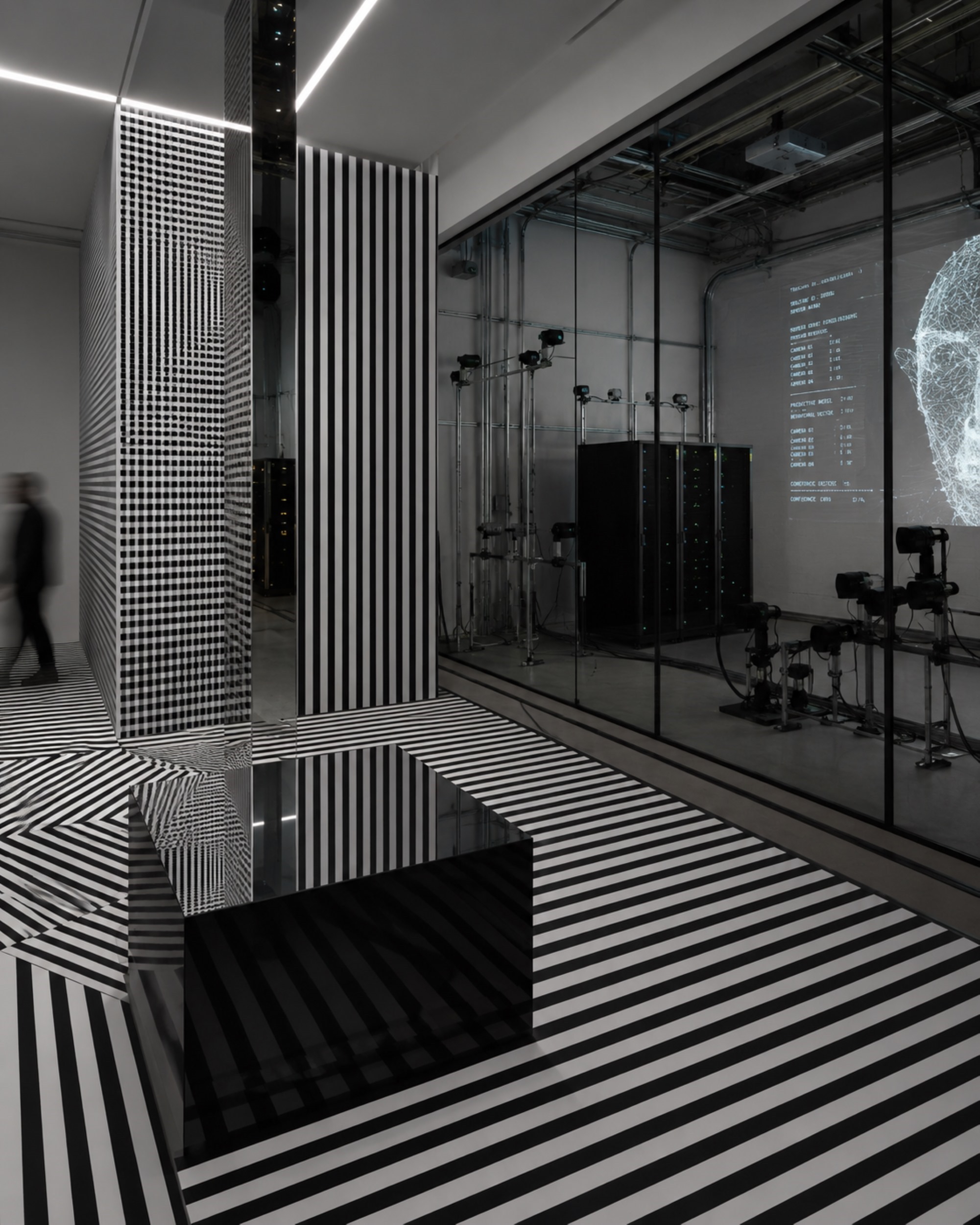
Historical optical illusion produced a brief, localised crisis. The eye encountered nonexistent movement, ambiguous depth, or vibration generated by static elements. The phenomenon also supplied the means to recognise its construction: displacement, slower dwell time, or altered viewing distance. Deception became embodied knowledge.
Algorithmic illusion operates at infrastructural scale. A feed appears spontaneous, a recommendation feels relevant, and a sequence acquires the cadence of inevitability. Classification, prediction, and optimisation work behind this naturalised surface. Platform governance produces a perceptual environment in which artifice coincides with the ordinary order of things.
Time marks the decisive difference. A kinetic work varies during an encounter and becomes available for renewed activation. Platforms accumulate previous encounters to govern subsequent exposure. Each gesture modifies a persistent profile, and that profile narrows or expands the visible field through ranking sequencing. System memory arrives before the gaze.
Generative art can easily accept this condition as the period’s default language. Multiplication, controlled chance, and automatic variation echo programmed art, yet frequently appear as demonstrations of computational power. The image changes while its power relation remains fixed. Formal novelty can conceal a fully normalised infrastructure.
Historical comparison establishes a responsibility. Programmed art examined the conditions of perception; its possible evolution must also examine the conditions of prediction. After optical illusion, the operative field is the profile’s claim to neutrality.
Toward Algorithmic Kineticism
Contemporary algorithmic kineticism would begin with the body in space and the rule in time. Code, light, materials, and networks would form one device ecology, releasing practice from the screen as obligatory horizon. Movement could belong to the object, the public, the data, or the unstable relation among these layers.
Transparency would acquire aesthetic form. Operational variables could manifest through luminous intensity, rhythms, interruptions, and resistance, allowing visitors to perceive how a system decides. A wall label explaining the code would offer insufficient bandwidth. Understanding would occur through experience, as it did before a Gruppo N pattern or an Alviani surface.
Participation would remain collective. An environment might respond to density, proximity, and coordination without recognising individual identity; it might reward unpredictable behaviour instead of optimising habitual response; it might erase session data as visitors leave. Variability would become a commons instead of a profiling technique.
Such practice would recover the political tension of the historical groups. Shared design, reproducible editions, open protocols, and visible maintenance could replace the prestige economy of proprietary technology. The artwork would include its dependence on energy management, hardware, and technical labour, rendering the algorithm’s material cost perceptible.
Programmed art’s future could begin exactly where the system ceases to anticipate us. Le Parc, Gruppo N, and Alviani taught that seeing means moving inside a rule. The present task is to make that rule traversable again.