

For a long time, critique appeared as a compass. An instrument of orientation, a faculty capable of distinguishing, ordering, separating truth from falsehood, relevance from noise, territory from interference. Within this confidence, a deeper promise took hold: that drawing boundaries produces understanding, that naming sharpens vision, that articulating judgment allows a more lucid inhabitation of the world.
A powerful promise. A reassuring one as well.
Every map generates this effect. It reduces the friction of the real, simplifies its surface, converts instability into trajectory. It delivers the impression that whatever becomes legible also becomes governable. Coordinates attract for this reason. Clean lines, thresholds, categories. They sustain the belief that thought coincides with a firmer grasp on things.
Then the ground shifts.
When this same logic meets lived experience, perception, interior states, art, the relation to technology, the mind itself, the clarity of the map begins to fracture. The boundary ceases to register as conquest and starts to appear as incision. Classification extends beyond orientation and performs selection, compression, hierarchy. It organizes the real while thinning its density. Within that passage, the compass already carries the outline of the cage.
Artificial intelligence enters precisely at this juncture. It operates neither as a passing topic nor as an adversary to human thought, but as a force that renders the structural character of this crisis visible. It produces statements that remain coherent, pertinent, formally legible, while bypassing the anchoring between subjectivity, experience, and positional commitment that long sustained the symbolic value of opinion. It preserves the form of judgment while emptying its identitarian ground.
What trembles concerns more than human authority. The device that stabilized our relation to thought begins to lose its credibility.
The question shifts away from critique as a faculty. It moves toward its historical function, its architecture, the kind of subject it has helped produce. It turns on the moment when an instrument of orientation becomes a protocol of legibility, when a gesture designed to open the world begins to discipline it.
This threshold marks the point of departure. Critique still presents itself as a compass while already revealing the bars of its form.

The Map and Its Comfort
At this stage, neutrality dissolves as an option. The question of critique unfolds at the level of use, in the manner it intervenes within experience, in the distance it installs, in the price it exacts at each activation.
Within this gap, a confrontation emerges between two positions that, in recent years, have approached the relation between thought, perception, and structure from distinct angles.
Adrian Voss examines what occurs when thought organizes itself as a management system. In his writing, critique appears as a technology of selection, a device that renders the world tractable at the cost of a progressive subtraction of experience. His focus targets the loss embedded in every form of organization.
Leonie Arendt works within the same field while inverting its operational axis. Her research isolates the moment when distinction becomes the condition of thought’s existence. Threshold, differential, the capacity to separate interior from exterior: these elements sustain orientation. In her perspective, critique makes experience inhabitable.
These positions form two incompatible descriptions of the same gesture. Voss observes the conversion of reality into structure. Arendt identifies the moment when that structure prevents overwhelm.
Leonie Arendt
A concrete situation clarifies the point. An email that exposes us, a conflict that arrives abruptly, a piece of news that alters our internal configuration. The introduction of distance between event and reaction interrupts coincidence with that reaction. Critique emerges as an operational differential between event and its immediate psychic occupation.
Adrian Voss
That distance carries a cost from the outset. Its introduction shifts the work from experience toward a legible conversion. Organization, selection, decisions about relevance and sacrifice. Critique intervenes on the tractable version of the event.
Arendt
Tractability enables intervention. Mediation, articulation, minimal separation open a margin of action. The issue concerns operational possibility, not the defense of judgmental purity.
Voss
An automatism comes into view. Distance stabilizes as a default mode of being. Each experience passes through an interpretive grid. Critique extends beyond organization and substitutes for presence.
The line moves accordingly. Utility versus harm dissolves as the central dispute. The focus isolates the moment when a situated tool becomes a continuous modality. For Arendt, absence of structure erodes orientation. For Voss, excess structure automates distinction and replaces experience. The same operation generates divergent effects according to its deployment. Within this gap, critique changes nature.
The Price of Distance
The confrontation deepens as it engages domains of application. The tension between compass and cage acquires a sharper contour.
Arendt
A strict adherence to Voss leads toward the dissolution of the distinction between conscious use and caricature. Entire fields depend on this faculty: medicine, science, engineering, diagnosis. The difference between function and failure carries material weight. An infection demands differentiation between healthy and compromised tissue. Precision names this operation.
Voss
Precision holds within contexts that support it. The question concerns extension across heterogeneous domains. Infection belongs to a relatively closed system, with verifiable parameters and observable outcomes. Human experience rarely presents such clarity. The same schema persists: identify, diagnose, correct. The clinical model expands into a general grammar of living.
Arendt
Distinction sustains articulation across fields. Art, perception, aesthetic experience require differentiation. Memory, language, continuity depend on this movement.
Voss
Language remains. The issue arises when naming overtakes traversal. A concert unfolds, a piece resonates, a form passes through perception. The impulse to identify references, genealogies, genres relocates attention into an apparatus of legibility. Understanding appears to intensify while presence recedes.
Arendt
That apparatus supports recognition, sharing, relocation, thought.
Voss
Knowledge requires a distinction between experience and its organization. Contemporary practice collapses this distinction. A situated faculty becomes permanent modality. Listening converts into identification. Traversal converts into framing. Duration converts into correction.
The problem takes a harder shape. Critique operates as a threshold that redistributes proximity and distance, immersion and control. Each activation yields orientation and extracts continuity. Each suspension preserves presence while narrowing operational margin.
A synthesis fails to emerge. A price structures the field.
Each activation exacts it.
Judging in Order to Exist
The problem shifts from cognition to sociality. Critique functions within an economy of recognition.
Arendt
Judgment circulates socially and produces visible differences. This fact alone fails to define a device of domination. Every articulated thought generates gradients, hierarchies, proximities. A field devoid of distinction dissolves into undifferentiated continuity.
Voss
Differences matter through their function. Within many cultural environments, judgment serves positioning relative to others. Critique operates as a signal of belonging, a badge, a proof of legitimacy. The content of the statement recedes behind the demonstration of capacity to state it.
Arendt
At this point, critique bends under other logics: prestige, status, social capital.
Voss
The separation between structure and use grows fragile. Judgment behaves as currency. It circulates to produce recognition, signals familiarity with codes and lexicons. This condition marks a dominant function. Critique uses the world to establish positions.
Arendt
Articulation still sustains the field where positions emerge. Recognition as an outcome differs from recognition as an aim.
Voss
Judgment serves social existence. It renders subjects legible in the correct manner.
The passage becomes explicit. Critique distributes value. Each judgment constitutes a visible position. Positions relate, forming hierarchies, affinities, distances. Thought changes status. It becomes something exposed within systems governed by coherence, clarity, recognizability.
Voss gains traction at this level. Critique functions effectively within a structure that exceeds it. Judgment behaves as currency, circulating and producing effects of legitimation. Formal stability becomes necessary. Expression tends toward uniformity at the level of modality. Excess elements rarely receive refutation; they drift toward invisibility through attention metrics and distribution protocols.
Critique enters an economy of attention and recognition. Freedom aligns with adherence to preexisting structures of legibility. Practice unfolds inside the system it addresses.
This operation prepares the next stage.
The Protocol of Legibility
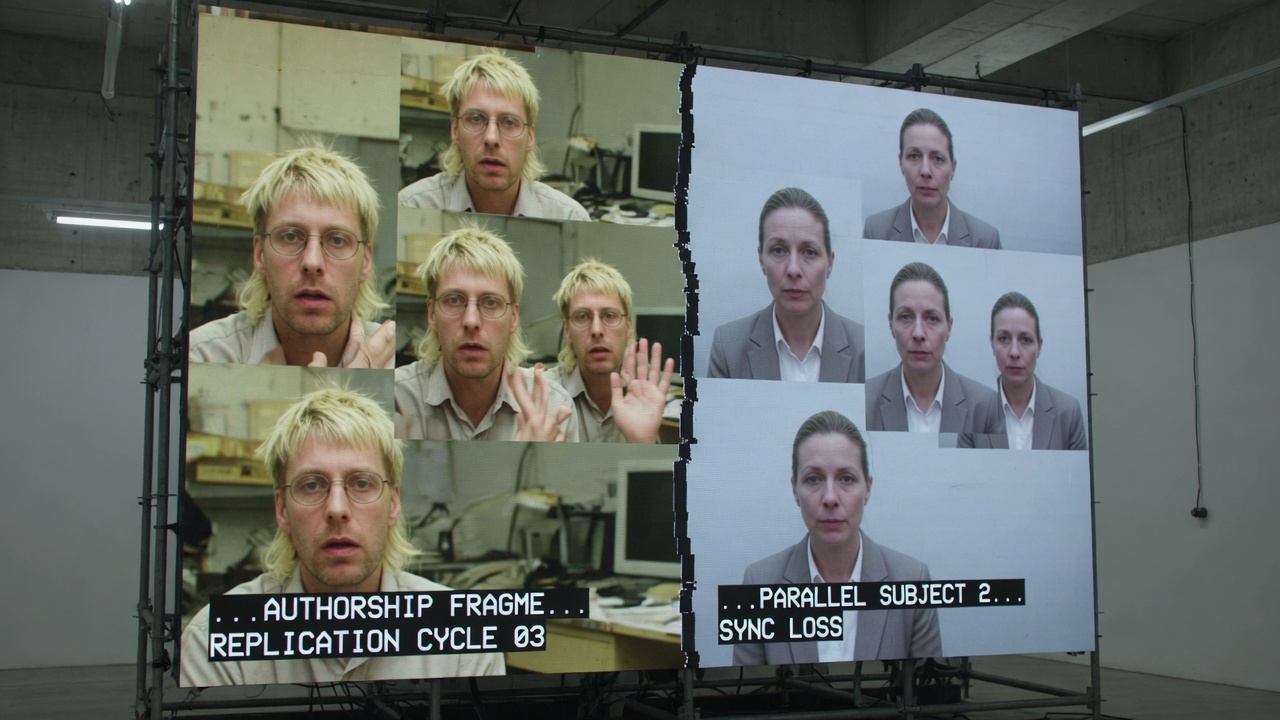
Critique appears as a distributed architecture. A set of operations exceeding individual subjects organizes the field in which thought appears.
As critique stabilizes as the dominant relation to the real, it shifts from situated tool to continuous protocol. It defines in advance what becomes distinguishable, how articulation proceeds, which degree of structure grants entry into shared sense.
The shift concerns function rather than content. Judgment retains the appearance of understanding while operating as positioning device. Within artistic, cultural, and intellectual environments, the articulation of judgment constructs recognizable positions within a system governed by ranking systems, exposure time, and interface cadence.
Language hardens. Forms stabilize. Thought acquires grammar. The aim concerns legibility under specific conditions.
Critique enters an economy as function. Judgment becomes currency, circulating, exchanging, producing recognition, defining belonging, organizing proximity. Stability of form supports circulation. Expression converges across modalities.
The issue moves beyond peripheral anomaly. A structural consequence emerges. If critique operates as a protocol of legibility, and its value aligns with recognizability, then disruption arises through the production of legibility independent of subjectivity.
Artificial intelligence enters at this point.
When Judgment Loses Its Author
Artificial intelligence operates as a revealing mechanism. It exposes a structure already active within the system of critique.
The value of judgment historically relied on two conditions: internal coherence and the presence of a subject assuming the risk of enunciation. Judgment functioned as linguistic construction and positional act.
Artificial intelligence intervenes within this balance.
Generative models produce statements that satisfy coherence, structure, contextual pertinence, argumentative continuity. The subjective anchor recedes. Exposure, in its classical sense, dissolves. The friction between statement and presence diminishes within parameter space and training bias.
The central issue concerns separation. Legibility detaches from subjectivity.
This separation generates a direct consequence. Validity aligns with adherence to formal criteria. Recognition of thought reflects a protocol of construction embedded within platform governance and distribution protocols.
Artificial intelligence replicates this protocol while bypassing experiential traversal. Replication renders the structure visible.
Validity emerges independent of subject. Critique shifts function accordingly. It selects, orders, inserts statements into a saturated field of equivalent productions shaped by algorithmic sorting and attention metrics.
Opinion undergoes transformation. It persists as form while losing identitarian centrality. It circulates as element within systems of exchange.
Artificial intelligence functions as a device of exposure. It reveals the structural conditions that organized recognition.
Scale changes decisively. Critique loses centrality while maintaining operation. Subjectivity continues to speak while sharing the field with non-subjective production. Authorship persists while relinquishing exclusive authority over form.
A perceptible shift takes hold.

The Mind as Final Capture Field
The problem internalizes. Critique organizes the subject’s relation to itself.
Its ambivalence intensifies.
Distance becomes possible. Coincidence with events loosens. Orientation gains form. Simultaneously, continuous self-observation stabilizes, transforming thought into a permanent analytic field governed by feedback loops and attention metrics.
Arendt
Critique retains operational value. The mind may deploy it while sustaining a differential from it. This gap enables thinking that observes without converting each observation into verdict.
Voss
The gap tends toward closure. The mind observes its own operations, generating a secondary structure that overlays the first. Thought reflects on thought through recursive loops within device ecology.
Arendt
The issue concerns function. Thought operates as tool rather than absolute referent. Control becomes technique of self-governance.
Voss
The technique reproduces the same logic: separation, analysis, correction. Each attempt at control introduces additional layers of observation. The system stratifies.
Arendt
Two paths remain. Reduction of intervention, allowing a less mediated relation to experience. Or sustained engagement within structure, with awareness of limits and calibrated use.
Voss
One path reduces integration. The other demands continuous negotiation.
Arendt
Each path requires decision.
Voss
Each decision reactivates the device.
The point condenses. Suffering emerges when the dynamic becomes automatic, when distance stabilizes as division, when observation persists continuously. The subject splits between traversal and control, between experience and evaluation. Thought becomes an environment structured by constant feedback and segmentation.
Critique reveals its intimate reversal. As historical protocol of legibility, it appears as a field of capture at the existential level. Continuous self-application renders distance durable.
The condition concerns everyone.
Inhabiting the Cage
The configuration holds together.
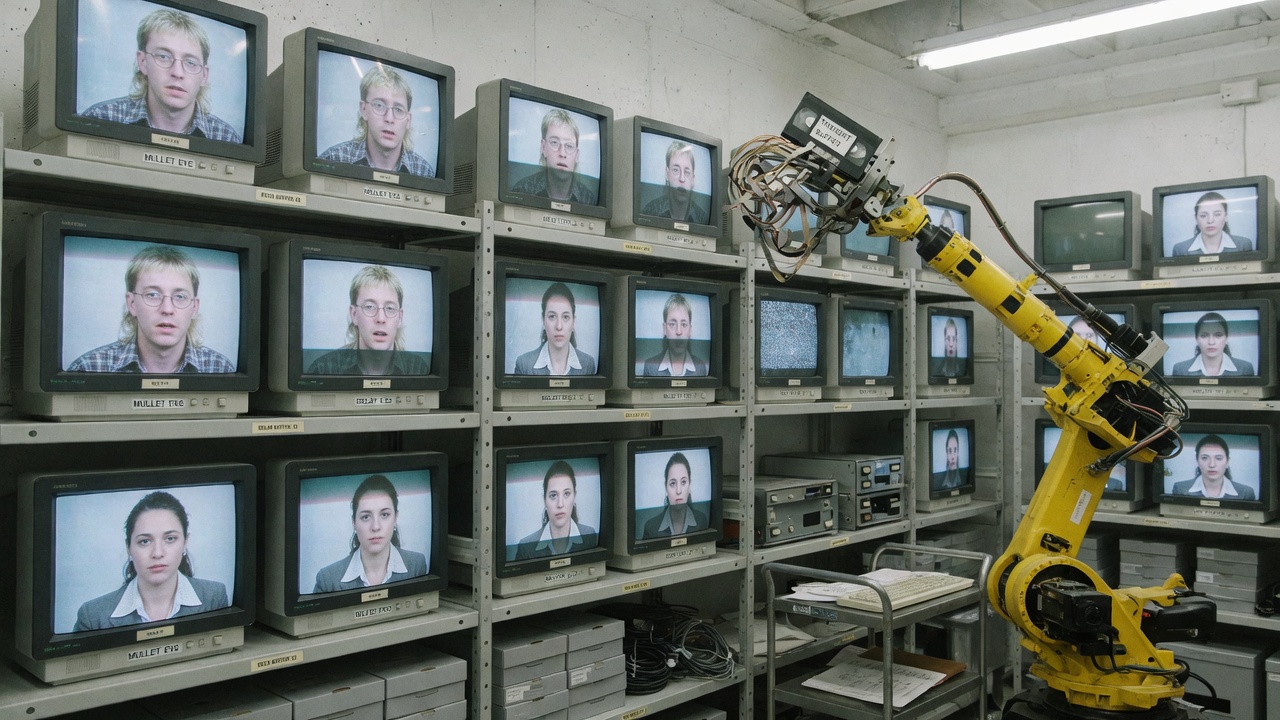
Critique persists as infrastructure of thought, enabling distinction, articulation, intervention. Its former position shifts. It ceases to coincide with the foundation of the relation between subject and truth.
Opinion follows a similar trajectory. It circulates, produces effects, organizes exchange. Its stabilizing function weakens as its operation separates from its representational claim.
The transformation concerns a redistribution of conditions.
Artificial intelligence reveals that validity arises through formal criteria independent of subjectivity. Critique remains operative while its grounding shifts toward protocols that exceed individual users.
The question expands beyond content. It addresses formation, recognition, relation among statements, production of recognition, organization of proximity within networks shaped by bandwidth, compression, and notification rhythm.
Recognition detaches from exclusive reliance on judgment. Centrality shifts.
A tension persists. One direction sustains critique as tool, with awareness of limits and integration within broader structures. Another direction reduces its grip, seeking relations with the real that operate through alternative perceptual thresholds and temporalities.
Each direction traverses the problem.
Closure remains unavailable. The device appears as condition requiring situated decisions.
The decision offers no return to purity. It unfolds within history, language, and systems. It demands a precise gesture: recognition that compass and cage function as two aspects of the same form.
The problem concerns perception of operation.
The problem concerns learning when orientation unfolds, and when closure takes hold.