


Radicality has often been understood through the idea of rupture: refusing, interrupting, negating, withdrawing, or placing oneself outside the terms of what already exists. In modern and contemporary art, the radical gesture frequently meant breaking with the institution, with representation, with the market, or with the social and aesthetic conventions that determined what art could be. But rupture has also become familiar. Opposition can now function as a recognizable style, transgression as a cultural genre, disruption as a source of market value. Institutions have learned to incorporate critique and, at times, to use it as part of their own renewal.
This changes the terms of the problem. It is no longer enough to ask whether art is still capable of refusal, because refusal itself can be recognized, reproduced, circulated, and absorbed. Social media can distribute dissent as easily as it distributes desire. Museums can stage critiques of the museum. The market can place a price on works that explicitly reject its values. A gesture intended to challenge a system may eventually return as one of the forms through which that system operates. The issue is therefore not that radical gestures have disappeared, but that some of the gestures historically associated with radicality may no longer create the break they once promised.
Asking what remains of the radical also means reconsidering how we recognize it. Radicality does not necessarily have to take the form of negation, visible transgression, or explicit opposition. It may instead lie in changing the conditions under which participation takes place, using existing systems in ways they were not designed for, refusing particular economies of visibility, or developing forms of production and circulation that do not reproduce the structures they seek to challenge. What matters may be less the force or visibility of a gesture than its ability to show that arrangements presented as necessary could, in fact, be otherwise.
Seen in these terms, the question shifts from refusal alone to the possibility of creating different conditions. Refusal remains available, but it is one strategy rather than the definition of radicality itself. The more difficult question is how artistic practices can change the field in which participation, visibility, value, and agency are produced and understood. A radical practice can interrupt an existing structure, but it can also build something within it. It can withdraw from established forms of circulation, or work inside them and alter how they function. In some cases, it may avoid visibility; in others, it may create new relations, infrastructures, or ways of imagining what can exist in the present.
What remains of the radical, then, cannot be reduced to a set of gestures inherited from the avant-garde. It depends on position, legibility, and consequence: on whether a practice can produce a difference without that difference immediately becoming another style, category, piece of content, or source of value. This essay considers refusal, absorption, immanent critique, withdrawal, silence, and construction as different ways of approaching this problem. Rather than searching for a pure position outside existing systems, it asks how other possibilities might be produced from within the conditions that already shape the present.

The Style of No
For much of the history of modern and contemporary art, radicality was closely associated with negation. Refusing the institution, rejecting the medium, interrupting the exhibition, abandoning the object, or resisting dominant forms of representation could create distance from the structures that organized artistic visibility and value. That distance gave refusal much of its force. To say no was also to draw a line between the conditions one was willing to accept and those that had to change.
Today, that line is harder to maintain. A protest poster can enter an Instagram feed and circulate as a graphic image. Institutional critique can become part of an institution’s own program. Transgression can become an exhibition category, while disruption has become a familiar language of innovation. Forms once associated with opposition now move easily through the systems they are meant to challenge. This does not necessarily make the refusal insincere. The difficulty is that its forms are already familiar enough to be recognized, classified, circulated, and absorbed.
The “style of no” appears at this point. Refusal becomes style when its appearance can be separated from its effects and reproduced as a recognizable language. The typography of dissent, the rhetoric of rupture, the posture of antagonism, or the imagery of transgression can continue to signal radicality even when they no longer change much around them. A radical gesture can begin to resemble a citation of earlier radical gestures. What survives is the image of rupture, while the rupture itself becomes harder to locate.
Refusal has not therefore lost its radical potential. But refusal alone is no longer enough to establish that a practice is radical. A “no” can disrupt a system, but it can also give that system a new aesthetic language, a new curatorial category, or a new market niche. What matters is what the refusal actually changes. Does it alter who can participate, how resources circulate, or where decisions are made? Does it break a dependency or create another way of working? Or does it leave the underlying conditions intact while performing opposition within them?
This question becomes more difficult because contemporary cultural systems are often able to incorporate opposition rather than simply exclude it. Platforms can turn deviation into data. Institutions can make critique part of their programming. Markets can convert difference into another form of distinction. Under these conditions, a gesture that clearly presents itself as radical may also become easier to place within an existing system of recognition and value.
Radicality may therefore depend less on the appearance of the gesture than on the conditions that follow from it. The relevant question is not whether an action looks sufficiently oppositional, but whether it produces effects that cannot be reduced to its image. Refusal can still be one method, but only when something changes through the act of refusing: a relation is broken, a dependency is interrupted, agency shifts, a mechanism of capture stops working, or another field of action becomes possible.
The “style of no” names both a historical language of radicality and one of its present limits. Refusal remains available, but its meaning can no longer be assumed in advance. The question begins after the moment of negation: what does the refusal make possible, what changes because of it, and can the space it opens resist becoming another recognizable image of dissent?
The Inside-Out Move
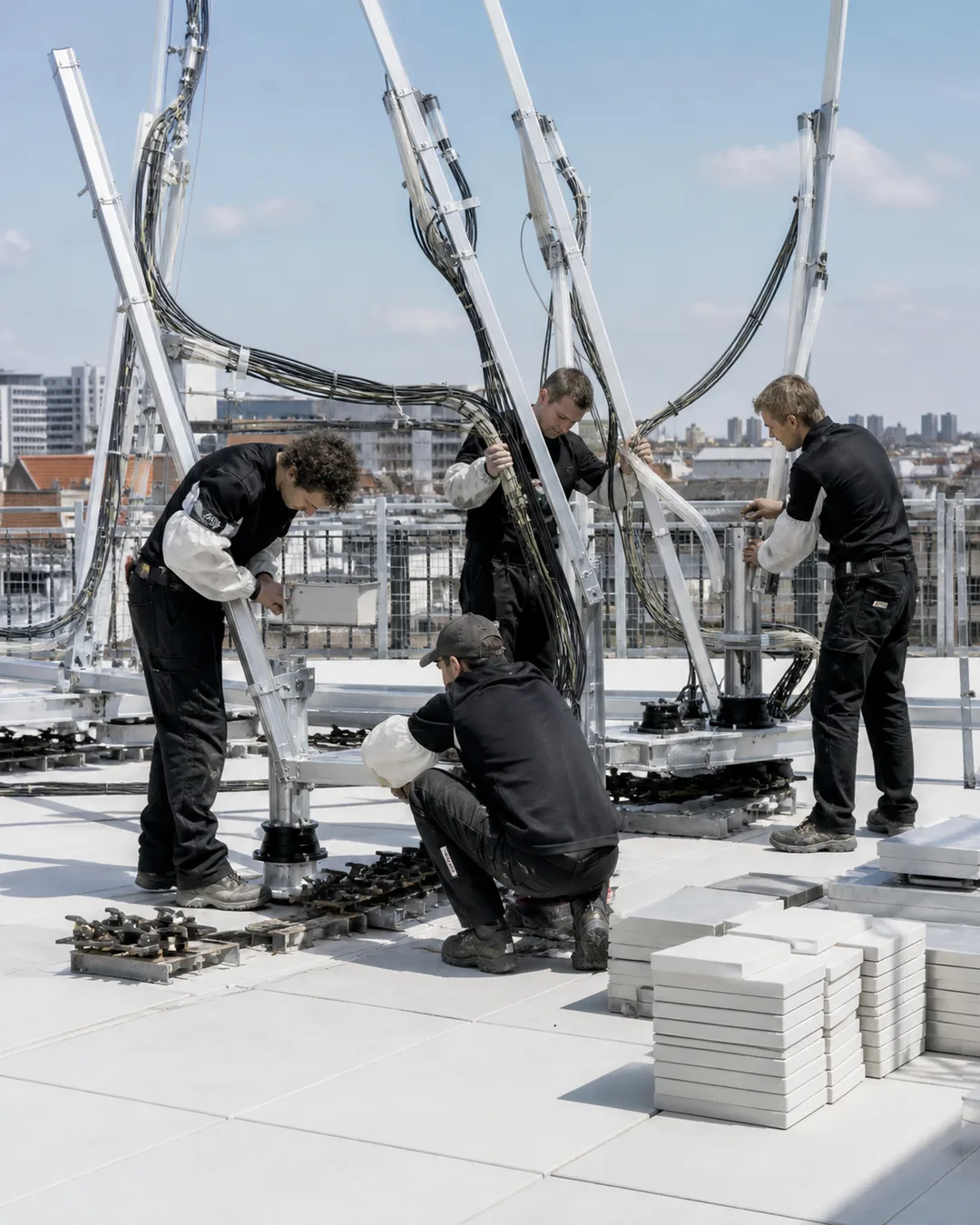
If refusal no longer guarantees radicality, the question changes. Rather than asking how to stand outside a system, it becomes necessary to ask what can be changed from within it. The idea of a clean, uncontaminated outside is increasingly difficult to maintain. Institutions operate beyond their physical walls, platforms shape visibility before participation is even fully conscious, and technical infrastructures influence the conditions under which cultural production takes place. Working within these systems does not necessarily mean accepting them as they are. Their rules, interfaces, protocols, and structures can themselves become material for artistic work.
This is the starting point of the inside-out move. Instead of seeking distance, it works through proximity. A platform interface, an institutional protocol, a model’s latent space, an archive’s taxonomy, or the mechanisms of a market can become both the setting of a work and the point at which that setting is examined or altered. What normally organizes, filters, or captures activity can be turned into something that makes those processes easier to see.
There is a longer history behind this approach. Institutional critique showed that the museum could not simply be criticized from some position entirely outside it, because artistic production was already bound up with the structures under examination. Net art later treated the network as more than a channel for distributing work; its protocols and technical limits could also become part of the work itself. Artists working today with platforms, algorithms, datasets, and generative systems face a related problem under different conditions. These systems do not simply circulate culture. They help organize attention, prediction, visibility, and value.
Using a system against itself, however, is not automatically radical. The formula is appealing, but it can become little more than a tactical reversal: using an algorithm to expose an algorithm, a platform to disrupt a platform, or a model to reveal something about its own operation. Such gestures can be effective, but they can also demonstrate how adaptable the system already is. A platform that comfortably hosts criticism of itself may appear more open without changing very much. Critique from within matters when it affects more than the system’s image of itself.
The question is therefore what the intervention actually changes. Does it expose a dependency that was previously difficult to see? Does it change who has access, alter a protocol, redistribute control, or enable a different form of participation? The force of the work does not come from the elegance of the reversal alone. It comes from producing some change in how the system functions, even if that change is limited or temporary.
This is also why the boundary between critique and function has become less clear. Institutions increasingly include criticism in the way they present and understand themselves. Platforms adapt to adversarial behavior. Generative models can eventually absorb critical material into later training processes. In such cases, absorption is not simply something that happens to critique after it has been made. It is part of the environment in which critique now begins.
The inside-out move takes this condition seriously without treating absorption as inevitable defeat. What matters is whether a practice can create a gap between what a system is designed to do and what people can make it do. This may involve participating in a system without fully following its intended uses, or working close enough to its mechanisms to redirect them. The inside/outside distinction becomes less useful than the question of what kind of relation to the system a practice can establish.
Seen this way, radicality is less a fixed position than a way of operating. It does not depend on achieving distance from power, but on changing the arrangements through which power becomes routine and difficult to notice. The inside-out move shifts attention from opposition to reconfiguration: away from simply rejecting the system and toward testing what else its existing structures can be made to support.

The Unmarked Path
If opposition no longer guarantees radicality, and critique from within can still be absorbed, another possibility appears: rather than confronting the system directly, a practice may work through what the system does not immediately recognize.
Contemporary systems depend on signals. They classify, rank, archive, measure, and predict by turning identifiable features into information. Visibility is therefore not only a condition of recognition; it can also make something easier to capture. What appears can be named, categorized, recommended, valued, and circulated. In this context, illegibility takes on a different political and aesthetic meaning.
The unmarked path is not simply a disappearance from view, nor a retreat into invisibility. It describes forms of action that do not immediately present themselves as radical, oppositional, disruptive, or new. Rather than producing a recognizable image of dissent, they may alter relations without first translating those changes into a familiar cultural language.
This matters because contemporary culture is highly efficient at recognizing transgression. Disruption is easy to circulate because it produces clear images, narratives, positions, and identities. A gesture that openly declares its refusal can quickly gain the visibility that also makes it marketable, classifiable, or stylistically recognizable. The unmarked path asks whether change might occur in forms that cannot be fully understood through their representation alone.
Withdrawal is one possibility, but not the only one. The same logic can appear in forms of cooperation that do not follow dominant metrics, informal infrastructures that remain largely outside institutional attention, circulation that does not depend on amplification, or artistic practices whose value develops through relationships rather than exposure. The point is not invisibility for its own sake. It is the possibility of acting without making recognition the main condition of existence.
For this reason, the unmarked cannot be reduced to a particular aesthetic. It has no stable look, medium, or posture. Once illegibility itself becomes recognizable as a style, it becomes vulnerable to the same processes of classification and value production. Obscurity can acquire prestige. Withdrawal can generate mythology. Even the refusal of visibility can become culturally valuable. There is no form that remains permanently outside capture.
This is also the limit of the unmarked path. A blind spot can eventually be mapped. An absence can become meaningful data. A strategy of evasion can be studied and reproduced. Systems learn from what appears, but they can also learn from patterns of absence and refusal. Remaining unseen cannot therefore be a permanent solution.
What may matter more is the ability to change. A practice can abandon a strategy once it becomes familiar, shift form before it settles into a recognizable grammar, or avoid the stability that allows radicality to become another category. The unmarked path is not a place outside the system. It is a temporary displacement within the field of what the system can perceive and process.
From this perspective, radicality is not secured by invisibility. It depends on resisting complete translation into the terms through which the present recognizes, values, and reproduces difference.
This leads to a further problem: what happens when rupture, critique, and even withdrawal can themselves become sources of economic value?
The Economy of Disruption
Disruption was once closely associated with radicality. To disrupt meant to interrupt a norm, destabilize an institution, or introduce something that could not easily be reconciled with what came before. The radical gesture appeared as a break in continuity, capable of making the existing organization of a field temporarily untenable.
Today, disruption also belongs to the language of markets, platforms, technology, and innovation. It can describe a business strategy, a product, or even a professional identity. The disruptor is no longer necessarily someone who threatens a system from outside. Disruption has become part of the way systems describe their own capacity to change and expand.
This changes the terms of the problem. Rupture is not simply absorbed after it occurs. In many cases, it is anticipated and built into the normal operation of contemporary systems. Platforms are designed to identify novelty, markets reward differentiation, institutions incorporate critique into their programs, and cultural industries depend on a steady supply of new forms capable of attracting attention. What appears exceptional can therefore become part of a recurring pattern.
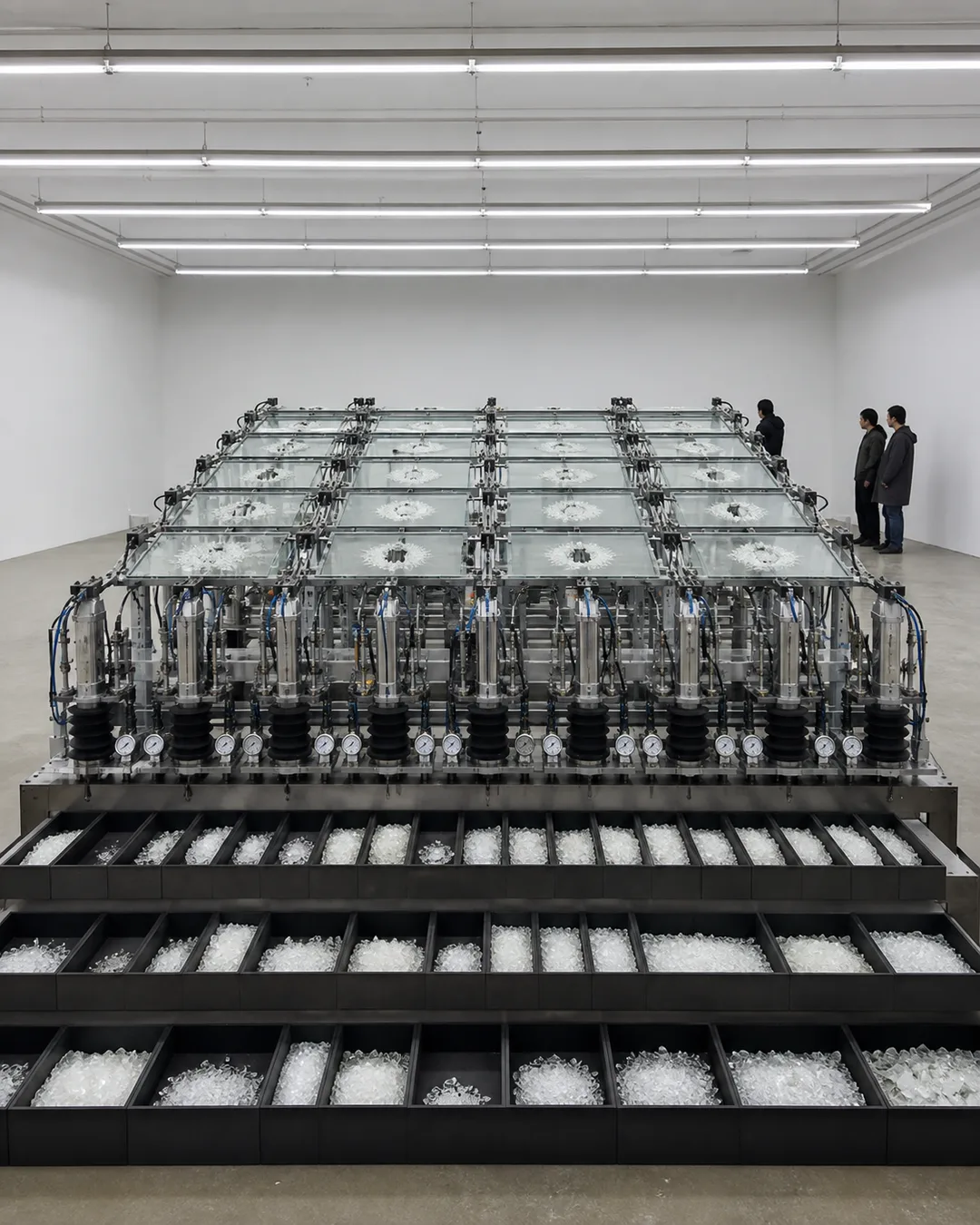
The economy of disruption develops within this pattern. Difference can be converted into value before it has had much chance to alter the conditions under which value is produced. A gesture that seems to break with a system may instead enlarge the range of forms that system can accommodate. Dissent can become content, transgression a market position, critique a source of institutional knowledge, and rupture a familiar narrative of innovation.
This does not mean that every disruptive gesture is neutralized in advance. It means that disruption alone tells us little about how radical a practice actually is. An intervention can attract attention and appear confrontational while leaving the distribution of power, access, and resources largely unchanged. It may disturb what is visible without affecting the structures that make that visibility possible.
It is useful, then, to distinguish disruption from discontinuity. Disruption interrupts an existing flow. Discontinuity alters some of the conditions that organize it. An interruption can often be repeated, represented, promoted, or even scheduled. A change in underlying conditions is harder to contain because it affects what can happen afterwards.
The force of a radical intervention therefore does not depend on how dramatic the rupture appears. The more useful question is what changes because of it. Does control move elsewhere? Is a dependency broken? Does access change? Does a different infrastructure or relation become possible? The more consequential intervention may be the one that makes an existing arrangement harder to experience as natural or inevitable, even if it attracts less attention.
The figure of the disruptor has become ambiguous for the same reason. Marginality can lead to visibility, and visibility to legitimacy and authority. Once this happens, the history of having been disruptive may itself become a source of cultural and economic value. What is preserved is not only the original gesture, but also the story of its resistance to incorporation.
There is a temporal paradox here. Radical practices are often easiest to recognize once they have become historical enough to be described, exhibited, classified, and placed within an existing narrative. By then, some of the uncertainty that gave them force may already have disappeared. Institutions and markets can preserve the memory of rupture more easily than they can deal with rupture as an ongoing condition.
Radicality, then, cannot be reduced to novelty, refusal, visibility, invisibility, or disruption. None of these is radical by itself. Each can be absorbed, reproduced, or turned into value. The more useful question is whether a practice changes any of the conditions that organize participation, value, access, or agency.
A practice may refuse or withdraw. It may work from within an institution, redirect an existing system, or construct another form of relation. These positions do not determine its radicality in advance. What matters is what they allow the practice to alter, and whether those changes remain at the level of representation or affect how the field actually operates.
What remains of the radical is therefore less a recognizable form of rupture than an ability to unsettle arrangements that present themselves as necessary. A practice becomes consequential when it makes those arrangements open to change and creates room for other ways of acting, relating, or organizing to emerge.