
Sometimes, an art space, curatorial project, or gallery may reach a point where ending becomes more meaningful than continuing. A gallery rarely closes for a single reason: rent, exhaustion, market pressure, shifting ambitions, and structural constraints often overlap.
We wanted to reflect on this condition more closely, gathering and articulating some of our own thoughts around a simple question: what happens when closure itself becomes a deliberate curatorial and political gesture? And how can a final exhibition, an archive, or the disappearance of a gallery or project reshape value, memory, and authority long after the doors have closed?
A gallery announces its last program before the walls have cooled from the previous opening. The invitation carries the same protocol as every other invitation: date, time, address, artist, image, courtesy line. Yet the feed receives it under a different pressure. Attention reads closure as event, ranking converts finality into urgency, and the administrative fact of departure becomes a dramaturgy of access. The room has already changed before anyone enters it.
Exit gives form to the contract that operation usually conceals. Hospitality appears as timed permission, visibility as managed scarcity, control as the quiet architecture of who receives notice, who receives preview, who receives explanation. The final exhibition turns the gallery’s calendar into a visible device: a sequence of openings, sales, invoices, favors, hesitations, and deferred repairs suddenly gathered into a single terminal gesture. What had circulated as atmosphere returns as structure.
Market gravity intensifies around endings because distribution rewards events that can be narrated as irreversible. A closure produces provenance before the work has fully settled into storage, giving each object the aura of having survived an institutional weather system. Rumor performs the labor of a press release, inventory acquires the charge of relic, and documentation begins to behave like a secondary exhibition moving through screens, conversations, PDFs, and collector memory.
Voluntary termination creates a rare condition in which refusal gains administrative precision. The act of leaving a space assigns agency to exhaustion, rent, ambition, conflict, and timing, converting them into a legible curatorial proposition. Exit writes the exhibition because the final gesture gathers device, image, economy, and power into a single operation: the closure that appears to end circulation becomes the protocol that determines its afterlife.
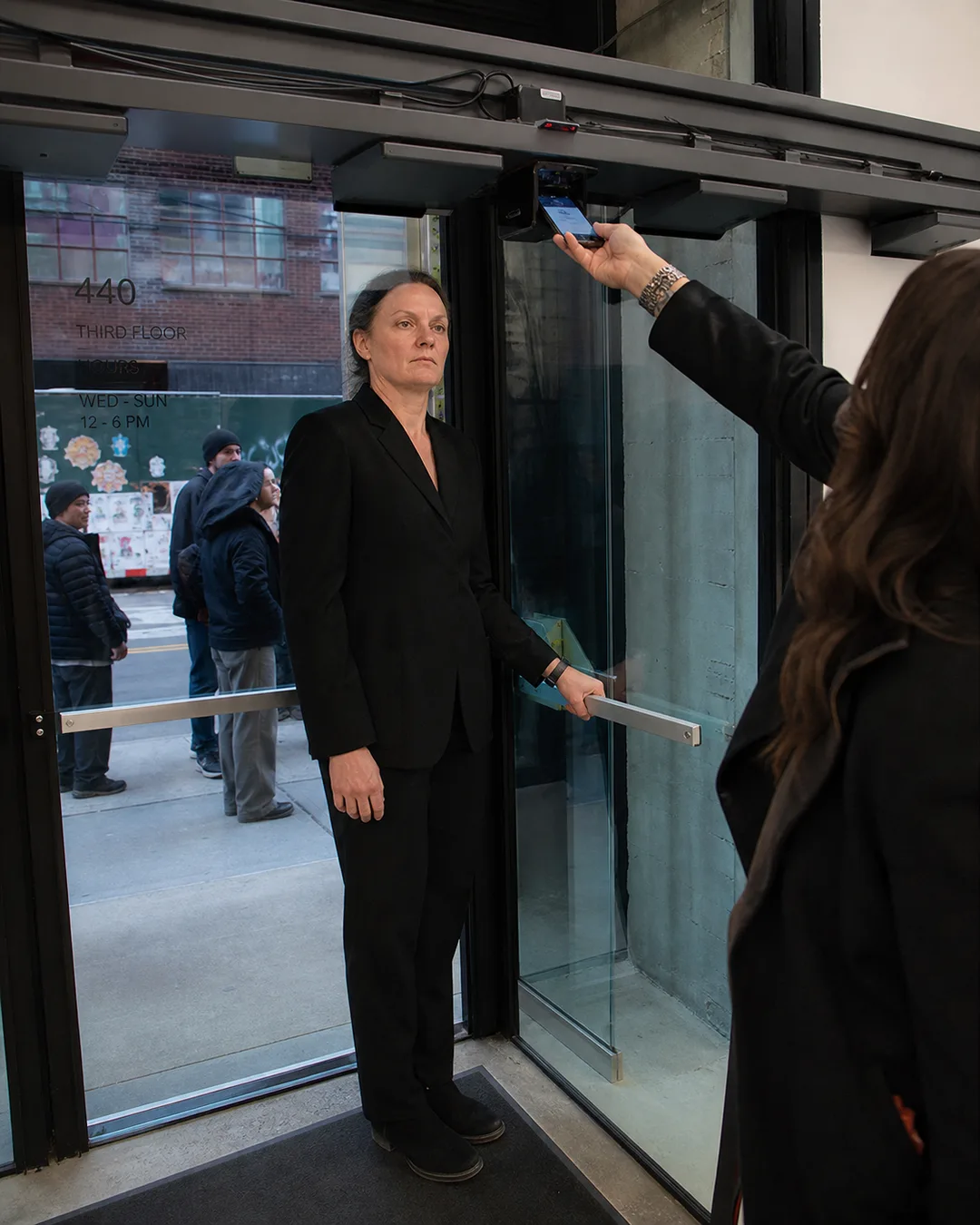
The Last Opening: The inaugural claim returns at the end, where the final program exposes the hidden contract between hospitality, visibility, and control.
The last opening begins as a routing problem. The same mailing list receives a message whose metadata carries a stronger charge than its image, because the subject line now competes inside the feed as a terminal signal. Attention moves faster around closure than around continuation; the platform ranks finality as a compressed drama, and the crowd arrives already trained to read the room through the knowledge of its disappearance. The event becomes an interface where social presence, institutional fatigue, and market calculation touch the same surface.
The inaugural claim returns because every gallery begins by promising a relation between artists, publics, and space. That promise usually disperses across programming, staffing, dinners, fairs, invoices, and installation shots. In the final program, the contract regains outline. Hospitality shows its procedure: the door, the list, the bottle, the greeting, the controlled warmth of access. Visibility shows its custody: who appears in photographs, which works enter circulation, which bodies become evidence of relevance. Control shows its grammar: the room offers freedom through a schedule already written.
The final exhibition also changes the behavior of looking. A visitor stands before a work while also reading the architecture of ending around it: scuffed floor, patched wall, borrowed plinth, exhausted desk, landlord silence, invoices pending in the back office. Perception acquires double exposure. The image remains in front of the viewer, while the operational system that sustained the image comes into focus as an active scene. The gallery’s infrastructure stops serving as background and begins to speak in the register of form.
This return of the inaugural claim creates a peculiar pressure on artists. The final program grants visibility under conditions of intensified narrative capture, since every work risks being read as testament, elegy, accusation, or proof of historical sharpness. Yet the same pressure expands the work’s field of address. A painting, film, installation, or performance enters a distribution circuit charged by closure, and its documentation carries the residue of the gallery’s terminal authority. The work becomes part of a larger proposition concerning how cultural value attaches itself to endings.
The last opening therefore exposes the curatorial act as a custody arrangement. The gallery has always held time, attention, contact, confidence, and credit on behalf of others; its final gesture reveals the terms of that holding. Closure gives the inaugural promise its forensic illumination. The first opening projects a future, the last opening audits the conditions that made that future visible.
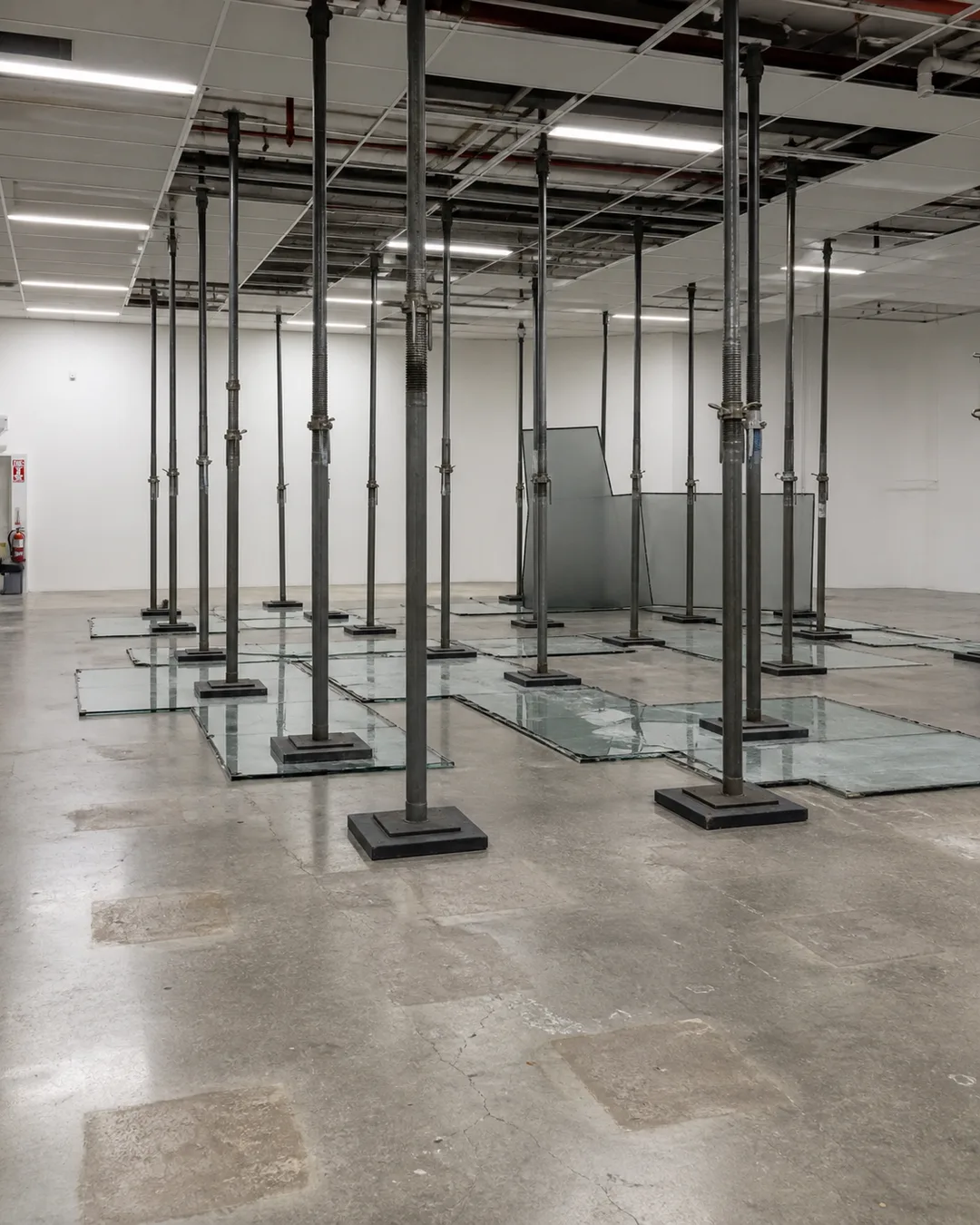
Rent Becomes Argument: The decision to leave a space converts overhead, location, staffing, and calendar pressure into curatorial material with economic force.
Rent enters the exhibition as an unframed medium. The monthly transfer, the lease renewal, the deposit, the repair clause, the rising insurance bill, the staffing spreadsheet, and the calendar of fairs form an apparatus that shapes the visible program long before any work reaches the wall. When a gallery chooses to leave, overhead becomes legible as argument. Location stops functioning as address alone and becomes an index of pressure, a coordinate where real estate, prestige, and cultural ambition have been forced into the same equation.
The decision to exit gives economic drag a syntax. A gallery can absorb deficit as romance for a time, presenting precarity as devotion and undercapitalization as intimacy. Closure interrupts that aesthetic of endurance by converting the hidden ledger into curatorial matter. The rent invoice acquires the force of a wall text, staffing becomes a question of distribution, and the calendar reveals itself as a protocol that demands constant novelty from bodies, images, and budgets that move at different speeds.
A space always trains behavior through its costs. High rent produces compressed turnover, intensified sales pressure, shorter installation windows, heavier dependence on openings, and a deeper alignment with collectors able to move quickly. A cheaper room elsewhere produces different frictions: distance, lower foot traffic, a thinner casual audience, a heavier reliance on online circulation. The gallery’s program emerges from these constraints as much as from taste. The decision to leave allows the field to see that curatorial language has always been written across a financial grid.
Market gravity works through the calendar. A gallery must synchronize with fairs, biennials, auctions, collection cycles, grant deadlines, institutional visits, and the seasonal rhythm of press attention. The final exhibition reveals this synchronization as a disciplinary protocol. Every opening once appeared singular, yet each belonged to a logistical sequence calibrated for survival. When the sequence ends by choice, the interruption turns timing into statement. The pause becomes authored, and the schedule loses its innocence.
Rent becomes argument because the gallery’s disappearance places real estate inside the work of meaning. The closed lease speaks with the same force as the installation view, since both determine what can be seen, by whom, and under which pressure. A voluntary exit converts economic limit into symbolic force, and the field receives the gesture as evidence that infrastructure can enter discourse through withdrawal. The bill becomes legible when the room leaves it behind.
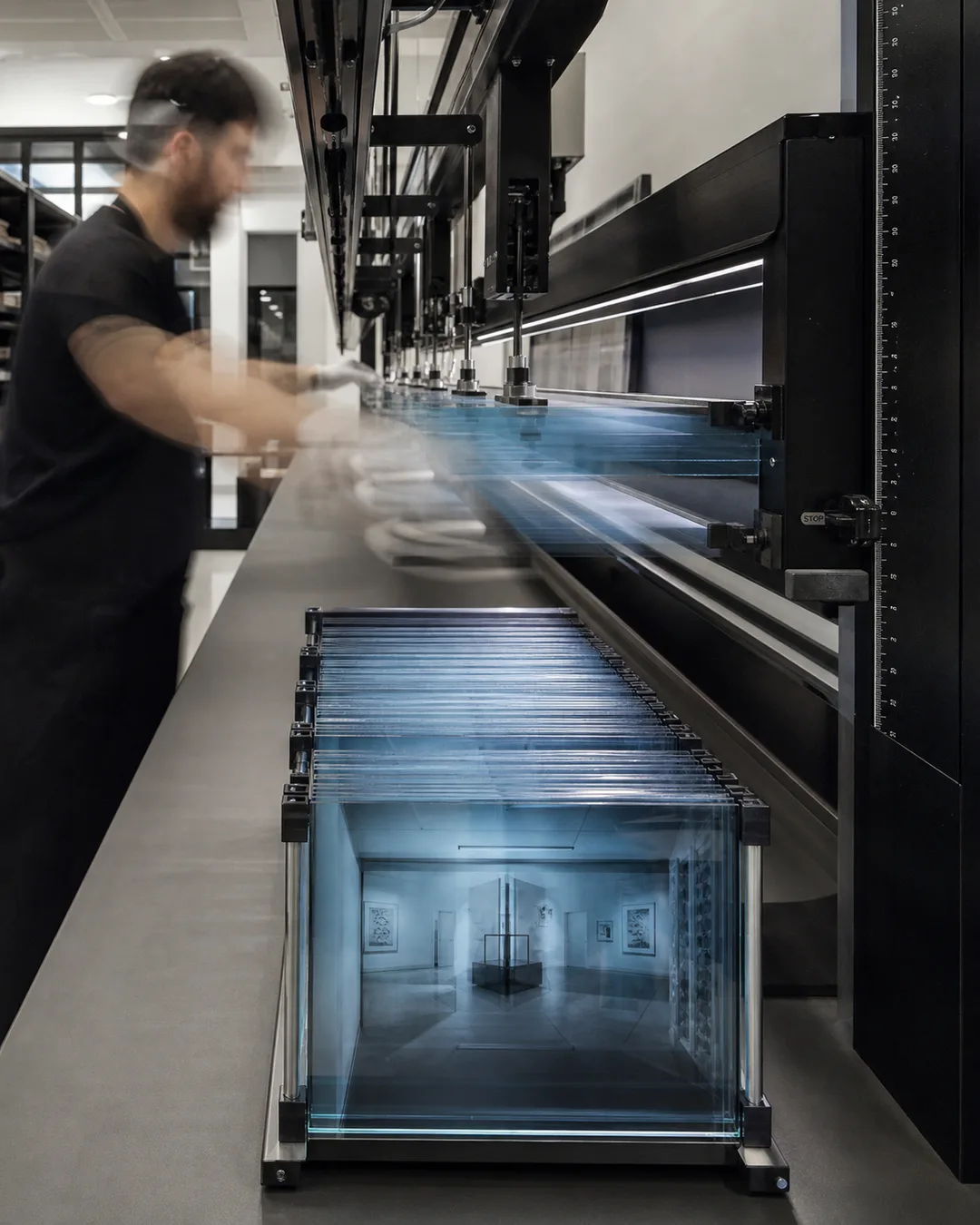
Images After Departure: Documentation, rumor, inventory, and memory begin to circulate as the surviving surface of the project, producing value through absence made visible.
The installation view becomes the room’s surviving interface. After departure, images detach from the site and enter the feed as portable architecture: cropped walls, corner shadows, floor reflections, captions, tagged names, courtesy lines, and the serial logic of the archive. Documentation acquires a second function. It records the exhibition while producing the future conditions under which the exhibition can be remembered, traded, cited, desired, and mythologized. The photograph becomes a custody device for a space that has ceased to host bodies.
Rumor begins to rank the closure. The reasons for exit circulate through dinners, studio visits, direct messages, advisory calls, and collector briefings, each channel adjusting emphasis according to its own incentives. A landlord becomes villain or background noise, a founder becomes visionary or reckless, a final show becomes triumph or symptom. This informal distribution produces value because scarcity requires narration. The absent space becomes available for projection, and projection gives the archive a velocity that ordinary continuity rarely receives.
Inventory changes temperature after departure. Works remaining from the program enter a field charged by the knowledge that the gallery’s final custodial act has already occurred. Available pieces carry the residual authority of having belonged to the last sequence; sold pieces gain sharper provenance; unsold pieces acquire a more complex aura, suspended between missed chance and delayed recognition. The spreadsheet becomes a literary form, its columns holding price, medium, dimensions, reserve, consignor, and story in a single administrative surface.
Memory also becomes a distribution system. Those who attended the final opening become carriers of atmosphere: the crowd density, the speech, the unfinished conversation near the door, the sense that everyone understood the evening through private calculations. Their accounts supplement documentation with affective metadata. The gallery survives as a pattern of anecdotes whose credibility depends on proximity. In this economy, presence becomes a credential, and recollection functions as soft provenance.
The image after departure produces value through visible absence. The room’s disappearance gives the photograph an added index, since every wall shown is already lost as venue and preserved as sign. Documentation becomes more than record; it becomes the site where the project continues under altered governance. The closed space circulates most efficiently once the feed can hold it as both evidence and lack.
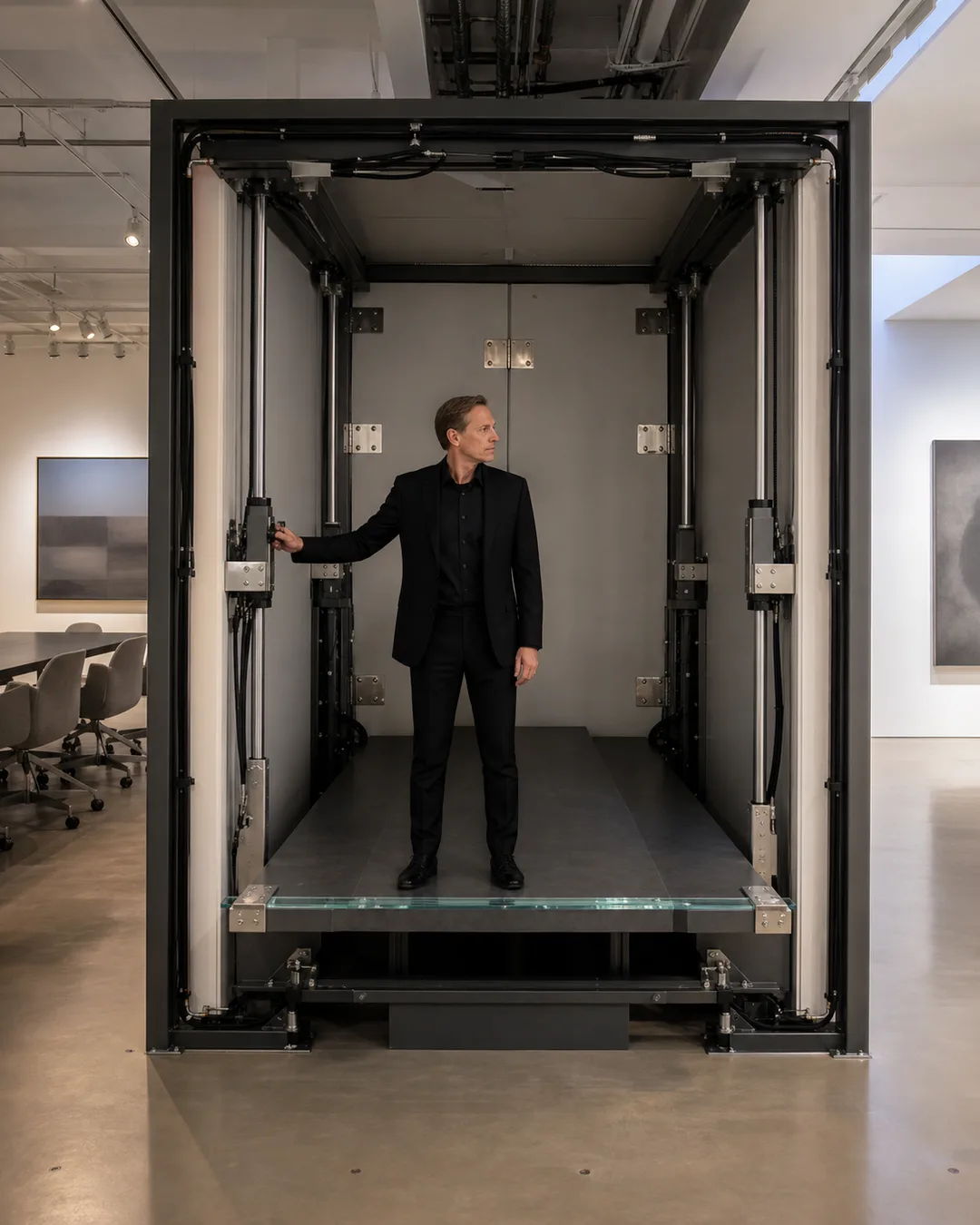
Voluntary Ruin, Managed Power: Self-termination redraws the relation between founders, artists, collectors, landlords, institutions, and publics by assigning agency to the act of ending.
Self-termination reorganizes power through authorship. When founders choose closure, they convert vulnerability into a controlled gesture and place themselves at the center of the narrative protocol. The decision assigns intention to circumstances that might otherwise disperse across debt, fatigue, conflict, market contraction, or failed renewal. Agency becomes a frame placed around collapse. The ruin appears managed because the announcement gives timing, language, and image to forces that usually arrive as rumor.
Artists experience this agency ambivalently inside the custody chain. A gallery’s end can intensify loyalty, grief, resentment, gratitude, and strategic recalibration within the same week. Representation, consignment, production support, unpaid balances, introductions, and institutional prospects all pass through the final administrative filter. The exit tests the ethical architecture of care: which works are returned, which invoices are settled, which contacts are transferred, which narratives are offered to artists whose own trajectories become entangled with the closure.
Collectors receive the ending as signal. A voluntary closure can sharpen the perceived historical value of the gallery’s program, especially when the founders frame departure as refusal of compromised growth or unsustainable acceleration. The collector reads this through market protocol: rarity, timing, access, institutional proximity, and the possibility that a finite archive has been sealed. The final gesture can turn past purchases into evidence of discernment, while future acquisitions from represented artists carry the charge of continuity after institutional disappearance.
Landlords and institutions occupy different positions within the same diagram of managed power. The landlord’s pressure enters the story through rent, renewal, and neighborhood transformation; the institution enters through validation, acquisition, invitation, and delayed recognition. The closing gallery mediates between these forces, showing how cultural legitimacy often depends on spaces structurally exposed to extraction. When closure is voluntary, the gallery can redirect the optics of exposure into a public statement about the cost of presence.
Publics receive the ruin as a lesson in participation. The audience that once treated the gallery as available atmosphere now encounters the fragility of that availability as fact. Attendance, posting, conversation, purchase, criticism, and support reveal themselves as uneven forms of attention that sustain a space with unequal force. Self-termination makes the social body visible because the body arrives too late to save what it can now fully value. Managed ruin teaches the field that affection becomes power only when it enters the protocol of maintenance.
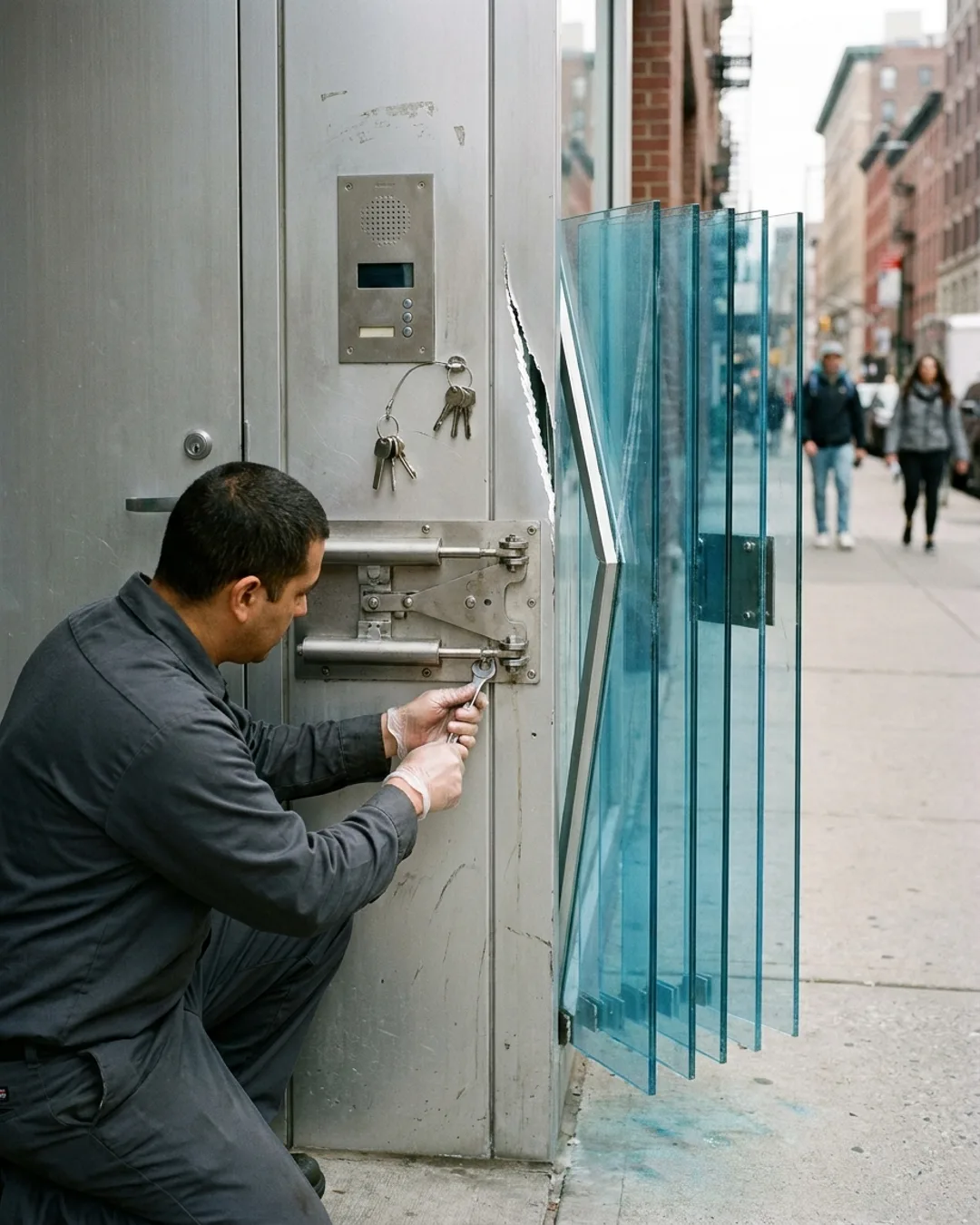
The Closed Space Speaks: The final gesture becomes a precedent, teaching the field how refusal, timing, and disappearance can organize authority beyond continued operation.
A closed space continues through precedent. Its locked door, emptied office, archived website, forwarded email address, boxed files, and final installation images operate as a dispersed protocol for future interpretation. The gallery’s authority shifts from programming to example. It now instructs by having ended at a chosen moment, and this choice enters the field as a model for how refusal can accumulate symbolic force when timed with precision.
Timing gives disappearance its authority. A closure too early reads as prophecy, a closure too late reads as exhaustion, a closure at the edge of visibility reads as critique. The final gesture gains power when it appears synchronized with a larger system of strain: platform acceleration, fair dependency, rent escalation, collector volatility, institutional delay, and the exhaustion of perpetual presence. The gallery’s exit becomes legible as an operation performed on the field’s tempo. It interrupts the rhythm that demanded more exhibitions, more content, more contact, more proof of life.
Refusal organizes attention by changing the terms of access. Continued operation keeps the gallery available to routine ranking, where each program competes with every other program across feeds, previews, openings, and sales reports. Disappearance condenses that competition into a finite archive. The closed space becomes easier to narrate because its sequence has limits. The archive acquires contour, and contour produces authority. A project can become historically sharper once its future programs can no longer dilute its claim.
The final gesture also teaches institutions how to absorb dissent. Museums, universities, fairs, and foundations can cite the closure as evidence of a field under pressure while continuing to benefit from the symbolic capital generated by that pressure. The closed gallery enters panels, essays, acquisitions, and curatorial anecdotes as an emblem of fragile independence. This absorption remains part of the mechanism. Refusal travels through the same channels that once required compliance, and its force depends on how much residue it carries from the act of leaving.
The closed space speaks through consequences rather than continuity. Its authority rests in the capacity to make the field adjust its memory, its valuations, its conversations, and its sense of what an exhibition can do after the room has gone. Exit writes the exhibition by moving authorship from the program to the threshold. The door closes, and the protocol begins.