Recently, we came across Mercanti d’aura by Alessandro Dal Lago and Serena Giordano, a book that looks at contemporary art from an unusually revealing angle. Rather than explaining art through taste, beauty or talent, it treats the art world as a system and follows everything that happens around an artwork: who exhibits it, who writes about it, who authenticates it, who buys it, who places it in a collection, and who helps turn an ordinary object into something worthy of attention, prestige and money.
This is where the book becomes particularly interesting. Artistic value is not presented as something naturally embedded in an object. It is constructed. Sometimes slowly, through years of recognition and institutional support; sometimes much faster, through the intervention of a gallery, a museum, a critic, a collector, or simply a powerful narrative capable of changing the way an object is perceived.
The title refers to that very process. The “aura”, the concept famously associated with Walter Benjamin, did not disappear with photography, mechanical reproduction, or the erosion of the artwork’s material uniqueness. It simply moved elsewhere. Today, aura can reside in a signature, a provenance, an artist’s reputation, an exhibition history, the institution displaying the work, or the network of consensus built around it.

When Something Starts to Feel More Important Than It Is
It happens all the time, even outside museums. An old chair at a flea market may look like nothing more than an old chair. Then someone tells us it belonged to a famous architect, that it stood in his studio, that it appears in photographs from the 1960s. Suddenly we look at it differently. The chair has not changed. The wood is the same, the scratches are the same, the shape is identical. What has changed is what we know about it, and more importantly, what we begin to feel in front of it. We look at it more carefully. The damage becomes a trace. Wear no longer feels like neglect but like history. We want to know who used it, where it stood, what happened around it. If someone suggested restoring it completely, we might even feel that something important would be lost.
This is very close to what we mean by aura. Aura is not necessarily something visible. It is not a colour, a shape or a particular technique. It is the strange density an object acquires when it stops feeling interchangeable with all the others. Think of a guitar. In a shop, it may be one of thousands made in the same year. But if we discover that this particular guitar was played by a musician during a concert that later became legendary, we are no longer looking at just another instrument. Materially, it may be almost identical to another example from the same production line, yet no one would consider the two truly equivalent. One of them carries a history.
What makes this interesting is that the history itself is often invisible. It has to be known, told, documented and, at some point, authenticated. Photographs, archives, signatures, receipts, witnesses and ownership records all begin to matter. The stronger and more widely accepted that story becomes, the more the object seems to acquire something extra. Not necessarily beauty, but presence.
The same thing happens with the handwritten manuscript of a writer. The words may be identical to those printed in a book, and the printed version may even be easier to read, yet the original page feels different. We know that it was physically there, in front of that person. We can see corrections, hesitation, crossings-out. We are no longer looking only at the text. We are looking at a distance that somehow feels shorter.
Much of the art world operates through the same mechanism. When we stand in front of an artwork we have already seen hundreds of times in books or on screens, we rarely react to it as we would to a reproduction. We know that this is “the real one”. We move closer. We look for texture, scale, imperfections, details we might never have noticed in an image. The object itself may not have changed, but our relationship to it has.
This is where Mercanti d’aura becomes especially useful for understanding contemporary art. If aura is partly produced by context, provenance, reputation and narrative, then value is not created only inside the work. It is also created around it. A gallery can add credibility. A museum can add legitimacy. A major collector can add desirability. An exhibition can add history. A catalogue can place the work inside a larger narrative. Each element may seem secondary on its own, but together they can completely change the way an object is perceived.
Perhaps that is the most revealing thing about aura: very often, we start to feel it before we are able to explain exactly where it comes from.

The Room Changes the Object
The same object can feel completely different depending on where we encounter it.
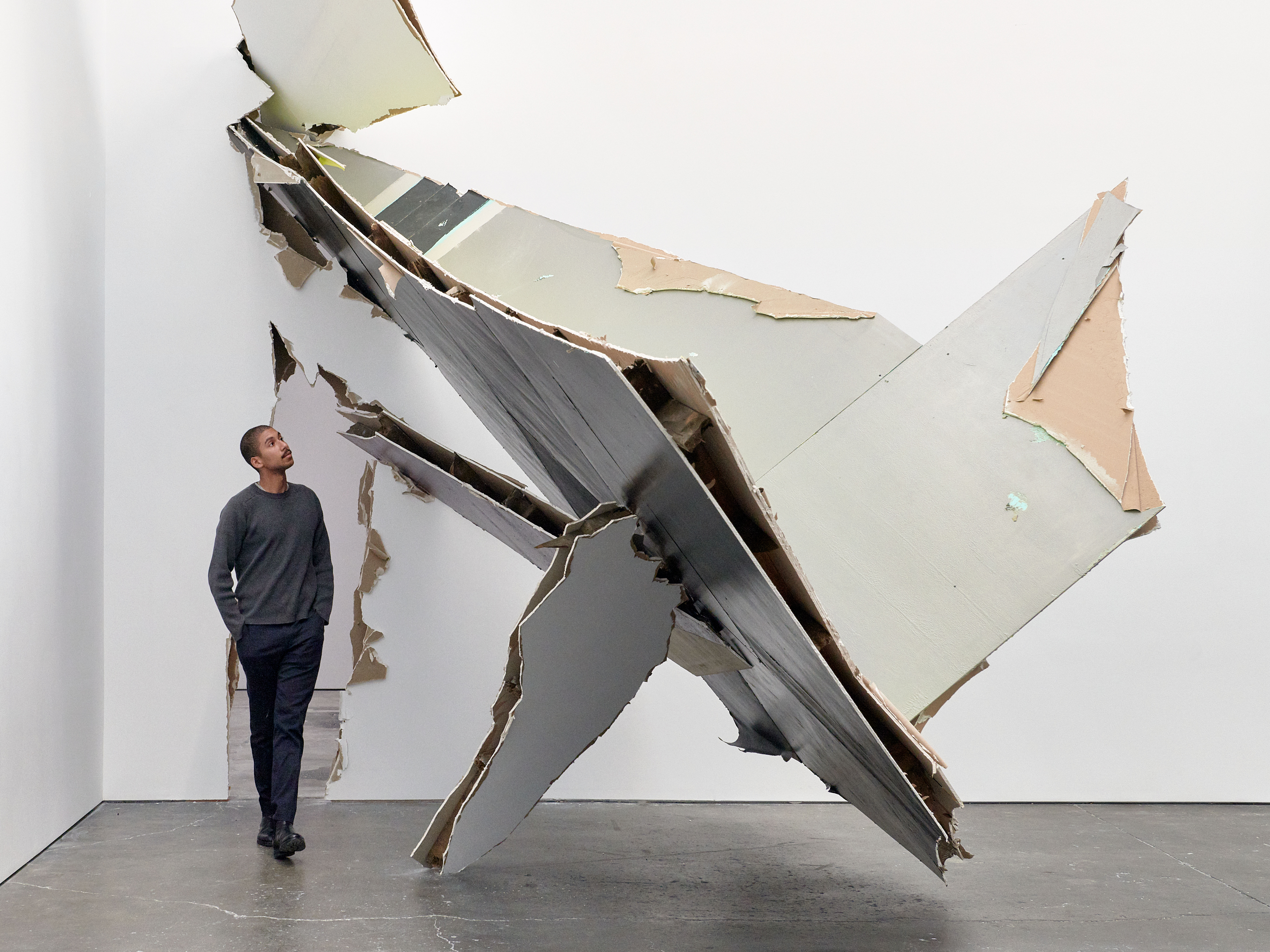
A metal structure leaning against a wall in a warehouse might look unfinished, accidental, even disposable. Place the same structure in a quiet gallery, give it space, light it carefully, add the artist’s name and a small label beside it, and something changes almost immediately. We slow down. We assume there is a reason it is there. We begin looking for intention.
Nothing has happened to the object itself. The transformation has happened around it.
This is one of the simplest ways to understand how aura is produced. Context does not merely present an object. It teaches us how to approach it.
We already know this from ordinary life. A bottle of wine served in a plastic cup at a crowded party will be experienced differently from the same wine poured into a heavy glass in a quiet restaurant. A jacket hanging in a second-hand shop may look ordinary until we discover it came from an important designer’s first collection. A handwritten note found in a drawer becomes something else entirely when we learn who wrote it.
The environment provides instructions, even when no one explicitly gives them.
Museums and galleries are particularly powerful because we enter them already prepared to pay attention. Silence, distance, lighting, architecture and even the way objects are separated from one another create a different rhythm of looking. We rarely give a supermarket shelf or a pile of discarded materials that kind of concentration.
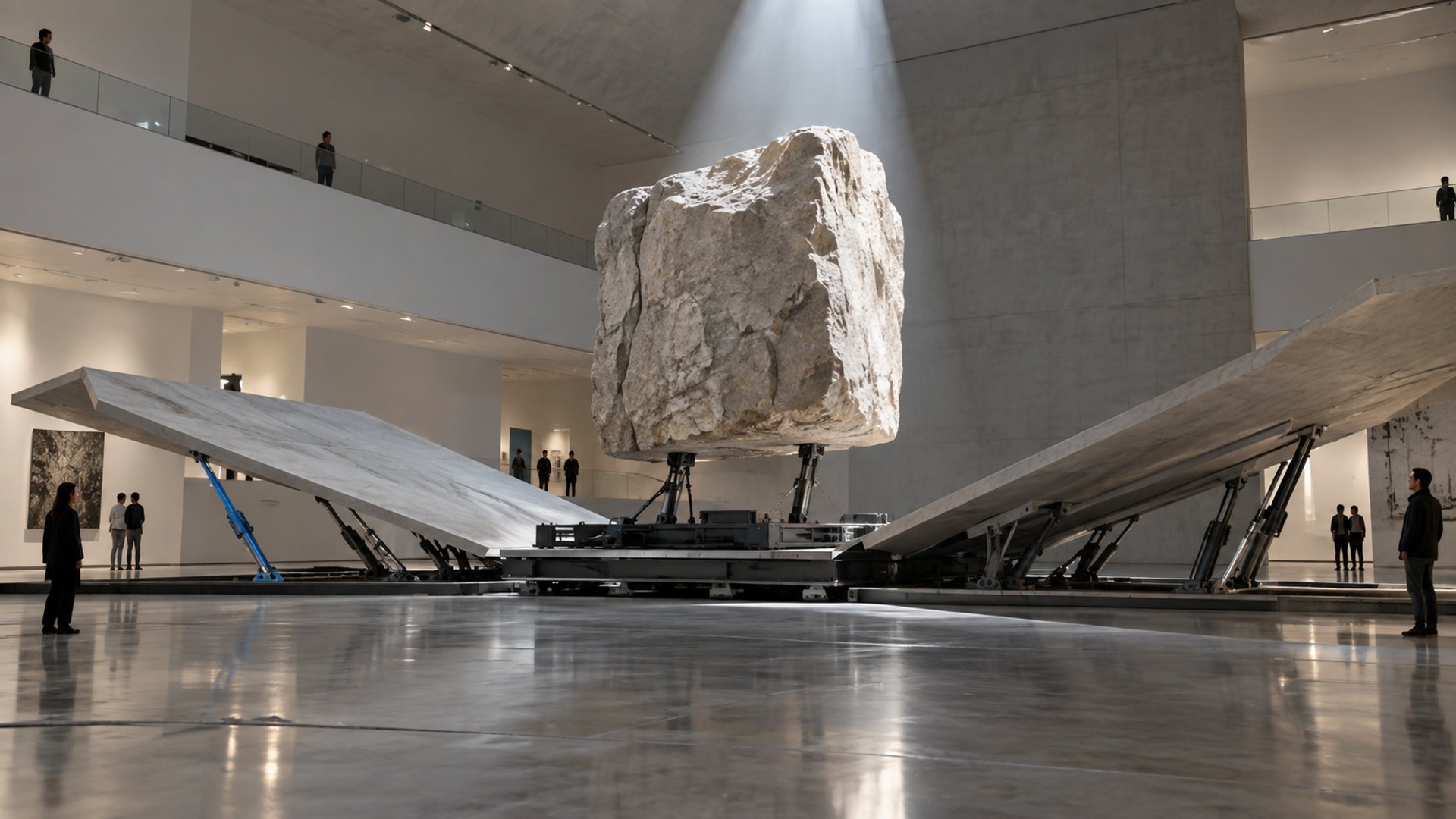
This is why the so-called white cube matters. The neutral gallery space appears to remove context, but in reality it creates an extremely strong one. An object placed alone against a white wall is not simply isolated. It is being told apart from everything else. The empty space around it acts almost like punctuation.
The result can be strangely physical. We stand further back. We move closer. We walk around the work. We lower our voices. We assume that details matter.
Aura begins to emerge through behaviour.
The process becomes even clearer when the same object moves between different environments. Imagine finding a stack of old photographs in a box at a flea market. You might flick through them quickly. If those same photographs were framed and installed in a museum under the name of a recognised artist, you would probably spend much longer with them. You might notice expressions, composition, repetition, clothing, social history.
The photographs have not changed. Your attention has.
And attention is part of value.
This does not mean museums can turn absolutely anything into important art simply by placing it under a spotlight. Context alone is not enough. But context can dramatically alter the conditions under which something is judged.
It gives the object time.
It gives it seriousness.
It suggests that somebody has already decided it deserves to be looked at.
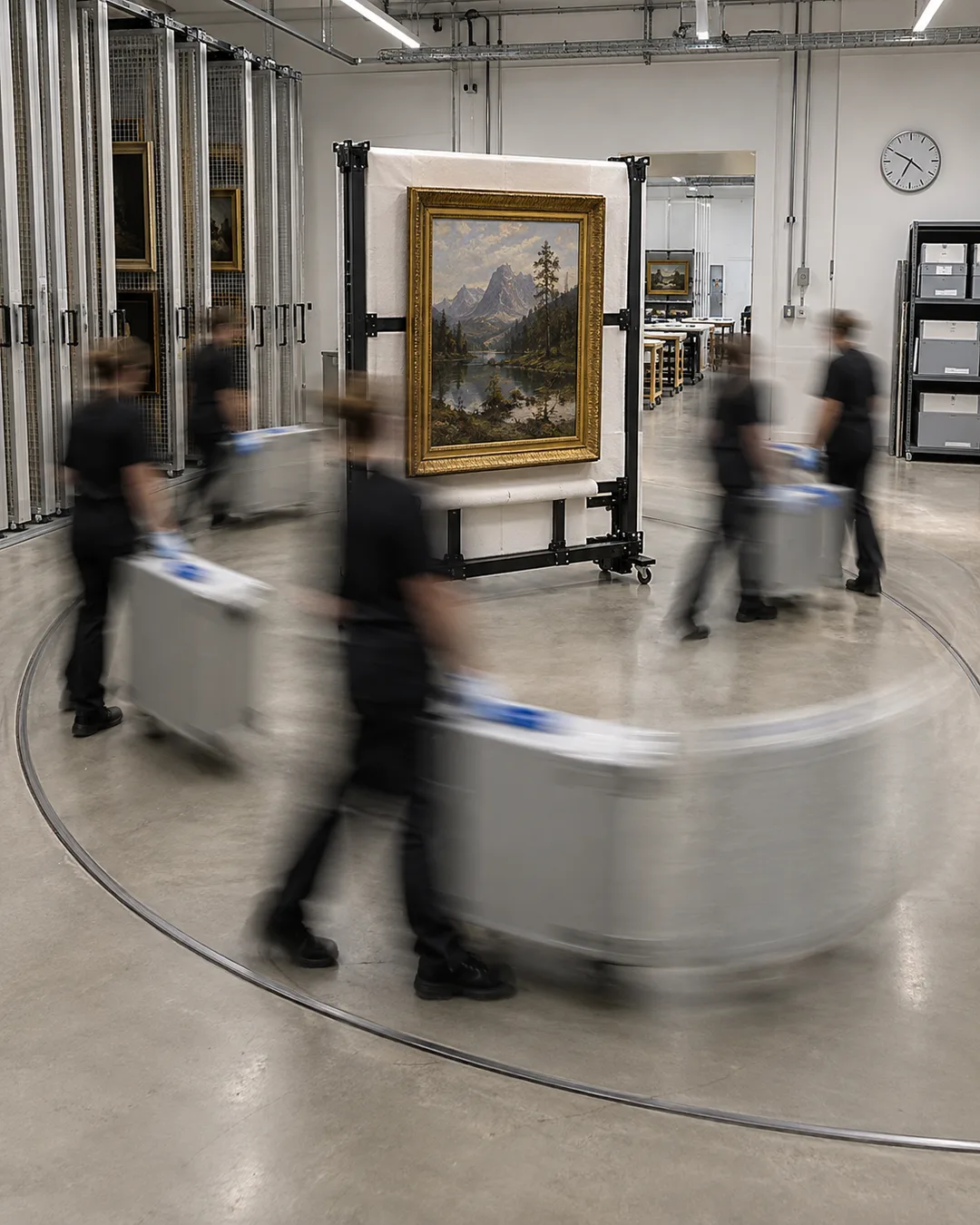
That previous decision matters more than we often realise. We rarely approach an artwork from a completely neutral position. By the time we see it, someone has selected it, transported it, insured it, installed it, written about it and given it a place.
The aura we experience may therefore contain traces of all those earlier acts of attention.
This is one of the more subtle ideas behind Mercanti d’aura. Value does not suddenly appear at the moment of sale. It is gradually accumulated through environments, choices and forms of recognition.
Sometimes the first layer of aura is simply a room saying: look at this differently.
When Other People Start Wanting It
There is another moment in the life of an object when its aura can change very quickly: when other people begin to want it.
Imagine walking into the studio of an unknown artist and seeing a painting leaning against the wall. You like it, but there is no reason to assume it is important. The artist has no gallery, no major exhibitions, no collectors you recognise. The painting exists almost entirely on its own.
Now imagine seeing the same painting a year later. It has been included in a respected group exhibition. A well-known collector has bought another work from the same series. A museum has acquired one. An art magazine has published a feature on the artist.
The painting is physically identical, but it no longer arrives alone.
It arrives with evidence.
This happens constantly outside the art world as well. A restaurant that is almost empty feels different once there is a line outside. A book sitting unnoticed on a table suddenly becomes more interesting when several people we respect recommend it. A small fashion label can seem obscure until we begin seeing its clothes on musicians, designers or people whose taste we trust.
What other people value affects what we are prepared to value ourselves.
In art, this effect can become extremely powerful because recognition tends to accumulate. One collector buys a work. Another notices. A gallery becomes interested. A critic writes about the artist. A fair provides visibility. A museum exhibition gives institutional weight. Each event makes the next one slightly easier.
The result is not simply popularity. It is a growing sense that the object belongs somewhere.
This is an important distinction. Aura is not the same thing as fame. Something can be famous without feeling culturally significant. What matters is the kind of attention surrounding it and who is providing that attention.
A recommendation from a friend and an acquisition by a major museum are both forms of approval, but they operate very differently. Certain institutions and individuals carry more symbolic weight because their previous choices have already been recognised by others.
Their attention becomes transferable.
When a respected collector buys an unknown artist, part of the collector’s credibility temporarily moves onto the artist. When a museum places a work in its permanent collection, the work acquires a new layer of permanence. When a gallery known for discovering important artists begins representing someone, that gallery’s history becomes part of the way the new artist is perceived.
The work begins to collect associations.
This can produce a curious reversal. At first, people may look at the object in order to decide whether it deserves attention. Later, the fact that it is receiving so much attention becomes one of the reasons people look at it.
The aura starts feeding itself.
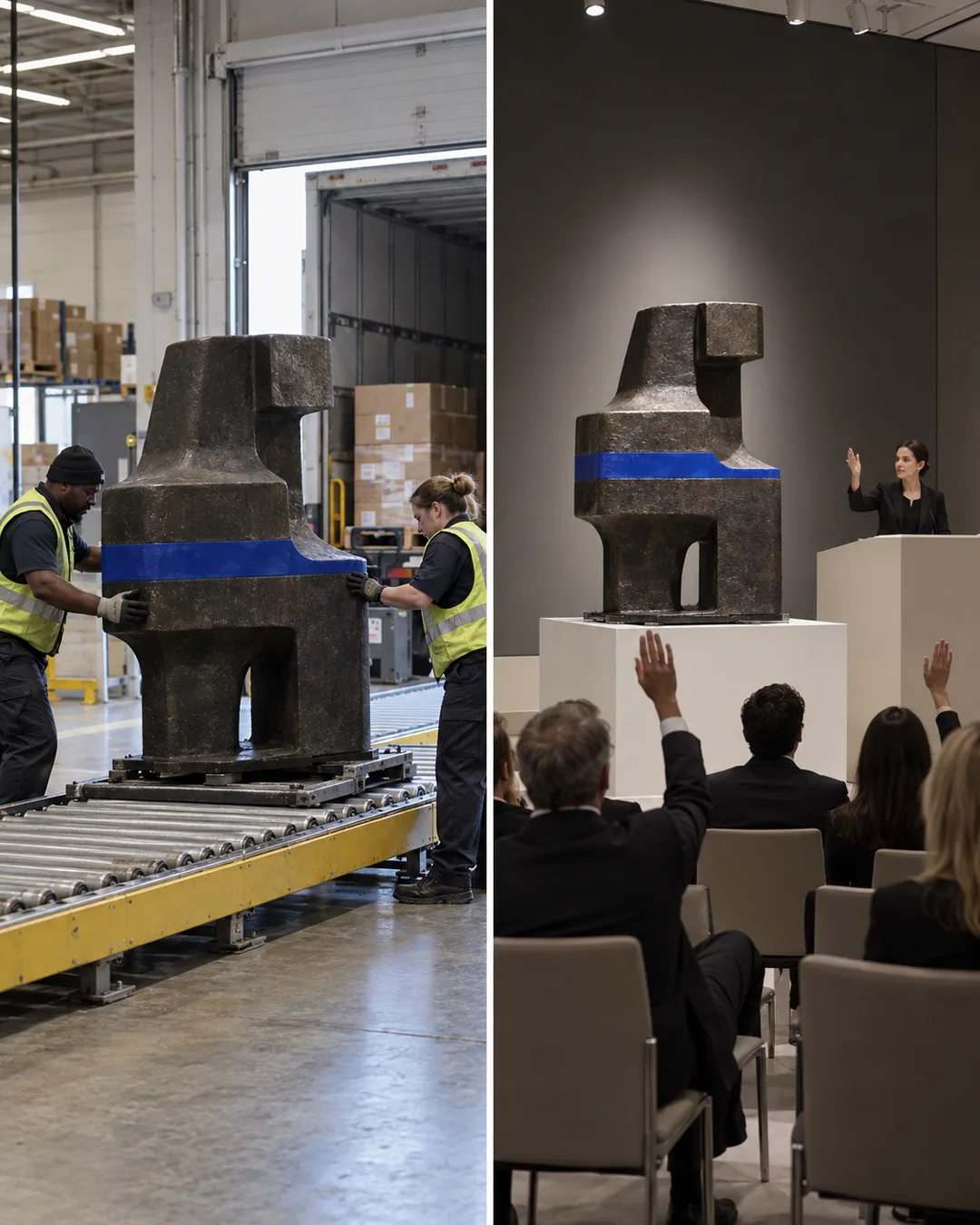
Markets understand this mechanism very well. Auction results are publicised. Important acquisitions are announced. Waiting lists become part of an artist’s reputation. The fact that a work is difficult to obtain can make people want it more, while the presence of recognised names around an artist can reduce the perceived risk of paying a high price.
Again, nothing necessarily changes in the object.
What changes is the network around it.
This helps explain why artistic value can sometimes appear to accelerate. Years of relatively quiet work may be followed by a short period in which exhibitions, collectors, press and institutions suddenly converge. From the outside it can look as though the artist has become important overnight. In reality, several layers of recognition have begun reinforcing one another.
Mercanti d’aura is particularly sharp on this point: value is rarely produced by a single person making a declaration. It emerges through a chain of people and institutions whose decisions confirm one another.
Someone notices.
Someone selects.
Someone buys.
Someone exhibits.
Someone writes.
Someone else sees all of this and decides to pay closer attention.
At a certain point, we are no longer looking only at the work. We are also looking at the history of everyone who has already chosen to look at it.
Why the Original Feels Different
Imagine two objects that look exactly the same. Same size, same material, same colour, same surface. One is the original work. The other is an almost perfect copy. If the visual experience is identical, why can one be worth millions while the other is almost worthless?
This is where aura becomes especially clear, because the difference between the two objects may exist almost entirely outside what we can see.
We experience this constantly in ordinary life. A signed first edition of a book and a later reprint may contain exactly the same words. A vintage watch worn by someone famous may function no better than another watch from the same production year. A photograph printed from the same negative can look identical to another print, yet one may be considered significantly more valuable because of when it was made, who printed it, or who owned it.
The physical object is only part of what we are buying.
The rest is continuity.
We want to know where the object came from, who touched it, who owned it, whether it can be traced back to the artist, whether its history is intact. In the art world, this chain has a name: provenance. Provenance can look like paperwork, but in reality it performs a much deeper function. It connects the object in front of us to a specific history and makes that history believable.
This is why a forgery can be visually perfect and still fail completely once its origin is exposed. The image may survive, but the aura collapses. Nothing necessarily changes on the surface of the work. What disappears is the relationship between the object and the story we believed it carried.
The reverse is also true. An ordinary-looking object can become extraordinary when its provenance is established. A sketch found in an attic may suddenly acquire enormous significance after experts connect it to a recognised artist. A chair becomes more than furniture once documents prove it belonged to a historically important figure. A piece of clothing becomes an archive object because someone can demonstrate exactly where and when it was worn.
This tells us something important about value: authenticity is not always something the eye can verify.
Very often, we trust a system around the object. Experts, archives, certificates, catalogues, foundations, previous owners, auction houses and institutions all participate in confirming that the thing in front of us is connected to the history it claims to represent.
The stronger that connection becomes, the harder the object is to replace.
This is perhaps the real power of the original. It is not simply the first version of something. It is the object that occupies a unique position inside a chain of events. A copy can reproduce its appearance, but it cannot reproduce having been there.
That distinction matters because aura depends heavily on irreversibility. The original was produced at a particular moment, passed through particular hands, appeared in particular places. Its history cannot simply be recreated afterwards without becoming another history.
From this perspective, Mercanti d’aura helps explain why the art market is so obsessed with documentation. Certificates, exhibition records, ownership histories and archives may appear secondary to the artwork, but they are often part of what allows the artwork to retain its identity.
And once again, the mechanism is not unique to art. We use the same logic whenever we prefer the actual object connected to an event over an indistinguishable substitute. We want the guitar that was played, the letter that was written, the jacket that was worn, the photograph that came from that archive.
What we are looking for is not simply resemblance.
We are looking for contact with a history.
When the Story Becomes Part of the Price
At some point, the story surrounding an object stops being just background information and begins to affect its price directly.
This is easy to see outside the art world. Two nearly identical apartments can sell for very different amounts because one is in a more desirable neighbourhood. Two watches made from similar materials can occupy completely different markets because one belongs to a brand with a century of history behind it. A jacket may cost very little as a piece of fabric and construction, yet become expensive because of the label attached to it, the people associated with it, and the cultural position that label has built over time.
The same mechanism becomes more visible in art because the physical object often explains only a small part of the final value. A canvas, some pigment and a wooden frame may cost very little as materials. What the collector is paying for is something else: the artist’s name, the period in which the work was made, its place within a particular series, its exhibition history, its provenance, the institutions that have shown similar works, the collectors who already own them and the expectation that the artist will continue to matter.
In other words, the price begins to absorb the aura.
This does not mean that price and artistic value are the same thing. They clearly are not. An important work can remain inexpensive, while a fashionable one can reach enormous prices. But markets are extremely good at converting certain forms of symbolic value into economic value. Reputation becomes scarcity. Scarcity becomes demand. Demand becomes price.
A simple example makes the process easier to see. Imagine an artist producing ten works from the same series. At first, they are sold cheaply because almost nobody knows the artist. A respected gallery then begins representing them. One work enters a museum collection. Another is bought by a prominent collector. A critic writes a serious article about the series. None of these events physically changes the remaining works, but the context surrounding them is now completely different. Their price can rise because the market is no longer evaluating ten isolated objects. It is evaluating ten objects attached to a growing history.
This is one of the central insights behind Mercanti d’aura: the art market does not simply discover value after it has been created. It participates in producing the conditions through which value becomes visible, credible and transferable.
The process can become self-reinforcing. A higher price attracts attention. Attention generates more coverage. More coverage creates stronger demand. Stronger demand produces scarcity, or at least the perception of scarcity. At that point, the fact that something is expensive can itself become part of the aura surrounding it.
We recognise this dynamic in many other areas. A restaurant that is impossible to book can become more desirable precisely because it is difficult to access. A limited-edition product can attract buyers because others cannot easily obtain it. A book that is suddenly discussed everywhere can acquire an urgency it did not have a month earlier. Desire is rarely created in isolation. We often want things partly because we can see that other people want them too.
Art amplifies this process because supply is often genuinely limited. There may be only one painting, one sculpture, one early photograph, one work from a specific period. Once that object enters a collection, everyone else who wants access to that particular piece has to compete for it.
But scarcity alone is never enough. A unique object that nobody cares about has almost no market. What matters is the combination of scarcity and meaning.
This is where aura becomes economically powerful. It makes an object feel not merely rare, but irreplaceable.
And once something is considered irreplaceable, the usual relationship between production cost and price begins to disappear. The buyer is no longer paying for what the object is made of. They are paying for the position that object occupies within a story.
That is why Mercanti d’aura is ultimately so useful beyond the art world. It shows that markets do not operate only through utility, materials and measurable qualities. They also operate through symbols, reputation, belief and collective attention.
Sometimes the most expensive part of an object is the part that cannot be touched.